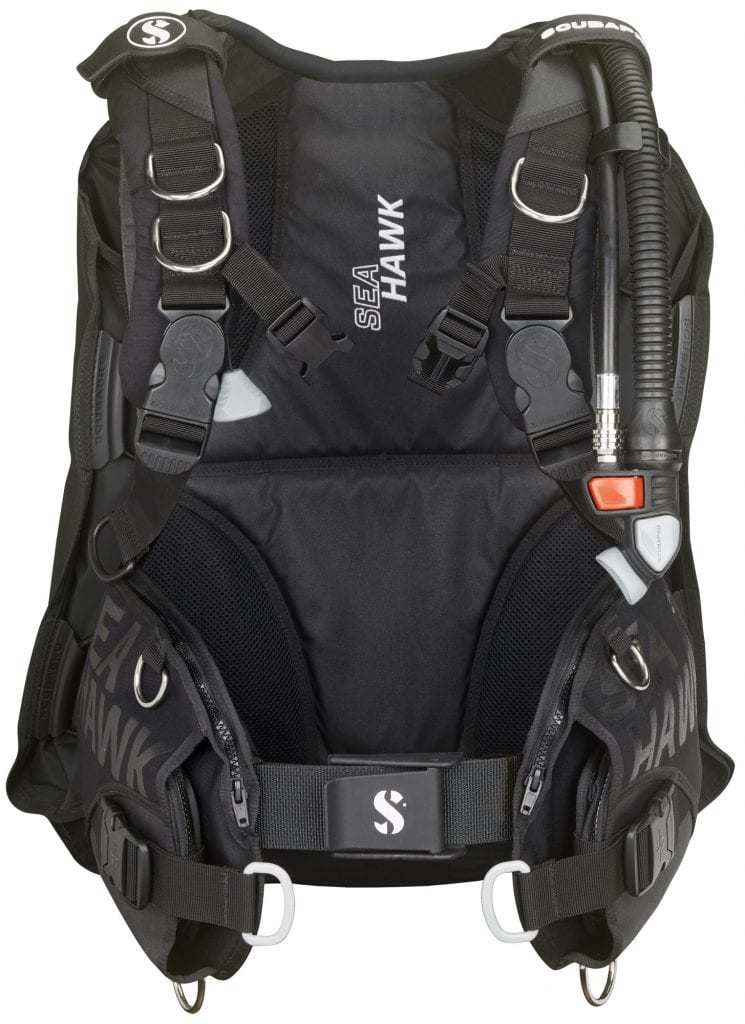
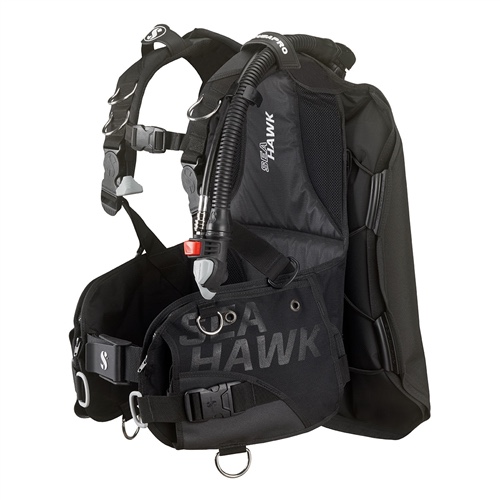
The SCUBAPRO Seahawk 2 was redesigned and improved in 2019. It is an all-purpose back inflation BCD features a new ergonomic shoulder design with rotating buckles and a new soft, reinforced backpack; this makes the improved Seahawk 2 much lighter than its predecessor and extremely easy to fold and pack. The stainless-steel Super Cinch tank band is positioned a little lower than before, and an additional hook and loop strap has been added to secure the tank when diving. Other new features include a 2″ (50mm) waist strap with a lightweight cam buckle, redesigned cargo pockets, and a new range of airway and valve fittings. Offering a streamlined shape yet substantial buoyant lift when needed, the Seahawk 2 is the perfect choice for divers looking for freedom of movement, comfort, and stability when cruising the depths. Quick-release shoulder buckles and adjustable shoulder straps, adjustable sternum strap, and waist strap all improve fit. All these straps are equipped with squeeze-style” quick-release buckles for easy donning and doffing.
Ergonomic shoulder design with rotating buckles improves fit, helps distribute the load, and enhances stability. Reinforced soft backpack with high-grip tank patch and inner padding add to comfort, reduce overall weight, and make it easy to fold and pack. Super Cinch stainless steel tank band system is positioned lower and teamed with a second hook and loop strap to secure the tank for transport and diving. 2″ (50mm) waist strap with lightweight plastic buckle lets you fine-tune adjustments for a perfect fit. Two large zippered pockets have been redesigned, providing lots of cargo-carrying capability. 1000-denier nylon outer bladder and 420-denier nylon inner, with urethane laminate interior and radio frequency (RF) welded seams for maximum resistance to punctures and abrasion. A high-quality air cell offers a streamlined shape when deflated and substantial buoyant lift when inflated. The BCD provides 54 lbs. (24.5 kg) of lift in all sizes.
Quick-release integrated weight pouches secure with low-profile buckles. Two rear trim pouches help create a comfortable swimming position. Pouches accommodate 12 lbs. (5.5 kg) each. Two back trim pockets counterbalance front weights and provide a well-balanced swimming position with 10 lbs. (4.54 kg) capacity. BC comes equipped with a Balanced Power Inflator (BPI). SCUBAPRO’s BPI’s, corrugated hose, elbow, and low-profile dump valves using the latest technology for full safety and comfort. The BPI is equipped with a cable-activated pull-dump mechanism on the left shoulder. There are a right shoulder and right lower rear over-pressure relief/pull-dump valves, both equipped with pull cords for ease of trimming buoyancy.
Movies, guns, some tactics, some snark, and lots of nostalgia. Those are a few of the things you’ll find in the Saturday Night at the Movies film reviews from GunMag Warehouse. Interested in an example? Remember Dogs of War (book not movie)? Come take the…
Slow Boat to Zangaro
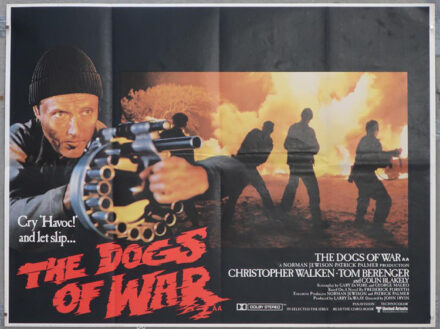
The Dogs of War
by Scott Waters
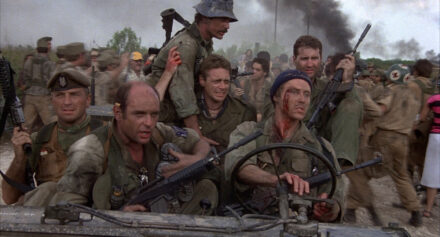
Carrying on with the idea of a period film that started when I reviewed The Way of the Gun sometime back, I took a spin through my DVD collection (yeah, I still have one). There it was, that classic of Bush War post-colonial havoc, The Dogs of War.
Set principally in the fictional country of Zangaro (played handily by Belize), this 1980 film, based on the Frederick Forsythe novel, revolves around a small group of mercenaries who set out to lead the overthrow of that country’s despotic leader. Starring Christopher Walken, Tom Berenger, and Colin Blakely, the film also has worthwhile supporting roles by JoBeth Williams and Ed O’Neill.
If you’ll forgive me a small indulgence here, I’ve often through that Walken, in his youth, looks almost translucent (see The Dead Zone or the second half of The Deer Hunter). In The Dogs of War, you get the sense that looking through his skin and seeing into his soul, you’d feel troubled indeed.
While the film is ostensibly about a team of mercenaries developing and executing a mission, it’s perhaps more accurately about morality and errant compasses, centering on Walken’s character, Jamie Shannon. I say this based on many watchings of the “European” version, which adds about 14 minutes of character development over the so-called “U.S.” version. Early on, Shannon attends a baptism for a fallen comrade’s newborn — he is the Godfather. The widow, however, explains that he will be allowed nothing to do with his Godson’s life.
There you have the central tension for the very stoic Shannon: he’s a man who wants some facsimile of domesticity but can’t find a way to it. Shortly thereafter, fate and a job offer intervene, forcing him to revert to the hard skills and harder stares of his profession.
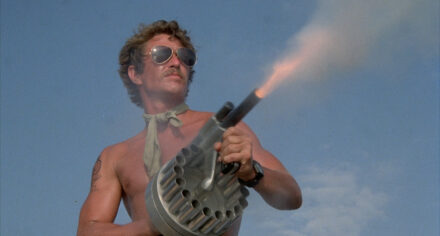
Here’s a more off-the-cuff reading of what this film is about: it’s a love letter to the fictional XM-18. Many are the scenes of the team firing from what is essentially a rotary magazine shotgun. It’s all gleaming chrome and stubby purpose. Based on the Manville Gas Gun that first appeared in 1935 and was designed for crowd control purposes, the movie version was modified by the film’s armourers.
In one fun scene, an arms dealer extols its virtues, including the variable-load possibilities that he refers to as a “mixed-fruit pudding”. In that same scene, Shannon pops out a zinger when he asks the dealer if he’s ever been in combat, to which the dealer replies, “no, I’m Canadian.”
There are folks out there who hate this film, and one podcast in particular (it shall remain nameless but you can search for “Christopher Walken podcast” on YouTube) seemed to not know what to make of it at all. Is it an action film? Is it a drama? Is it a thriller?
Well, I submit that it’s all of those genres and none. It does fit nicely within the genre of 70s military procedurals that Fredrick Forsythe (author of the original novel) is known for. If you enjoy Forsythe’s The Day of The Jackal or The Fourth Protocol, you’ll likely enjoy this film.
In another memorable scene, the team has gathered in a hotel room to plan the mission. They talk about who to source their materiél from and the need to drive hard bargains; they drink beer and order food: pizza and maybe “drinking pudding”. The French team member, played with a certain charm by Jean-François Stévenin, then offers a very memorable toast,
“Vive la mort, vive la guerre, vive le sacre mercenaire.”
This translates to: “Long live death, long live war, long live the cursed mercenary.”
Much film time is spent on logistics: hiring a ship and crew, transporting Uzis across European land borders, negotiating the sky-high prices for 9mm quad (a term I never bothered to research until right now). For me, this stuff is a real pleasure. The film slows down, and the viewer is forced into the back-end of warfighting. But this is what will make or break the operation. What’s that quote?
Amateurs talk about tactics, but professionals study logistics.
But the main reason I come back to The Dogs of War, again and again, is that it’s a period piece. I’m not referring so much to post-colonial exploits in Africa, but more that of a pacing style in action/thrillers that is hard to come by these days. There are pleasantly long periods where little excitement occurs, but the film is immensely watchable for just those reasons. The same can be said for The Day of The Jackal or more recently, the George Clooney vehicle, The American.
By the time we reach the climactic assault we’ve watched the guerilla army that Shannon’s team will lead demonstrate their military discipline, as well as their proficiency with Uzis. There’s also a subplot involving a journalist (played with great verve by Colin Blakely) that winds its way through the first two acts. All these elements lead to the final assault.
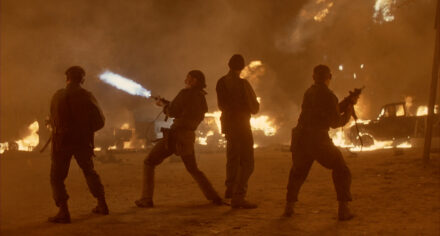
The approach onto objective by the force is a quietly tense pleasure, and then, finally, all hell breaks loose, including many a loving shot of the XM-18 being reloaded and firing off all of its 18 rounds. Having said all that, it’s the slow build-up – like the boat that carries them from Europe to Africa – that remains the most worthwhile aspect of this film.
About the Author: Scott Waters escaped the North of England as a child and has lived in the occasionally frozen/occasionally fecund land of Canada since then. An epigrammatically jocose former Canadian Infantry soldier who got himself some “higher education”, he became an artist and writer. These days he does some work with aid groups, dips his toes in the Army while continuing to dip his toes in art and writing. As you can see, there is a general “toe-dipping” theme. @militaryart_swaters
SOFWERX, in collaboration with USSOCOM’s Directorate of Science and Technology (S&T) and Naval Special Warfare (NSW), will host the Autonomous Interoperability Standards Development Event, 07-09 December, 2021. In the Human Machine Teaming Aspects of Mission command, the objective is to bring together Special Operations Forces (SOF) representatives and Subject Matter Experts (SMEs) to assist USSOCOM in discerning the future of Autonomous Interoperability for Unmanned Air, Ground, Surface, and Underwater Systems (UxS). Focus areas will include but are not limited to sensors, communications, and platforms.
NSW has developed a vision for the future whose key elements include next generation UxS and autonomy solutions, and interoperable maritime and air assets. To do this effectively, NSW needs interoperability standards for the heterogeneous UxS platforms that they will use now and in the future. USSOCOM thus needs to develop and implement a set of interoperability standards that are not cumbersome, that are flexible, and that will support new technologies. They will also need to provide enough freedom for companies to use their creative approaches but with well-defined interfaces, messaging, communications, navigation, and control systems. Further, the backing of NSW and USSOCOM should provide an incentive for commercial players to rally around the new standards. This effort will support agility, wider government and commercial participation and ensure cost-effective development.
The Multi-Domain Warfare Officer Initial Skills Training class 21B visited the U.S. Space Command’s Combined Force Space Component Command at Vandenberg Space Force Base, California, to observe real-time operations, Sept. 20-21.
Vandenberg SFB was the first of a four-leg trip for the Multi-Domain Warfare Officer, or 13O, students traveling to geographic and functional operations centers. The 13Os also traveled to the Shadow Operations Center – Nellis, or ShOC-N, at Nellis Air Force Base, Nevada, 612th Air Operations Center, Davis-Monthan AFB, Arizona, and the 616th Operations Center at Joint Base San Antonio, Texas.
The 19 students of class 21B were able to tour and observe real-time operations at the Combined Space Operations Center. The CSpOC’s mission is to execute operational command and control of space forces to achieve theater and global objectives.
The 13O students were also given the opportunity to talk to several senior U.S. Space Force leadership, including CFSCC Commander Maj. Gen. DeAnna Burt. Discussions focused on inter-service interactions and daily planning challenges facing CSpOC Guardians such as command relationships, authorities, and the development of C2 strategies as USSPACECOM components are reorganized, and new components become operational.
Maj. Gen. Burt stressed the significant role local 13Os have and continue to play in overcoming these challenges, bringing all these efforts together into one integrated plan.
“Observing real-time CSpOC operations allowed our students to witness first-hand many of the space capabilities, threats, limitations, and planning considerations previously covered in our classroom academics,” said Lt. Col. Ernie “Bert” Chen, 705th Training Squadron deputy director of operational warfare training, Hurlburt Field, Florida.
The Multi-Domain Warfare Officer course is taught by the 705th Training Squadron whose mission is to provide advanced operational level multi-domain C2 training and education for joint and coalition senior leaders and equip air operations center warfighters through tactics development.
Your belt isn’t an acceptable tourniquet and neither is a bandanna with a stick twisted in it. These are modern times; commercially available tourniquets are ubiquitous and have been proven over and over again to save lives. Don’t plan to improvise, plan to have a real tourniquet ready and available.
The number one goal in treating any extremity hemorrhage (i.e. bleeding out) is to keep the blood in the body. The human body only has so much blood and while there’s no specific quantity that’s agreed upon for how much you can lose before you’re gone, suffice it to say you want to lose the least amount possible.
When it comes to tourniquet selection, we support the CoTCCC recommendations for commercially available tourniquets; the two most widely used and proven being the SOF Tactical Tourniquet (SOFTT) and the Combat Application Tourniquet (C-A-T).
Here’s How to Apply a Tourniquet
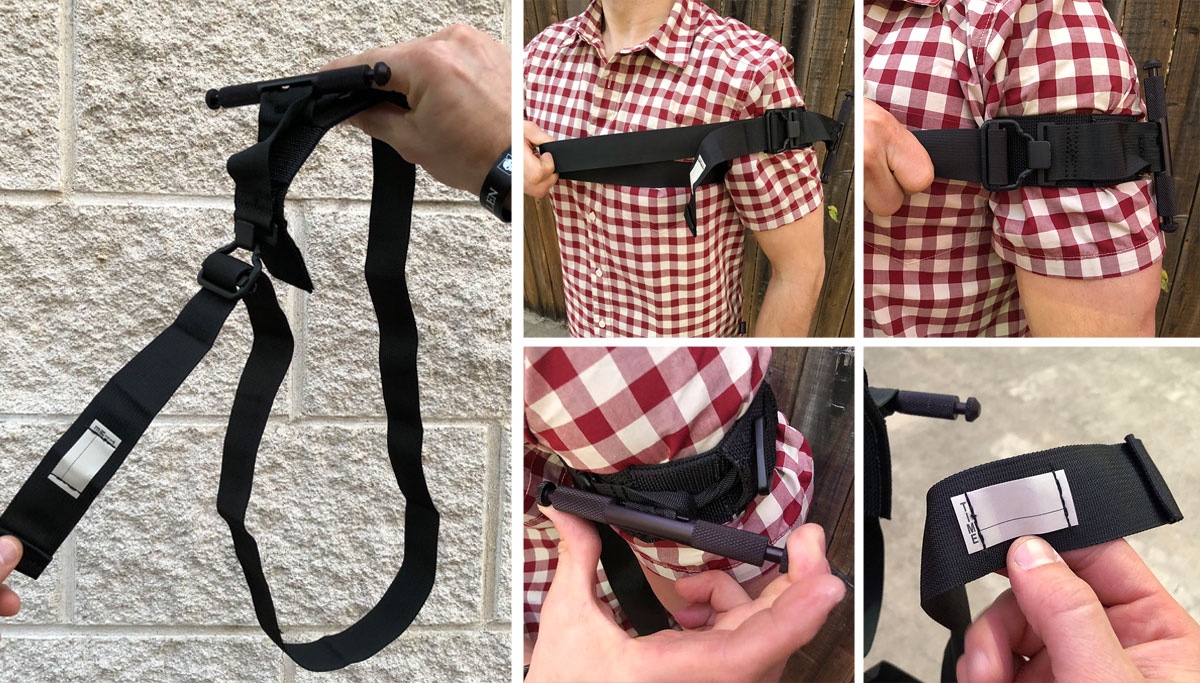
Orient the Tourniquet: The direction of pull to tighten the tourniquet should be towards the midline of the body. This is a good rule to remember and will make application easier if you have to apply a tourniquet on yourself one-handed. Picture an imaginary line running vertically up and down the center of the body; that’s your midline.
High as Possible: Always keep the tourniquet as high as possible on a limb; never on a joint.
Grab the Loop and Pull: Don’t get in the habit of grabbing the tail of the tourniquet to tighten it right away. By grabbing the loop and pulling it towards the midline, you’ll keep the tourniquet from spinning and control it better during one-handed application.
Pull the Tail: Take all the slack out of the tourniquet by pulling the tail to tighten it.
Manipulate the Base: If there’s still slack left in the tourniquet, or you can’t tighten it any further because of its position, grab the base and move it. Then take up the rest of the slack.
Tighten the Windlass: Continue turning the windlass until all bleeding stops, or is controllable/manageable. It doesn’t matter what color the blood is, tighten it until it stops.
Anchor the Windlass: Each side of the windlass has a groove that locks into the d-ring, preventing it from coming undone. Lock this in and ensure it’s locked in the windlass groove.
Time and Date: At the end of the tail, the SOFTT has a sewn-in tag for writing in the time and date. A sharpie works great for this, but anything will do. It’s important to note this for higher echelon care, (i.e. hospitals) so that they know how long the tourniquet has been in place.
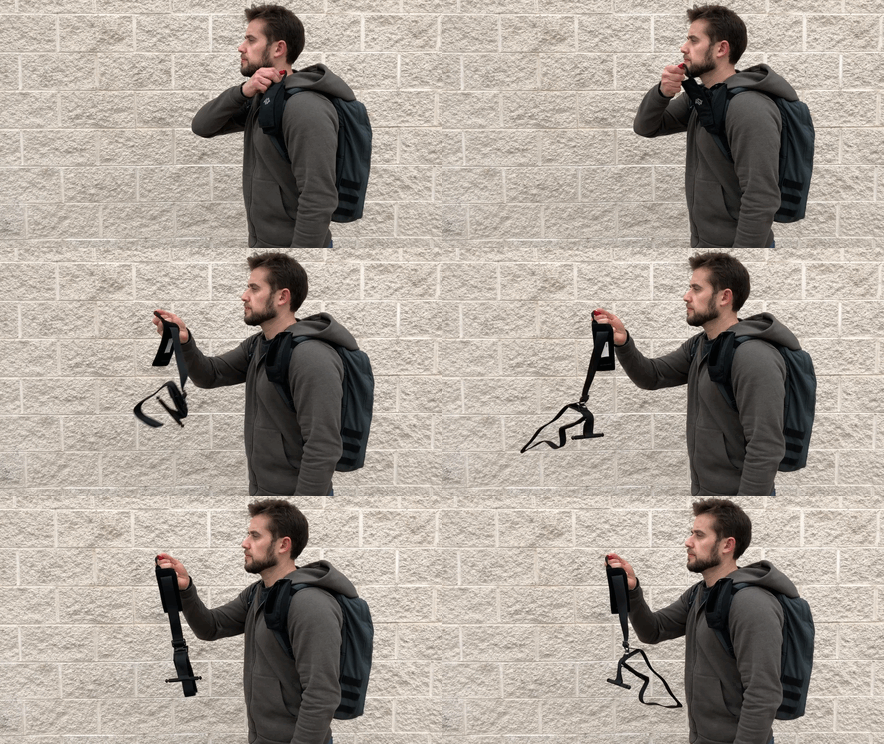
Practice: You should be able to deploy and apply your tourniquet in 12 seconds, one-handed. Practice until you can meet that goal each time. You’re also not going to ruin your tourniquet by practicing with it, just be sure you’re checking it after each practice session and if you see anything that’s damaged or has the potential to fail, replace your tourniquet.
Get Training: This email shouldn’t be used as a replacement for medical training in the usage of a tourniquet. Seek training for yourself and your loved ones from competent trainers. Remember, a tourniquet is not a last resort!
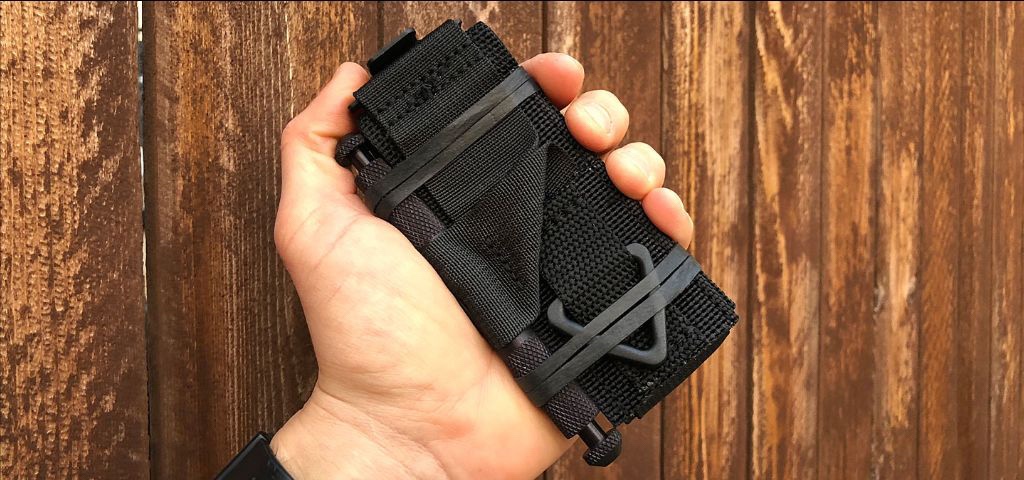
The last thing to discuss is how to store a tourniquet, we’ve recently developed and patented our TourniQuick® Pouch. It provides not only a fully-enclosed storage method, but more importantly, a revolutionary deployment system that reduces time from deployment to application, saving valuable seconds. Remember, seconds count when you’re bleeding out!™
Whether you purchase from ITS or not, always buy tourniquets from a reputable resource to avoid fakes. A failure to plan is a plan to fail, so keep a tourniquet with you and be prepared to save a life.
Thanks to ITS Tactical for allowing us to share this post.
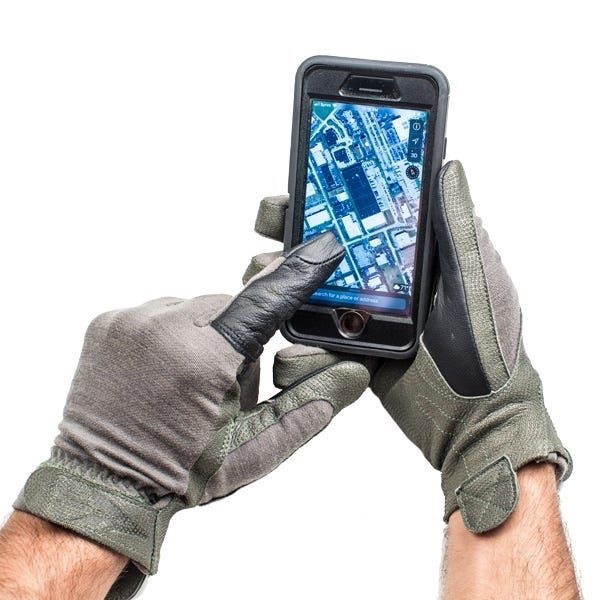
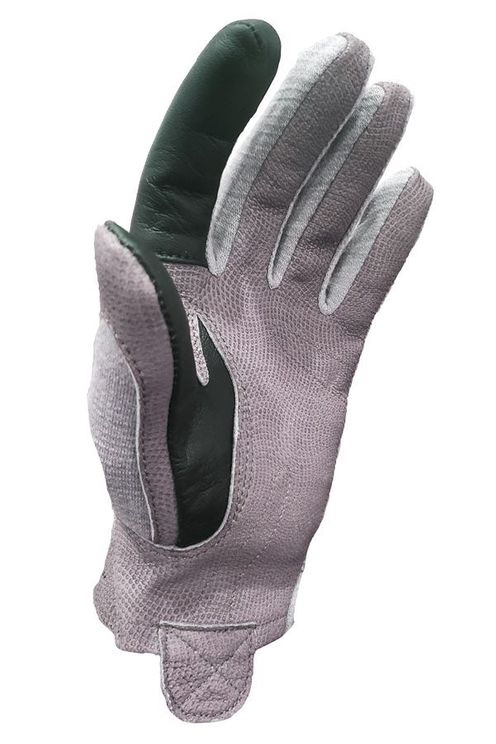
This Friday we are focusing on an FS classic the Operator Glove. When maximum manipulation and tactility are required while protecting your digits consider the Operator Glove (OG) first!
• Patent pending design creates a “no glove” feel
• Touch screen friendly thumb and index finger
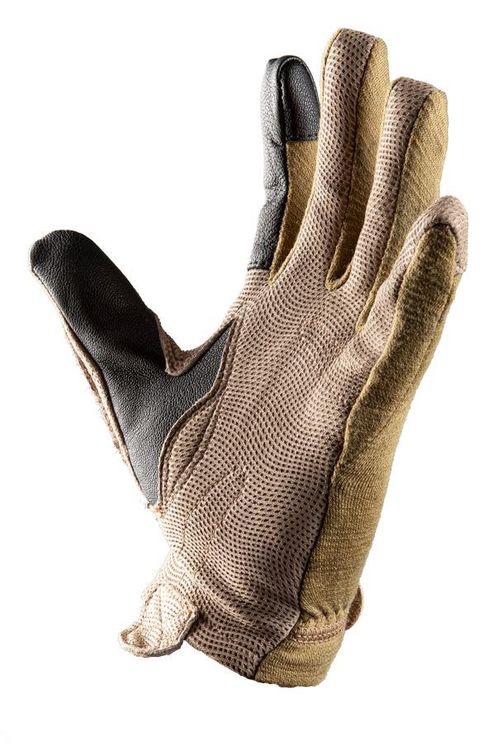
• Super high dexterity leather palm (FS-HDLTM)
• Ultra lightweight and breathable
• No Melt No Drip construction
• 100% USA Berry Compliant materials with Core-Spun USA Merino Wool
When maximum manipulation and tactility are required while protecting your digits consider the Operator Glove (OG) first! Comprised of the most technologically advanced materials and modern construction details no corner is cut in this design. The trigger finger of the OG has an advanced patent pending design that will still give excellent transmission of trigger feel, magazine release and other key weapons functions.
The OG can work as a stand-alone capability or when higher durability and toughness is required it can be utilized in conjunction with the Operator Outer Glove (OOG). In order to achieve this amazing level of peak performance, the OG utilizes extremely light, thin materials which by their very nature will not stand up to extremely long periods of hard abuse but will perform through several mission-focused cycles.
Available in commando, sand and manatee in small through 2XL sizes.
In September, Marine Corps Systems Command began fielding an amphibious, unmanned robot system to support littoral operations globally.
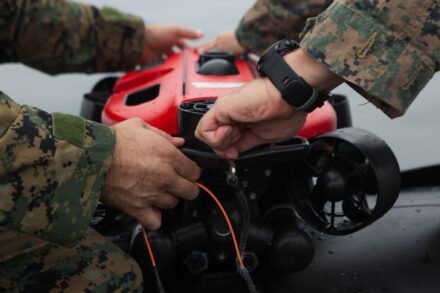
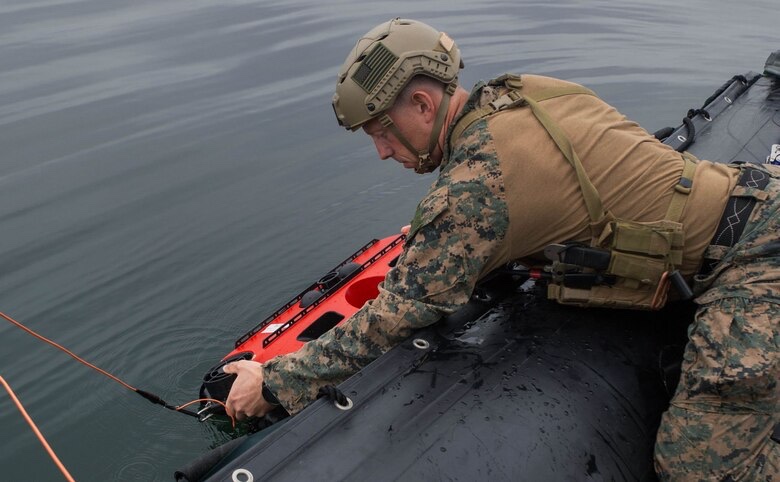
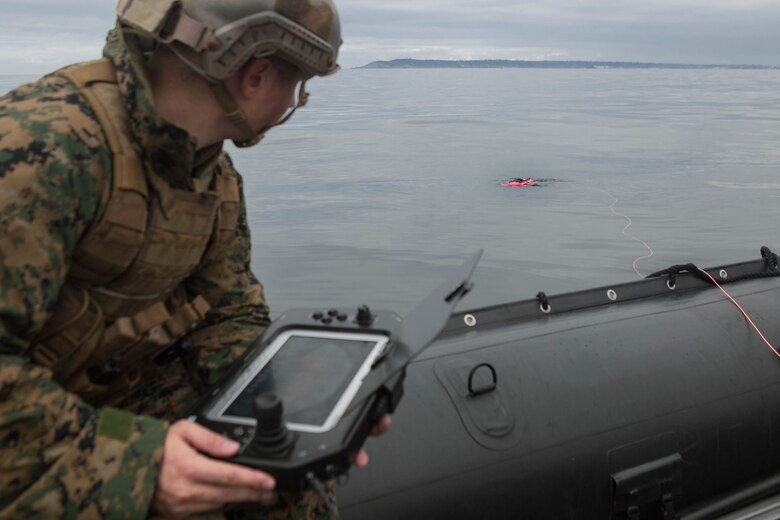
The Explosive Ordnance Disposal Remotely Operated Vehicle is a next-generation, box-shaped robot that enables Marines to navigate safely and efficiently in shallow waters to identify and neutralize explosive hazards and other threats.
“This robot gives Marines eyes in the water,” said Master Sgt. Patrick Hilty, an Explosive Ordnance Disposal project officer at MCSC. “It is a capability the Marine Corps has never before had.”
The ROV employs sound navigation and ranging sensors, a high-definition video capability and cameras that provide real-time feedback for EOD divers. It includes an articulator arm that helps Marines maneuver through underwater foliage or neutralize explosive threats.
“It is a system that saves Marine divers from having to swim hundreds of meters, an activity that can tire them out,” said Hilty.
Marines can use the robot for various amphibious missions. For example, they can leverage the ROV to search harbors before docking a Marine Expeditionary Unit ship. Operators can use it for activities in very shallow waters, conducting littoral lost object searches, damage assessments and mine countermeasure missions.
Hilty applauded the ROV’s tether feature, which keeps EOD technicians at a safe distance from explosive hazards. Before the capability, Marine divers could only disrupt or dispose underwater explosive threats by swimming in close proximity, exposing them to hostile elements.
“The ROV gives us a remote means to search underwater while also helping us stay at our best when having to prosecute explosive devices,” said Hilty.
Master Sgt. Matthew Jackson, a staff non-commissioned officer in charge of 1st EOD Company’s Littoral Explosive Ordnance Neutralization section, said the ROV is highly stable in an underwater environment. He noted how the machine requires minimal equipment and reduces the Marine Corps’ overall footprint during operations.
“This intuitive system has the ability to complete critical underwater tasks much deeper than manned missions can,” said Jackson. “The ROV will serve as an important capability to support our tasks.”
Jackson also praised the system for its ease of use. He said it requires minimal training when compared with other unmanned underwater systems. This ultimately saves the Marine Corps time and money required for training.
“Instead of sending a Marine to a course for seven or eight weeks, it takes about four days to learn basic operations for successful employment,” said Jackson.
The ROV also supports naval integration. In 2019, the Navy acquired this commercial off-the-shelf capability. The service conducted a series of tests to determine its viability for EOD missions. These tests included reliability and maintenance evaluations to test its effectiveness and ease of employment during simulated activities.
“Testing conducted by the Navy allowed us to field this capability to Marines more quickly,” said Hilty. “Additionally, the Marine Corps and Navy both having this system increases interoperability among the services.”
The robot is the first increment in the Littoral Explosive Ordnance Neutralization Family of Systems. This series of robotic capabilities will allow Marines to search a wider area in the littorals, including the very shallow water, surf and beach zones.
This robot gives Marines eyes in the water.
– Master Sgt. Patrick Hilty, an Explosive Ordnance Disposal project officer at Marine Corps Systems Command
LEON systems, to be fielded gradually by MCSC over the next several years, will also help the Marine Corps complement Navy EOD teams in joint operations as it strives to evolve naval force integration in the future.
“Having this capability aids in naval force integration by giving us the same equipment that the Navy is using,” said Staff Sgt. Seth Barnes, EOD Technician with 1st EOD Company. “It allows us to bolt on with Navy EOD as we move forward.”
Achieving Force Design 2030 remains an ongoing, concerted effort for the Marine Corps, as repeatedly stated by Commandant of the Marine Corps Gen. David Berger. This goal requires the acquisition of next-generation, unmanned systems, like the ROV, to support Expeditionary Advanced Base Operations.
“We’re bringing the EABO concept to the modern day,” said Ronald Diefenbach, a program analyst on the Explosive Hazard Team at MCSC. “Adhering to this concept, we can use the ROV to support Marines when operating from the littorals and while conducting island-hopping tasks.”
Hilty said the Marine Corps has never before leveraged waters for missions. In the past, Marines would begin operations from land, typically a beach. This new concept requires a shift in the paradigm in how the Marine Corps operates.
Fielding capabilities that conform to the vision to support an evolving naval fight will ultimately support the present and future Marine.
“We’ve always done this piece via the Navy,” said Hilty. “Now that the Marine Corps is doing it, we are learning valuable skillsets, becoming much better-rounded and proving to be a bigger asset to the MAGTF.”
Story by Matt Gonzales, MCSC Office of Public Affairs and Communication
The Office of the Assistant Secretary of the Army for Acquisition, Logistics and Technology, in coordination with Army Futures Command, has decided to shift the Integrated Visual Augmentation System operational test to May 2022 and its fielding to September 2022.
The Army did not halt or stop the IVAS program, and remains committed to getting the best equipment in the hands of our Soldiers as quickly as possible. The shift in the IVAS program will allow the Army and industry team to continue to enhance the IVAS technology platform, ensuring Soldiers achieve overmatch in multi-domain operations.
The Soldier Lethality Cross-Functional Team, Program Executive Office Soldier, and Microsoft are working together to develop and field IVAS – a technology platform for fighting, rehearsing and training – which will provide close-combat forces with unprecedented capabilities that are extensible to any combat environment or combat platform.
Developers used the Microsoft HoloLens to build a system capable of rapid target acquisition, navigation, target marking and a host of other features, including a field of view nearly twice as wide as those offered by current systems.
At 80 degrees, IVAS pushed the boundaries of waveguide technology capabilities, and the field of view began to lose resolution. By making minor reductions, developers are finding greater quality and clearer visibility.
The process will require a little more time, but it will still result in the fielding of a next-generation combat system six to 10 years ahead of the traditional acquisition program timelines.
Calculated risk and time for adjustment have been baked into our processes, and are vital to rapid Army modernization practices. The new timeline does not affect contract agreements.
At this year’s Association of the United States Army annual event we stated, the Army has to be willing to accept some early risk, or we will never be able to keep up with the pace of change required to achieve and maintain overmatch in MDO.
By Karen Saunders and Gen. John M. Murray
Karen Saunders is the senior official performing the duties of the assistant secretary of the Army for acquisition, logistics and technology. Gen. John M. Murray is the commanding general of Army Futures Command.
Posted in Army, Guest Post | Comments Off on Joint ASA ALT and AFC Statement on the Integrated Visual Augmentation System