GORE-TEX Professional

Archive for the ‘Guest Post’ Category

Changes to Army’s Retention Program Slated to Begin Soon

Wednesday, September 29th, 2021

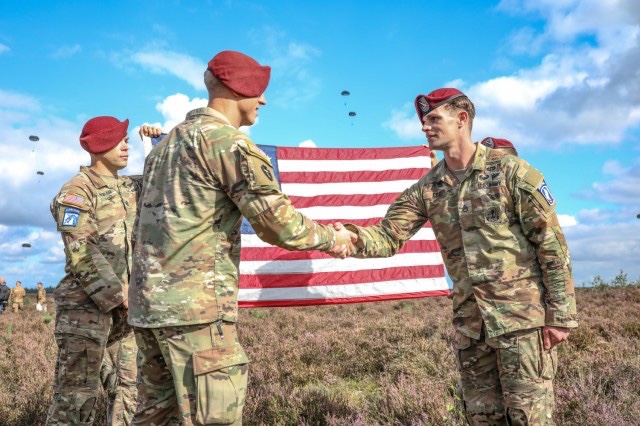
WASHINGTON – Three changes to the Army’s retention program are scheduled to take effect Oct. 1, as the Army looks to simplify aspects of the reenlistment process and give Soldiers more flexibility before their expiration term of service date.

A modification to the Career Status Program, formerly known as the Indefinite Reenlistment Program, an adjustment to the Reenlistment Opportunity Window, or ROW, and to one of the extensions will all take effect starting fiscal year 2022, said Sgt. Maj. Tobey J. Whitney, the Army’s senior career counselor.

“These changes are being made with the intent of increasing predictability for Soldiers and their families while also reducing turbulence within Army organizations,” Whitney said.

Career Status Program

Soldiers ranked E-6 and above and with 10 years or more of active service will now be eligible for the Career Status Program, reducing the time in service threshold from 12 years, Whitney said.

“We found through collected data that staff sergeant and above with more than 10 years of service were required to reenlist at least twice to make it to retirement,” Whitney said. “That doesn’t seem like a logical solution to keep Soldiers in the Army.”

The update to the CSP will not change any of the Army’s voluntary separation policies, which allow Soldiers to request a discharge or enter into the Career Intermission Program, he added.

Under CIP, Soldiers can take a break in service while receiving their benefits and a portion of their pay for up to three years, Army G-1 officials said earlier this year.

“We want to ensure that [qualified] Soldiers understand their eligibility for the Career Status Program,” Whitney said. “If Soldiers can just reenlist for an indefinite term of service, they can go and continue with their careers.”

ROW changes

The change to the ROW policy will give Soldiers 12 months before their ETS to review their reenlistment options and make a final decision, Whitney said.

“The ROW is currently set at 15 months, but we are changing it to 12 for two main reasons,” he said. “First, it is simple for Soldiers, leaders and families to understand when they are 365 days from their ETS.

Second, “the analytics over the past several years [show] that the vast majority of Soldiers wait until they are between eight to 11 months before they reenlist.”

The adjustment to the ROW extension would increase the minimum term length from 12 to 18 months, Whitney said.

The transition process can create a lot of turbulence in a Soldier’s life, he said, as well as impact their organization as they navigate the Soldier for Life program and finish their out-processing tasks.

As the Army continues to operate during the COVID-19 pandemic, he said the ROW extension change would remain a short-term retention option for Soldiers. Further, changes to the program will not impact those who need to reenlist for promotion, reassignment, selection, or other requirements.

“We found that it is pretty common for Soldiers to extend,” Whitney said. “We are adding six additional months to provide a little more predictability for Army units, the Soldier, and their family.”

Many other short-term extension options remain available for Soldiers who need additional time and meet the requisite qualifications, he added.

By Devon L. Suits, Army News Service

TMS Tuesday – New Task Trainer: The Tourniquet Task Trainer Arm

Tuesday, September 28th, 2021

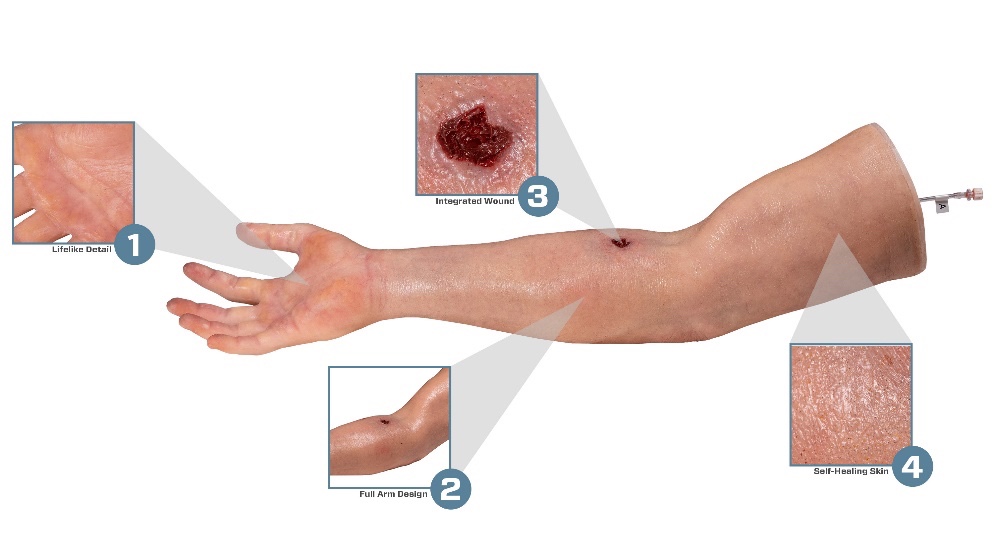
The new Tourniquet Task Trainer Arm is a rugged, hyper-realistic hemorrhage control training solution designed for teaching proper tourniquet application both in the classroom and in field scenarios. Its unmatched lifelike design looks identical to human tissue, and the arm is durable with self-healing properties to withstand repeated use.

Its features include:

1. Lifelike Detail

From a distance and close-up, the hyper-realistic arm looks exactly like a real human extremity – from its skin texture to the lines in the palm to how the structure reacts during tourniquet application.

2. Full Arm Design

The full-length arm trainer is modeled off a 6’2” male for optimal hands-on training to develop muscle memory.

3. Integrated Wound

The gunshot entry wound site can bleed using the integrated vessel system for increased realism and demonstrating proper tourniquet application to stem severe bleeding in upper extremities.

4. Self-Healing Skin

In addition to its high-strength materials, the device’s skin features self-healing properties to increase the product’s life for repeated use by trainees in numerous courses.

For more information, check out tacmedsolutions.com/products/tourniquet-task-trainer-arm

Army EOD Soldiers First to Field Test Unmanned Aerial System

Tuesday, September 28th, 2021

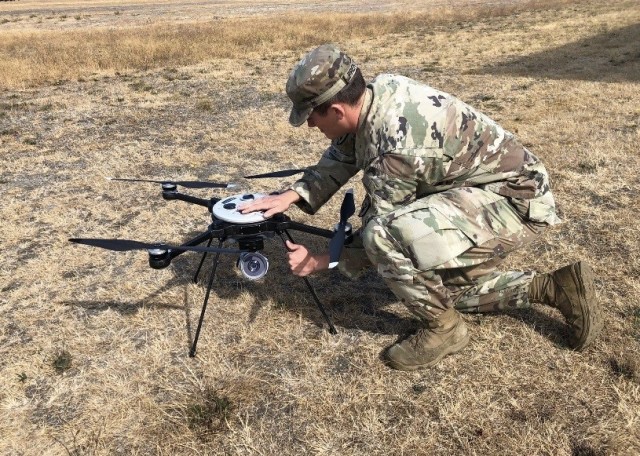
JOINT BASE LEWIS-MCCHORD, Wash. — Explosive Ordnance Disposal technicians from the 707th Ordnance Company (EOD) were among the first U.S. Army EOD Soldiers to conduct field testing with the Skyraider Unmanned Aerial System.

EOD Soldiers from the company put the UAS through its paces from a village in Training Area 4 on Joint Base Lewis-McChord, Washington, Aug. 23 – Sept. 2.

According to Capt. William R. Hartman, the commander of the 707th EOD Company, the UAS provided greater visibility of the heavily forested training area.

“They can mostly be used for reconnaissance of terrain and to identify possible explosive hazards,” said Hartman, a native of Reading, Pennsylvania, who has deployed to the U.S. Central Command area of operations.

Hartman said the UAS was also used to deploy lightweight robots called Throwbots that helped his EOD Soldiers to identify hazards in less accessible areas and structures.

The 707th EOD Company is part of the 3rd EOD Battalion, 71st EOD Group and 20th Chemical, Biological, Radiological, Nuclear, Explosives (CBRNE) Command. Based 19 installations in 16 states, 20th CBRNE Command is home to 75 percent of the Army’s EOD and CBRN units, as well as the CBRNE Analytical and Remediation Activity, 1st Area Medical Laboratory, Nuclear Disablement Teams and Weapons of Mass Destruction Coordination Teams.

Soldiers and civilians from the Aberdeen Proving Ground, Maryland-headquartered command work with joint, interagency and allied partners to defeat CBRNE threats around the world. Since 2003, 20th CBRNE Command EOD Soldiers have partnered with U.S. Navy EOD technicians to disable hundreds of thousands of improvised explosive devices in Iraq and Afghanistan.

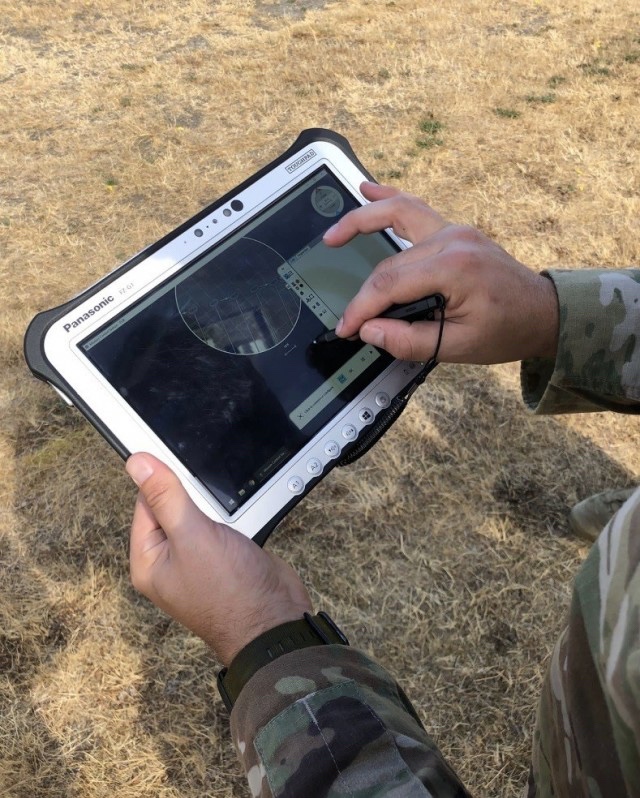
Hartman said the highlight of the fielding was connecting Light Detection and Ranging or LDIR technology to the UAS system and using it to map terrain.

The EOD company commander said the UAS could be a great use in a combat zone.

“We could definitely benefit from its capabilities in that environment,” said Hartman.

By Walter Ham

MATBOCK Monday – Tarsier Eclipse

Monday, September 27th, 2021

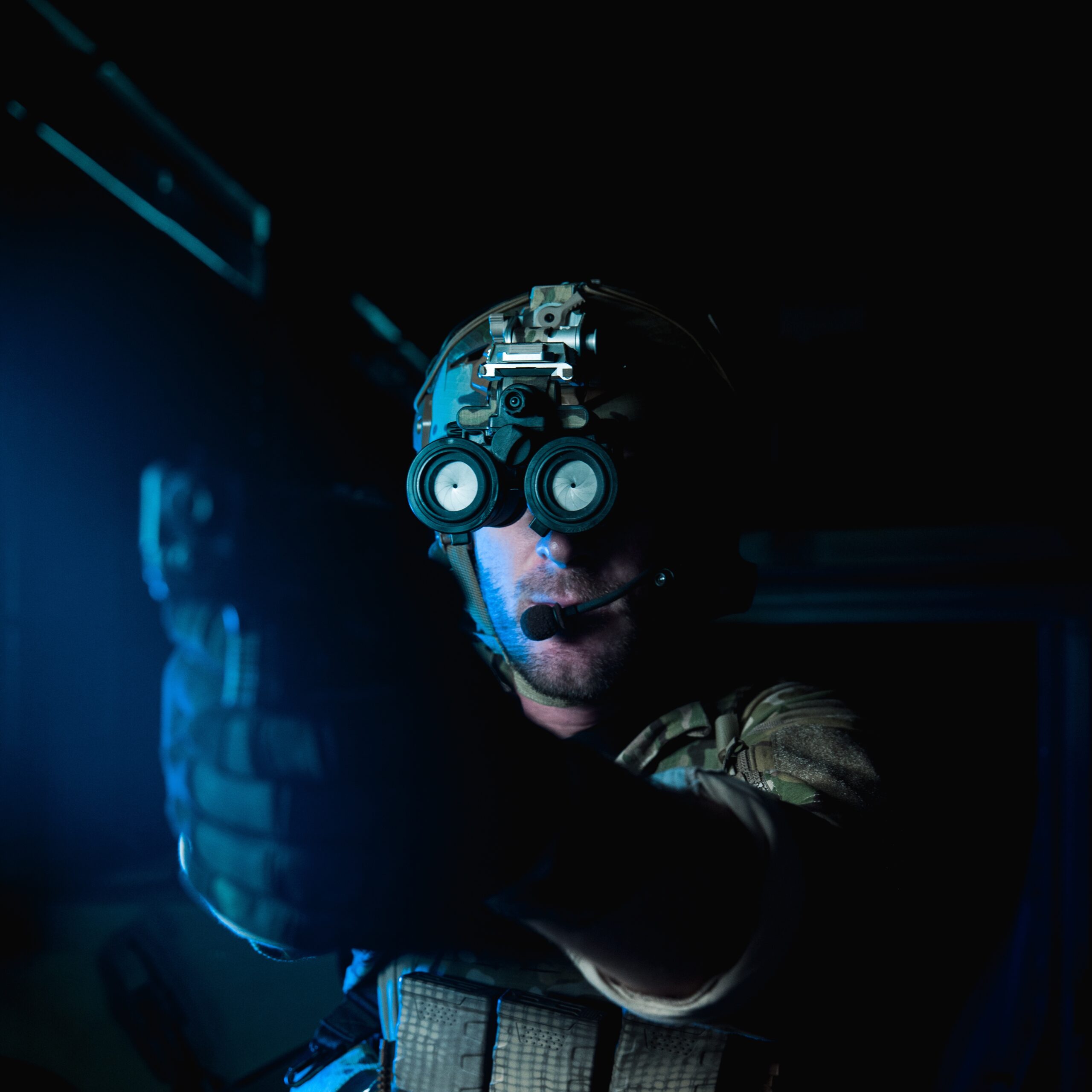
The Evolution of the Tarsier Eclipse. First, the name Tarsier was derived from the Tarsier Primate in Southeast Asia that over the years has evolved their “night vision”.

In our first SEAL Platoon back in 2007, Zach and I were taught to punch holes in our caps to give us “autofocus”. This was awesome, but we knew there was a better way, so we ordered a Spaghetti Measuring tool. After testing this with our NVGs, we knew we were onto something, so we started filing the patent for it.

During that process we were notified by our patent attorney that another company had already filed for a utility patent, so we reached out to Phokus Research Group and pitched our product. They agreed to issue us the exclusive licensing to use their patent for our Tarsier Eclipse.

Over the next couple years, we tested various designs of the Tarsier Eclipse (shown below), but ultimately the overwhelming feedback from our customers was that they preferred the current design. The biggest reason was for dexterity during situations when fine motor skills are lost (high-stress environment).

In 2015 we started adding a small lanyard and eventually this was approved by NAVAIR for Navy Air Crewmen to fly with. The lanyards are easily removed, but we must ship them with them attached to stay compliant with the NAVAIR regulations.

The Tarsier comes as a single unit 

www.matbock.com/collections/night-vision/products/tarsier-eclipse

or

As a Kit

www.matbock.com/collections/night-vision/products/tarsier-eclipse-kit

MATBOCK is offering a 21% discount on Tarsier Eclipses until 1 OCTOBER 2021
Use promo code NVG21 at check out to get this super deal on both kits and singles before time runs out!

55th Communications Squadron Redesignated as Cyber Squadron

Monday, September 27th, 2021

OFFUTT AIR FORCE BASE, Neb. (AFNS) —

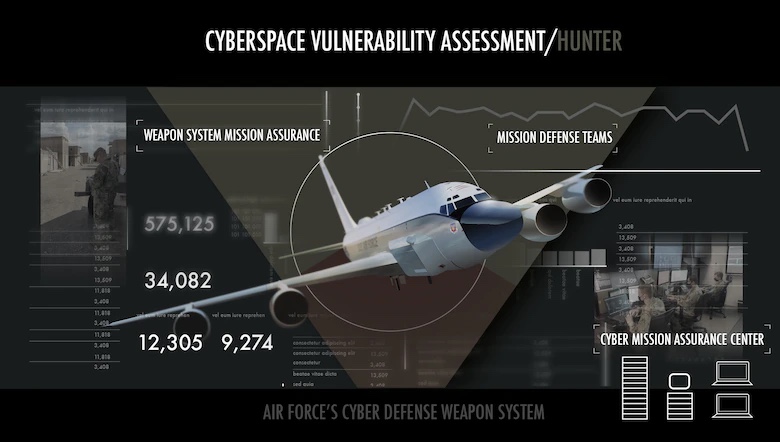
The 55th Communications Squadron recently met all objectives required by the Air Force to be redesignated as the 55th Cyber Squadron.

The redesignation indicates the squadron will add a new Mission Defense Team to its overall capabilities while continuing to maintain their legacy mission.

“I’m so proud of the unit and our amazing Airmen,” said Lt. Col. Christopher Wong, 55th CS commander. “We have accomplished all of this through COVID, with a huge deployment burden and the transition to Lincoln.”

For the unit’s Airmen, the redesignation means they are not only responsible for ensuring the installation’s communication infrastructure is protected, but they are also now proactive cyber defense operators on the Air Force’s tactical edge.

“One of the major hurdles that we had to overcome was shifting our mindset from a maintenance to an operational perspective,” said 2nd Lt. Jeffrey Cruse, 55 CS Cyber Defense Flight commander. “No longer is our primary focus customer issues or general system maintenance, but instead we are thinking about ways to engage near-peer adversaries and defend our mission critical networks and infrastructure.”

The unit’s redesignation to a cyber squadron comes only after it met four phases outlined by the Air Force. They include maintaining the unit’s current mission, declaring Initial Operating Capability on its new MDT mission, implementing Enterprise IT-as-a-Service, and having the wing commander recommend the redesignation to the unit’s major command.

By continuing its legacy mission and with the implementation of EITaaS at Offutt Air Force Base in 2020, the unit had to mostly focus its efforts on ensuring its new MDT mission met all of its IOC requirements to make the transition a reality.

“Due to some very unique circumstances here at Offutt (AFB), our squadron was in an advanced position, which enabled us to be a front running cyber squadron and MDT organization,” Wong said.

This included adding specific cyber equipment, tweaking the unit’s manning document, qualification training, and the development of unit specific defensive tactics, techniques and procedures.

“We had to put in place so many new processes and procedures and completely change the way we do business, not just within the team but within our entire squadron,” Cruse said. “As for the operators, once things got moving along they were fully bought in and on board. They had been working and waiting for so long to finally get connected to a system and apply their skills. Once we were able to make our first connection, it was game on for them.”

The unit focused heavily on building a robust operations training program early on in the process and that paid off in the end.

“We’ve put more people through the initial qualification training and mission qualification training pipeline than any other squadron in the Air Force,” Wong said. “We’ve done that just over the past four months and in fact, we’re looking to double that number here soon.”

As part of this redesignation, the unit is further integrating itself into the wing’s operations environment. This includes allowing its Airmen access to the RC-135’s ground and onboard systems for the first time ever.

“One of our main tasks now is RC-135 mission assurance,” Wong said. “To that end we have established an officer exchange program with the 55th Operations Group, we’re now on the jet, flying with them, and all of these are major efforts to help us get to RC-135 mission assurance.”

“Our cyber warriors are proving to the ops world that cyber deserves a seat at the table and play a critical role in their missions,” Cruse added. “What this means for the wing is that we now have a robust capability and way to provide defensive cyber forces to the fight and ensure the unique mission set of the RC-135 and its variants can provide their ISR [intelligence, surveillance and reconnaissance] capabilities to the nation.”

Along with meeting all of the criteria for the redesignation, the unit also underwent some internal restructuring. They have consolidated all battlespace activities under the new Information Technology Support Flight, defined a distinct Operation Support Flight, and changed the name of the Cyber Protection Flight to Cyber Defense Flight.

“We want to employ each individual’s technical expertise and talents to get after the mission set,” Wong said. “This will be key when we start engaging nation states as they will have to rely on those critical-thinking abilities in order to plan, execute and operate in those environments.”

While the unit continues to adapt to its changing mission, the leadership team said this transition wouldn’t have been possible without an array of base agencies who support the 55th CS mission.

“We have a great relationship with all of our mission partners,” Wong said. “The reason all of this has worked is because we have made a huge effort to build strong, positive relationships.”

55th Wing Public Affairs

SCUBAPRO Sunday – General Wingate a Forefather of Modern Guerilla Warfare

Sunday, September 26th, 2021

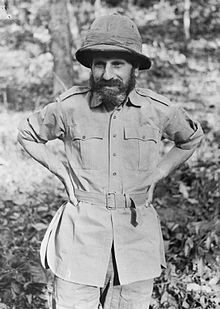
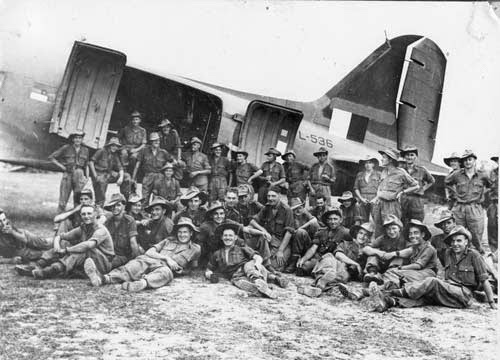
Major General Orde Wingate has memorials in England, Israel, and Ethiopia. Though he was unorthodox, erratic, and difficult to work with, many admired his eccentricities. Wingate, who ate raw onions for their health benefits and who cleaned himself with a hairbrush of sorts, also believed, quite openly, in his superiority. This, along with his sometimes-disheveled looks and foul body odor, alienated more than a few of his commanders and colleagues. He was also known for being in his tent completely naked and running staff briefings. The most well-known of his contributions is his creation of the Chindits battalions for deep-penetration missions into the Burmese jungles behind Japanese lines. The missions’ effectiveness is a matter of debate, but Wingate’s exploits have secured him a place as a legend, if a very odd one. Wingate was born on February 26, 1903, in India to a British army officer. He had six siblings, so they were with him for most of his childhood. The family moved to England before 1916, and Wingate attended formal education in England.
In 1921, he was accepted to Woolwich Military Academy, where he studied infantry and artillery tactics. He was known to be rude, obstinate, and intolerant. He excelled in horseback riding at the Military School of Equitation. Because of this skill, he was promoted to the cavalry. Throughout his early career, Wingate always tested people. It was often because he rubbed people up the wrong way and didn’t conform to the “old boys’ network” that the officer class of the British Army consisted of in those days. In 1928, he was sent to Sudan to keep an eye on possible uprisings against British colonial rule and map it. Wingate traveled to Sudan by bicycle and then took a boat from Yugoslavia to Cairo, Egypt. He reached Khartoum and was eventually transferred to the Sudanese Defense Force. Most officers would’ve considered this a black mark on their career, but he thrived in Sudan and the harsh environment, considering it a challenge and a way to “toughen up.” He served in the East Arab Army and commanded units patrolling Ethiopia’s border, preventing the trade in black slaves and ivory. He enjoyed being out on the trail. He was unpopular with other officers due to his abrasive personality.

Next, Wingate went to the British Mandate for Palestine (today’s Israel). There, he was decidedly pro-Jewish in a majority Arab country and in an army where many of the officers did not like the natives, either Arab or Jew. He proceeded to get involved in the Jewish communities, their leaders, and Zionist movements. Wingate believed that it was his religious obligation to support the creation of a Jewish state. He pushed the boundaries of his duties, and some say he exceeded them, helping militant Jewish groups with money, arms and intelligence. With the reluctant support of General Archibald Wavell, Wingate aided militant Jewish groups in attacks against Arab militants during the Arab uprisings of the late 1930s.
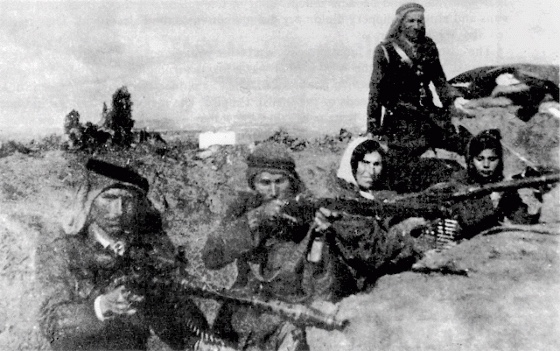
To fight the Palestinian Arab guerrilla forces in the area, Wingate suggested to Major General Archibald Wavell (commander of British troops in the area at the time) the idea of commando units of British and Jewish troops to counter raids, saboteur operations and find the villages where the guerrillas sought refuge. Wavell approved, and Wingate formed the Special Night Squads from volunteers in the British Army and Haganah, the Jewish paramilitary force that was the precursor to the Israeli Defense Force. For his actions in Palestine, Wingate was awarded the Distinguished Service Order and became a hero in the Jewish community. He is still remembered in Israel to this day for his huge role in training Haganah forces. After England was drawn into World War II, he was sent to Ethiopia to organize a guerrilla force around the Ethiopian emperor, Haile Selassie. The Italians had conquered the country of the latter in 1936-37. The “Gideon Force” was a group of irregular troops that shared Wingate’s vision for the irregular forces and fought with him in Palestine.

Like many “different” individuals throughout the history of military service, Wingate inspired either complete disdain or total loyalty, and most of his loyal followers followed him to Ethiopia and beyond. Gideon Force, made up of British, Ethiopian, and Sudanese soldiers, soon ran the Italians ragged, and in a war that they were ill-equipped to fight, forced the Italian forces of 2,000 men to surrender to their 20,000 in 1941. Emperor Haile Selassie was another man who admired Wingate and looked upon him favorably. In February 1941, Wingate created his new command. Requested by the new commander-in-chief of Middle East Command, Wavell, to fight the Italians in Ethiopia, Wingate traveled to Sudan and formed the Gideon Force. The Gideon Force was named after the biblical Judge who defeated a large army with a small army.
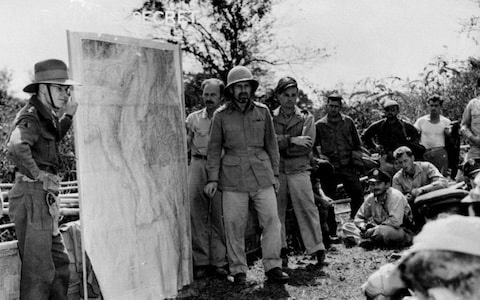
Wingate’s Gideon Force, numbering about 1,700, moved behind enemy lines and attacked supply lines while working with local militias to attack Italian forts. Operation Gideon Force was successful in the end, due to the surrender of 20,000 Italian troops. Wingate accompanied Emperor Haile Selassie on his return to Addis in May 1941. He was awarded his second unit citation for his exemplary service. In both Palestine and Ethiopia/Sudan, Wingate’s relationships with local communities and populations were seen by other officers as highly inappropriate. This, combined with his official reports in which he often railed against other officers and the higher command, hurt his chances at promotion and led to him being moved frequently.
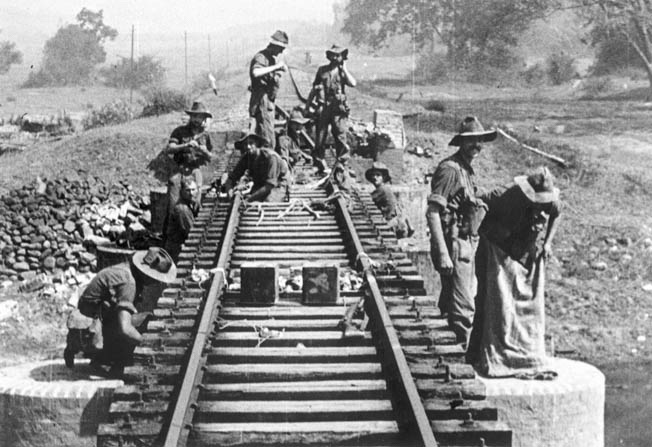
Also, there was the issue of his eccentricity, which included wearing a wreath of raw onion and garlic around his neck, which he would frequently chew into and greet guests to his command tent while entirely naked. Wavell established an affinity for Wingate and his creativity, and when he became commander of the South East Asian Theatre, he helped Wingate secure a command. Reports of Ethiopia reached Winston Churchill, searching for innovative and creative ways to take the war to the enemy. This allowed him to get an audience with Churchill, who was impressed by the idea and asked that he come up with a plan. Wingate arrived in India in March of 1942 to become a colonel for the British shortly before India’s Japanese takeover. Wingate commanded the Indian 77th Infantry Brigade and trained them in the art of jungle warfare. With this training, he learned to camp in the jungle during the monsoon season, which led to hundreds of men getting sick. Wingate believed exercise and mental strength would boost one’s resistance to infection. However, his eccentricity directly led to poor managerial decision-making.

Wingate was ordered to form a group of guerrilla-style fighters to take the battle behind Japanese lines to disrupt communications, gain intelligence, and force the Japanese to divert troops that might be needed in more strategic areas. To create the “Chindits,” Wingate copied the Burmese word for a mythical, fearless lion. The first Chindit mission in February 1943 was a failure. The Chindits made trouble for the Japanese behind their lines in Burma, but poor logistics and underestimating how mobile the Japanese were forced the Chindits back to India in March. They had pushed too far into Japanese territory, and when they attempted to retreat, the Japanese surrounded them. Wingate split-off his men into smaller groups and arranged them to expedite their return. Through the war’s remainder, the Wingate Troop’s survivors trickled back to India. The loss of one-third of the men raised the morale of the other troops. They were encouraged by this, and it boosted confidence further. Wingate was given another opportunity to the situation.
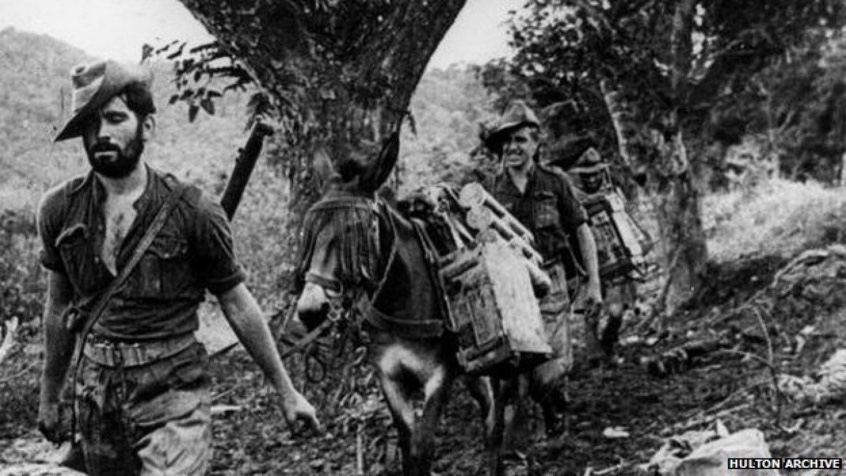
Wingate was given overall command of six whole brigades and the mission. Two were dropped via gliders during World War II into Burma behind enemy lines in March. Those men cleared landing strips so other aircraft could land. Though many officers argued that the mission took the most battle-hardened troops away from the front line of battle, as the Japanese tried to push into India, they were constantly distracted by the Chindits, which delayed their advance. The Japanese attempted to isolate the small force, using three infantry divisions to chase a force of perhaps 8,000 men (the force increased in size to about 12,000 in 1944). In 1944, the Chindits penetrated deep into Burma and found strong points deep in the jungle, from which to strike out and harass the Japanese. This strategy was so successful that the Japanese decided to eliminate the threat from the Indian border. This resulted in significant battles at Imphal and Kohima, some of the most brutal fighting in that theater. Throughout the process, the Chindits harassed the Japanese column, weakening them for the decisive battles.
The Japanese commander, Mutaguchi Renya, said that he would have likely achieved a Japanese victory had he not been forced to put up a fight against the Chindits. Wingate’s force definitely contributed to Burma’s victory, even though their achievements may have been overstated. When his plane crashed on March 24, 1944, Major General Wingate was on his way to inspect his troops in the Burmese jungle. Three British officers, as well as the American pilots, died in the incident. Their remains were archived in India. Following their deceased relatives’ wishes, they were subsequently interred in the United States at Arlington National Cemetery. The Chindits continued under other commanders until the end of the war, using Wingate’s tactics, who is still considered one of the most innovative tactical strategists of the 20th century. Wingate is regarded for his unorthodox approaches to unconventional warfare and as a very unusual man. But he was also one of the best wartime leaders and innovators of WWII.


Special Operations, 82nd Airborne Snipers Test New Modular Precision Rifle at Bragg

Saturday, September 25th, 2021

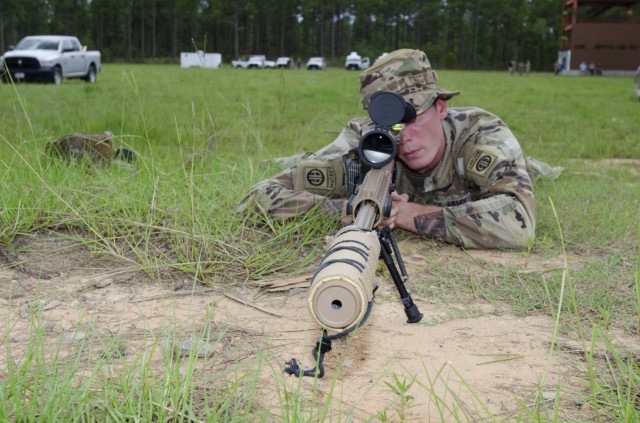
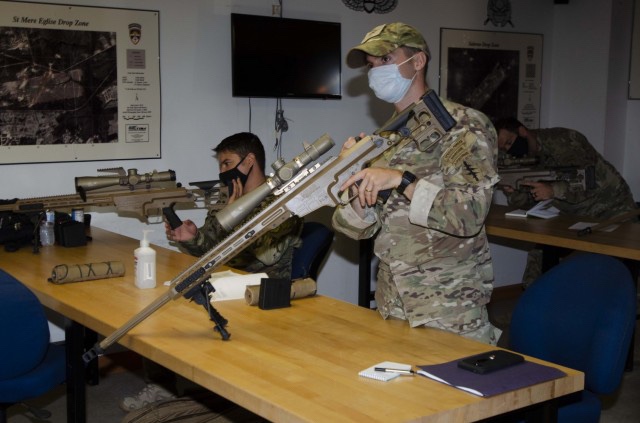
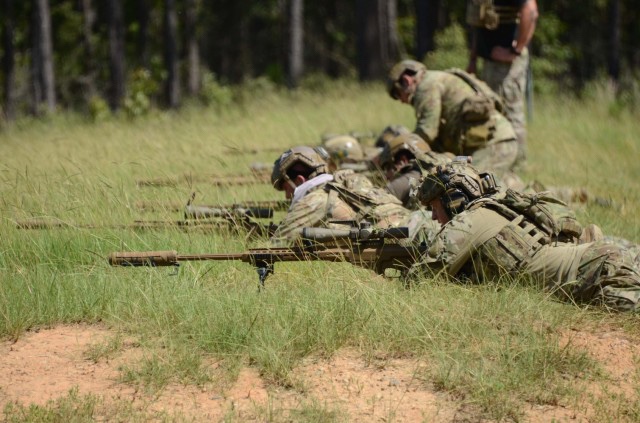
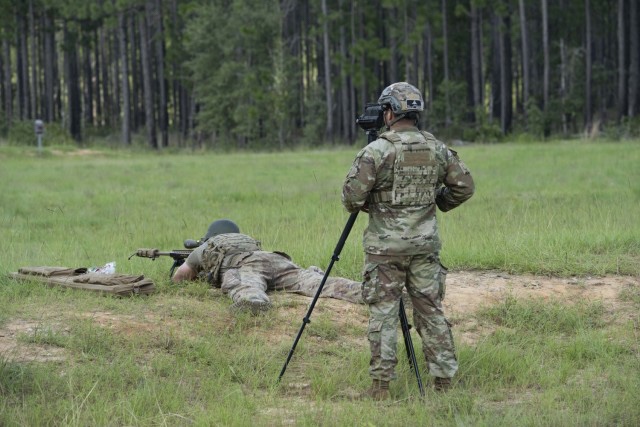
FORT BRAGG, North Carolina — Operational testing of the Army’s newest generation sniper system — the MK-22 Precision Sniper Rifle (PSR) — marks the project’s final hurdle before fielding.

“The modular nature of the PSR allows it to be tailored to meet mission requirements and is appealing to airborne Snipers who are typically armed with long-barreled precision rifles of a single caliber offering,” said Sgt. 1st Class Marcus Love, Airborne and Special Operations Test Directorate, Test Noncommissioned Officer.

Because of the single-caliber offerings, snipers requiring additional capabilities must deploy with additional weapons. The PSR can be configured for multi-calibers by the Sniper in the field and requires no higher level maintenance to reconfigure. It will also extend engagement ranges for both anti-material and anti-personnel target engagements.

“The increased engagement range will keep Snipers safer and increase the options for the local commander employing these combat multipliers,” said Sgt. Austin Stevens, a Sniper assigned to the 1st Battalion, 325th Airborne Infantry Regiment, 2nd Brigade Combat Team, 82nd Airborne Division.

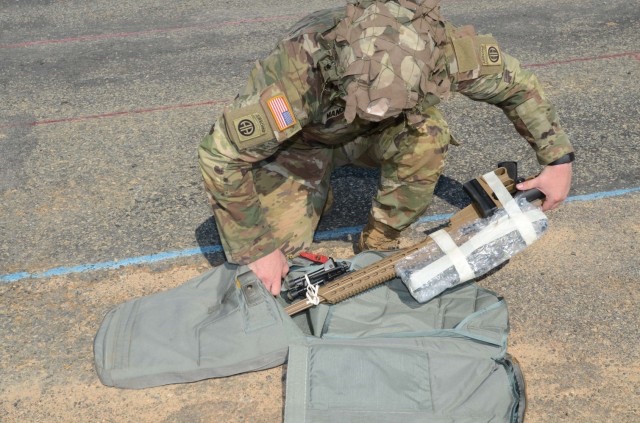
“With a folding stock and removable suppression system, the PSR will provide airborne Snipers a more compact load during airborne infiltration operations without reducing their lethality while providing a precision rifle platform more conducive to their combat environment,” said MK-22 Project NCO Sgt. 1st Class Jonathan Copley.

Spc. Michael Liptak, a Sniper with Headquarters & Headquarters Company, 2nd Battalion, 325th Infantry Regiment immediately identified the attributes of accuracy in regards to the MK-22. “I was surprised at the accuracy and the straightforward approach to testing the PSR,” he said.

Prior to testing, Snipers from across the airborne and special operations community took part in new equipment training which included familiarization with the system, maintenance, target engagement, system configuration and zeroing procedures.

For Spec. Nathanael Keffer, a Sniper with 2nd Battalion, 508th Infantry Regiment, the PSR’s versatility to adapt to multiple mission sets was a marked advantage. “The PSR is a very versatile weapon system that can be tailored to meet multiple mission requirements,” said Keffer.

Mr. Larry Harris, ABNSOTD Deputy Chief of Test said, “The critical task in testing any small arms platform intended for use by airborne forces is ensuring zero retention of the primary optic subsequent to airborne insertion. “This is a critical gauge of the Paratrooper’s lethality during airfield seizure and other follow-on operations.”

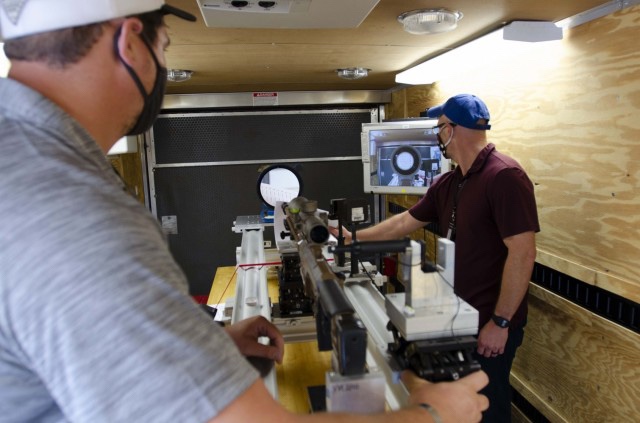
To evaluate this performance measure of the PSR, the ABNSOTD test team applied the organization’s mobile weapons boresight collimator to the rifle after jumping to make sure the Sniper’s pre-mission zero was not degraded by shock during the jump.

“This process establishes a baseline for sight reticle locations prior to and post airborne insertion,” said Miles Crawford, Test Technology Branch Chief, ABNSOTD. “Testers can monitor any shift in the weapon sight reticle that may have been induced by shock associated with static line parachutes,” Crawford said.

Story by Mr. Mike Shelton, Airborne and Special Operations Test Directorate, U.S. Army Operational Test Command

Photos by Mr. James Finney, Audio Visual Production Specialist, Base and Test Support Services contractor

FirstSpear Friday Focus: Hooded Field Shirt

Friday, September 24th, 2021

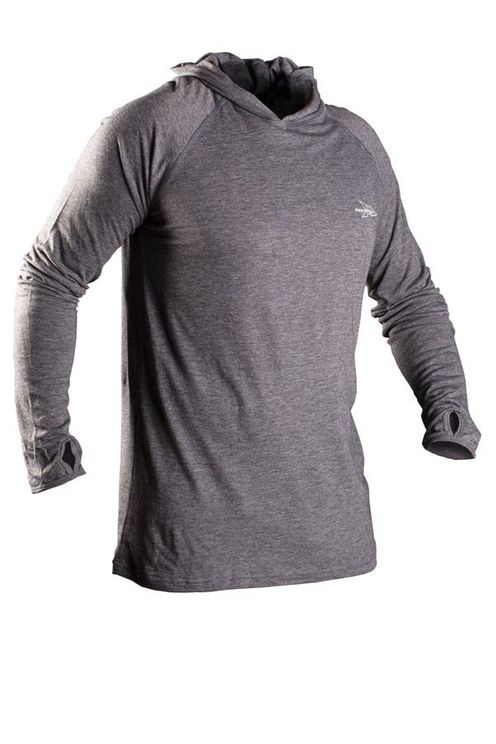
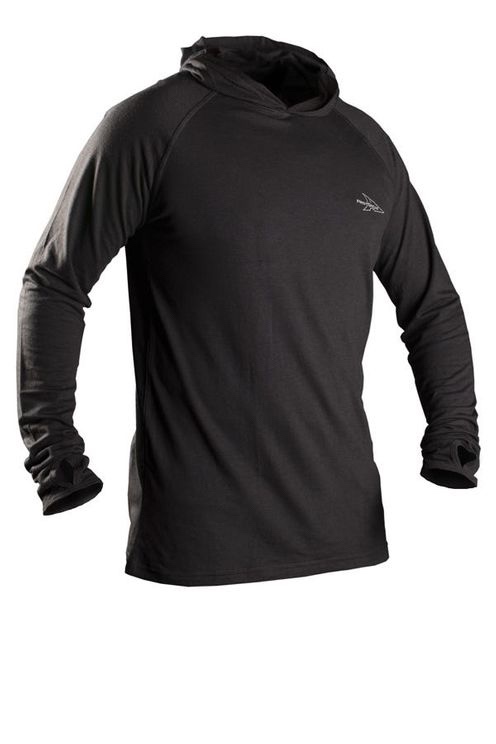
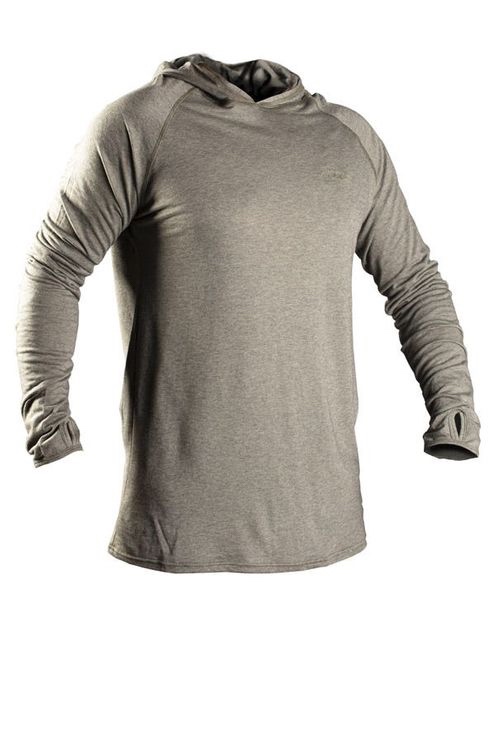
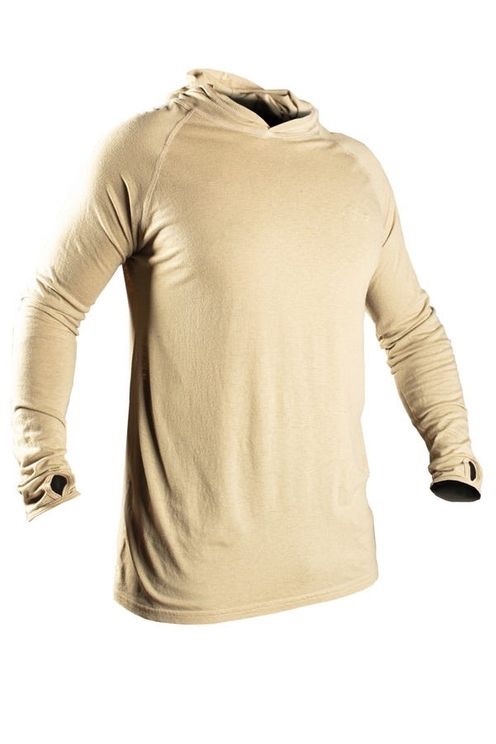
Fall is here and FirstSpear is giving us a look at an extremely popular garment from their all American merino wool apparel line up, the Hooded Field Shirt. This garment is generously cut with an oversized hood with absolutely no hardware making for an incredibly comfortable and highly functional base layer or perfect stand-alone top when temperatures are fluctuating.

Built from ACM-BASE 100, FirstSpear’s lightest wool package. Wear it year round to keep you cool and dry or retain warmth when it cools down.

In stock and now shipping in black, commando, sand, heather grey, and charcoal. 100% made in the USA with USA materials.

For more information, check out www.first-spear.com/technical-apparel/american-merino-wool/field-hoodie

Check out the latest season of FSTV X-RAY Team: