Pirata Series from OTB Boots - Coming March 2026!

Archive for the ‘Guest Post’ Category

Air Force Declares TACP Mobile Communications System ‘Combat Ready’

Wednesday, September 1st, 2021

HURLBURT FIELD, Fla. – The U.S. Air Force’s Air Combat Command recently declared the initial operational capability for the tactical air control party mobile communications system block 2 system ‘combat ready’ at the recommendation of the 605th Test and Evaluation Squadron, Hurlburt Field, Florida.
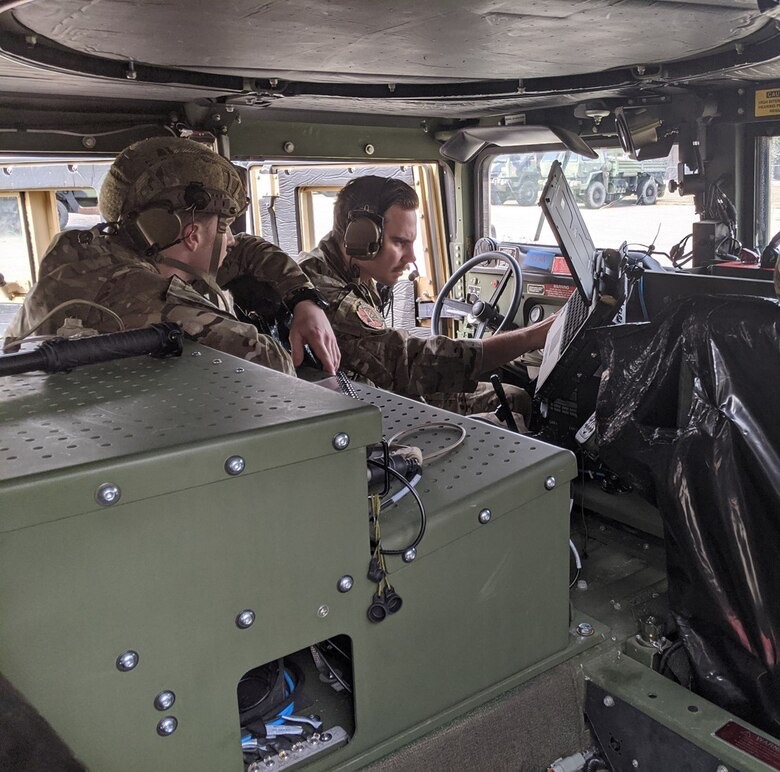
In the spring of 2020, the 605th TES TACP Element, in conjunction with the 14th Air Support Operations Squadron, Pope Army Airfield, North Carolina, conducted the operational utility evaluation, or OUE, of the MCS block 2 on M-1165 armored high-mobility multipurpose wheeled vehicles.

As Air Combat Command’s independent, sole, command and control operational test unit, the 605th TES, tested the system under realistic conditions, using new and experienced Airmen, who will be operating and maintaining the system once fielded.

The OUE validated the operational effectiveness and suitability of MCS block 2, cybersecurity and resiliency, and its impact on TACP and air support operations center tactics, techniques, and procedures. 

M1165 HMMWVs, better known as humvees, are integrated with multi-channel communications equipment through the MCS block 2 system which provides voice, data, and video capabilities to TACP Joint Terminal Attack Controllers while “on-the-move” and “at-the-halt”.

“This new system gives TACPs greater mission flexibility by incorporating additional data link, full motion video, and high frequency radio capabilities while out in the field,” said Master Sgt. Jesus Torres, 605th TES senior enlisted leader and TACP.

JTACS will use MCS Block 2 to perform their close air support and command and control missions.

To achieve IOC, the MCS Block 2 system demonstrated the necessary combat capability for voice and video communications and had sufficient required fielding and logistics support.

“Through early involvement and by building relationships across the acquisition process the 605th TES was instrumental in providing early user feedback,” said Torres.  “During early DoD [Department of Defense] COVID Guidance, the 605th TES TACPs developed risk mitigation measures enabling regression testing to continue during the pandemic which allowed this vital capability be delivered to the warfighter five months ahead of schedule.”

“As our service takes positive steps to mature Agile Combat Employment concepts, through years of being disaggregated and embracing Mission Command, the TACP community is best positioned to inform the larger enterprise on what technology could be beneficial, said Col. Adam Shelton, 505th Test and Training Group commander.  “This IOC declaration will assist in furthering our integration efforts with joint partners in venues such as the Army’s Project Convergence or in tier 1 exercises such as Northern Edge.” 

As of August 2021, the 605th TES continues to accelerate change by conducting operational testing on the MCS Block 3, installed on the U.S. Army’s next-generation Armored Multi-Purpose Vehicle as a replacement for the M113 Armored Personnel Carrier family of vehicles.

505th Command and Control Wing (ACC) Public Affairs
GORUCK – How You Can Help – Afghanistan

Tuesday, August 31st, 2021

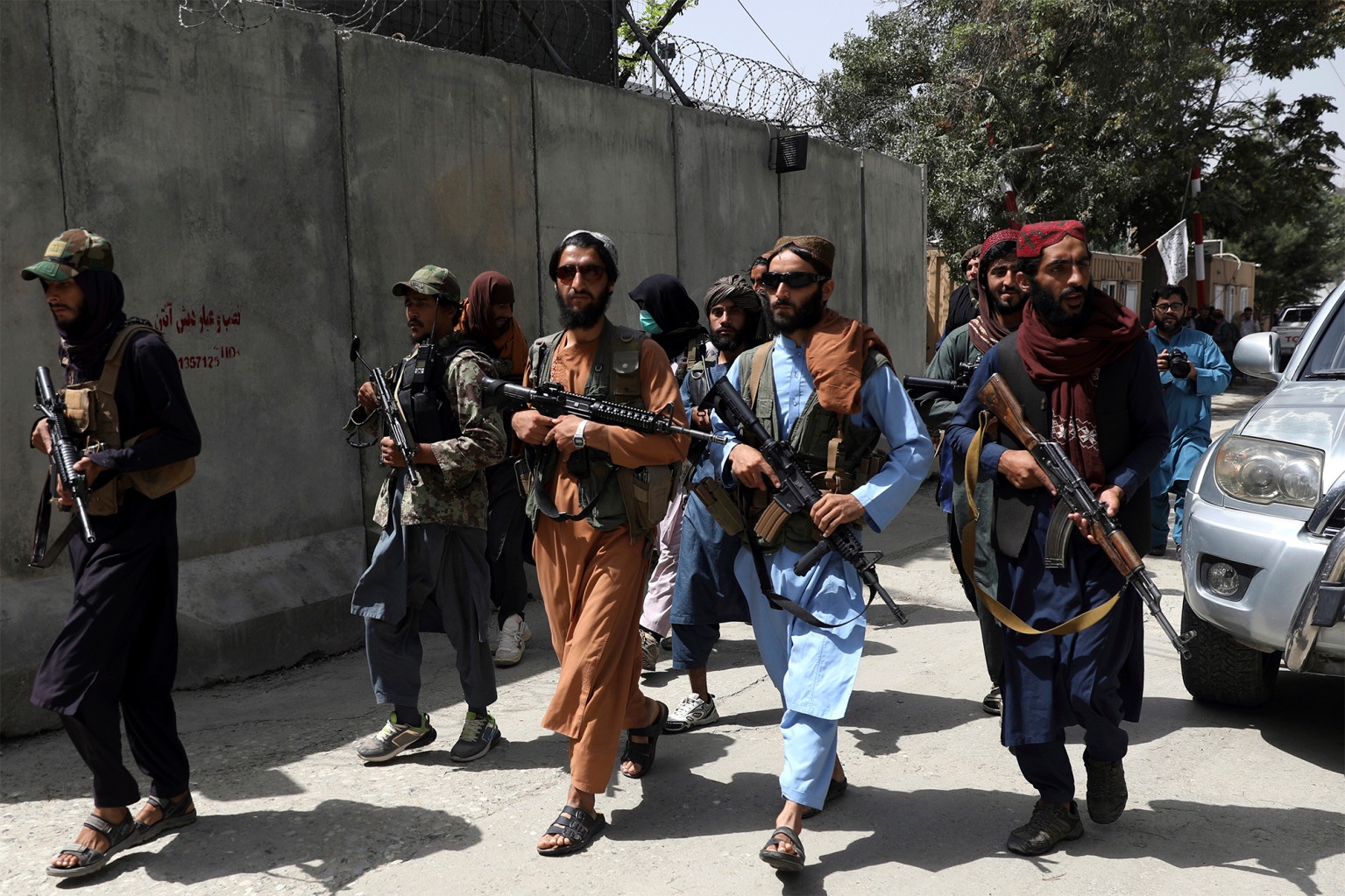
GORUCK sent this out to their email subscribers yesterday. Many of us are frustrated because we can’t help the situation and this post gives us some hope. But no matter what you do, do NOT let our elected officials off the hook on this. Write them, call them, and remind them what a disaster was created here and that there will be consequences for our country and the world community for not only emboldening the Taliban, but arming them as well. Also, we’ve lost 13 fine young Americans, the best our nation has to offer. We need accountability so that this won’t happen again.

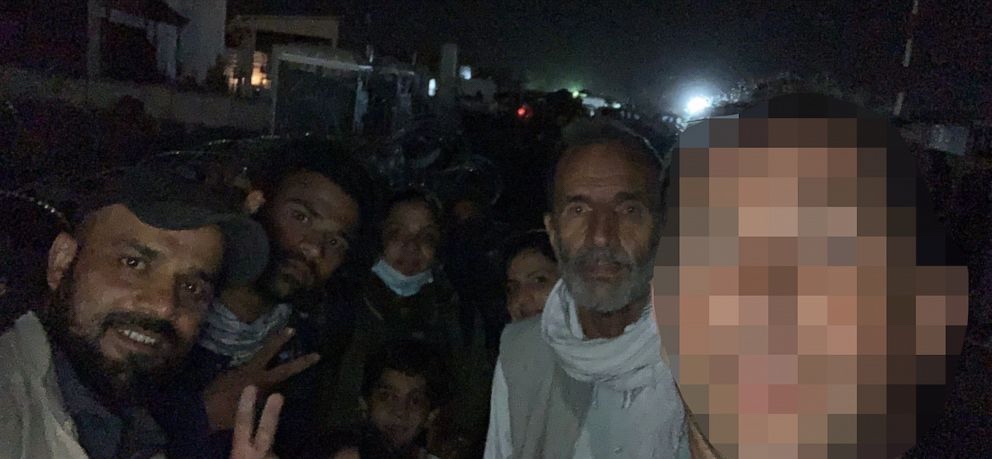
September 1st the Taliban will shut down the cell towers and continue hunting down, one by one and with increased effectiveness, those most loyal to the American cause for the past 20 years. We even gave them the list to help them carry this out.

If you’re wondering how you can help, this is one way.

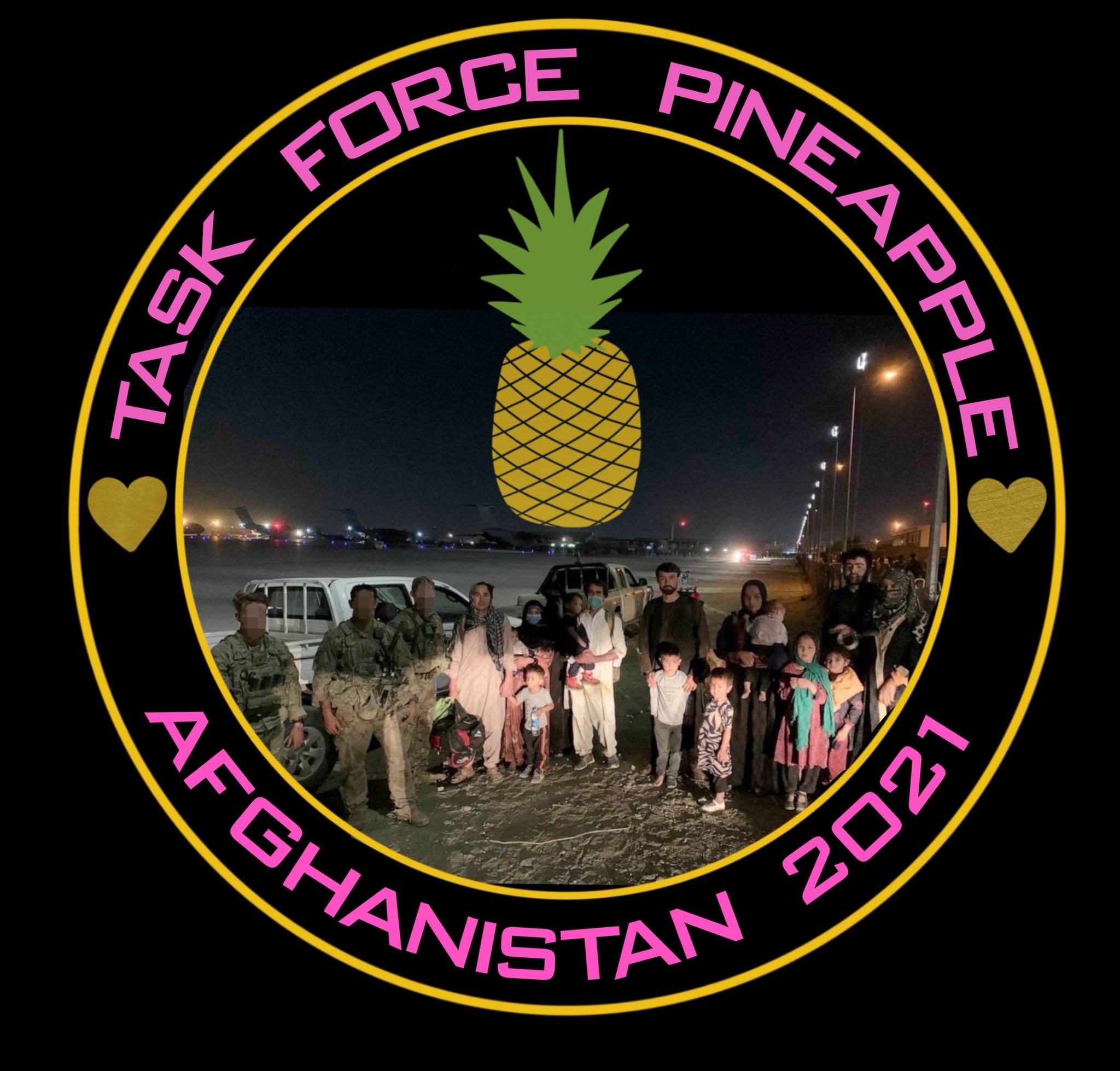
A small group of Special Forces and other SOF members have established what’s called Task Force Pineapple as part of Operation Recovery (a 501c3 non-profit). They are operating out of an Ops Center in America, activating and reverse engineering 20 years of human networks in Afghanistan and Pakistan and the surrounding areas to get all US Citizens and as many Afghan partners — the people we served with and their families — out of the country. This will happen over land through a country under Taliban rule, full of Taliban checkpoints, activating safe houses and ratlines and an underground network operating in secrecy. It’s a classic Special Forces mission which requires a bunch of pissed-off and highly motivated Special Forces soldiers — and with your help they can save even more lives.

Without any official US military presence as of September 1st, this is exactly how America can still represent and carry out our highest ideals — given the ground truths, this will happen in the shadows. It does not matter at this point what should be happening, or who to blame. There will be time for that, there always is. What is happening right now with Task Force Pineapple is what we do have, and it’s growing stronger by the minute. 

Before the bombing at the Kabul Airport, this was the precise symbol to get inside the wire. So far, over 500 lives have been saved with this symbol. It has since been changed — but the spirit remains and it is one of hope and sacrifice in line with our highest values as a country. Namely, loyalty to our friends and partners. Task Force Pineapple will not stop operating just because the U.S. is officially leaving. The Underground will grow. More lives will be saved.

Unfortunately, the Taliban will also grow stronger.

I know personally the people who are running TASK FORCE PINEAPPLE and I vouch for their character and effectiveness. We will not be able to save all of our partners, but we will damn sure try.

To aid and support the mission, here’s the patch for sale. All proceeds to benefit Task Force Pineapple. Or you can donate directly to them below.

Jason McCarthy

10th Special Forces Group, 2006-08

Founder, GORUCK

Purchase a patch here

Donate here

US Army Lab Gets Green Light for Supercomputing Project

Tuesday, August 31st, 2021

ABERDEEN PROVING GROUND, Md. — The U.S. Department of Defense High Performance Computing Modernization Program announced its selection of an Army supercomputing project for fiscal 2022.

Since 2014, DOD has awarded what are known as Frontier Projects to enable research, development, test and evaluation outcomes that could not be achieved using typically available DOD High Performance Computing Modernization Program resources.

Researchers from the U.S. Army Combat Capabilities Development Command, known as DEVCOM, Army Research Laboratory along with the Naval Air Warfare Center, submitted a winning proposal for a project to explore large-scale integrated simulations of gas turbine engines.

Drs. Luis Bravo from the laboratory and Russell Powers from the Naval Air Warfare Center are primary investigators for the research.

“The advanced design tools resulting from this project will lead to ?quantum leaps in the performance, efficiency and reliability of next-generation gas turbine engines,” Bravo wrote in the proposal. “We are now able to tackle such large problems due to the recent breakthroughs in artificial intelligence and advanced computational fluid dynamics.”

The researchers hope to create a digital twin of an actual gas turbine engine.

This will enable real-time engine health awareness and reduce lifecycle cost, Bravo said.

“This award will provide the supercomputing resources to make possible our collaboration between our laboratory, NAVAIR, Pratt & Whitney, the University of Cincinnati and Cascade Tech on digital twin models in propulsion,” Bravo said. “We are partnering across government, industry and academia to address a grand challenge in propulsion and we are all very excited about receiving this announcement.”

“The selection of our project shows a focus on advancing state of the art capabilities in numerical predictions for naval aviation engines,” Powers said.

The collaboration will help demonstrate increased capability and applications of predictive modeling and simulation tools, setting a new standard for the use of modeling and simulation in future engine and acquisition programs, he said.

“We are very grateful for the opportunity to use these resources, the support of our leadership, and excited to get started,” Powers said.

The award is one of four projects the DOD selected in its Foundational Research and Engineering category and the only one across the Army. The other awardees in this group include the Air Force Research Laboratory and the Office of Naval Research.

DOD will allocate resources starting Oct. 1, 2021. While the project will get quarterly reviews, the effort is planned to cover up to four years of research.

“We have high expectations that all Frontier Projects will produce notable achievement and strong mission impacts,” said Dr. Will McMahon, DOD HPCMP director in a memo announcing the award.

By U.S. Army DEVCOM Army Research Laboratory Public Affairs
116th IBCT Trains on New Squad Designated Marksman Rifle

Monday, August 30th, 2021

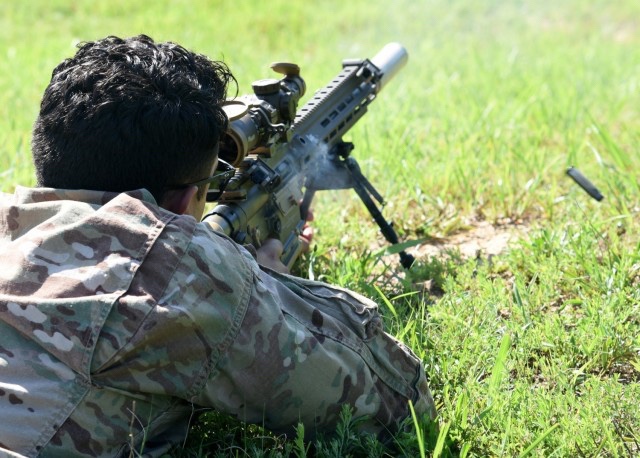
FORT PICKETT, Va. – Virginia and Kentucky Army National Guard Soldiers assigned to the 116th Infantry Brigade Combat Team trained on and fielded new M110A1 squad designated marksman rifles July 12-15 at Fort Pickett.


The new weapon is a 7.62 mm rifle, which gives Soldiers greater range and accuracy than the standard M4 rifle. It makes use of an advanced targeting system and sound suppression and fills a distance gap between the M4 and larger-caliber sniper rifles.

Those advantages make infantry Soldiers more lethal and allow them to engage the enemy at a greater distance, according to 1st. Lt. Matthew Arnold, the Virginia Army National Guard’s New Equipment Training / New Equipment Fielding state coordinator.

“The M110A1 SDMR allows our Soldiers to be able to reach targets out to 800 meters and beyond, depending on the Soldier’s skill level,” said Arnold. “This basically allows the standard infantry squad to have more standoff between them and their target as well as increased time and space for maneuver as a result.”

Thirty Soldiers assigned to the Lynchburg-based 1st Battalion, 116th Infantry Regiment, the Winchester-based 3rd Battalion, 116th Infantry Regiment, the Portsmouth-based 2nd Battalion, 183rd Cavalry Regiment, the Fredericksburg-based 229th Brigade Engineer Battalion and the Kentucky National Guard’s 1st Battalion, 149th Infantry Regiment, participated in the training and fielding.

The event started with time in the classroom with civilian instructors from the U.S. Army Tank-automotive and Armaments Command, Materiel Fielding and Training Directorate, Soldier Lethality Team, learning the nuances and mechanics of the new weapon. From there, Soldiers took to the range to zero the rifles before firing at targets up to 800 meters away, taking turns behind the trigger and shot-spotting. Command Sgt. Maj. Ronald Smith, the VNG command sergeant major, and Sgt. Maj. Latane I. Gilliam, the 116th IBCT operations sergeant major, observed the live-fire range and took turns behind the new rifle.

Arnold said in the past, the higher-caliber and increased-range rifles were primarily used as weapons for snipers.

“The main point is that this weapon, which was previously used as a sniper rifle, is now going to be in widespread use across our formation and the ways we use it will change depending on the situation,” said Arnold.

The M110A1 fielding was the most recent in a series of small arms fieldings across Virginia Army National Guard’s formations the past several months to bring its Soldiers up to speed with their active-duty Army counterparts. Other fieldings included the M3E1 Multi-purpose Anti-armor Anti-personnel Weapon System, a recoilless rifle that is replacing the AT-4, as well as the M17 pistol, replacing the M9, and the M320A1 grenade launcher, which replaces the M203.

Those small arms fielding highlights the important role the NET/NEF facility plays in improving the Virginia Army National Guard’s warfighting capabilities.

“It’s important to keep our Soldiers up to date with the latest weaponry because it can and will change how they fight,” said Arnold. “NET/NEF is the process that keeps us on par with the active component.”

By Mike Vrabel, Virginia National Guard

SCUBAPRO Sunday – Operation Iceberg

Sunday, August 29th, 2021

There were two theaters of operation during World War II; one was the European Theater of Operation (ETO), where the allies fought against mainly Italy and Nazi Germany, and, on the other side of the world, was the Pacific Theater of Operations (PTO) where the U.S. and her allies were fighting the Empire of Japan. The Battle of Okinawa was one of the bloodiest and most violent battles of the Second World War, and it was also one of the most significant. The battle started on 01 April 1945 and lasted until 22 June 1945. Okinawa was the last stop on the Allied island-hopping campaign before reaching their ultimate target on mainland Japan. The U.S. suffered over 50,000 casualties in the battle, which was one of the main reasons Truman resorted to dropping the two Atomic bombs that ended the war in the Pacific.

www.historynet.com/battle-of-okinawa-operation-iceberg

However, a smaller island had to be taken first and might have played just as significant a role in ending the war.

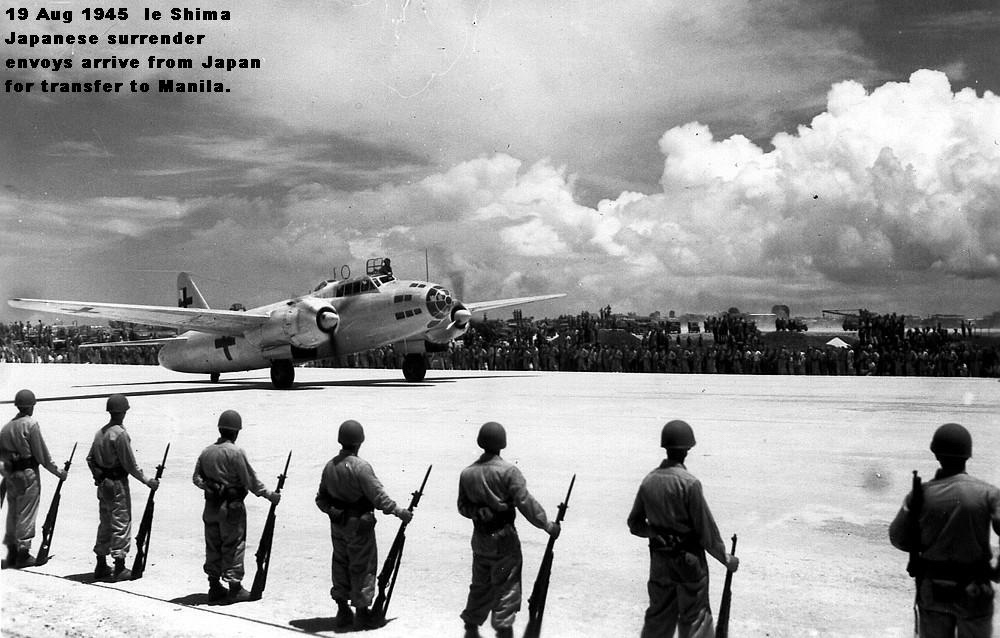
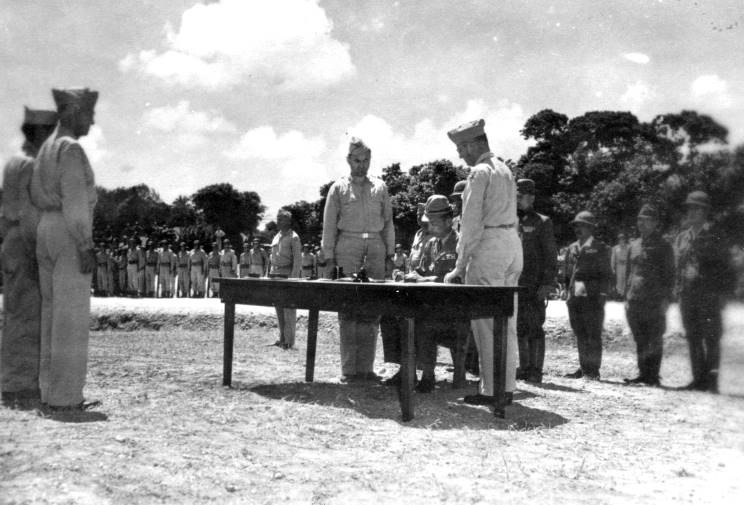
Okinawa is a chain of islands, and one of them, the island of Le Shima (now called Ie Jima), had a significant airfield on it that the U.S. needed as a staging point for the planned invasion of Japan. There was a five-day battle for this island from 16-21 April. It is the battle where a Japanese machine gunner killed famed WWII war reporter Ernie Pyle. However, there is another significant reason this island should be acknowledged: it hosted the first Japanese unconditional surrender delegation. Most people are familiar with the recorded Japanese surrender aboard the USS Missouri on 07 September 1945 in Tokyo Bay.

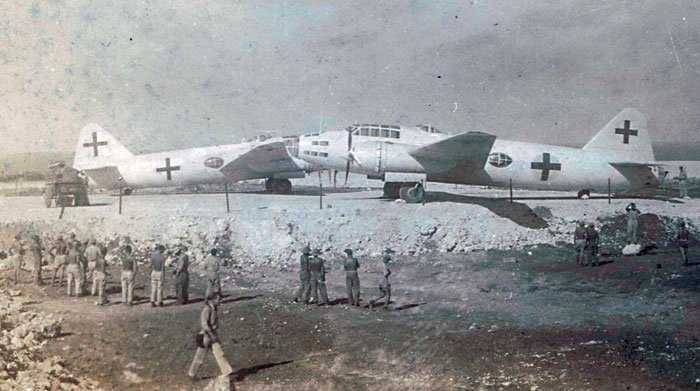
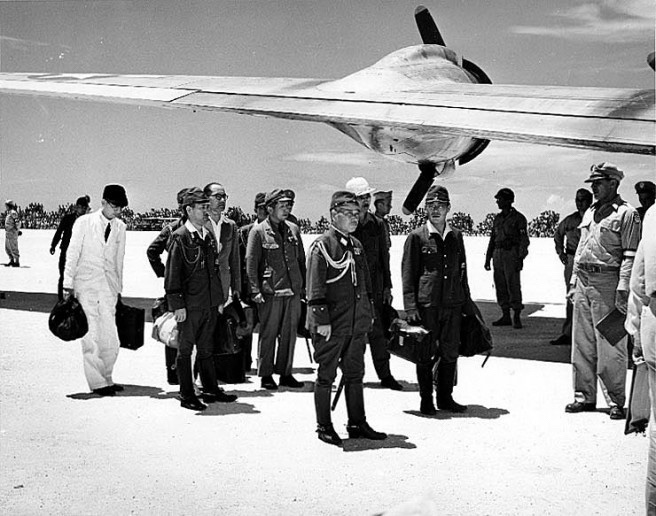
But there was an initial meeting on Le Shima that most people do not know about, where the Japanese delegation arrived on the island around noon on 19 August 1945 on two “Betty” bombers (Mitsubishi G4M-1). They flew in specially marked planes painted white with big green crosses painted on them. They were escorted by the U.S. Army 345th Bombardment Group, who flew out in two American B-25J Mitchell bombers (an updated version of the same planes used to bomb Japan on Doolittle’s raid). The U.S. also had several Lockheed P-38 Lightning from the 80th Fighter Squadron who shadowed them.

A delegation of 16 military and civilian officials disembarked from the two bombers and met under the wing of the American C-54 Skymaster transport aircraft in the shade. The island’s American commander briefed them on their upcoming flight to the Philippines to negotiate with General Douglas MacArthur’s staff and other allied military representatives.

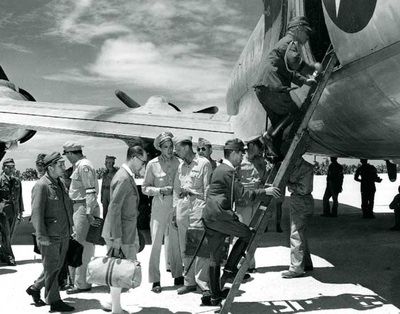
For the trip to Manila, the Japanese delegation boarded a C-54; when they landed, they were given the terms for their formal surrender and the conditions for the Allied occupation of the Japanese homeland.  The two Betty crews were detained on the island overnight before the surrender delegation returned the next day from Manila and flew back to Japan.

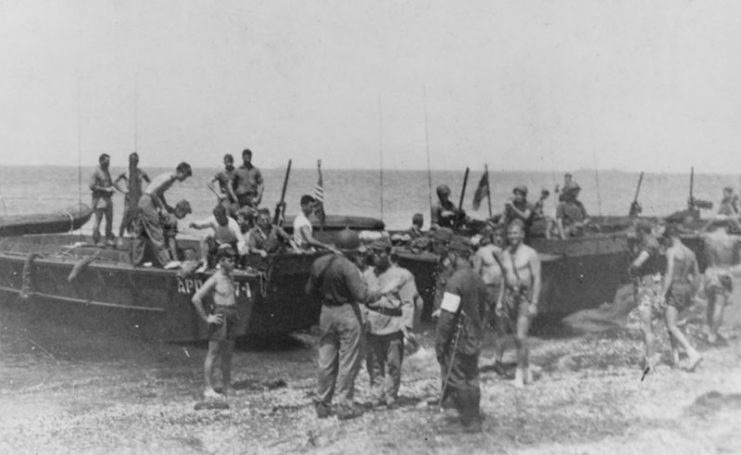
One last note about the surrender, yet significant, was to Lt. Commander E. P. Clayton, Commanding officer of Underwater Demolition Team (UDT) 21 (Now SEAL Team FOUR), to whom a first surrender was made.   Cdr. Clayton and his men were the first troops to land on mainland Japan.  In the photo below here, he is seen accepting the sword of a Japanese Major. The latter was the commander of the coastal artillery battery at Cape Futtsu near the entrance of Tokyo Bay, across from the Yokosuka Naval Base, in an informal surrender ceremony on 29 August 1945. It was considered the first official surrender on the Japanese main island. A few hours later, the Japanese soldiers at Cape Futtsu marched out onto their parade ground in immaculate uniforms, opened ranks, and laid their rifles on the ground to surrender to UDT 21. Tears were running down their faces.  

When Clayton returned to his ship, he was ordered by MacArthur to return the sword. Old Doug didn’t want anyone else to accept the Japanese’s surrender but him, and, like always, he had to have it on camera. (Yes, it was also protocoled that Doug should receive the first surrender.)  At that point, Clayton was forced to return the sword to the Japanese Major, and they were told to surrender to the U.S. Marines the next day when they came ashore.

5th SFG(A) Chemical Recon Det Conducts Sensitive Site Exploitation Training

Saturday, August 28th, 2021

The Special Forces Chemical Recon Detachments are entirely under appreciated.

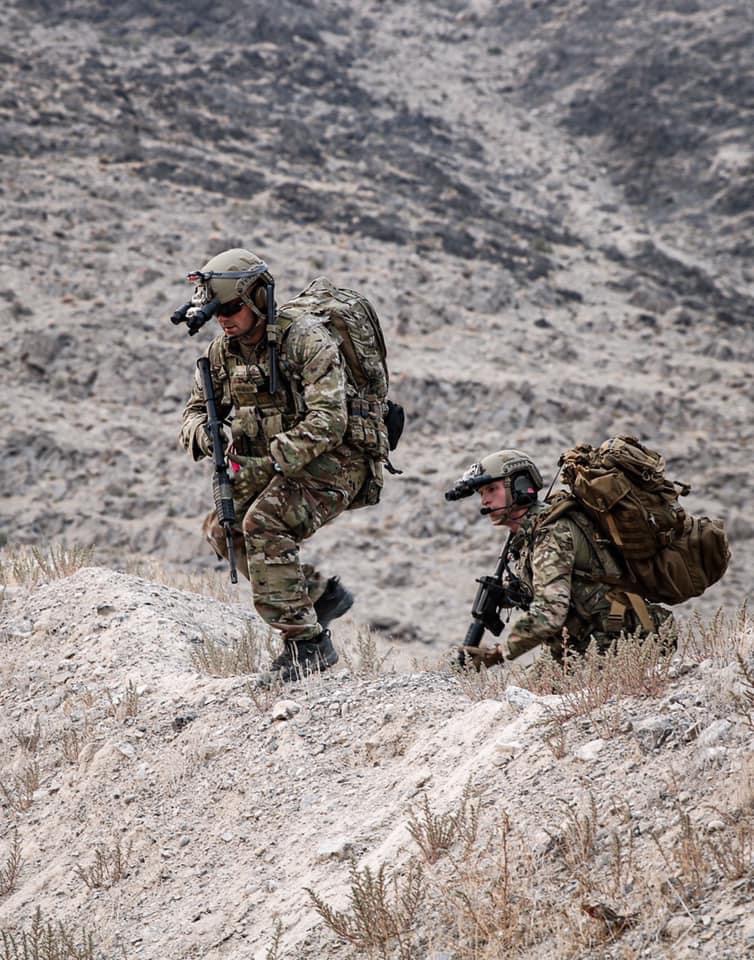
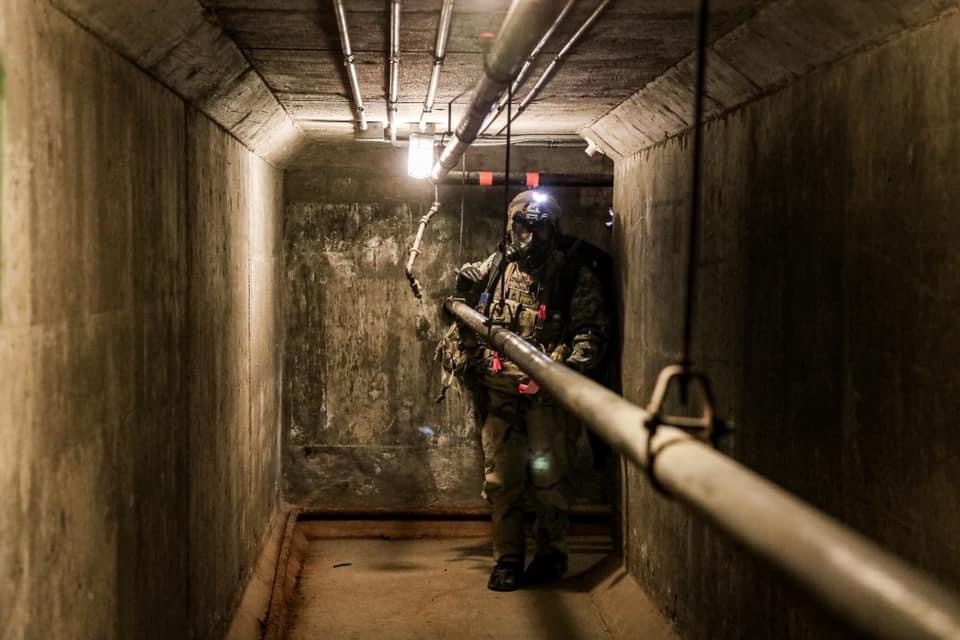
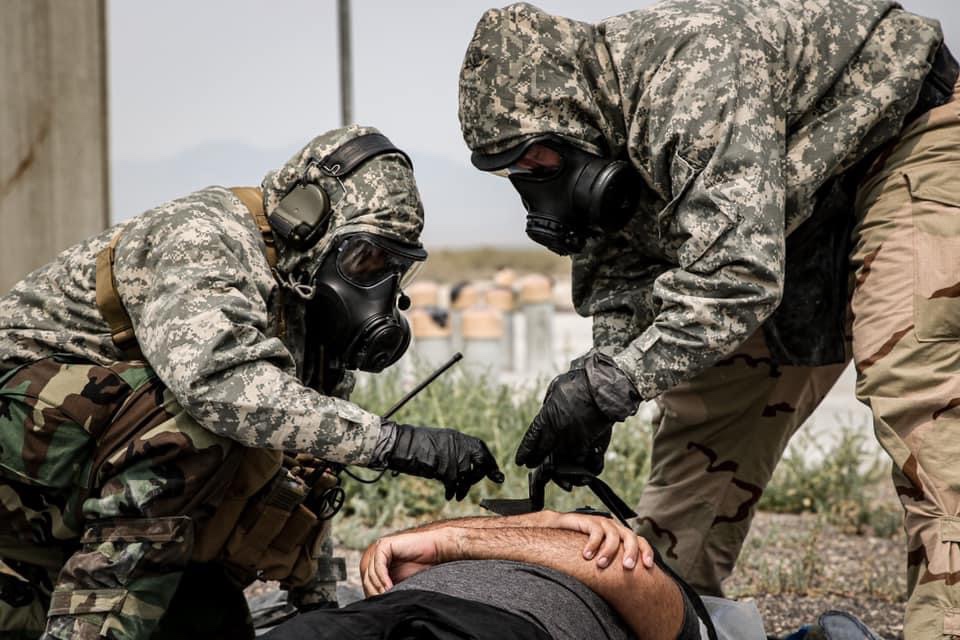
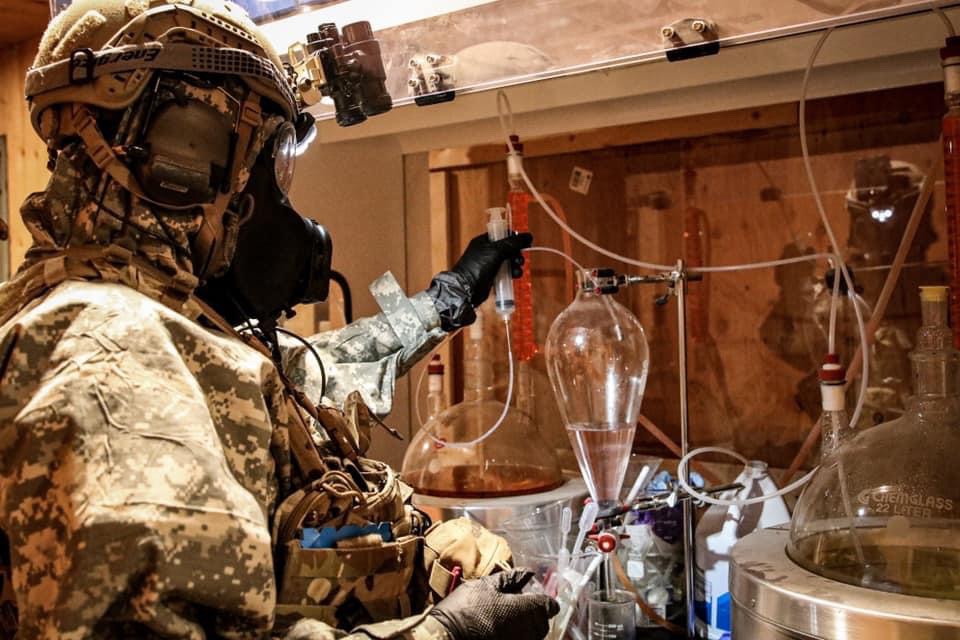
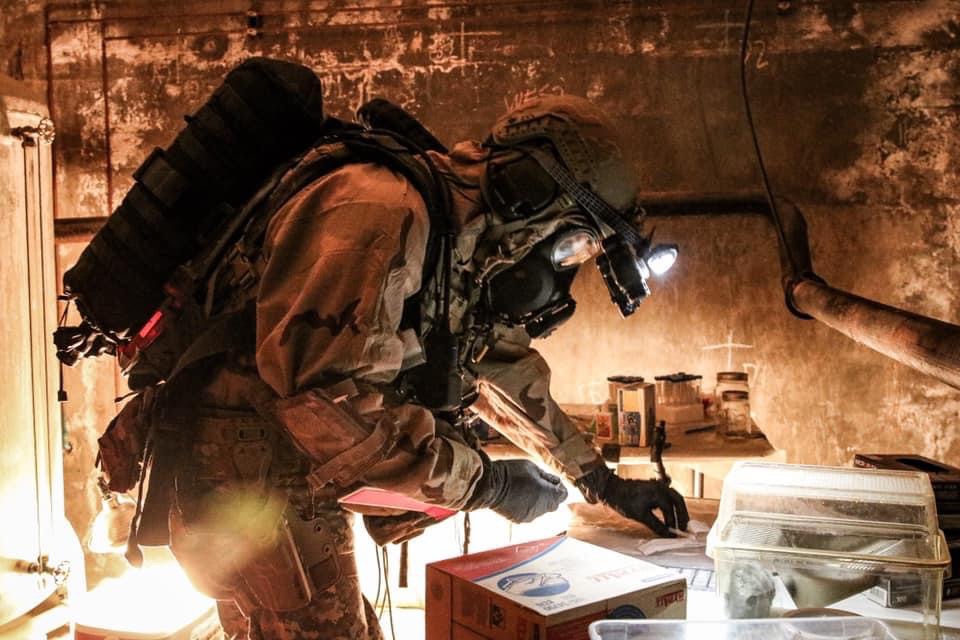
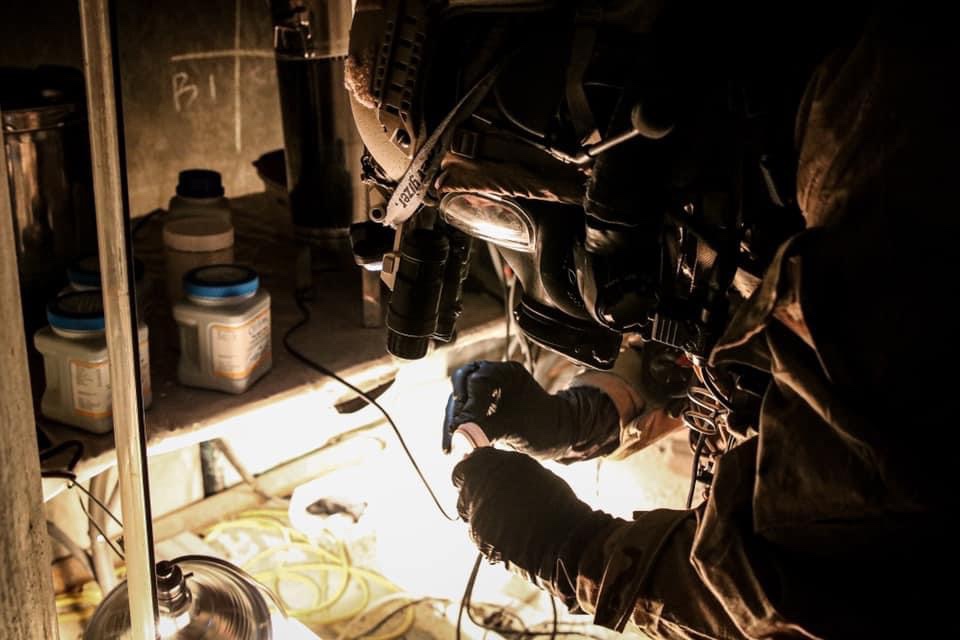
Soldiers from the 56th Chemical Reconnaissance Detachment (CRD), 4th Battalion, 5th Special Forces Group (Airborne), conduct sensitive site exploitation training during their 1st Special Forces Command validation exercise in Dugway, Utah, from Aug. 2, 2021 to Aug. 13, 2021. The exercise evaluates each CRD’s technical and tactical skillsets in order to deploy in a combat environment. (U.S. Army photos by SSG Frances Ariele Tejada.)

FirstSpear Friday Focus: Line One Belts In Stock!

Friday, August 27th, 2021

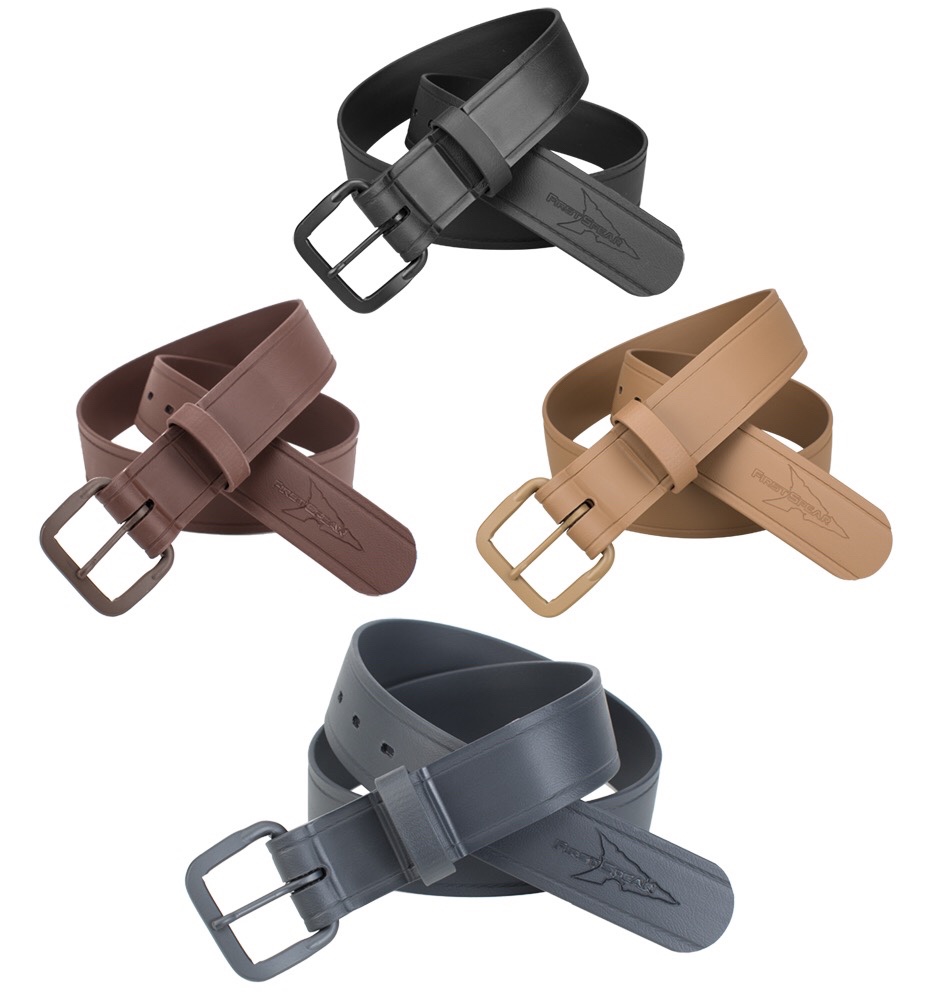
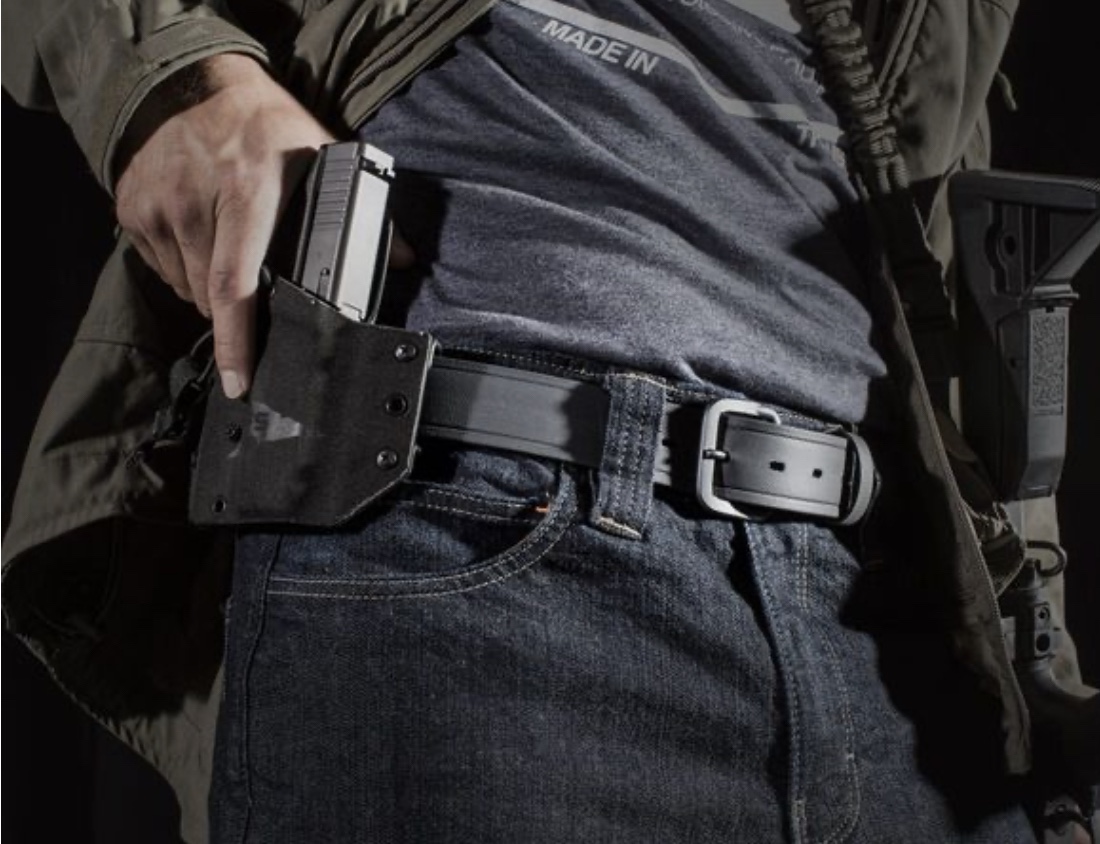
This week’s Friday Focus, we’ll take a look at a FirstSpear staple item. The line one belt is our most popular everyday belt! Borrowing its name from an old NSW term for the first level of clothing or gear, the Line One Belt has amazing tactical performance that maintains the high level of comfort and mobility usually associated with leather.

“Sizing is perfect, still looks new after almost two years of daily use. Sturdy enough to do everything from CCW to multiple day courses.” —Online Review

“Having used this belt for the last several years, it still looks like new. It remains very stiff, as it was designed, holds up to multiple training days per year, as well as being worn almost every day with a holster and magazine pouch. Not a better EDC belt on the market as far as I am concerned.”

— Online Review

Urethane covered nylon provides superior strength and weather-resistance. This belt won’t crack, peel, or become stiff in frigid temperatures. Specially tempered, non-slip coating eliminates “break-in” time and allows for leather like flex, yet it is impervious to sweat and water and will not stretch or lose its original shape. The Line One Belt is an excellent platform for concealed carry or for just keeping your pants up with style.

Available in Rich Mahogany, Black, Manatee Grey and Tan.

For more information, check out www.first-spear.com/line-one-belt-biothane-r.

Dover AFB Leads Joint, Interagency Survival Training

Friday, August 27th, 2021

COAST GUARD STATION INDIAN RIVER INLET, Del. (AFNS) —

Imagine being in a yellow life raft in the middle of the ocean after surviving an aircraft incident. There is an aircraft flying several hundred feet overhead. The best chance of being rescued lies in an ability to use the issued survival equipment to signal the position to the aircraft.

While this situation might seem far-fetched, it is a very real possibility for aircrew members flying out of Dover Air Force Base, Delaware.

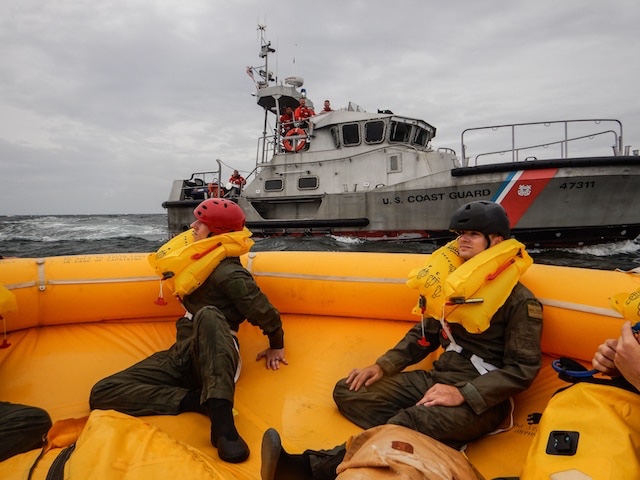
For this reason, members of the 436th Operational Support Squadron Survival, Evasion, Resistance, Escape flight partnered with the 3rd Airlift Squadron at Dover AFB, Coast Guard Air Station Atlantic City, New Jersey, and Coast Guard Station Indian River Inlet, Delaware, to train local search and rescue procedures during Exercise Castaway.

“The whole idea for Exercise Castaway started with a picture,” said Tech. Sgt. Derreck Day, 436th OSS SERE specialist. “I was conducting a water survival preparation course [that includes] a picture of a 46-man life raft, [where] at 4,000 feet is extremely difficult to spot. Looking at that photo, I thought ‘what is the probability of finding an individual, if not, a whole crew of people in a life raft out in the Atlantic Ocean.’”

The picture Day refers to is a photo taken from a C-17 Globemaster III at an altitude of about 4,000 feet. The raft is nearly impossible to spot with the naked eye. At that altitude, the raft appears to blend in with the ocean waves; an incredible challenge to anyone attempting to locate survivors in the open ocean.

“It’s a photo of the largest life raft we have in our inventory and in that photo you can’t even see the life raft,” Day said. “So looking at that situation, I thought to myself, ‘why not exercise this.’”

During Exercise Castaway, Day and four Airmen from the 436th OSS SERE flight were escorted 5 miles out into the Atlantic Ocean by Coast Guardsmen from Indian River Inlet.

“We got to Coast Guard Station Indian River and by the time we broke through the waves out of the inlet, about 4 and a half miles off shore, the 25 mile buoy was reading 5 foot seas and 17 knot winds,” Day said. “I’m very grateful that the Coast Guard was there to provide over watch in case of an emergency.”

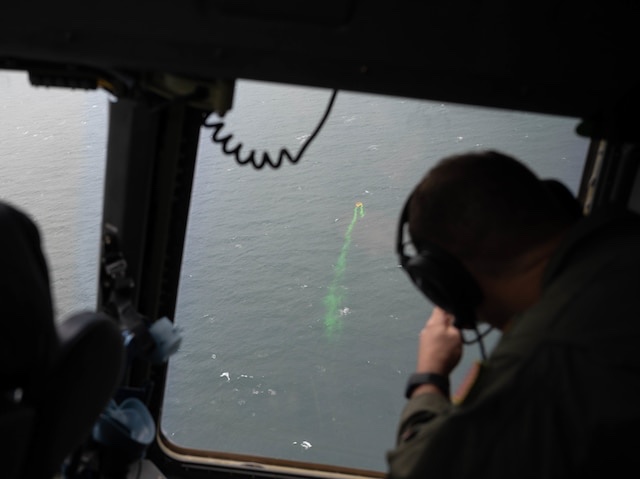
Once in place, the SERE crew then prepared their signaling equipment including the combat survivor evader locator radio, sea dye, flare and life raft canopy. This marked the official start of Exercise Castaway.

Day explained their objective was to go through the issued survival equipment, use it, devise tactics, techniques and procedures, and to relay pertinent information to assist the aircrew in spotting them.

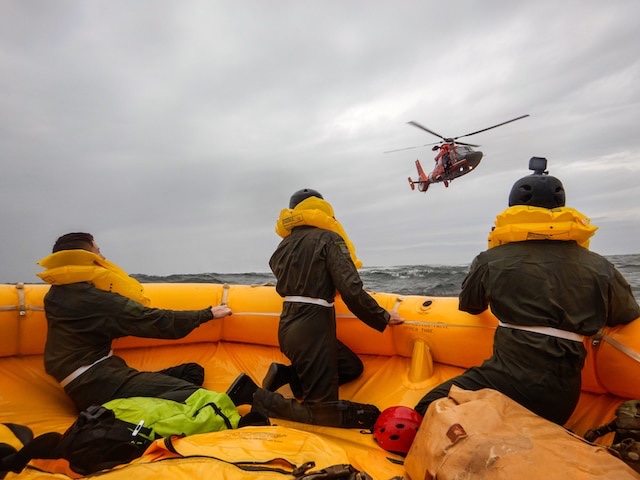
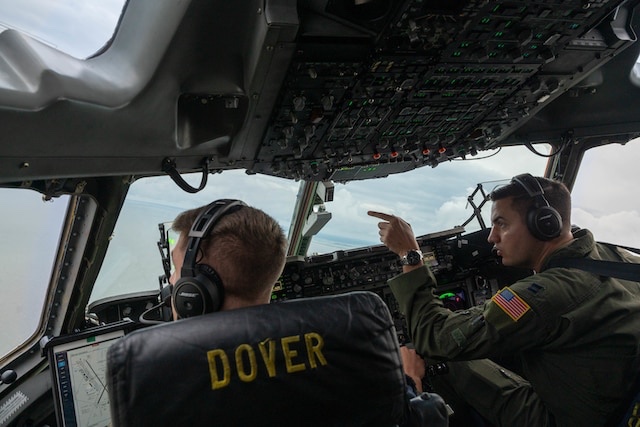
Two aircraft crews participated in the exercise: a C-17 from Dover AFB and a MH-65D Dolphin from CGAS Atlantic City. As the acting on-scene commander, the C-17 crew spotted the life raft and relayed location information to the MH-65D for simulated rescue and hoist practice.

“The scenario for the aircrew aboard the C-17 was for them to respond to a simulated downed aircraft call, provide a search pattern, exercise their on-scene commander checklist and take photographs of what’s happening through their perspective,” Day said. “As they role-play on-scene commander, once they spotted the life raft, they notified Coast Guard Station Atlantic City.”

As the C-17 was spotted in the distance, the crew began their series of signaling attempts to the aircrew aboard the aircraft.

“We came in at 500 feet through several passes while the guys in the raft were trying out different signaling techniques,” said 1st Lt. Nicholas Johnson, 3rd Airlift Squadron pilot. “Then we climbed to higher altitudes to see how clear we can see those visuals at different altitudes and capture data on what would be the best altitude to ingress to try and find guys on the ground.”

Spotting the life raft became a challenge on its own due to the high-speed winds and tall waves. It took a couple passes before the aircrew spotted the life raft.

“At first there were no visuals,” Johnson said. “It was just them on the raft and we had to find them. Even at 500 feet, which is pretty close to the ground, we weren’t able to see them until we were right on top of them.”

With each pass over the raft, the aircrew then ascended to higher altitudes to observe the effects altitude had on spotting the life raft. The higher they climbed, it became increasingly difficult to keep track of the life raft.

“There are a lot of lessons learned that I plan on relaying to the aircrew that could find themselves in that situation,” Day said. “It was amazing to see the interaction between all participating agencies and record all the success and failures that happened during the exercise.”

During flight operations, there is always risk involved. For Dover AFB, being prepared in case of a real world incident means readiness and tactful knowledge of basic water survival and search and rescue principles. Knowing how to signal aircraft aiding in rescue while also experiencing the dangers of open water is paramount to survival. The SERE team here is dedicated to ensuring aircrews have the skills needed to give themselves the best chance of survival.

Stories and some photos by Senior Airman Marco A. Gomez, 436th Airlift Wing Public

Some photos by Senior Airman Faith Schaefer