XC3 Weaponlight

Archive for the ‘Guest Post’ Category

First Special Warfare Airmen Graduate Initial Apprentice Course for Special Reconnaissance

Wednesday, June 23rd, 2021

JOINT BASE SAN ANTONIO-CHAPMAN TRAINING ANNEX, Texas –The 352nd Special Warfare Training Squadron graduates the first wave of students from the new Special Reconnaissance Apprentice Course, June 17, 2021 at Pope Army Airfield, North Carolina.
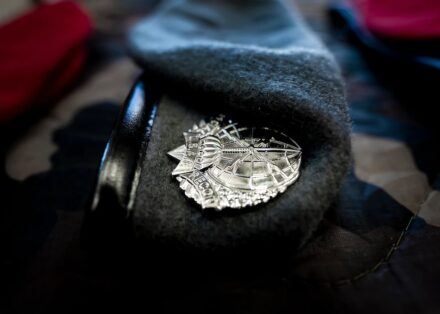
Formerly branded as Special Operations Weather Teams (SOWTs), the SR career field recently underwent a major restructuring. While short term weather forecasting will remain in the SR’s skillset, it will no longer dominate SR’s training and mission focus.

“Today’s SR graduates are better equipped with unique training to conduct multi-domain reconnaissance and surveillance with an eye towards gaps identified in the Department of Defense’s long range reconnaissance and force projection capabilities,” said Maj. Spencer Reed, 352nd SWTS commander. “This ceremony not only celebrates the first organically trained SR Airmen in our wing, but in the U.S. Air Force. I’m incredibly proud.”

Special Reconnaissance Airmen are among the most highly trained personnel in the U.S. military. Airmen receive training in surveillance and reconnaissance, multi-domain electronic warfare, long-range precision engagement and target interdiction, small unmanned aircraft systems, preparation of the environment, personnel recovery, and advanced special tactics skills.

“The first SR Apprentice Course graduation signifies the first tangible step towards the Air Force building an increased capability,” said Senior Master Sgt.Trenton Seegmiller, Air Education and Training Command’s special reconnaissance functional manager. “It is one of many steps in a never-ending process to maintain our edge over near-peer competitors.”

The course curriculum includes collecting meteorological and environmental data- a holdover requirement from the SOWT career field, yet significantly reduced in scope. New skills added are demolition, communication and signaling, human intelligence gathering, operational preparation of the environment and tactical cyber applications.

“Previous iterations of training required multiple courses and training locations, totaling around 215 training days,” Reed said. “This new 86-day course provides an updated training syllabus with a 60% reduction in training time.”

SR Airmen train to provide global battlespace awareness and access by translating information into actionable intelligence. In the battlespace, SR Airmen are part of Special Tactics teams in sensitive, forward operating locations, focused on global strike, global access and recovery missions.

Members of the Special Warfare Training Wing provide initial training for all U.S. Air Force Special Warfare training AFSCs, to include, Combat Controllers, Pararescue, Special Reconnaissance, and Tactical Air Control Party Airmen.

To learn more about SR Airmen or other U.S. Air Force Special Warfare career opportunities, go to: www.airforce.com/careers/in-demand-careers/special-warfare.

Story by Nicholas J. De La Pena, Special Warfare Training Wing
Intelligent Ground Vehicle Competition Supports the Future of Engineering

Tuesday, June 22nd, 2021

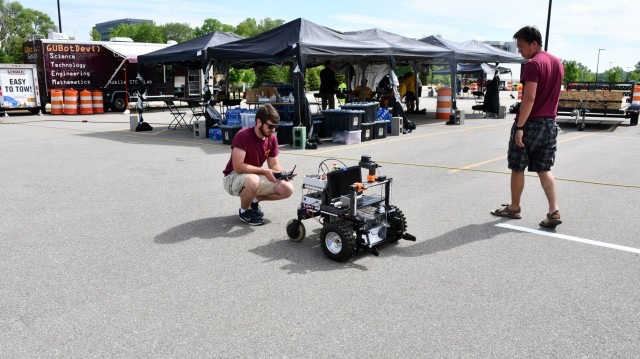
ROCHESTER, Mich. — Student engineers got a feel for real-world robotics challenges at the 28th annual Intelligent Ground Vehicle Competition (IGVC) here at Oakland University June 4-7.

The IGVC, hosted by the U.S. Army Ground Vehicle Systems Center (GVSC), is the oldest and largest autonomous vehicle competition in the nation and provides students with their first professional projects as engineers.

The student competitors represent every Science, Technology, Engineering, and Mathematics (STEM)-related major, and there are also opportunities for business majors to become involved.

IGVC event sponsors frequently recruit students into full-time positions upon finishing their degrees, said Bernard Theisen, GVSC’s Division Chief for Ground Vehicle Robotics, and a long-time supporter of the competition.

“If these students can use this capability to build these unmanned systems, they are the perfect recruits,” said Theisen. “Some of the teams here are taking advantage of some of our core products such as our Robotic Technology Kernel (RTK) software and Warfighter Machine Interface (WMI), used to control their vehicles.”

The competition offers students a glimpse of what it means to be an engineer for the Army. “I think IGVC has been a good catalyst for robotic development,” said Theisen.

Many GVSC engineers were recruited at previous competitions they participated in as students.

“I would say probably 30 percent of everybody in GVSC Ground Vehicle Robotics competed in the competition at one time or another,” said Theisen.

Unmanned systems allow the Soldier to operate technology from a distance, providing better protection, said Theisen. “Our primary customer is the Soldier, and robotics and autonomy help take the Soldier out of harm’s way.”

Engineers for the Army provide Soldiers with the most cutting-edge products that give them the most security on the frontlines.

“My primary goal as an engineer for the Army is to save Soldiers’ lives,” said Theisen. “I want to give them the best technology and the best capability.”

Engineers for the Army use their versatility and determination to work around the constantly changing needs of the Warfighter and it isn’t always easy, said Theisen.

“There’s a lot of ups and downs” said Theisen. “We are focused on the technology and it changes often.”

Andrew Kosinski, a mechanical engineer for GVSC Ground Vehicle Robotics, said IGVC gives students a chance to use flexibility and quick thinking to solve complications that occur before and during the competition.

“Having to be flexible is the biggest challenge that comes with being an engineer for the Army,” said Kosinski. “You have to work with a lot of different situations and people and need to be able to think on your feet.”

IGVC also provides an environment full of positivity and diversity. There are countless opportunities for networking.

“I love seeing all the teams show off from all around the world,” Kosinski said. “I love being able to talk to all sorts of unique people.”

What’s more, while IGVC gives many students a chance to learn more about Robotics Technologies and develop a passion for it— the competition is a venue for student engineers to pursue professional careers in engineering.

“The competition is the best type of job interview because you get to see people in action,” said Kosinski. “That’s why Army and various sponsors support it each year.”

More information on the Intelligent Ground Vehicle Competition can be found at www.igvc.org.

By Kennedy Thomas

SCUBAPRO Sunday – Audie Leon Murphy

Sunday, June 20th, 2021

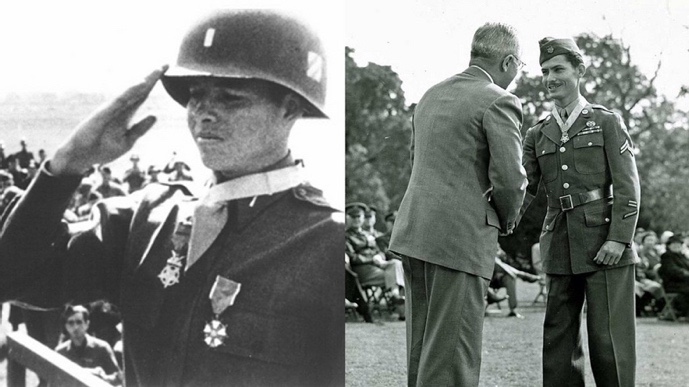
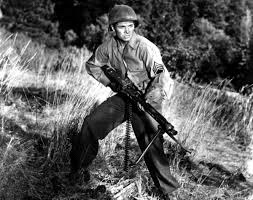
Audie Murphy is one of America’s greatest sons. I don’t really know how else to say it; it seems no matter what you say, it won’t to do him the justice he deserves. Audie was born on 20 June 1925; he came from a large family and his father abandoned them and his mother died when he was a teenager. He left school to pick cotton and hunt rabbits to help support his brothers and sisters. When the U.S. was attacked by the Japanese on 7 December 1941, he tried to enter the Army, Navy, and then the Marine Corp (with the help of his sister who forged his paperwork) and was turned away by them all for being too small. He was eventually allowed to join the Army. Murphy would be awarded every medal for valor the U.S. has in addition to awards and honors from France and Belgium.

Like a lot of people after any war, Audie suffered from post-traumatic stress disorder, (even thought that wasn’t a thing back then) at one point it got so bad that he slept with a gun under his pillow, and he also had night terrors so bad he started sleeping in the room above his garage. Most of his nightmares had to do with losing so many of his friends during the war. His passion to save his friends gave him the courage to accomplish all the heroic acts that earned him the decorations he received. His awards include the Medal of Honor, Distinguished Service Cross, Silver Star X 2, Legion of Merit, Bronze Star X 2, and Purple Heart X 2, just to name the top few.

In his second career, in Hollywood, he would make over 40 films, including starring as himself in the movie ‘To Hell and Back’. But, like all movies, the book is much better.

I knew I couldn’t do his story justice in the couple of pages I write, so I encourage you to read his book. He was driven more by his love of family and friends than anything else in his life.

FirstSpear Friday Focus: New Arid Multicam Windcheater

Friday, June 18th, 2021

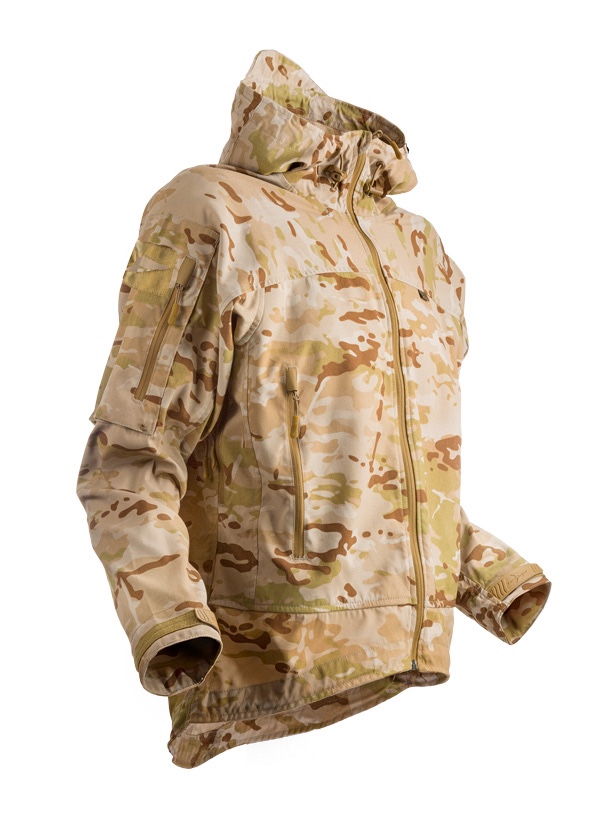
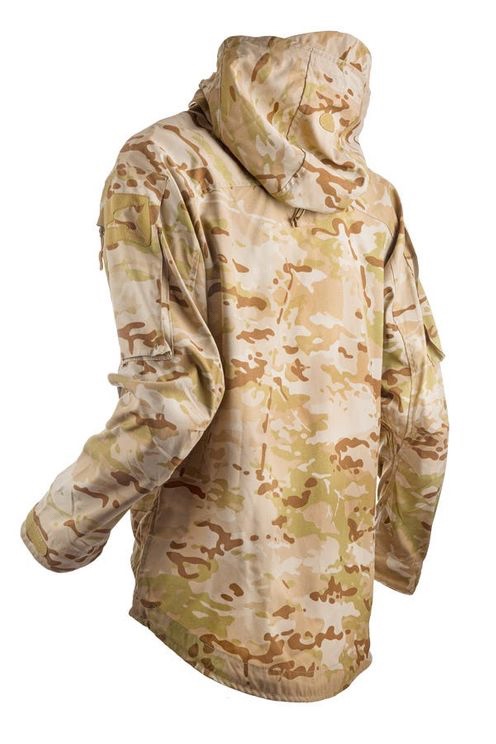
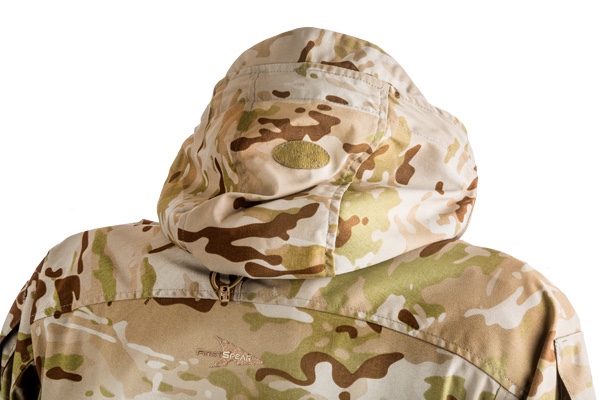
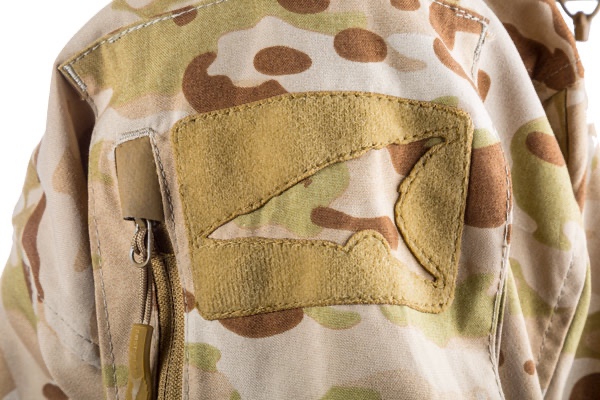
New for 2021 the Wind Cheater returns in Arid Multicam! Constructed from 330D ambush the Wind Cheater is a unique garment very light in weight, breathes like a T-shirt yet still sheds wind and light precipitation thanks to a DWR coating.

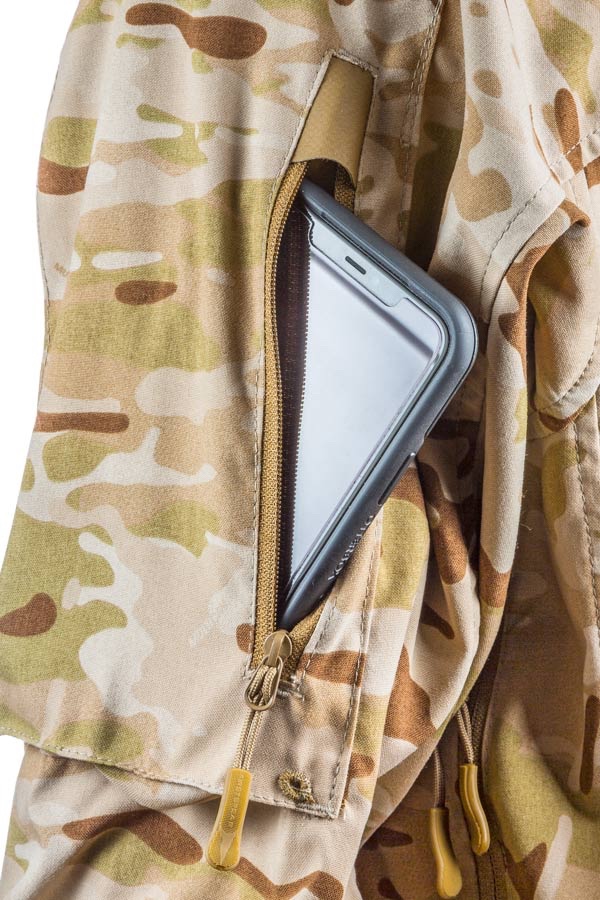
The Wind Cheater features a long tail with just the right height on the front for easy access to belt mounted accessories. Oversized hood works well with hats or helmets with a wide range of bungee adjustment for user defined fit. Two large bicep pockets, pit zips and torso pockets allow for exceptional ventilation when required.

Available in Arid Multicam, Multicam, Black, Ranger Green, Coyote, and Manatee Grey. Made in the USA!

Subscribe to our emails to stay up to date on the latest projects, www.first-spear.com/landing.

For more information about the arid windcheater, www.first-spear.com/wind-cheater.

Agreement Brings Soldiers, Academia Together to Solve Military Challenges

Thursday, June 17th, 2021

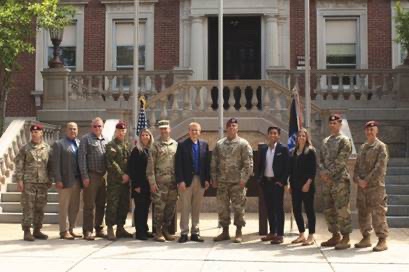
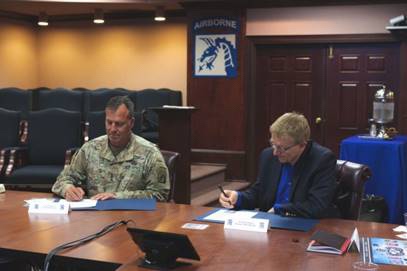
FORT BRAGG, N.C. — Army scientists and engineers partnered with combat arms units to create closer working relationships between Soldiers and universities. The partnership between the U.S. Army Combat Capabilities Development Command and the XVIII Airborne Corps will help to solve military challenges, according to officials who met at Fort Bragg May 25.

As part of a new Congressional initiative called the Catalyst-Pathfinder program, the goal is to harness the creativity and technical skills of academic institutions and help the Army to quickly create better solutions to real problems.

The U.S. Army Combat Capabilities Development Command, known as DEVCOM, Army Research Laboratory manages the program in close partnership with the DEVCOM Armaments Center.

As part of the agreement, ARL and AC will work with the XVIII Airborne Corps, and specifically the 82nd Airborne Division and the 101st Airborne Divisions at Fort Bragg, North Carolina and Fort Campbell, Kentucky. to strategically engage top academic institutions and team them with Soldiers in small, integrated teams focused to solve technical problems in a highly integrated manner.

“Our role at DEVCOM’s Army Research Lab is to support the Soldier, and we have a long established relationship with the XVIII Airborne Corps,” said Dr. Patrick Baker, ARL director. “We are excited to work with them on the Catalyst-Pathfinder program to accelerate learning and science through Soldier problem identification and feedback. The teaming we are doing through the Catalyst-Pathfinder program is key to operationalizing science for Army modernization.”

Universities in North Carolina, Tennessee and West Virginia will work with the 82nd and 101st Airborne Divisions, both under XVIII Airborne Corps, to identify and rapidly solve those problems and accelerate the transition of those solutions into the Army.

“XVIII Airborne Corps fosters a culture of innovation across all ranks, giving voice and life to novel ideas that support our people, optimize our readiness, and inform Army modernization efforts,” said Brig. Gen. Robert Ritchie, XVIII Airborne Corps. “In order to field tangible solutions fast, we are partnering with ARL through the Catalyst-Pathfinder program to connect our Soldiers with the nation’s brightest academics. These Soldier-academic teams are currently empowering the 82nd Airborne Division and the 101st Airborne Division to unleash and implement creative thoughts, technologies, and equipment. Going forward, we are really excited to deepen our integration with ARL to collaboratively innovate on behalf of the Army.”

Catalyst-Pathfinder will engage Soldiers earlier in the research and development process to make them aware of emerging research and technologies that academia can provide to help meet their needs.

Catalyst frames Soldier problems in a manner suitable for academia to identify research and emerging technologies to solve them. Pathfinder executes pilot programs, rapidly accelerating the delivery of technologies to address complex Army problems. Pathfinder uses Catalyst software to curate Army problems and executes projects building Soldier-academic teams to create solutions to those problems.

At the direction of the Army Futures Command, the Catalyst program started in March 2020 with a burgeoning partnership with the 82nd and 101st Airborne Divisions. The inaugural team members developed the program framework, produced Soldier-integrated design and development training curricula, developed support tools for execution, sourced and curated Soldier challenges and project opportunities, and identified the first project with Vanderbilt University, Soldier Assistive Bionic Exosuit for Resupply, known as SABER. This effort will evaluate physiological effects on Soldiers and optimize lift-assist technology to support logistics operational challenges of Soldiers and enhance Soldier readiness.

“Establishing ARL partnerships with Army units is critical to developing scalable approaches to Army modernization,” said Dr. Arwen DeCostanza, Catalyst-Pathfinder program manager, DEVCOM ARL. “These collaborative projects will yield discoveries and future outcomes by exploiting the creativity of Soldiers, faculty, students, industry partners and the Army science and technology community.”

By U.S. Army DEVCOM Army Research Laboratory Public Affairs

We’ve Got Your Back – Cordura & HLC

Wednesday, June 16th, 2021

When we say CORDURA® is durable, we mean it. That’s why militaries around the world trust CORDURA® Advanced Fabrics to perform on every mission.

For additional information, contact: sales@hlcindustries.com – for samples + marketing materials

AFRL Opens Research Altitude Chambers, Becomes Force in Aerospace Physiology

Wednesday, June 16th, 2021

WRIGHT-PATTERSON AIR FORCE BASE, Ohio (AFRL) – When Airmen are flying at 50,000 feet, they have to be prepared for every situation. And every piece of equipment that goes up with them must be able to function under the pressures of flight as well.

At the Air Force Research Laboratory, ensuring pilots, air crews, and all flight equipment can withstand various pressures, is one of the missions in the lab’s 711th Human Performance Wing, where research and aerospace medicine converge to enhance the performance and readiness of operational Airmen.

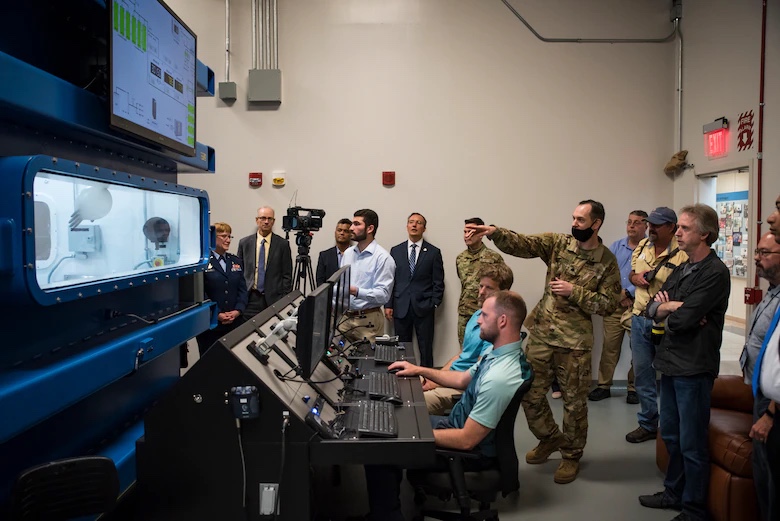
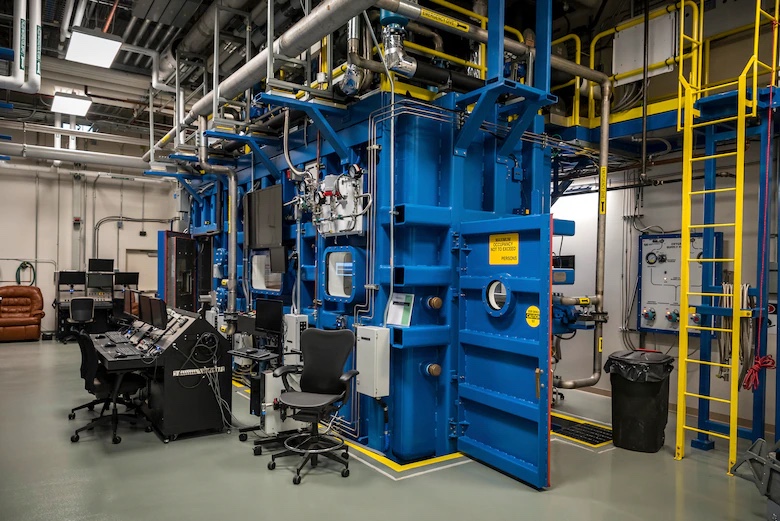
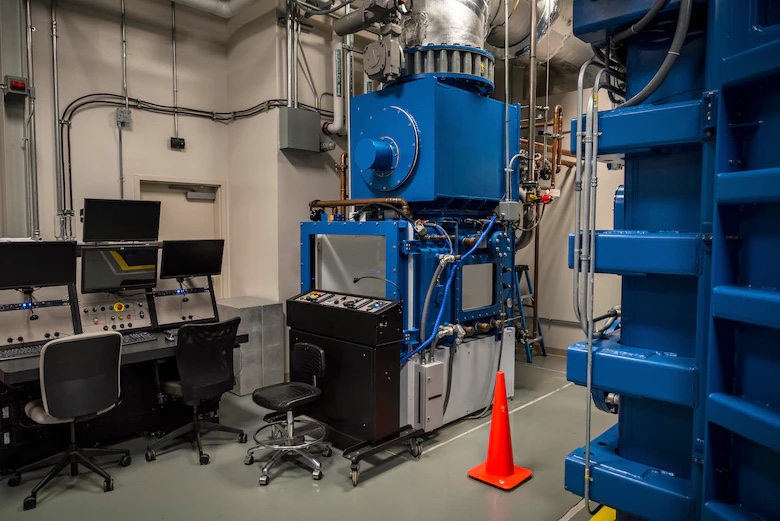
In order for these flying Airmen and their equipment to be ready, they must be tested against such pressures. Research must be conducted. Data must be collected. Training must occur. And all of this is made possible by AFRL’s human performance experts, in partnership with the Naval Medical Research Unit – Dayton, at Wright-Patterson Air Force Base with state-of-the-art facilities including NAMRU-D’s spacial disorientation device called the Kraken, AFRL’s human-rated centrifuge, and most recently added, the lab’s research altitude chambers, commonly known as the RAC.

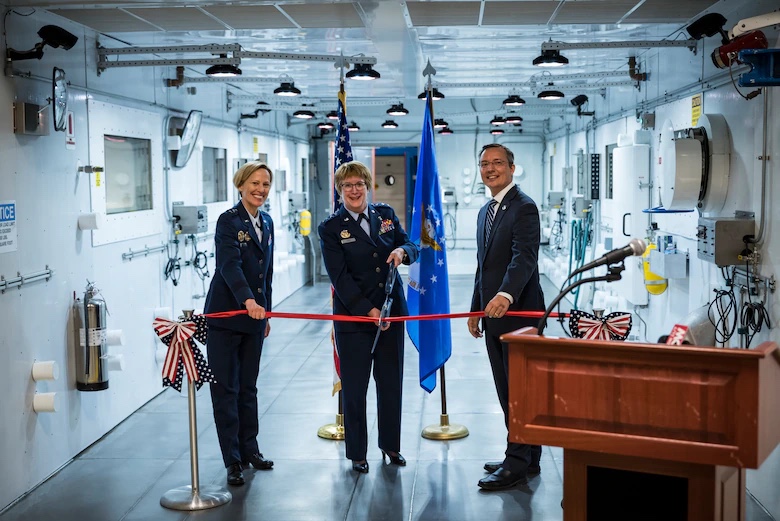
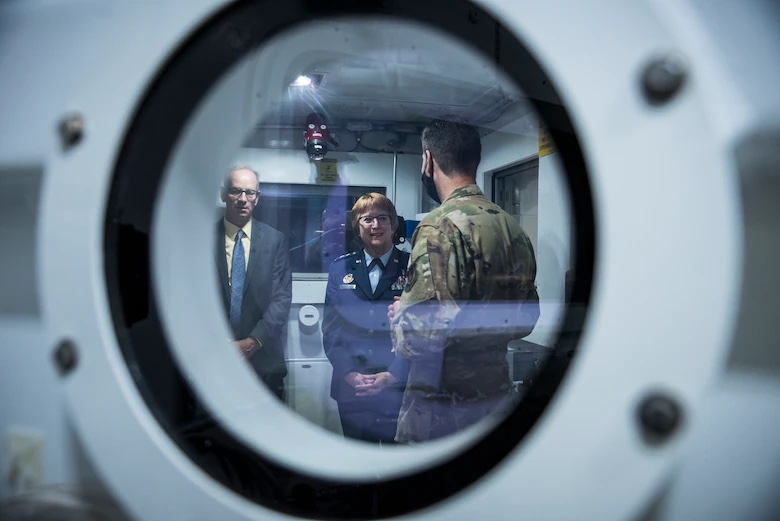
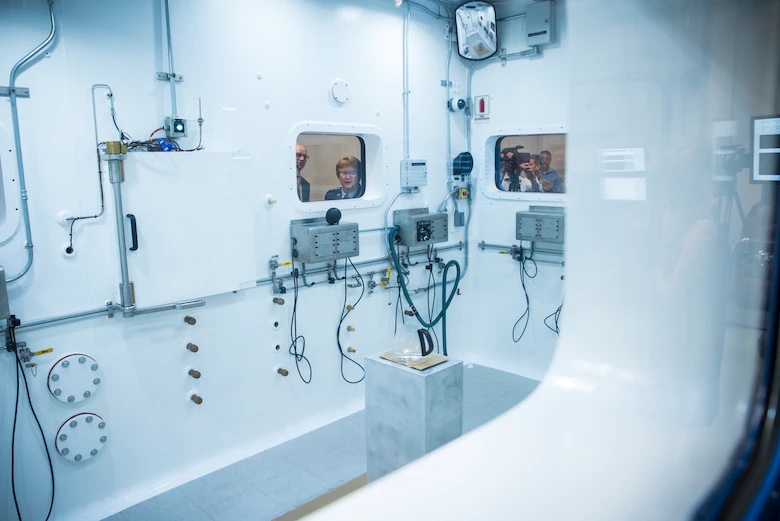
On May 27, leadership and aerospace physiology experts from across the Air Force came together both in-person and virtually via Zoom in a ribbon-cutting ceremony to celebrate the opening of the RAC, a family of four computer-controlled altitude chambers.

“Aerospace physiology research and training, here in the RAC and in our other facilities, is essential to the readiness of our air crews and their missions,” said Darrell Phillipson, acting director of AFRL’s human performance wing, who presided over the ceremony. “Today, we are standing at the DoD’s epicenter of aerospace physiology research capability and expertise.”

But this convergence of expertise and facilities for aerospace physiology is anything but new. In fact, it’s been a plan for decades, growing and strategically relocating as technology has advanced.

Staff Sgt. Jonathan Rosales, the event’s master of ceremonies, discussed some of the history of how military scientists and researchers have provided the Air Force and sister services, including NASA, with groundbreaking research and training relating to the effects of weightlessness, pressure, altitude, temperature, acceleration and numerous other challenges that can arise in flight dating back as far as the late 1950s, decades before the strategic stand-up of the human performance wing in AFRL in 2008. He told the audience, which included Air Force Surgeon General Lt. Gen. Dorothy Hogg, Lt. Gen. Mark Ediger (ret.), AFRL Commander Maj. Gen. Heather Pringle, and AFRL Executive Director Tim Sakulich, among others, about the historical contribution to NASA with the development of space suits used by astronauts in the Gemini and Apollo programs.

As air frames and technology advance, so does research and training.  

“These four research altitude chambers will give us an unprecedented capability to test and gather data, ensuring the continued longevity of flight equipment, and providing us a more complete set of tools to measure the effects of altitude on our pilots and air crews,” said Phillipson. “And this larger family of test facilities, supporting labs, and world-class talent establishes AFRL, in partnership with NAMRU-D, as one of the most capable and functionally-equipped research centers in aerospace physiology in the world. These facilities ensure our air crews are ready now, and for whatever the future may bring.”

For additional information about the RAC and the capabilities of each chamber, click here. For additional information on AFRL’s centrifuge, click here. For information about NAMRU-D’s Kraken, visit here. For a quick recap of the RAC ribbon-cutting ceremony, click here.

By Gina Marie Giardina, Air Force Research Laboratory Public Affairs

Uniforms with Programmable Fiber Could Transmit Data and More

Tuesday, June 15th, 2021

RESEARCH TRIANGLE PARK, N.C. — Army-funded research has resulted in the development of a programmable fiber that could transmit data from Soldier uniforms.

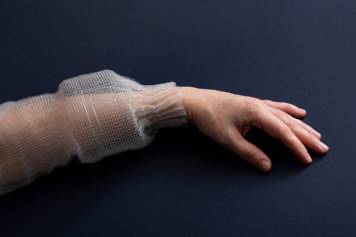
Researchers at the Army’s Institute for Soldier Nanotechnologies at the Massachusetts Institute of Technology developed the first fiber with digital capabilities. The fiber can sense, store, analyze and infer activity when sewn into a piece of clothing.

“This groundbreaking research, with other research underway at the ISN, could revolutionize Soldier uniforms,” said Dr. James Burgess, ISN program manager for the U.S. Army Combat Capabilities Development Command, now known as DEVCOM, Army Research Laboratory. “We could outfit our Soldiers with uniforms that could generate power, give them vital information about their physiology and environmental exposures, provide their location to their team and alert someone if they incur an injury. All of this could be done with very little increase in weight carried by the Soldier.”

Ultimately uniforms with this technology could power sensors, store and analyze the collected data and transmit data to outside sources.

The research, published in Nature Communications, describes how the team created the new fiber. The team placed hundreds of square silicon microscale digital chips into a preform that created a polymer fiber. By precisely controlling the polymer flow, the researchers created a fiber with continuous electrical connection between the chips over a length of tens of meters.

Until now, electronic fibers have been analog, carrying a continuous electrical signal, rather than digital, where discrete bits of information can be encoded and processed in 0s and 1s.

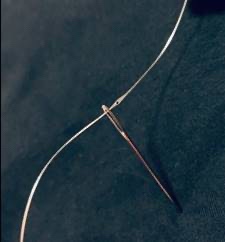
The fiber itself is thin and flexible and can pass through a needle, be sewn into fabrics, and washed at least 10 times without breaking down.

“When you put the fiber into a shirt, you can’t feel it at all,” said Gabriel Loke, MIT doctoral student. “You wouldn’t know it was there.”

Yoel Fink, professor in the departments of materials science and engineering and electrical engineering and computer science at MIT said that digital fibers expand the possibilities for fabrics to uncover the context of hidden patterns in the human body for physical performance monitoring, medical inference, and early disease detection.

A digital fiber can also store a lot of information in memory. The researchers were able to write, store, and read information on the fiber, including a 767-kilobit full-color short movie file and a 0.48-megabyte music file. The files can be stored for two months without power.

The fiber also takes a few steps forward into artificial intelligence by including, within the fiber memory, a neural network of 1,650 connections. After sewing it around the armpit of a shirt, the researchers used the fiber to collect 270 minutes of surface body temperature data from a person wearing the shirt, and analyzed how these data corresponded to different physical activities. Trained on these data, the fiber was able to determine with 96 percent accuracy the activity in which the person wearing the shirt was participating.

Adding an artificial intelligence component to the fiber further increases its possibilities, the researchers say. Fabrics with digital components can collect a lot of information across the body over time, and these lush data are perfect for machine learning algorithms, Loke said.

With this analytic power, the fibers someday could sense and alert Soldiers in real-time to health changes like a respiratory decline or an irregular heartbeat, or deliver muscle activation or heart rate data during training exercises. It could also provide data on any toxins Soldiers are exposed to, the length of time they are exposed, and monitor any effects those toxins have on their physiology.

The fiber is controlled by a small external device so the next step will be to design a new chip as a microcontroller that can be connected within the fiber itself.

“When we can do that, we can call it a fiber computer,” Loke said.

The U.S. Army established the MIT Institute for Nanotechnologies in 2002 as an interdisciplinary research center to dramatically improve protection, survivability and mission capabilities of the Soldier and of Soldier-supporting platforms and systems.

In addition to the Army, the, National Science Foundation, the MIT Sea Grant and the Defense Threat Reduction Agency supported this research.

By US Army DEVCOM Army Research Laboratory Public Affairs