X-PAC

Archive for the ‘Guest Post’ Category

Overwhelm the Enemy by Volume and Accuracy: A New Optic to Aid Mounted Machine Gunners

Saturday, April 17th, 2021

FORT BENNING, GA,   –  

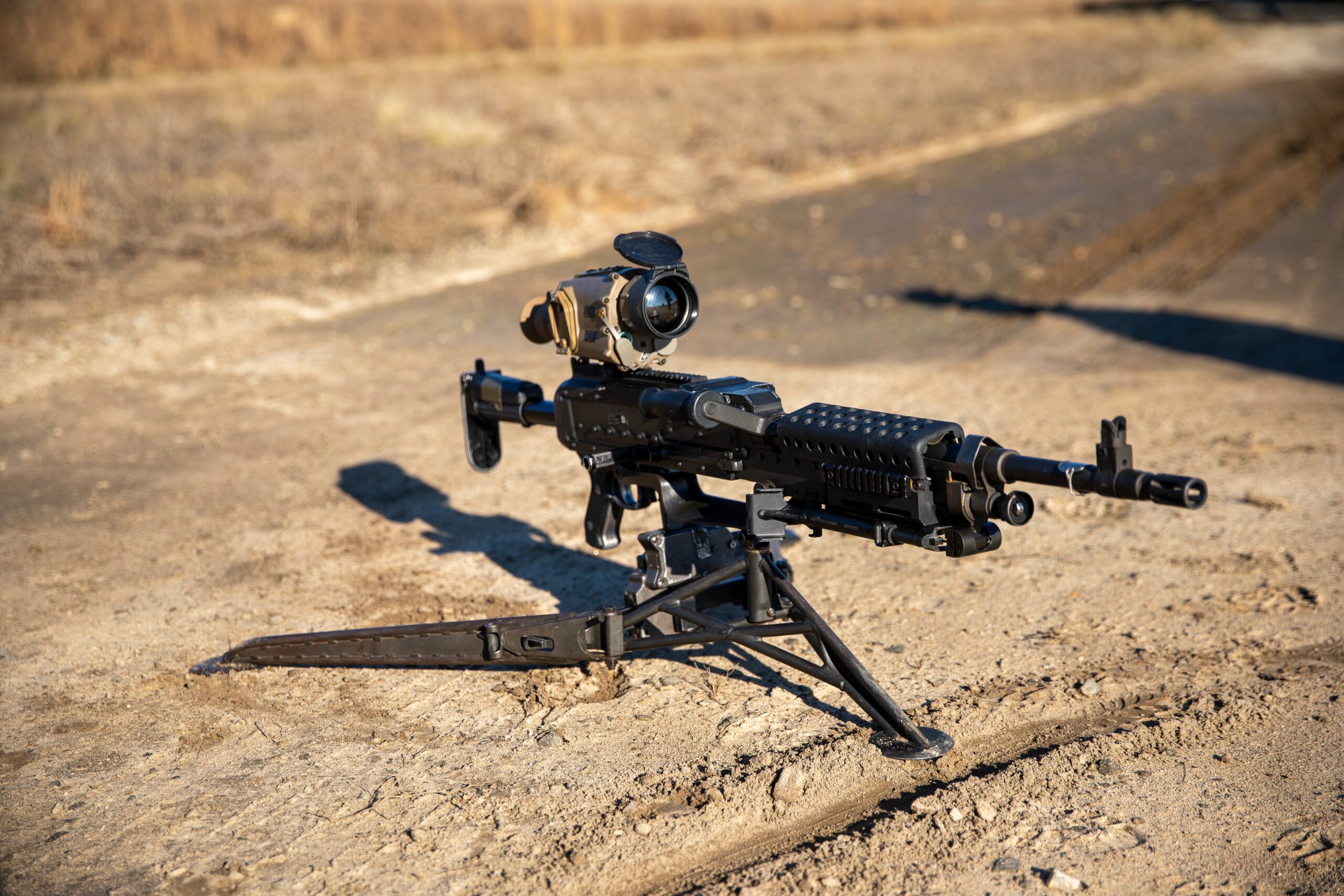
Accuracy by volume has been a long-standing sarcastic remark towards the shooting style of machine gunners. However, that is about to change with the new Family of Weapons Sight – Crew Served (FWS-CS) machine gun optic that provides Soldiers increased accuracy and lethality by leveraging the most up to date weapon sight and wireless technology.
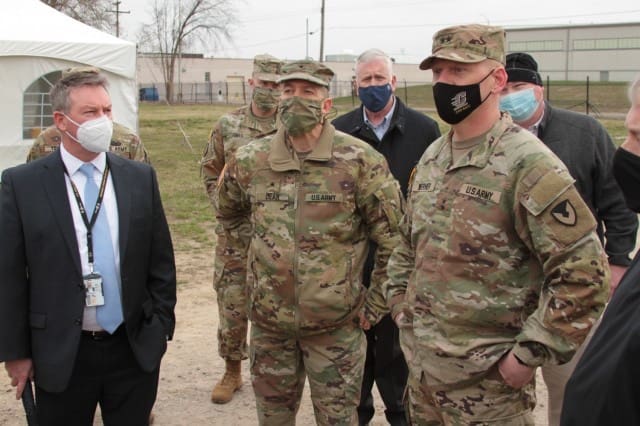
Project Manager Soldier Maneuver and Precision Targeting (PM SMPT) held a Soldier Touchpoint (STP) with Soldiers of the 82nd Airborne Division in Fort Benning the last week of February. The Soldier feedback from the STP ensures end users are involved throughout the development of the FWS-CS and it has marked advancements in capability compared to legacy equipment.

“With a program as complex as ours, we need feedback early and often in order to ensure we get our machine gunners what they need in the final product,” said Maj. John Nikiforakis, PM SMPT Assistant Product Manager. “Mounted machine gunners have the difficult task of providing guidance to the crew, ensuring protection of their vehicle, and most importantly providing lethal effects on the enemy. The FWS-CS ensures that the gunners in turrets have the best optic for all battlefield conditions and one that mounts to any crew served weapon in the Army’s inventory.”
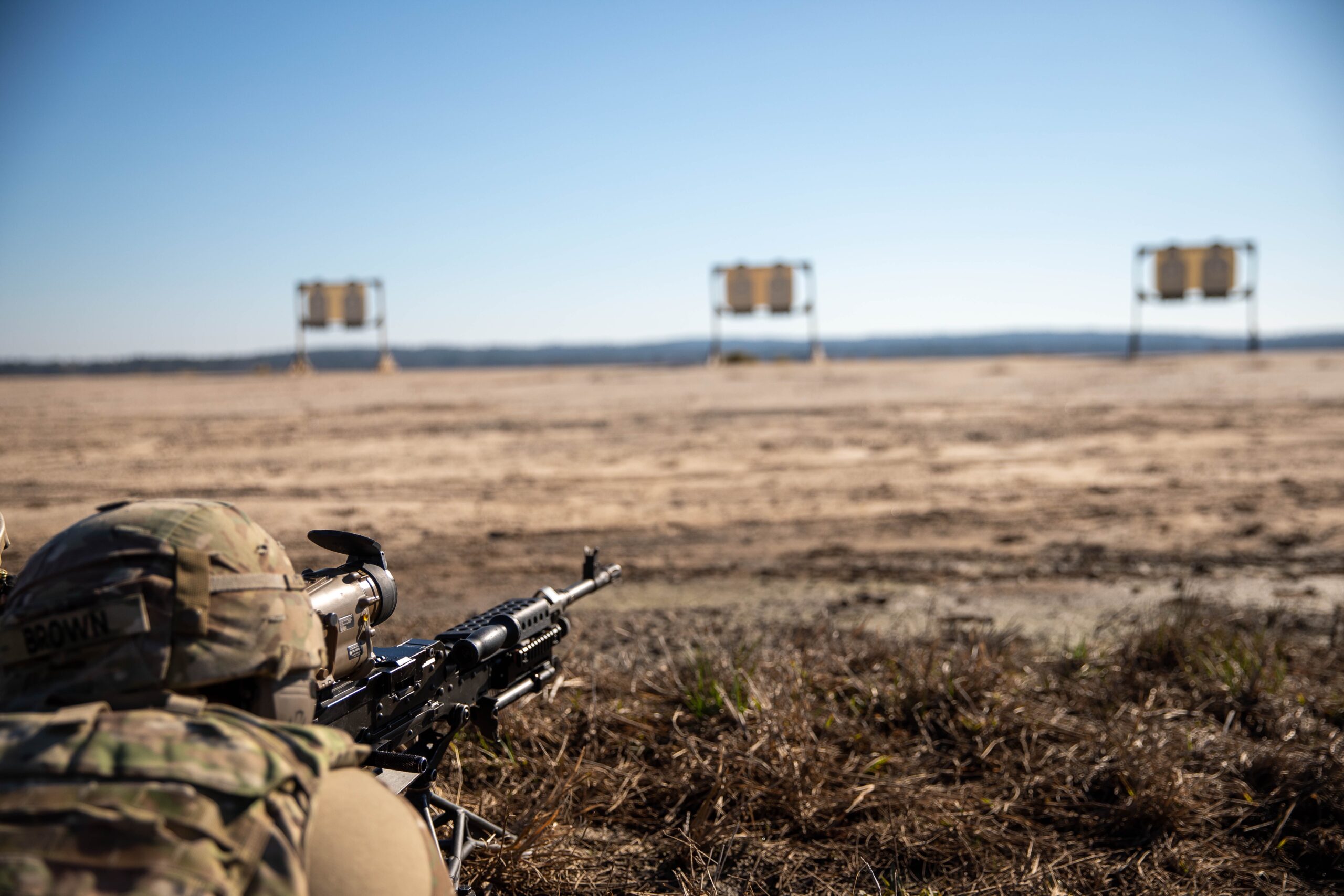
“We’re comparing shooting data from the current M145 Machine Gun Optic (MGO) to the FWS-CS to see if we can engage targets at unknown distances faster and more accurately,” said 1st Lt. Anthony Ramirez, 2-325, 82nd Airborne Division. “The biggest benefit of the FWS-CS is that there’s a built-in laser rangefinder and ballistic calculator, so it determines the range and adjusts the reticle. All we have to do is put the reticle on the target and engage.”

The FWS-CS is the first machine gun optic to utilize the ‘disturbed reticle’ technology. Along with calculating the range to the target, the ballistic calculator can adjust for air density and works with any of the Army’s current machine gun systems.

“Typically you have to walk your fire on target, but with the FWS-CS you have impact on the first burst,” said Sgt. Jose Perez, 2-325, 82nd Airborne Division. “It’s a really cool system that can be used with multiple firearms, including the M240, MK19, and .50 Cal.”

In addition to the disturbed reticle, the FWS-CS can be used day or night and in limited visibility conditions which provide Soldiers greater lethality on the battlefield.
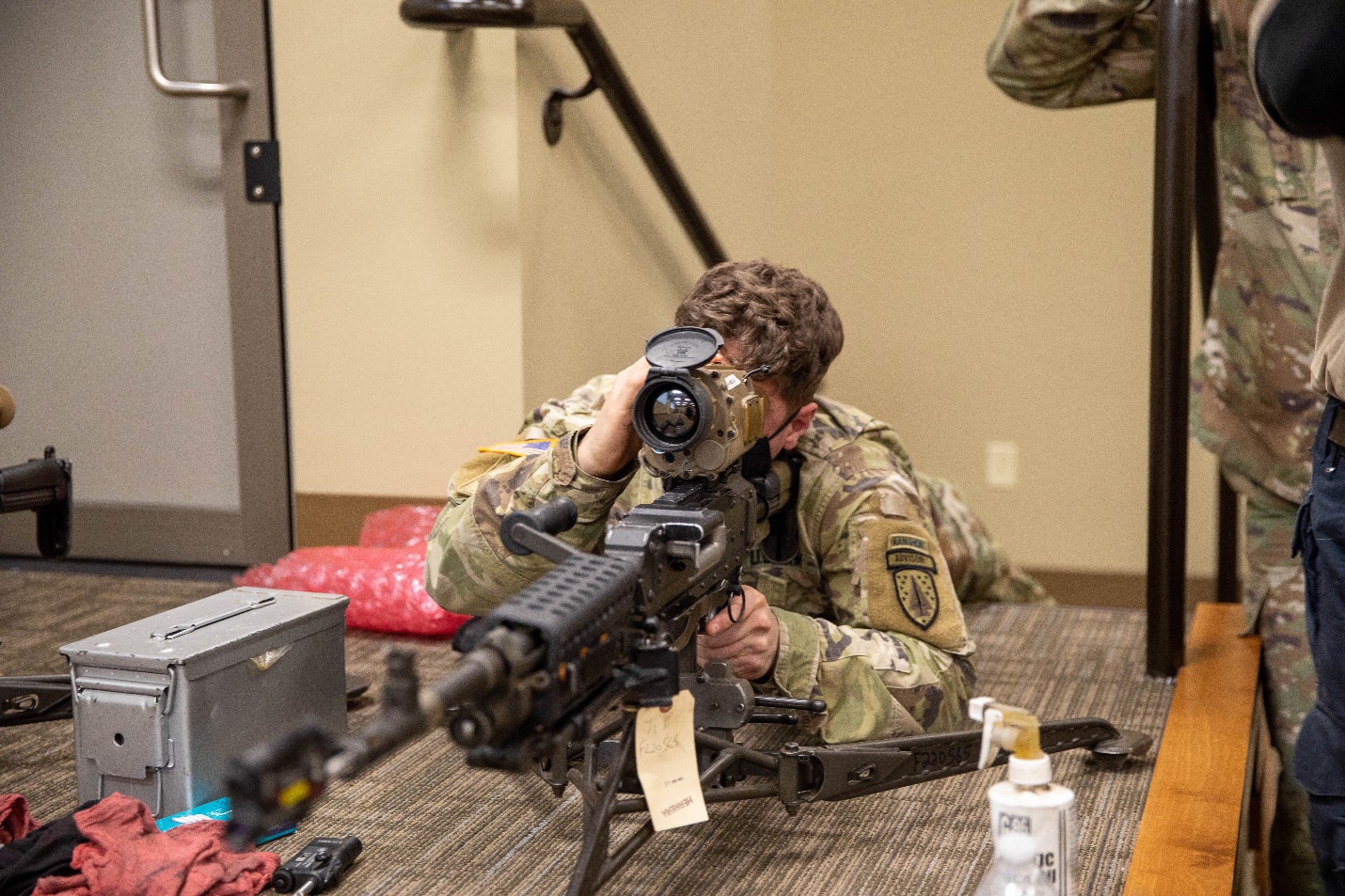
“It is a day and thermal sight. So it allows us to operate in a multitude of environments and be able to engage under more conditions than the M145 is capable of,” said Ramirez. “It has the capability to look through fog and other inclement weather conditions that the old M145 wouldn’t be able to reach out and see.”

“It’s extremely awesome, like Call of Duty kind of equipment that usually just goes to elite units.”
PFC Brown,
2-325, 82nd Airborne Division

The FWS-CS utilizes long-wave thermal technology and a high-definition digital day display that provides users with an extremely detailed field of view and many options for customizing the reticle and display.

“The thermal and daytime displays are both extremely clear,” said Pfc. Benjamin Brown, 2-325, 82nd Airborne Division. “It’s customizable to the shooter’s preference, changes from white hot to black hot, there’s different reticle colors, and up to a 4x zoom which makes identifying and engaging targets faster and more accurate. I would love to have this in the field.”
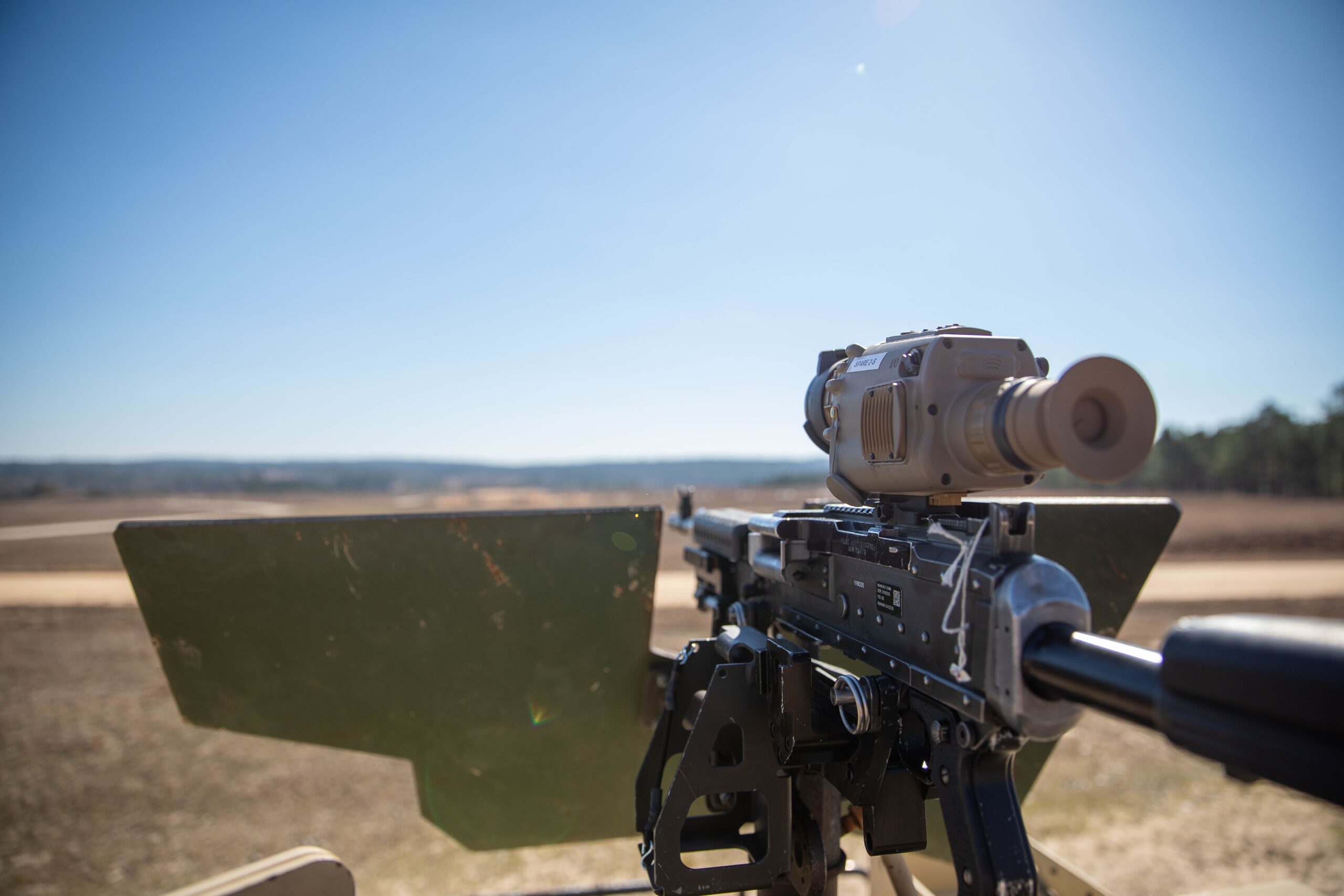
“It allows you to discriminate targets based on what the individuals look like,” said Ramirez. “You can determine the target’s weapon system or if they’re wearing body armor.“

In addition to its stand-alone performance, the FWS-CS is one of many programs within PM SMPT to utilize wireless technology. The Intra-Soldier Wireless (ISW) system allows the FWS-CS to connect to a Helmet Mounted Display (HMD).

“You have an eyepiece attached to your helmet, so you don’t even have to be down behind the gun with your eye in the scope,” said Pfc. Jake Ongar, 2-325, 82nd Airborne Division. “You can look through the HMD to see what you’re shooting at while staying behind cover, I think it’s a pretty cool feature.”

The effort to integrate capabilities and drive weight reductions are part of Program Executive Office (PEO) Soldier’s vision of treating the Soldier as an integrated combat platform.

When asked when the FWS-CS is planned to be fielded Nikiforakis said, “The first Soldiers will see the FWS-CS in FY23. We still have a few modifications to make and several more tests to meet the demands of gunners.”

“I think this weapons sight has the potential to drastically improve Soldier lethality,” said Ramierz. “Being able to engage the enemy faster and more accurately is going to allow us to overtake the enemy and accomplish our mission.”

By Justin Sweet PEO Soldier
FirstSpear Friday Focus— Comm Pack

Friday, April 16th, 2021

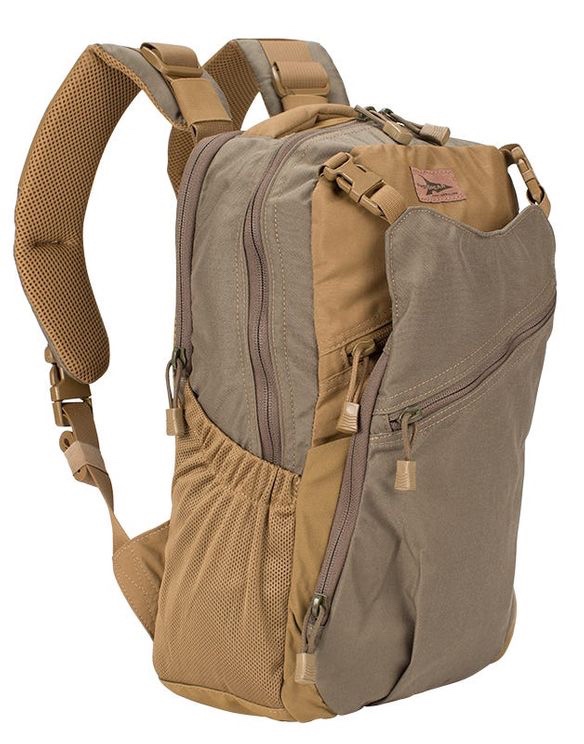
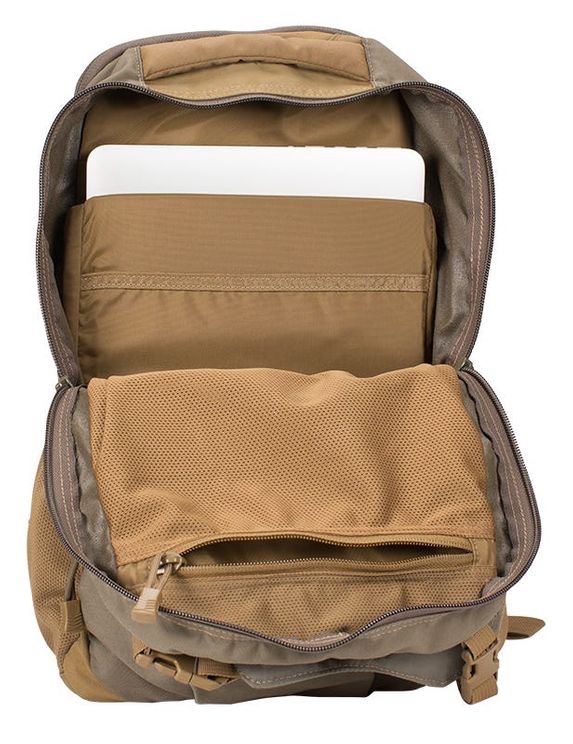
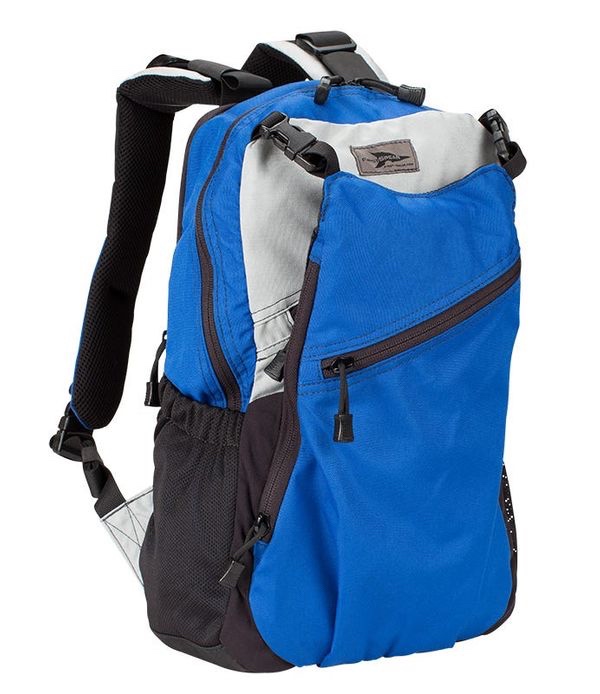
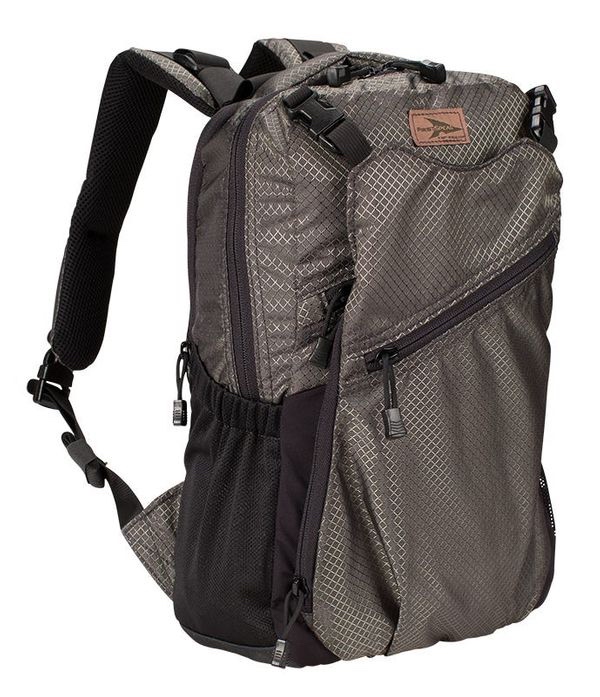
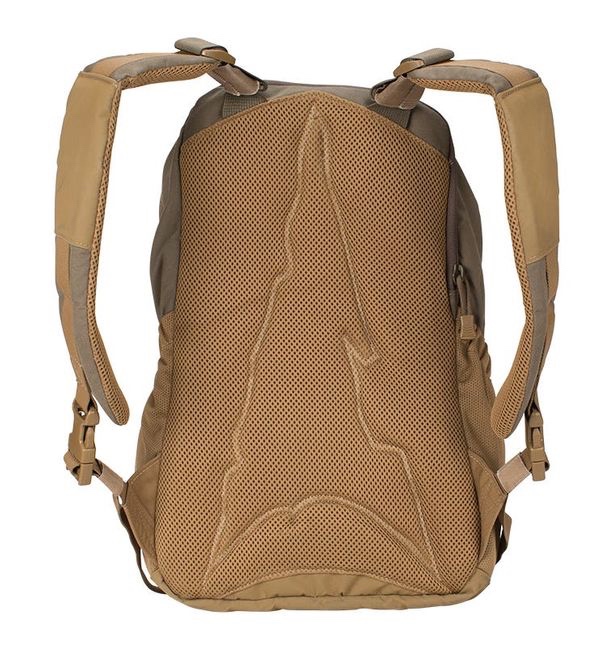
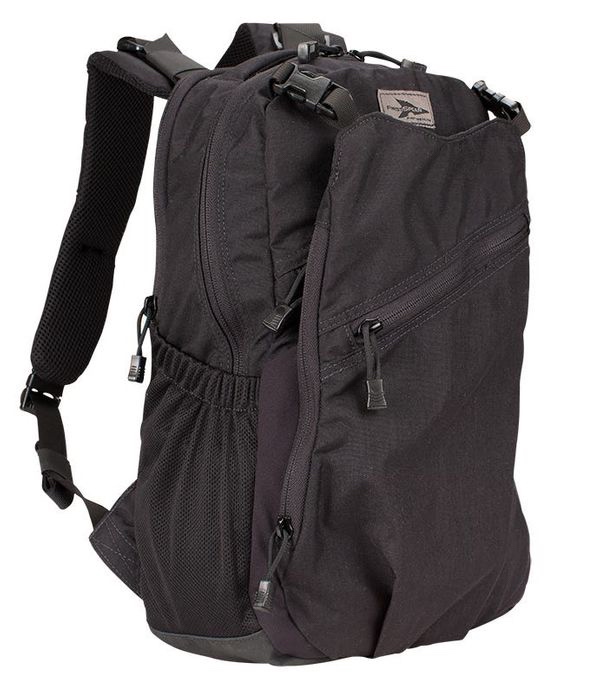
Based off of the popular Exigent Circumstance Pack, the Comm Pack offers a distinctly urban style. The zippered main compartment offers ample storage for a wide variety of communications devices or other equipment and the cable access ports are discreetly located. Inside, there’s a padded laptop sleeve and zippered mesh pocket.

• Discrete backpack
• Distinct urban feel
• Internal laptop sleeve
• 2 Sizes: 980 cu in or 1800 cu in

The pack incorporates padded shoulder straps with QR buckles as well as a low profile, padded haul loop handle at the top of the pack. The mesh, padded back of the pack offers the distinctive FirstSpear logo stitched design. Each side of the pack features a mesh pocket for water bottles or other items. There is also an exterior, beavertail-style flap with dual zippered compartments for quick storage. Additionally, there is a flat zippered pocket at the front of the pack under the flap.

The Comm Pack is available in Black, Blue/Silver, Ranger Green/Coyote and the Ripstop Light Grey.

Check out the Comm Pack at www.first-spear.com/comm-pack-and-comm-pack-large

USAF Cyber Resiliency Office for Weapon Systems Recognized for System Security Engineering Cyber Guidebook

Thursday, April 15th, 2021

HANSCOM AIR FORCE BASE, Mass. (AFNS) —

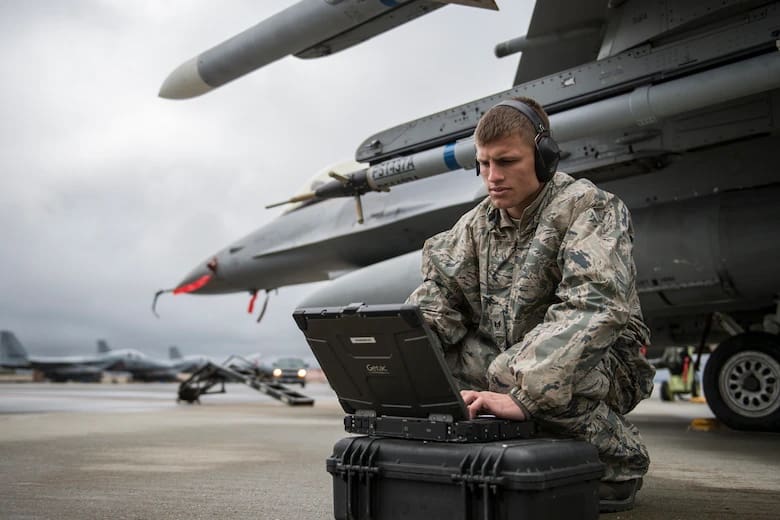
A newly published Government Accountability Office report on Weapon Systems Cybersecurity identified the U.S. Air Force as the only service that has issued service-wide guidance detailing how acquisition programs should define cybersecurity requirements and incorporate those requirements in contracts.

The report, which was a follow-up to a 2018 report on weapon system cybersecurity, called out the U.S. Air Force’s Cyber Resiliency Office for Weapon Systems, or CROWS. It specifically cited the office for developing the System Security Engineering Cyber Guidebook to “consolidate references to different DoD and Air Force instructions and guidance into a single document and provide more detailed explanations and suggestions for implementation.”

The 40-page report, which was addressed to congressional committees, underscored the importance of DoD’s plan for implementing cybersecurity protections early and often throughout a program’s lifecycle. Report authors noted that it is easier, less costly and more effective than attempting to add, or bolt-on, cybersecurity protections late in the development cycle once a system is fielded. It also reminded committees that, due to contractors playing a pivotal role in designing and building DoD weapon systems, DoD must communicate its cybersecurity requirements in its acquisition program contracts.

“This is a significant milestone for the Air Force and our broader cyber resiliency mission,” said Joe Bradley, CROWS director. “Singling out the Air Force and CROWS approach, and noting other services could benefit from it, is a remarkable affirmation of the work our team is doing to bake cyber resiliency into new weapons systems.”

Bradley added that it also helps advance his team’s long-term vision of changing the Air Force culture on cyber.

Katie Whatmore, a CROWS systems security engineering lead who oversaw the development of the guidebook, noted that the Air Force’s approach can assist in program development.

“The Air Force’s SSE Cyber Guidebook serves as a single source reference that enables program offices to address system security engineering as an integrated part of systems engineering,” she said. “By following the approach within the guidebook, programs will ensure appropriate requirements are included on contract and necessary analyses are accomplished in order to minimize cyber risks to our weapon systems.”

The CROWS team has worked across the enterprise to ensure all stakeholder organizations are in full support of its approach in creating a common starting point to reference when considering cyber resiliency best practices for their programs.

To reach out to the CROWS office, contact CROWS@us.af.mil.

Story by Raoul Fischer, Cyber Resiliency Office for Weapon Systems

Photo by Senior Airman Peter Reft

Leader–Follower Vehicles to Offer Army Increased Operational Capability

Wednesday, April 14th, 2021

DETROIT ARSENAL, Mich — Modernization is the buzz word floating around the Army currently and with good reason. To keep ahead of our near-peer adversaries, we must develop better technologies faster to dominate the battle space.

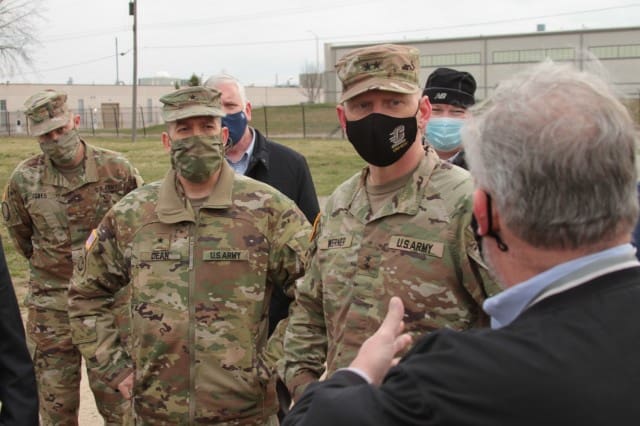
“We’ve done a good job at keeping up with developing current technologies,” said Maj. Gen. Darren Werner, Commanding General U.S. Army Tank-automotive and Armaments Command. “However, we need to get it to the Soldiers in the field for it to matter.”

Werner, along with other officers and civilian leaders attended a Leader–Follower demonstration on Apr. 5 at the Detroit Arsenal. The event was led by the Ground Vehicle Systems Center on the arsenal to highlight the effectiveness of semi-autonomous robotic Tactical Wheeled Vehicles.

Bernard Theisen, Division Chief Combat Support Robotics and Safety for GVSC, briefed the capabilities of the Leader-Follower vehicles and stated that they had some similar on-road capabilities to some current high end luxury vehicles and other off-road capabilities unique to the military.

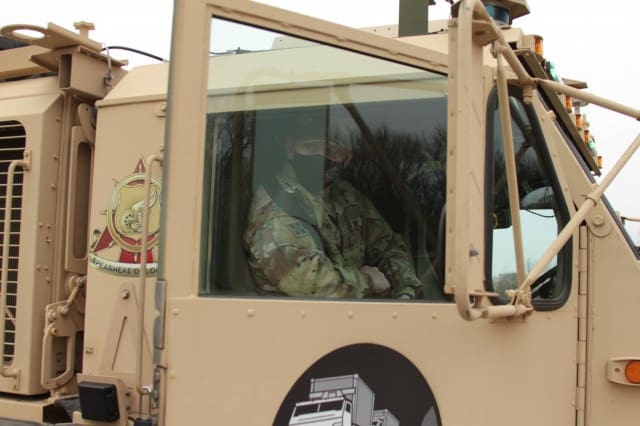
“The vehicles have the capability to be driven independently, remotely, or in this instance, made to follow a lead vehicle,” said Theisen.

The Leader–Follower vehicles offers field commanders better options when operating in a combat zone by providing manned and unmanned capabilities.

According to Alfred Grein, Acting Director GVSC, by installing robotic kits to vehicles, a lead “manned” vehicle can lead a convoy of one or more follower “unmanned” vehicles accurately and safely.

Outside of Leader–Follower option, the Program Executive Officer Combat Support and Combat Service Support is looking at fielding the technology as GVSC continues developing further ways to leverage and improve the capabilities at a later time.

“Now that the hardware is in place, we can look at ways to enhance the remote and semi-autonomous capabilities in the future,” said Grein. “All we have to do is update the software.”

There are currently 60 Leader–Follower systems issued to the 41st Transportation Company at Fort Polk, Louisiana with their next software upgrade currently undergoing safety testing at Aberdeen Proving Grounds, Maryland. GVSC Agile Development, Security, and Operations approach through the Software Foundry allows for Soldier to provide constant feedback to the developers and to deliver better products to the user faster while supporting both PEO Ground Combat Systems and PEO CS &CSS operational needs.

By Scott Wakefield

Air Force Unveils New Mission Statement

Monday, April 12th, 2021

The Air Force released its new mission statement: To fly, fight, and win…airpower anytime, anywhere. This change emphasizes the primary competitive advantage and capabilities airpower provides to the nation and joint operations.

The ability to fight and win with airpower is key to facing emerging competitors and near-peer adversaries, according to service leaders.

“As we developed this new mission statement, we consulted Airmen from across the entire spectrum – enlisted, officers, reservists, guardsmen and civilians,” said Air Force Chief of Staff Gen. Charles Q. Brown, Jr.

Since the domain of space falls under the Space Force, the Air Force can now focus solely on airpower and maintain a sustained focus on core air domain missions.

With a Total Force of more than 689,000 personnel, Airmen work to support all aspects of airpower, which includes five core missions: air superiority; global strike; rapid global mobility; intelligence, surveillance and reconnaissance; and command and control. Airpower also requires people and resources dedicated to unit readiness, base infrastructure and talent management.

The chief master sergeant of the Air Force emphasized that all Airmen, no matter what Air Force specialty code they serve in, play an important role in generating military airpower for the nation.

“As the new mission statement was formulated, it was important to us that all Airmen see where they fit in,” said Chief Master Sgt. of the Air Force JoAnne S. Bass. “Every Airman, from every career field, is directly responsible for delivering, supporting, launching and driving airpower, which is the culmination of our diverse specialties, expertise and capabilities that make up our great Air Force.”

Brown also underscored the importance of the Total Force in making American airpower a reality.

“Delivering airpower for our nation requires more than just aircraft,” Brown added. “It requires Total Force Airmen – active duty, Guard, Reserve, civilians – in all Air Force specialties working together as a seamless team to operate, maintain and enable our mission and bring the unique capabilities and effects of airpower to bear.”

In order to accomplish the mission of airpower, Air Force leaders call on Airmen to accelerate change and to think about future challenges before they are in front of them.

“Our national security is not just on the shoulders of the chief of staff of the Air Force or other service chiefs,” Brown said during his 2021 Air Force Association Aerospace Warfare Symposium fireside chat. “It’s all of us together that have an interest in this; and the way we work together on this, and make progress together and understand what’s out there in the future, and really appreciate that, will help all of us move faster.”

The mission of the U.S. Air Force is to fly, fight, and win…airpower anytime, anywhere.

By TSgt Joshua Dewberry, Secretary of the Air Force Public Affairs

Royal Australian Air Force Transitions from ‘Airmen’ to ‘Aviators’

Monday, April 12th, 2021

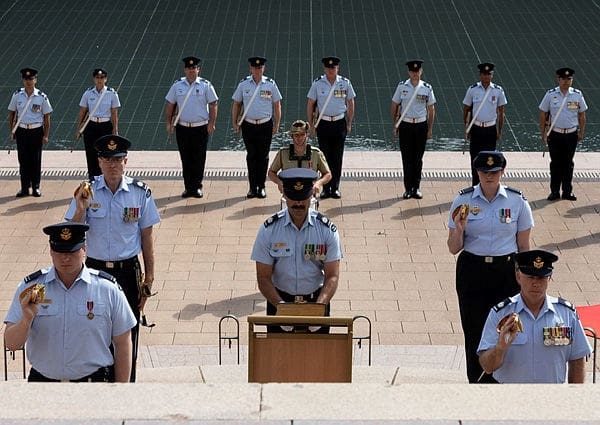
The Royal Australian Air Force has replaced the term ‘airmen’ with ‘aviators’ as it enters its second century.


Warrant Officer Ivan Petrovic (centre front) places the Memorial Book on a plinth during the ANZAC Memorial in Hyde Park, Sydney as part of the RAAF Centenary commemorations. Photo by LS David Cox

Chief of Air Force, Air Marshal Mel Hupfeld, AO, DSC revealed this change on 31 March, at a centenary dinner which hosted past and present aviators.

Air Marshal Hupfeld said that as Air Force charts its path forward, he wants to instil a stronger sense of identity.

“Of all the work that has been done in developing our Air Force culture, the most challenging dilemma has been fully explaining who we are,” Air Marshal Hupfeld said.

“We understand well enough what we are and what we do – but have never quite managed to successfully articulate WHO we are.

“We are ALL aviators.

“As an Air Force, we are born of the air and space.It is our home, and the place from which we serve our nation. Our trade is Aviation.

“In everything that we do, we are aviators first and foremost. All of us, by virtue of what we do and what we believe. It is what binds us together.”

Air Marshal Hupfeld cautioned against confusing the role of pilots with Air Force personnel’s common and collective purpose to the nation – “to think, act and imagine from the perspective of the skies and space above us.”

The change was timed with the announcement to revamp Air Force culture through the Our Air Force, Our Culture program.

The new program builds on the foundation of previous measures, and closely aligns with the update to the Air Force Strategy launched in 2020.

Ministerial and Executive Coordination and Communication, Department of Defence, Canberra, ACT

SCUBAPRO SUNDAY – Diving with a Helmet

Sunday, April 11th, 2021

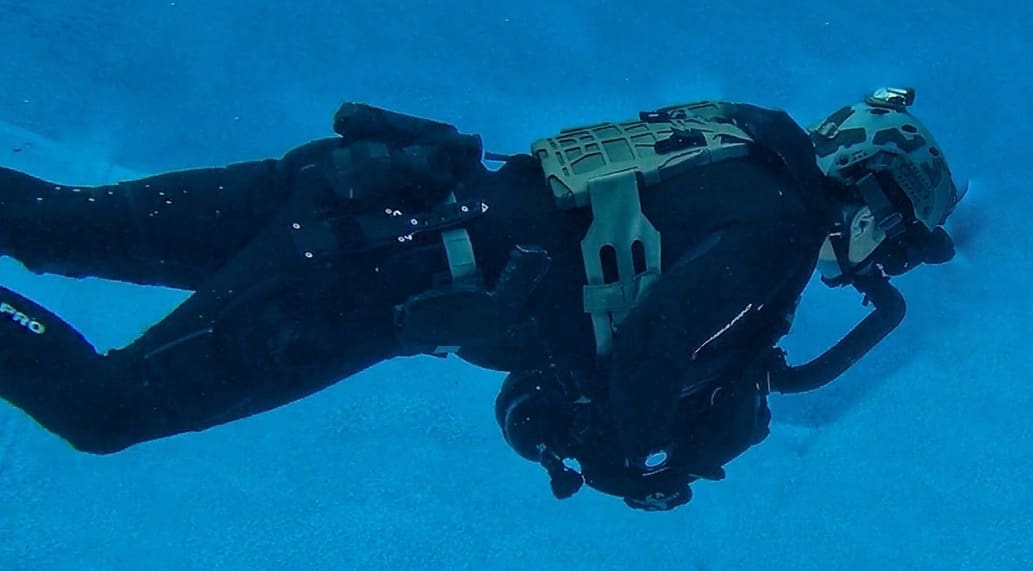
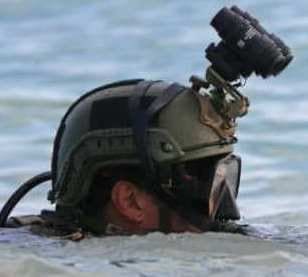
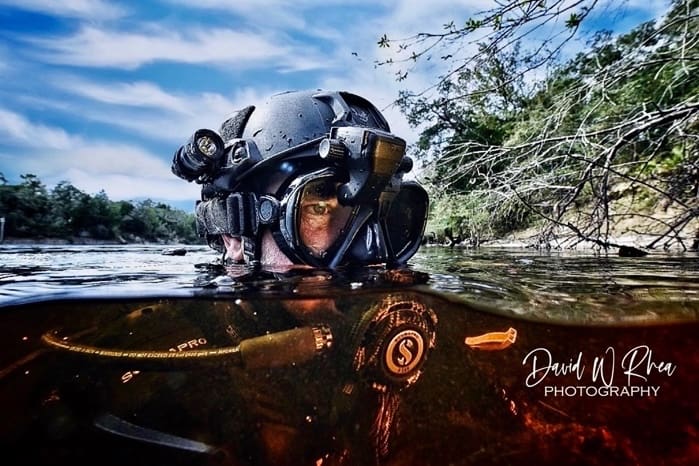
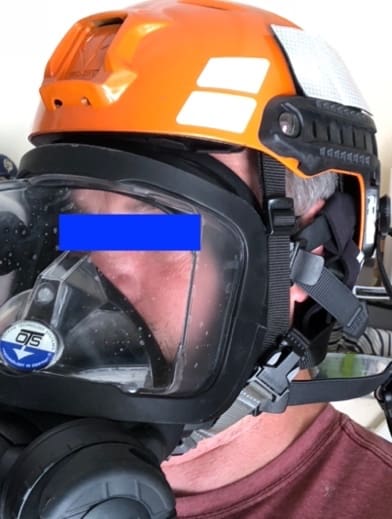
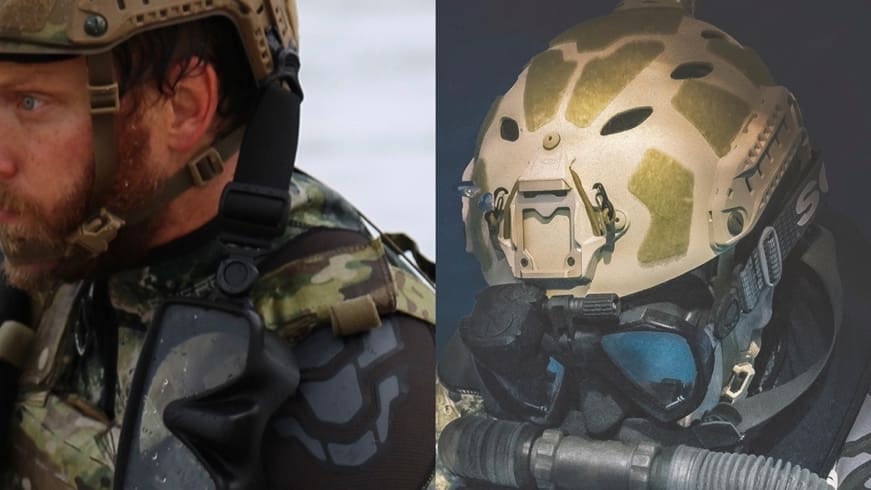
Over the past ten years or so, more and more divers have started wearing helmets when they dive. It is done for a lot of different reasons. For example, when using a Diver Propulsion Vehicle (DPV) to help protect your head if you run into something; wearing your Night Optical Devices (NOD) so when you get out of the water, you can take your mask off and pull your NODs down; for protecting your head when working around piers or doing a ship attack. You want to be ready to fight when you get out of the water, so you have your helmet on and, for some reason, people like to wear GoPros for everything they do now. But the main reason is protection for your head.

There are some things you should take into consideration before you jump into the water with your helmet on. How much protection do you need? Is it just for bump protection? If so, can you just use a thicker dive hood or do you really need something more? Let’s say you and your dive buddy are swimming along, he has his head down looking at the attack board and you are along for the ride, thinking about what you need to buy at home depot to add to your new deck you want to finish up this weekend, and then BAM!! KaPOW!! He runs into the pier cutting his head open. Now you have to buy him a steak dinner and/or lots of beer to make up for him hitting his head.


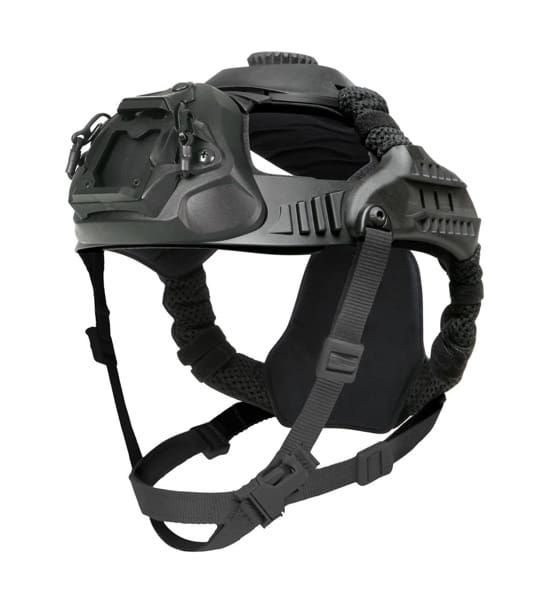
Any time you will be around piers, rocks or ships, you should have something covering your head, even if it’s just a thin dive hood. If you choose to wear a helmet, you have a few choices. Start with its physical components: does it need to be Ballistic, Non-Ballistic (glass-filled nylon or carbon fiber), or can it just be something just used for mounting gear, like the Ops Core Skull Crusher/ Head-mounted system.

Almost all helmets can be used in the water, but like everything you bring into the water, it needs to be adequately cleaned. Some companies make very cheap knock offs of different helmets. Please don’t be fooled if you pay $100 for something that would normally cost $1000. There is a good chance it won’t last that long and please for the love of god don’t do that with a ballistic helmet and then use it in war. I know looking cool is rule one, but a very close second is” don’t go dying on me” because you wanted to look cool.

All helmets used by U.S. SOCOM (sorry, bought by U.S. SOCOM) can be used in the water. If you are planning on getting out of the water and you might get in a gunfight, you might want to wear your ballistic helmet. If you are using a DPV or just need bump and scratch protection, then a non-ballistic helmet should work. If you just want to look around with your NODs when you get out of the water, a Skull Crusher works excellent. If you’re going to add lights or again you want/need to record something, then any of the above will work.

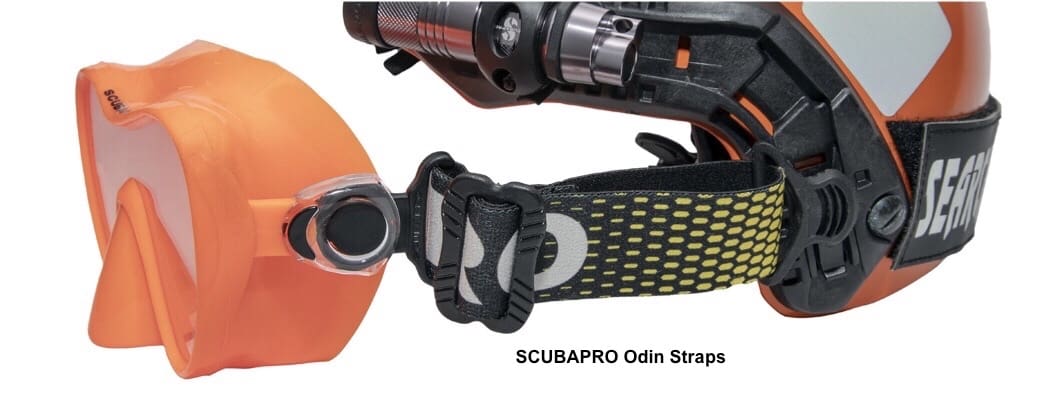
One of the issues you can have when diving a helmet is getting your mask to fit under or over. Once you have it where you want it, you can’t take it off and put it back on quickly. However, with the SCUBAPRO Odin helmet mask strap, you can attach your mask to your helmet for quick donning and doffing, when done with your dive or working around saltwater.

If you need to use a Full-Face Mask like the OTS guardian or even have a thin dive hood on, sometimes this makes buckling the chin strap a little hard. You should consider adding a chin strap extension. The extension will truly make it easier to dive your helmet; it will also help you adjust and remove it, if needed, above and below the water. Most companies make chin strap extensions for use with gas masks or other reasons.


I have had numerous inquiries about the nuts and bolts used on Ops-Core helmets and “why don’t they use stainless steel bolts so that they won’t rust?” Stainless steel does rust; it is just more rust resistant than most metals. The nuts and bolts on your ballistic helmet are ballistic bolts; they are designed not to break apart as easily if shot or blown up. So proper maintenance is required for anything you bring into the water. If you bring it into saltwater, it needs to be soaked, not just rinsed, in freshwater to get the salt crystals out. If the salt crystals are not rinsed out, they will slowly start to cut through the nylon fabric and cut it apart. This is also true for climbing ropes, harnesses, and armor carriers used in the water — make sure to clean them well. Also, always take the pads out of the helmet and make sure they are soaked in freshwater then dried.

You don’t have to take the chin strap off. Just make sure it’s dry, as well, before you store your helmet. Do not leave your helmet in the sun to dry; the sun is not suitable for anything. It is the one thing that is bad for nylon and other material like that.  Leave it in a cool, dry place with air moving around and, if you can, with a dehumidifier or Damp-Rid to help pull the water out of all the webbing. Once it is dry, you can wipe the bolts with a little (a little, not a lot) of WD-40 or another type of water displacement film. Once all of this is done, you can put your helmet away or hang it in your locker. Make sure if you do put it in a helmet bag or your locker, try and have some Damp-Rid or Desiccant packs in there to help pull the moister out of your gear, as it is tough to get all the moisture out completely.

SCUBAPRO has also just launched their Professional Services webpage. It’s just a start but we hope this well show our commitment to Working divers, the Military and Public Safety Divers.

SCUBAPRO Professional Services

COMACC visits Hurlburt’s 505th Command and Control Wing

Sunday, April 11th, 2021

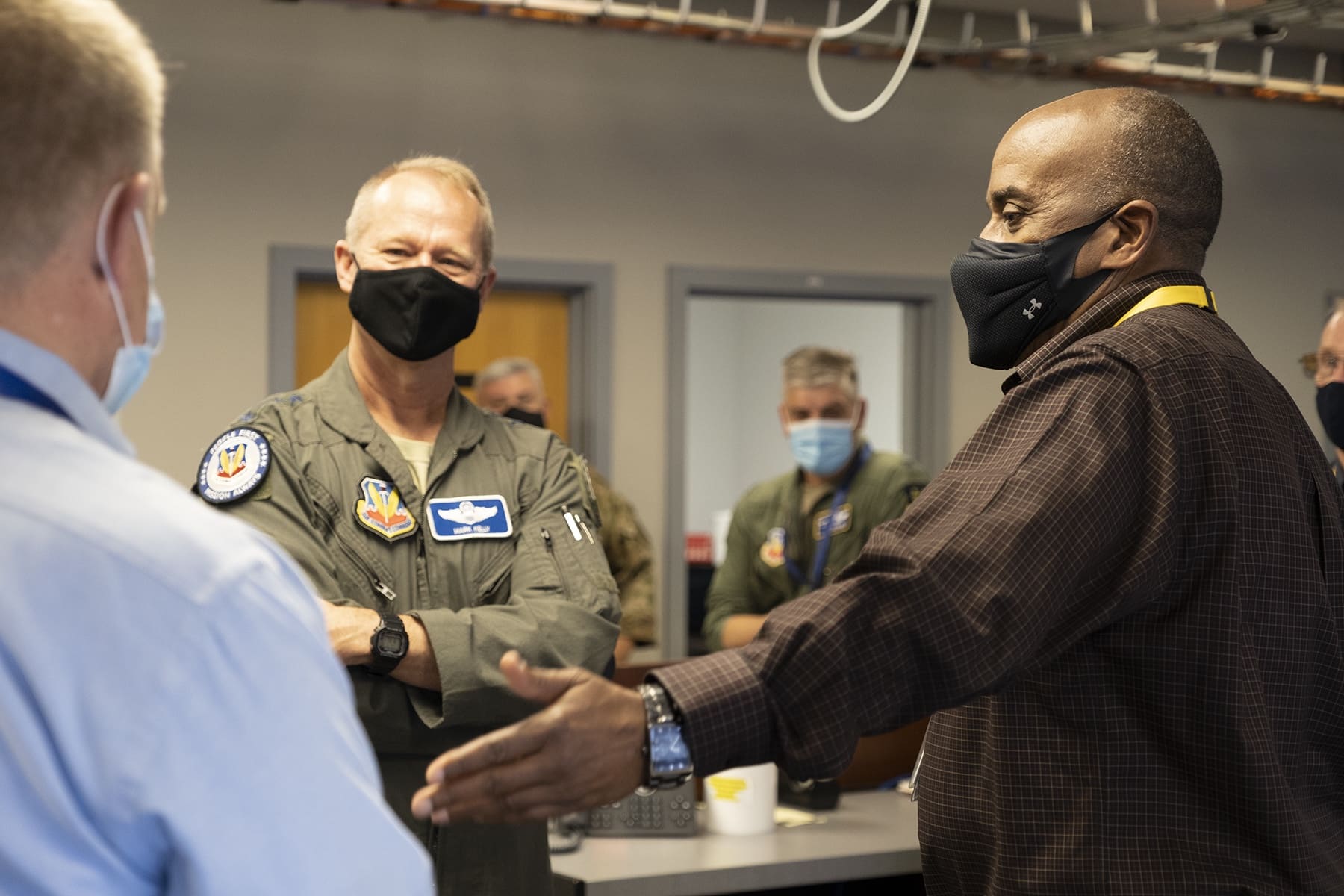
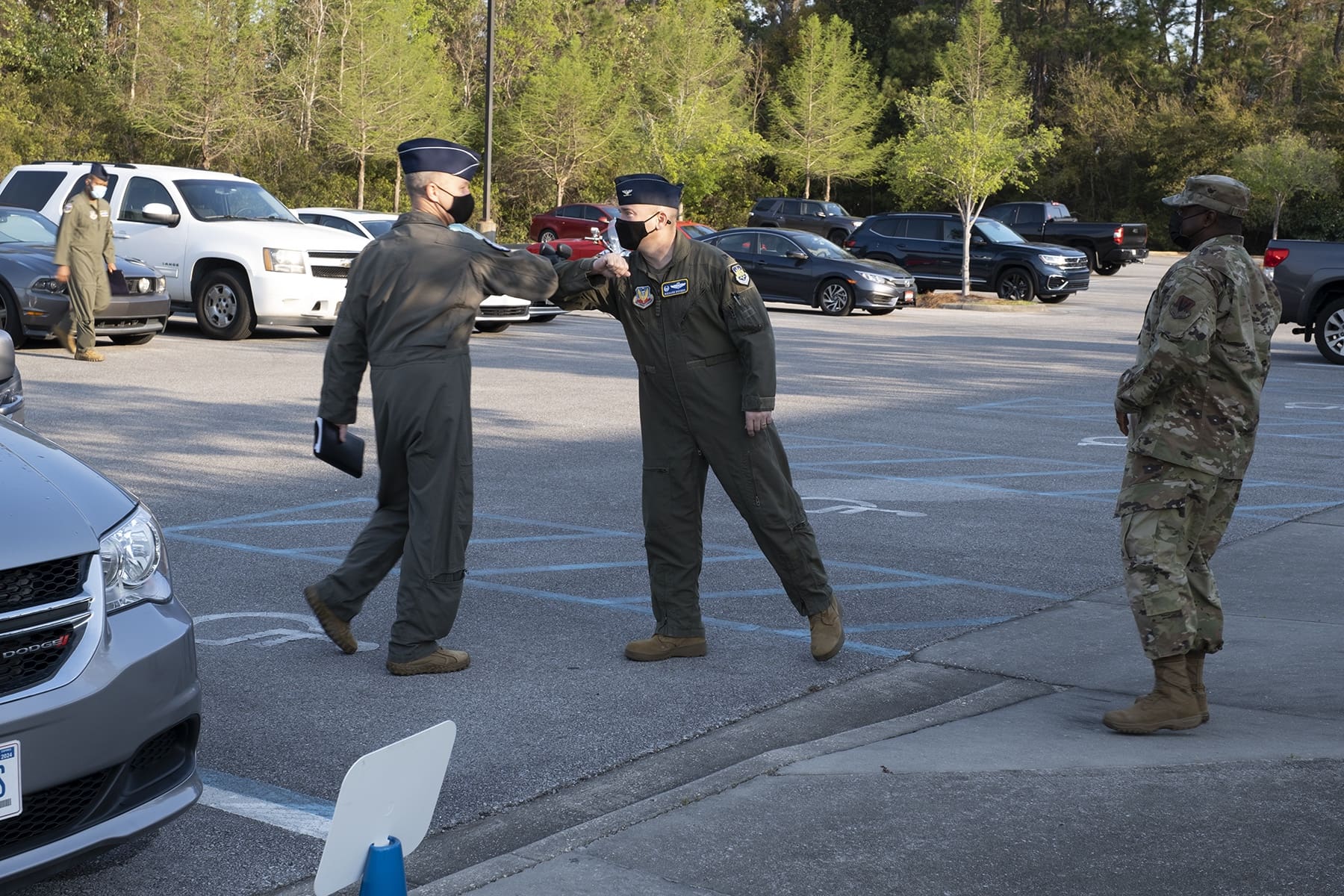
HURLBURT FIELD, Fla. — Gen. Mark Kelly, commander of Air Combat Command, visited the 505th Command and Control Wing at Hurlburt Field, Florida, April 6. The 505th CCW is the U.S Air Force’s only wing dedicated to the Air Force’s core mission of command and control.

During his visit, Kelly toured the 505th CCW along with Chief Master Sgt. David Wade, command chief of ACC, to familiarize themselves with the wing’s C2 mission and the enlisted, officers, and civilians who execute its complex mission.

Gen. Kelly received an immersion brief, given by U.S. Air Force Col. Richard Dickens, commander of 505th CCW, leadership team, and honorary commanders.

Mr. Paul Lux, honorary commander of 505th CCW, and Ms. Cindy Frakes, honorary commander of 505th Test & Training Group shared how the ties they built during the wing’s last tour as part of 70 members from five Military Affairs Committees in the local area, prior to COVID-19, increased the proactive community voice for the 505th CCW and its mission.

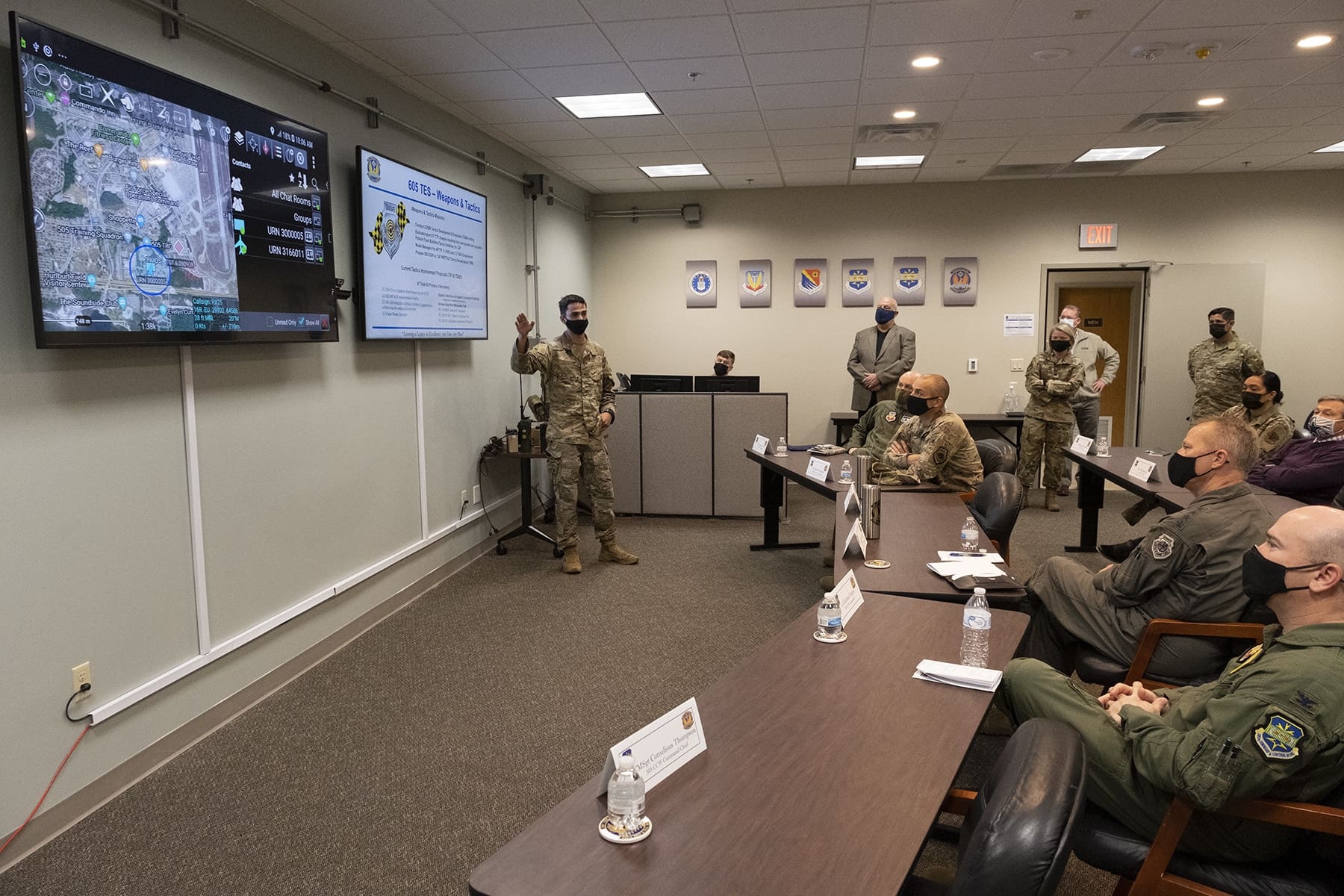
U.S. Air Force Col. Francisco Gallei, commander of 505th TTG, discussed the group’s mission of premier testing, evaluation, training, and tactics development across C2, sensors, and battle management weapon systems.

Wade and Kelly learned that the 705th Training Squadron is the focal point for advanced Air Operations Center and Air Force Forces education and C2 process improvement. The squadron is launching the first Multi-domain Warfare Officer Instructor Upgrade Training course, which will begin in the next few months.

The leaders learned more about the unique C2 mission contributions of the wing’s units at Hurlburt Field, Florida, and the rest of its 13 geographically-separated units.

The 84th Radar Evaluation Squadron at Hill Air Force Base, Utah, monitors, evaluates, optimizes, and integrates fixed and mobile long-range radars for both the operational and federal communities. The 84th RADES also sets the standard for sensor coverage prediction and depiction, providing data analysis and unique radar forensics to support search and rescue missions and aircraft mishap investigations.

The 505th Combat Training Group, headquartered at Nellis AFB, Nevada, expertly and professionally conducts operational assessments/experimentation, develops advanced tactics, and trains warfighters for multi-domain integration, said Dickens.

Dickens continued, the 505th CCW, Detachment 1, at Fort Leavenworth, Kansas, provides airpower expertise and exercise support to the U.S. Army Mission Command Training Program and liaisons to the Combined Arms Center.

After the briefing, Kelly toured the battlespace as personnel from the 505th Combat Training Squadron, 505th Communications Squadron, U.S. Army Joint Support Team, and 505th CCW, Det 1 were supporting U.S. Army Warfighter Exercise 21-4, a multi-national exercise.

COMACC learned how the 605th Test & Evaluation Squadron conducts operational test & evaluation of C2, intelligence, surveillance, and reconnaissance systems, including Airborne Warning and Control System, Joint Surveillance Target Attack Radar System, AOC, tactical air control party, Control and Reporting Centers, Air Defense Sectors, National Capital Region – Integrated Air Defense System, Distributed Common Ground Station, nuclear command, control, and communications, Common Mission Control Center, and other systems for the joint warfighter.

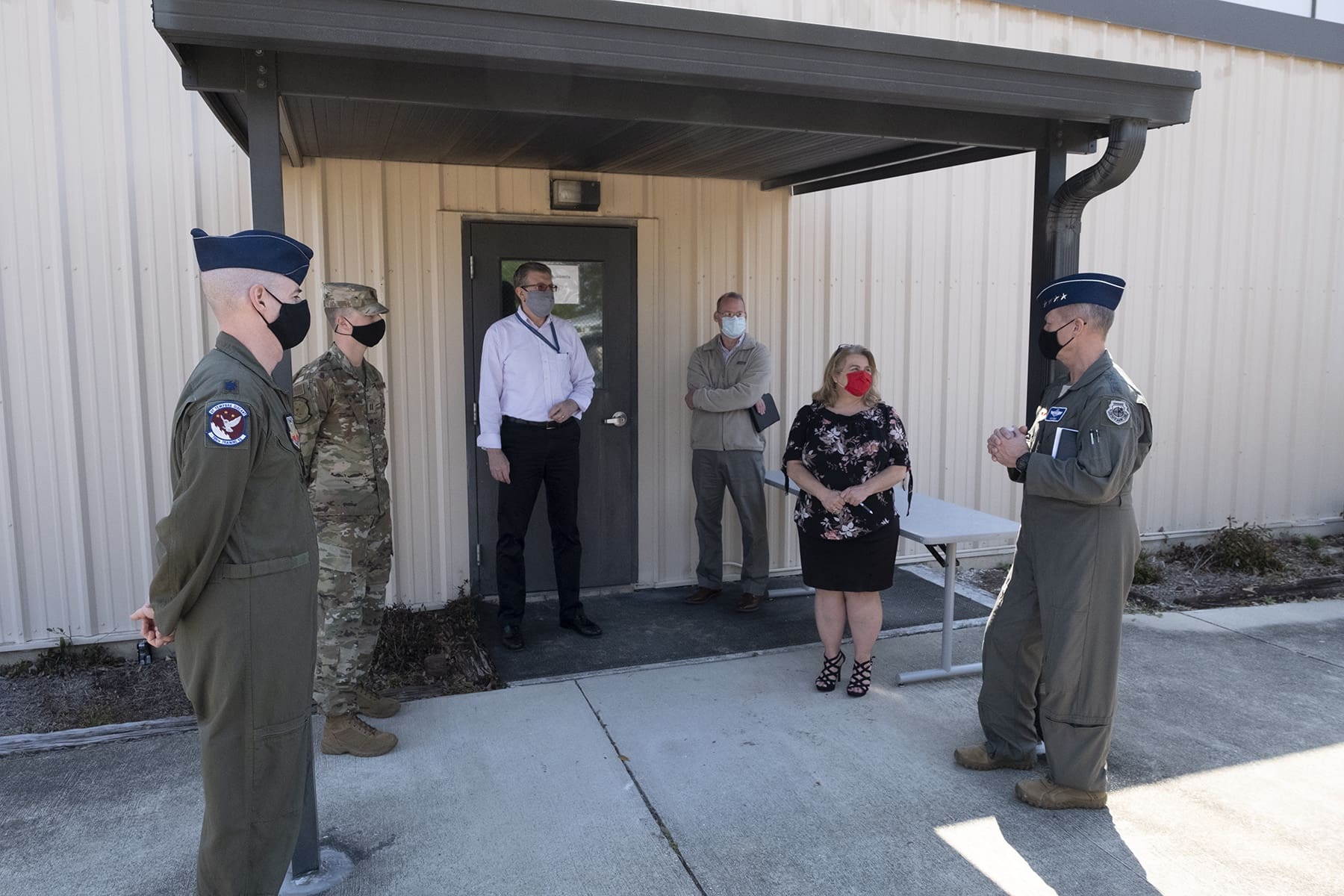
At the next stop, Wade and Kelly learned about the Advanced Programs’ building modernization efforts to enable the wing’s expanding missions. Despite these modernization efforts, they were briefed the current facility has been operating beyond capacity, which is why a consolidated Sensitive Compartmentalized Information Facility/Special Access Program Facility is the wing’s number one priority in the Area Development Plan.

Throughout the tour, Kelly seized several opportunities to recognize several of the 505th CCW’s best and brightest innovators for their exceptional performance.

• Senior Airman David Alvarado, 505th CTS
• Senior Airman Conner Kincaid, 505th CS
• Mr. Timothy Rincon, 605th TES
• Ms. Rhonda Berry, 505th CCW
• Capt. Stephen Perkins, 705th TRS
• Technical Sgt. Shanda Boyle, 505th Training Squadron

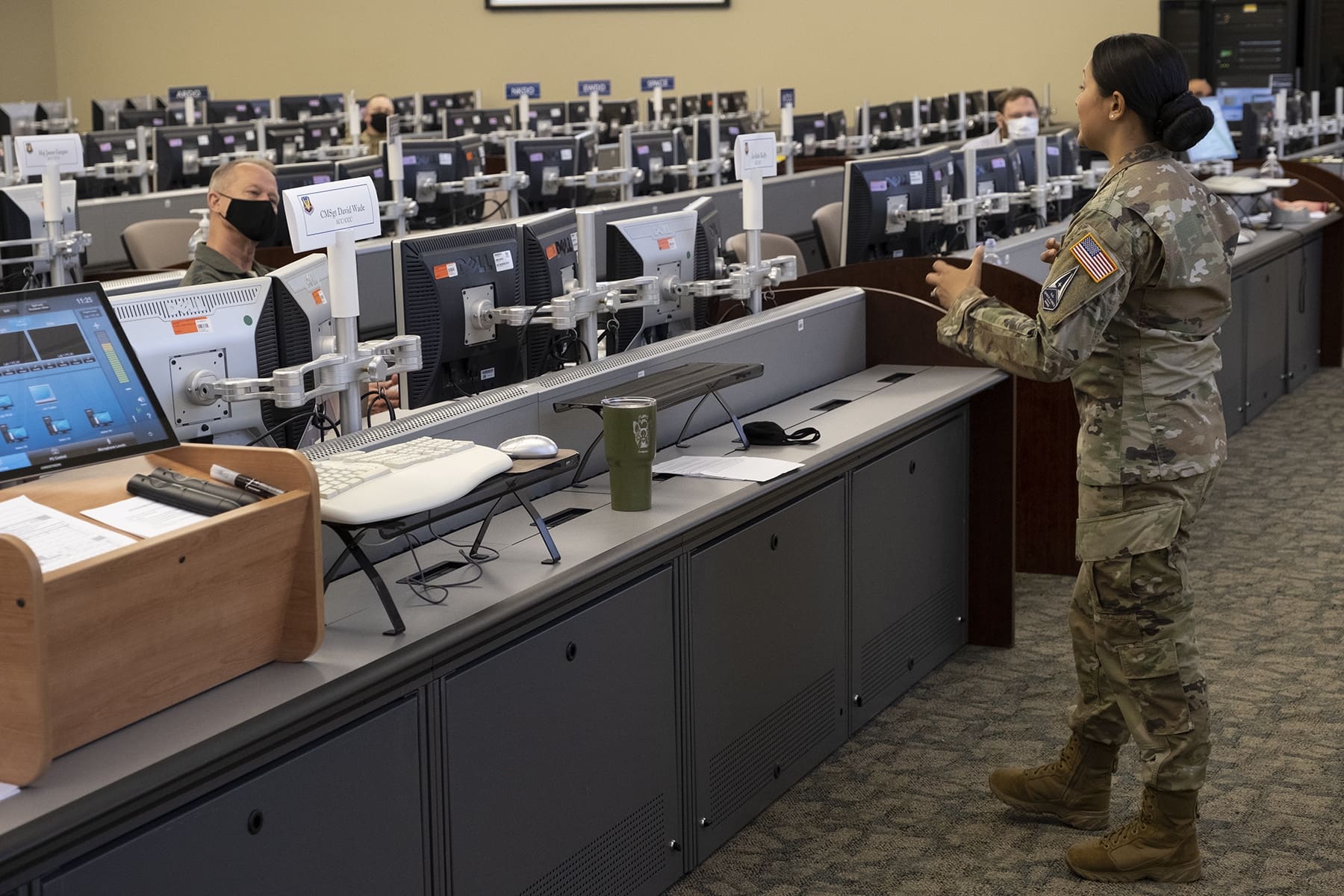
The tour’s final stop was the 505th TRS, the gateway for initial qualification training for all geographic and global Air Operations Centers. The squadron demonstrated how they train an operations team to oversee and ensure the general’s intent/directive is carried out from decision to action. While in the combat operations center, the leaders witnessed the team concept as each member carried out his/her responsibilities as dictated by the chief of combat operations during a training scenario that included a mock missile attack on Luke AFB, Arizona.

“It was great to host COMACC and Chief Wade,” said Col. Richard Dickens, commander of 505th CCW.  “We have a lot of high-performing Airmen that are valued members of our team, so seeing them get an opportunity to brief our senior leaders and demonstrate to them how they’re accelerating change was very rewarding.”

Headquartered at Joint Base Langley-Eustis, Virginia, ACC is the primary provider of air combat forces to the U.S. warfighting commanders. The command provides command, control, communications, and intelligence systems; operates fighter, reconnaissance, battle-management, and electronic-combat aircraft; and conducts global information operations.

Story by 505th Command and Control Wing (ACC) Public Affairs

Photos by Mr. Keith Keel