GORE-TEX Professional

Archive for the ‘Guest Post’ Category

FirstSpear Friday Focus: OEM Spotlight Tuff Possum Gear

Friday, April 2nd, 2021

It’s Friday and this week is our second installment of our OEM Partner Series. We’ll take a look at an OEM company that FS has partnered with and the equipment they produce. Today we are checking out an all-American company, Tuff Possum Gear.
How has Tuff Possum grown over the years?

When we launched as a brand in the fall of 2017, it was just me, Jayberry, with a small sewing machine on the kitchen table and a few rolls of fabric, webbing, etc. We grew exponentially, until we reached some serious chokepoints in our growth towards the summer of 2019. We needed to scale our production and incorporate design elements involving things like laser cut laminates, but being self-funded meant those things were difficult to do in the timeframe and budget we had. So we started looking around for a manufacturing partner who would have the infrastructure to help catapult us forward.

There are options for private label manufacturing all around the world, how did you find us and why did you ultimately choose FirstSpear OEM manufacturing?

We first found FirstSpear through another OEM customer of theirs, Hill People Gear. I have used Hill People gear products for years, and I trust the judgement of the fine folks at HPG when it comes to human character. We talked to a number of industry folks, toured the factory in Fenton, Missouri, and were impressed by not just the dedication to quality and innovation, but the professionalism of the people as well.

Why was Made in the USA important to the brand?

For one, I know that FirstSpear and the wonderful men and women working there share the same ideologies as we do; namely the importance of life and liberty. Of the freedom to build and grow. To create value and be rewarded for it.

As such, I know that the employees are well taken care of and are working in a professional, healthy environment. I know that we can trust our manufacturing partners and that it is merely a few hours drive to visit the factory in person. It is important to me that I am supporting American jobs and a robust domestic manufacturing culture, when we are surrounded by a world that seems bent on becoming even more fragile and dependent on our nation’s enemies for our supply chain.

I also have a strong sense of gratitude for the land and the country that has given us so much. Despite its flaws, it has stood as a bastion for freedom and righteousness in a world of darkness. And it is truly a land of opportunity. A land that has been fertile ground for generations of our forefathers. American manufacturing is important to us as a way of giving back. Of supporting the industry, the grit and tenacity, the people, and the families that compose this great country.
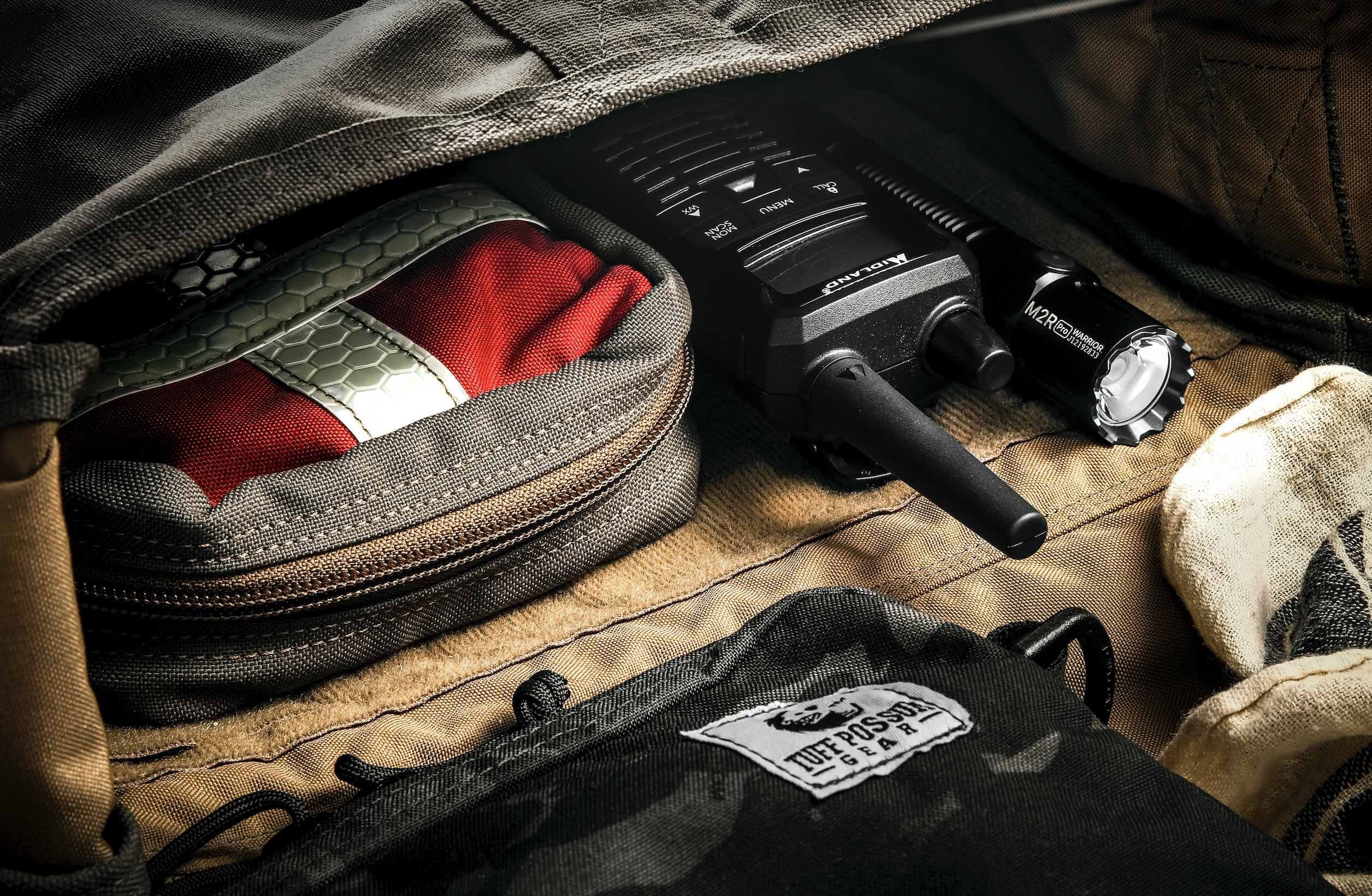
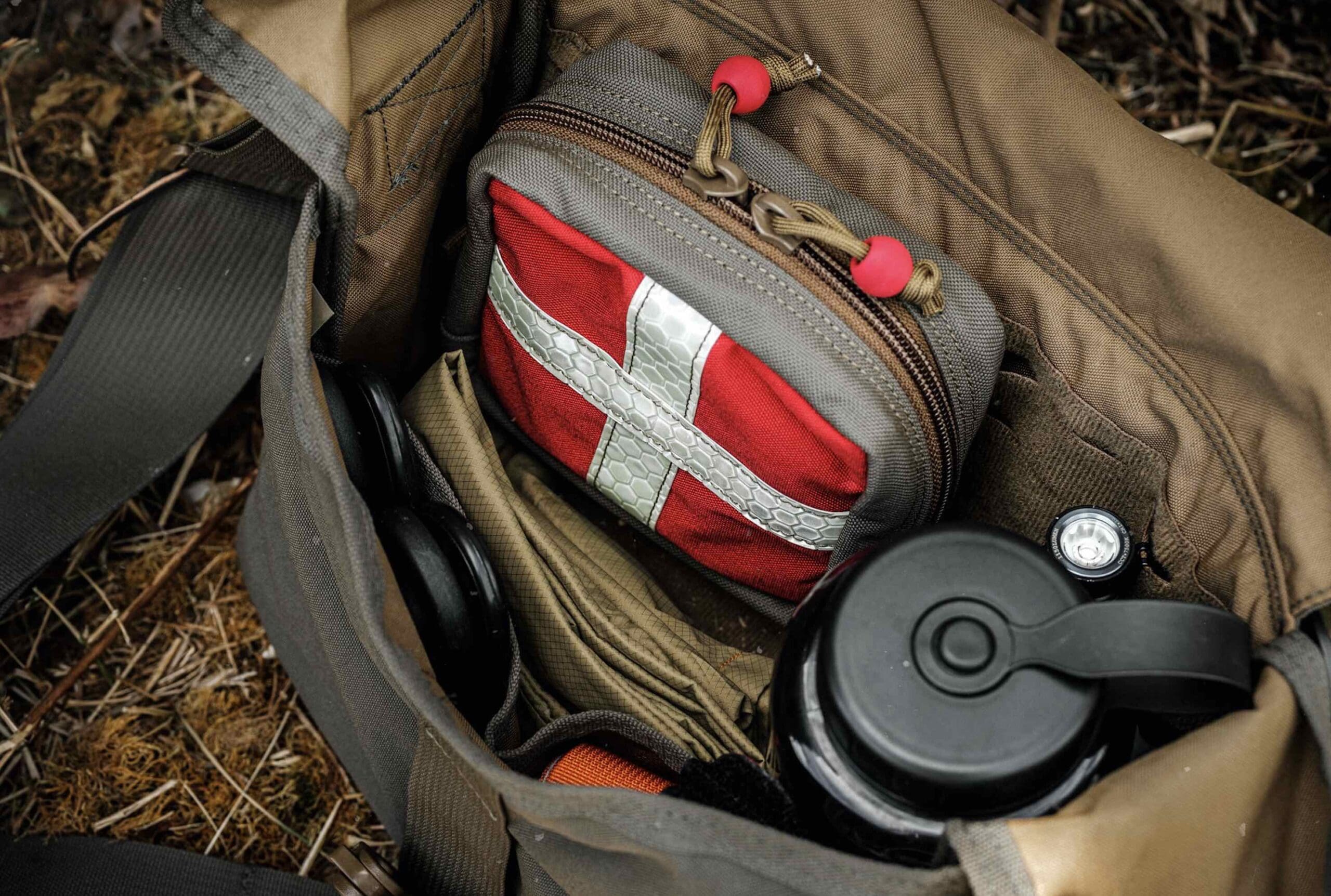
Why was the Shackleton EDC Satchel created? Can you dive into the relationship between that and the Med Pouch?

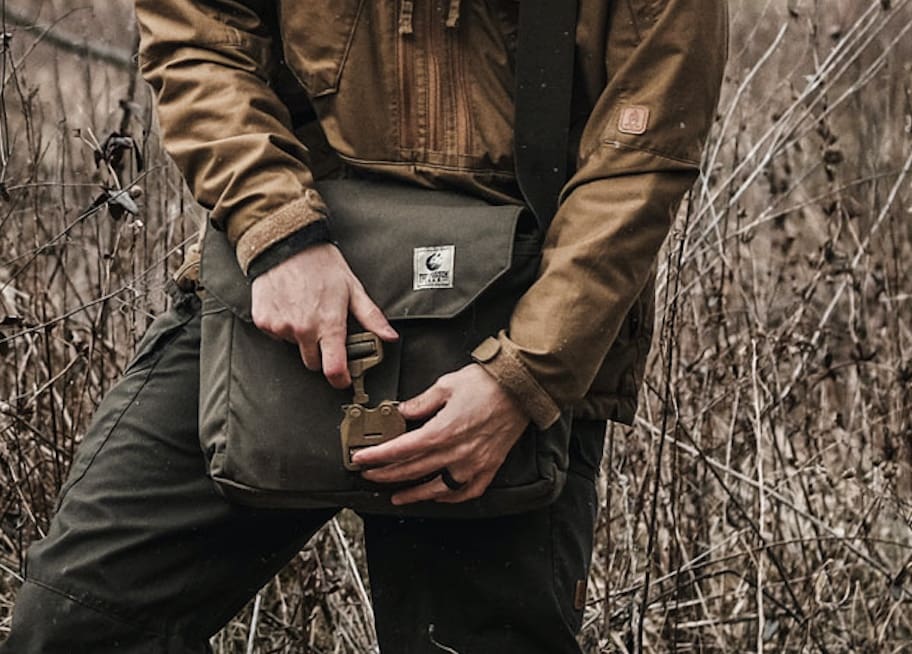
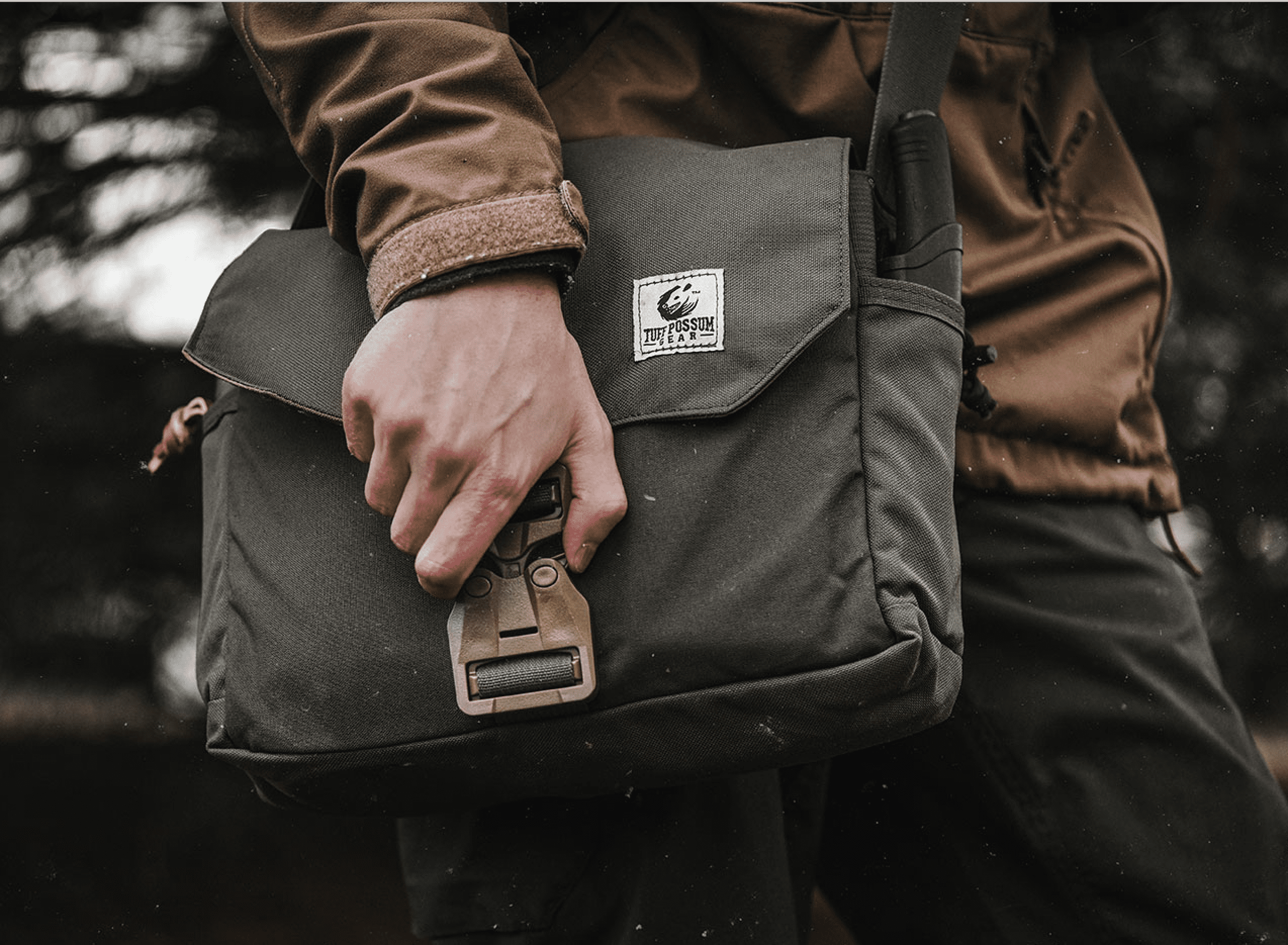
The Shackleton EDC Satchel was the result of 8 years of filling the need for a compact shoulder bag to carry the tools that make life flow smoothly and solve problems when they arise, after the manner of the “possibles bags” of frontier trappers or the famous Indiana Jones, World War II era gas mask bag.

It needed to be clean and unassuming on the outside, with the right balance of organizational pockets and freedom of modular customization. Partnering with FirstSpear allowed us to take advantage of their 6/12 laser cut, velcro compatible laminates. We put a full width panel of it across the back of the Shackleton’s interior, allowing the customer to use any manner of PALS/MOLLE pouches, velcro hook backed pouches, as well as clip smaller items such as flashlights, pens, knives, etc. in the loops.

We believe in being prepared to protect the innocent and save a life if need be. This means not just having the tools to stop a threat, but having the tools to patch up an injured person, whether that is from a deadly force encounter or a motorcycle accident. The Med Pouch is the result of my need for a removable “pod” that would hold a solid selection of items to address massive hemorrhaging and airway on a trauma victim (ie. tourniquet, compressed gauze for wound packing, compact chest seals, NPA, gloves, etc.), and attach via velcro to the inside of the Shackleton EDC Satchel or any Velcro loop lined bag.

Always at hand and always ready to “rip” out and go to work. The Med Pouch  was an instant hit and is still one of my favorite pieces of gear when paired with the Shackleton.
What sets your products apart from others on the market?

Customer involvement and feedback combined with our commitment to high standards of quality and design, make for a winning recipe. Rather than some corporate designer in an ivory tower, our gear is the result of “boots on ground” real world experience and needs.

As the main product designer and owner/operator of Tuff Possum Gear, I “keep my hands dirty.” Using gear, talking directly with the customers, and always on the lookout for ways to improve. That affects every aspect of our products from customer service to design to quality control and culture.

What’s your company’s motto and what can we expect from Tuff Possum in the future?

“Equipping you with trustworthy adventure gear, built for those who GO places and DO.”

We have traditionally been a soft goods company and had an absolutely amazing year in 2020, doubling in growth and launching many of our now signature pieces (many manufactured by FirstSpear). Looking back, it was really building out a foundation for this year. Now we are broadening our horizons and adding a host of new designs. You can expect not only a variety of new nylon goods, but also a selection of designs in the tools and hardware category, from pack hanging hooks to lockpicks and even a knife design or two.

For more information, check out tuffpossumgear.com/shop.

For more information about FirstSpear and OEMs, contact sales@first-spear.com.
ePIG Group Presents – World First: Tasmanian Tiger Longhorn 4.1

Thursday, April 1st, 2021

Some things are top secret and must not get out to the public under any circumstances, but it just keeps happening – this time we are the bastards who leak Longhorn 4.1 before the official release.

www.tasmaniantiger.info

Filmed and cut by www.stefan-czech.info

ePIG Group Presents – World First: HOLOSUN 510 BSW

Thursday, April 1st, 2021

Holosun is always working to improve their products to achieve the maximum in performance and fail-safety. In terms of high reliability and maximum runtime, the Holosun 510 BSW is an absolute game changer that will make the competition tremble!

www.holosun.eu

Filmed and cut by www.stefan-czech.info

Robot Dogs Arrive at Tyndall AFB

Wednesday, March 31st, 2021

TYNDALL AIR FORCE BASE, Fla. (AFNS) —

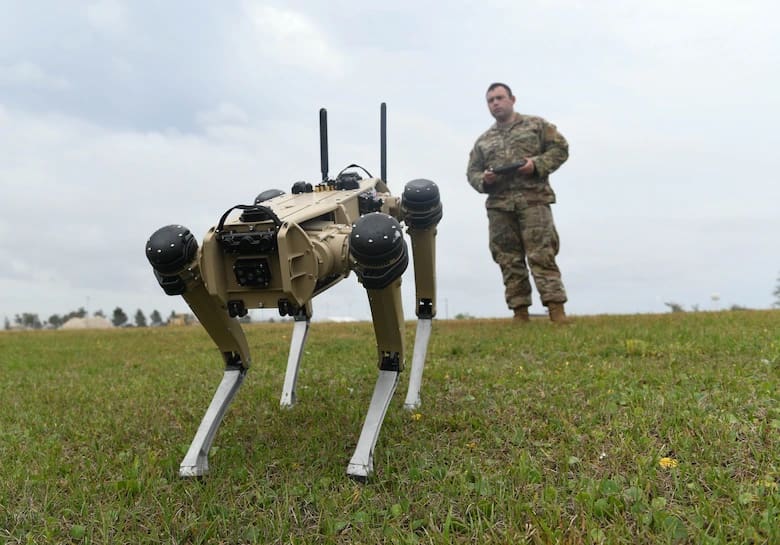
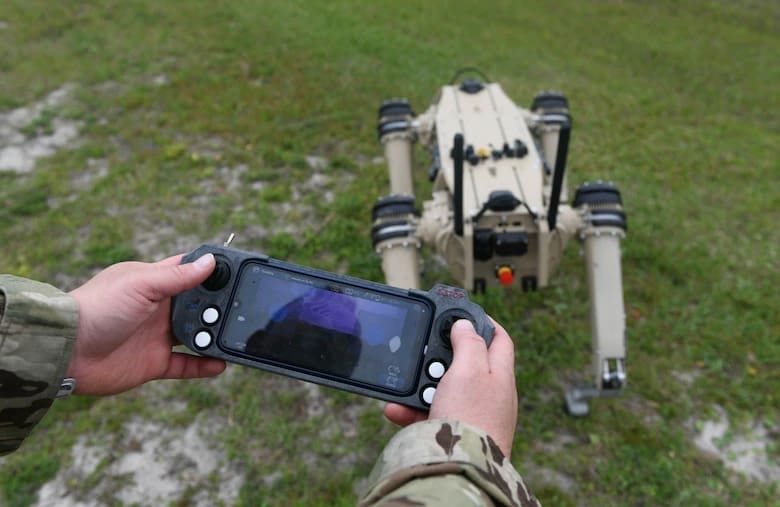
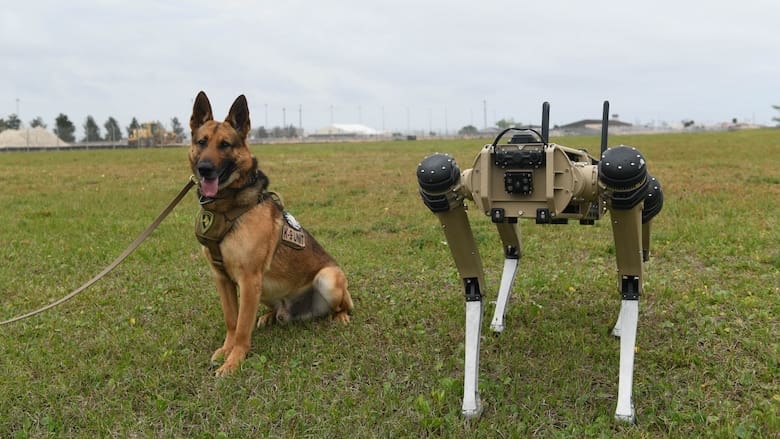
The first official semi-autonomous robot dogs were delivered to Tyndall Air Force Base March 22 for integration into the 325th Security Forces Squadron.

The purpose of the Quad-legged Unmanned Ground Vehicles, or Q-UGVs, is to add an extra level of protection to the base. The robot dogs, designed by Ghost Robotics and Immersive Wisdom, are the first of their kind to be integrated onto a military installation and one of many innovation-based initiatives to begin at Tyndall AFB, coined the “Installation of the Future.”

“As a mobile sensor platform, the Q-UGVs will significantly increase situational awareness for defenders,” said Mark Shackley, Tyndall AFB Program Management Office security forces program manager. “They can patrol the remote areas of a base while defenders can continue to patrol and monitor other critical areas of an installation.”

Features applied to the robot dogs allow for easy navigation on difficult terrains. The robot dogs can operate in minus 40-degree to 131-degree conditions and have 14 sensors to create 360-degree awareness. They are also equipped with a crouch mode that lowers their center-of-gravity and a high-step mode that alters leg mobility, among other features.

Tyndall AFB’s Program Management Office, the 325th SFS, the 325th Civil Engineer Squadron, Air Force Research Laboratory, communications and other organizations have been working since July 2020 to ensure the Q-UGVs are assembled properly before reaching Tyndall AFB. The installation is considered an ideal base to host the new robot dogs with its ongoing rebuild.

“Tyndall (AFB) is a perfect test base as it was deemed ‘The Installation of the Future,’” said Master Sgt. Krystoffer Miller, 325th SFS operations support superintendent. “Across the base, every squadron has been pushing the envelope of how we do things and expanding our optics of what is possible. One huge attraction piece of the robot dogs is that it’s highly mobile and with the amount of construction we will face over the next few years, it helps us maintain and increase our security posture.”

This new technology has the capability to revolutionize the way base security operates. Tyndall AFB is expected to set the benchmark for the rest of the Defense Department when it comes to Q-UGV usage.

“I can say that there is definitely a lot of interest in the capabilities of the technology,” Miller said. “I’m hopeful that other units will see some of the successes at Tyndall (AFB) and will continue to explore the use of non-conventional tactics.”

By Airman 1st Class Anabel Del Valle, 325th Fighter Wing Public Affairs

Army Awards New Sniper Weapon System Contract to Barrett Firearms

Tuesday, March 30th, 2021

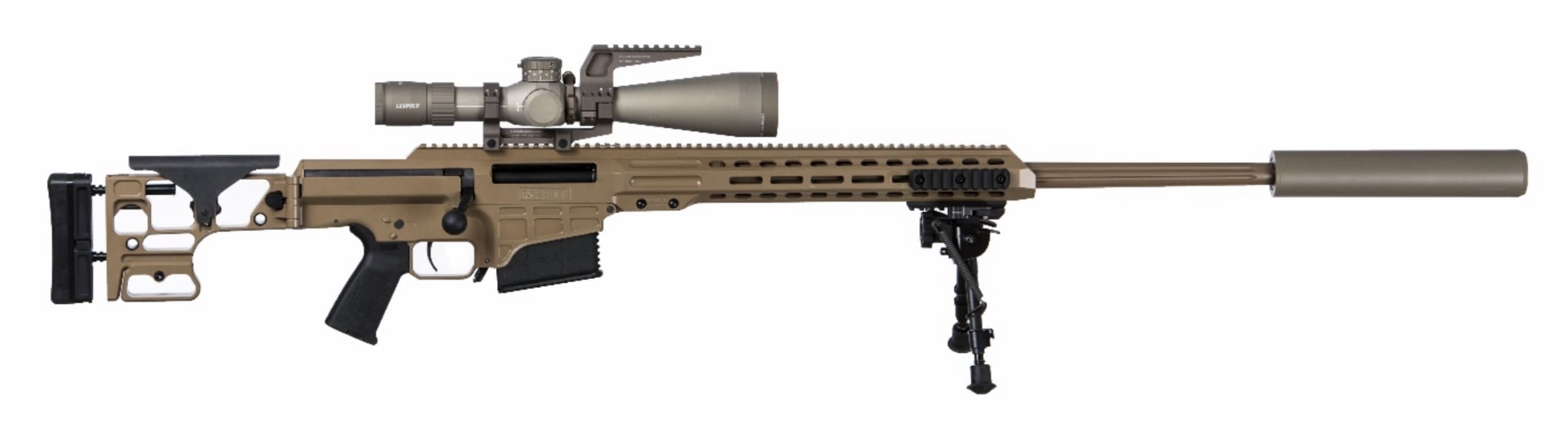
On 30 March 2021, the Army awarded a $49.9 million, five year contract to Barrett Firearms Manufacturing Inc. (Murfreesboro, TN) to acquire the MK22 Multi-role Adaptive Design (MRAD) rifle as the Army’s new sniper weapon system.

The Army will buy approximately 2,800 MK22 rifles from Barrett, the current maker of the Army’s M107 .50 Caliber Long Range Sniper Rifle.

The MK22 is part of the Army’s Precision Sniper Rifle (PSR) Program which also includes the Leupold & Stevens (Beaverton, OR) Mark 5 HD scope and a sniper accessory kit.

The MK22 is a modular system that will be fielded with three separate calibers, the .338 Norma Magnum, .300 Norma Magnum and 7.62×51 NATO. Army snipers will be able to conduct a barrel change and select calibers based on their mission operating environment.

The PSR program will allow the Army an extreme range weapon systems that is lighter than current sniper rifles and includes features that will mask the sniper signature for improved survivability.

SOCOM previously awarded a contract to Barrett to purchase the MRAD as part of their Advanced Sniper Rifle (ASR) program.

UF PRO Guide to SOF Assessment & Selection

Monday, March 29th, 2021

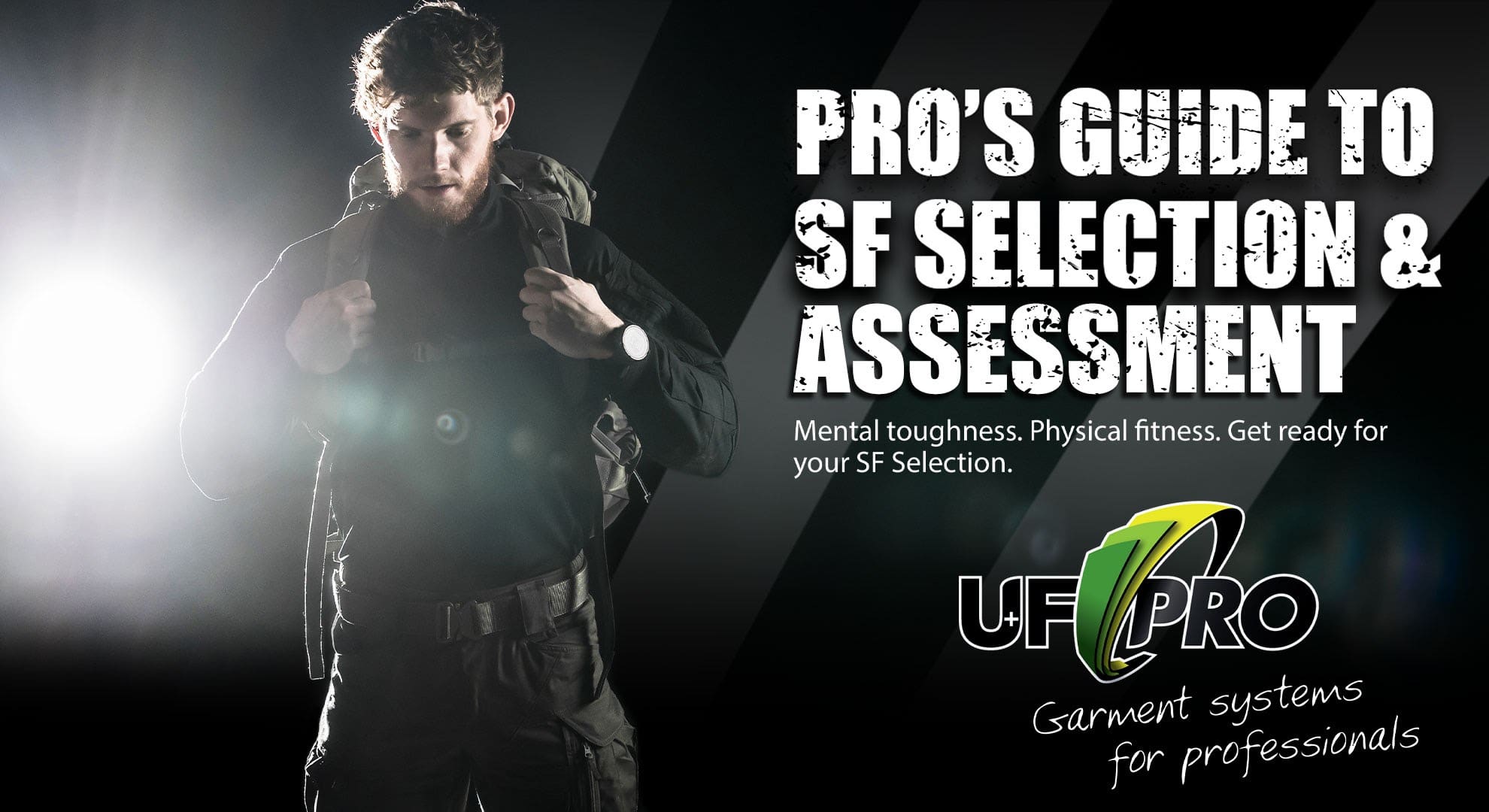
UF PRO Video Series Shows How to Prepare for Grueling Military Special-Forces Selection Process; Available 30 March

TRZIN, SLOVENIA (28 March 2021)—How to prepare for and successfully complete the process by which members of elite military special-forces units are selected is the subject of a four-part video series slated to debut this month, tactical gear-maker UF PRO today announced.

The series—”UF PRO Pro’s Guide to SF Selection & Assessment”—will be available at UF PRO’s website beginning Tuesday, 30 March.

The vetting process is extreme, routinely pushing candidates to the brink of mental and physical exhaustion. Statistically, nearly half of all applicants fail, the company noted.

Featured in the video series is advice for preparing to successfully complete the SF selection process. Shown are realistic, science-based steps designed to foster the drive and determination necessary to keep pushing on when the body and brain want to quit.

The series is hosted by Michael (Mike) Strauch, an army reserve officer from Germany who holds a university degree in psychology. Mike has served as a security contractor in various Middle Eastern and African hot spots. Additionally, he has lent his clinical expertise to medical teams from the U.S. and Europe.

Part One of “Pro’s Guide to SF Selection & Assessment” is titled “Gather Intel & Mental Preparation”. The episode serves as an overview of the special-forces selection process. Questions asked and answered include: what is the goal of the selection process; what will be evaluated; what kind of information does a candidate need in order best prepare; where does one obtain such information; and how does one mentally prepare for selection?

Part Two is “Physical Preparation: Principles and Overall Concept”. In this installment, viewers will be walked through several possible options for developing physical readiness to undergo the SF selection process.

“Physical Preparation: Techniques” is the title of Part Three, which supplies detailed explanations and demonstrations of the correct techniques for performing the most important exercises. The episode emphasizes that the exercises must be properly executed in order to derive maximum benefit in relation to the SF selection process.

The fourth and final episode—”Physical Preparation: Training Plan”—lays out a detailed roadmap to take viewers from fit to hyper-fit ahead of the formal start of the SF selection process.

UF PRO manufactures advanced-technology jackets, shirts, pants, hats, caps, and accessories for military and law-enforcement units in Europe and beyond.

For more information about this video series or about other titles available in the UF PRO video library, please go to www.ufpro.com/pros-guide-to-sf-selection

Blast from the Past – 2nd Amendment and the Kool-aid Drinkers by Paul Howe

Sunday, March 28th, 2021

This article by Special Operations Veteran Paul Howe was originally published on the Wilson Combat Blog on January 3rd, 2013. Although slight details may hvae changed over time, the basic premise remains vaid.

The reality is that those who wish to oppress don’t have the guns or the numbers to threaten America’s liberty and that’s because America’s citizens are armed. The real threat isn’t a full frontal assault on our Constitutional rights, it’s the death by a thousand cuts that we suffer as Congress whittles away at them little by little. By wary of “reasonable” laws that amount to baby steps toward the total erosion of the Bill of Rights. Stay engaged. Be a trained, responsible gun owner and let your elected representation know how you feel, not only on this issue, but other Constitutional issues as well.

Vote local and act local. They aren’t going to stop.

Regardless, no matter what laws they pass (or repeal) your rights aren’t guaranteed by a piece paper; they were endowed by your creator.

2nd Amendment and the Kool-aid Drinkers
by
Paul Howe

I have quietly watched and evaluated the in pouring of e-mails reference the liberal’s intent to seize guns and crush the second amendment. I want to add a few of my own thoughts on this issue as I have worked in and around all the people who could be tasked to seize your guns.

WHO’S COMING TO GET THEM?

United Nations (UN)
We are the UN. Other countries mostly join the U.N. to secure money, funding and training and few have any offensive combat capability. Most serve as guards at static locations and have no will to fight. America is the enforcement arm of the U.N. We have the money, equipment, personnel and lift platforms to get the job done.

If the president ever let the U.N. in this country, it would be a foreign invasion and armed Americans would stand up and crush them in a day. Our government would break down and the president would be ousted for letting foreign militaries invade our country.

Federal Government Military
Having served over 20 years in our military, I know that most soldiers would refuse the order to take part in the confiscation of weapons. First, the president would have to give the order, which is an “Illegal Order” in violation of the constitution. I don’t believe that service members would go back into the communities that raised them and conduct raids on good Americans in violation of the constitution.

Remember, these forces would have to come from a military base that is surrounded and supported by American communities. Civilians would simply cease to support the bases and they would fold in a short time. Cut of the fuel, food, electricity on bases and this would stop the silliness. Also, many, many service members live in the communities and they would have to travel from their houses to base unless they were locked down. In that case, their families would still be in the community and people would not be too friendly to those supporting these actions.

Federal Government DHS or TSA
The Federal government is not large enough or talented enough to seize guns. If they were to do 5-8 raids a day seizing guns, they would be physically and mentally exhausted and need a break. Physically conducting raids is exhausting. After the first few raids, the word would get out and Americans would start to fight back. It would take one good ambush from a house or along a travel route to decimate a tactical force or make it combat ineffective.

Next, most Federal Agencies work out of a fixed location centrally located in a community. Also, their personnel live in those communities along with their families. Once the word got out that they were doing raids in violation to the constitution, they and their families would be at risk. If they were to start raiding houses, kicking in doors and breaking in windows looking for legally owned guns, their homes would be subject to the same treatment by Americans rising up to defend themselves. They would shortly find themselves without a place to live.

State Law Enforcement
The Governor would have to order State and Local Law Enforcement to either:
Seize guns
Ignore the Federal Orders

If they ignore the Federal Orders, things would be tense, but people would be civil. If they started to seize guns, they only have limited people and assets to do this. Much the same consequences would take place as with the Federal Government.

Local Law Enforcement
Local Police and Sheriff Departments are the backbone of who protects American Citizens. A Sheriff or Chief of Police would have to give the order for his people to begin to seize weapons. Their people would either comply or see it as an illegal order and refuse.

Remember, Chiefs and Sheriff’s also have to live and work in the same communities they serve. As I described with the Federal Government, local Tactical Teams could probably only do 8-10 hits in a day and then need a break. So they hit ten houses and seize their guns, the word would get out and now they are subject to living in the same community as those they are attacking. It would not go well. Also, after one or two determined Americans or combat vets fought back, the team would lose many to death or injury and they would have made a decision whether to continue to push the fight. Remember also, they have to sleep sometime. Their homes and families would be at risk. It is an ugly scenario at best.

Nation of Combat Veterans and Patriots
Having been at war for over 10 years, we have a nation of combat vets and contractors that have seen more action than many of our WWII vets. It has been said that only a small percentage of Americans stood up to the British War machine in the Revolutionary War. Americans are better armed and trained today than at any time in our nation’s history. Think about what would happen if just our nation’s veterans stood up. People have been buying more guns and ammunition in the past five years than any time in my life. The guns and ammunition are out there along with the talent to use them.

Kool-Aid Drinkers
Kool-Aid Drinkers is the term I use to describe the Jonestown voluntarily massacre where the Peoples Temple Agricultural Project, a dedicated community western Guyana by the Peoples Temple led by cult leader Jim Jones intentionally drank poison Kool-Aid. Over 900 people died.
In every law enforcement, government and military agency or branch, there are a small number of Kool-Aid drinkers who would blindly follow orders. They would either be purged internally by their co-workers or people they attacked would stop their gene pool.

Also, at the police tactical team level, all members “volunteer” for the job and they can have the individual integrity to terminate their team service at any time if their profession becomes corrupt or misguided. I know many a good officer that has done that in the past.

Finally, there would be a certain number of American Kool-Aid drinkers that would turn in their weapons if asked. I believe it would be a small percentage as there are always those that do not have the will to resist or fight and they are not needed should thing get tough.

History of “Gun-Free Zones”
Our nation’s history is filled with examples of “gun-free” zones failed.
The Aurora Colorado movie massacre and the recent Connecticut shooting are two that come to mind. Also, remember the Fort Hood massacre where an Islamic extremist Major Nidal Malik Hasan killed 13 soldiers because our military bases are gun free zones. Combat trained soldiers had to be rescued by a security guard. That is embarrassing.

Evil came to all of these places and everyone was disarmed and not ready to fight back because they were gun free zones.

Think what would happen at a national level if the American people were disarmed. Another evil would come along either from inside our country or outside of it and resulting in our downfall.

How about others in recent history:
-In 1929, the Soviet Union established gun control. From 1929 to 1953, about 20 million dissidents, unable to defend themselves, were rounded up and exterminated.
-In 1911, Turkey established gun control. From 1915 to 1917, 1.5 million Armenians, unable to defend themselves, were rounded up and exterminated.
-Germany established gun control in 1938 and from 1939 to 1945, a total of 13 million Jews and others who were unable to defend themselves were rounded up and exterminated.
-China established gun control in 1935. From 1948 to 1952, 20 million political dissidents, unable to defend themselves were rounded up and exterminated
-Guatemala established gun control in 1964. From 1964 to 1981, 100,000 Mayan Indians, unable to defend themselves, were rounded up and exterminated.
-Uganda established gun control in 1970. From 1971 to 1979, 300,000 Christians, unable to defend themselves, were rounded up and exterminated.
-Cambodia established gun control in 1956. From 1975 to 1977, one million educated people, unable to defend themselves, were rounded up and exterminated.
-Defenseless people rounded up and exterminated in the 20th Century because of gun control: 56 million.

Solutions
Write your state representatives and let them know how you feel about this issue. I would like to think that most states would refuse the order.

Next, at the local level, talk to your Sheriff or Chief of Police and ask them if they would allow or support the federal government in their confiscation of firearms. Put them on the spot now and hold them accountable. I like to think that most states would refuse the order.

Should firearm confiscation begin, solutions are simple. If they cannot live in a community, they cannot work in a community. If their house goes away while they are at work confiscating guns, so be it. Allow them to leave with their family and what possessions they can pack in their car. Point them to California and let them know all the Hollywood types would be happy to financially support them in the fantasy land they wish to live in and that they are not welcome in Free America.

In the end I believe that guns are the glue that hold our country together. Guns keep the government in check and the individual American safe and free. Remove guns and the government will no longer be controlled by the people. The government will control the people.

Finally, it is claimed that the Battles of Lexington and Concord, in 1775 were started because General Gage attempted to carry out an order by the British government to disarm the population resulting in the “Shot heard round the world.”

About the Author
Paul R. Howe is a 20-year veteran and former Special Operations soldier and instructor. He owns Combat Shooting and Tactics (CSAT), where he consults with, trains and evaluates law enforcement and government agencies in technical and tactical techniques throughout the special operations spectrum. See www.combatshootingandtactics.com for details.

SCUBAPRO Sunday – SAS Raid on Pebble Island

Sunday, March 28th, 2021

In 1982, Gen. Galtieri’s Argentine military regime faced increased domestic trouble at home and they were looking to hold on to power. Since the formation of the Argentine state, the Malvinas issue (Basically the Sovereignty over the Falkland Islands between Argentina and the United Kingdom) had created political and domestic passions and heated debate in Argentina. It was the ideal moment for Galtieri to reclaim what Buenos Aires called the “lost islands”. Negotiations with the British over sovereignty had been going on for many years, with various British governments being more sympathetic than others to the proposal.  Long-standing tensions between the two countries reached a head on March 19, 1982, when some Argentinian scrap metal workers lifted their country’s flag at an abandoned whaling station on the even-further-away island of South Georgia, which was then a Dependency of the Falkland Islands. Two weeks later, on April 2, Argentinian troops stormed South Georgia’s Leith Harbor, overwhelming main British outposts without causing any casualties. But after conquering the islands, Galtieri and the junta regime faced one big problem: Margaret Thatcher. Thatcher’s Conservative government, which was dealing with increasing unemployment, rising interest rates, and an ailing economy, was also facing a degree of domestic hostility. The Argentine invasion of British sovereign territory was intolerable to Thatcher and much of the world and had to be dealt with. There were no contingency measures for the Falklands at the government level or within the military, let alone possessing the mechanisms to launch a task force to fly the 7,000 miles to the islands. Despite efforts to secure a diplomatic solution at the United Nations and through the Reagan administration, the two parties were stubborn and war appeared inevitable.

Lt. Col. Mike Rose, commanding officer of 22nd Special Air Service Regiment in Hereford, was on the phone to the headquarters of the British Antarctic Survey Group in Cambridge during the afternoon of Friday, 02 April 1982. Having learned that Argentine forces had invaded the Falklands, Rose swung into action and called in the regiment’s top advisors, canceled leave, and created a command situation. The situation was a difficult one for SAS planners. In the case of the invasion, no contingency arrangements were in place to rehabilitate the Falklands. This possibly owed more to the Ministry of Defence’s general disbelief that an operation to recover the Falklands was feasible. The tiny British settlement of the Ascension Islands, about 3,700 miles from the UK and halfway between the Royal Navy’s ports and the Falklands themselves, was the only practical ‘jump off’ point for the Falklands.

In Hereford, events started to move fast. Keen (had to use a British word) to play a pivotal role for his men in the upcoming operation, Rose provided SBS (Special Boat Service) with the services of two specialist Boat Squadron men who were preparing to sail to the South Atlantic. Rose was closely aligned with Brigadier Julian Thompson OBE, who commanded a landing on the islands for the operation code-named “Corporate”. An advance group from “D” Squadron SAS joined their SBS comrades on Sunday, 04 April and flew to the Ascension Islands. The Falklands Task Force was commanded by Rear Adm. Sandy Woodward on his flagship HMS Hermes, specially approved by the British Cabinet. The Battle Command Headquarters, Operation Corporate’s command center, was also located onboard Hermes. In an attack on the island of South Georgia, about 900 miles south of the Falklands, the men of D Squadron SAS’s mission were to join 42 Royal Marine Command.

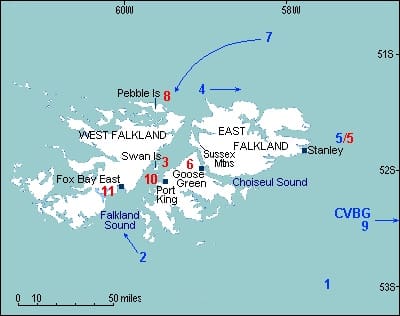
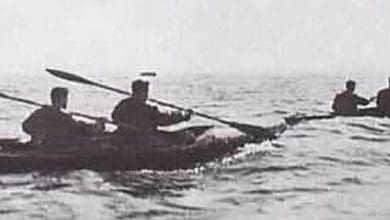
San Carlos Bay beaches on East Falkland offered the best hope of a British landing for Task Force Commander Woodward. On the opposite side of the island from Port Stanley, before the long march across the island to seize Stanley, the Brits needed to establish a bridgehead. The problem for Woodward was that, to the west of the San Carlos beaches, the Argentinians had built a forward airbase on Pebble Island. The threat needed to be neutralized, with a garrison of over 100 men armed with ground attack IA-58 Pucaras, each with two 20 mm cannons and four 7.62 machine-guns. D Squadron’s boat troop men, fresh from South Georgia operations, were assigned to recce on Pebble Island. On the night of Tuesday, 11 May, the reconnaissance party’s forward frame edged its way to the narrow one-mile strip of land bordered by the sea on either side and offered no natural cover. The D Squadron men had to travel with extreme care and were forced to leave their Bergen backpacks in a shallow hollow to avoid detection against the horizon. However, the Argentinian sentries were not especially alert. The rest of Woodward’s landing fleet gathered before beachhead landings at San Carlos as the recce party confirmed Hermes’ findings.

G Squadron Assault (Mountain Troop)

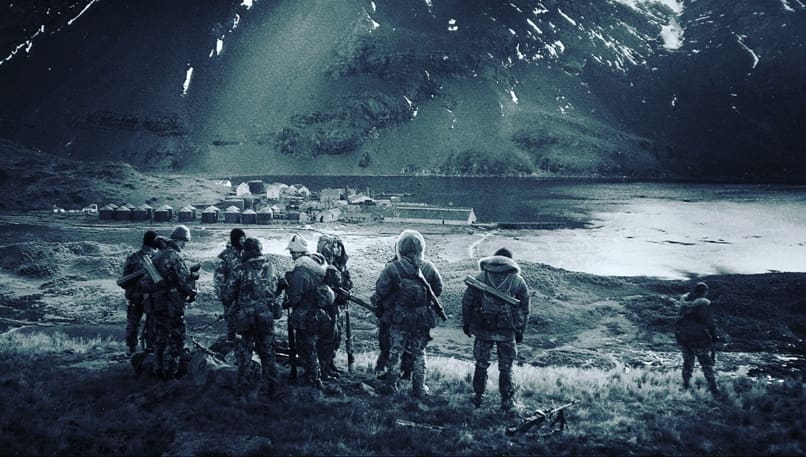
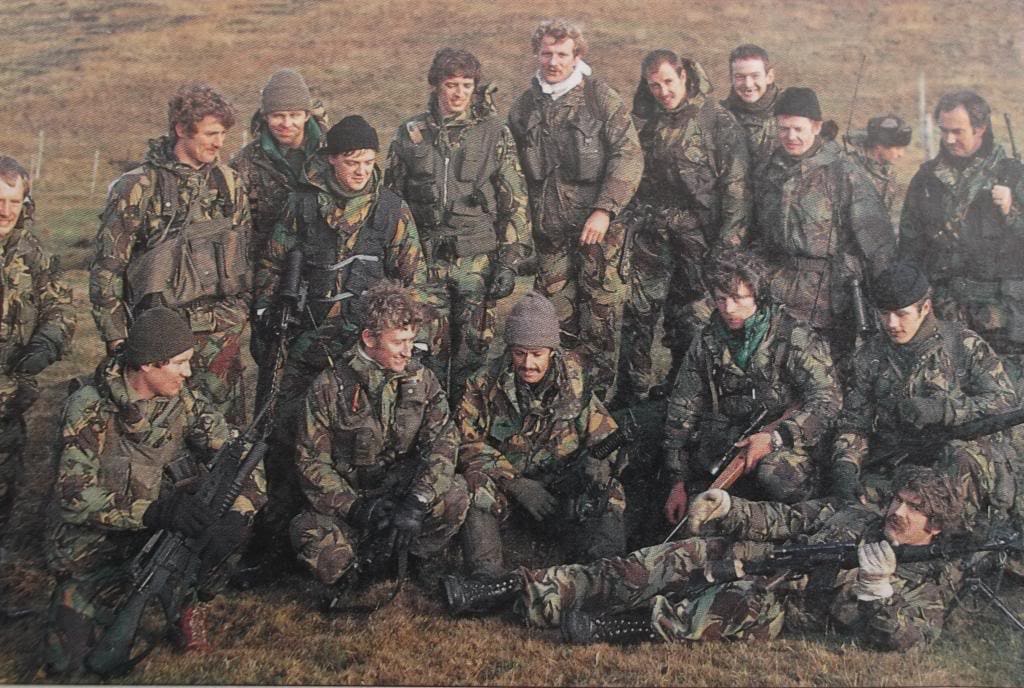
The timeline was tight for the attack on Pebble Island. The assignment was given to Capt. John (Gavin) Hamilton, a young 29-year-old Mountain Troop Leader. Hamilton and his men had already survived two helicopter crashes in Fortuna Glacier’s blizzard conditions in the thick of the South Georgia action. Still, he led his men to seize the outpost of Grytviken, the former whaling station. He was under no illusion as to the scope of the mission and the dangers involved as he briefed the Mountain Troops’ men.

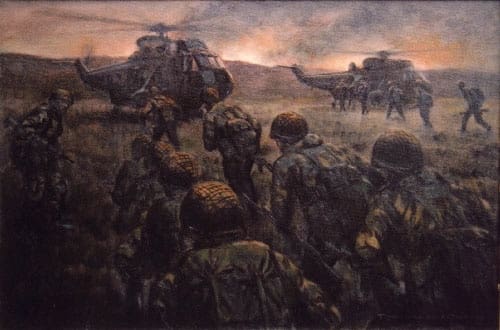
Onboard HMS Hermes, Hamilton briefed his men, but there were some problems. As the Hermes faced the South Atlantic’s heavy headwinds, she was well behind schedule, and she arrived late at the launch site. The foul weather had stopped the Sea King helicopters from being set up on the flight deck as they steamed west to make things worse. With the legendary SAS versatility, Hamilton was forced to revise the attack plan and change the production to take 30 minutes instead of the initial 90. With the men of the Mountain Troops armed with 81 mm mortars, M203 grenade launchers, and the deadly Rule 66 mm anti-tank rockets, the Sea King left Hermes’ deck. In support, to take out the Argentinean garrison positions, a Naval gunnery officer landing with the SAS said he would help provide the Naval Gunfire Support (NGFS) directing the fire from the decks of HMS Glamorgan of their 4.5-inch guns. The Sea King touched down four miles from the airstrip at a point marked out by the Boat Troop in reasonably calm weather. As troops from the Boat Squadron established a defensive perimeter, Hamilton and his men emerged from the Helo and started to unload mortar bombs and light guns. The Mountain Troopers were instantly hit by the unbelievable moonlight and the silhouette problems against the solid landscape began. The SAS men humped their way across Pebble Island to the airstrip after a short briefing from the Boat Troop (G Squadron) commander.

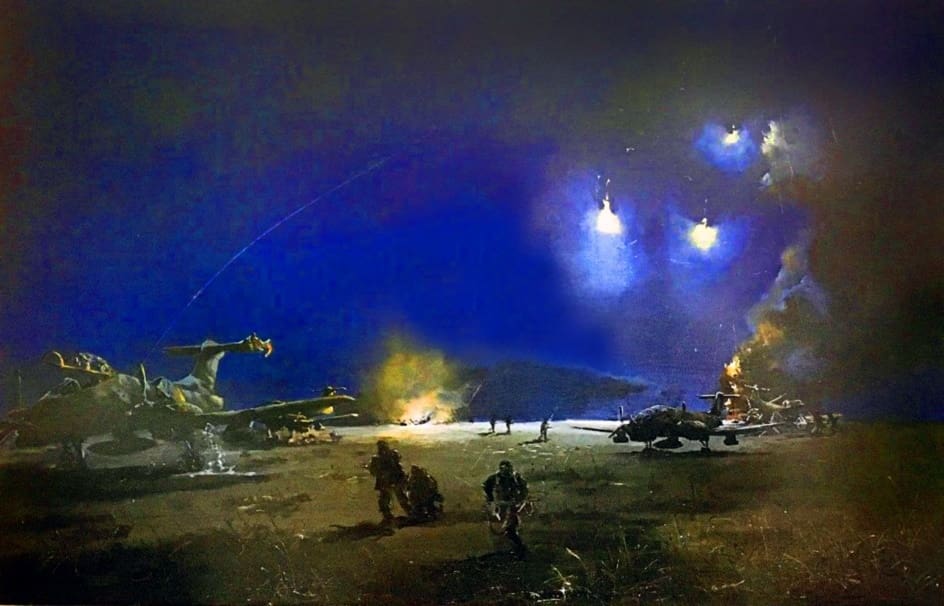
The outline of the FMA IA 58 Pucará (an Argentine ground-attack and counterinsurgency) (COIN) came clearly into place as they approached the airstrip, as rounds from the guns of HMS Glamorgan started crashing into the Argentinian garrison. Hamilton assembled his men on aircraft dispersals and calmly affixed explosive charges to the waiting Argentinian jets, receiving inaccurate incoming small arms and machine gunfire. The shells from Glamorgan destroyed the Argentinian fuel dump, ammunition store, and watchtower as the first of the Pucaras were blown up, producing some secondary explosions, and illuminating the remaining Pucaras further. The SAS men took out 11 planes, including six Pucaras, four Turbo-Mentors, and a Skyvan transport aircraft, in a 20-minute frenzy of destruction. Between them, in glaring view of the enemy, Hamilton and ‘Paddy’ Armstrong, a Mountain Troop explosives specialist, had destroyed another four Pucaras.

Withdrawal and Assessment

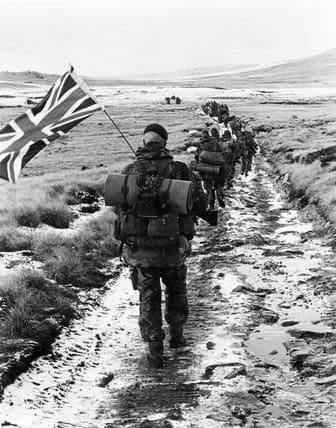
The whole operation was running on time. Within 30 minutes, the SAS had neutralized the Argentinian outpost and all the aircraft. There were minor casualties; one man was struck by shrapnel, and one was concussed from a remote-controlled Argentine mine. The entire SAS force was picked up by the Sea Kings on a tight schedule and transported back to HMS Hermes and Glamorgan, where a well-earned, full-cooked English breakfast awaited! Hamilton confirmed, de-briefly, that the Argentinians had not put on the island a radar facility and that the garrison was made ineffective. As a result, the Argentine force on Pebble Island played no part in opposing the landings in San Carlos, and again the SAS supported the main landing force that had famously crossed East Falkland to free Port Stanley.

On 10 June 1982, while directing naval gunfire from a position overlooking an 800-strong Argentinian garrison, Capt. John Hamilton was tragically killed. Hamilton, surrounded, was killed while covering a soldier who slipped through Argentina’s lines and was finally taken prisoner. The Military Cross was posthumously awarded to Hamilton and the award’s quote cited his “outstanding determination and character, his extraordinary will to fight despite hopeless odds and wounded suffering”. Only four days later, Maj. Gen. Jeremy Moore accepted the surrender of the islands’ Argentine forces, and the Union Jack was returned to the Falklands.