GORE-TEX Professional

Archive for the ‘Guest Post’ Category

SCUBAPRO Sunday – Shackleton

Sunday, February 14th, 2021

On 5 December 1914, the HMS Endurance left South Georgia for Antarctica, carrying 27 men (plus one stowaway who became the ship’s steward), 69 puppies, and a tomcat named, Mrs. Chippy. The goal of expedition leader Shackleton, who had once agonizingly fallen short of reaching the South Pole twice, was to establish a base on Antarctica’s Weddell Sea coast.
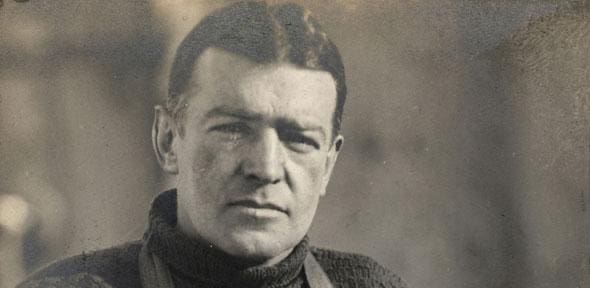
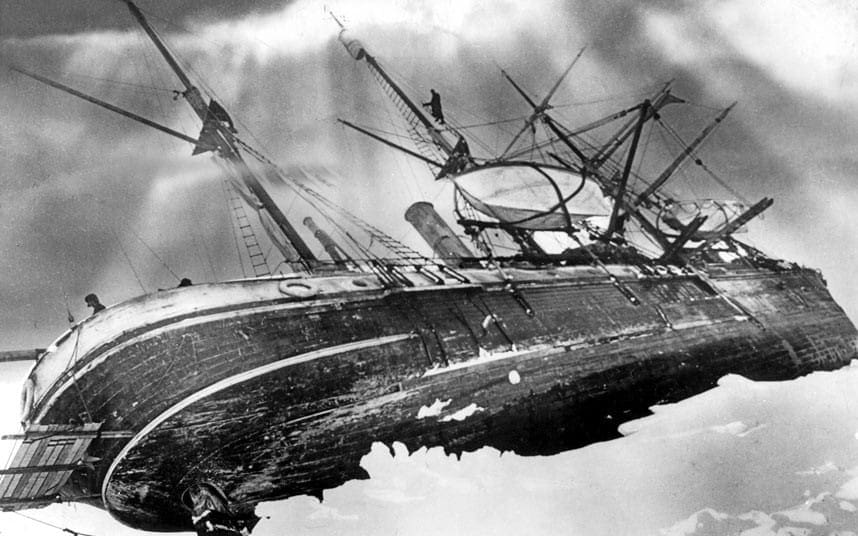
From there, on the first crossing of the continent, a small party, including himself, would eventually arrive at the Ross Sea, south of New Zealand, where another group would be waiting for them, having set up food and fuel depots along the way. Endurance joined the pack ice two days after leaving South Georgia, the barrier of dense sea ice standing guard across the Antarctic continent. The ship pushed its way through leads in the ice for several weeks, gingerly working its way south, but on 18 January, a northern gale jammed the pack hard against the ground and tightly squeezed the floes against each other. There was suddenly no way forward, nor any way back.
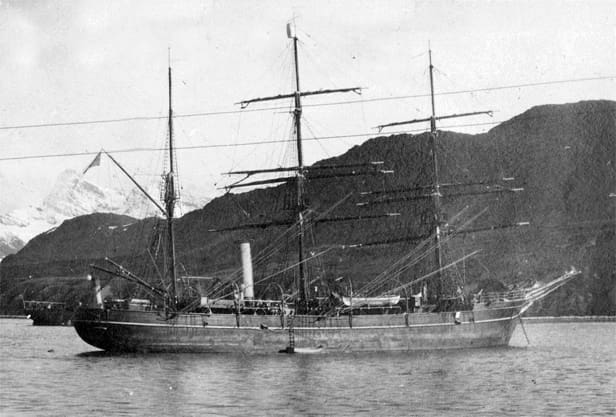
They were sailing from their landing place within a day; now, with each passing day, the ice’s drift was slowly moving them farther south. Nothing else could’ve been done but to create a routine and wait for the winter.

The crew saved as many provisions as they could in the time that passed between abandoning Resilience and watching the ice swallow it up entirely while sacrificing anything and anything that added weight or consumed valuable resources, including bibles, books, clothes, instruments, and keepsakes.
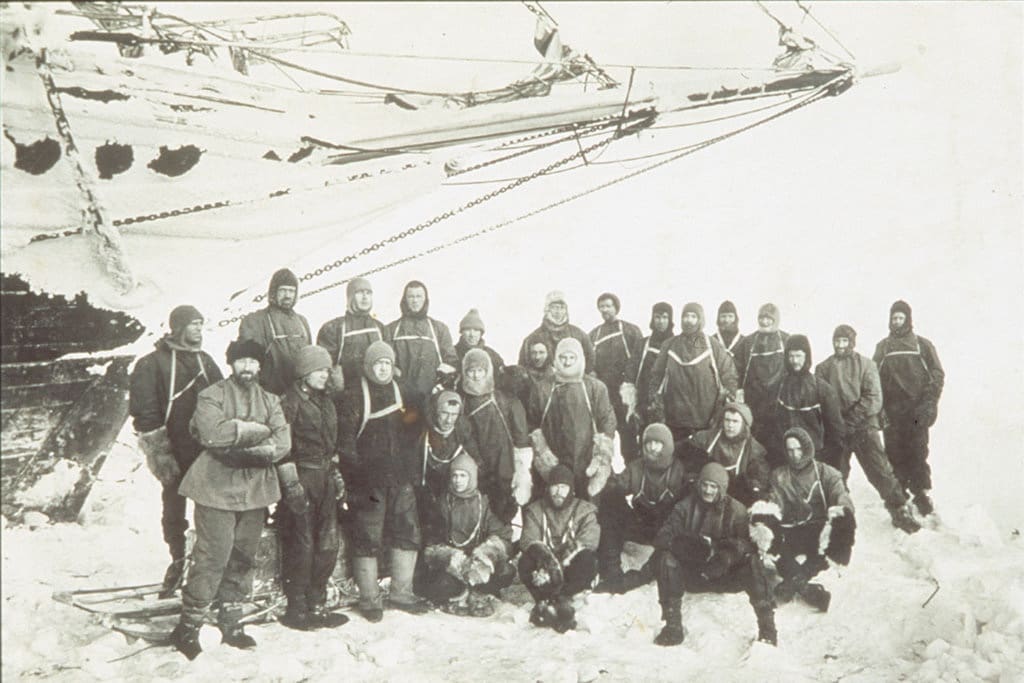
The original plan was to march toward the land through the ice, but that was abandoned after the men accomplished just seven and a half miles in seven days. There was no alternative,” Shackleton wrote, “except to camp on the floe again and to possess our souls with what patience we could until conditions would become more favorable for a revival of the attempt to escape.” The ice drifted further north slowly and steadily, and the snow-capped peaks of Clarence and Elephant Islands came into view on 7 April 1916, flooding them with hope.”

“The floe was a good friend to us,” Shackleton wrote in his diary, “but it has reached the end of its journey and is now obliged to break up at any moment.”
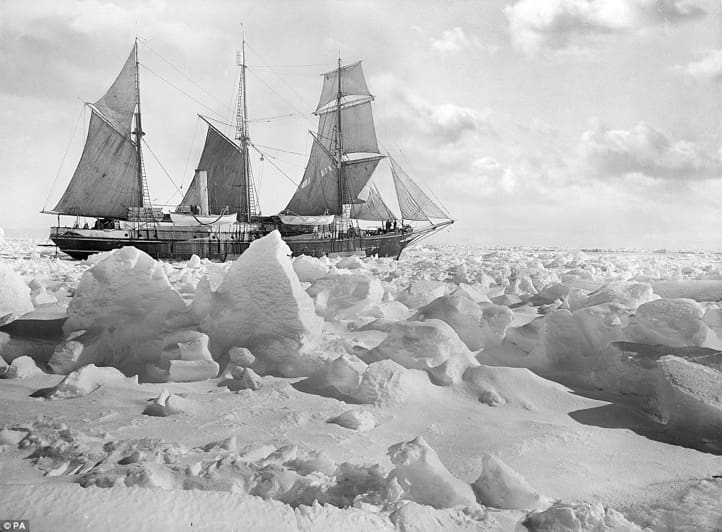
It did precisely that on 9 April, breaking with an almighty crack underneath them. Shackleton gave the order to break camp and launch the ships, and all of a sudden, they were finally free of the ice that had alternately surrounded them and supported them.

Now they had to deal with a new foe: the open ocean. It poured icy spray on their faces and threw cold water over them, beating the boats from side to side, and as they fought the elements and seasickness, it took brave men to the fetal position.

Captain Worsley navigated through the spray and the squalls through all of it before Clarence and Elephant Islands emerged just 30 miles ahead after six days at sea. The men had become tired. Worsley had not slept for 80 hours by that time. And although some have been crippled by seasickness, some have been wracked by dysentery. Frank Wild, the second-in-command of Shackleton, wrote that “at least half the party was insane.” But they rowed resolutely toward their target, and they clambered ashore on Elephant Island on 15 April.

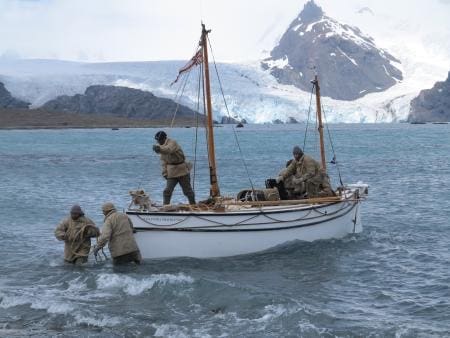
They were on dry land for the first time since leaving South Georgia 497 days ago. Their ordeal was far from over, however. After nine days of healing and training, Shackleton, Worsley, and four others set out on one of the lifeboats, the James Caird, to seek aid from a whaling station in South Georgia, more than 800 miles away. The chance of someone coming across them was vanishingly slight.
They fought monstrous swells and furious winds for 16 days, blowing water out of the ships and beating ice out of the sails. Shackleton recorded, “The boat tossed endlessly at the great waves under grey, threatening skies.” Each surge of the sea was an adversary to be watched and circumvented.” The elements hurled their worst at them even as they were within touching distance of their goal: “The wind  screamed as it ripped the tops off the waves,” Shackleton wrote.” “Our little boat swung down into valleys, up to tossing heights, straining till her seams opened.”

The wind eased off the next day, and they made it ashore. Help was nearly at hand, but this was not the end, either. The winds had driven the James Caird off course, and from the whaling station, they had landed on the other side of the island. And so Shackleton, Worsley, and Tom Crean set out to reach it by foot, scrambling over mountains and sliding down glaciers, forging a route that no human being had ever forged before they stumbled into the station at Stromness after 36 hours of desperate hiking.

In no possible circumstances could three strangers possibly arrive at the whaling station from nowhere, definitely not from the mountains’ direction. And yet here they were: their stringy and matted hair and beards, their faces blackened with blubber stove soot, and creased from almost two years of tension and deprivation.

And the old Norwegian whaler remembered the scene when the three men stood in front of Thoralf Sørlle, the station manager:

The boss would say, “Who the hell are you?” ‘And in the middle of the three, the awful bearded man says very quietly:’ My name is Shackleton.’ I turn away and weep.’
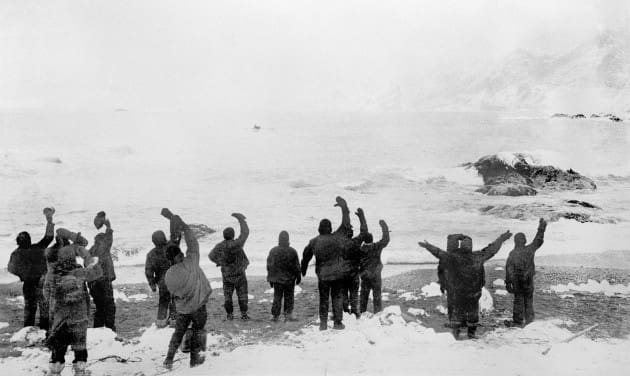
Once the other three James Caird members were rescued, attention turned to the rescue of the remaining 22 men on Elephant Island. Yet, despite all that had gone before, this final mission proved to be the most challenging and time-consuming of all in many respects. Although attempting to cross the pack ice, the first ship on which Shackleton set out ran dangerously low on fuel and was forced to turn back to the Falkland Islands. The government of Uruguay provided a vessel that came within 100 miles of Elephant Island before being beaten back by the ice.

Every morning on Elephant Island, Frank Wild, left in charge by Shackleton, issued an appeal for everyone to “lash up and stow up” their belongings. Might the boss come today! “He proclaimed every day. His friends became increasingly bleak and questionable. Macklin reported on 16 August 1916, “Eagerly on the lookout for the relief ship.” “The hope of her coming was quite abandoned by some of the party.” Orde-Lees was one of them. “There is no longer any good in deceiving ourselves,” he wrote.

But Shackleton acquired from Chile a third ship, the Yelcho; eventually, on 30 August 1916, the Endurance saga and its crew came to an end. When they spied the Yelcho just off the shore, the men on the island were settling down to a lunch of boiled seal’s backbone. It had been 128 days since James Caird’s departure; everyone ashore had broken camp within an hour of the Yelcho emerging and left Elephant Island behind. Every one of the Endurance crew was alive and healthy twenty months after setting out for the Antarctic.
Never did Ernest Shackleton reach the South Pole or traverse the Antarctic. Another expedition to the Antarctic was initiated, but the Endurance veterans who accompanied him found that he seemed smaller, more timid, drained from the spirit that kept them alive. On 5 January 1922, he had a heart attack on a ship in South Georgia and died in his bunk. He was a mere 47.

Wild took the ship to Antarctica with his death, but it proved inadequate to the task, and he set course for Elephant Island after a month spent futilely trying to penetrate the pack. He and his comrades, from the safety of the deck, peered through binoculars at the beach where so many of them had been living in fear and hope.

“Once again, I see old faces and hear old voices, old friends scattered all over,” Macklin wrote. “It is impossible, however, to express all I feel.”

And with that, one last time, they turned north and went home.
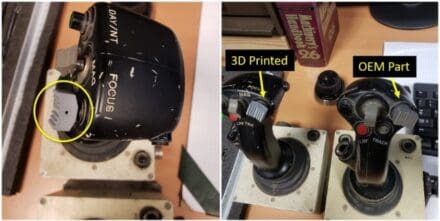
Arts And Crafts With Mission Spec

Saturday, February 13th, 2021

Did you forget about Valentine’s Day?  Don’t worry. Mission Spec has your back. Learn how to make a paper rose to give to your significant other. It will never die. Your SO will appreciate that you put some time into it yourself and your kids will do it with you.

You can win Valentine’s Day and Mission Spec is here to help.

Is It Time for an Additive Manufacturing Specialist in the Army Ordnance Corps?

Saturday, February 13th, 2021

FORT RILEY, Kan. – The Army supply chain of the future will incorporate additive manufacturing (AM), most commonly found in the form of 3D printing, to increase readiness. Using this technology at the point of need will reduce costs and increase unit mission capability.

The U.S. Army Ordnance Corps is in an excellent position to embrace this emerging technology, and ultimately, enhance Army lethality by developing Soldier expertise to support additive manufacturing programs.

Under the Combat Capabilities Development Command, the Expeditionary Lab of the U.S. Army’s Rapid Equipping Force, or Ex Lab for short, operated 3D printers in deployed environments for nearly ten years, expediting the repair of equipment in combat areas.

In 2019, the Army established the Additive Manufacturing Center of Excellence as a hub for developing processes and standards to field additive manufacturing capabilities across the Army supply chain. The Army also invested in developing the materials needed to support future requirements and overcome current limitations.

Scientists at the ARL are working to develop filaments that are mechanically strong but useable in low-cost 3D printers. Using a combination of plastic polymers in a unique geometry, the ARL hopes to allow printing for a wider range of parts with samples scheduled for distribution and testing in the near future.

Field results are promising, and demonstrate maintenance units in the future will be able to make repairs in hours, develop custom solutions to complex problems, or reduce the on-hand stock and logistical requirements to support an expeditionary fighting force.

AM exhibited limited success in creating hard to find parts, manufacturing parts for legacy systems, and at the small unit level, printing 3D aids for explosive ordnance disposal training.

In the future, the technology could be migrated to the tactical level with teams of engineers and Soldiers collaborating to produce designs allowing the manufacture of physical solutions near the point of need.

But what if the expertise to design and print parts was staged closer to the point of manufacture? Current Army programs rely on engineers’ and scientists’ expertise to be effective. Few studies have been done on how the processes being developed will translate at a larger scale in an austere environment.

Existing programs rely on connectivity between engineers and Soldiers who could be thousands of miles apart. This connectivity is far from guaranteed on future battlefields. Therefore, complex post-processing requirements or more in-depth material knowledge may be necessary to operate independently from industries’ existing infrastructure.

The Ordnance Corps has an opportunity to build Soldier expertise to support these future programs. However, the expertise required to perfect these processes and provide a rapid, flexible and reliable supply of parts to tomorrow’s front lines could quickly overwhelm a Soldier’s current ability to take on additional training and tasks.

According to Col. Ken Letcher, former commander of the Joint Manufacturing and Technology Center at Rock Island Arsenal, “The Army is heavily invested in 3D printing, ensuring Soldiers have the capability to print and fabricate repair parts as a component of the Battlefield Damage Assessment and Repair (BDAR) process.”

As the current director of CASCOM’s Fielded Force Integration Directorate, Letcher noted that “Printing at the point of need increases operational readiness. Not only must the Ordnance Corps advance its materiel solutions, but it must advance the Soldiers that apply these solutions as they are fielded.”

By focusing on additive manufacturing as a specialty, Soldiers could receive training in computer-aided design software and materials science, allowing them to develop new parts and solutions independently from the industry support the Army currently relies on and move the point of design nearer to the end-user.

The Additive Manufacturing Specialists could be trained in various technologies, allowing future Army initiatives to leverage more specialized manufacturing techniques such as powder bed fusion, vat polymerization and bio-printing.

Teams of these newly created experts could also see expansion into a variety of Army missions beyond logistics. In 2018, the Marine Corps began experimenting with printing in concrete to rapidly build barracks in a combat environment with possible future applications in force protection, base infrastructure, and the support of humanitarian and disaster relief missions.

A joint study between the Geneva Foundation and the U.S. Military Academy saw success in bio-printing in austere environments, allowing treatments customized to the Soldier near the point of injury. As the technology expands across the Army, the need for professionals to advise and assist in its application will only increase.

Throughout history, the Ordnance Corps has developed cutting-edge professionals to build and preserve Army readiness. Currently the Allied Trades Warrant Officer (914A) serves as the Army’s AM expert. However, creating an Ordnance enlisted specialty to complement the rapidly expanding use of additive manufacturing would keep the Army at the forefront of innovation.

Integrating this technology into the Army structure and doctrine will allow the maximum flexibility in using new and emerging technologies as they transcend from laboratories to battlefields of the future.

By 1LT Joshua S. Closson

Air Force Office of Scientific Research Advances Science of Wound-Healing Technology

Saturday, February 13th, 2021

The Air Force Research Laboratory’s cutting-edge research creates future warfighting technologies for the Air and Space Forces, protecting the lives of those that put themselves in harm’s way. Ground-breaking research into cellular reprogramming, made possible in part with funding from AFRL’s Air Force Office of Scientific Research, is leading to technology that could heal wounds more than five times faster than the human body can heal naturally, vastly improving long-term health care outcomes for warfighters and veterans.

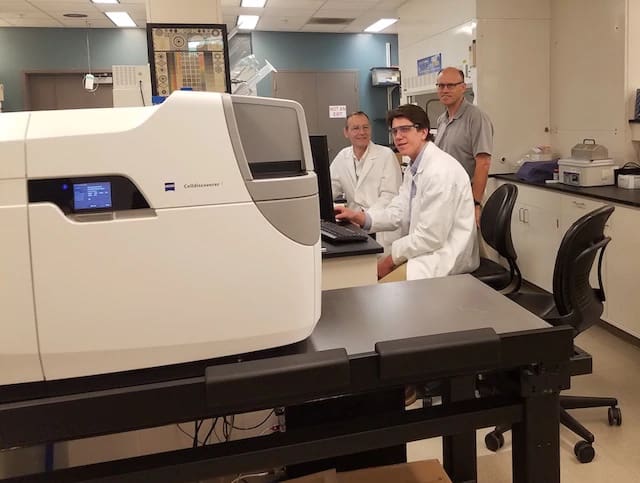
Dr. Indika Rajapakse, associate professor of Computational Medicine & Bioinformatics and associate professor of Mathematics at the University of Michigan, is researching ways to reprogram a person’s own cells to heal wounds faster. In order to get high-resolution views inside live cells to better understand the wound-healing process, Rajapakse submitted a Defense University Research Instrumentation Program proposal to purchase a live cell imaging microscope. Dr. Frederick Leve, program officer for AFOSR’s Dynamical Systems and Control Theory portfolio, selected Rajapakse’s proposal.

The microscope also assists in gathering data for an algorithm which can mathematically identify when best to intervene in a cell’s cycle to heal wounds. Leve, in collaboration with Dr. Fariba Fahroo, AFOSR program officer for the Computational Mathematics portfolio, awarded Rajapakse a grant for research to improve this algorithm.

“There are amazing opportunities in the United States, that you don’t see in the rest of the world, to humanize science and meet critical needs in medicine,” Rajapakse said. “We have the resources to do this, and it is our obligation to take full advantage of them. Thanks to the Air Force’s help, I was able to acquire the tools I need to advance my research into cellular reprogramming and wound healing.”

This funding connection was made possible by collaboration between the AFRL’s 711th Human Performance Wing, and Air Force Futures. Col. Charles Bris-Bois, the Air Force Disruptive Technology Team lead, was instrumental in making the connection between this novel technological concept and Air Force operational needs. The team saw a clear opportunity and helped Rajapakse reimagine his technology for other uses not immediately thought of such as aeromedical environments and how the presence of unhealed wounds increases aircrew susceptibility to hypoxia and other altitude related injuries.

“The impact of this research effort can be far reaching,” said Dr. Rajesh Naik, 711th Human Performance Wing chief scientist. “The convergence of biosciences with mathematical models can truly provide an inflection point to advance the development of wound healing. Dr. Rajapakse’s research can result in innovative solutions for addressing our needs in the aeromedical operations and in future space environments.”

Bris-Bois’ team used their real-world operational experience and insights to help uncover other potential challenge areas and medical applications, such as burn healing, skin grafts, organ transplants, etc. The continued partnership between AFRL and Air Force Futures helped to bridge the tech-to-operational divide, facilitating a move from the lab to real-world testing and applications.

“Indika’s research is exactly the kind of breakthrough technology we’re looking for in Air Force Disruptive Technology,” Bris-Bois said. “This shows the real promise of our efforts to bring warfighters and technologists together to imagine the possibilities of early scientific research.”

Cellular reprogramming is the process of taking one type of human cell, such as a skin cell, and reprogramming its genome so that it becomes a different kind of cell, such as a muscle cell, blood cell, neuron, or any other type of human cell. This is done using proteins called transcription factors. Transcription factors “turn on and off” various genes within cells to regulate activities such as cell division and growth, and cell migration and organization.

With the application of the right transcription factors, Rajapakse found that wounds healed more than five times faster than allowing the wounds to heal on their own. The next step is to figure out how best to apply them. The envisioned technology would act like a “spray-on” bandage, applying transcription factors directly to wounds. This method would convert exposed deep muscle cells into surface skin cells, which would mean a higher probability of successful healing than the current methods of skin grafting.

However, identifying which transcription factors make the required changes to create the right kind of cell requires a long process of trial and error. Rajapakse and his team have developed a data-guided algorithm to mathematically identify the correct transcription factors and predict the points in the cell cycle where transcription factors can best affect the desired change. The live cell imaging microscope provides data to further improve the algorithm.

“It’s rare that mathematics provides such promising results so quickly,” Leve said. “It usually takes decades for basic math research to make it into models which can be applied to a technology. In Dr. Rajapakse’s case, it only took a handful of years. AFRL is proud that our funding enabled mathematical theory for modeling and valuable data to be gathered which contributed to this rapid development.”

The success of Rajapakse’s project is a testament to AFRL’s purposeful outreach and relationships with partners such as Air Force Futures. This renewed commitment provides a mechanism for “out-of-the-box thinking” for potentially disruptive capabilities that will revolutionize the Air Force in the years to come.

“It is a really big deal that two opposite ends of the technology maturity spectrum — basic research and capability-focused operators — came together in this instance to identify an opportunity to help our warfighters and made it happen—fast!” said Dr. Shery Welsh, AFOSR director. “We are proud of our AFOSR Science and Engineering division for building an active, robust engagement with Air Force Futures that removed science roadblocks and created a pathway for transition.”

By Matthew D. Peters, Virginia Tech Applied Research Corporation

FirstSpear Friday Focus: Assaulter’s Gun Belt

Friday, February 12th, 2021

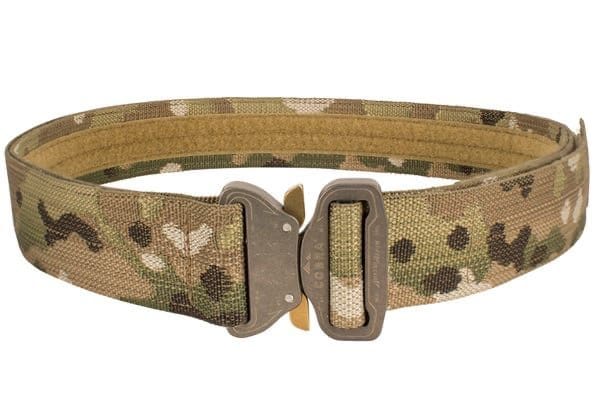
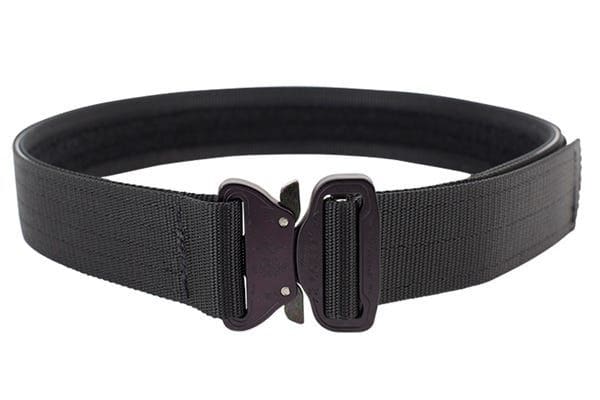
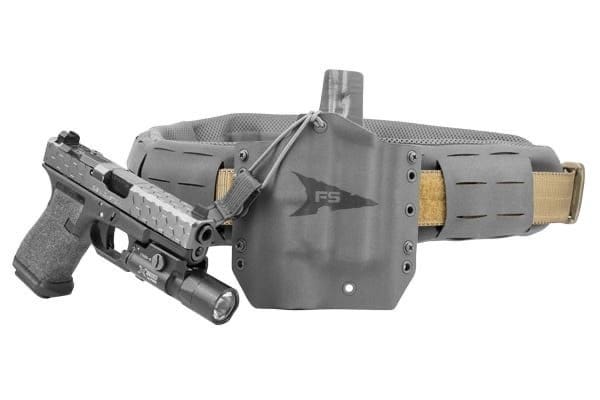
This week’s focus is FirstSpear’s Assaulter’s Gun Belt (AGB). It’s a versatile belt designed to handle tough situations. Accessed through a two-point, high strength metallic buckle, the AGB is strong enough for you to facilitate combat-equipped buddy drags. It can integrate with the AGB Padded Sleeve to provide more comfort and provide you with additional 6/12 attachment points. FS also offers AGB point pads, deluxe suspenders and 6/9 belt links that can be purchase separately.

• Belt Width: 1.75”
• Buckle Width: 2”
• Integrates with the AGB Padded Sleeve
• Accommodates multiple FS components
• Completely removable buckle
• Compatible with Base Belt or Base Belt Lite when used with the AGB Sleeve

It’s a phenomenally rigid and surprisingly comfortable piece of first line gear.

“I’ll be honest, my old belt sucked and I wanted a replacement. A friend of mine kept plugging First Spear and I’m glad I listened to his suggestion. This belt is incredibly rigid and has served me well as an EDC belt as well as a full on stand-alone load bearing platform. Handles any and all things I’ve slapped on it and more with ease. I’m planning on purchasing another along with an AGB padded sleeve so I don’t have to pick between using the AGB as a standalone and having it set up as a fully dedicated battle belt. Why choose when you can have both? Compared to other belts I’ve used this belt is both much more rigid and surprisingly comfortable. I would not hesitate to replace this belt with an identical one, or to recommend First Spear products to any of my buddies. Top of the line, no compromise gear. Will be buying from you guys again.”
—Online Review

It can also accommodate many different FirstSpear components that will help optimize it for the full spectrum of tactical and discretionary operations. The buckle is completely removable from the belt for routing through smaller pant belt loops.

*This AGB is setup with the FS SSV Holster, AGB padded sleeve—sold separately*

Now available in black, khaki and MultiCam.

For more information check out, www.first-spear.com/assaulters-gun-belt-agb

Improving Military Electronic Devices with WattUp RF Wireless Charging Technology

Thursday, February 11th, 2021


Photo: U.S. Army. Use of this image is for informational purposes only – the appearance of U.S. Department of Defense (DoD) visual information does not imply or constitute DoD endorsement.

As military forces become more technologically enabled, optimizing the size, weight and power requirements (SWAPO) for tactical electronic devices continues to provide opportunities for improvement. WattUp wireless charging is one innovative technology that program offices could implement to enhance battery and device designs.

WattUp is an embedded charging technology which eliminates the dependence on charging cables, open ports or battery doors that reduce the physical integrity and ruggedness of a device. This delivers the dual benefit of reducing the complexity of product design – which can lower both manufacturing and build of materials (BOM) costs – as well as increase a device’s durability and dependability.
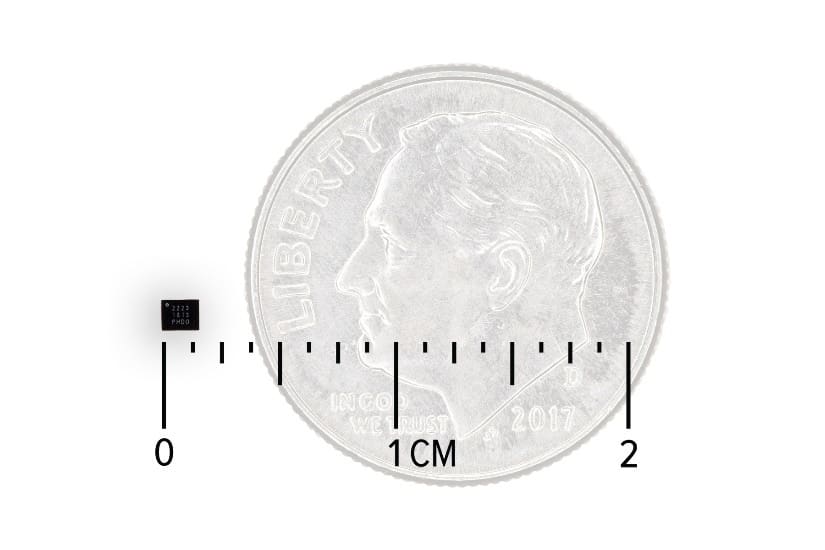
WattUp uses radio frequency (RF) technology to establish a link between a transmitter and a receiver, sending power via antennas. It does not use magnetic coils, which require precise alignment or physical contact with the device for charging to take place. This new technology enables both at-contact and over-the-air wireless charging. WattUp also offers improvements in the orientation, placement and interference issues that can occur with coil-based charging. Support for different sized and shaped devices, along with foreign object detection and enhanced thermal performance round out the benefits of WattUp wireless charging from Energous.

WattUp® Mid Field and Far Field Transmitters sense and communicate to authorized receiver devices via Bluetooth Low Energy (BLE), but do not interfere with Bluetooth or Wi-Fi, as a different frequency band is used for the transmission of power. WattUp is also software-controlled, intelligently determining which devices receive power, when and in what priority. A WattUp transmitter can also charge several devices simultaneously, contributing to a complete wireless power ecosystem with interoperability across multiple receivers and transmitters. If there are no WattUp-enabled devices within range, the WattUp transmitter becomes idle so no power is wasted.

The WattUp receiver ASIC is a microchip embedded within the circuit board of the device that converts the transmitter’s radio waves into DC power to charge the device’s battery. WattUp receiver technology can be scaled to fit a variety of different electronic devices, including very small systems as small as in-ear communications and hearing protection.

The WattUp technology is FCC-approved for power to be transmitted at near field (0 – 5mm distance) and through the air at mid field ranges (up to 1m distance) – with distances of up to 5 meters being in the works.

Finally, the WattUp ecosystem features secure, cloud-based, management software, which enables users to track and manage multiple WattUp-enabled devices within a single environment. Users can set priorities and other alerts to maintain oversight of the health and power consumption of their devices and batteries – and get advance notice when they need recharging.
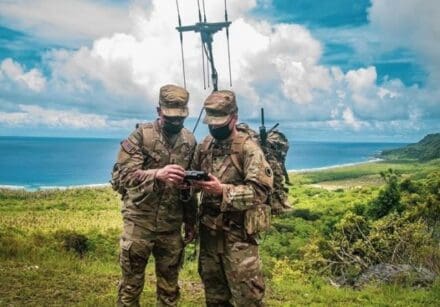
Military units need to have confidence in their equipment and the assurance that it will perform effectively when needed. Dead or defective batteries can be as unwelcome as non-serviceable weapon. With no need to manually check batteries or to physically connect devices to chargers, WattUp RF wireless charging technology gives leaders and soldiers the confidence that their batteries and devices will be charged and ready when needed.

To find out more about how WattUp® RF wireless charging technology can be applied to military applications, visit energous.com/military, or contact us at military@energous.com.

24th SOW Launches Special Operations Center For Medical Integration And Development

Thursday, February 11th, 2021

The 24th Special Operations Wing launched the Special Operations Center for Medical Integration and Development, a program designed in cooperation between the U.S. Air Force and the University of Alabama-Birmingham to develop and provide advanced standardized training to special operations medics. The training used realistic and innovative techniques including virtual reality, field training exercises and clinical hospital rotations to maintain readiness of Special Operations Surgical Team members, pararescuemen and independent duty medical technicians.

By SSgt Ridge Shan, 24th Special Operations Wing

First Multi-Domain Task Force Plans to be Centerpiece of Army Modernization

Wednesday, February 10th, 2021

WASHINGTON — The Army’s first Multi-Domain Task Force is charting an unknown path to help reshape how the total force fights and wins on future battlefields, its commander said Wednesday.

Initiated in March 2017, the MDTF pilot program focused on defeating an enemy’s anti-access/area denial, or A2/AD, capabilities in the Indo-Pacific region. Since then, through exercises and assessments, the program ensured the task force was able to deploy and operate in the region before it officially activated in the fall.

“There is little doctrine for [MDTFs],” said Brig. Gen. Jim Isenhower, the commander, adding his trailblazing unit will be a centerpiece of Army modernization.


As a centerpiece for the future Army, MDTFs are “new, networked, maneuver theater assets, focused on adversary A2/AD networks,” Isenhower said. Their capabilities also provide deterrence options for combatant commanders.

“The Army has empowered us, and asked us to figure out how we’re going to maneuver effectively in all domains, which will characterize how we fight in the future,” he added.

Down the road, the MDTF, which is based at Joint Base Lewis-McChord, Washington, won’t be alone. Later this year, a second MDTF is being planned to stand up in Europe. A third task force may also stand up and serve the Indo-Pacific next year.

The first MDTF originally had a field artillery brigade as its core that merged with an Intelligence, Information, Cyber, Electronic Warfare and Space, or I2CEWS, element.

“Through distributed operations and with access to requisite authorities, MDTFs are advanced headquarters that synchronize kinetic and non-kinetic capabilities in support of strategic objectives,” Isenhower said.

“We face increased physical and virtual standoff through layered and integrated networks, where adversaries leverage all instruments of national power to blur the lines between competition and conflict, altering international norms to the detriment of the international community,” he said.

Great power competition

For the MDTFs, the plan ahead is to evolve and outpace the speed of any persistent, great power competitors like China and Russia, said an officer assigned to the task force.

“Great power competition requires an Army that is capable of complete integration across the joint force to compete with our adversaries,” he said.

From a joint warfare perspective, this is where the MDTF comes in. “Our exercises are joint, our plans are joint, and we incorporate input from across the joint services at every turn,” he said.

That foundation enables the total force to use a broad range of multidisciplinary capabilities. It also gives joint forces the freedom of action to fit the needs of each service, he said.

Preparing Soldiers

Like with other Army organizations, it’s the individuals selected who make the task force exceptional, according to one of its senior enlisted members.

“Within our ranks are highly-trained Soldiers with specialized skill sets, [and are] technologically astute, creative thinkers, who are looking at new ways to address complex problem sets,” they said. “The diversity of our formation fosters an environment of critical thinking, and the Soldiers who comprise our task force are leaders at the front of their career fields.”

The MDTF Soldiers reflect the nation, he added, and are “the best at coming together to leverage technology and joint resources to meet the imperatives of our national defense strategy.”

After qualifying for the task force, they said, each member represents the best of each priority they specialize in. “That’s one of the most exciting parts of this — the Soldiers who comprise our organization,” he said.

Whether in exercise or garrison, the MDTF members do things others simply cannot, they said. Specifically, the experience of working in joint exercises, or becoming fluent in the synchronization and planning efforts typically linked to the joint environment.

“Every member on the MDTF values their opportunity to contribute to the Army’s — and the joint force’s — efforts to develop these new concepts, like [multi-domain operations] and all-domain warfare,” Isenhower said.

Joint problems need joint solutions

But the task force will only be as successful as the joint partnerships they maintain, they said. Those partnerships have come with their share of eye-openers.

“Our proximity to joint partners [has given us] a few lessons learned,” said a senior officer assigned to the task force. “We tend to get these large gains out of exercises that we’ve been on in the Pacific, but one of those lessons we were coming away with is that we need a more persistent training environment.”

On any given week, the MDTF may partner alongside a Carrier Strike Group from the U.S. Navy or fire planners from the U.S. Air Force.

These are prime examples of how the task force is a joint-enabler, and “without those joint partners, we’d become an Army solution [for] only Army problems,” the officer said. Instead, “we’re looking to work [with] joint partners toward joint solutions.”

“Many times, joint solutions are inhibited by closed architectures within respective forces, Isenhower said.

The task force “found opportunities to accelerate joint interoperability by just getting the right people in the room to talk to each other and figure out how to break down both literal and figurative firewalls that might inhibit rapid communication,” he said.

Although there is still work to do, the task force is on the right track, he said. MDTFs will simultaneously integrate joint partners and emerging technologies to inform the Army’s transformation into a faster, more dynamic force.

“This is a unique opportunity, and the MDTF — Soldiers and family members alike — feel privileged to be a part of it and don’t take for granted the responsibility and the privilege the Army’s given us to chart this path forward,” Isenhower said.

By Thomas Brading, Army News Service