GORE-TEX Professional

Archive for the ‘Guest Post’ Category

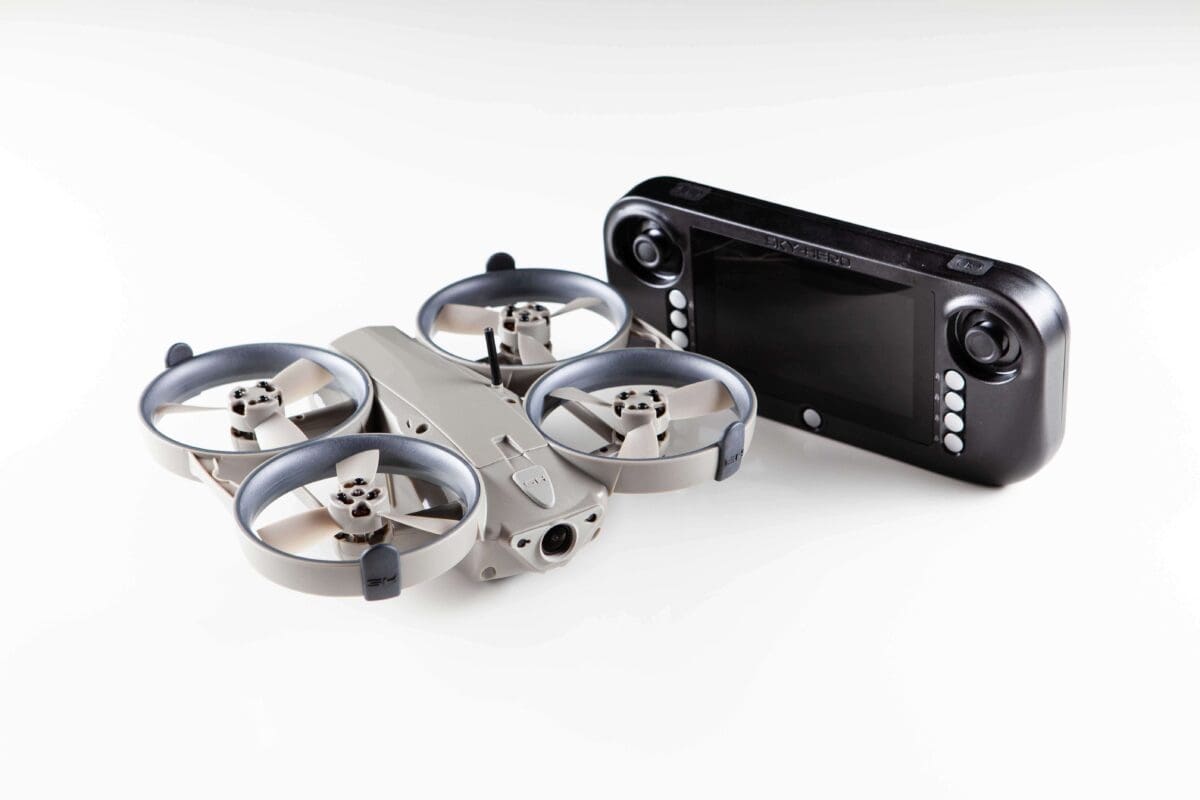
Brigantes Presents – The Loki 2 Drone from Sky Hero

Wednesday, January 20th, 2021

The Sky Hero Loki MK 2 allows military personnel and police officers to gather crucial intelligence of immediate threats before entering complex terrain such as dense urban areas, confined spaces and underground passages.

The Loki Mk2 is an operational support tool offering dependable methods of analysis and diffusion of videos. With extreme performance in most light conditions the camera allows users to track and anticipate target movements enabling reliable and rapid situational awareness for precise decision making. The zero latency and guaranteed no frozen images enables reliable and rapid situational awareness for precise, immediate decision making.

The encryption of both video signals and the flight commands is a crucial feature that ensures maximum security in all use cases and the new autopilot has been developed to ease the control without the need for training. The precise position holding of the drone in GPS denied and low light environments allows the operator to perform his mission with complete peace of mind.

For more information contact warrior@brigantes.com

Or visit brigantes.com/products/loki-mk2 and register for more information.

Silencer Shop Presents: Behind The Scenes Look at SureFire Suppressors

Tuesday, January 19th, 2021

A SENSE OF URGENCY AND A BIAS FOR ACTION.

That is the SureFire motto, and we put it to the test by going behind the scenes at SureFire’s headquarters. In our first ever documentary-style video, Silencer Shop gets the privilege of showing you never before seen footage of how a SureFire suppressor is made.

You’ll see in this video that SureFire goes above and beyond to ensure their products are not only reliable, but also incredibly consistent. Whether they’re building for military or civilians, SureFire makes sure that every single silencer meets their expectations. By making all of their suppressors in-house and testing every single one before it leaves their shop, you’ll be able to witness SureFire’s efficiency and dedication to high-quality suppressors.

Join us as we walk through the life of SureFire suppressors. From raw materials to taking the silencers out to the range, you will get to see the intricacies that give SureFire the name and dependability we all know and love.

Air Force Establishes Significant Evolution in Foreign Area Officer Career Field

Tuesday, January 19th, 2021

ARLINGTON, Va. (AFNS) —

The Department of the Air Force announced Jan. 15, the opportunity for U.S. Air Force officers to voluntarily transfer into an internationally-focused core career field beginning spring 2021.

Since 2005, the Foreign Area Officer program has organized and trained select Air Force officers to be language-enabled, culturally astute, and operationally relevant regional experts.

More than 800 officers are currently certified as FAOs, filling a critical role in providing essential support to the National Defense Strategy by engaging foreign military leaders and government officials to build partner capability and capacity.

The restructuring of the FAO program is part of the Air Force’s broader reorientation toward great power competition. The recommendation that emerged from an Air Force cross-functional team’s year-long study was to establish the FAO career field as a strategic core career field while retaining operational relevance.

Until now, the Air Force FAO program operated as a secondary career field, alternating assignments between FAO and the officer’s core Air Force specialty code, or AFSC. This presented a key challenge in managing FAOs as strategic assets.

“Focusing FAO development on International Airmen skills and experiences, rather than challenging officers to hit milestones in two career fields, is more important than ever to increase awareness in our current strategic context with both our allies and partners and in the joint community,” said Kelli Seybolt, deputy under secretary of the Air Force, international affairs.

This strategic core career field will now be a Secretary of the Air Force International Affairs-managed AFSC, 16F or 16Z, to better cultivate professional development with a strategic international perspective. Within this new core AFSC, FAOs will be poised for more efficient utilization to meet Air Force strategic needs and will compete for promotion advancement within a single developmental category of professional FAO peers.

Continued operational relevance will be achieved through “FAO-minded” Intervening Operational Tours in each FAO’s original AFSC that sustains the various operational skillsets of each specialty and enhances Air Force strategic international engagement interests within those fields. It presents an increased return on FAO investment to provide deepened regional expertise and requires less in terms of training, sustainment, and manpower to support FAO development. Restructure of the FAO program, and increased primary emphasis in FAO development, will reduce the required inventory for FAOs from other AFSCs by approximately 30%.

“The United States Air Force FAO career field has been improving tremendously over the past decade,” stated Col. Lawrence E. Pravecek, FAO career field manager. “With the changes in the officer promotion system, now is the perfect time to take the next step in managing the development of our international experts. The choice to request transfer into the FAO Core AFSC will be a personal decision. All of us volunteered to serve, and now we ask for volunteers to help build a new AFSC that is tailor-made to provide the internationally-minded officers that our nation needs.”

For those already certified as FAOs or in the FAO training pipeline, applications for transfer to 16F or 16Z as their new core AFSC will begin early 2021. At that time, all eligible personnel will receive a direct email from the Air Force Personnel Center announcing the opening of the application window and providing directions to submit their applications online. FAOs who do not volunteer to transfer will remain in their current AFSC, while maintaining 16F as a secondary AFSC.

Air Force Reserve Component members will be notified by the AF Reserve or Air National Guard regarding ARC-specific processes. For questions/feedback, send email to the FAO Program Workflow Box at SAF.IAPA.IAS.Program.Workflow@us.af.mil.

For FAO resources, visit www.milsuite.mil/book.groups/air-force-ias.

For ARC programs, visit www.milsuite.mil/book/groups/arc-international-affairs-specialist-program.

By Jill Marie Diem, Secretary of the Air Force, International Affairs

New PenCott Camouflage Patterns from Hyde Definition and 0241Tactical

Monday, January 18th, 2021

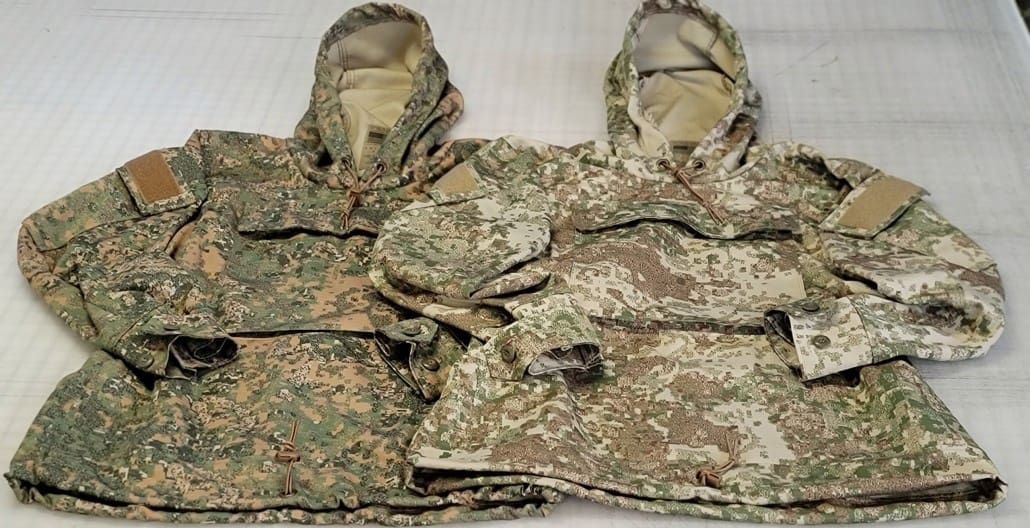
If you follow PenCott Camouflage on social media, then you will have recently seen pictures of two new patterns that were developed with North American environments primarily in mind.

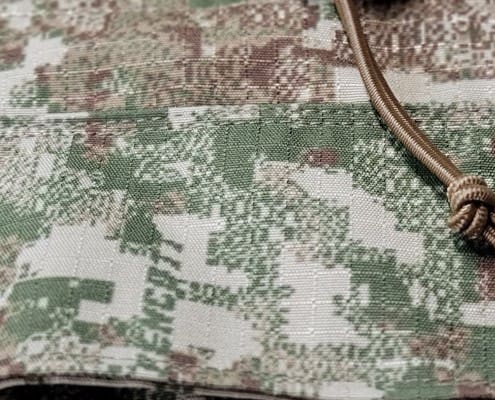
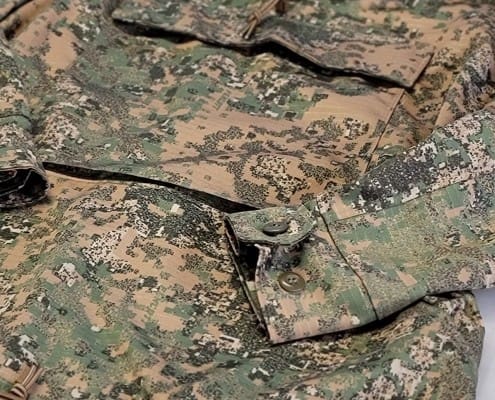
The patterns are DevilDog™ and LeatherNeck™, and are both 4-color variations of the standard PenCott pattern geometry. They were named after popular nicknames for US Marine Corps members, due to the fact that the founder and CEO of 0241Tactical is a USMC veteran.

DevilDog™ is specifically oriented towards high plains, scrub desert, dry bush land, and similar types of terrain with light, sandy soil and sparse vegetation.

LeatherNeck™ on the other hand is designed for more temperate terrain that has a significant amount of brown tones – such as pine forests, mixed woodland with reddish soil, and so on.

Developing new pattern colorways during a period of lockdowns and restrictions due to the COVID-19 pandemic situation required some flexibility and creativity in the approach we took – not the least because all the work had to be done virtually between team members in the UK and US.

Our starting point was to analyze existing military patterns that have proven effective in North American environments – such as AOR-Universal, MARPAT-Temperate Woodland, CADPAT-Intermediate, Scorpion W2, etc. – comparatively analyzed within the specific types of environments we wanted to address. With this data in hand, we worked up a palette of potential colors, plugged them into the PenCott geometry, and then worked through numerous color combinations to down-select to a shortlist of pattern variations. Using extensive picture-in-picture analysis we ended up with a pattern colorway for each that seemed to be the best option – and also worthy of the names.

With the colors and names established, artwork was sent to 0241Tactical’s digital printing partner in the US and a small trial run of each pattern was printed on ripstop polyester material. The results can now be seen in the form of anoraks, neck gaiters, and beanie hats being offered through 0241Tactical.

With these garments now going out into the real world for field evaluations, we will be able to validate if the colorways are correct or need tweaking before being released for licensing and/or full production with other partners as well. 0241Tactical will also be able to provide various digitally-printed fabrics, such as 500D Cordura® nylon, in the DevilDog and LeatherNeck patterns to other makers as well.

Beyond these new patterns, look out for an expanded offering of GreenZone® fabrics and partners to come in the first half of 2021. We will also be expanding the MetroPolis® offering with webbing and 500D nylon, as well as additional product partners too. And lastly, Helikon-Tex and Direct Action will continue to expand their WildWood® product offerings this year as well.

www.pencottcamo.com

www.0241tactical.com

US Army Micro-Atomizer Contributes to COVID-19 Research

Monday, January 18th, 2021

Aberdeen Proving Ground, MD – A device patented by researchers at the U.S. Army Combat Capabilities Development Command Chemical Biological Center (DEVCOM CBC) is being commercialized as a tool in the study of COVID-19.

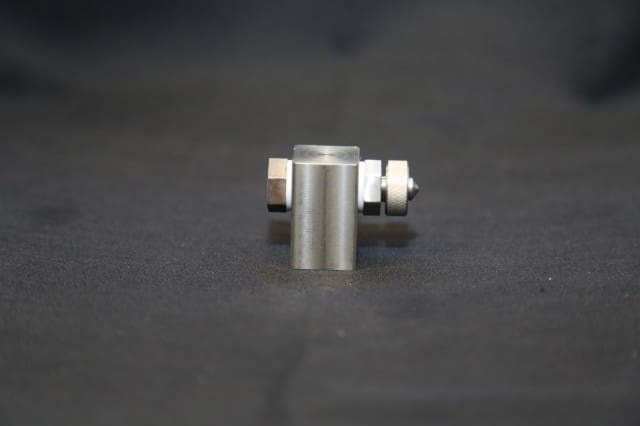
The micro-atomizer, U.S. Patent 8,882,085, is a device that produces an aerosol spray on a very small scale for studying aerosolized particles inhaled by humans. The micro-atomizer has a .005 in diameter sample pass through — slightly larger than a human hair. This invention allows scientists to scale things down into a much smaller space to model what would happen on a larger scale.

DEVCOM CBC biologist Michael Horsmon, senior engineering technician Richard Kreis, and retired Army scientist Charles Crouse are the inventors behind the micro-atomizer. This product was developed to enable detection, protection and decontamination technology development geared toward protecting the warfighter from toxic chemical agents by simulating those agents on a micro level using aerosol spray.

While the micro-atomizer was developed as a research tool in chemical agent protection, it can also be used to simulate human sneezing, hacking or coughing. This will enable researchers to model the COVID-19 flow that would be expelled by someone who already has it. According to Kreis, “by allowing the molecules to get down to the same size as you would with COVID-19, it is easy to replicate continuously, repeatedly and accurately.”

Techlink, the DoD’s national partnership intermediary for technology transfer typically reviews all government patents and publicizes technologies that are ripe for commercialization. “We were notified by our partner, Techlink who’s in Montana, that there was interest in this patent. Our office investigates the status of patents and if there are existing prototypes. When we investigated, we learned that there were no more prototypes, so we went to the Research and Technology Directorate and asked them if they were willing to fund a few more prototypes because of the commercial interest and they agreed,” said Matt Jones of the Center’s Technology Transfer Office.

The test was a success and the company signed a patent license agreement this year. The inventors are currently focusing on reproducing the micro-atomizer and building the product consistently. The goal is to commercialize it so that it is available worldwide. “Universities, industry and other government agencies can use the micro-atomizer and it can be used in fields ranging from aerobiology, toxicology, and maybe even generating aerosols of coding materials for protection of surfaces. It has a wide range of uses,” Horsmon said.

By Richard M Arndt

SCUBAPRO SUNDAY – Dive Gloves

Sunday, January 17th, 2021

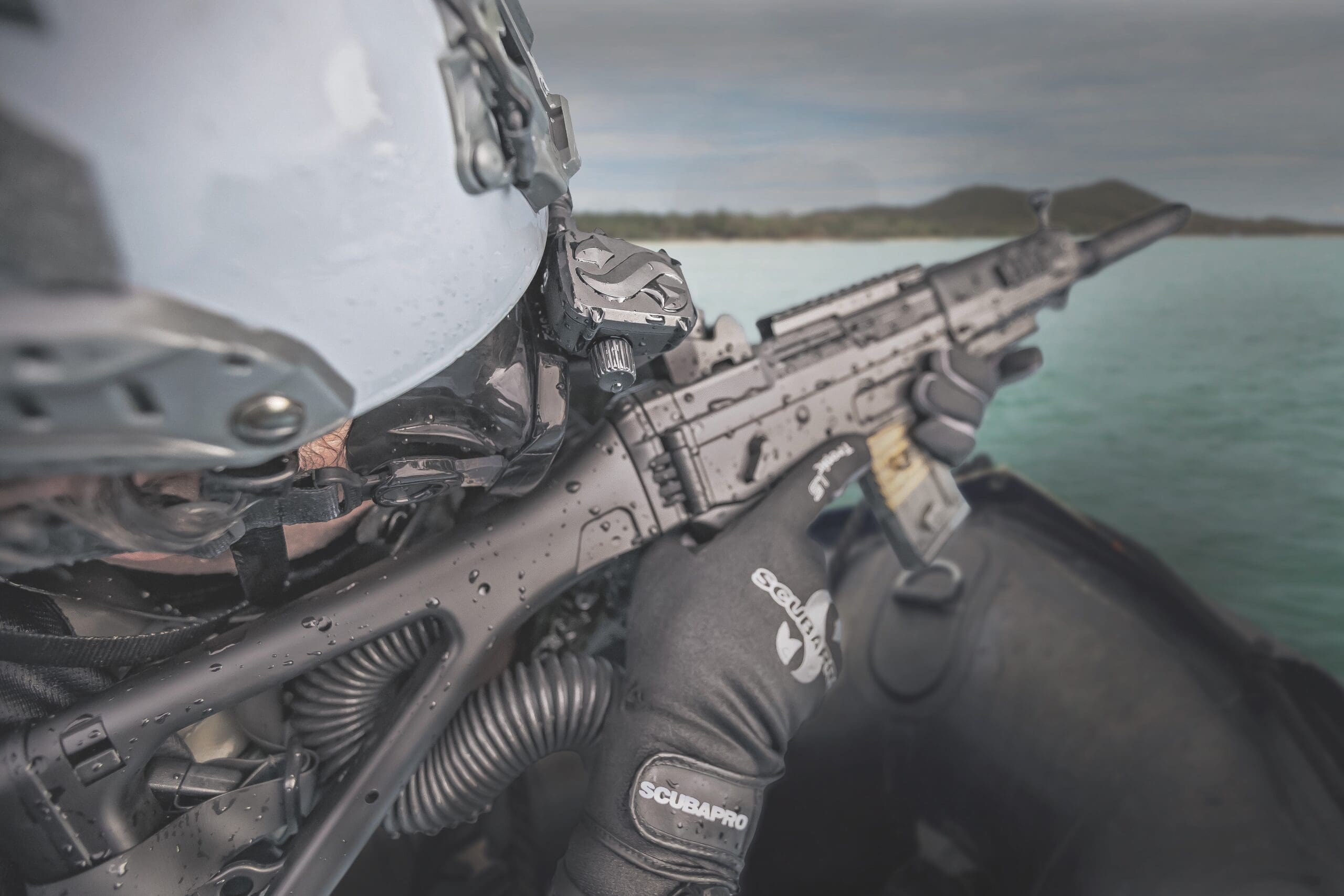
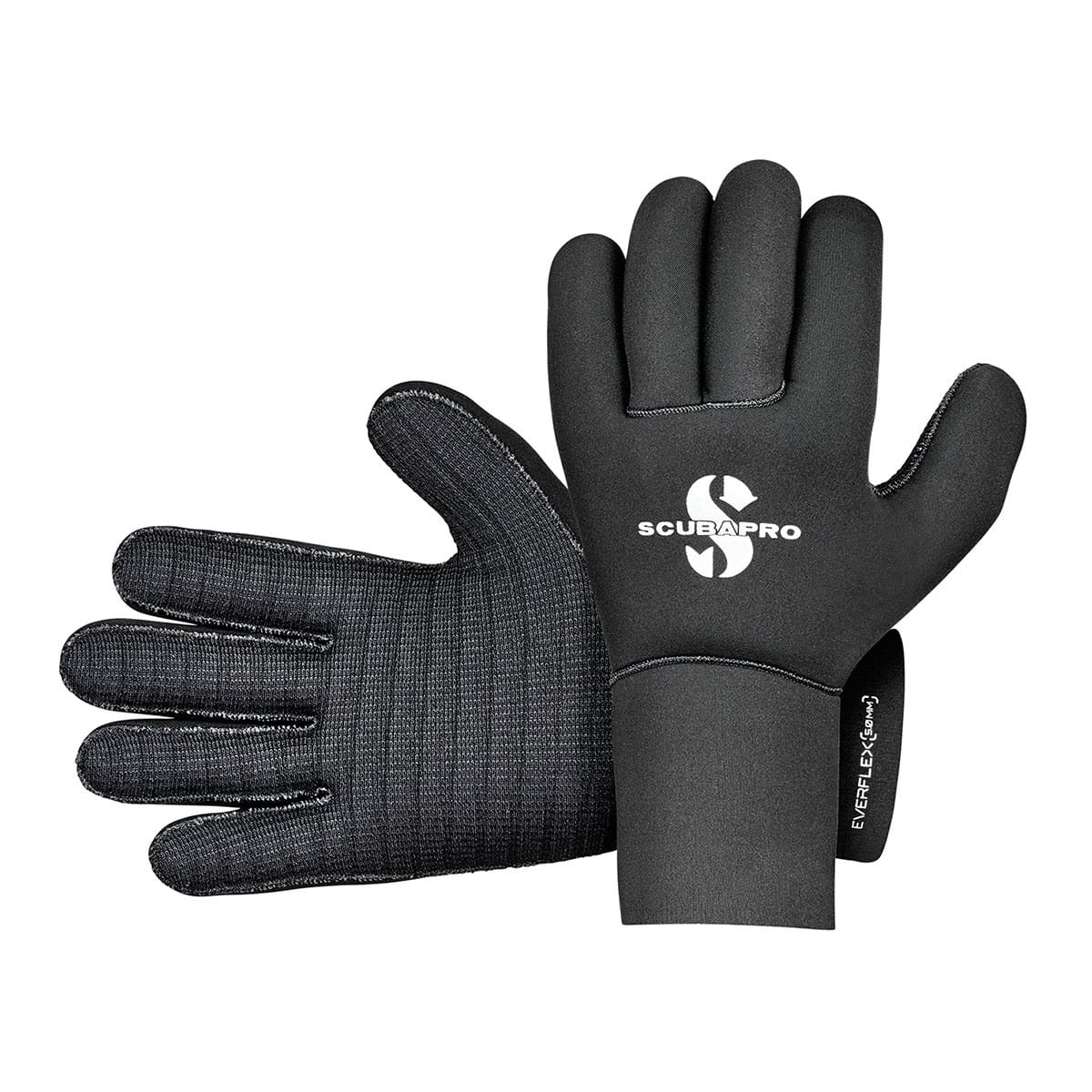
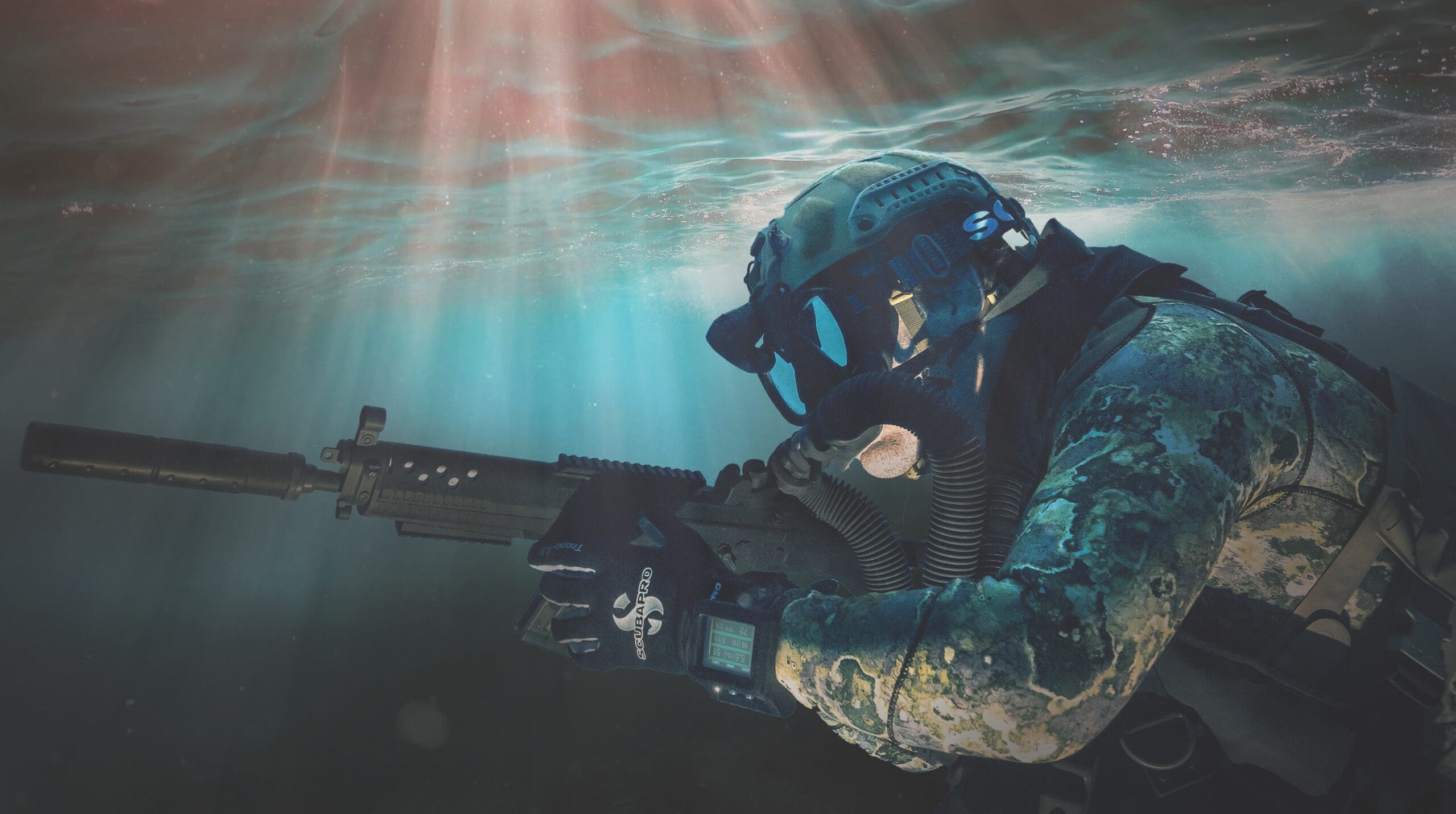
Having the right pair of gloves will make your life so much better when working in the water, whether you are doing a two-hour dive in Norway or driving a zodiac for a long-range OTB. The right pair of gloves will depend on what you are doing and how long you are doing it. One of the other factors is the water temperature/ weather. Suppose you need to use your hands a lot during a dive, like pushing a button on a Navigation board, or be able to use your hand right after the dive, like climbing a ladder, shooting a gun. Lastly, how is your tolerance to the cold?  

These will be the main factors to take into account when choosing the thickness of the gloves. The colder the water, the thicker you might need to go.

1-3mm: water between 60- 75 ° F (16-24 ° C)

5-7mm: water between 45-60° F (8-16 ° C)

Here are the two main things you might want to think about when choosing a pair of gloves for military use. 

• Freedom of movement with a minimum amount of thickness that allows you the thermal comfort and protection you will need.

• What is material is on the palm and fingers? Can the gloves be used to grab and hold metal or plastic?

Make sure when you are trying them out to grab different things to make sure they will work. If I am in a store, I will always grab the medal racks to see how they work. They need to be suitable for everything for climbing, shooting, and holding onto different things.

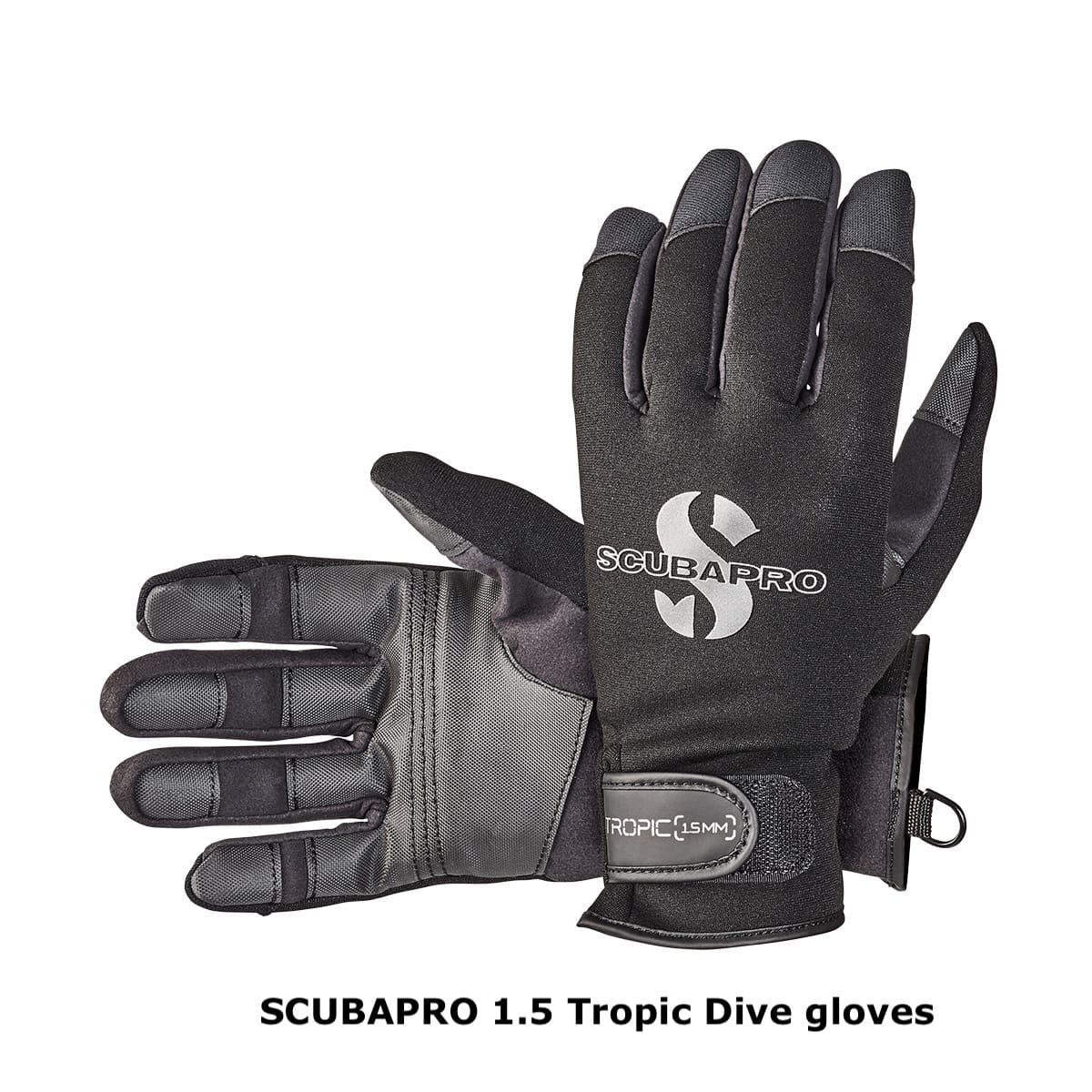
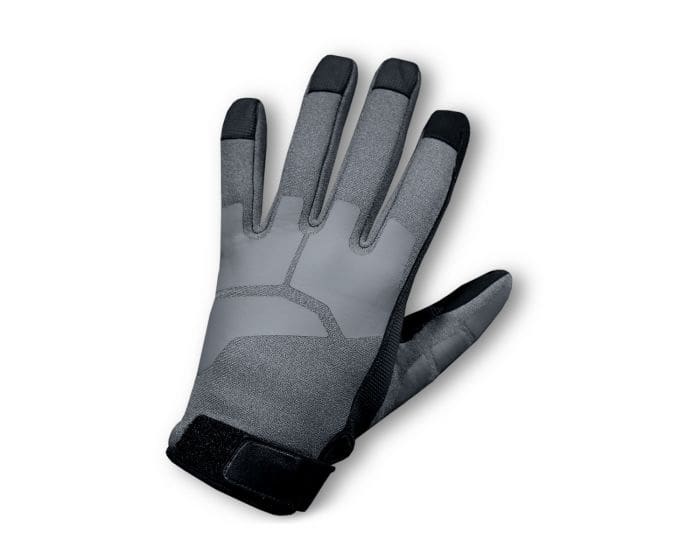
Dive gloves come in a variety of thickness levels between 0.5mm to 7mm. A pair of 1.5mm Tropical gloves that have a leather palm is an excellent place to start. Gloves are like booties because even in warm water, you can have a thicker bootie on, and your feed will not get hot. Always have a warmer glove on without is being that much of a pain. Some tactical gear companies are making gloves designed for being in a wet environment that are also good for diving. The WETWORX gloves from S&S Precision come in two styles. One is thinner for warmer water, and one is a little thinker (2mm) for colder. I know they have put a lot of work into them, and they are nice gloves as more units get back into the water.

That said, S&S makes all their stuff to be used in the water as the owners come from a water background. I like gloves that can hold onto something medal, like if you have to climb a caving ladder or hold onto a gun—also holding plastic like a navigation board or working plastic buckles. Many dive gloves have small plastic beads on them that are not the best for working in the water. It is hard to find a good pair of thick dive gloves that meet the above requirements. If you have to be on a boat or mostly about the water, you can get a pair of dive gloves that are a couple sizes bigger than you usually would wear and put wool gloves on as a base layer. Even when wet, Wool will still hold heat in, and the dive gloves will help keep your hands warm and dry. The same trick works with gloves you will see fisherman use. You can also bring a thinner set of gloves like 1.5mm with you and change them out a couple of minutes before hitting the target. You can try with a thinker pair of gloves to put a set of work gloves on over them. That way, you always have the right grip.

When choosing the right glove, they should fit well enough to avoid water circulation inside as much as possible this will help keep the heat. They should not be so tight because that will cut off circulation to your hands. The thicker the gloves, the more insulated you have, but the tradeoff is this might give you less mobility. So, it will be difficult to manipulate the equipment and also to done and doff them. Choose the gloves that you think will protect you enough for the type of water you will perform most dives. You will want gloves to fit your wrist close to reducing the bulge that can happen if there is too much material between your sleeves and gloves. If you don’t do this right, just moving your hands will let water in, and it will make your hands and you cold.

Dive Gloves Maintenance Tips

Treat dive gloves like you treat anything you want to last. It would help if you cared for gloves like you treat your wetsuit. They should be soaked in freshwater after each dive and not just rinsed. You want to force the salt out. Please do not put them in the washing machine or use detergents to clean your wetsuits or gloves. Allow them to dry in a ventilated place until completely dry. Textile gloves take longer to dry. Do not dry them in the sun, as with all neoprene, it will cause them to age faster.

Images by Paul Wildman (@builtbywildman) ©Paul Wildman

Army to Lead New DOD Strategy Against Drone Attacks

Saturday, January 16th, 2021

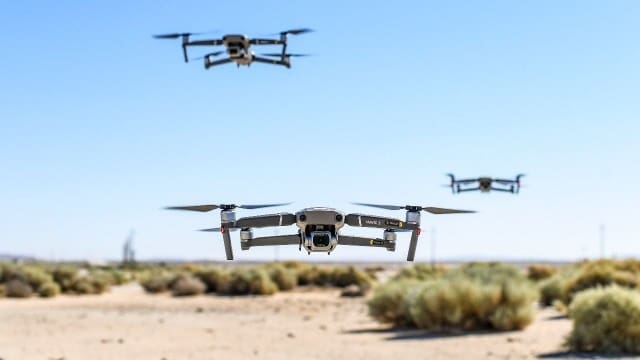
WASHINGTON — In the future, drones could threaten U.S. defense systems with a swarming capability that uses artificial intelligence while leveraging 5G connectivity, the director of an Army-led joint office said Friday.

To help combat against these increasing dangers presented by adversaries’ small, unmanned aircraft systems, or sUAS, the Defense Department unveiled a counter strategy during a media event last Friday. The strategy calls for risk-based assessments and viewing counter-sUAS defense from a joint perspective to rapidly track, defend and defeat drone attacks.

“We have to be able to keep pace with an ever-changing threat,” said Maj. Gen. Sean Gainey, director of the Joint C-sUAS Office. “And to do that we have to leverage things like rapid prototyping and middle-tier acquisition to be able to bring these components into our open-architecture system as we’re seeing changes on the battlefield.”

Small UAS capabilities provide U.S. adversaries with maneuverable assets capable of intelligence, reconnaissance and lethal attacks at a low cost for the enemy.

The DOD plans to counter the threat with rapid innovation, synchronization with materiel and non-materiel solutions, and by leveraging relationships with allied nations and partners.

As part of those efforts, the Joint C-sUAS Office, or JCO, with service support, is slated to host a low-collateral damage interceptor demonstration focused on technologies and systems during the first week of April.

Strategic pillars

The Army, which oversees the JCO, aims to use three lines of effort to guide the strategy.

The first, “Ready the Force,” centers on the development of innovative solutions using a risk-based approach in the creation of counter capabilities. The strategy focuses on utilizing systems with a common architecture.

Risk assessments will be performed at each DOD location to evaluate the impact of potential sUAS threats. The assessments will cover a wide range of threats, from violent extremist organizations to near-peer adversaries.
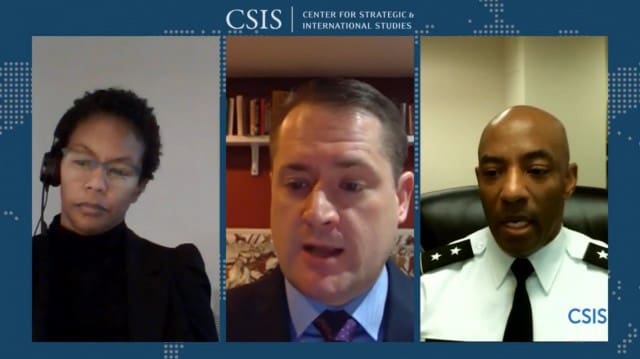
“We can’t put every defensive measure at every DOD location,” said Nicole Thomas, the joint office’s division chief for strategy and policy. “So we have to look at the different locations to see what is the risk, where is the vulnerability and then get the appropriate countermeasures for that particular location.”

In the second focus area, “Defend the Force,” the JCO looks to create mission-ready forces capable of defending against and defeating sUAS threats. The office will achieve this through development of doctrine, operational concepts and the establishment of joint training standards and refinement of existing training. The JCO will then deliver joint capabilities that are synchronized across the force.

Finally, the last pillar, “Build the Team,” the JCO will strengthen itself by stressing partnership in national security innovation with federal and non-federal organizations while prioritizing interoperability. The leveraging of partner relationships will help the joint force maximize its C-sUAS effectiveness domestically and in ally nations, Thomas said.

Gainey said each of the military branches have embarked on individual efforts to defend against the threat since 2016. But the approach may not have been the most efficient, as it led to redundancy in the proposed system. Gainey said the new enterprise, joint approach will help the JCO achieve its goals more efficiently.

“You had different efforts moving out and it wasn’t a synchronized effort,” Gainey said. “So essentially you created this scene where you had the acquisition community just rapidly developing stuff, but with no framework around that.”

Interoperability is key

Gainey added that interoperability will be critical toward carrying out the C-sUAS strategy.

Last year, the Army selected 10 interim systems as C-sUAS solutions to guide the strategy, each with interoperable components, including the Army’s fixed site-low, slow, small UAS integrated defeat system, or FS-LIDS, and the Air Force’s negation of improvised non-state joint aerial system, or NINJA.

“What you want to start with first is to have a common interoperability with the services so we can integrate the command and control system through an open architecture to where we then integrate systems components into that,” Gainey said. “So you have a changing, improving, componentized architecture to keep up with technology.”

FS-LIDS is equipped with air surveillance radar and can detect and defeat low flying, smaller UAS targets, while NINJA can take control or disable a small UAS. The Navy’s CORIAN, or counter-remote control model aircraft integrated air defense network, can be used to disrupt drone signals.

Gainey added that by having the Army lead the effort, the DOD has taken a holistic approach that can identify potential individual service problems and strengthen interoperability across the joint force.

“How do we create something that’s going to meet our future architecture and common operating picture? That’s what we focus on,” Gainey said. “That’s where we all want to go as a department in the future: any sensor, any shooter has that common operating picture to be able to make rapid decisions based off of the growth that we’re seeing.”

By Joseph Lacdan, Army News Service

FirstSpear Friday Focus – Sherpa

Friday, January 15th, 2021

It’s 2021, your resolutions most likely include getting your s*** together. FirstSpear has you covered, at least in getting your gear squared away. Enter the FirstSpear Sherpa.

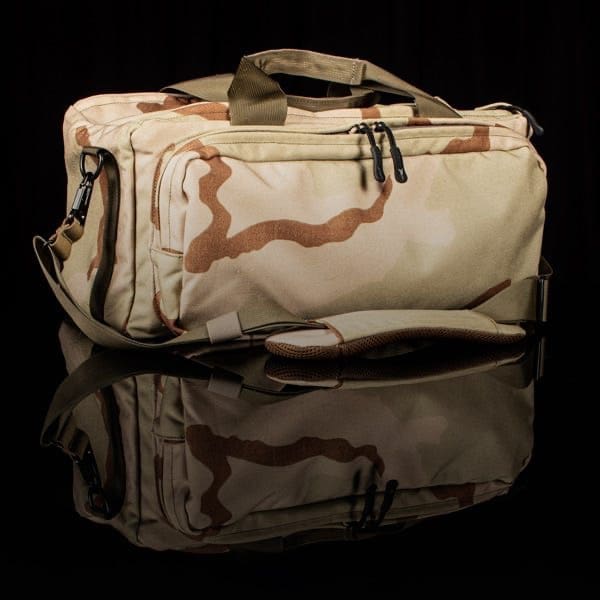
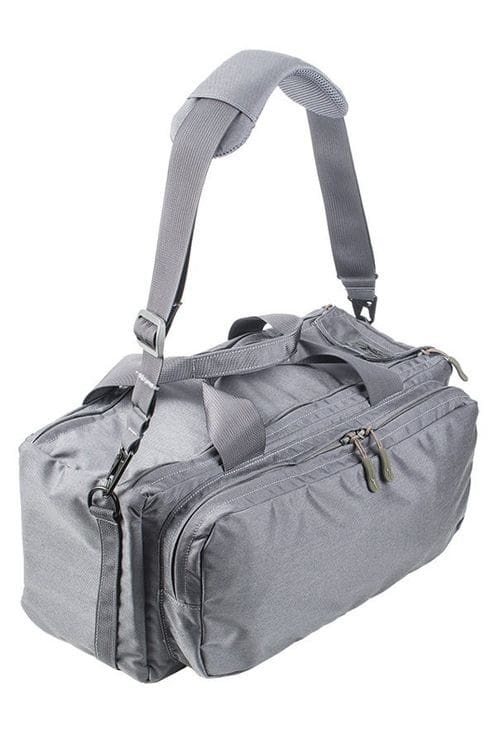
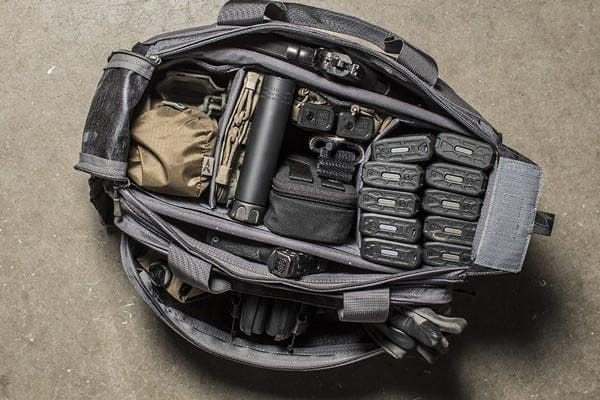
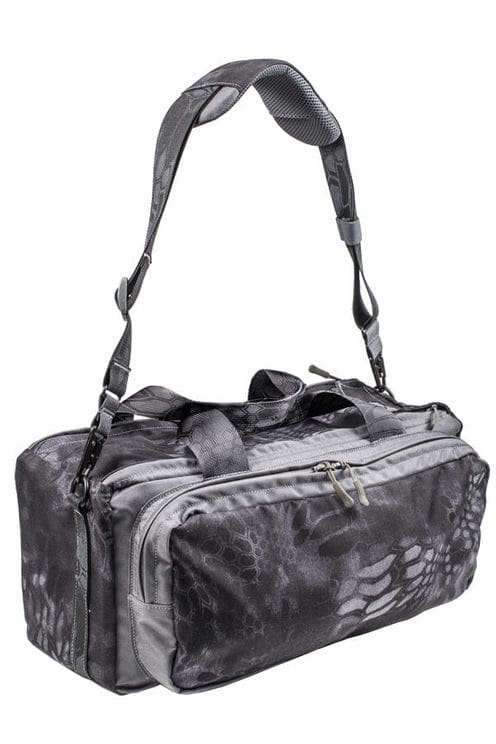
Designed in conjunction with FS professional users, the Sherpa is a hard use day bag that can be put to work across a wide variety of environments and situations. Whether you are going to the range, relaxing on the boat, or heading to a call out, this bag is the perfect size for those on the move. It comes standard with full 500D construction and premium hardware. Interior organizer panels can be completely removed or re-arranged to fit new equipment.

• Versatile range/ equipment / travel bag
• Two padded pistol pockets
• Large main compartment with removable interior organizer panels
• Loop interior for hook backed Ragnar™ pockets and storing cell tags
• Removable padded shoulder strap with HK hooks
• Discreet appearance

• Made in the USA


Available now in Black, Manatee Grey, Three Color Desert, Manatee Grey/Kryptek. It can also be used in conjunction with the Deluxe Sherpa Divider.

Dimension are 10″ wide by 9″ tall and 16″ long.

For more information, check out www.first-spear.com/sherpa-bundle.

To check out the Deluxe Sherpa Divider, www.first-spear.com/deluxe-sherpa-divider .