XC3 Weaponlight

Archive for the ‘Guest Post’ Category

Powerful Example: IVAS Program Uses Middle Tier and Other Transaction Authorities

Sunday, January 3rd, 2021

The Integrated Visual Augmentation System (IVAS) program office employed critical thinking and innovative practices in the strategy, planning and execution of IVAS–an acquisition program designed to give our Soldiers, Marines and Special Operators a decisive advantage in close-combat capability. The program team leveraged the Adaptive Acquisition Framework, Middle Tier of Acquisition Pathway/Rapid Prototyping Path as highlighted in DoDI 5000.80, as well as Other Transaction Authorities to contract with Microsoft and other traditional and non-traditional vendors. Additionally, they involved Soldiers in the design and test process (“Soldier-Centered Design”), collaborated with key stakeholders and industry as one team (the “right team”), and effectively identified, managed and drove down risk as development and testing progressed.

Click here to watch the video.

IVAS is a low-profile, ruggedized Heads-Up Display (HUD) with a body borne computer pack, Conformal Wearable Battery (CWB), squad radio, and integrated thermal and low light sensors that provides the Close Combat Force a single platform to fight, rehearse, and train. The IVAS suite of capabilities leverages tactical mixed reality to enable planning, networked information sharing via Tactical Cloud Package (TCP) and Cloud Services, and an augmented reality Synthetic Training Environment (STE) and Squad immersive Virtual Trainer (SiVT) that enables the Warfighter to fight ‘25 bloodless battles’ before engaging the enemy. IVAS integrates next generation situational awareness tools and high-resolution simulations to deliver a single platform that improves Soldier sensing, decision making, target acquisition, and target engagement. These capabilities will provide the increased lethality, mobility, and situational awareness necessary to achieve overmatch against our current and future adversaries.

Team IVAS is on target to begin production in March 2021, with first unit equipped in September 2021, accelerating the development process by more than four years compared to traditional acquisition processes.

Written by Tony Romano, DAU

I MEF Information Group, NIWC Pacific Put Next-generation Technology to the Test

Saturday, January 2nd, 2021

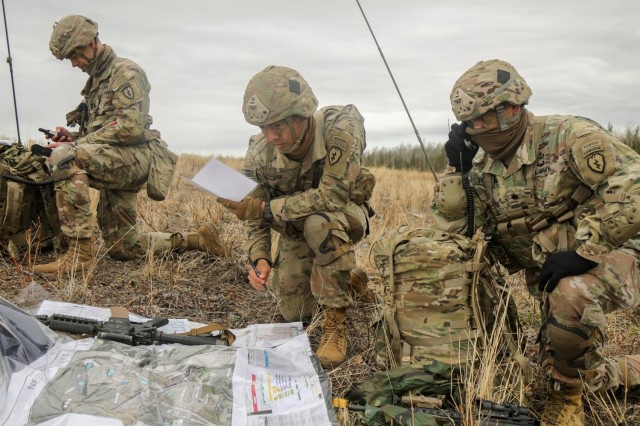
Marines with I Marine Expeditionary Force Information Group and personnel from Naval Information Warfare Center Pacific conducted characterization testing of the Mobile User Objective System at Marine Corps Tactical Systems Support Activity, on Camp Pendleton, California, in September 2020.

MUOS is a satellite communications system that provides voice and data communications for U.S. service members, anytime and anywhere in the world.

The testing supported PMW 146, the Navy’s Communications Satellite Program Office, which reports to Program Executive Office Command, Control, Communications, Computers and Intelligence and Space Systems.

The focus was on three areas of satellite communications: susceptibility of detection and geolocation of MUOS transmissions; susceptibility of detection and geolocation of legacy transmissions; and the performance of the MUOS radio in the presence of in-band radio-frequency interference.

“The purpose was to test the capabilities of the system, in a field environment, in a manner that Marines employ the system,” said Gunnery Sgt. Christopher Meser, the electromagnetic space operations chief at I MIG. “The testing allowed us to identify gaps and determine if the underlying issues were related to the equipment, training or procedures.”

Aside from testing various frequencies and equipment sets, one of the key takeaways from the event was furthering Navy-Marine Corps integration with the MUOS.

“This is part of supporting naval integration; being able to understand we are key stakeholders, both Navy and Marine Corps,” said Meser. “They provide the technical expertise, and we provide the field expertise.”

This is just one way that Marines with I MIG have been working side-by-side with the innovative minds at NIWC Pacific. During the past several months, I MIG Marines have provided hands-on feedback to help drive future research, development, test and evaluation, and engineering.

“Integration between I MIG and NIWC-PAC is good because we are able to provide them a firsthand look at how the equipment is employed in a real-world environment, which provides feedback to the engineers on how the system performs,” said Meser. “We are the end-users and being able to conduct a field-user evaluation further ensures the security and functionality of the equipment’s capability.”

Capt. Josh Gonzales, a space operations officer with PMW 146, said the participants operated the MUOS radios at various operational data rates in three data transmission types that included burst, flow, and stream. All three data types worked successfully and they were all clear and precise.

The results confirm the MUOS Wideband Code Division Multiple Access performed significantly better than legacy UHF in a contested environment. This is the second of three planned tests, the third test is planned for 2021, and will incorporate additional assets and more terminals to better simulate an operational environment.

Story by LCpl Isaac Velasco, I MEF Information Group

Friday Focus: Beanies, Neckies & Wool Socks

Friday, January 1st, 2021

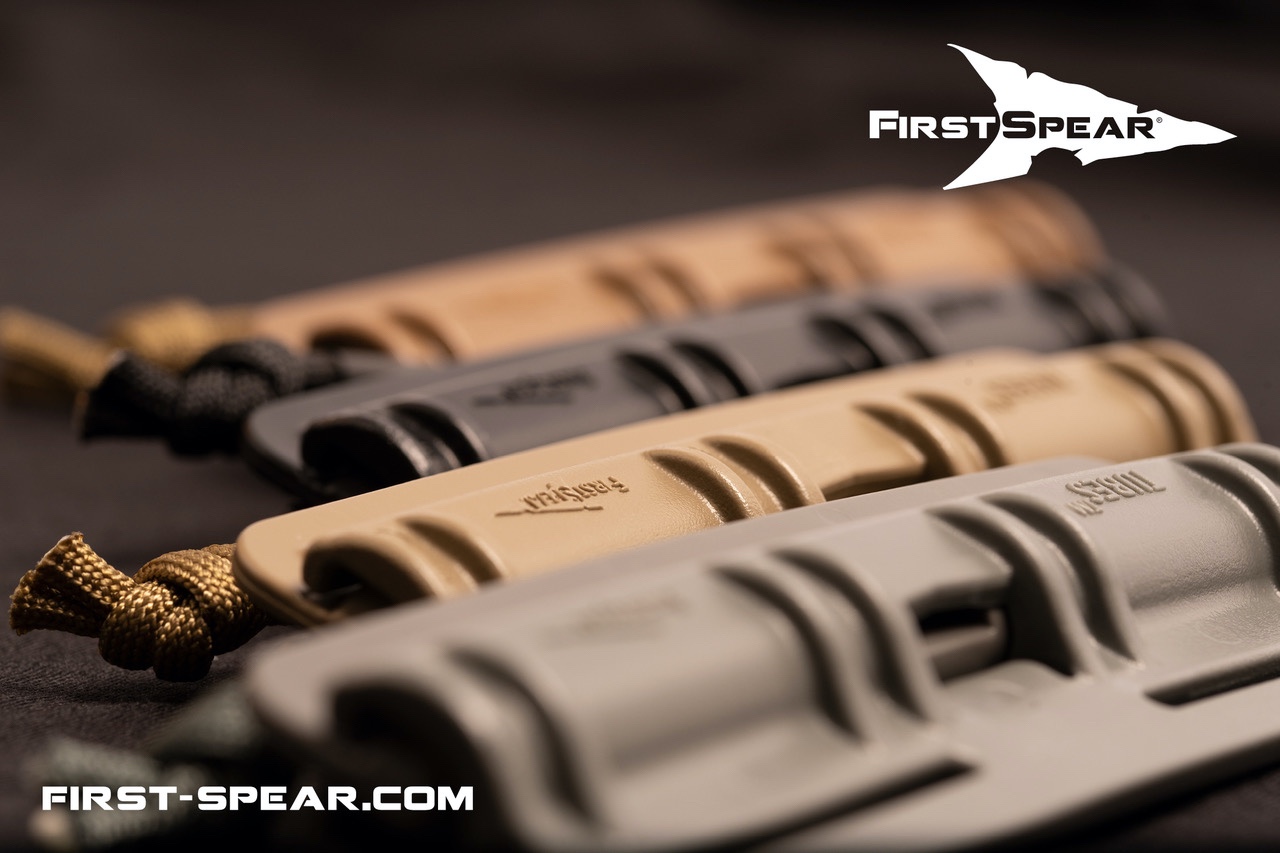
As the temperatures dive and the new year kicks off, check out FirstSpear all American wool Beanies, Neckies and wool socks. FS Neckies and Beanies are constructed from FirstSpear ACM BASE 100, a merino, poly, and modal blend. Featuring flat seams for maximum comfort under helmets and just enough material to double up over the ears when temperatures drop. Neckies are available in charcoal, FS sand, FS commando and heather grey. Beanies are available in black, charcoal, FS commando, FS sand and heather grey.


Unlike cotton, wool is the ultimate insulator and it absorbs a high amount of moisture all while maintaining its insulating properties when wet. The FirstSpear Boot Super Sock and Every Day Sock are 100% American made with USA materials. Both the EDS and BSS are constructed from a tubular knit for enhanced support and all day comfort.


The EDS features a reinforced heel and toe box, support ribbing through the arch, as well as light and thin across the top to help dissipate heat. Exceptional moisture wicking and antimicrobial properties will keep your feet dry and comfortable throughout the day.

EDS: 82% Merino Wool, 12% Nylon, 6% Lycra

BSS: 86% Merino Wool, 8% Nylon, 6% Spandex blend

Available and shipping now in sizes small through XL.

If you want to see out more FirstSpear gear in action, check out FirstSpear TV’s X-RAY Team.

www.first-spear.com/every-day-sock-eds

www.first-spear.com/boot-super-sock-bss

www.first-spear.com/neckie-acm-base-100

www.first-spear.com/beanie-acm-base-100

Army Researchers Acquire Two New Supercomputers

Friday, January 1st, 2021

ADELPHI, Md. — Army researchers are upgrading their computing capabilities with the acquisition of two new supercomputers.

The U.S. Army Combat Capabilities Development Command, now known as DEVCOM, Army Research Laboratory is home to the Department of Defense Supercomputing Resource Center, where computer scientists are welcoming the bi-annual technology refresh as part of the DOD High Performance Computing Modernization Program.

The two supercomputers, named Jean and Kay, recognize the remarkable achievements and enduring legacies of Jean Jennings Bartik and Kathleen “Kay” McNulty Mauchly, key contributors and computing pioneers as part of the original team of programmers of the Electronic Numerical Integrator and Computer, or ENIAC, the world’s first general purpose computer.

These systems will join the Betty system in the center’s production high-performance computing infrastructure. The Betty system is named in honor of Frances Elizabeth “Betty” (Snyder) Holberton, another key member of the original ENIAC programmer’s team.

The two systems are both Liqid Computing platforms containing 48 core Intel XEON (Cascade Lake Advanced Performance) processors integrated with the largest solid state file systems the DOD has deployed to date.

The systems are expected to enter production service in the mid-fiscal 2021 timeframe, and will join the center’s Centennial and Hellfire systems towards establishing a cumulative computational capability of 23.3petaflops.

“Jean and Kay will allow ARL to support many of DOD’s most significant modernization challenges to include digital engineering and other emerging workloads,” said ARL DSRC Director Matt Goss. “By adding specialized technology to augment traditional high performance computing with data analytics, these machines will serve as a spring board on which DOD scientists can make game changing discoveries.”

According to ARL computer scientist Bob Sheroke, these systems significantly enhance the program’s ability to support the DOD’s most demanding data-intensive computational challenges, and include emerging technologies and tools for artificial intelligence, data analytics and machine learning.

The systems include embedded capabilities to support persistent services in additional to traditional batch-oriented processing.

“The DOD High Performance Computing Modernization Program, established in 1992, has invested over $1.2 billion at the ARL DSRC, which has maintained the center’s posture as one of the program’s primary HPC centers and one of the top supercomputer sites in the national supercomputing infrastructure,” Sheroke said.

Visit www.arl.hpc.mil to learn more about center’s computational capabilities and support services.

By U.S. Army DEVCOM Army Research Laboratory Public Affairs

Royal Air Force Officer Brings Skills to Moody AFB

Thursday, December 31st, 2020

MOODY AIR FORCE BASE, Ga. (AFNS) —

After nearly 14 years of service in the Royal Air Force, Flight Lieutenant Chris Bradshaw has traveled 4,300 miles from the Force Protection Force of the RAF Regiment to share his expertise with the 820th Base Defense Group at Moody Air Force Base.

As part of a larger exchange program between the RAF and U.S. Air Force that encompasses positions from the Pentagon down, Bradshaw currently holds the position of director of operations at the 824th BDS.

“The relationship that the Royal Air Force has had with the base defense group is longstanding because we are likely to operate together,” Bradshaw said. “Every year there is a tri-service exercise between the U.K., the French and the Americans. The position here is to help develop that exercising program to make sure relationships are maintained and that we can be interoperable as we move forward into next-generation warfare.”

The position is filled on a volunteer basis. Applicants volunteered about a year and a half early and the RAF chose from that list. After being chosen, Bradshaw still had to complete a number of tasks to secure his position in the 820th BDG.

“I’ve moved over my family as well,” Bradshaw said. “So to bring my wife, who is an active-duty Royal Air Force officer and my son – that was a bit more tricky, (but) fortunately, the (Royal) Air Force managed to give her a three-year career break. We had to jump through that hoop initially to make sure we could continue on the process.

“Then, it was all the visa applications, making sure that I came out here and got to meet who I was going to work for. Then, it was just bouncing back and forth to sort out schooling and education for my son. There was a lot, but it’s been worth it.”

The Force Protection Force’s role is to mitigate vulnerabilities and ensure end-to-end protection of air and space power, at home or deployed. Bradshaw previously worked in Train Advise Assist Command – Air, in the air-to-ground role as a joint terminal attack controller.

“(A few years ago), that’s what I did for (about) four and a half years,” Bradshaw said. “Having that experience and then working for the 93rd Air Ground Operations Wing, I understand what they’re talking about because I speak the language, too.

“I became the director of operations for the 824th BDS because they wanted to plug-and-play some experience of mine. I’ll sit in that position for 18 months. Then, the plan is to move up to the group where I’ll conduct work directly for the colonel in an area of his choosing.”

Bradshaw isn’t the only one bringing unique opportunities to the table. The BDG offers multiple capabilities such as air assault, airborne, ranger and jungle courses that Bradshaw will be able to participate in and learn from.

“That will be good for me operating as an entity on the ground, protecting and defending our RAF assets and infrastructure,” Bradshaw said. “To have that link would be quite beneficial. I’m not going to get the opportunity again and I need to prove the concept for future exchange personnel that it’s open; the door is there. You need to step in and jump out.”

The tactical skills Bradshaw has and will have learned are not the only things he’s taking away from his time with the BDG. Bradshaw says his favorite experience from the program has been seeing people from diverse backgrounds and he’s looking forward to meeting more as he moves to new positions.

“The U.S. is so huge compared to the U.K. that even at the squadron level, you’ve got people from so many different backgrounds, so many different life hurdles and obstacles they’ve had to overcome, that the breadth of individual is vast,” Bradshaw said. “I’ve been extremely well integrated, well looked-after. Everyone is extremely friendly. I still get treated equally, which is as expected.

“It’s been a big change for us having to come across to make this leap, but it’s been made easier by that fact that people have been so welcoming.”

By SrA Hayden Legg and A1C Taryn Butler, 23rd Wing Public Affairs

Marine Corps Begins Widespread Fielding of Suppressors

Wednesday, December 30th, 2020

MARINE CORPS BASE QUANTICO, Va. —

Marines risk their lives to protect others.

Many are trained to locate, close with and destroy the enemy by fire and maneuver, or repel the enemy’s assault by fire and close combat. They engage adversaries in any clime and place, no matter how arduous the conditions.

Marine Corps Systems Command is tasked not only with enhancing the lethality of warfighters. The command also strives to protect them.

MCSC has taken another step toward increasing lethality and protection for Marines. In December, the command began the process of fielding thousands of suppressors to infantry, reconnaissance and special operation units for employment on the M27, M4 and M4A1 rifles.

Small arms suppressors are designed to reduce a weapon’s noise, flash and recoil. They are also time-efficient, as attachment and detachment only takes a few seconds. The mass fielding of the suppressors, and their myriad benefits, represents a monumental moment for the Marine Corps.

“We’ve never fielded suppressors at this scale,” said Maj. Mike Brisker, weapons product manager in MCSC’s Program Manager for Infantry Weapons. “This fielding is a big moment for the Marine Corps.”

MCSC works with CD&I, PP&O

In recent years, the Marine Corps had already begun suppressing its M38 and M4A1 rifles. However, an increased number of commanders felt suppressing additional weapons would increase the overall lethality of the infantry.

The impetus for equipping additional weapons with suppressors came from a series of experimentations at a 2016 “Sea Dragon” event, which enables the Marine Corps to experiment with current and emerging technologies and operational concepts.

At the event, a battalion employed the suppressors as part of a Marine Corps Warfighting Lab experimentation.

“The positive feedback from that experiment was the primary driving force behind procuring suppressors,” said Brisker. “We’ve had a few limited user experiments with various units since that time, and all of those events generated positive reviews of the capability.”

Before acquiring the suppressors, MCSC worked with the Marine Corps’ Combat Development and Integration; Plans, Policies and Operations; and the Fleet Marine Force to determine the optimal concept of distribution to support the close combat Marine.

“Our intent was to leverage commercially available technology to support the near-term modernization required for our close combat Marines,” said Billy Epperson, the Infantry Weapon Capabilities Integration Officer at CD&I.

Epperson added that the Marine Corps conducted Limited User Evaluations in 2019 with commercial suppressors provided by vendors showcasing the latest and greatest in technology to characterize requirements in support of an acquisition effort that began in fiscal year 2020.

In 2020, PM IW procured about 6,700 small arms suppressors through Defense Logistics Agency’s Tailored Logistic Program, and acquired more than 7,000 additional units on the first delivery order upon the contract award. Brisker said the goal is to field approximately 30,000 suppressors by fiscal year 2023.

How suppressors save lives

CWO4 David Tomlinson, MCSC’s infantry weapons officer, emphasized the importance of suppressors in exchanging information during battle. He said gun fights create a chaotic environment with intense noise levels, producing communication problems that can increase confusion.

“I would say the most important thing the suppressor does is allow for better inter-squad, inter-platoon communication,” said Tomlinson. “It allows the operators to communicate laterally up and down the line during a fire fight.”

Tomlinson said suppressors can save lives, as Marines engaged in battle can expose themselves from their firing position. The suppressor reduces their audible and visual signature, making it more difficult for the enemy to ascertain their location.

In addition to tactical advantages on the battlefield, the reduced noise of the suppressors also benefits a Marine’s long-term health, said Brisker. According to the U.S. Department of Veterans Affairs, hearing problems are by far the most prevalent service-connected disability among American veterans.

“In the big picture, the VA pays out a lot in hearing loss claims,” said Brisker. “We’d like Marines to be able to continue to hear for many years even after they leave the service. These suppressors have that benefit as well.”

Tomlinson mentioned how the news of the fielding of additional suppressors has created a groundswell of excitement among the units receiving them. He believes the myriad advantages suppressors provide will benefit the Marine Corps for years to come.

“As I travel and brief units, this capability has generated the most interest—from lance corporals to colonels,” said Tomlinson. “There has been an overwhelming excitement to receiving the suppressors, which we anticipate will serve as an effective capability for the warfighter.”

Story by Matt Gonzales, MCSC Office of Public Affairs and Communication, Marine Corps Systems Command

US Marine Corps photo by Sarah N. Petrock, 2d MARDIV Combat Camera

New Medical Device May Change the Face of Battlefield Treatment

Tuesday, December 29th, 2020

The U.S. Army Medical Materiel Development Activity has teamed with one of its commercial partners in the development of a novel medical device that may prove to be a “game-changer” in the frontline treatment of wounded Warfighters. Created by TDA Research, Inc., and funded through the Defense Health Agency’s Small Business Innovation Research program, the Lactated Ringer’s Solution Generator is a lightweight, portable unit that can produce sterile LR solution in austere locations from locally available freshwater sources. The device utilizes proprietary technology to produce one liter-size intravenous bags from a concentrated LR salt solution.

Composed of sodium, chloride, potassium, calcium and lactate, LR solution is used primarily to treat dehydration, deliver medication and restore fluid balance following bodily injury. It is also used to treat moderate hemorrhagic shock, as it has been shown to increase initial survival rates among patients and decrease the chances of organ damage.

Austin Langdon serves as assistant product manager for the LR Solution Generator program within USAMMDA’s Warfighter Deployed Medical Systems Project Management Office. He believes the device will help to save lives on the battlefield, and recently he demonstrated the unit for Army Brig. Gen. Michael J. Talley, Commanding General of the U.S. Army Medical Research and Development Command and Fort Detrick.

“Without question, this small device will dramatically reduce the Army’s logistical footprint of having to ship and store lactated Ringer’s solution, which is the fluid of choice for resuscitation if blood is not available on the battlefield,” said Langdon. “This unit can make LR solution from practically any water source, including ditch water.”

“I truly believe in this device and its application for military use in the near future, although it will probably find its way into civilian medicine as well,” he continued. “For the Army, the LR Solution Generator will increase our life-saving capabilities by helping to reduce our logistical supply chain demands — our ability to make LR solution in the field will also help ensure we’re able to use these critical bags before they expire.”

As a former Army flight medic, Langdon praised the unique qualities of the device, highlighting its size, weight and portability. The unit weighs less than 11 pounds and is stored in a hard-shell case that is approximately 10 inches wide by 18 inches long, and only 6 inches deep. The purification device runs on a rechargeable lithium-ion cell that can produce more than 30 bags of LR solution per single charge.

“Army leadership is continually seeking ways to reduce the logistical strain of getting much-needed resources to the frontline and far forward in Multi-Domain Operations,” said Langdon. “Products such as the LR Solution Generator are far-forward-leaning solutions that can help us think outside of our normal parameters of operation. This device, and others like it, will bring forth new innovation that will change our standard of operation and secure our valuable resources.”

By Jeffrey Soares, USAMMDA public affairs

ePIG Group – GCLIP from Bullmann Tactical

Monday, December 28th, 2020

Germany’s Bullmann Tactical has introduced the GCLIP, a bikini-style cover for trigger guards of Glock pistols which they are touting as a safety device.

Made in Germany, the GClip includes two wings which click into place to encapsulate the trigger guard. It is removed by pushing forward on the front hook. Unlike other, similar devices in the market, it does not include a tether to pull the GCLIP free during presentation. However, it’s made form plastic so a hole could easily be added.

ePIG Group has created a video to showcase the GCLIP and demonstrate its use as an EDC device for concealed carry.

Offered in high visibility yellow, green and black.

You’ll note the video declares “paid promotion.” We weren’t compensated in any way for the video, or the article; ePIG Group was. It’s their video and we share it out of interest of seeing such holsters in Europe.