FirstSpear

Archive for the ‘Guest Post’ Category

Air Force Security Forces Center Assessment Tool Improves Health, Readiness of Military Working Dogs

Saturday, July 10th, 2021

JOINT BASE SAN ANTONIO-LACKLAND, Texas (AFNS) —

Recent renovations to kennel facilities at the 1st Special Operations Security Forces Squadron are enhancing the living conditions and wellbeing of military working dogs at Hurlburt Field, Florida.
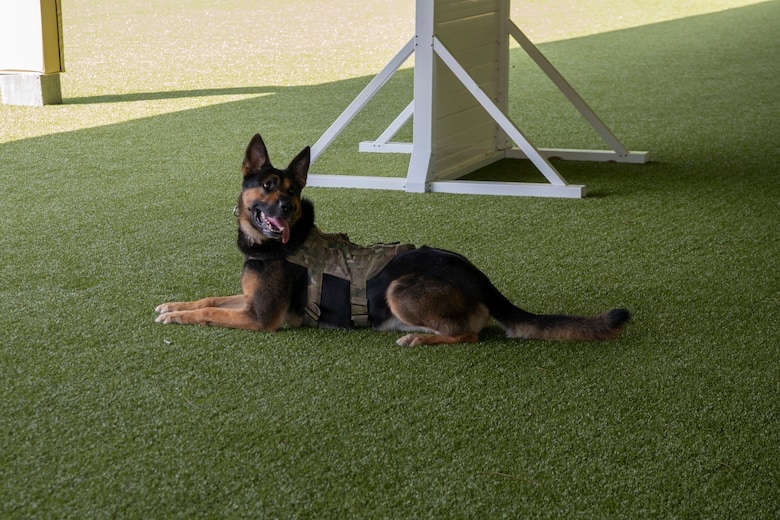
The upgrades are a result of Kennel Health Assessment 2.0, Air Force Security Forces Center’s web-based evaluation system that tracks and evaluates the condition of military working dog kennel facilities across the Air Force. AFSFC, a primary subordinate unit of the Air Force Installation and Mission Support Center, launched the program in July 2020 with the goal of improving the health and welfare of military working dogs by modernizing existing facilities that house MWDs throughout their military enlistment.

“KHA 2.0 software analyzes four major areas: administrative offices, kennel facilities, support areas and veterinary support,” said Tech. Sgt. Otho Nugent, Air Force MWD program manager and special projects lead at AFSFC.

Taking into account more than 40 other criteria, “… the results are used to categorize, prioritize and advocate for facility renovations and enhancements to the more than $116 million in Air Force military working dog assets,” Nugent said.

The data is shared with senior leaders and key decision makers who then make informed decisions on funding initiatives and projects related to MWD health and readiness.

The $650,000 renovation at Hurlburt Field, which included an overhang and the installation of canine turf, had an immediate positive impact on readiness.

“These alone led to much needed improvements that provide a safer environment for the working dogs and directly enhance our training program,” said Staff Sgt. Matthew Mascolo, MWD trainer and interim kennel master at the 1st SOSFS. “The overhang shelters the working dogs from the Florida heat, and the K9Grass that was installed on the training yard helps protect them from danger.

“The training course was bare dirt before the turf was installed,” Mascolo said. “The area attracted animals and insects that would find their way to the kennels. That posed a threat to the health and welfare of our working dogs.

“Max, one of the MWDs, was bitten by a brown recluse in June of 2019,” he said. “I found him but by that time his leg was swollen. We took him to the veterinary clinic at Fort Benning (Georgia), but the vet gave him little chance of surviving. Thankfully, Max recovered after a few months and was able to continue working as a vital member of the 1st Special Operations Security Forces unit.”

“Hurlburt Field is one example of how KHA 2.0 is at the heart of readiness,” Nugent said. “We see military working dogs as sensitive, low density-high demand, valuable assets that require training, love and attention to operate at optimum levels. Their ability to perform what they have been tasked and trained to do is at the heart of readiness. It’s our job to deliver what’s needed for our canines and skilled handlers to perform at this extraordinary level.”

Story by Joe Bela, Air Force Installation and Mission Support Center Public Affairs

Photos by A1C Amanda A. Flower-Raschella

FirstSpear Friday Focus: FirstSpear and Crye Precision Resolve Dispute

Friday, July 9th, 2021

FirstSpear Expands Patent Portfolio

July 9, 2021 — The patent dispute between FirstSpear and Crye Precision has been amicably resolved. Under the terms of the agreement, FirstSpear acquires all rights, title and interest in Crye’s U.S. patent 9,173,436, adding to FirstSpear’s expansive and established patent portfolio. The lawsuit between the companies has been dismissed and all other terms of the settlement are confidential.

“While industry conflict is never ideal, this outcome allows us to expand our technology offerings and bring even greater value to our customers and industry partners,” said FirstSpear CEO & President Scott Carver.  “Combining the Crye patent with our existing technology expands our portfolio of battle tested intellectual property that provides maximum development flexibility and protection for FirstSpear and our licensees.”

For information on licensing FirstSpear Technology visit www.first-spear.tech or contact FirstSpear Technology Group at sales@first-spear.com.

Editor’s note: This statement is a guest post by FirstSpear and may leave you with questions. I know I’ve been getting a lot of questions about this over the last couple of months as it transitioned from lawsuit to practical application. I understand there will be even more questions and concerns and so does FirstSpear since it could potentially affect every soft goods manufacturer who uses laser cut technology.


I think it’s important for industry to fully understand what this means and plan on a follow-up Q&A shortly with FirstSpear, so feel free to put any questions you might want asked in the comments section of this post.

319th Reconnaissance Wing to Field E-11 Mission at Robins AFB

Friday, July 9th, 2021

GRAND FORKS AIR FORCE BASE, N.D. (AFNS) —

The Air Force announced plans recently that the 319th Reconnaissance Wing at Grand Forks Air Force Base will now provide command and control support for the Air Force’s E-11 Battlefield Airborne Control Node aircraft mission.

Under the proposed plan, which is contingent on Congressional approval of the retirement of four E-8 JSTARS at Robins AFB, Georgia, an E-11 squadron at Robins AFB would be a geographically separated unit reporting to the 319th RW.

“We’re excited to bring the E-11 BACN mission into the 319th (RW)’s portfolio of world-class Airmen and assets,” said Col. Timothy Curry, 319th RW commander. “The E-11 brings strategic capability and advantages for the joint force which is the mission of the 319th RW.”

As part of its fiscal year 2020 budget request, the Air Force requested to begin retiring four E-8 aircraft next year, which would make way for the new E-11 BACN mission at Robins AFB.

E-11 BACN aircraft and a squadron of active-duty personnel will enable communications support to the joint force on the modern battlefield.

Pending the passing of the National Defense Authorization Act with provisions for JSTARS retirement, the E-11 mission is expected to stand up next year.

The Air Force already possesses three E-11s, and will continue to take delivery until the full fleet inventory is achieved.

Nine E-11 BACN aircraft and a squadron of approximately 290 active-duty personnel will execute a mission with a very high-ops tempo, enabling communications support to the joint force on the modern battlefield.

“As the Air Force looks to the future, we expect to be challenged around the world by China and Russia,” said Acting Secretary of the Air Force John P. Roth. “Those threats require new solutions, which means divesting legacy platforms like the JSTARS. However, our intent is to capitalize on the existing expertise at Team Robins as we bring on these new missions. These missions will play a vital role in how we achieve decision superiority across all domains.”

By 319th Reconnaissance Wing Public Affairs

Meet the Navy’s First Maternity Flight Suit

Thursday, July 8th, 2021

NORFOLK — On Mother’s Day, many Americans pause to celebrate and reflect on the mothers in their own lives. In the Navy, it’s also important to reflect on the sacrifices made and challenges faced by mothers who serve. At Commander, Naval Air Force Reserve (CNAFR), looking for opportunities to better support Sailors and their families is always a priority.

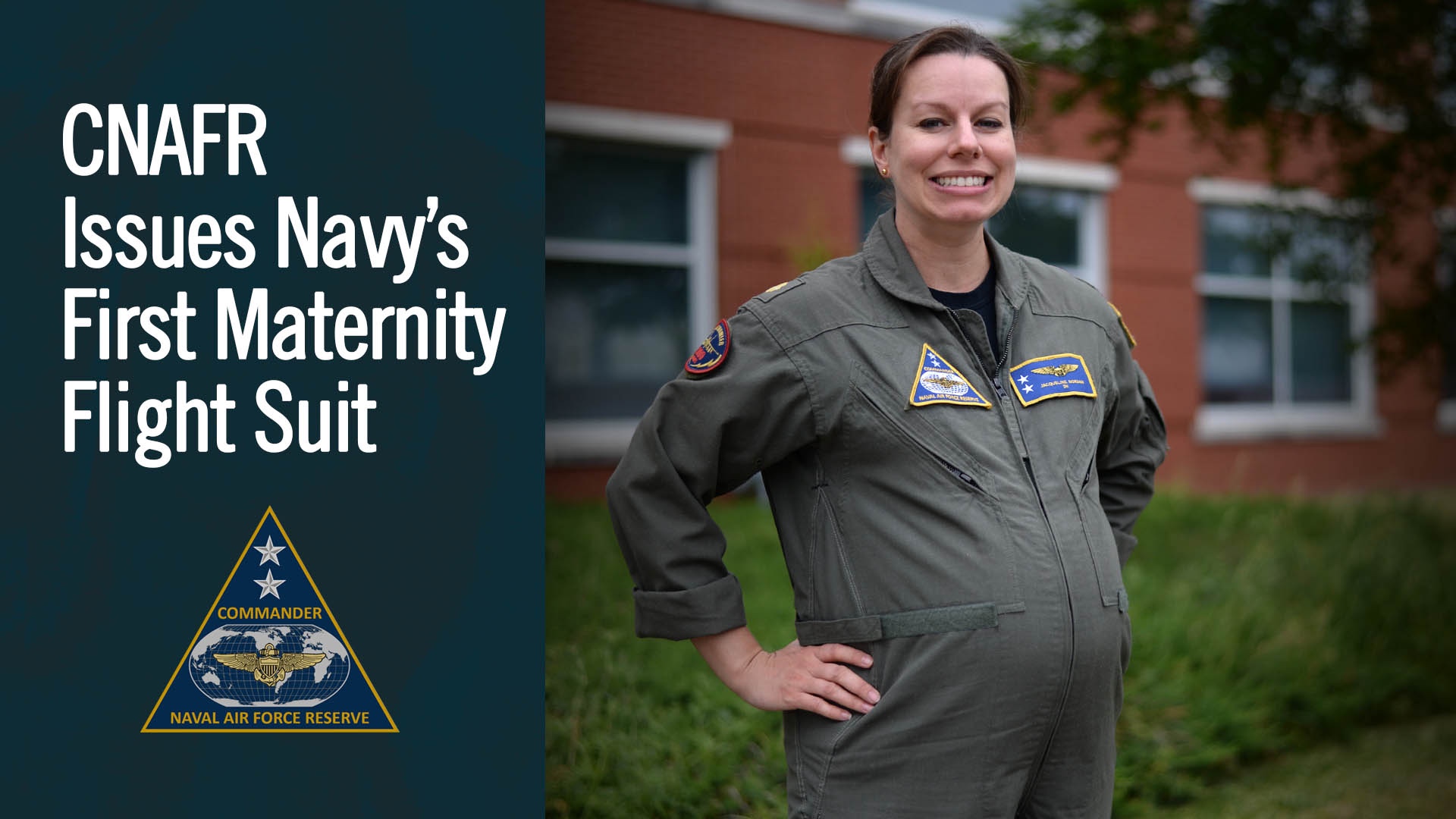
CNAFR was recently selected to participate in a preliminary rollout of a new maternity flight suit in a step to better support expecting mothers.

Lt. Cmdr. Jacqueline Nordan, CNAFR’s mobilization program manager received the first Navy maternity flight suit earlier this year 

“The addition of this uniform item makes an immediate impact on women in the Navy,” said Nordan. “It shows that leadership is listening and is supportive in response to the issues that female aviators are raising.” 

Nordan explained that the adjustable side panels on the new flight suits provide not only more comfort, but also improve safety and allow female aircrew to maintain their professional appearance throughout their pregnancy. 

“Prior to the maternity flight suit, pregnant aircrew have generally collected larger sized flight suits and gone up through additional sizes throughout their pregnancy, potentially needing three to five additional flight suits,” said Nordan. “Wearing a larger-sized flight suit results in longer hems and sleeves, potentially presenting a safety hazard in the aircrew cleared to fly during pregnancy. Additionally, wearing clothing that is clearly too large for you presents a less professional appearance for daily business. Pregnant aircrew who are not flying are still conducting squadron business. They’re still instructing classes, working in simulators, giving briefings, and representing their organizations. It makes a big difference to be able to continue to represent ourselves professionally in a well-fitting uniform throughout a pregnancy.”

Nordan understands the impact this change will have on her fellow female aircrew’s experience while growing their families and she says she is grateful to be a part of the project. 

“I’m thrilled to participate in moving this initiative forward,” said Nordan. “The CNAFR supply and maintenance teams have put some hard work into determining how we could incorporate these uniforms into our current system, and they deserve all the credit. I get the easy job – I just put the uniform on in the morning and loosen the waist straps as the weeks go by.” 

In making seemingly small changes like these to address uniform and safety concerns of female aircrew, the Navy is also communicating a very important message to women who serve.

“These additions are important because they show that leadership supports the idea that having a career and having a family can be compatible,” said Nordan. “Being a dedicated Navy professional while building a family can be done. Moves like making a daily uniform item more wearable during pregnancy remove some of the small barriers that can build up and discourage women from going down that path.”

The Navy’s maternity flight suit program is still in development. Policy and instructions for obtaining the flight suit will be released as information becomes available.

By Mass Communication Specialist 1st Class Chelsea Milburn

SCUBAPRO Sunday – John Paul Jones, Father of the U.S. Navy

Sunday, July 4th, 2021

Happy Independent Day. This is indeed one of my favorite holidays. For all my British brothers out there, I have attached a video for you. There is also a bonus one at the end.

For his actions and the way he led his man during the Revolutionary War, John Paul Jones is considered the father of the U.S. Navy.

John Paul was born in Kirkcudbright, Scotland on July 6, 1747. He joined the British merchant marine at the age of 12 and went to sea for the first time as a cabin boy.

In 1766, he was appointed the first mate on a slaver brigantine, but he quickly abandoned the trade due to dissatisfaction. In 1769, he was appointed master. In Tobago, West Indies, he killed the leader of his mutinous crew in self-defense in 1773. He then went to Virginia to avoid justice and was labeled a fugitive by the British. By adding the surname Jones, he was able to hide his true identity.

Now going by John Paul Jones, he moved to Philadelphia and joined the Continental Navy when the American Revolution broke out in 1775. On the first American flagship, the Alfred, he was commissioned a lieutenant. In 1776, Jones was promoted to captain and assigned command of the sloop Providence. On his first time at sea as a captain, he went north to Nova Scotia, wrecked British fisheries, and seized sixteen British prize ships.

In 1777 and 1778, he commanded the Ranger, and he had two definite objectives in mind for this deployment. He wanted to carry out hit-and-run operations against opposing coastal fleets first. Aside from the apparent harm to local shipping, it would cause civilian terror along the English, Scottish, and Irish coastlines, forcing British war planners to redirect some of their marine resources from protecting American ports to defending their own.  Second, he sought to kidnap a high-ranking British official and keep him for ransom until imprisoned Americans were released from British prisons or were released from impressment. For his actions, he was given command of five French and American ships. Jones led his squadron off the Scottish coast to capture seven merchantmen. His most famous battle was on September 23, 1779 against the 44-gun Royal Navy ship, Serapis, and one of the bloodiest naval battles in history. That day, even though his ship was burning and sinking, Jones refused to surrender to the British, saying “I have not yet begun to battle”. Serapis surrendered after more than three hours, and Jones assumed charge.

Even being a sailor, he was very well-dressed, wielded a sword, and behaved in a manner of studied decorum, unlike most merchant seafarers. He spoke with a faint Celtic dialect and had a Scottish brogue. He was a severe military master who was obsessive about his honor and obligations, yet surprisingly pleasant. He was a prolific poet and letter writer, knew some French, and was involved in numerous romances while never marrying. No one, above all, questioned his audacity. His maritime operations against the mother country earned him a reputation as a pirate in Britain.

Jones was named rear admiral in the Russian Navy by Russian Empress Catherine the Great in 1788. He participated in the Liman campaign in the Black Sea. Then, in 1789, he quit the Russian service and relocated to Paris. He was then appointed as the United States Consul in Algiers, but he died before his commission arrived. His body was buried in Paris, but after a long search, his perfectly preserved body was recovered and sent to the United States in 1905. Jones’ remains were reinterred in an elegant mausoleum at the Naval Academy Chapel in Annapolis, Maryland, in 1913, thanks to President Theodore Roosevelt’s intervention.

Air Force Releases Cardio and Strength Fitness Assessment Alternatives, New Online Capabilities

Saturday, July 3rd, 2021

WASHINGTON (AFNS) —

The Air Force will provide Airmen five physical fitness assessment alternatives—three for the cardio portion and sit-up components and two for the push-up component of the physical fitness assessment beginning in early 2022.

Airmen will select from the traditional 1.5-mile run, 1-mile walk or the High Aerobic Multi-shuttle Run (20M HAMR) to meet the cardio requirement. Then select from traditional push-ups or hand release push-ups for one strength component; and from sit-ups, the cross-leg reverse crunch or plank for the other strength component to complete the comprehensive fitness assessment.

Finalized fitness assessment scoring charts, with alternative components broken out by gender and age, will be provided at a later date.

“We are moving away from a one-size-fits-all model,” said Air Force Chief of Staff Gen. CQ Brown, Jr. in the initial change announced May 2021. “More testing options will put flexibility in the hands of our Airmen – where it belongs. We know not all Airmen maintain their fitness the same way and may excel in different areas. Alternate components provide choices while still providing a mechanism to determine overall fitness.”

This initiative is the result of Airmen providing feedback to Air Force leaders through the physical fitness working group in conjunction with looking at the way other services complete their physical fitness programs. From the data collected, the Air Force fitness working group conducted research and testing on the health benefits of the current fitness components and various other components to come up with the alternative options.

Each new component has been developed to be an equivalent measure of fitness regardless of methodology. For example, the 1-mile walk alternative is a scientifically-valid estimation of the member’s aerobic capacity (also referred to as VO2 max), which measures fitness and aerobic power. Test scores incorporate time to complete the 1-mile test along with the member’s age, weight, and heart rate at the time of walk completion. Based on the rigorous scoring to pass this test based on age, weight, speed, and heart rate, there is no significant difference of scores between the walk and run tests.

“What we care about is measuring and testing aerobic fitness. The ‘walk’ is not a stroll in the park and both the pace required and method for computing aerobic fitness make it 100% equivalent to the run,” said Lt. Gen. Brian Kelly, deputy chief of staff for Manpower, Personnel, and Services. “In fact, I think we’ll find fewer people will prefer that option over the more traditional mile-and-half run.”

Air Force members and fitness monitors will have approximately six months for a break-in period to familiarize themselves with the use and execution of the alternative testing options prior to having them officially available in early 2022. The six-month timeline will help ensure fitness assessment cells are prepared to train physical training leaders to administer tests using the new options. During the six-month break-in period, units and Airmen will also be able to provide feedback on the new components that will allow any adjustments as necessary prior to live use.

Other exercise options such as swim, row, and bike tests were reviewed but are not being implemented at this time. “It’s important for our testing options to be available and executable for all Airmen at all locations,” Kelly said. “If you are at a remote location or a location that does not have a pool or other needed equipment, those options become less equitable.  We want our Airmen to have the same options no matter where they are testing.”

These changes align under the Air Force’s Action Order Airmen, people-first approach.

“If we are truly going to get after building a culture that embraces fitness as a lifestyle, then we have to grow beyond the mentality of a one-size-fits-all PT test,” said Chief Master Sgt. of the Air Force JoAnne S. Bass. “Providing our Airmen with these options is a step in the right direction toward developing an Air Force that is fit to fight, anytime, anywhere.”

The waist measurement is no longer a scored part of the physical fitness test. A separate assessment of body composition, as required by DoD Instruction 1308.3, will continue starting in October 2021. Further details on the body composition program will be released at a later date.

In addition to the fitness component changes, the Department of the Air Force also released the myFitness capability on July 1. The new feature will replace the Air Force Fitness Management Site II and serve as a single location for all total force Airmen and Guardians’ fitness needs.

The capabilities that exist today allow Unit Fitness Program Managers and Fitness Assessment Cells to manage fitness assessments, documentation and scheduling, to include walk-in, same-day fitness testing in myFitness. Additionally, users are able to view past scores, individual fitness reports, dashboards showing completed or updated fitness assessments scores and allow for the download of Fitness Screening Questionnaire as well as medical forms. Users can also access a calculator for estimating fitness results and composite scores.

myFitness will eventually allow users to schedule fitness assessments, receive automated notifications for scheduled testing or cancelations, access and submit fitness assessments, upload medical documents for review.

myFitness is hosted on the myFSS platform and a part of the department’s initiative to improve Airmen and Guardian’s experience with technology by making applications user-friendly and more easily accessible. Active duty, Guard and Reserve personnel will be able to access and use myFitness worldwide.

To access myFitness, go to myfss.us.af.mil.

For additional information on Physical Fitness, Airmen can visit myPers or the Air Force’s Personnel Center’s fitness program page. Draft fitness score charts are available on MyPers to use until final score charts are provided. 

The Space Force will follow these fitness standards until service-specific guidance is developed and published.

Secretary of the Air Force Public Affairs

7th Group Conducts Foreign Internal Defense Maneuver Live Fire Exercise

Saturday, July 3rd, 2021

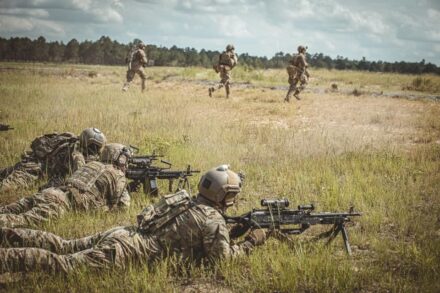
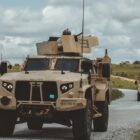
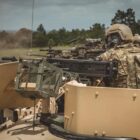
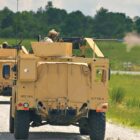
The 2nd BN, 7th SFG(A) Level 1 Dive Team completed its Foreign Internal Defense Mounted Maneuver Live Fire Exercise (LFX) at Ft. Benning, GA with SOT-A enablers, attachments, and SFAB support. This LFX was designed to increase interoperability and expand partnerships in preparation for armed conflict in an increasingly complex environment that is contested in all domains.

U.S. Army photos by SPC Christopher Sanchez

FirstSpear Friday Focus: Battle of San Juan 123rd Anniversary and Rough Rider T-Shirt

Friday, July 2nd, 2021

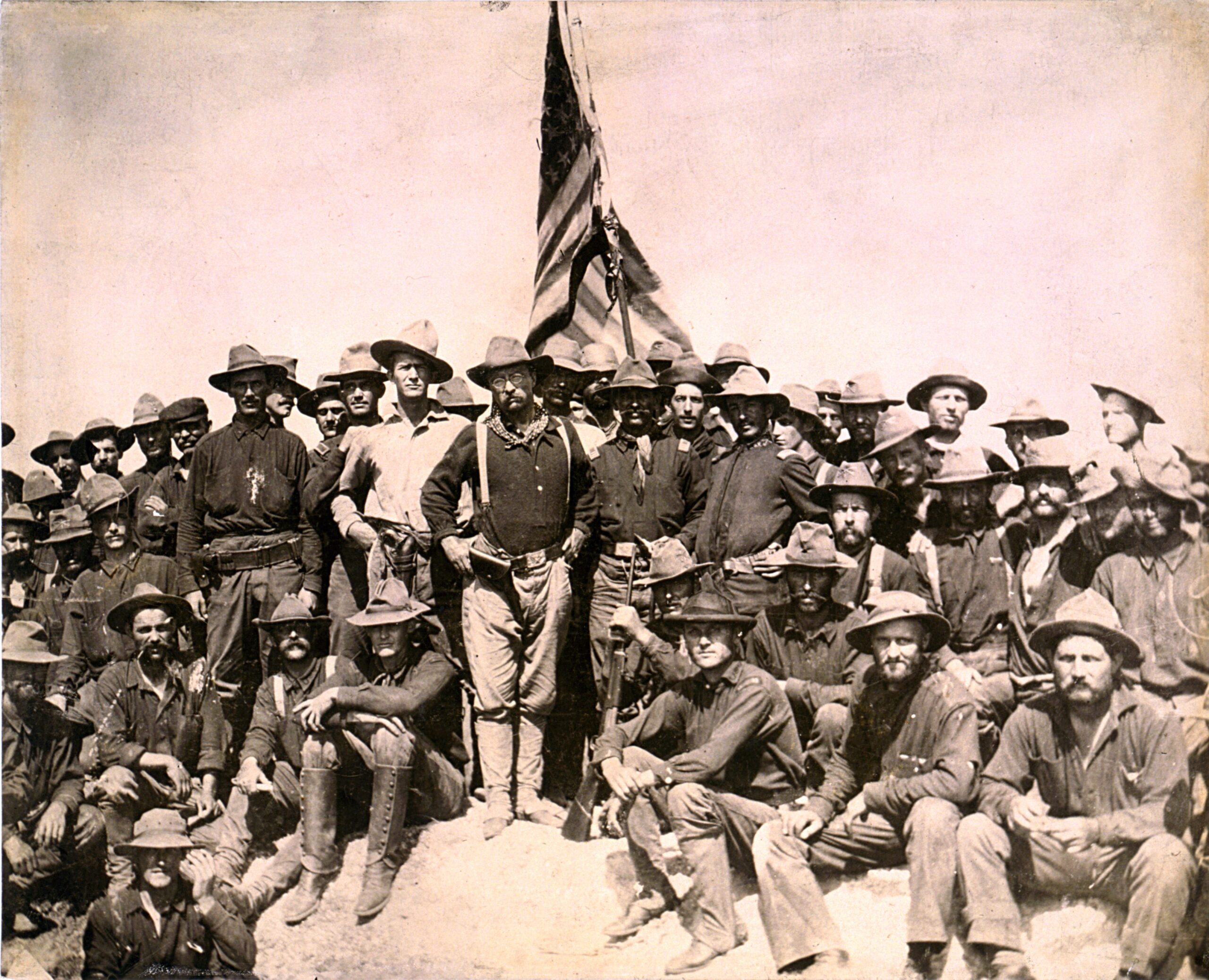
On July 1, 2021, the 123rd anniversary of the epic battle of San Juan Hill, Cuba. FirstSpear pays tribute the Rough Riders and the gallant charge made that day to secure the critical heights. This charge ultimately led to freeing the oppressed peoples of Cuba to pursue their own destiny.

This iconic photo was taken that day after the successful charge. Legendary famous Law Man and Troop CO “Buckey” O’Neil once said, “War is argument, best way to settle it is to kill the other fella.” This emboldened the Rough Riders to continue forward to victory even though he was killed in the assault.

FirstSpear has created an iconic, limited edition commemorative T-shirt with this photo and quote.

For more information, check out: www.first-spear.com/rough-rider.