TYR Tactical

Archive for the ‘Guest Post’ Category

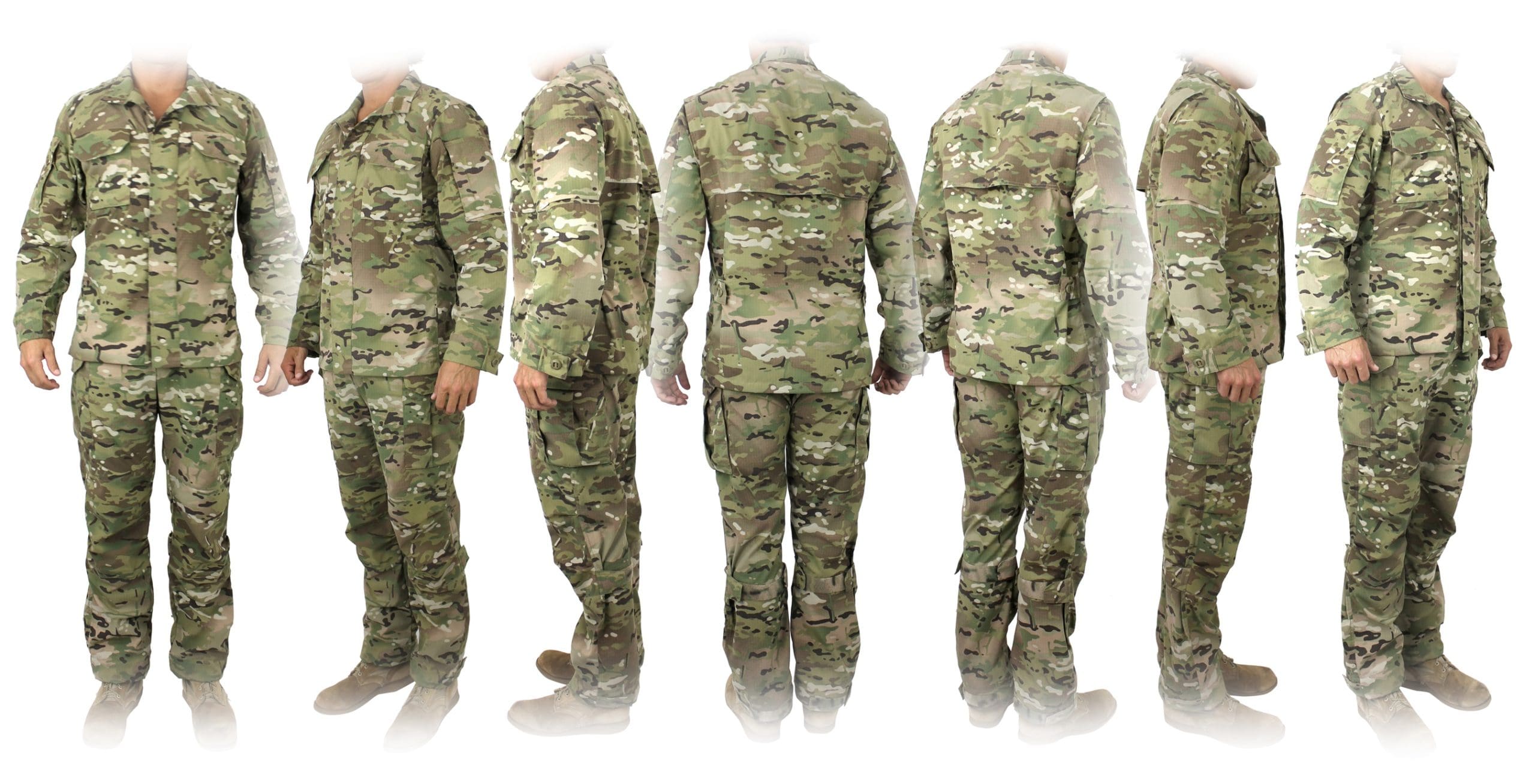
TYR Tuesday – IDTOUR VTS |Virtual Trade Show| Huron Hot Weather Uniform

Tuesday, July 21st, 2020

Episode Four of Innovate or Die® Tour Virtual Trade Show #IDTOURVTS is here!

Episode Four:

IDTOUR VTS |Virtual Trade Show| Huron™ Hot Weather Uniform

New episode launching every Tuesday.

Hot Weather Uniform Available Now:

www.tyrtactical.com/products/list/hot-weather-2018/tactical-clothing

What is IDTOURVTS?

Our mission has always been about protecting those who run towards the threat. To that end, we created the Innovate or Die® Tour and Mobile Showroom. Over the past couple years it has allowed us to meet you face-to-face, gather your feedback and answer your questions.

Life has been put on hold for many people around the world, but you have not stopped risking your safety and health against all the threats we face today.

We can’t wait to meet you on the road again.

Thank you to the men and women of the armed forces, first responders and health care professionals who continue to put their lives on the line.  You haven’t stopped working and neither will we.

Episode One:

IDTOUR VTS |Virtual Trade Show| PICO-DS & DSX Plate Carriers

Episode Two:

IDTOUR VTS |Virtual Trade Show| The Ultimate Range Bag

Episode Three:

IDTOUR VTS |Virtual Trade Show| Shield & Dolly System

MATBOCK Monday Rifle Mag Pouches

Monday, July 20th, 2020

Good morning and Happy MATBOCK Monday!

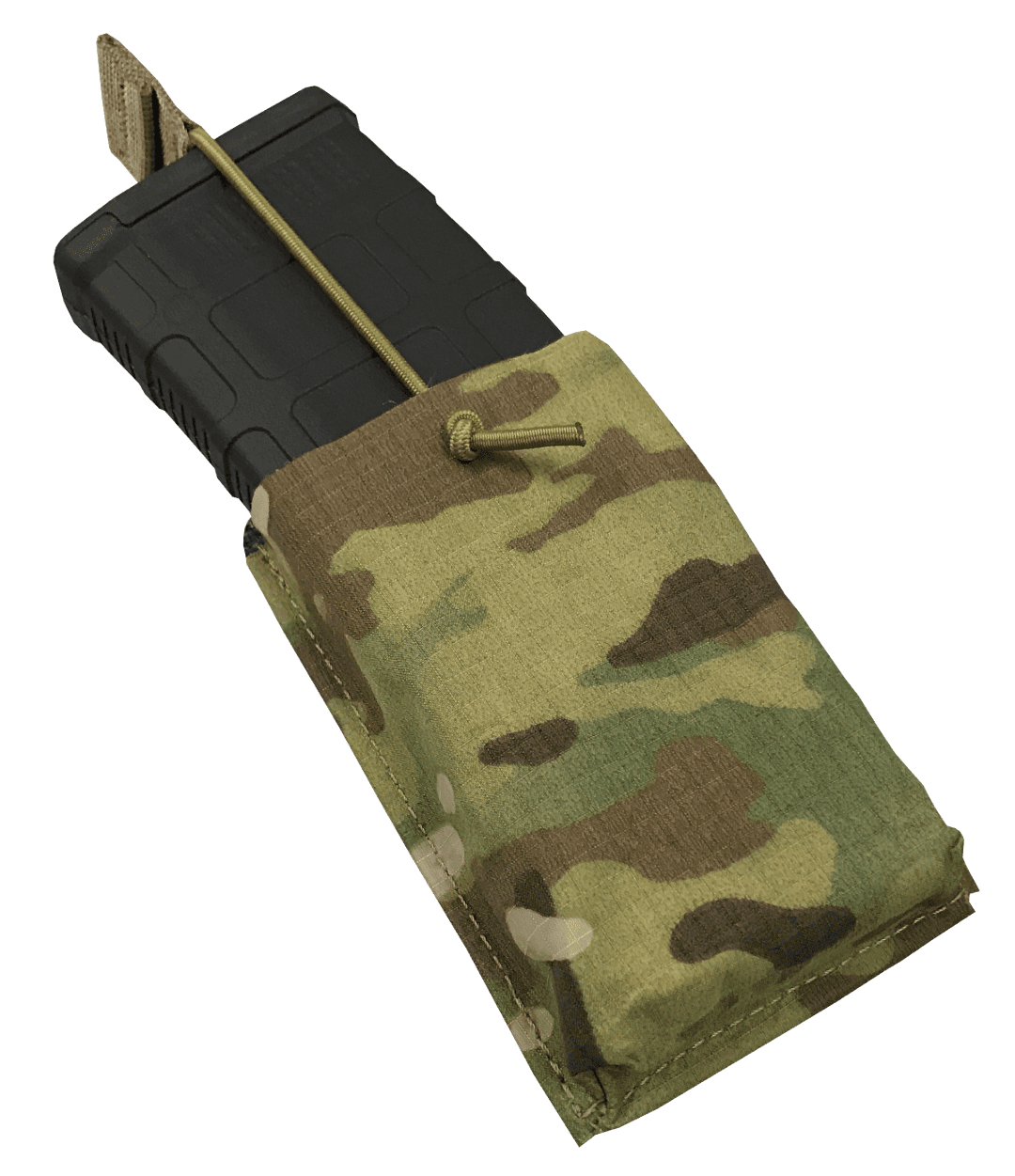
The Multi-Caliber Rifle Pouch is designed to accept any size magazine from single or dual 5.56, 7.62, .308 etc. Easy size adjustment, lightweight, MATBOCK Tabs on back and integrated belt loop are just a few of the additional features that make this the most versatile rifle mag pouch on the market.

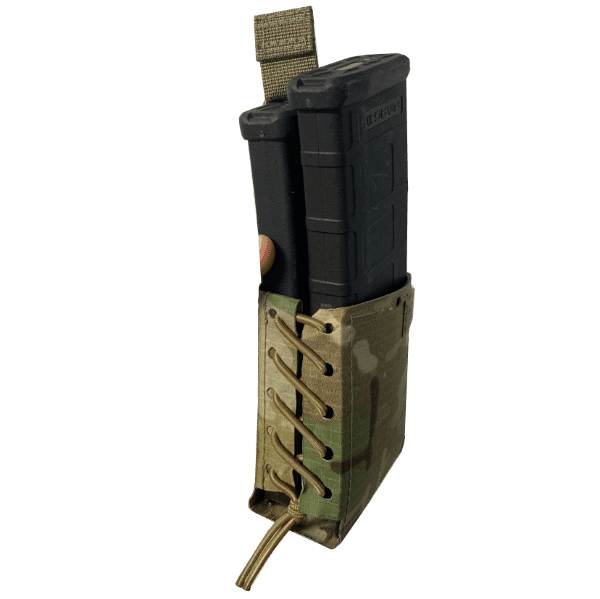
The pouch is designed to hold 2 x 30 rd 5.56mm magazines. Both magazines, or only the back magazine, can be secured in place with the bungee retention lanyard for quick removal of the first mag without fear of losing the second.

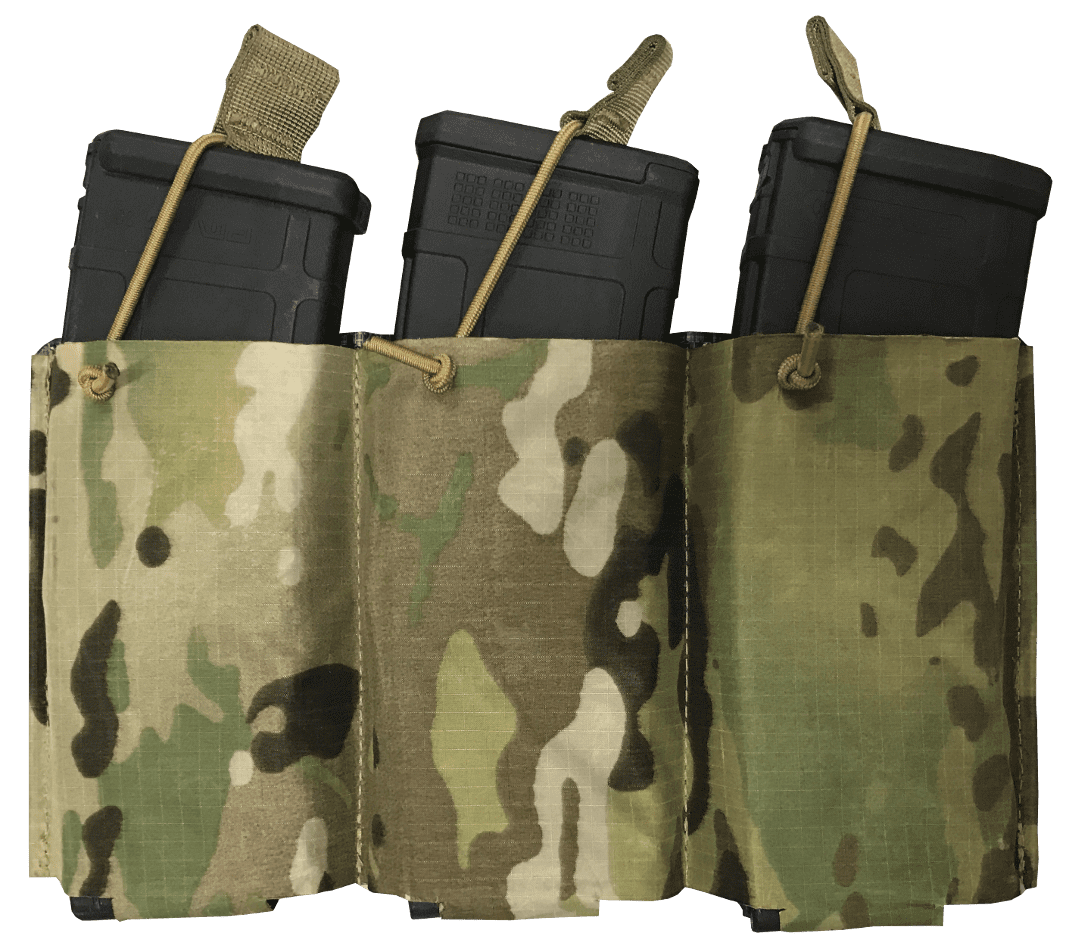
The pouch is designed to hold 3 x 30 rd 5.56mm magazines, side-by-side. Specifically designed to be mounted to MOLLE or worn on an operator’s belt.

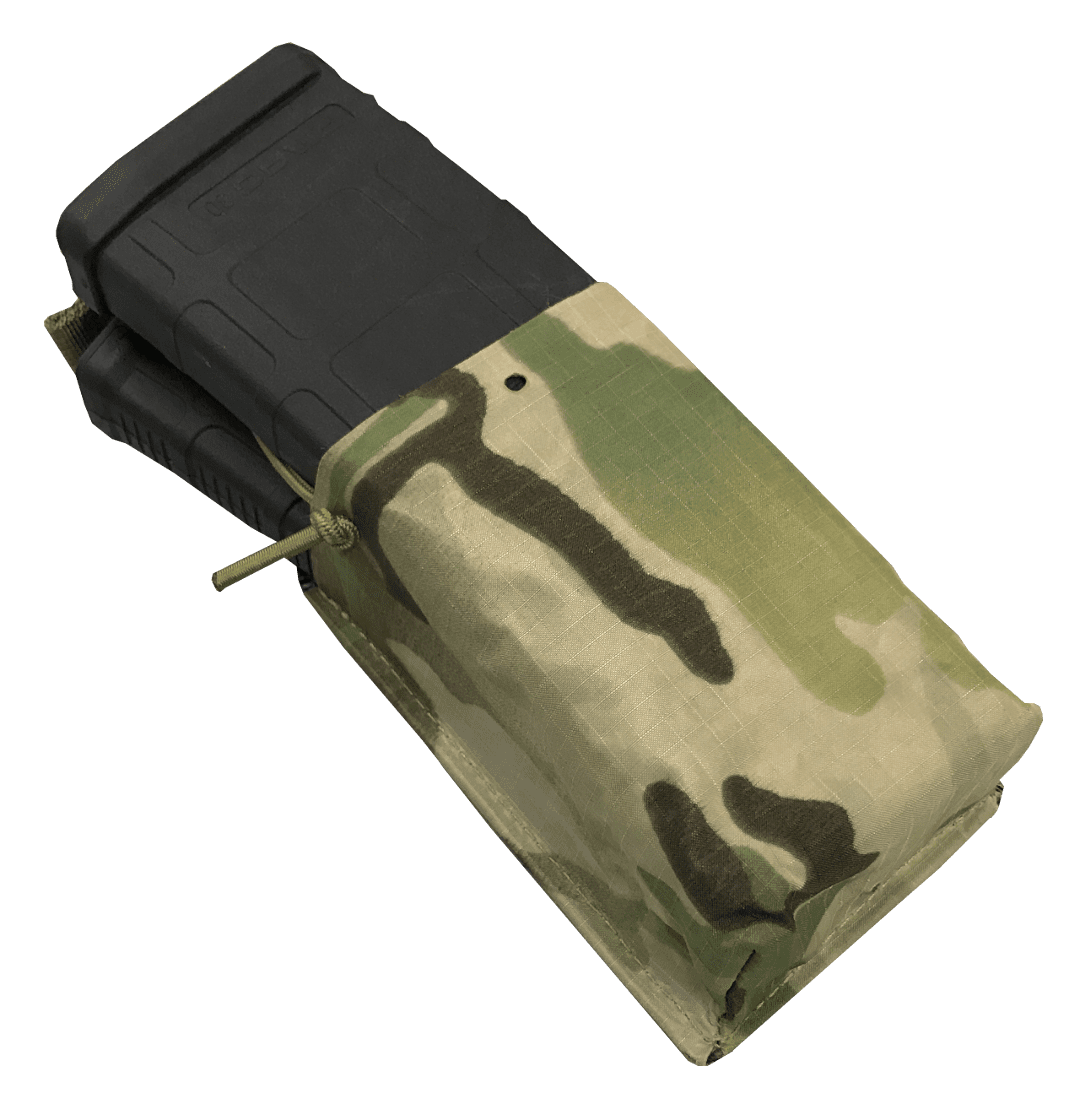
The pouch is designed to hold 1 x 30 rd 5.56mm magazines.

Don’t forget to tune in on Monday at 4:30 PM EST as we go live to demo our Mag pouches!

Army Futures Command Announces ‘Software Factory’ in Austin

Monday, July 20th, 2020

AUSTIN, Texas – U.S. Army Futures Command announced the establishment of the first Soldier-led Software Factory today.

The Austin-based Software Factory is a first-of-its-kind concept for the Army that will leverage a train-with-industry pipeline to empower Soldiers and Civilians to scope and solve problems with modern software practices.

This new capability will allow units to act faster and mitigate unforeseen risk inherent in multi-domain operations. It will teach Soldiers and Civilians how to solve Army problems with cloud technology and modern software, and to better prepare Soldiers for disconnected warfare in 2028 and beyond.

“The capability to develop software at the lowest tactical levels will help us provide better software products,” said Gen. John M. Murray, commanding general of Army Futures Command. “We anticipate long-term cost savings and expect the Software Factory to help us maintain a competitive advantage across Army modernization efforts.”

This new software factory complements the Army’s digital talent initiative based at Carnegie Mellon University in Pittsburgh, Penn. Army professionals will attend data science and engineering graduate programs, and 12 Soldiers will attend a boot-camp-style fellowship for cloud technicians to help solve Army problems through agile and secure software development processes.

“All of these efforts will develop and sustain the digital talent the Army needs for the future,” Murray said. “The CMU-trained engineers will build the data environment the Army needs. The technicians will maintain that environment. And the Software Factory will develop the skills to operate in that environment.”

By Army Futures Command

Purdue University – New Explosive Materials to Usher in Nontoxic Ammunition

Sunday, July 19th, 2020

WEST LAFAYETTE, Ind. — Every time a gun fires, lead leaches into the air. A scientific advancement could provide a comparable replacement for lead-based explosive materials found in ammunition, protecting soldiers and the environment from potential toxic effects.

Purdue University researchers, in collaboration with the U.S. Army Combat Capabilities Development Command’s Army Research Laboratory, developed two new lead-free materials that function as primary explosives, which are used to ignite powder inside a gun cartridge.

The work, funded by the Army Research Office, appears in a paper published in Chemistry – A European Journal.

“Right now, whenever you are shooting, you’re going to be spreading lead into the air around you,” said Davin Piercey, a Purdue assistant professor of materials engineering and mechanical engineering. “Any use of lead is going to end up polluting the environment in small amounts. The more lead you remove, the better it is for the environment.”

A past study found that people who have been shooting a lot could have elevated lead levels. But so far, the use of lead in explosives has been inevitable.
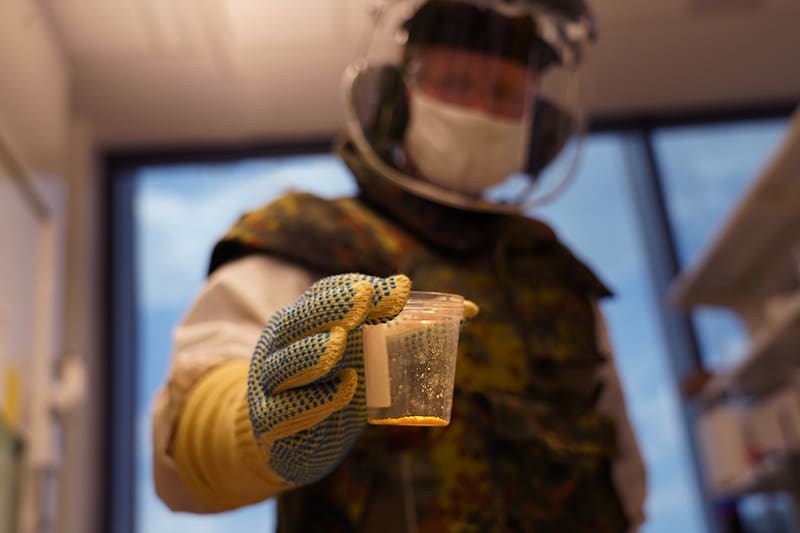

Matthew Gettings, a Purdue Ph.D. candidate, holds a cup containing silver salts, a new lead-free explosive. (Purdue University photo/Jared Pike)

When a gun trigger is pulled, a metal firing pin strikes a cup containing a primary explosive. The force from the firing pin deforms the cup, crushing the primary explosive and causing it to detonate. This explosion sets off a secondary explosive that burns and helps complete the rest of the firing sequence, accelerating the bullet out of the gun.
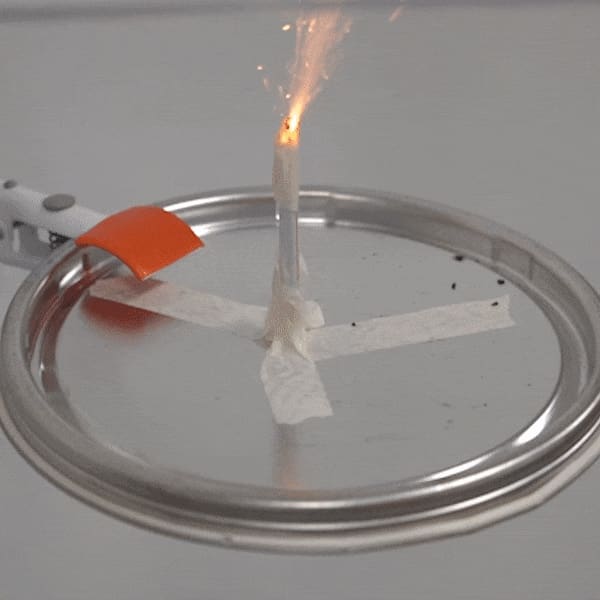

An experimental test shows the ability of silver salts to detonate just as well as commonly-used primary explosives. (Purdue University video/Jared Pike)

Because primary explosives are found in the cartridge of just about anything that fires a bullet, the Army has been searching for solutions for many years to develop lead-free versions of these explosives that satisfy environmental regulations associated with lead contamination.

“The development of these materials provides a potential pathway toward lead-free technology,” said Jesse Sabatini, an Army researcher who led the project’s investigation of which molecules to use for these new materials.

What enables the materials to be lead-free is a chemical structure that has not been used in primary explosives before. One material is made of silver salts while the other material contains no metal at all – just the basic ingredients for an explosive. These ingredients include carbon, hydrogen, nitrogen and oxygen.

“Toxicity-wise, silver is an improvement over lead, but it’s still a little toxic. So we also made a nonmetal material that does not have heavy metal toxicity associated with it. Metal is dead weight, energetically speaking, and doesn’t contribute much to an actual explosion,” Piercey said.

The chemical structure used in these materials makes them very dense, meaning that only a small amount of either material would be needed to create an explosion.

Researchers at the Army Research Laboratory modeled these materials to get a sense of how explosive they would be. Piercey’s lab at the Purdue Energetics Research Center (PERC) made the materials and conducted experimental tests demonstrating that they work as primary explosives.

According to the researchers’ calculations, the materials they created have a detonation performance similar to or higher than commonly-used primary explosives.

The CCDC-Armaments Center at Picatinny Arsenal, New Jersey, is interested in exploring these compounds for primary explosive-based applications for bullets and gun propellants. Purdue and Army researchers will continue to gather the data needed for determining which lead-based weapons systems these materials can replace.

“At PERC, our theme is ‘molecules to munitions.’ Our labs can do everything from designing and testing molecules to formulating and manufacturing those molecules into a useful compound,” said Steve Beaudoin, director of PERC and a Purdue professor of chemical engineering.

“Our partners can then take that useful compound and put it into a warhead, missile, rocket or whatever it needs to be.”

A provisional patent has been filed for this technology (track code 2020-PIER-69143) through the Purdue Research Foundation Office of Technology Commercialization.


SCUBAPRO Sunday – Twin Jet Fins

Sunday, July 19th, 2020

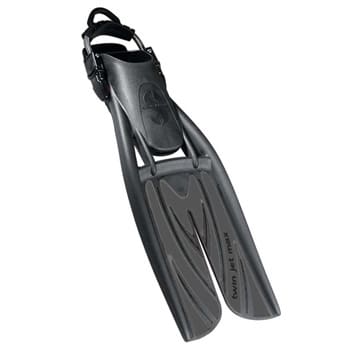
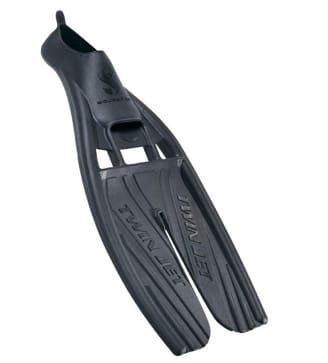
If you have been diving for a while now, you have come across the SCUBAPRO Twin Jet Split Fins. They have a unique patented split fin propeller technology, which provides maximum propulsion with minimal effort underwater. With those main features, they can enhance your dives while avoiding cramped leg muscles and strained ankles.

The revolutionary patented design of the SCUBAPRO Twin Jet Open Heel Split Fins was inspired by the dynamic propulsion of the humpback whale. The blades unique shape and angle provide symmetrical power to help you create a smoother, more stable kicks without wearing you out or causing drag. At the same time, it allows you to move more quickly and effortlessly while swimming at great depths, despite the long blade length—all without sacrificing control.

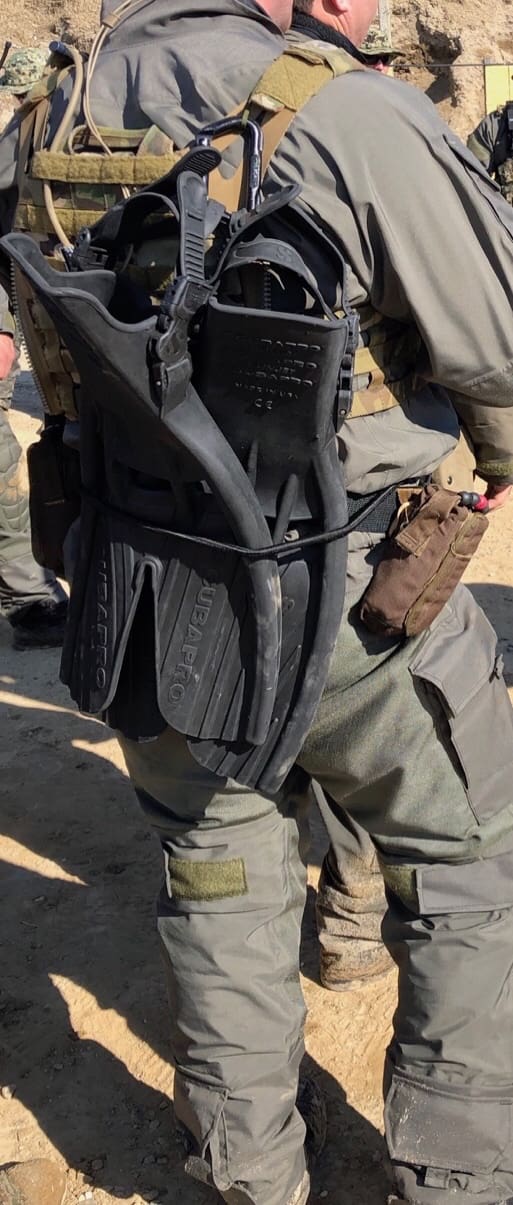
As a diving fin, the SCUBAPRO Twin Jet is made with both an open-heeled and a full-foot (closed heel) version. The Open Heel comes with a broader foot pockets and offers a more customizable fit for those wearing dive boots for use in colder, deeper waters or military style boots for over the beach operations/ VBSS. Having strapped fins gives you the chance to adjust the fit as your boots start to compress at greater depths when diving.

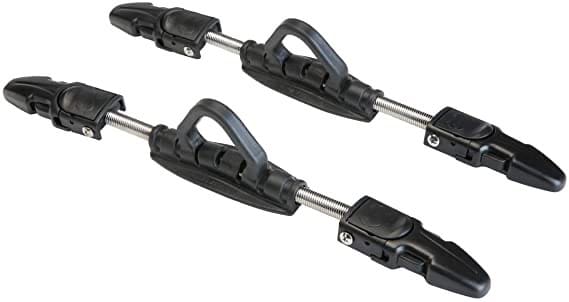
The fin straps come with quick-connect swivel buckles, which makes donning and doffing easier. You can also change the rubber heel strap out, to take advantage of the optional spring heel straps. The SCUBAPRO Twin Jet open-heeled fins are one of the most comfortable fins on the market.

They come in different Colors and Buoyancy Options. SCUBAPRO has kept different types of divers in mind when they designed the Twin Jet Fins line. You’ll find that the fins come in multiple color options—black, blue, gray, and yellow—but it’s also important to note that the different colors signify differences buoyancy also.

The black fins are the best, for military divers, as they are negatively buoyant and provide a more traditional fining experience with its rigid blades. But if you’re looking for more flexible blades and don’t mind having slightly positively buoyant fins.

Product Features:
• Monprene® Construction 
• Patented Split-Fin Propeller Technology
• Extra-Wide Foot Pocket
• Extended Soleplate
• Drag-Reducing Vents
• Quick-Connect Swivel Buckles
• Compatible with Spring Heel Straps

Key Benefits:
• Powerful Propulsion with Minimal Effort
• Smooth and Stable Kicks
• Preserves Energy
• Reduces Drag
• Fits Boots
• Easy Donning and Doffing
• Highly durable and Will Last a Lifetime

One of the only drawbacks for the Twin Jet fins is if you have to push something thru the water besides just you or you are fighting a current. But add something like pulling a buddy or ruck. Then you might want to go with a stiffer fin like the Jet fin’s, Seawing Nova Gorilla or the Go Sport. That being said the Spilt Fins are one of the most popular fins used by the military and countless divers around the world.

Kit Badger On Custom Bolt Guns

Saturday, July 18th, 2020

Our friend Ivan takes on Custom Bolt Guns in his latest video series. He goes over how to get one made.

It’s in two parts:

kitbadger.com/rifle-301-by-sawtooth-rifles-part-1

kitbadger.com/rifle-301-by-sawtooth-rifles-part-2

Here’s a taste.

Saab to Provide $100m in Carl-Gustaf Ammo & AT4 Systems to US Army

Friday, July 17th, 2020

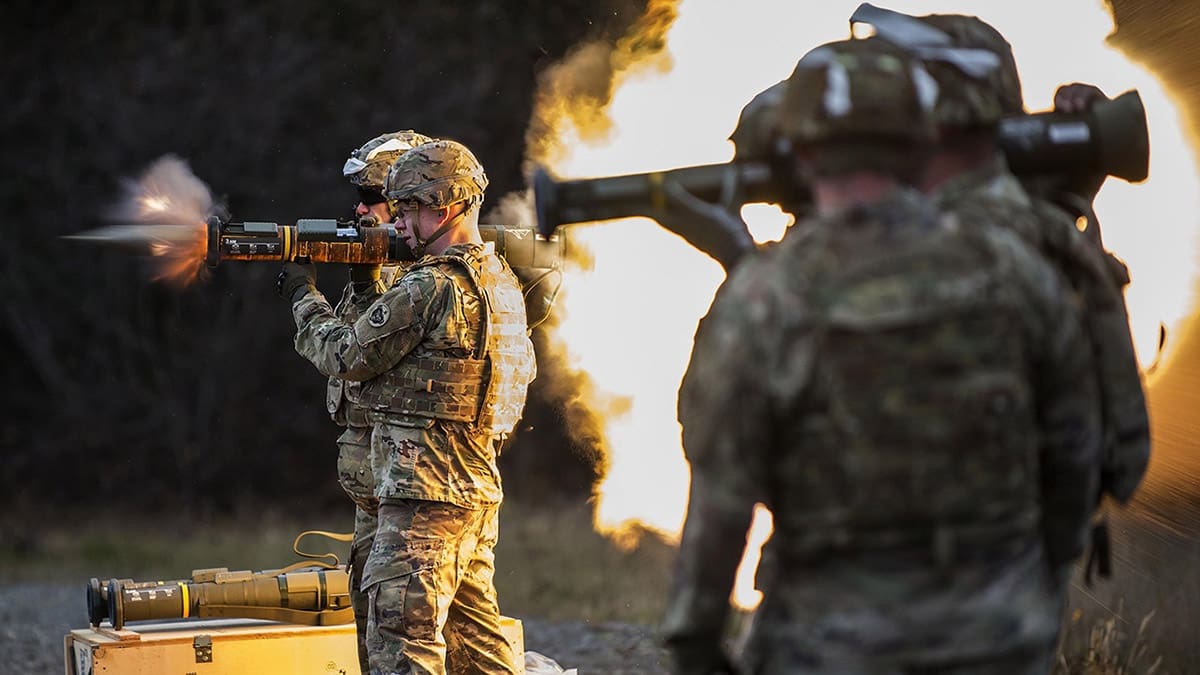
The US Army has awarded a $100 million (USD) contract to Saab for delivery of Carl-Gustaf ammunition and AT4 systems. It’s an “indefinite-delivery, “indefinite quantity” (IDIQ) contract, which EG will have to explain if you want details, but essentially the Big Army, the USMC, and JSOC can reportedly buy more than $400 million worth of them during a 5-year period.

Remember the testing in Sweden last year?

The advent of the new Carl-Gustaf munition ? assuming this is in fact the new laser-guided system ? will is probably more exciting news for more people than the new deal for AT4s. After all, the DoD has purchased well over half a million of them since the heady days of Rick Astley’s debuy album and the very first appearance of The Simpsons.

Back in 2018 the US Army announced it would be acquiring the latest version of the M4 “Goose”, the M3E1. Note that this is M4 is not that other M4 SSD readers might be thinking of. That one, which is much smaller and shoots 5.56mm instead of 84mm, is far more ubiquitous but not as much fun to use.

The Swedish Defence Materiel Administration also recently announced the approval of Carl-Gustaf systems to Latvia, Estonia, and other countries over a ten-year period.

Erik Smith, President and CEO of Saab in the US, says,

“The Saab family of shoulder-fired munitions provides the U.S. Armed Forces with effective capabilities against a wide area of targets. With these systems, soldiers and Marines gain reliable, easy-to-use technology optimized for complex environments and engagements.”

The Swedish Defence Materiel Administration also recently announced the approval of Carl-Gustaf systems to Latvia, Estonia, and other countries over a ten-year period.

The M3 MAAWS (Multirole Anti-armor, Anti-personnel Weapon System) has been in the US inventory for several years now. As with any weapon system, there is (or should be) an ongoing interest in increased lethality and more efficient use.

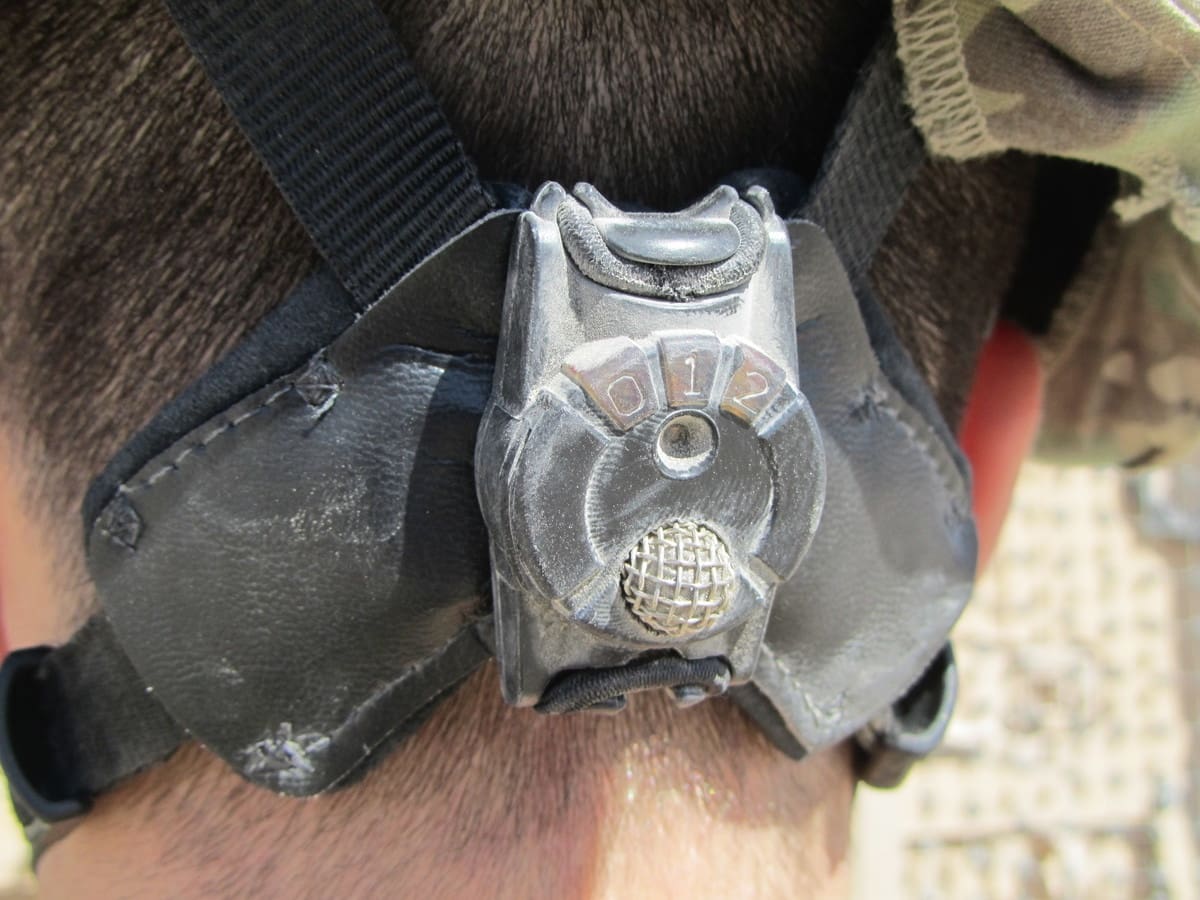
No immediate references could be found as to whether the new ammunition is thought to mitigate concerns of brain injury to those shooting the recoilless rifle, or if that was even a necessary or valid consideration. The most recent reference easily accessible was this report from the Blast Injury Research Program at Ft. Detrick. It’s nearly a decade old, and the helmet sensors formerly fielded to combat troops have since been withdrawn.


You can find additional details and confirmation at the Saab Group website.

From Defense Web TV:

Talk to me Goose.

By David Reeder

FirstSpear Friday Focus – VEP Modular Panel

Friday, July 17th, 2020

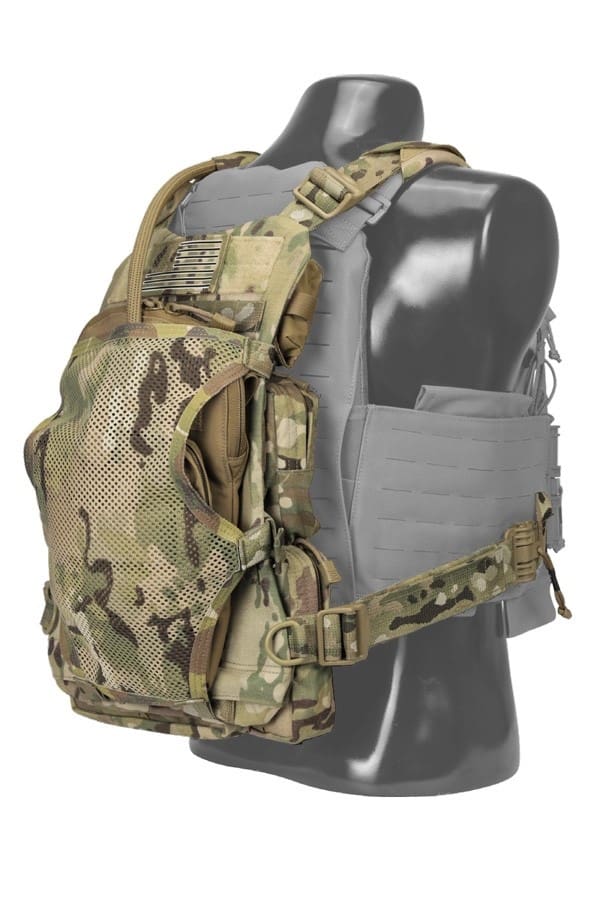
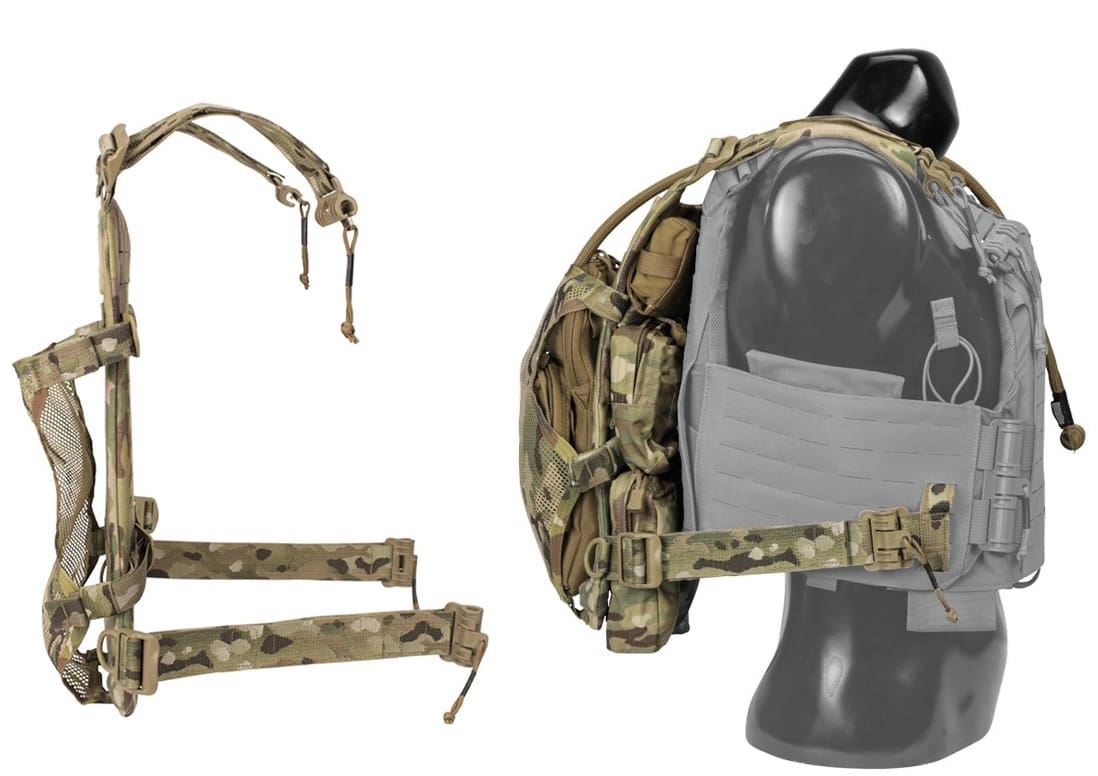
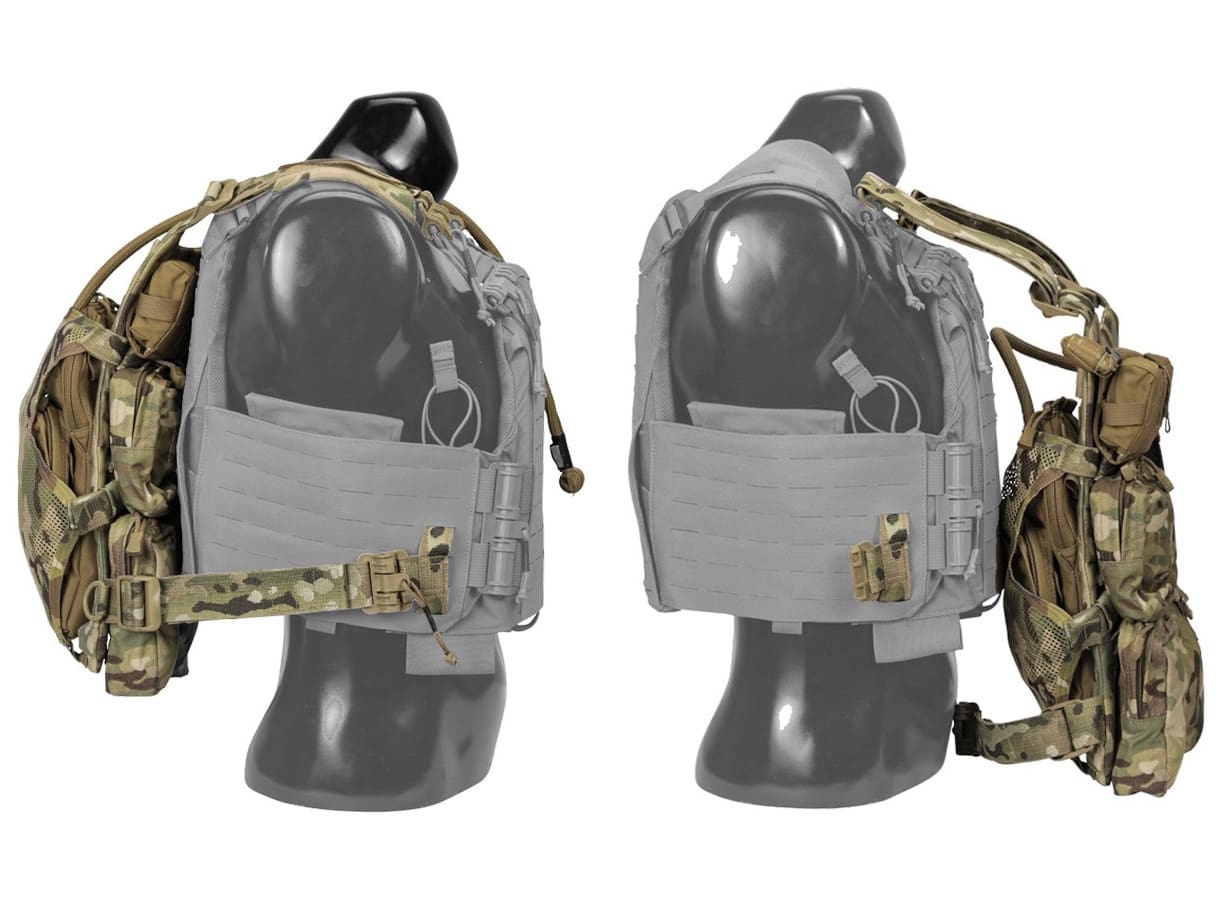
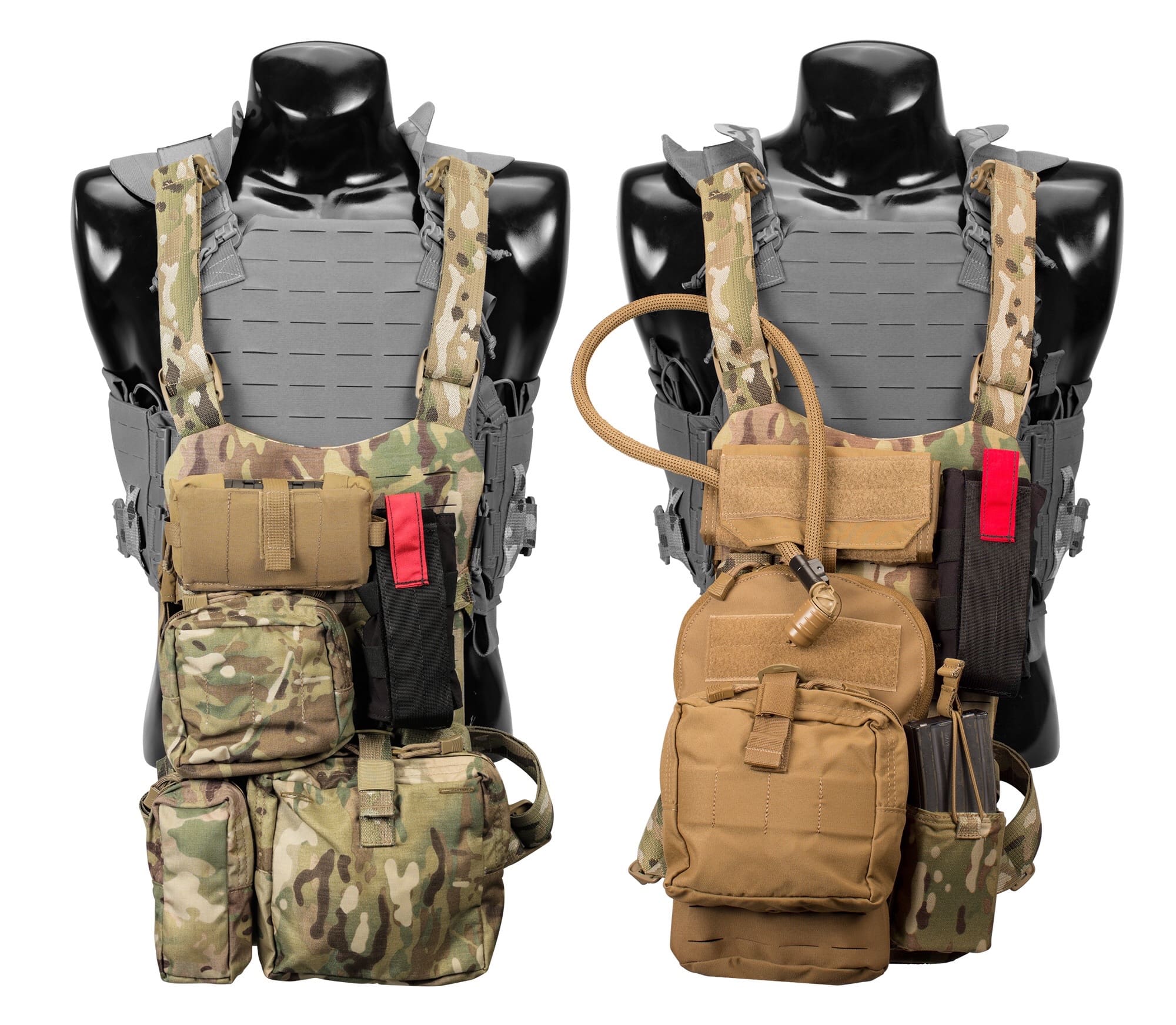
This Friday we are getting a look at a specialized pack from FirstSpear that offers an incredible amount of configurability to give operators one assault pack that can be tailored to meet their individual needs and rapidly changing mission sets. Meet the VEP Modular Panel featuring genuine 6/12 Laser Fused Platform and Quick-Release Tubes System.

The VEP Panel can be set up and worn in multiple configurations and includes four 2” Tubes straps to attach directly to the plate carrier keeping the underarms clear. The advantage of using FS Quick-Release Tubes lets the user don / doff the pack in mere seconds and even quickly throw the pack over the head or around the side when riding in vehicles or to access the pack contents without a teammate.

The entire system is remarkably thin, lightweight and configurable thanks to the 6/12 laser fused platform. Opposite of the 6/12 side is an adjustable mesh beaver tail pocket that is also removable. The panel is 100% user configurable and can be set up with the beaver tail side out or the 6/12 side out by simply adjusting a few buckles. The large 6/12 panel allows the operator to mount any style pocket or pouch where desired, perfect for the medic to the breacher and everyone in-between. There is one large internal zipper access the inside of the panel and works great for up to a 3L hydration bladder.

If all that was not enough FirstSpear also included two simple backpack straps you can quickly switch out and transform into a standard backpack worn with or without a plate carrier. Another innovative American made product from FirstSpear, available now in Multicam, Coyote Brown, Ranger Green, and Black. Pockets, hydration, and cell tag sold separately.

www.first-spear.com/platforms/vep-modular-panel