GORE-TEX Professional

Archive for the ‘Guest Post’ Category

USAF Rescue Squadron Athletic Trainer Rehabilitates Airmen

Thursday, March 5th, 2020

MOODY AIR FORCE BASE, Ga. —

The 41st Rescue Squadron executes a physically demanding mission of personnel recovery, in doing so, rescue members require a recovery of their own.  
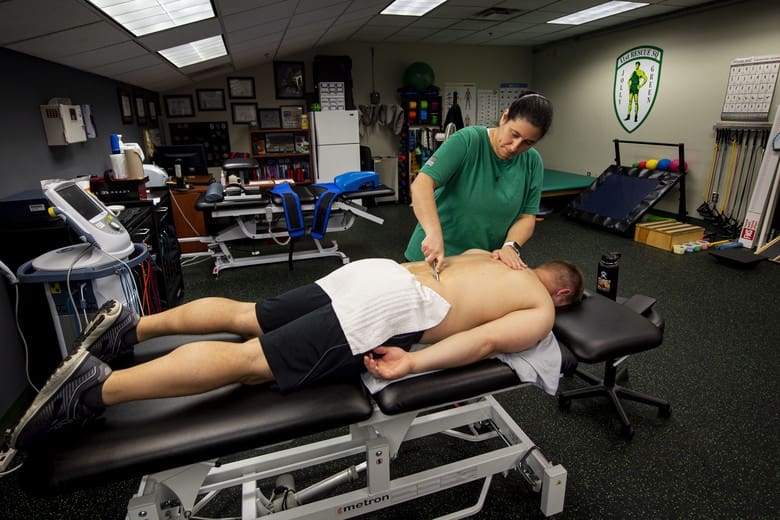
Lori Uretsky, 41st Rescue Squadron athletic trainer, provides these Rescue Airmen with preventative care and treatment for injuries to keep them mission ready.

“[Uretsky] does preventative maintenance,” said Tech Sgt. John Rosenberg, 347th Operations Support Squadron special missions aviator. ”She keeps minor injuries from becoming major injuries and sustains chronic injuries. Taking care of [injuries] on a regular basis keeps them from becoming major issues, which could take me off the flying schedule and have a direct impact on the mission.”

Uretsky has been working with the 41st RQS since October 2017 and has had more than 2,200 appointments and tended to 3,112 injuries.

“I see a lot of neck pain, upper back and lower back pain for the pilots and the special mission aviators usually have shoulders and knee pains because of their job duties,” Uretsky said.  “When I say neck and back pain that can range from muscle tightness to herniated disks to stress fractures in their back. I will say for the most part, a lot of neck pain [comes] from wearing helmets and night vision goggles because it adds weight to their head.”
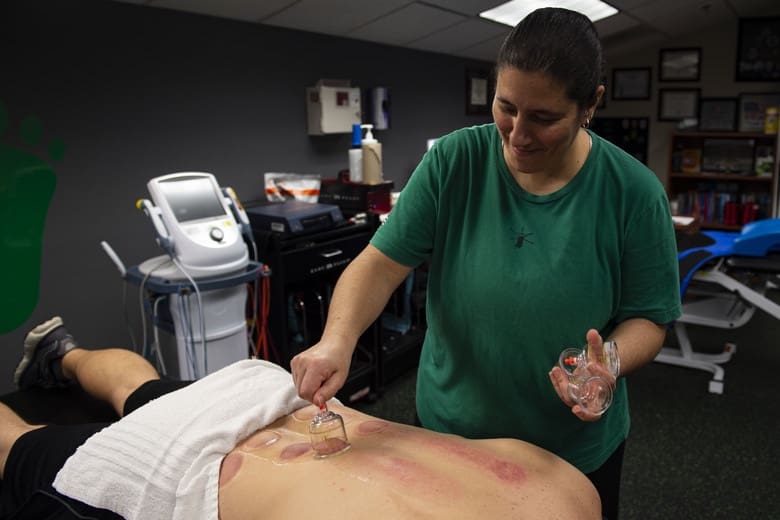
Rosenberg, a patient of Uretsky’s, has been being seeing her for a leg injury for about a year.

“I’ve been having problems with scar tissue in my ankle” Rosenberg said. “We’ve been working on physical therapy with the ultrasound and sticks on my leg. It’s helping break all that stuff up. Yes, it hurts, but at the same time, I can actually feel it getting better. The prevented maintenance that she does is what enables me to still fly.”

In addition to treating injuries with dry needling, cupping and physical therapy, Uretsky provides annual and post-surgery rehabilitation services that help get wounded Airmen back in the game.

“I was unfortunately fortunate that we had someone get hurt downrange and sent back early for surgery,” Uretsky said. “I say unfortunate, because I never want that to happen, but I was able to do his rehab with him here in-house and get him cleared to return to fly. So, what we thought was going to be career ending, wasn’t. He’s back flying. So, I mean, that is really rewarding to see that.”

According to Uretsky, she has only had to deny seven Airmen from flight, which is lower than numbers seen in previous years because Uretsky is, not only on hand to provide her services here, but has the ability to travel with the unit.
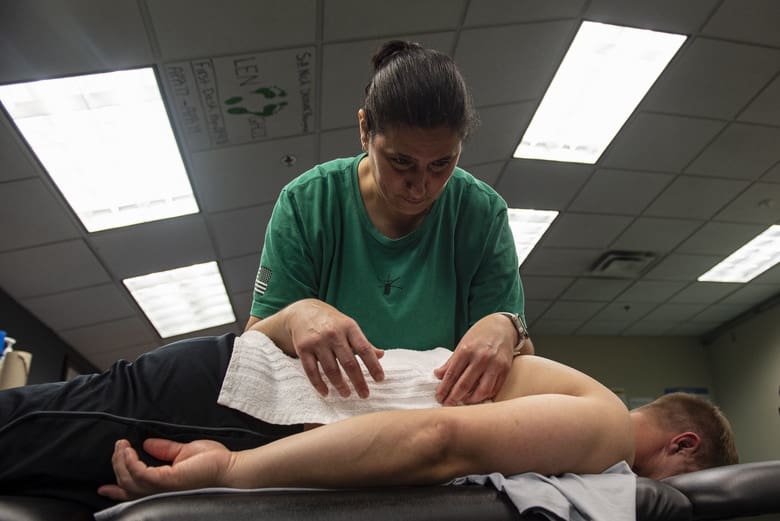
“I’m going to the red flag exercise next month. This will be my second TDY,” Uretsky said. “This red flags a little shorter last year. [It lasted for] five to six weeks. They’d fly three, four times a week, have all their issues, then have to wait for when they come back [for treatment]. So even though I’m not there the whole time, I go in the smack dab of it, treat them and [which should] last until they can come back and see me again.

“I am able to do teleconferences if [Airmen] have issues. I’ve sent things downrange so that they would be able to take care of [issues] the best they could before they had to go to a major base to get treated.”
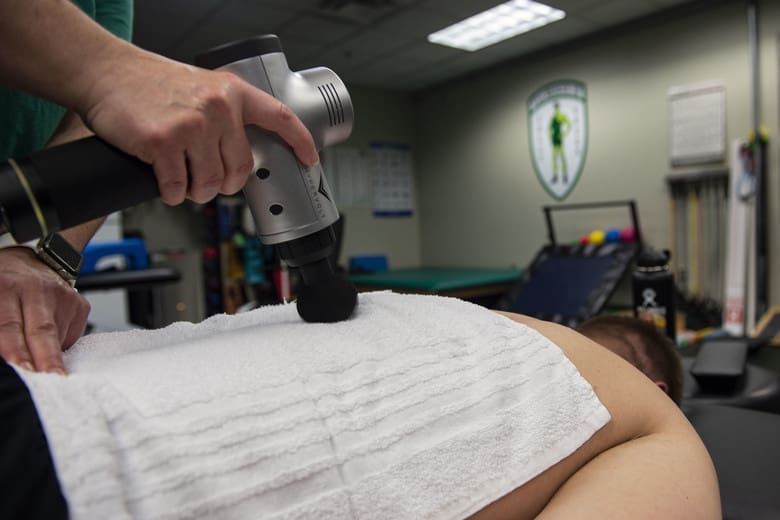
Uretsky believes being embedded in the squadron also makes a big difference in the relationships between her and her patients.

“I love my relationships with the patients,” Uretsky said. “I joke all the time and tell them that they’re a tad bit crazy for going into a bad scene probably getting shot at to go save others. Most people would go away from that kind of stuff. So, I think they’re very special. To be able to take care of them is awesome. My dad and my grandfather are vets. So, working with the military is my way of giving back.

“If I help one person and keep them in their career, then that makes me happy,” Uretsky said.

By Airman Azaria E. Foster, 23d Wing Public Affairs
Brigantes Presents – Brigantes Issue Essentials

Wednesday, March 4th, 2020

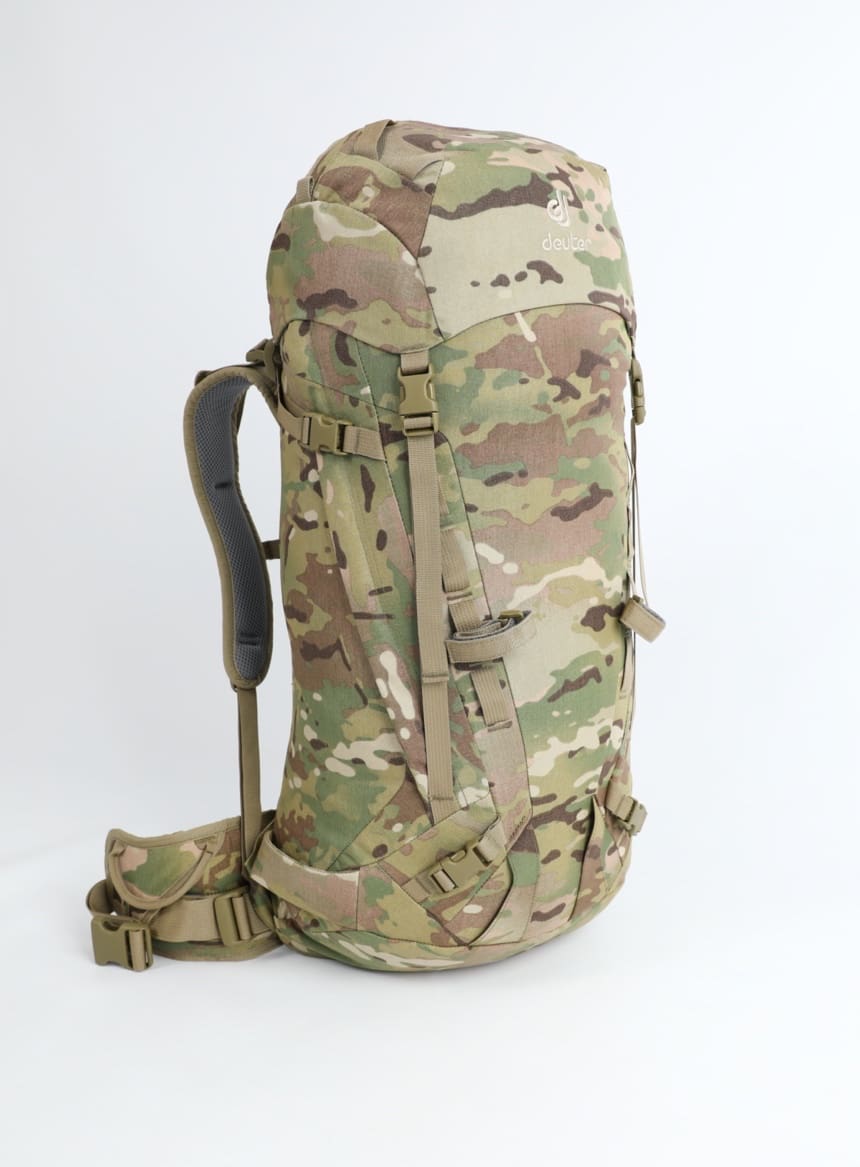
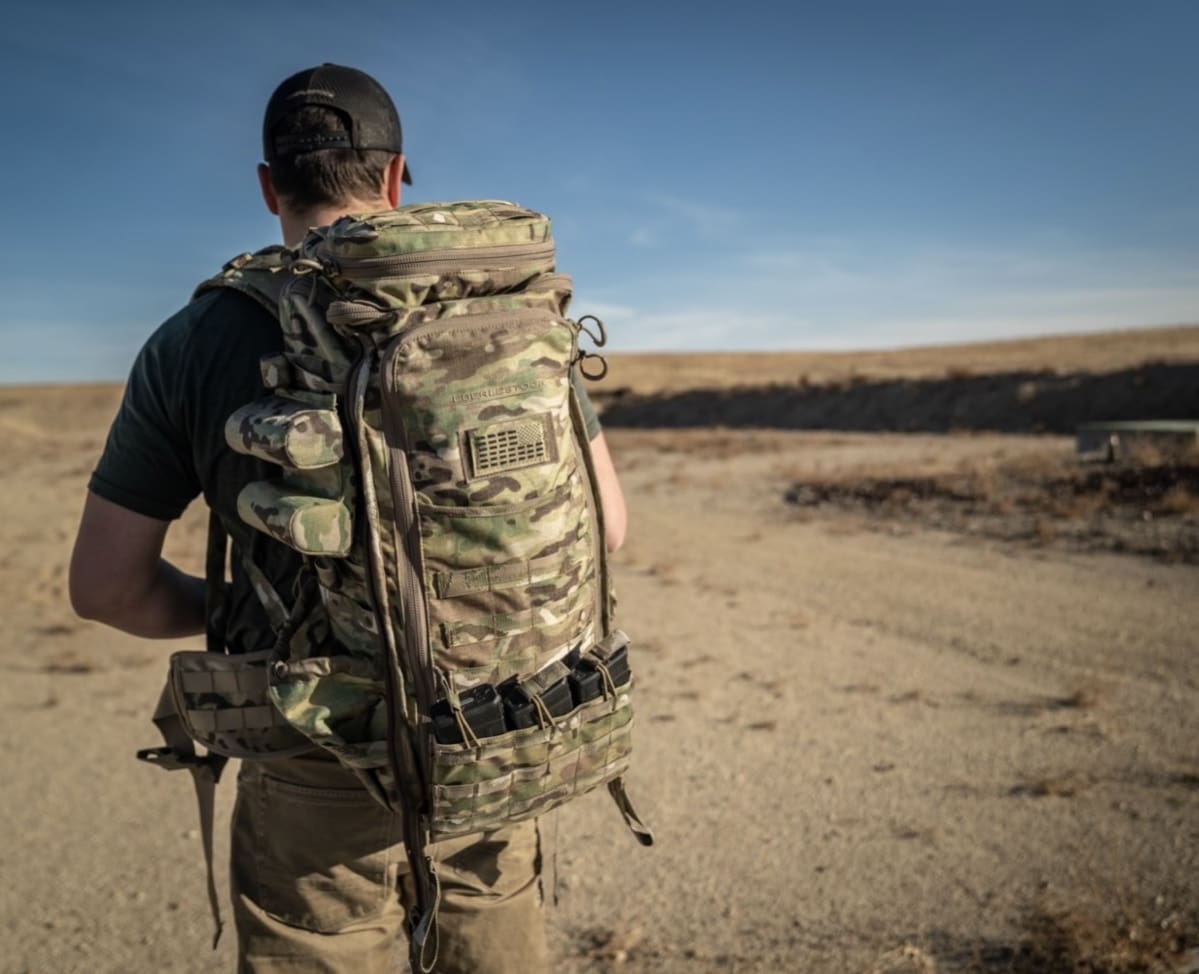
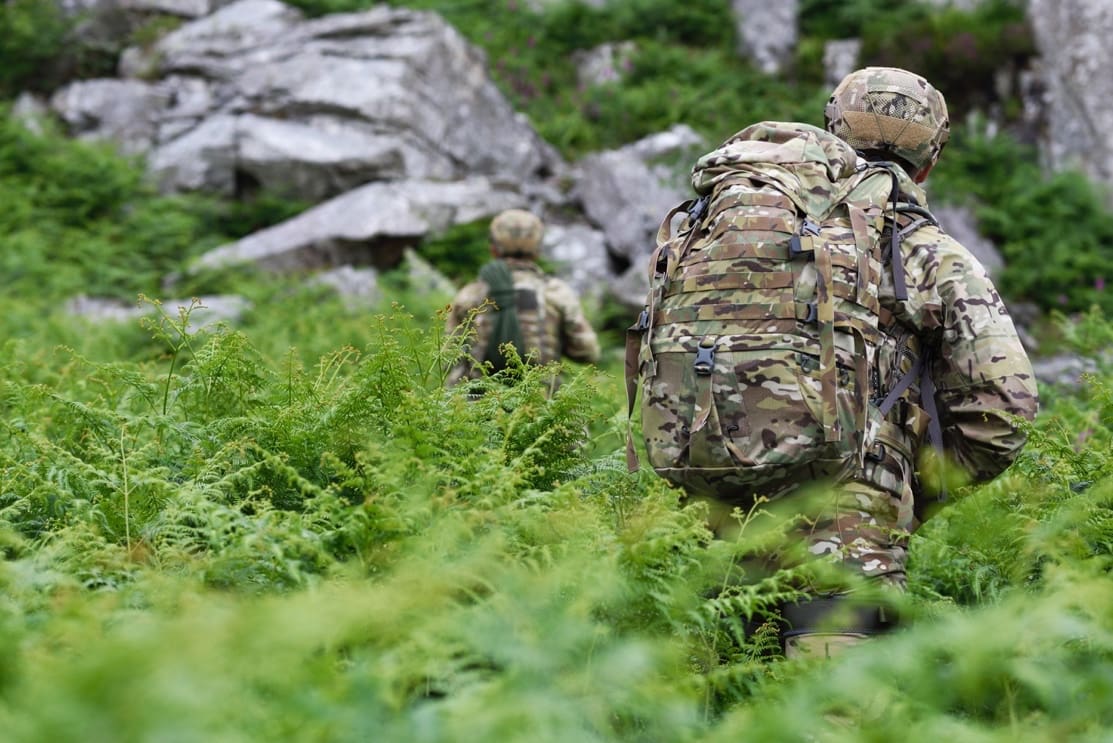
Each week we bring you products that should be on all military standard issue kit lists. This week it’s the Deuter Alpine Guide 35+ in Multicam.

The Deuter Alpine Guide 35 in Multicam suits the needs of operators in the mountain environment.

Using the Deuter Alpine, X-Frame back system the pack is one of the most stable and comfortable packs to carry.  The lid is extendable to accommodate expanded loads and allow for ropes or other pieces of hardwear.  In order to maximise functionality it has a long side opening zip, which allows you to access the full body of the pack without disturbing the load under the lid or having to completely empty the pack.

The hip belt is removable and uses the Vari-Flex system, which enables it to move with you when moving thereby improving comfort and performance. A double pull waist belt gives secure adjustment and the sternum strap helps the load to remain in the right place on your shoulders.

The pack comes with a removeable sit mat and is compatible with hydration bladders up to 3 Litres.  The sides of the pack provide ski loops and the front of the pack has points for two ice axes.

Overall this is the pack for mountain operations.  It has long been the go to pack for people working in the mountains and is the only option for the military mountaineer.

The Deuter pack can be delivered to the UK and Europe through our website at brigantes.com/collections/deuter

For more information contact warrior@brigantes.com

For international sales contact international@brigantes.com

New Tool Aims To Expedite Military Evacuation Of Civilians During Crisis

Wednesday, March 4th, 2020

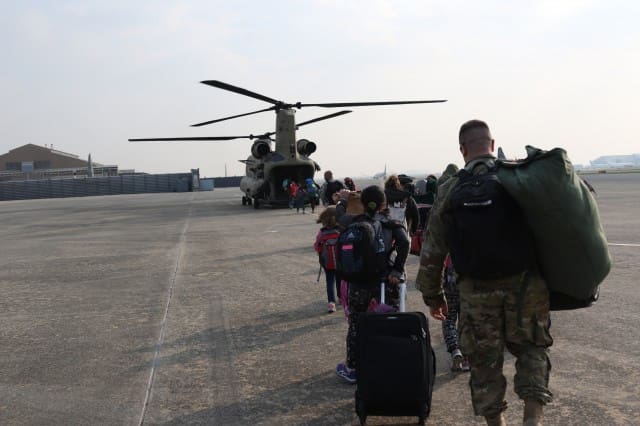
RESEARCH TRIANGLE PARK, N.C. — A new computational model could be used to expedite military operations aimed at evacuating civilians during disaster response or humanitarian relief.

Researchers at North Carolina State University, with funding from the U.S. Army, designed a new model to help planners and logisticians determine what needs to be where and at what time in order to complete an evacuation as quickly as possible. This includes where vehicles need to be when, and routing alternatives as well as supply requirements by location over time for food, water and shelter.

“What sets this tool apart from other models is that it is designed for use in both planning and during operations,” said Brandon McConnell, corresponding author of a paper on the new model and a research assistant professor in NC State’s Edward P. Fitts Department of Industrial and Systems Engineering. “In terms of specificity, we’re talking about where a given truck will be at any point in time during an operation.”

The research, published in the Journal of Defense Analytics and Logistics, focuses on noncombatant evacuation operations in the Republic of Korea; however, it could be used in a wide variety of scenarios.

“The tool will need fine-tuning before it can be implemented — it would benefit from a user-friendly interface, for one thing — but it highlights the potential that operational models have for helping the military achieve its objectives both in or out of wartime,” said Dr. Joseph Myers, mathematical sciences division chief at the Army Research Office, an element of U.S. Army Combat Capabilities Development Command’s Army Research Laboratory.

The Army Research Office funded this research through a short-term innovation research grant that explores proof-of-concept ideas in a nine-month period.

The authors said this research will provide military logistics planners with capabilities that are currently lacking in prevalent logistics planning tools. The project lays the mathematical and operations research foundation for the development of a network-based model that captures routing alternatives and characterizes the solutions to conduct capacity planning and resiliency analysis in near-real time.

“There is a tremendous amount of complexity associated with the Army’s South Korea noncombatant evacuation mission, and that presents a great opportunity for investigation and improvement,” said U.S. Army Capt. John Kearby, first author of the paper and a former NC State graduate student. “The goal of this research was, and is, to encourage the development of better and more robust evacuation plans.”

Kearby is currently a U.S. Military Academy instructor, but previously served in Korea as an engineer company commander.

“The existing simulation models are both sophisticated and detailed — they have been valuable tools for helping us study operations like these,” McConnell said. “However, they’re not designed to respond to rapidly changing scenarios. The new model can operate in near-real time, making it operationally relevant. After all, even the best plans need at least minor modifications during execution.”

By U.S. Army CCDC Army Research Laboratory Public Affairs

SureFire Field Notes Ep. 55: Point Shooting with Larry Vickers

Tuesday, March 3rd, 2020

Larry Vickers is a retired US Army 1st SFOD- Delta combat veteran with years of experience in the firearms industry as a combat marksmanship instructor and industry consultant. In recent years he has hosted several tactical firearms related TV shows. Currently Larry presents videos on the Vickers Tactical Youtube channel of which Bravo Company is the presenting sponsor. Larry Vickers special operations background is one of the most unique in the industry today; he has been directly or indirectly involved in the some of the most significant special operations missions of the last quarter century. During Operation Just Cause he participated in Operation Acid Gambit – the rescue of Kurt Muse from Modelo Prison in Panama City, Panama. As a tactics and marksmanship instructor on active duty he helped train special operations personnel that later captured Saddam Hussein and eliminated his sons Uday and Qusay Hussein. In addition, he was directly involved in the design and development of the HK416 for Tier One SOF use, which was used by Naval Special Warfare personnel to kill Osama Bin Laden. Larry Vickers has developed various small arms accessories, with the most notable being his signature sling manufactured by Blue Force Gear, Glock accessories by Tangodown, and 1911 specific products by Wilson Combat. In addition he has maintained strong relationships with premium companies within the firearms industry such as Blue Force Gear, BCM, Aimpoint, CCWSafe, Wilson Combat, and Tangodown. He has developed and offered a line of Vickers Tactical Glock pistols sold exclusively thru Lipseys Inc.. He is also author of the Vickers Guide series of firearm books. Larry Vickers travels the country conducting combat marksmanship classes for law abiding civilians, law enforcement and military.



www.vickerstactical.com

www.aztectrainingservices.com

www.surefire.com

Kit Badger Goes Over The AMTAC Blades Northman

Monday, March 2nd, 2020

Our friend Ivan produced a video on the Northman Knife by AMTAC Blades.

To read the full story, visit kitbadger.com/amtac-blades-northman.

MATBOCK Monday – Skeeter Patch Kit

Monday, March 2nd, 2020

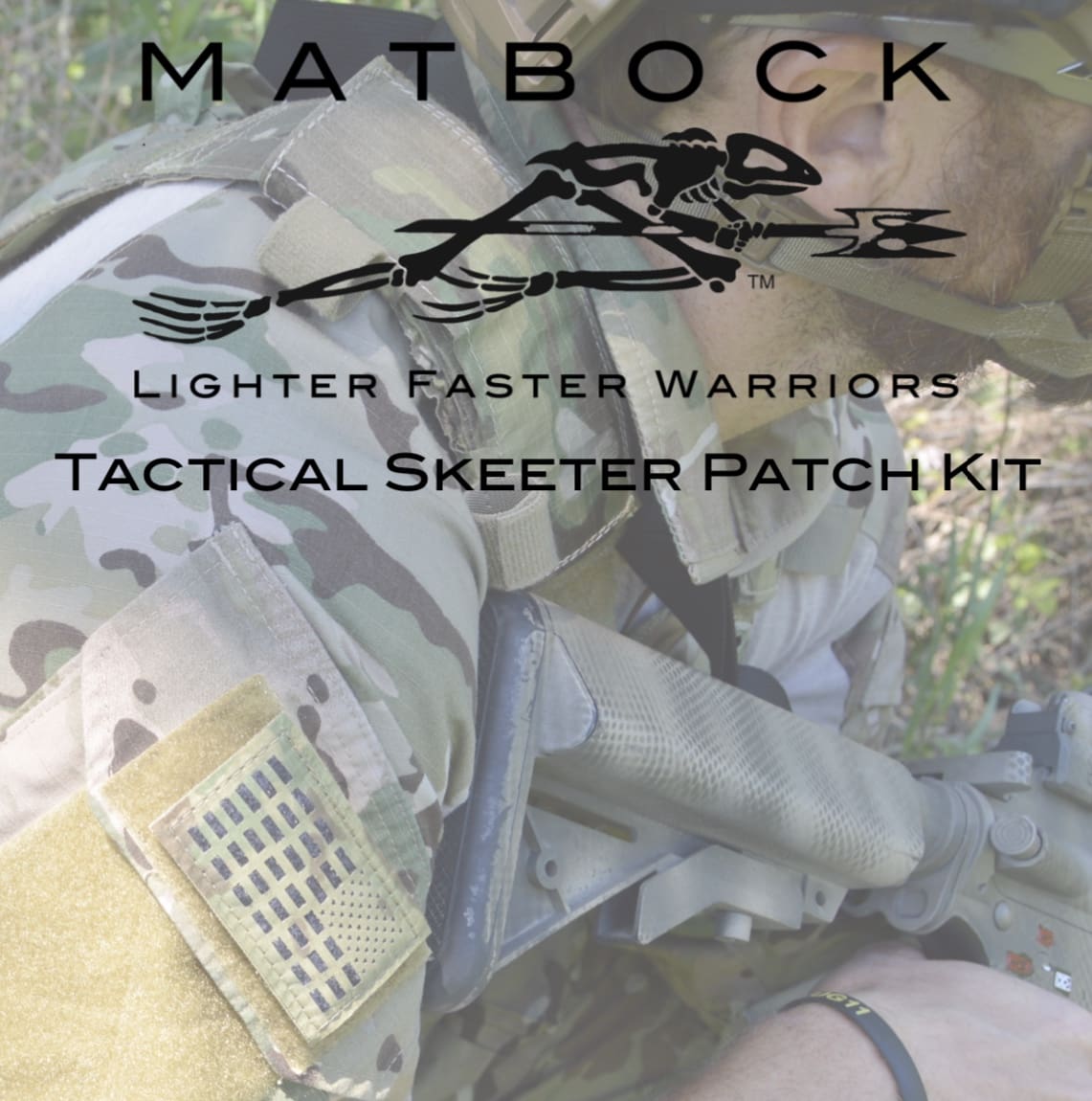
With warm weather right around the corner, we are all itching to get outdoors.  With the arrival of spring also comes the arrival of….BUGS!!!  Don’t worry, here at MATBOCK we got more than your back, we got you covered head to toe with the Skeeter Patch Kit.

The internal of each patch is a super absorbent antimicrobial lining for deet or any other anti-bug spray. The absorbent liner will hold the bug spray for hours to prevent insects from bothering you or from you spraying some of these very harmful chemicals onto your body directly.

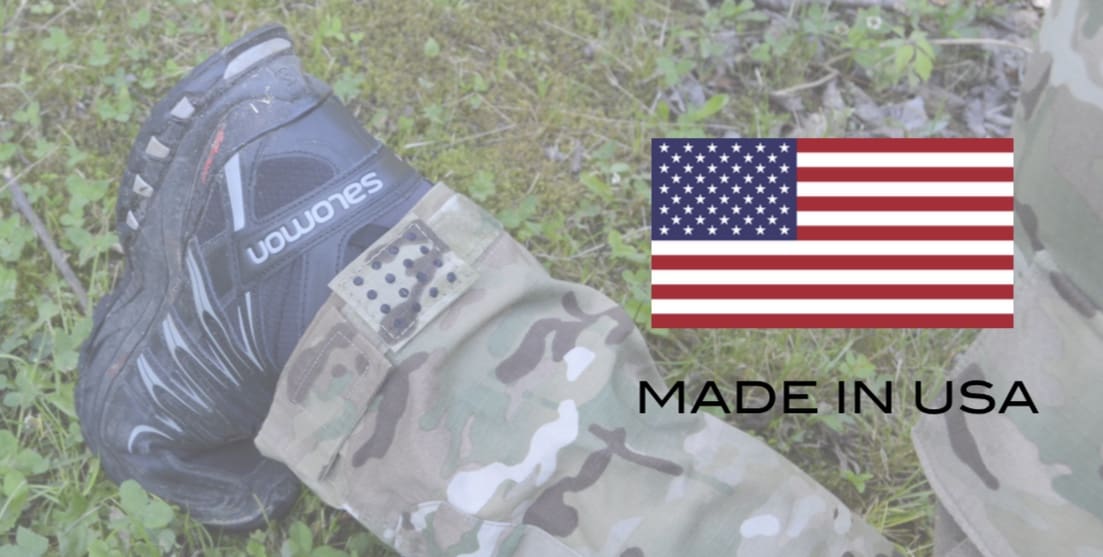
Each kit comes with 2 American Flag patches and 2 smaller patches. The 2 smaller patches are perfect to place around the ankles or below the knee. The American Flag patches are great to wear on your shoulders.

***For custom flag sets, please contact us at admin@matbock.com.  Custom sets must be purchased in sets of 100 kits***

Click below to order yours today!

www.matbock.com/collections/accessories/products/skeeter-patch-kit

SCUBAPRO Sunday – Iran – Iraq War USSOCOM History

Sunday, March 1st, 2020

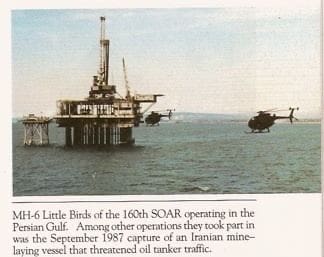
Iraq attacked Iran in September 1980, launching a war that would last eight years. By 1982, more than 100,000 people had died. The war was costing each side about $1 billion a month and devastated both countries’ oil industries. In the so-called “tanker war,” both countries launched attacks on neutral merchant vessels transiting the Gulf (mostly Kuwaiti flagged ships). In December of 1986, the Kuwaiti government asked then-President Reagan to help protect their oil tankers from mine placed by the Iranian. Reagan sent the U.S. Navy, and the newly formed USSOCOM sent the SEALs, Special Boat Units (now Special Boat Teams), and the 160th Special Operation Aviation Regiment (SOAR). This was the first time in SOCOM history (its short history at the time) that these three groups would be deployed together. 

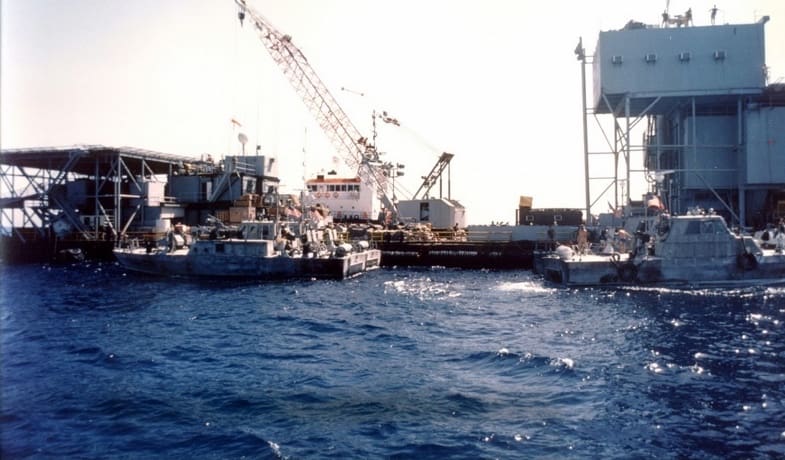
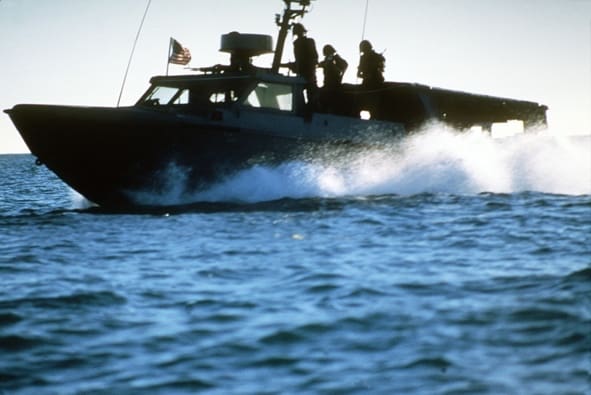
The Task Unit was deployed on two barges, Hercules and Wimbrown, that the Pentagon promptly converted into Mobile Sea Bases (MSBs)complete with their own extensive self-defense weapons. Naval Special Warfare Task Units (NSWTU) was run by a SEAL commander and answered to the regional Naval Special Warfare Task Group. Their mission was to stop Iranian forces from mining the Persian Gulf or otherwise attacking shipping. Each MSB had two detachments of Mark III patrol boats, a SEAL platoon, an EOD detachment, Marines to provide security, army MH-6, and AH-6 Little Bird helicopter gunships and Black Hawk rescue birds, and an air force combat controllers. MSB Hercules was manned by East Coast NSW, SEAL Team Two, and SBU 20 and 24. MSB Wimbrown 7 was manned by West Coast SEAL Team One and SBU 12 and 13. They also had other boats and helos available to them, like the SeaFox.

On September 21, a trio of Little Bird choppers flying off the frigate Jarrett was assigned to shadow the Iranian tank landing ship Iran Ajr,s suspected to have been converted for minelaying. An MH-6 helicopter equipped with a forward-looking infrared (FLIR) sensor and night-vision goggles led the way, escorted by two AH-6 gunships loaded with 7.62-millimeter miniguns and 2.75” rocket pods. The helicopter crews recorded the Iran Ajr’s crew deploying mines next to the Middle Shoals navigational buoy used by tankers. The Little Birds were ordered to open fire, and they opened up on the Iranians with their miniguns, the crew to take cover and did not return fire. The Iranian sailors resumed deploying the mines a half-hour later. This time the 160th pilots unleashed a sustained barrage, including rockets, killing three crew—and causing the remaining twenty-six to abandon ship. The following morning, SEALs on Mark III Patrol Boats rescued all but two of the Iranian sailors and boarded Iran Ajr. They found nine mines onboard and seized a logbook recording past minelaying activity, including maps showing the locations of those mines. Then the Navy towed Iran Ajr’s too deep water and blew her up.

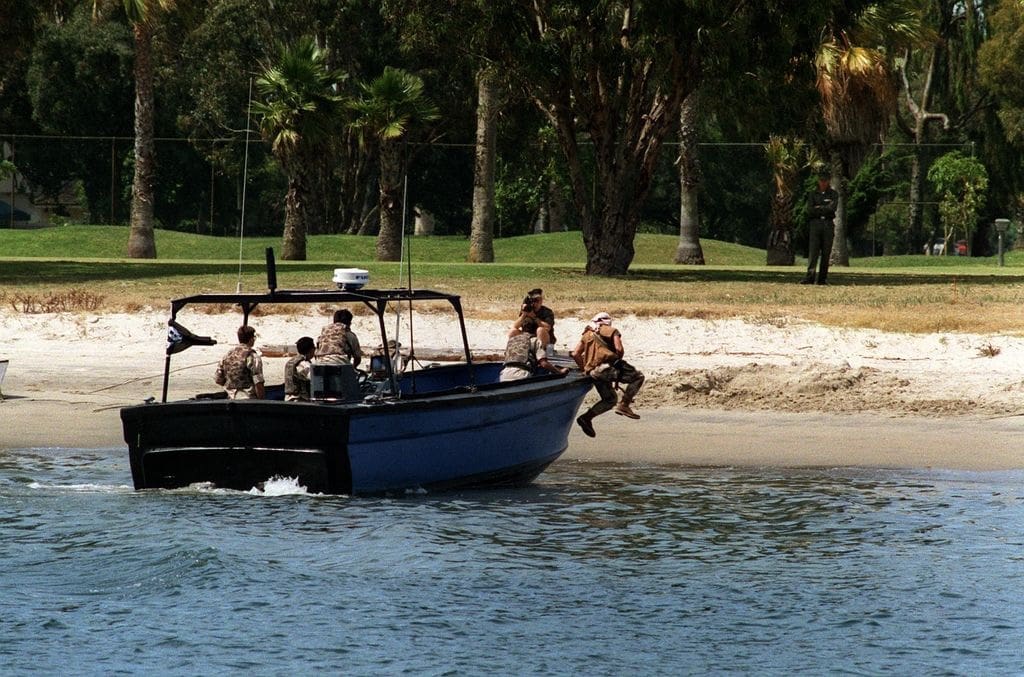
A trio of minigun-armed MH-6 helicopters tangled again with four Iranian ships approaching MSB Hercules on October 8, including a corvette, a Swedish-built Boghammar, and two Boston whaler type boats. The Boghammar’s crew fired Stinger missiles at the scout helicopters before being sunk by return fire. Eight Iranian crew were killed, and six more rescued from the water. One of the Boghammar’s was later brought back and used by SBU-12/13 for the Coronado July 4 demonstrations and as an aggressor boat for exercises in the San Diego area.

When an Iranian missile struck the U.S.-flagged Sea Island City on October 16, injuring eighteen crew, Washington authorized a counterattack three days later called Operation Nimble Archer, resulting in the destruction of two Iranian oil platforms used to host IRGCN boats. 

But Iranian minelaying continued. On April 14, 1988, the crew of the frigate Samuel B. Roberts spotted three Iranian mines and realized she had unwittingly cruised into a minefield. While attempting to back out of danger, Roberts struck a mine that nearly split her in two and injured ten sailors. A heroic damage control effort saved the ship and her crew. Navy divers later identified additional mines in the area—with serial numbers identical to those on the Iran Ajr’s. Four days later, the U.S. launched a second retaliatory strike targeting two more Iranian oil platforms called Operation Praying Mantis. This time frigates and gunboats of the regular Iranian Navy counter attacked, resulting in the U.S. Navy’s largest naval battle since World War II, in which half of Iran’s surface combatants were sunk or crippled.

The Iran-Iraq war ended four months later—but not before one final tragic incident. On July 3, the U.S. Aegis missile cruiser Vincennes was skirmishing with Iranian fast boats, having unknowingly entered Iranian territorial waters, when her radar reported an Iranian F-14 Tomcat fighter was approaching her. The cruiser fired two radar-guided SM-2 missiles at the contact—bringing down Iranian A300 airliner Flight 655, killing all 290 civilians aboard. 

Operation Earnest Will concluded September 26 when the USS Vandergrift escorted a final tanker into the Persian Gulf. The operatives involved in Prime Chance remained active, however, until June 1990.

www.defensemedianetwork.com/stories/ussocoms-first-test-of-fire-operations-prime-chance-and-praying-mantis

A Wing and a Prayer

Sunday, March 1st, 2020

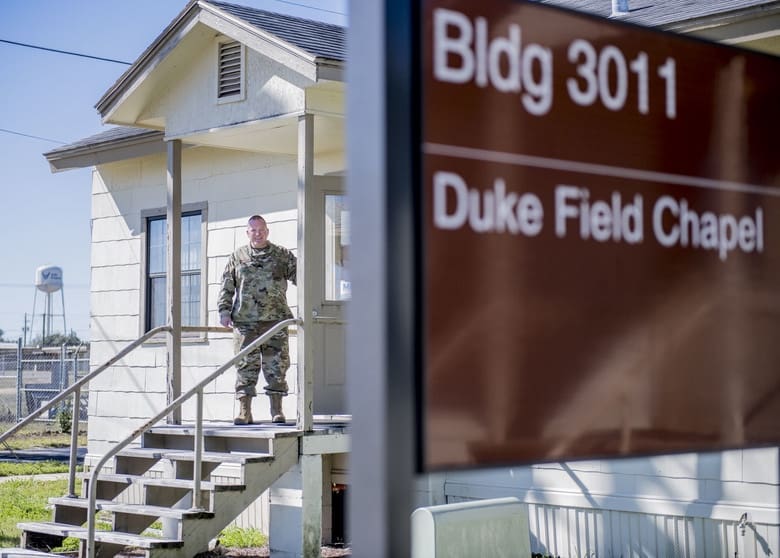
DUKE FIELD, Fla. — The air in the desert is dry, hot, and full of sand. Most Airmen do not speak the language of the locals and are working hard to learn their culture. The work is fast and the days are long the intense Qatar sun. The thirst for relief isn’t just literal, it’s spiritual and the chaplains are on a mission provide deployed Airmen something cold to drink.

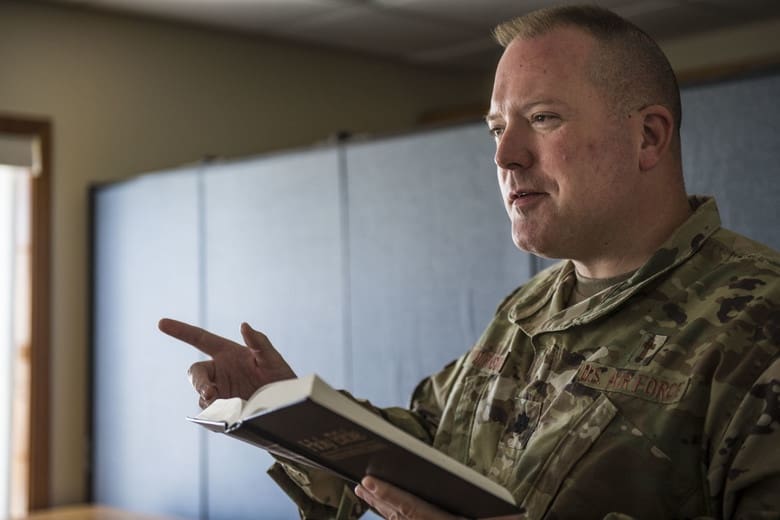
 “The role faith played in building resilience in a deployed environment was very important,” said Chap. (Lt. Col.) Barry Dickson, 919th Special Operations Wing. “I would think it’s important everywhere but especially in the Middle East because people are separated from their families. They’re separated from the normal routine of their lives back home. Their living conditions are less than ideal. Their food is less than ideal. They can’t just buy what they want.”

Some Airmen would watch Netflix or go to the gym to recharge in this environment, but many of them wanted a strong spiritual life, said Dickson.

He knows first hand the challenges of being deployed to an austere location. While on  a six month deployment to the Middle East that began in July 2019, he organized chapel operations and provided counsel to dozens of Airmen. People of faith wanted some semblance of home in a place that’s very different from the United States. The ministry overseas is there to provide that resource to them.

“Depending on the deployment site, the ministry can be very similar to what we do here,” said Master Sgt. Mike Adamson, superintendent of chapel operations for the 919th SOW. “It could be a mixture of administrative duties, counseling and crisis intervention, and unit visitation.”

Adamson doesn’t doubt that Dickson did an outstanding job as a chaplain overseas. His gentle and quiet demeanor makes him approachable when it comes to counseling situations, and his strong faith ensured he was fit regardless of the environment.

“I was the admin guy over there,” said Dickson. “My job was to figure out who’s going to provide the support that was needed. I had to develop a schedule often times when we had multiple prayer requests and events that needed a chaplain to be in attendance.”

He gained equivalent experience as an Active Duty chaplain on a larger base, said Dickson.

“There’s lots of people coming in and out, you have all kinds of programs such as children’s services, and you have limited time and resources to spread out,” he said.

He would often have to make sure his own people were okay while dealing with the high demand for chaplain support throughout the deployed location. For example, he occasionally had to have a junior chaplain fill in for a more seasoned one who had responded to an incident late at night or in the early morning hours.  

Chaplains in deployed environments take steps to ensure they’re prepared to help others, said Adamson. Taking time each day for prayer, meditation or reflection, reading religious material, and maintaining relationships with people who will support and challenge their spiritual journey allows them to stay resilient enough to support others.

“Spiritual resilience is defined as the ability to sustain an individual’s sense of self and purpose through a set of beliefs, principles, or values,” said Adamson. “It’s about having faith in the future and believing there is meaning or purpose to your existence.”

Everyone in the chapel at [the deployed location] was eager to create new programs and get involved to help others, said Dickson. He was inspired by the group’s motivation throughout the deployment.

“Faith can counterbalance deployed living conditions and separation from family,” said Dickson. “It takes on a heightened importance with people in that environment. We managed a very robust program that required a great deal of oversight for a lot of moving parts and were very successful. Deployments are a marathon and you have to learn to pace yourself. At the end of the day, it’s about helping others and I think we did a really good job of that.”

By Senior Airman Dylan Gentile, 919th Special Operations Wing