FirstSpear

Archive for the ‘Guest Post’ Category

US Army Experiments With Robotic Combat Vehicles

Thursday, July 18th, 2019

Soldiers to operate armed robotic vehicles from upgraded Bradleys

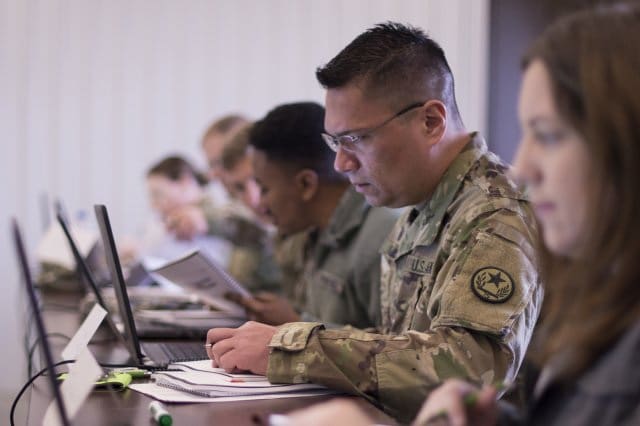
AUSTIN, Texas — Soldiers are slated to fire at targets next year using a platoon of robotic combat vehicles they will control from the back of modified Bradley Fighting Vehicles.

The monthlong operational test is scheduled to begin in March at Fort Carson, Colorado, and will provide input to the Combat Capabilities Development Command’s Ground Vehicle Systems Center on where to go next with autonomous vehicles.

The upgraded Bradleys, called Mission Enabler Technologies-Demonstrators, or MET-Ds, have cutting-edge features such as a remote turret for the 25 mm main gun, 360-degree situational awareness cameras and enhanced crew stations with touchscreens.

Initial testing will include two MET-Ds and four robotic combat vehicles on M113 surrogate platforms. Each MET-D will have a driver and gunner as well as four Soldiers in its rear, who will conduct platoon-level maneuvers with two surrogate vehicles that fire 7.62 mm machine guns.

“We’ve never had Soldiers operate MET-Ds before,” said David Centeno Jr., chief of the center’s Emerging Capabilities Office. “We’re asking them to utilize the vehicles in a way that’s never been done before.”

After the tests, the center and Next-Generation Combat Vehicle Cross-Functional Team, both part of Army Futures Command, will then use Soldier feedback to improve the vehicles for future test phases.

“You learn a lot,” Centeno said at the International Armored Vehicles USA conference on June 26. “You learn how they use it. They may end up using it in ways we never even thought of.”

The vehicles are experimental prototypes and are not meant to be fielded, but could influence other programs of record by demonstrating technology derived from ongoing development efforts.

“This technology is not only to remain in the RCV portfolio, but also legacy efforts as well,” said Maj. Cory Wallace, robotic combat vehicle lead for the NGCV CFT.

One goal for the autonomous vehicles is to discover how to penetrate an adversary’s anti-access/aerial denial capabilities without putting Soldiers in danger.

The vehicles, Centeno said, will eventually have third-generation forward-looking infrared kits with a target range of at least 14 kilometers.

“You’re exposing forces to enemy fire, whether that be artillery, direct fire,” he said. “So, we have to find ways to penetrate that bubble, attrit their systems and allow for freedom of air and ground maneuver. These platforms buy us some of that, by giving us standoff.”

PHASE II, III

In late fiscal year 2021, Soldiers will again play a role in Phase II testing as the vehicles conduct company-level maneuvers.

This time, experiments are slated to incorporate six MET-Ds and the same four M113 surrogates, in addition to four light and four medium surrogate robotic combat vehicles, which industry will provide.

Before these tests, a light infantry unit plans to experiment with the RCV light surrogate vehicles in Eastern Europe next May.

“The intent of this is to see how an RCV light integrates into a light infantry formation and performs reconnaissance and security tasks as well as supports dismounted infantry operations,” Wallace said at the conference.

Soldier testing for Phase III is slated to take place mid-fiscal 2023 with the same number of MET-Ds and M113 surrogate vehicles, but will instead have four medium and four heavy purpose-built RCVs.

“This is the first demonstration which we will be out of the surrogate realm and fielding purpose builts,” Wallace said, adding the vehicles will conduct a combined arms breach.

The major said he was impressed with how quickly Soldiers learned to control the RCVs during the Robotic Combined Arms Breach Demonstration in May at the Yakima Training Center in Washington.

“Soldiers have demonstrated an intuitive ability to master controlling RCVs much faster than what we thought,” he said. “The feedback from the Soldiers was that after two days they felt comfortable operating the system.”

There are still ongoing efforts to offload some tasks in operating RVCs to artificial intelligence in order to reduce the cognitive burden on Soldiers.

“This is not how we’re used to fighting,” Centeno said. “We’re asking a lot. We’re putting a lot of sensors, putting a lot of data in the hands of Soldiers. We want to see how that impacts them. We want to see how it degrades or increases their performance.”

The family of RCVs include three variants. Army officials envision the light version to be transportable by rotary wing. The medium variant would be able to fit onto a C-130 aircraft, and the heavy variant would fit onto a C-17 aircraft.

Both future and legacy armored platforms, such as the forthcoming Mobile Protected Firepower “light tank,” could influence the development of the RCV heavy.

With no human operators inside it, the heavy RCV can provide the lethality associated with armored combat vehicles in a much smaller form. Plainly speaking, without a crew, the RCV heavy requires less armor and can dedicate space and power to support modular mission payloads or hybrid electric drive batteries, Wallace said.

Ultimately, the autonomous vehicles will aim to keep Soldiers safe.

“An RCV reduces risk,” Wallace said. “It does so by expanding the geometry of the battlefield so that before the threat makes contact with the first human element, it has to make contact with the robots.

“That, in turn, gives commanders additional space and time to make decisions.”

By Sean Kimmons, Army News Service

SPARTANAT – Corvus Defensio puts Micro piggyback on Trijicon

Thursday, July 18th, 2019

Corsus-TA33-APM-5

The Corvus Defensio Aimpoint Micro assembly fulfills one of our long cherished wishes. With regard to optics systems for assault rifles and semi-automatic rifles, we have long been convinced by so-called “piggyback” solutions for many different reasons. Since nothing can replace a classic red dot sight without magnification – and parallax free at best – in close range and any lighting condition, modern rifles in sports and military are most likely seen with these kind of sights. But in both areas, these weapons can be used effectively up to 500 meters. Here (and in the area of target identification also at closer distances), however, magnifying optics are of greater advantage. One approach is to use variable magnification optics, which can typically be magnified from 1-3x up to 1-10x and used as a red dot sight at simple magnification. The disadvantage of these systems, however, is usually that even with 1x magnification it must be targeted through an optical lens system, including effects such as exit pupil, correct eye relief, sometimes slight distortions and the so-called “eye box” (the picture is only visible in a limited area). Furthermore, each time the magnification is to be adjusted, the support hand must be removed from the weapon to operate any kind of lever.

Corsus-TA33-APM-1

With piggyback systems one can combine the advantages of both “optics worlds”. But these solutions bring various disadvantages. In most cases, the height of the piggyback mounted red dot sights is too high to ensure a neat attack with at least the touch of the chin to the stock. In addition, the red dot sights used are almost exclusively mini red dots based on the principle of open construction (eg Docter Sight, RMR, MRDS, etc.). This makes them particularly susceptible to contamination, as even a small foreign body over the exit point of the light beam causes the point to be invisible.

Corsus-TA33-APM-3

Corvus Defensio now dares claim to have developed a solution for the most compact, elegant, robust and reliable Red Dot / Optic combination. For the first time it is possible to combine our personally favored optics of both worlds, namely a Trijicon TA33 Compact ACOG with an Aimpoint Micro (H and T models, version 1 and 2 as well as Holosun derivatives) with the lowest possible height. These advantages are particularly evident when this combination is used with a Steyr AUG with the special Corvus Defensio housing rails, as this further reduces the overall height.

Corsus-TA33-APM-2

The Corvus Defensio TA33 APM mount allows direct attachment of Aimpoint Micro and Holosun red dot sights to Compact ACOGs of the TA33 series with mounting bumpers originally designed for Trijicon’s RMR series. Attachment of an Aimpoint Micro still allows ACOG height adjustment control and can be fitted with a clear, hinged Aimpoint protective cover to prevent dirt from entering the assembly and obscuring the ACOG’s eyepiece. Like all our products, the assembly is made of high quality 7075 aluminum and is milled from solid and hard anodized.

This is a direct link to TA33 APM photo Montage from Corvus Defensio.

CORVUS DEFENSIO: www.corvusdefensio.com
SPARTANAT: www.spartanat.com

Brigantes Presents – High Angle Solutions -Steripen Adventurer Opti UV Water Purifier

Wednesday, July 17th, 2019

When working in remote areas, accessing fresh, clean water is not always achievable. When on exercise or being on deployment, having this access is essential to ensure vital operations aren’t inhibited by illnesses caught from bacteria, viruses and protozoa.

The SteriPEN adventurer is the solution to this problem. Ultraviolet (UV-C) light rays safely purify clear water by destroying 99.9% of the pathogens mentioned above. (including Giardia and Cryptosporidia) When the treatment is complete, LED indicators flash to let you know that the water is safe to drink, ensuring clean water from any source within a matter of minutes.

Adventurer Opti is powered by two CR123 batteries making it a lightweight water purification system and keeping it operating effectively in even cold environments. The long-lasting UV lamp provides purifies up to 8,000 litres. Works in containers with a minimum 1.75 inch diameter opening. (Like Nalgene wide-mouth bottles one litre bottles. The SteriPEN doubles up as an integrated LED flashlight for added convenience. By holding down the activation button for three seconds, it will illuminate the darkness making the device easy to work even in the darker hours.

One caveat with ultraviolet purification is that it only works in clear water. Murky water blocks the UV light and prevents it from killing contaminants. If dealing with murky or cloudy water you will need to pre-filter with a product like the Katadyn Pocket Water Filter or similar device. 

For international sales contact international@brigantes.com

For UK sales contact warrior@brigantes.com

SPARTANAT: Outer-Limits EXPERIENCE WEEK For Combat Divers

Wednesday, July 17th, 2019

The diving equipment company outer-limits is not only providing solutions for special forces they also lures them in to the mountains. There, at a lake, an international, professional clientele gathers to introduce the latest devices for working underwater. We were there last year and show you everything for Combat swimmers and amphibious forces.

Outer Limits 19 Logo

The EXPERIENCE WEEK of outer-limits usually pushes operators to their limits. At least as far as the weather is concerned. Traditionally, it is rather cold and rainy. Last year, due to climate change: warm and sunny. The dive center on the lake offers ideal working conditions, the container serves as material store, the tent as an exhibition hall for the latest diving equipment.

outerlimits 18 2

Who works, should keep it easy. Every gram counts. RolaTube masts are made of composite material and can be rolled up easily. It does not always has to be an antenna.

outerlimits 18 3

outer-limits designed adapters and grappling hooks for the top, as well as an ultra-light flexible fabric ladder to make the boarding if not a snap, but a pleasure.

outerlimits 18 4

Advanced Scuba Diving Solutions are offered by SHARK MARINE. With floating GPS antenna, so the connection does not break off, as well as with DNS function for navigation without any surface connection.

outerlimits 18 29

The outer-limits EXPERIENCE WEEK is also very popular among special forces because the latest equipment can not only be viewed, but also experienced. Here it goes with sharkmarine directly into the water.

outerlimits 18 16

Into the water, perfectly equipped by outer-limits: divers with SIELMIMANO MK4 rebreather, outer-limits RIPSTOP drysuit and outer-limits tarable and submersible backpack. The Ops-Core BUMP helmet, the SCUBAPRO diving goggles with the tactical HUD, in addition with the navigation aid DIVE TABLET 2 from SHARK MARINE. Perfectionists are using fins with the new, stick-on camouflage strips in Multicam by SCUBAPRO.

outerlimits 18 24

Breaching is not just on land. Here are the underwater chrushing and spreading tools from LIBERVIT. It is a hydraulic system that operates completely independently off the surface. LIBERVITis the only manufacturer worldwide that offers such a surface-independent system.


outerlimits 18 25

The whole thing is complemented with a classic set of crushing and spreading tools from LIBERVIT.

outerlimits 18 30

Everything is ready for your use on the peaceful lake: crushing and spreading tool from LIBERVIT.

outerlimits 18 31

Off to the water and try it out personally.

outerlimits 18 5

Indigo Tactical offers special fins for emergency responders. The shutter looks like a ski boot

outerlimits 18 11

or can work with Velcro. The upper part is screwed to the fin, which is available in different sizes. The lateral stiffening parts are available in different degrees of hardness.

outerlimits 18 6

Knowing where to dive is one of the key challenges. UWIS from Finland has a practical solution for it.

outerlimits 18 8

The GPS system, triangulates the position of the diver and can be used where to prepare the dive.

outerlimits 18 14

The UWIS transmitter floats in the water.

outerlimits 18 9

The UWIS Tablet shows the exact position of the diver.

outerlimits 18 7

The complete, practical system comes in a suitcase.

outerlimits 18 26

Combat swimmers do not always have to rely on their physical condition: SUEX offers a variety of DPV’s and DPD’s (Diver Propulsin Vehicles and Diver Propulsion Devices) and DTC (Dry Tube Containers). These devices allow approaches from up to 25km away.

outerlimits 18 15

Ready for use: In front of the water a dive container with 30 liters (there are also 40, 80 and 120 liters), which is moved by combat swimmers with DPVs. SUEX is the world leader in the design and manufacturer of these specialized military devices. outer-limits is Senior Consultant of SUEX and responsible for international authority business as well as for training and education. Incidentally, the diver wears SCUBAPRO scuba diving goggles with the tactical Galileo HUD (Heads-Up Dive Computer), a full dive computer with GPS.

outerlimits 18 13

This is “heavy duty”: a diver equipped with the DEEP SEA system returns ashore. The DEEP SEA helmet is made of carbon, thereforeit is much lighter than other models. The production takes place in Switzerland at COMPOSITE Beat Engel.

outerlimits 18 12

The camouflage pattern from outer-limits is called chameleon. outer-limits dry suits are the ideal, durable workwear for amphibious special forces. Some drysuit models are also FR / flame retardant and have a minimized IR signature.

outerlimits 18 18

Always ready for action: the rebreather Mk4 CSC TWIN from SIEL/OMG has also been tested extensive. SIEL / OMG offers, as well as others, A-MAG and LOW-MAG versions. Enclosed the outer-limits drysuit suit for special forces in NATO green.

outerlimits 18 end

Quiet activity at the mountain lake. All special equipment is thoroughly tested.

outerlimits 18 23

Special production of a weapons bag from outer-limits for an international special unit. The weapon with optics is packaged waterproof during the dive. In case of emergency, glove penetration guarantees that the operator can shoot from the shell.

outerlimits 18 28

If you go diving, you need rock boots. Altama OTB Maritime Assault have prevailed internationally for easier tasks. They are also available at outer-limits.

outerlimits 18 27

On the lake: SR TACTICAL from Germany. Produced in cooperation with outer-limits an amphibious plate carrier, and also a weapon light which is submersible.

outerlimits 18 21

At the end of an outer-limits EXPERIENCE WEEK day, it´s getting quiet on the lake.

outer-limits is the international distributor for all those companies who presented their products at EXPERIENCE WEEK. All the equipment shown and the corresponding training are available via outer-limits. Contact: office@outer-limits.at

Outer limits on Internet: www.outer-limits.at

SPARTANAT: www.spartanat.com

Task Force Dagger Assists Department of POW/MIA Accounting Agency in Repatriating American Casualties from the Battle of Saipan

Monday, July 15th, 2019

From the hand of Mark Stephens, USA (Ret):

It is my honor to be a part of something so humbling this 75th Anniversary of events that occurred in 1944 during WWII. Out of respect to the families and a much deserved notification process I am not at liberty to discuss our mission in great detail but what I can say is we are returning to Saipan to look for and excavate WWII losses from the Battle of Saipan. We will be excavating a site possibly associated with a F6F-3 Hellcat that was found by our team last year. Several Hellcats were lost during 1944 and we are hoping to excavate and correlate the site with a loss with the hopes of a recovery. Also we will be searching for a B-29 that went down with the entire crew on a mission in 1944. It will involve magnetometer, side scan sonar, and ROV investigation followed by shallow to deep CCR (rebreather) target diving.

The mission is a continued collaboration and teaming of the Department of POW/MIA Accounting Agency (DPAA), East Carolina University Marine Archeological Department (ECU) and Task Force Dagger Foundation (TFDF). The TFDF team will be made up of some of our leadership/staff and SOF members that need Mission, Purpose and Focus. These three words, implemented, are incredibly important and impactful to those the foundation serves and supports.

We have received support from many in industry and other great Americans. These types of missions need to continue. It’s great to see so many knowing we can never forget! This is a promise our country made to everyone that has or is serving in our military.

www.taskforcedagger.org

New Cyber-Enabled System Provides a Key Countermeasure to Drone Threats

Sunday, July 14th, 2019

MOJAVE DESERT, Calif. — In the desert of the National Training Center, Soldiers got an opportunity to try something completely new. Along with the challenges of 14 grueling days of force-on-force and live-fire training exercises, the 3rd Brigade Combat Team, 1st Cavalry Division (3/1 CD) tried out a cyber-based prototype that complements electronic warfare systems to combat enemy drones, which are a growing threat to U.S. ground troops.

Using the Army’s enhanced cyber-enabled Counter-Unmanned Aerial System (C-UAS) capability, Soldiers with the 3/1 CD were able to detect and counter common small drones during their training. The new prototype alerted Soldiers to the presence of a drone and provided a means to target it, for protection across the brigade.

This integration of cyber-enabled prototypes with existing signal, intelligence and electronic warfare capabilities allowed the Soldiers to fix on a target and engage their fires cell, said Capt. Christopher Packard, electronic warfare and cyber electromagnetic activities chief for the 3/1 CD.

“That’s the goal right there, to reach the commander’s end state and to meet his intent for lethal targeting–those are some of the main concepts to focus on,” Packard said. “I think we’ve done well here, getting intelligence information as it’s passed …. that we can use for targeting. I’m looking forward to seeing where this goes in the future.”

CYBER SOLUTION SOUGHT

While the Army has a wide variety of solutions to counter drones, the new capability focused on bringing precision cyber techniques to bear as a complement to those other C-UAS systems. A small group of software developers within the U.S. Army Cyber Command (ARCYBER) and the Defense Digital Service custom-built software, developed a user-focused design and modified commercial off-the-shelf equipment to create pilot systems in early 2018.

Growing demand for a more robust and scalable solution generated a need for a rapid prototype. The Defense Digital Service completed the specialized software of the pilot system and transitioned development of a prototype to the Army Rapid Capabilities and Critical Technologies Office (RCCTO), which crafted an acquisition approach that integrated software and hardware. Working with Tobyhanna Army Depot and ARCYBER, RCCTO launched prototype production in November.

In less than three months, the integrated team sprinted and surged to deliver the new cyber C-UAS capability to the 3/1 CD. The new system is an interim solution that will continue to evolve as the Army applies direct Soldier feedback to improving design and performance. The integrated team is incorporating feedback from the unit’s rotation at the National Training Center (NTC) at Fort Irwin, California, which took place Jan. 7-25, as they develop a phase two prototype, to be delivered later this summer.

“This effort allowed the 3/1 CD to receive valuable C-UAS training ahead of their upcoming mission set,” said Jack Dillon, RCCTO’s cyber lead. “It also provided critical feedback that we are already feeding into the next version.”

A FAST-MOVING TEAM

Receiving a request to produce a never-used-before, cyber-enabled C-UAS on Aug. 22 and delivering it by Nov. 12 is not business as usual. However, ARCYBER, RCCTO and Tobyhanna, working in lockstep, were able to deliver.

“The RCCTO and Tobyhanna helped out with taking it from an advanced prototype and turning it into an engineering design model,” said 1st Lt. Aneesh Patel, with ARCYBER’s Cyber Solutions Development Detachment — Georgia, 782nd Military Intelligence Battalion, 780th Military Intelligence Brigade. “We designed our own hardware and schematics, but what we didn’t have was the proper ability to scale, and I think that’s important in a bridging strategy and for any prototype.”

The ability to turn a concept into a small package of operational prototypes for use by a unit required a proper yet flexible acquisition strategy that would also set the foundation for increased production later. In turning a concept into an operational prototype, Tobyhanna had to put together a complete drawing package using items from the depot and create the prototype while keeping to strict quality standards.

“We must do everything per Army regulations,” said Joe Lynn, a project manager for Tobyhanna Army Depot, located in Pennsylvania. “So, once everyone came on-site and saw what we do here, and that we’re basically a one-stop shop from concept to combat, it brought a better understanding.”

The process also required constant communication. This came in the form of coordination on the ground during the NTC rotation with the unit’s electronic warfare Soldiers, and during biweekly technical and synchronization meetings involving Tobyhanna, ARCYBER, the Defense Digital Service and RCCTO. Tobyhanna also hosted multiple face-to-face meetings to expeditiously solve technical questions and challenges. On the project management end, RCCTO worked in parallel to address typical program, legal and budget reviews. Of particular note, in addition to constructing the prototype from an engineering concept, the RCCTO, ARCYBER and Tobyhanna put in place a training plan for the 3/1 CD.

SOLDIER INPUT, ON THE GROUND

This rapid approach unfolded on the ground at NTC, as Soldier input went directly to engineers on-site so that they could make changes quickly, sometimes within hours.

“Having that agility really made it possible to have mission success and also to get a lot of feedback to better the system,” Patel said. “Being a newer system and a new tool for a maneuver unit, there are going to be a lot of things we don’t know as [cyber] engineers, and a lot of their specific needs for the capability that may not have gotten through to us. So being out there was very important to this and any other project like it.”

For example, to enhance the overall training experience, RCCTO, Tobyhanna and ARCYBER were able to quickly design and deliver custom mounting systems consisting of cables, brackets and other hardware for vehicle and fixed-site implementation during the prototype deployment at NTC. This fixed-site configuration, part of the unit’s tactical operations center (TOC), was a new design put together days before the unit received it, and proved paramount to Soldiers’ effectiveness in using the system.

“We fielded a completely new configuration kit, the TOC kit,” said Capt. Adam Schinder, commander of the Expeditionary Cyber Support Detachment, 782nd Military Intelligence Battalion. “It was perhaps the most successful implementation of the C-UAS solution. As a result of being statically configured and continuously monitored and plugged in, the unit found the TOC kits extremely successful.”

During the 3/1 CD’s rotation, ARCYBER embedded five Soldiers with the NTC’s opposing force who had the ability to attack the unit with their own “enemy” drones, thus providing more realistic training.

“The system was able to give the supported unit situational awareness of drones that threatened the formation across a wide front,” Schinder said. “It alerted the unit to the presence of the drone, and then it provided automated force protection at the request of the operator. Simply put, we flew the drones, we deployed the devices and we successfully defeated the threat.”

CONCLUSION

This phase-one cyber precision drone detection system will be followed by an upgraded phase-two version slated for delivery to the U.S. Special Operations Command for an operational assessment this summer. Phase two will maximize the capability’s operational life span by incorporating multiple software updates to improve performance. Both efforts will begin to help inform the Army’s overall requirements for cyber-based C-UAS.

Already, RCCTO and ARCYBER are coordinating with partners in the C-UAS community to optimize investments and share technical cyber approaches. They are also advancing new versions that are software-based for easy portability into mounted and dismounted C-UAS platforms.

“Ultimately, the momentum gained through this partnership will increase cyber integration into equipping efforts within the multidomain operations paradigm,” Dillon said. “It’s a great example of the type of partnership that can produce meaningful operational prototypes while setting conditions for transition to programs of record.”

By Nancy Jones-Bonbrest

This article is published in the Summer 2019 issue of Army AL&T magazine.

SCUBAPRO Sunday – Blisters

Sunday, July 14th, 2019

When you are doing a lot of diving, or you dive for the first time in new fin or a new dive shoe/ boots, you might tend to rub raw spot on the tops of your ankles, the backs of your heels or even on your toes. If you don’t have the option and you have to dive for whatever reason, say you are in the middle of your work up, or you are overseas and as part of your job you have to dive.  

Prevent Blisters

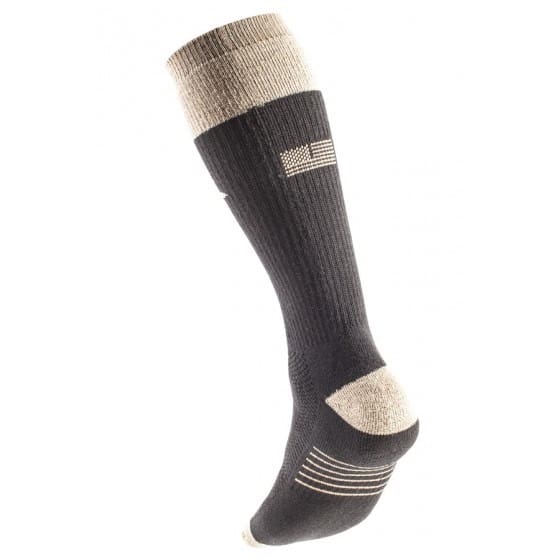
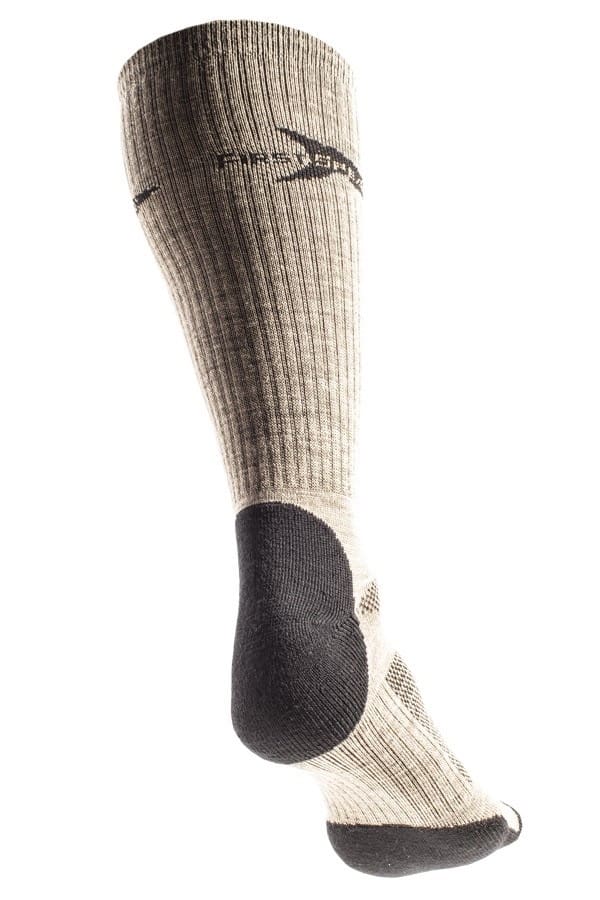
There are different types of socks for diving, neoprene, lycra, and the good old fashion wool dive socks, to help keep your feet warm and also protect from blisters. You can also try and wear everyday athletic socks. Wearing socks under your dive boots stop the booties from rubbing against your skin. Instead of rubbing against your ankles and heels, the boots rub against the socks. Socks also make donning and doffing your wetsuit easier. This is a good bonus for wearing socks. Even if your dive boots fit you perfectly, they still may rub your foot raw, if you dive enough or you get sand in your booties when you go thru the surf to get sand in your bootie. Wearing socks can help prevent some of these problems.

First, I am not a doctor, so take all of this as you will. I know there are 100s of ways to do this. This is what I have done in the past, and it worked for me

Treating Blisters

The key to preventing blisters is to eliminate friction. Shoes and boots should be well broken in, and you should make an effort to keep your socks as dry as possible by changing them when your feet get hot and sweaty or by taking your shoes or boots off periodically to let your feet and socks dry out when you take a snack break. That is how it is done on land, but in the water, you will be wet. So you will need to try and keep sand out of your booties as much as possible. If you are diving something new. Start with a short duration dive so you can break it in.

So there are basically two ways to treat a blister. First is to leave it alone and not pop it and treat by keeping it intact and basically leave it alone, time will heal it.  Drain it if needed. Second is to pop the blister. Once it is popped the best thing to do is treat it with Tincture of Benzoin. This will hurt, but it will help dry it out faster. Cover it with something the same way you usually would. Most people say to cut the center out of a bandage, so it looks like a donut and put it around it. Then put another one on top of the first one. This is to help stop the bandage from sticking to it. This can also be done with duck/riggers tape. Once a blister has been broken, it should be cleaned, disinfected, and then bandaged. Before bandaging the wound, an antibiotic ointment should be applied. Research has shown that the application of Neosporin or triple antibiotic gel will help kill off infecting bacteria after two applications and accelerate the healing process.

Unbroken blisters that are painful should be drained. This is caused by the build-up of fluid in the blister, so removing it will help relieve the pain. First, disinfect the area. Prick with a clean sterilized needle. Leave the skin overlying the blister in place to prevent infection. Apply antibiotic gel to the site of the needle pricks and cover with a bandage. After your dive replace the dressing at some point. You can let it dry out overnight if you want.

Tincture of Benzoin on a q-tip is a bonding agent that can also be used to seal the roof of the blister to the exposed skin underneath. It already contains alcohol, so a separate application is unnecessary. It will hurt, but it will help dry it out, and it should heel faster.


FirstSpear Friday Focus – FirstSpear V17 Catalog

Friday, July 12th, 2019

Now available for digital download, FirstSpear has launched their latest catalog, V17. Check out some of the latest advancements in land and maritime based body armor technology, technical apparel, and more.

Or, you can download it at www.first-spear.com/first-spear-catalog.