When I was a younger soldier, I thought that leaders were – by definition – “problem solvers.” For a time, I was convinced that leaders had the duty and the power to “fix” almost anything. In the 1990s, we even babbled in professional forums about the need to evolve into “full-spectrum” or “multi-dimensional” problem solvers. However, long before that, I came to realize that definitively solving problems is rarely something that a leader – no matter how senior or experienced – has the authority, capability, opportunity, or realistic possibility of actually accomplishing.
What I found over the years is that leaders almost invariably can do little more than ameliorate (make something bad or unsatisfactory better) problems – not solve them. Complex human conundrums in peace and war rarely lend themselves to simple, singular solutions. Instead, those kinds of difficult challenges demand trial and error and a series of continuous and incremental decisions on the part of leaders. In other words, at any particular point in time, a leader likely only has the power to impose a modicum of order on whatever chaotic dilemma their unit might be facing. Therefore, as leaders, we have to recognize – but remain undaunted – by our limitations and strive to become masters of the art of timely and “good enough” decision-making.
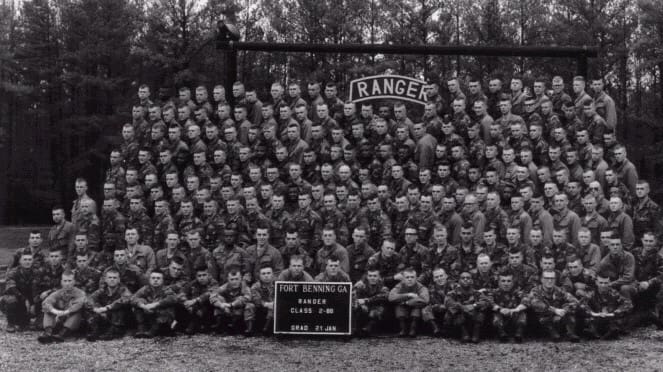
Although the principle I am talking about applies to military leadership anytime and anywhere, I think it is appropriate to use my Ranger School experience to illustrate the point. Indeed, Ranger School is all about good enough leadership. Also, since many of the readers on SSD have been there, much of this will be very familiar. The school focuses on leadership and uses the vehicle of small unit combat actions to stress and test students. That means countless iterations of ambushes and raids. Initially, students work in squads at Fort Benning and there were a couple of company-sized missions in the Desert and in Florida when I went through: however, the majority of patrols are at the platoon level
I attended the school in the 1980s and would not deny that some of the details are a little fuzzy after all these years; but I will tell the story as I remember it. The school was 64 days long at the time divided into 4 phases at 4 different locations (Benning, Mountains, Desert, and Swamp). As was normal then, and probably still is now, the majority of the students are fresh-minted lieutenants and specialists from the Ranger Battalions. That was about 85% of my class. Beyond that, there was a handful of NCOs from various other units and a few more seasoned officers. We had two captains, so I was not the most senior student in my class. However, having already been in the infantry ~ 12 years at that point, I was – no doubt – the most experienced in small unit tactics.
Because of my time in the infantry, I also had a good understanding of how Army schools work. Therefore, the methodology behind the process was not as new or mysterious for me as it was for some of the younger candidates. For instance, like most Army schools, Ranger School intentionally racks and stacks students so that not all of the most experienced or least experienced people cluster in any one training platoon. Likewise, all the other sub-categories of students were evenly distributed across the class. For example, we had a half dozen NCO cadre (SSG and SFC) from the Sapper Leaders Course, 5 USMC Lieutenants and 10 or 11 International Students. One of each ended up in the squad I was in and a Turkish Commando became my Ranger Buddy.
A Ranger Class is not a normal unit; nonetheless, it does become a more cohesive entity over time. Some students drop out or get recycled at the end of each phase and a handful of recycles from the last class join at the beginning of each new cycle. Still, the core of the squad and platoon I started with were still there at the end and we became pretty tight. There is an internal logic to the training, but it is an artificial environment and only simulates some aspects of combat. For one thing, rank and experience is generally irrelevant – but not entirely. The Ranger Instructors (RIs) do (rightly) expect the more senior students to display leadership skills sooner and more consistently than they expect immediately from the youngsters.
Every Ranger student is cautioned many times about being a “Spotlight Ranger.” That is someone who only puts out maximum effort when he is in a leadership position but otherwise tries to lay low and coast. It should be obvious that if one does not voluntarily shoulder a fair share of the burden and then some to help a buddy get a “go” than that buddy will not be inclined to do the same for you when it is your turn to be a leader. Still, some have to learn that lesson the hard way. In my experience at the school, spotlights who did not quickly correct themselves did not fare well and frankly were glaringly obvious to the other students and the RIs.
However, conversely, directly assisting a buddy in decision-making was strictly prohibited. I got a minus (negative) spot report early on while trying to quietly “coach” one of the younger guys leading a patrol for the first time. The RI used me as a bad example and explained to the entire patrol that the designated leaders were being graded on their leadership and each student has to meet or fail that standard individually. In the end, everyone has to carry their own ruck. Obviously, that is the central premise of the school. Of course, I already knew that but managed to step on my crank anyway. As a side note, the same RI took me aside and confided that the cadre would generally give me a little more latitude when helping my Turkish Ranger Buddy since English was not his first language.
Rank and experience were also subtly factored into leadership rotations. For a platoon sized patrol there was a Patrol Leader (PL), an Assistant Patrol Leader (APL)(the APL was often referred to by the RIs as “Platoon Sergeant”), and 3 or 4 Squad Leaders (SL) – depending on the size of the platoon. Usually a phase would start with 4 squads and by attrition go down to 3 by the end of the phase. When a new chain of command was put into place, it was usually a mix of stronger guys and some that might be struggling. It was also noticeable that in the last 3-4 days of a phase some students would start getting back-to-back leadership positions. This was so that someone at risk of recycle – but salvageable – would have the extra chance to get a “go” and improve their record.
There was one particular instance during my class when the deck was clearly stacked with only the most experienced students. That was the culminating company sized live fire raid in the desert at Dugway, Utah. Unlike more routine missions that often saw multiple leadership changes after planning, movement, actions on the objective, and occupation of a post mission patrol base, the live fire had the same leadership team throughout. That was immensely helpful. Not surprisingly, the mission went off without a hitch and the student leaders all got a “go” for their efforts. In fact, the PL got what was called an “Honor Grad Go” for not screwing it up. I was that PL.
Less than 24 hours later, we jumped from C141s into Florida for our final phase of Ranger School. We were a winter class, it had been dry but very cold at Dugway, and we were all looking forward to a warmer clime. Ironically, because we were constantly wet, we shivered and hovered close to hyperthermia more in the swamps than we ever had in the desert or even the mountains. The fact that we had no body fat left to speak of did not help either. We did some river crossing exercises, rope bridges and small boats the first few days and then right into patrolling. By that time, we were fully drilled in the SOPs of the school and worked well together. However, we were collectively and individually very tired and the sleep deprivation over time can impede even the hardest chargers or the best units.
That brings me to the very last patrol of my Ranger Class. I had already been in leadership positions in the swamps several times. Twice as PL, one APL and 2-3 SL positions. Based on the post patrol debriefs by the RIs I was reasonably confident that I had gotten at least a qualified “go” in each case. The RIs rarely left any doubt if you were a “no go.” None of the students knew exactly when we would get to that final mission but we were aware the end was near. We also knew that several guys had not / were not doing well. One young lieutenant had been the PL just the night prior and had done poorly. The patrol itself had not gone too badly, but that was only because the other leaders held it together. The PL’s leadership – or lack thereof – had been irrelevant to the outcome. He knew that, was one depressed puppy, and fully expected to be recycled.
Therefore, I am sure he was surprised to be called on again to be PL so soon. I was equally surprised to be designated as the APL for that last ambush patrol. To round out the team one of the SLs was a stud from the Sapper Leader Couse and the other two were at risk and, like the PL, also really needed a “go.” To be clear, none of us needed a “no go.” The first part of the patrol, planning and movement, went routinely. I did the APL tasks like equipment and personnel accountability. Mostly that meant I ran after students that started to wander away from the column in a stupor thereby preventing breaks in contact. I was positioned at the tail of the platoon with two RIs. Another RI was with the PL forward. It was very a bright moonlit night and we were moving through relatively open, flat ground. Every so often, a student would make a 90 degree turn and chart his own route. The RIs would laugh and tell me to get after him. I would put the sleepwalker back in place by hand and make him hold on to his buddy’s ruck. After a short time, the platoon looked more like a conga line than a unit in mock combat – but we did what we had to do. Zombie herding 101.
Occupying the Objective Rally Point (ORP), leaders’ reconnaissance and occupation of the ambush site went without incident. So far so good. Indeed, despite being extremely tired, the platoon was doing what it had been trained to do. In fact, things were going too smoothly and the leaders – me included – were not really being tested up to that point. That was about to change. The ambush site was flat and also sparsely wooded and a one-lane firebreak road ran parallel to our ambush line. As was the school SOP for APLs, I was with the support element (two M60 machinegun teams) on the left flank and at an angle to the assault element (classic L-Shaped Ambush formation). As expected in our mission planning, a single truck moved into our kill zone from our right to left. The PL initiated the ambush with claymores (grenade simulators) and we poured on the blank fire.
At this point, the RIs intervened and things started going in a different direction. The assault element had been expected to assault across the objective, search the truck, recover a piece of “sensitive” enemy communications gear from the back and destroy the truck with a satchel charge upon withdrawal. None of that happened. Only half the assault element moved forward at all and no one crossed the road. Additionally, the RIs designated two casualties just off the road immediately behind the truck. Moreover, the 2-3 enemy soldiers from the truck had not been killed or wounded by our fires but rather had taken up positions on the other side of the truck and were engaging us and preventing the immediate retrieval of our wounded. In other words, we had failed to secure the objective.
“So, PL, what are you going to do?” I heard one of the RIs say as I joined the PL. Now, to be fair, the PL had not made any glaring mistakes to that point. However, as with the earlier patrol, he had yet to display any real leadership under pressure. The dilemma we were in was certainly artificial and of the RIs making, but it was entirely up to the PL to ameliorate the situation. Instead, inexplicably, the PL decided to simply reinitiate the ambush. So we did that. In the second iteration, we fired off every last blank we had. Nothing changed. The RIs informed the PL that our fires were ineffective and the volume of fire from the enemy on the other side of the road was too heavy to assault across the objective without significantly more casualties. So the senior RI repeated his earlier question – louder this time so that the entire platoon could hear – “what are you going to do, PL?”
Silence. The PL froze and said nothing. The SLs and I are laying there in the prone waiting for the PL to give us some direction. We are all acutely aware that the person at the most risk in this scenario was not either of the two simulated casualties but rather that PL and any chance for him to avoid recycle or perhaps get a Ranger Tab at all. Nevertheless, we could not make the decisions for him. It was truly a surreal situation. Bright enough to read a newspaper in the moonlight and very quiet – except for the occasional blank being fired by the enemy. The pause was not long, perhaps two minutes. The PL never uttered a word. Finally, the senior RI made the decision instead. He said, “Platoon Sergeant, what are you going to do?”
I was not expecting that. The normal protocol would have been to designate a new PL, or perhaps an entirely new chain of command. I suppose that because the RIs knew it was literally the last event the intent was to give most of us a final chance to get a “go” even if the PL had already failed. So, the RIs did not explicitly relieve the PL, or make me the PL, but had just made it my problem to ameliorate. I had no time to feel sorry for the PL or myself. I told the RIs that I intended to get us out of there as fast as I could. I had no plan but was making it up as I went. No need for noise discipline if we are in an ongoing “firefight.” Consequently, I am yelling all of these instructions out so that everyone in the platoon can hear. I directed the RTO to call in fires 300 meters on the other side of the road and walk it in danger close to the truck. I tell the squad closest to the road to throw smoke on my signal (we had no smoke) and then recover the two wounded.
Someone asked about the communications gear we were supposed to recover. I replied, “screw that” and told the squad to stay out of the truck but throw in their satchel charge on the way out. I had just changed the mission. The RIs said nothing. After another minute or two, the RIs informed me that the indirect fire was now danger close. They had no more artillery simulators either. I repeated that to the platoon. I then ordered the platoon to provide covering fire for the retrieval of the wounded. Everybody went bang bang or pew pew. I gave the order to throw smoke and the RIs “confirmed” that the smoke was out. We got the casualties, destroyed the truck with the dummy explosives and withdrew from the objective.
The same chain of command remained in place the rest of the night as we moved on foot back to the Florida Ranger Camp. I continued to be the APL and ran after many more stragglers. The moral of the story is I could not and did not solve any dilemmas that night in Ranger School. I did not “fix” that flawed ambush situation. However, I did have the power to act. All I could reasonably do was extricate the platoon from that fiasco in the most expeditious way I could think of. Two of the SLs passed and graduated. The PL and one of the at risk SLs did not. Hopefully, they learned from the experience, took the recycle, and graduated with the next class. Nothing wrong with that – some 30-40% of Ranger School Graduates have at least one recycle. I got my second “Honor Grad Go” for that patrol.
As I pointed out in the beginning, even the very best leaders can only do so much. It behooves us to acknowledge that none of us has the power to do or “fix” everything. On the other hand, leaders are never powerless and are always capable of doing something with whatever resources they have on hand. I saw this pattern repeat itself many times during “real-world” operations in Iraq and Afghanistan. New leadership crew rotates in with the “perfect” plan developed at home station to solve all the systemic problems in “their” province before they tap out. Failure is not an option and they are ready to do it all. About halfway through the rotation, reality sets in and they conclude that there is absolutely nothing they can do to fix the local situation in the time allotted. By the end of the rotation they have determined that they could have done so much more…if only higher had listened to them…if they only had more resources…or if there was only more time.
We all know it is easier to shift blame and make excuses than it is to learn the hard lessons from our mistakes. A leader that fails to continuously and realistically assess the challenges and the opportunities he or she faces is almost certainly going to fail. I suggest you ask yourself this question: did the decisions I made today – or chose not to make – impose the intended modicum of order or instead add to the chaos. If the answer is the former, that was a good decision and you should do more like that. If the latter, then that was a bad decision and you must take corrective action immediately. A leader paralyzed into indecision is probably the worst form of chaos a military unit can encounter in peace or war. Strive mightily every day not to be that kind of leader.
De Opresso Liber!
LTC Terry Baldwin, US Army (Ret) served on active duty from 1975-2011 in various Infantry and Special Forces assignments. SSD is blessed to have him as both reader and contributor.