Wilcox Ind VIPR

Archive for the ‘Guest Post’ Category

Modernizing the Army’s OPFOR Program to Become a Near-Peer Sparring Partner

Thursday, October 4th, 2018

NATIONAL TRAINING CENTER, Calif. — While the United States fought conflicts and insurgencies in the Middle East, South Asia, and Africa over the last seventeen years, potential adversaries were studying U.S. operations and developing sophisticated weapons, munitions, and disruptive technologies. U.S. forces must anticipate that adversaries will employ these increasingly advanced systems, some approaching or even surpassing U.S. capabilities, while also proliferating them to their allies and proxies around the globe.
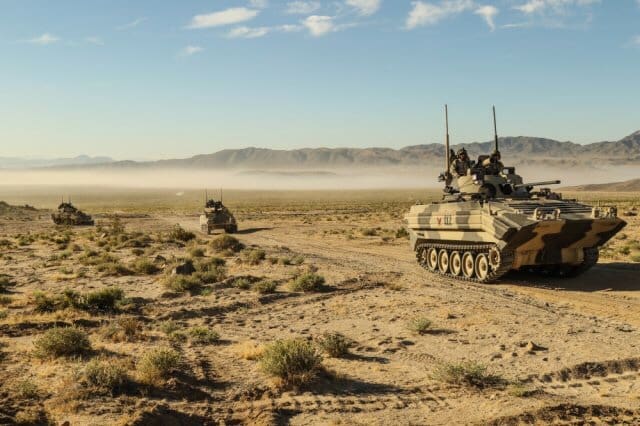
U.S. Army Soldiers, posing as an Opposing Force, operate OPFOR Surrogate Vehicles and Main Battle Tanks at the National Training Center, May 2, 2017. (Photo Credit: U.S. Army photo by Sgt. David Edge)

Both Russia and China, our two most sophisticated strategic competitors, are developing new approaches to conflict by modernizing their concepts, doctrine, and weapon systems to challenge U.S. forces and our allies across all operational domains (land, sea, space, cyberspace, and space). Russia’s New Generation Warfare and China’s Local Wars under Informationized Conditions are two examples of these new approaches.

In the Middle East, South Asia, and Africa, non-state actors and radical militant groups are gaining military capabilities previously associated only with nation-states. Irregular forces are growing more capable as they adopt new weapons and tactics. Hezbollah has used advanced anti-tank guided missiles, man-portable air defense systems, and a sophisticated mission command system in its conflicts with Israel and participation in the Syrian civil war. Joining Hezbollah in the employment of unmanned aerial vehicles are Al-Qaeda and ISIS, and ISIS has also used chemical weapons. In addition, Iran adopted a very sophisticated warfare doctrine aimed at the U.S., and the Houthi insurgency in Yemen aims rockets and missiles at Saudi Arabia.
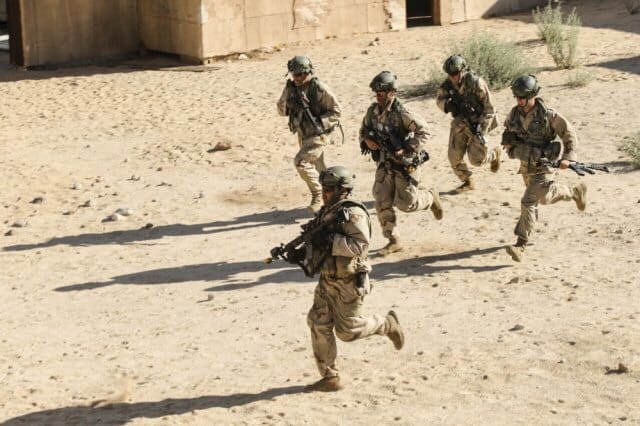
Soldiers of the 11th Armored Cavalry Regiment maneuver through the streets of a compound at the National Training Center, Calif., during an OPFOR training exercise. (Photo Credit: U.S. Army photo by Sgt. David Edge)

The U.S. Army exists to fight our nation’s wars and it rigorously prepares to reach the highest possible level of sustained readiness to defeat such a wide array of threats and capabilities. To attain this end state, training at U.S. Army Combat Training Centers, or CTCs, must be realistic, relevant, and pit training units against a dynamic and uncompromising Opposing Force, or OPFOR.

The CTC program employs several professional OPFOR units, including the 11th Armored Cavalry Regiment at the National Training Center in California’s Mojave Desert, the 1-509th Airborne Infantry Battalion within the swamps of Louisiana at the Joint Readiness Training Center, 1-4th Infantry Battalion at the Joint Multinational Training Center in Hohenfels, Germany, and the World Class OPFOR within the Mission Command Training Program at Ft. Leavenworth, Kansas. The Army’s Cyber Command also provides specialized support to these OPFOR units with cyber aggressors.

The OPFOR is representative of adversary forces and threat systems that reflect a composite of current and projected combat capabilities. The OPFOR must be capable of challenging training units’ mission essential tasks and key tasks within the Army Universal Task List. To maintain OPFOR’s relevance as a competitive sparring partner, U.S. Army Training and Doctrine Command devotes major analytic efforts to studying foreign armies and determining the optimum configuration for OPFOR units that both represent a plausible threat and challenge training tasks. This also requires the Army to consistently modernize the OPFOR with replicated peer or near-peer threat weapons and capabilities.

The OPFOR must be capable of challenging U.S. Army training units with contemporary armored vehicles that are equipped with stabilized weapon systems and advanced night optics, as well as realistic kill-or-be-killed signatures and effects via the Multiple Integrated Laser Effects Systems. The OPFOR must also have air attack platforms, advanced integrated air defense systems, unmanned aerial systems, modern-day anti-tank munitions, long-range and guided artillery fires, and improvised explosive devices.

Additionally, the OPFOR must be capable of subjecting training units to chemical, biological, radiological and nuclear effects and technologically enhanced deception capabilities. The OPFOR must also be capable of degrading or denying training unit dependency on Cyber-Electromagnetic Activities with threat electronic warfare, cyberspace, and space effects.

Modernizing the U.S. Army’s OPFOR program is an unremitting endeavor, because threats continuously change and technology relentlessly revolutionizes the art of war. Replicating the most realistic threat capabilities and tactics is critical for training units and commanders to practice their tactics, techniques, and procedures, and learn from the consequences of their decisions under tactical conditions.

This topic, as well as the challenges the OPFOR enterprise faces in developing much-needed capabilities to effectively replicate threats in a dynamic Operational Environment that postulates a changing character of future warfare, will be highlighted during a Warriors Corner at the annual Association of the United States Army meeting in Washington D.C. on Wednesday, Oct. 10, from 2:55-3:35 p.m.

By Mario J. Hoffmann
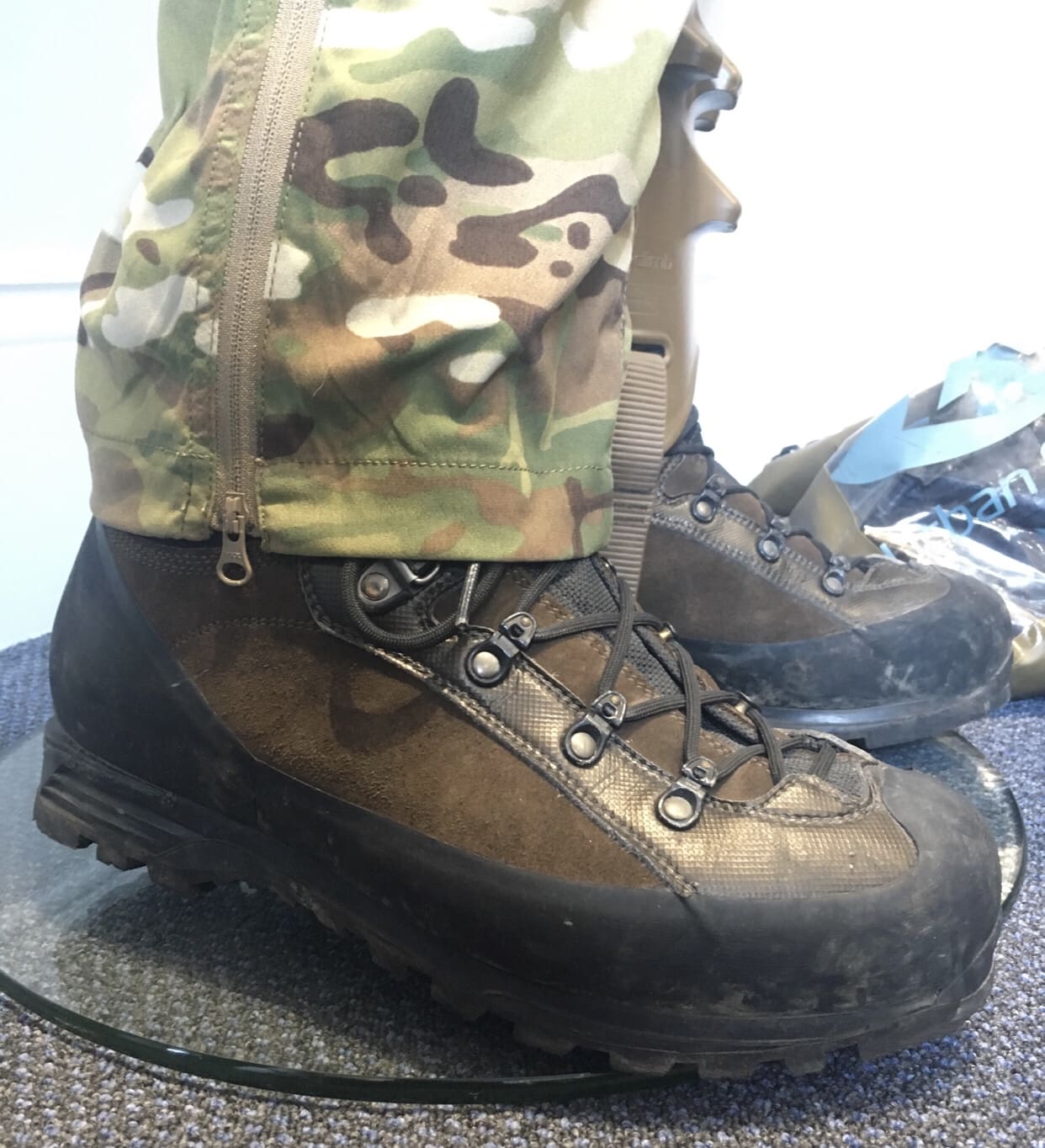
Brigantes Presents – High Angle Solutions – Scarpa Manta Pro Tactical  

Wednesday, October 3rd, 2018

Scarpa Manta Pro has been one of the top Mountain Boots in the UK for the past decade.  It has had a number of variations over this time and continues to be the go to boot for winter mountaineers.  As part of our ongoing program of bringing top quality outdoor product to the military user Brigantes has been working with Scarpa on producing a tactical Manta Pro.


The Manta Pro is a B2 rated winter mountaineering boot weighing in at 1640g per pair.  It is the perfect balance between technical climbing boot and high quality walking.  Built on the excellent Scarpa FT last and using a Gore-Tex membrane it is ideal for all conditions from Alpine to Hill.

The tactical boot is a subdued version of this famous boot.  As the military user requires it for general mountaineering rather than sports climbing the B2 offers the ideal compromise between stiffness and flexibility making excellent for long hard days across difficult and varied terrain.

For more information get in touch by email on international@brigantes.com or for UK customers warrior@brigantes.com.

www.brigantes.com

Max Talk Monday – Buddy Pair Fire & Movement: Break Contact (Front)

Monday, October 1st, 2018

This is the seventh installment of ‘Max Talk Monday’ which shares select episodes from a series of instructional videos. Max Velocity Tactical (MVT) has established a reputation on the leading edge of tactical live fire and force on force training. MVT is dedicated to developing and training tactical excellence at the individual and team level.

The second instructional session in buddy pair fire and movement, this follows on from the previous ‘assault’ example and covers break contact (front), including a live fire demo. These buddy pair videos are a follow up to the ‘Why the Lone Wolf Operator will Die’  Max Talk Videos, designed to show the advantages of the correct application of fire and movement at the basic building-block of a two-man buddy pair.

Max is a tactical trainer and author, a lifelong professional soldier with extensive military experience. He served with British Special Operations Forces, both enlisted and as a commissioned officer; a graduate of the Royal Military Academy Sandhurst. Max served on numerous operational deployments, and also served as a recruit instructor. Max spent five years serving as a paramilitary contractor in both Iraq and Afghanistan; the latter two years working for the British Government in Helmand Province, Afghanistan. 

Website: Max Velocity Tactical

YouTube: Max Velocity Tactical

US Marine Corps Uses the GLARE HELIOS For Subterranean Training Exercise

Monday, October 1st, 2018

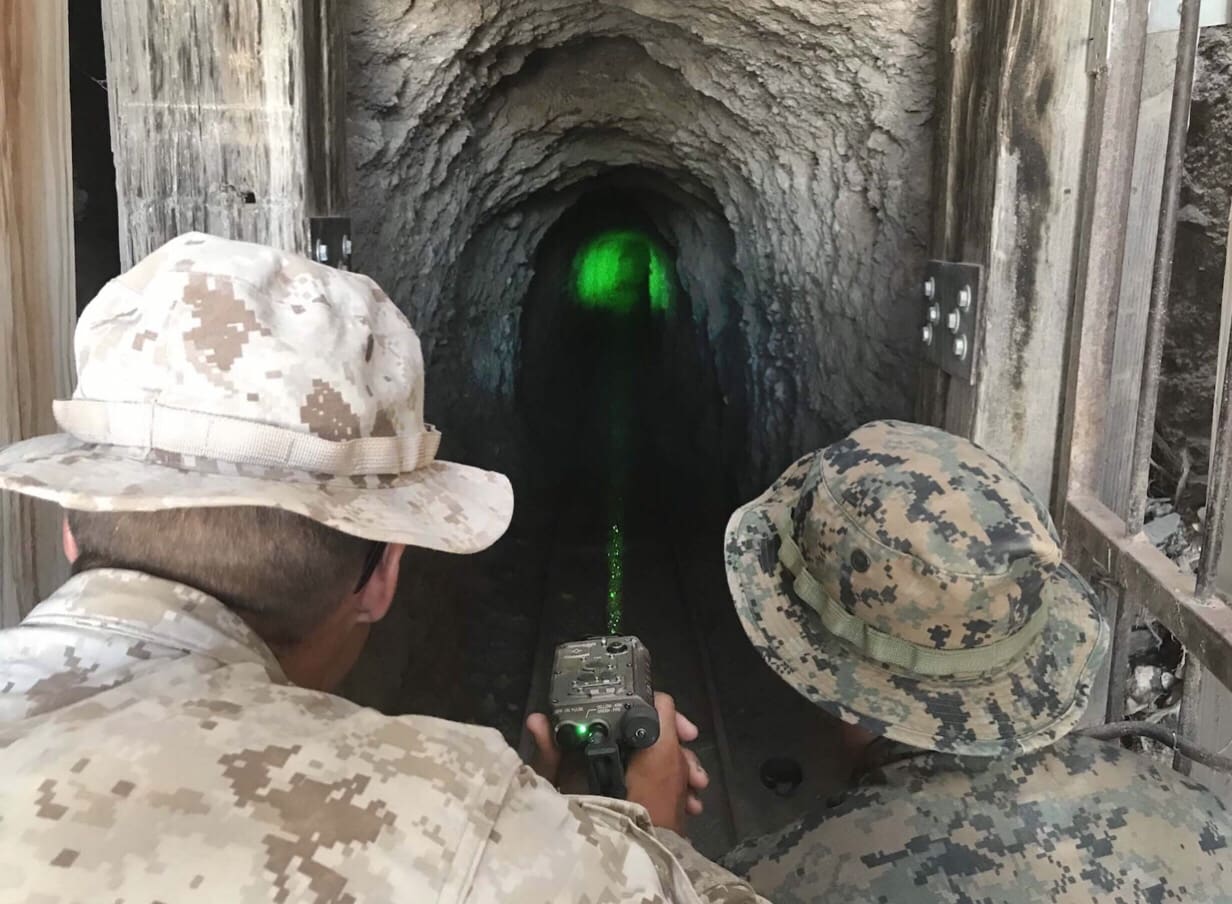
U.S. Marines illuminate a tunnel with the high power yet EyeSafe® green laser ocular interruption capability from B.E. Meyers & Co. as part of a subterranean training exercise in the Nevada desert.

SUBTERRANEAN FOCUS

With the U.S. Military accelerating its efforts to effectively address subterranean threats, it has become increasingly apparent that new and innovative applications for existing technology are necessary to maintain dominance on the battlefield, both above and below ground. Recently, the USMC performed a subterranean training exercise in the Nevada desert and observed that the illumination capabilities of the B.E. Meyers & Co. GLARE®  HELIOS™ Hail and Warning device far outweighed those of their white lights in the long, dark tunnels.

GLARE® FAMILY OF HAIL AND WARNING DEVICES

The 250 mW GLARE® HELIOS™ is the class 1M variant of the GLARE RECOIL®, the official Hail and Warning laser currently in use by the USMC as part of the Ocular Interrupter System (OIS) program (JETDS identifier LA-22/U). The LA-22/U was originally procured for EOF scenarios, however, it’s long-range illumination capabilities, and patented SmartRange™ technology make it the ideal illumination and designation system for a variety of other applications as well. The GLARE® HELIOS™ boasts the same potent dazzling and illumination capabilities as the LA-22/U, and is the only Hail and Warning device authorized by the FDA for use with Federal Agencies.

EXTENDED ILLUMINATION RANGE

Unlike white light illuminators, the divergence of the laser emitted by the GLARE® HELIOS™ is controlled by a motorized zoom and retains its illumination capabilities over extremely long distances. Compact white light systems that are currently available to soldiers are not sufficient for illuminating long stretches of pitch-black tunnel, and their low power keeps potential EOF scenarios within ranges that could pose a hazard to the operator.

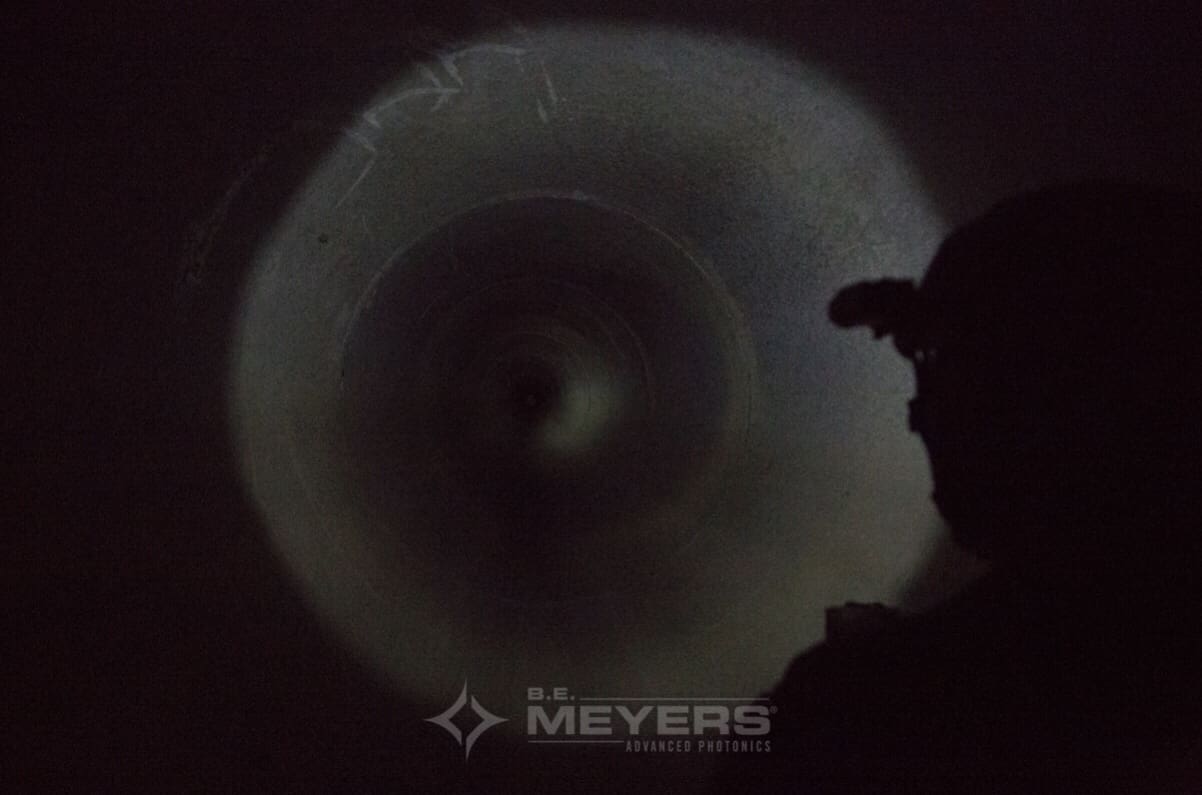
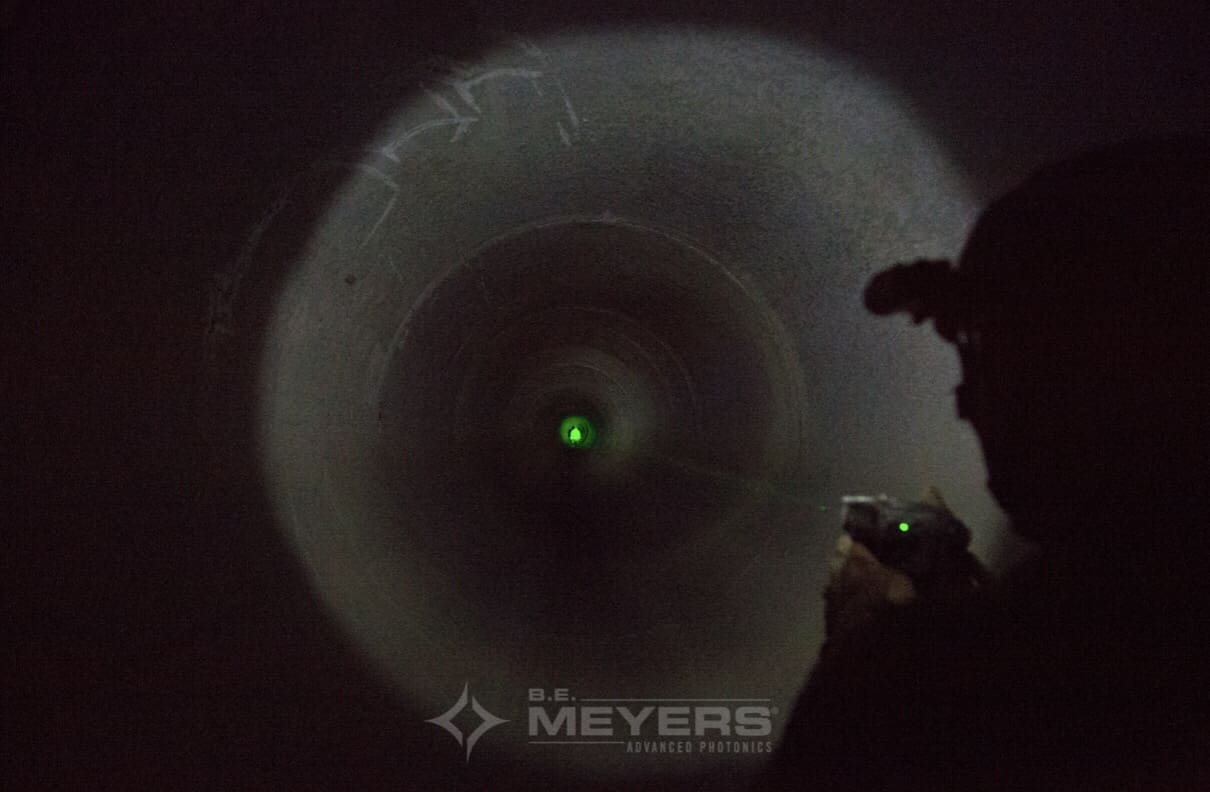
Below is a GLARE® HELIOS™ compared against a weapon mounted white light illuminating a potential threat at over 100 yards. The extended standoff and illumination capabilities provided by the HELIOS™ are unmatched. With its patented EyeSafe® technology, and a divergence adjustment capable of 0.23° at its narrowest setting, the green beam is an ideal solution for any branch of military or law enforcement looking for compact, long-range illumination.

Pictured: Potential target is obscured at 100 yards with only white light illumination.

Pictured: Potential target is now illuminated at 100 yards with GLARE HELIOS™ laser.

The LA-22/U is available for procurement as NSN 5860-01-657-3893. It  is currently in production and being delivered by B.E. Meyers & Co., the sole source provider to MARCORSYSCOM for the $49M IDIQ Ocular Interruption System (OIS) program, contract number M67854-14-D-1040.

SCUBAPRO Sunday – HYDROS PRO 

Sunday, September 30th, 2018

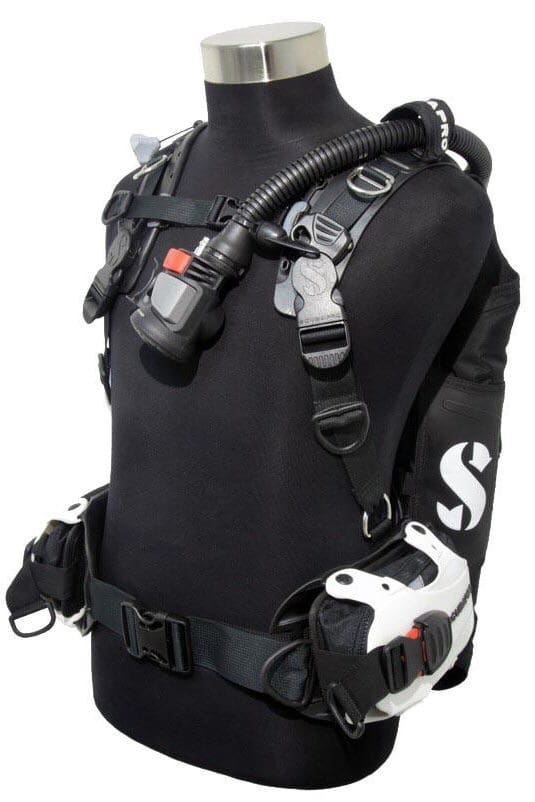
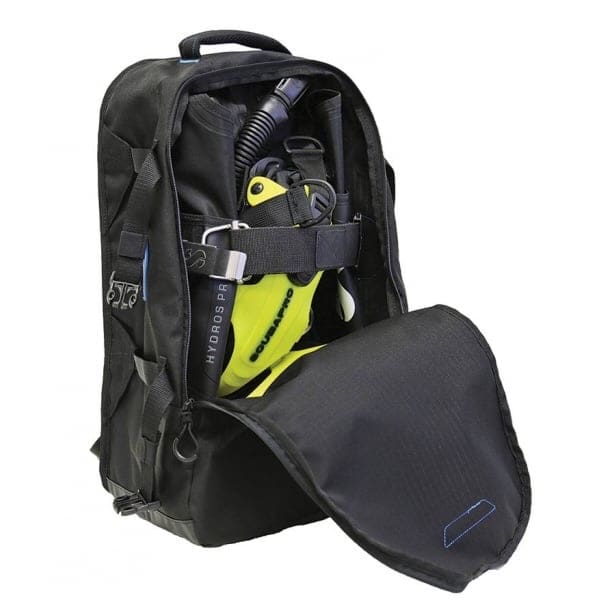
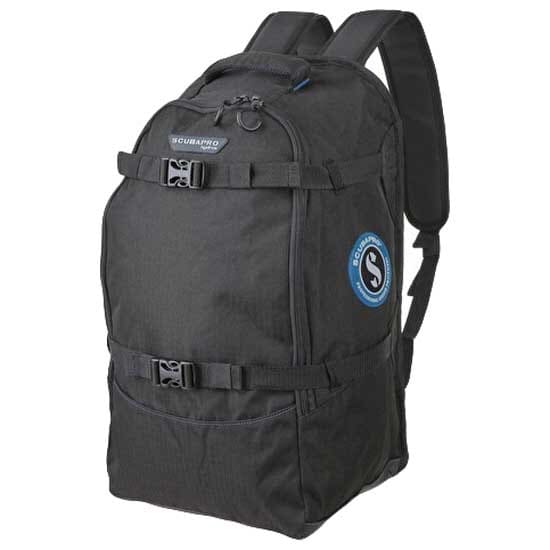
The HYDROS PRO is a true breakthrough in dive comfort and convenience. The moldable Monprene®, adjustable fit and multi-attachment points combine to make this the most customizable and comfortable BC ever. Winner of the 2016 Red Dot award for product design. Interchangeable straps, a packable design and an included backpack with room for your entire dive kit make the HYDROS PRO perfect for any destination and any dive.

Durable Monprene® construction means ultra durability. The HYDROS PRO also stands up to UV, chemicals, and abrasion — without showing typical signs of wear.  And a modular construction makes repairs — even from remote locations — a snap. It’s a BC for life.

When you are wearing the HYDROS PRO, you won’t even know it’s there. The HYDROS PRO molds to your specific body shape, and has been designed with body grip gel, providing extreme comfort and stability. Near-Zero inherent buoyancy means less lead. And, thanks to a back inflation, smart air system you can dive in any position.

A 2-in-1 BC The HYDROS PRO includes both the Trav-Tek straps and a fully integrated weight system. So, with a quick switch of clips, you can transform the HYDROS PRO from a harness travel BC to an integrated weight BC. Now you only need one BC for both local diving and travel.


Customize and Accessorize – Easily add, remove, or replace weight systems, bungees, D-rings, accessories and pockets to make the HYDROS PRO truly your own. With a wide range of mountable accessories and kits, your options are endless — and can quickly be changed based upon the dive and conditions.

Travel Friendly The HYDROS PRO goes everywhere with you. Instant dry, lightweight and compact, with a unique smart-pack design, the HYDROS PRO also comes with a customized backpack designed to fit your entire dive kit on your back.

The HYDROS PRO comes in seven colors, perfectly matched to SCUBAPRO suits, masks and Seawing Novas. Separate color kits are also available so you can change up your dive style whenever you want.

Specialized Fit for Women-Smaller air bladder. Shorter inflator hose. Curved shoulder straps that fit perfectly. Experience the difference of diving with a more thoughtfully designed BC for women.

Perfect For

• Instructors

• Tech Divers

• Travel Divers

• Female Divers

• Young Divers

• New Divers

• Dive Training

Ultra Durable: Patented Injection Molded Monprene® Gel Harness is extremely resistant to UV, chemicals and abrasion. The fabric-free harness uses no velcro or zippers.

Instant Dry: Ideal for travel due to less water retention and lower post-dive weight.

“BC-4-Life” Modular Design: Customizable to add/remove weight systems, straps and pouches. Extended lifespan due to simplified repairs. Virtually every component, including buckles, can be replaced without stitching.

3D Ergonomic Design: Conforms to your body shape for maximum comfort.

Lightweight: Advanced materials keep weight low.

Neutrally Buoyant: Near-Zero inherent buoyancy requires less lead, resulting in better buoyancy control and much more enjoyable diving.

Body Grip Gel: Prevents BC from shifting and riding up.

Dual-Compound Backplate: Provides the ultimate in stability and comfort. Single tank band system allows for easier assembly.

Torso Flex Zone: Auto-adjusts to your torso length for excellent comfort and freedom of movement.

Articulated Shoulder Straps: Allow straps to adjust to your body shape to achieve a snug fit.

Kit-Up Assist: Holds shoulder straps open for easy donning.

Cross-Flow Channel: Unrestricted internal airflow reduces air trapping for enhanced maneuverability and easy deflation at any angle.

2-Stage Inflation: Tri-bungee system controls air distribution to maintain a compact shape under water and high lift capacity at the surface.

Dorsal Weight-Wing: Anti-abrasion and instant dry. Optimal “Outboard” trim pockets.

Buckle Weight System: Simple, safe and reliable quick-release buckles offer a fixed location for easy one-hand operation.

Multi-Mount Accessory Matrix: Multiple D-Rings and mounting points for a knife + light + SMB + hoses + crotch strap and much more.

Smart-Pack Design: Folding shoulder and waist straps pack into the wing, creating an unbelievably compact package for easy transport and storage.

Available with Balanced Power Inflator or AIR2 alternate air source.

FirstSpear Friday Focus – Stratton Flannel

Friday, September 28th, 2018

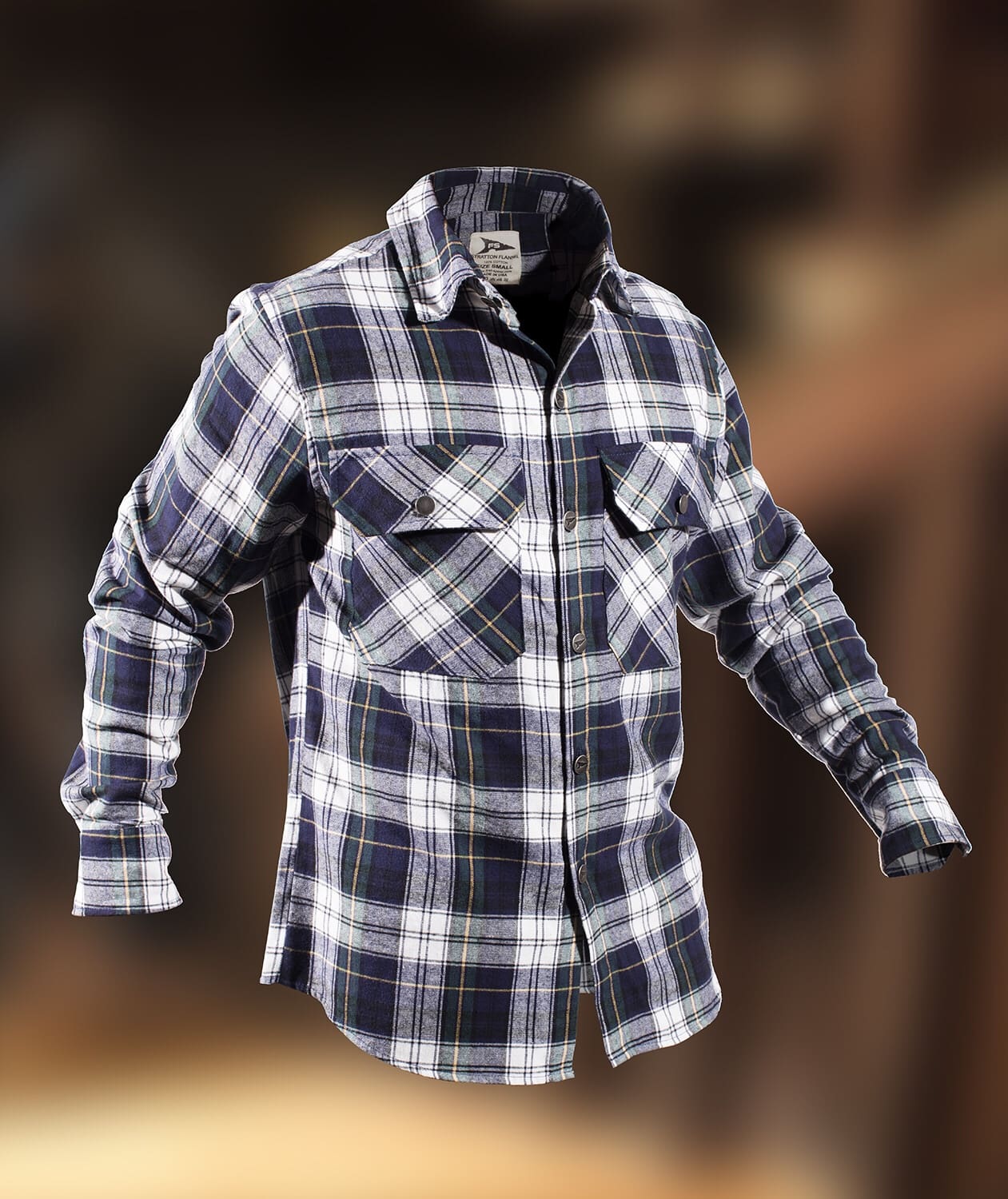
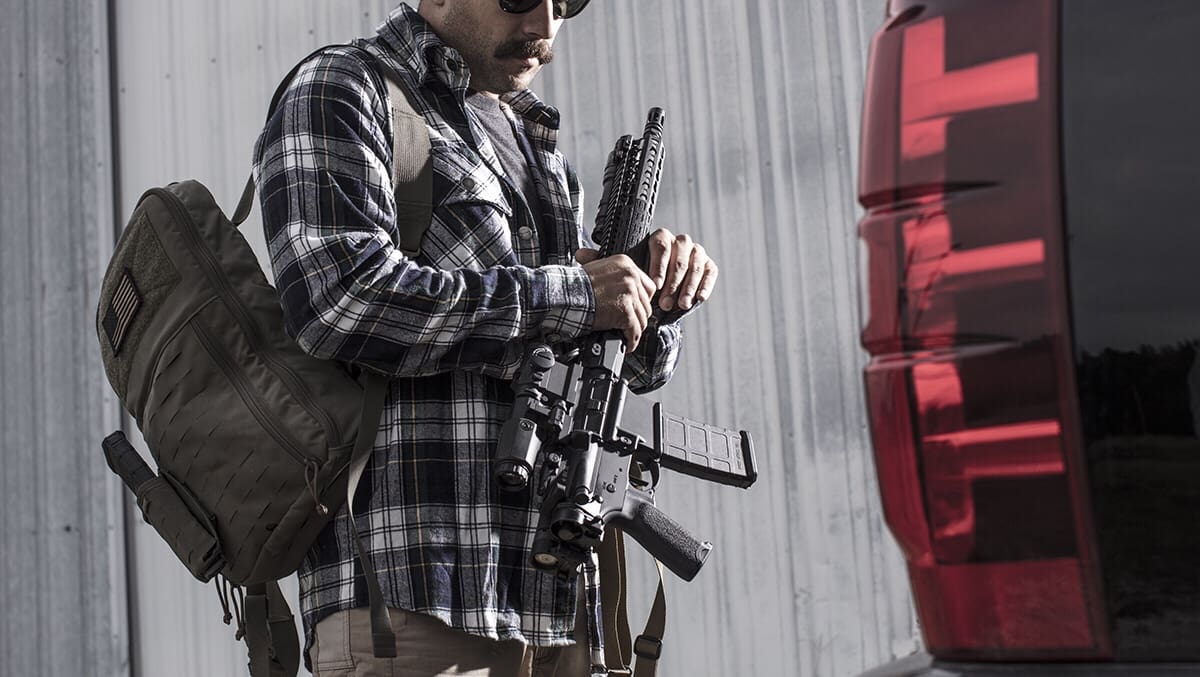
Introducing the all new Stratton Flannel available exclusively from FirstSpear! This is a 5oz lightweight flannel in navy/green/white perfect for fall. Features two oversized breast pockets and a two button closure on the forearms and cuffs. Machine washable and slightly oversized to accommodate for a 3% shrinkage after the first wash.

Made in the USA – Shipping now.

www.first-spear.com/technical-apparel/outerwear/stratton-flannel

Soldier Lethality Cross-Functional Team Bringing Next Generation Technologies To Soldiers

Thursday, September 27th, 2018

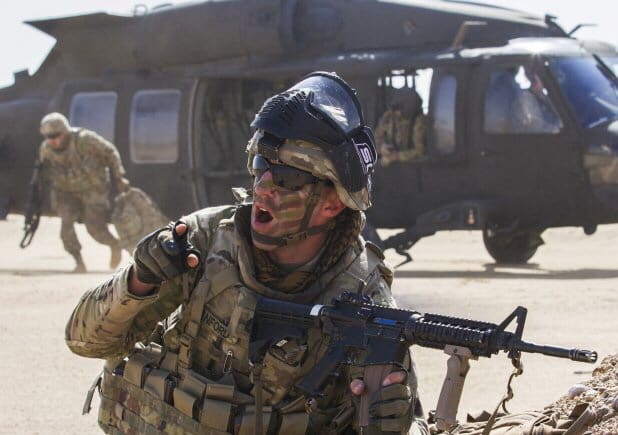
Sgt. 1st Class Aaron Sanford, a maintenance supervisor, Delta Battery, 1st Battalion, 145th Field Artillery Regiment, gives commands to his platoon following their departure from a UH-60 Black Hawk during a training exercise near Camp Buehring, Kuwait, Feb. 28, 2018. The Soldier Lethality Cross-Functional Team is working to narrow the capability gaps that affect Soldiers — particularly the 100,000 close-combat Soldiers who close with, engage and destroy the enemy. (Photo Credit: U.S. Army photo by Spc. Joshua P. Morris)

FORT BENNING, Ga. — In October 2017, the Soldier Lethality Cross-Functional Team, or CFT, began work to narrow the capability gaps that affect Soldiers — particularly the 100,000 close-combat Soldiers who close with, engage and destroy the enemy.

This is a critical task, as civilian and military leaders alike recognize that the Army is losing the near-peer advantage by being out-ranged, out-gunned and increasingly outdated. Potential adversaries and even private industry have been fielding new capabilities much faster than the Army.

The team has had some early success with the implementation of the Infantry One-Station Unit Training transformation and the requirement approval for the Enhanced Night Vision Goggle-Binocular, or ENVG-B, device. In particular, the ENVG-B requirement was written and approved in 30 days. The average time it takes the Army to approve requirements is two to three years.

The Soldier Lethality CFT is doing exactly what was intended at the outset: to have warfighters and developers work together to prepare capability documents that enable the rapid delivery of capabilities to the warfighter, and to inform a potential program of record.

The ongoing efforts of the Soldier Lethality CFT will be the focus of a Warriors Corner presentation on Tuesday, Oct. 9 from 3:20-4:00 p.m. Eastern time, as part of the Association of the United States Army’s annual meeting in Washington, D.C.

“The Army’s fundamental responsibility is to equip, train and field Soldiers with the tools and resources to engage and destroy the enemy,” said Brig. Gen. David Hodne, Soldier Lethality CFT director. “Soldiers must have capabilities that increase lethality, mobility, situational awareness and protection while countering threats. New systems will be designed to employ emerging technologies to ensure our Soldiers have a decisive advantage over potential adversaries.

“Our CFT has been given the task to develop requirements informed by experimentation and technical demonstrations — through teaming, agility and rapid Soldier feedback,” Hodne explained. “This enables informed decision-making by Army leadership for potential programs of record in order to regain our overmatch over near-peer competitors. We have all the right people in the organization; from warfighters, program management, finance, testing, science and technology and others. That was the original intent for the creation of the CFTs.”

Currently, the Lethality team is working on three lines of effort: the ENVG-B, the Next Generation Squad Weapons, and the Adaptive Soldier Architecture. Of the three, the ENVG-B program is closest to fielding, with devices expected to be in the hands of Soldiers in 2019.

“The ENVG-B was developed based on an urgent operational requirement from U.S. Army Forces Command,” said Col. Chris Schneider, project manager for Soldiers Sensors and Lasers. “They were seeking a capability that provided both night vision and thermal sensing capability with stereoscopic binocular depth perception to increase mobility and improve visual confidence in varying lighting present on the modern battlefield during day and night operations. It also had to give Soldiers increased mobility and situational awareness through a heads up display of friendly and enemy locations.”

The ENVG-B is a digital system that allows for significant capability growth and the ability to network sensors and other situational awareness systems such as NETT Warrior, Small Arms Fire Control, range finding systems, and any information transmitted across the tactical network.

“The ENVG-B utilizes the same wireless technology to communicate with the Nett Warrior system and is designed for full compatibility with future synthetic training systems to facilitate Soldiers training and fighting with the same equipment,” said Col. Travis Thompson, Soldier Lethality CFT chief of staff.

To meet future warfighter needs, the CFT has made significant progress in the development of the Next Generation Squad Weapons. The first of these weapons will be the Next Generation Squad Automatic Rifle, or NG-SAR. The NG-SAR is the planned replacement for the M-249 Squad Automatic Weapon for the 100,000 Soldiers of the close-combat force.

To meet future warfighter needs, the CFT has made significant progress in the development of the Next Generation Squad Weapons, or NGSW. The first of these weapons will be the Next Generation Squad Weapon – Automatic Rifle, or NGSW-AR, which will be followed by the Next Generation Squad Weapon – Rifle, or NGSW-R. The NGSW-AR will replace the M-249 Squad Automatic Weapon, or SAW, in the Automatic Rifleman Role, and the NGSW-R will replace the M4/M41 Carbine in Brigade Combat Teams.

“The NGSW-AR is the first in a series of capabilities to modernize the weapons of the dismounted maneuver force,” explained Col. Elliott Caggins, project manager, Soldier Weapons. “NGSW capitalizes on advancing technologies to provide increased performance at range, integrated Squad Fire Control (S-FC) systems, improved ergonomics of the weapon, lightweight case technologies, signature suppression capabilities and Intelligent and powered rail designs through systems integration.”

The goal of NGSW is to improve lethality, mobility and situational awareness of the dismounted infantryman, scout and engineer to overcome our nation’s adversaries and win on the battlefield.

“By incorporating frequent Soldier touchpoints in the development and acquisition strategy of the system, the Army is ensuring the Soldier, weapon, ammunition and fire control combined-system function as needed and are optimized,” Caggins finished.

The most complex effort ongoing for the CFT is the work being done with the Adaptive Soldier Architecture, or ASA.

The architecture is a concept of treating the Soldier as a system much like a tank or an aircraft. It ensures that systems are integrated with the Soldier rather than added to the Soldier.

“With this new architecture, we want to provide adaptive and responsive leap-ahead capability to our Soldiers that results in an innovative, collaborative, and cross-functional culture to drives advanced capabilities into the squad to support current and future priorities,” explained Thompson.

The ASA establishes power, data, connection and transfer standards to the Soldier and their equipment, treating the Soldier the same as an integrated combat platform.

“What’s vitally important about the architecture is that it facilitates technology insertion and Soldier integration through enhanced communication with industry that will enable the advanced capability that our Soldiers require to defeat our current and future threats, and facilitate future technology growth and capability integration across the Soldier and squad,” Thompson added.

Brigantes Presents – High Angle Solutions – DMM Helix Raptor Tactical Ice Axes

Wednesday, September 26th, 2018

Helix provide their high-quality technical equipment to the UK mountain troops.  Made in the DMM factory, in North Wales, to the highest possible standards these tools are ideal for use by specialist troops.

E59C0780-74F8-497C-9BD2-5F70F201464B

As we are about to enter the season for mountain training it is time to look at your kit and update what is looking a little tired and worn, or maybe not Gucci enough.  The DMM Raptor is an ideal multi use tool.  Great for covering the kind of terrain we need to in winter conditions but with the ability to go into harder areas if required.

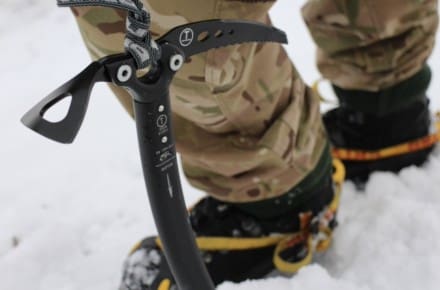
The gentle curve in the shaft gives clearance when swinging without compromising the Raptor’s ability to self arrest.  A full size hammer and adze make light work of cutting steps and ledges and bashing in pegs for security. The spike on the base of the handle rounds out the Raptors mountaineering capability by giving security on snow and ice slopes.  For those wishing to venture into steep terrain the Raptor can be fitted with a Fly pick that improves climbing performance. A Choke Hold Leash prevents you accidentally dropping the axe and allows resting opportunities if climbing steeper ground.

Gone are the days of long heavy walking axes now the lightweight and highly capable Raptor gives mountain troops everything that they need.  The snow may not be here yet but it won’t be long before you are putting on your Bergan and heading up the hills.

For more information get in touch by email on international@brigantes.com or for UK customers warrior@brigantes.com.

www.brigantes.com