Phantom Lights

Archive for the ‘Guest Post’ Category

Gundam 22 U.S. – Japan Friendship Memorial: One Year on from Yakushima

Sunday, December 8th, 2024

YAKUSHIMA, Japan —

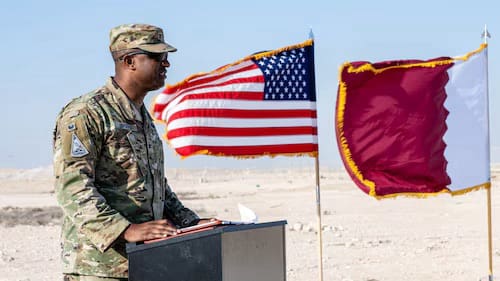
Close to 100 military and civilian personnel from the United States and Japan gathered at the Yakushima Town Hall Nov. 29, 2024 to attend a ceremony dedicating a cenotaph to the eight heroes who died when their CV-22B Osprey went down just off the coast of the island last year and the joint effort expended to search for and recover them.

The Gundam 22 U.S. – Japan Friendship Memorial, stands more than six feet tall and holds vigil over the Toshiro beach coastline, pointing visitors towards the spot the aircraft impacted the water. One of the only U.S monuments ever erected on Japanese soil, it represents a months-long, bilateral, volunteer effort that underscored the importance of the cenotaph to the American and Japanese personnel whose actions are now memorialized in stone, alongside portraits of all eight lost crew members.

The gathering at the town hall, which included family members of the deceased, was a fitting representation of the force assembled in the direct aftermath of the mishap. One year earlier, as locals witnessed the aircraft fall from the sky, it was local fishermen who were first on the scene, retrieving the first crew member from the waves near Anbo port and respectfully standing watch over his remains. The island’s fishermen would continue to contribute to the initial search and rescue operation, helping teams locate the site of the wreckage, and facilitating the use of the port for dive and recovery teams.

Among the first Japanese personnel on the ground in Yakushima to support the search and rescue effort was Haruo Morita, Deputy Director General, Bureau of Policies for Regional Society in the Japan Ministry of Defense. Mr. Morita would go on to stay on the island longer than any of his compatriots executing the search mission. As he delivered remarks at the dedication ceremony, he recalled the support received from the community in Yakushima.

“I would like to express our sincere appreciation to the people of the Kagoshima Prefecture and Yakushima Town, including the Yakushima Town Council and Yakushima Fishery Cooperative, for their great assistance and cooperation for 45 days, including the year-end and new year days, until January 12, 2024, when the search and recovery operations concluded.”

A ROBUST FRIENDSHIP CREATED

Yakushima Island is traditionally known for its beautiful peaks, ancient cedar woods and surreal vistas, but as the mammoth undertaking of finding and recovering the crew of Gundam 22 gained momentum and more personnel and equipment converged on the 500 square-kilometer island, this quiet community was about to be thrust into the international spotlight for a much different reason.

“It is an undeniable fact that although in the midst of tragedy of the Osprey mishap, a robust friendship was created between the U.S. Forces and the Yakushima Community.  I am certain that continuing to establish such a trusting relationship between our two countries will further strengthen our alliance.”

Morita’s words found truth in the make-up of the dedication gathering, which included U.S. Deputy Chief of Mission in Japan, Chargé d’affaires Katherine Monahan alongside Yakushima Town’s Mayor Koji Araki, Kagoshima Prefecture assemblymen, Yasuhiro Matsuzato and Shigeru Hidaka, and senior leaders from the Japan Self Defense Forces and multiple branches of the U.S. military.

Of those gathered, few were as intimately acquainted with the mission to recovery the lost Airmen and the wreckage of their craft as Rear Adm. Jeromy Williams. Williams, commander of Special Operations Command Pacific, received twice daily briefings on the progress of the search, recovery, and salvage efforts for over 45 days while operations persisted on the island. He witnessed the scope and impact of our Japanese partners’ contributions to the search.

“Overall, 21 Japanese Coast Guard and Navy ships came to our aide. Japan Coast Guard employed unmanned underwater vehicles, ROVs, and divers.  Japan Ground Self Defense Forces employed helicopters, activated reservists, and searched the cliffs, beaches, and shorelines.  Japan Air Self Defense Force sent aircraft, while police, business owners, local volunteers, the Fisherman’s Association, and Yakushima Woman’s association all remained determined in the search.”

MARKER OF A FINAL RESTING PLACE

Altogether, U.S. and Japanese forces searched 60,000 sq kilometers of water, 89 kilometers of Yakushima coastline and another 30 kilometers of coastline on neighboring Tanegashima, and 39 square kilometers of ocean floor. In just shy of two months, their search turned up 321 objects, and the remains of 7 crew members. The eighth, Maj. Eric Spendlove, has yet to be recovered, according to Mr. Morita a source of “deep regret” for the Japanese partners involved in the search. The cenotaph on the island now serving as a marker of his final resting place.

Instrumental to making the cenotaph a reality was Maj. Jake McCauley of the 353rd Special Operations Wing. One of the first Americans on the ground last November, he served as mission commander for the search, rescue, and recovery.

“It was a huge undertaking from the time we got here to when we finally closed the [Joint Operations Center]. Once it was coming to a close, we knew we wanted to do something here to thank the community for the help they gave us, and to honor the heroes we lost. Having a permanent place here for their families and the SOW to come and remember them and pay respects is awesome.”

For McCauley, the journey from search and rescue to the dedication of the cenotaph has represented a full circle experience, providing closure for him and many of the men and women involved in the operation. In the days leading up to ceremony, McCauley and more than a dozen volunteers from Kadena Air Base and Yokota Air Base engaged in beach clean-ups and beautification of the area around the cenotaph site.

A PHYSICAL ARTIFACT OF A ROCK-SOLID BOND

The monument itself is an extension of Yakushima, built by local craftsmen from monolithic stones taken from the same jagged shorelines where the crew of Gundam 22 met their fate. Across the top of the structure, eight portraits, chosen by the heroes’ families, are etched into the stone alongside their ranks and names. They’re held up on each side by two massive stone pillars each with inscriptions, one in English, the other in Japanese. They detail the crash, the scope of the search and rescue operations, and the contributions of the Yakushima Town community.

The inscription reads:

On the 29th of November 2023, one CV-22B Osprey, callsign GUNDAM 22, assigned to the 353d Special Operations Wing at Yokota Air Base, crashed off the coast of Yakushima Island, about 1KM northwest of this cenotaph, killing all eight U.S. service members aboard.

In the weeks following the mishap, an intensive period of 24/7 search and rescue efforts –and later recovery and salvage operations –were conducted by expert teams from the U.S. Air Force, U.S. Army Special Operations Command, U.S. Navy, Special Operations Command –Pacific, U.S. Forces Japan, the Japanese Ministry of Defense, Japan Self Defense Forces, Japan Coast Guard, local police, and many others from Yakushima and elsewhere in Japan and the U.S. In over 40 days of these combined efforts, the remains of seven out of eight Airmen were recovered and returned to their loved ones.

Throughout these operations, local public authorities, notably those from Yakushima town and Kagoshima prefecture, as well as civilian volunteers such as the Fishery Association and Women’s Association, extended generous and dedicated support to the search, rescue, recovery, and salvage efforts.

This cenotaph commemorates the souls of eight Heroes and enshrines the eternal commitment of all those involved to never again endure the same kind of mishap. May this monument also forever celebrate the steadfast friendship forged between U.S. Servicemembers and the people of Kagoshima who so warmly offered their unwavering support and partnership in our darkest days of shared tragedy.

Looking out to the ocean, the pillars and crossbeam frame a small area of the water, just shy of a kilometer away from the island’s lone airport, where the fateful flight ended.

Rear Adm. Williams, in his remarks at the town hall, summarized the symbolism of the cenotaph:

“Today’s dedication provides a physical artifact of the rock-solid bond between Japan and the United States.  It memorializes the faces of our fallen heroes, and records for posterity the benevolence of our Japanese allies.  The memorial stands watch over the waters that are the final resting place of our last missing teammate. It will serve as inspiration for generations to come that in our darkest hours, Japan and America will stand strong together.”

As the sun rose over the monument the day after the ceremony, it was evident that the Yakushima community had already embraced it, just as they had embraced the U.S. service members who came to their island a year ago. Groups of school children, elderly couples, and individual visitors came steadily throughout the morning, leaving traditional Japanese offerings, taking pictures, and praying. A day earlier, commander of the 353rd SOW, Col. Shawn Young said to the audience gathered at the dedication, “My hope is that this can now be a place of healing for two communities – American and Japanese together – who experienced this loss not just as allies, but as family.”

In memoriam: the crew of Gundam 22:

U.S. Air Force Maj. Jeffrey T. Hoernemann, 32, of Andover, Minnesota, was a CV-22 instructor pilot and officer in charge of training, assigned to the 21st Special Operations Squadron, 353rd Special Operations Wing, Yokota Air Base, Japan.

U.S. Air Force Maj. Eric V. Spendlove, 36, of St. George, Utah, was a residency trained flight surgeon and medical operations flight commander assigned to the 1st Special Operations Squadron, 353rd Special Operations Wing, Kadena Air Base, Japan.

U.S. Air Force Maj. Luke A. Unrath, 34, of Riverside, California, was a CV-22 pilot and flight commander assigned to the 21st Special Operations Squadron, 353rd Special Operations Wing, Yokota Air Base, Japan.

U.S. Air Force Maj. Terrell K. Brayman, 32, of Pittsford, New York, was a CV-22 pilot and flight commander assigned to the 21st Special Operations Squadron, 353rd Special Operations Wing, Yokota Air Base, Japan.

U.S. Air Force Tech. Sgt. Zachary E. Lavoy, 33, of Oviedo, Florida, was a medical operations flight chief assigned to the 1st Special Operations Squadron, 353rd Special Operations Wing, Kadena Air Base, Japan.

U.S. Air Force Staff Sgt. Jake M. Turnage, 25, of Kennesaw, Georgia, was a flight engineer assigned to the 21st Special Operations Squadron, 353rd Special Operations Wing, Yokota Air Base, Japan.

U.S. Air Force Senior Airman Brian K. Johnson, 32, of Cincinnati, Ohio, was a flight engineer assigned to the 21st Special Operations Squadron, 353rd Special Operations Wing, Yokota Air Base, Japan.

U.S. Air Force Staff Sgt. Jacob “Jake” M. Galliher, 24, of Pittsfield, Massachusetts, was a Direct Support Operator assigned to the 43rd Intelligence Squadron, Detachment 1, Operating Location – Alpha, 363rd Intelligence, Surveillance, and Reconnaissance Wing, Kadena Air Base, Japan. 43 IS Det 1 OL-A is a tenant unit in support of the 353rd Special Operations Wing.

By Capt Richard Caesar, 353rd Special Operations Wing

FirstSpear Friday Focus: FS and OSI Forge Strategic Partnership to Distribute Tubes Fasteners

Friday, December 6th, 2024

FirstSpear, a leader in Berry-compliant tactical gear for the warfighter, and Ocean State Innovations (OSI), a premier supplier of high-performance textiles, are pleased to announce a strategic partnership to expand the availability and access to FirstSpear’s patented Tubes® fasteners.

FirstSpear Tubes® Fasteners

Quick Release and Attachment: Designed for rapid gear donning and doffing with a simple two-motion technique.

Reduced Weight: Significantly lighter than traditional fastening systems, aiding in increased mobility for users.

Durability and Reliability: Constructed from high-performance polymers

Infrared Signature Reduction: Compliant with U.S. military specs for NIR signature reduction.

Modular Integration: Facilitates field repairs and customization for specific mission requirements.

Self Cleaning: Designed to clear dirt and debris through normal operation, ensuring reliability in critical operations.

Cross Compatibility: Available in 2” and 4” lengths. All male and female tubes are cross compatible between sizes.

“This collaboration with OSI marks an important step in our mission to equip the warfighter with the best and most capable tools available,” said Scott Carver, CEO of FirstSpear. “Tubes Technology is much more than a fastener; they are the release system relied on by the most demanding operators in the harshest conditions. OSI’s textile expertise and global supply chain complement our passion for equipping those operators built for the X.”

OSI is the exclusive distributor of FirstSpear Tubes Fasteners. FirstSpear will continue to support program sales and retail customers can continue to purchase them at www.first-spear.com.

“FirstSpear® has established itself as a leader in the tactical industry for many years, and we are excited to announce our exclusive partnership with them as the distributor of TUBES Fasteners. This collaboration guarantees that this reliable and innovative solution will be more readily available to our customers,” said Ben Galpen, Partner Ocean State Innovations.

This partnership not only broadens the distribution of FirstSpear’s Tubes fastener technology but also underscores both companies’ dedication to providing innovative solutions that meet the rigorous demands of their end users. 

FirstSpear retains commercial retail sales through their website & will also continue to support our core relationship and customers. For more information or questions about Tubes® contact sales@first-spear.com or visit www.first-spear.com/tubes.

For more information, contact Geoff Senko at geoff@osinnovate.com at OSI.

Army Forum Focuses on Contested Logistics

Friday, December 6th, 2024

FORT DETRICK, Md. — “What if today were C-Day?”

This was the question Col. Marc Welde asked the group of logistics leaders gathered for a Commander’s Forum, hosted Nov. 18-21, 2024, at U.S. Army Medical Logistics Command headquarters at Fort Detrick.

C-Day refers to the unnamed day on which a deployment operation “commences” with troop and equipment movements, requiring lock-step logistical readiness.

Welde’s sobering question readied them for four days of discussion around current and future capabilities of medical logistics — from setting the theater to sustaining large-scale combat operations where supply chains are contested, communications lines are disrupted and air superiority is not a given.

“I know we have an amazing workforce, and I believe we are up to the challenge,” the AMLC commander said. “But make no mistake, this is a challenge.”

Maj. Gen. James D. Turinetti IV, commanding general of U.S. Army Communications-Electronics Command, AMLC’s higher headquarters, provided opening remarks to the forum, encouraging the group to maintain pace with the Army’s transformation efforts.

“I cannot overstate the tremendous efforts AMLC has taken to ensure we, as a command, are at the forefront of modernization, specifically with Medical Logistics in Campaigning,” Turinetti wrote to the CECOM workforce after attending the event. “Our team was lucky enough to recently witness firsthand the real-world importance of the [Medical Logistics in Campaigning] mission, as our visit to Europe was highlighted by the overall scale of the USAMMC-E mission as well as their impressive use of power dashboards for data-driven decisions.”

Forum attendees included leaders from AMLC’s direct reporting units, as well as headquarters primary and special staff. Leaders provided updates on Medical Logistics in Campaigning initiatives, which are the Army’s transformational effort to overhaul outdated processes and systems and integrate medical materiel management and maintenance into the sustainment enterprise.

Deeper discussions delved into resources, including funding and organizational structure. The teams discussed the command’s ongoing assessment of command and support relationships across its entire footprint to include external stakeholders, driving toward effectively providing MEDLOG mission support through competition, crisis and conflict.

AMLC’s direct reporting units, U.S. Army Medical Materiel Center-Europe and U.S. Army Medical Materiel Center-Korea — both of which serve as theater lead agents for medical materiel — provided briefs on their respective theater support. The U.S. Army Medical Materiel Agency, also a direct reporting unit to AMLC, highlighted the readiness of its medical Army Prepositioned Stocks and other contingency programs.

AMLC’s Integrated Logistics Support Center showcased emerging capabilities for data analytics and precision sustainment, as well as AMLC’s Logistics Assistance Program, charged with providing expert technical support to set and sustain operational medical capability for commanders through campaigning, competition, crisis and conflict.

Key events included a leadership professional development led by Maj. Gen. Paula Lodi, commanding general of U.S. Army Medical Research and Development Command. Lodi shared her experiences as commanding general of a theater medical command, specifically her sustainment lessons learned and opportunities for the MEDLOG enterprise.

AMLC Command Sgt. Maj. Gabriel Wright also led a professional development session on the role of non-commissioned officers and how commands can best use these capable leaders to increase readiness and unit cohesion.

“We are in a people business,” Wright said. “We don’t lead buildings. We lead people.”

To that point, the forum also featured a variety of team-building events, from physical training to dining events and smaller workgroups focused on campaign strategy. These events provided organic opportunities for the workforce to spend time together and build professional relationships.

The final day of the forum included a battle staff ride to Gettysburg, Pennsylvania, led by U.S. Army War College Provost Dr. David Dworak. A certified “demonstrated master logistician,” author and historian, Dworak guided the group through several key battles and highlighted specific logistics challenges, including resource allocation, prioritization, supply chain issues and technology limitations in the early stages of conflict.

The Civil War served as a stark reminder of the cost of war, as more than 620,000 people died and an estimated 1.5 million people were injured.

“The real taxpayer of war is the Soldier because they pay for it with their life,” said USAMMC-E Commander Col. Chad Vermillion, as the group gathered near a barn converted into a make-shift hospital. “Who here thinks we are ever going to have enough resources?

“So, the real question is how do we communicate risk to senior leaders?”

By Ellen Crown

‘Buck Sergeant’ Training Program: 50th SFS Support Guardian, Airmen Development

Thursday, December 5th, 2024

PETERSON SPACE FORCE BASE, Colo. (AFNS) —  

Acknowledging the U.S. Space Force’s mission, structure and unique demands, Space Operations Command leadership developed the Guardian and Airmen Development Program to foster a new generation of leaders. The program equips Guardians and Airmen with the necessary skills and traits to meet the current and future demands of the Space Force.

From monthly functional cross-organizational training with other military installations to mentorship and professional development opportunities surrounding topics such as Great Power Competition, contingency operations and mission command, units under Space Base Delta 1 are wasting no time supporting the GADP campaign.

The 50th Security Forces Squadron, located at Schriever Space Force Base, is on such a path.

“[GADP] is a program started by Chief Lloyd [SpOC senior enlisted leader] to equip younger Airmen and Guardians with the knowledge that’s integral to them developing their leadership skills,” said Air Force Master Sgt. Bryan Nelson, 50th SFS operations superintendent. “We created the Buck Sergeant Training Program, which is geared towards security forces first-line supervisors, second-line supervisors and really anybody, because the information there is valuable regardless of rank.”

“We go in-depth as to what leadership looks like from a security forces standpoint — how to prioritize and execute certain tasks … These Airmen at a relatively young age can find themselves supervising five, six or seven people at one time. And it’s not uncommon, depending on where you’re stationed, for staff sergeants and technical sergeants to have 20-plus people underneath them. So, how they prioritize their time and how they execute tasks is critical to avoiding task saturation and maintaining that work-life balance.”

The term “buck sergeant” refers to a legacy USAF rank established in 1976 describing a junior ranking noncommissioned officer.

At that time, USAF leaders changed the E-2 through E-4 grade structure to establish a three-tier enlisted force structure — Airman, noncommissioned officer and senior NCO. This change included an additional E-4 rank of “Senior Airman.” For the Senior Airmen to advance to the NCO “sergeant” rank — also E-4 and often referred to as “buck sergeant,” the Airman would have to meet certain criteria, including 12 months’ time-in-grade and completion of the NCO Preparatory Course,” according to A Chronology of the Air Force Enlisted Chevrons.

While the term “buck sergeant” is colloquial, it highlights the distinction between different levels of NCO ranks and the progression within the USAF’s rank structure — marking the transition from a junior Airman to a more formal leadership role. The 50th SFS “buck sergeant” program targets young leaders taking on supervisory responsibilities and addresses a range of development topics beyond leadership and management, such as counseling, progressive discipline, writing, interpersonal communication, etc.

“Once you go to Airman Leadership School, you come out and are ready to supervise — but you’re probably not equipped 100% with all the information that you need,” said Air Force Master Sgt. Edward Wilson, 50th SFS operations and training section chief. “That’s where we come in with this Buck Sergeant Training Program. Development in each career field is different, so we specifically looked at our career field to figure out what we need to enhance. We aim to fill in gaps where information may have been lost in translation or missed. This is to make sure we have our people humming on all cylinders.”

“There’s a saying, ‘each one teach one’ … That’s honestly what we’re doing. We’re trying to make sure that the knowledge that we have, collectively, is passed on to the next generation. And our expectation for them is they don’t harbor that information, and they continue to share it with their subordinates.”

Looking ahead, program leaders aim to expand the initiative, both in scope and impact, paving the way for broader development opportunities.

“I think this program is super beneficial,” said Air Force Tech. Sgt. Eddie Jones, 50th SFS unit deployment manager. “If we can get it off the ground the way we intend, we would like to grow this program and even venture out of our career field — inviting other squadrons, other career fields to take part and share that wealth of information. I think that’ll build connections… It’s a ‘one team, one fight’ type of deal where we have these common goals, and the most effective way of getting to those goals is to train and learn together.”

To learn more about Space Base Delta 1 and the 50th SFS, visit here.

By Keefer B. Patterson

Team O’Neil’s Tactical Driving Tuesday – Winching & Recovery

Tuesday, December 3rd, 2024

Eventually, everyone ends up in a spot they can’t just drive out of and needs a little mechanical assistance. In this week’s tip, Instructor Wyatt doves over winching and recovery.

If you’re in need of in-person training like this, sign up for the Team O’Neil Tactical Driving Course at their facility in the White Mountains of New Hampshire. This five-day course includes driving under NODS and is available to military and other government agencies as well as civilians.

The Perfect Gift for the Tactical Gear Enthusiast: The Vertx Transit Sling

Tuesday, December 3rd, 2024

Back in stock just in time for the holidays, the Vertx Transit Sling is the ideal gift for anyone passionate about everyday carry or tactical gear. Featuring a streamlined sling design, rapid access tabs for quick gear retrieval, and a customizable MOLLE panel, this versatile bag effortlessly adapts to urban or outdoor environments. With its concealed carry compatibility and smart storage options—including space for a 15” laptop—it combines functionality and style.

Explore the Transit Sling today: Vertx Transit Sling

WRANGB Home to OA-1K Formal Training Unit

Tuesday, December 3rd, 2024

WILL ROGERS AIR NATIONAL GUARD BASE, Okla. —

On Nov 15, 2024, the 17th Special Operations Squadron hosted a ceremony to publicly observe its alignment under the 492d Special Operations Wing and reassignment to become the formal training unit for Air Force Special Operations Command’s newest aircraft, the OA-1K.

“The ceremony is not just a formal event,” said U.S. Air Force Col. Patrick Wnetrzak, 492d Special Operations Wing commander. “It is a testament to our relentless pursuit of excellence, our unwavering commitment to our nation’s defense and the enduring legacy of those who have come before us.”

The OA-1K is a new multirole crewed aircraft with the first missionized variant expected to arrive in 2025. The propeller-driven aircraft, which is built on the Air Tractor 802U frame, will deliver close air support, precision strike, and armed intelligence, surveillance, and reconnaissance capability in support of combating current and future threats.

“The OA-1K aircraft are truly awesome machines,” says Lt. Col. Jesse Ziegler, incoming 17th Special Operations Squadron commander. “These [block] zero models are not fully modified yet and serve as an initial training aircraft, until both air crew and aircraft reach operation status.”

In addition to WRANGB, the OA-1K will be stationed at Hurlburt Field, Cannon Air Force Base, and pending the results of an environmental impact statement, Davis Monthan Air Force Base, Arizona. All training for the aircraft will take place here under the 17 SOS, which will be made up of both active duty and Air National Guard Airmen from the 137th Special Operations Wing.

“Once combined with the full mission equipment and the crews that these cadres will teach, the Special Operations community will have a capability we haven’t seen yet,” said Ziegler.

With the remission to the OA-1K, WRANGB is expected an increase of 150-200 permanent personnel and predicted to positively impact the local economy. The arrival of the OA-1K comes on the heels of the divestment of the MC-12 aircraft at WRANGB, which is expected to conclude in 2027.

Currently WRANGB has two AT-802U trainer aircraft being used to train initial cadre in a representative tail wheel aircraft in preparation for the OA-1K arrival. The 17 SOS will provide special mission qualification, combined systems refresher, as well as proficiency and currency training.

Prior to standing up at WRANGB, the 17 SOS was an AC-130J unit at Cannon Air Force Base. The squadron has a storied history of transformation and the squadron motto “no mission too demanding” is a testament of the unit’s resolute and innovative spirit, which continues as the OA-1K FTU.  The squadron has had numerous operations including combat in Southwest and Western Pacific, combat in Southeast Asia, disaster relief missions in the Philippines, and other special operations missions as necessary starting in the 1990s, when AFSOC was activated.

By 492d Special Operations Wing Public Affairs

ARO – The Wrap

Monday, December 2nd, 2024

The Wrap is the first product released by ARO; a new company founded by Jace Foulk, a Soldier in the U.S. Army. The Wrap is designed to allow the user to mount pouches to their retention holster. 

High strength, low profile the Wrap is constructed from polycarbonate sheets woven together for maximum strength and weight savings. Weighing in at less than an ounce, the Wrap is lighter than the competition. By wrapping around the holster body, the bulk added to the holster is virtually zero. The Wrap is the most modular solution enabling pouches on every face of the holster.

The Wrap is designed to use your existing retention holster hardware.

ARO has produced exceptional instruction materials available at at their website: aroproducts.com/instructions

The Wrap is currently available for Safariland holsters, the Legacy Wrap fitting most 6XXX and 7XXX series holsters and the Vault Wrap fitting most SafariVault series holsters.”