BOSS-Xe from Wilcox Industries

Archive for the ‘Guest Post’ Category

Tried, Tested, True: 5th ANGLICO Completes Certification Exercise 24.3

Saturday, August 10th, 2024

OKINAWA, JAPAN —

Marines with 5th Air Naval Gunfire Liaison Company, III Marine Expeditionary Force Information Group, trained across Okinawa to conduct their Certification Exercise 24.3.

CERTEX 24.3 was designed to assess and evaluate 5th ANGLICO’s ability to coordinate fires and effects, integrate with ally and partner forces, establish command-and-control nodes, and operate independently in challenging environments.

Multiple 5th ANGLICO detachments (ADETs) were evaluated during the training evolution. These detachments often operate as small, self-sufficient units that integrate with joint, ally and partner forces to plan, coordinate, and employ multi-domain fires and effects. This mission set means it is vitally important that ADETs constantly test, maintain, and reinforce their ability to operate as highly capable and independent teams.

“The success of our Marines during CERTEX 24.3 is a testament to the tough and realistic training they do every day to stay in a constant state of readiness. The training, evaluation, and certification of our Marines ensures we are always ready to provide a certified and capable force that can rapidly support operations in competition through conflict at a moment’s notice.” said Lt. Col. Matthew R. Ashton, commanding officer of 5th ANGLICO

The training evolution was divided into multiple phases, each presenting a new set of challenges and dynamic scenarios that tested the full range of the ADETs capabilities. The phases ranged from field training, where Marines demonstrated proficiency in land navigation, foraging, and signature management, to long-range communications, fire coordination and integration of multiple common operating pictures and systems.

The ADETs utilized a combination of all these skills to successfully demonstrate their ability to evade simulated oppositional forces, sustain themselves independently, and liaise with ally and partner forces. The training reinforced their capability to critically think, assess complex situations, and accomplish the mission in austere environments.

“CERTEX 24.3 challenged my Marines to employ all the skills they have learned and trained throughout the year,” said Capt. Michael S. Edelen, commander of ADET 1 – 3. The exercise built the confidence of our team and allowed us to demonstrate our ability to be self-sufficient and operate forward as a highly capable, cohesive unit.”

The successful evaluation and certification of 5th ANGLICO once again demonstrates the unit’s ironclad commitment to maintaining the highest levels of readiness and capability to support III MEF in its mission to respond quickly to any crisis or conflict in the Western Pacific region.

By 1st Lt Keyon Whyte | III MEF Information Group

FirstSpear Friday Focus: Tubes Pocket Suite

Friday, August 9th, 2024

In the fast-paced and demanding world, efficiency and reliability are paramount. The Tubes Pocket Suite from FirstSpear represent a significant advancement in tactical gear, providing soldiers with the tools they need to perform at their best. By focusing on ease of use, durability, customization and modularity — FirstSpear continues to lead the way in innovative gear solutions.

Durable Construction
Enhanced Accessibility
Streamlined Design
American Made, Berry Compliant

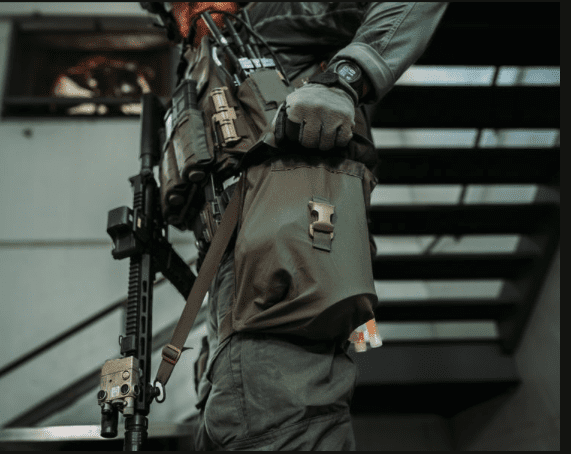
Tubes Gas Mask Pouch:

• Tubes Attachment Accessory Compatible
• Belt Mount Accessory Compatible
• Wide Opening w/ Hooded Top
• Dual hook and loop and SR Buckle Closure

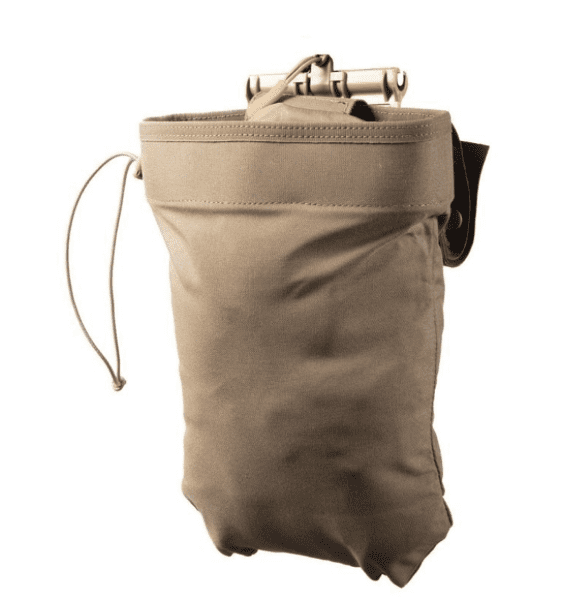
Tubes Dump Pouch:

• 4” Female tubes Attachment
• Modular Attach and Detach Option
• Compatible “MOLLE” Attachment Option
• Tubes Attachment Accessory Compatible
• Belt Mount Accessory Compatible
• Approx. 1O”x 11”

Tubes Attachment Accessory:

• 4″ Male Tube (Field Repairable)
• Hook and loop attachment
• Multiple mounting options

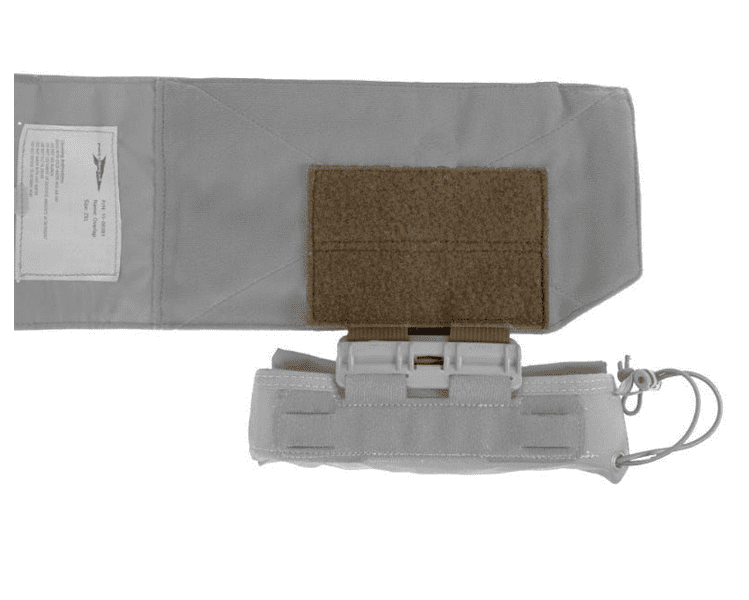
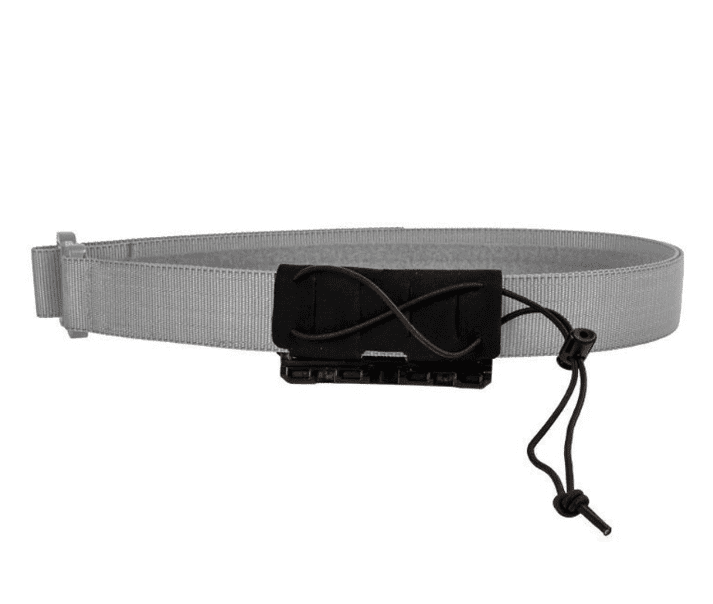
Tubes Belt Mount Accessory:

• 4″ Male Tube (Field Repairable)
• 6/12 Laser Cut for attaching additional pockets
• 2″x4″

For more information check out First-Spear.com.

US, Colombian Armies Enhance Interoperability During Airborne Infiltration Exercise HYDRA III 2024

Friday, August 9th, 2024

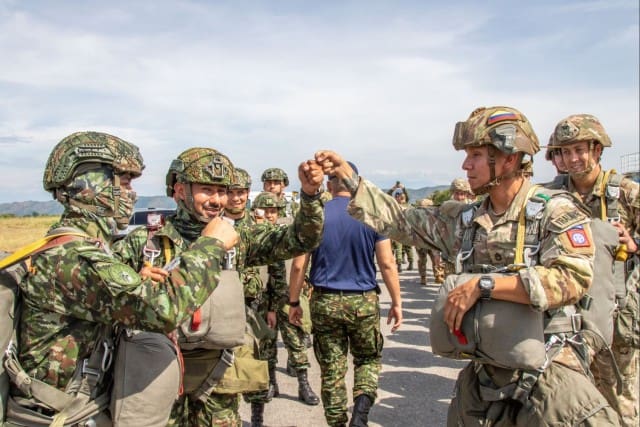
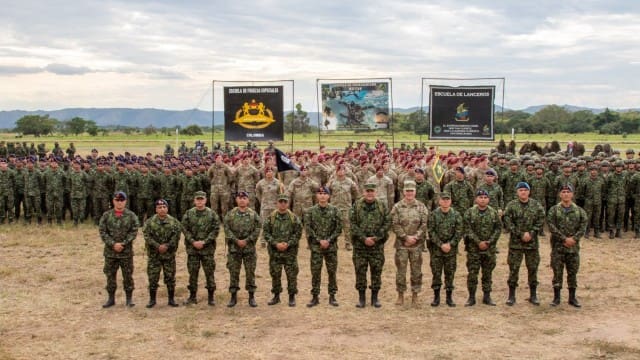
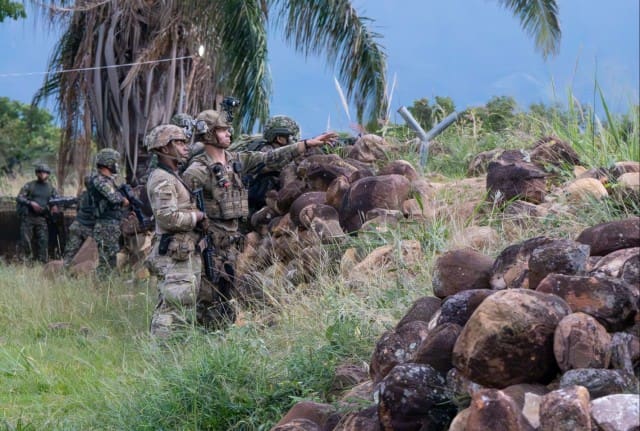
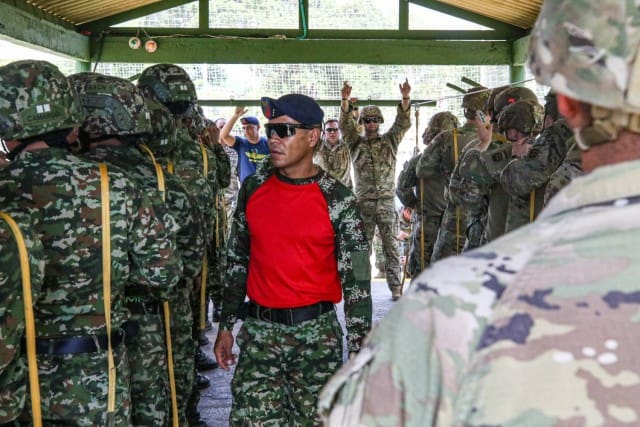
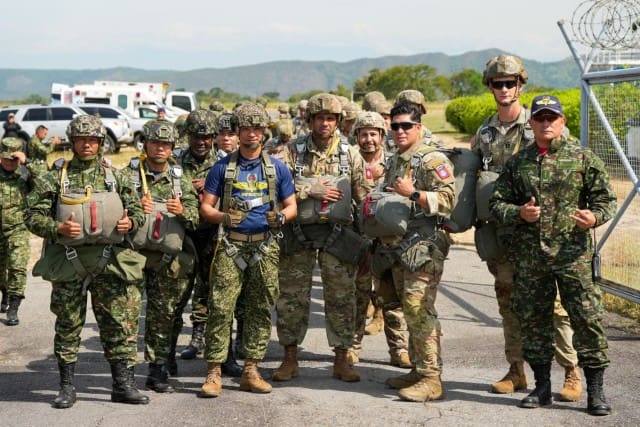
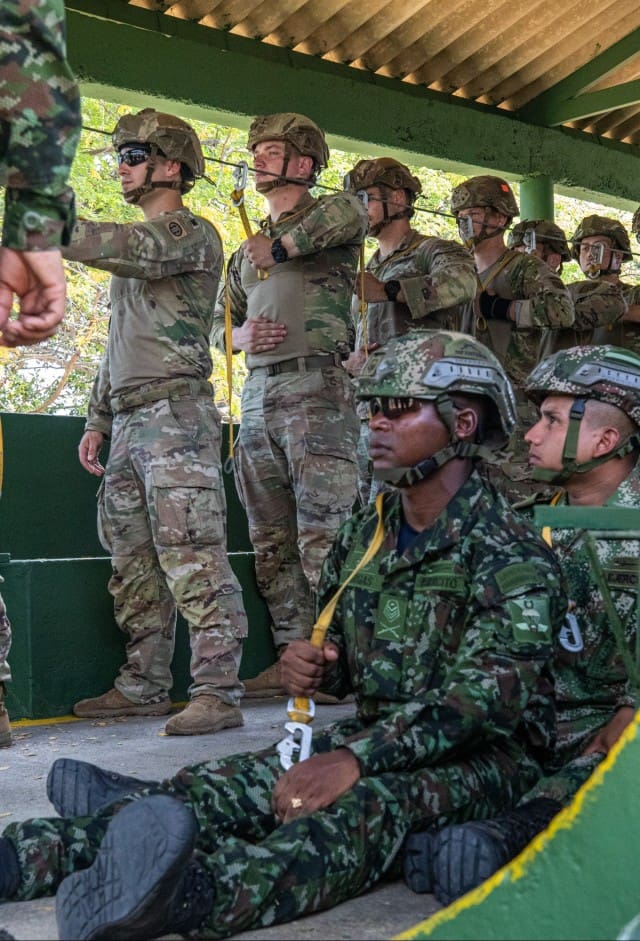
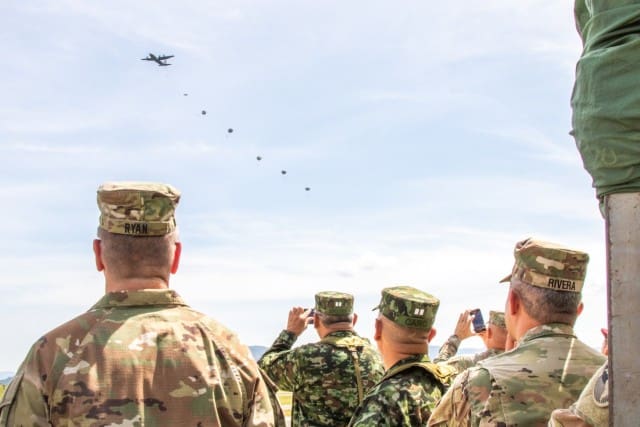
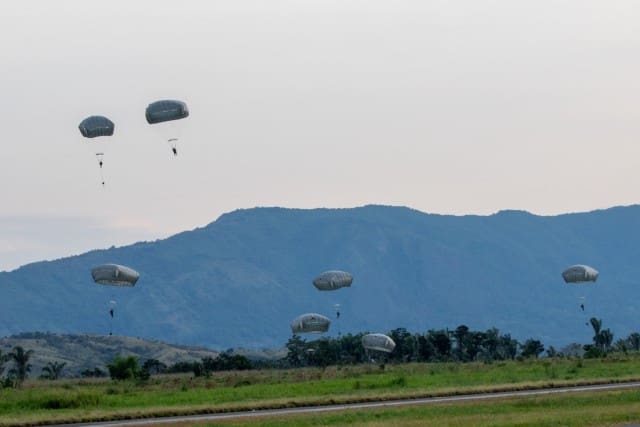
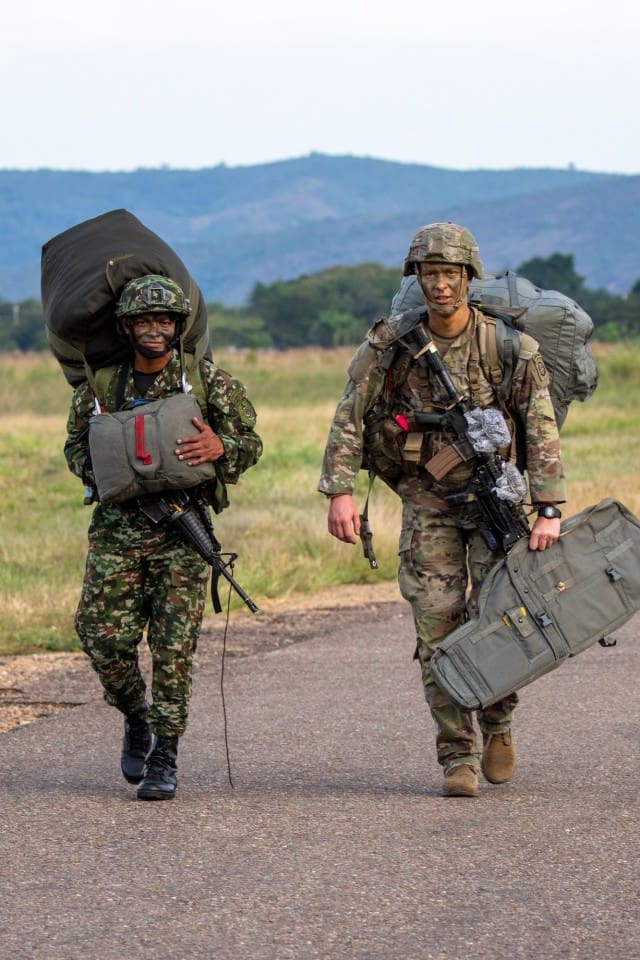
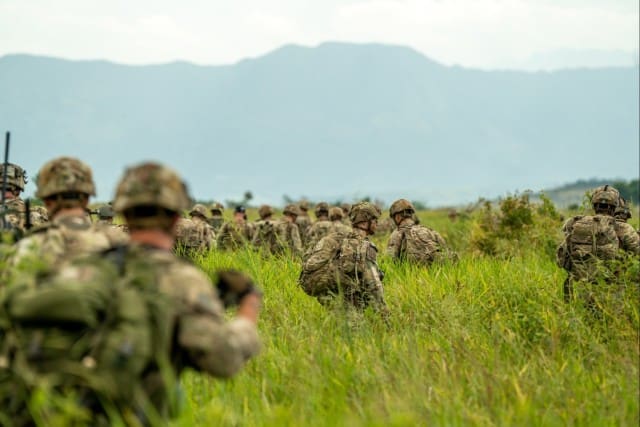
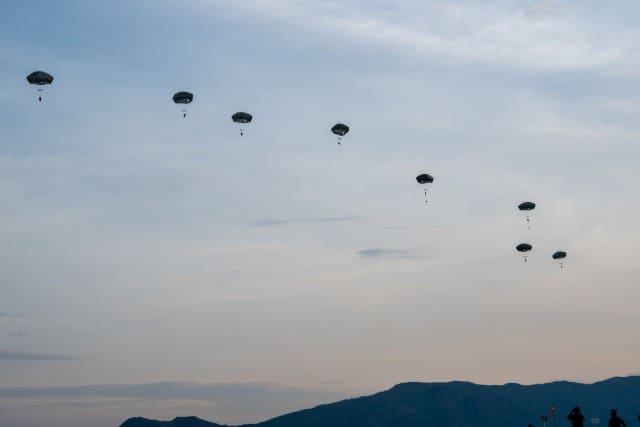
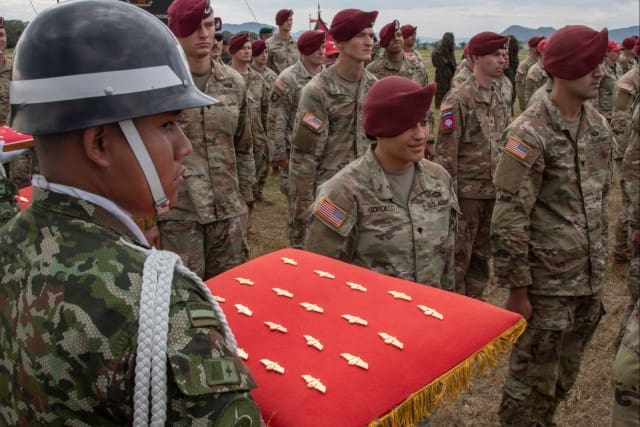
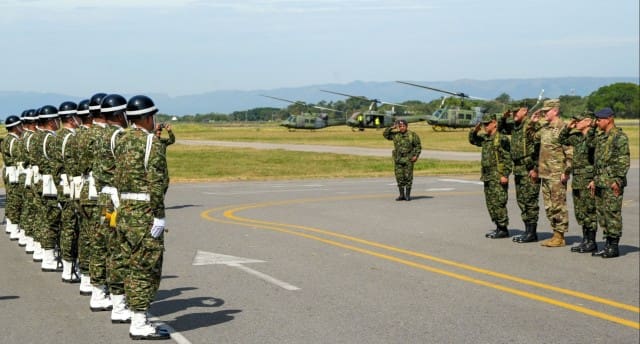
FUERTE MILITAR DE TOLEMAIDA, Colombia — Nestled in the heart of Colombia’s Andes mountain range, approximately 75 miles south of Bogota, roughly 300 soldiers from the U.S. and Colombian armies forged partnerships during the bilateral airborne infiltration exercise, Hydra III 2024, held from July 28 to August 1, 2024, in Fuerte Militar de Tolemaida, Colombia.

A U.S. Army South-led exercise, HYDRA 24, formerly known as Dynamic Force Employment, is an agreed-to-action between the partner nations and the third iteration of its kind.

Participating units included the 2nd Battalion, 508th Parachute Infantry Regiment, 2nd Brigade Combat Team, 82nd Airborne Division; the Colombian Army Battalion of Counter Narcotics; the 7th Special Forces Group, the 1st Security Forces Assistance Brigade and support personnel from the ARSOUTH command.

“It is no secret that around the globe it is growing more important with each passing month and year that while we are experts in some aspects we have so much to learn from our partners around the world,” said U.S. Army Maj. Adam Amor, 2nd Battalion, 508th Parachute Infantry Regiment operations officers and lead officer in charge of the 82nd Airborne Division paratroopers participating in HYDRA 24.

“The reality is in today’s battlefield partner force integration is the standard, it isn’t just a one-off opportunity and it is not just something we only do for training exercises but everywhere that we go around the globe we are going to be shoulder to shoulder with another partner nation,” said Amor.

The exercise aimed to enhance the technical, procedural and interoperability between Colombian and U.S. paratroopers. This demonstrates the U.S. Army’s ability to rapidly and strategically employ forces in the U.S. Southern Command area of responsibility.

For many of the paratroopers, it was their first time integrating and interacting with a partner force.

“I was very impressed that everybody was able to expand and work out the language barriers to make the operations a success, in addition to some of our ad hoc translators who stepped up to help integrate with our partners,” said Amor.

“We also learned that we have different methods of executing higher operations and battle tracking across the area, but our paratroopers could easily integrate with their partners even despite the language,” said Amor.

Amor stressed the importance of learning to synchronize planning efforts to facilitate battlefield operations anywhere in the world.

With a focus on pre-deployment operations, HYDRA 24 allowed U.S. Army Soldiers to enhance their agility in a new training domain alongside partner forces. This collaboration further improved interoperability and prepared them for success in competition, crisis and conflict.

“The Colombian Counter Narcotics Battalion 1 has a specific mission and we also have a specific mission set with a global focus,” said Amor. “Because of this we were able to share lessons with airborne operations and learn how they execute operations that may be more localized using different types of aircraft and different types of jungle movements.”

Amor added that he was impressed with the initiative of the Colombian Army’s company commanders and appreciated their hospitality and capabilities, which facilitated the exercise.

“The Colombian Army is currently working on becoming interoperable with other armies worldwide. This exercise represents a significant step forward in that process,” said Colombian Army Lt. Col. Bayardo Pena, senior observer and operations officer in charge for the Colombian Army.

“The U.S. Army has been supporting us for many years. The fact that we are conducting this exercise is going to strengthen and increase our partnership for the future,” said Pena.

Pena stressed the importance of both armies being able to conduct the planning process, execution of the maneuver, understand each other’s doctrine, and execute an exercise.

“The U.S. Army has a world standard in terms of doctrine and it is going to help us standardize our processes too,” said Pena. “I am proud of our soldiers and how they conduct themselves with other armies like the U.S.”

The U.S.-Colombia partnership remains one of the most vibrant and mutually productive relationships in the Southern Hemisphere. SOUTHCOM and U.S. Army South bilateral exercises aim to demonstrate the United State’s commitment to the region and its citizens.

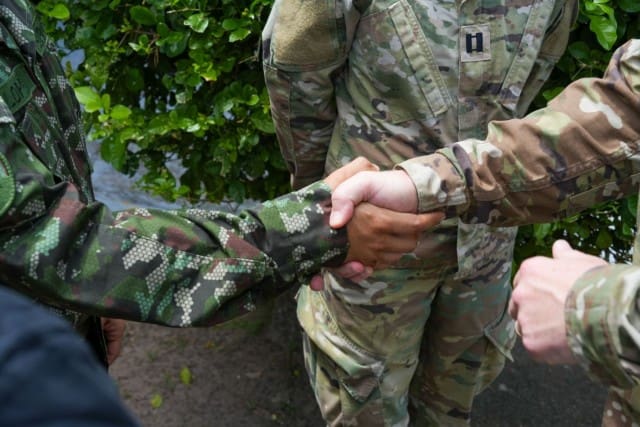
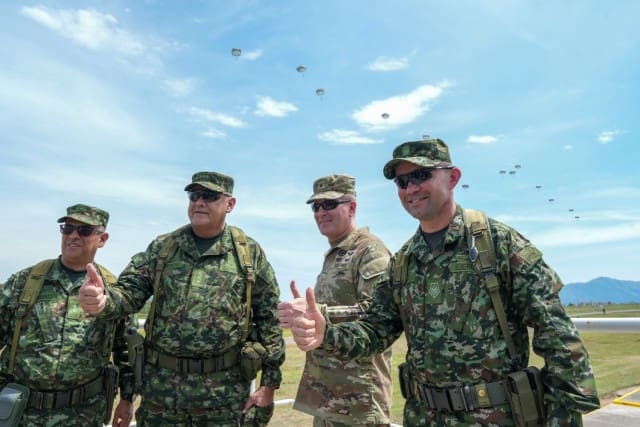
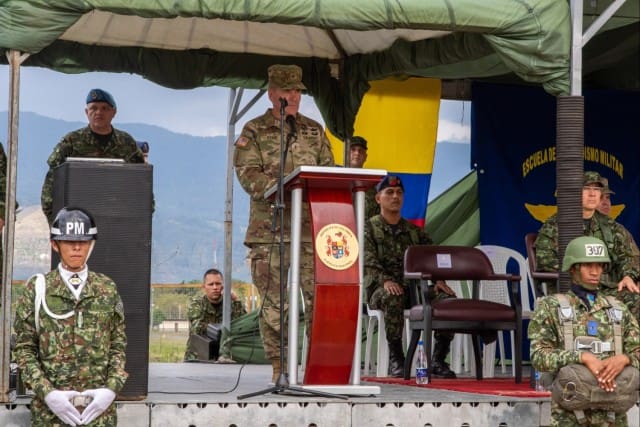
The exercise culminated in a distinguished visitor day, foreign airborne wing exchange ceremony and remarks from the U.S. Army South Commanding General, Brig. Gen. Phil Ryan.

“Today’s event goes beyond just tactical and operational interoperability, although that is crucial, what truly matters is the human connections formed between all of you,” said Ryan during the foreign wing exchange ceremony. “These bonds are key to safeguarding our shared values of democracy and human rights, and to preserving our way of life in the Western Hemisphere.”

Prior to the exercise, the two armies synchronized tactics, techniques and procedures, medical and communication rehearsals to ensure seamless integration throughout the combined training exercise and the multinational airborne assault.

“Our goal is to enhance our interoperability so we can operate seamlessly together as one multinational force whenever needed,” said Ryan. “Embrace this shared experience and remember that, despite our different backgrounds and languages, we are united by your common identity as paratroopers – Defense and Fraternity!”

By MAJ Nadine Wiley De Moura

Development Ecosystem Lays Foundation for Delivering Combat-Effective, Agile, Adaptive Airpower at Scale

Thursday, August 8th, 2024

JOINT BASE SAN ANTONIO-RANDOLPH, Texas (AFNS) —

Any future fight against a near-peer adversary will demand the U.S. Air Force deliver combat-effective, agile and adaptive airpower at scale. This will require Airmen who can make quality decisions at the speed necessary for competition and combat timelines, and developing future leaders who can do the same.
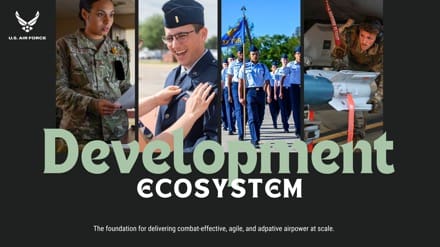
In line with Department of the Air Force’s efforts to reoptimize for Great Power Competition, leaders at Air Education and Training Command are following through on upgrading the service’s development ecosystem with a goal of providing digital-age training and education in alignment with the evolving needs of the warfighter.

“Reimagining our current approach to training and educating Airmen for GPC holds the potential for transformative change across multiple dimensions,” said Dr. Wendy Walsh, AETC chief learning officer. “The advantages of this approach include the focused ability to rapidly recruit, train and educate Airmen with the competencies required to meet the evolving demands of joint force commanders in the GPC landscape in line with the Air Force Future Operating Concept.”

So, what exactly is the development ecosystem?

“If you’re looking at the set of tools that an Airman will interact with over the course of their Air Force careers, the development ecosystem spans the entirety of training and education experiences they encounter from accession to retirement,” Walsh said. “This includes the instruction they receive at basic military training, at technical training or at undergraduate flying training, and onward to their experience during professional military education courses and in their units in the operational commands.”

According to Walsh, the development ecosystem does not stop after initial basic military, technical training or undergraduate flying training; rather it is a competency-based, human-centered learning continuum that is informed and driven by a myriad of learning data and records, orientating the force to measurable, mission-focused outcomes.

“Once Airmen go out to their operational wings, the question is how will we continue to develop them in both their foundational and occupational competencies so they can do their job better, making them more effective Airmen, teammates and eventually leaders,” Walsh said. “Building competency integration and learning design establishes a learner-centric model anchored to mission-command and the strategic context of GPC and is divorced from the industrial age ‘pipelines’ or ‘training conveyor belts’ of the past.”

Rapidly codifying competencies required for GPC has been a top priority in the command.

“Currently, over half of the Air Force’s career fields are implementing competency-based training plans with a goal to have all career fields complete by summer of 2025,” said Col. Sandra Coble who leads headquarters AETC’s competencies division. “We’re moving fast to accomplish this training transformation knowing exactly how important this is to Air Force readiness.”

Competencies also provide a framework by which the Force Development enterprise can organize, categorize and pursue data sources necessary for data-driven insights to help units assess overall readiness for specific missions.

“Striking a balance between talent management and operational needs is a complex challenge, but the integration of talent management processes with force development offers the opportunity for more efficient resource allocation,” said Col. Jason Turner, AETC’s deputy director for force development. “This alignment ensures that AETC produces Airmen with the right competencies at the right time, for the right place, enhancing overall readiness and effectiveness.”

A major step in aligning talent management and operational needs is underway with the on-going development of the DAF Learning Record.

“Think of the DAFLR as a dynamic transcript of your learning and competencies, representing an individual digital portfolio consolidating learning-specific information for total force Airmen and Guardians from 32 authoritative data sources,” Turner said. “The intent is to provide a one-stop, near-real-time, validated record of an individual’s education, training and experience across a learner’s career.”

DAFLR includes 32 authoritative data sources, such as MyLearning, MyVector, the Military Personnel Data System, the Defense Civilian Personnel Data System, the Education and Training Management System and more.

“Commanders, their staffs and every Airman and Guardian will have access to near-real-time learning information guiding force-development decisions, including decisions that will impact operational readiness in support of agile combat employment,” Turner said. “DAFLR will enhance lethality through knowledge of what military and civilian personnel know and can do, assisting commanders in developing the right Airmen and Guardians at the right time for the right mission.”

The two-way partnership between AETC and operational commands, will be a critical factor in overall force development.

“[AETC] is providing a service that spreads across the entire DAF,” Turner said. “It is the matching between the development that a person receives while they are in AETC with where the mission needs are when they are sent out to their operational units. This requires a feedback loop where the operational commands can request training, and then receive that training and not have to wait to send that person back to a formal schoolhouse. Being able to upskill in real time to meet the needs of the warfighter at the point of need.”

To illustrate the point of what a successful future development ecosystem looks like, Turner gave the example of a team at Andersen Air Force Base, Guam, developing a new training method demonstrating how to refuel a B-52 Stratofortress in an austere environment. To rapidly share that information across the enterprise, that new training module can rapidly be taken back to the aircraft’s home station at Barksdale AFB, Louisiana, and be implemented there in real-time to match operational need during a conflict.

“Our current ecosystem has pockets of excellence everywhere, with great leaders doing innovative things,” Walsh said. “Our future success means getting our learning ecosystem to effectively connect across institutional and operational commands, to identify and train with a competency-based approach, to share best practices and collaborate on how to incorporate digital age technology into development, and to adapt learning opportunities when and where needed for mission readiness.”

By Dan Hawkins, Air Education Training Command Public Affairs

AFSOC Demonstrates ACE with Historic Highway Landing

Wednesday, August 7th, 2024

BONO, Ark. —  

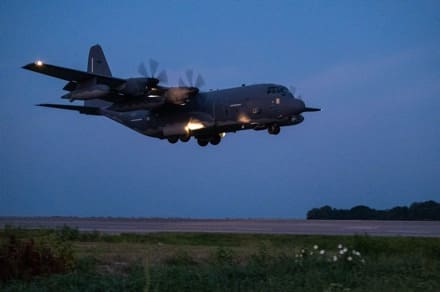
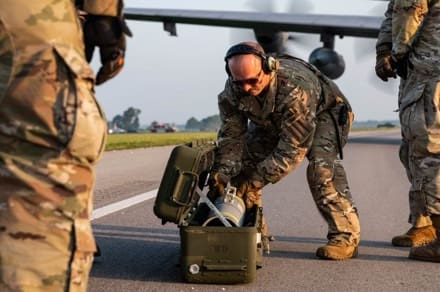
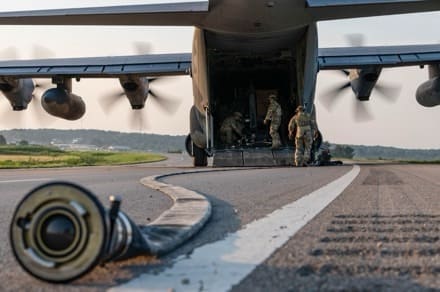
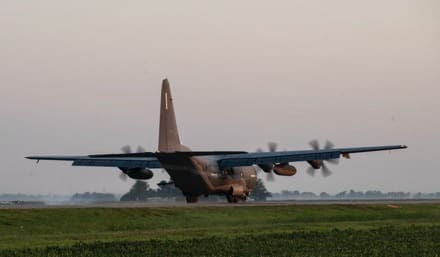
In a historic first, Air Force Special Operations Command successfully landed an AC-130J Ghostrider Gunship on Highway 63 in Bono, Arkansas, on August 4, 2024. This operation was part of a broader exercise, Emerald Warrior Field Training Exercise II, designed to showcase AFSOC’s Agile Combat Employment capabilities.

The exercise provided an opportunity for participating units to refine their skills and advance ongoing pathfinding and experimentation efforts within AFSOC.

“This exercise serves as a significant milestone for AFSOC, demonstrating our ability to operate in diverse and austere environments,” said Tech. Sgt. Robert Gallagher, lead planner for the highway landings, assigned to the AFSOC Air Commando Development Center. “By leveraging ACE concepts, we enhance our operational flexibility and resilience.”

Throughout the morning, Special Tactics Airmen from the 1st Special Operations Wing established and secured a landing zone on the highway.

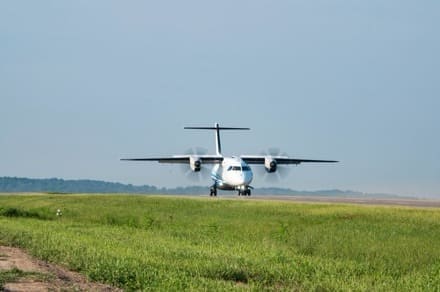
Shortly after, a C-146A Wolfhound and an MC-130J Commando II from the 492nd Special Operations Wing landed on the five-lane highway.

The MC-130J crew then set up a Forward Arming and Refueling Point (FARP), as the AC-130J assigned to the 1st Special Operations Wing at Hurlburt Field, Florida, made its approach, landed, refueled, rearmed and took off again.

The primary objective of this exercise was to validate AFSOC’s capability to operate in austere environments with minimal infrastructure. Key tasks included securing the landing zone and performing FARP operations, both critical elements of the ACE framework.

“Emerald Warrior FTX II demonstrates to our adversaries that we can meet them anytime, any place, anywhere, without the need for traditional runways to project air power,” said Col. Patrick Dierig, 1 SOW commander. “By landing an AC-130J on a highway and conducting FARP, we’re proving our ability to operate in austere and unique environments. It shows our commitment to maintain operational flexibility and readiness, ensuring we can deliver decisive airpower whenever and wherever it’s needed.”

The successful execution of this exercise underscores AFSOC’s commitment to evolving its capabilities and adapting to emerging threats. By continuing to refine and operationalize ACE concepts, AFSOC ensures it remains at the forefront of innovative and agile combat operations.

By MSgt Ryan Conroy

Tactical Tuesday: Limited-Edition MultiCam Packs – Now Available!

Tuesday, August 6th, 2024

Vertx upgraded some of your favorite go-to packs. Decked out in official MULTICAM® Black and MULTICAM® Tropic camouflage patterns, you’ll blend in like a pro, whether you’re stalking through dense foliage or navigating urban streets.

These packs aren’t just stylish – they’re tough. Made with 500 Denier CORDURA®, they’re as resilient as you are, ready to tackle any challenge. Designed to handle more than you’ll ever need, they keep you prepared for whatever comes next.

The MULTICAM® lineup:

Ready Pack: MULTICAM® Black and MULTICAM® Tropic
SOCP Fanny Pack: MULTICAM® Black and MULTICAM® Tropic
Navigator: MULTICAM® Black
SOCP Sling: MULTICAM® Black

Don’t miss out on this collection of limited-edition packs. Visit vertx.com and secure yours before they’re gone!

FLRAA Achieves Milestone B, Enters Next Phase of Development


Tuesday, August 6th, 2024

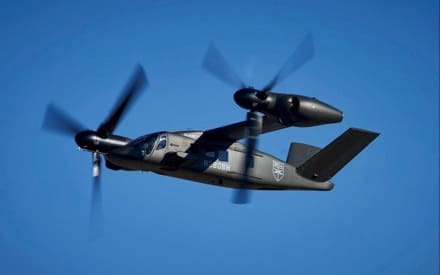
REDSTONE ARSENAL, Ala. — The Army’s Future Vertical Lift program took a major step forward as the Future Long Range Assault Aircraft, or FLRAA, program entered the next major phase of development when the Army announced the approval of the FLRAA Milestone B Acquisition Decision Memorandum on August 2, 2024.

The decision came after the successful FLRAA preliminary design review in April and a meeting of the Army Systems Acquisition Review Council in June. After reviewing FLRAA affordability, technological viability, threat projections and security, engineering, manufacturing, sustainment and cost risks, the ASARC confirmed that all sources of program risk have been adequately addressed for this phase of the program. Milestone B allows the Army to exercise contract options and continues development of the aircraft as it now enters the engineering and manufacturing development phase.

“This an important step for FLRAA and demonstrates the Army’s commitment to our highest aviation modernization priority,” said the Army acquisition executive, the Honorable Douglas R. Bush. “FLRAA will provide assault and MEDEVAC capabilities for the future Army, adding significantly increased speed, range and endurance.”

“This is an exciting day for the Army … and more importantly for our Soldiers. The FLRAA provides truly transformational capability to Army aviators as we uphold the sacred trust with the Soldier on the ground,” said Maj. Gen. Michael C. McCurry, 17th chief of the U.S. Army Aviation Branch. “Future battlefields require expanded maneuver, the ability to sustain and provide command and control across vast distances, and of course, evacuate our wounded. All of these apply to both conventional and special operations forces. With roughly twice the range and twice the speed, FLRAA brings unmatched combat capability to the joint force.”

The Army awarded the FLRAA Weapon System Development contract to Bell Textron on December 5, 2022, and it includes nine options. The Milestone B allows the Army to exercise the first option which includes detailed aircraft design and build of six prototype aircraft. The Army is planning for the first FLRAA flight in 2026 with low-rate initial production scheduled to begin in 2028 and initial fielding activity in 2030. The Army will continue to review and refine the schedule as necessary based on the contract award and the latest program activities.

“PM FLRAA and our Team of Teams across the aviation enterprise are working hard to make sure that we get it right,” said Brig. Gen. David Phillips, Program Executive Officer, Aviation. “We will deliver a next generation combat capability that meets the Army’s goals for affordability, survivability, maintainability, reliability and safety.”

“The FLRAA Milestone B decision is another successful step of a deliberate modernization effort by the Army,” said Brig. Gen. Cain Baker, director for the Future Vertical Lift Cross Functional Team. “The many stakeholders, including academia and industry, have worked hard to ensure rigorous technology development and demonstration and have informed FLRAA requirements and affordability. FLRAA’s speed, reach and survivability will be key to transforming U.S. Army maneuver.”

“I am very proud of the FLRAA team. We’ve maintained a deliberate balance between sustaining program momentum while maintaining technical and acquisition rigor,” said Col. Jeffrey Poquette, FLRAA project manager. “Using digital engineering as a key part of our ‘go slow to go fast’ approach has helped to accelerate the program by investing in requirements development up front.”

FLRAA will provide transformational capability for ground forces and aircrews with speed, range, and surprise to present multiple dilemmas to the enemy. It will expand the depth of the battlefield, extending reach to conduct air assault missions from relative sanctuary while enabling us to rapidly exploit freedom of maneuver to converge ground forces through decentralized operations at extended distances. FLRAA’s inherent reach and standoff capabilities will ensure mission success through tactical maneuver at operational and strategic distances.

As the Army transforms to meet an uncertain future, FLRAA is one of many modernized capabilities that will help ensure the Army of 2030 and beyond is ready to win when the nation calls.

By PEO Aviation

Applications Open for US Army Artificial Intelligence Scholars Program

Monday, August 5th, 2024

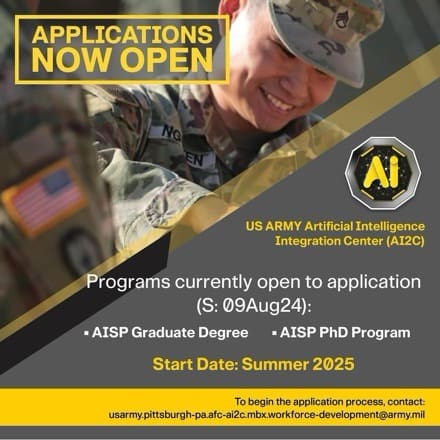
The Army Artificial Intelligence Integration Center (AI2C) is seeking applicants for their Artificial Intelligence Scholars Program (AISP) Cohort 6.

Open to Active Component officers (Lieutenant to Major) with exceptional academic foundations in computer science, math, and engineering.

There are two programs currently available, the AISP Graduate Degree and the AISP PhD Program.

The AISP Graduate Degree is a highly competitive, 20-22 months of Advanced Civil Schooling at Carnegie Mellon University or the University of Wisconsin-Madison. Degree opportunities include: Masters of Computational Data Science; Masters of Information Systems Management-Business Intelligence Data Analytics; AI data Engineering, and Autonomous System AI Engineering. Advanced Civil Schooling is followed by a 24-month utilization tour at the AI Factory in Pittsburgh, PA.

The AISP PhD Program is an elite 36-month program at Carnegie Mellon University followed by a 3-year utilization tour at the AI Factory. The purpose of this program is to train officers to conduct independent research in AI or related fields. Graduates will extend the body of AI knowledge, apply cutting edge AI research to Army problems, and lead development of Army AI plans and proofs of concept.

Applications are due no later than August 9, 2024: www.hrc.army.mil/content/BOP

For additional information or to begin the application process reach out to: usarmy.pittsburgh-pa.afc-ai2c.mbx.workforce-development@army.mil