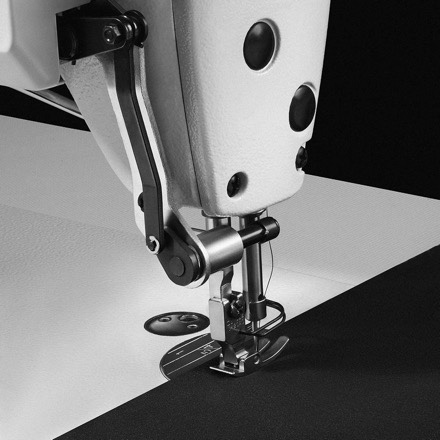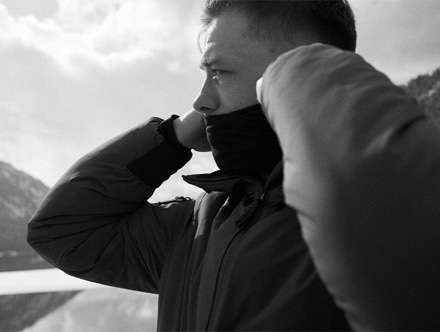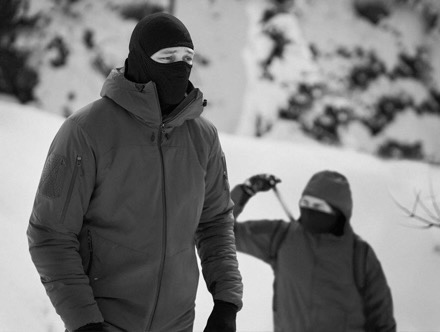
LMS Gear’s new Fanny Pack „Fat Slim Boy“ is made from 500D Cordura in Ranger Green with ITW Hardware in Tan.

Proudly made in Switzerland in Cooperation with Alig Industries.
Photo credit @oneten4x4
This video will whet your appetite for a big report tomorrow on some very exciting signature management technologies from FibroTex.
The Royal Marines are a maritime-focused, amphibious light infantry unit that can deploy on short notice to support the United Kingdom Government’s military and diplomatic objectives worldwide. They are designed for highly maneuverable operational situations. The Corps provides lead element expertise for the NATO Northern Flank and are optimized for high altitude operations as the United Kingdom Armed Forces’ specialists in cold-weather combat.

The Royal Marines were formed to serve as the infantry of the Royal Navy. On 28 October 1664, the first unit of what would become the Royal Marines was formed. The Duke of York and Albany’s Maritime Regiment of Foot was renamed the Admiral’s Regiment after the Duke of York and Albany’s Maritime Regiment of Foot was disbanded. In 1672, the title ‘Marines’ first appeared in records. The Marine Regiments were then disbanded and re-established whenever the United Kingdom’s overseas colonies were threatened. His Majesty’s Marine Forces were established in 1755 and placed under Admiralty authority at Chatham, Plymouth, and Portsmouth. For many years after that, the Marines were connected with these communities. They were given the title Royal Marines by George III in 1802. The Royal Marines engaged in the ill-fated Gallipoli landings during World War One. The Royal Marines fought in several battles on the Western Front. During the conflict, the Royal Marines were awarded five Victoria Crosses.

The Royal Marines fought against the Chinese in the two opium wars, the Crimean War and the Boxer Rebellion in China during the Napoleonic Wars and the War of 1812. The Royal Marines engaged in the ill-fated Gallipoli landings during World War One. The Royal Marines fought in a number of battles on the Western Front. During the conflict, the Royal Marines were awarded five Victoria Crosses. The Royal Marines’ artillery and infantry units were combined in 1923 to become the Corps of Royal Marines. During World War II, the commando role so closely identified with the Royal Marines was developed. The Royal Marines commando groups that had fought in Norway, North Africa, and Dieppe were combined with the Army commandos. In 1943, the Special Service Brigade was formed, and the overall command structure was designated as the Special Service Brigade. During WWII, there were four Special Service Brigades, and the Royal Marines served in each of them. During the conflict, nine Royal Marines Commandos units were formed, ranging from 40 to 48 men.

During WWII, these commando battalions took part in numerous wars, including Italy, D-Day, and Antwerp.

During World War II, the Royal Marines received one Victoria Cross. The Army Commandos were abolished in 1946, leaving the commando function to the Royal Marines. The Royal Marines served in the Korean War, Malaya, Suez in 1956, Northern Ireland, and the Falklands War in 1982 after 1945. Together with the Parachute Regiment, the Royal Marines were regarded as the Task Force’s spearhead in the effort to expel Argentine soldiers from the Falkland Islands. The Royal Marines fought at Mount Kent, Mount Harriet, and Two Sisters before ‘yomping’ into Port Stanley after San Carlos Bay. In the Falklands, the Special Boat Service (SBS) played a major, if more hidden, role, successfully attacking a key Argentinean stronghold at Fanning Head, which overlooked San Carlos Bay. Since the Falklands War, the Royal Marines have served in the Balkans, Sierra Leone, East Timor, Afghanistan, and Iraq.
SCUBAPRO Sunday is a weekly feature focusing on maritime equipment, operations and history.
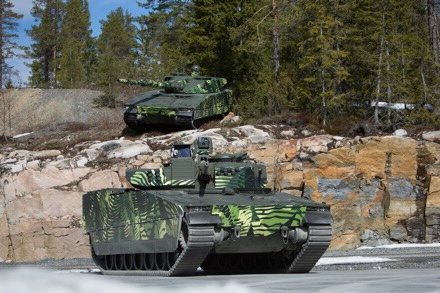
Rheinmetall, the largest supplier of military vehicles to the Australian Defence Force has submitted the company’s Lynx Infantry Fighting Vehicle (IFV) best and final offer for the Australian Department of Defence Land 400 Phase 3 Mounted Close Combat Capability tender. Rheinmetall is one of two competing companies involved in the tender for this procurement project.

Rheinmetall Defence Australia Managing Director, Gary Stewart said the Lynx is a next generation tracked, digitised and highly protected Infantry Fighting Vehicle and offers a step-change in Army’s capabilities.
“Lynx sets the new standard and offers unmatched levels of survivability, mobility, lethality, knowledge and growth. Importantly, Lynx is ready to protect Australians in the field and defeat any adversary. Lynx is fitted with the Rheinmetall Lance turret for precise and lethal effects and offers an integrated battle management system.
“Designed for close combat operations, the extensive family of Lynx vehicles is modular. Lynx can be easily configured and reconfigured, to all 10 roles required by the Army.
Rheinmetall has developed the Lynx with a growth path to meet continually evolving military needs throughout its anticipated 40 year life.
Submitting the best and final offer represents the final deliverable of the two year Risk Management Activity (RMA) undertaken by the Department of Defence. Involving 12 months of rigorous testing by Army, Rheinmetall has been impressed with the professional and flexible approach taken by Defence in response to COVID.
“The fact that Army and Defence’s Capability Acquisition and Sustainment Group has completed perhaps the most comprehensive testing in the world of these IFVs is outstanding” said Mr Stewart.
“The testing and associated working group discussions have mitigated a number of risks, confirmed vehicle and company performance, and improved the access for more Australian companies to be involved in this program.
Mr. Stewart said that the company’s offer also included a “special project” that was sure to pique the interest of not only the Australian Defence Force, but international export markets as well.
“Incorporating a great deal of engineering design and innovation, I am very much looking forward to unveiling the Rheinmetall special project”, he added.
Mr. Stewart said that Rheinmetall’s demonstrated commitment to Australian Industry Capability (AIC) through the Land 121 and Land 400 Phase 2 programs will continue to expand for the Lynx program.
“The Australian Army will benefit from the Lynx IFV that will be designed, built and supported from Rheinmetall’s Military Vehicle Centre of Excellence, with an expanded Australia-wide military vehicle industry network.
“In addition to the engineering of the system design Rheinmetall undertook in Australia with our key Australian partners, we are continuing to identify more Australian companies to supply technologies into Lynx, as part of our ongoing ‘design to manufacture in Australia’ activities.
“Today, we have well in excess of 100 small to medium enterprises that are manufacturing parts for Lynx, thereby providing employment and economic growth opportunities across regional and capital cities in Australia,” Mr. Stewart added. “Rheinmetall’s bid will see the Lynx sustained and enhanced locally throughout its service life, building on Rheinmetall’s existing employment base which supports hundreds of high-technology design and manufacturing jobs in fields as diverse as electro-optics, weapon systems, vehicle and turret manufacturing, armour systems and simulation.
“The Lynx’s Lance turret; already in manufacture for the Australian Boxer CRV program and an export customer, provides high degrees of commonality and interoperability for the soldier. Allowing rapid transition across platforms, a common L turret would simplify Army’s training system and reduce in-service support costs, providing the customer with tangible benefits from day one. “Manufactured at Rheinmetall’s Military Vehicle Centre of Excellence (MILVEHCOE) in Redbank, Queensland, the company will provide whole of fleet management, training and through-life support of Lynx.
Combining the advantages of uncooled thermal technology with clear, see-through day optics in a single sight, the Mepro TIGON system enables significantly improved operational flexibility
Milipol Paris, 19-22 October, Parc d’Exposition, Stand 5A D067

19th of October 2021 Israel. Meprolight (1990) Ltd. – a member of the SK Group (founded by Mr. Samy Katsav) is a leading manufacturer of electro-optical systems, thermal and night vision equipment, as well as self-illuminated sights for military, law enforcement and civilian applications. The company has completed development of the advanced MIL-STD Mepro TIGON sight. The system integrates the advantages of uncooled thermal imaging technology with those of see-through day optics (“red -dot” sights) in a single product, enabling complete operational flexibility, day and night.
Users in the defense, law enforcement and HLS sectors can benefit from the highly-advanced features of the TIGON, in one, extremely cost-effective solution.
The integrated technology enables operational flexibility for mission success in open terrain, CQB scenarios, densely-vegetated areas – such as jungles – and more. Being compact and lightweight, it reduces weapon-load, improves weapon balance, and simplifies operations compared with similar non-integrated solutions.

For day use, the Mepro TIGON’s large transparent display window and clearly-visible reticle enable rapid target acquisition, with both eyes open. At night, the thermal image projected onto the same display effectively supports spotting and engaging targets in complete darkness and harsh environment conditions, including smoke and dust.
To increase the effective day range of the sight, a tactical magnifier can be fitted behind it, while the digital x2 zoom of its thermal channel may be employed at night.
Additional features and advantages include:
– High accuracy zeroing system
– Wide FOV in both day and thermal modes
– Light sensor for seamless auto-adjustment of day reticle brightness
– Long operating time – thousands of hours in day mode, and more than five continuous hours in thermal mode
– Power-saving mechanism for maximum energy efficiency, without compromising reticle availability
– Low operating costs – powered by two commercial “AA” batteries
– Connectivity enabled through a video-out interface for external monitors and communications systems
– Quick-release high-durability Picatinny rail (MIL-STD-1913) mount
“The Mepro TIGON was developed in direct response to the needs of military, security, and law enforcement users for a sight that both, has high performance capabilities, and, is cost-effective enough to enable large-scale fielding for significantly increasing numbers of night-combat enabled users within forces,” says David Shenhav, S.V.P. Sales & Marketing – Defense, at Meprolight. “It efficiently supports seamless transition between day and night operations combined with changing tactical scenarios, all while subject to harsh environmental and weather conditions.
The system is already in the process of being evaluated by the IDF and introduced to select forces around the world.”
IWI expands its riot control solutions portfolio, with the launch of its patented, unique and revolutionary riot-control protective suit – the GAL Versatile Protective Suit (VPS)
Adaptable to all scenarios, the VPS is designed for use by law enforcement agencies. Extremely lightweight, it provides complete protection from trauma injuries
Milipol Paris, 19-22 October, Parc d’Exposition, Stand 5A D067

19 October 2021, Ramat Hasharon, Israel. IWI – Israel Weapon Industries – a member of the SK Group (founded by Mr. Samy Katsav), and leader in the production of combat-proven small arms for military forces, police units, law enforcement agencies, and governmental entities around the world – announces the expansion of its comprehensive range of riot-control solutions as it launches the patented GAL Versatile Protective Suit (VPS). Designed for the protection of forces while maintaining public order, the lightweight, wearable protection system is adaptable to all scenarios.
The GAL VPS absorbs massive kinetic trauma and reduces and diverts the transfer of a blow to the body. A comprehensive, 3-level operational solution, the GAL VPS is flexible and easy to wear. It includes a vest and arm and leg protectors, all anti-trauma, and weighs just 4.4 kg at W2 and 5.9kg at W4, making it the most lightweight protective suit, while the unique design enables users from small to large size to wear it. The system is also covered with an anti-abrasion material as standard, or with flame retardant material according to the customer’s needs.
Together with the bullet proof and anti-stab ultralight vest and ultralight ballistic helmet, the GAL VPS is the most up-to-date, versatile protective suit available today. Moreover, following a stringent testing process and crash tests, the system has achieved German standard VPAM KDIW 2004 Cubic/ Wurfel.
“In the past year, we have witnessed the growing need for a professional personal protection system that provides a solution for security forces in the face of diverse missions and minute-by-minute situational changes,” says Ronen Hamudot, Executive VP of Marketing and Sales at SK Group. “We have developed a single kit that provides different levels of protection and addresses any scenario, including covert missions, search and arrest missions, dispersal of demonstrators, and more. This GAL VPS is an addition to the overall solution offered by IWI in the field of public protection. IWI continues to pursue its goal of providing complete solutions to its customers, by constantly developing the most advanced systems in the world.”
• Experimentation was part of NATO REP(MUS) 21 U.S./U.K. Interoperability to Interchangeability (I2I) initiatives using uncrewed systems
• First successful cross-domain, multi-national and I2I-enabled maritime sensor-to-shooter (S2S) demonstration of Puma 3 AE small unmanned aircraft system and Switchblade 300 tactical missile system
• Demonstrated the interoperability potential of multiple Command and Control Systems/Common Control Systems (CCS) to pass missions, C2 authority, and ISR/targeting data, enabling U.S. and U.K. common mission planning and execution systems in coordinated mission profiles
• International debut of the Precision Recovery System (PRS), which supported Puma 3 AE’s continuous mission taskings with a quick turnaround recover/launch capability using an automated net landing capability on an underway U.S. Navy ship
ARLINGTON, Va., Oct. 18, 2021 –AeroVironment, Inc. (NASDAQ: AVAV), a global leader in intelligent, multi-domain robotic systems, today announced the successful maritime demonstration of a Puma™ 3 AE small unmanned aircraft system and Switchblade® 300 tactical missile system sensor-to-shooter (S2S) capability as part of NATO REP(MUS) 21, Europe’s largest maritime unmanned systems operational experimentation exercise, hosted at the Portuguese Navy Centre for Operational Experimentation held in Troia, Portugal in September. The experimentation was part of a United States/United Kingdom Interoperability to Interchangeability (I2I) initiative using unmanned/uncrewed systems.
A key component of the exercise was demonstrating the interoperability of multiple U.S./U.K. control system capabilities to facilitate the transfer through the Puma 3 AE comm relay connection of tactical control and planning tasks of interchangeable, cross-domain assets. This successful demonstration was the result of combined and coordinated efforts of coalition and industry partnerships including the Naval Information Warfare Center’s C-SCAPE Common Control System (CCS), the Naval Undersea Warfare Center’s CaSHMI system, U.K. Ministry of Defense’s MAPLE command and control system, AeroVironment’s Crysalis™ ground control system (GCS) connected to the varied control systems utilizing a new STANAG 4586 Level 4 interface, unmanned/uncrewed surface vehicles, unmanned underwater vehicles and manned surface ships from additional NATO allies. The U.S. delegation was led by NAVSEA’s Program Executive Office for Unmanned and Small Combatants.
Launched from the USNS Carson City, Puma 3 AE UAS served as an intelligence, surveillance and reconnaissance (ISR) and targeting asset during the S2S exercise. Post launch, control of the Puma 3 AE was transferred to C-SCAPE, which was acting as the CCS on the USNS Carson City for this mission segment. Using its high-resolution Mantis i45 payload, the Puma 3 AE was used by military operators from the Maritime Operations Center (MOC), located in Troia, to positively identify the moving exercise target of interest. The target location was then digitally transferred from Puma 3 AE to a Switchblade 300 via S2S prior to its launch. The S2S functionality was witnessed by U.S. Navy personnel only.
As a demonstration of interchangeability, Switchblade 300 was then launched from a U.K. unmanned/uncrewed surface vessel (USV), the Maritime Autonomy Demonstrator for Operational eXperimentation (MADFOX), and automatically flew to the fast-moving target using the coordinates provided. Once the target was in the field of view of Switchblade 300’s optical sensors, the Switchblade 300 mission operator confirmed the target and engaged. During final target approach, Switchblade 300 was waved off just prior to actual engagement of the exercise target to effectively display its patented wave-off capability. Once the exercise was completed, the Puma 3 AE was autonomously recovered back onboard the USNS Carson City via the Precision Recovery System (PRS) demonstrator while the ship remained underway and on course.
“The system launch from MADFOX was a U.K. first, demonstrating the potential of USVs for lethal and other payloads; crucially, the whole serial was commanded, enabled and facilitated using information provided by uncrewed systems. It is a significant step for I2I, the sensor-to-shooter capability and interoperability,” said Commander Antony Crabb, Royal Navy, NavyX Experimentation Team Leader.
“This demonstration proved AeroVironment’s sensor-to-shooter solution dramatically elevates operator situational awareness, reduces engagement timelines and reduces the chances of mis-targeting,” said Charles Dean, AeroVironment vice president for global business development and sales of UAS. “It also deemed relaying missions and surveillance data between U.K. and U.S. planning systems as effective and successful and demonstrated the maturity of Puma 3 AE’s capabilities for broad naval adoption.”
Dean added, “Particularly, the new STANAG 4586 Level 4 compliant interface for Crysalis GCS to connect AeroVironment SUAS with large naval vessel Tactical Control Systems and the Puma 3 AE Precision Recovery System, allowing autonomous aircraft recovery for larger vessels while continuously underway.”
Subsequent REP(MUS) 21 demonstrations connected the U.K.’s MAPLE command and control system to an airborne Puma 3 AE, allowing full control of both the aircraft and its i45 payload as MAPLE commanded. Both Puma 3 AE and Switchblade 300 flight operations regularly involved aircraft handoffs between control stations on the USNS Carson City, MADFOX, the Troia beach FOB, and the MOC at Troia base operations.
AeroVironment’s participation and contributing fielded Puma 3 AE and Switchblade 300 systems impacted the exercise greatly by enabling both U.S. and U.K. control systems to interact through comm relay STANAG 4856 compatibility, cross-domain unmanned capability C2 networking over-the-horizon and combined coalition S2S unmanned/uncrewed response to fast attack threats.
First strategic defense company in country to receive T&A level III-A ballistics certification
MORRIS PLAINS, N.J., Oct. 13, 2021 — Honeywell today announced Brazil-based InbraTerrestre has adopted its Spectra Shield technology for lighter weight helmets for military and law enforcement. InbraTerrestre, one of the companies of the Inbra Group, will be the country’s first strategic defense company to receive T&A certification for level III-A ballistic helmets.

Designed with Honeywell Spectra Shield, the helmet represents an unprecedented development for Brazil’s armor industry and is a milestone for Latin America.
“By using Honeywell’s Spectra Shield, we can reduce weight by more than 30 percent in our new helmets and defeat small arm threats at lighter weight than current materials,” said Jose Antonio Silva Pinto, CEO and CFO, of Inbra Group. “We offer solutions for helmets, vests and bulletproof shields that offer various levels of protection and meet the U.S. National Institute of Justice (NIJ) standard.”

InbraTerrestre develops and manufactures helmets to meet ballistic tests as required by NIJ standard 0106.01, ballistic levels II and III-A, VPO ballistic resistance of NIJ standard 0108.01 and high-speed fragments, in addition to threats at lower levels of protection. All products are tested and certified by the Brazilian Army at Marambaia proving ground under Portaria Nº 189-EME to ensure that products controlled by the Army are manufactured in compliance with technical standards targeting quality, safety, durability and performance.
“Honeywell’s advanced technologies are a result of the investment in research & development to continuously develop ballistic materials and bring these cutting-edge solutions to the law enforcement institutions across the region,” said Tim Swinger, business director for armor at Honeywell Life Sciences and Protection Industries. “Our innovations have consistently provided customers like Inbra with high-performing, high-quality reliable materials resulting in low-weight solutions for helmet, vest, and plate manufacturers to design next-generation protective gear for soldiers and service members.”
Honeywell’s Advanced Dynamic Deflection Technology is used in hard armor products to reduce deformation and structural damage by up to 40% without any decrease in ballistic stopping power. Even with reduced weight, the product series provides full coverage and protection from small fragments and bullets.
Pound for pound, Spectra fiber is 15 times stronger than steel, yet light enough to float. It has up to 60% greater strength than alternate aramid fiber. Spectra fiber is made from UHMWPE using a patented gel-spinning process.
Honeywell maintains an active Spectra fiber and ballistic materials research program focused on continuous improvement and development of high-performance materials. For more information about Spectra fiber, visit www.honeywell-spectra.com