Phantom Lights

Archive for the ‘International’ Category

Fresh Success for the Rheinmetall Mission Master: Her Majesty’s Armed Forces Order Four More Robotic Vehicles

Wednesday, May 19th, 2021

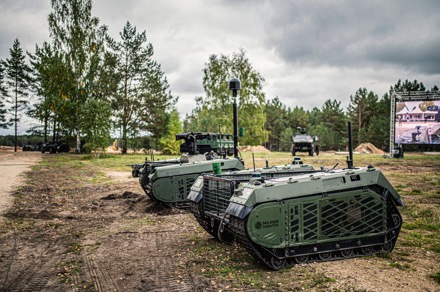
Rheinmetall has achieved another sales success in the United Kingdom. The British have ordered four more Mission Masters under the second phase (Spiral 2) of their Robotic Platoon Vehicle programme. Rheinmetall had already succeeded in placing its robotic vehicle in the Spiral 1 subproject of the UK’s RPV programme, which tests how unmanned vehicles can boost the firepower and capabilities of dismounted combat troops at platoon level.


Having already procured four Mission Master vehicles with cargo modules in the spring of 2020, the British military will now be acquiring four more Mission Masters, equipped this time with a fire support module to explore potential future capabilities.

The contract was awarded at the end of February. Delivery of the four Mission Master – Fire Support vehicles will take place between May and August 2021. The order, which will be handled by Rheinmetall Canada, also encompasses training and support activities as well as spare parts. Based in the UK, the joint venture company Rheinmetall BAE Systems Land will also be supporting the project.

Boasting a whole host of innovative features, the Mission Master’s nerve centre is the Rheinmetall PATH autonomy kit. It comprises a suite of advanced sensors and perception algorithms that assure rich situational awareness, enabling the vehicle to find the safest route through the surrounding environment. This ensures that the vehicle can navigate challenging terrain safely and complete its mission successfully, without collisions.


Featuring a built-in security circuit board, a tablet computer running Rheinmetall command and control software lets the operator steer the platform and control the weapon station in a safe wireless way.
The Mission Master – Fire Support is armed with the Rheinmetall Fieldranger Multi, a remotely controlled weapon station. Targets are never engaged autonomously: there is always a human in the loop. Fully stabilized, the 7.62mm cal. Fieldranger Multi features a wide vertical and horizontal slewing range, thus assuring high accuracy and effectiveness even at long distances.

Rheinmetall Mission Master – Focusing on the future with robotics and autonomy

Robotics is already changing the modern battlefield. The Rheinmetall Mission Master is a modular, autonomous, unmanned ground vehicle designed to enhance the operational effectiveness of troops tasked with carrying out a wide array of activities. Thanks to the Mission Master vehicle, soldiers can count on artificial intelligence and robotic muscle when performing dull, dirty, and dangerous tasks – the three Ds – and, more importantly, they can carry out their missions in greater safety.
Ready for deployment, the Mission Master can serve either as an autonomous or semiautonomous element of a combat team.

Designed for maximum flexibility, the Mission Master can be outfitted for a multitude of different operations thanks to modular, quickly mountable build-ons. Besides logistic tasks, it can perform in a variety of other roles, including surveillance, security, casualty evacuation and CBRN detection. The Mission Master can also serve as a mobile radio relay station.

Active Protection System for Lynx IFV: Market Breakthrough for Rheinmetall’s New StrikeShield — €140 Million Order from Hungary

Tuesday, May 18th, 2021

The 209 new Lynx infantry fighting vehicles recently ordered by Hungary from Rheinmetall of Germany will be equipped with Rheinmetall’s StrikeShield hard-kill active protection system, or APS. Hungary is the latest customer for this innovative technology, which has formed part of the Rheinmetall portfolio since 2006. It will be supplied by Rheinmetall Protection Systems GmbH. The order is worth over €140 million. Hungary’s decision in favour of StrikeShield was driven by the NATO member’s commitment to taking part in demanding missions where modern anti-tank weapon systems present a dangerous threat to own forces.

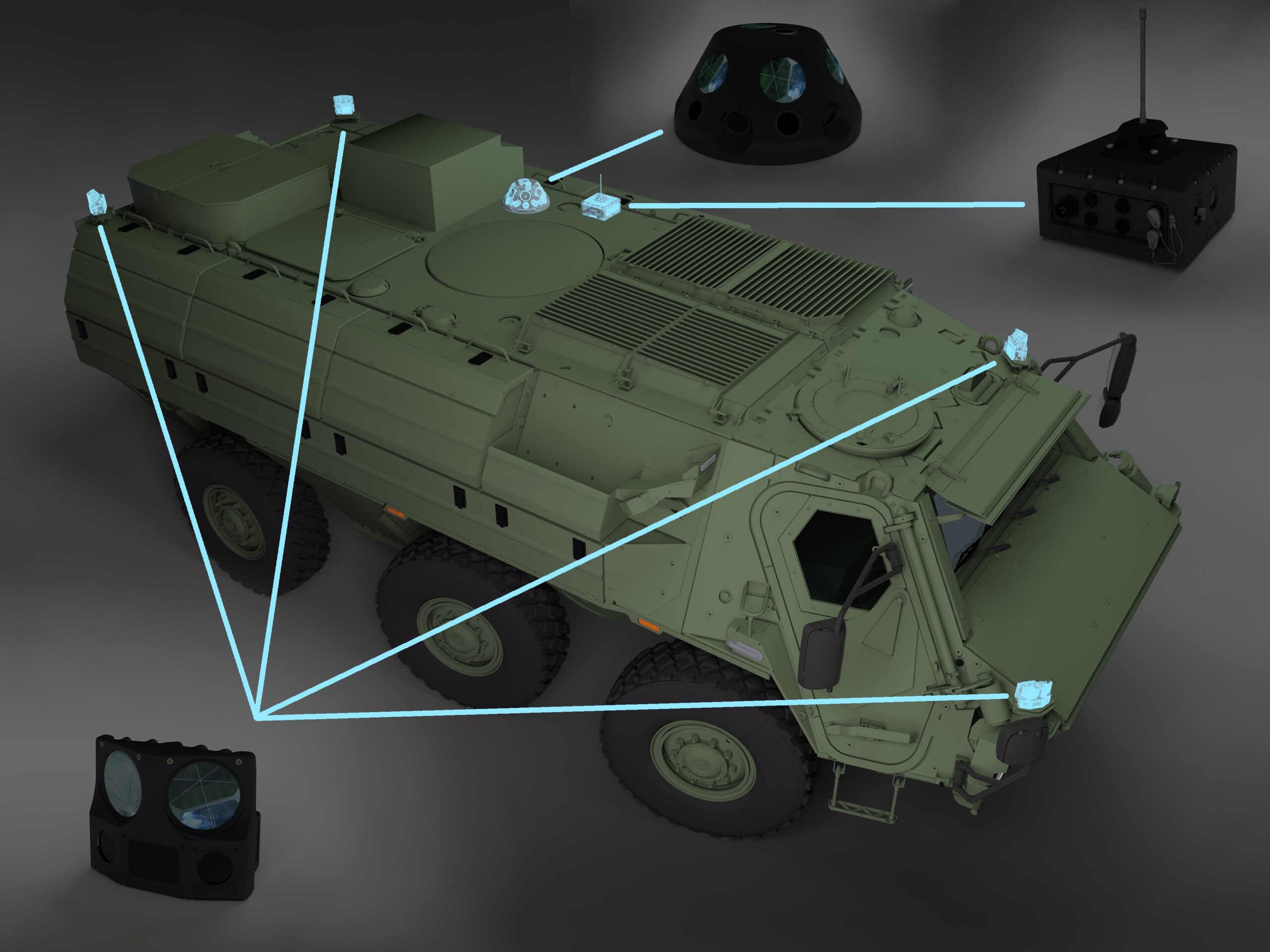
StrikeShield is the third and latest generation of Rheinmetall’s acclaimed Active Defence System (ADS) technology, a specific variant of hard-kill APS. It is a distributed system whose sensors and countermeasures are integrated into the contours of the entire vehicle. Among other benefits, StrikeShield has the lowest emissions in the electro¬magnetic spectrum on the market, as well as the fastest reaction time in ambush and multi-hit situations. It protects the vehicle from shaped charge warhead threats such as rockets or missiles by neutralizing incoming projectiles before they hit the platform itself.

The StrikeShield APS will be mechanically integrated into hybrid armour tiles on the Lynx. Instead of conventional passive add-on armour modules, the platform will feature spaced passive armour tiles that incorporate the components of the APS between an outer ply and inner tiles mounted on the vehicle’s hull.

“We see huge benefits from hybrid designs”, declares Dr Manfred Salk, CEO of Rheinmetall Protection Systems GmbH. “The effects that passive armour protects you from are standardized and well understood. Hybrid designs are different. They allow us to do a much better job of dealing with new effects and threats, such as residual energy from a disabled rocket hitting the vehicle and deflagrating. The combination of our passive and active technologies into hybrid systems therefore offer our customers unique benefits with regard to the protection capability, but also weight- and cost-efficiency.“
Rheinmetall Protection Systems GmbH is Rheinmetall’s center of excellence in survivability technologies, formed in 2019. Core of the product strategy is the hybridization of armor solutions, which provide the outlook to lighter and sensor based survivability solutions for armored platforms.

www.rheinmetall.com

Jankel Delivers ‘Next Generation’ Guardian Counter Terror Assault Vehicle-Urban (CTAV-URBAN)

Tuesday, May 18th, 2021

Jankel, a world-leader in the design and manufacture of high-specification defence, security and NGO protection systems, has delivered the first of their ‘next generation’ Guardian Counter Terror Assault Vehicle-Urban (CTAV-URBAN) to an undisclosed customer. Based on the latest 2020 Ford F-550 platform, the Guardian CTAV-URBAN features a new Mobile Adjustable Ramp System (MARS) from long-standing partners Patriot 3 who work exclusively with Jankel in the UK.

Firmly established as one of the premier global suppliers of armoured counter terror adapted vehicle systems, Jankel, with Patriot 3, have developed and integrated a new version of the MARS ramp system for Guardian CTAV-URBAN that delivers a narrower, lighter, single ramp, fully hydraulic variant that will allow counter terror teams to effectively operate in tighter spaces and more restricted city environments. Retaining the Ford OEM aluminium body, Jankel engineers have developed an armour suite that mounts within the vehicle without compromising structure, rigidity or durability. The integration of the new MARS ramp onto the Jankel Guardian CTAV-URBAN includes the flexibility to remove the MARS system, if needed, as well as the development of numerous other innovative enhancements in platform protection and tactical systems.

Jankel has a history dating back to the early 2000’s of providing the very best tactical counter terror platforms. With this new CTAV-URBAN variant, Jankel has customised the platform to meet the exact customer needs and tactics. The vehicle has been fully tested to prove the durability, reliability and maintainability but also to validate the advanced handling and performance characteristics expected of a truly tactical counter terror assault platform. Working closely together with Patriot 3, the CTAV-URBAN ladder system has been developed and refined to retain all of the MARS standard functionalities yet deliver additional options packaged in a single ramp configuration.

Charlie Fuqua, Elevated Tactics Sales Manager from Patriot 3 said: “we have had an ongoing working relationship with Jankel since the mid-2000s and have supplied numerous multi-mission vehicle solutions to defence and law enforcement end users around the world.” He went on to say: “Patriot3 looks forward to continuing our Jankel partnership with the introduction of the new CTAV-URBAN (complimenting the CTAV), as well as future developments to meet our customers ever evolving operational requirements.”

Andrew Jankel, Chairman at Jankel Group said: “we’ve worked with Patriot 3 for many years on a number of successful specialist vehicle-based projects so delivering the first of this next generation Guardian CTAV vehicles to an exceedingly important customer is a continuation of an already strong partnership”. He added: “Effective partnering is one of our key strengths here at Jankel and our partnership with Patriot 3 is another fine example of how we bring capability, innovation, flexibility and agility together to deliver and support the very best products and services, driving mission success”.

www.jankel.com

Prince of Wales Visits BCB International

Sunday, May 16th, 2021

Friday 14th May 2021

H.R.H The Prince of Wales visited BCB International on May 14th, to thank staff for their incredible work during the COVID crisis and to officially open the new headquarters.

BCB International first got into the Survival business by making cough syrup 166 years ago. Last year they converted their production lines into producing an anti-viral 80% proof Hand Sanitiser and wide range of PPE items to the essential workers on the front line, Protecting the Protectors.

At the start of the pandemic, the well-established Cardiff-based survival equipment manufacturer, BCB International Ltd, converted its fuel factory outside Llanelli in Wales to produce Dr Browne’s hand sanitiser range, to help prevent the spread of the Coronavirus here in the UK, before moving production up to their Cardiff site.

His Royal Highness started the visit by touring the main headquarters, meeting the BCB team who have been working tirelessly throughout the pandemic providing PPE to the Welsh NHS, Police Force and sending thousands of donations around the UK and across the world.

The Prince of Wales then joined BCB’s team, packing a Polar Survival Kit for an Artic bound vessel, before cutting BCB’s IR reflective camouflage netting, which will now be despatched to Prisons around the UK to finish production before heading to the British MOD.

After a demonstration of the eco-friendly, all weather fuel, FireDragon, His Royal Highness used a flint and striker to light his own block of FireDragon fuel before officially turning on the FireDragon production machinery and receiving the first product off the band. FireDragon was created to replace the dangerous Hexamine blocks that the British MoD were using. It is now the fuel of choice for the British MoD, being a non-toxic, clean, green fuel with a high burn point which is easy to light with waterproof properties.

The Prince of Wales then joined BCB’s Managing Director, Andrew Howell, on stage to unveil the plaque to officially open BCB’s new headquarters at Howell House and to receive survival kits that the BCB team specifically made to suit the Royal families interest. Before leaving he visited the ‘Bee C Bee’s Wellbeing Garden’, which was created as part of a Mental Health Awareness week initiative to provide access to nature for all staff.

The BCB team were honoured to meet The Prince of Wales and hear his appreciation for their hard work during the pandemic.

H.R.H. The Prince of Wales:

“I’m thrilled to have this opportunity to be with you today and I can’t tell you how much I admire all the remarkable work you do here.”

“It’s been fascinating to hear about the whole range of products you produce which are clearly so sought after all around the word because of their very high quality and ingenuity.”

“I shall now be able to go way and set fire to my Firedragon. Having served in the Royal Navy all those years ago, nearly 50 years ago, I had to go on exercise with the old kit, this is remarkable.”

“It is a great tribute to your efforts… I know how hard you worked throughout this pandemic…I do congratulate you and am full of gratitude, for what its worth, for what you’ve been able to do, for all of us, really, during these difficult times.”

“I hope you go from strength to strength, and I shall look forward to seeing what other wonderful ideas you come up with over the next few years.”

Managing Director, Andrew Howell:

“For the last five years we have been producing a solid fuel tablet made from bio-ethanol used by British Troops to warm their rations and heat their drinks. The fuel has anti-bacterial properties, so we decided to develop a hand sanitiser gel variant.”

“Last year our terrific team here at BCB, both at our Llanelli and Cardiff sites, worked 24/7 producing hand sanitisers and other important PPE and so it is a tremendous privilege to welcome His Royal Highness, the Prince of Wales here today to BCB.”

“As His Royal Highness has said for over 4 decades, climate change and the erosion of biodiversity are the two greatest threats to humanity and our planet. As we have with firedragon and some of our other life saving innovations we are ready, willing and able to take a risk and to make a change to try to help counter these threats.”

“On behalf of the whole great BCB team we will continue to invent, engineer and produce whatever we can, to help tackle this global emergency of climate change and the erosion of biodiversity.”

“Our new factory here in Cardiff will help to ensure that sustainability continues to be at the heart of our DNA.”

www.bcbin.com

Gentex Awarded Aviation Contract for Groundcrew Communications Headset System by UK MoD

Wednesday, May 12th, 2021

THE UK MINISTRY OF DEFENSE SELECTS THE OPS-CORE ADAPTIVE MISSION PLATFORM (AMP®) COMMUNICATION HEADSET FOR ITS AIRCRAFT MAINTAINERS

CARBONDALE, PA May 12, 2021 –

Gentex Corporation, a global leader in personal protection and situational awareness solutions for defense forces and emergency personnel, announced today that it has been awarded the contract for Groundcrew Communications Headset System (GCHS) by the United Kingdom Ministry of Defense for the Ops-Core AMP® Communication Headset. Beginning in Fall of 2021, groundcrew aircraft maintainers will wear the connectorized AMP® Communication Headset with Near Field Magnetic Induction (NFMI) earplugs.

The AMP® Communication Headset was vetted for both fixed and rotary wing applications by MoD groundcrew aircraft maintainers working in high noise environments. It will integrate into existing communications systems. The AMP® Communication Headset’s 3D Hear-Through (3DHT) technology allows aircraft maintainers to retain situational awareness while meeting UK requirements for hearing protection.

“We are proud to have been chosen by the UK MoD to protect their aircraft maintainers,” said Robert McCay, Vice President at Gentex Corporation, “It is a continuation of our longstanding relationship with the UK armed forces, both air and ground.”

The AMP® Communication headset is CE approved EN352.

Gentex’s portfolio of products includes helmets, optical protection, respiratory, and situational awareness solutions. For more information visit, www.gentexcorp.com/gentex/defense/air.

Is Glock Finally Going to Release Their Carbine?

Wednesday, May 12th, 2021

The Glock Carbine has been one of the worst kept secrets in small arms and everyone keeps wondering when they are going to finally release it to the public.

Our friends at Spartanat believe it’s going to happen and have released a video about it.

Rheinmetall to Upgrade UK’s Challenger Main Battle Tank Fleet

Tuesday, May 11th, 2021

Rheinmetall has won a pioneering land forces order of pan-European and NATO-wide significance. The British Ministry of Defence has contracted with the Düsseldorf-based technology group to modernize the British Army’s main battle tank fleet. In all, 148 Challenger 2 main battle tanks will be upgraded with the 120mm smoothbore main armament from Rheinmetall, together with a completely new turret structure, including a state of the art digital system architecture. Forming part of the British Army’s Challenger 2 Life Extension Project, or LEP, the modernization programme is poised to convert this tried-and-tested tank into the new Challenger 3, keeping it in service for decades to come. The programme will take place during the 2021-2027 timeframe. Just announced in Telford (UK), the contract is worth around €770 million (£665 million).

The latest generation L55A1 smoothbore gun from Rheinmetall will place the modernized Challenger at the forefront of NATO tank technology. The Challenger 3 will be a network-enabled, digital tank featuring unsurpassed lethality and greatly improved survivability on the battlefield. It will be able to fire current and future Rheinmetall 120mm kinetic energy rounds and programmable multipurpose ammunition. Combined with the latest fire control technology and sensor systems, this will significantly boost the vehicle’s combat effectiveness, resulting in remarkably accurate firepower.

Much of the upgrade work will be carried out in the UK at the Rheinmetall BAE Systems Land (RBSL) plant in Telford in the West Midlands. The company boasts a rich heritage, having delivered the first Challenger 2 tanks to the British Army over 25 years ago. RBSL is a joint venture between Rheinmetall and BAE Systems, with Rheinmetall Landsysteme GmbH holding 55% of the shares.

As Armin Papperger, chief executive of Rheinmetall AG, recently put it, “We’re proud to be taking charge of one the United Kingdom’s most important army?technology programmes here in the cradle of the British tank industry. In technological terms, the upgrade will put the British Challenger tank on the cutting edge of NATO’s armed forces. To make this happen, we’ve amalgamated the longstanding expertise of RBSL with Rheinmetall of Germany’s unsurpassed know-how in large-calibre weapon systems, digitization and advanced turret solutions.”

John Abunassar, head of Rheinmetall’s Vehicle System’s division, points out that “The British Army is getting a world-class capability. At the same time, we’re celebrating the return of top-notch tank technology to the British Isles, because the bulk of the work will take place in the UK and involve the inclusion of numerous local suppliers. This announcement comes after years of hard work and collaboration with our customer, especially in the recent extraordinary circumstances brought about by COVID-19.”

RBSL will be working together with subcontractors from all over Britain, giving an economic boost to their various locales. Work will be directed from the RBSL factory in Telford, with technical support from the company’s heavy armour specialists in Telford and at the RBSL facility in Washington near Newcastle in the northeast of England.

The modernization programme will maintain existing high-grade industrial jobs in Britain and create numerous new ones. In particular at RBSL, the Challenger programme will maintain some 200 member of staff, including 130 highly skilled engineers and 70 technicians. Furthermore, during the next five years, RBSL will offer employment and training opportunities to more than 60 trainees. Moreover, in the British supply chain some 450 jobs will be maintained or newly created.

The programme secures the UK’s national capabilities base in terms of defence technology and engineering expertise and offers the prospect of new product developments and further export opportunities.

Challenger 3
The new vehicle will be armed with the latest 120mm high-pressure L55 smoothbore gun, which fires subcalibre KE projectiles and programmable multipurpose ammunition. Delivering enhanced accuracy and penetrating power, the gun system features state-of-the-art fire control technology.

A new turret structure including improved survivability systems assures maximum crew protection. The main optical sights improves the target acquisition and tracking capability of both the commander and gunner.

Moreover, thanks to the new physical, electronic and electrical architectures, this solution provides additionally significant growth potentials for the next decades.

Marder Infantry Fighting Vehicle Turns 50 – Tried-and-Tested Warhorse of Germany’s Mechanized Infantry

Sunday, May 9th, 2021

The Marder infantry fighting vehicle celebrates its 50th anniversary today: it was a half a century ago, on 7 May 1971, that the German Army took formal deliver of the first serially produced vehicles. This took place at simultaneous ceremonies in Kassel and Kiel – the corporate seats of the legendary IFV’s original manufacturers, Thyssen-Henschel and Krupp MaK. Both companies have belonged to Rheinmetall since 1999 and 2001, respectively.

At the time of its inception, the prime mission of the new IFV was to defend the national territory in Central Europe: teamed with the Leopard 1 main battle tank, the Marder was supposed to play a pivotal role in the mobile operations of the Bundeswehr. But fate had different plans in store for the vehicle. During the Cold War, the Marder infantry fighting vehicle’s role was confined to the major exercises held by West Germany and its NATO partners to demonstrate in no uncertain terms their readiness to defend themselves. In the meantime, the Leopard 1 has long since vanished from the Bundeswehr inventory. The same is true of other systems of that bygone era, among them the Luchs armoured reconnaissance vehicle, the Starfighter F-104 fighter-bomber, and the BO 105 and Bell UH-1D helicopters. The Marder, on the other hand, went on to prove its mettle in foreign deployments, including in Kosovo and Afghanistan. As part of the Quick Reaction Force, it has engaged in firefights in around Kunduz and Mazar-e Sharif. The vehicle continues to serve the German military to this day. Nor is Germany the only Marder user nation: the vehicle also features in the armies of Chile, Indonesia and Jordan.

Rheinmetall has accumulated vast experience and expertise in the Marder domain. On behalf of the Bundeswehr, in recent years the company has carried out various measures aimed at boosting the combat performance and extending the service life of part of Germany’s Marder fleet.

This includes the installation of air conditioning in the fighting compartment; new vision equipment for the driver, gunner and commander; integration of the MELLS multirole lightweight guided missile system; and a new drivetrain. Thanks to measures currently underway to extend its service life, the Marder is likely to remain operational until the end of the decade.

Battle-tested and extremely reliable, the Marder is destined to remain an important asset of Germany’s mechanized infantry forces for some time to come, even now that the branch is on the verge of epochal change: on 18 March 2021, the Chief of Staff of the German Army confirmed the battle-worthiness of “System Panzergrenadier”.

In essence, System Panzergrenadier consists of an upgraded version of the Puma infantry fighting vehicle, supplied by PSM GmbH, a joint venture of Rheinmetall and Krauss-Maffei Wegmann, and the VJTF2023 version of the Future Soldier – Expanded System (IdZ-ES), a state-of-the-art soldier system developed by Rheinmetall. Its mission is to increase the firepower and combat effectiveness of the VJTF 2023, which will be led by Germany. By fielding System Panzergrenadier, the formation will be equipped for the first time with a digitized vehicle platform – the Puma IFV upgraded to VJTF status – plus a soldier system featuring digital radio technology. Close-meshed networking of the soldiers’ sensors and effectors with those of the infantry fighting vehicle minimizes the time between target detection and target engagement. This melding of capabilities into one total system enables effective tactical interaction between the troops and their infantry fighting vehicle, in turn enhancing the combat effectiveness of mechanized infantry formations.