XC3 Weaponlight

Archive for the ‘International’ Category

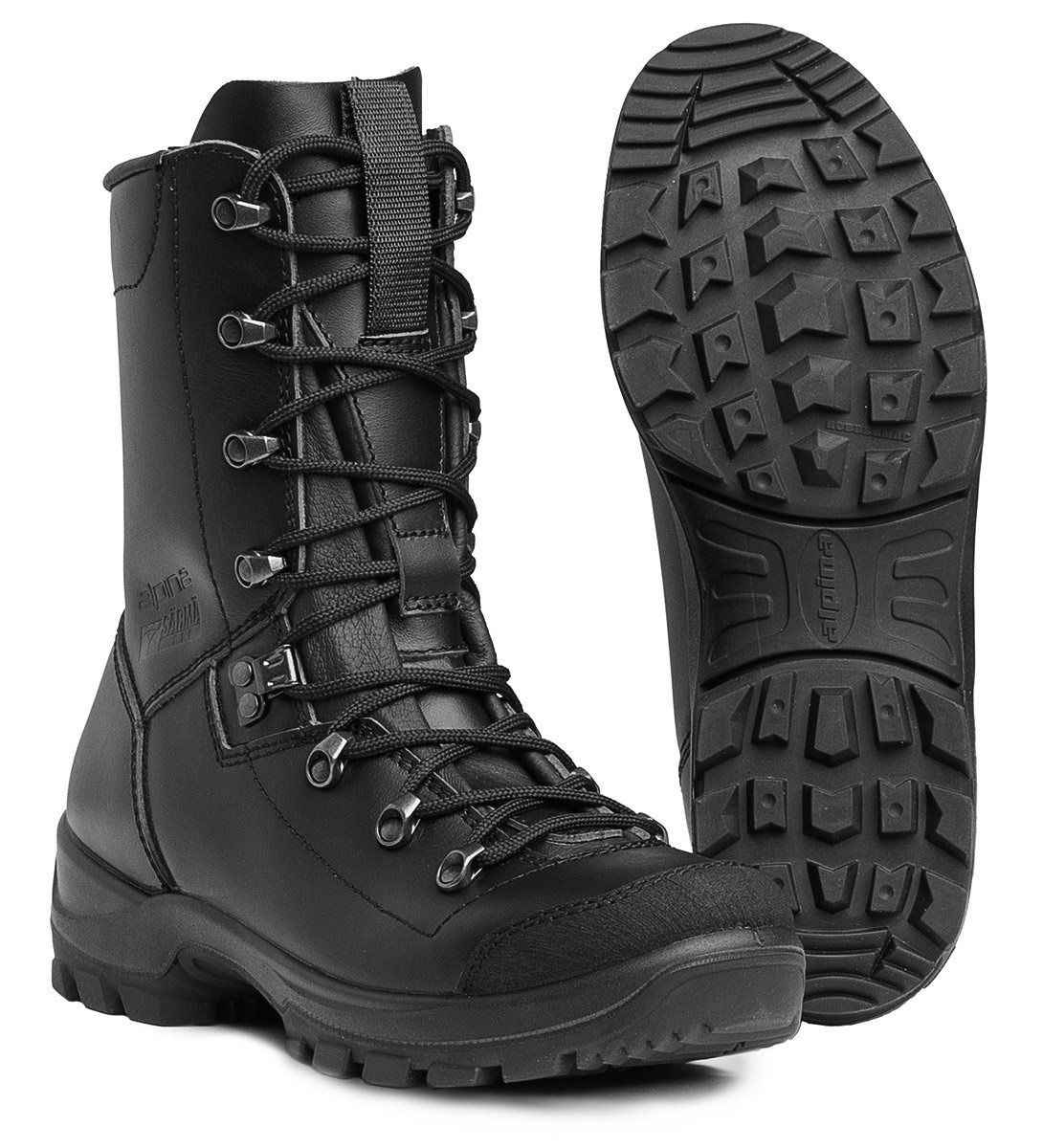
Varusteleka Särmä TST Alpina Recon Boots

Friday, December 3rd, 2021

Built for Varusteleka by Alpina, this high leg, leather combat boot incorporates an upper made from black hydrophobic Box leather with a reinforcement piece on the toes and the heel. The lining is hydrophobic Napa leather. The outsole is rubber and the midsole injected polyurethane. The exchangeable anatomic insole has antibacterial treatment. The round black shoelaces are made from polyester/polyamide.

Get yours at www.varusteleka.com/en/product/sarma-tst-alpina-recon-boots.

Jankel Achieves Preliminary Technical Acceptance (PTA) with Belgium MoD and Enters into Production with their LTTV

Tuesday, November 30th, 2021

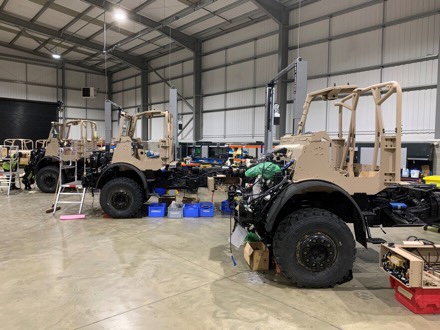
Jankel, a world-leader in the design and manufacture of high-specification vehicle conversions and protection solutions to defence, security and NGO Customers worldwide, has successfully passed the Belgium MOD’s (BeMOD) Preliminary Technical Acceptance (PTA) project milestone with their new Light Tactical Transport Vehicle (LTTV) and is now entering into high volume production. The LTTV programme will deliver 199 of the Mercedes UNIMOG based vehicles to the BeMOD.

The PTA milestone provides sign-off of the first of type vehicles against the contracted requirements, allowing commencement of the full production programme. Included in the PTA review is the quality plan for production, proof of compliance with European legislation, and an in-depth technical compliance review against the detailed customer requirement documents. Now PTA has been achieved, Jankel will commence the full production programme that will deliver 199 vehicles across the first quarters of 2022. In order to deliver this programme, Jankel has established a dedicated and state-of-the-art production capability based in the Midlands that was the subject of a company announcement in September 2021.

The LTTV order follows the earlier production contract to supply the BeMOD with over 100 FOX Rapid Reaction Vehicles (RRV), based on a modified COTS Toyota chassis system. Unveiled at DSEi in September 2019 and also displayed at DSEi in September 2021, Jankel’s LTTV is designed to provide a modular and configurable tactical support vehicle that benefits from unique, removable mission modules that enable the vehicle to be re-roled rapidly for operational platform versatility.  With a payload of over 3 tonnes, dependent on the final vehicle specification, the LTTV has 3 core variants for Special Operations support, including an ambulance variant.  Alongside a user-configurable, fully integrated suite of military sub-systems that includes a removable ballistic protection kit, a Roll-Over-Protection-System (ROPS), weapon mounts and communications fit, the platform will provide full interoperability with the Fox fleet of tactical vehicles.

The LTTV’s versatility already promises to be a world-leader, literally able to plug and play between rear bed configurations. Combining the strengths of a trusted and highly capable OEM platform with militarised and mission specific tactical enhancements, Jankel’s LTTV has already attracted the attention of several other countries and is of particular interest to those already operating with the Mercedes Benz UNIMOG platform.

Andrew Jankel, Chairman at Jankel said: “I am very proud indeed of my team for having achieved this significant project milestone with our client, the Belgium MOD. Achieving PTA allows us to progress into a production programme that will see us delivering 199 LTTV’s”. He added: “We are one of the very few UK based military vehicle manufacturers left that can offer genuine on-shore vehicle production capability right now. Of particular note is the fact that we have been working on much of this programme during a period made more difficult by the ongoing Covid-19 restrictions. It has demonstrated that there can always be a way forward and that Jankel can continue to deliver, whatever the barriers – Driving Mission Success”.

www.jankel.com

Schiebel Impresses at Search and Rescue Trials in Extreme Environmental Conditions in the Arctic

Monday, November 29th, 2021

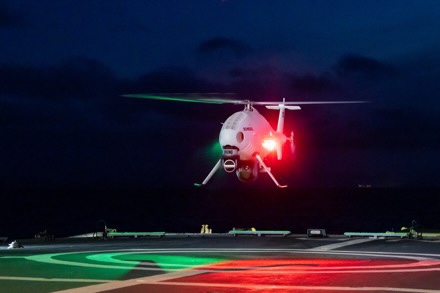
Vienna, 25 November 2021 – Schiebel, together with Andøya Space Defence, successfully demonstrated the capabilities of the CAMCOPTER® S-100 on board the coastguard vessel KV Nordkapp in Norwegian waters.

The purpose of the trials was to demonstrate the embarked Search and Rescue (SAR) and maritime surveillance capabilities of the CAMCOPTER® S-100 in the environmental conditions of the Arctic in latitudes above 75 degrees north.

The week-long trial was made possible through “Arctic 2030”, a Norwegian Ministry of Foreign Affairs programme, which aims to sustain Norwegian interests in the far north. The aim was to demonstrate that Unmanned Air Systems (UAS) ideally supplement manned helicopters, greatly enhancing SAR efforts in this remote part of the world. The CAMCOPTER® S-100 proved that it can operate in adverse weather conditions, where manned helicopters can be at higher risk.

The UAS was equipped with a Trakka TC-300 EO/IR sensor, an Overwatch Imaging PT-8N Oceanwatch, a Radionor antenna as additional data link for video feed transmission as well as an Automatic Identification System (AIS) receiver.

Hans Georg Schiebel, Chairman of the Schiebel Group, said: “The CAMCOPTER® S-100 is perfect for maritime operations, including in the Arctic or Antarctic. It has proven several times that it can operate in temperatures down to -40 degrees Celsius and under harsh weather conditions. We’re proud to have been able to successfully demonstrate these remarkable capabilities to the Norwegian Coastguard and Navy.”

www.schiebel.net

Low Vis Gear x SORD Shooting Mats

Friday, November 26th, 2021

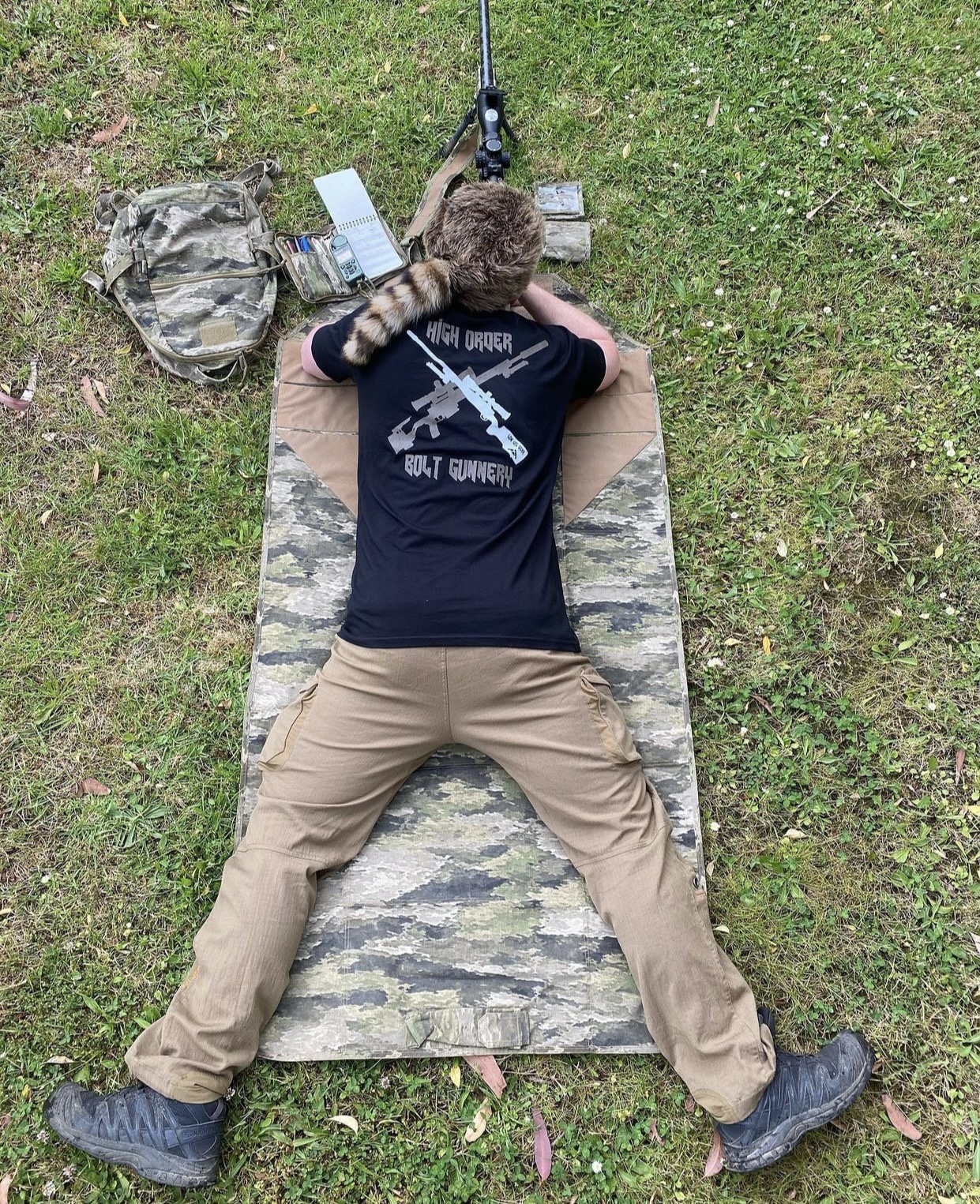
SORD Australia Shooting Mat & collab SORD / LVG Enhanced Shooting Mats.

One big, one small, both amazingly rugged & feature rich.

WWW.LOWVISGEAR.COM

Introducing the British Army’s Latest Cap Badge: Ranger Regiment

Friday, November 26th, 2021

The British Army has unveiled the cap badge of The Ranger Regiment.

Who are The Ranger Regiment?

The Ranger Regiment is an important contribution of the Army’s new global posture and was established as part of Future Soldier, the biggest transformation of the British Army in over 20 years.

It is part of the newly established Army Special Operations Brigade. It will be routinely deployed alongside partner forces around the world to counter Violent Extremist Organisations and hostile state threats.

The Regiment, initially announced earlier this year, will stand-up on 1 December 2021, commencing cadres and training for its four battalions.

The Ranger Regiment cap badge

The Ranger Regiment is very proud of its new cap badge which takes inspiration and spirit from the Peregrine Falcon; fast, agile and fiercely loyal to its partner, it operates around the world in all environments including deserts, mountains and cities.  It has been designed to demonstrate a new capability for the Army. 

It follows a long history of birds being used as emblems and logos around the world. Peregrine derives from the medieval Latin word ‘peregrinus’ which means wanderer. It is the most geographically dispersed bird of prey, and can be found on every continent, less Antartica. The Peregrine Falcon is also the fasted bird on the planet, with a diving speed of over 200 miles per hour.

While many regiments have a cloth badge for officers and a metal badge for soldiers, everyone serving in the Ranger Regiment will wear a metal badge, irrespective of rank.

Beret and Belt

A unique gun-metal grey colour has been chosen for the regimental beret and stable belt, taking inspiration from the Peregrine Falcon’s grey plumage.

Stable belts will fasten at the front with a round metal buckle bearing the Peregrine Falcon insignia from the cap badge.

Army Special Operations Brigade Heritage

The Army Special Operations Brigade will contribute to collective deterrence by training, advising and if necessary, accompanying partner forces across the world.

The design for the Army Special Operations Brigade formation flash is inspired by the badge of the Special Service Brigade. The Special Service Brigade was a formation of the British Army during the Second World War.

On 17 July 1940, Prime Minister Winston Churchill issued a directive to wage irregular warfare. This established the Special Operations Executive (SOE) and a Directorate of Combined Operations, and in the Autumn of 1940 a Special Service Brigade was formed to command the numerous new Army and Royal Marines commando units. The staff of this new Brigade wore a flash featuring two Fairbairn-Sykes fighting knives.

Members of the new Army Special Operations Brigade will wear the updated version of the wartime Special Service Brigade flash in acknowledgment and recognition of this shared heritage and history.

Click here to discover more about Future Soldier.

Schübeler Technologies Supports Visionary Project of ETH Zurich

Friday, November 26th, 2021

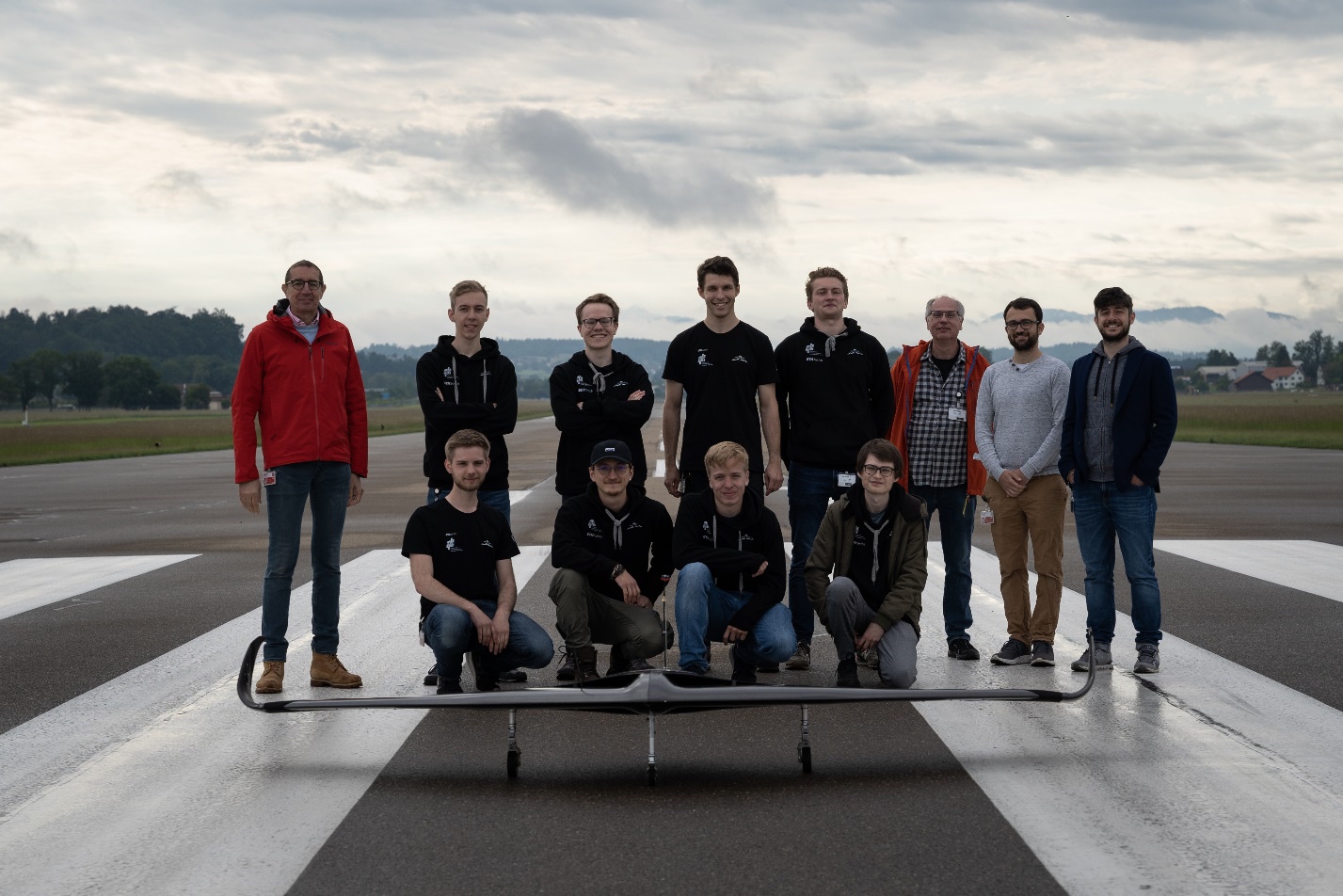
Students realize bionic inspired morphing concept for the aircraft of tomorrow.
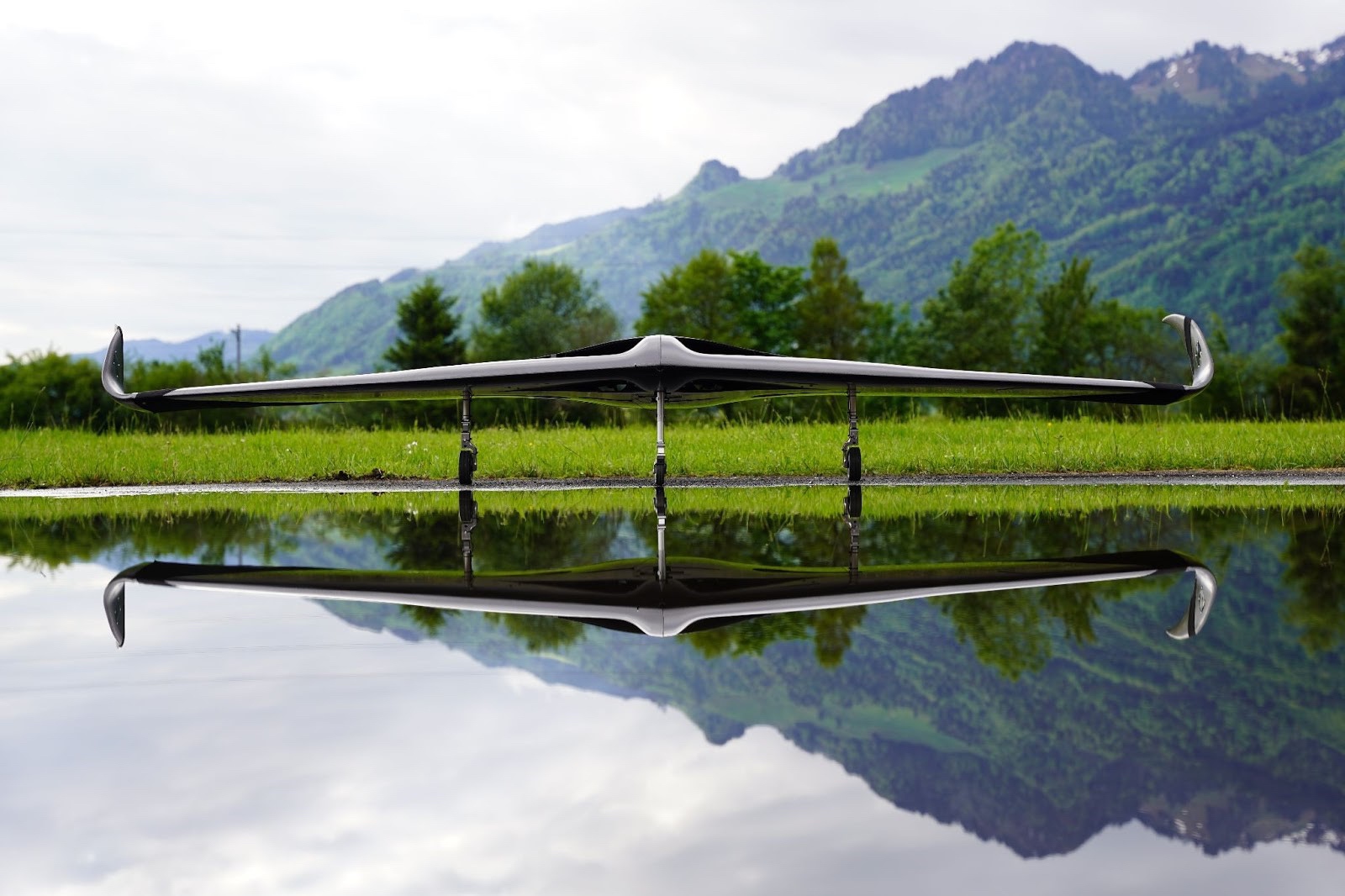
Rome, NY- A control concept inspired by nature and combined with morphing technology has now been realized by engineering students of ETH Zurich together with aviation experts. The eight-member student team is testing novel control concepts and construction methods in aviation. The aim is to reduce energy consumption and noise generation through reduced drag and to improve the maneuverability of the aircraft.

Schübeler Technologies actively supported this innovative project and provided both engines and technical expertise in an advisory capacity. “By participating in this project, we would like to contribute to the further development of aviation,” explains Daniel Schübeler, Managing Director of Schübeler Technologies. “The visionary approach of Bionic Flying Wing as well as the enthusiasm and creativity of the team excited us.”

The project aims to prove the feasibility of bionic inspired morphing concepts in the air. To this end, a deformable morphing wing structure with a three-meter wingspan was developed to be used in place of discrete flaps. A top speed of up to 100 km/h can be achieved with it. The wing structures are specifically deformed to replace conventional control surfaces. In this way, new design potential for the aircraft of tomorrow is opened up The main challenge of this approach is that the wing must be stiff – i.e., it must not flap – but still be able to be deflected. To achieve both, a healthy compromise had to be found. Because of its high strength and low weight, the team therefore opted for CFRP (carbon-fiber-reinforced polymer) as the construction material.

The requirements for the drive system used were also high. In the search for an efficient impeller that delivers the greatest possible thrust in combination with low power consumption, the team quickly came across EDF market leader Schübeler. On Schübeler’s recommendation, the team decided on the DS-51-AXI HDS model with an 1125kv motor and 12 lipo cells. This drive offers a thrust of 5.5 kg (about 55N) with a current consumption of 85 amps, which was perfectly suited for an aircraft of this speed, size and weight. Two fans are used and provide a total thrust of approximately 11kg (110N)

The HDS fan is a quality product designed for durability. The lightweight and highly shortened rotor assembly provides efficient operation through high smoothness. The blades are made of high-temperature, fiber-reinforced polymer, operate highly efficiently, broadband, and quietly. Strength is provided by the carbon shroud.

In a successful first test flight in June of this year, the team proved that bionic inspired morphing concepts can be used to safely control a flying wing aircraft. This was the product of countless hours of engineering and manufacturing, paired with the support of strong sponsors such as Schübeler Technologies.

To learn more about Schübeler Technologies, visit www.schuebeler-technologies.de.

Royal Australian Navy Rolls Out Multi-Cam Uniforms

Friday, November 19th, 2021

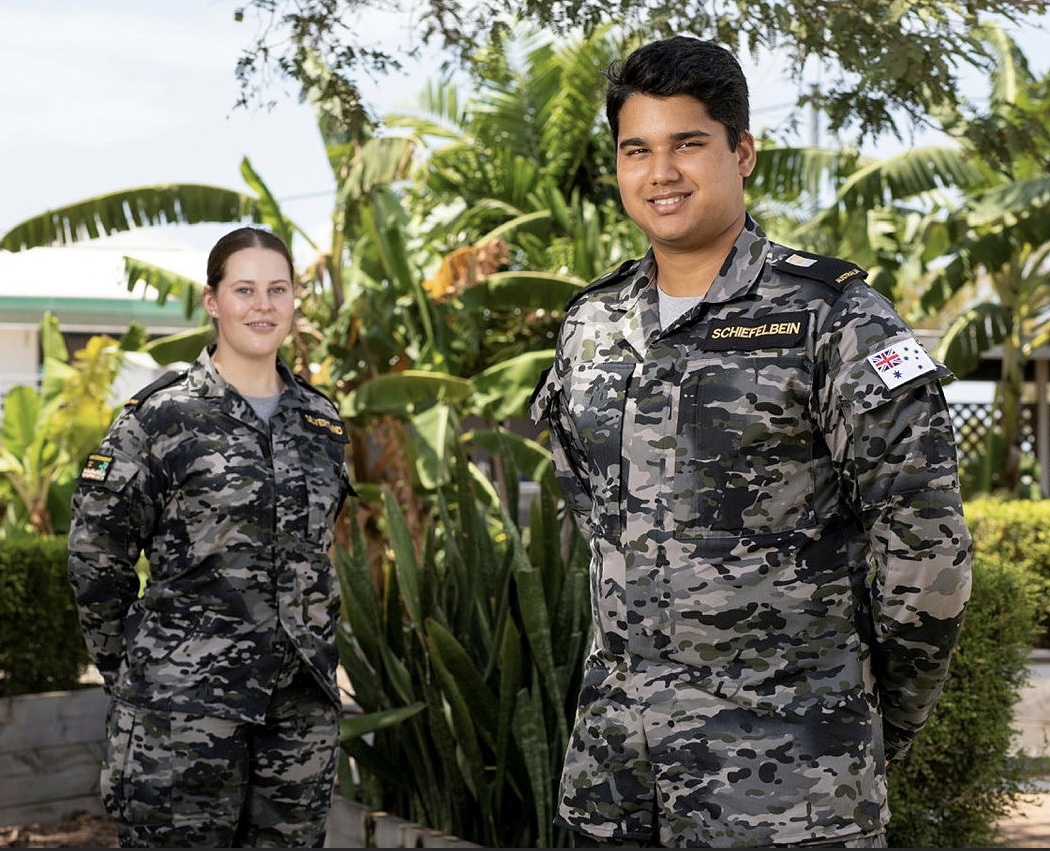
The RAN began their rollout of the Maritime Multi-Cam Pattern Uniform in the warmer tropical areas of the Northern Territory and North Queensland last month and is expected to be delivered to all other units by the end of 2022.

Milrem Robotics Opens Its Central European Office And Introduces Upgraded THeMIS UGV

Thursday, November 18th, 2021

The European leading robotics and autonomous systems provider Milrem Robotics opened its office in the Netherlands today making the first step towards creating a Central European Robotics Center. Simultaneously the company introduced its upgraded THeMIS unmanned ground vehicle (UGV).


One of the reasons the city of Best near Eindhoven was chosen as the location for Milrem Robotics’ Dutch office is to be closer to one of the company’s key customers – the Royal Dutch Army – and other relevant markets.

“The main reason, however, is our goal to establish a Central European Robotics Center where R&D, simulations, training, system integration and technical support are under one roof and where end-users can visit, but more importantly come to acquire knowledge for their own Robotics and Autonomous Systems development,” explained Kuldar Väärsi, CEO of Milrem Robotics.

“Our office is situated in the middle of the Brainport Eindhoven technology region and is well connected by a large European Airport, and by a broad road network to access the rest of Europe. This allows us to efficiently provide training and coaching to officers and NCOs in tactical basic operations with unmanned systems,” said Julien den Ouden, Managing Director of Milrem Robotics Netherlands. “We will offer the “Milrem experience” in a comprehensive package where the UGV is integrated with various other third-party systems,” den Ouden added.

At the opening ceremony, Milrem Robotics also introduced their upgraded THeMIS UGV that was specifically designed to accommodate all hardware, software and the flawless operation of MIFIK – Milrem’ Intelligent Functions Integration Kit. MIFIK features wired and wireless follow-me, waypoint navigation and obstacle detection and avoidance. Considerable upgrades were also done to THeMIS’ camera system and overall user experience.

Milrem Robotics Netherlands is the company’s fifth office in Europe. The company has two offices in Estonia, one in Sweden and one in Finland.

Milrem Robotics is the leading European robotics and autonomous systems developer and systems integrator. The company is known for its THeMIS and Multiscope Unmanned Ground Vehicles and the Type-X Robotic Combat Vehicle. The THeMIS supports dismounted troops while the Multiscope is intended for civilian use such as forestry and firefighting.  The Type-X Robotic Combat Vehicle is a wingman for mechanized units.


Milrem Robotics is the leader of a consortium that was awarded 30.6 MEUR from the European Commission’s European Defence Industrial Development Programme (EDIDP) to develop a European standardized unmanned ground system (UGS).

During the project, titled iMUGS, modular and scalable architecture for hybrid manned-unmanned systems will be developed to standardize a European wide ecosystem.