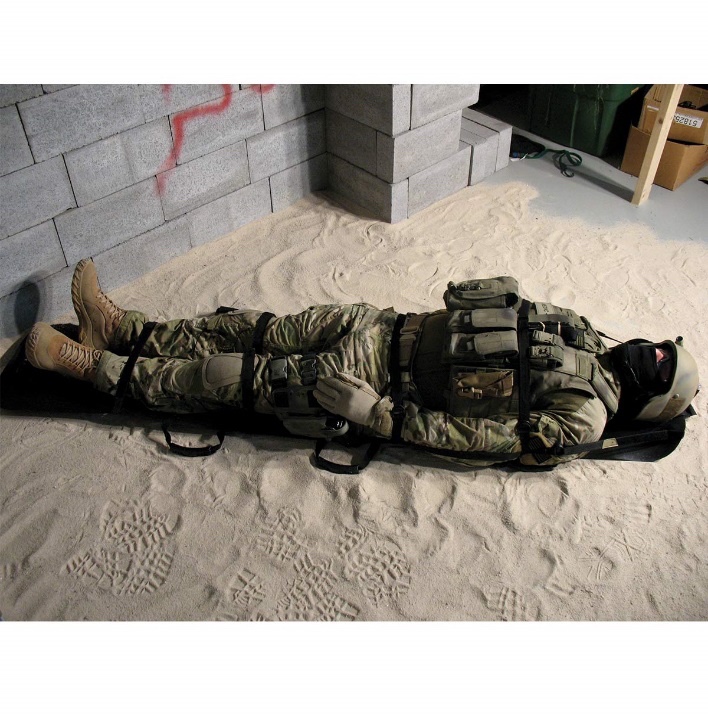
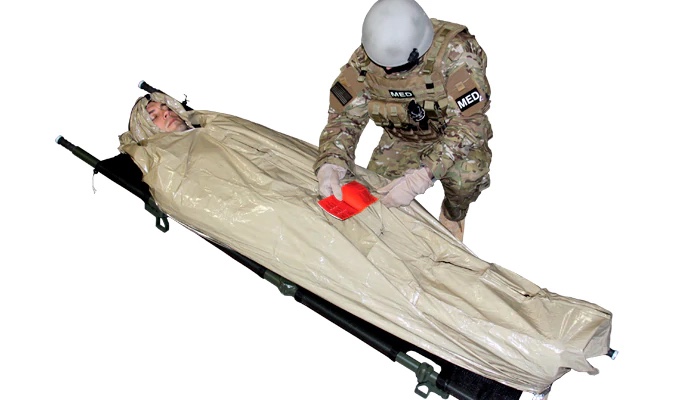
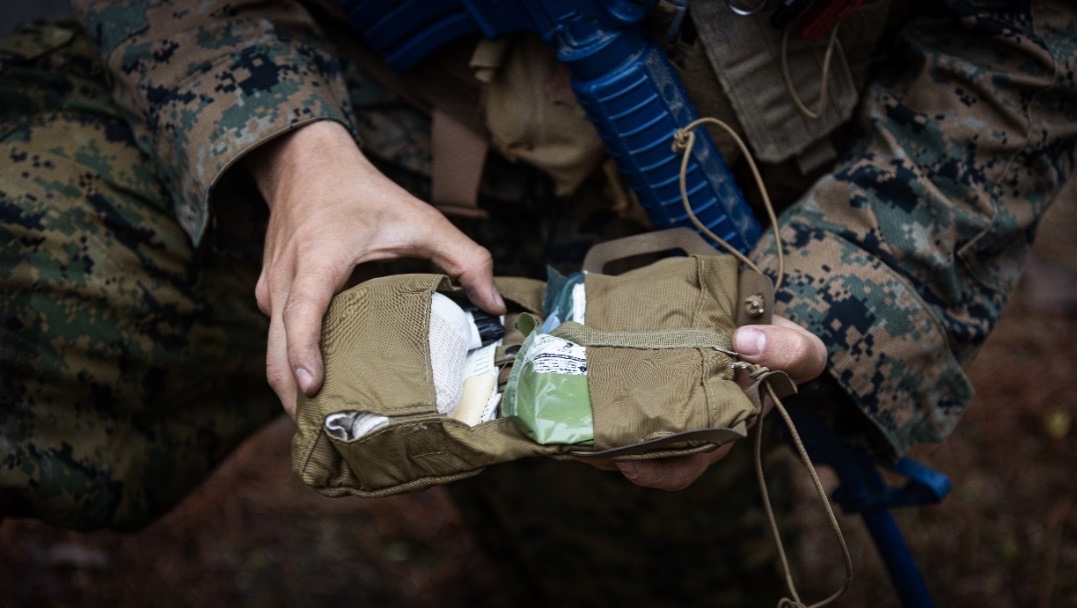
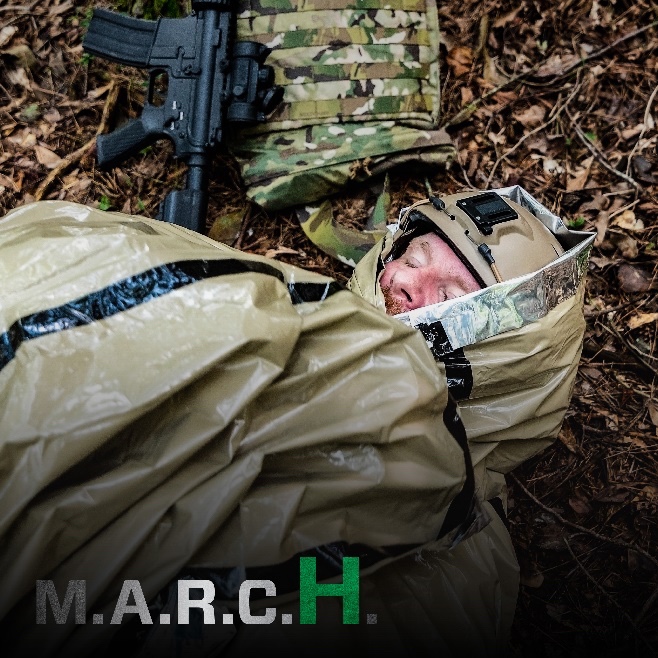
The letter A in our MARCH algorithm stands for Airway. When discussing airway in MARCH, we also lump breathing into it (probably because MABRCH doesn’t sound right…). Contrary to the more common civilian equivalent treatment algorithm, known widely as the ABCs (which stands for Airway, Breathing, and Circulation), the MARCH system places life-threatening bleeding as its primary focus before any airway issues.
But why? Quite simply, you can go without oxygen for a far longer time and survive than you can with a life-threatening bleed. For example, in 2016, Aleix Segura Vendrell of Spain held his breath for an impressive 24 minutes and 3 seconds while floating in a pool. While this time drastically exceeds what most could achieve, it illustrates the cardiovascular system’s fantastic ability to use and circulate oxygenated red blood cells efficiently. Since these red blood cells live in our blood, and they are the body’s mechanism for carrying oxygen in your body, we must be hyper-vigilant in keeping as many of them inside of an injured person as we can!
After we have controlled any life-threatening bleeding, what can we do for an injured person’s airway and breathing? First, we want to make sure that the airway has no obvious obstructions, is open, and in a position that allows air to pass easily. The technique you use to open the airway depends on the circumstance you find yourself in and what level of training you have, but here are some basic methods:
• First, check to see if the person is breathing! Is the person alert or talking? If yes, that’s easy; they are!
• Look at the person’s chest to see if we can observe it rising and falling.
• If the person is not breathing and is unresponsive, we can do basic airway techniques to open the Airway, like the head tilt chin lift technique or the jaw thrust technique if you suspect a neck or spine injury.
• Place the person in the recovery position.
Some more advanced techniques allow the higher trained provider to secure the airway. These devices and methods “secure” the airway by ensuring that the patient’s airway will remain open for them to continue breathing on their own or allow you to breathe for the patient if you need to. Most of these devices require advanced training and certification to use. Still, the Nasopharyngeal Airway (aka an NPA, nose hose, or nasal trumpet) can be taught relatively easily to less trained rescuers. Some of the airway securing devices and methods available for advanced providers:
Once the airway is secured or opened, the two most common techniques for assisted breathing or breathing for your patient include:
• Rescue breathing with a face shield (commonly taught in CPR)
• Using a device like a Bag Valve Mask (BVM)
These methods use positive pressure to push air through the airway and into the injured person’s lungs to help oxygenate red blood cells. Those same red blood cells we worked so hard to keep inside of the victim during the M portion of a MARCH! Ultimately, stopping life-threatening bleeding in the M portion of MARCH, opening the airway, and breathing for the victim (if needed) in the A portion, equip our patient with the best chance for a positive outcome.
Team 5 Medical Foundation’s first post-COVID humanitarian aid mission starts March 2022 with a team of highly trained medical professionals to assist indigenous populations in the Palpa regions of Nepal. Tasmanian Tiger®, a Silver Sponsor, is providing support with product and financial donations to the non-profit SOFMED veteran foundation, Team 5.
Knoxville, Tenn. (March 2022) – Tasmanian Tiger®, a tactical nylon line of products distributed exclusively for the US market by Proforce Equipment, Inc., is proud to support Team 5 Medical Foundation, a non-profit SOFMED veteran foundation providing medical relief to some of the world’s most over-looked populations in hard-to-reach places.
The Nepal expedition was initially postponed due to COVID-19 restrictions and is now set to launch in early March. Team 5 consists of highly trained medical practitioners including professionals from the USA, UK, Portugal, and Croatia, will arrive in Kathmandu on March 11 and push into the mountainous Palpa region for ten days. Team 5 founder and team leader, Eric S. Linder, RMP, will lead eight medical professionals to conduct medical and dental clinics, ultrasounds, and deworming for intestinal parasites, which affect over 18 million people globally and are linked directly to malnutrition and anemia of young children. Team 5 will work in cooperation with two hospitals and local practitioners for one week to provide care to 110 patients per day.
As Silver Sponsors, Tasmanian Tiger is supporting this humanitarian effort through financial and product donations. Much of the gear the team will take in the country will be Tasmanian Tiger products, from the TT Passport Safe RFID to a variety of packs, including the TT City Daypack 20 for daily use, to the TT Mission Pack MK II to carry the team’s clothing, personal items, gear, and to be used at their go-bag. Medical packs will be outfitted with critically needed medicines, as well as a variety of smaller pouches to protect eyewear, phones, computers, and other items, that can be easily configured on the larger TT Modular Gunner Packs and Mission Pack MKII’s.
“The logistics of this effort alone, with team members coming in from different countries, available transportation into the mountainous regions of Nepal, require gear that can withstand tremendous abuse, yet protect valuable medical, diagnostic and communication items,” Linder explained. “The Tasmanian Tiger bags, packs, and pouches are built to withstand serious use while protecting valuable and even fragile items. The ability to configure each set of bags, packs, and pouches is also essential, as each member of the team has a very different mission, with different requirements.”
“Our support of Team 5 on their first post-COVID humanitarian expedition is reflective of the core values of Tasmanian Tiger and Tatonka GmbH,” Andreas Schechinger, CEO of Tatonka GmbH, added. “All of our employees, from our corporate and satellite offices to our factories, are part of our Open Factory concept. That means we respect our employees and provide for them a socially responsible and sustainable environment in which to create, produce, and thrive. Like Team 5, Tasmanian Tiger strives to make the world a better place.”
Noted for its extreme beauty, the country of Nepal sits land-locked between China to the north and India to its south. One of the few countries left in the world where the fast-paced world of technology is slow to advance, the country boasts some of the most extreme environments from humid plains to icy mountain peaks. Nepal is the birthplace of Siddhartha Buddha, and its varied multi-cultural and ethnic landscape hosts some of the world’s most treasured man-made and nature-made wonders.
The Team 5 Medical Foundation mission members for the Nepal expedition include team leader, Eric Linder (RMP, FAWM [Remote & Austere Medical Specialist]); assistant team leader, Bryan Vande Sand (HM, ST [USAF/USN Corpsman/Surgical Tech]); medical director, Chris Duncan (MD, Intensive Care); coordinator, Saskia Pia Muller (MD, Emergency Medicine); dentist, Bryan Ferriera (DDS, Oral Surgery); dentist Burjor Langdana (DDS, Oral Surgery); nursing, Laura Thomson (RN, Critical Care Nurse); and paramedic, Ollie Neece (EMTP-CC, Critical Care and Rescue Paramedic).
Tactical Combat Casualty Care (TCCC) emerged in 1996 by special operations forces stemming from lessons learned during previous conflicts with large scale adoption by US and allied forces after the events of September 11, 2001. Tactical Combat Casualty Care guidelines are evidence-based and battlefield-proven to reduce deaths at the point of injury (POI). Department of Defense (DOD) and most NATO allies require TCCC training for deploying forces because it combines effective tactics and medicine to reduce preventable death. TCCC teaches first responders to treat casualties in the proper order, treating the most critical situations first. This is accomplished by using the MARCH algorithm for easy memorization for seasoned medical providers as well as immediate responders using self-aid and buddy aid. There are many variations of the MARCH algorithm that adds tasks both before and after, but the base to prevent most preventable death is MARCH.
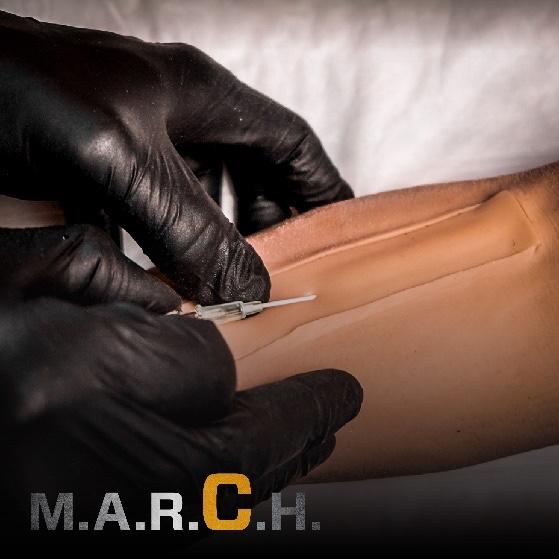
The MARCH algorithm is laid out differently from Advanced Trauma Life Support (ATLS) which used Airway, Breathing, and Circulation (ABC’s) as the order of treatment. MARCH stands for Massive Hemorrhage, Airway, Respiration, Circulation, Hypothermia/Head injury. This order prioritizes bleeding control as the first step since morbidity and mortality linked to massive hemorrhage can happen in some cases twice as fast compared to airway and breathing complications.
What is Massive Hemorrhage?
Massive hemorrhage is the number one potentially survivable cause of death at the POI. This includes life threatening bleeding from a compressible wound and/or extremity injuries. More than 90 percent of 4,596 combat deaths after September 11, 2001 were a result of hemorrhage-associated injuries. There are many opinions and definitions of what should be considered massive hemorrhage. They include color of the blood and rate of loss but most of these are hard to qualify and quantify under the stress of the scenario combined in some cases with the operational environment and tactical context. There is always a focus of bright red bleeding vs dark red and while one is more important that the other, they both should be addressed immediately. Additionally, penetrating trauma is not selective and commonly injures both arteries and veins which present externally as a mix of bright red and dark red blood. The nature of serious bleeding leaves little time to consult the paint chart obtained from the local hardware store to compare colors and develop an appropriate treatment plan. Apply pressure! Pressure stops all bleeding.
Massive Hemorrhage in the Extremities
The hasty application of a tourniquet is the recommended management for all life-threatening extremity hemorrhage during the care under fire (CUF) phase. It should be placed immediately over clothing, if necessary, proximal to the wound and high and tight. During the tactical field care phase, the deliberate application of a tourniquet is addressed when the threat has been suppressed and/or aid is being rendered behind cover to ensure proper hemorrhage control. In this phase, the tourniquet is placed against the skin, 2 to 3 inches above the wound. In either scenario the application time is written on the tourniquet at some point before the patient is evacuated or handoff is performed. Additionally, if one tourniquet is not able to control the bleeding, a second tourniquet can be placed adjacent to the first to obtain occlusion. Splinting and immobilizing the extremity after a tourniquet and pressure dressing have been applied will assist with hemostasis but should only be done after all life threats have been addressed using the MARCH algorithm and other associated treatment protocols.
External Compressible Hemorrhage
Bleeding that is not amenable to limb tourniquet use should be treated first using direct pressure in the TFC Phase until a hemostatic dressing can be applied to pack the wound. Once the bleeding is controlled, pressure should be maintained according to the manufacturer’s recommendation using manual compression, pressure dressings, or other commercially available devices.
Tools to Stop Massive Bleeding
TacMed™ Solutions offers a variety of products built to help stop the bleed including the SOF® Tourniquet, OLAES® Hemostatic Bandage, OLAES® Modular Bandage, BLAST® Bandage, ChitoGauze®, Combat Gauze, and more. Two prominent products are the SOF® Tourniquet and the OLAES® Hemostatic Bandage. The SOF® Tourniquet sets the benchmark for prehospital tourniquets with purposeful upgrades to allow for smoother and faster one-handed and two-handed applications for the most effective bleeding control. The OLAES® Hemostatic Bandage is the world’s most versatile trauma bandage by combining the globally recognized OLAES® Modular Bandage with battle tested HemCon® ChitoGauze® PRO to create the most comprehensive trauma bandage for multiple injury profiles.
Stock Your Kit to Prepare for Uncontrolled Bleeding
To stock your kit with essential tools to stop massive hemorrhaging, check out TacMed™ Solutions at tacmedsolutions.com.
A dryer, a toilet, a flashlight, and a refrigerator door. Although you may not be an expert on these items, you could probably find out how to fix them all by watching a YouTube video. But can you expect the same success by watching a video or taking an online course on a trauma-related skill? Let’s try and figure it out.
Over the years, trauma and austere medicine is often described as a contact sport; let’s face it, when things get hectic, you have got to get in there and get your hands dirty. However, to do this well, you need competent instruction. You will probably not be able to achieve this through online education alone. While online training has its strengths, it’s a poor substitute for quality in-person training for trauma medicine. It all comes down to getting your hands dirty, and that is where online training loses out. Having a competent instructor watching you or watching them demonstrate a task (especially one that you might have to perform under stress) is still not replicable online.
That’s not to say online training is without benefits. For example, in today’s pandemic, factors like ease of access, cost-effectiveness, and social distancing sometimes make online training the only option available for staying current or improving your skills. Here are some ways to use online training to augment and enhance your knowledge, skills, and even improve your in-person sessions:
Pre-Training Materials:
Online materials like videos, PDFs, or PowerPoint presentations you provided to students or read before attending the class. Having a better understanding of the subject before training cuts down on time spent hammering in on more straightforward topics and allows you and the instructor to focus on the more complex subjects.
Post-Training Materials:
Online training works great to refresh our memory after hands-on training is over and later provides reference materials for study.
As you build your skills in trauma medicine, in-person training with a competent trainer teaching solid, evidence-based instruction should always be your first choice. However, using online training to augment this will only make you a more qualified provider in the long run.
At TacMed™, we offer TMS University™, our online training portal, for e-learning and information-sharing to find relevant information of pre-hospital trauma treatment and equipment. This online platform is a great opportunity to have better knowledge pre-training and serves as a great tool to refresh your memory post-training.
Tactical Medical Solutions™ got it’s start by creating the original SOF® Tourniquet in 2003 and has created components and custom kits to meet customer specifications and mission needs ever since. With a primary focus on military and law enforcement applications, we have created custom kits for not only them, but also consumer organizations and small businesses in many other cross-over markets from the outdoor and overland markets to concealed carry and arborist communities.
TacMed Solutions holds an ISO 13485 certification and can provide medical devices and related services that consistently meet customer and applicable regulatory requirements. Our capabilities range from support in selecting products specific to your mission needs, designing your brand’s printed labels and packaging, creating custom nylon solutions, and more.
SwitchBack Outdoor Safety took advantage of the customization capabilities of TacMed™ Solutions. Aaron Paris, owner of SwitchBack Outdoor Safety, reached out wanting to build out custom emergency trauma kits for his company. His company aims to provide education and equipment for those who desire to take the road less traveled, so we were able to aid in customizing two medical kits that helped align with his goal.
“I really like working with TacMed because of the ease of being able to make kits adjustable to our needs and our customer’s needs,” Aaron said. Our partnership with SwitchBack Outdoor Safety, a key leader in the overlanding and off-road community, led to the creation of the SOS Trauma Kit and the SOS First Aid Kit and refill packs for each. “I have worked with other companies in this space and though they gave a custom kit, the attention to detail just wasn’t there and there was a lack of willingness to be as modular. For us, this was a 180 in some ways and it gave it a much more professional appearance.”
Solutions are part of our culture, not just part of the name.
NETCCN consists of networks of critical care clinicians and providers that can deliver virtual care “from anywhere to anywhere” through use of secure, smartphone-based telemedicine platforms. Through NETCCN “apps,” supported hospitals across Vermont can request and receive on-demand, 24/7 virtual assistance from critical care physicians, nurses, respiratory therapists and other specialty clinicians.
“NETCCN addresses a fundamental challenge for our healthcare system during disasters like COVID-19 surges: enabling easy communication between those working outside of their comfort zone or scope of practice and clinical expertise at the right place and time to affect best possible outcomes. This is especially true for the care of severely-ill patients needing intensive care level support but who may not have access to an intensive care unit due to patient volume or lack of available transport,” said Col. Jeremy Pamplin, TATRC’s Commander and an intensive care physician. “In contrast to patients dying from hospitals’ inability to provide hemodialysis, NETCCN has responded to calls for support within hours to help a small hospital unable to transfer patients to a referral center provide this life saving therapy.”
VAHHS has rapidly brought together healthcare leaders from across the state to raise awareness, coordinate and streamline availability of NETCCN for Vermont’s hospitals. VAHHS’s assistance in harmonizing licensure rules and credentialing processes accelerated availability of NETCCN and reduced burden on its member healthcare organizations.
“Many of Vermont’s hospitals don’t have Intensive Care Units (ICUs), so they don’t have the critical care experts needed to care for our sickest COVID patients. During normal operations, we are able to transfer patients to referral centers with this capability, but during surges, those hospitals are full and unable to accept additional patients. NETCCN brings instant access to experts through an easy-to-use and secure platform, allowing our smaller hospitals to optimize care for these severely ill patients until transfer is possible. Perhaps just as important, access to these experts relieves the stress and anxiety felt by clinicians in our small hospitals by helping them know they have done the best possible for their patients, even when the outcome may not be ideal,” said Devon Green, Vice President of Government Relations, Vermont Association of Hospitals and Health Systems (VAHHS).
NETCCN is presently live in 4 hospitals in Vermont with additional hospitals scheduled to go live next week.
NETCCN is available at no cost to supported hospitals and healthcare. Through the pandemic, NETCCN has delivered over 5,000 patient-days of care to over 40 hospitals in 13 states and territories.
What is ‘blunt force’, and what type of injuries result from blunt force impact?
Please let me answer this question in the shortest possible way, without throwing some hyper intellectual medical terminologies at you, I don’t understand myself. Let me do it in reasonable simple and understandable terms, and more importantly, within context of this article.
Severe injuries and deaths resulting from blunt force trauma are some of the most common cases encountered by forensic pathologists. For instance, almost all transportation fatalities, including those involving road traffic collisions and pedestrians being hit by vehicles result from blunt force trauma.
Blunt force trauma is also the consequence faced by homeland and private security professionals after being hit by a solid object, such as a fist, foot, knee, elbow, iron bar, extendable baton, baseball bat, crowbar, brick, bottle, can, chair, fire extinguisher, to name but a few, or indeed after being pushed hard against another solid object e.g. door, wall, floor or car or down a flight of stairs etc.
Something that remains widely underreported since shootings and stabbings seem to make more dramatic headlines in the mainstream media.
When asking a couple of law firms how they would define ‘blunt force trauma injuries’ they responded with the following answers:
“A severe traumatic episode caused to the body (or head) with the sudden introduction of a blunt instrument used with great force.”
“Blunt force trauma is when the body is hit with an object that is blunt, or not sharp, with enough force to cause significant damage”.
According to Wikipedia, blunt abdominal trauma (BAT) comprises 75% of all blunt trauma and is the most common example of this injury.
The severity of such injury is mostly determined by the speed, velocity, size and weight of the object, and can range in severity from a tiny bruise to internal haemorrhages, bone fractures, cardiac tamponade, airway obstructions/rupture, and in the worst-case scenario result in ruptured organs, rapid internal bleeding and ultimately your death.

I do believe most security professionals will be aware of the potential severity of injuries resulting from blunt force. But I don’t believe many will chose to document and report every incident of this nature. “Too much admin”, some may say, and “it’s part of the job”, others will state.
Many security professionals have a reasonable understanding of the most realistic risks and threats they face, and subsequently are either being issued, or they themselves invest in body armour.

However, it is worth noting that any type of flexible body armour made from either an aramid fibre (i.e. Kevlar®) or a polyethylene (i.e. Dyneema®) including the latest high performance body armour produced by top secret manufacturers at top secret locations for top secret agencies, do not offer anywhere near enough protection from this specific operational risk.

On a domestic level (meaning homeland or private security, rather than military) the risk of being punched, beaten, kicked, or faced by someone throwing stuff at you is hundred times higher than being stabbed or shot. Therefore, it is rather saddening to see that more than 99% of body armour issued to domestic homeland security professionals offer insufficient protection from this specific risk.
Again, in the context of a good body armour, the key objective must be to offer sufficient levels of protection from the most realistic threats and risks you faces whilst on duty.
I urge you to make a conscious decision when investing in such type of PPE. Simply ask yourself the question, what is the most important criteria for YOU? The concealability, the weight, the thickness, or the level of protection from the risks and threats you have identified?
If the concealability of a body armour is key for you (i.e. covert operations and surveillance) then you may well need to look for the thinnest body armour, and the ‘blunt force trauma’ protection may have to become of secondary importance.
However, please understand that in general the most likely risk you face on a daily basis, is also the one you should seek protection from, and as I have stated earlier on in this article, the probability of you getting punched, hit, kicked or pushed around or have someone throwing stuff at you is far greater than the risk of being stabbed or shot.
To achieve the maximum level of protection from blunt force trauma injuries a body armour would have to be of a rigid structure, rather than a soft/flexible structure. Two diverse protective devices which highlight in a brilliantly understandable way the importance and the effectiveness of such protection are:
1. Motorbike Helmets: Never mind the fact that wearing a helmet is law when riding a motorbike. Wearing a helmet during a motorcycle crash significantly reduces the risk of damage to one’s skull, traumatic brain injury, and even death, countless studies have shown. We all know motorbike helmets are of a rigid/solid structure. They would not offer the blunt force protection and perform to the level it is required if the structure would be soft or flexible.
2. Riot Shields: A riot shield is a lightweight protection device, typically deployed and used by police in almost every country during riots, protests and mass disturbances. They are typically constructed from a rigid material to offer maximum levels of protection from attacks with blunt weapons and thrown projectiles. The officers’ lives depend on the performance of this piece of equipment. Again, to offer this high level of blunt force protection, it is required for its structure to be rigid, not soft or flexible.
The most in-depth research study on ‘blunt force trauma injuries’ or in more tactical terms ‘backface signature injuries’ sustained while wearing such body armour was produced by Marianne Wilhelm back in 2008, and is titled “Injuries to law enforcement officers: The backface signature injury”. It really is worth a read.
This great piece has raised important questions regarding the protection afforded to officers wearing personal body armour, along with the current test methods used to assess the true performance of the equipment. Some test results showed that some revealed deformations exceeding the NIJ Standard’s backface signature limit. Such increased deformation can lead to serious injuries, including blunt force trauma or backface signature injuries, which have occurred in the field over and over again.
Although your body armour might be successful in containing the round fired by a weapon or the knife thrusted at you by a hostile individual, it might not protect you from the impacting energy during other types of assaults, unless it is offering you officially certified protection from this precise risk. The most respected standard for body armour in relation to blunt force trauma protection is Germany’s VPAM (Vereinigung der Prüfstellen für Angriffshemmende Materialien und Konstruktionen) Standard, titled: “Testing of Impact Resistance against Throwing and/or Striking Objects” and its rating will be W1 (lowest) – W9 (highest).
It is also worth pointing out that our Technical Director Colin Mackinnon, a man who served 26+ years with the UK’s Police Forces, delivered an online presentation to a large audience of security professionals recently. Following his presentation, he asked a question: “Does your armour protect against knife, spike, needle, and blunt force trauma?”
Out of those questioned 55% of people did not know what protection their vests provided.
About the Author
Robert Kaiser is the CEO and Founder of PPSS Group, a UK headquartered company specialising in design, production, and supply of high-performance body armour. Robert and his senior team all have significant level of operational frontline experience in military, law enforcement or homeland security. His written word has been featured in several industry leading, international publications.
Posted in Armor, Guest Post, Medical | Comments Off on Blunt Force: The Underreported Threat Of The Security Professional