GORE-TEX Professional - AWICS

Archive for the ‘SOF’ Category

USSOCOM Launches Advancing Naval Capabilities through Holistic Opportunities and Resources (ANCHOR) Initiative

Monday, April 27th, 2026

United States Special Operations Command (USSOCOM) Special Operations Forces Acquisition, Technology, and Logistics (SOF AT&L) has announced the Advancing Naval Capabilities through Holistic Opportunities and Resources (ANCHOR) Initiative.

Using Other Transactional Authority (OTA) acquisition, the ANCHOR Initiative’s purpose is to form a sphere of technological excellence made up of participants from industry, non-profit organizations, and not-for-profit entities able to rapidly and efficiently propose and carry out, through maximum practicable competitive procedures, the development of prototype solutions that sustain and expand strategic superiority within broadly stated special operations focus areas of interest. It is intended that Participants will perform a strategically important role in developing solutions focused on the development, demonstration and transition of resilient and dynamic technological capabilities critically necessary for the Nation’s Special Operations Forces.

Focus areas include:

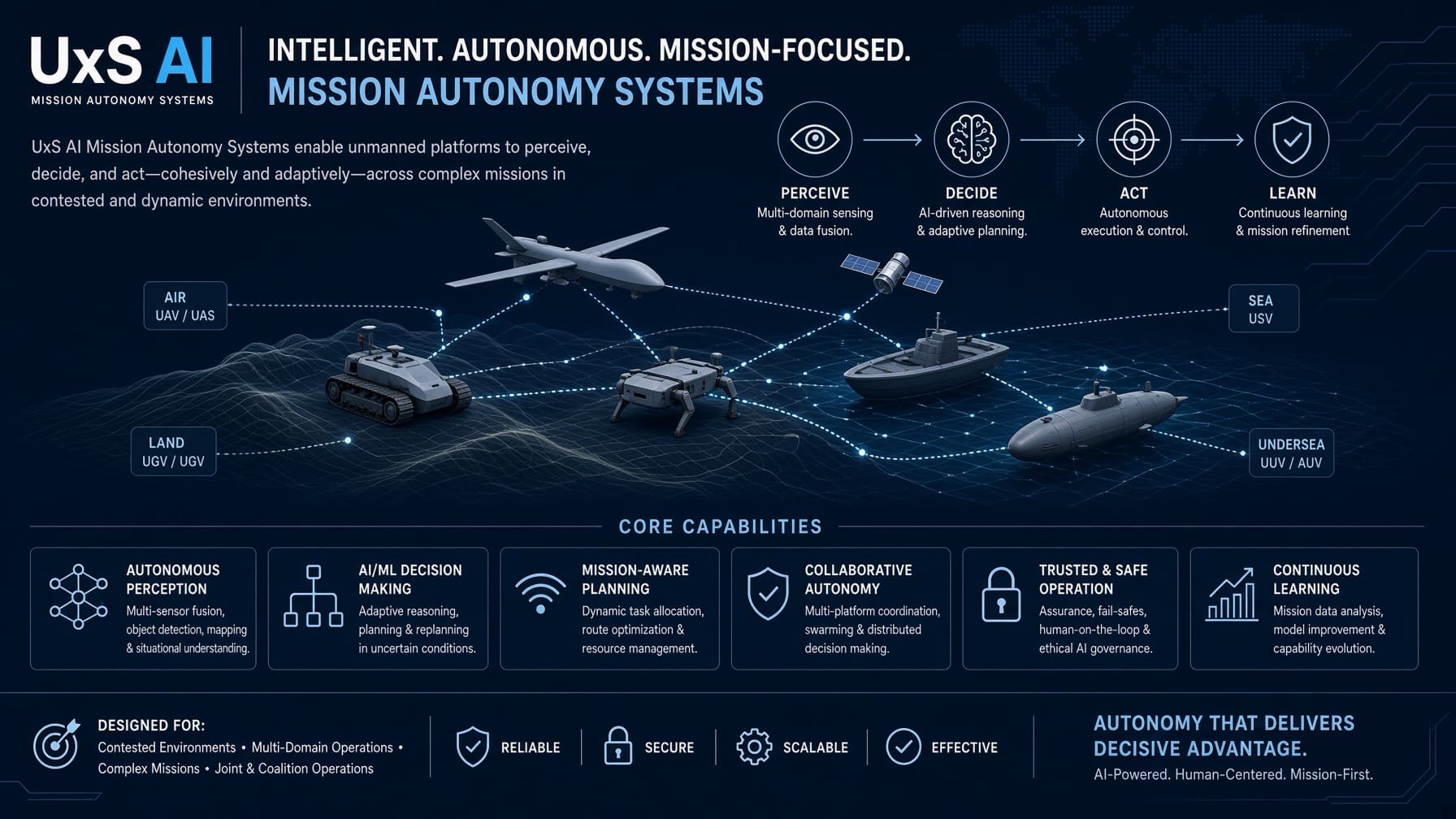
Focus Area 1: Unmanned Systems. Across the maritime domain, USSOCOM is increasingly leveraging unmanned and autonomous systems to push the limits of where and how its forces can operate. Integrating unmanned aerial, surface, and underwater platforms enables longer persistence in contested and denied environments, surveillance and reconnaissance in high-risk areas, and enhanced situational awareness without exposing personnel to unnecessary danger. USSOCOM is particularly interested in capabilities that improve cross-domain coordination, reduce the logistical footprint of deployed forces, and deliver reliable data and effects in dynamic maritime conditions. Innovations in autonomy, sensing, endurance, and resilient communications are key to enabling the next generation of maritime unmanned systems that support USSOCOM’s evolving role in multi-domain operations.

Focus Area 2: Counter-Unmanned Systems. To stay ahead of rapidly evolving unmanned threats, USSOCOM is prioritizing capabilities that can sense, understand, and respond to hostile systems before they impact the mission. As autonomous and remotely operated platforms become more accessible and adaptive, the need for agile, layered defense systems has become essential to preserving operational security and freedom of action. USSOCOM is interested in technologies that detect, track, and neutralize unmanned threats—from individual platforms to coordinated swarms—within the constraints of maritime special operations. Solutions optimized for size, weight, and power; capable of functioning in contested electromagnetic environments; and effective against both kinetic and electronic attack vectors are of particular interest. These capabilities are critical to enabling mission assurance, safeguarding personnel, and maintaining tactical advantage in multi-domain maritime operations.

Focus Area 3: Command, Control, Communications, Computer, Cyber, Intelligence, Surveillance, and Reconnaissance (C5ISR). At the core of USSOCOM’s future force design is a resilient C5ISR enterprise that connects sensors, shooters, and decision-makers across every domain. Next-generation C5ISR systems are expected to integrate multi-source intelligence, resilient communications, and cyber-secure data networks, enabling USSOCOM operators to sense, process, and act faster than the adversary. USSOCOM is particularly interested in technologies that strengthen edge connectivity, leverage AI-enabled analytics for real-time situational awareness, and ensure data integrity across denied or degraded environments. Seamless integration of cyber defense, intelligence fusion, and tactical communications allows operators to maintain command and control across dispersed forces while enabling intelligence collection and dissemination at the speed of relevance. These evolving C5ISR capabilities form the backbone of multi-domain maritime operations, empowering USSOCOM to outpace emerging threats and sustain operational advantage across every phase of mission execution.


Focus Area 4: Scalable Effects. In parallel, USSOCOM is pursuing scalable effects that provide flexible options to influence, degrade, or defeat adversary capabilities while managing risk and escalation. These effects span both kinetic and non-kinetic options, enabling commanders to match the level of impact to mission objectives, risk tolerance, and escalation considerations. USSOCOM is particularly interested in solutions that offer tunable effects—from reversible disruption and temporary degradation to permanent disablement—while limiting collateral damage and, when required, managing attribution. Technologies of interest include directed energy, electronic warfare, cyber-enabled effects, and precision engagement tools that can be employed from distributed maritime platforms and integrated with existing C5ISR architectures to deliver coordinated, scalable effects in support of complex operations.

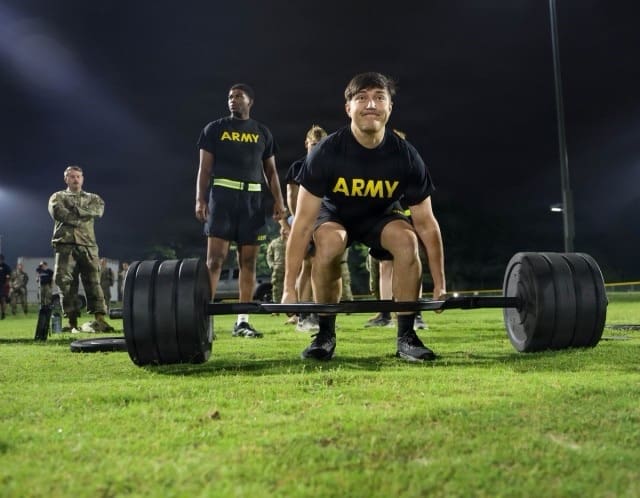
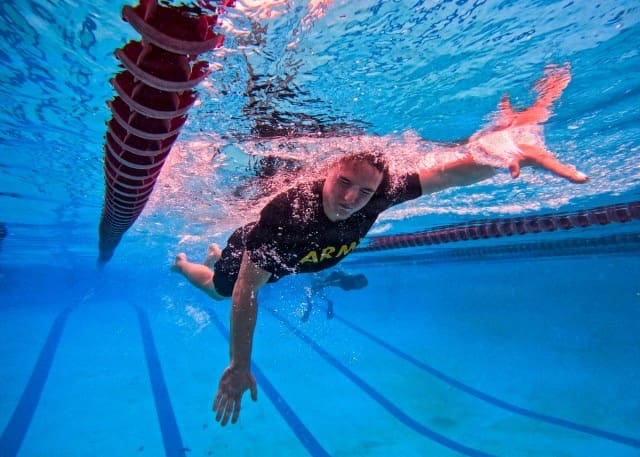
Focus Area 5: Human Performance. Optimization of human performance is a critical force multiplier for USSOCOM, directly impacting operational readiness, mission effectiveness, and organizational capability retention. Comprehensive physical conditioning programs that address the multifaceted demands of maritime special operations serve to enhance baseline performance while simultaneously reducing the incidence of acute and chronic injuries that can sideline operators during critical mission windows. Cognitive performance enhancement through mental acuity training, stress inoculation, and neurological health monitoring addresses the complex decision-making requirements of special operations while mitigating psychological burnout that can compromise judgment and tactical effectiveness. This holistic approach to human performance optimization directly contributes to USSOCOM ‘s ability to retain experienced personnel by extending their operational careers, reducing medical attrition rates, and maintaining the institutional knowledge and tactical expertise that takes years to develop, thereby preserving USSOCOM’s most valuable asset while maintaining operational readiness across extended deployment cycles and high-tempo operations.

Focus Area 6: Human-Machine Teaming. Human-Machine Teaming represents a transformative capability for USSOCOM, enabling intuitive control of unmanned systems through natural human interfaces and providing immersive training environments for high-risk scenarios. Natural control methods, such as voice commands and gesture recognition, enable USSOCOM operators to direct autonomous systems while maintaining tactical readiness and operational security. This reduces the cognitive burden of system management, allowing operators to focus on tactical decision-making and leverage machine capabilities for surveillance, reconnaissance, and support functions. Augmented and virtual reality technologies revolutionize USSOCOM training by enabling operators to repeatedly practice complex, high-risk scenarios without the logistical constraints and safety risks associated with live training exercises while building operator proficiency in human-machine coordination. This combination of natural system control and immersive training capabilities enhances tactical proficiency while optimizing the division of tasks between human judgment and machine processing power, ultimately improving mission effectiveness in the complex and demanding maritime special operations environment.

Responses are due Jun 01, 2026 4:30 PM EDT.

Visit sam.gov for full details.

Congressman Pat Harrigan Introduces the Special Operations Forces Concealed Carry Act to Extend Concealed Carry Rights to Elite Military Veterans

Sunday, April 26th, 2026

WASHINGTON, D.C.—Today, Congressman Pat Harrigan (NC-10) introduced the Special Operations Forces Concealed Carry Act, legislation that extends federal concealed carry authority to both serving and veteran special operations forces whose firearms training and marksmanship standards match or exceed those of retired law enforcement officers.

“Federal law already trusts retired police officers to carry concealed nationwide. That makes sense. But it makes no sense that an active or retired SEAL or Green Beret, someone who spent a career mastering firearms under the most demanding conditions in the world, has no equivalent recognition under federal law,” said Congressman Harrigan. “This bill fixes that. It does not create new rights or weaken any safeguard. It simply extends an existing, proven framework to the warriors who have earned it more than anyone.”

“Atlas Rescue enthusiastically supports this legislation recognizing Special Operations veterans for their unique skills and service to our country. This recognition strengthens our ability to deploy highly trained operators in the fight against human trafficking, enabling us to more effectively bring that expertise to missions that protect the vulnerable and dismantle trafficking networks,” Sean Williamson, Executive Director ATLAS Rescue.

The Special Operations Forces Concealed Carry Act amends 18 U.S.C. Section 926C, the statute that currently grants concealed carry authority to qualified retired law enforcement officers, to also cover qualified special operators. Eligible veterans will receive permanent, nationwide concealed carry authority with no annual firearms requalification requirement, while remaining fully subject to all existing federal firearm restrictions. The bill covers honorably discharged servicemembers from paygrade E5-E9, W1-W5 or O1-O10 with verified service in Army Special Forces, the 75th Ranger Regiment, Delta Force, Navy SEALs, Marine Corps Scout Snipers, Reconnaissance Marines, MARSOC operators, and Air Force Combat Control, Pararescue, Special Reconnaissance, TACP, and Special Operations Weather. The legislation also directs the Department of Defense and the Department of Veterans Affairs to establish a photographic identification program within 180 days of enactment, and requires the Department of Justice to issue guidance to law enforcement agencies nationwide ensuring uniform recognition of qualifying credentials.

Congressman Harrigan is urging his colleagues to support the Special Operations Forces Concealed Carry Act and honor the service of America’s most elite warriors.

This press release was issued on 16 April.

Operation Eagle Claw – The Iran Hostage Rescue Mission

Saturday, April 25th, 2026

I remember waking up on 25 April, 1980 to news reports about an accident in the desert of Iran involving US aircraft and hints of a failed rescue attempt of American hostages.

You’ll often hear references to “Desert One” and discussion of a failed mission into Iran that occurred 46 years ago. That was the location of the aircraft accident which claimed eight American lives. The actual operation was named “Eagle Claw” although during planning it had been aptly named “Rice Bowl.”

On April 4, 1979 Iranian militants who would ultimately form the Iranian Revolutionary Guard Council, stormed the US Embassy in Tehran and in an act of defiance against international convention, seized the diplomatic staff as hostages.

Understandably, America wanted to do something about it. However, Iran is a vast country and getting a rescue force in and out of the heart of Tehran during a period of darkness proved impossible. The plan became quite complicated and every service wanted in on the action.

The plan included Marine Corps helicopters flying from a Navy aircraft carrier meeting Army assaulters in the middle of the desert on a landing strip set up by Air Force Combat Controllers. All along the way, the Air Force provided fixed wing lift to the task force including into the assault zone as well as a planned AC-130 gunship as overwatch for the exfil. There were even some men who had infiltrated earlier, under cover to help with the mission.

The C-130s carrying the ground force were to meet the Marine RH-53s at the Desert One landing zone during the night of April 24, 1980. Unfortunately, due to mechanical and environmental challenges, not enough of the Marine helos made it to Desert One to continue the mission. The ground force commander contacted the President via SATCOM with his recommendation to scrub the mission for at least 24 hours and attempt again. President Carter agreed and they began to prepare for the trip back out of Iranian airspace.

This painting adorns many a man’s wall who was present that night. It depicts the activity at Desert One before the accident. I have had the privilege of meeting many of those involved in this complex operation and they are some of the greatest Americans I know.

Disaster struck the task force. On that same night and on that same landing zone one of the helicopters turned into a C-130 serving as Forward Area Refueling Point setting it ablaze. The men sitting in the back of the aircraft quickly disgorged from the conflagration.

Not everyone survived. The fog of war claimed eight Americans in that accident. It is my hope that they are never forgotten.

Planning for a more audacious mission named “Honey Badger” soon followed but ultimately, the hostages were returned via diplomatic effort on the first day of Ronald Reagan’s Presidency.

The failed mission led to a review later that year, often referred to as the “Holloway Commission” due to its being led by former Chief of Naval Operations, Admiral James L. Holloway III. The report from the Special Operations Review Group identified 23 key issues, citing poor command coordination, training deficiencies, and operational security as major causes for the failure.

Eagle Claw was a serious setback but like a phoenix, US Special Operations arose form the ashes on that strip of desert into a more focused enterprise which ultimately led to US Special Operations Command and the amazing capability we have today. Lessons were learned and over time applied. Congress thankfully also stepped in and nudged the military along.

I’ve offered a very short summary of the event to commemorate its anniversary. If you want to learn more about the planning and operation itself I can recommend four great books:

1.) “Delta Force” by Col Charles Beckwith

2.) “The Guts To Try” Col by James Kyle

3.) “Crippled Eagle” by Col Rob Lenehan

4.) “Phoenix Rising” by Col Keith Nightingale

USSOCOM Announces 2026 Athletes for Warrior Games

Sunday, April 19th, 2026

We’re proud to officially announce the 2026 Team SOCOM athletes who will represent United States Special Operations Command (USSOCOM) at the this year’s Warrior Games !

These incredible warriors embody resilience, dedication, and the unbreakable spirit of our community. Through their commitment to recovery and excellence, they continue to inspire us all.

Join us in congratulating them as they continue to train hard for San Antonio! ?

Let’s Go Team SOCOM!!

AI Bootcamp Readies Air Commandos for Next-Gen Advantage

Sunday, April 12th, 2026

HURLBURT FIELD, Fla. —  

Air Force Special Operations Command has begun hosting AI Bootcamps, a pioneering training course designed to arm servicemembers with the skills to ethically and effectively integrate artificial intelligence into their daily duties.

The course stems from the command’s commitment to leveraging emerging technologies to maintain a competitive advantage in an increasingly complex operating environment. The goal of the initiative is to empower Air Commandos to utilize AI tools, streamlining procedural processes and tasks to reclaim valuable time for mission-critical responsibilities.

“The AFSOC AI Bootcamp was created out of a forward-thinking effort to prepare our servicemembers for an AI-integrated environment,” said Dr. Christina Parker, AFSOC chief learning officer. “We accomplish this by identifying and addressing concerns of using AI; identifying AI appropriate tasks; highlighting “Human in the Loop” strategies and techniques; and providing highly practical, hands-on application training.”

As part of practical application practice, students are taught how to assign the AI system a role to play for accomplishing an identified task.

“AI can serve as a ‘brainstormer’ to move past the ‘blank page’ problem, a ‘translator’ to reformat data and adjust the tone of materials, a ‘red teamer’ to identify weaknesses in a plan, and even a ‘tutor’ to break down complex topics for upskilling,” said Parker.

The course was designed to create a bridge the knowledge gap on generative AI systems, creating a baseline understanding for users no matter their experience level.

“It’s rare to leave a one-day course feeling you’ve gained a truly foundational understanding of something so transformative,” said a course participant. This wasn’t just another training day; this felt mission critical.”

AFSOC’s prioritization of AI integration began in September 2025 with the establishment a standalone A9 directorate, with a mission focused on data, AI, analytics, and assessments.

“We were tasked with designing this training in November 2025,” said Parker. “When the Secretary of War’s ‘Harness Artificial Intelligence’ memorandum was released in December, we were already positioned to execute.”

Parker states AFSOC’s proactive stance in designing, developing, and delivering the AI training has led higher headquarters and other commands across the Joint Force to reach out to request her team’s materials for review and use.

Through this forward-leaning approach, AFSOC is not just initiating the charge for mass AI adoption but is actively building the framework to teach servicemembers how to rapidly integrate these capabilities. This initiative positions them at the forefront of shaping how the Joint Force will team up with artificial intelligence.

“The primary goal is for every servicemember to have the mindset that AI is not a replacement, but a powerful teammate,” said Parker.

By Capt Brandon DeBlanc

Air Force Special Operations Command

SOE Expeditions Presents: WW2 Scotland – Forging US Special Forces

Saturday, April 11th, 2026

Scotland played a pivotal role as a training ground for some of the most Elite Allied forces, including the U.S. Army Rangers, the Office of Strategic Services (OSS), and the Jedburgh teams.

The rugged landscapes of the Scottish Highlands, combined with the expertise of the Special Operations Executive (SOE) & Commandos provided an unparalleled environment for training in guerrilla warfare, sabotage, and special operations. The collaboration between British Commandos, SOE operatives, and their American counterparts helped forge the foundations of modern day Special Forces.

Rangers

The formation of the 1st Ranger Battalion marked a significant milestone in the development of Elite U.S. Military forces during WW2. The battalion’s initial members were primarily drawn from two divisions recently sent to Ireland from the United States: the 34th Infantry Division and the 1st Armoured Division. In May 1942, Company A of the 1st Ranger Battalion was established, comprising all volunteer soldiers under the leadership of Captain William Darby.

B Company, 1st Ranger Battalion on a training road march near Achnacarry, Scotland, July 1942.

After its formation, Company A relocated to Scotland, where the men were trained by British Commandos at the rigorous Commando Basic Training Centre (CBTC) near Achnacarry Castle. Training was supplemented by the SOE, whose Elite Raiders had extensive experience in covert operations and behind-enemy-lines missions.

This collaboration exposed the Rangers to advanced techniques in sabotage, reconnaissance, and amphibious assaults. Some Rangers participated in their first combat action during the Dieppe Raid in August 1942, becoming some of the first U.S. troops to fight in Europe during the war.

Lt. Derek Burr Commando Depot stands behind four men of a Ranger unit instructing in the use of a M.1. Rifle. Feb 1943.

Over time, the 1st Ranger Battalion expanded into a force of 467 men. It played a key role in the North African campaign, including Operation Torch, serving alongside Nos. 1 and 6 British Army Commandos. This success led to the formation of additional Ranger battalions, which went on to participate in operations across all major theatres of the war.

Following the successes of the 1st Ranger Battalion in North Africa, Captain William Darby was tasked with forming two additional battalions: the 3rd and 4th Ranger Battalions, activated and trained at Nemours, Algeria, in April 1943. The 1st Battalion was restructured with its original A and B Companies, while the 3rd and 4th Battalions were formed around C/D and E/F Companies, respectively. Darby, supported by experienced officers and non-commissioned officers, incorporated hundreds of combat-tested soldiers from Seventh Army units into the new battalions.

Brigadier General Lucian Truscott Jr. (Centre with riding boots) and Major William O. Darby (pointing) inspect C Company, 1st Ranger Battalion on 2 September 1942 at Dundee, Scotland.

The 3 Battalions underwent an intensive three-week training regimen to prepare for Operation HUSKY, the Allied invasion of Sicily. In summary, the 1st Ranger Battalion was the pioneering unit and the precursor to later Ranger units that followed in the post-war era, such as the establishment of the modern day 75th Ranger Regiment.

OSS Training in Scotland

The training of Office of Strategic Services (OSS) operatives in Scotland had its foundation in the expertise and methodologies developed by the British Special Operations Executive (SOE). The OSS, created in 1942 as America’s first centralised intelligence and Special Operations Agency, partnered with the SOE to leverage their experience in unconventional warfare. Early OSS operatives often trained alongside SOE personnel, adopting and refining techniques that had already proven effective in sabotage, espionage, and guerrilla warfare.

The Office of Strategic Services (OSS) was created under the leadership of Major General William J. “Wild Bill” Donovan. Known as the “father of American intelligence.

Before the Office of Strategic Services (OSS) was officially formed in June 1941, some American personnel, including future OSS operatives, received informal training alongside the British Special Operations Executive (SOE) in Scotland starting in 1940.

These early training efforts focused on sabotage, guerrilla warfare, and espionage. After the OSS was established, it began sending operatives to Scotland for more structured training in 1942, building on the collaboration with the SOE.

Additionally, Camp X in Ontario, Canada, was set up in December 1941 to provide formal espionage and sabotage training, with operatives often training there before being sent to Scotland for further specialised instruction.

OSS on Operation Rype Norway May 1945.

The OSS adopted many of the SOE’s training techniques and operational strategies, particularly in the use of small, autonomous teams for high-risk missions. The collaboration was instrumental in preparing operatives to work effectively behind enemy lines.

In occupied Europe, OSS agents often partnered with SOE operatives and local resistance movements, engaging in activities such as: Sabotaging railways, bridges, and supply depots to hinder enemy logistics. Organising and arming guerrilla forces to launch coordinated attacks. Gathering and transmitting vital intelligence on enemy positions and movements.

Arisaig House Special Training School, designated STS21.

The Scottish Highlands provided an ideal setting for this training, as the rugged terrain and unpredictable weather mirrored the challenges operatives would face in the field. The shared training experiences between the OSS and SOE not only forged strong Allied partnerships but also laid the foundation for the OSS’s evolution into a highly effective covert operations force.

The OSS and SOE worked together for about 2 years, from 1940 when informal training began, through the OSS’s formation in 1941, and continuing through 1942–1943 as part of more formalised training.

The early collaboration with the SOE proved to be a defining element of the OSS’s success. The techniques, tactics, and ethos learned during their Scottish training shaped the OSS into a formidable wartime organisation and provided the foundation for the creation of modern American Special Operations Forces and intelligence agencies. This partnership underscored the enduring importance of joint training and innovation in special warfare.

Jedburgh Teams

Project Jedburgh was a ground-breaking Allied initiative involving the OSS Special Operations (SO) branch, the British Special Operations Executive (SOE), and the French Bureau Central de Renseignements et d’Action (BCRA). Its goal was to support and coordinate with resistance movements in occupied territories.

Aug 6th 1944, England, 4 Jedburgh’s from team ‘IVOR’ shortly before heading to France.

A total of 83 American, 90 British, 103 French, 5 Belgian, and 5 Dutch operatives were meticulously trained in paramilitary techniques for Jedburgh missions. Selected men were sent for two weeks of commando training in Scotland, followed by further specific training at Milton Hall, near Peterborough. Teams were designed to:

Supplement and support existing SO/SOE resistance networks (known as “circuits”). Organise, arm, and train local resistance forces. Arrange supply drops and procure intelligence. Conduct sabotage operations and liaise between resistance groups and Allied forces.

Members of OSS Operational Group ADRIAN prepare to jump into occupied France in September 1944.

Ninety-three Jedburgh teams parachuted into France, and eight were deployed to The Netherlands. A typical team consisted of three members: one French, one British, and one American operative. Each team had at least one officer and a radio operator, though team sizes varied from two to four personnel.

These teams played a critical role in disrupting German operations, supporting the Allied advance following the D-Day landings, and bolstering resistance efforts across occupied Europe.

Legacy and Modern Influence

The experience and innovations developed by the Rangers, OSS, and Jedburgh teams during WW2 provided the foundation for the creation of modern U.S. Special Forces. The Elite training, unconventional warfare techniques, and emphasis on small-unit operations directly influenced the formation of units like the U.S. Army Special Forces (Green Berets), the Navy SEALs, and other modern day Special Forces Units.

The collaboration with the SOE the Commandos and the lessons learned from Scotland’s rugged training grounds remain central to modern Special Operations doctrine. These pioneering groups not only helped secure victory in WW2 but also shaped the future of military and intelligence operations.

Join us in Scotland this March and October on our Elite Raiders of WW2 Experience, as we learn about their training, visit historical sites and follow in the footsteps of legends.

This article was shared by our friends at SOE Expeditions.

Green Berets Avoid Drone Detection During New Training Scenario

Friday, April 10th, 2026

HOHENFELS, Germany – Green Berets with 2nd Battalion, 10th Special Forces Group (Airborne), U.S. Special Operations Command Europe, put their skills to the test with a new and innovative training scenario, Exercise Deep Strike, at the Joint Multinational Readiness Center here, February 15-23, 2026.

This exercise simulated a complex real-world mission that challenged small special forces teams to infiltrate enemy territory, avoid drone detection, use drones to strike targets or resupply units, execute advanced tactics and complete stressful operations under winter conditions.

It served as a crucial testing ground for modernizing the force, validating the effectiveness of cutting-edge technologies like advanced unmanned systems to ensure our forces maintain an operational advantage in complex, multi-domain environments. This feedback loop ensures that emerging technologies are rapidly refined and fielded, directly translating innovation into combat capabilities.

“This exercise is designed to prepare our forces for the realities of modern warfare,” a planner with the 10th SFG (A) said. “It closely replicates real-world battlefield conditions, including the complex electronic warfare environment. It’s about pushing our teams to the limit and testing their ability to adapt to changing circumstances.”

In October 2025, SOCEUR tasked the Hohenfels Wolverine training battalion, a group of former Green Berets, with planning Deep Strike. The scenario involved a team of eight or more Green Berets infiltrating a 150-kilometer stretch of flat terrain in winter weather. It tested their physical and mental endurance, and their ability to remain focused on the mission. Their objective was to move undetected through the terrain, navigate past conventional forces and launch a strike drone to neutralize a simulated high-value target.

The operation required the team to rely only on mission-specific gear, excluding weapons. Their movement was restricted to nighttime hours to maximize stealth. They had to navigate through harsh winter conditions while avoiding detection, not just from enemy forces but also from civilian farmers, hikers, hunters and local law enforcement.

“This is no simple walk in the woods,” the team sergeant said. “In addition to avoiding conventional forces, our operators must stay off the radar of drones and keep a low profile around civilians who could unknowingly jeopardize the mission.”

The climax of the exercise occurred when a Special Forces team reached their destination after the grueling 150-kilometer movement. They then launched an unmanned aerial system, which carried live munitions to strike and destroy a designated enemy target. Once the team completed the mission, they were extracted by helicopters.

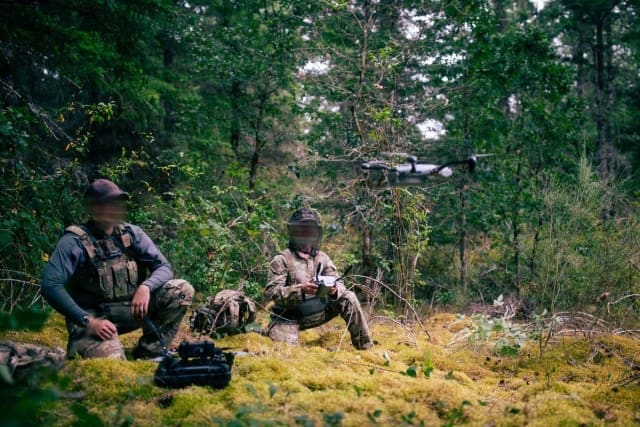
A team from SOCEUR’s Theater Edge Innovation Lab,alongside drone designers,were involved in the exercise as well, preparing drones for flights and assisting Green Berets with their operation. Aside from strike missions and avoiding their detection, they used drones to deliver supplies to Green Berets in the field.

Looking ahead, Deep Strike is expected to expand in scope with future iterations incorporating NATO Special Operations Forces. This will enhance coordination and interoperability among NATO forces, ensuring that they remain prepared to respond to dynamic security challenges across Europe and beyond.

“Deep Strike is not just about training our own forces,” the planner said. “It’s also about creating opportunities for greater collaboration with our allies, ensuring that we’re all ready to tackle whatever challenges may lie ahead.”

This exercise is a critical step in building a permanent training lane for U.S. and NATO forces to practice deep strike missions together, enhancing the alliance’s collective combat power and unified response to threats. This joint training will sharpen the alliance’s ability to seamlessly integrate multi-national assets, from intelligence to strike, ensuring that the right weapon is delivered to the right target at a decisive moment.

Story by SGT Glenn Brennan 

U.S. Special Operations Command Europe

Textron Aviation Receives First Military Order For Cessna Skycourier, Launching The Aircraft Into Global Defense Market

Thursday, April 9th, 2026

Belgium selects SkyCourier fleet to boost special operations airlift for troop transport, logistics, casevac and crisis response

A new ally in the air: An artist’s rendering shows a Cessna SkyCourier configured for military operations, including a special operations paint scheme and mission equipment. The aircraft was selected by Belgium Special Operations Forces.

WICHITA, Kan. (Apr. 7, 2026) –  Textron Aviation Inc., a Textron Inc. (NYSE: TXT) company, today announced Belgium has selected the Cessna SkyCourier as its newest special mission aircraft, awarding an order for five multirole aircraft to support the nation’s Special Operations Forces. The selection launches the SkyCourier into the global defense market for the first time and strengthens Belgium’s airlift capability through a rugged, flexible platform built for demanding missions.

Belgium’s SkyCourier fleet will enable rapid movement of personnel and equipment while supporting logistics, medical evacuation and crisis response operations. Deliveries to the prime contractor Sabena Engineering are expected throughout 2027, followed by in?country military modifications prior to the final aircraft transfer to the Belgian Special Operations Forces.

“This first military selection signals strong armed service interest in the Cessna SkyCourier and underscores its readiness for high?consequence missions,” said Travis Tyler, president and CEO, Textron Aviation Defense. “The SkyCourier’s combination of rugged performance, low operating cost and the ability to operate from short and unimproved runways makes it a powerful solution for customers who need dependable lift in unpredictable environments.”

The SkyCourier’s debut into the global defense market builds on its momentum of expansion across new global regions. Designed for reliability and mission adaptability, the twin?engine, high?wing turboprop offers flexible cabin configurations, significant payload capacity and proven performance in austere settings.

Belgium’s decision reflects a rising government demand for affordable, multirole aircraft that can support rapidly evolving mission sets. The selection also expands the capabilities of local industry through Sabena’s modification design work in Belgium, reinforcing defense relationships throughout the region.

“Working closely with Textron Aviation, Sabena Engineering will perform all mission?specific integration and certification in Belgium, ensuring the SkyCourier delivers the flexible, responsive airlift capability our Special Operations Forces require while strengthening national industrial expertise and sovereignty,” added Stephane Burton, CEO, Sabena Engineering.