FirstSpear

Archive for the ‘SOF’ Category

Operation Eagle Claw

Sunday, April 25th, 2021

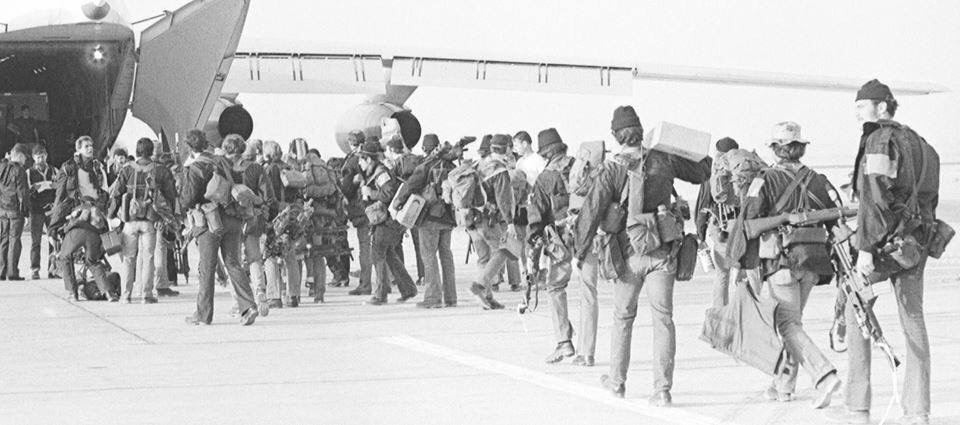
In the early morning hours of 25 April, 1980 President Carter announced to a stunned world that the United States had undertaken an ambitious raid into Iran to liberate 52 American hostages held illegally at our Embassy compound in Tehran. The assault force of what was known as “Operation Eagle Claw” can be seen here, loading C141s.

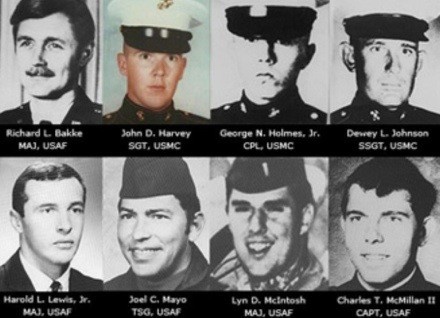
Unfortunately, the task force was unsuccessful and we lost eight American servicemen in a horrible aircraft ground collision.

However, their deaths were not in vain. The hostages were eventually repatriated and the accident was the watershed event that created, over the next several decades, the world’s preeminent Special Operations capability; USSOCOM and its components. Forty years later, we wouldn’t be where are without the determination of that fledgling task force. Join me in remembering those that had the guts to try.

SOFWERX – USSOCOM Virtual Innovation Foundry Event

Thursday, April 22nd, 2021

SOFWERX, in collaboration with USSOCOM’s Directorate of Science and Technology (S&T), will host the Eighth Innovation Foundry (IF8) Event on 02-04 June 2021.

The objective is to bring together Special Operations Forces (SOF) representatives and Subject Matter Experts (SMEs) to assist USSOCOM in discerning future capability areas for technology exploration for SOF in the conduct of Next-Generation Effects and Precision Strike. 

IF8 will scope future technology-based capabilities looking forward 7-15 years, utilizing design thinking to solve mission scenarios in a 2030 great power competition.

S&T Futures and NGE Capability Focus Areas (CFAs) will investigate concepts for novel SOF-peculiar scalable kinetic and non-kinetic effects to achieve physical, virtual, and cognitive objectives across all domains in the Competition and Conflict spaces of the Force Development window. These concepts will include, but not be limited to, Directed Energy (DE), Cyber, Military Information Support Operation (MISO), Electronic Warfare (EW), attributable, non-attributable, temporary, permanent effects, and will be designed to solve mission scenarios in a 2030 great power competition. 

This event is restricted to U.S. Citizens Only.

To participate, submit NLT 05 May 11:59 PM ET. Visit events.sofwerx.org/IF8 for details.

Interagency Virtual Training for the Civil Affairs Professional of Tomorrow

Tuesday, April 20th, 2021

MOUNTAIN VIEW, CALIF. – Various Soldiers within the civil affairs community from across the U.S. participated in the ‘Interagency in the Pacific’ virtual training conducted on March 20, 2021. The virtual training, instructed by multiple U.S. government agency representatives, focused on the economic, security, and structural environment of a country within the operational area. This type of instruction enhances U.S. military forces’ holistic understanding of the cognitive environments in which they operate, it is instrumental to the success of the mission, and the wellbeing of the personnel on the ground. For civil affairs Soldiers, possessing the right information could be pivotal to future relationships with international partners. Moreover, Soldiers having the full perspective about a government can mean the difference between mission success or mission failure.

“The Interagency in the Pacific training was very good for the kinds of missions we perform. The insights into China’s belt and road investment strategy inform us of what our Asian partners see when they consider China’s overtures. The briefings from U.S. Customs and Border Protection taught us that some of our foreign partners have built their own customs and processes on U.S. models,” said Lt. Col. Anthony Alfidi, a participant of the training and a military intelligence Soldier with the 351st Civil Affairs Command out of Mountain View, Calif.

The training ranged from an in-depth review of how a financial system works in other countries to how specific security processes were in place to prevent drug trafficking across national borders, providing civil affairs Soldiers with the knowledge of what to look for while on mission to another country.

“I think that we need more interagency training,” said Alfidi, “civil affairs Soldiers may end up working with other USG officials at local levels, provincial levels, and national levels. CA practitioners need to know what the other agencies can accomplish.”

Alfidi mentioned how knowing more about commerce and treasury helps promote trade and investment with a country. He explained how commerce can sponsor trade missions for U.S. firms and treasury which can assist countries in making their budgeting systems more transparent. As a result, the country can possibly benefit through increased stability.

Alfidi also observed that well informed civil affairs Soldiers tend to be better equipped to function within their operational environment and be effective and efficient when operating within the given parameters of their mission, and training like the Interagency in the Pacific program are designed to promote this level of readiness.

“This training is valuable to civil affairs because no functional specialty such as public health, governance, infrastructure, rule of law, etc., exists in a vacuum. We must have a basic understanding of the other functional specialties and our civilian counterparts to be effective in the field, and execute a whole-of-government approach as doctrinally intended,” said Lt. Col. Leah Trapp, a participant and Soldier with the 322nd Civil Affairs Brigade. “For example, rule of law is the basis for any government, which then decides what policies to enact and fund, such as a national health system. In turn, the national health system relies on infrastructure, like clinics, roads to transport supplies and specimens for testing, laboratories, hospitals, etc.”



The better prepared, the higher success that a civil affairs unit will have on the ground when operating on foreign soil. Trapp would like to see this training expanded, formalized, and adopted by the Civil Affairs Command and Training and Doctrine Command to ensure civil affairs generalists and functional specialists have a mutual understanding of how to best employ functional specialists.

Lt. Col. Charles Arensman, economist with the 351st CACOM, stated that, to improve the functionality of civil affairs teams when deployed, the Interagency in the Pacific virtual training would assist in providing a baseline understanding for professional development among 38G personnel.

“The FxSp [functional specialties] is what we’re composed of, and for the last few months, our section’s chief, Col. Bradford Hughes, has tried to promote subject matter expertise within our teams. As an economist in the unit, I put this material together to give our personnel a baseline understanding on interagency economics of the Indo-Pacific command,” said Arensman.

Arensman coordinated with speakers from organizations which represented the whole of the government or this training and based on expertise. This is the information which primarily assists civil affairs personnel, or FxSp teams, during overseas missions.

“Most important thing to know is your partners to the left and to the right of you. The interagency perspective shows us who is out there and what they’re doing In the INDOPACOM,” said Arensman, “and all this is thanks to Col. Hughes, he has done an exceptional job shepherding and growing the professionalism of the FxSp through his leadership and efforts.”

The reason for this training and how or why it was initiated can best be answered by Maj. Dale Kooyenga, civil affairs officer with the 352nd CACOM and a member of the U.S. Army Civil Affairs and Psychological Operations Command (USACAPOC) Strategic Initiatives Group (SIG). This group is developing a 38G program while recruiting the nation’s top candidates by creating institutional alignments with universities and other organizations.

“About a year ago we started doing online training, in part because of the coronavirus but also in part to have a team of specialists that were geographically dispersed, operationally it made sense,” said Kooyenga. “We are trying to create training content that is unclassified and available to a wider audience.”

The SIG training group started about a year ago around February 2020 and is led and produced by 38Gs and or their partners in the civilian world. The training conducted is being recorded to develop a library of content which will then be made available to the civil affairs community and other interested parties.

“It was the cultural heritage team who got this initiative started, this team is the modern day ‘monuments men’ movie equivalent,” said Kooyenga, ”they started doing a lot of training virtually, initially the training was scheduled to be in person, but they soon changed it to a virtual training because of COVID.”

Some of the training that has been conducted includes training on money laundering, interagency cooperation, training on ‘The Hague Convention,’ and other training related specifically to civil affairs topics. But for 38Gs the ‘Interagency in the Pacific’ training is the first of its kind and it is critical to be able to operate while conducting civil affairs missions.


“It is not a mission that the department of defense or specifically USACAPOC can do on its own. It will take tremendous coordination across other U.S. government agencies and private sector partners to really understand and assess the situation and coordinate. It would not only be ineffective for U.S. personnel within the DOD to operate in a vacuum, it would actually be harmful to the overall mission,” said Kooyenga.

As stated by Kooyenga, the intent of these training sessions is to provide a database of quality information which will provide officers and non-commissioned officers with the insight on complex civil affairs missions. Moreover, civil affairs personnel should know that there are partners in other institutions available to coordinate with who may also provide insight on specific topics or areas.?



Story by Rosario Urquieta, 351st Civil Affairs Command

TacJobs – MOS 15C MQ-1 UAS Operator at 160th SOAR

Saturday, April 17th, 2021

The US Army’s 160th Special Operations Aviation Regiment fields a complement of MQ-1 Unmanned Aerial Systems. This video talks about service in the Night Stalkers in MOS 15C.

Assignments are available right out of AIT as well as for Soldier serving in other in units in a variety of MOSs.

goarmysof.com/160th/SOARrecruiting

5th SFG(A) Trains with 101st Abn Div

Friday, April 16th, 2021

Soldiers from 101st Airborne Division (Air Assault) participated in night operations training with Green Berets from 5th Special Forces Group (Airborne) on March 15, 2021 at Muscatatuk Urban Training Center, Indiana. U.S. Special Operations Forces conduct training focused on increasing readiness for overseas operations that safeguard national security from worldwide threats.

U.S. Army video by SGT Brandon White

SOGSITE – A MACV SOG History Project

Sunday, April 11th, 2021

The new website SOGSITE tells the history of the Military Assistance Command Vietnam Studies and Observation Group which conducted special operations is the SouthEast Asia theater, including “over the fence” cross-border reconnaissance missions into Cambodia and Laos.

3rd Annual Crawfish Boil in San Antonio This Saturday to Benefit the Green Beret Project

Thursday, April 1st, 2021

This Saturday, Long Tab Brewing Company in San Antonio is hosting the 3rd Annual Crawfish Boil to benefit the Green Beret Project.

UF PRO Guide to SOF Assessment & Selection

Monday, March 29th, 2021

UF PRO Video Series Shows How to Prepare for Grueling Military Special-Forces Selection Process; Available 30 March

TRZIN, SLOVENIA (28 March 2021)—How to prepare for and successfully complete the process by which members of elite military special-forces units are selected is the subject of a four-part video series slated to debut this month, tactical gear-maker UF PRO today announced.

The series—”UF PRO Pro’s Guide to SF Selection & Assessment”—will be available at UF PRO’s website beginning Tuesday, 30 March.

The vetting process is extreme, routinely pushing candidates to the brink of mental and physical exhaustion. Statistically, nearly half of all applicants fail, the company noted.

Featured in the video series is advice for preparing to successfully complete the SF selection process. Shown are realistic, science-based steps designed to foster the drive and determination necessary to keep pushing on when the body and brain want to quit.

The series is hosted by Michael (Mike) Strauch, an army reserve officer from Germany who holds a university degree in psychology. Mike has served as a security contractor in various Middle Eastern and African hot spots. Additionally, he has lent his clinical expertise to medical teams from the U.S. and Europe.

Part One of “Pro’s Guide to SF Selection & Assessment” is titled “Gather Intel & Mental Preparation”. The episode serves as an overview of the special-forces selection process. Questions asked and answered include: what is the goal of the selection process; what will be evaluated; what kind of information does a candidate need in order best prepare; where does one obtain such information; and how does one mentally prepare for selection?

Part Two is “Physical Preparation: Principles and Overall Concept”. In this installment, viewers will be walked through several possible options for developing physical readiness to undergo the SF selection process.

“Physical Preparation: Techniques” is the title of Part Three, which supplies detailed explanations and demonstrations of the correct techniques for performing the most important exercises. The episode emphasizes that the exercises must be properly executed in order to derive maximum benefit in relation to the SF selection process.

The fourth and final episode—”Physical Preparation: Training Plan”—lays out a detailed roadmap to take viewers from fit to hyper-fit ahead of the formal start of the SF selection process.

UF PRO manufactures advanced-technology jackets, shirts, pants, hats, caps, and accessories for military and law-enforcement units in Europe and beyond.

For more information about this video series or about other titles available in the UF PRO video library, please go to www.ufpro.com/pros-guide-to-sf-selection