SIG SAUER - Never Settle

Archive for the ‘Training’ Category

Squad Immersive Virtual Trainer

Saturday, April 29th, 2023

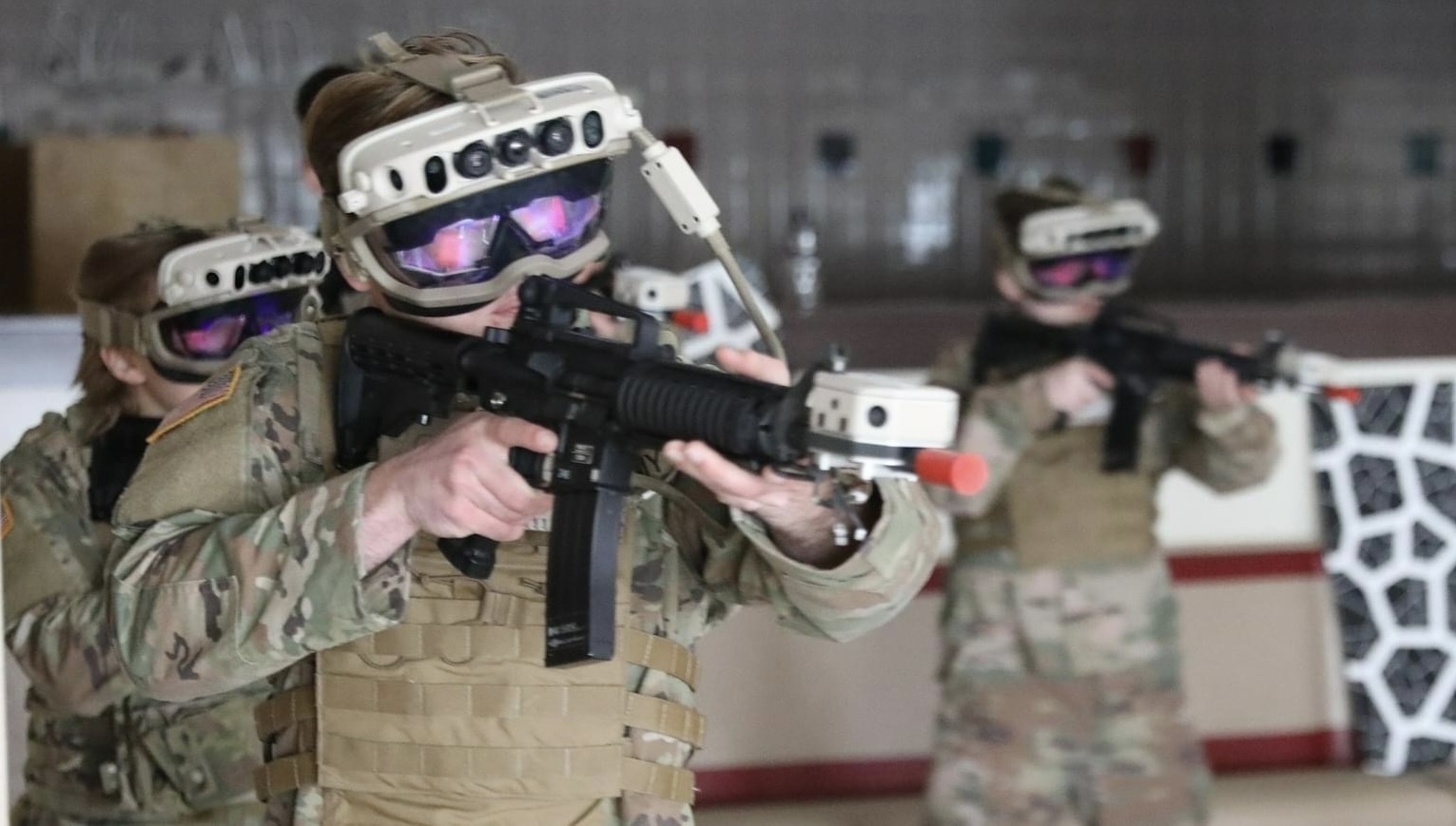
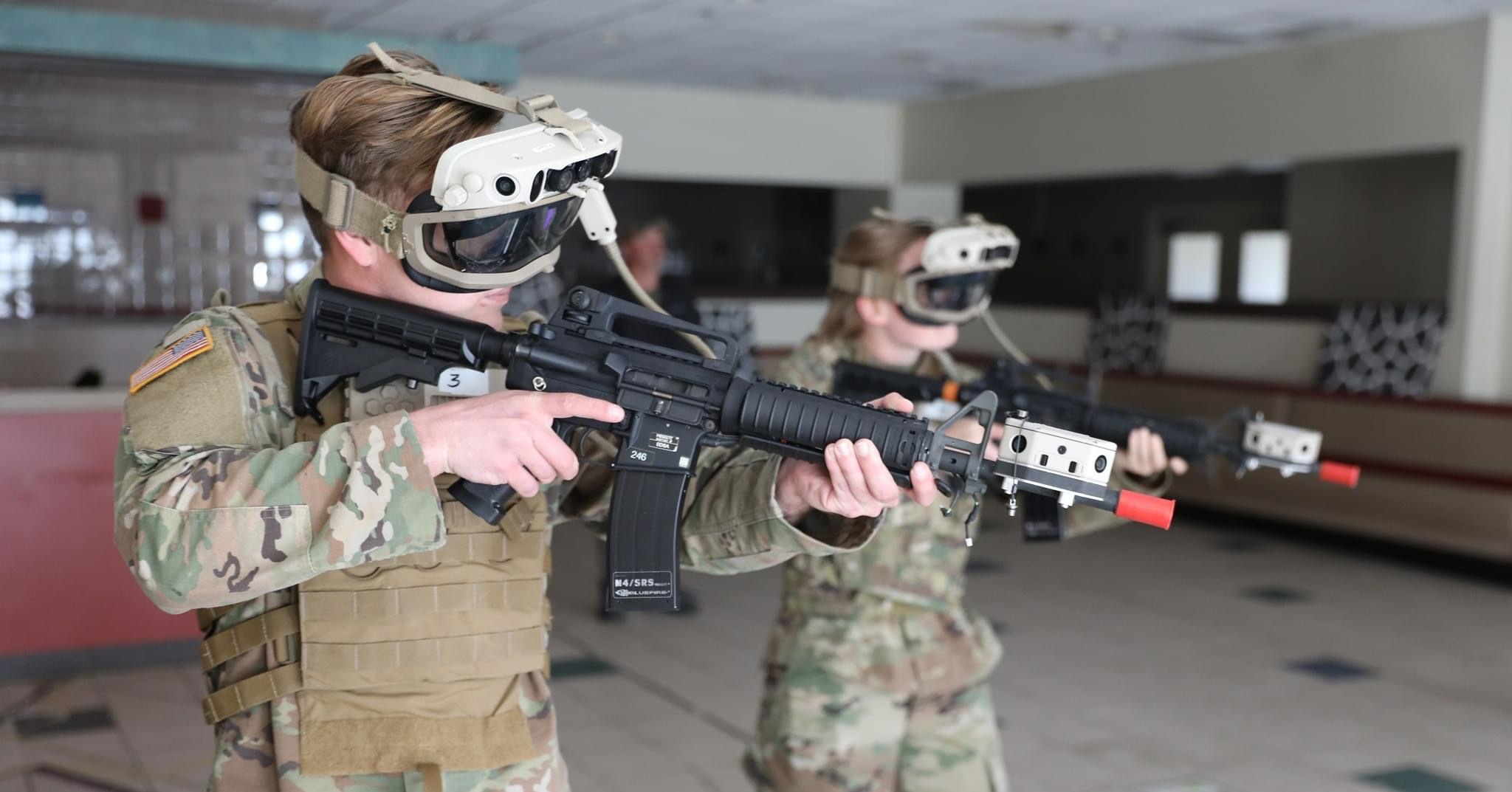
One feature of the US Army’s Integrated Visual Augmentation System (IVAS) is the Squad Immersive Virtual Trainer (SiVT) which facilitates squad-level training in a mixed reality-based synthetic environment. It can be used to train almost anywhere at any time; bringing training to Soldiers instead of bringing Soldiers to training.

Taking full advantage of Microsoft’s HoloLens technology which IVAS is based in, Soldiers are immersed in a synthetic, virtual reality environment and can interact, including movement and engagement, with various scenarios, even those created by small unit leaders.

GigXR Awarded Air Force SBIR Phase II Contract to Develop Extended Reality (XR) Simulation Training for Department of the Air Force

Friday, April 28th, 2023

Provides mixed-reality hologram patients to enhance realism in preparing students for treating combat casualties in safe-to-fail environments

Los Angeles, CA – April 26, 2023 – GigXR, Inc., a global provider of holographic healthcare training, announced today that it has received a second Phase II Small Business Innovative Research (SBIR) contract to develop holographic simulation training for the 354th Medical Group United States Air Force (USAF) based out of Eielsen, Alaska. The contract will be used to create immersive learning that uses hyper-realistic holographic patients that trains future medics to move through a critical checklist to correctly treat severe combat injuries.

To be built as a new module in GigXR’s HoloScenarios – a mixed reality application that allows learners to practice interventions using holographic equipment with hyper-realistic holographic patients that can present customizable, lifelike complications – this Tactical Combat Casualty Care (TCCC) training will provide learners unlimited, on-demand access to holographic patients with combat injuries. They can practice key skills as often as needed while working in safe-to-fail environments. 


GigXR will create high-stress, safe-to-fail situations that incorporate sounds, such as gunshots, explosions and helicopters overhead, to better mimic the experience of combat care. The module will also include realistic visualizations of injuries such as blast wounds, broken legs, shrapnel inflictions and more. Learners will be able to encounter these immersive experiences in a lab, classroom, remotely in an at-home study space, or outdoors.

“We are always extremely proud whenever we get to build something for the U.S. Military,” said Jared Mermey, CEO at GigXR. “The mixed reality healthcare training that GigXR delivers is built to better prepare for what might be seen in the field. The immersive experiences provide far more advantages to the analog alternatives in terms of realism, cost to deliver, and operational burden, especially when  deploying this critical content at scale.”

GigXR has partnered with the University of Cambridge and Cambridge / University Hospitals (CUH) NHS Foundation, University of Michigan and Morlen Health, a subsidiary of Northwest  Permanente, P.C., to co-create modules centered around Respiratory diseases, Basic Life Support, Advanced Cardiac Life Support, and Neurology scenarios. By partnering with  3D interactive medical experts,  such as 3D4Medical from Elsevier and ANIMA RES, GigXR’s customers can centralize access and management of 3D anatomy content which are also complementary to GigXR’s mixed reality applications.  

GigXR’s growing partnership ecosystem continues to power a rapidly-expanding immersive learning library delivered by the Gig Immersive Learning Platform. The company is trusted by academic institutions across four continents, including nursing and medical schools and teaching hospitals, including: Kaiser Permanente School of Medicine, Miami Dade College, Ursuline College, Leeds University, The University of Queensland,  Otago Polytechnic and more. 

“Realism can be difficult to achieve in medical training. For instructors, it’s not just a question of allowing learners  to perform procedures or diagnostics, but immersing them in the scenario that empowers team collaboration, critical thinking and knowledge retention to more effectively apply skills in the future,” said David King Lassman, GigXR’s Founder. “It’s hard, for example, to show continued bleeding on a manikin, but learners need to be prepared for patients bleeding through a tourniquet or chest seal. GigXR’s technology delivers visual and procedural realism that can be especially important in combat training.”

GigXR’s second Phase II SBIR contract underscores the company’s growth trajectory as mixed reality heads toward mainstream adoption. According to a report by Markets and Markets, the sector could be worth $114.5 billion by 2027. GigXR’s software-led immersive learning creates the digital infrastructure to ensure equal access to the highest-quality training across geographically distributed educational programs. For the  military, whose medical training takes place in locations from Alaska to Texas, the flexibility of mixed reality is key to providing each unit with the tools for success. 

“Because of the Phase II SBIR award, any Federal Government Customer that is interested in holographic training can purchase this hyper-realistic training solution at scale from GigXR using a non-competitive Phase III contract,” said Mark Longe, Chief Operating Officer of C5 Business Development Innovations (C5BDI), a strategic planning, management and business development (BD) consulting firm that focuses on Federal acquisition.

For more information on GigXR visit www.gigxr.com. For more information on the United States Air Force SBIR program visit www.afwerx.com/afventures-overview.


Warrior West 23 – Phokus Research Group Wound Club+

Wednesday, April 5th, 2023

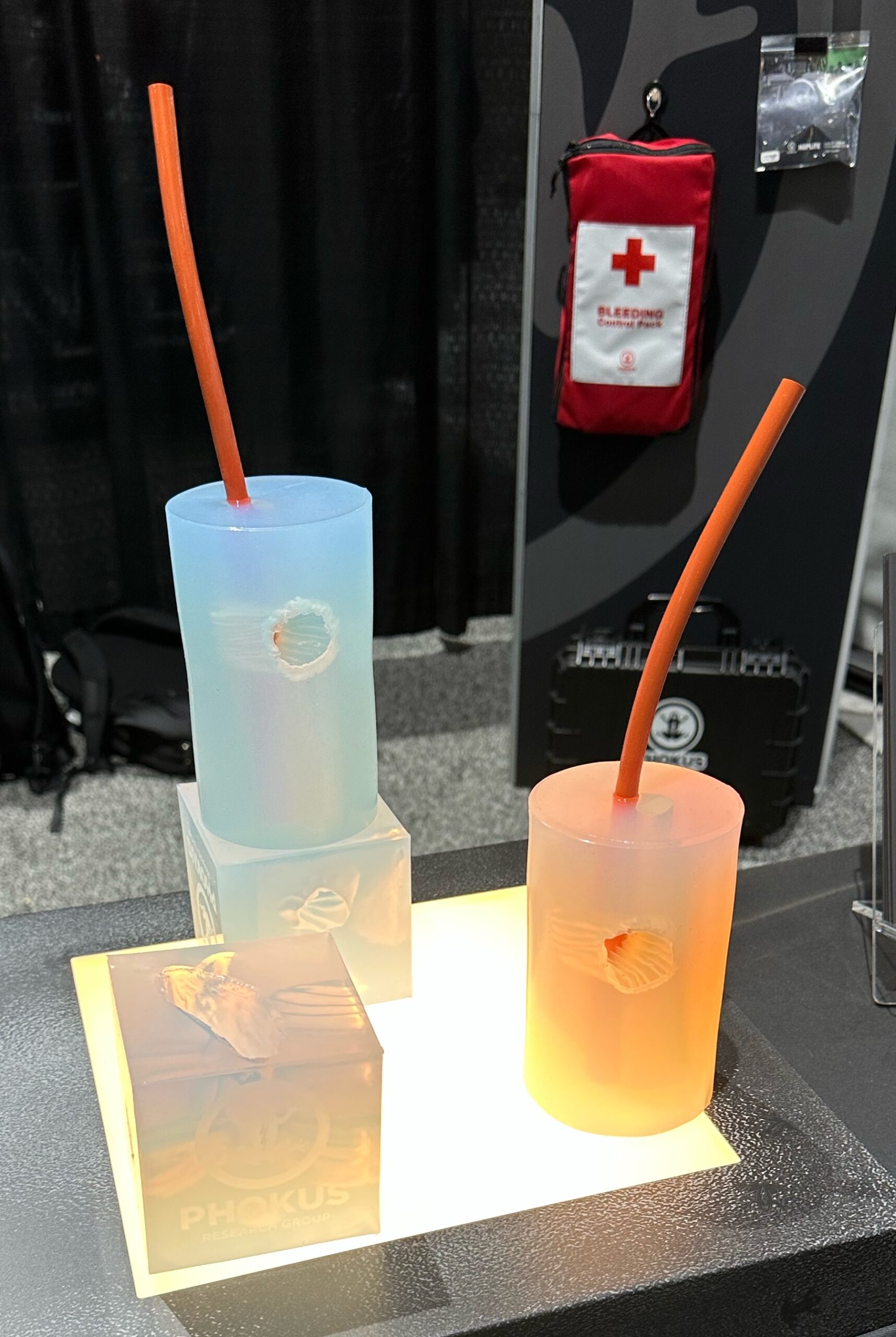
The new Wound Club+ from Phokus Research Group combines the capabilities of the Wound Club and Wound Cube+.

It offers three training wounds that can bleed and is backed by Phokus’ lifetime guarantee.

Units and agencies can procure products seen at Warrior West by contacting ADS, Inc.

CAL FIRE: Building on the Basics

Tuesday, April 4th, 2023

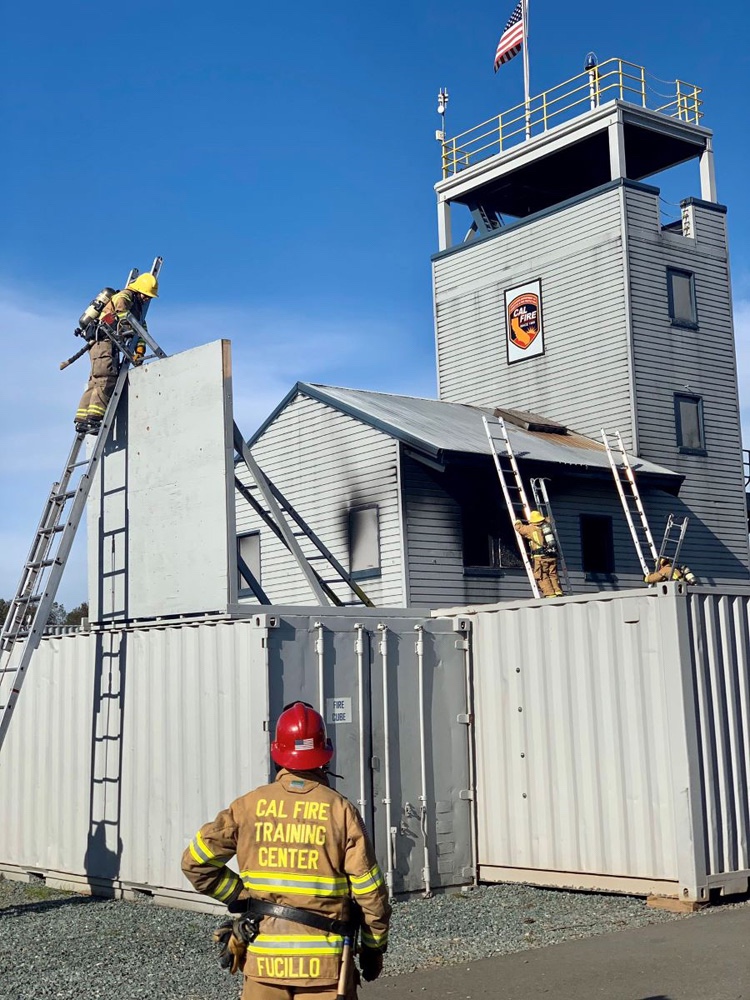
            SUN PRAIRIE, WI – Steady and deliberate. That’s the approach taken by leaders at the CAL FIRE Training Center (CFTC) these days for providing a solid foundation for their firefighters. And, for the past 22 years, the Assistant Fire Chief training tower has been a cornerstone on their drill grounds, helping those trainers with their operational instructions.

            “Our approach to training has simplified over the years,” says Battalion Chief Dave Semple with the Training Center for CAL FIRE in Ione, Calif. “We’re focusing on ‘back to basics’ that builds a strong base for our employees.”

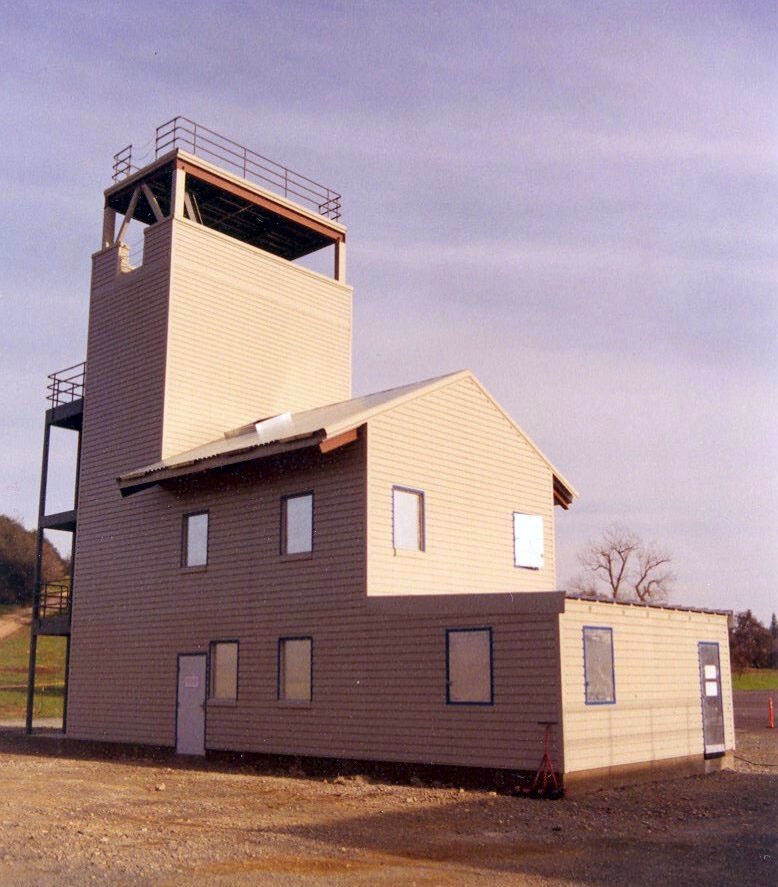
             Located in Amador County, 35 miles southeast of Sacramento, the Training Center sits on 420 acres and was established in 1967. Year-round training on structural firefighting based on California State Fire Training curriculum, emergency response, wildland command and control are all provided at the Training Center. The all-steel training tower from Fire Facilities is used to complement many areas of the training.

            “The Assistant Fire Chief tower is used every month — and sometimes every week — in some capacity,” according to Semple. “During the past two decades it’s easy to calculate that several thousand firefighters have trained on the tower.”

Quality Training for All

            At CFTC, Semple and Battalion Chief Brett Fucillo work for Division Chief of Fire Training Rob Wheatley. Together they create training scenarios that challenge firefighters and prepare them for what they’ll experience in their jobs throughout California.

            “CAL FIRE provides extensive wildfire training to our employees,” says Semple. “However, most of the training involving the tower focuses on structural firefighting. We conduct search drills, deploy fire hoses, and raise ladders against the exterior of the tower. The annex section of the tower is used for burning. A big plus is that the tower has enough space to provide quality training to large group numbers.”

            The Assistant Fire Chief has three separate areas: a four-story fire training tower, a residential section and a burn room annex. Multiple training scenarios are possible including rappelling, roof ventilation, high-angle rescue operations, forcible entry without penetrations and live fire burn scenarios.

            “Overall, the Fire Facilities tower has held up well since its installation in 2001,” says Semple. “It wasn’t foreseen that the tower would experience this much use in 20+ years at CFTC. It’s currently in the process of some repairs, due to the high amount of use it’s been exposed to over time. However, we continue to use a large portion of the facility even during repairs. This tower is part of the backbone of our training program. We rely on it as a key element of training for our program participants.”

            Fire Facilities, Inc. (FFI), founded in 1989 and an ISFSI corporate sponsor, manufactures a full line of steel fire training structures engineered to withstand real-life firefighting conditions. From mobile units to burn rooms to high-rise towers, FFI training models are available in a multitude of configurations. Our parent company, Trachte Building Systems, is one of the largest and oldest manufacturers of steel self-storage systems in the industry.  For more information, visit www.firefacilities.com or call 800-929-3726.

1st Marine Division Enhances Lethality and Versatility with Innovative Infantry Training

Thursday, March 30th, 2023

CAMP PENDLETON, Calif. —

1st Marine Division units conducted a series of training events in recent weeks to increase small unit lethality and versatility, with an emphasis on innovative weapon systems, warfighting concepts, and training programs.

1st Marine Division Marines and Sailors took part in a week-long multipurpose anti-armor anti-personnel weapon system program, as well as a multi-day Designated Marksman range. Both training events provided experience and familiarity with weapon systems and tactics necessary to compete in hostile, fluid, and challenging environments.

“The 1st Marine Division exists to fight and win our Nation’s battles,” emphasized Major General Benjamin Watson, the commanding general of the 1st Marine Division, in his Commanding General’s Intent. “We must be brilliant in the basics of combined arms warfighting; techniques that have long made us feared by our enemies.”

 “…Marines assigned as Designated Marksmen have learned the necessary skills, demonstrated confidence and sustained proficiency in the M110 and MK13 in order to provide precision fires in support of rifle company operations.”

 Gunner Tyler Maisey, the senior weapons and tactics expert for 2nd Battalion

General Watson took command of the 20,000 Marines and Sailors in the historic Blue Diamond last summer. Immediately, the commanding general emphasized the division’s ability to provide the most lethal and ready forces capable to compete in any environment, at any time. Division units consistently train with the most modern weapons, tactics, and techniques.

Marines and Sailors with the 5th Marine Regiment took part in a week-long MAAWS training event, first learning about the capabilities of the weapon system, and then taking their instruction to the field to test and examine its destructive strength. The MAAWS, also known as the Carl Gustaf, provides infantry squads the ability to neutralize and even destroy enemy armor and light armor assets at greater distances compared to the SMAW, LAW, and AT-4. The MAAWS also allows combat engineer units to breach obstacles and establish footholds in challenging objectives.

“The MAAWs recoilless rifle and family of ammo provide the service a capability that makes efficient what multiple weapon systems currently do. The ability to obscure objectives, fire HE/HEAT, illumination, and smoke missions, at ranges further than an organic rifle platoon can do currently with multiple systems is a capability enhancement,” explained 1st Marine Division’s lead weapons and tactics expert, Gunner Ray Browne. “For Designated Marksmen, DM training will ensure the capability gap in the squad is more effectively filled to employ these enhanced marksmanship skills with precision weapon systems that IBX30 allocates to the squad.”

Marines and Sailors with the 7th Marine Regiment spent multiple days out in the desert of 29 Palms learning and developing long-range precision rifle techniques and procedures. The Designated Marksman program allows sharp-shooting Marines to perform precision fire tasks in support of ground combat maneuver. The Designated Marksman training focused on the M110 and the MK13 rifles, capable of precision engagements of around 800 and 1200 meters, respectively.

“2/7 will move the long guns to the rifle company ‘arms-room’ and train 0311s to employ the precision weapon systems,” provided Gunner Tyler Maisey, the senior weapons and tactics expert for 2nd Battalion, 7th Marines. “Marines assigned as Designated Marksmen have learned the necessary skills, demonstrated confidence and sustained proficiency in the M110 and MK13 in order to provide precision fires in support of rifle company operations.”

MAAWS and Designated Marksman training are just two focus areas of the Infantry Battalion Experimentation 2030, or IBX30. One aspect of IBX30 is allowing infantry battalions, the bulk of 1st Marine Division units, to remain versatile in their capabilities through an arms-room concept. The arms-room concept allows infantry Marines to be well-trained with multiple weapon systems, instead of limiting them to one or two weapon systems at a time. Additional, ongoing training includes scout platoon integration, which will provide infantry battalions organic reconnaissance capabilities for distributed operations. The redundancy and versatility of our critical infantry community reinforce the highest levels of battlefield effectiveness and allow 1st Marine Division to provide any force or operation with significant lethality and the ability to win in any clime or place.

Capt Joseph DiPietro, 1st Marine Division

White Stag Exercise Prepares AMC Airmen for Mobility Guardian 2023

Tuesday, March 28th, 2023

JOINT BASE MCGUIRE-DIX-LAKEHURST, N.J. (AFNS) —  

The 305th Air Mobility Wing conducted the first iteration of their annual training exercise, White Stag, at Joint Base McGuire-Dix-Lakehurst, March 8-9. 

White Stag is a wing level exercise implemented as a self-evaluation, validating the wing’s Full Spectrum Readiness and ability to deploy, operate and sustain rapid global mobility in any contested environment. Additionally, White Stag serves as a training opportunity for the 305th Air Mobility Wing to prepare for Air Mobility Command’s largest exercise, Mobility Guardian 2023, later this year.  

“We’re starting to push Airmen past their comfort zones with these training exercises and change their mindsets,” said Lt. Col. James Salazar, 305th AMW inspector general. “Future conflicts won’t be the same as anything we’ve previously been involved in, it’s going to be fast paced with less support from a main operating base.” 

With rapid mobilization generation as a foremost priority, White Stag began with an engine running crew change, demonstrating how quickly and efficiently aircrews can swap roles while the aircraft is running, minimizing the possibility of maintenance issues. ERCC’s ensure units are always ready to go with presenting a consistent and sustainable mobility force, aligning mission priorities with the new Air Force Force Generation model.

“Once a KC-46A Pegasus tanker has landed, maintenance has several hours to service and fuel the aircraft,” said Maj. Gage Owens, 305th AMW chief of wing exercises. “With an ERCC, we plan for approximately 45 minutes from landing, to crew swaps, and takeoff, which mitigates the time the aircraft is on the ground.”

During White Stag, crews were also able to implement the use of Agile Combat Employment concepts which allowed operations to shift from centralized physical infrastructure to a network of smaller, dispersed locations that can complicate adversarial planning and execution, providing increased flexibility, sustainability and defense options for joint force commanders.

“We’ve taken the classic elements of a readiness exercise and enhanced it with high-end training that we don’t always incorporate,” Salazar said. “For example, the wet-wing defuel is a newer capability that we’ve been working utilize across the C-17 fleet. We’re incorporating some of the ACE concepts and simulating what it would be like if our crews were required to operate in an austere environment, with minimal resources, personnel and support.” 

These elements enable allied forces to operate with varying levels of capacity and support to generate lethal combat capability. 

“This iteration of White Stag focused on minimized ground times and building flexibility,” Owens said. “Dynamic re-taskings were a big factor for this exercise. We had wing inspection team members flying on the airplanes and they would toss inject cards to the crew that would divert the aircrews, forcing them to replan at the last minute to accomplish the mission.” 

The use of inject cards was to simulate real-life situations air crews might face during conflict that may require crews to act with little to no planning. 

The integration of complex operational capabilities like ERCC and the wet-wing defueling enabled the teams at JBMDL to build their proficiency, knowledge and comfort while operating in high threat environments. It also allowed the 305th AMW to incorporate the 87th Air Base Wing, enabling Total Force integration with plans to expand those relationships across the Department of Defense. 

“This exercise has helped with facilitating and building a lot of key relationships,” Owens said. “With upcoming exercises, we’ll continue to build relations with our joint partners like the 87th ABW, Navy, Marine Aircraft Group 49, the 108th Wing, and the National Guard units out in Atlantic City. We’ll continue to capitalize on Joint Force integration as we increase the scope and scale of these exercises.” 

Total Force mobility Airmen are the backbone of ACE, and the AFFORGEN model provides consistent training opportunities for the 305th AMW to develop and employ mobility Airmen to generate-fly-deliver worldwide. 

Exercises like White Stag further empowers airmen to employ ACE concepts, deter the pacing challenge and project critical support to the Joint Force from the DoD’s only tri-service installation.

By Senior Airman Sergio Avalos and Senior Airman Joseph Morales

Joint Base McGuire-Dix-Lakehurst Public Affairs

Team One Network Promotes Robert Cole to Director of Training

Thursday, March 23rd, 2023

Fredericksburg, VA, March 13, 2023 – Team One Network announced that Robert Cole has been promoted to Director of Training. Robert has been with Team One Network since 2015 and has served as the Training Coordinator since August 2018. “Robert has been a dedicated and valuable member of the team working as both Instructor and Training Coordinator providing cutting edge training programs,” said John T. Meyer Jr., President of Team One Network. 

Robert has instructed and helped develop multiple Team One Network courses, to include:  Shoot House Instructor, Low Light/ Laser Instructor, Pistol Mounted Optics Instructor, Mechanical Breaching Instructor, Tactical Ballistic Shield Instructor, & Counter Ambush Instructor. Robert is also a certified armorer for Benelli, CZ, Springfield Armory and Smith & Wesson firearms.

Before Robert’s time at Team One Network, he served in the United States Marine Corps for 10 years. He was an infantry Sergeant and deployed to multiple countries including Afghanistan, Japan, Philippines, Thailand, Guam, and Australia. He finished his USMC career serving as the Assistant Operations Chief for the Regimental Operations office aboard The Basic School at MCB Quantico Virginia training new Marine Corps officers. Robert oversaw logistical support for training. His personal awards include the Purple Heart, Navy and Marine Corps Commendation Medal with combat distinguishing device, and the Navy and Marine Corps Achievement Medal 2nd award.

We look forward to an exciting future of Robert developing and expanding the training division of Team One Network.

www.teamonenetwork.com

New Training Course Offers Medics, Nurses Hands-on Experience in Austere Environment

Monday, March 13th, 2023

JOINT BASE SAN ANTONIO-FORT SAM HOUSTON, Texas (AFNS) —  

Army and Air Force personnel from Brooke Army Medical Center’s Department of Emergency Medicine recently established a simulation training platform to increase readiness and meet Joint Commission requirements for staff development and training.

The Tactical Trauma Reaction and Evacuation Crossover Course, or TTREX, is designed to test and validate Individual Critical Task Lists and the Comprehensive Medical Readiness Program for military medical personnel.

“The TTREX course was developed to familiarize military and civilian personnel with critical trauma skills relevant to both the hospital and the austere environment and to maintain mission readiness,” said Army 1st Lt. Jackson Goddard, registered nurse.

The eight-hour course at the Torch Training Site at Joint Base San Antonio-Lackland incorporates battlefield trauma simulations, evacuation procedures, and trauma care in a Role 2 environment. Role 2, also known as forward resuscitative care, has the capability to manage more advanced trauma patients and continue more advanced resuscitative measures in an austere environment such as a combat support hospital.

“We have combined the point of injury with the Role 2 environment,” said Air Force 1st Lt. Marissa Vasek, registered nurse. “Our goal is to get people to understand the deployment setting and the challenges they might face while deployed including limitations with supplies, manpower or experience.”

Additionally, participants experience what it’s like to be on a C-130 Hercules military transport aircraft during a critical care air transport mission to see how a patient is transported to a higher echelon of care.

Army Spc. Wade Wolf, a combat medic, said he feels the training is beneficial because participants get to see how a patient moves from the point of injury to a stateside hospital.

“We’ve had more than 40 participants over the two-day exercise,” Wolf said. “I would say about half of them have never been deployed.”

Emergency nurse Army Capt. Megan Gross agreed.

“This has been one of my favorite courses I have attended in my 14 years in the military,” Gross said. “The course allows nurses and medics to test their trauma knowledge in a tactical environment and provides a realistic peek into the deployed setting. The teamwork and camaraderie among the attendees and the instructors are unique and foster a real esprit de corps.

“My favorite part was the Role 2 trauma lane and having the opportunity to work in a small team to assess, perform interventions, and prepare our patient for transport,” she added. “The autonomy aspect provided a unique learning opportunity we often do not get in the hospital setting. The instructors provided a learning environment that was challenging but collaborative at the same time. I loved it!”

The TTREX course will be offered quarterly and is open to service members, civilians, and contractors.

“The course is geared to medics and nurses, but it’s open to anyone who’s willing to learn or just wants to observe,” Vasek said. “We have even had a few physicians come through.”

“A part of creating this exercise was to help military nurses and medics gain the confidence they need to perform under high stress while downrange,” added Army Capt. Brianna Barkley, a registered nurse who helped create the course. “We have seen camaraderie built amongst BAMC teammates while also checking off required readiness skills. What made our exercise successful is the fact that it is a learning environment. Participants feel comfortable making mistakes and learning from those mistakes to build confidence during deployments.”

“This training is invaluable because it allows service members to maintain combat readiness,” Gross said. “We have Individual Critical Task Lists, which are required training tasks for our jobs. This training opportunity allowed me to complete all of my ICTLS for the year, which maintains my individual combat readiness.”

“I was so impressed with this course as a participant that I volunteered to become an instructor and look forward to being a part of the next TTREX course,” she added.

By Lori Newman, Brooke Army Medical Center Public Affairs

Army photos by Jason W. Edwards