SIG SAUER - Never Settle

Archive for the ‘UAS’ Category

N.D. ANG’S 178TH ATKS Named RPA Squadron of the Year

Monday, December 19th, 2022

SAN DIEGO – 16 December 2022 – The North Dakota Air National Guard’s 178th Attack Squadron (ATKS) was recognized as the General Atomics Remotely Piloted Aircraft Squadron of the Year at an event hosted by the Mitchell Institute on Dec. 9, 2022, at the Fargo Air Museum in Fargo, N.D. The award is given annually to the Squadron that distinguishes itself through its deployment of Remotely Piloted Aircraft (RPA) in meritorious service. The 178th was selected from a field of more than 30 RPA squadrons and it’s the first time an ANG Squadron has received the award.

In 2021, the 178th Attack Squadron continued to solidify their position as the trail-blazing MQ-9 unit by leading in innovation, capabilities, and modernization. The “Happy Hooligans” have completed their unprecedented 15th straight year of 24/7/365 combat operations while supporting both U.S. Central Command and U.S. Africa Command. They have distinguished themselves in current combat operations while advocating for MQ-9A relevancy in strategic competition.

Additionally, the Hooligans have accelerated change across the Joint Force via innovative Live, Virtual, Constructive (LVC) and live-fly MQ-9 training. Twenty-one supported units from each of the four services, operating in three different Combatant Commands, have partnered with the 178th to advance readiness and improve RPA employment. Furthermore, the Happy Hooligans are the enterprise leader as the producers of the most Live-fly Continuation Training. They have powered MQ-9 training and readiness programs for 10 different Operations Groups in the Air National Guard, Air Combat Command, and Air Force Special Operations Command.

“The 178th ATKS has made a significant impact on multiple areas of responsibility over the last few years, and especially this year,” said GA-ASI President David R. Alexander. “We’re proud of the 178th’s dedication and passion to improving MQ-9 operations and showcasing the MQ-9’s multi-role capabilities.”

The Happy Hooligan’s accomplishments, as they paved the way for future RPA capability, distinctly identify them as the U.S. Air Force’s most outstanding RPA squadron and demonstrate the great power of this nation with cutting-edge combat capabilities. The 178th Attack Squadron is a unit of the North Dakota ANG’s 119th Wing stationed at the Fargo, Hector IAP, N.D.

Drone Defence: Austrian Armed Forces and Rheinmetall Successfully Test Anti-Small Drone System C-sUAS – Lease Contract Extended

Friday, December 16th, 2022

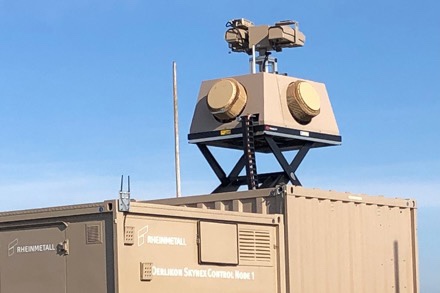
The Austrian Armed Forces and Rheinmetall have successfully tested the leased Counter-small Unmanned Aerial System (C-sUAS), which had been delivered in May 2022, as part of a realistic exercise. Rheinmetall’s deployable C-sUAS system is currently being evaluated by the Austrian Armed Forces alongside other systems as part of the Countering Emerging Air Threats (C-EAT) project. Following the successful tests, the Austrian Armed Forces have now extended the lease contract by seven months.

After the training on the system had been completed, the operational capability of the Rheinmetall C-sUAS system was now to be tested as intensively as possible under real conditions. For this purpose, a sophisticated test programme was developed, which included both test and realistic attack flights by small drones. The aim was to detect and clearly verify these drones as early as possible using a broadly based sensor mix. A possible fight against these enemy drones was demonstrated by means of jammers. A special highlight was the introduction of the target queuing device by tablet from the higher-level command and control system to the jammer operator.

The large number of drones used – from commercially available drones to models with jet propulsion to self-built drones controlled according to the LTE mobile radio standard – clearly showed that modern drone defence can only be efficiently managed in a network.

“A successful and intensive test week provided a multitude of important insights and experiences,” said Matthias Diem, Vice President Counter Drones and Aviation Markets. “From our point of view, the exercise was an instructive example of how innovation-oriented armed forces, together with industry, can gain the necessary insights to develop and adapt tomorrow’s technologies for possible new threats from the air at an early stage. A big thank you goes to the Air Force and Anti-Aircraft Defence School in Langenlebarn for the great organisation and execution of this forward-looking exercise.”

The Austrian armed forces had selected Rheinmetall’s C-sUAS system and loaned it out for a six-month period of testing and evaluation. In May 2022 Rheinmetall Air Defence AG shipped the latest version of its rapidly deployable counter-small unmanned aerial system (C-sUAS) to the Austrian military. This lease contract has now been extended.

The system comprises two shelter units, enabling rapid deployment on standard trailers and trucks. The sensor unit elevates automatically and can be equipped with various detection technologies, including X-band and S-band radar, passive emitter locator, ADS-B receiver and others if required. An integrated, stabilized 360° electro-optical PTZ sensor provides state-of-the-art verification and tracking capabilities.

Based on the tried-and-tested Oerlikon Skymaster command and control system, the separate C2 shelter is a fully fledged operator workstation. Skymaster delivers an outstanding level of sensor data fusion and multiple operational functions, including scalability to integrated target cueing devices and effectors for different countermeasures as well as links to higher echelons.

DroneShield and XRG Partner for Extended Reality Training

Friday, December 2nd, 2022

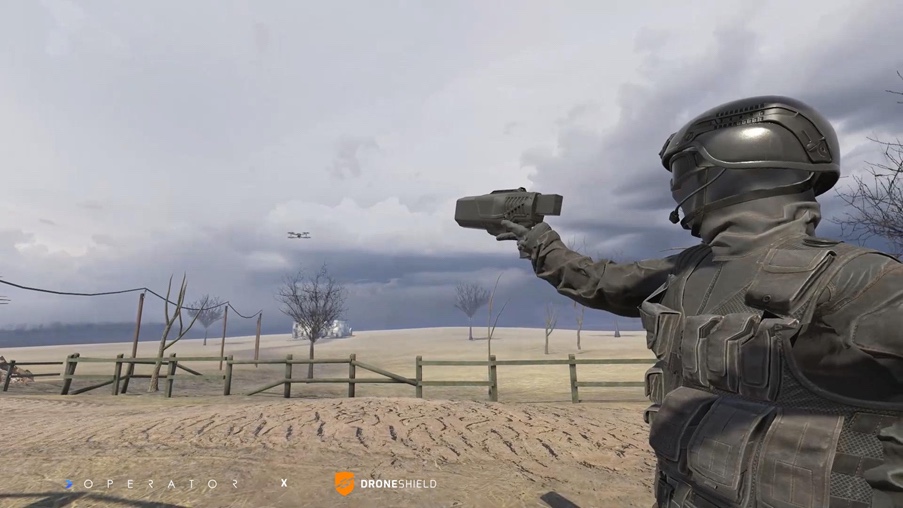
DroneShield is pleased to advise it has teamed with xReality Group Ltd (ASX:XRG) (XRG) to provide eXtended Reality (XR) based counterdrone/C-UAS training solutions.
 
XR includes Virtual Reality (VR), Augmented Reality (AR) and Mixed Reality (MR). It combines physical and digital simulation across the enterprise, defence and consumer markets.

The XR category for military and law enforcement is growing rapidly with the market predicted to grow US$16bn in 2027

XRG’s subsidiary “Operator Tactical Solutions” develops immersive planning, rehearsal and training solutions for the military and law enforcement markets, across local and international markets. XRG is led by Wayne Jones, who prior to establishing XRG was a highly decorated Patrol Commander with the Special Air Service Regiment. Additional information about XRG can be found at xrgroup.com.au.

As part of the launch, XRG will be promoting the training solution at the I/ITSEC 2022 Exhibition in Orlando Florida, taking place November 28th – December 2nd. Additional information about the event can be found at www.iitsec.org.

A video showing some of the highlights of the XR-based counter-UAS solutions can be seen here: 

DroneShield CEO, Oleg Vornik, commented: “As the counterdrone industry continues to rapidly grow and develop, evidenced by significant use of small drones by both side in the Ukraine war, there is an emergent need for counterdrone tactics and training packages for the system operators. As the global leader in the C-UAS sector, DroneShield is well placed to provide the training.

“We are excited to partner with XRG, who have deep experience in defence and law enforcement eXtended Reality training, and work in partnership with our customers to tailor design packages to meet their operational requirements.”

XRG CEO, Wayne Jones, added: “Today’s battlefield is evolving quickly making it difficult for front line defenders to be prepared for all situations. Operator’s solutions are enabling defence and law enforcement to rapidly train for these new situations in realistic, virtual environments. We are pleased to be able to add cutting-edge XR-based Counter Drone training programs to Operator’s product offering, in partnership with the C-UAS market leader, DroneShield.”

US Army Completes Fielding of Short Range Reconnaissance System

Friday, December 2nd, 2022

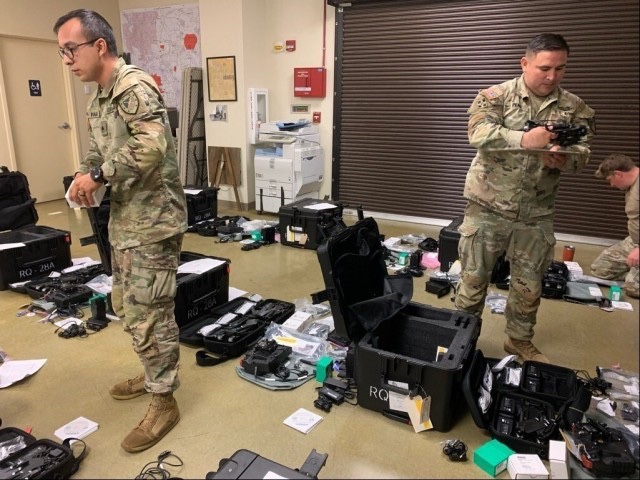
REDSTONE ARSENAL, Ala. — The Soldier Unmanned Aircraft Systems (UAS) Product Office successfully completed fielding of the RQ-28A, Short Range Reconnaissance (SRR) system to the 3rd Battalion, 75th Ranger Regiment at Fort Benning, GA, in early November.

The Skydio RQ-28A is the Army’s first program of record quadcopter. It is a new and disruptive organic capability that is fielded to the platoon echelon in the form of a portable rucksack Vertical Take Off and Lift, small, unmanned aircraft. It provides Warfighters with enhanced situational awareness and a standoff capability in urban and complex terrain, enabling accurate reconnaissance and surveillance of targets of interest. It can be used to conduct surveillance during routine combat operations.

During the new equipment fielding and new equipment training, UAS project office leaders, along with crucial personnel from the SUAS offices, traveled to Fort Benning to participate in the final day of training with the Soldiers and engage critical stakeholders.

“It’s very intuitive with great obstacle avoidance, additionally the thermal is better than expected.” Said Staff Sgt. Adam McDevitt the UAS section platoon sergeant. “I can’t wait to use this on full mission profiles to see what it can really do.”

“The SRR RQ-28A capability will provide game-changing technology to Army platoons, enhancing both Soldier lethality and survivability” said Carson L. Wakefield, product lead for Soldier Unmanned Aircraft Systems. “It is a new capability for the Army, and I am so proud of my team for delivering an innovative solution in just under three years from prototype to delivery.”

The quadcopter system weighs less than five pounds, can be carried and stowed in a transport case and is rucksack portable. It has vertical take-off and landing, hover, perch and stare capabilities. The system is hand launched and capable of being recovered within confined areas.

The Soldier UAS Product Office is scheduled to field 480 systems across the Army in 2023 with a total of 1,083 delivered during low-rate initial production systems through the second quarter of F25.

The RQ-28A is the first tranche of the SRR program and delivers a much-needed capability to Soldiers. Tranche 2 will include a prototyping effort and will include threshold requirements and multiple performance objectives.

By David Hylton

MWW 22 – BLADE 55

Monday, November 14th, 2022

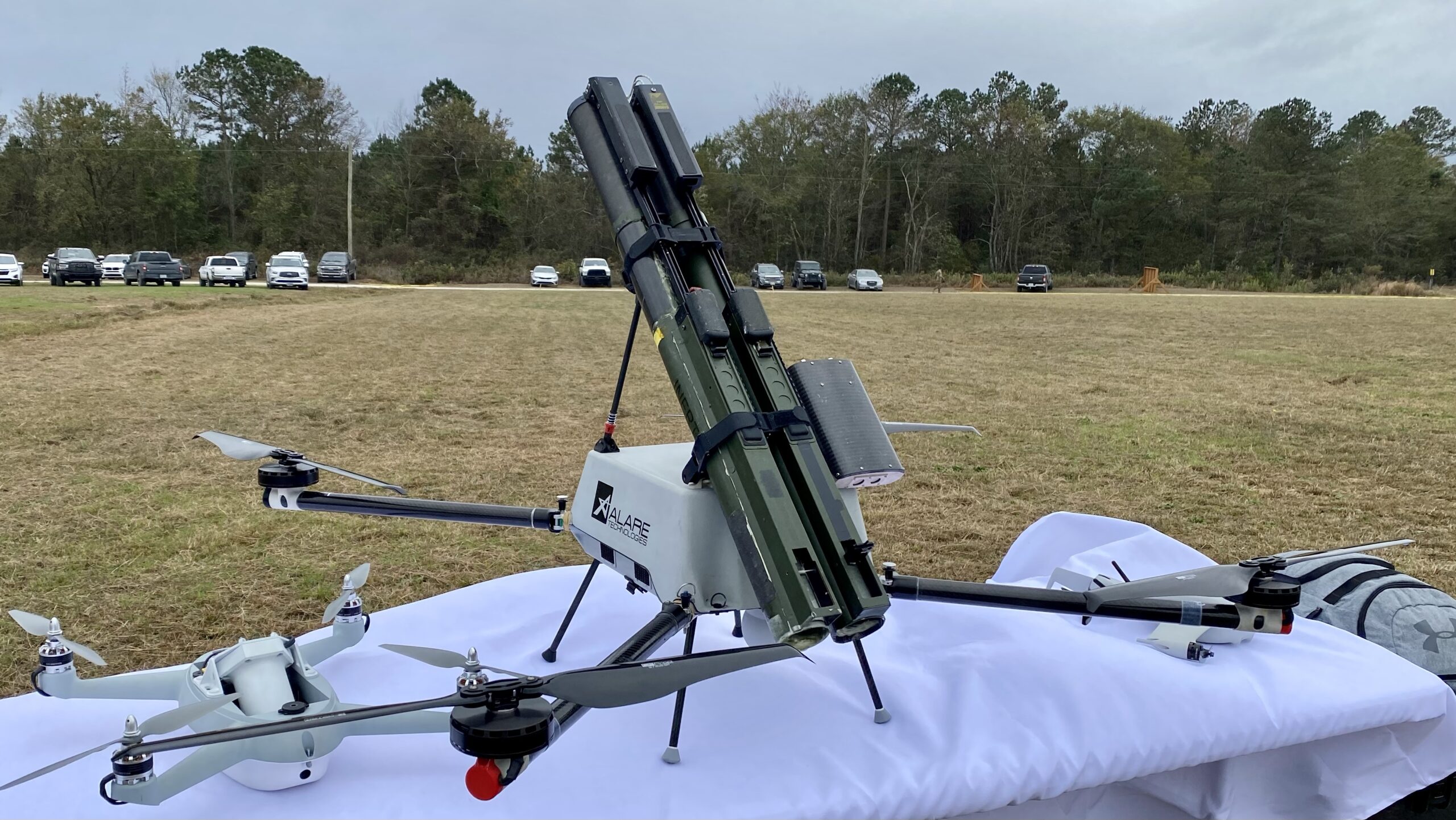
The Ballistic Loitering Attack DronE (BLADE) 55 is a portable Group 2 VTOL sUAS. It can provide ISR via NextVision DragonEye 2 EO/IR camera, last mile Resupply up to 20 lbs, and Precision Strike via two M72 LAWs.

The weapon system is currently at TRL 7 and was developed by Alare Tech vi an AFRL Phase 2 SBIR.

DroneShield Releases 7th Edition of C-UAS Factbook

Friday, November 11th, 2022

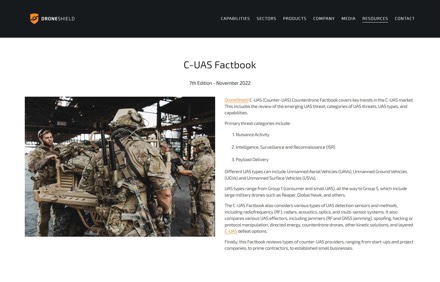
DroneShield is pleased to release the 7th Edition of the C-UAS Factbook. The Factbook provides information on key trends in the C-UAS market, the emerging UAS threat, C-UAS Solutions, and much more.

The C-UAS Factbook can be viewed here.

MWW 22 – CACI Mono Backpackable Electronic Attack Module 3.0

Thursday, November 10th, 2022

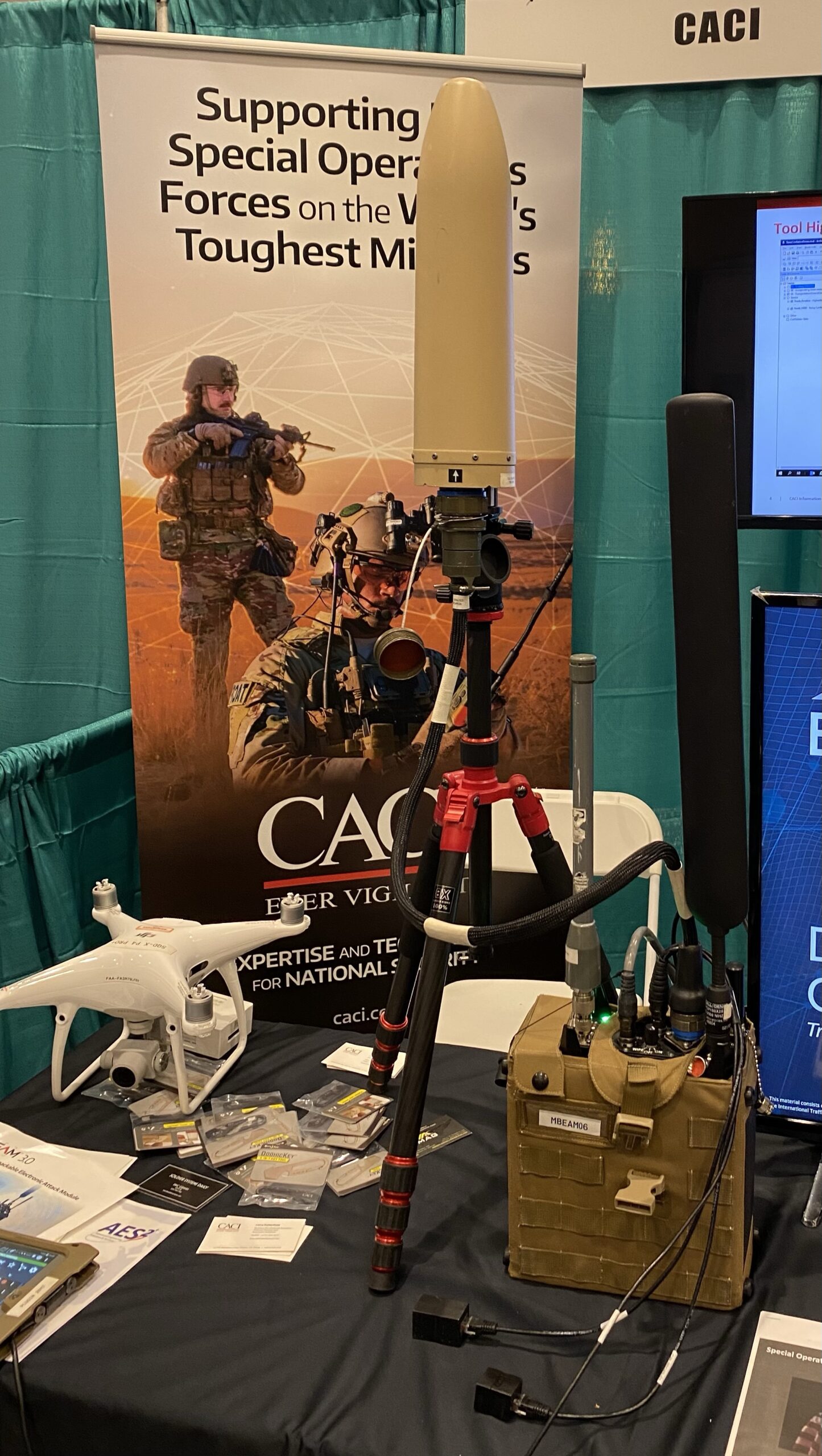
Mono Backpackable Electronic Attack Module 3.0 from CACI is capable of detecting, identifying (via library), locating (including direction finding) and defeating (through various RF means) most small Unmanned Aerial Systems. The frequency range is 30 MHz to 6 GHz.

Not only does it look for UAS but also associated signals such as cellular comms, range extenders, BlueTooth, PTT comms, WiFi, Mode-S/ADS-B and digital as well as analog video.

The system can be used independently or networked with other BEAMs in a self-forming network, with a single operator to increase range.

BEAM integrates with TAK and has been integrated with other C-UAS systems.

German Armed Forces Conduct First Operational Tests of High-Energy Laser Weapon Against Drones

Thursday, November 3rd, 2022

It was a big step in the direction of fully operational laser weapons. For the time ever, the German Armed Forces fired a shipboard laser weapon. On August 30th 2022, the German frigate Sachsen successfully engaged drones at short and very short range in the Baltic Sea near Putlos Major Training Area. The laser weapon demonstrator was developed by the High-Energy Laser Naval Demonstrator working committee (“ARGE”), consisting of MBDA Deutschland GmbH and Rheinmetall Waffe Munition GmbH.
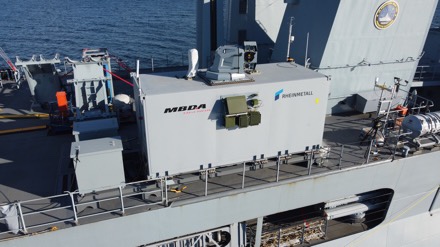
Future high-energy laser (HEL) weapon systems for the Navy will be especially useful in defending against drones and drone swarms as well as engaging attacking speed boats at close and very close range. But the system can also be designed for greater output, enabling it to destroy guided missiles and mortar rounds.

The joint integration and test phase of the naval demonstrator started in November 2021, which the ARGE integration team concluded with a successful factory acceptance test at Rheinmetall’s Unterlüß proving ground. The demonstrator was then installed onboard the frigate Sachsen in Kiel. In July 2022 the first test campaign took place in Eckernförde Bay near the Bundeswehr’s Technical Centre for Ships and Naval Weapons, Marine Technology and Research, WTD 71, in Surendorf. During the trials, the capabilities of various sensors, including the electro-optical sensor suite from the ARGE and the radar, were verified. In addition, the interplay between all the components and procedures in the entire operational sequence from target acquisition to engagement was put to the test. The trials included multiple highly realistic engagement scenarios. The test planning and the provision of various types of targets on land, at sea or from the air were carried out and organised by the Federal Office of Bundeswehr Equipment, Information Technology and In-Service Support (BAAINBw). The test management was carried out by WTD 71.

Daniel Gruber, naval demonstrator project manager at MBDA Deutschland, and Dr. Markus Jung, in charge of laser weapon development at Rheinmetall Waffe Munition GmbH, were on hand to observe the test campaign with the frigate. Looking back on the integration and test phase, they drew a positive conclusion.

For everyone involved, the historic live fire test from a German Navy warship was a special moment. The team succeeded in proving the demonstrator’s capabilities in full. “Solid teamwork between the two ARGE partners played a key role in helping us integrate a fully functional, high-performance demonstrator onboard the frigate”, reports Gruber. “Close cooperation with the command team of the Sachsen enabled direct communication with the future user. This way, ideas from the Navy could be directly incorporated or implemented during subsequent development.”

Dr Thomas Baumgärtel, project manager for the naval demonstrator at Rheinmetall Waffe und Munition GmbH, was also satisfied with the outcome: “The principal components of the demonstrator are truly high tech. This is the result of long years of research at both the participating companies. Many of the demonstrator’s system components were developed specially for the project and combined in this form for the first time. Moreover, given the extremely short integration phase for a system of this complexity, we’re very proud of the results achieved thus far and of how well the trials went. The impressive performance of the HEL effectors in protecting surface combatants from short- and very-short range threats can be credited to the joint efforts of everyone involved in the project – defence industry experts, government officials, and of course the men and women of the frigate Sachsen.”

Both Doris Laarmann, head of laser activities at MBDA Deutschland, and Alexander Graf, in charge of programme management for laser weapons at Rheinmetall Waffe und Munition GmbH, emphasized how the current trials have now set the basic stage for introducing laser weapon systems and capabilities into the Bundeswehr – capabilities whose relevance is by no means restricted to the Navy. The defence industry is pressing ahead with laser systems that will help to protect troops deployed in harm’s way in multiple applications.


Testing of the high-energy laser weapon will continue until mid-2023. In subsequent test campaigns, new scenarios will challenge the demonstrator’s capabilities. Not least, the results will determine what still needs to be done on the path to a fully functional, operational laser weapon.

Effector-related tasks in the ARGE are basically evenly divided. MBDA Deutschland is taking care of target detection and target tracking, the operator console and linking the laser weapon demonstrator to the command-and-control system. Rheinmetall is responsible for the slewing system, the beam guidance, the demonstrator container as well as mechanical and electrical integration of the demonstrator onto the deck of the Sachsen, and finally for the high-energy laser source, including its periphery.