SIG SAUER - Never Settle

SCUBAPRO Sunday – Operation Magic

August 7th, 2022

If you follow history, there is a lot said about how different battles were, this group took this hill, or this guy did this. But a lot needs to be said about what goes on behind the scenes. While the United States Army Signals Intelligence Section (SIS) and the Navy Communication Special Unit worked in tandem to monitor, intercept, decode, and translate Japanese messages during World War II, Operation Magic was the cryptonym used to refer to the United States’ efforts to break Japanese military and diplomatic codes. The Office of Strategic Services received the intelligence information acquired from the transmissions and forwarded it to military headquarters (OSS). It is widely acknowledged that the capacity to interpret and understand Japanese communications was a crucial component of the Allied triumph in the Pacific.

Early in 1939, the United States began its efforts to decipher Japanese diplomatic and military communications, even before the outbreak of World War II in Europe. In 1923, a United States Navy intelligence officer got a contraband copy of the Japanese Imperial Navy Secret Operating Code from World War I. Afterward, after all of the additive code keys had been discovered, the codebook was photographed and sent to the Research Desk, arranged in red folders by the cryptologists. The simple additive code was given the name “Red” in honor of the directories in which it was initially kept.

In 1930, the Japanese updated the Red code with Blue, a more sophisticated code for high-level communications. However, because the new code was too similar to its predecessor, cryptologists in the United States could fully decrypt the new code in less than two years after its introduction. At the onset of World War II, the Japanese were still using both Red and Blue color codes for various communications purposes. Listening stations were set up all across the Pacific by the United States military intelligence to monitor ship-to-ship, command-to-fleet, and land-based communications between ships.

The Japanese acquired encryption and security assistance from Nazi Germany after World War II erupted across Europe. Since 1935, the Germans have known that U.S. intelligence is monitoring and decoding Japanese communications, but they have not instantly informed the Japanese of this fact. Later, Germany delivered a modified version of its iconic Enigma encryption machine to Japan to assist the country in securing its communications. As a result of this, American intelligence was unable to understand Japanese intercepts. The tedious job of United States cryptologists was restarted.

Cryptanalysts in the United States gave the new code the moniker Purple. Purple, used to decrypt numerous variants of the original Enigma code, was the most severe obstacle to American and British intelligence throughout World War II.

After receiving information from Polish and Swedish cryptologists, the British military intelligence cryptanalysis unit at Bletchley Park became the first in the world to decrypt the German Enigma code in 1942. They then created advanced decoding bombes and the world’s first programmable computer to aid in the deciphering of the complex Enigma cipher. By 1943, British intelligence could use information obtained through translated Enigma intercepts received in near real-time.

For years, cryptologists in the United States sought to break the Purple code by hand. However, the format of Japanese signals, always opening with the exact introductory phrase, enabled code breakers to establish the sequencing of the multi-rotor Japanese cipher machine. By 1941, code breakers in the United States had made significant headway in cracking the Purple code, and they had gained the capacity to decipher multiple lines of intercepted messages. The procedure remained sluggish, and the information obtained from Purple was frequently outdated when translated into another language.

United States military intelligence became aware of British victories against Germany’s Enigma machine and requested that their allies share code-breaking information. Top Bletchley Park cryptographers and engineers were dispatched to the United States to assist in training code breakers and constructing decoding bombes. But they were highly protective of and didn’t want anyone to know about their Enigma code-breaking activities (codenamed Operation Ultra), which involved Colossus, the Bletchley Park decoding computer, and which they were involved.

United States intelligence made significant headway against Purple in a short period, thanks to the assistance of the British. A copy of the Japanese Purple machine, created in 1939 by American cryptologist William Friedman, was used to adapt a German Enigma bombe to decode Japanese Purple, which was then used to decode the Japanese Purple machine. Even though each message’s settings had to be determined by hand, United States intelligence improved its ability to read Japanese code with greater ease and timelier by 1942, six months after the Japanese bombing of Pearl Harbor and the United States’ entry into World War II.

With the help of their vast network of listening stations in the Pacific, the United States intelligence services could intercept and decode various other sorts of communications. In conjunction with JN-25 intercepts, the Diplomatic Purple transmissions, another broken Japanese Navy code, provided critical information to the United States military command about Japanese fortifications at Midway. The intercepts from Operation Magic provided valuable input during the ensuing Battle of Midway, which helped to turn the tide of the Pacific War in the allied forces’ favor and ultimately win the war. Approximately a year later, Purple intercepts provided the United States with intelligence about a diplomatic aircraft on which Japanese General Yamamoto, the mastermind behind the Pearl Harbor assault, was scheduled to travel. The Japanese aircraft were shot down by American planes.

Operation Magic was a vital source of intelligence information in both the Pacific and European theaters of conflict during World War II. Diplomatic messages between Berlin and Tokyo, encrypted with the Enigma and Purple codes, provided British and United States intelligence with information about German defenses in France during the Second World War. This information aided leaders in their preparations for the D-Day invasion of Normandy in June 1944.

The Japanese government remained uninformed despite the fact that the United States had broken the Purple code. According to the United States government, Japanese Imperial forces continued to employ the principles decrypted by Operation Magic throughout the war and in the weeks following the Japanese surrender in 1945.

Soldier Systems Digest

August 7th, 2022

Now half-way through our second year, Soldier Systems Digest goes out every Monday. It offers some unique content not found on the site as well as a weekly wrap up of our top coverage and a handy calendar of upcoming industry events.

Subscribe here

.

You Never Know Where They’ll Show Up

August 7th, 2022

Thanks Valley Deep Mountain High

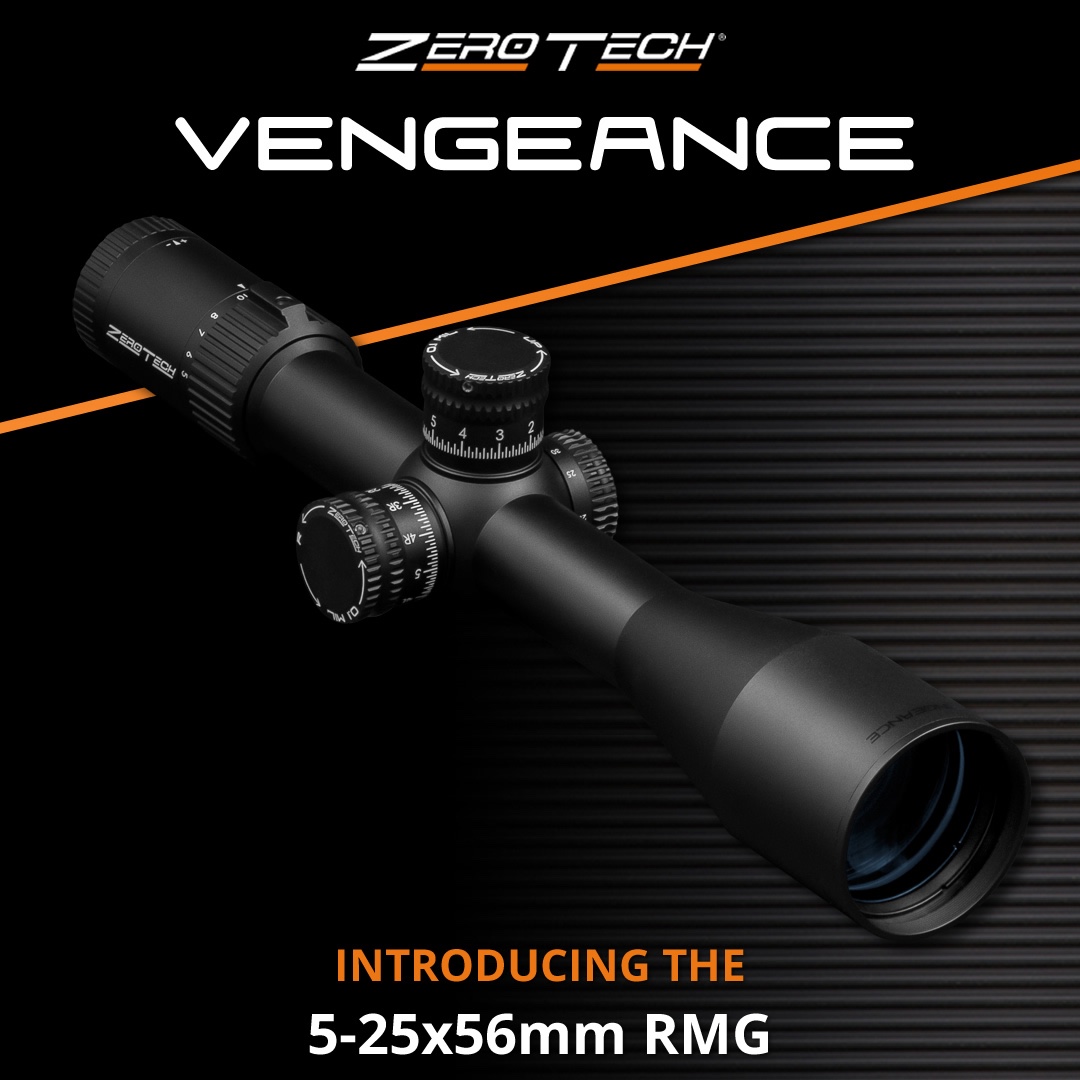
Introducing the Trace Advanced 3-18x50mm FFP with Illuminated long range hunting reticle and capped windage turret from ZeroTech

August 6th, 2022

ZeroTech Optics is pleased to announce our new Trace Advanced riflescope, born from the success of the globally popular 4.5-27x50mm, the Trace ADV 3-18×50 FFP illuminated Long Range Hunter (LRH) was designed with long range hunters and shooters in mind. Each feature is specifically designed to meet and exceed the expectations of demanding shooters to give them the ability to put rounds on target with speed, and most importantly, precision.

The ZeroTech Optics Trace Advanced 3-18x50mm FFP LRH utilizes our super robust one-piece main tube, crisp Precision Turret System with zero stop and a precise parallax adjustment that will be sure to keep you on target in even the harshest of conditions. New to the ZeroTech Trace Advanced range is the capped lower profile windage turret and is also mag ring throw lever compatible. Heavy Duty (HD) aluminum flip up covers will protect lenses from dirt and debris that can be folded flat and rotated to open in any desired orientation.

The illuminated FFP LRH reticle is unique to ZeroTech, designed in-house to meet the demands of the long-range hunting and shooters alike. Whether holding elevation and windage for high speed, precision shots or dialing your turrets for long range targets, the LRH reticle is the perfect blend of precision and speed.

• LRH FFP reticle (illuminated)

• 30mm tube

• HD alloy flip-up covers

• Precision Turret System (PTS)

• Capped windage turret

• Zero Stop

• 92% Light Transmission

• Glass etched reticle

• Weathershield lens coating

• Available in MRAD

Model : TR3185FL-IR

Backed by our industry leading AAA unconditional lifetime warranty the 3-18x50mm from ZeroTech is a scope you can count on. ZeroTech – Be Confident

www.zerotechoptics.com

High Speed Gear Releases Core Side Plate Cummerbund

August 6th, 2022

SWANSBORO, N.C. – August 5, 2022 – High Speed Gear® has released an additional accessory to the Core™ Plate Carrier. The Core™ Side Plate Cummerbund integrates with the Core™ Plate Carrier, providing four columns of MOLLE attachment area on the sides of the torso, and holds hard side plates for added protection. The cummerbund is built from lightweight durable laser-cut laminate. Webbing straps with integrated elastic allow for a comfortable, precise fit. Side-release buckles allow for quick don/doff.

The Core™ Side Plate Cummerbund features five rows and four columns of laser cut MOLLE, built from a durable Cordura® nylon laminate. Webbing straps with integrated elastic, allow for precise body fit for most users. Side plates are stored in integrated pockets which adjust to fit most plates in the 6×6” to 6×8” range.

The Core™ Side Plate Cummerbund is currently available on the High Speed Gear® website or through the HSGI network of Authorized Dealers. 

www.highspeedgear.com/40pcsp

Soldiers Share Their Experiences About WAREX 782202

August 6th, 2022

Blue skies dotted with fluffy clouds. Fields of green surrounded by groves of trees. Gentle breezes and the swaying of branches from time to time. A typical tranquil setting, suddenly interrupted by the cracks of unexpected gunfire in the distance.

Soldiers spring to action to defend the perimeters of their bases. They mount machine guns, aim their M4 carbines equipped with blank firing adapters toward the sound of danger, and shoot, move, and communicate intently during Warrior Exercise (WAREX) 782202 on Fort McCoy, Wisconsin.

WAREX serves as an annual training opportunity for many U.S. Army Reserve Soldiers. The training exercise works on practicing Army Warrior Tasks and drills, reinforcing skills that keep a Soldier ready to fight.

“Our Soldiers have learned a lot in regards to base defense,” said Spc. Melina Lambert, a transportation management coordinator with the 940th Movement Control Team. “We’ve been really focusing on improving our strategies for base defense. A lot of them are newer, so they don’t really know much about [annual training] in general, so they’re getting a sneak peek of what the Army and the Reserve is really like.”

“And now with WAREX, we’ve been able to do a lot more AWTs [Army Warrior Tasks] which has helped … with our normal Soldier tasks that we should be working on, every time we come out,” she continued. “And I feel as though it’s been a lot nicer than being in the office.”

But being in the field presents its own challenges. Beads of sweat form on foreheads, and wearing a full long-sleeved uniform with load-bearing vests and protective helmets along with a combat load introduces fatigue just from carrying a Soldier’s weapon and gear.

“The training has been a little difficult at first… especially with the heat and climate conditions,” said Army Sgt. Juan Stamps, Jr., a transportation movement coordinator with the 940th Movement Control Team. “We’ve had a lot of heat casualties, unfortunately. But we learned to adapt and keep our Soldiers hydrated and out of the sun so that we can continue our training.”

The exercise also presents opportunities to identify and strengthen weaknesses with individuals, and thus, units, as a whole.

“I feel with our Soldiers, our communication could be better, and that has been a work in progress,” Lambert reflected. “Otherwise, we’ve been doing a really good job learning a lot of information.”

“It’s all about getting new perspectives on the same thing we all do, which is train and be better. Without failure, success would never come. But I feel that this AT has definitely helped with creating a team now. And we feel a lot closer.”

“We’ve learned a lot not just as a unit but as individual Soldiers as well,” Stamps said. “We’ll come back, we’ll all talk about the things that we learned. The funny things, the bad things. We learn about each other and we help each other out when we don’t know as much as we should.”

“It’s been a fun bonding experience for the unit.”

Overall, Soldiers are coming out of WAREX with newfound experiences, thoughts, and wisdom. Through trial and error, thick and thin, even just a few weeks of working in austere environments and training as one would fight enhances the capabilities of the Soldiers of the U.S. Army. And Soldiers welcome the challenge.

“Embrace the suck,” Lambert said. “[Annual training] can be difficult and have difficult moments. But within those difficult moments you can find peace and making sure to focus on that peace is very important.”

Story by SFC Raymond Boyington, 361st Theater Public Affairs Support Element

Major Order from NATO Customer: Rheinmetall Supplying 155mm Artillery Ammunition in the Upper-Two-Digit Million-Euro Range

August 5th, 2022

Rheinmetall has proven once again its compelling expertise in the world of indirect fire systems: a NATO customer has just placed an order with the Group’s South African subsidiary Rheinmetall Denel Munition to supply 155mm ammunition from its tried-and-tested Assegai product line. Awarded in July, the contract is worth a figure in the upper-two-digit million-euro range. Delivery will take place over the next two years.

The new order encompasses the complete 155mm Assegai ammunition system, including fuses, different projectile types such as high-explosive service rounds, and Assegai artillery propelling charges. The Assegai family of artillery ammunition can be fired from any NATO STANAG-compatible artillery system, including the PzH 2000 self-propelled howitzer.

“We’re known worldwide for our long-range Assegai indirect fire technology and are pleased to be able to welcome a new partner nation to the Assegai family”, says Jan-Patrick Helmsen, managing director of Rheinmetall Denel Munition.

“As a systems maker, we work constantly to improve our cutting-edge technologies so that we can provide our customers’ soldiers with the best-possible, most reliable solution.”

Back in 2019, Rheinmetall succeeded in setting a new maximum range record in South Africa with the Assegai family and other Group products like the new Topcharge. Thanks to the Assegai system approach – from fuse to projectile to propelling charges – long ranges were attained with various artillery systems. A non-NATO 155mm artillery gun with 52 calibre lengths and a 25-litre propelling charge chamber achieved a record range of 76 kilometres.

Rheinmetall Denel Munition is already working on other future artillery technologies. For example, the rocket motor in conventional 155mm Assegai projectiles is being improved. In addition to this, a new development is on the way that will boost the maximum range to over 155 kilometres.

The Big Gear Show 22 – Misty Mountain

August 5th, 2022

Misty Mountain has been retooling their line of climbing harnesses with the Intrepid being one of them.

I’m just going to share their description:

“Quick adjust buckles make sizing leg loops easy, and the contoured padded waist belt and tapered leg loops give good comfort for single pitch rock and ice. Double layer gear loops that extend for easy clips, ergo haul loop and burly nylon shell.”

mistymountain.com/shop/climbing/climbing-harnesses/intrepid-harness