SIG SAUER - Never Settle

SCUBAPRO Sunday – Pirates

December 5th, 2021

“Been to Disney World one too many times? Have we, Captain Ron?”
During the American Revolution, George Washington, while serving as head of the Continental army during the siege of Boston in 1775, started using pirates to help attack the British where they were most vulnerable on the sea. “Finding that we were not likely to do much in the land way, I fitted out several privateers, or rather armed vessels, on behalf of the Continent. With an offer of a percentage of spoils as an inducement, the call for citizen sailors to hijack inbound supply ships tapped the same vein of self-interest and comradeship that had led the colonies to seek independence in the first place.” Although private piracy proved detrimental to the Royal Navy, it ultimately helped turn the British public against the war.

“He said gorilla. Not guerrilla. Guer, go. HUGE difference kids,” Martin Harvey

A pirate is a seaman who threatens, seizes, or destroys any ship at high seas and often even harbors at the shore. Besides, they have been involved in many other criminal activities, such as piracy and the slave trade. Without any legal rights, the pirates are doing it for personal reasons. And they were regarded as criminals in all countries because those attacks were illegal acts. Piracy was punishable by death almost everywhere during the times when it was at its height. The critical difference between them and the privateers or buccaneers, about whom we can also claim that they were some sort of pirates, but not treated like criminals, is also the legality of their acts.

The U.S. allowed about 1,700 private warships to cruise the ocean, searching for British prizes during the Revolution, when a cash-strapped Congress could not launch an efficient navy of its own at the time. These revolutionary privateers carried congressional commissions, effectively legalized pirates, which outlawed attacks on neutral ships and prisoners’ mistreatment but otherwise allowed them free rein to rob and plunder. Most privateers were motivated by greed as much as by patriotism.
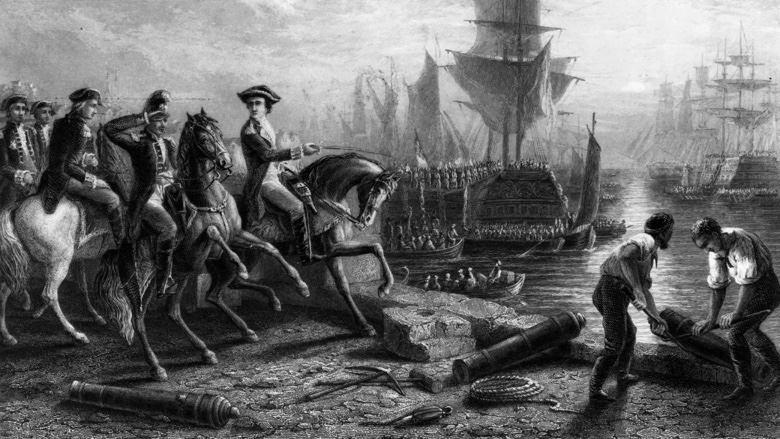
However, Washington was also outfitting a fleet of lightly armed schooners, and the debate over the navy took place in Congress. Although most members thought the idea of a navy insane, the Marine Committee was formed to oversee the production of 13 frigates.

Meanwhile, with its deep-rooted culture of fishing, shipbuilding, and ocean trade, Massachusetts considered whether to unleash its citizens by allowing state-sponsored privateering. Throughout history, governments at war have used the authority under international law to authorize independent operators to transport enemy merchant cargoes. There had already been incidents off the Massachusetts coast of scavenging looting crews abandoning ship down one side as local marauders clambered up the other side wielding clubs and cutlasses; the loot from these raids had to give them visions of bigger gains to come. To legalize privateering, the government would provide the colony with an instant navy for little to no cost.

In March of 1776, Congress followed suit and ordered that all British ships be considered “fair game for civilian warships.” After months of bitter debate on the general theme of business and patriotism, Philadelphia leaders embraced trade, going so far as to provide signed preprinted applications for commissions complete with blank spaces where names of ships, captains and owners could be inserted with minimal fuss. An early proponent of privateering, John Adams, appreciated, “I was always extremely interested in it.” Privateers had to pay monetary obligations to ensure their proper conduct under regulations. Although it is only fragmentary, incomplete information, more than 1,700 Letters of Marque were granted during the American Revolution. Approximately 800 privateers were commissioned and are frequently attributed with burning, looting, and capturing around 600 British ships.

Following congressional recognition of privateering, privateers flocked from Massachusetts, New Hampshire, and Rhode Island. Most had reputations for contraband, quirkiness, and eccentricity until this point. Most privateers just smuggled items throughout the Royal Navy’s blockade.

Weapons shortages resulted in delays in securing gunpowder, but some, like the Brown brothers, managed to solve the problem by converting their iron foundry to cannon-making. The Brown brothers were accused of charging ‘extortioners’ prices for guns for Congress’ frigates, giving preference to their vessels and advertising for crews with promises of quick fortunes, congenial captains, ample alcohol, and a thrilling opportunity to smite “the tyrant’s pilferers.”

Privateering was a natural fit for the brothers, and they immediately began cutting gun ports through the trade ships’ bulwarks and clearing holds to make room for more crewmen needed to sail the captured prizes home for auction. They were also named a member of the congressional committee that oversaw Congress’ frigates’ construction.
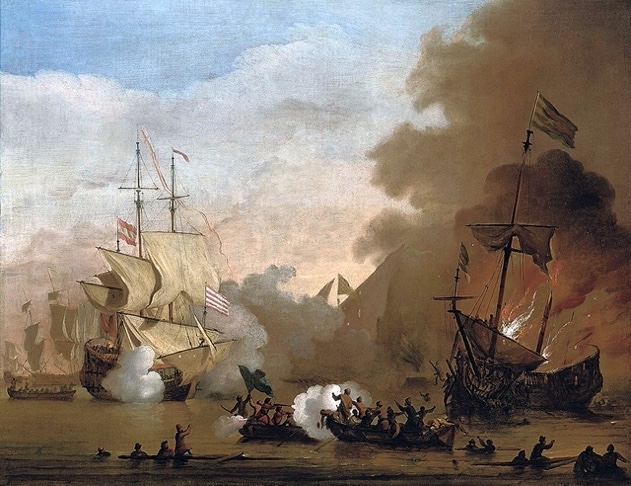
In 1777, the Ranger, an 18-gun sloop captained by a young John Paul Jones, sailed across the Atlantic with a vow “to draw off the enemy’s attention by attacking their defenseless structures,” a plan fulfilled the following spring in his daring hit-and-run raid on the British port of Whitehaven. However, Richard Grenville’s prediction that he would do infinite damage to their shipping was realized by the pirates he so loathed. While still skeptical of America’s ability to defeat them on the battlefield, the British were forced to concede one point about the rebel privateers that diplomats on the European Continent had noted in July 1776: “What is certain on the side of the Americans is their activity at sea and the ships of the Crown they are capturing.”.

In the Caribbean alone, whose position as the hub of Britain’s New World trade made it the primary hunting ground for at least a hundred New England privateers by May 1776, maritime losses reached over $2 million within a year. Royal Navy captains in the West Indies learned that a storm was approaching, but their superiors had no clue. “Time is running out,” they urged their companion, “for our journey to the English Channel.”

Before then, most American vessels carried goods such as tobacco and paper to trade for European munitions. The privateers among them were adventurous predators who might provision in French and Spanish ports but rarely sold prizes there (doing so violated those nations’ neutrality agreements with Britain), instead dispatching them back to America for appraisal and auction.
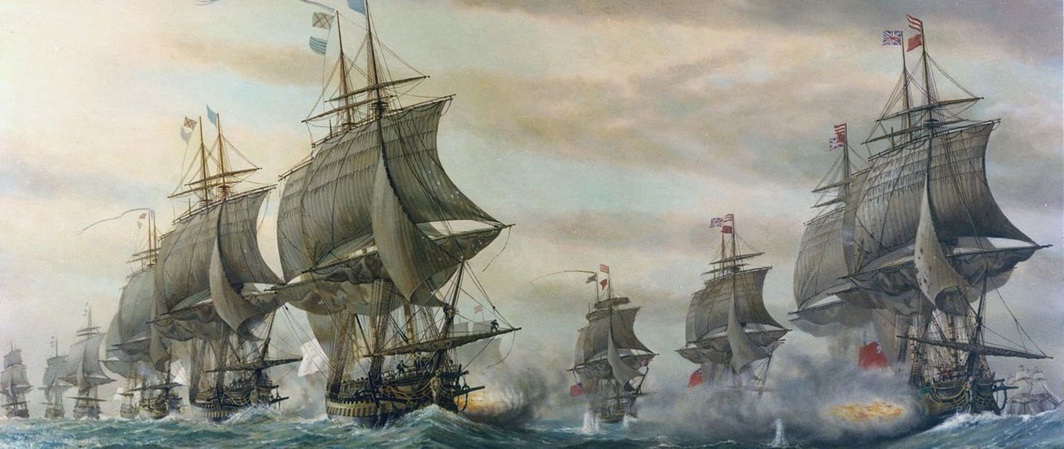
The first ship that sailed into Europe was the 16-gun Continental brig named Reprisal. Under its captain, Lambert Wickes, and carrying Benjamin Franklin to France to serve as an ambassador, the Reprisal sailed to Europe in December 1776 to join the endeavor to create an international alliance. Reprisal then set out to plunder the seas, capturing 13 merchant vessels before being chased into a French harbor by an enemy frigate.

Small privateers like Retaliation and most other ships were forced to flee before a frigate’s firepower, which could hurl a barrage of hurtling metal from up to two dozen 12-pound cannons mounted along each side. The frigate HMS Brune, for instance, destroyed a 12-gun schooner with a single broadside and significantly damaged a 9-gun schooner. In trying to treat the wounded among Volunteer’s crewmen, the boarding party found the vessel “so much damaged that we hardly had time to get them all on board before she sank.” Similarly, a Boston privateer, Speedwell, carrying 14 guns and 90 men, took a frigate’s broadside “between wind and water” (the portion of the hull usually below the waterline but exposed to the air the vessel is heeled over in the wind). The study revealed that “she was lost at sea immediately, and all her crew perished during the voyage.”

On May 17, 1777, another American captain, Gustavus Conyngham, sailed aboard Surprise with 25 men from the French port of Dunkirk and intercepted Prince of Orange, a mail steamer plying between Holland and the British port of Harwich.

In the late 1700s, British political and military leaders denounced the Revenge’s hit-and-run combat style and the many other warships now swarming European waters. For the people in Parliament, the pirates were an immoral group of terrorists to be exterminated. One report of the capture of a supply ship alleged that “rebels stripped the killed and wounded, robbed every article of clothes, bedding, and provisions belonging to the sick, burned the cutter and added every insult to the distress.” And any foe that would, “against the laws of God and Man,” fire on a vessel under a flag of truce deserved, it was declared in Parliament after one such incident, “all the horrors of rebellion,” by which was meant no mercy.

Privateers comprised two distinct ventures. A Letter of Marque permitted merchants to attack any hostile vessel they encountered along their commercial voyage. A privateer commission was issued to those who were commissioned to attack enemy merchant shipping. The primary objective was to engage a lightly armed commercial ship.

Privateers of every type of vessel were pressed into service. The largest 18th-century ship was the 600-ton, 26-gun ship Caesar out of Boston. Simultaneously, crew sizes were as little as a few men in a whaleboat and as high as 200 aboard a fully equipped privateer. Vessels designated for Privateering and Letters of Marque were launched from places up and down the east coast.
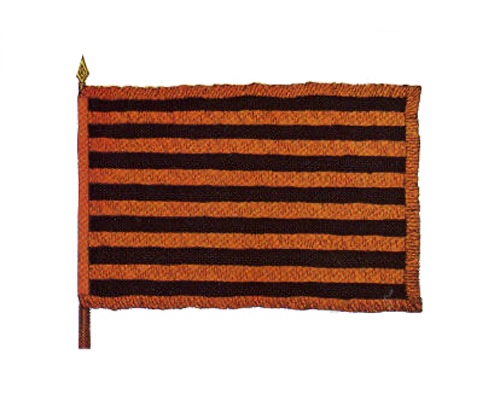
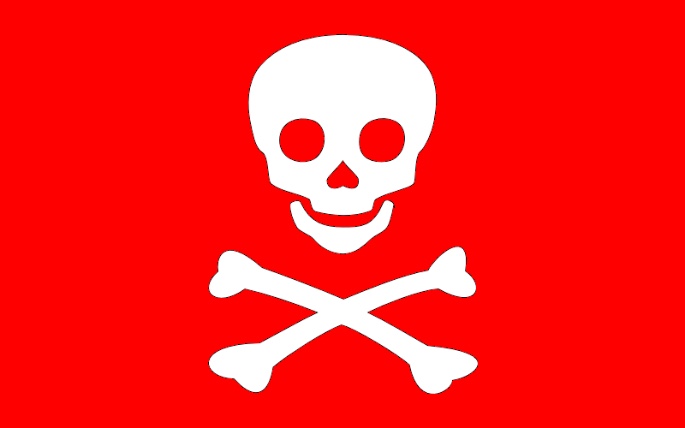
Privateers didn’t usually fly the black pirate flags; they flew a flag that looked very similar to the “Don’t tread on me flag.” Privateers that could effectively convince their opponent that the opposition was futile did the best. When that plan failed, it often resulted in extremely violent fighting with unpredictable results. Many of the pirates were captured or sank when the situation wasn’t going their way. Most did not raise the pirate flags that we know of today, but there were two basic types, Black and Red, if they did. The black was raised when you planned to raid the ship but didn’t plan on killing everyone and the Red Flag or “no quarter giving” or “the blood flag” meant they planned to kill everyone, and no mercy was to be given. It also didn’t always have to have a skull and bones. It was up to the captains what it would look like, and most pirates didn’t fly them. Those flags were used truly by pirates not necessarily by privateers.
Despite all the hardships, the crippling of British commercial shipping was highly effective, and fortunes destined to aid the founding of the new Republic were made. It is estimated that American privateers’ total economic damage was about $18 million, or about $302 million in today’s dollars during the war.

George Washington recognized early in the war that his best strategy was to “sink Britain under the disgrace and expense of war.” To survive against the formidable British military, countless small- and large-scale offensive operations needed to be conducted and maintained to keep the enemy off balance, under strain, and demoralized.

SCUBAPRO Sunday is a weekly feature focusing on maritime equipment, operations and history.

Tickets On Sale Now for the Great American Outdoor Show

December 5th, 2021

The nine days of Chaos of GAOS is returning February 5 – 13, 2022 in Harrisburg, PA.

Get your tickets here.

Be there!

How an Air Force Recruiting Commercial Became a Popular VR Game

December 5th, 2021

JOINT BASE SAN ANTONIO-RANDOLPH, Texas (AFNS) —

When Air Force Recruiting Service deployed its “Activate: Special Warfare” mobile tour in April 2021, the four-dimensional virtual reality, experience-on-wheels became the latest entry in an elite category of games.

Over the years, dozens of movies have made their way to becoming games in arcades and on portable devices. This genre includes commercial hits like Dune, a 1992-released game that is based on its namesake film.

Activate’s own story began in 2019 with the production of a commercial targeting special warfare recruitment.

“We were coming up with ideas to promote Special Warfare,” said Travis Waid, a writer and creative director for GSD&M. Waid’s employer is the Austin, Texas-based advertising agency for the U.S. Air Force. “We were also assigned with creating a new experiential tour to promote Special Warfare and it hit us. Instead of creating two separate things, what if they supported each other?”

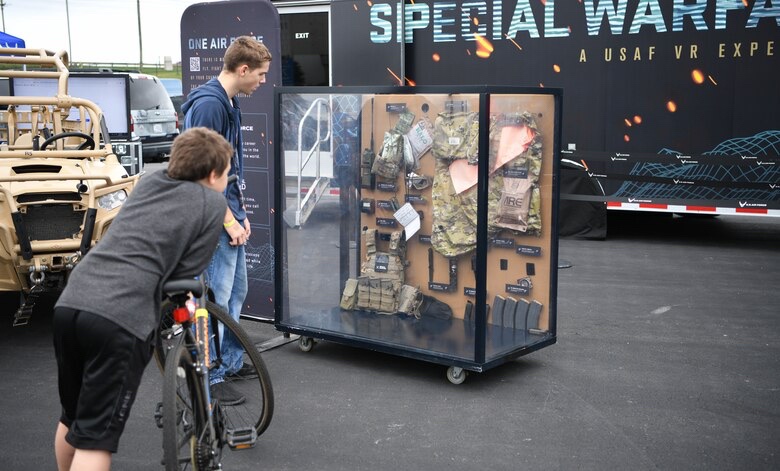
Passersby examine a display case outside of Charlotte Motor Speedway in Conway, N.C., which featured tactical equipment similar to what Special Warfare Airmen might use. The display is part of the Air Force Recruiting Service’s Activate: Special Warfare mobile exhibit and gives guests a four-dimensional Air Force Special Warfare experience as depicted in an online Air Force commercial. (U.S. Air Force photo by Randy Martin)

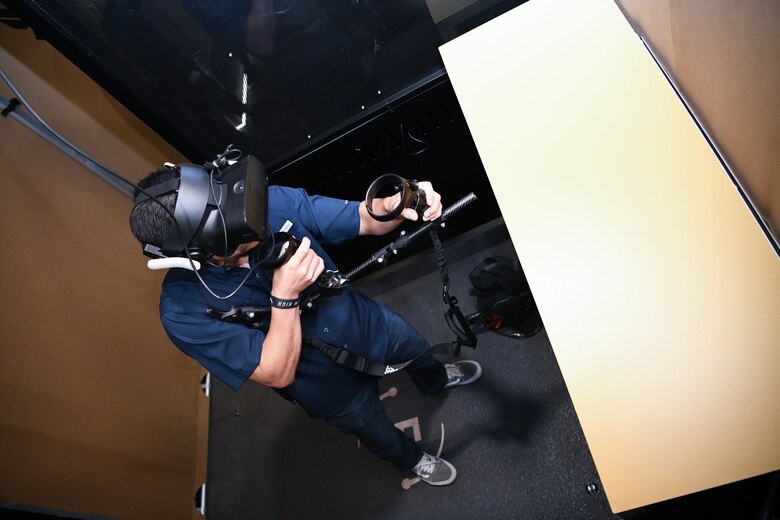
A guest with virtual reality goggles and a replicated gun gets a four-dimensional Air Force Special Warfare experience at the Fanzone outside of Charlotte Motor Speedway in Conway, N.C., Oct. 9, 2021. Activate’s scenario is taken from an online Air Force commercial. (U.S. Air Force photo by Randy Martin)

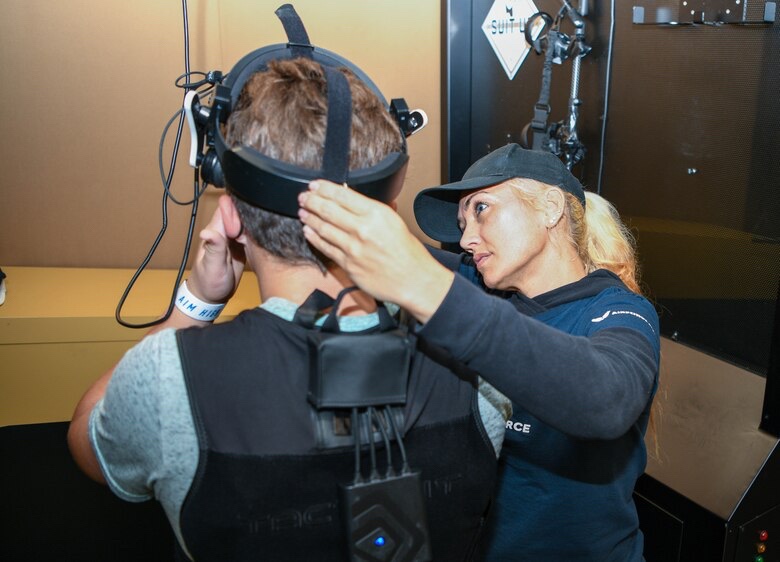
An Air Force Recruiting brand ambassador at the Fanzone on Oct. 9, 2021, outside of Charlotte Motor Speedway in Conway, N.C., assists a visitor to the Air Force Recruiting Service’s Activate mobile exhibit. Virtual reality goggles are one of the tools that give Activate’s guests a four dimensional Air Force Special Warfare experience as depicted in an online Air Force commercial. (U.S. Air Force photo by Randy Martin)

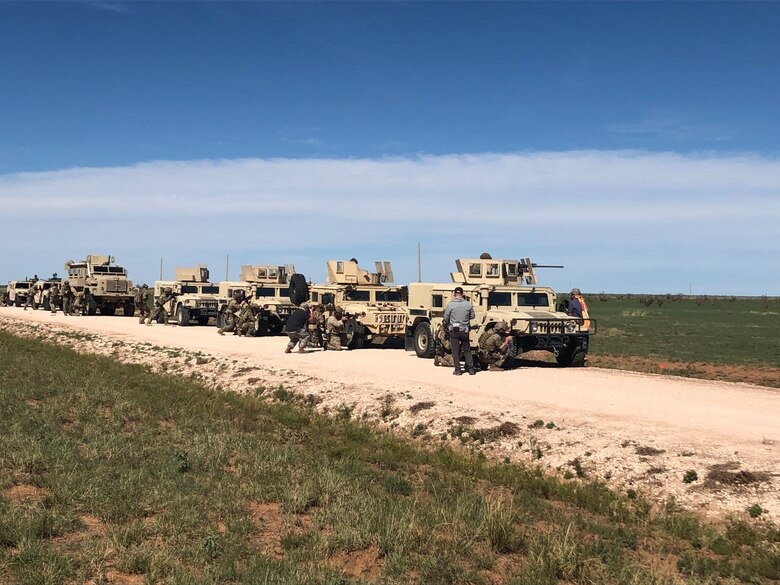
So in late September of that year, a film production team of 53 and more than a dozen people from AFRS, GSD&M and other Air Force members representing several career fields, converged on a bombing range near Cannon Air Force Base, New Mexico. Filming required three days and involved Security Forces and Special Warfare Airmen, pilots, tactical wheeled vehicles, helicopters and airplanes from bases throughout the U.S.

For the commercial to look more realistic, the production company turned to Hollywood for delivery of movie-ready weapons.

“We couldn’t use the SF and SW Airmen’s weapons because they had red tips,” Waid said. “So, we relied on a prop house that we found in Los Angeles.”

In the final commercial, action-packed sequences show Airmen in a gunfight with an enemy force outside a walled compound. Viewers see a medevac while pyrotechnics create blast clouds with smoke enveloping a line of sand-colored vehicles on a desert road. An A-10C Thunderbolt II flies by as the video reaches its climax.

Two commercials from this production debuted in several variations on YouTube, Jan. 5, 2020. They were later posted to other Air Force Recruiting social media platforms. One, titled “Calm and the Storm,” has exceeded 18 million views. The other, titled “Join the Fight,” has been seen more than 17 million times.

For AFRS, attention turned to developing Activate: Special Warfare, the game.

Work started on the VR mobile tour with an intended launch date sometime in 2020, Waid said. However, COVID-19 struck in March and forced AFRS to wait until April 2021, for Activate’s inaugural tour.

Since its launch, people have flocked to Activate at venues such as NASCAR’s Fanzone outside Charlotte Motor Speedway, in Conway, North Carolina, Oct. 9-10.

There, among tents and trailers reminiscent of a traveling carnival, Activate was positioned on high ground where throngs of fans ambled about on a quest for souvenirs, free merchandise, food and pre-NASCAR race entertainment. Activate’s shining, black paneled trailer featured graphics to attract visitors from great distances.

Contracted attendants called “brand ambassadors” beckoned passersby to try their skills at no cost. The only condition being a minimum age requirement of 13 or older and registration on a tablet computer. Next came the anxious wait to enter the gaming booth along with other guests.

“The VR game is a real-life version of the commercial video and what connects them really is the story of how SW operators are able to remain calm under extreme pressure while engaging the enemy, calling in air strikes and rescuing others,” Waid said.

Once inside each player dons a vest and VR goggles, takes hold of a device that replicates a gun, and enters the scenario as one of the Airmen in the beleaguered convoy from the commercial.

Because participants wear special VR headsets and vests they hear everything in surround sound and they sense impacts on their over garments. Designers also engineered booths to generate hot air bursts and wind effects synched with explosions and landing of a helicopter for a full four-dimensional experience.

“Best game ever,” one woman said as she exited Activate.

Air Force recruiters were standing close by and greeted people. They talked to potential applicants about experiences and opportunities. Some visitors examined an all-terrain vehicle that was parked out front alongside a display case featuring gear like that used by Airmen in the film. The equipment leant a tactile experience to the VR one.

“The case and ATV are pretty effective in terms of generating interest and questions for recruiters who can step in and have a conversation with a lead or influencer,” said Tech. Sgt. Amos Parker, a recruiter for the 337th Recruiting Squadron at Shaw AFB in Sumter, South Carolina. “With most of the population under the impression that the Air Force only flies jets, it’s really eye opening to influencers and potential applicants.”

In 2021 the experiential tour went to 23 events in 15 states and had more than 12,000 people sign up to go through.

“Of those who signed up, 5,282 opted in to learn more and 1,453 turned into actual leads, which are all great percentages. Considering that the pandemic kept a lot of people home in 2021, those numbers are expected to increase as life begins to return to normal and more people come out,” said Maj. Jason Wyche, AFRS chief of national events branch, strategic marketing division.

Activate: Special Warfare is set to be part of AFRS’s mobile tours for at least five years.

By Randy Martin, Air Force Recruiting Service

Brownells Releases Next Limited Edition Dixxon Flannel Shirt

December 4th, 2021

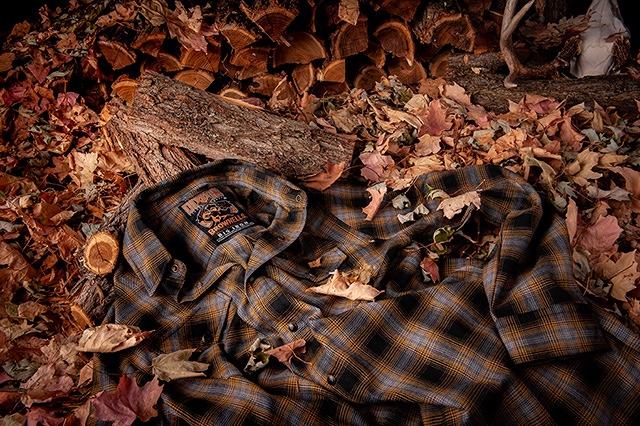
GRINNELL, Iowa (Dec 3, 2021) – Starting December 7 at 7:00pm CST, Brownells customers will get their chance at the second limited edition Dixxon Flannel shirt in the unique, Brownells exclusive “Big Iron” pattern.

The newest Brownells Dixxon Flannel combines shades of yellow, gray, and black in a finely-lined pattern for a classic look – perfect for autumn or winter wear.

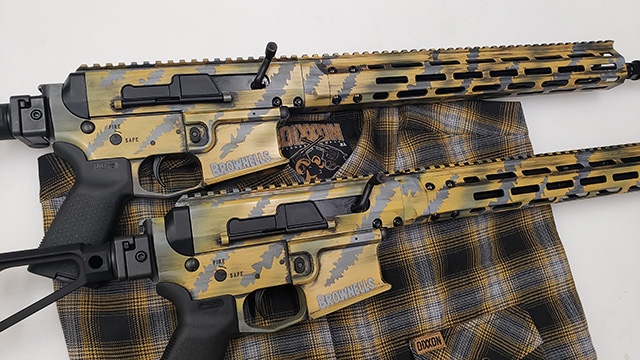
To help celebrate the release, Brownells will be giving customers the chance to win a complete BRN-180 rifle Cerakote finished to color coordinate with the “Big Iron” flannel shirts.

On December 7 at 7:00 pm CST the www.Brownells.com/Dixxon page will go live, giving visitors their chance to buy their very own “Big Iron” custom flannel shirt and sign up for a shot to win the color matching BRN-180.

Available at both the Brownells and Dixxon Flannel websites, the Brownells Dixxon Flannel shirts retail for $59.99 and won’t last long.

Shaw Concepts – Improving the USMC Gen II Plate Carrier

December 4th, 2021

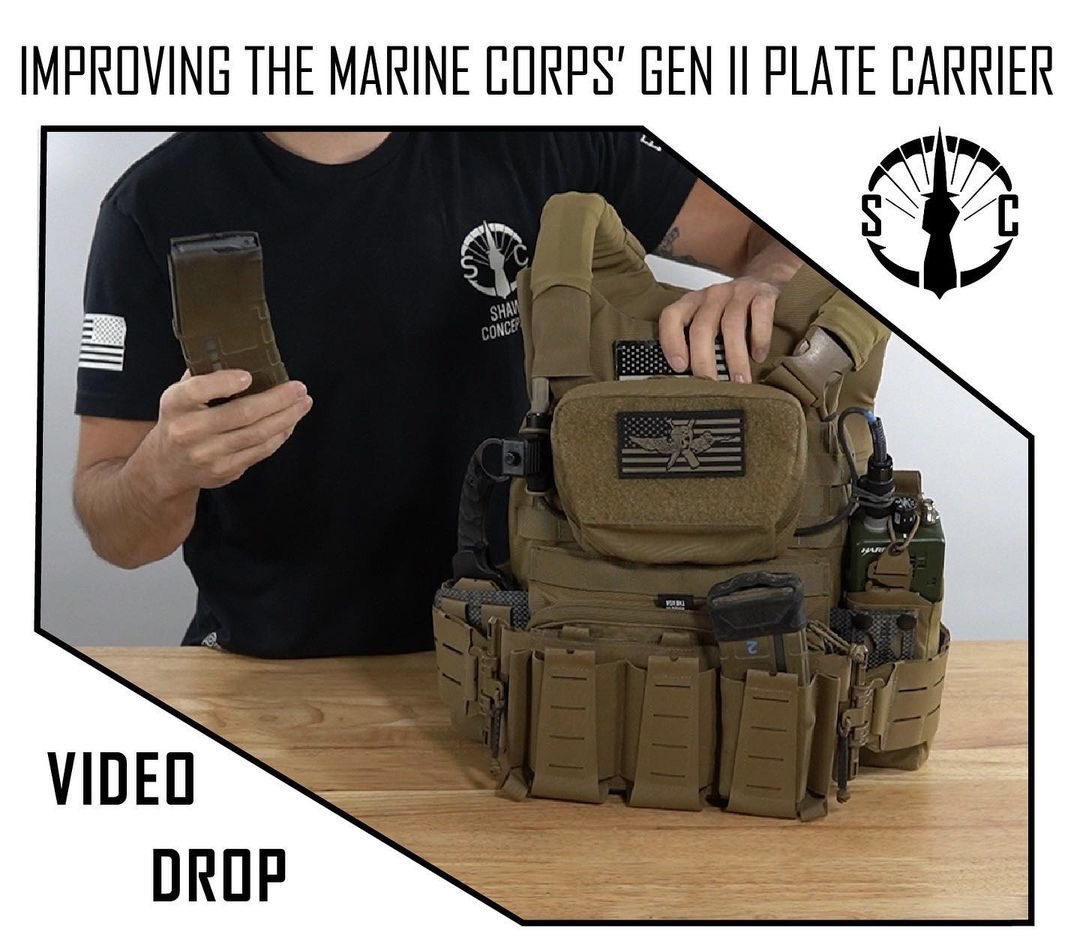
Although the Marines have been fielding the Gen III Plate Carrier many still use the older Gen II model. Shaw Concepts produced this video on cost effective solutions as well as their own after market products as well as those from others.

Advancing Cyber Warfare Training with Escape Room

December 4th, 2021

KEESLER AIR FORCE BASE, Miss. —

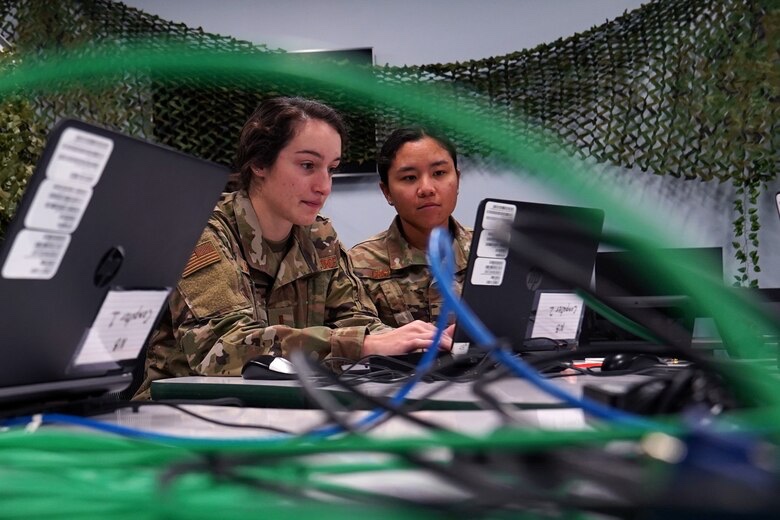
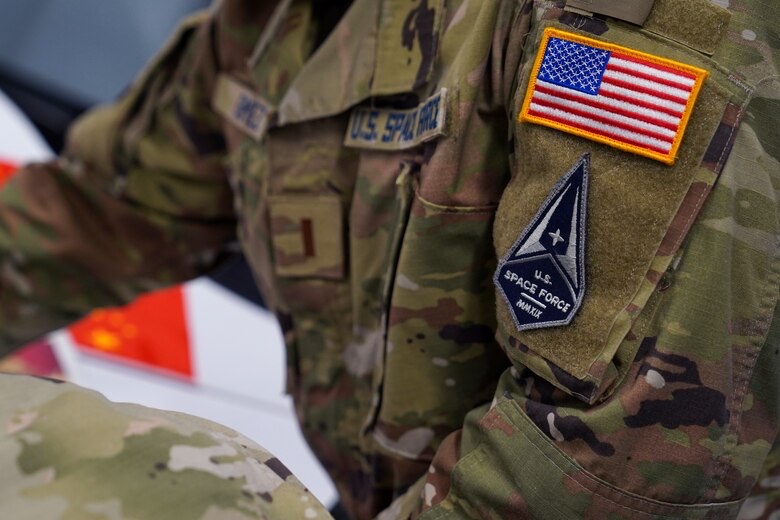
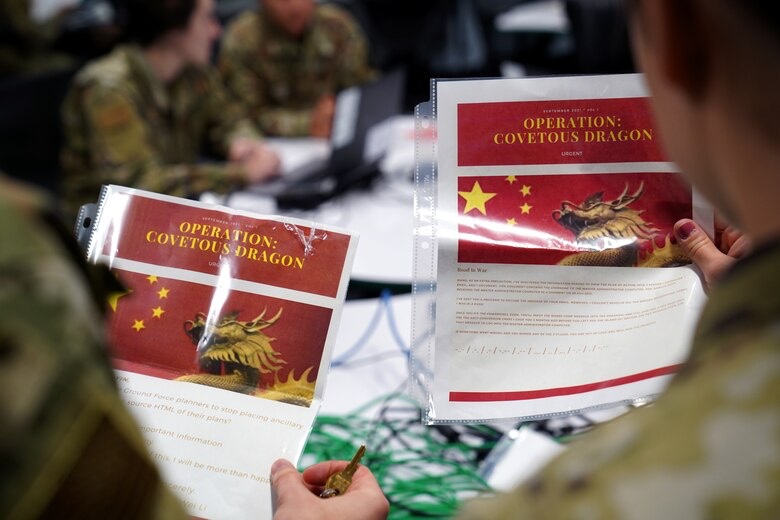
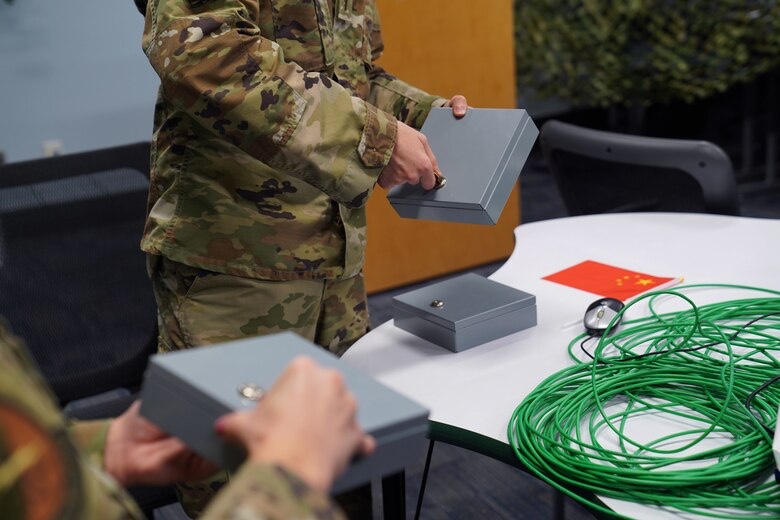
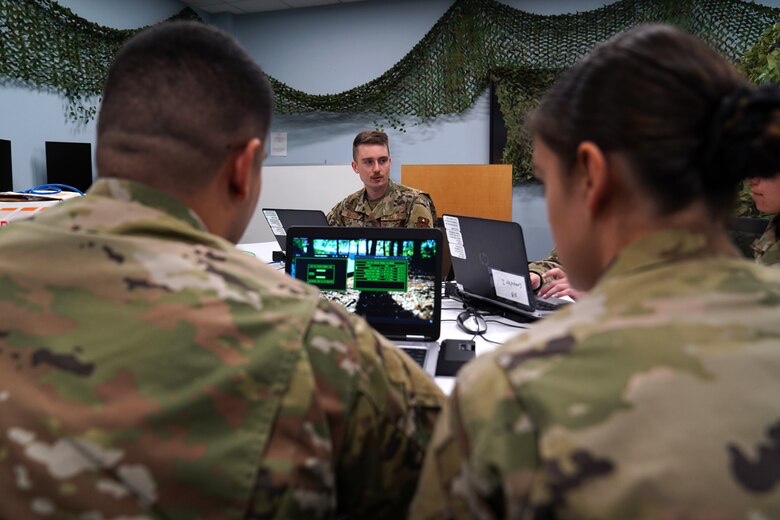
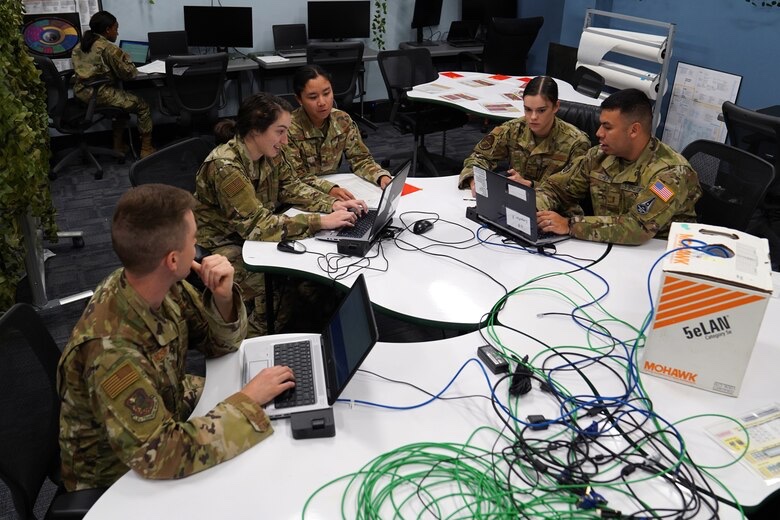
Accelerating and changing the possibilities of learning, the 333rd Training Squadron implemented a new cyber escape room to test knowledge and sharpen the skillsets of cyber warfare students.

The students are put into a simulated hostile scenario, requiring them to think critically and apply their skills under pressure to “escape” the exercise.

“Our students approached this challenge with no plan,” said 2nd Lt. Kendra Perkins, 333rd TRS cyber warfare officer and escape room project manager. “This forces them to adjust to the environment, preparing our students for any complex or uncertain situations they might face.”

From decoding cyphers and packet tracing to programming and networking, the room provides students with a hands-on training experience. Throughout this cyber warfare class iteration, only one team was able to complete the challenge, which included 2nd Lt. Ethan Isaacson, 333rd TRS cyber warfare officer.

“Most of our tests have been in a controlled environment, focusing on the most recent concepts we learned,” said Isaacson. “The escape room required us to apply all of our curriculum we’ve learned. We had to put trust in ourselves and each other and we came out of this room more confident in our skillset.”

Capt. Luke Thornton, 333rd TRS cyber warfare instructor, provided his perspective as the class instructor, overseeing how the teams took on the challenge.

“We are able to test the team dynamics, communication and camaraderie of our students,” said Thornton. “Our students were put into a new situation with a lot of pressure and they had to really think outside the box. We were able to test our students to the best of their capabilities.”

Perkins said the inspiration for the escape room was derived from Air Force Chief of Staff Gen. Charles Q. Brown, Jr. and his action orders to accelerate change across the Air Force through the direction of transforming the way we learn across all facets of Air Force education and training curricula including but not limited to professional military education to reflect renewed emphasis on competition and warfighting.

“Our goal was to create an environment that highlighted gamification to stray away from the initial Q&A or multiple choice and have something hands-on that was able to apply critical thinking, teamwork and communication as well as creating scenarios built on high standards for competition,” said Perkins.

By SrA Seth Haddix, 81st Training Wing Public Affairs

Milrem Robotics Led iMUGS Consortium Demonstrates Deployment of Unmanned Systems

December 3rd, 2021

The iMUGS Consortium, in charge of a 32,6 MEUR project developing the European standard unmanned ground system (UGS), demonstrated how defence forces can use tactical 4G/5G communications networks and UGS’ equipped with ISR and signal intelligence payloads, jammers, acoustic sensors, and various other technology to conduct missions.

The demonstration that was performed in September in Latvia, was led by LMT, a member of the integrated Modular Unmanned Ground System (iMUGS) consortium, with the support of the project coordinator Milrem Robotics and featured an ensemble of different technology.

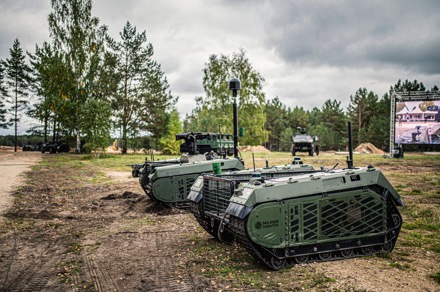
Latvian National Armed Forces used two Milrem Robotics’ THeMIS Unmanned Ground Vehicles (UGV) during two scenarios to display the benefits of teaming up manned units with unmanned systems.

One THeMIS UGV was equipped with an Intelligence, surveillance, and reconnaissance (ISR) payload, Signal Intelligence antenna (SIGINT) provided by The Electronic Communications Office of Latvia, Rheinmetall’s Rapid Obscuring System (ROSY) Smoke Grenade Launcher, Bittium’s Vehicular Software Defined Radios (Tough SDR Vehicular), and FN Herstal’s deFNder Light Remote Weapon Station (RWS). The RWS integration was part of the demonstration, but not of the iMUGS project itself.

The second THeMIS, used as a mule for transporting the squad’s equipment, was equipped with Rantelon’s Improvised Explosive Device (IED) Jammer and Bittium’s Tough SDR Vehicular.

The units and UGVs used Bittium’s tactical communication network TAC WIN combined with LMT’s commercial 4G and a tactical 5G-SA bubble provided by Bittium and Cumucore.

In addition, Krauss-Maffei Wegmann’s (KMW) Dingo infantry mobility vehicle was used as the command centre from where UGVs were operated in Line of Sight (LOS) and Beyond the Line of Sight (BLOS) mode using Bittium’s SDR radios and to where the ISR and Signal Intelligence sensor feed was relayed and incorporated into LMT’s Battle Management System Viedsargs.

“The displayed scenarios showed that unmanned systems, enhanced with innovative communication systems and various defence technology, can be used for collecting and sharing tactical information, improve situational awareness, decrease troops physical load, and increase force protection,” explained Kuldar Väärsi, CEO of Milrem Robotics.

”For the first time ever, in a special network, a tactical network was connected with a stand-alone 5G network. This allowed communication between units and robots, as well as collecting information from sensors and placing this information into LMT’s Battle Management System “Viedsargs”,” said Ingmars Pukis, Vice President and Member of the Management Board of LMT.

Additional equipment used in the demonstration included: SRC Brasa’s NATRIX UGV used for CASEVAC, high-speed First-Person View drone, Vertical Take-off, and Landing UAV STAR, and a gunshot detection and source recognition audio sensor by Riga Technical University (RTU).

The iMUGS project was launched in 2020 to develop a modular, cyber secure and scalable architecture for hybrid manned-unmanned systems. Its goal is to standardize a Europe-wide ecosystem for ground platforms, command, control and communication equipment, sensors, payloads, and algorithms. Addressed operational challenges include enhanced interoperability, increased situational awareness and faster decision-making.

The system will use an existing UGV – Milrem Robotics’ THeMIS – and a specific list of payloads.

The project’s progress is displayed during six demonstrations. „So far Milrem Robotics and LMT Innovations have set the bar very high. Which means we have some great things to wait for as the main results of the iMUGS projects are yet to be seen,“ said Martin Jõesaar from the Estonian Center for Defence Investments, the representative of the participating Member States in the iMUGS Project. The next demonstration will take place in Q1 of 2022 in Finland.

iMUGS is a cooperation between 13 parties: Milrem Robotics (project coordinator), Bittium, Diehl Defence, dotOcean, GMV Aerospace and Defence, Insta Advance, Krauss-Maffei Wegmann, Latvijas Mobilais Telefons (LMT), NEXTER Systems, Royal Military Academy of Belgium, Safran Electronics & Defense, Sol.One and Talgen Cybersecurity.

Watch the Demo 2 Scenarios here:

Team Federal Shines at the 2021 Fort Benning Multigun Challenge

December 3rd, 2021

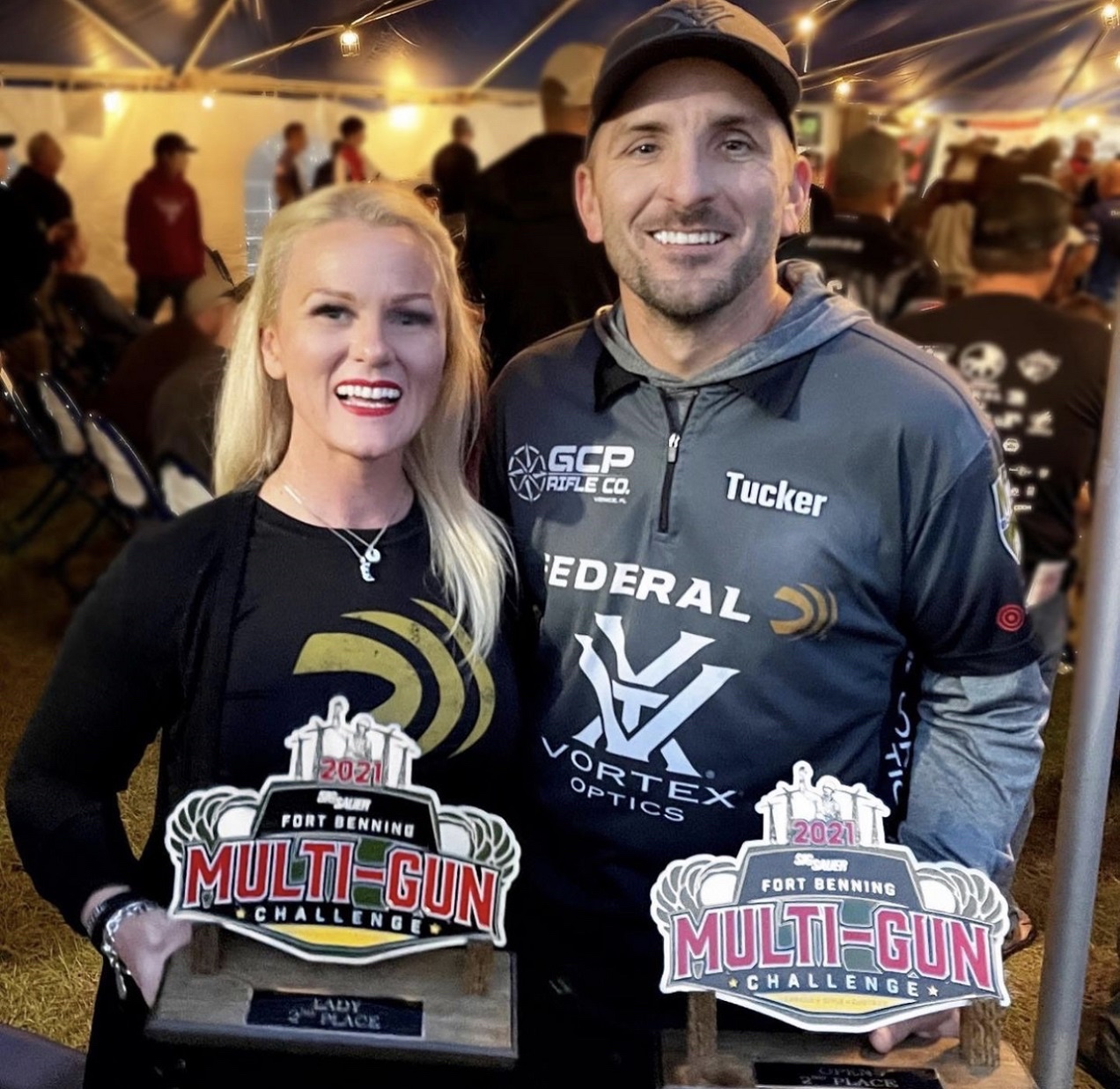
ANOKA, Minnesota – December 1, 2021 – Team Federal sponsored shooters finished strong at the recent 2021 Fort Benning Multigun Challenge in Fort Benning Georgia. Every fall, the U.S. Army hosts this event at the fort’s recreational shooting complex. Federal supported this year’s match as a Gold Sponsor. Team Federal shooters Tucker Schmidt, Alysia Burrows and Todd Jarrett all performed well among the 234 shooters on hand. Schmidt earning a second-place finish for the match shooting in the Open division, Burrows with second place in the Tac Ops division for the Ladies’ category, and Jarrett finishing in eighth place for the Tac Ops division also earning “Top Senior” for the match.

“Congratulations to all our shooters at this match. The Army Marksmanship Unit are famous for running fun, innovative matches. From all I’ve heard, this one was no exception,” said Federal Ammunition Shooting Sports Promotions Manager Jason Spradling. “Our Team Federal shooters always do a great job representing our brand and I’m proud of their achievements this weekend.”

“It was a close and heated competition. It came down to the very last stage and it didn’t go my way. I’ll be working hard to come back next year and get the win,” said Schmidt. “My go-to ammo is The Federal Gold Medal line of shotgun and precision rifle ammo, as well as the American Eagle 55-grain for the go-fast rifle portions.”

“In a stiff competition environment like Benning, there really isn’t any margin for error. That’s why knowing your guns and knowing your ammo is a big part of preparation for an event like this,” said Burrows. “Feeding high performance guns with questionable ammo isn’t an option. I’ve always used Federal, even before I was on the team. I know each round is going to perform the same as the last.”

“Todd Jarrett’s Top Senior trophy and top-ten finish certainly was a highlight of the event for Team Federal,” continued Spradling. “Todd is a seasoned competitor and is well respected in the community. We’re excited to have him on board representing our brand with solid performances like this one.”

For more information on all products from Federal or to shop online, visit www.federalpremium.com.