Colt

Accuracy International Joins FN Browning Group

October 30th, 2026

Portsmouth & Liège – 30 October 2026

FN Browning Group has completed its acquisition of Accuracy International, a designer and manufacturer of precision rifle systems recognised worldwide.

Through this acquisition, Accuracy International joins one of the world’s leading small-calibre defence groups, with activities spanning Defence & Security and Hunting & Sports Shooting. Headquartered in Belgium, the Group employs 4,200 people and operates more than 20 industrial sites across nine NATO countries.

Founded in Portsmouth in 1980, Accuracy International has built an international reputation for precision, dependability and performance. Trusted by military, law enforcement and sports shooters in more than 70 countries, the company will continue to operate under its own name, preserving the identity, expertise and craftsmanship that have made it a benchmark in its field.

The acquisition brings together two highly complementary companies sharing a culture of engineering excellence, innovation and long-term industrial investment. Accuracy International gains access to the Group’s global industrial and commercial platform, its international customer base and the resources required to expand its reach worldwide.

JULIEN COMPÈRE, CEO OF FN BROWNING GROUP: “We are very pleased to welcome Accuracy International and its teams to FN Browning Group. Our Group has always been built on industrial expertise, innovation and a long-term vision, and this acquisition is fully aligned with that approach. Our objective is clear: to preserve what makes Accuracy International unique while creating new opportunities and building on our respective strengths. This acquisition also deepens our long-term commitment to the United Kingdom, one of the strategic pillars of our industrial footprint, and reinforces our position as the sole UK-based manufacturer of machine guns and rifles.”

For FN Browning Group, the acquisition strengthens its position in precision and extreme long-range rifle systems, extending the Group’s portfolio into a new segment. The acquisition also expands the Group’s footprint in the United Kingdom, alongside primarily FN UK, but also Flee Hawk and its shareholding in Sentinel Photonics.

Through FN UK and Accuracy International, FN Browning Group is now the United Kingdom’s sole manufacturer of both military machine guns and rifles.

Together, these businesses form a growing ecosystem of innovation and manufacturing excellence, supporting the UK’s sovereign defence capability, local jobs and a network of UK suppliers.

The transaction further reinforces the United Kingdom as one of FN Browning Group’s key centres of industrial expertise, innovation and defence manufacturing.

The acquisition reflects FN Browning Group’s strategy of investing in leading brands, reinforcing critical defence capabilities and building a long-term industrial platform across Europe and North America.

TOM IRWIN, DIRECTOR OF ACCURACY INTERNATIONAL: “Joining FN Browning Group opens an exciting new chapter for Accuracy International. We share the same commitment to engineering excellence, product quality and long-term investment. Becoming part of the Group provides us with additional resources, international reach and new opportunities for growth, while preserving the identity, values and expertise that have made Accuracy International a global benchmark in precision rifle systems.” 

Black Triangle Introduces Omega-1, the Steel Evolution of the Donovan

October 30th, 2026

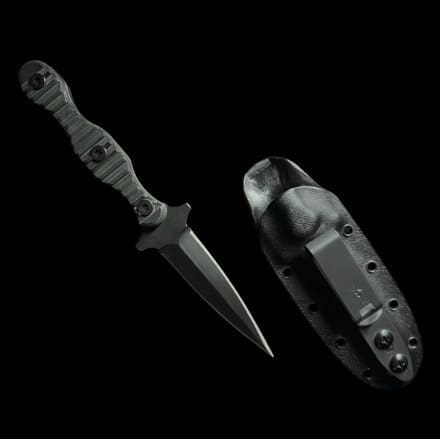
CHESAPEAKE, Va. | October 30, 2026 – Black Triangle, known for its non-metallic G10 knives, is bringing one of its established designs into steel with the introduction of the Omega-1.

Based on the company’s Donovan G10 knife, the Omega-1 retains the distinctive design of its predecessor while introducing the capabilities of a steel blade. The release marks an expansion of Black Triangle’s lineup, offering customers a new interpretation of a familiar design.

After nearly a decade of manufacturing non-metallic knives, Black Triangle’s move into steel represents another chapter for the Veteran-owned company.

Pre-sale for the Omega-1 opens Friday, October 30, at 12pm EST

blktriangle.com/omega-1

Full specifications, pricing and estimated shipping dates are posted on the product page and blog post.

blktriangle.com/blog/omega1-five-years-in-the-making

About Black Triangle

Black Triangle is a Veteran-owned knife manufacturer based in Chesapeake, Virginia, specializing in non-metallic G10 knives and combatives training.

Friday Focus: Tubes Rapid-Release Buckle

October 30th, 2026

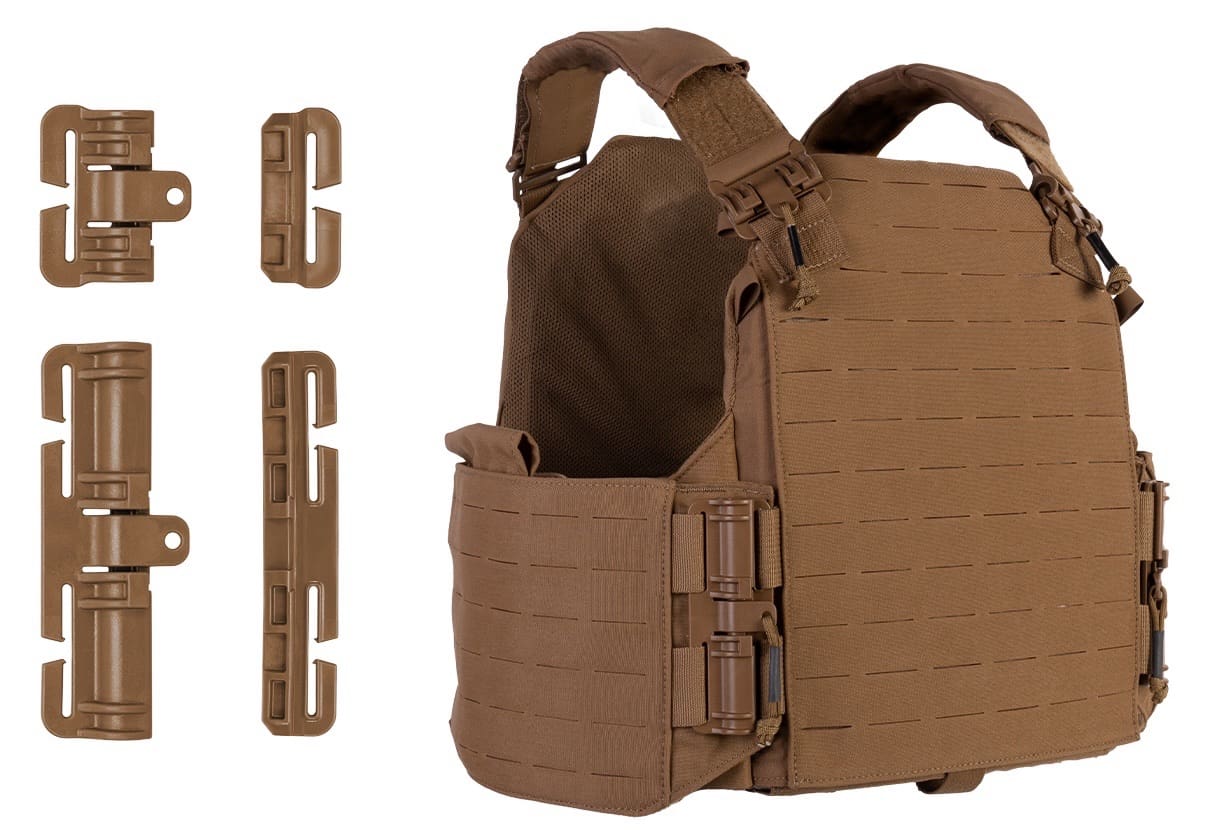
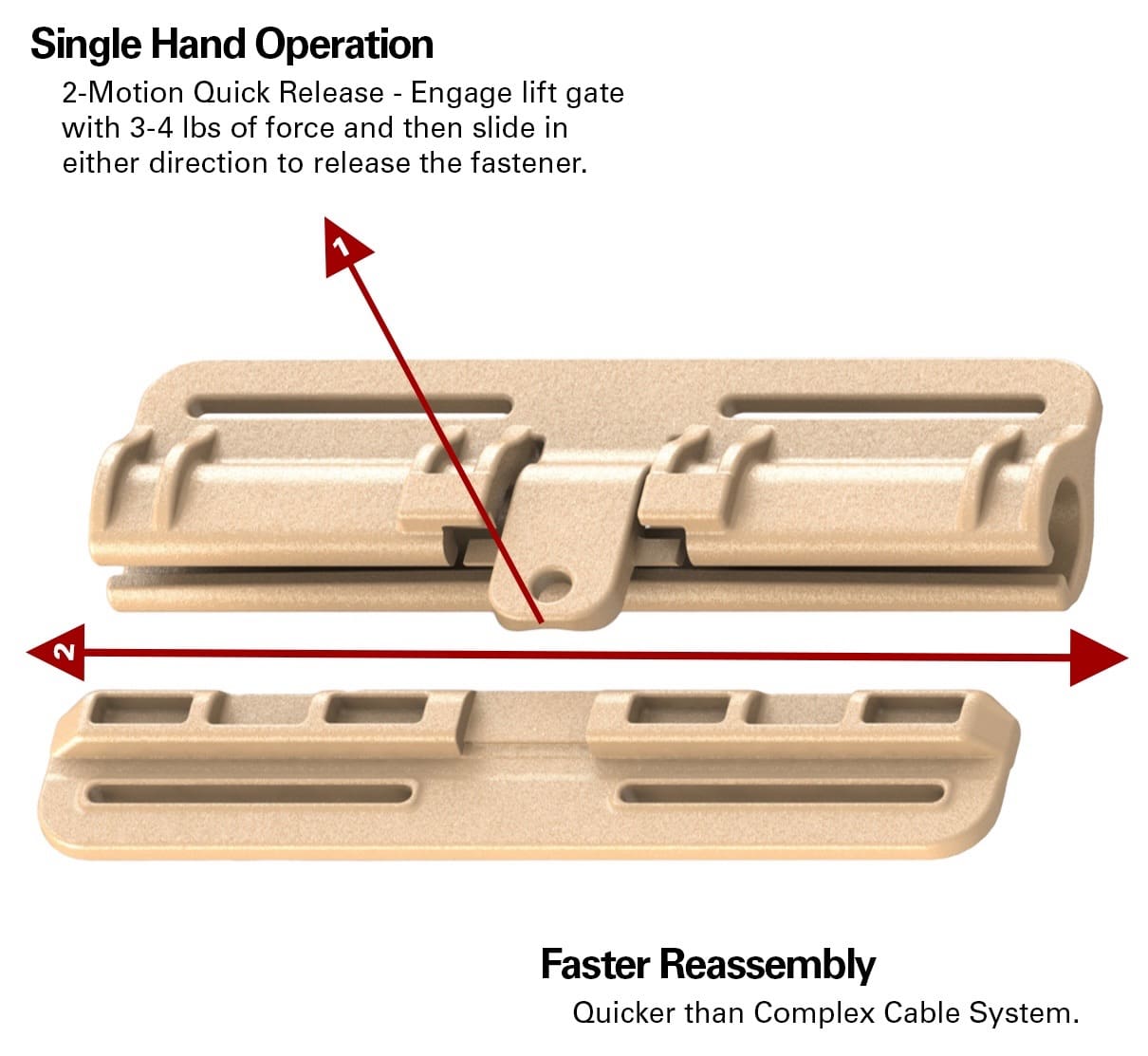
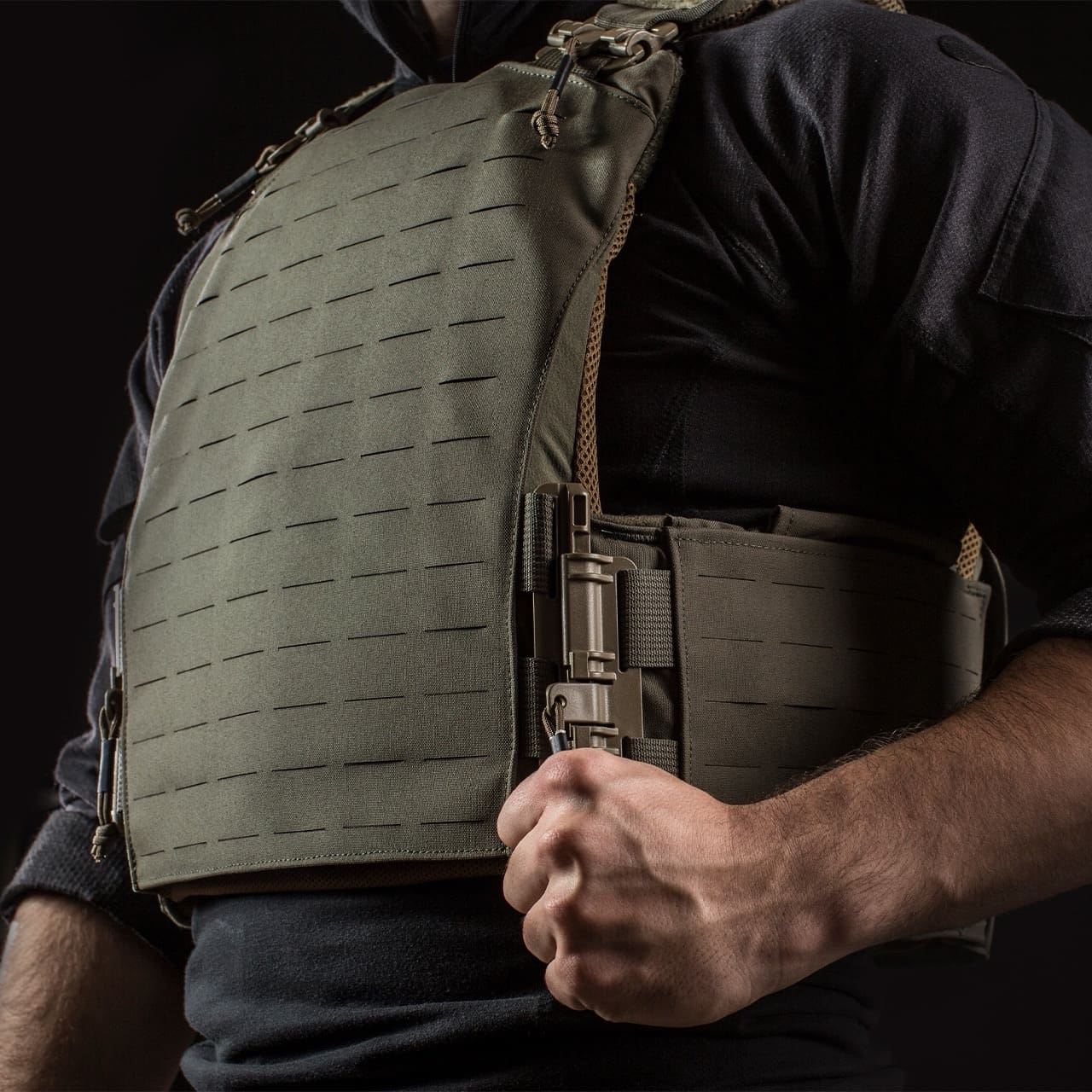
Every second counts when gear has to come off fast. The Tubes® Rapid-Release Buckle is FirstSpear’s patented closure system (U.S. Patent 10,051,984), molded from lightweight, high-performance polymers. A two-motion release at 3 to 4 pounds of force lets the operator don, doff, and reassemble gear in seconds, with the same muscle memory in daily use as in an emergency. Those same two motions guard against accidental release. Because the cummerbund seats in the same place every time, armor placement stays consistent from one donning to the next.Tubes® have been independently tested by an accredited third-party laboratory for tensile strength, near-infrared signature, and repeated fastening and release after sand and mud exposure.

Feature:

  • SINGLE-HAND, TWO-MOTION RELEASE // SAME MOTION DAILY AND IN AN EMERGENCY
  • BACK-UP FINGER RELEASE // OPENS EVEN WHEN THE PULL CORD CAN’T BE REACHED
  • SELF-CLEANING PORTS, -40°F TO 160°F // KEEPS RELEASING AFTER SAND AND MUD, FROM ARCTIC TO DESERT
  • 2″ AND 4″ LENGTHS, CROSS COMPATIBLE BETWEEN SIZES // ONE SYSTEM ACROSS CARRIER, POUCHES, AND BELT

Tubes® come integrated across FirstSpear platforms and as standalone components and accessories, from 2″ and 4″ split bar fasteners to the Tubes® Retro-Fit Cummerbund Attachment Panel Set, which retrofits Tubes® onto a compatible cummerbund you already own. Shop the full line at First-Spear.com/Tubes.

Program offices can call out Tubes® by name in RFIs and solicitations. Manufacturers building to those contracts don’t need to engineer a workaround: the original, patented Tubes® are available through Ocean State Innovations (OSI), FirstSpear’s exclusive distributor of Tubes® Fasteners. Contact OSI at geoff@osinnovate.com.

JIATF-401 Leads a New Era in Counter-SUAS Defense

October 30th, 2026

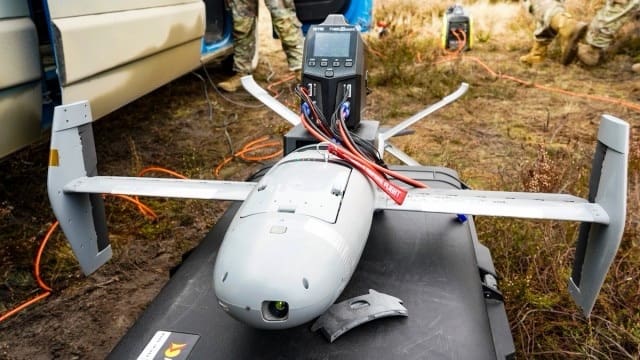
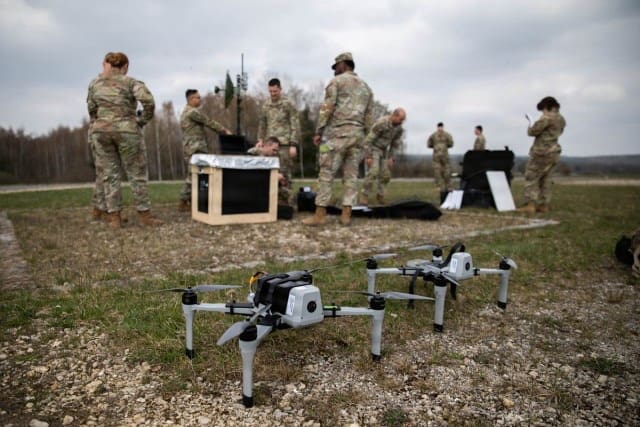
The Joint Interagency Task Force 401 is leading the Department of War’s efforts to stay ahead of the rapidly evolving threat posed by small unmanned aircraft systems. As adversaries continue to expand their use of low-cost, highly adaptable drones for surveillance, disruption and attack, the DoW is transforming how it acquires technology, fields capabilities and integrates operations across the counter-UAS enterprise.

Established in August 2025, JIATF-401 serves as a centralized organization focused on rapidly delivering C-UAS capabilities while improving the policies, standards, partnerships and training needed to meet an increasingly evolving threat environment. By bringing together stakeholders across government, industry and the joint force, the task force is helping create a more integrated approach to homeland defense and warfighter readiness.

JIATF-401 AND THE NEED FOR A UNIFIED COUNTER-SUAS APPROACH

The establishment of JIATF-401 reflected a growing recognition that traditional processes were not designed to keep pace with the speed at which drone threats are evolving. sUAS have become increasingly accessible, adaptable and difficult to counter, creating new challenges for military operations, homeland security and critical infrastructure protection. Over the past year, JIATF-401 has focused on closing the gap between operational needs and fielded solutions.

According to JIATF-401 Rapid Acquisition Chief U.S. Army Col. Tony Lindh, “Over the past 12 months, JIATF-401 worked to translate operational requirements into fielded capabilities while improving the policies, standards, training and partnerships needed to build a more integrated C-UAS enterprise.”

That effort extends beyond technology alone. By bringing together organizations across the DoW, the federal government and private industry, the task force has focused on one central objective — rapidly delivering C-UAS capabilities to warfighters at home and abroad.

The results have been felt across multiple mission areas.

“In our first year, these efforts produced results across the C-UAS mission, strengthening homeland defense, improving joint force readiness and increasing warfighter lethality while laying the groundwork for faster and more effective responses to an evolving threat,” Lindh said.

The task force’s establishment reflects a strategic shift away from fragmented efforts toward a unified approach that can quickly identify capability gaps, streamline technology adoption and ensure operational units receive the tools they need at the speed of relevance. By placing authorities, resources and decision-making under one coordinated structure, the Department aims to break down silos, reduce redundancy and accelerate the pace at which counter?sUAS capabilities are developed and deployed.
A MULTI?AGENCY TEAM DRIVING TRANSFORMATION

One of the defining characteristics of JIATF-401 is its integrated organizational structure. Rather than approaching the drone threat through separate organizations operating independently, the task force was built to bring together expertise from across the military and federal government under a common mission.

“JIATF-401 was established as a jointly manned organization composed of Department of War personnel drawn from across the military services, with embedded interagency expertise,” Lindh explained. “To ensure a broader whole-of-government approach, the task force incorporates embedded subject matter experts from other federal departments and agencies to align with the C-sUAS mission.”

These subject matter experts represent federal partners such as U.S. Customs and Border Protection; Federal Aviation Administration; Federal Bureau of Investigation; Department of Homeland Security; Department of State; Department of Transportation; Federal Communications Commission; Bureau of Alcohol, Tobacco, Firearms and Explosives; Cybersecurity and Infrastructure Security Agency; and U.S. Secret Service.

The result is a team capable of addressing operational, technical, acquisition and policy challenges while maintaining unity of effort across the broader C-UAS enterprise.
NEW PROCESSES DESIGNED FOR SPEED AND ADAPTABILITY

At the heart of JIATF-401’s mission is the recognition that countering rapidly evolving drone threats requires faster and more adaptable processes than those traditionally used to acquire and field capabilities.

According to Lindh, “JIATF-401 utilizes unique procurement and acquisition authorities to bypass traditional timelines and deliver C-UAS capabilities at the speed of relevance.”

A key component of that effort, he said, is drones.mil, a first-of-its-kind centralized marketplace that aggregates demand and streamlines pathways to procurement. This allows authorized users across the joint force, the interagency, as well as allies and partners, to rapidly acquire validated, tested technologies.

The task force has also helped reshape how C-UAS operations are approached in the field.

“Operationally, JIATF-401 has transitioned from traditional air defense mindset of single systems providing near-perfect defense towards a layered ‘systems-of-systems’ approach,” Lindh explained.

That shift reflects a broader understanding that countering drone threats requires more than a single technology or platform.

“There is no silver bullet technology that will solve the drone problem,” Lindh said. “We need the right people, policy, permissions and training to build a layered defense against the threat of drones.”

To support that layered approach, JIATF-401 has focused on eliminating barriers to integration across the C-UAS enterprise.

In support of this ‘system-of-system’ approach, Lindh said the task force has eliminated the reliance on stove-piped systems by establishing an enterprise-wide agreement for a common tactical user interface and advanced standardized data protocols.

“This open architecture ensures plug-and-play interoperability, allowing sensors and effectors to rapidly integrate and share threat data,” he said. “These updates provide tailored, layered defenses to help warfighters and homeland security personnel adapt as sUAS threats continue to evolve.”

TESTING, FIELDING AND PREPARING FOR FUTURE CHALLENGES

Keeping pace with the threat requires more than rapidly acquiring technologies. It also requires continuous testing, evaluation and refinement to ensure new capabilities remain effective in a changing operational environment.

To that end, “JIATF-401 is rapidly delivering and testing C-UAS capabilities in multiple theaters,” Lindh said. “These updated operational capabilities and processes are evaluated in battle labs, during joint exercises and alongside partners and allies.”

The insights gained through those activities help inform both current capability development and long-term planning efforts. Looking ahead, the task force remains focused on building systems that can adapt as drone technologies continue to evolve.

“To plan for continually evolving drone threat, JIATF-401 is advancing software-defined, hardware-enabled systems that can be updated over the air, while establishing standard test guidelines and an enterprise-wide agreement for a common tactical user interface,” he said.

At the same time, JIATF-401 is leveraging acquisition reform to strengthen the broader industrial base supporting the mission.

Through our first-of-its-kind C-UAS marketplace, accessible on drones.mil, Lindh said we are “aggregating demand to expand the industrial base, lower costs and ensure U.S. and allied forces can rapidly procure vetted, interoperable capabilities at the speed of the evolving threat.”

Together, these efforts are positioning the DoW to anticipate emerging challenges rather than simply reacting to them.

WORKFORCE AND TRAINING FOR A MODERN C-SUAS MISSION

Technology remains a critical part of the C-UAS mission, but JIATF-401 emphasizes that success depends equally on trained personnel, effective policies and strong partnerships. Lindh explained that JIATF-401 works closely with industry, academia and across the military to help expand the definition of C-UAS capability beyond hardware.

Recognizing the importance of education and professional development, the organization has invested in training initiatives designed to expand expertise across the joint force.

“To ensure education and training is available, JIATF-401 assumed oversight of the Joint Counter-UAS University at Fort Sill and developed a Train-the-Trainer model to expand C-UAS expertise across the joint force,” he said.

Additionally, the task force has strengthened collaboration with interagency partners responsible for C-UAS training and knowledge sharing.

“We have also expanded our partnership with the FBI National Counter-UAS Training Center, where JIATF-401 personnel are embedded to support instruction, and share lessons learned with our interagency partners,” Lindh said. The NCUTC is the nation’s first dedicated federal hub for training law enforcement and security professionals to detect, assess and counter unlawful drone activity.

These efforts are helping build a workforce capable of supporting a layered defense against increasingly sophisticated drone threats, while ensuring lessons learned are shared across the broader C-UAS community.
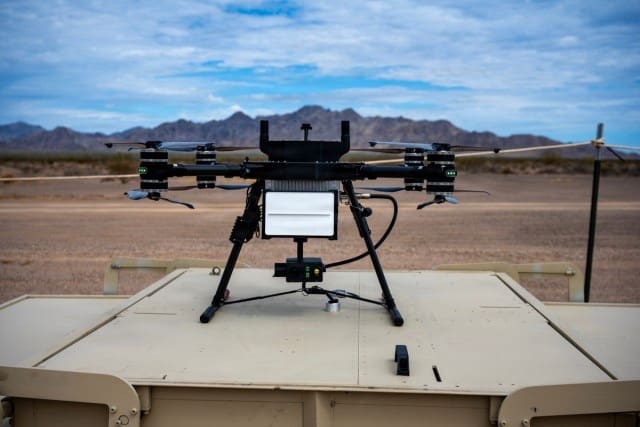
One year after its establishment, JIATF-401 continues to reshape the Department of War’s approach to the C-UAS mission by accelerating capability delivery, strengthening interoperability and bringing together military, interagency and industry partners under a more integrated framework.

Through innovative acquisition pathways, enterprise-wide standards and a layered system-of-systems approach, the task force is helping close the gap between emerging threats and operational capabilities. Its efforts span acquisition, testing, training and partnership development, all aimed at delivering effective C-UAS solutions at the speed of relevance.

As drone technology continues to evolve, JIATF-401 is helping ensure the DoW remains prepared to meet today’s challenges while building the agility and adaptability needed to address the threats of tomorrow.

For more information, visit War.gov or go to CUAS.mil to learn more about the C-UAS marketplace.

For the latest Army Acquisition news and information, visit and subscribe to Behind the Frontlines.

By Cheryl Marino for Behind the Frontlines

Quantum Systems Expands to Japan

October 29th, 2026

Quantum Systems has established a permanent presence in Japan, deepening its footprint in the Pacific Region, with plans to expand industrial cooperation with Mitsubishi Chemical and Panasonic.
Tokyo, Japan, 28 October 2026 – Quantum Systems is establishing a permanent presence in Japan by establishing Quantum Systems Japan K.K., and a local office in Tokyo. The move marks the company’s next step in building an industrial presence in the country and was announced during Chancellor Friedrich Merz’s visit to Japan.

Quantum Systems is building on its existing relationships with Mitsubishi Chemical and Panasonic, through signed Memoranda of Understanding (MoUs) intended to deepen industrial cooperation with and in Japan. The partnerships will combine Japanese manufacturing expertise with Quantum Systems’ experience in developing and producing unmanned systems. This approach will bring the company closer to Japanese customers, expand opportunities for industrial cooperation and contribute to more resilient domestic supply chains.

Japan’s changing security environment is increasing demand for unmanned capabilities that can be deployed, maintained and adapted to operational requirements. Building local industrial capacity is an important part of meeting that demand, reducing dependence on overseas supply chains and ensuring long-term access to defence technologies.


Sven Kruck, Co-CEO of Quantum Systems, said: “Japan has understood where defence is heading: unmanned systems, rapid innovation and the industrial capacity to deliver at scale. Ukraine has shown why this matters. When personnel are scarce and threats evolve fast, technological advantage is decisive. Japan’s manufacturing strength and our operational experience are a powerful combination. We are proud to put down roots in Japan and honoured to help strengthen its defence industrial base.”

Quantum Systems aims to support Japan’s growing requirements for integrated unmanned capabilities, drawing on its experience across air, land and sea and its MOSAIC UXS software platform, which enables the coordination of unmanned systems across operational domains.

“Japan’s defence requirements are evolving, particularly as unmanned systems become an integral part of its future self defence force structure. The challenge is no longer simply acquiring individual platforms but ensuring that different capabilities can operate together across all domains. Our focus is on understanding where these operational gaps exist and working with Japanese partners to address them through integrated, mission-ready capabilities,” said Martin Karkour, Chief Revenue Officer of Quantum Systems.

With its Japanese subsidiary and established industrial partnerships, Quantum Systems is expanding its ability to work directly with Japanese customers and industry. The company will focus on closer technological cooperation and adapting its capabilities to Japan’s evolving operational requirements.

Kraken Kinetics Launches Odin Energetics with Solugen

October 29th, 2026

Kraken Kinetics is proud to publicly launch Odin Energetics, our new joint venture with Solugen Aerospace & Defense.

Odin was created to rethink how America produces and delivers advanced energetics, the explosives and propellants at the core of modern munitions.

The challenge is straightforward: demand for munitions is increasing, while the industrial base supporting them remains constrained by limited capacity, long supply chains, and production infrastructure that is difficult to scale rapidly.

We believe the answer is a fundamentally different manufacturing model.

Odin is building a resilient, distributed supply chain for advanced energetics by combining advanced manufacturing with secure domestic chemical production. Through Solugen, Odin will have access to a dedicated U.S. source of critical precursor chemicals, providing greater supply assurance, scalability, and control over the inputs required to manufacture next-generation energetics.

At the center of that model is Nitroforge, a modular, expeditionary manufacturing platform designed to convert precursor chemicals into advanced energetics where capacity is needed most.

The combination of secure domestic inputs and deployable production creates a faster, more flexible, and more resilient approach to energetics manufacturing.

For Kraken Kinetics, this is a natural extension of our mission. We are focused on delivering DEFINITIVE LETHALITY™ at scale, and the energetic materials behind those effects are too important to remain a bottleneck.

Odin’s mission is simple:

Build the energetic capacity America, its warfighters, and its allies need, where they need it, when they need it.

Advanced energetics. Distributed production. Capacity for the nation’s most critical missions.

Decisive Effects. Whenever Needed.

Mehler Systems Acquires Majority Stake in MARS Armor to Strengthen Its Presence in Eastern Europe

October 29th, 2026

FULDA, GERMANY, KOSTINBROD, BULGARIA (29 October 2026)

Mehler Systems, an international group bringing together expertise in ballistic protection, tactical equipment and tactical clothing, has today signed an agreement to buy a majority stake in MARS Armor, a Bulgarian manufacturer of personal ballistic protection solutions. The acquisition strengthens the group’s presence in Eastern Europe, adds complementary products and capabilities, reinforces its EU-based supply chain and brings it closer to customers in the region.

Based in Kostinbrod, Bulgaria, MARS Armor develops and manufactures protection equipment for military, law enforcement and government users. Its portfolio includes ballistic vests, hard and soft armour inserts, helmets, shields and protective equipment for demining applications. The company also has in-house ballistic and stab-resistance testing capabilities.

MARS Armor extends the group’s reach to new customers and use cases, broadening its portfolio with additional NIJ-standard protection systems and products such as demining suits. Customers in MARS Armor’s target markets will also gain access to complementary products from across Mehler Systems.

Commenting on the acquisition, Dr. Mario Amschlinger, CEO of Mehler Systems, said: “Growing internationally means investing in local businesses with the expertise and relationships to support customers over the long term. MARS Armor gives us a strong foundation for that next phase of growth in Eastern Europe.”

MARS Armor will continue to operate under its established brand and current leadership, with the backing of Mehler Systems Group. The group is committed to supporting MARS Armor’s capabilities in Bulgaria, with a customer centric approach focused on the company’s established and future target markets.

Plamen Tashkov, CEO of MARS Armor, said: “We bring our experience, products and customer relationships to Mehler Systems. We look forward to building on these strengths and contributing to the group’s development with a strengthened portfolio in Eastern Europe and beyond.”

The acquisition marks a further step in Mehler Systems’ international growth strategy. Through targeted acquisitions, the group is expanding its footprint in key markets and strengthening the reach and resilience of its supply chain.

Lite Coms Launches the Lite Sat GT3 Vehicle Terminal to Bring LEO Throughput to the Battlefield Edge

October 29th, 2026

As BLOS transport increasingly moves to LEO constellations, the GT3 ensures elite teams stay connected at high speeds in the world’s most severe environments

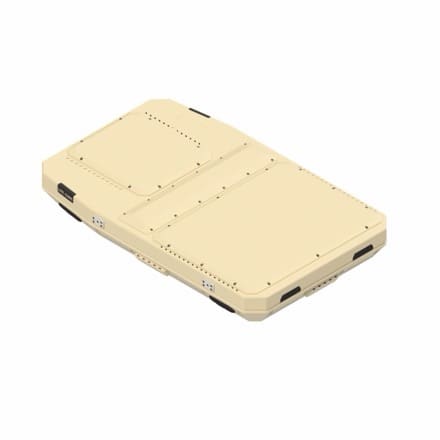
VICTOR, N.Y., October 29, 2026: Lite Coms, a U.S. designer and manufacturer of advanced tactical satellite communications (SATCOM) terminals for defense and government applications, today announced the launch of Lite Sat GT3, a tactical, flat-panel vehicular terminal designed to bring revolutionary Low Earth Orbit (LEO) throughput to the edge of the battlefield.

As beyond-line-of-sight (BLOS) transport increasingly demands LEO connectivity, the defense and tactical SATCOM industries have been seeking a solution to bring high-speed LEO throughput to manned and unmanned land vehicles operating in the most contested battlefield environments. To answer this call, Lite Coms specifically designed the GT3 to bring LEO connectivity across Communications-on-the-Move (COTM), Communications-on-the-Pause (COTP), or stationary operations.

Available immediately, the GT3 transforms commercial-off-the-shelf (COTS) hardware into a ruggedized, mission-ready solution that encases high-performance phased array technology in a sealed, machined aluminum enclosure with Mil Spec connectors.

  • LEO High-Throughput: Delivers game-changing data speeds and ultra-low latency for real-time mission execution.
  • Simultaneous multi-network operation: The GT3 supports simultaneous operation across key LEO satellite constellations, alongside 5G/LTE networks, providing resilient, always-on connectivity.
  • “Always-On” Tactical Integration: Optimized for “always-on” connectivity while mounted to Utility Task Vehicles (UTVs), Sport Utility Vehicles (SUVs), or all-terrain platforms, ensuring a reliable link at high vehicular speeds. 
  • Uninterrupted Global Connectivity: Features an embedded 5G US-made module with physical SIM and eSIM support, providing automatic cellular failover for uninterrupted global connectivity. 
  • Rapid Acquisition: Supported by Lite Link Raptor SD-Wan architecture with transport failover, load balancing, Quality of Service (QOS), and Virtual Local Area Networks (VLAN). 

“The launch of the Lite Sat GT3 is the answer to a direct call from our Defense and Tactical SATCOM customers, as well as the industry at large. As beyond-line-of-sight land operations move more into LEO constellations each day, this solution ensures warfighters have the high-speed connectivity the evolving reality of land warfare demands,” said Andrew Colaruotolo, Chief Strategy Officer at Lite Coms. “Due to the immediate need for an affordable vehicular terminal to provide uninterrupted, high-performance LEO throughput—and our deep understanding that the warfighter cannot afford to wait for battlefield edge solutions—our team prioritized the launch of the GT3, which is available now and can be delivered today.”

To learn more about the specifications of the Lite Sat GT3and how it can connect land operations to high-speed LEO throughput, please visit here. Those interested to speak to a team member about immediate delivery of the GT3 are encouraged to reach out here.