GORE-TEX Professional - AWICS

Army Awards Three OTA Agreements for UxS Autonomy

August 30th, 2025

Today*, the U.S. Army awarded three Unmanned Systems (UxS) Autonomy agreements to Forterra (Clarksburg, Md.), Overland AI, Inc. (Seattle, Wa.) and Scout AI, Inc. (Sunnyvale, Ca.) to rapidly integrate and deliver commercial autonomous mobility into Army formations. The total award value for all agreements is approximately $15.5 million.

Under these agreements, each awardee will integrate their commercial autonomy solutions onto existing Army Infantry Support Vehicles (ISVs) and deliver prototypes to Army Soldiers for demonstration and evaluation in May 2026.

“We are looking forward to seeing how our industry partner’s autonomy solutions perform on vehicles while performing relevant military missions,” said Col. Ken Bernier, project manager, Future Battle Platforms “We remain committed to bringing the best technologies to our warfighters and shaping the future of autonomous mobility for our Army at an unprecedented speed.”

These demonstrations and evaluations will inform future Army decisions on the applicability of autonomous and unmanned systems across the force and could have the potential to directly transfer successful capabilities to a variety of other ground vehicle platforms.

“This effort will serve as an opportunity for the Army to assess the reliability of commercial autonomy and their ability to deliver real operational value to Soldiers in the field,” said Bernier.

By Ashley John

* published on 27 August.

Paratroopers Make History With Army’s First Drone-on-Drone Strike

August 30th, 2025

For Army 1st Lt. Francesco La Torre, the Army’s first drone-on-drone strike wasn’t exactly a Hollywood moment.
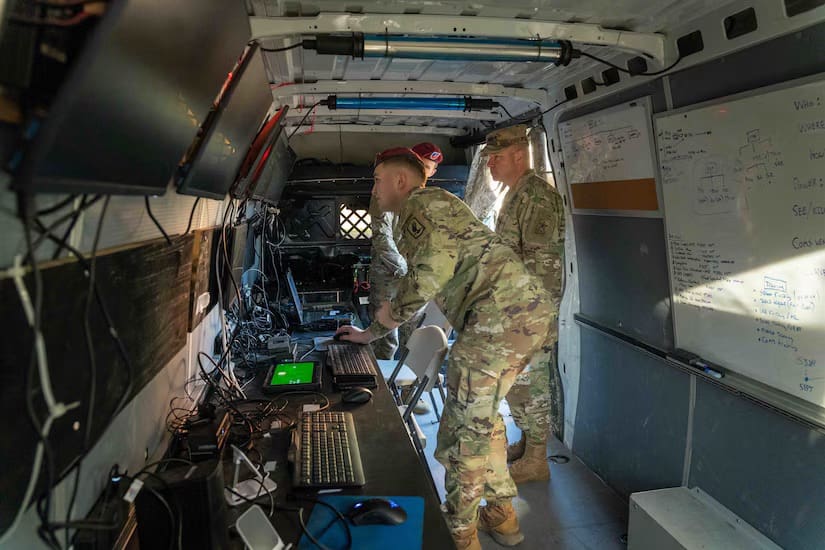
“In [the Star Wars movie], ‘A New Hope,’ Luke Skywalker flies an X-Wing through the Death Star trench and blows it up,” La Torre said. “This wasn’t like that. It was way harder. Honestly, it felt more like Darth Vader shooting down rebel pilots. He might be the villain, but he’s also one of the best pilots in the galaxy.” 

That was the image in La Torre’s mind as his team with the 173rd Airborne Brigade achieved a milestone once unimaginable for conventional Army units: destroying an aircraft in flight using a first-person-view drone carrying an explosive charge.

The strike took place earlier this month during the Army’s Unmanned Aerial Systems and Launched Effects Summit, held Aug. 11-15 at Fort Rucker, Alabama. The live-fire event was led by the brigade’s bayonet innovation team in partnership with the Pennsylvania Army National Guard and engineers from Army Combat Capabilities Development Command.
“When I heard [Army] Chief [Warrant Officer 2] Nate Shea say, ‘Arming,’ when he was lined up behind the fixed wing threat UAS, I knew he’d take it down,” La Torre said. “A few seconds later he detonated the claymore [mine], and I looked up from my end-user device to see the fixed-wing [aircraft] drop out of the sky.” 

The success came after weeks of training. Paratroopers flew for hours each day, building muscle memory while rehearsing how to engage a fast-moving aircraft. Army Chief Warrant Officer 2 Andrew Topits familiarized himself with the fixed-wing platform a month in advance, while Shea practiced with inactive claymores. Once on the ground at Fort Rucker, the operators flew daily in changing weather, preparing for a target that could appear anywhere across the range.

Technical skill proved as important as piloting.

“The ability to train and solve problems immediately afterwards was critical to mission success,” La Torre said. “The team was soldering, disassembling, reassembling and performing [quality assurance] around the clock while rehearsals were underway. While tactical units and technicians may not share the same language, they do share an intellectual curiosity and desire to succeed.”

La Torre emphasized what it means for the average paratrooper.
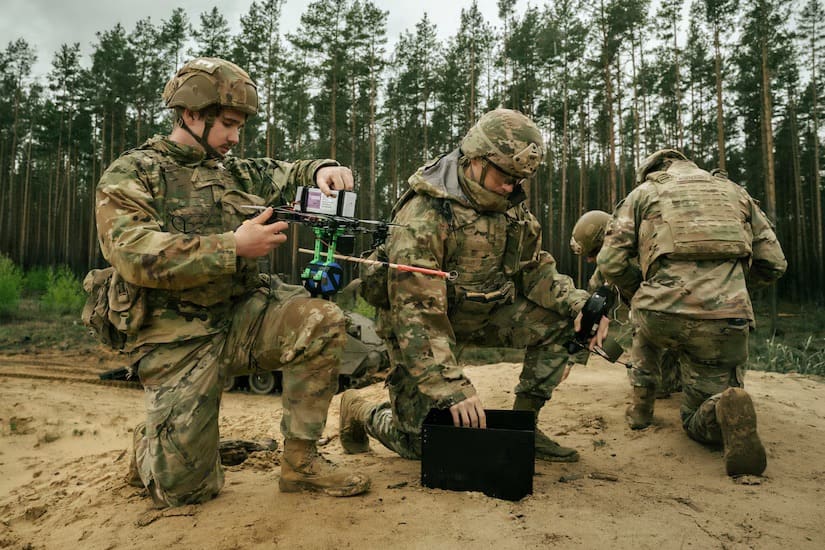
“With the right kit, paratroopers will be able to utilize a low-cost system with preexisting munitions to execute a wide variety of mission tasks — and have the power to protect their unit from an endemic threat,” he said.

The drone demonstration showed that innovation doesn’t have to come from the top.

“It feels extremely satisfying to have this level of impact, but solving these kinds of problems should not be alien to junior officers, or any leader,” La Torre said. “Every year the Army produces leaders at all levels who are better educated now than ever before. At the end of the day, rank is immaterial when it comes to problem-solving.”

For La Torre, the milestone reflects how far the 173rd Airborne Brigade has come.
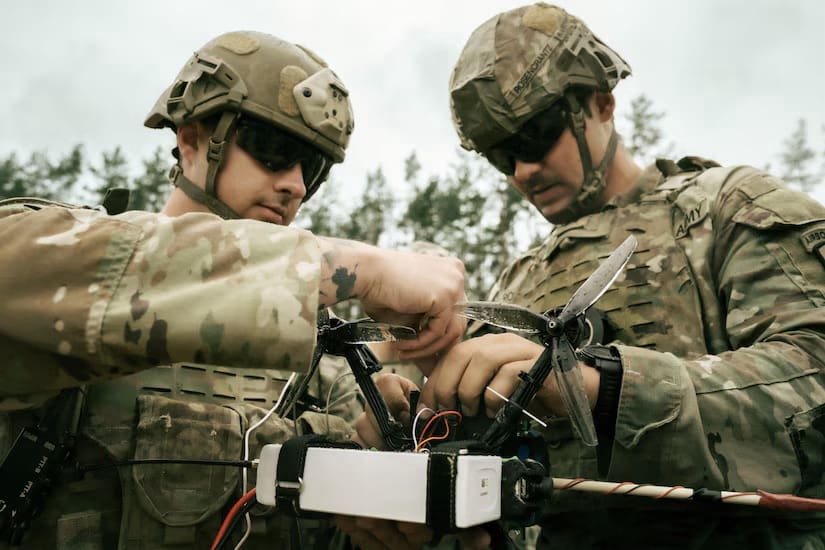
“At this time last year, this kind of training was a pipe dream for conventional units,” he said. “For the engagement itself, Chief Shea did an incredible job and so did Chief Topits. It’s such a difficult mission profile for both aircraft.”

Lessons from the bayonet innovation team fed directly into Fort Rucker’s new lethal UAS course, directed by Army Capt. Rachel Martin and Army Maj. Wolf Amacker. The course consolidates milestones within the Army’s UAS community and serves as a hub for education and experimentation.

“The more testing and experimentation we do, the less we must teach theoretically and the more we can back claims with real data,” La Torre said. “Safe and effective experimentation allows commanders to understand the true nature of the risks they assume with these systems and helps make this training more commonplace.”

For La Torre, the boundaries are clear: safety and scalability.

“We must safely conduct training, testing and experimentation,” he said. “We also must make sure everything we do is exportable to other units so they can do the same. I’m confident what we’ve done is scalable, and the lethal UAS course at Fort Rucker will centralize the growth of lethal UAS engagements while also serving as a hub for subject matter experts to gather and exchange lessons learned.”

By Army CPT Jennifer French, 173rd Airborne Brigade

EW 25.2: AFSOC Heightens Warfighting Readiness During Landmark DLE Series

August 30th, 2025

HURLBURT FIELD, Fla. —  

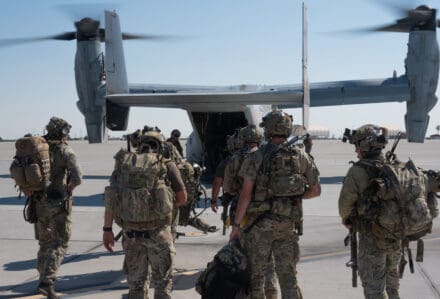
Air Force Special Operations Command tested its warfighting readiness during Emerald Warrior 25.2, the command’s premier operational exercise held across Arizona and California from July 21 – Aug. 11, 2025.

EW 25.2 was part of the first-in-a-generation Department Level Exercise series, incorporating more than 12,000 personnel and integrating various forces into joint, coalition, and multinational training. The DLE series advanced the way operations were achieved in a contested, dynamic environment to build capabilities and make a stronger, more lethal deterrent force.

“Emerald Warrior’s integration into the DLE series reinforced our critical role in preparing our forces for the scope and intensity of future operations,” said Lt. Gen. Michael Conley, AFSOC commander. “This iteration provided the opportunity to test our capabilities within a larger strategic context. The training we completed during those three weeks demonstrated the exceptional full-spectrum readiness of our Air Commandos.”

Emerald Warrior provides the venue for realistic joint, combined special operations training to prepare U.S. Special Operations Command forces, conventional enablers, partner forces, and interagency elements to respond to various threats across the spectrum of conflict.

The exercise incorporated multi-domain training designed to give Air Commandos the opportunity to find innovative solutions to tactical problems and experiment with emerging capabilities.

“Our goal is to match the speed and scale of large, real-world operations where command and the areas of operation are distributed,” said Conley. “Creating these dilemmas is how our teams can best learn to adapt so they can excel in future combat environments and help set conditions for the joint force to win.”

Air Commandos completed a wide range of training scenarios that validated their ability to integrate aviation, special tactics, medical and mission sustainment functions. A key objective was executing Agile Combat Employment (ACE) to demonstrate a flexible aerial advantage.

“ACE has become a requisite ability to our operations and readiness,” said Brig. Gen. Clay Freeman, AFSOC director of operations. “We must be prepared to deploy rapidly and operate from austere environments with potentially limited resources. A contested venue does not change the need to generate airpower at any place, any time, anywhere.”

International collaboration was a key element of EW 25.2. The integration of partners in the Royal Air Force was highlighted by the RAF A400M Atlas facilitating transport and military free fall training for Special Tactics teams. Additionally, Czech Republic Special Operations Forces worked alongside special operations medical elements and surgical teams, honing collaborative abilities in humanitarian and disaster relief scenarios.

“Emerald Warrior strengthens our international relationships and interoperability”, said Freeman. “AFSOC is committed to fostering combined training opportunities with partners where we integrate our diverse skillsets and build shared capabilities to strengthen our collective security. For this iteration, we were grateful to grow our collective readiness with our RAF and Czech Republic partners.”

Along with international allies, Air Commandos trained with units from the U.S. Space Force, U.S. Marine Corps, and U.S. Army, among other interagency partners. This collaboration strengthened AFSOC’s capacity to deliver decisive effects in alignment with future force employment requirements.

EW 25.2 solidified AFSOC’s warfighting functions and underscored its commitment to adapting to succeed in today’s dynamic strategic environment.

Air Force Special Operations Command

Saab Reveals New Counter-UAS Missile Nimbrix

August 29th, 2025

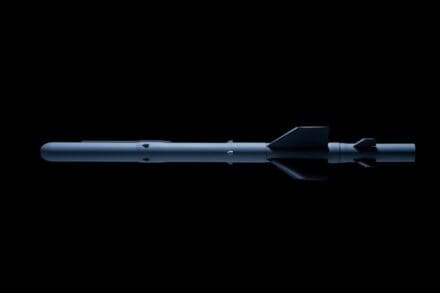
Saab has revealed Nimbrix, its first ever dedicated Counter-Unmanned Aerial System (C-UAS) missile. The missile is developed to counter the increasing threat from small drones on the battlefield.

The fire-and-forget missile is being rapidly developed at Saab with the aim to deliver a system featuring a target seeker, a hard-kill warhead, and a small footprint – all at a low cost. The range will be up to 5 km with an active seeker to track its target. Its warhead can effectively engage and defeat UAS swarms using an air-burst mode.

“Nimbrix is our answer to the unmanned aerial threats which have escalated in the last few years. It is cost-effective which is critical given the proliferation of UASs on the battlefield. Nimbrix benefits from our long experience of air defence, together with an agile way of responding to new needs,” says Stefan Öberg, head of Saab’s business unit Missile Systems.

The missile operates as a ground-based system and can be operated independently or as part of a larger air defence system. With flexible mounting options to fit different customer requirements, Nimbrix can be mounted on various vehicles or in fixed configurations. The cost-effective nature of the missile contributes to maximising deployed numbers to generate sufficient air defence coverage.

Customer discussions are ongoing and Saab aims for first deliveries in 2026. Nimbrix will be showcased during DSEI in London, UK from 9-12 September 2025, at the Saab stand, N9-105.

Bushmaster – Bravo Zulu Pistol Series

August 29th, 2025

Building on the heritage and legacy of the Bushmaster® family of firearms, Bushmaster® is excited to announce the release of the new Bushmaster® Bravo Zulu™ pistol series, chambered in .300 Blackout and 5.56 NATO/.223 REM.

The Bushmaster® Bravo Zulu™ Pistol is inspired by the design, quality and build profile of our original Bravo Zulu™ Line, The Bushmaster® Bravo Zulu™ Pistol boasts several impressive features, including a free float rail, Bushmaster® DM2S® 2-stage trigger, Magpul® furniture, and a Snake Charmer®II muzzle brake that reduces felt recoil.

The Bushmaster® Bravo Zulu™ Pistol is chambered in 5.56 NATO/.223 REM or .300 Blackout, with a 11.5″ barrel made from 4150 CMV material and finished with a salt bath nitride coating.


The Bushmaster® 300 Blackout Bravo Zulu™ features a twist rate of 1:7, a barrel thread pitch of 5/8” x 24, and features a pistol length gas system. The Bushmaster® 5.56 NATO/.223 REM Bravo Zulu™ Pistol features a twist rate of 1:7, a barrel thread pitch of 1/2” x 28, and features a carbine length gas system. The Bushmaster® Bravo Zulu™ 300 Blackout Pistol weighs in at 6.1 lbs without a magazine and has an overall length of 28.5” – 31.25”. The Bushmaster® 5.56 NATO/.223 REM Pistol weighs in at 5.89 lbs without a magazine and has an overall length of 28.5” – 31.25”.

Built with a 7075 forged XM15®-E2S lower receiver, and a 7075 forged A4 flat top upper receiver, the Bravo Zulu™ is built to last. The salt bath nitride bolt carrier group and MPI tested bolt ensure reliable performance, while the 10” BFI® M-LOK handguard, Magpul® MOE® grip, and Magpul® MOE® enhanced trigger guard provide comfort and customization options. The pistols also come equipped with the SB Tactical SBA5 Pistol Brace with 5 positions of adjustability.

The DM2S® 2-Stage trigger and Snake Charmer®II muzzle brake add to the pistols exceptional performance, and both come with a Magpul® PMAG® 30 GEN M2 MOE® magazine. Proudly made in the U.S.A., the Bravo Zulu™ is a pistol that truly lives up to its name.

This firearm is classified as a pistol and not a short barreled rifle (NFA regulated items require ATF approval and a tax stamp).

Bravo Zulu™ Pistol Series is available in two calibers:

Bravo Zulu™ 5.56 NATO / .223 Remington

Bravo Zulu™ .300 Blackout

For more information, including product specifications and purchasing options, visit www.bushmaster.com.

MCB Quantico Live Fire of Scorpion Light Mobile Mortar System

August 29th, 2025

Last week, Global Military Products and Polaris Government and Defense were invited to participate in a live-fire demonstration on Marine Corps Base Quantico in conjunction with the Marine Gunners Symposium.

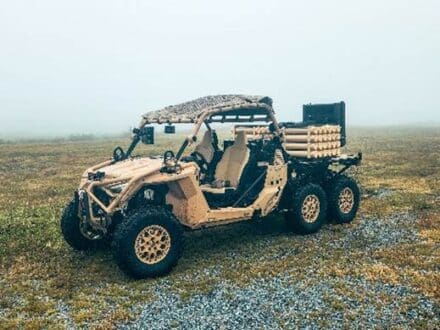
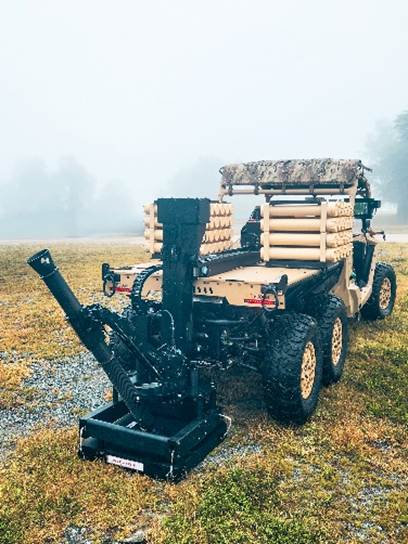
On one of Quantico’s 43 live ranges, a group of Marine gunners witnessed the Scorpion Light mobile mortar system in action, demonstrating the shoot and scoot capabilities of the system. Mounted on the Polaris MRZR Alpha 6×6, the fully integrated platform provides mobility, lethality, operator safety and air transportability. The rapid-fire control system is designed to elevate operational efficiency, while the expanded payload of the MRZR Alpha 6×6 variant allows for 48 mortars to also be transported.

More on the Scorpion Light

The Scorpion Light – known internationally as the Alakran – mobile mortar system has been combat proven across countries in Europe and the Middle East, showing its reliability and effectiveness in diverse and hostile environments. Built with durable materials and rugged construction to withstand extreme temperatures, dust, and harsh conditions, its robust design and resilient technologies make it a durable weapon that can withstand the rigors of combat and remain effective. The mobile mortar system can fire 8 rounds and relocate in under 2 minutes. The dual system can integrate 120mm and 81mm smoothbore or rifled mortars in a very simple operation, providing high firepower and making it a powerful tool for neutralizing enemy targets.

More on the MRZR Alpha 6×6

The MRZR Alpha 6×6 is a two-seat platform with a 65 percent larger cargo bed optimized for heavier systems and payloads, like the Scorpion Light. The vehicle has 3,600 lbs (about 1632.93 kg) of payload available, with 3,000 lbs (about 1360.78 kg) of that available in the extended cargo bed. The third axle and short wheelbase also have a positive impact on mobility, decreasing the contact pressure per tire for enhanced performance in soft soil, mud and bogs. The MRZR Alpha 6×6 maintains top speed and air transportability and has more than 90% parts commonality with the base MRZR Alpha. Expeditionary warfighters operating worldwide in austere environments require modular platforms that can adjust to multiple environments and modes of transport – tactical air, fixed wing plane and ship – now more than ever.


Galvion Celebrates Significant Head System Sales with Over 1.25 Million Helmets Ordered by NATO and Allied Customers

August 29th, 2025

Galvion, a world leader in the design and manufacture of innovative head systems, power and data management solutions, and integrated soldier systems, is celebrating the success of its Batlskin® head systems across NATO and allied nations with over 1.25 million helmets having been ordered in the last 10 years. Within that number, to date, over 150,000 Caiman® helmets have been shipped under the long-term NATO framework contract, establishing its flagship Caiman® helmet as the head system of choice for key European NATO members, and reinforcing Galvion’s position as a trusted partner in the delivery of modern, scalable protective headgear. This announcement comes in advance MSPO taking place in Poland, 2-5 September (booth 1-D02) and DSEI taking place in London, 9-12 September (booth N2-420).

This achievement reflects ongoing global demand for Galvion’s integrated helmet systems and adds to a series of contract successes. Notable recent awards include the U.S. Marine Corps IntegratedHelmet System (IHS) contract, built on Galvion’s Hellbender™ platform, follow-on orders for the Caiman helmet under Canada’s DICE program, and a federal agency contract for the Hellbender FE variant. As part of Galvion’s long-term NATO Support and Procurement Agency (NSPA) framework agreement, over 150,000 Caiman helmets have been shipped to Norway, Sweden, Finland, and Poland. Galvion continues to fulfill orders under this framework, with additional orders anticipated before the end of the year. The company also supports ongoing programs for military and security forces in the United Kingdom, Denmark, the Netherlands, Germany, and multiple Middle Eastern countries, among others. Orders from new, currently undisclosed customers are also underway.

To support both immediate delivery and long-term sustainment, Galvion’s European production hub in Gda?sk, Poland has been fully operational since April 2025. The facility serves as a key node in Galvion’s regional strategy, delivering new head systems and supporting ongoing servicing, upgrades, and lifecycle sustainment for fielded equipment across the region. North American production remains centered at Galvion’s Vermont manufacturing facility, ensuring continued responsiveness to domestic program requirements.

All of Galvion’s head systems are engineered for seamless integration with modern mission equipment, including night vision devices, communications headsets, and wearable power and data solutions. Earlier this year, Galvion introduced Cortex™, a new category of modular, helmet-mounted computing and data networking systems that will offer advanced capability upgrades for both the Caiman and Hellbender platforms. The launch of Cortex reflects Galvion’s commitment to delivering future-ready technologies that evolve alongside user needs and operational environments.

Todd Stirtzinger, CEO at Galvion said: “This milestone reflects the depth of trust that global defence and security customers have placed in our Batlskin head systems and our team. With over 1.25 million helmets ordered in the past decade alone, significant recent wins and continuing key programs, we are incredibly excited about the future. Our success is a testament to focused design approach, disciplined execution, and collaborative relationships. It reinforces Galvion’s position as a leader in head systems and speaks to the reliability, agility, and future-forward vision we bring to every program.” He added: “With regional production now in place and our platforms evolving through technologies like Cortex, we’re well positioned to continue delivering advanced, scalable solutions that meet both today’s operational demands and tomorrow’s modernization goals.”

FirstSpear Friday Focus: Woodland Camo Speartip Trucker Hat

August 29th, 2025

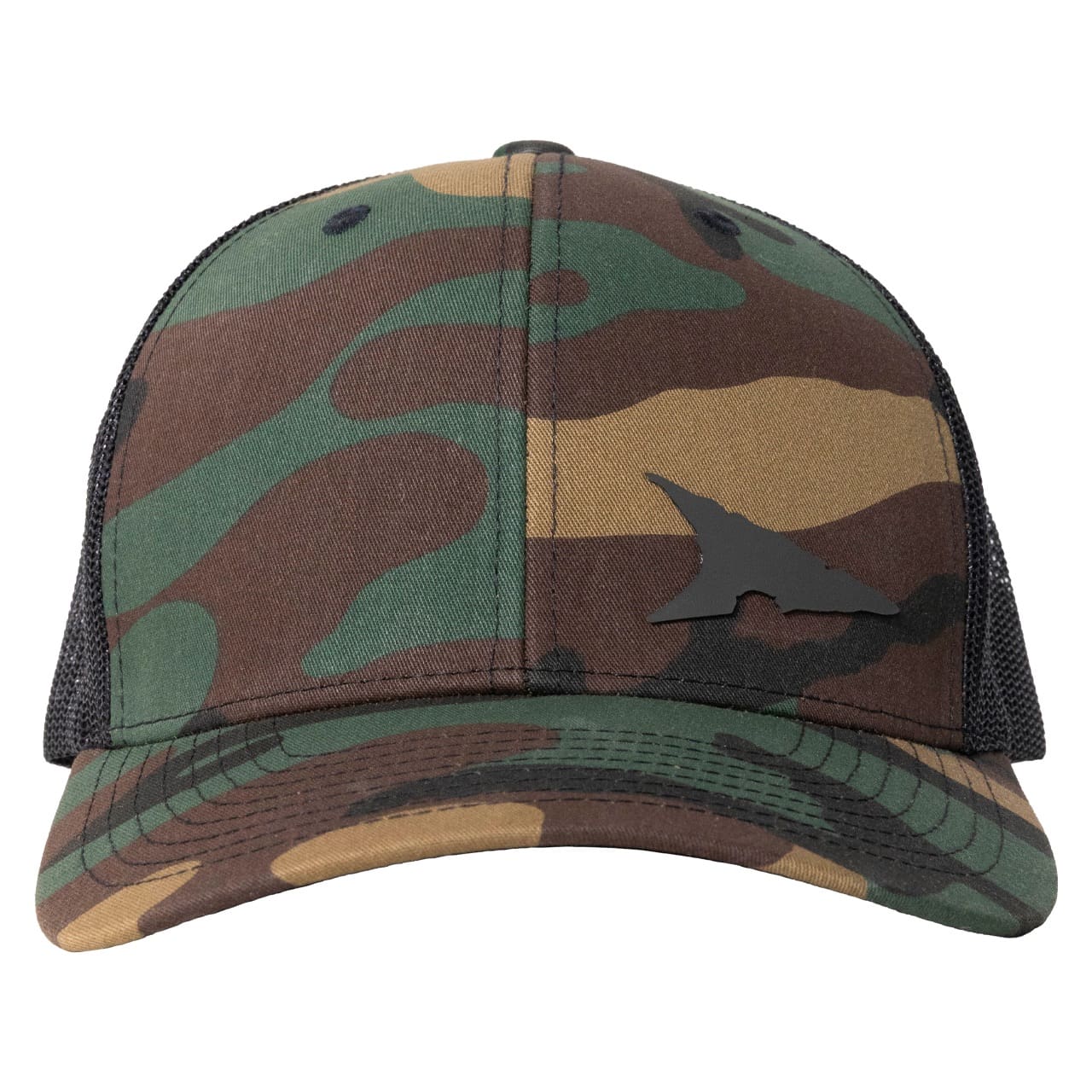
The WOODLAND CAMO SPEARTIP TRUCKER HAT is a no-nonsense, range-ready piece of kit designed with function and form in mind. Built on a structured six-panel chassis, it offers a mid-profile fit that works well with a variety of head shapes and helmet hair situations.

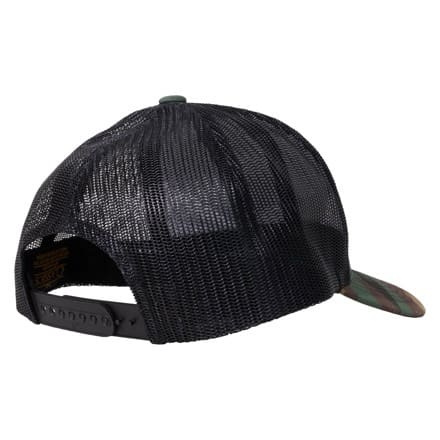
The mesh back keeps airflow steady, making it a solid choice for extended wear in hot or humid environments. Whether you’re running drills or just moving between locations, the breathable design helps regulate heat without sacrificing durability.

The Permacurv visor holds its shape under pressure, giving you a consistent brim curve that shields glare without flopping or warping. With a snapback closure, it’s easy to adjust on the fly—even one-handed. The offset Icon Speartip PVC patch adds a subtle nod to your tribe without screaming for attention, keeping the profile professional and purpose-built.

The woodland camo pattern gives it a classic, field-forward look that blends into both operational and everyday settings. Whether you’re spotting for a shooter or grabbing chow, this lid holds its own without getting in the way. The mid-profile structure also fits comfortably under over-the-ear hearing protection, making it ideal for time on the range. Rugged where it counts, breathable where it matters, and always mission-ready.

To request an estimate click image above or visit First-Spear.com/Request-For-Estimate. FirstSpear is the premier source for cutting edge-tactical gear for military, law enforcement and those who train. For more information visit First-Spear.