
OSI & 1947LLC will attending the upcoming FFF / Future Forces Forum in Prague on October 21st – 23rd 2026.
Contact:
Geoff Senko –geoff@osinnovate.com
Peter Raneri –peter@osinnovate.com


OSI & 1947LLC will attending the upcoming FFF / Future Forces Forum in Prague on October 21st – 23rd 2026.
Contact:
Geoff Senko –geoff@osinnovate.com
Peter Raneri –peter@osinnovate.com
The vehicles were developed through $17 million of BAE Systems Internal Research and Development funding and based on the proven chassis of the Armored Multi-Purpose Vehicle (AMPV).
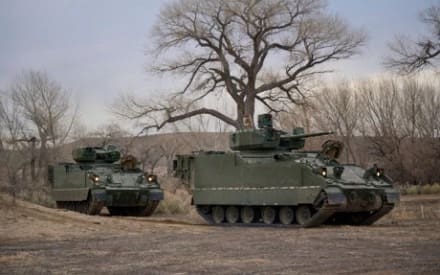
BAE Systems delivered two concept Infantry Fighting Vehicles to the U.S. Army in April to support the Transformation in Contact (TiC) 2.0 initiative. The vehicles were developed through $17 million of BAE Systems Internal Research and Development funding and based on the proven chassis of the Armored Multi-Purpose Vehicle (AMPV). Since delivery, the TiC unit has run the AMPV 30s through rigorous field evaluations, including live fire testing, benchmarking the platform’s capabilities against what Soldiers require to maintain advantage on the modern battlefield.
“Our mission was speed and innovation, and we delivered beyond expectations,” said Bill Sheehy, vice president of BAE Systems’ Ground Maneuver futures. “With today’s battlefield evolving faster than ever, it’s paramount that Soldiers have the capabilities they need to win the fight. Throughout this effort, our team demonstrated how we can integrate new design solutions in a time-effective and more cost-efficient manner for the Army.”
From start to finish, the development of the AMPV 30s took only six months before the company delivered them to the Army. Both AMPV 30s are equipped with common top plates that include the?KONGSBERG Medium Caliber Turret (MCT), a compact and light weight remote turret system currently in production with the U.S. Marine Corps’ Amphibious Combat Vehicle.
Beyond firepower, the AMPV 30s are designed for superior survival and connectivity. The tracked combat vehicles feature counter-unmanned aircraft systems (C-UAS) capabilities for combating drone threats, a cross-platform target handoff system that provides multiple vehicle connectivity for target identification and synchronization across the battlefield, and a 360 situational awareness camera system that allows Soldiers to view surroundings from the safety of the vehicle.
The modular and open architecture design of the AMPV chassis combined with BAE Systems’ common top plate enables the seamless incorporation of mission equipment packages onto the platform and is adaptable to more than 30 different turret systems. These two AMPV 30s mark eight total turreted AMPV prototypes the company has invested in over the last two years to support the Army’s modernization needs.

NEWINGTON, NH, September 22nd, 2026 – Wilcox Industries, a global leader in innovative sighting systems, targeting technologies, and mission ready solutions, is proud to introduce the VIPR™ (Visually Integrated Precision Reticle), a groundbreaking direct view optical sight engineered for today’s rapidly evolving operational environments. Combining the intuitive feel of a holographic sight with advanced digital capability, VIPR delivers unprecedented flexibility, precision, and operator awareness.
Purpose-Built for Multi/Domain Requirements
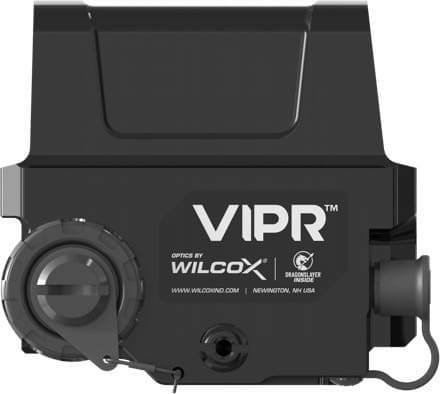
The Wilcox VIPR supports operators across Close Quarters Battle (CQB), mid-range engagements, and Counter Unmanned Aircraft Systems (C-UAS) missions. A digitally projected reticle enables operators to transition between ballistic-compensating mid-range profiles, CQB reticles, and C-UAS symbology without mechanical adjustments or disruption to their sight picture. The system also incorporates the Dragonslayer Systems™ Rapid Integrated Precision Reticle, which provides enhanced tracking and acquisition, providing the operator the ability to track and disable incoming drones.
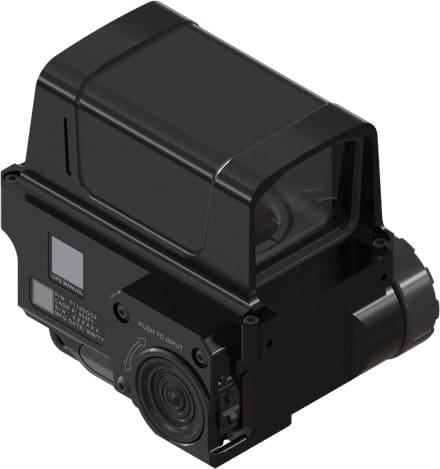
The system stores multiple customizable reticles and ballistic profiles. This allows the optic to function across a wide range of weapon platforms, calibers, and ammunition types. The VIPR reduces dependence on analog accessories and mechanical adjusters, decreasing potential failure points and improving operator efficiency. It is simple to operate with a single button nested inside a single scroll wheel, which is designed for reliable use with a gloved hand.
Digital Precision with Applied Ballistics™ Integration
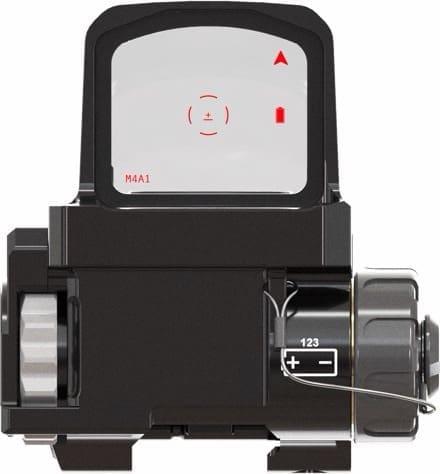
VIPR includes optional rangefinder connectivity that displays real-time range data directly inside the reticle. Integration with Applied Ballistics software provides precise ballistic solutions tailored to specific weapons and ammunition profiles. Dual eye shooting capability preserves depth perception, improves target acquisition speed, and enhances threat recognition under stress.
Engineered for Harsh Environments
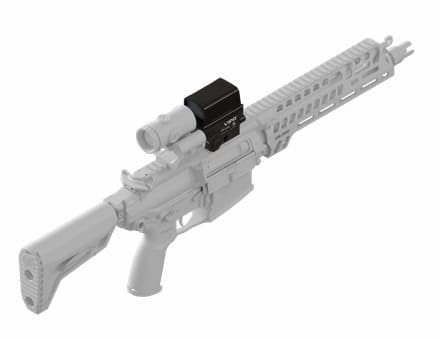
VIPR is engineered to withstand weapon shock, water immersion, and extreme temperatures. Key specifications include:
• Clear aperture: 30 mm wide x 27 mm high
• Waterproof rating: 20 meters for up to 2 Hours
• Weight: 343 grams including battery
• Boresight retention: less than 0.5 mrad
The optic mounts to any MIL STD 1913 rail and is compatible with magnifiers, including the Wilcox 3X Magnifier. Its rugged, compact housing maximizes the viewing window while minimizing obstruction.
Mobile App Integration and Mission Customization
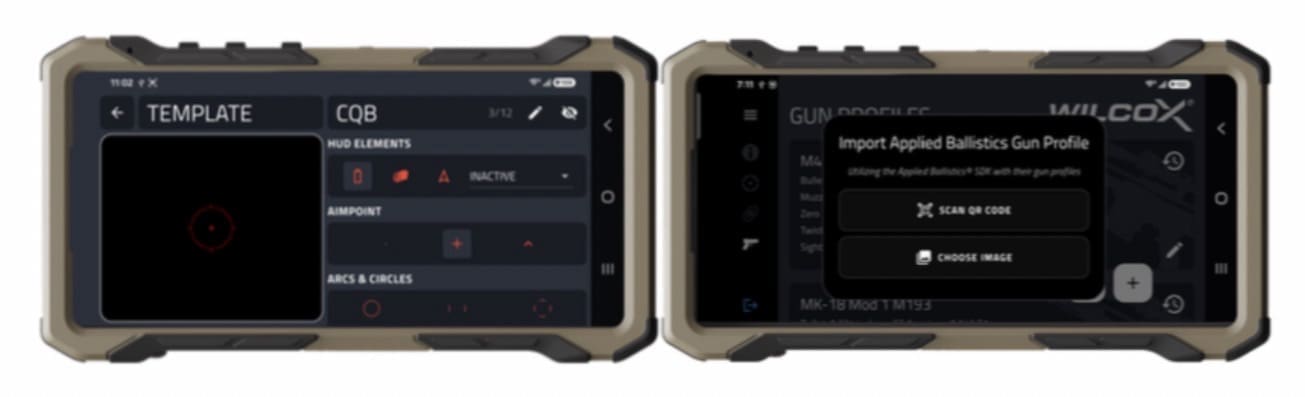
The VIPR mobile application gives operators centralized control of mission setup, reticle selection, ballistic profile management, and symbology customization. This digital ecosystem allows the operator to configure the optic quickly for evolving mission demands.
Setting a New Standard in Adaptive Optics
Traditional optics often require multiple accessories, each with its own limitations, configuration requirements, and failure points. VIPR consolidates these functions into one adaptive sighting system, reducing weight, reducing complexity, and decreasing adjustment time. This improves fleet readiness and allows operators to maintain focus on the fight rather than equipment management.
Availability and Additional Information
To learn more about the Wilcox VIPR or to request a hands-on demonstration, visit:
The VIPR will be on hand at the AUSA Annual Meeting & Exposition in Washington, DC from October 12 -14 at Booth 3907, as well as the Land Forces Show in Australia, from October 6 – 8th at Booth No. 5L16 in Hall 1.
For sales inquiries, contact:
603.431.1331
Minutes ago SIG SAUER officially launched the P385, a new pistol architecture that combines elements of the P320 and P365. Hence the moniker: P320 +P365 = P385.
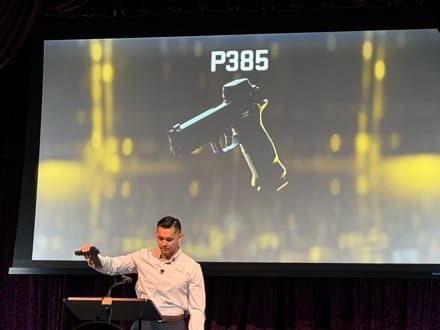
Over the past few weeks there has been a great deal of conjecture online regarding this new pistol due to a couple of leaks. I first heard about development of new pistol over a year ago and handled prototypes during SHOT Show of what was by then, called the P385. Development has been going on for even longer.
To be very clear, the P320 isn’t going anywhere. It remains in production and in service with military and police around the world as well as millions in civilian hands. Likewise with the P365. In fact, SIG is launching new versions of both pistols this year.
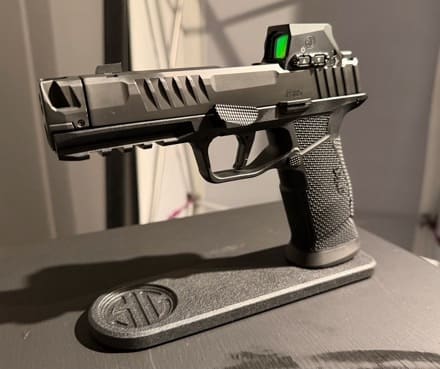
The P385 is a new design with a new Fire Control Unit and SIG Trigger Block for what they promise is a smooth, clean trigger press. You’ll also note a very low bore axis and full ambi-controls. Optics ready, it has been paired with the new XRAY5 Advanced Red Dot Sight in these images. More on that later and there’s quite the story there.
The new FCU pairs with the MAGSTRAP grip module for fast easy customization both in grip length and hand size as well as the addition of ReActive grip texturing.
Additionally, it accepts P320 magazines which can also be used on the P211.
The P385 will debut in 9mm with five models: Two comped, Full, Carry, and Compact. All will be available in Black or Coyote Brown and with or without a manual safety.
P385-MACH3D (launches EOY 26)
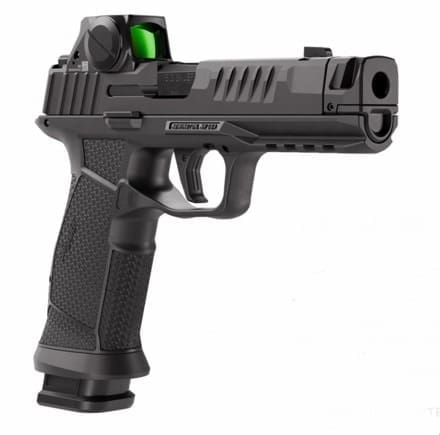
P385-COMP
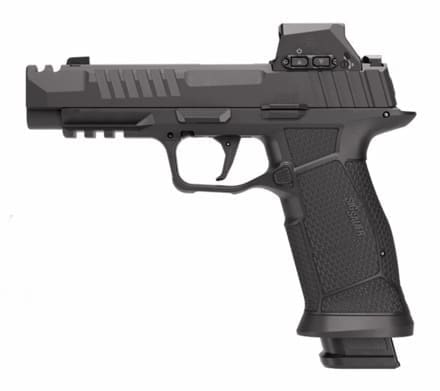
P385-FULL
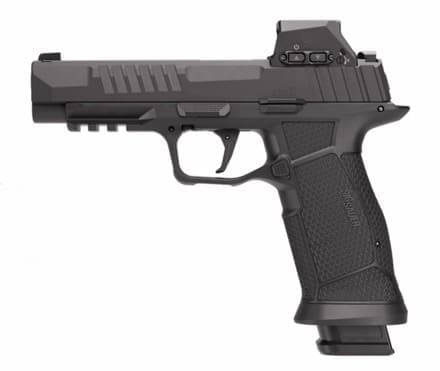
P385-CARRY
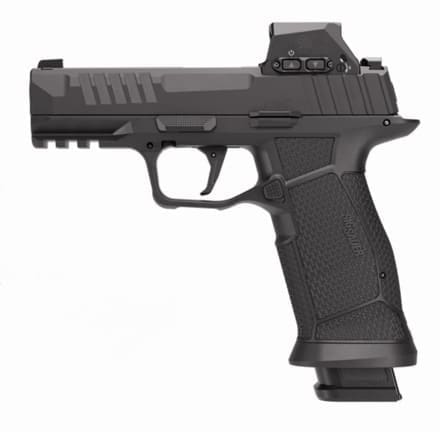
P385-COMPACT
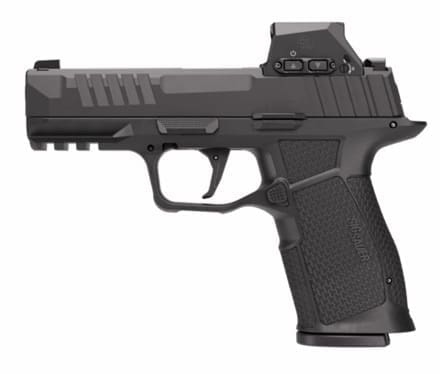
Look for pricing starting at $599.
Learn more at sigsauer.com

FORT BRAGG, N.C. — The character of warfare is changing, and the growing use of unmanned aircraft systems on battlefields around the world is forcing militaries to adapt faster than ever.
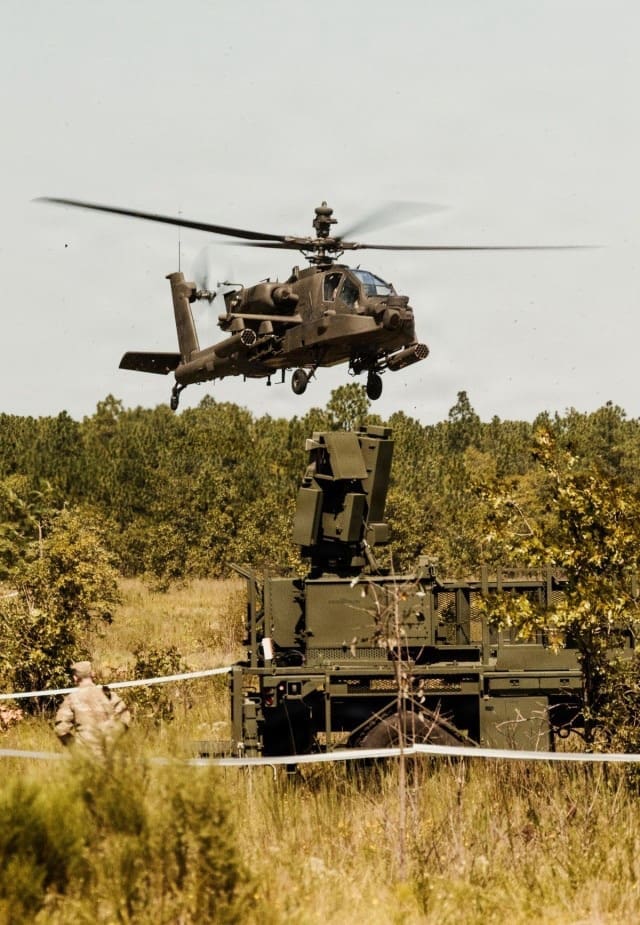
At Fort Bragg, the XVIII Airborne Corps is taking on that challenge through Scarlet Dragon, an exercise that brings Soldiers and industry partners together to test emerging technology in realistic field conditions. The exercise helped the corps evaluate which capabilities can integrate across the force, including systems designed to detect, track and defeat unmanned aircraft threats.
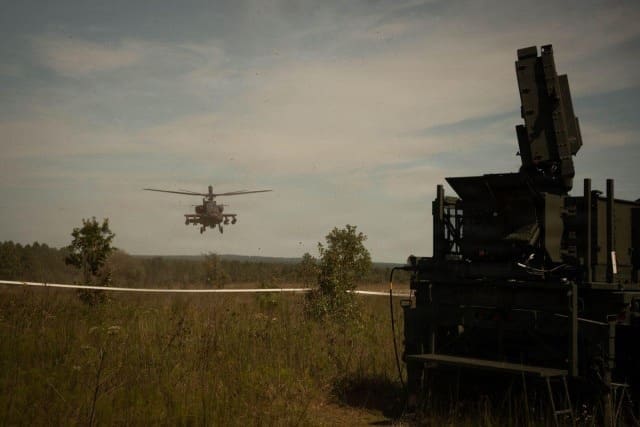
“The Scarlet Dragon exercise has become a validation exercise in the dirt with Soldiers doing integrated, real-world operational-type tasks,” said Col. Tom Monahan, director of the XVIII Airborne Corps’ Joint Innovation Outpost.
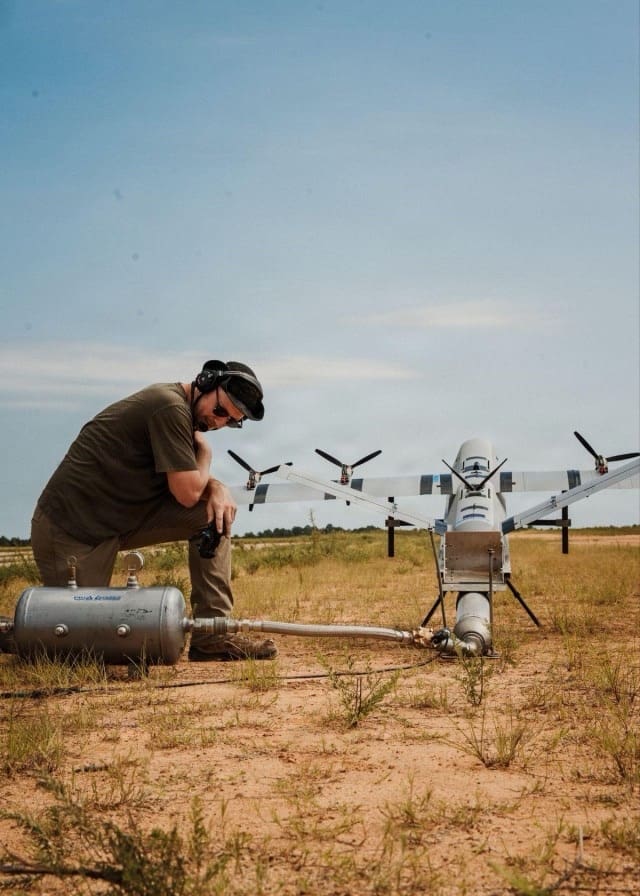
The exercise, held Sept. 11-17, 2026, at Fort Bragg, combined Soldiers, military systems, artificial intelligence, resilient data pathways and industry partners to address one of the Army’s most pressing challenges: integrating sensors, electronic warfare, command-and-control and defensive fires against evolving unmanned aircraft threats.
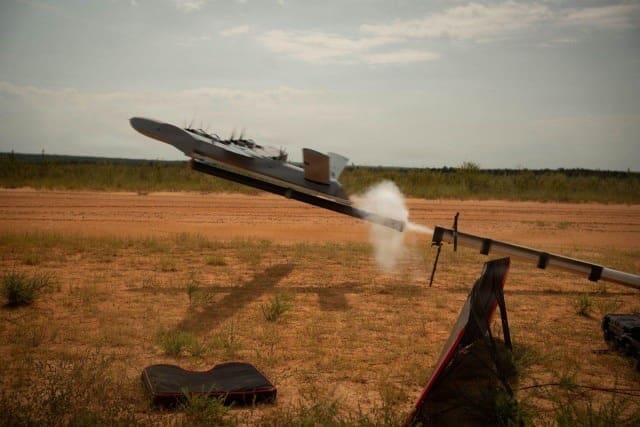
“Basically, transitioning gaps to capability requirements that we need, capabilities that will fill the gaps, and then running them through the exercise and the experimentation to come away with our findings to support the warfighter,” said Col. Paul Staeheli, the XVIII Airborne Corps operations officer.
Rather than testing technology in isolation, Scarlet Dragon places emerging capabilities in an austere field environment where Soldiers can evaluate how they perform against realistic threats and operational problems.
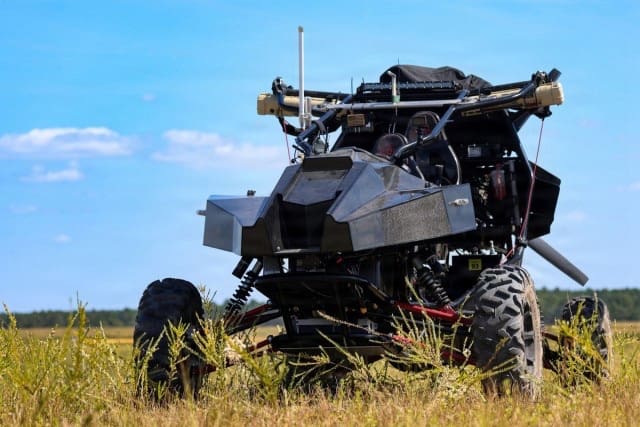
The exercise replicates tactics and capabilities Soldiers could encounter on a future battlefield, including large-scale drone swarms and systems modeled after threats seen in current conflicts. Some scenarios feature swarms of up to 100 unmanned aircraft, giving Soldiers the opportunity to train against the scale and complexity of modern drone attacks.
That threat environment allows the Corps to evaluate not only individual systems, but also how different capabilities work together.
“What we’ve found is that there’s no one sensor to rule them all,” said Col. Rob Kenny, the XVIII Airborne Corps chief of fires. “It takes an integrated, layered approach. Here at the company node, we’re working on: can we sense, can we make sense, and can we pass that information back to give time and space for our Soldiers to act?”
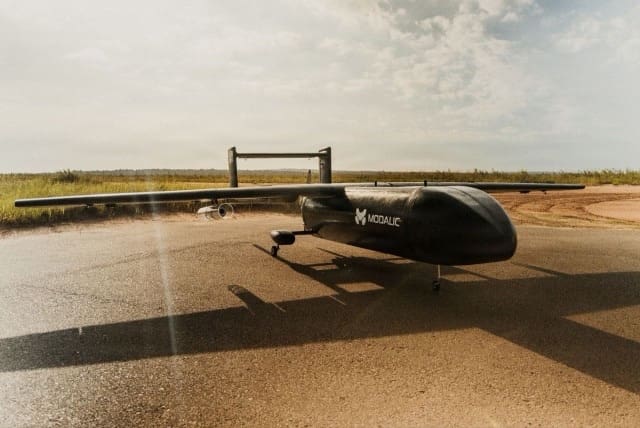
Electronic warfare, sensors, radar, autonomous systems and defensive fires each provide different tools for detecting, identifying and defeating unmanned aircraft. Integrating those capabilities is critical as adversaries continue to evolve their use of drones.
Scarlet Dragon also demonstrates how the Army can work with industry to develop and integrate new technology faster.
Leading-edge technology companies are working alongside Soldiers to identify operational problems, test potential solutions and gather feedback directly from the field. The partnership gives developers firsthand insight into how their systems perform in realistic military environments while giving Soldiers an opportunity to shape the technologies they may eventually use.
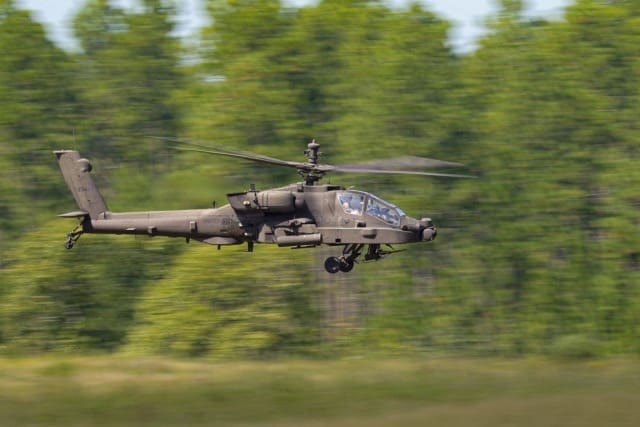
“The vendors out here are different contractors with different companies trying to show the limitations and capabilities of all their systems,” said Staff Sgt. Charles Johnson, noncommissioned officer in charge of the G34 company node. “They’re giving the full scope of what their systems can do and how it can help us in the best way possible.”
The effort extends beyond developing new equipment. The exercise examines the broader counter-UAS challenge, from passive detection technologies such as acoustic sensors and portable radar to autonomous systems and emerging capabilities designed specifically for the UAS fight.

That approach reflects the Corps’ broader responsibility as America’s Contingency Corps.
The exercise also reinforces a larger message about modernization: preparing for the future battlefield requires more than buying new equipment. It requires understanding emerging threats, testing solutions under realistic conditions and rapidly adapting when those solutions fall short.
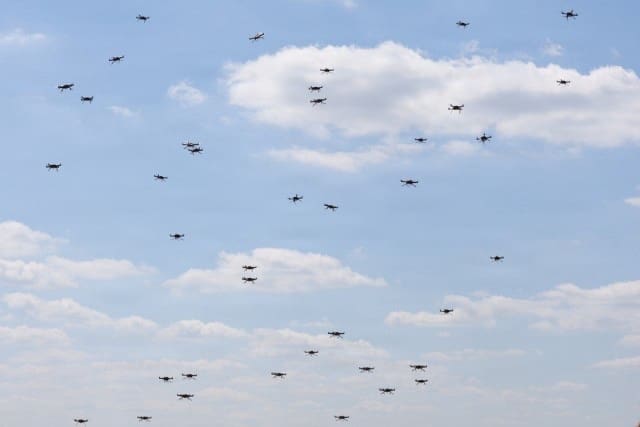
Through experimentation and collaboration with industry, the XVIII Airborne Corps is working to integrate autonomous technologies with legacy systems and address a rapidly evolving unmanned aircraft threat.
The goal is not simply to observe the future of warfare, but to prepare for it.
As unmanned systems continue to reshape battlefields around the world, exercises such as Scarlet Dragon give the corps an opportunity to learn, adapt and develop the capabilities Soldiers will need to maintain an advantage in future conflicts.
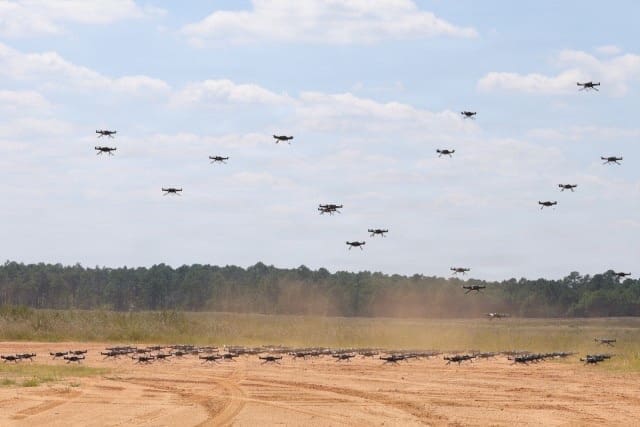
The XVIII Airborne Corps will continue to validate these systems in April 2027 during Scarlet Dragon 27-1, preparing for the larger Summit Strike exercise at Fort Drum, New York, in September 2027.
By XVIII Airborne Corps Public Affairs
Rheinmetall AG is continuously testing modular and interconnected solutions for maritime operations. As a leading international systems provider for security, the company is participating in the multinational REPMUS26 (Robotic Experimentation and Prototyping with Maritime Unmanned Systems) proving exercise in Portugal from 31 August to 25 September 2026. Already since 2024, the DAX-listed group has been contributing its expertise as a systems integrator for complex, multidimensional maritime systems to this large-scale trial.
The exercise on the Troia Peninsula and in the surrounding Portuguese waters brings together navies, research institutions, and industry to further develop unmanned systems within a realistic, multidimensional operational environment.
Interoperability as key to strategic security:
The networked deployment of unmanned platforms, from seabed to space, is crucial for protecting critical port infrastructure, strategically important port facilities, and coastal waters. At REPMUS26, Rheinmetall is demonstrating that mission success is determined not merely by the performance of individual platforms, but by their seamless networking. Integrating all sensor data into a multidimensional operational picture creates the conditions for early situational awareness and graded, precise courses of action.
An overview of the technological trial setup:
Mobile Mission Control
A key element of this year’s contribution is a containerised, relocatable demonstration setup. This will serve as a mobile command and control centre for the German Navy during the four-week exercise, supporting operational port security.
Open integration architecture
The Rheinmetall Battlesuite is based on the Tactical Core Middleware from blackned GmbH and is the technological backbone. This architecture creates an open environment for the flexible and application-specific integration of innovative sensors, effectors and mission modules from various technology partners.
Graded underwater sensor system
A particular focus in 2026 is on experiments involving unmanned underwater sensors from renowned industry partners. The aim is to generate a persistent operational picture and enable operators to control multiple unmanned systems of different types and from various manufacturers via a common user interface.
“REPMUS offers us an excellent opportunity to test our prototype development in realistic scenarios”, explains Gregor Mannherz, Head of the Rheinmetall Delegation. “By collaborating with operational experts from our naval customers and government agencies, we can design our products and solutions more efficiently, thus accelerating development in a targeted manner”.
By validating collaborative operational concepts and enhancing interoperability, Rheinmetall is making a significant contribution to strengthening the defence capabilities of NATO partners and to safeguarding global maritime supply routes.
FULDA, GERMANY (18 September 2026)
Procurement plays an increasingly strategic role at Mehler Systems, connecting global supplier networks with engineering, manufacturing, and customers to strengthen innovation, resilience, and long-term competitiveness across the group.

In this interview, Andreas Kiel, Group Director Procurement at Mehler Systems, discusses how procurement has evolved beyond traditional purchasing, the importance of trusted supplier partnerships, the role of Mehler Systems Asia, and why resilient value chains have become a competitive advantage in today’s defence industry.
Q: Many people assume procurement is about negotiating the lowest price. At Mehler Systems, where quality and reliability are critical, what does “good procurement” actually mean?
A: Good procurement at Mehler Systems goes far beyond negotiating prices. Our role is to create sustainable value by ensuring quality, innovation, availability, resilience, and long-term supply security across our entire value chain.
Procurement at Mehler Systems is evolving from a traditional purchasing function into the architect of global partner networks and resilient value chains. Our mission is to connect global supply networks with local market and supplier expertise, bringing together the right technologies, capabilities, and innovation partners worldwide while understanding regional market requirements, cultural differences, and strategic customer needs.
Good procurement means building trusted partnerships that create mutual value over many years. The objective is not to achieve the lowest purchase price, but to deliver the highest long-term value for our customers, our suppliers, and the Mehler Systems Group. This philosophy is best summarised in our guiding principle: Act Global – Think Local.
Q: Defence procurement is often described as being far more complex than procurement in other industries. What makes it different?

A: Performance, reliability, and compliance are mission-critical in our industry. Many of our products protect people in life-threatening situations, which means procurement decisions have a direct impact on operational readiness and user safety.
Unlike many sectors, we manage long product lifecycles, highly specialised materials, export controls, security regulations, and increasing geopolitical uncertainty while ensuring long-term product availability.
What also makes defence procurement unique is the complexity of the production networks involved. We are not only managing direct suppliers but entire value chains that extend from raw materials and specialised components through multiple supplier tiers to the end customer. Transparency, resilience, and performance across every level of that network have become critical success factors.
Procurement therefore acts as a strategic connector between customers, engineering teams, development partners, manufacturing organisations, and suppliers across different regions of the world.
Q: Procurement often works behind the scenes. At what point do you become involved when a new product is being developed?
A: Ideally, from the earliest stages of development. Innovation is rarely created by a single organisation. Many technological advances originate within the supplier network. By involving procurement early, we can identify emerging technologies, evaluate supply chain readiness, assess industrialisation risks, and accelerate development timelines.
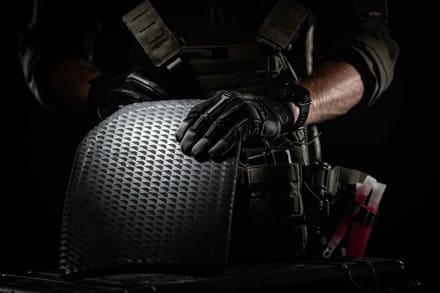
Our contribution extends well beyond sourcing components. We analyse the entire value stream behind a product, identify critical dependencies, and create transparency across second- and third-tier supplier structures. Understanding where materials, technologies, and manufacturing capabilities actually originate has become a significant competitive advantage.
Procurement therefore acts not only as a commercial function but increasingly as a strategic partner to engineering, operations, and programme management. Our role is to connect engineering teams with global technology leaders and specialised suppliers, ensuring that innovation can ultimately be transformed into scalable, reliable, and risk-resilient production solutions.
Q: Across Mehler Systems, innovation takes many forms. How does procurement help turn ideas into reality?
A: Every product innovation depends on technologies, materials, manufacturing capabilities, and supplier expertise.
Our role is to identify the best partners globally, qualify new technologies, and secure the production capabilities needed to bring those innovations into industrial production.
Suppliers themselves also play a significant role in innovation. Many contribute new material technologies, manufacturing processes, and production concepts that improve both product performance and scalability.
That is why we invest heavily in long-term supplier partnerships. By working closely with suppliers across global innovation networks, we gain early access to emerging technologies, new manufacturing capabilities, and production concepts that help shape the next generation of products.
Q: Mehler Systems continues to strengthen collaboration across its brands. What advantages does working as one group bring from a procurement perspective?
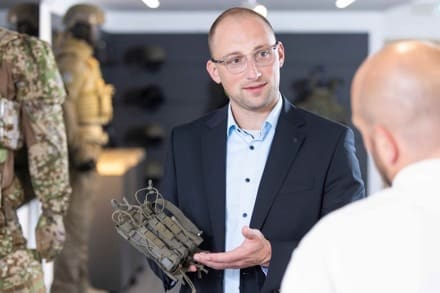
A: Working as one group significantly strengthens our market position, innovation capabilities, and procurement effectiveness.
By combining expertise from body armour, platform protection, tactical apparel, and load-carrying solutions under a common procurement strategy, we can leverage synergies, consolidate market intelligence, strengthen supplier relationships, and build greater resilience throughout the value chain.
One of the greatest advantages of operating as an integrated group is our ability to combine global scale with local expertise. Through our international footprint, we gain direct access to experienced local sourcing specialists, established supplier networks, and regional market intelligence.
This local expertise allows us to identify challenges earlier, accelerate decision-making, strengthen supplier collaboration, and create value faster for our customers and the entire group.
Q: Mehler Systems Asia has become an important part of that strategy. Why was it the right time to establish a stronger procurement presence in the APAC region?
A: Procurement was one of the principal drivers behind establishing Mehler Systems Asia.
Global supply chains have become significantly more complex, while innovation, manufacturing capabilities, and new technologies are increasingly emerging outside the traditional European supplier landscape.
To remain competitive, procurement must be present where future technologies, supplier capabilities, and innovation ecosystems are developing.
The objective of Mehler Systems Asia is not simply to strengthen sourcing activities. It is about connecting global supply networks with local market and supplier expertise, building closer relationships with key partners, accelerating development cycles, increasing transparency across the value chain, and improving supply chain resilience.
At the same time, all sourcing activities remain aligned with Mehler Systems’ global standards for quality, compliance, and performance. In many ways, Mehler Systems Asia represents the next evolution of procurement—from managing suppliers to building global ecosystems of trusted partners.
Q: Large defence programmes place very different demands on procurement. What does it take to support programmes such as MOBAST or the Ukraine project?
A: Every programme requires a different procurement strategy.
Long-term programmes such as MOBAST require stability, capacity planning, lifecycle management, and resilient supplier relationships capable of maintaining consistent quality over many years despite changing market conditions.
The Ukraine programme required something different. It demonstrated the strength of the One Mehler approach, with procurement coordinating suppliers, production capacities, logistics, and material allocation across multiple business units under demanding timelines.
Whether supporting long-term programmes or rapid-response projects, the common denominator remains the same: trusted partnerships, transparency, proactive risk management, and resilient supplier ecosystems.
Success is not built on short-term transactions but on trusted relationships that are developed and strengthened over many years.
Q: Defence customers expect rapid delivery without compromising quality. How do you balance speed, availability, and reliability?
A: Speed without quality creates risk, while quality without availability creates operational challenges. The objective is therefore to achieve all three simultaneously.
We accomplish this through proactive risk management, diversified sourcing strategies, framework agreements, and long-term supplier partnerships.
Equally important is transparency across the value chain. Understanding production technologies, manufacturing capacities, supplier interconnections, and material dependencies enables us to identify risks early, make faster decisions, and respond effectively when market conditions change.
Regional sourcing capabilities further strengthen that responsiveness by bringing us closer to suppliers, technologies, and innovation markets while maintaining globally consistent quality standards.
Q: Looking ahead, what will be the biggest challenge for procurement in the defence industry?
A: The greatest challenge will be balancing resilience, innovation, sovereignty, scalability, and competitiveness simultaneously.
Procurement will continue evolving from a transactional function into a strategic enabler of business success. Our responsibility extends beyond managing suppliers. We build trusted ecosystems of partners, secure critical technologies, and create resilient supply chains capable of supporting future growth.
Ultimately, success in defence procurement is not defined by individual transactions but by the ability to connect global supply networks with local market and supplier expertise, ensuring that critical capabilities remain available, scalable, and resilient when they are needed most.
Act Global – Think Local is therefore much more than a sourcing strategy. It is the foundation for sustainable partnerships, innovation, resilience, and long-term value creation throughout the entire Mehler Systems ecosystem.
About Andreas Kiel:
Andreas Kiel is Group Director Procurement at Mehler Systems, where he leads procurement across the group. With more than 20 years of experience in the defence industry, he specialises in strategic procurement, supply chain management, industrialisation, and global sourcing. Holding a degree in economics and a master’s degree specialising in supply chain management, Andreas Kiel has been instrumental in building Mehler Systems’ global supply chain, including the development of strategic partnerships across Asia. As a Board Member of Mehler Systems Asia, he supports the group’s international sourcing strategy while strengthening supplier partnerships and procurement capabilities across the APAC region.
For more information about Mehler Systems, please visit mehler-systems.com
Forward Controls Design has released the first models in its OPF-G6 family of heavy-duty optic plates for Glock Gen 6 pistols equipped with the Optic Ready System (ORS).
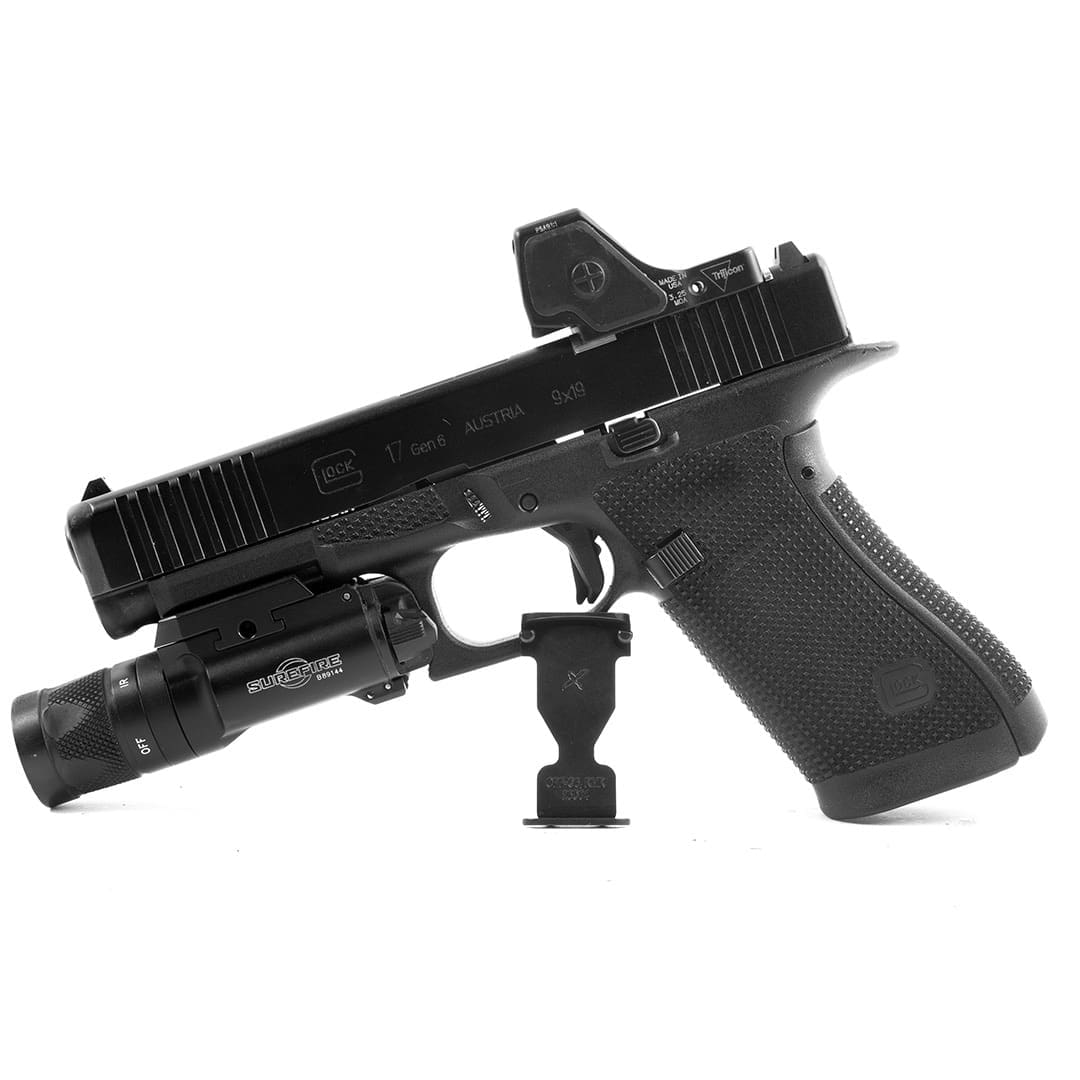
FCD was not first to market with Gen 6 optic plates, but that was never the objective. Additional development time was spent refining the interface, material selection, tolerances, and installation rather than compromising the design for an earlier release.
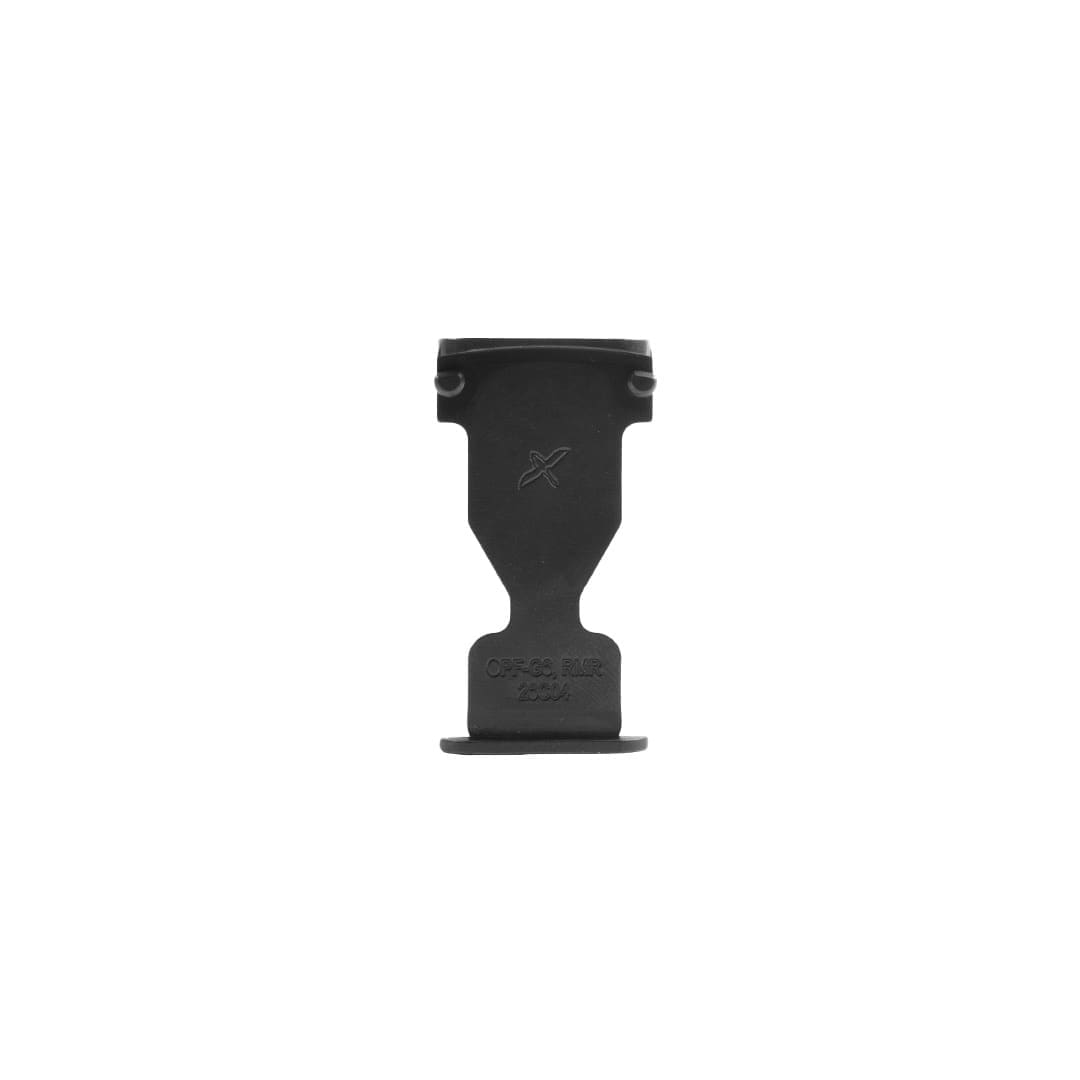
Glock’s Gen 6 optic system is a significant departure from the previous MOS system. Instead of a conventional flat mounting surface, ORS uses an insert that interfaces with an hourglass-shaped pocket machined into the slide, with a rear locking tab providing additional retention.
OPF-G6 was designed specifically around those features. The underside of each plate fills the ORS pocket and engages the rear locking tab. Because the plate enters the pocket at an angle before falling into position, FCD also refined the front bevel to allow the plate to seat smoothly during installation.
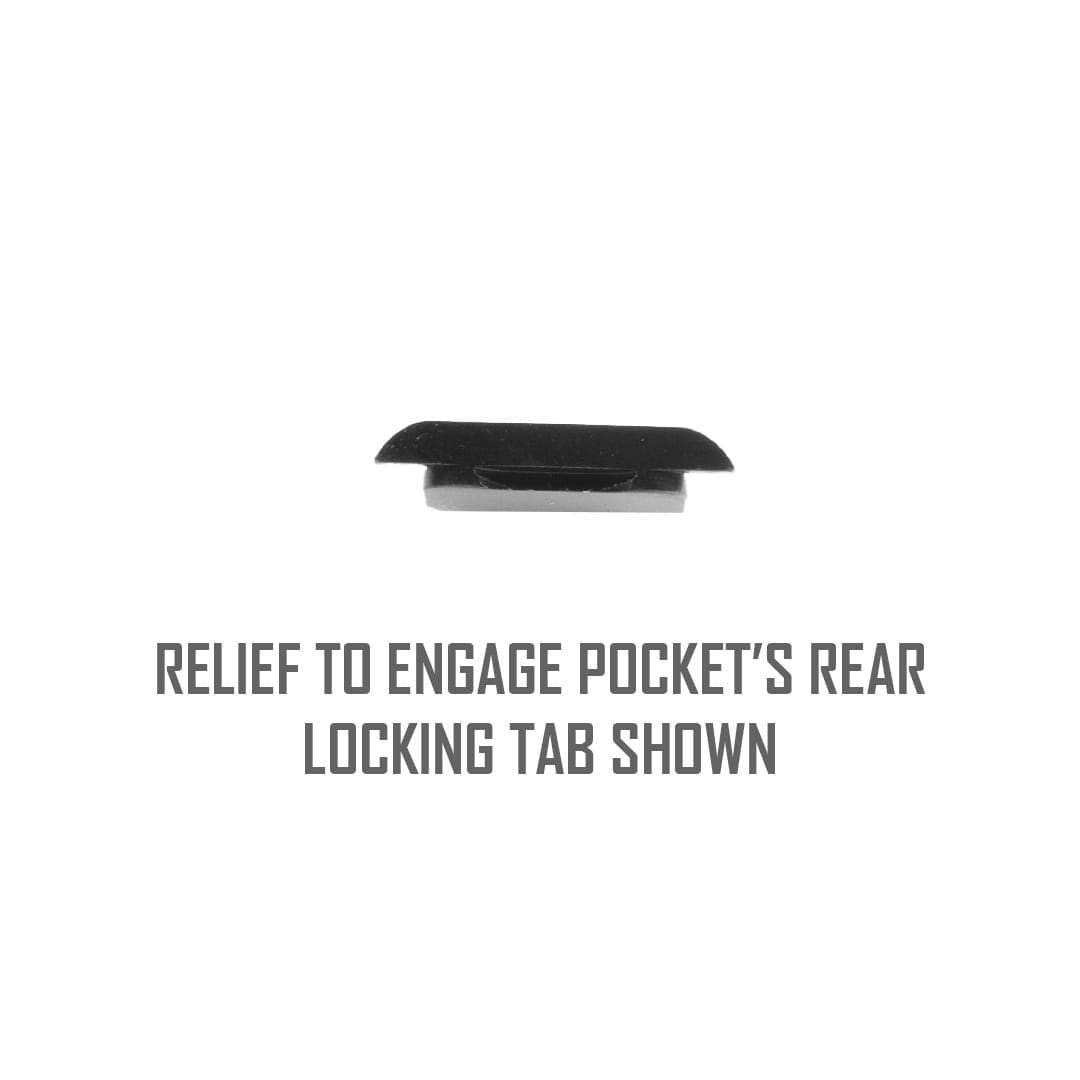
All OPF-G6 plates are machined from 17-4 stainless steel and finished in black nitride. The steel construction allows the plate’s mechanical interfaces to resist movement and deformation while managing recoil through engagement with the ORS pocket rather than relying on the optic screws.
For OPF-G6, RMR, FCD also evaluated a full-width design that eliminated the need for a sealing plate with the original RMR, but it added approximately 0.070 inches of height. Since the RMR HD, RCR, and SRO do not require a sealing plate, FCD retained the lower mounting height.
The OPF-G6 family currently includes:
OPF-G6, RMR: Trijicon RMR, RMR HD, RCR, SRO, and Primary Arms HTX-1 with its supplied adapter.
OPF-G6, ACRO: Aimpoint ACRO P2 and Steiner MPS.
OPF-G6, DPP: Leupold DeltaPoint Pro and EOTech EFLX.
OPF-G6 plates are available now from Forward Controls Design and authorized FCD dealers.