Atrius Development Group

Mehler Systems Presents Full-Spectrum Tactical Solutions at SOFINS 2025

April 16th, 2025

FULDA, GERMANY (10.04.2025)

Mehler Systems, together with its brands MehlerProtection, UF PRO, and Lindnerhof, successfully participated in SOFINS 2025—the premier European exhibition for Special Operations Forces. Held from April 1 to 3 at the military base in Martignas-sur-Jalle, France, the event brought together elite tactical units, defense industry leaders, and cutting-edge solution providers to engage in dialogue and present the next generation of mission-ready equipment.

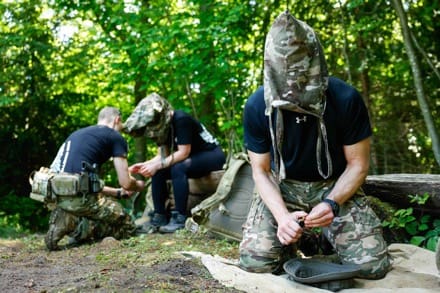
Throughout the exhibition, Mehler Systems showcased an integrated portfolio designed to meet the complex requirements of modern mission profiles. Mehler Protection presented a range of ballistic protection systems developed for high-threat environments. Among them was the ExoM Up-Armoured Exoskeleton, offering full-body protection up to VPAM 8 while maintaining operator mobility. The M.U.S.T. System demonstrated the flexibility of modular body armour platforms, and the Omega Helmet Line delivered lightweight head protection. The brand also displayed a comprehensive array of ballistic panels, vests, and plate carriers tailored for the specific needs of special operations forces.

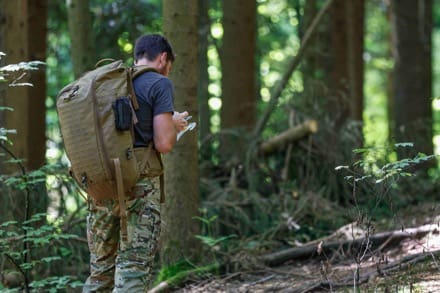
UF PRO introduced a selection of tactical garments engineered for performance across diverse climates and terrains. The Striker TT Combat Shirt and Pants offered breathable, durable solutions for hot and humid conditions, while the Monsoon XT Gen.2 Jacket and Pants provided dependable weather resistance in harsh, wet environments. For cold-weather operations, the AcEGen.2 Winter Combat Shirt delivered a balance of insulation and moisture regulation. The Striker X Gen.2 Combat Pants, designed for rugged terrain, completed the lineup with enhanced durability and mobility.

Lindnerhof featured its latest innovations in modular load-carrying systems and tactical gear. Visitors explored plate carriers, chest rigs, pouches, and belts—each developed for high adaptability, streamlined usability, and lightweight construction. A highlight of the exhibit was The Beast, Lindnerhof’s heavy load-carrying system built to manage extreme weight while maintaining comfort and stability during prolonged missions.

SOFINS 2025 once again proved to be a key engagement opportunity for Mehler Systems to connect directly with international defense professionals and reinforce its role as a trusted provider of integrated protective and tactical systems. The event underscored the group’s continued commitment to supporting those who serve with mission-focused solutions built on performance, protection, and operational reliability.

For more information about upcoming events, visit: mehler-systems.com/events

Irregular Warfare: U.S. Army’s IW Doctrine

April 16th, 2025

I regularly find myself initially confused during conversations regarding IW, listening for cues as to whether others are mentioning Irregular Warfare or Information Warfare. Having practiced both, often simultaneously, it leads my mind to wander in various directions.

That’s one of our biggest weaknesses in the national security establishment, terminology. We often find ourselves speaking past one another as we attempt to use various buzzwords to gain common ground.

This video is about Irregular Warfare. Below is the description:

Currently, the U.S. Army’s Irregular Warfare (IW) doctrine is being reviewed and updated by the Combined Arms Doctrine Directorate at Fort Leavenworth, KS. This film is part of that ongoing discussion and highlights some of the most basic and important parts of current IW doctrine that should remain in place, while suggesting some needed changes as well.

The character and form of war are constantly changing, yet its fundamental nature remains the same. Though Great Power Competition is now our primary national security challenge – a departure from conducting almost two decades of continuous irregular war against violent extremist organizations worldwide – the requirement for mastery of irregular warfare persists. Far from abandoning these critical competencies, we will sharpen these capabilities for application against peer competitor, nation-state adversaries. – 2020 Irregular Warfare Annex to the National Defense Strategy

IW Reality: Conventional forces have, and always will have, a role in IW across a variety of missions, and a range of military activities

IW Myth: Irregular Warfare (IW) is Counterterrorism (CT), CT is Special Operations Forces (SOF), therefore IW is SOF.

NAVIFOR Team Captures First at 2025 Best Linguist Games

April 16th, 2025

SALT LAKE CITY – In a remarkable display of linguistic expertise, Naval Information Forces placed first at the 2025 Best Linguist Games, formerly known as the Polyglot Games.

Hosted by the Utah Army National Guard’s 300th Military Intelligence Brigade, the 7th annual event brought together more than 270 military and civilian linguists from across the Department of Defense. The Games took place Feb. 6 at the downtown Hyatt Regency.

NAVIFOR, which provides operationally ready information warfare forces to support fleet and joint force commanders worldwide, fielded a seven-person team for the first time this year. Among the team members was Petty Officer 1st Class Anna Bilodeau, a Cryptologic Technician (Interpretive) Sailor assigned to Information Warfare Training Command Monterey in California.

“We had no expectation that we would win, so when it happened, it was quite a shock, but also all the more exciting,” she said.

A battle of words: The competition

The Best Linguist Games are designed to test military linguists in real-world scenarios, requiring rapid translation and analysis under intense conditions. Teams compete in several events, including:

? Voice intercept: Live translation of intercepted foreign language communications.

? Site exploitation: Rapid intelligence gathering from a simulated high-risk environment.

? Document exploitation: Extracting key intelligence from foreign documents.

? Open-source collection: Analyzing publicly available information to support intelligence operations.

? Operational analysis & commander’s brief: Synthesizing linguistic intelligence into actionable reports for senior leadership.

For the NAVIFOR team, Bilodeau dedicated time studying French military vocabulary to get ready.

“I was the only trained French linguist on the team,” she added, “so I focused primarily on refining my skills in that language ahead of the competition.”

Victory through teamwork

The NAVIFOR team was composed of diverse and highly skilled linguists and CTI Sailors:

? Bilodeau (French, Arabic) – IWTC Monterey

? Petty Officer 1st Class Samantha Dayton (Chinese, Spanish) – IWTC Monterey Detachment Goodfellow

? Chief Petty Officer Deborah Bowers (Russian, Arabic) – IWTC Monterey Detachment Goodfellow

? Petty Officer 1st Class Albert Solis Sloan (Spanish, Russian) – Cryptologic Warfare Activity 65

? Petty Officer 3rd Class Bashar Akkawi (Arabic) – Navy Information Operations Command Georgia

? Petty Officer 2nd Class Rebekah Cupitt (Persian) – NIOC Georgia

? Petty Officer 1st Class Ralph Rivera (Korean) – NIOC Pacific

NAVIFOR outperformed 40 teams to claim victory. One of the most intense events was the site exploitation exercise, which tested the team’s ability to operate under simulated combat conditions.

“This competition isn’t just about who can translate the fastest or the most accurately,” Bilodeau said. “It’s about working together, applying our skills in real-world intelligence scenarios that could impact national security.”

That teamwork, along with individual expertise, didn’t go unnoticed.

“Since arriving at IWTC Monterey only four months ago, CTI1 Bilodeau has been a standout Sailor, and her success at the 2025 Best Linguist Games is no surprise to anyone,” said Cmdr. Miles Alvarez, commanding officer of IWTC Monterey. “Her technical skills are what got her recognized and selected for the Navy team, and her outstanding contributions overall helped the Navy win this year’s event.”

Importance of Best Linguist Games

The annual Best Linguist Games is a unique training ground for military linguists, reinforcing the importance of language proficiency, intelligence gathering and analysis in modern warfare. The event also offers military linguists a chance to connect with others they wouldn’t normally meet.

“This competition provided a unique opportunity to network and engage in operational language work that we rarely experience in daily assignments,” Bilodeau said. “The leadership representation that NAVIFOR provided to support us was fantastic; we were able to learn about the CTI community and provide feedback and input in a way that is seldom available to E-6 and below personnel.”

Looking ahead

Bilodeau would like to return to the Best Linguist Games if she has the chance and hopes more Navy linguists will participate.

“I would highly encourage linguists, especially CTIs, to participate,” she said. “Also, if you have language skills, make sure they’re documented. That can open doors to incredible opportunities like this.”

With NAVIFOR’s victory, Bilodeau said she hopes more Navy linguists will be inspired to join the competition, test their skills and continue to strengthen the community of military linguists.

About IWTC Monterey and Detachment Goodfellow

As part of the Center for Information Warfare Training, Information Warfare Training Command Monterey provides a continuum of foreign language training to Navy personnel, which prepares them to conduct information warfare across the full spectrum of military operations.

Detachment Goodfellow aligns under IWTC Monterey and oversees follow-on “A” school accession training for more than 200 Sailors.

With four schoolhouse commands, two detachments and training sites throughout the United States and Japan, CIWT provides instruction for over 26,000 students every year, delivering information warfare professionals to the Navy and joint services. It also offers more than 200 courses for cryptologic, information systems and electronics technicians; intelligence specialists and officers in the information warfare community.

By Chief Petty Officer Lindsay Fondren and Petty Officer 1st Class Anna Bilodeau,

Information Warfare Training Command Monterey

Langdon Tactical Adds the HK VP9A1 to its Lineup

April 15th, 2025

Phoenix, AZLangdon Tactical Technology (LTT) known for their best-in-class custom gunsmithing, proudly announces the addition of the HK VP9A1 to their lineup and Custom Gun Work offerings.

The LTT VP9A1 combines the reliability, durability, and engineering that you expect from H&K with the custom touch of Langdon Tactical in a striker fired platform. Starting with the optics-ready HK VP9A1, which includes a nickel Teflon-coated trigger bar, aggressive slide serrations, a fully customizable grip, and an enhanced magwell, we take it a step further. LTT adds our Trigger Job, your choice of GrayGuns aluminum trigger to reduce pre-travel and over-travel, customizable backup iron sights, and the option to include a C&H Precision optics plate—delivering a pistol that’s range-ready right out of the box.

“We added the LTT VP9A1 to provide our customers with the HK design and quality that we know from our work on the P30 and USP pistols, now in a striker fired platform. We are proud to work alongside HK to add our Precision Build Confidence to their No Compromise.”

Ernest Langdon, CEO

Upgrade Options Include:

LTT Trigger Job with GrayGuns Aluminum Trigger

·Flat

·Hybrid

Backup Iron Sights

·HK Backup Sights

·XS Minimalist Backup Sights

C&H Precision Optic Plates

Customers also have the option to send in their own VP9 or VP9A1 for LTT upgrades, making these premium features accessible to those who already own the platform.

The Four Stages of Competence in TCCC and TECC

April 15th, 2025

‘We do not rise to the level of our expectations. We fall to the level of our training.’  -Archilochus

Tactical Combat Casualty Care (TCCC) and Tactical Emergency Casualty Care (TECC) are critical frameworks for managing trauma in high-stress, often life-threatening situations. Mastery of these skills can be understood through the lens of the four stages of competence, a model that outlines the progression from ignorance to expertise. Here’s how these stages apply to learning Tactical Trauma Care (TTC):

Unconscious Incompetence: Blissful Ignorance
At this initial stage, individuals are unaware of their lack of skill and knowledge.  An untrained responder might not realize the importance of applying a tourniquet correctly or when to prioritize airway management in a trauma scenario. Without exposure to these concepts, they don’t even know what they don’t know. This stage ends either when training begins, and the gaps in knowledge become apparent, or when an actual trauma incident occurs. 

Conscious Incompetence: Awareness of the Challenge
Once training starts, learners enter conscious incompetence. They now recognize the complexity of TTC skills but struggle to execute them effectively. Mistakes are common, and confidence is low. This stage is crucial, as it drives motivation to practice and improve, whether through simulated scenarios, guided learning, knowledge gathering or real-world application.

Conscious Competence: Deliberate Proficiency
With consistent practice and study, learners reach conscious competence. They can now apply TCCC techniques accurately, but it requires focus and deliberate effort. A medic at this stage might successfully stabilize a patient but still mentally walks through each step. They start to see and react to the casualty’s condition preemptively. Repetition and experience are key to moving beyond this phase along with continuing medical education.

Unconscious Competence: Instinctive Mastery
At the final stage, TTC skills become smooth, honed and second nature. Seasoned practitioners can perform life-saving interventions with ease, even in high threat environments. They no longer need to consciously recall protocols; their actions are swift, automatic, and effective. Their experiences and training control the chaos. This level of mastery is the goal for anyone operating in tactical or emergency environments.

The journey through these stages is not linear—it requires training, real-world exposure, and a personal commitment to refining skills. Whether in military or civilian contexts, progressing to unconscious competence can make the difference in “time is life” situations.

CTOMS™ has been providing tactical medicine to service organisations for nearly two decades. For more information on our in-person and online training, contact training@ctomsinc.com.

Spiritus Systems Adds “Equipnor AB” as European Dealer

April 15th, 2025

Equipnor AB is proud to announce that we have been appointed as an official European dealer for Spiritus Systems. This partnership marks a significant step in expanding the reach of Spiritus Systems’ cutting-edge tactical gear to military elite units across Europe. With a deep understanding of the operational needs of military professionals, Equipnor AB will manage the sales and distribution of Spiritus Systems’ high-performance equipment, ensuring that Europe’s elite forces have access to the most advanced tactical solutions available.

We are honored to collaborate with Spiritus Systems and look forward to supporting military professionals with industry-leading gear designed for the highest levels of performance and reliability.

For inquiries and further information, please contact Equipnor AB info@equipnor.se

Streamlight Launches Special-Edition Lights for a Cause

April 15th, 2025

Portion of Proceeds From Nano Light® II and Wedge®XT Lights to Support Breast Cancer Research Foundation and Concerns of Police Survivors

EAGLEVILLE, PA, April 14, 2025 – Streamlight® Inc., a leading provider of high-performance lighting tools, announced the launch of four new “Lights for a Cause” models to support two major non-profit organizations. The new lights, including the BCRF Pink Nano Light® II, BCRF Pink Wedge® XT, C.O.P.S. Blue Nano Light® II, and C.O.P.S. Blue Wedge® XT, are designed to raise awareness of and funding for the Breast Cancer Research Foundation (BCRF) and Concerns of Police Survivors (C.O.P.S.) 

“As a long-time corporate supporter of these two critically important organizations, Streamlight is proud to introduce these new Lights for a Cause, which offer customers dependable tools while also funding vital work,” said Michael F. Dineen, Streamlight President. “Whether supporting the families and co-workers of fallen officers or advancing life-saving cancer research, these special edition lights give back in a meaningful way.” 

The Nano Light® II is an ultra-compact keychain light that delivers 20 lumens of brightness and one hour of run time, powered by a single AAAA alkaline battery. Lightweight and durable, it’s made of machined aluminum and includes a non-rotating snap hook for quick, one-handed use.

The Wedge® XT is a USB-C rechargeable everyday carry light that provides 500 lumens of bright white light, with a slim, flat profile for comfortable pocket carry. It features a tactical push-button tail switch, deep pocket clip, and an 11-hour run time on low, making it ideal for users who rely on a powerful yet easily portable lighting solution.

Streamlight is donating $1 from the purchase of the Pink Nano Light® II and $3 from the purchase of the Pink Wedge® XT to the Breast Cancer Research Foundation; both lights are marked with the BCRF logo. BCRF’s mission is to advance the world’s most promising research to eradicate breast cancer. For more information about BCRF, visit www.bcrf.org.

The company is also donating $1 from the purchase of the Blue Nano Light® II and $3 from the purchase of the Blue Wedge® XT, both marked with the C.O.P.S. logo, to Concerns of Police Survivors (C.O.P.S.). C.O.P.S.’s mission is rebuilding the shattered lives of surviving family members and co-workers affected by a line-of-duty death. For more information about C.O.P.S., visit www.concernsofpolicesurvivors.org.

All four models are available now through Streamlight’s network of authorized dealers. The Nano Light® II has an MSRP of $19.50, and the Wedge® XT is priced at $159.65. The lights include Streamlight’s Limited Lifetime Warranty.

For more information, visit www.streamlight.com.

Army Launches xTechOverwatch Competition to Advance Autonomous Capabilities

April 15th, 2025

WASHINGTON — On April 2, 2025, the U.S. Army xTech Program launched xTechOverwatch to advance military capabilities in autonomous air and ground vehicles. This competition directly addresses critical Army requirements by partnering with small businesses developing artificial intelligence and sensor technologies. Participants can earn $35,000 in cash prizes and pursue follow-on Army Small Business Innovation Research contract awards.

How it Works

The Office of the Assistant Secretary of the Army for Acquisition, Logistics, and Technology, in partnership with Army Futures Command, launched the xTechOverwatch competition to identify innovative solutions for advanced autonomous unmanned systems, such as unmanned aerial vehicles, unmanned ground vehicles and sensor networks. The Army plans to select up to 40 finalists, awarding each a $15,000 cash prize and providing them an opportunity to showcase their solutions to Army and Department of Defense experts during a live demonstration at the Army Human Machine Integration Summit in October 2025.

During the demonstration, government stakeholders will assess the participants’ technological capabilities, solution maturity and potential contributions to identify the most promising advancements. In August 2025, finalists will also attend a Collider event designed to facilitate high-impact networking, knowledge-sharing and strategic partnerships with industry leaders and peers.

Following the final pitch demonstrations, the Army will select up to 20 winners, awarding each a $20,000 cash prize and offering each firm the opportunity to submit a Direct to Phase II Army SBIR proposal through the Army SBIR and Small Business Technology Transfer Program. Valued at up to $2 million per proposal, these submissions could secure up to $40 million in funding to help businesses transition innovations from prototypes to practical applications. Through this initiative, the Army aims to deliver advanced technologies to Soldiers, enhance operational efficiency, safety and effectiveness, and foster relationships with key Army and DoD representatives that empower participants to grow their businesses.

Competition Timeline

Concept White Paper Submission:Between April 2 and May 21, 2025, businesses may submit short concept white papers outlining technology alignments, their solutions’ advantages and impact, technical approaches and commercial potential.

Collider Event: In August 2025, AFC will host a Collider event at Fed Supernova, a unique forum designed to foster collaboration between xTechOverwatch finalists and technology integrators to pitch innovative, dual-use solutions that can address the Army’s current and future needs.

Final Pitch Demonstration Event: In October 2025, finalists will pitch and demonstrate their innovative technology solutions to a panel of Army and DoD experts.

Follow-On SBIR Opportunities: From Nov. 15-25, 2025, up to 20 xTechOverwatch winners may submit a Direct to Phase II Army SBIR proposal.

Eligibility Requirements

To participate in xTechOverwatch, vendors must be for-profit businesses operating in the U.S. that adhere to 13 C.F.R. § 121.702. Over 50% of the equity must be held by U.S. citizens, permanent residents, or other for-profit small businesses with no more than 500 employees, including affiliates.

Proposals must be fresh and unique, distinct from any that have received funding, are currently funded, or have pending funding from other federal agencies. If there is any uncertainty about this, vendors should visit the xTechOverwatch Competition Request for Information for further details and to ensure their innovative solutions are eligible for submission to this competition.

About the Army xTech Program

Established in 2018, the Army xTech Program offers participants unparalleled exposure to Army laboratories, program executive offices, and program managers. Participants receive valuable feedback from Army DoD stakeholders and gain access to training, mentorship, and networking opportunities, aligning their solutions with Army needs. The xTech Program hosts several competitions annually, including open-topic competitions like xTechSearch and technology-specific competitions addressing critical Army requirements.

About the Army SBIR|STTR Program

Army SBIR actively releases funding opportunities, including Phase I funding for commercially viable, feasible, and technically sound solutions. Firms with mature technologies that meet Phase I requirements can progress to Phase II or begin directly with Direct to Phase II contracts. Army experts in technical, acquisition, and operational fields guide businesses to align their innovations with the Army’s critical needs throughout the process.

Army STTR integrates small businesses into the Army innovation ecosystem by coordinating with universities, federally funded research and development centers, or qualified non-profit research institutions. Small businesses serve as prime contractors, performing at least 40% of the work, while research partners complete at least 30%.

ASA(ALT) leverages innovative technologies to give Soldiers a decisive advantage in any environment by developing, acquiring, fielding and sustaining the world’s finest equipment and services. For more information, visit the ASA(ALT) web page and follow @ArmyASAALT.

Stay Updated

For more information, subscribe to email updates, explore the Army xTech Program website, or follow us on YouTube, Facebook, X (formerly Twitter), and LinkedIn. For inquiries, please contact the xTech Program mailbox.

By Daniel Smoot, Office of Army Innovation Programs, including xTech and the Army SBIR|STTR Program