SIG SAUER - Never Settle

SHOT Show 26 – Silvus Technologies

February 2nd, 2026

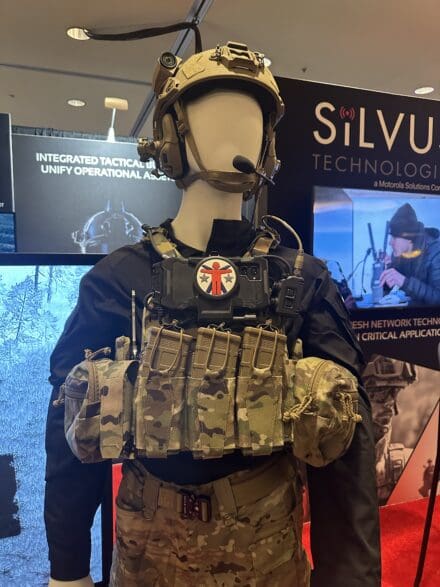
Silvus Technologies showed us their next generation Tactical Networking System.

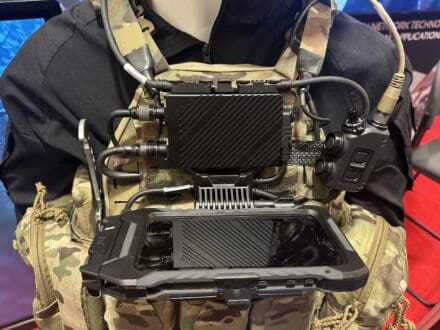
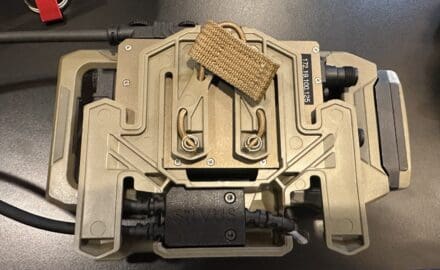
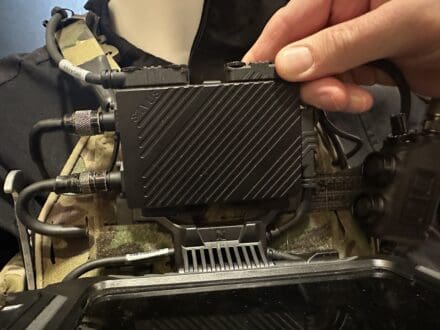
This low SWaP system combines their new ultra-slim StreamCaster MINI 5200 MANET radio with the industry standard Samsung EUD mounted in a low-profile Juggernaut case chest mount.

Powered by Silvus’ MN-MIMO waveform, the SM5200 creates a self-forming, adaptive mesh that supports high-throughput data, HD video, and ATAK in real-time, all while remaining fully compatible with the entire StreamCaster family.

SM5200 Features:

– 2W native, 4W effective TX power

– 100 Mbps throughput

– 550+ node scalability

– Dual PTT / RoIP interface

– I/O connectors – ETH/USB/RS232

– AES-256 / FIPS 140-3 encryption

– Access to Spectrum Dominance 2.0 with LPI/LPD, Anti-Jam, and Advanced Threat Protection capabilities that thrive in EW contested environments

silvustechnologies.com/products/streamcaster-mini-5200

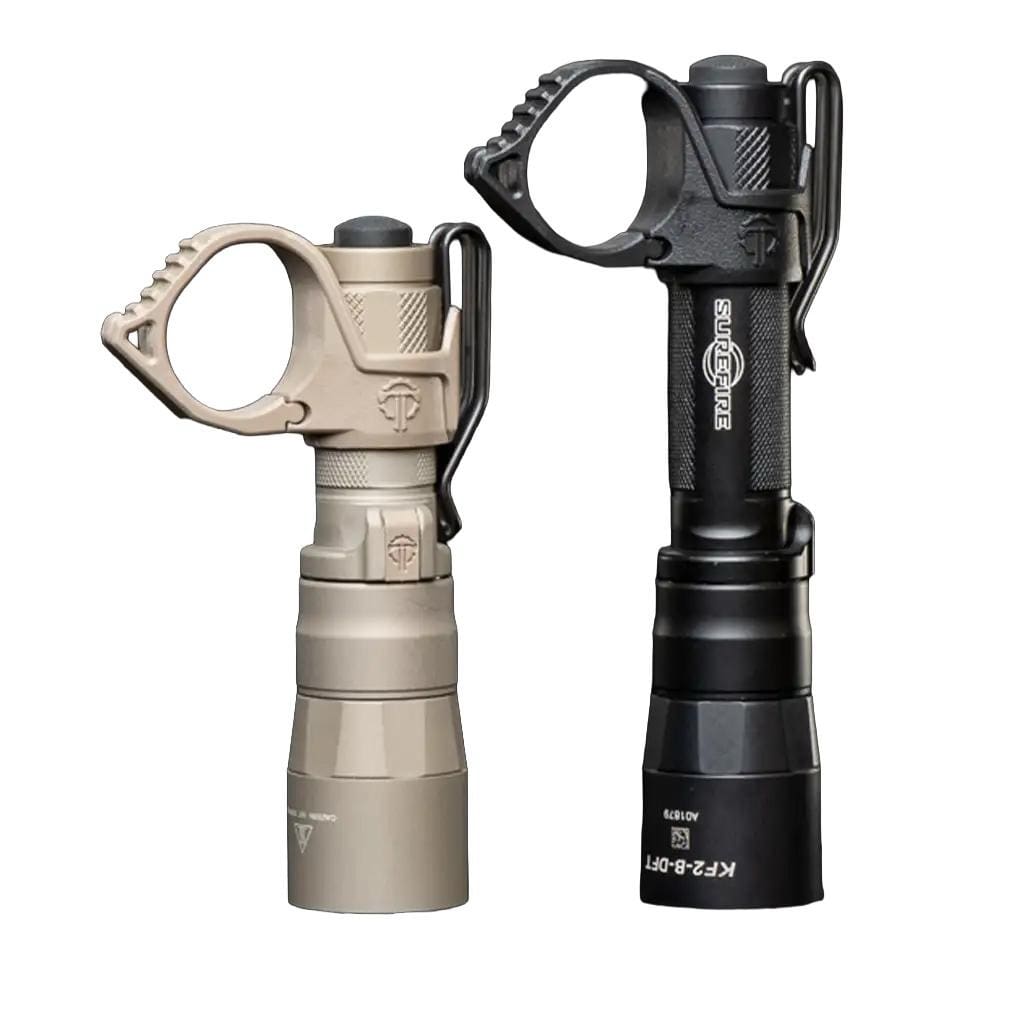
Thyrm Launches New SwitchBack Flashlight Ring For Surefire EDC1-DFT and EDC2-DFT Turbo

February 2nd, 2026

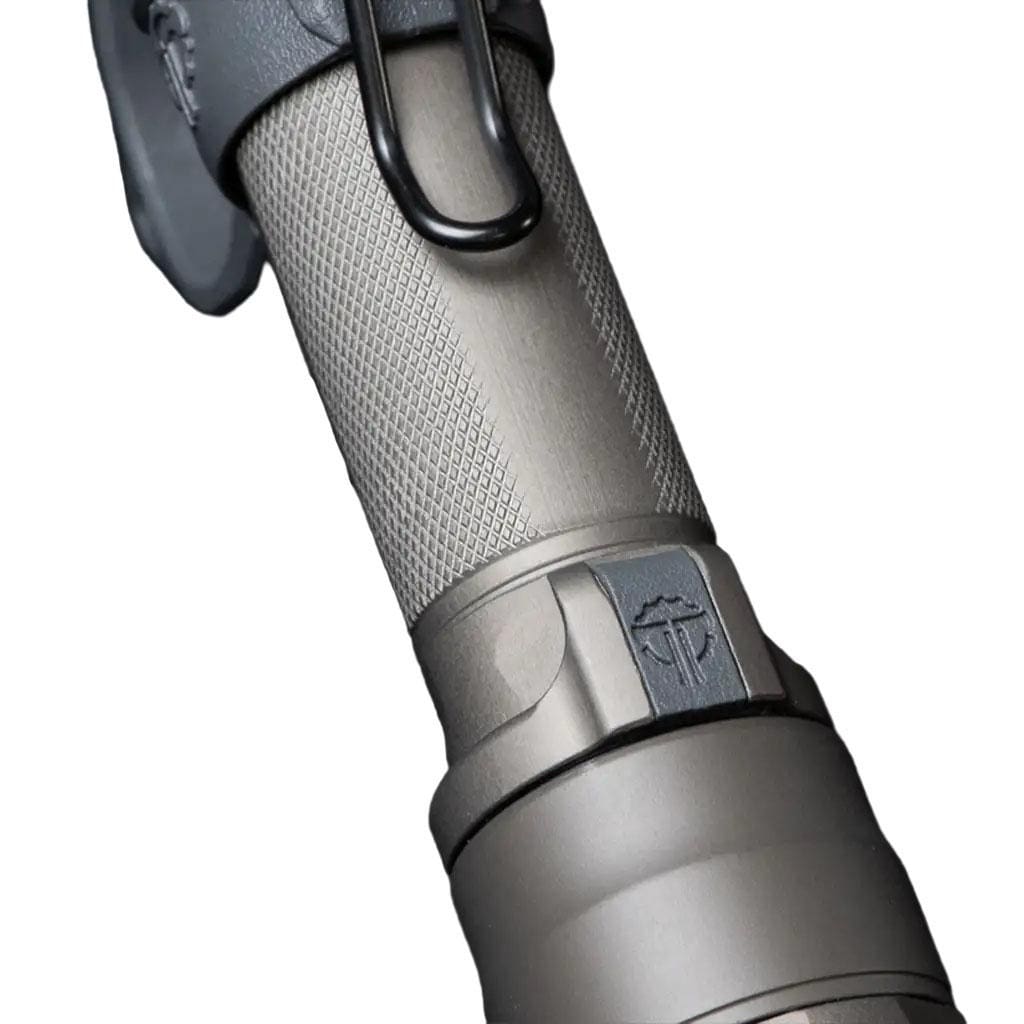
Sunnyvale, CA – January 30, 2026 – Thyrm, a leading innovator in tactical and everyday carry gear, today announced the release of a new addition to its popular SwitchBack line of flashlight accessories: the SwitchBack 3.0 EDC-DFT. Thyrm’s SwitchBack Flashlight Ring llineup is known as one of the most innovative accessories that enhance the functionality of tactical flashlights, providing repeatable deployment, improved retention, and allows users to keep their hands free for other critical tasks.

The SwitchBack 3.0 EDC-DFT is specifically designed for the Surefire EDC1-DFT and EDC2-DFT Turbo flashlights. It features a premium wire pocket clip that drops the light below the pocket line for discreet carry. The steel wire clip provides a low visual profile and a premium feel. Users can also remove the wire clip and use the clip that comes with the Surefire. Thyrm includes a small, color-matched plug to fill the mounting slot after removing the stock clip.

Key Features:

  • Fast, reliable deployment for optimal firearm and flashlight techniques
  • Premium pocket clip for secure retention and deep carry with low visual signature
  • Factory pocket clip can be added or omitted; omit it and use the included plug
  • Ring traction elements make grip and manipulation easier, even when wet
  • Pocket clip made of nitride-treated steel that prevents scratches on other surfaces and is durable and discrete
  • Pocket clip plug protects from sharp edges and creates a finished look and feel
  • Breakaway finger ring that can be reset
  • Available in Tan, Urban Grey, or Black
  • Made in USA

Target Audience:

Responsible citizens, military, law enforcement, and search and rescue teams.

Pricing:

SwitchBack 3.0 EDC-DFT – MSRP $29.99

thyrm.com/collections/switchback/products/switchback-3-edcdft

USAMU Builds Lethality During M7 Fielding with 25th Infantry Division

February 2nd, 2026

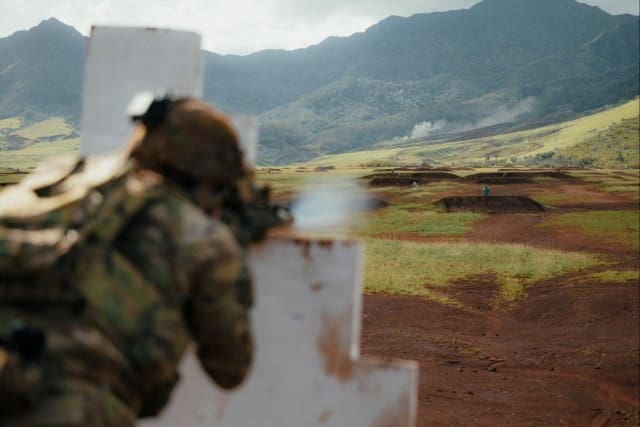
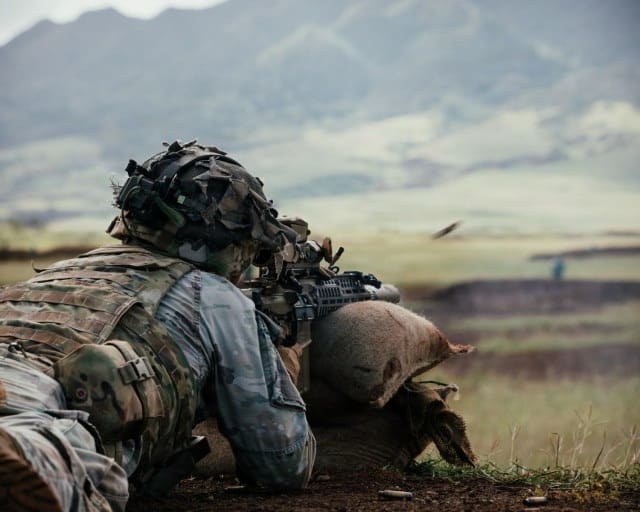
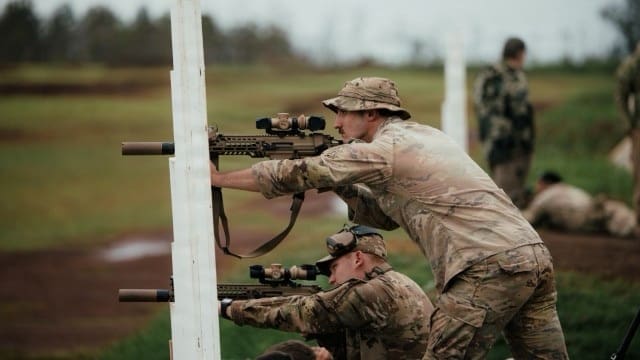
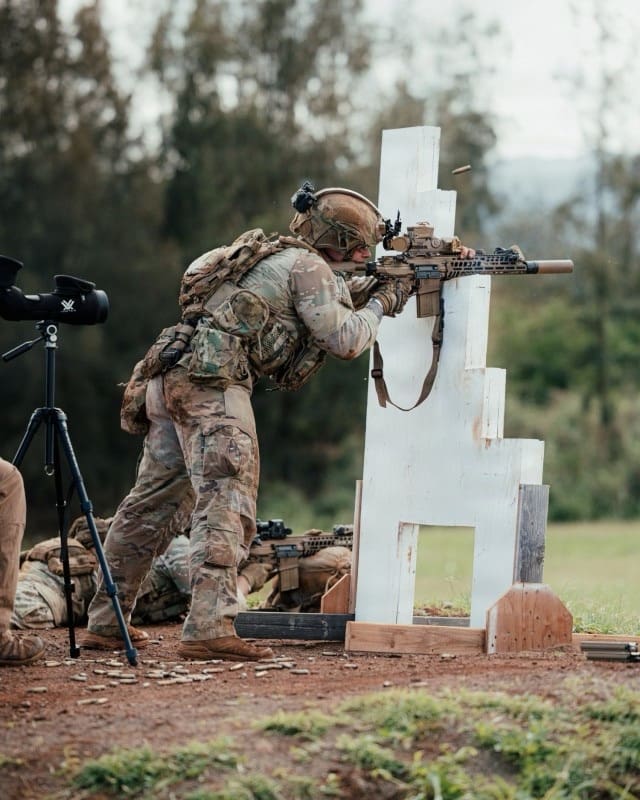
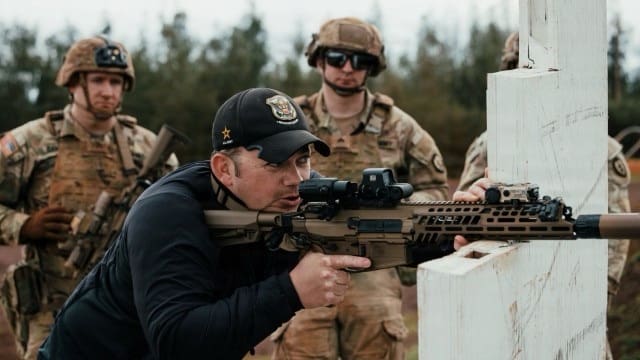
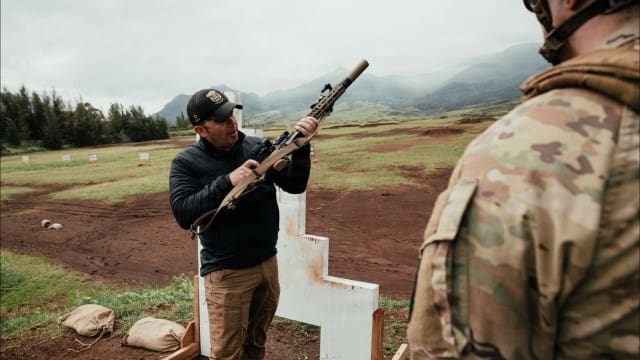
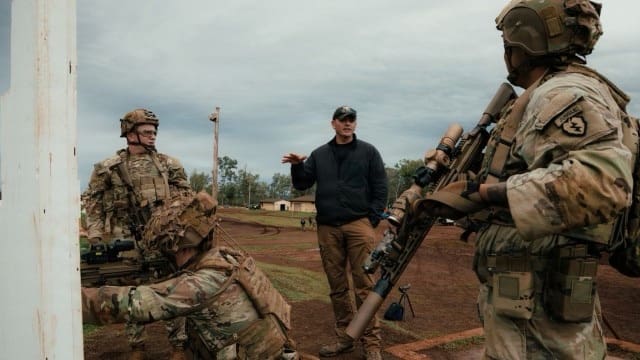
Soldiers assigned to the 25th Infantry Division are training on the Army’s newest service rifle as part of the ongoing fielding of the M7, with instructors from the U.S. Army Marksmanship Unit providing hands-on support focused on marksmanship fundamentals.

USAMU instructors are working alongside Soldiers to reinforce proven shooting techniques that apply across weapon systems. While the M7 introduces new capabilities, instructors emphasized that effective marksmanship still depends on mastering the basics.

“We’re not here to reinvent the wheel,” said Sgt. 1st Class Alexander Deal, team chief for the U.S. Army Marksmanship Unit Service Rifle Team. “The fundamentals of marksmanship don’t change, even when the weapon system does.”

Deal said the training focuses on consistency and efficiency behind the rifle, especially as Soldiers transition to a new platform.

“When Soldiers pick up a new weapon, it’s easy to focus on the equipment,” Deal said. “What we’re reinforcing is that grip, trigger control, and follow-through still matter. If you have solid fundamentals, the weapon becomes easier to run.”

According to Deal, the techniques taught by USAMU instructors are rooted in competition shooting, where performance is measured under pressure.

“Competition shooting forces you to balance speed and accuracy,” Deal said. “Those same principles translate directly to combat. You have to be accountable for every shot, and you have to be consistent.”

Throughout the fielding, instructors observed Soldiers adapting quickly as they applied those principles during live-fire training.

“We’ve seen Soldiers gain confidence fast once they trust the fundamentals,” Deal said. “When they understand what right looks like, their performance improves.”

Deal said the intent of the training is to give units tools they can continue to use long after the fielding event ends.

“Our goal is to leave units better than we found them,” Deal said. “If leaders and Soldiers walk away with a stronger foundation in marksmanship, that training continues long after we leave.”

Training like this supports the Army’s broader effort to increase lethality across the force by pairing modern equipment with disciplined marksmanship.

SFC Timothy Hamlin

Saab Selected by Missile Defense Agency for the SHIELD Program

February 1st, 2026

Saab, Inc. was awarded a contract for the Missile Defense Agency Scalable Homeland Innovative Enterprise Layered Defense (SHIELD) indefinite-delivery/indefinite-quantity (IDIQ) contract. This contract encompasses a broad range of work areas that allows for the rapid delivery of innovative capabilities to the warfighter with increased speed and agility.

“Saab’s proven systems integration and layered defense capabilities deliver scalable missile defense solutions that directly support the warfighter,” said Erik Smith, President and CEO of Saab, Inc. “By bringing together advanced sensors, command and control, and rapid integration expertise, we execute at the pace the mission demands—helping accelerate capability delivery and stay ahead of evolving and complex threats.”

Saab has extensive experience and knowledge in implementing technologies such as advanced weapons and sensors, artificial intelligence and machine learning, and practices including model-based systems engineering and agile acquisition and development. Saab is building a state-of-the-art munitions facility in the U.S., increasing domestic production capacity for shoulder-launched weapons and precision fire systems.

This award enables Saab to compete for future task orders over the contract’s period of performance. Saab has not received an order or signed a contract for deliveries relating to this program.  

Grand Forks AFB Selected to Lead Point Defense Battle Lab

February 1st, 2026

GRAND FORKS AIR FORCE BASE, N.D. —  

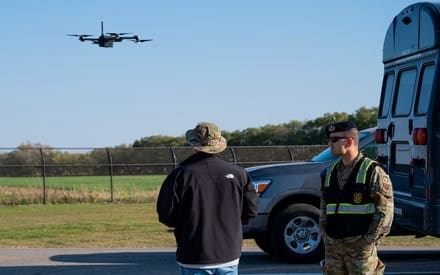
In October 2025, the 319th Reconnaissance Wing assigned to Grand Forks Air Force Base was selected to lead the Point Defense Battle Lab, supported by the 184th Wing, Kansas Air National Guard. The Total Force team at the battle lab supports Air Combat Command’s Point Defense Task Force, a larger Counter Small Unmanned Aircraft System (C-sUAS) effort within the Department of the Air Force.

The Point Defense Battle Lab will serve as a hub for collaboration, pushing boundaries in C-sUAS capabilities, ensuring the Air Force maintains tactical superiority against evolving threats, and is a key part of the service’s effort to develop and evaluate advanced technologies to defend installations from sUAS threats.

“The 319th Reconnaissance Wing is honored to lead the Point Defense Battle Lab alongside our Air National Guard partners,” said Col. Alfred Rosales, 319th RW commander. “Total Force integration enhances our ability to field emerging technologies and match our capabilities to the threat environment. The men and women of the 319th RW have extensive knowledge with unmanned, remotely piloted technology and will ensure our force is poised to secure our installations and defend the homeland.”

The PDBL is a critical initiative within the Department of the Air Force, designed to safeguard installations, protect vital assets, and ensure continuity of air operations. Specifically, the PDBL will focus on developing and validating tactics, techniques, and procedures for countering a wide range of airborne threats, including small Unmanned Aircraft Systems. The Battle Lab’s efforts will enhance the Air Force’s ability to detect, track, and neutralize these airborne threats effectively.

ACC selected the 184th Wing, in partnership with the 319th Reconnaissance Wing, based on combined current capabilities, missions, industry and academia partnerships and alignment with counter-small UAS fielding timelines. The 184th Wing was specifically selected for its expertise in air battle management, cyber operations, and AI-enabled intelligence, surveillance, and reconnaissance. The 134th Air Control Squadron’s continued efforts with the Air Base Air Defense System-Missile Defense, which has already positioned the 184th Wing as a leader in airbase defense, will also be contributing to the efforts of the Battle Lab.

“This is a significant opportunity for the 184th Wing to leverage our expertise and contribute to a critical national security mission,” said Col. Joe Deeds, commander of the 184th Wing. “Our Air Battle Managers, cyber warriors, ISR operators, and AI specialists are ready to work alongside the 319th Reconnaissance Wing to ensure the success of the Point Defense Battle Lab and to enhance the security of Air Force installations.”

The Point Defense Battle Lab (PDBL) will drive innovation and collaboration across the Total Force to address the growing challenges from increasingly widespread use of small Unmanned Aircraft Systems (sUAS). By integrating the expertise of the 319th Reconnaissance Wing and the 184th Wing, the PDBL will deliver critical tactical-level data, advanced site design concepts, and cutting-edge integration strategies for emerging technologies. Additionally, the lab will spearhead operational experiments and red teaming initiatives, ensuring the Air Force remains agile and prepared to counter evolving threats. Through its efforts, the PDBL strengthens the Point Defense Task Force’s ability to safeguard airpower, maintain combat readiness, and confidently respond to emerging challenges, further securing Air Force installations and operations.

By MSgt BreeAnn Sachs

319th Reconnaissance Wing Public Affairs

Fort Buchanan Advances Army Transformation Through Innovative Training Capability

February 1st, 2026

FORT BUCHANAN, Puerto Rico —The Army’s home in the Caribbean is supporting the service’s transformation into a leaner, more lethal, and more agile force by modernizing how Soldiers train and generate readiness across the region.

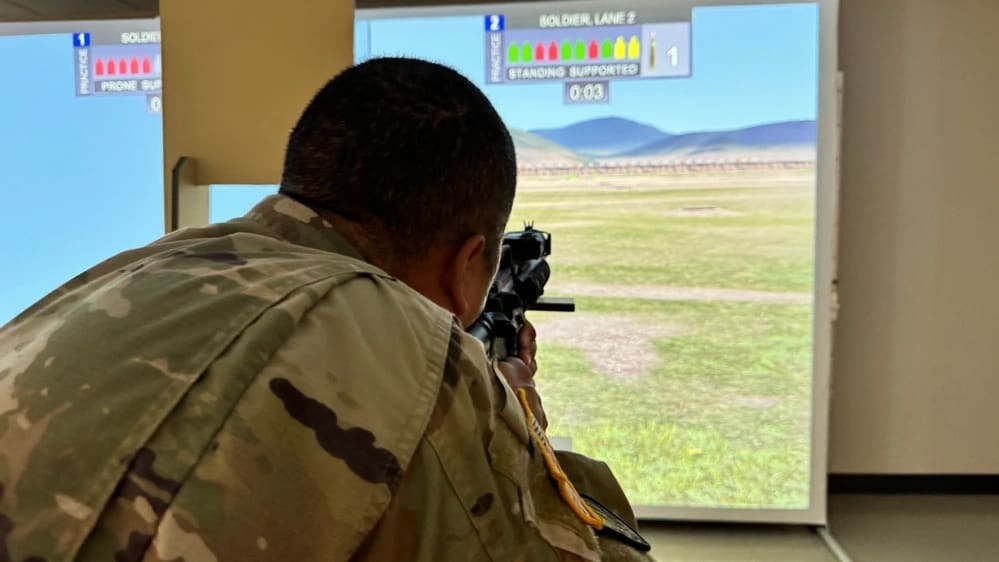
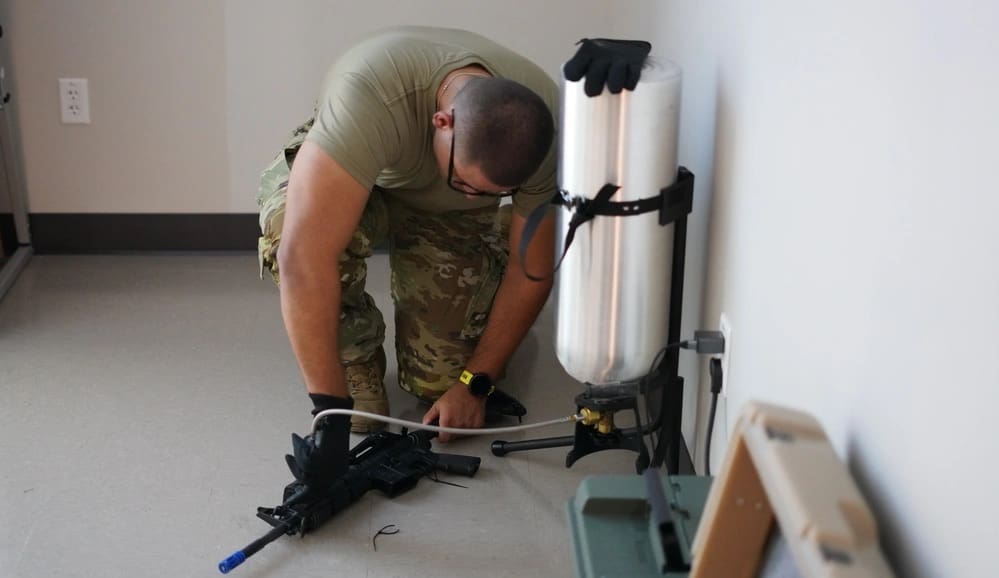
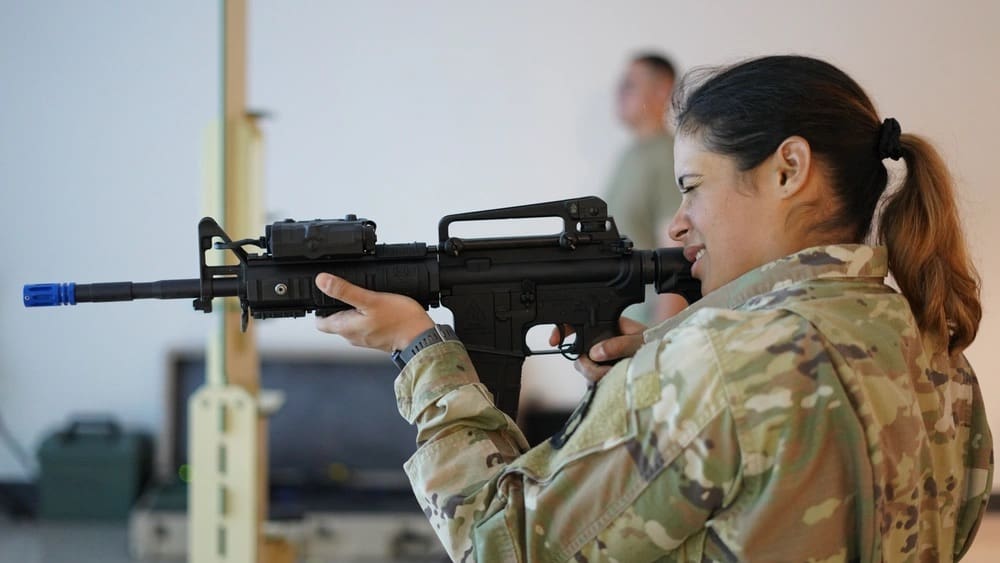
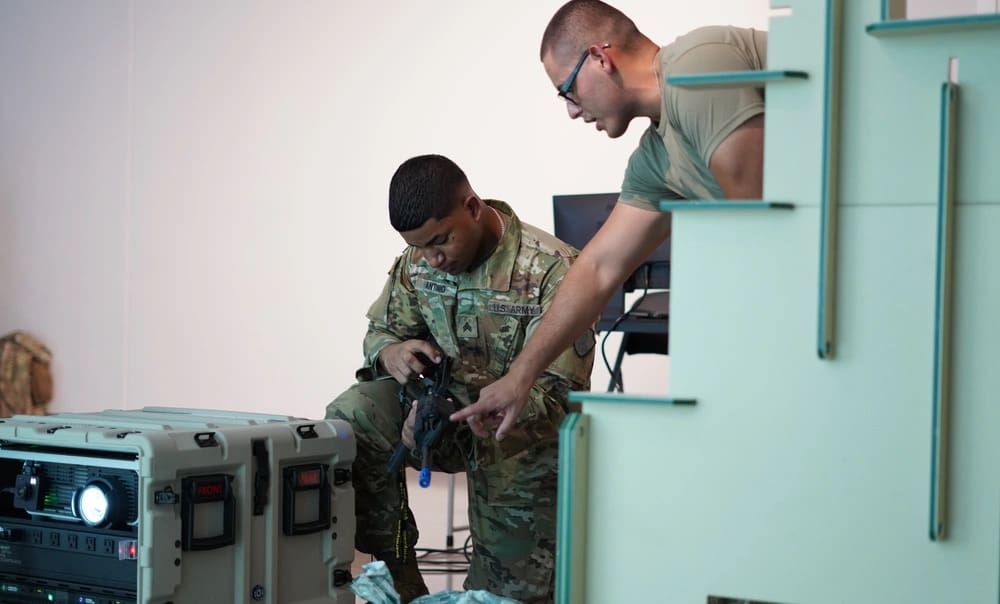
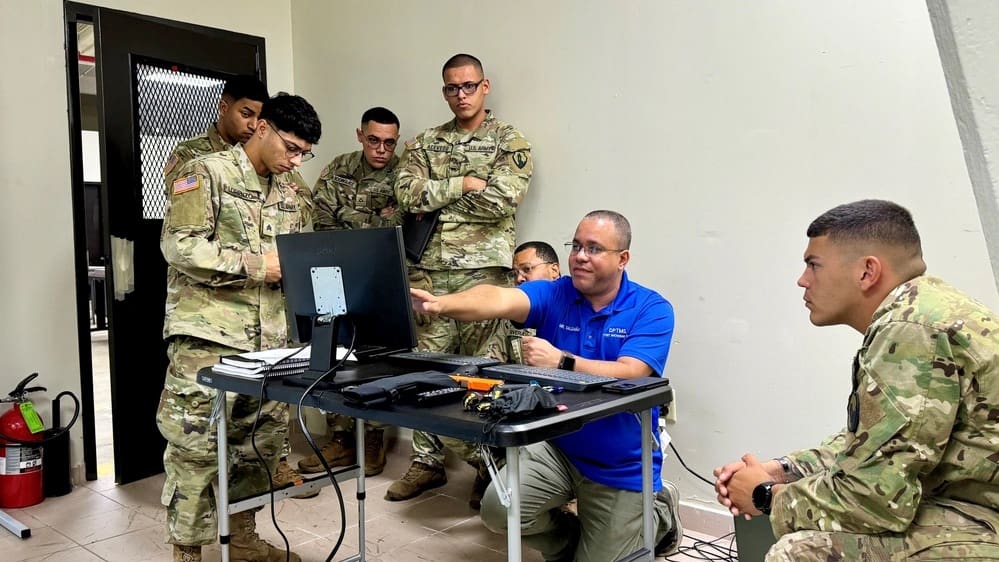
Central to this effort is theMobile Marksmanship Training Simulator (MMTS), a deployable capability operated by Fort Buchanan’sTraining Support Center (TSC). The MMTS enhances marksmanship and engagement-skills training while reducing logistical demands and costs, directly supporting the goals of theArmy Transformation Initiative (ATI).

“Combined with the full range of capabilities available at the TSC, the MMTS has enabled Fort Buchanan to adapt how we support the warfighter. It has strengthened our training support and helped develop combat-ready formations across the region,” saidLuis Reyes, TSC manager.

The MMTS features full mobility, CO?-powered weapons that generate realistic recoil, and immersive, interactive scenarios that replicate operational environments. These capabilities allow units to train consistently regardless of range of availability or geographic constraints.

“The fact that we can take this system directly to Soldiers is a game-changer. It saves time and resources, allowing troops to focus on warfighter tasks instead of traveling long distances to training sites,” Reyes added.

Fiscal year 2025 marked the first year the MMTS was employed in Puerto Rico, and its impact was immediate. During the year, the system delivered more than800 hours of training to approximately 1,600 Soldiers, significantly expanding access to high-quality training while conserving time and resources.

According to Reyes, the MMTS does not replace Fort Buchanan’s fixedEngagement Skills Trainer (EST) 2000. Instead, it complements existing capabilities by extending training beyond fixed facilities. Together, EST 2000 and MMTS provide a layered, flexible approach that increases training frequency and efficiency while maintaining established standards.

“What the team at the Fort Buchanan TSC is doing—especially with the MMTS—is a clear indicator of the installation’s role as a warfighter readiness enabler. This capability strengthens readiness across the region and supports the Department of the Army enterprise,” saidBerenisse Rodriguez, chief of the Directorate of Plans, Training, Mobilization and Security.

By expanding access to modern training and delivering measurable results, Fort Buchanan’s Training Support Center continues to implement Army transformation concepts—ensuring forces remain ready, lethal, and responsive to mission requirements across the Western Hemisphere.

“Whether preparing units for contingency response, disaster relief, homeland defense, or overseas deployments, the TSC ensures leaders and Soldiers have access to the tools and resources they need to succeed,” saidRodriguez.

With an annual budget exceeding$500 million, Fort Buchanan supports a military community of approximately15,000 personnel, including Active Duty, Reserve, Puerto Rico National Guard, Marine Corps Reserve, and Navy Reserve members. The installation’s mission is to enhance readiness and facilitate the deployment of military personnel to any location, at any time.

Story by Carlos Cuebas 

U.S. Army Garrison Fort Buchanan

The Role of Heavy Metal on the Technological Front Line: Where Do Platforms Go From Here?

January 31st, 2026

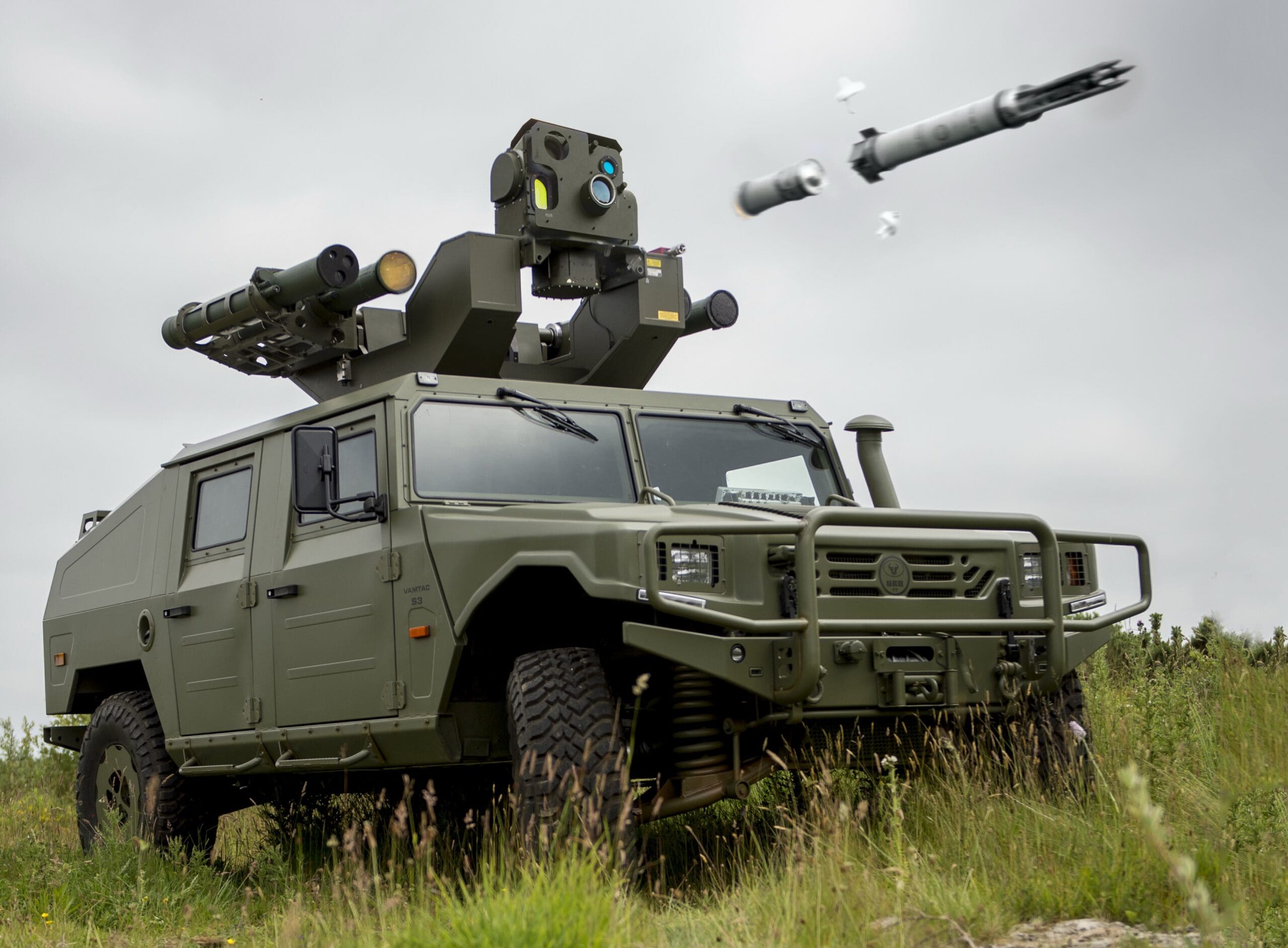
Thales RapidRanger – a modular integrated mobile weapon system – firing StarStreak

On Ukraine’s front lines, a small robot trawls through the dark, laden with supplies. Against long odds, this Uncrewed Ground Vehicle delivers a lifeline to the warfighter who depends on it. Whether platforms can go the distance and deliver the required effect is increasingly defined by the mission systems they’re equipped with – the sensor suites, autonomy modules and C4ISR capabilities that turn a technological edge into an advantage.

As Human Autonomy Teams go, this serves as just one discrete example among many. Platforms, of course, predominate. However, their ability to achieve the desired results increasingly depends on the mission systems they are equipped with, which transform technological superiority into a competitive advantage.

Mission systems: the ‘secret sauce’ behind a platform’s value and lethality

As the Minister of State for the Armed Forces warned of the “shadow of war knocking on Europe’s door”, UK MoD is shifting gears to meet an urgent, unerring need: to keep its armed forces agile enough to stay ahead of the threat and lethal enough to deter it altogether. The role of platforms in meeting this need is not in doubt. But if they are doing the heavy lifting, then it is the mission systems on top that fine-tune the solution.

One only has to consider the £1bn earmarked for the Digital Targeting Web, described by General Sir Jim Hockenhull as bringing “a step change in lethality”, to get an idea of what that solution could look like: an interconnected network of AI-enabled sensors, deciders and effectors to help British Army operators, in the context of Project ASGARD, see first and strike fast.

The timing of the Army’s new framing as a ‘20-40-40’ force is not a coincidence. On paper, 20% of its combat capability will come from technologically advanced, high-spec “survivable platforms”. In practice, these platforms – and their operators – will be able to punch above their weight.

Behind all the speeches, strategies and initiatives is an unequivocally clear desired strategic end state. The British Army must become – and must remain – a protected, connected, digitally-enabled and absolutely lethal force.

Augmenting the platform to enhance the operator

If the ‘ends’ have been well-defined, then the ‘ways and means’ are increasingly delivered by mission systems that can make operators safer, more decisive, more dangerous and more situationally aware beyond the metal hull.

“Take the TrueHunter gimbal sight. Its ability to identify and track targets on the move – and at increased range – helps commanders and gunners deftly coordinate and execute recce-strike operations, enabled by a seamless handover of targets.

“Combine this with the RS4 stabilised weapons system, TrueGuardian Threat Detection and Thales’ DigitalCrew, and hunter-killer teams become – like the platforms they operate – far greater than the sum of the parts: a network of organic and synthetic eyes, ears and instinct to deliver tactical advantage,” says Jonathan, Head of Land Sales at Thales.

DigitalCrew™, a domain, platform and sensor-agnostic suite of algorithms, assists soldiers in armoured vehicles. It enhances and augments what they ‘see’ through sensors and alerts them to what is different, dangerous, or of interest.

Such a reality is neither remote nor unattainable. GVA-compliant platforms like the Hippo Multipower Raptor UGV – designed to UK MoD open-architecture standards that allow rapid integration and upgrade of mission systems – are rolling out of the lab, off the production line and on to where they are needed most.

Rigorous experimentation for real-world implementation

Similarly, initiatives like the Land Digital Robotics and Autonomous Systems Integration Capability (L-DRIC), a DSTL-funded programme, are acting both as vanguard and testbed for this sort of capability. The aim is to give operators the means of sensing the battlefield without stepping foot or training eyes on it. From a technical perspective, this involves beyond visual line of sight operation of multiple uncrewed ground and air systems from a crewed platform that’s positioned away from the immediate action.

“Working alongside DSTL, Catalyst and Digital Concepts Engineering, Thales developed trials for L-DRIC during which a single operator controlled three uncrewed vehicles – including Raptor – demonstrating how robotic and autonomous systems (RAS) can be integrated with crewed command vehicles through a unified digital system,” says Jonathan.

Although three uncrewed vehicles were used in the recent trials, this is by no means the limit of the capability. It would be possible to also include fixed winged capability as L-DRIC emulates a combat platform system with full UK DEF STAN 23-009 GVA installation. With sufficient processing power, the digital twin eco-system could incorporate a whole battlegroup simulation that could be rapidly configured down to individual sensor and effector levels. The extension of GVA electronic architecture into RAS force integration has been critical to enabling the rapid sharing of information across the whole eco-system.

This is a UK first. It will not be the last. The physical platforms and systems involved in L-DRIC were digitally twinned, allowing for rapid testing and scaling of new and existing capabilities in a virtual environment without the effort, cost and risk of buying hardware and conducting physical trials.

The lessons learned and successes earned from L-DRIC can be laced through wider defence business: how to pull a TRL-6 capability through to fieldable product at speed; how to help MOD make the most of its existing investments; and how to keep operators lethal without making them targets.

The procurement imperative: investing in software-enhanced mission systems

With every passing week comes new peril, a stark warning, a technology turned on – then turned on the West. Threats proliferate and cross-pollinate across domains. Any advantage gained by either side is slim and fleeting. This is neither new nor news; the nature of war remains unchanged just as its character can become unrecognisable in months.

When it comes to armoured mobility, heavy metal might be enough to make do but it is not enough to make better. The platforms exist – and where they don’t, the programmes to replace them do. As the shadow of war starts knocking louder and louder, what is needed are three distinct but complementary things:

  • a focus on rapidly upgradable, spirally-developed mission systems;
  • a network of highly qualified, high-quality SMEs to design, develop and deliver the systems, and
  • integrators who can ensure these systems all contribute to a faster, tighter and more lethal sensor-to-shooter chain.

For these to work – and work well – we need common standards, open architectures and a platform-agnostic approach to sensors, data fusion and effectors. Technologically, we are already there. Technically, we are not far behind. But if the UK is to meet its aggressive lethality goals, then procurement and upgrade strategy must recognise that money is best spent on the software-enhanced mission systems that turn platforms into force multipliers.

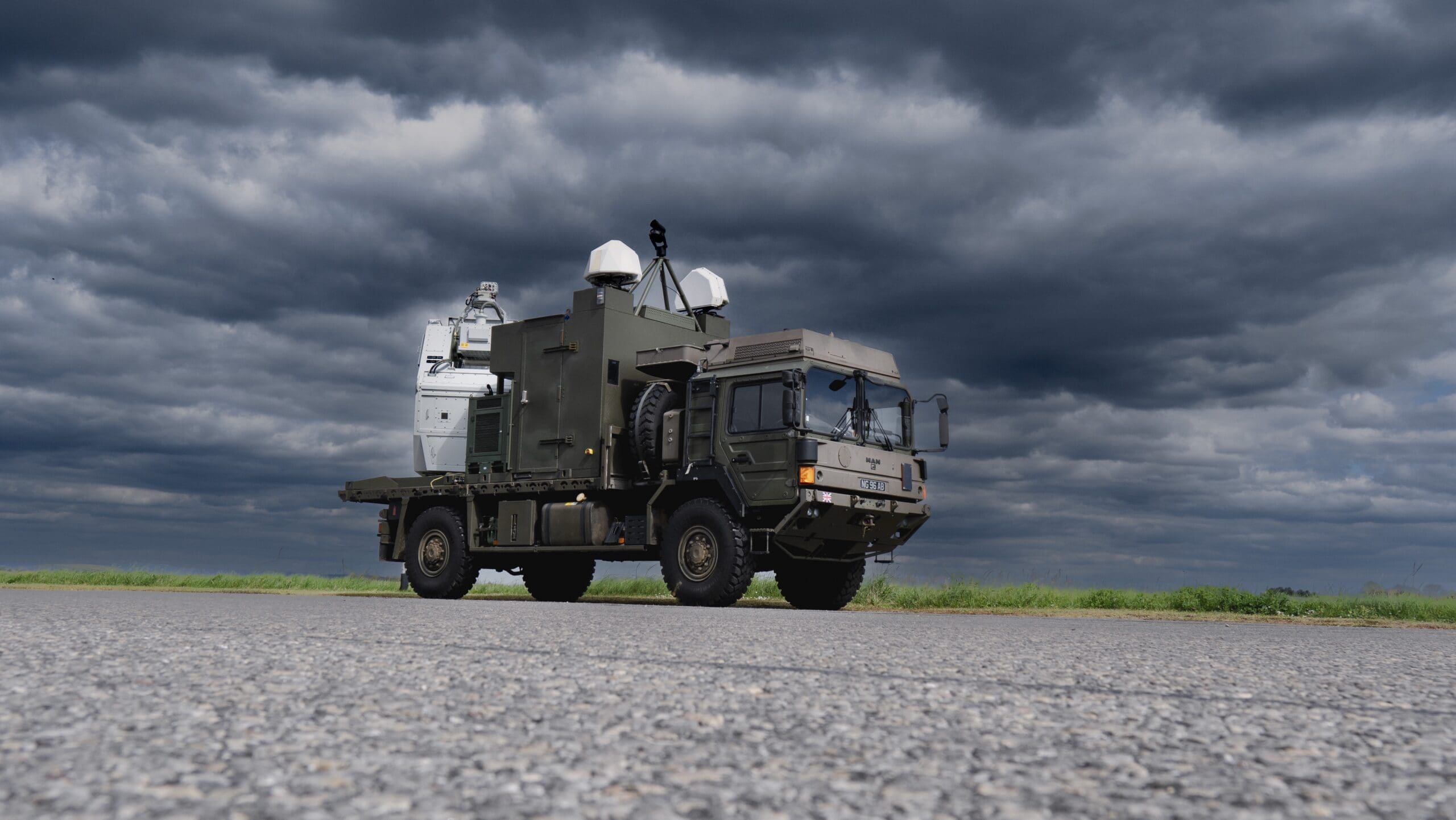
Thales RapidDestroyer – Radio Frequency Directed Energy Weapons (RFDEW)

Military Kayaks in Special Operations: A Quiet Lineage

January 31st, 2026

Introduction

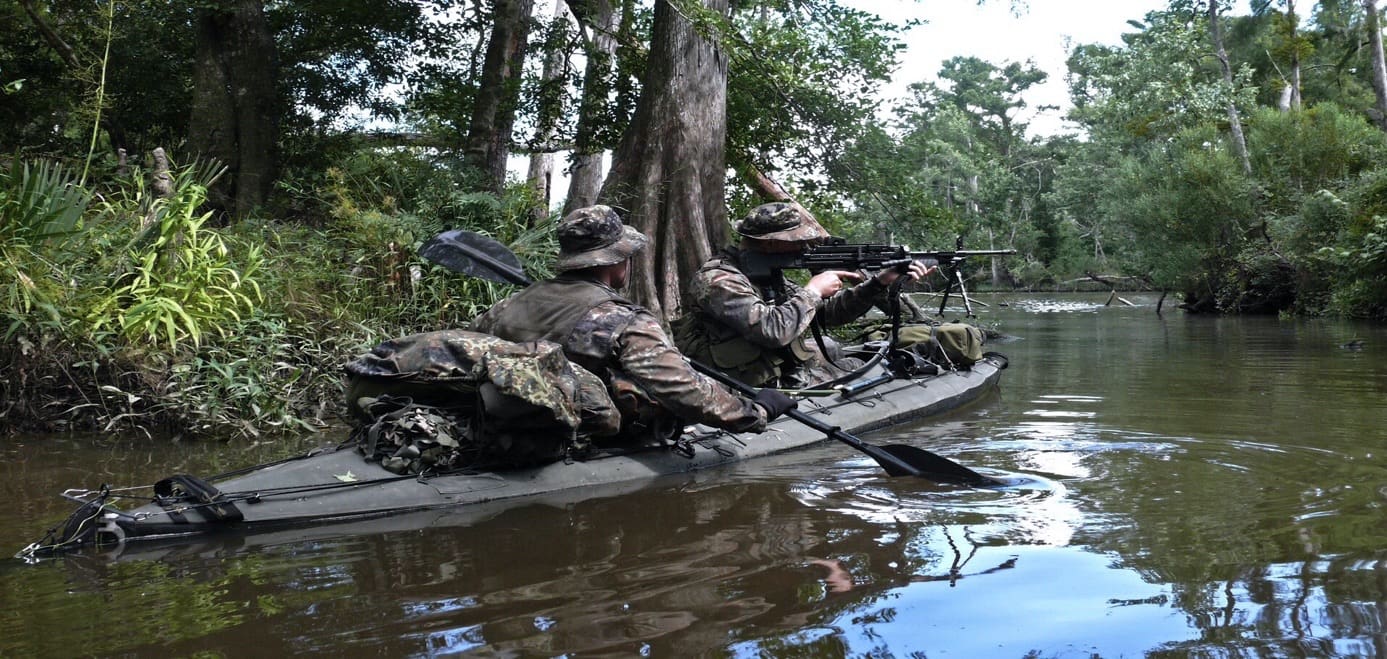
The use of kayaks or canoes more broadly for military operations is nearly as old as the craft themselves. Inland and coastal waterways have served as arteries of commerce, migration, and conflict since antiquity. With the introduction of engines, human-powered watercraft largely faded from conventional military use, surviving primarily in sport, recreation, and a narrow but enduring niche: special operations.

This article provides a focused overview of the military kayak’s role from the Second World War to the present day. It is not an exhaustive history, but rather a snapshot of how a simple platform when paired with disciplined fieldcraft has enabled stealth, endurance, and access disproportionate to its size.

World War II: The Birth of Modern Military Kayak Operations

Early in the Second World War, British forces recognized the potential of kayaks for clandestine maritime raiding. One of the earliest and most influential proponents was Major Herbert “Blondie” Hasler, an accomplished canoeist who understood that small, purpose-trained teams moving silently along rivers and coastlines could strike targets inaccessible to conventional forces.
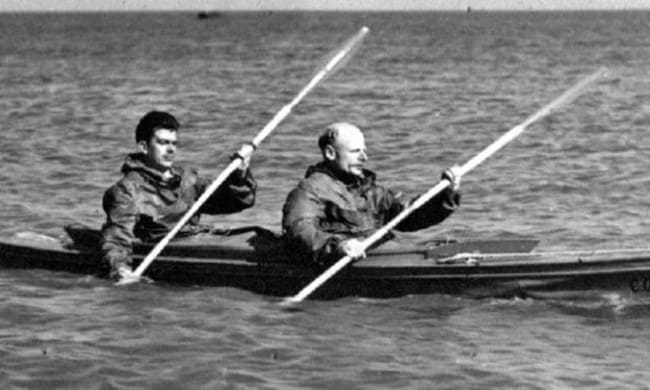
Hasler proposed a solution to a persistent operational problem: German shipping operating from the occupied port of Bordeaux, which had proven difficult for British Bomber Command to interdict. His plan envisioned a ten-man raiding force launched by submarine outside the mouth of the Gironde Estuary. From there, the team would paddle more than eighty miles during periods of limited visibility, emplace limpet mines on enemy shipping, and then evade by any means available, with the ultimate goal of returning to the United Kingdom.

This mission later known as Operation Frankton became one of the most iconic special operations of the war and was immortalized in books and film under the title The Cockleshell Heroes.
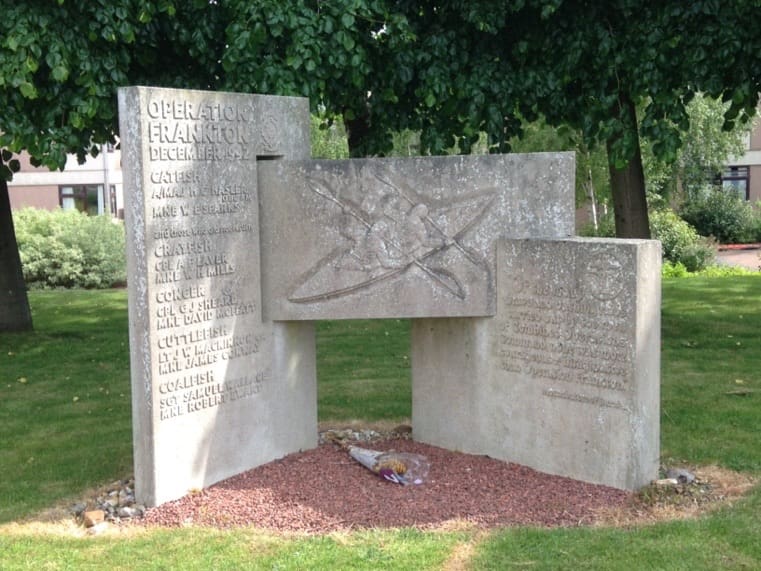
Operation Frankton validated the concept of kayak-borne raiding and directly influenced the development of British maritime special operations doctrine. During this same period, multiple parallel kayak development efforts were underway in the United Kingdom, refining folding designs and techniques that would later inform the Special Boat Service (SBS) and allied units.

The Pacific Theater: Operation Jaywick

Kayak operations were not confined to Europe. In the Pacific Theater, the Allied Z Special Force demonstrated the strategic potential of kayak infiltration during Operation Jaywick.

Six men, operating from three kayaks, infiltrated Singapore Harbor and emplaced limpet mines on Japanese shipping. The operation resulted in the destruction or serious damage of approximately 39,000 tons of enemy vessels.

Jaywick confirmed that kayak-based operations could succeed even in heavily defended ports and reinforced the kayak’s role as a viable platform for strategic raiding when employed by highly trained personnel.

Post-War Continuity: The Rhodesian SAS

Following the Second World War, kayaks remained in service with special operations forces in the United Kingdom, Europe, Africa, Asia and the United States. One of the most compelling post-war examples comes from the Rhodesian Bush War.

The Rhodesian SAS employed kayaks and canoes as low-signature insertion platforms along major waterways, particularly the Zambezi River and its tributaries. Among these missions, one operation stands out for its duration and austerity: a small SAS element inserted by kayak and operated entirely waterborne for approximately five weeks.

The patrol lived out of their boats, sleeping offshore in the kayaks or briefly ashore in concealed shoreline hides. During this period, they conducted persistent shoreline reconnaissance, surveillance of infiltration routes, and limited raids against insurgent logistics nodes, camps, and river crossings.
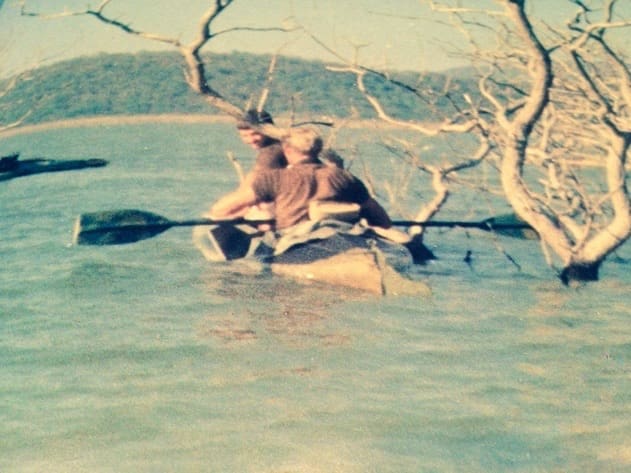
Kayaks enabled silent night movement, an extremely low visual and acoustic signature, and continuous repositioning without reliance on fixed bases, vehicles, or aircraft. This operation remains one of the most extreme examples of fieldcraft, endurance, and waterborne stealth in modern special operations history. Conceptually, it aligns more closely with Second World War SBS and Combined Operations Pilotage Party (COPP) missions than with later helicopter-centric SOF models.

Cold and Littoral Operations: Pebble Island, 1982

In May 1982, during the Falklands conflict, British special operations forces again demonstrated the value of kayak infiltration. Prior to the raid on Argentine aircraft positioned on Pebble Island, a small SAS reconnaissance element conducted a covert insertion by kayak.
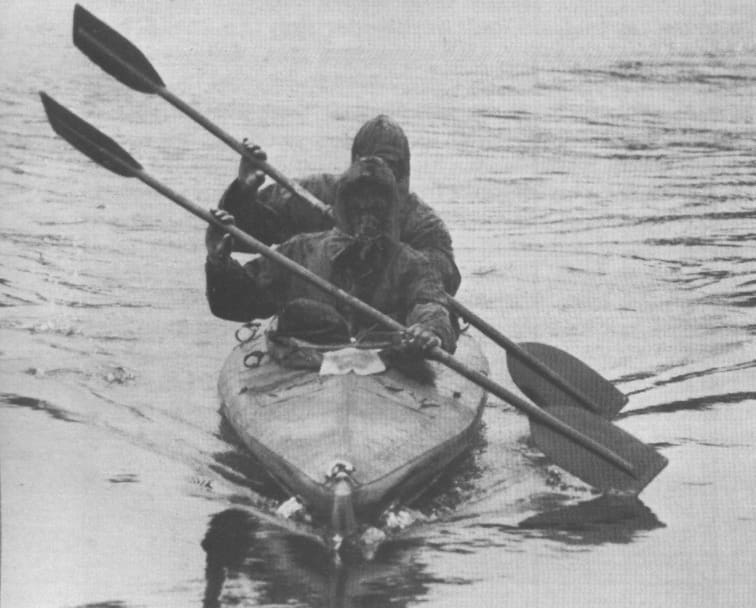
Launching at night from offshore, the team paddled in extreme South Atlantic weather to avoid detection. Once ashore, the kayaks were cached and the patrol transitioned to foot movement to conduct reconnaissance of aircraft disposition, defensive routines, and terrain.

This reconnaissance directly enabled the success of the subsequent raid and reaffirmed a long-standing lineage of British waterborne special operations doctrine: small teams, operating independently, emphasizing endurance, precision, and stealth in austere environments.

Years later, during a training rotation at the Mountain Camp in Salalah, Oman, I had the opportunity to hear a firsthand account of this operation from Brumby Stokes, one of the four-man SAS team who conducted the paddle and reconnaissance. Hearing the details directly from a participant reinforced how demandingand how deliberately understated these operations were.

Pebble Island remains a textbook example of kayak-based SOF infiltration enabling decisive follow-on action: quiet access, accurate intelligence, and a surgically executed assault.

Personal Reflections: A Living Lineage

My own journey with military kayaks began long before operational use, sparked by Second World War films such as The Cockleshell Heroes and Attack Force Z. Those stories planted an early appreciation for the concept long before I understood the discipline behind it.
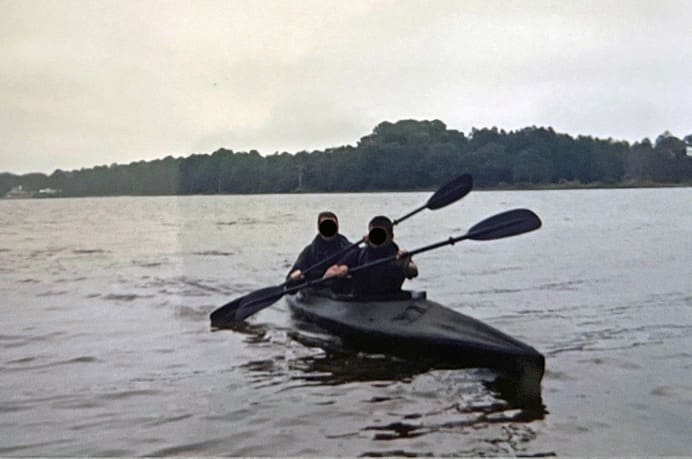
When I arrived at 5th Special Forces Group (Airborne), I sought assignment to an Underwater Operations Detachment commonly referred to as a dive team. Within three months, I had completed pre-scuba training and the Combat Diver Qualification Course (CDQC). My first deployment took me to Aqaba, Jordan, where kayak infiltration using Klepper folding kayaks was one of the methods we rehearsed.
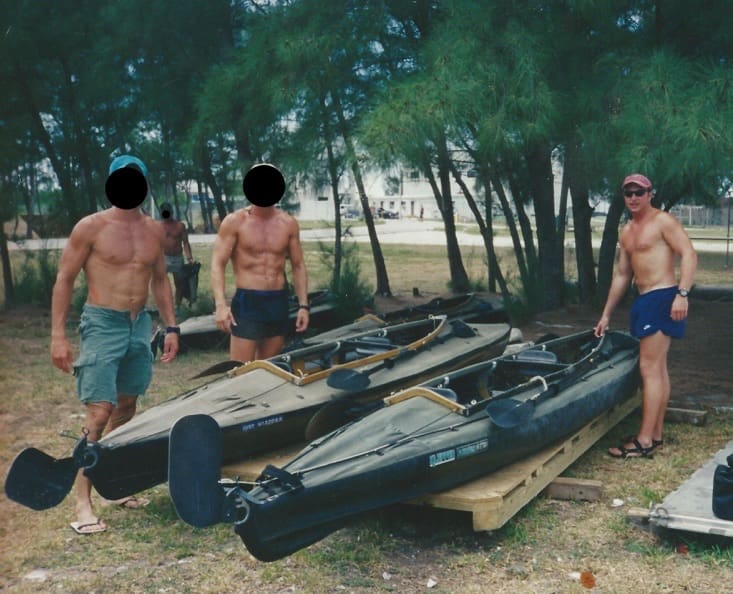
Over the course of my career, we used kayaks for infiltration training, mothercraft launches, helocasting, and shore insertions. They were also used for long-distance paddling as physical training, team building, and on occasion as improvised fishing platforms. We rehearsed operational employment during a counter-narcotics mission that was ultimately cancelled due to circumstances outside our control.

As my responsibilities increased, culminating in my role as Command Diving Officer for 5th Special Forces Group, I came to appreciate the quiet value of having kayaks available in the dive locker and on team deployments. They represented a direct lineage to the OSS Maritime Unit and to allied formations such as the SBS and Z Special Force.

Preserving the Craft

Today, I am fortunate to own one of the original 5th Group Klepper kayaks, acquired when U.S. Special Forces transitioned to the American-made Long Haul variant. When I received it, the kayak consisted of mismatched parts in poor condition and was missing its hull skin entirely.
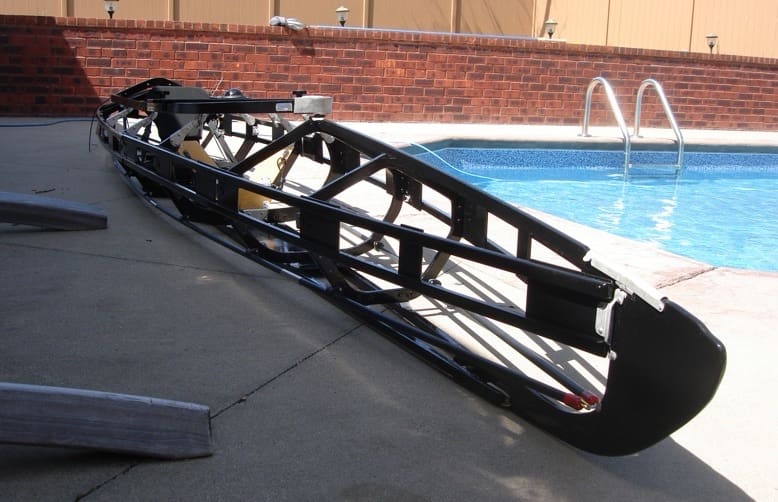
Over several months, I restored the frame to operational condition and sourced a new skin from Long Haul, which at the time held the U.S. repair contract for the original German Kleppers. Configured in a one-man expedition setup, the kayak is now used for physical training and personal stress relief a functional reminder of a demanding and enduring tradition.

Conclusion

Kayaks remain in use by military and special operations units around the world. While rarely employed, they persist as a specialized capability within the maritime toolkit reserved for missions where stealth, endurance, and access outweigh speed or mass.

From Bordeaux to Singapore, the Zambezi to the Falklands, the military kayak has repeatedly proven that sophisticated effects do not always require complex machines. Sometimes, a paddle, patience, and exceptional fieldcraft are enough.
About the author:  Travis Rolph is a retired Airborne Infantry and Special Forces veteran and founder of Mayflower Research & Consulting.