FirstSpear

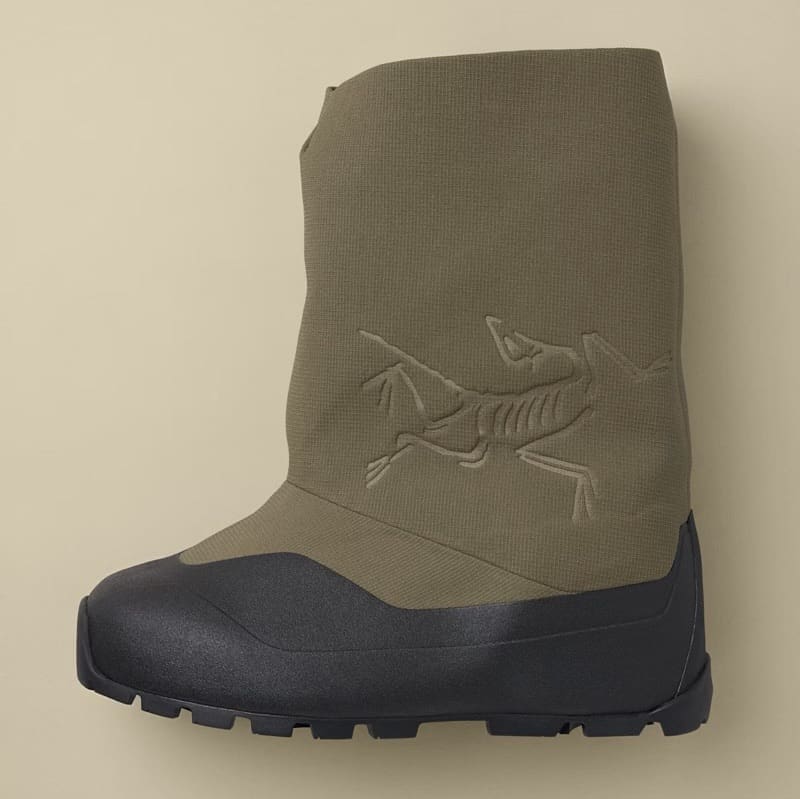
Arc’teryx Postour Boot

October 27th, 2026

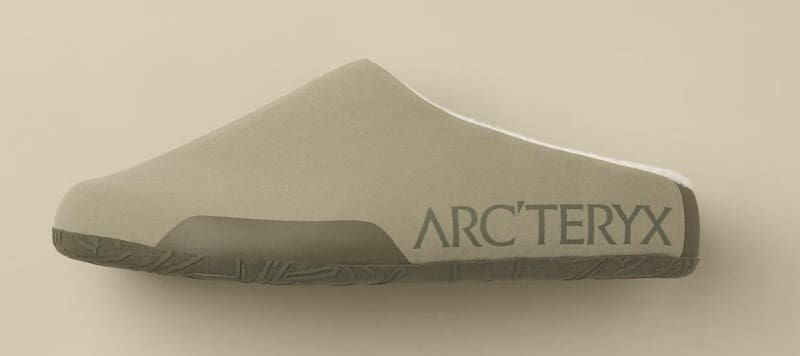
Designed as an apres ski boot, the Postour is an insulated over boot with a fleece-lined, removable slipper for wear inside tents and lodges. It will make for an excellent camp boot as well.

The slipper is well captured inside the overboot via an elastic band around the ankle and won’t come out inadvertently.

Materials include a Vibram Arctic Grip outsole providing extra grip on icy surfaces, Coreloft insulation to keep you warm, and GORE-TEX construction overboot.

Offered in both Men’s and Women’s versions in Black/Black and Tatsu/Black (seen) in whole sizes 7-13.

arcteryx.com/us/en/shop/mens/postour-boot-0507

Q&A with Rafe Bennett, VP of Product and Marketing at Gentex Corporation

October 27th, 2026

Modern combat helmets are evolving from primarily ballistic protection into a platform for a growing range of technologies. What are some of the biggest changes you’re seeing in how helmets are being designed and used today?

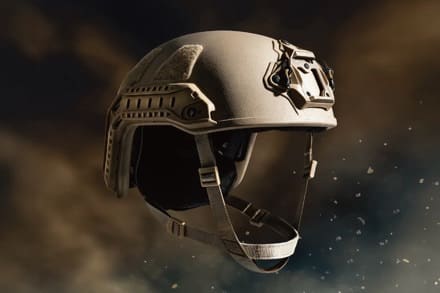
Gentex has a unique perspective because we have served a wide range of warfighting customers for decades. In both air and ground applications, we have seen the helmet evolve from a piece of protective equipment into an integrated headborne system.

The biggest trends we’re seeing are greater integration of communications, hearing protection, visual augmentation (such as helmet-mounted displays that enhance situational awareness), power, and data. In the air domain, we have focused for a long time on integrating these capabilities while keeping the helmet lightweight, stable and comfortable. Many of those technologies have since moved from air combat to ground combat, first with special operations and now increasingly with conventional forces. The Ops-Core RAILINK system is an example of an innovation that has enabled the integration of all these technologies into a cohesive helmet system.

We’re also seeing higher-cut helmets, more stable suspension systems, integrated communications and hearing protection, and greater attention to protecting against blast overpressure. Gentex is working with multiple special operations customers on solutions to monitor and mitigate blast exposure, including sensors that can measure and record potentially dangerous pressure.

As more equipment is mounted to helmet systems, weight becomes a bigger factor. What impact does helmet weight play on the short and long-term health and combat effectiveness of service personnel?

With advanced helmet systems, especially aircrew helmets, weight down to the ounce or even gram matters. Weight and where weight is distributed can have a significant physical impact on the head and neck.

For both air and ground combat users, reducing weight as well as improving balance and center of gravity are important for improving comfort, limiting fatigue andprotecting long-term health. Some ground SOF operators can be carrying helmet systems weighing six pounds or more including accessories, and they mayneed to wear that equipment for extended periodsduring operations. That’s why we look at the entire system, not just the helmet shell. The helmet is where that weight ultimately meets the head, so comfort, stability, adjustability, balance, and a good center of gravity are critical.

Gentex has focused heavily on reducing weight. We have developed the next-generation fixed-wing helmet system currently being fielded with the U.S. Navy, as well as the FAST SF Second Generation helmetsystem, which weighs just two pounds in a size large. The larger challenge, however, is reducing the weight of all the accessories and equipment attached to the helmet as well, as those are a major contributor to overall weight.

How are manufacturers reducing helmet weight without compromising protection or equipment/technology integration?

Advanced ballistic materials are one of the biggest opportunities for reducing helmet weight while maintaining protection. Gentex has focused on using these materials efficiently to maximize protection while minimizing the weight of the shell, but the shell is only part of the equation. With the FAST SF Second Generation helmet, we looked for weight savings throughout the system, including in the pads, ARC rails and Modular Bungee Shroud. Today, many of the things attached to a helmet can weigh more than the helmet itself, so reducing overall system weight requires an integrated approach. That means not only reducing shell weight, but also with VAS and display developers and accessory partners to reduce the weight of the complete system.

Tell us more about ballistic protection. What new threats and injuries are troops facing on the battlefield, and how are helmet systems adapting?

The more things change, the more they stay the same – including combat threats to helmet users. Early steel helmets were primarily intended to protect against fragments from indirect fire. Modern ballistic helmets have expanded that protection capability to include pistol and rifle fire threats.

During the Global War on Terror, major injury threats included IEDs, explosions and direct fire, but with the Russia-Ukraine war, there has been a renewed emphasis on indirect fire, including drone-delivered munitions. At the same time, there is growing awareness of both acute and chronic injuries associated with blast overpressure. That is an area where Gentex is working to better understand, monitor and mitigate exposure, including exposure that can occur during both training and combat.

The U.S. military has been moving towards high-cut helmet designs. What drove that evolution, and what advantages does a high-cut design provide?

The primary driver of the high-cut trend has been the increased use of over-ear hearing protection and communications headsets. In that sense, the Combat Vehicle Crewman, or CVC, helmet that Gentex helped pioneer in the 1950s was an early example of the concept. Its large cutouts accommodated the earcups needed for communications and hearing protection in armored vehicles.

Early in the Global War on Terror, SOF operators made communications headsets standard equipment and began demanding helmets that could accommodate them. The Ops-Core FAST helmet was a direct response, with a higher cut that provided additional clearance for those systems.

We are now seeing the same evolution move into conventional forces as communications and hearing protection become standard equipment. Higher-cut helmets provide better compatibility with those systems and can also reduce weight by removing some of the ballistic shell.

We hear a lot about modularity in the context of gear; what are the hallmarks of modular combat helmet systems, and how does the configuration benefit different users with different missions?

There is a balancing act between modularity and integration, and every helmet system has to find the right point along that continuum. Modularity allows users to replace, reposition, or upgrade components as their equipment and mission needs change. That is particularly important for military users who may have different configurations for different missions or need to replace components in the field.

Ops-Core ARC rails are a good example. They provide a low-profile, universal attachment system for accessories such as lights and headsets while allowing those components to be repositioned, replaced, or upgraded. The key is finding the right balance. Too much modularity can add weight and complexity, while too much integration can make a system difficult to repair or adapt. The best helmet systems give users the flexibility they need without adding unnecessary weight.

How do manufacturers view headborne technology like night vision, communications, hearing protection, and so on? How has design changed as they’ve become a part of the helmet system?

As night vision, communications and other headborne technologies have become essential equipment, the helmet has had to evolve into a more stable and comfortable platform for those systems.

That means designing for things like NVG stability, cable management, and balance – not just ballistic protection. Features such as the Ops-Core Modular Bungee Shroud, integrated bungees, and PowerPath ARC rail help manage and stabilize equipment while reducing cable snags. Counterweight systems can also improve balance when heavy visual augmentation systems are mounted to the helmet. Hearing protection has evolved in the same way. The Ops-Core RAC headset introduced rail-mounted integration that improved stability, comfort and weight distribution. We continued that approach with the AMP headset and RAIL connector.

Ultimately, the goal is to integrate these technologies without making the helmet cumbersome. The helmet must provide a stable, comfortable platform while still giving the user the flexibility to configure it for the mission.

The U.S. Army’s Integrated Head Protection System (IHPS) has been in service for several years. What kinds of future upgrades or improvements are you seeing or anticipating for IHPS?

The IHPS added capabilities over the Enhanced Combat Helmet (ECH), including a ballistic mandible and applique for increased protection against rifle threats. The NG-IHPS added additional ballistic protection in a single shell, but there are still opportunities to improve weight, comfort, and retention.

Gentex has been addressing some of those areas with the LX9 pad set and the IHPS-ARC Rail Kit, which were fielded with 4ID as part of NGC2 this past summer and is now available for commercialpurchase. We have also submitted proposals to bring back the Ops-Core Head-Loc chinstrap system.

Additionally, Ops-Core has provided high-cut NG-IHPS prototypes for evaluation. A high-cut configuration could provide better integration with communications and hearing protection while reducing weight. The opportunity is to build on the protection of NG-IHPS while improving the overall user experience – particularly comfort, retention, weight, and integration with the equipment soldiers are increasingly required to wear.

For the Marine Corps, are there different priorities or requirements driving helmet design compared with other branches? What are you hearing from Marines about how they want their head protection systems to evolve?

The Marine Corps’ renewed focus on its naval expeditionary mission and a more dispersed, self-sustaining approach to operations puts a premium on mobility and efficiency. That makes weight, stability and comfort particularly important.

The Ops-Core FAST XR Boltless/IHS helmet system provides a significant weight reduction compared with the ECH while maintaining a high level of protection. It also gives Marines access to the broader Ops-Core ecosystem of accessories and headborne technologies. As the Marine Corps evolves its mission, lighter weight combined with stability, comfort, and integrated capability will be increasingly important in helmet systems.

Looking ahead, how do you expect combat helmet systems to evolve over the next five to 10 years?

I think we will continue along the innovation path that began in the early 2000s. Advances in materials will gradually reduce the weight required for basic impact and ballistic protection, while close-combat forces will need a balance of protection and mobility.

At the same time, we are approaching a major shift in headborne technology. Digital night vision, AI-assisted augmented reality, and integrated displays will enable capabilities that have been discussed for years but haven’t yet been practical at scale. We will also see more distributed sensing, including chemical and biological detection, along with systems that can identify threats, share data, and connect individual operators to a common operating picture.

The vision has been consistent for a long time, but now the technology is finally catching up to the vision. The next decade should be an exciting one for headborne systems.

About Rafe Bennett:

Rafe Bennett is Vice President of Product and Marketing at Gentex Corporation, bringing extensive leadership experience in product strategy, marketing, and portfolio management across the defense, firearms, and industrial sectors. His military product development background spans over 25 years, including roles in Force XXI, Future Force Warrior, and prior service as a U.S. Army infantry officer.


Generational Food Changes Optimize Warfighter Performance

October 27th, 2026

WASHINGTON — The Army continues to make big strides in modernizing how it feeds Soldiers across its installations.

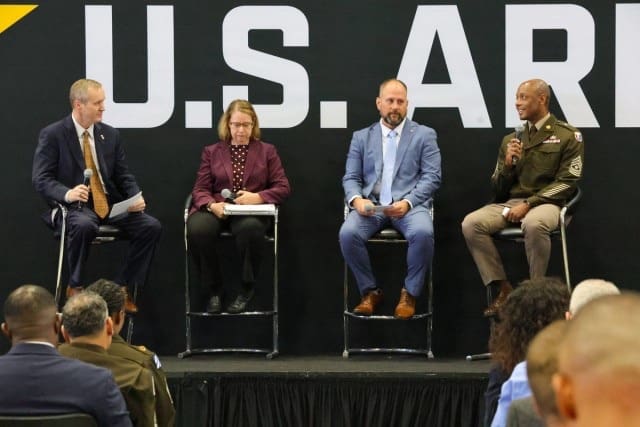
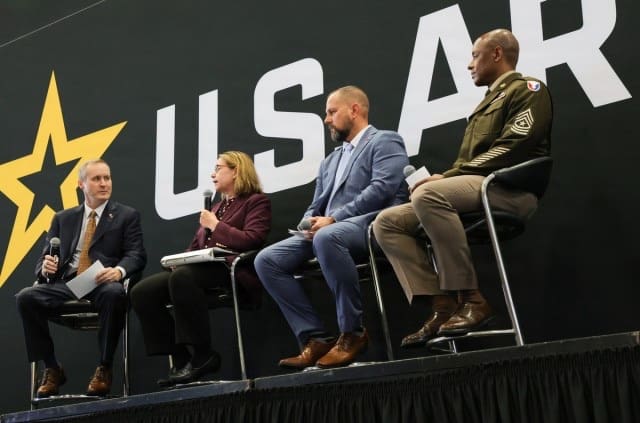
Army leaders outlined the Army food ecosystem at the Association of the U.S. Army’s annual meeting during a panel on warfighter performance optimization, detailing how initiatives like Campus Style Dining Venues (CSDV), Flexible Eating and Expanded Dining (FEED) and partnerships are bringing generational change.

“We are evolving the Army’s food program from a 20th century chow hall to a modern 21st century network that’s part of a larger food ecosystem on all of our installations,” said Jay Condrey, acting Army Materiel Command G-4. “It’s not just something we are doing out of convenience. It’s about quality of life. It’s about community, and at the end of the day, most importantly, it’s about warfighter readiness.”

Central to this effort is a deliberate shift to separate garrison dining operations from tactical field feeding, ensuring Soldiers receive balanced nutrition while military culinary specialists sharpen their combat readiness. What makes this shift possible is the ability for the Army to partner with commercial food service providers.

“Bringing in a commercial partner to focus solely on garrison feeding absolutely reduces that burden of Tactical Field Feeding Specialist redundancies inside of a brick-and-mortar facility,” said Sgt. Maj. Damarco Wyatt, AMC G-4 sergeant major. “Now what you have is more opportunity for field feeding proficiency and concentration on equipment as we prepare for large-scale combat operations.”

One example of partnering with industry is the CSDV initiative. CSDVs feature varied daily menus curated by professional chefs, a registered dietitian, grab-and-go choices, lounge areas with couches, Ping-Pong and foosball tables, mounted flat-screen televisions and free Wi-Fi. Compass Group USA currently manages the first wave of campus-style dining facilities, located at Forts Hood, Carson, Drum and Bragg, with Fort Stewart coming in 2027 with additional expansions at these sites in the works.

The venues allow meal-card holders to swipe their Common Access Cards and use meal entitlements. While Soldiers on meal cards is a primary audience, families and other patrons are welcome to purchase meals à la carte.

“For the past 29 years, we’ve never seen a highchair inside of a dining facility,” said Wyatt. “That captures that moment where we’re allowing family members to actually come inside of the facility. They can eat with their Soldiers. That’s where the community comes back, because first impressions are long-lasting.”

This approach has driven a sharp rise in meal service. For example, looking at the same facilities a year apart, Fort Hood has seen an increase of more than 312% meals served. Fort Carson and Fort Drum are seeing increases of 385% and 534% respectively.

“Soldiers are voting with their feet,” said Sydney Smith, director of supply policy for the Department of the Army G-4. “The contractors are innovating because they want the foot traffic. They only get paid when our Soldiers go there to eat. It incentivizes them to make sure that it’s well done.”

While the CSDV initiative is the Army’s flagship effort, the service is providing Soldiers with even more options. Starting with Fort Stewart, Georgia, the Army launched the FEED program which enables meal-card holders on essential station messing to use their meal entitlements at select Army & Air Force Exchange Service restaurants, including Qdoba, Starbucks and Subway, with plans to expand to Morale Welfare and Recreation and Defense Commissary Agency locations.

To safeguard nutritional standards, Army dietitians work directly with vendors to configure menus based on the military’s traffic-light nutritional framework. Participating eateries are limited to “green” and “amber” categorized foods, such as lean, high-protein options, fresh produce and whole grains. “Red” designated items are excluded from entitlement purchases.

“About a third of the Soldiers at Fort Stewart are using the AAFES locations for their meals or at least a portion of their meals now,” Smith said. “Overall, the feedback has been great, plus we know they’re getting nutritious food.”

With these new efforts, Army leaders acknowledged that broad implementation faces logistical hurdles, including infrastructure reinvestment for aging facilities, flexible contracting mechanisms and sustained funding.

The Army is also coordinating with the Office of the Secretary of War to establish cross-service guidelines and IT interoperability, enabling service members from the Air Force, Navy, Marine Corps and Coast Guard to use dining entitlements interchangeably at joint installations.

“As we begin to roll out the CSDVs, everybody’s asking, ‘Hey, when can I have one?'” Wyatt said. “We’ll ensure that we have a deliberate plan to roll these out accordingly.”

By Samantha Tyler

BLADE Awarded Contract to Advance Critical Equipment Decontamination System for US Special Operations Forces

October 26th, 2026

SOLON, Ohio, Oct. 26, 2026 — BLADE (formerly HDT Global), a leading provider of mission-critical defense solutions, announced today that it has been awarded a contract in support of the Critical Equipment Decontamination System (CEDS) program. The award advances BLADE’s work on the large CEDS variant, a transportable capability designed to restore mission-essential equipment exposed to chemical and biological agents.

Led by the Joint Project Manager for CBRN Special Operation Forces (JPM CBRN SOF), under the Portfolio Management Executive Chemical, Biological, Radiological and Nuclear Defense (PME CBRND), the CEDS program is designed to strengthen the operational readiness and survivability of U.S. Special Operations Forces.

Developed to support operations in austere, hostile and contested environments, the large CEDS variant provides a transportable solution for decontaminating sensitive operational equipment. By enabling critical assets to be safely recovered and reused, the system is intended to reduce logistical burdens, preserve essential resources, and accelerate the return of equipment to operational service.

“This award underscores our commitment to delivering innovative solutions that protect warfighters and enhance mission readiness,” said Tim Stickler, Sr. Director of CBRN Integrated Protection, Bio & Chemical Security at BLADE. “Through the CEDS program, we are advancing critical decontamination capabilities that enable Special Operations Forces to recover essential equipment, sustain operations and maintain their advantage in contested environments. We are proud to support this mission and provide the reliable solutions our warfighters depend on.”

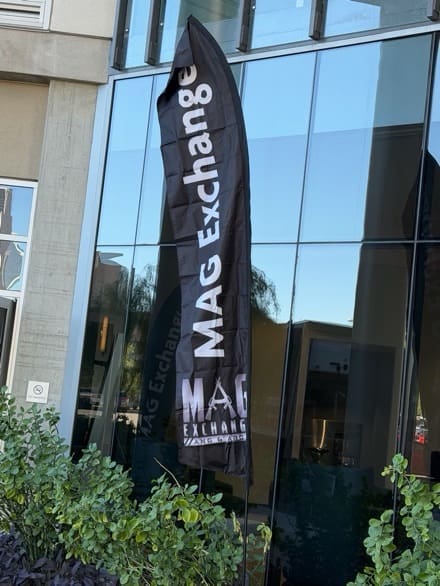
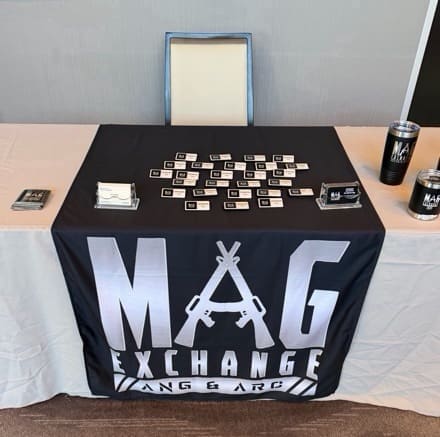
Don’t Miss MAG Exchange Industry Night (ANG & ARC) October 26-27 in Tucson

October 26th, 2026

If you’re in Tucson today and tomorrow be sure to stop by the Doubletree Inn convention center from 4-9 PM to check out some of the best brands in our industry during the MAG Exchange Industry Night which takes place during the AFRC & NG WEPTAC.

Thin Air Gear Introduces the G5 Olympus Deployment Bag

October 26th, 2026

The original. The only. Built exclusively by Thin Air Gear™ for nearly 20 years.

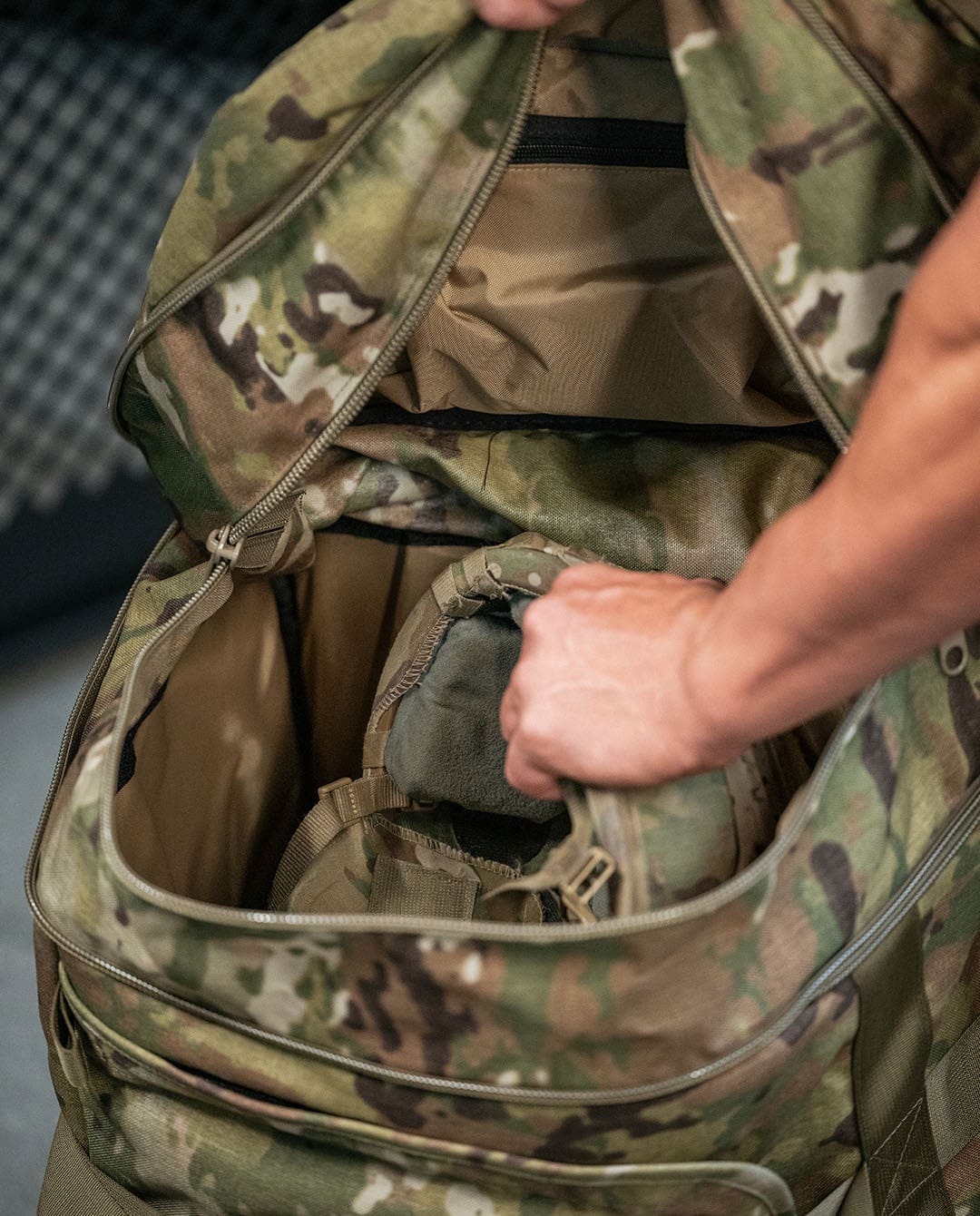
COLORADO SPRINGS, Colo. – October 26, 2026 – When somebody copies your product, it’s a compliment. At Thin Air Gear LLC™, we take it as one. We also take it as a reason to say this plainly: if it doesn’t carry the Thin Air Gear™ logo, it isn’t an Olympus™.


Ruckable: carry it on your back when wheels can’t go

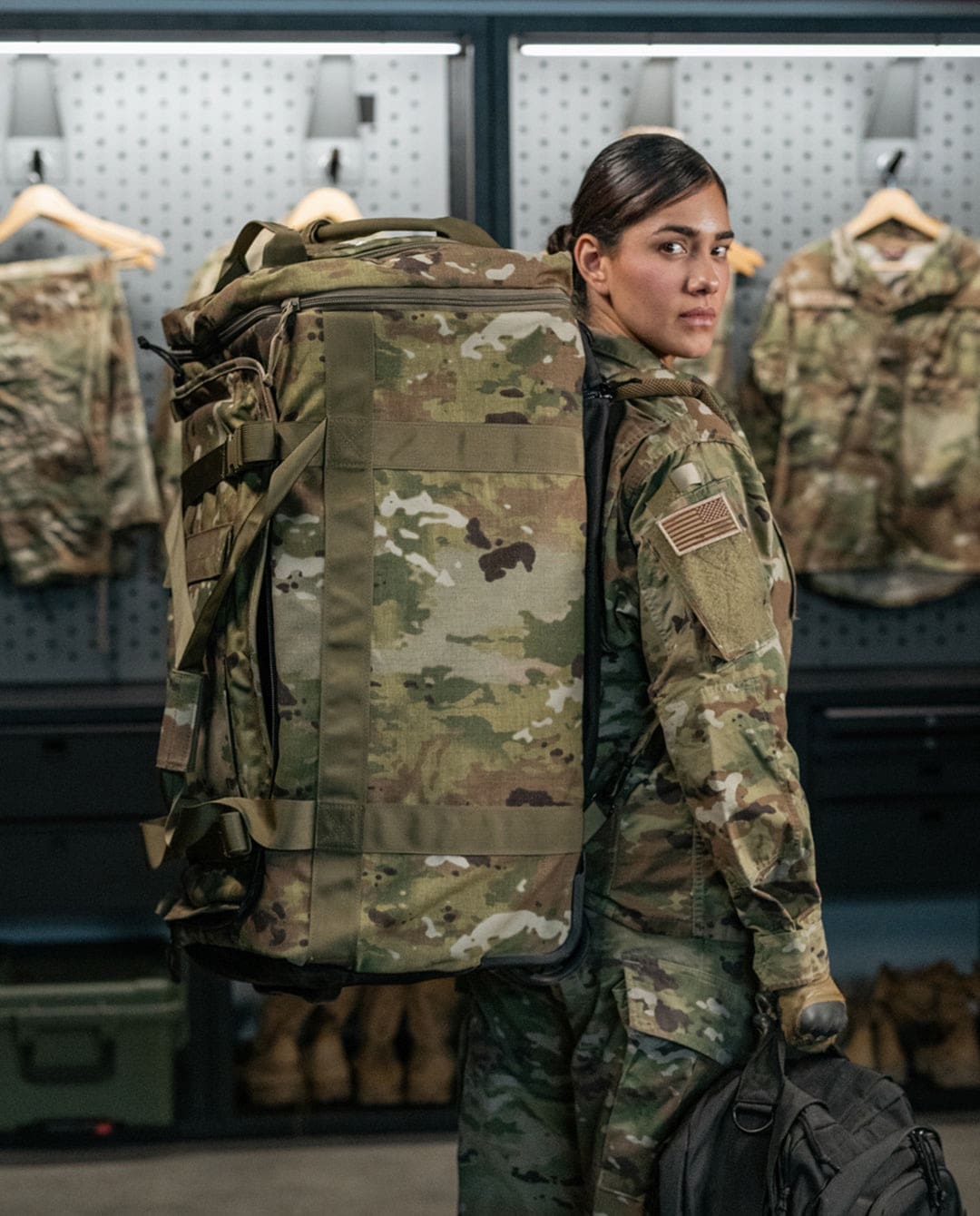
Today Thin Air Gear™ announces the G5 Olympus™ Deployment Bag, the newest generation of the bag that service members, units and mission planners have trusted for nearly two decades.

ONE COMPANY. ONE OLYMPUS™.

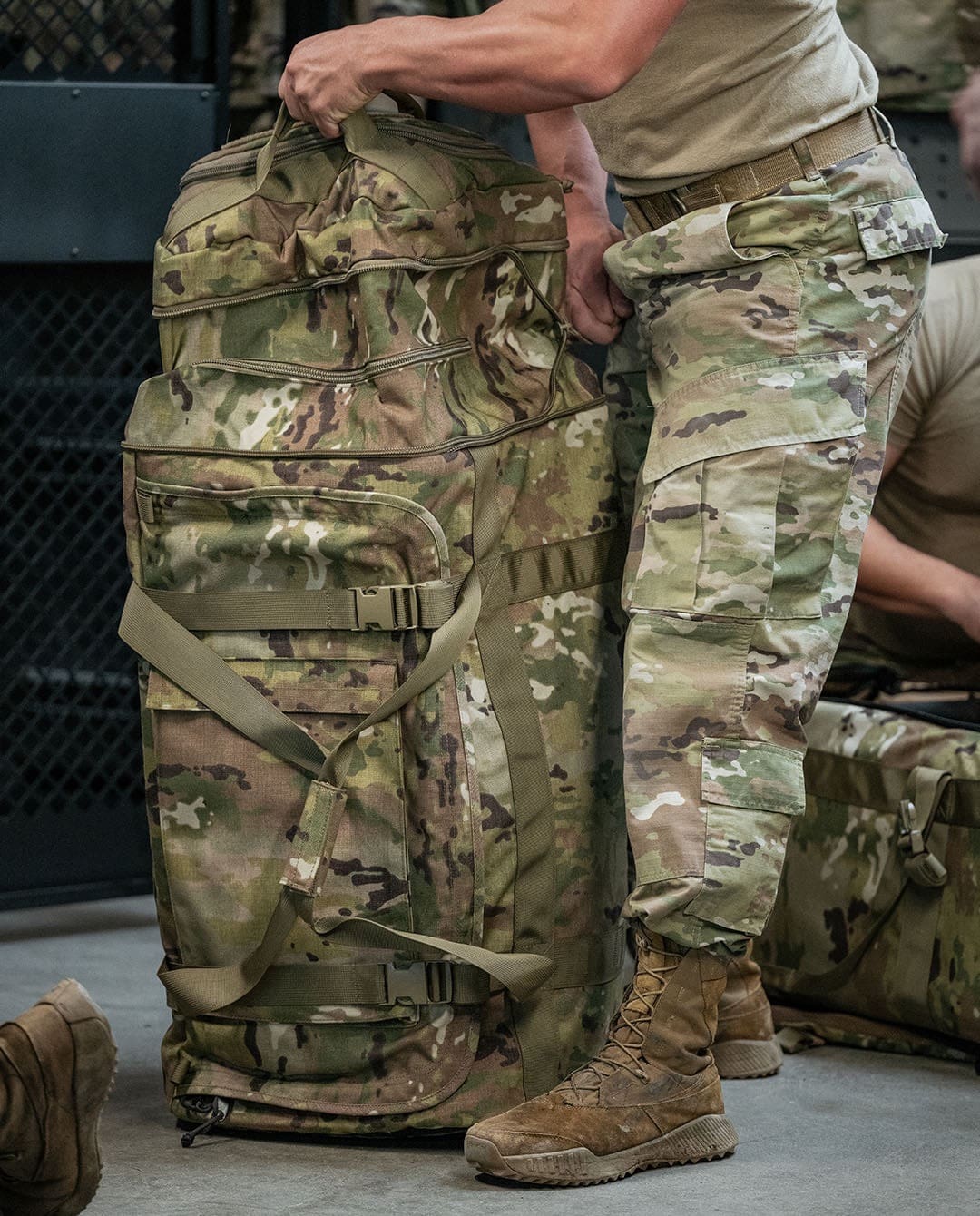
Thin Air Gear™ is the only company that has ever designed, engineered or manufactured the Olympus™ bag. No other company has ever been licensed to build it. Every genuine Olympus™ ever fielded came off a Thin Air Gear™ production line, built to our design, our specifications and our standards.


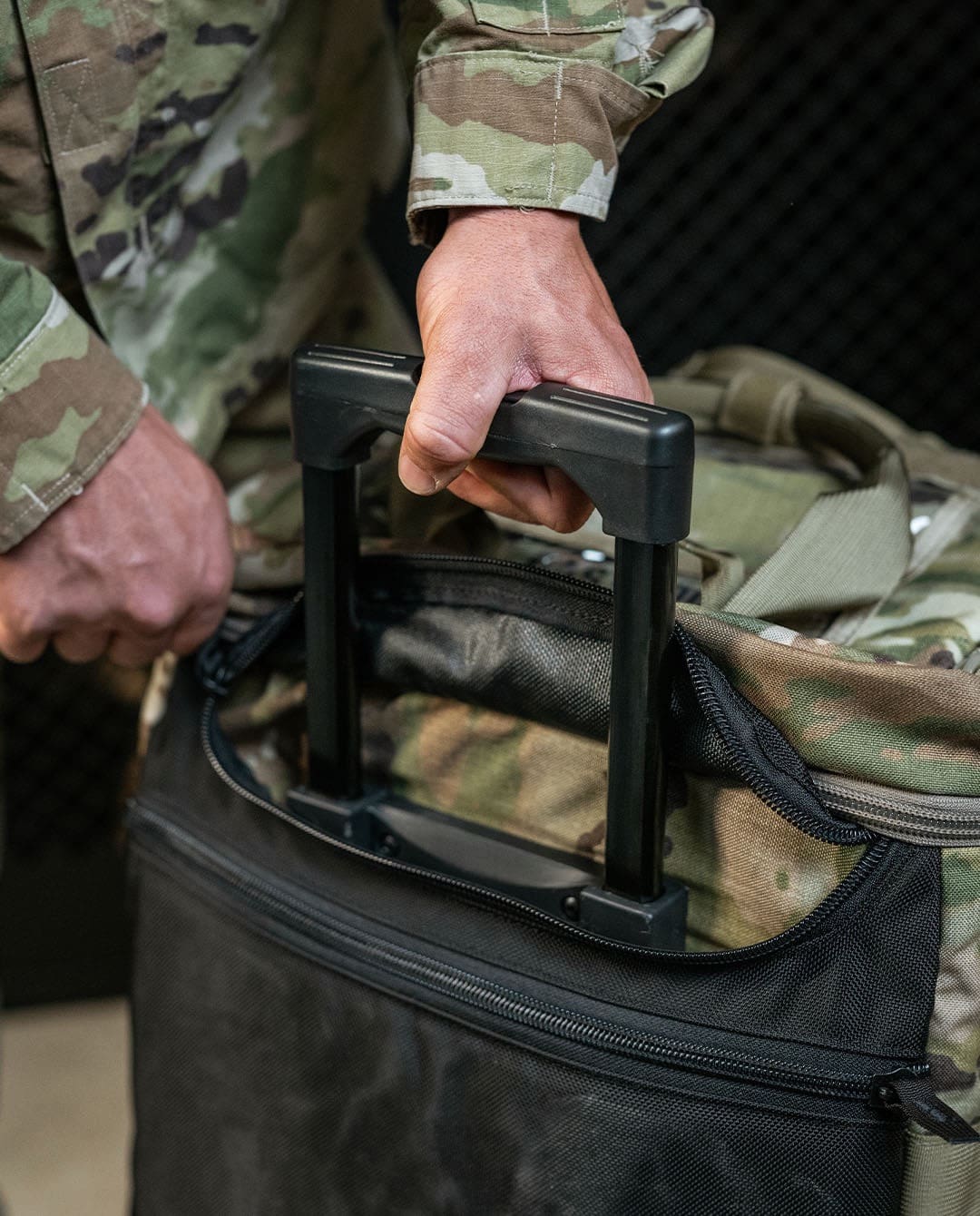
Retractable heavy-duty 14″ telescoping handle

That matters, because copycats are out there. Lookalike bags, some sold under similar-sounding names, have appeared on the market. Some copy the shape. Some copy the color. Some copy the layout down to the stitch. None of them is an Olympus™, and none of them is built by Thin Air Gear™.

THE MOST RECOGNIZABLE BAG ON THE MARKET

Since Thin Air Gear™? first put the Olympus™ into the field, it has become the most recognizable Wheeled Loadout Bag™ in the military and government market. Units ask for it by name because they know what it delivers: a bag that survives deployments, airfield ramps, conex boxes and years of hard use, and comes home ready to go again.

That reputation wasn’t built overnight. It was built over nearly 20 years of feedback from the field, continuous improvement, and a refusal to cut corners on materials or construction. For nearly 20 years, no other bag has delivered the same quality, and no other company has built the Olympus™.

Expandable from 6,750 to 9,000 cubic inches

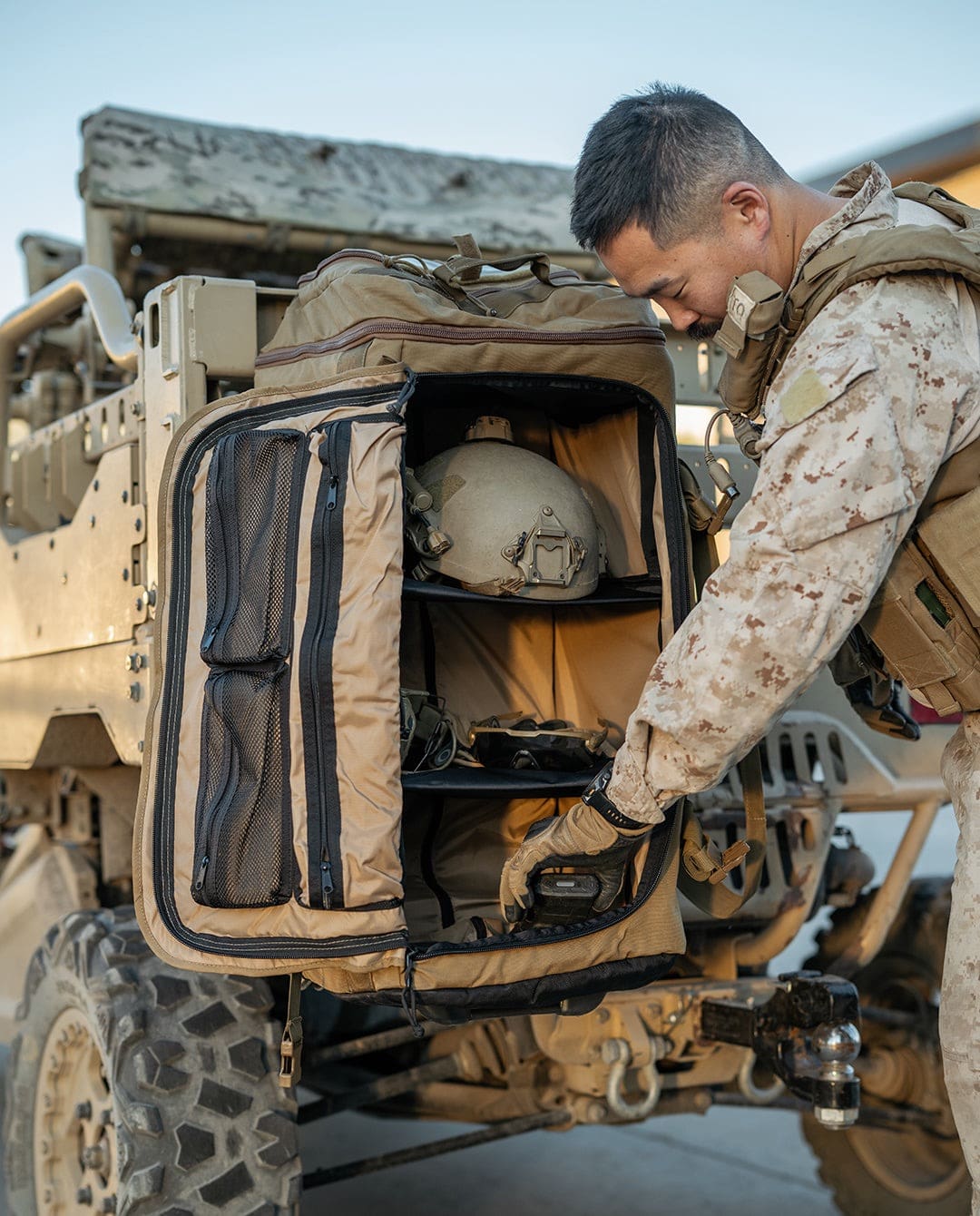
Hangable, with three Velcro shelves

INTRODUCING THE G5

The G5 Olympus™ builds on everything that made previous generations the standard:

• Expandable, wheelable, ruckable

• Unexpanded 30″ x 15″ x 15″ (6,750 cu. in.)

• Expanded 40″ x 15″ x 15″ (9,000 cu. in.)

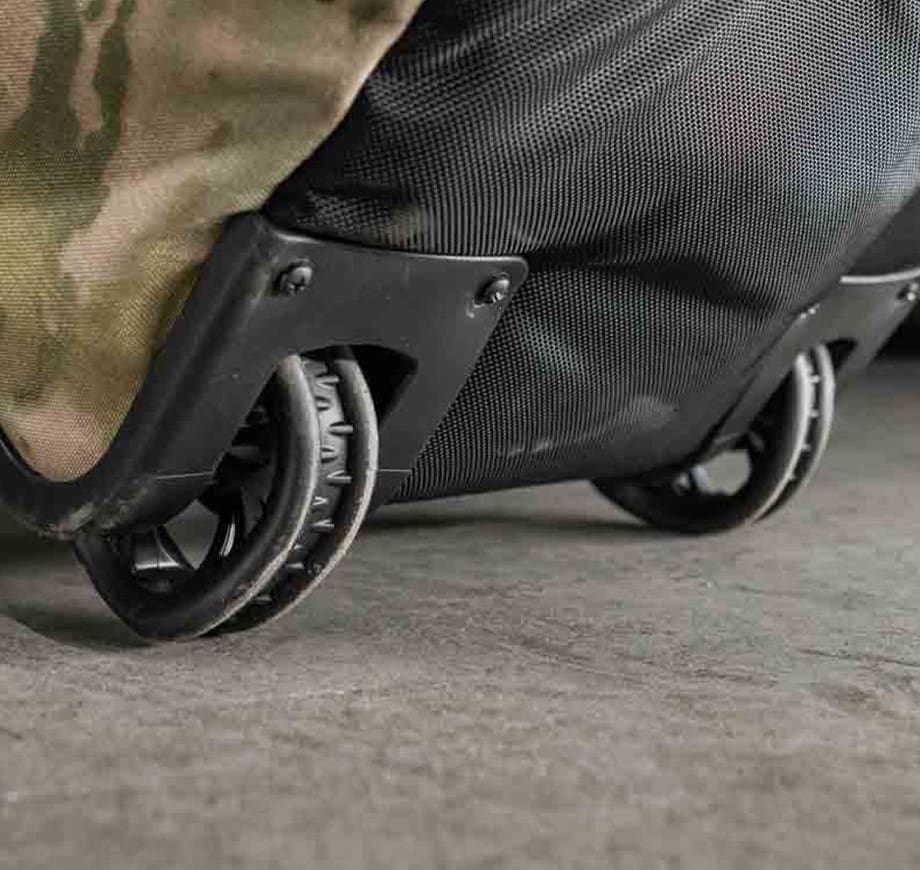
• Patented 4″ Shark Wheels, dual ball bearing, 200 lb load capacity

• Retractable composite HD 14″ metal telescoping handle

• ABS frame system with 360° closed-cell foam protection

• 1000D Cordura fabric with ballistic back

• TEK69 twisted filament thread, double stitched and bartacked

• YKK #10 zippers

• Top opening 12″ access flap

• 3 shelves with top 360° Velcro

• 3 inside storage pockets, 3-D aerospace mesh

• Front document pocket, 4 x 6 marking window, ID insert

• 9″ cloth pull and hanging handle

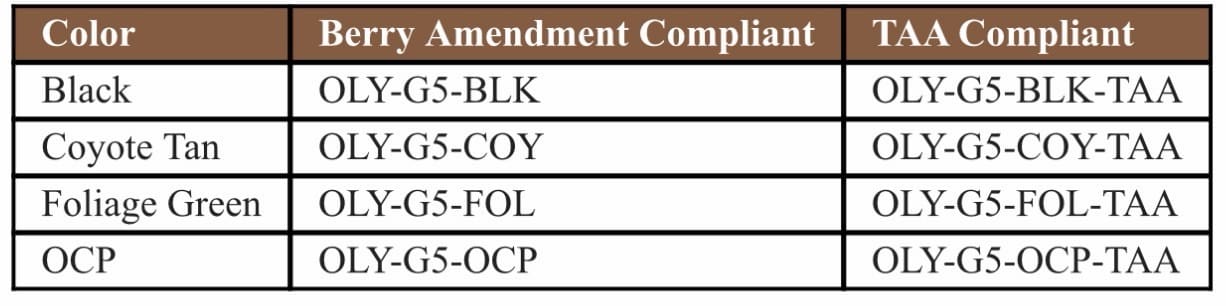
• Available in Berry Amendment and TAA compliant versions

• TSA compliant · Limited lifetime warranty

PART NUMBERS

Patented 4″ Shark Wheels, rated to 200 lbs

Top access flap: reach your gear without unpacking

HOW TO KNOW IT’S A GENUINE OLYMPUS™

• Look for the logo. Every authentic Olympus™ carries the Thin Air Gear™ logo. No logo, no Olympus™.

• One manufacturer. Thin Air Gear™ is the only company that has ever built the Olympus™. No other company is, or has ever been, licensed to make it.

• Watch the name. Lookalike bags are being offered under similar-sounding names. A similar name is not the same bag.

• Order it right. When buying through government channels, specify a genuine Thin Air Gear™ Olympus™ by our part number (OLY-G5-), manufactured by Thin Air Gear LLC™.

• When in doubt, ask us. Contact Thin Air Gear™ directly and we will verify it.

“When somebody copies your product, it’s a compliment. It means you built something worth copying,” said Anthony Gonzalez, Vice President of Sales at Thin Air Gear™. “But our customers deserve to know what they’re getting. Thin Air Gear™ is the only company that has ever built the Olympus™, and no one else is licensed to make it. If you find one without our logo, it isn’t ours. Accept no substitutes.”

thinairgear.com

Sneak Peek – Shockforce USA by Danner

October 26th, 2026

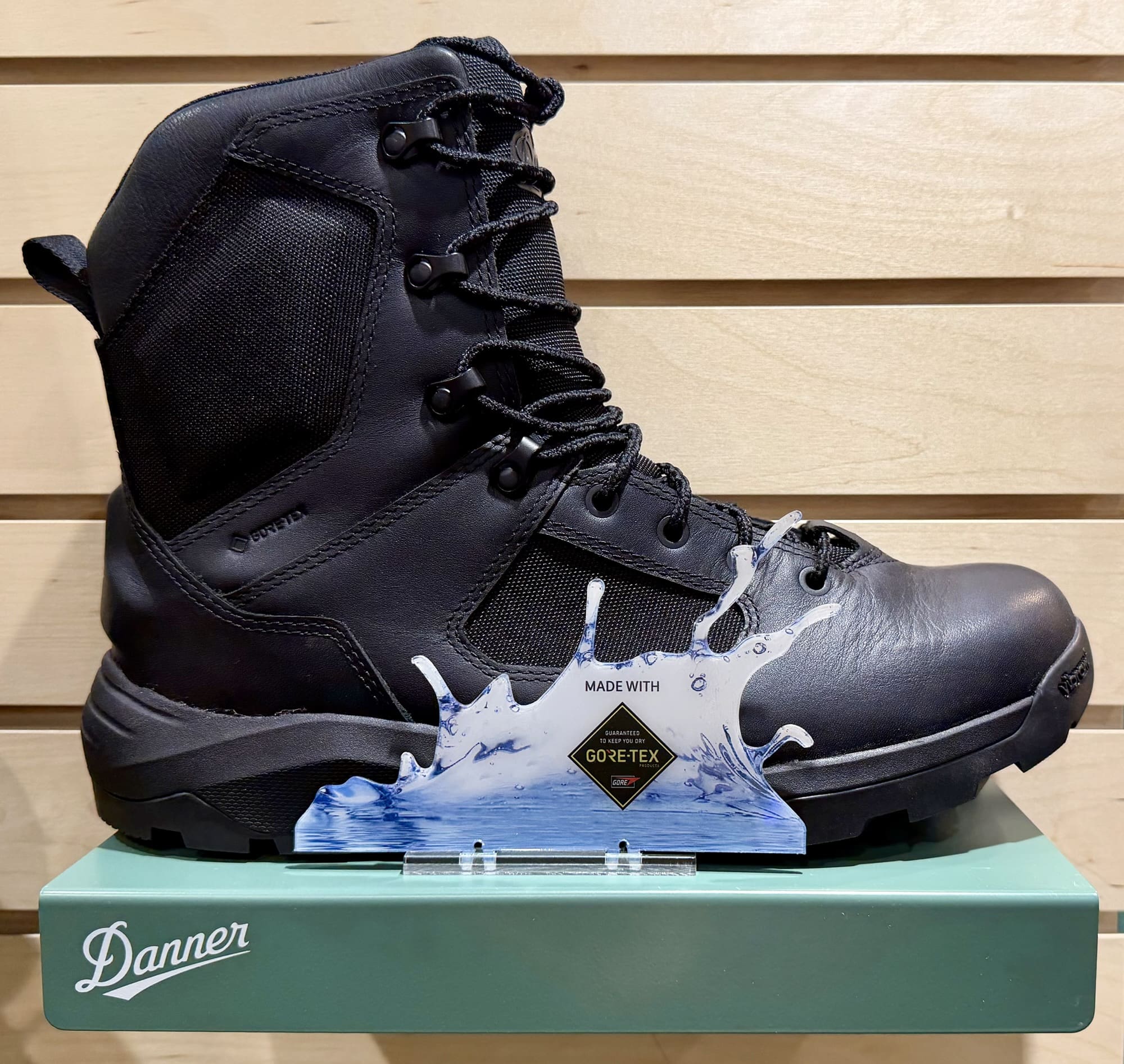
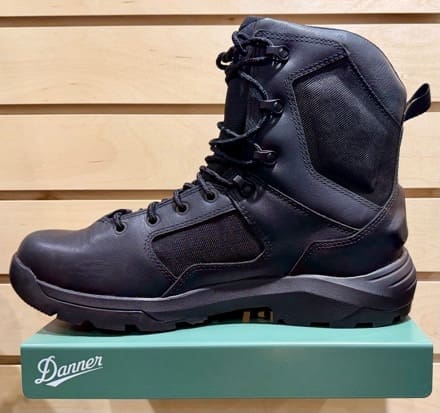
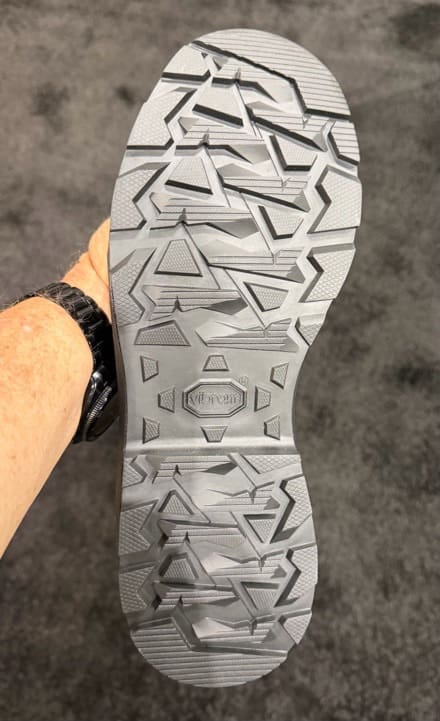
This is a sneak peek of a new boot coming from our friends at Danner. Debuting at the International Association of Chiefs of Police conference in Orlando this week. Like the name implies, the Shockforce USA is built right here in the USA and incorporates a GORE-TEX waterproof breathable liner to protect against the elements along with a Vibram ShockForce USA outsole for slip-resistant traction in diverse terrain.


This 8” tactical boot focuses protection in the collar with high-density PU foam panels in medial and lateral collar and heel areas for impact protection. What’s more, the toe is polishable making it a great uniform boot.

An additional benefit to this style is the ability to resole this boot, just like the renowned Danner Acadia, known by Law Enforcement Officers across the United States and worldwide. I’ve heard of wearers resoling their boots three and four times. As you can imagine, Danner offers recrafting services, extending the life of this boot by replacing the outsole package. Visit Danner.com for more details on this service as well as the full range of Danner footwear.

If you’re attending the IACP conference be sure to check out the Shockforce USA in booth #351. It will be available for purchase soon. Keep an eye on SSD for further details.

BFG Monday: Four Steps to Not Shoot the Wrong Guy: Safer Armed Movement Around Teammates and Civilians

October 26th, 2026

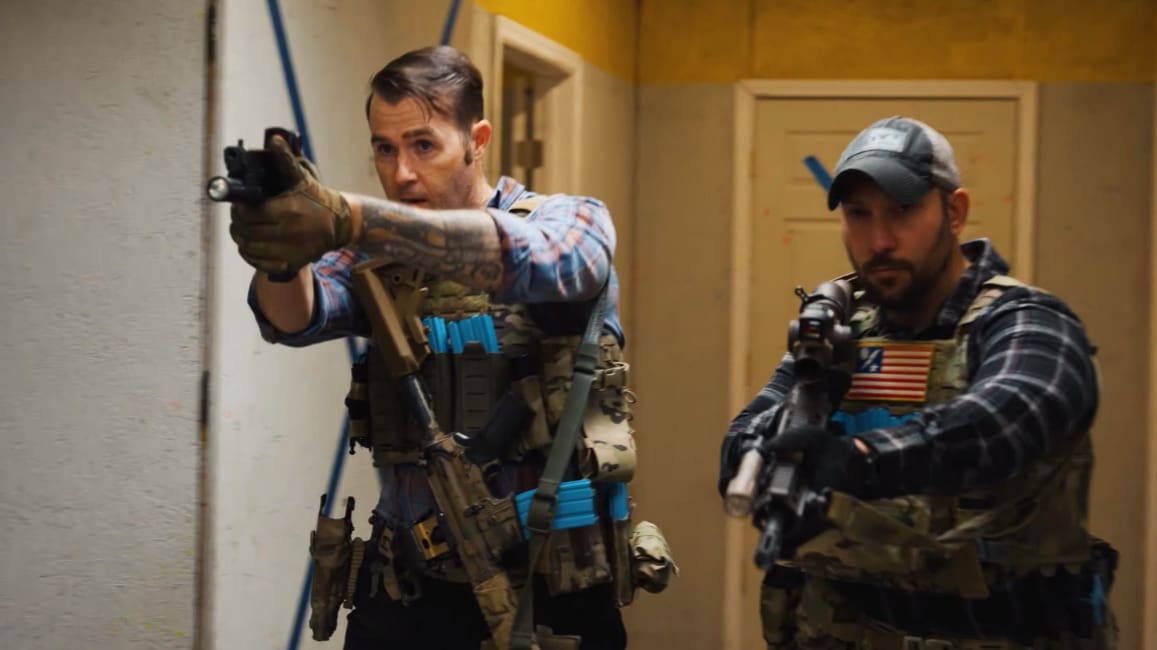
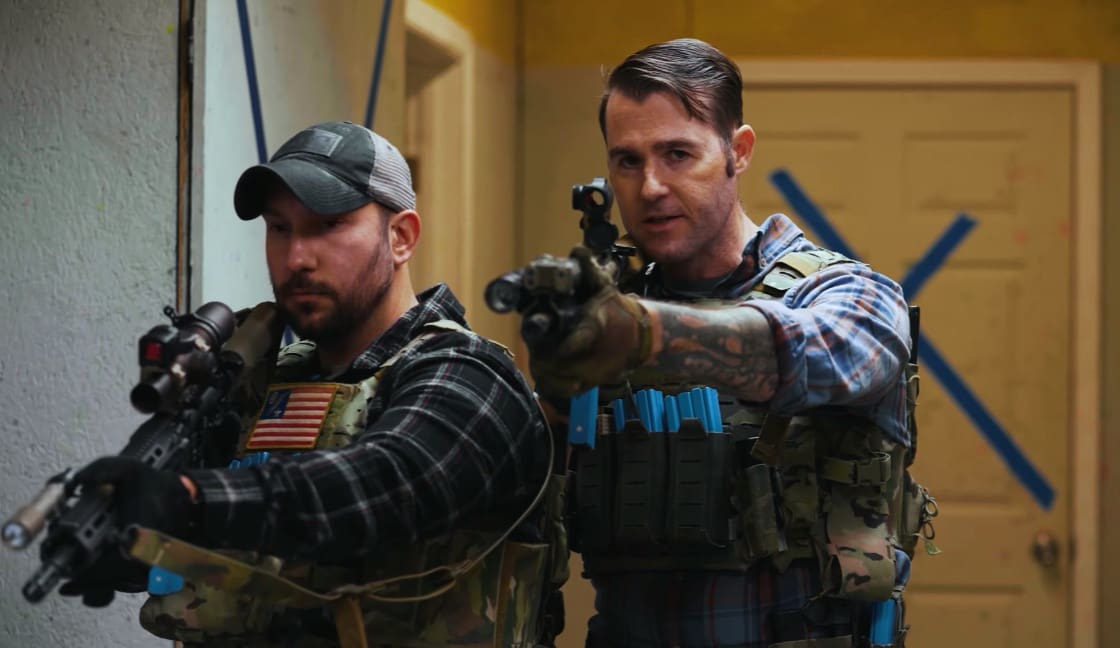
Armed movement isn’t only about getting where you need to go. It’s about getting there without putting a teammate or civilian on the wrong side of the muzzle.

In military and law enforcement environments, teammates, civilians, and potential threats may occupy the same space. Attention naturally gets pulled toward what is happening ahead. That makes muzzle awareness and recognition of the people nearby essential.

A simple four-step sequence helps professionals move safely around others while maintaining control of the firearm:

Carry. Look. Move. Ready.

Step 1: Carry

Before moving, transition the firearm into a high- or low-carry position.

The order matters. The muzzle should be directed safely before the first step is taken, not corrected after movement has already begun.

This becomes especially important when moving around a vehicle, passing through a doorway, or working alongside a teammate. The environment can change quickly, and the people around you may move without warning.

Establish control before you move.

Step 2: Look

Once the firearm is in a carry position, look.

Target fixation can narrow your awareness of everything happening nearby. Deliberately identify the people around you and recognize where teammates and civilians are positioned.

Looking is more than turning your head. It means seeing who is there and accounting for their position before moving through the space.

Don’t assume the path is clear. Confirm it.

Step 3: Move

Once the firearm is controlled and you have identified the people around you, move until you’re on line with your partner.

Being on line means occupying approximately the same lateral plane rather than moving significantly ahead of or remaining behind your partner.

Spacing matters. Being on line doesn’t mean standing shoulder to shoulder. Your partner may need to advance, retreat, or move laterally. Crowding their space can interfere with their ability to react and move.

Account for where your partner is, where you need to go, and where both of you may need to move next.

Step 4: Ready

Once you’ve moved into position, come to a ready position or come on target as circumstances require.

These are different outcomes, and the situation determines which is appropriate. What matters is that you have identified the people around you and moved into the proper position before bringing the firearm back into a working position.

Complete the movement deliberately. Then come to ready or on target as the situation requires.

Four Steps. One Repeatable Process.

The process is simple by design:

Carry. Look. Move. Ready.

These four deliberate steps create a repeatable sequence between deciding to move and returning the firearm to a working position.

When teammates or civilians may be only a few feet away, the fundamentals matter. Control the firearm. Identify who is around you. Move with purpose. Finish in the position the situation demands.

The goal isn’t simply to move efficiently with a firearm.

It’s to make sure everyone who shouldn’t get shot doesn’t.

Watch “How to Avoid Shooting the Wrong Person: 4 Key Steps”to see the complete armed-movement sequence demonstrated.

Train deliberately. Move with purpose. Stay ready.

Explore purpose-built gear designed to support the way you train, work, and move at Blue Force Gear.

Safety Notice: This content is provided for general educational purposes and is not a substitute for professional firearms training, applicable laws, agency policies, or established safety procedures. Firearms should always be handled in accordance with applicable safety rules and training.