Soldier Systems Bates Categories EmailArchives Home

Archive for September, 2009

FAS Bag from NEMO ADS

Wednesday, September 30th, 2009

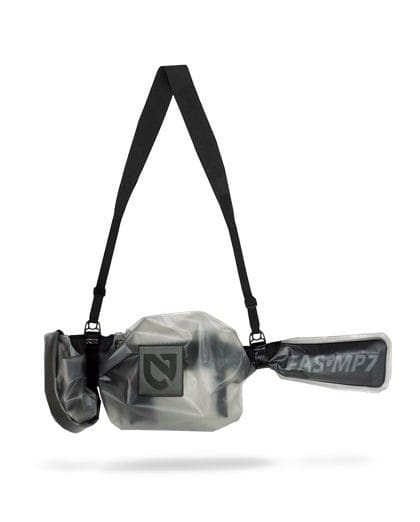
The FAS (Full Action, Sealed) Bag from NEMO Special Operations Shelters is designed as a semi-disposable water-proof weapon bag that maintains the ability to put the weapon into action from inside the bag.

FAS Bag

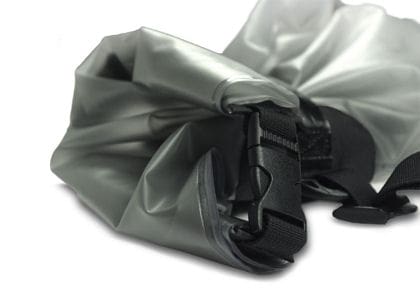
The FAS Bag was designed to accommodate a suppressor equipped weapon and has heat resistant panels at the suppressor and ejection port. Additionally, the bag comes with a no-slip Hypalon shoulder strap. The shoulder strap is also used to tighten the bag around the weapon in order to secure excess material. A newly released version features a clear window for an ATPIAL equipped weapon. NEMO suggests that users practice extensively with the weapon in order to gain confidence with it before placing it into action. The weapon remains dry via a roll top closure that is secured with a side-release buckle.

FAS Bag Closure

Bags are currently available for the MP7 (shown) and M4 carbine. The FAS Bags are available from ADS.

USMC Awards IMTV/Plate Carrier Contracts

Wednesday, September 30th, 2009

Carter Enterprises, Brooklyn, N.Y. is being awarded an estimated maximum value $414,427,770 firm-fixed price, indefinite- delivery/indefinite-quantity contract for plate carriers, improved modular tactical vests and associated spare and repair parts. An initial delivery order in the amount of $78,936,987 will be issued.
Work will be performed in Brooklyn, N.Y. (77 percent); Sunrise, Fla.,(23 percent), and work is expected to be completed September 2014. Contract funds will expire at the end of the current fiscal year.
The Marine Corps Systems Command (M67854), Quantico, Va., is the contracting activity (M67854-09-D-3001).

KDH Defense Systems, Johnstown, Pa. is being awarded an estimated maximum value $380,260,385 firm-fixed-price, indefinite-delivery/indefinite-quantity contract for plate carriers, improved modular tactical vests and associated spare and repair parts. An initial delivery order in the amount of $88,732,482 will be issued. Work will be performed in Eden, N.C., (33 percent); Johnstown, Pa.,(22 percent); Lares, P.R., (30 percent); Mayaguez, P.R., (10 percent); Fenton, Mo., (5 percent), and work is expected to be completed September 2014. Contract funds will expire at the end of the current fiscal year.
The Marine Corps Systems Command, Quantico, Va., is the contracting activity (M67854-09-D-3000).

These contracts were awarded as result of a competitive Historically Underutilized Business Zone (HUBZone) small business set-aside. Proposals were solicited via FedBizOpps, with 14 offers (one for the PC and one for the IMTV) were received from seven different HUBZone Certified Small Businesses.

It appears that Carter will utilize PPI as a sub and KDH will rely on assistance from ATK’s Eagle Industries division. In the case of KDH/ATK it seems to be a beneficial relationship as they also captured a portion of the Army’s IOTV contract last month.

Finally, it is important to note that the IMTV is a Government design. Additionally, the Plate Carrier referenced in the contract awards was until recently known as the “Improved Scalable Plate carrier” and the name has been changed to simply Plate Carrier. While this is also a Marine Corps design it is based on an improved version of the Scalable Plate Carrier produced by Eagle Industries for the USMC.

These awards were announced on 28 September by DoD.

Popular Mechanics Takes on Disaster

Tuesday, September 29th, 2009

It seems like everyone is focused on Disaster Preparedness these days. For example, just last week saw the season finale of the Discovery Channel’s “The Colony”. It seems that in the wake of natural disasters and a near economic melt down, folks are interested in taking care of themselves and the October 2009 issue of Popular Mechanics takes it on.

Popular Mechanics Beyond Survival

One of the more interesting articles covers unusual survival kit essentials. Number one on the list? Beer. According to magazine publisher Trey Click, who survived last year’s Hurricane Ike in Galveston, Texas. “It’s one of the only things you can use for money in the aftermath.”

Here are just a few of the other articles in this issue:

• TIMELINE: An Illustrated History of Self-Reliance
• EARLIER: How to Make Biodiesel out of Kitchen Grease
• OFF-THE-GRID: Alaska’s Hidden Model for Clean Energy
• DIY HOME: How to Build a Raised Garden Bed (With Plans!)
• PLUS: Has Affordable, Efficient Rooftop Wind Power Arrived?

Ecotat Multi-Purpose Sleeping Bags – On Sale

Monday, September 28th, 2009

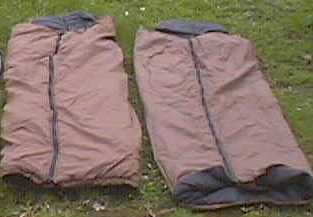
Ecotat Systems Company has been around for over 25 years producing specialized sleeping and shelter systems. In fact, they are so specialized that you probably never heard of them. They have produced shelter and sleep systems for Marine Force Recon, Army Long Range Surveillance and Special Forces units as well as for inclusion in Army and Air Force survival kits. In fact, the multi-purpose sleeping bags carry NSNs for units wishing to purchase them through the standard stock system. Contact Ecotat at the email address below if there are any questions. Until the end of October individual sales are offered a 30% discount from MSRP.

Ecotat Multi-Purpose Sleeping Bags

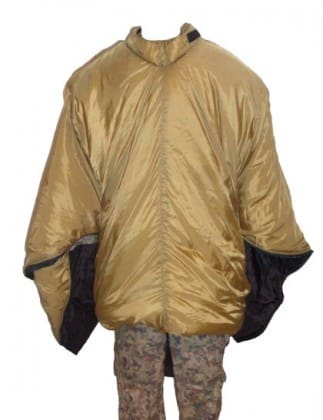
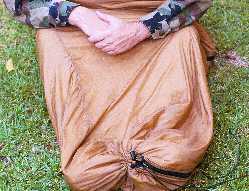
What makes Ecotat’s products so innovative is that one item fulfills the functions of many. As I discussed earlier, foot mobile units who find themselves regularly in austere environments have adopted the shelter and sleep systems. The multi-purpose sleeping bag pulls duty not only as a mummy style bag but also can be worn as a long “great” coat, short “anorak” coat, poncho-style or unzipped it takes the place of a poncho liner. By utilizing the head hole and stepping into the body of the bag the wearer retains full mobility of his head and his hands are free to operate weapons and night vision devices from defensive positions.

Ecotat Multi-Purpose Sleeping Bag as an Anorak

I have used Ecotat products extensively in the past and I personally recommend them. For someone operating in Afghanistan, the multi-purpose sleeping bag is a great option. It not only provides provisions for sleeping but can also makes insulated clothing items redundant in the load. What’s more, the bag was designed with combat lessons learned in mind. Ecotat president Dick Hailsip is a retired Colonel of Marines and engineered practical features into the design such a zipper that will rapidly open in an emergency and the adjustable hem that accommodates not only static guard duty but also is adjustable for stride when worn during foot mobile operations.

Ecotat Sleeping Bag Adjustable Hem

As a special offer to Soldier Systems Daily readers, Ecotat is conducting an end of fiscal year close out on solid colors of their Cold Weather (0 degree) and Desert (35 degree) bags. This offer is good now through the end of October and they will be be discounted 30% from retail pricing.

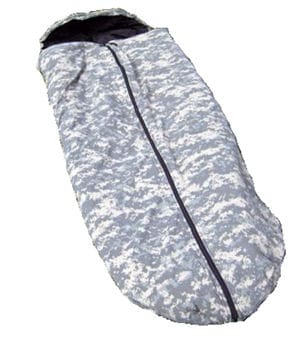
Ecotat Multi-Purpose Sleeping Bag in UCP

Both bags are available in regular (82″) and long (86″) lengths and are Berry compliant. They feature Taffeta shells and linings that are water and mildew resistant. The insulation is a silicon coated continuous filament fiber that is laminated directly to the shell to avoid cold spots and does not absorb water. The solid colors include Coyote Brown, Black, and OD. However, they also have light blue and purple for those interested in using the bags for civilian use. The lining comes standard in Black but Ecotat can accommodate custom orders as well. Naturally, Ecotat offers the multi-purpose sleeping bags in Woodland, UCP, and Woodland MARPAT but these colors are currently available at full price.

Ecotat does not normally sell direct so to take advantage of this offer contact them via email for instructions.

35 Deg Bag NSN: 8415-01-416-6216
0 Deg Bag NSN: 8415-01-417-4001

The Tactical Assault Panel

Monday, September 28th, 2009

Many of you noticed a reference to the Tactical Assault Panel or TAP being issued to the Afghanistan camouflage test battalions.

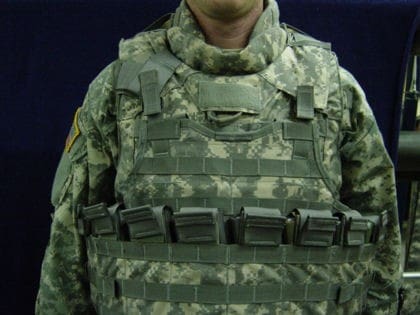
Tactical Assault Panel

Here is a little bit of background on this developmental item.

The bib-like TAP is a product improvement that attaches to the Improved Outer Tactical Vest (IOTV) or Outer Tactical Vest (OTV) giving Soldiers the ability to attach Modular Lightweight Load-bearing Equipment (MOLLE) basic fighting load pouches to the TAP, as opposed to directly to the IOTV or OTV. It is easily donned and doffed allowing the Soldier to quickly reduce the girth of his load by removing the TAP from his armor.

The intent is to issue the TAP in addition to or in lieu of the Fighting Load Carrier once an assessment has been completed. An in-theater User Evaluation began in 4QFY09 and PEO-Soldier will be making adjustments to the TAP based on that feedback.

Bobro Standard Vertical Grip

Sunday, September 27th, 2009

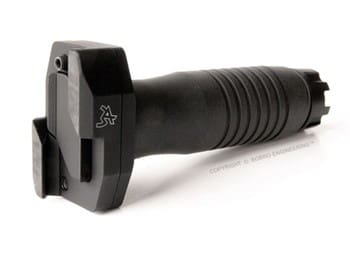
Bobro VFG

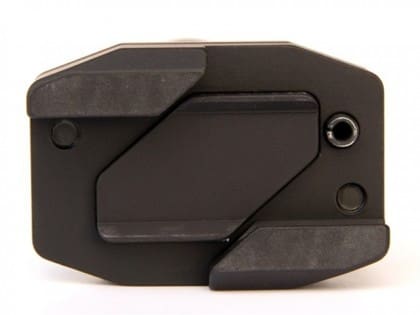
For those of you running a vertical fore grip, Bobro offers a unique take on the device. It attaches via a system called the SACL (Self Aligning Compression Lock). Basically you align the grip at a 45 degree offset from the portion of the rail where you want to attach the grip. Loosen the compression lock a couple of turns, slide it into place and twist. Then you tighten the compression lock to keep it in place. A major advantage to this style of attachment is that you can attach it anywhere along the rail without having to remove any accessories already in place.

Self Aligning Compression Lock

The SACL portion is machined from a polymer (Delrin). The fasteners and index pin are phosphated to Mil Spec STD 171. While the grip was not designed for the waterproof storage, items can be stowed inside the central core. Additionally, it is not rail sensitive, meaning it can be installed on any rail built to Mil-Std 1913.

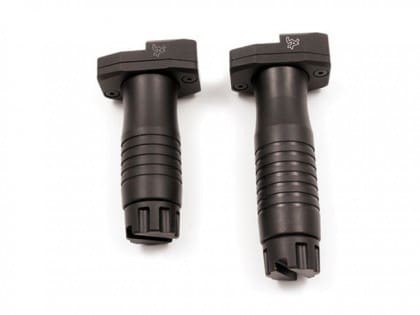
Bobro Shorty and Standard Grips

The Bobro grip is available in two lengths; standard and shorty. Available from SKD Tactical at under MSRP.

Camo for Afghanistan – The Rest of the Story

Saturday, September 26th, 2009

On Friday September 18th, Soldier Systems Daily was granted an exclusive interview with PEO-Soldier’s COL William Cole, Project Manager Soldier Protection and Individual Equipment, Todd Wendt, Deputy Product Manager Soldier Clothing and Individual Equipment, and Cheryl Stewardson, Team Leader, Soldier Integrated Protection, at the U.S. Army Natick Soldier Research, Development & Engineering Center. The topic of our conversation was alternative camouflage patterns. Our goal at SSD for the interview was to cut through the misinformation and conjecture currently permeating the web on this subject and get to the facts. Up to now no one, including us, has adequately told the story of what is actually going on.

As a result of a photosimulation study conducted in 2007 by Natick as well as recent Congressional language directing the Army to provide an enhanced camouflage capability for Soldiers on operations in Afghanistan, the Army is undertaking a four-phased initiative to explore alternate camouflage patterns for the Army Combat Uniform (ACU). Additionally, the Army regularly conducts post combat surveys and had noted several comments that Soldiers were most dissatisfied with UCP’s performance in Woodland environments. Based on this information, the Infantry School suggested that perhaps a Brown shade should be added to the UCP color palette.

The Army’s objective is twofold: to identify an ACU camouflage that will provide effective concealment for Soldiers serving in Operation Enduring Freedom, and to evaluate a long-term camouflage plan for the Army. When COL Cole made his initial decisions on developing a course of action one of the main considerations was Fire Resistance. Whatever was going to be tested and fielded had to be FR. Additionally, they had to meet military specifications for infrared identification and be Berry compliant. Two patterns that met these specifications were readily available; MultiCam® and the Army’s Universal Camouflage Pattern. Recently, many have called for the complete elimination of UCP yet touted the performance of MARPAT. As we will discuss later, the patterns are the same, just with different pigments. If MARPAT performs well, UCP could be tweaked in order to enhance its characteristics and that is exactly what the Army did.

In conjunction with this interview, SSD was provided an exclusive look at the five alternative patterns named UCP-Alpha through Echo developed for the wear test.
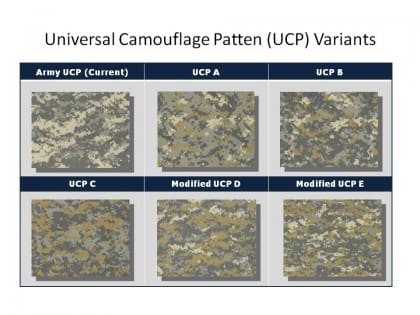
Universal Camouflage Patten (UCP) Variants

Oddly enough, immediately after the story broke, strange conclusions began to surface around the internet that there was a significance to the UCP-Delta moniker. We can assure you that the Delta designation denotes no affiliation to any particular unit but rather is the phonetic alphabet for the letter D. PEO-Soldier used the alphabet since they were not sure initially how many variants they would need to work on. As it turns out, due to time constraints and some solid rudimentary research, they only produced five patterns. Of the five, only Charlie and Delta showed significant promise for further testing. Initially patterns were developed in .jpg format and then fabric was printed on a dot matrix printer.

According to Cheryl Stewardson, Natick researchers then conducted a modified photosimulation test similar to the one conducted in 2007. However, in this test 200 Soldiers at Forts Hood and Campbell with recent combat experience in Afghanistan were shown images of Afghani terrain that had been altered by superimposing photos of ACUs in the Charlie and Delta variants on them. During this testing, UCP-Delta was selected as the most promising pattern.

Some interesting facts about the US digital patterns were revealed during this interview. The digital camouflage is printed using a screen process. MARPAT, UCP, and the AOR patterns all use the same screens. Current UCP utilizes only three of the four screens required to produce MARPAT and AOR but UCP-Delta will add the fourth screen to apply the Coyote to the pattern.
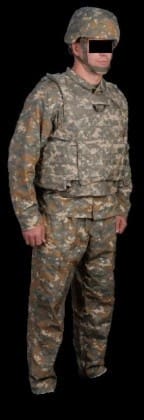
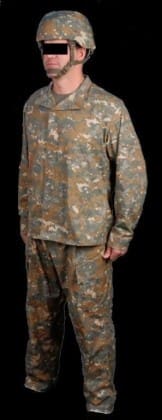
UCP Delta with IOTV UCP Delta
Photos courtesy of PEO-Soldier

Phase I By the end of September 2009, the Army will provide two alternate uniforms to designated battalions of Soldiers serving in Operation Enduring Freedom. The two alternate uniforms will utilize the MultiCam® and Universal Camouflage Pattern – Delta (UCP-D). The UCP-Delta pattern was derived from the standard UCP by reducing the Urban Grey and Sand colors, and adding Coyote Brown which constitutes 30% of the pattern.

One battalion will receive the MultiCam® uniform, while the other will receive the UCP-Delta uniform. In addition to their test uniforms and equipment both battalions will also be issued a full complement of standard UCP equipment. This will allow commanders to outfit their troops based on METT-TC. While PEO-Soldier plans to use the IOTV in standard UCP for this test, they will provide test forces with the Tactical Assault Platform in UCP-Delta. The TAPS is similar to a chest rig that attaches to the IOTV. Additionally, PEO-Soldier is fast tracking a UCP-Delta solution for the rear of the IOTV. The battalion outfitted in MultiCam® will receive a full complement of TA-50 in that pattern including IOTV, Plate Carrier, MOLLE, and TAP.

Phase II By the end of October 2009, the Army will begin collecting data in theater to measure the suitability of various camouflage patterns. This phase will include feedback from Soldiers in Operation Enduring Freedom; photosimulation of uniform colors and patterns, along with associated Operational Clothing and Individual Equipment (OCIE) such as body armor, helmets, and rucksacks, against a variety of backgrounds common to Afghanistan including foliage, high desert, and mountains; and a photographic study in theater. Specific emphasis will be placed on ensuring accurate RGB values. The Army will analyze the data throughout the collection period in preparation for Phase III.

The next round of Photo simulation studies will include six patterns. However, not all of the patterns have yet been released. COL Cole confirmed that UCP-Delta, MultiCam®, AOR-1 and 2 and a newly developed pattern based on the UCP pattern with an entirely new colorway will be tested. The new pattern retains the four screen process but replaces even UCP-Delta’s colors with a pallet based on a photometric study of Afghanistan.

Another goal of this photosimulation study is to measure the effects of a variety of field equipment colors including UCP, Coyote, Khaki, and Ranger Green have when used with different uniform patterns.

Phase III By the end of January 2010, Army leaders will make a decision whether or not to produce and field alternate uniforms and OCIE to selected units in specific regions of Operation Enduring Freedom.

Phase IV At a date to be determined, the Army will establish and evaluate a long-term plan for ACU camouflage. If a new pattern is selected, even for limited use in Afghanistan, it may very well promulgate throughout the Army if it is demonstrates improved camouflage traits.

Once again SSD would like to thank the folks at PEO-Soldier and Natick who made this interview possible.


Swedish Combat Bra Under Development

Saturday, September 26th, 2009

This story come from a recent report by the Gothenburg Post and English-language Swedish journal The Local via the UK Register. Apparently, female members of the Swedish military must purchase their own brassieres. Their main concern is that the sports bras available are not FR and not designed for the rigors of combat. Instead, according to the article there are complaints that they unhook too easily.

Sweden still has National Service and inducts about 2000 women per year. Paulina Rehbinder a representative of the Council of Conscripts criticized the military for its lack of gender equality, in a country widely considered a pioneer in the field. In response to such concerns the Swedish military is developing a new combat bra that should enter service this Winter.

Patrick Smith Talks Armor Grip

Friday, September 25th, 2009

Kifaru’s legendary founder, Patrick Smith discusses their Armor Grip technology in this new video.

For more information visit Kifaru Tactical.

BAE to Produce MultiCam MOLLE for Afghanistan Camo Test

Thursday, September 24th, 2009

The Army has issued a Purchase order for the production of MOLLE systems in MultiCam in anticipation of the upcoming camouflage tests in Afghanistan. It seems that this train is on its way.

New British Helmet and Armor on Way to Afghanistan

Wednesday, September 23rd, 2009

According to an article published in Sunday’s edition of the “Daily Mail”, the new Osprey assault armor and Mk 7 helmet have been shipped to Afghanistan for use by the 11th Brigade just beginning a six-month deployment.

Mk 7 Helmet

This photo published in the “Daily Mail” shows the new helmet’s camouflage cover. It will be interesting to see if this is just a prototype or will see general issue as it forgoes the sewn-in foliage bands found on the cover for the Mk 6 helmet.

Magpul to Release Adaptable Carbine/Storage Stock

Tuesday, September 22nd, 2009

Magpul will soon release the Mil-Spec Version of the ACS™ Carbine Stock. Designed to fit a Mil-Spec Receiver Extension (buffer) Tube, the ACS™ takes storage to a whole new level. In addition to dual, rear accessible, water-resistant battery storage tubes, it also features an integral storage compartment in the butt of the stock. The streamlined shape shields the release latch to prevent accidental activation. This is backed up by a power lock mechanism which relies on a chrome-silicon spring to avert auto-collapse failure by resisting spring relaxation.

Adaptable Carbine/Storage – Military Model

The ACS™ features two sling mounts; the mid point of the stock accepts optional QD sling mounts (up to 1.5” push-button swivels) and the rear has a 1″ sling loop. The ACS™ comes standard with a rubber butt-pad which gives positive shoulder purchase to prevent slippage even with body armor or modular gear however the Enhanced Butt Pad will also fit this stock.

For more info visit www.magpul.com.

Camo for Afghanistan – The Rest of the Story

Monday, September 21st, 2009

On Friday September 18th, Soldier Systems Daily was granted an exclusive interview with PEO-Soldier’s COL William Cole, Project Manager Soldier Protection and Individual Equipment, Todd Wendt, Deputy Product Manager Soldier Clothing and Individual Equipment, and Cheryl Stewardson, Team Leader, Soldier Integrated Protection, at the U.S. Army Natick Soldier Research, Development & Engineering Center. The topic of our conversation was alternative camouflage patterns. Our goal at SSD for the interview was to cut through the misinformation and conjecture currently permeating the web on this subject and get to the facts. Up to now no one, including us, has adequately told the story of what is actually going on.

Read the rest of the story after the jump

Use a 3D Printer To Get Out Of Handcuffs

Monday, September 21st, 2009

Ok, sure. It sounds like something out of an action movie. Sport Enthusiasts of Lockpicking – Europe member Ray used a hi-res camera to image the Dutch Police Hand Cuff Key. He then used a 3D printer to make a copy.

Handcuff Key

According to the lock picking blog Black Bag:

At first the police officers at HAR (Hacking at Random 2009, an international technology & security conference) were a little reluctant to event try out the plastic key he printed. But he found another way to verify the key he printed was the correct one. I guess these officers never thought about wearing keys concealed, especially when talking with Mr. Handcuff himself. Given the megapixel camera’s on the market today it was not so difficult to verify the key he printed was the correct one. At the end of the day he talked the officers into trying the key on their handcuffs and … it did work! At least the Dutch Police now knows there is a plastic key on the market that will open their handcuffs. A plastic key undetectable by metal detectors….

AAC’s Silencer Shoot

Sunday, September 20th, 2009

AAC's Silencer Shoot 2009
Photo Ted Tae

Advanced Armament Corporation was kind enough invite Soldier Systems Daily to attend the 2009 Silencer Shoot. Despite rainy weather the event was well attended and offered a rare opportunity for enthusiasts to fire suppressed as well as full auto weapons.

Wounded Warrior
Photo AAC

The Wounded Warrior Project was a big part of the Shoot’s activities and proceeds from the raffles were donated to the cause.

Attorney Goldman
Photo AAC

Attorney David Goldman gave a great presentation on NFA trusts during the Seminar held Friday evening. After hearing him speak I suggest that anyone who has a trust not specifically written to comply with the National Firearms Act take a look at his services.

AAC Ti-RANT
Photo Ted Tae

AAC had their full line of suppressors on hand including the new Ti-RANT. Constructed of Grade 9 Titanium, heat treated 17-4 PH stainless steel, and high strength hard coat anodized 7075-T6 aluminum alloy, the Ti-RANT integrates AAC’s A.S.A.P. System (Assured Semi Automatic Performance).

Silencer Shoot 2009
Photo Ted Tae

Additionally, several vendors were on hand to display their wares in the vendor tent. Attendees had an opportunity to see the latest from a long list of suppressor and firearm producers as well as a few of our favorite soft good manufacturers. Arc’teryx displayed their entire line of LEAF products and had a couple of under the table samples of their new line coming out this Winter. Sorry, no sneak peeks; yet.

Gryphon Gloves from TAD
Photo Ted Tae

Gryphon Gloves from TAD
Photo Ted Tae

Triple Aught Designs had a great booth and was well represented by Mack and Dan. In addition to several of their new garments, they had a prototype of the upcoming Gryphon glove. They have put a lot of work into these and should be available this Fall.

Soldier Systems Daily would like to thank AAC for their hospitality as well as all of the vendors who took time to speak with us. You will be seeing future articles based on several of these products. Finally, a big thanks to Monster who provided free drinks through out the day.

Redington Introduces the Eco Grip Feltless Wading Boot

Sunday, September 20th, 2009

The Eco Grip™ is Redington’s first felt-less wading boot designed by Redington and engineered through an exclusive partnership with OTB. OTB developed the lugged and precisely razor-siped Tactical Rubber Technology™ to support their military customers and is yet another case of technology developed to support America’s Warfighters finding its way to the civilian market.

Redington Eco Grip™ Feltless Wading Boot

Rubber-soled wading boots are an evolution in wading gear, since felt soles can be a cesspool for damaging aquatic microorganisms. In addition to helping prevent the Aquatic Hitchhikers (didymo, New Zealand mud snails, zebra mussels, whirling disease and other introduced nuisances) that threaten our waterways, the Eco Grip™ boots have many other notable features. Mesh side panels allow for instant water drainage, and ballistic mesh placed between the outsole and upper prevents small stones and other debris from entering the boot. High-abrasion TPU upper material resists scuffs, far outlasting conventional leather and a DWR finish on the entire boot prevents extreme water absorption, so the boot doesn’t get weighed down as the day progresses.

The Eco Grip Boot features the same foot bed found in OTB’s maritime footwear. In the footbed, the exclusive SFS™ (SEAL Fit System™) aids in water drainage as well as breathability. OTB’s SEAL footbed has a patented removable shank that allows the user to customize the fit with two different insoles, depending on the application. A thick neoprene insole takes up more room inside the boot for use with a thin sock or when wearing the boot barefoot while wet wading. Replacing the thick insole with the thinner insole gives the wearer additional room inside the boot when using an extra-thick sock or a neoprene bootie.

The Eco Grip™ boots will be available December 2009 from Redington.

Natick Camo Study – Making Sense of It All Part II

Saturday, September 19th, 2009

Much has been made of the Photosimulation test. It is important to note that this test was not perfect and ultimately serves a data point, and not the data point. Overall, the testers did a good job but if the test was conducted again, some patterns would most likely see different results. This is due to a variety of factors which include the actual test subjects. For example, the Bulldog Mirage pattern did not have as many test samples due to a lack of Woodland environmental imagery early in the test. Instead, the test authors accepted the statistical sample as indicative of a full test and extrapolated the results.

Number of Observers Evaluating Each Pattern by Scene

Another issue which may have resulted the “Syrian” pattern performing better is scale. The test photo indicated that the wearer of the Syrian camo is female and this may mean that the test article was smaller than others. It may not have been detected at as great a distance as other patterns worn by larger individuals. Additionally, all of the test subjects were wearing green Advanced Combat Helmets which in some cases may have led to premature detection of the test subject rather than the actual camouflage pattern.

Another issue that probably skewed the results was that the urban environment was based on Tan colored buildings. This resulted in desert patterns performing better than they probably would have in a grey-centric environment. Conversely, patterns such as UCP and Bulldog which should have shined in an urban setting didn’t do so well.

Urban Scenes

Lessons have been learned from this round of testing and will be applied during a new round of photosimulation testing to coincide with the upcoming Afghanistan wear tests. Be sure to visit us again on Monday for an exclusive interview with COL Cole, Program Manager Soldier Protection and Individual Equipment on this testing and the development of UCP Delta.

Natick Camo Study – Making Sense of It All

Friday, September 18th, 2009

Unless you’ve been living under a rock, or failing to read Soldier Systems Daily, you know that in response to Congressional calls for a new camo pattern for operations in Afghanistan, the Army announced that they would test two patterns in October. The Army Times obtained a Natick test report for a camouflage study conducted from 2007 – 2009 of 18 different patterns. This report has now been released by the Army to the press and Soldier Systems Daily has extracted some of the major points from this test report. This is the first in a series of reports that attempt to make some sense of the report and cut through much of the conjecture and hyperbole found on the internet.

The following patterns were actually tested:

UCP
The Army’s current issue UCP was used as a baseline.

Woodland Patterns
Four Woodland patterns were included in the test.

Desert Patterns
Four Desert patterns were used for testing.

Commercial Patterns Tested
Natick also included four commercial patterns, all of which have been seen limited use by US troops.

The following patterns were eliminated from testing for a variety of reasons but mainly due to poor performance. In some cases the performance was low but this combined with limited accessibility for US forces or similar factors the patterns were eliminated.

From the report:
“Although detection data were collected on 18 patterns, five patterns (i.e., Sweden, Spec4 Woodland, Spec4 Urban, North Korea, and Woodland British) were eliminated from the final data analysis. The two Spec4 patterns were not available for desert image collection; therefore, they did not have a complete data set. Sweden, North Korea and Woodland British were eliminated, due to being the worst performers in two out of the three environments. Their similarity to other woodland patterns was further justification, although it must be noted that detection data are available for further analysis, if desired.”

Patterns Eliminated

Finally, the report’s authors produced a very handy chart that show the overall performance of each pattern by environment. You are going to be genuinely surprised when you read the results. How they fared:

Overall Performance Chart

Ultimately, the entire report can be summed up very simply. As one reader who is a retired Special Forces Warrant Officer put it, “Nothing earth shattering; desert s@&* works great in the desert and green s@&* works great in the green area.”

Special Thanks to Defense Tech for the advanced copy of the report and for hosting it in PDF form for the public.

Dapper of the Week – Wall Street Warrior

Friday, September 18th, 2009

Blue Force Gear Wall Street Dapper Combo

The Blue Force Gear Wall Street Warrior Dapper combo is designed to support admin roles or really anything that revolves around a notebook computer such as an executive, student, “S” Shop, or someone who lives on the road. The Combo special has a 5% savings over buying each Dapper separately. The Wall Street Warrior Kit consists only of the Dappers and the DAP Pack is not included in the combo. Discount also applies to all dealer and distributor orders.

Blue Force Gear Wall Street Warrior Dapper Components

Dapper Contents:
Zipper Utility Pouch x 1
Ten Speed Triple Pistol x 1
Zippered Admin Panel x 1
Padded Laptop Sleeve, Large X 1”

As always, Blue Force Gear products are Made in the USA and available through www.BlueForceGear.com as well as other purveyors of fine tactical products.

Syrian Camo?

Thursday, September 17th, 2009

*Soldier Systems Daily Exclusive*

We received an excerpt of the 2009 Natick report “PHOTOSIMULATION CAMOUFLAGE DETECTION TEST” in order to determine the origin of the so-called “Syrian” pattern.

The internet has been aflame with concern and indignation that a “Syrian” camouflage pattern is out performing UCP. Still others have taken recent articles printed on other websites as an indication that the Army is considering this pattern for issue but nothing could be further from the truth.

In an effort of clearing the air, Soldier Systems Daily offers these quotes taken directly from the report followed by some analysis. A couple of tidbits from the report:

“Eighteen patterns were included in the imagery collection and observer data collection.

Guidance for pattern selection was given by BG Brown, PEO-Soldier in March 2007. Guidance included patterns of foreign countries, patterns presently available on the commercial market and the UCP. Final pattern selection was controlled by pattern availability. The Woodland and Desert Battle Dress Uniforms (BDU) were not included in this evaluation because, at the time of pattern selection, they were not being worn by the U.S. Army.

All targets wore desert combat boots and a green Advanced Combat Helmet (ACH). Helmet covers were not worn because of the lack of availability of covers for most patterns. Deployment and training schedules limited the availability of observers during the short data collection period. Therefore, to focus data collection on the patterns of greatest interest, the patterns were prioritized into two tiers. When a complete data set was collected on the Tier 1 patterns, which are annotated in Figures 6-10 with an asterisk, observer data collection then began on the Tier 2 patterns.

Although detection data were collected on 18 patterns, five patterns (i.e., Sweden, Spec4 Woodland, Spec4 Urban, North Korea, and Woodland British) were eliminated from the final data analysis. The two Spec4 patterns were not available for desert image collection; therefore, they did not have a complete data set. Sweden, North Korea and Woodland British were eliminated, due to being the worst performers in two out of the three environments. Their similarity to other woodland patterns was further justification, although it must be noted that detection data are available for further analysis, if desired.”

“Given these environment-specific results, five patterns consistently performed better than UCP – Syria, Desert MARPAT, Desert Brush, MultiCam®, and Natural Gear.

Although the performance of the Natural Gear pattern was consistently better than UCP, it is not a viable pattern to consider for possible near-term military use because it does not have military near-infrared properties and the Government has no rights to the pattern. Natural Gear was also the lowest performer of this group of five patterns. Therefore, further discussion is focused on the remaining four uniforms – Desert MARPAT, Desert Brush, MultiCam® and Syria. Syria, although a foreign uniform and not practical for U.S. military use, yielded very favorable results in the environments tested and may be useful in future research on pattern / color effectiveness in multiple environments.
italics added for emphasis (mine)

As you can see from the study, the now infamous “Syrian” pattern is not under consideration for issue to US troops but rather considered a “lab pet” to be used during future camouflage study.

syrian-camo

This is the photograph of the “Syrian” camo from the Natick report. Unfortunately, we still do not know the true origin of this pattern. International camouflage experts have reviewed that photo and determined that it is not on general issue to Syrian forces. Furthermore, it has been suggested that it closely resembles the German Sumpfmuster (Marsh Pattern) issued to the Bundes Grenz Schutz from the late 50s on. This pattern in particular was based on a WW II German Army Marsh pattern and has been also worn by the Libyan military.

Notice that “British Woodland”, beloved Temperate DPM was eliminated due to being among the worst performers in the study but on the flip side, Desert DPM fared pretty well. Interestingly, this will be very big news across the pond as the British military struggles with PECOC and their efforts to field a more effective pattern for operations in the Middle East.

Crye Precision FROG Combat Shirt and Trousers

Thursday, September 17th, 2009

*Soldier Systems Daily Exclusive*

Propper International has partnered with Crye Precision in a licensing agreement to manufacture and sell the Crye designed USMC Flame Resistant Operational Gear (FROG) combat shirt and trouser for Military and Government customers. Many don’t know that the FROG uniform was designed by Crye Precision based on lessons learned from their successful Combat Uniforms and this is exactly the same fighting ensemble issued to the Marines but in a wider selection of colors. The FROG combat shirt and trouser which are already available in Desert MARPAT are also planned to be available in Multicam, Tan, Green, Black, AOR1, AOR2, Army Universal, and Digital Tiger Stripe.

FROG Ensemble Produced in MulticamFROG Ensemble Produced in Multicam

Propper has been manufacturing the combat shirt and trouser for the USMC since 2006 and looks forward to bringing this battle proven product to additional customers in different markets. Distributors, government agencies, and military acquisitions personnel are welcome to visit the Propper booth for further info at the Infantry Warfighting Conference and Modern Day Marine for more information.

Infantry Warfighting Conference, Booth # 1110
Sept. 22-23

Modern Day Marine, Booth # 1553
Sept Sept 29 – Oct 1

Gov/Mil Sales Contact: Greg Graves
GSA purchase information will be available soon.

Note: Propper is not taking individual commercial orders at this time but as product becomes available through distributors they foresee availability coming to retail customers.

News Flash – Military Helmet Designs Contribute To Brain Damage

Wednesday, September 16th, 2009

As if we needed a report to tell us that the current helmet design contributes to brain injuries. The current pattern is after all a compromise designed so that a Soldier can breath, smell, hear, and see. All pretty critical capabilities on a battlefield. Based on the cut, it isn’t any big surprise that blast waves enter the helmet. What is interesting is how one protective feature of modern helmets is protecting our troops, it is also putting them at risk to TBI.

The study entitled “Skull Flexure from Blast Waves: A Mechanism for Brain Injury with Implications for Helmet Design” discusses traumatic brain injury [TBI] and how it may be caused by skull flexure from even non-lethal blasts and without actual head impact.

Ultimately, what we are seeing is a similar phenomenon to what we have seen with body armor. Personal protection technology has developed to the point where they protect a Soldier from death in many attacks that would have killed them in previous conflicts. Consequently, we have seen a marked increase in burn, amputation, and brain injuries. These are effects that weren’t considered major requirements, if at all when the current family of PPE was under development.

In particular this report cites the air gap between the Soldier’s head and the inside of his helmet. Once again, with earlier technologies, the helmet shell’s material would not have been sufficient to protect the Soldier from most blasts and the accompanying shrapnel. Current and emerging shell technologies do a much better job at protecting from shrapnel injuries and so TBI is now being found in blast survivors. Unfortunately, the air gap in the helmet protects the wearer from blunt trauma injuries associated with back face deformation of the shell’s ballistic material. The ACH maintains a 1.3-cm gap between helmet and head; in simulations involving a 5-pound bomb exploding 15 feet from a Soldier’s head, blast waves washed into the helmet through this gap. “The helmet acts as a windscoop, so the pressure between the skull and helmet is larger than the blast wave by itself,” study co-author Michael King said. While the ACH’s pads mostly prevented this underwash, they also passed on forces to the skull.

King suggested that the pads’ stiffness could be optimized to “take the best of both worlds; it doesn’t allow the blast in there, and it doesn’t transfer [forces] from the helmet to the head.” He stressed that when making changes to the helmet, preserving its ability to reduce impacts and fend off bullets was paramount. “You’d have to be careful to make sure it doesn’t interfere with what the helmet does very well, which is stopping fragments and bullets,” he said. “The whole idea why there was a big gap between skull and helmet in the first place, is it makes it more likely for the soldier to survive if a bullet hits the helmet.”

Tactical Office

Wednesday, September 16th, 2009

FOB life hasn’t been this complicated since the Viet Nam war. Command and Control from semi-permanent positions in austere environments calls for a unique set of solutions. Furniture has to be lightweight in case of movement yet sturdy and durable. Throw in the increasing requirement for conditioned power and tools to command, control and communicate with deployed forces and there aren’t many off-the-shelf solutions available. However, Energy Technologies Incorporated’s Tactical Office™ may just hold the answer. Tactical Office is a deployable office system that includes a Tactical Desk™ that can be equipped with a Global Power Conditioner, Global UPS, Notebook PowerStation™, Tactical Task Light, Tactical Computer Workstation which is built into a drawer. You can even use solar panels to charge the UPS.


Tactical Office Desk

The shipping weight empty is 100 pounds but features two heavy duty wheels to make it easier to move around. The Tactical Office™ also includes field chairs that can be folded and stored in the lids and unlike that stool that came with your old WW II-style GI field desk, these have chair backs.

Tactical Desk Folded for Shipping

For more information visit Energy Technologies Inc.

What’s the Frequency Kenneth?

Tuesday, September 15th, 2009

A funny thing happened the French on the way to fielding their new Future Soldier System FELIN (Fantassin à Équipement et Liaisons Intégrés, English Integrated Equipment and Communications Infantryman). It seems that in 2013, the French Government is going to sell off the frequency spectrum used by FELIN. I Love it when a plan comes together. The FELIN information network sub-system operates in the 802 – 862 Mhz range which is scheduled for sale in 2013. Yes, that says “sale”, as in someone else will own it and the French Army will no longer be authorized to use it. This means that prime contractor Sagem will have to alter the software of the radio and no one has yet publicly disclosed how much this will cost. Sagem is currently filling orders for 5,045 FELIN systems to be delivered through the end of 2010.

Another issue beyond cost is performance. The current radio has a range of 1km in open terrain, 600m in urban areas, and only 100m indoors. Concerns have been expressed that a new, higher frequency range will be further inhibited in areas of high biomass such as jungles.


The RIF or information network sub-system consists of a radio with integrated global positioning system (GPS). This voice and data network connects the Soldier to others in the section and to the section commander, who is connected to the SITEL battle management system in a combat vehicle. SITEL, also developed by Sagem, is being fitted to all French Army vehicles. The RIF relies on the Thales Communications PR4G VS4 frequency-hopping radio for tactical internet connectivity and links to the vehicle’s SITEL.


FELIN

Recent versions of FELIN have boasted a new Tenue Combat (combat uniform) that more resembles the loose “Guerilla” suits of the 50s and 60s than the current issue tight fitting uniform. Additionally, the camo pattern seen in the photo above was an affectation of Sagem and will not be a part of the FELIN which will retain the current issue CCE pattern. CCE is similar in coloration to the old US issue Woodland pattern.

Afghanistan Camo Testing Announced

Tuesday, September 15th, 2009

*UPDATED* Natick has been busy developing several new variants of UCP which retain the base pattern but replace individual colors. Word has it that some of them are down right ugly. It has recently been revealed by Brig. Gen. Peter Fuller, PEO-Soldier that the new “UCP-Delta” which integrates Coyote Brown into the pattern along with Multicam will be evaluated in Afghanistan beginning in October. In response to the Congressional directive to field a new camo pattern for operations in Afghanistan two Battalions worth of uniforms will be tested.

Below are two photos of UCP-Delta. One with an IOTV and one without.

UCP Delta with IOTV UCP Delta
Photos courtesy of PEO-Soldier

According to sources at Natick, 30% of the pattern of the UCP-Pattern is Coyote Brown. One advantage exhibited in the photos is that UCP Delta offers the perception that current UCP field equipment will not need to be replaced.