SIG SAUER - Never Settle

Archive for July, 2025

38 Sierra LLC Releases Inert Ordnance for Counter- Unmanned Aircraft Systems Training

Monday, July 14th, 2025

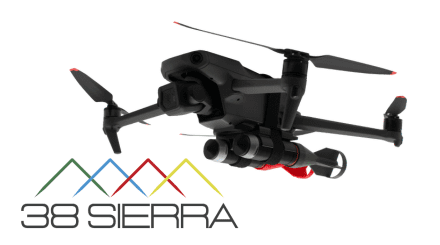
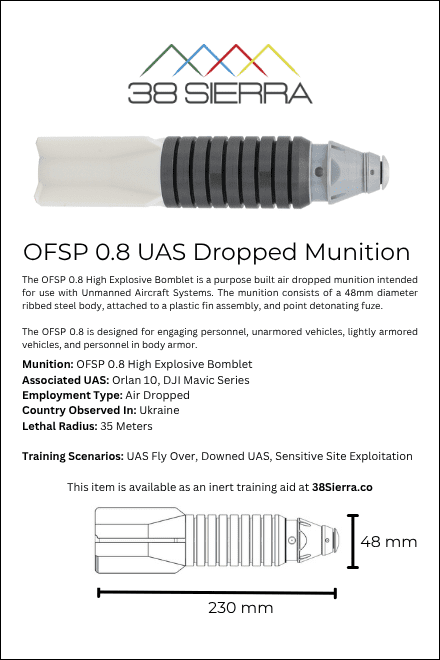
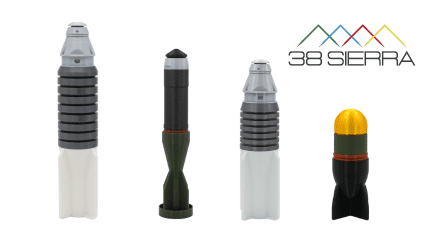
38 Sierra LLC is proud to announce the release a new line of inert ordnance training aids to support Counter- Unmanned Aircraft Systems (C-UAS) training and readiness. Designed by Explosive Ordnance Disposal Veteran Patrick McCrone, the size, weight and, appearance of each ordnance items has been faithfully replicated in our training aids. These products are ideal for a full spectrum of training, from classroom instruction to Field Training Exercises.

38 Sierra also offers free technical resources to promote awareness of UAS related explosive hazards and examples of UAS training scenarios are also available on our website 38Sierra.co

Check out our entire lineup of Weaponized Unmanned Aircraft System training aids today at 38sierra.co.

SMARTSHOOTER Receives New Order from U.S. Marine Corps for SMASH 2000L Fire Control Systems

Monday, July 14th, 2025

This latest order represents the next step toward broader fielding of the SMASH fire control systems across the Marine Corps

[July 14, 2025] – SMARTSHOOTER, a world-class designer, developer, and manufacturer of innovative fire control systems, is proud to announce that its U.S. subsidiary, SMARTSHOOTER Inc., has received a new order from the United States Marine Corps (USMC) for its SMASH 2000L fire control systems.

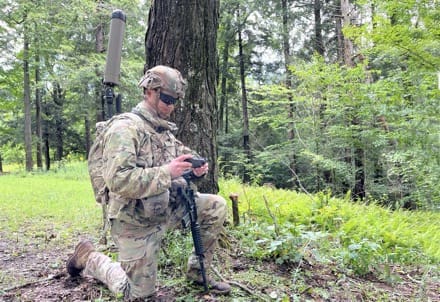
The Marine Corps is procuring SMASH 2000L as an interim capability to address its urgent requirement for dismounted Counter-small-Unmanned Aircraft Systems (C-sUAS) solutions. The USMC gained hands-on experience with the system through earlier testing, and this latest order represents the next step towards full adoption across the entire Marine Corps.

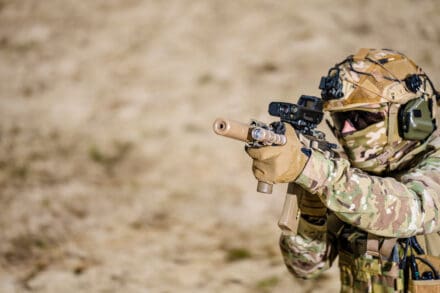
SMASH 2000L—SMARTSHOOTER’s lightest handheld-operated fire control system—leverages artificial intelligence, computer vision, and advanced tracking algorithms to enable dismounted forces to detect, track, and precisely eliminate aerial and ground threats. Especially effective against drones and sUAS, SMASH 2000L provides a reliable and combat-proven hard-kill solution to an evolving and urgent battlefield threat.

Initially tested and selected by the U.S. Joint Counter-small Unmanned Aircraft Systems Office (JCO) and the Irregular Warfare Technical Support Directorate (IWTSD) (formally known as the Counter-Terrorism Technical Support Office) as the kinetic solution for squad-level counter-drone missions, the SMASH system continues to gain traction across multiple branches of the U.S. military. It has already been fielded by U.S. Special Forces, the Marine Corps, and several NATO allies.

Michal Mor, CEO of SMARTSHOOTER, said:

“With SMASH 2000L, dismounted Marines are equipped with an effective, combat-proven solution against the growing threat of drones on the battlefield. This new order is an important step toward  potential adoption of the SMASH fire control systems at the squad level, and we remain committed to supporting the Marine Corps with cutting-edge, operationally proven kinetic capabilities.”

Combat-proven and deployed by defense and security forces in the U.S., Israel, the U.K., NATO, and other allied nations, SMARTSHOOTER’s SMASH family of Fire Control Systems enhances precision, situational awareness, and lethality—ensuring every shot counts.

For more information, visit www.smart-shooter.com

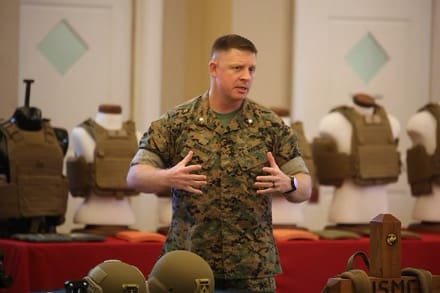
MARADMIN 237/25 – Marine Corps Policy on the Wear and Purchase of Body Armor and Personal Protective Equipment (PPE)

Monday, July 14th, 2025

Published in late May, the US Marine Corps guidance for the wear of PPE, restricting it to only issued items which have undergone testing and are on approved use lists. This ends the use of private purchase and commercial off the shelf items unless on the approved lists detailed in the message.

Below is the message followed by a video explaining the policy. We have redacted the email addresses and phone numbers of the POCs but they are easily found via Google search for this message.

R 201307Z MAY 25
MARADMIN 237/25
MSGID/GENADMIN/CMC PPO POF WASHINGTON DC/FOO2//
SUBJ/MARINE CORPS POLICY ON THE WEAR AND PURCHASE OF BODY ARMOR AND PERSONAL PROTECTIVE EQUIPMENT (PPE)//
REF/A/MSGID: MSG/CMC WASHINGTON DC PPO/YMD: 20070417//
REF/B/MSGID: GENADMIN/CMC WASHINGTON DC PPO: 20090416//
REF/C/MSGID: GENADMIN/CMC WASHINGTON DC PPO: 20090710//
REF/D/MSGID: GENADMIN/CMC WASHINGTON DC PPO: 20170327//
REF/E/MSGID: GENADMIN/CMC WASHINGTON DC PPO: 20181127//
REF/F/MSGID: GENADMIN/COMMMARCORSYSCOM: 20240509//
REF/G/MSGID: GENADMIN/COMMMARCORSYSCOM: 20240807//
REF/H/MCO 6260.3A SD: 20160926//
NARR/REF A IS MARADMIN 262/07, Marine Corps Policy on the Wear  and Purchase of Body Armor and Personal Protective Equipment 
(PPE). Ref b is MARADMIN 254/09, Marine Corps Policy on the  Wear of Personal Protective Equipment (PPE).  Ref c is MARADMIN 415/09, Establishment of Body Armor Protection Levels. 
Ref d is MARADMIN 151/17, change 1 to Marine Corps Policy on the Wear and Purchase of Body Armor and Personal Protective Equipment (PPE). Ref e is MARADMIN 667/18 Marine Corps Policy on the Wear and Purchase of Body Armor and Personal Protective Equipment (PPE). Ref f is the Safety of Use Message for the Enhanced Combat Helmet and High Cut Enhanced Combat Helmet Suspension Systems. Ref g is the Safety of Use Message for the Enhanced Combat Helmet with Hearing Enhancement Device. Ref h is the Marine Corps Hearing and Conservation Program.//
POC/E.T. Clark/COL/PPO POF/Branch Head/
POC/E.A. Benson/CIV/PPO POF/Dep Branch Head/
GENTEXT/REMARKS/1. The Commandant of the Marine Corps directs the following policy for Marines and Sailors assigned to USMC and joint commands, on the wear and purchase of body armor and PPE. This MARADMIN supersedes references (a, b, c, d, and e). PPE refers to Marine Corps approved body armor, helmets, goggles, gloves, clothing, and other gear designed to protect the wearer’s body from battlefield injuries. The equipment and
training information for service-approved PPE systems can be found at https://app.mcboss.usmc.mil searching via program office: PMM-154.3 and via Marine Net course # mcsppe0306 – Proper use of Personal Protective Equipment
2.  Individual Marines/Sailors may not use commercial PPE in lieu of government tested, approved, and issued PPE as outlined in the product information sheets referenced in paragraph 1.
Commanders are not authorized to utilize unit funds to purchase commercial PPE items that have not been approved for use by Marine Corps Systems Command.
3.  Ballistic spectacles and goggles authorized for use are listed on the authorized protective eyewear list (APEL) and are compatible with the universal prescription lens carrier. While the Marine Corps will continue to issue a single spectacle and a single goggle, units may purchase other authorized ballistic eyewear on the APEL through the defense logistics agency or the post-exchange. The latest APEL can be found at:
https://www.peosoldier.army.mil/equipment/
approved-eyewear-qpl/

4.  All forms of hearing protection devices are considered PPE, and the Marine Corps issues Hearing Enhancement Devices (HED) (TAMCN C01142F) and High Noise Hearing Enhancement Devices (HN-HED) (TAMCN C00142F). Commanders must ensure Marines comply with ref (f) or ref (g) for helmet configuration and ref (h) guidelines to select appropriate hearing protection devices.
HEDS shall be evaluated at least twice per year for appropriate use and to replace any worn/deteriorated seals per ref (h).
Commanders will consult navy medicine occupational audiologists or industrial hygienists to determine from sound pressure measurements appropriate hearing protective devices for their operational needs, ensuring Marines have the correct single or dual hearing protection when necessary. Per ref (h), the safety objective is to protect Marines’ exposure to any steady-state noise having an 8-hour time-weighted average noise level greater than or equal to 85 decibels: or a single exposure to impulse and/or impact noise of 140 decibels peak or greater, regardless of duration.
5.  Marine Corps Body Armor Protection Levels (APLS).
5.a.  A service-level policy defining specific armor protection levels has been established with the intent of standardizing APLS, enabling commanders to tailor armor protection based on their estimate of the situation or based on guidance from service/joint/theater combatant commanders. Higher APLS provide increased ballistic protection through the addition of modular armor components, increasing the areas of coverage and/or ballistic protection. Higher APLS correspond to greater weight, increased thermal loading, and reduced mobility, thus degrading individual and unit performance over extended periods of time.
5.b.  The following APLS are established and apply to all Marine Corps-issued armor systems. Read in two columns:
APL             Description 
Level 0         No body armor worn 
Level 1         Marine Corps-issued plate carrier with soft armor only (defeats handgun and fragmentation threats)
Level 2         Marine Corps-issued plate carrier with soft armor, and front and back hard armor plates (defeats rifle and fragmentation threats)
Level 3         Marine Corps-issued plate carrier with soft armor, front and back hard armor plates, and side hard armor plates (defeats rifle and fragmentation threats).
Removal of the soft armor from the plate carrier compromises the ballistic protection of the issued armor systems. Soft armor must be worn in conjunction with ballistic plates in the issued plate carrier – failure to do so may result in severe bodily injury or death. There are currently two variants of ballistic plates fielded to the Fleet Marine Force: the Enhanced Small Arms Plate Insert (ESAPI) (TAMCN C30202E) and the Lightweight Plate (LWP) (TAMCN C01342F). Commanders may choose to utilize either variant based on the threat.
5.c.  The Marine Corps-issued helmets authorized for operations include the Enhanced Combat Vehicle Crewman Helmet (ECVCH) (TAMCN C49942F), Enhanced Combat Helmet (ECH) (TAMCN C01202E), High Cut Enhanced Combat Helmet (HC ECH) (TAMCN C02222F), and the Integrated Helmet System (IHS) (TAMCN C02222F) which were designed to provide both ballistic and blunt impact protection across the full spectrum of operational environments. The helmets consist of a shell, a suspension system (pads), a retention system (chinstrap), and include other accessories such as a night vision device mounting bracket and rail systems.
The ballistic protection of these systems is provided by the construction and materials of the shell. The blunt impact protection is provided by the construction, materials, and configuration of the suspension system. The suspension system must have pads in an approved configuration. In accordance with ref (f) or ref (g) the issued suspension system cannot be replaced with commercial pads. The screws in the helmet support the ballistic integrity and shall not be replaced with commercial screws. Unit leaders will ensure initial training is conducted for Marines upon issue of the helmet. Commanders shall ensure approved helmets are worn in an approved configuration.
5.d. Diving life preserver and buoyancy compensator listed in the authorized for navy use (ANU) are not authorized for ballistic protection until the configuration has been certified and approved by Marine Corps Systems Command. Commanders interested in requesting diving life preserver and buoyancy compensator for certification must follow the universal needs
process. Information can be found at: https://www.cdi.marines.mil/units/cdd/universal-needs-process/
5.e. Protective attachments may be worn with
Marine Corps-issued body armor. It is impractical to establish APLS that incorporate every possible configuration in which these attachments may be worn. Commanders will designate the wear of Marine Corps approved helmets; ballistic eyewear; and groin, neck, and throat protection as required by their units’ mission, the threat, and local environmental considerations.
5.f. The lightweight helmet (TAMCN C32152E) and the small arms protective body armor (stocklist-3 item of TAMCN C35012E) are only authorized for use by training command.
5.g. Ballistic protection vendor samples are not authorized for use without Marine Corps Systems Command oversight and approved safety releases for limited user evaluations.
6. Authority
6.a. Operating force commanders at the Lieutenant Colonel (O-5) level or higher are authorized to determine the required level of PPE (or APL when established) for wear by assigned personnel within the Marine Corps Systems Command approved systems. This determination will be made based on mission(including during training), unit type, threat, and environmental factors.
6.b.  Combatant, Joint Task Force (JTF), and service component commanders retain the authority to prescribe the level of protection worn by all assigned personnel. In cases where combatant, JTF, and/ or service component commanders have established a required level of PPE that is more restrictive than that set by Marine Unit Commanders, Marines will adhere to the highest level. In cases where the APL is not designated, the Marine Corps service policy places the authority to designate the APL on commanders, Lieutenant Colonel (O-5) and higher.
6.c.  Based on their unique mission requirements, Marine Special Operations Command (MARSOC) personnel may, within published MARSOC policies and subject to their commanders’ approval, wear special operations command-approved special purpose body armor.
6.d.  Installation commanders are authorized to use government funds to purchase commercial off-the-shelf (COTS) body armor and PPE only for use by Military Police performing law enforcement duties aboard Marine Corps installations. COTS body armor must, at a minimum, meet National Institute of Justice (NIJ)-certified level RF2 as listed on the NIJ website.
https://www.nij.gov/topics/technology/body-armor/pages/compliant-ballistic-armor.aspx. COTS body armor purchased for installation law enforcement duty will not be worn by Marines as a substitute for Marine Corps approved body armor and PPE in a combat zone or theater of operation.
7.  Marine Corps organizations that do not receive class II PPE materiel support from the Logistics Command should direct all materiel requirements to DC, IL, IP.
8.  Release authorized by MajGen J. L. Morris, Assistant Deputy Commandant for Plans, Policies, and Operations.//

Lindnerhof Introduces New Modular Load-Carriage System

Monday, July 14th, 2025

LENGGRIES, GERMANY (11.07.2025)

Lindnerhof, a Mehler Systems brand, expands its load-carriage solutions with a new generation of mission-configurable backpack pouches and accessories. Purpose-built for operational versatility, high durability, and seamless integration with plate carriers, the range supports military, law enforcement, and tactical users in the most demanding environments.

The M800 (Small) and M810 (Large) modular backpackpouches are designed as adaptable storage units that can be mounted directly to Lindnerhof plate carriers or configured as standalone backpacks using modular components. Both models feature a fully opening clamshell design with a reverse zipper and a quick-pulllace system for rapid access. Inside, loop panels andpartial MOLLE/PALS rows allow for customized organization. A dedicated hydration compartment with protected exit port supports cable or tube routing, whilea drainage grommet ensures water and debris do not accumulate. A removable reinforcement plate offersstructural stability, and side and top loops allow for additional mounting options such as helmet stowage. The pouches are available individually or as completes est (M800_S1 / M810_S1), which include the M820 modular shoulder straps and LT835 adapter set. These configurations offer three distinct carry options: fixed to a plate carrier, integrated as a rear-mounted extension, or carried independently as a compact backpack. The pouches are suited for carrying medical gear, hydration systems, electronics, or other mission-critical loadouts—whether integrated into a full kit or used standalone.

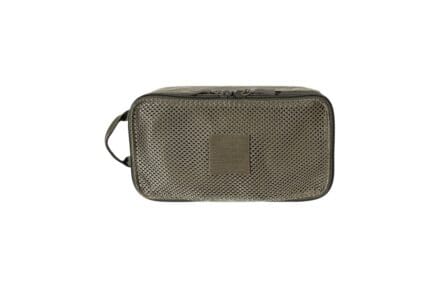
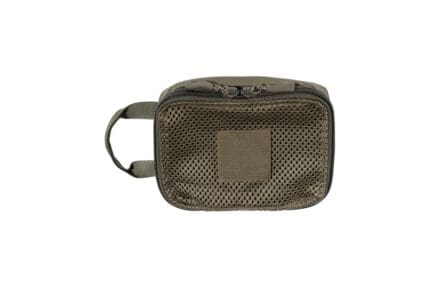
To support internal organisation, Lindnerhof introduces the Multi-Pouch Small (M830) and Multi-Pouch Large (M831), designed to fit seamlessly into the M800 and M810 or other loop-lined compartments. Both models feature a hook-and-loop back surface for secure placement, a loop-covered interior for modular inserts, and a mesh lid for visibility. The full zip-around design enables complete opening, while a side handle allows quick removal or transfer. The exterior loop panel allows for colour marking or patching. These pouches are ideal for structured storage of medical supplies, tools, or electronics within confined loadout systems.

The M820 Modular Backpack Straps allow operators to convert the M800 or M810 into a lightweight backpack. Featuring padded, breathable mesh shoulder sections and made from multiaxial laminate (MX), the straps provide a balance of comfort and stability. They are fully adjustable and include camouflage-matched webbing, making them a practical solution when extended wear without full carriers is required.

To complement this setup, the LT835 Adapter Set allows fast and secure mounting of M800 or M810 pouches directly onto Lindnerhof plate carriers. The set includes snap-on repair buckles, waist and shoulder straps, and integrated attachment loops. Its low-profile design ensures minimal interference with movement or gear access. This modular capability is ideal for field conditions where rapid reconfiguration of loadouts maybe necessary.

With this newly launched modular lineup, Lindnerhof reinforces its focus on practical, field-proven gear engineered to meet real-world demands. For further details, visit lindnerhof-taktik.de.

US Army Electromagnetic Warfare Capabilities Update

Monday, July 14th, 2025

Aberdeen Proving Ground, Md. – The U.S. Army is addressing a critical need for enhanced electromagnetic warfare (EW) capabilities with a new strategy and refined modernization approach. Recognizing a gap in extended-range, persistent ground and airborne EW assets, the Army is shifting its focus to improve targeting and provide commanders with the ability to effectively manipulate the electromagnetic spectrum in support of maneuver formations.

In March 2025, the Army published a comprehensive EW Strategy, designed to institutionalize enduring EW capabilities across the Army to support Joint Force operations. In conjunction with this strategy, the Army is refining its approach to the Terrestrial Layer System (TLS) for Brigade Combat Teams (BCT) and the Multifunction Electronic Warfare – Air Large (MFEW-AL) programs.

The recently concluded TLS BCT Rapid Prototyping program provided valuable insights into lightweight, modular architectures, informing the transition to the TLS Manpack as the primary EW/SIGINT system for all BCTs, with full fielding expected by FY28. Additionally, the Army plans to enhance TLS Manpack’s capabilities with vehicle agnostic modular adaptor kits (MAK) for mounted options that provide enhanced processing, extended range, and increased power. TLS Manpack will have the ability to provide EW capabilities at the brigade level, alongside distributed EW capabilities for division and higher echelons.

The MFEW-AL program will now prioritize leveraging Commercial-Off-The-Shelf (COTS) and Government-Off-The-Shelf (GOTS) solutions to rapidly deliver incremental capabilities for testing and feedback with Transformation in Contact (TiC) units in early Fiscal Year 2026. The program will utilize an incremental approach for delivery of capability that will evolve over time toward the full Army’s Airborne Electromagnetic Attack requirements.

These updates will be key in meeting recent direction from the Secretary of Defense that the Army remains the most lethal and ready land force in the world and achieve electromagnetic dominance by 2027.

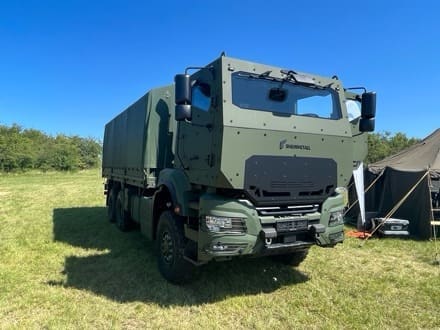
Protected Logistics Truck: Rheinmetall MAN Military Vehicles Presents New TGS-Mil Protected

Sunday, July 13th, 2025

At the RMMV Mobility Days, which were held for the first time this year, Rheinmetall MAN Military Vehicles (RMMV) presented its new TGS-Mil Protected armoured truck. The TGS-Mil Protected is based on the TG-generation of military trucks produced by RMMV in Vienna. The TGS-Mil Protected model on display is equipped with a protected cabin for two persons. The solution developed by Rheinmetall complies with current NATO standards and is available in 6×6 and 8×8 variants.

Thanks to its modular design philosophy, the vehicle can be adapted to a wide range of mission profiles, including protection levels, communication systems, and specialised payload options.

With the TGS-Mil Protected, RMMV is specifically targeting a broad and growing segment of the international market that demands protected logistical mobility combined with long-term cost efficiency. The development of this vehicle highlights RMMV’s commitment to continuously adapt its militarized truck portfolio to evolving mission requirements and geopolitical developments. With the TGS-Mil Protected, RMMV can now offer both protected and unprotected variants within the same modular system, providing flexibility, fleet harmonisation and reduced life-cycle costs for new and already existing customers alike.

The TGS-Mil Protected is powered by a MAN D2676 six-cylinder diesel engine with up to 382 kW/520 hp and up to 2,650 Nm of torque. The engine complies with Euro II, V and VIe-standards and is compatible with NATO fuel F34. The drive and chassis systems are based on proven components from the civilian sector, which simplifies maintenance and worldwide service. The all-wheel drive ensures excellent off-road capabilities.

The RMMV Mobility Days 2025 were held under the motto ‘Innovation in Motion’. Around 120 participants from 22 countries gathered in Vienna for the event. They received information about RMMV’s current products and activities. The programme included a factory tour at the long-standing production facility in Vienna-Liesing which has recently been upgraded with a state-of the-art logistics system and digitised manufacturing processes. In future, around 4,000 HX and TG vehicles can be produced here each year to meet growing global demand. RMMV also demonstrated the versatility and off-road capabilities of its vehicle families (HX and TG) on an off-road site near Vienna. In addition, future technologies such as tele-operated driving and autonomous mobility were also part of the presentation.

Rheinmetall MAN Military Vehicles (RMMV) is the competence centre for professional military and militarised logistics trucks within the Rheinmetall Vehicle Systems Division. The joint venture, headquartered in Munich, is one of the world’s leading providers of defence solutions in the field of land mobility logistics, in which Rheinmetall AG holds a 51 per cent majority stake and MAN Truck & Bus SE holds the remaining 49 per cent. Together with its predecessor companies, RMMV can look back on more than 100 years of experience in truck manufacturing for the most demanding military applications.

BlackSea Technologies Takes Part in BALTOPS 25 Exercise Alongside U.S. Navy and NATO Partners

Sunday, July 13th, 2025

Personnel Deliver Training, Logistics, Operations Planning and Execution Support for Company’s Global Autonomous Reconnaissance Craft 

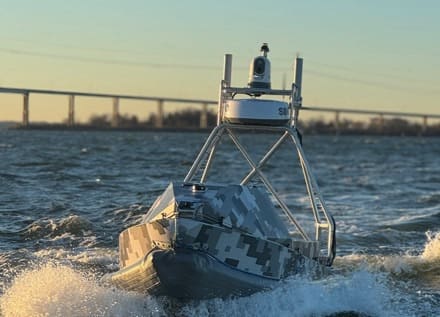
BALTIMORE, MD, July 9, 2025 – BlackSea Technologies (“BlackSea”), a leader in the development of innovative maritime systems, mission solutions, and advanced technologies for the defense and intelligence communities, today announced its participation in the Baltic Operations 2025 (BALTOPS 25) exercise last month in the Baltic Sea. 

BALTOPS 25 is an annual maritime-focused exercise designed to enhance flexibility and interoperability among allied and partner nations.  It provides the U.S. Navy and its NATO allies and partners an opportunity to test and refine joint warfighting capabilities in a dynamic environment.  Now in its 54th iteration, the exercise strengthens regional security and demonstrates NATO’s commitment to collective defense. 

BlackSea sent a team of experts to work alongside Commander, Task Force 66 (CTF 66) and NATO partners.  CTF 66 is the U.S. Navy 6th Fleet’s purpose-built, all-domain group with the mission to integrate robotic and autonomous systems into fleet operations.  BlackSea personnel supported all aspects of the exercise, from on-site training and logistics to mission and operations planning, execution, and oversight. 

According to CTF 66 lead Rear Admiral Michael Mattis, the Navy used at least 10 of BlackSea’s Global Autonomous Reconnaissance Craft (GARC), a low-cost, attritable small, unmanned surface vehicle (sUSV).  In the 6th Fleet’s press release on BALTOPS 25, Mattis stated, “We must seek out creative solutions to rapidly field and develop new technology, with a focus on software and low-cost platforms, to inform our approach to future maritime security operations.” 

GARC played an integral role in BALTOPS 25.  All GARCs maintained mission-capable status throughout the entire event, with multiple GARCs operational simultaneously.  Several GARCS travelled over 120 nautical miles in a single day working in tandem with NATO allied assets. 

“BALTOPS 25 represents yet another example of GARC’s durability, reliability, and performance in the field,” said Jason Lamb, BlackSea’s Chief Strategy Officer.  “GARC continues to demonstrate its value and readiness for operational deployment.  With a GARC a day rolling off the production line, BlackSea stands ready to meet the Navy’s growing need for sUSVs with our high-rate, high-quality manufacturing, at scale and on budget.” 

CZ Shooting Team Dominates at the CZ Extreme Euro Open 2025, Capturing 13 Medals and 4 Czech National Titles

Sunday, July 13th, 2025

The CZ Shooting Team delivered an exceptional performance at the renowned CZ Extreme Euro Open, an IPSC practical shooting competition held June 26-28, 2025, at the Hodonice shooting range near Znojmo, Czech Republic. This year’s event also doubled as the Czech National Championship, crowning national champions in each division.

Widely recognized as one of the largest and most challenging shooting competitions globally, the CZ Extreme Euro Open drew 1,138 competitors from 59 countries, including some of the world’s elite shooters. Participants faced 30 demanding stages, testing their speed, accuracy, and tactical skills under varied weather conditions, from scorching heat to sudden thunderstorms.

The CZ Shooting Team secured a total of 13 medals, six gold, four silver, and three bronze, demonstrating once again their standing among the best competitive shooters worldwide.

In the OPEN division, Robin Sebo dominated the competition, taking home the gold medal and the Czech national champion title with his CZ 75 TS Czechmate pistol. Martina Sera earned silver in the Ladies category and captured the Czech national champion title using the same model.

In the PRODUCTION division, Argentine teammates Juan Pablo Duran and German Romitelli earned silver and bronze medals, respectively. Serbia’s Ljubisa Momcilovic defended his Senior category title, while Italy’s Camilla Almici topped the Ladies category. All CZ competitors in this division used CZ Shadow 2 Orange pistols.

The fiercely competitive PRODUCTION OPTICS division saw France’s Eric Grauffel claiming victory, while CZ shooter Martin Kamenicek earned bronze and the Czech national champion title. Junior competitor Robin Grauffel secured gold in his category and placed seventh overall, with both shooters utilizing CZ Shadow 2 OR pistols.

In the STANDARD division, Kahlil Adrian Viray from the Philippines achieved silver, and CZ shooter Zdenek Liehne won bronze, securing the Czech national champion title. Senior shooters Josef Rakusan and Petr Znamenacek captured gold and silver, respectively. The CZ TS 2 Orange pistol was the firearm of choice for these athletes.

The CZ Extreme Euro Open 2025 served as vital preparation for the upcoming IPSC World Championship, set to take place in South Africa at the end of September.

As the proud general partner of the CZ Extreme Euro Open, CZ-USA would like to extend our sincere gratitude to the organizers for their outstanding efforts, the referees for their dedication, and all participants for their sportsmanship.

Congratulations to all medalists and newly crowned Czech national champions: Robin Sebo (OPEN), Martina Sera (OPEN), Martin Kamenicek (PRODUCTION OPTICS), and Zdenek Liehne (STANDARD).

Full competition results:

OPEN Division Overall (122 competitors) 1. Robin Sebo (CZE), CZ Shooting Team – 100% 2. Marek Neumann (CZE) – 98.93% 3. Erik Stjernlof (SWE) – 98.34%

OPEN Division, Ladies Category 2. Martina Sera (CZE), CZ Shooting Team

PRODUCTION Division Overall (195 competitors) 1. Michal Stepan (CZE) – 100% 2. Juan Pablo Duran (ARG), CZ Shooting Team – 96.68% 3. German Romitelli (ARG), CZ Shooting Team – 96.28%

PRODUCTION Division, Senior Category 1. Ljubisa Momcilovic (SER), CZ Shooting Team

PRODUCTION Division, Ladies Category 1. Camilla Almici (ITA), CZ Shooting Team

PRODUCTION OPTICS Division Overall (199 competitors) 1. Eric Grauffel (FRA), CZ Shooting Team – 100% 2. Jacob Hetherington (USA) – 91.11% 3. Martin Kamenicek (CZE), CZ Shooting Team – 90.29% 7. Robin Grauffel (FRA), CZ Shooting Team – 84.36%

PRODUCTION OPTICS Division, Junior Category 1. Robin Grauffel (FRA), CZ Shooting Team

STANDARD Division Overall (110 competitors) 1. Rolly Nathaniel Tecson (PHI) – 100% 2. Kahlil Adrian Viray (PHI), CZ Shooting Team – 97.05% 3. Zdenek Liehne (CZE), CZ Shooting Team – 91.41% 7. Josef Rakusan (CZE), CZ Shooting Team – 82.26% 8. Petr Znamenacek (CZE), CZ Shooting Team – 77.77%

STANDARD Division, Senior Category 1. Josef Rakusan (CZE), CZ Shooting Team 2. Petr Znamenacek (CZE), CZ Shooting Team