FirstSpear TV

Archive for July, 2025

Magazine Depth Wins Wars: The Future of NATO’s Arsenal

Saturday, July 26th, 2025

WIESBADEN, Germany – A strong defense isn’t solely about the quantity of weapons stockpiled, but the ability to adapt and rapidly produce what’s needed, experts asserted at the LANDEURO 2025 conference today. A panel discussion focused on the critical need for broadened production within NATO to secure global supply chains, enhance interoperability, and bolster strategic flexibility.

The conversation centered on lessons learned from the ongoing war in Ukraine, where sustained ammunition supplies and the ability to quickly repair and replace equipment have proven vital. Panelists emphasized the necessity of “magazine depth” – maintaining sufficient reserves – alongside collaborative production of munitions, repair parts, and entire weapon systems.

Panelists stressed that maintaining readiness requires a holistic approach, encompassing not only weapons systems and ammunition, but also a robust sustainment infrastructure. This includes ensuring sufficient repair parts, subassemblies and critical components are readily available. Experts agreed that the capacity and capabilities of the defense industrial complex are foundational to achieving this “magazine depth” and are a critical pillar for both deterring adversaries and winning conflicts – not just regionally, but globally. Furthermore, they noted that current economic and geopolitical conditions present an unprecedented opportunity to develop, expand, and scale the defense industrial complex, creating irreversible momentum for future security.

U.S. Army (Ret.) Gen. Edward Daly described his vision of the defense industrial complex in 2030.

“It’s an ecosystem that’s modern, globally responsive, interoperable, and produces capabilities and technologically advanced products at scale to support not only the commercial sector, but the military as well,” said Daly.

Lt. Gen. Miles Brown, deputy commanding general of U.S. Army Futures Command, highlighted the core goals of the Army Transformation Initiative (ATI) and the planned consolidation of the U.S. Army Training and Doctrine Command and U.S. Army Futures Command into the new Army Transformation and Training Command.

“This isn’t about bringing the family back together,” said Brown. “We’re building a 21st-century command – data-centric, collaborative, lean, agile, and adaptive. The whole point of the ATI is to take the opportunity we have now, with the national will and commitment to excellence, and to move out quickly, not to study for two or three years before we get after it.”

He emphasized that the ATI aims to fundamentally change how the Army operates, focusing on speed and innovation.

Ultimately, the panelists agreed that a modernized and adaptable defense industrial base, coupled with a streamlined and innovative command structure, is crucial for ensuring NATO’s readiness for prolonged conflicts and addressing the evolving landscape of global security threats. Investing in these areas, they said, will deliver a decisive strategic advantage for the alliance’s future arsenal.

See video remarks here.

By Aaron Smith

USMC Tests Mystery Ranch Military Light Frame Frame

Saturday, July 26th, 2025

Under the auspices of a Military Light Frame Limited User Evaluation, Marine Corps Systems Command is testing the Mystery Ranch Military Light Frame (formerly known as the Nylinear Individual Carrying Equipment Frame) for use with the Family of Improved Load Bearing Equipment pack. The MLF is a pound lighter than the NICE Frame. LUEs are used to either inform requirements or as a precursor to larger procurements.

Back in May during Modern Day Marine we showed you that the NICE Frame is compatible with the FILBE Pack.

SparkX Teams with Army Soldiers on Open-Source Drone Project

Saturday, July 26th, 2025

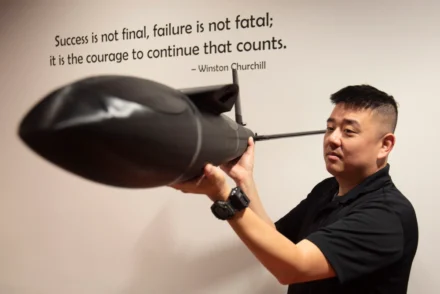
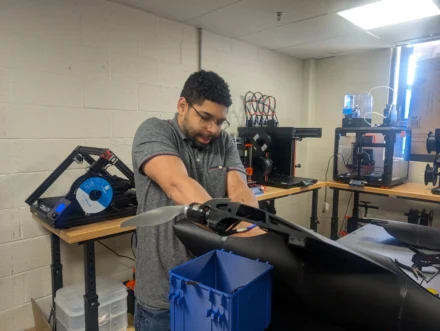
JOINT BASE ANDREWS, Md. – A small team of technicians at Joint Base Andrews is helping shape the future of battlefield innovation, one 3D-printed drone at a time.

The Andrews SparkX Cell Innovation and Idea Center partnered with the U.S. Army’s 1st Multi-Domain Task Force from Joint Base Lewis-McChord, Wash., to redesign Project SPECTRE (Small Printable-Engineered-Composites Tailorable Remote-Effect), an experimental effort to create rapidly deployable, customizable, small, unmanned aircraft systems.

The result of Project SPECTE was Blackbird, a fully open-source, government-owned drone platform that cut development costs by more than $1 million.

According to SparkX technicians, the Blackbird can be 3D-printed and assembled in 36 hours for about $200, offering a low-cost, modular sUAS solution for training and operational use in the field.

“Working within the government always provides an opportunity for quicker development that often times faces less roadblocks and is more cost-effective than the standard acquisition processes,” said a Soldier with the 1st MDTF.

With no formal aerospace engineering training, the SparkX technicians reverse-engineered a new platform from scratch. They developed an original airframe that met operational goals while avoiding intellectual property conflicts with the Army’s previous partner.

“It was what we envisioned the plane to look like,” recalled Staff Sgt. Stefan N. Sobiech, a former SparkX technician who is now stationed at Osan Air Base, Republic of Korea. “I oversaw creation of the wings, and I sought inspiration from the most efficient planes I could find.”

The project went through more than 10 variations, but Sobiech said the team kept pressing and learning from their mistakes.

“I don’t think there was ever an obstacle that we didn’t think we could work no past it,” he said. “We always went back at it from a different angle or researched how others got past a similar issue.”

The final design includes two propeller-driven motors, a wingspan of more than six feet and weighed approximately nine pounds. Its modular design features a push-to-connect fuselage and a customizable internal equipment tray, allowing for rapid swaps of mission-specific gear and easy to assembly in the field with no specialized tools.

In November, the team was invited to fly the drone during Titan Hoplite, a joint exercise hosted by the Air Force’s Task Force 99 at Shaw Air Force Base, S.C. The SparkX technicians showcased their airframe alongside other advanced sUAS technologies, drawing interest from units across the Department of Defense.

Sobiech said the team conducted a 30-second shakedown flight before heading to Shaw, where the Blackbird flew for more than two minutes during Titan Hoplite demonstration.

The drone unfortunately crashed after flying out of range of the hobby-grade motors and avionics.

Although, Sobiech was unable to attend the event, he mentioned receiving texts and video footage from observers of the successful flight.

“I was ecstatic! To see it sustaining flight, for that length of time, was an amazing feeling,” he said.

Earl Bagwell, Spark X director, said the Titan Hoplite demonstration sparked interest from several organizations in the Army and Air Force that wanted to get involved.

Bagwell released the 3D files as an open source to allow other units to 3D-print the components and integrate their own avionics and motors.

“We knew this would be a sought-after capability, but instead of going through the long patent process, we decided to open source it,” Bagwell said. “Whoever needs it can have it—because we need to innovate and move faster.”

The Air Force Research Laboratory, the Army Research Laboratory, Combat Innovation Lab, Tesseract, and 2nd MDTF are among the organizations that have accessed to the Blackbird files. Together, they support operational theaters across U.S. Indo-Pacific Command, Central Command, Europe, Africa, special operations, and the Army National Guard.

The 1st MDTF successfully deployed and tested the system in various environments, implementing rapid design updates on-site to improve both their understanding of the platform and its capabilities.

“Working in the joint force allows us to consider multiple angles and employment methods that might not be considered in an Army-only environment,” said an 1st MDTF Soldier. “It also gives us access to resources and diverse skill sets not inherent within individual services.”

Story by Patrick Griffith, 316th Wing

Saab Receives Order for Mobile Air Defence from the Czech Republic

Friday, July 25th, 2025

Saab has received an order for its Mobile Air Defence (MSHORAD) solution from the Ministry of Defence and Armed Forces of the Czech Republic. The order value is SEK 1.8 billion and deliveries will take place 2028-2030.

The order includes Saab’s mobile firing units based on the RBS 70 NG short range missile system along with its Bolide missiles. Saab will integrate the MSHORAD solution onto the MARS S-330 vehicle, manufactured by the Czech company SVOS.

The MSHORAD solution will include a command-and-control system delivered by a Czech partner together with Saab, as well as a third-party radar solution already in operation with the Czech Armed Forces.

“We are proud to continue supporting the Czech Armed Forces’ capability, who already operate our RBS 70 NG air defence system in its man-portable setup.

Our MSHORAD solution complements this with a highly mobile configuration, providing additional protection for troops on the move,” says Görgen Johansson, head of Saab’s business area Dynamics.

MSHORAD is Saab’s vehicle-integrated mobile air defence solution. It is modular and flexible and consists of radar units for detection, firing units for enemy engagement, connected with a command-and-control system. Saab can deliver everything from a complete turnkey MSHORAD solution, to selected modules and integration alongside customers’ existing equipment.

Saab is a leading defence and security company with an enduring mission, to help nations keep their people and society safe. Empowered by its 25,000 talented people, Saab constantly pushes the boundaries of technology to create a safer and more sustainable world. Saab designs, manufactures and maintains advanced systems in aeronautics, weapons, command and control, sensors and underwater systems. Saab is headquartered in Sweden. It has major operations all over the world and is part of the domestic defence capability of several nations.

PSQ Payments Partners with Atrius Development Group to Provide Payment Services After Sudden Cancellation From Former Vendor

Friday, July 25th, 2025

WEST PALM BEACH, Fla.– PSQ Holdings, Inc. (NYSE: PSQH) (“PublicSquare” or the “Company”) today announced its new partnership with Atrius Development Group, a leading innovator in precision rearm components, after the sudden cancellation of Atrius’s payment services by a major vendor. PSQ Payments collaborated closely with the Atrius team to onboard their business, restore checkout functionality, and ensure uninterrupted access to their high-quality rearms components for their eager customers.

“This partnership with Atrius is a reminder that for PSQ Payments, our financial technology efforts are about much more than just processing payments; it’s about standing up for American businesses that are being unfairly targeted,” said Michael Seifert, Chairman and CEO of PublicSquare. “Atrius builds high-performance components for firearm owners protected by the Second Amendment, and we are proud to ensure they receive the respect and service they deserve. PSQ Payments continues to expand its reach across industries affected by financial censorship, with highly competitive rates, live US-based support, and mission-aligned services to freedom-loving businesses nationwide.”

Atrius is known for its agship Forced Reset Selector for the AR-15 platform. However, the company faced unexpected disruptions to its business when its previous payment processor terminated their relationship without warning, citing ideological objections rather than compliance issues or operational concerns. This left the Atrius and its customers in a sudden bind, unable to complete legitimate transactions for legal products.

Atrius resumed full online checkout capabilities within days of the transition. The partnership highlights the shared mission of both companies: defending free enterprise, supporting pro-liberty businesses, and providing alternatives to financial institutions that prioritize politics over principles.

“At a time when we were facing real adversity and being overlooked or mistreated by the very partners we once trusted, PSQ Payments stepped in, not just as a financial partner, but as a believer in our mission,” stated Ryan Spadafore, Founder & CEO of Atrius. “As an American-made company built by everyday Americans and veterans alike, our foundation is rooted in advancing the 2A rights of all Americans. The PSQ Payments team understood that, and their support gave us the breathing room to regroup, rebuild, and stay aligned with our purpose. Our singular focus has always been impact, and this partnership was a turning point for Atrius Development Group. Together we win.”

NEXTORCH New Green Edition of TA30C: Lightning-Fast Tactical Response with One-Step Strobe

Friday, July 25th, 2025

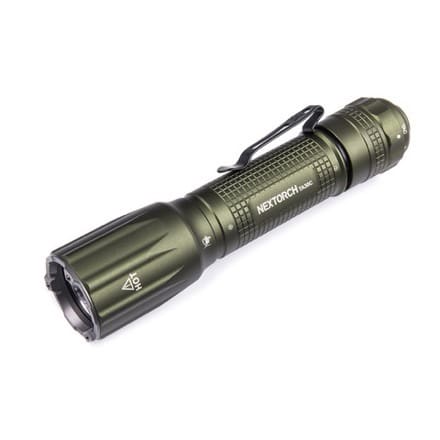
Seattle, WA – (July 16th, 2025) – NEXTORCH North America, the primary U.S. distributor of global manufacturer NEXTORCH Industries, proudly introduces the TA30C Tactical Flashlight –Green Edition. Designed for tactical professionals and personal defense users alike, this updated model delivers instant strobe activation, rugged reliability, and a bold new finish.

Engineered for Rapid, Intuitive Response

In high-pressure situations, speed and simplicity save lives. That’s why the TA30C features NEXTORCHs patented one-step strobe activation—a dedicated tail cap switch that instantly engages variable-frequency strobe with a single press, helping disorient threats when every second counts. A half-press activates a powerful 1600-lumen beam for rapid threat identification or area search, while a full press unleashes the disorienting strobe. With a max beam distance of 328 yards (300 meters) and USB-C direct recharge capability, the TA30C offers professional-grade performance in a compact, everyday-carry form.

Built to Outlast, Designed to Perform

Precision-machined from 6061-T6 aerospace-grade aluminum, the TA30C is coated in a durable green anodized finish, IPX8 rated waterproof and drop test rated to 6.5 ft. that make it stands out in the field while withstanding the harshest environments. The lens is framed by a titanium strike bezel embedded with nano-ceramic beads for glass-breaking power second only to diamond. Its magnetic rotary mode selector offers smooth, and highly durable operation compared to traditional mechanical switches. A tail cap LED battery indicator keeps you mission-ready at a glance.

Key Features:

• Patented one-step strobe tail cap switch

• Magnetic rotary mode selector for reliability and precision

• 1600 lumens / 328-yard beam distance

• Nano-ceramic glass breaker bezel

• USB-C rechargeable 18650 battery (included)

• IPX8 waterproof / 6.5 ft impact resistance

MSRP: $98.99

Tactical Accessories (Sold Separately):

– FR-1 Tactical Finger Ring – enables rapid draw and superior grip control

– V35 / V55 Quick-Draw Holsters – ideal for on-duty or concealed carry scenarios

Marine Corps Systems Command Explores Cutting-Edge Boot Designs to Enhance Warfighter Lethality

Friday, July 25th, 2025

To enhance the lethality of individual Marine warfighters, 25 School of Infantry-West instructors will spend the summer testing a new design for Marine Corps Systems Command’s (MARCORSYSCOM) Optional Boot Program.
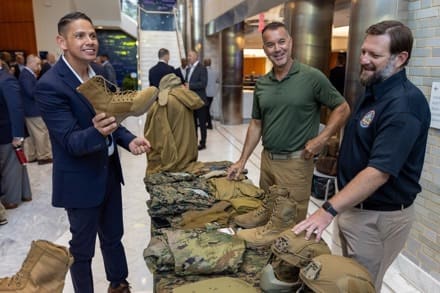
This model, which features lighter weight materials, unique drainage ports for improved breathability, and improved ergonomics to reduce leg and back injuries, follows a similar evaluation that took place earlier this year at Camp Lejeune, N.C., where Marines with 2nd Reconnaissance Battalion tested footwear that included advanced orthotic technology.

“The entire process takes about six months,” explained Todd Towles, team lead for Clothing and Equipment, Combat Service Support Equipment (CSSE). “It’s all about determining the fit, form, function, and durability; all at a reasonable price point for the Marines.”

The Optional Boot Program ensures only the highest-performing footwear makes it to the field. The process begins with a detailed visual inspection assessing color shade consistency, proper height, weight, and overall workmanship. After passing this initial review, boots undergo four months of rigorous field testing—worn daily by active-duty Marines in demanding conditions.

“Never satisfied with the status quo, the Marine Corps always looks for ways to improve the warfighter experience,” said Force Recon Company Senior Enlisted Advisor Master Sgt. Andrew Perryman, 2nd Reconnaissance Battalion. “If a product isn’t meeting the standard then it’s cut from the inventory.”

Alongside this summer’s real-world evaluation, which will determine if the boots dry faster to allow for better foot health, lab testing further validates durability, comfort, and quality, reinforcing the Corps’ commitment to providing Marines with superior equipment designed to weather the most challenging missions.

“We see the Optional Boot Program as a way to access the best technology and give Marines more options on fit, performance, and availability on the shelves,” said Maj. Joshua Foster, project officer for CSSE. “We need a diverse set of vendors to ensure we can sustain the fleet’s needs—that has been a serious challenge based on supply chain and quality issues over the last several years.”

The program office for Combat Support Systems (CSS) plays a crucial role in life cycle management for all clothing and individual equipment issued to Marines supporting global operations. From concept development through testing, procurement, fielding, and sustainment, this office ensures that every item meets the toughest standards for performance and durability in extreme environments. The Marine Corps’ rigorous evaluation protocols—often conducted in the most austere conditions—set a high mark.

“Our primary concern is equipping our Marines with quality gear, when they need it,” said Towles, a Marine veteran who has worked with MARCORSYSCOM for almost 20 years. “Anything less and we’re failing them.”

“Through joint clothing boards, we can share test data and lessons learned across DoD. We also seek to adopt equipment tested by the other services to save the Marine Corps on costs and evaluation time; especially when tasks or environments are common among service members. It is a great partnership,” remarked Foster.

This collaboration increases the buying power of the Marine Corps and Joint Force.

“With mission success often hinging on staying warm, dry, and mobile, the meticulous efforts of our team guarantees that Marines are equipped with top-tier gear that embodies the Corps’ unwavering commitment to excellence,” said Towles. “Certification is not permanent; we conduct frequent inspections with our Marine Corps Exchange partners to ensure Marine clothing and footwear continues to meet our standards.”

Illustrating that point, by continuing to push for quality and performance, the CSS team recently identified the delivery of deficient US-made footwear.

“Once we discovered the issue, the program office along with the boot vendor did an MCX-enterprise inspection and identified all stock not acceptable by Marine standards,” said Towles.

Nearly 25 percent of the boots were returned to manufacturers—ultimately preventing Marines from buying substandard gear.

“We were disappointed with them missing the mark, but pleased with their response,” said Towles. “Our vendors understand that the Marine Corps has high standards when it comes to our uniform items, even if the materials are part of an optional purchase. The vendors understand the Marine Corps has a high bar and they will be dropped from the program and removed from our shelves if they do not maintain quality.”

In a briefing last Spring, Col. Paul Gillikin, discussed several key factors impacting this product line such as competition, supply chain, and quality assurance.

“Over the last several years, the Marine Corps and Department of Defense has been challenged in uniforms, uniform accessories, personal protective gear, and footwear,” said Gillikin, program manager for CSS. “Starting with COVID production and supply chain issues, many of our domestic industry partners could not keep up with demand due to staffing shortfalls, access to materials, or quality.”

Gillikin, who has served as the program manager for CSS for two years, explained there have been several instances of acute and long-term issues with uniform items while his team sought new, innovative technologies to improve the performance of Marines while lowering costs.

“We have a great relationship and a lot of successes with our vendors, however, corrective actions and quality assurance problems with some have been a burden that distracts us from seeking better equipment,” he said. “The optional certification program allows us to reach both U.S. and [Trade Agreement Act] manufacturers with a low barrier to entry for vendors and low-cost testing for the Marine Corps. In the long term, an increased number of vendors leads to lower prices and greater innovation. We as a [Department of Defense] enterprise have to be sensitive to that and stimulate a diverse array of manufacturers to include domestic and TAA compliant sources. The bottom line is that the Optional Boot Program incentivizes competition and challenges vendors to actively manage their supply chains and produce the best technology at a lower cost for Marines.”

Currently, most optional boots that are approved to wear, and available for purchase, fall between $189 to $399 retail.

“When I talk with Marines around the fleet, they bring up affordability, access, and quality of materials,” said Gillikin. “It’s an important factor to Marines, and some are struggling financially. Cost is already a central metric for me, but it takes on a whole different level when you talk with younger Marines that are trying to support a family.”

To this end, CSS recently screened additional domestic and Trade Agreement Act (TAA) compliant materials.

“Competition is driving innovation,” said Gillikin. “Marines are excited to test and use the equipment! Our team does supply chain surveillance to ensure quality and supplies come from compliant countries. We are in constant communication with industry, other joint force program offices, Marine Corps stakeholders, the Defense Logistics Agency, and our partners on Capitol Hill to ensure our needs are met.”

Gillikin also said their communication efforts include potential future needs of the Marines Corps as well.

“We expect the next war to be a heavily contested environment where stockpiling and additional sources of supply will be vital,” he said. “For risk reduction, my team has war-gamed multiple scenarios for building prepositioning stockpiles using domestic and TAA manufacturers along with direct shipping TAA compliant gear straight into theater during conflict into areas such as the First Island Chain and High North. We need to keep all options on the table – competition directly supports operational effectiveness and readiness.”

For more information about the Marine Corps Systems Command’s Optional Boot Program and its certification process, visit www.marcorsyscom.marines.mil.

Story by Clinton Firstbrook 

Marine Corps Systems Command

Qore Performance Releases ICECAP Gen 3: Universal QD Water Bottle Adapter for ICEPLATE Curve and Standard Bottles

Friday, July 25th, 2025

Knoxville, TN — Qore Performance, Inc. has released ICECAP Gen 3: a rugged, compact, and universal Quick Disconnect hydration cap engineered for maximum reliability and operational versatility. ICECAP Gen 3 is now included with all drinkable ICEPLATE® Curve purchases.



Built around the 28-410 thread standard, ICECAP Gen 3 integrates directly with ICEPLATE® Curve and even threads onto most Coca-Cola™ and Dasani™ plastic bottles, turning them into instant, field-expedient hydration systems.


Universal QD Compatibility: Accepts most hydration tubes; optimized for the Source 90 Drink Tube to preserve flow rate and eliminate kinking.

28-410 Thread Standard: Compatible with ICEPLATE® Curve and common plastic bottles for backup water access.

Rapid Deployment: Swap your Freezer Cap for ICECAP Gen 3 and connect your drink tube in seconds.

Monolithic Chassis + QD Collar: Prevents accidental disconnects while delivering maximum strength in rugged conditions.

ICECAP Gen 3 also marks the newest addition to the Qore Performance Gen 3 ecosystem—joining ICEPLATE EXO® Gen 3 Ultralight Minimalist Plate Carrier, IMS Pro Gen 3, ICEPLATE® Backpack Gen 3, and ICEPLATE SLK Gen 3 in a unified family of high-performance, cross-compatible equipment built for operational efficiency and modularity.

“ICECAP Gen 3 is all about flexibility,” said Austin Pitsch, Marketing Manager of Qore Performance, Inc. “From ICEPLATE® Curve to off-the-shelf soda bottles, it’s a compact, universal adapter that lets you hydrate however the mission demands.”

ICECAP Gen 3 is available now, exclusively at QorePerformance.com.