Danner Reckoning GTX

Author Archive

The Rear Admiral from Armageddon Gear

Thursday, April 4th, 2024

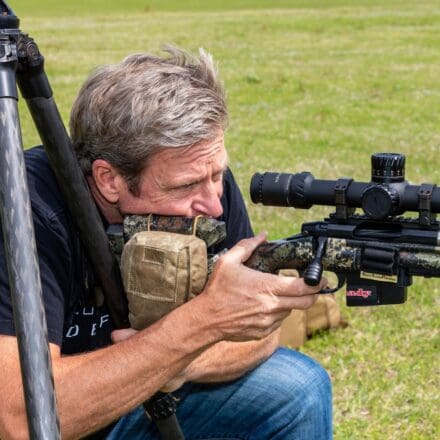
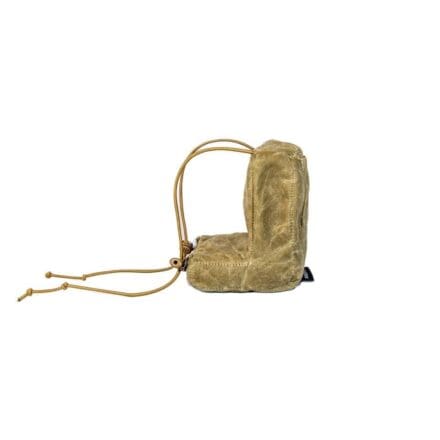
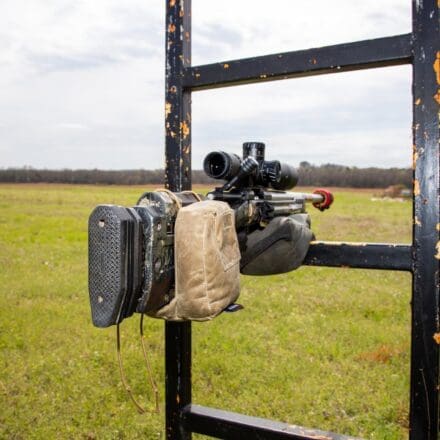
Making those fine adjustments when using the tripod as a rear support can be difficult. The Rear Admiral, Tripod Rear Support Bag, allows the user to make elevation and traverse adjustments without moving the tripod. The Rear Admiral is quick and easy to put on and take off and works with any stock design.

Weighing only approximately 6 ounces you will never know it is there until you make those small adjustments to get on target and hear the steel ringing. The bag fill is user-adjustable, made in the USA, and guaranteed for life!

armageddongear.com/product/rear-admiral

Airborne Troops Drop Test New Family of Medium Tactical Vehicles

Thursday, April 4th, 2024

FORT LIBERTY, North Carolina – Airborne logistics Soldiers here just completed airdrop testing of the Army’s newest Family of Medium Tactical Vehicles.

Troops of the 151st Quartermaster Company, 189th Combat Sustainment Support Battalion, 82nd Airborne Division Sustainment Brigade, put the vehicles through a series of Low Velocity Airdrop configurations.

The M1093A2 FMTV is a fleet of vehicles set to modernize the Army’s capabilities with its advanced design, compared to its aging predecessor, the Light Medium Tactical Vehicle.

Assistant Program Manager Mr. Tom McDaniels, U.S. Army Program Executive Office, Combat Support & Combat Service Support, emphasized the strategic importance of the M1093A2 FMTV.

“This Army program delivers an airdrop-capable vehicle that excels in multiple mission roles, offering protected, sustained, and networked mobility for personnel and payloads in a wide range of military operations,” he said.

The series of tests at Fort Liberty kicked off with comprehensive Operator’s Training (OT) and New Equipment Training (NET) delivered by expert trainers from Oshkosh, the vehicle manufacturer.

The training ensured the paratroopers were fully equipped with the knowledge and skills to operate and maintain the vehicle throughout the airborne testing phase.

Staff Sgt. Shahbaz Shakil Ahmed, a motor transport operator from the 151st Quartermaster Company, explained the rigorous testing process as the Soldiers demonstrated exceptional skill and precision by successfully rigging, airdropping, and recovering the FMTV, followed by thorough rigorous road tests to validate its operational readiness and full mission capability.

He said he was eager to transition to the new FMTVs, highlighting the significant improvements in survivability, payload capability, and his pride in contributing to the vehicle’s airdrop rigging development.

The testing agenda included low-velocity airdrops and subsequent road tests to assess the vehicle’s maximum load capacity, all critical steps towards achieving final airdrop certification from the Natick Soldier Research, Development, and Engineering Command.
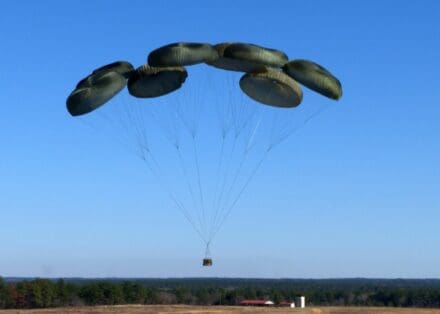
Sgt. 1st Class. Dao Le, a project NCO with ABNSOTD’s Aerial Delivery Rigging Branch, said the testing process is meticulous.

“Every piece of equipment Soldiers use has been independently tested and evaluated to meet current and future Army needs and requirements,” he said.

Mr. Aaron Clark, a military test plans analyst with ABNSOTD involved in Low Velocity Airdrop FMTV testing, captured the essence of the effort.

“Operational testing is about Soldiers,” he said. “It’s about ensuring the systems we develop are effective in a Soldier’s hands and suitable for the environments in which Soldiers train and fight.”

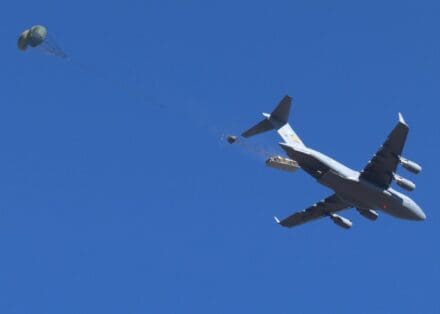
The airdrop missions were executed using U.S. Air Force C-17 and C-130 aircraft, which reflect a significant advancement in military logistics and capability, setting a new standard for operational excellence and readiness, according to Clark.

“Operational testing is OTC’s opportunity to contribute to readiness; anything less compromises the Army’s ability to provide the forces that fight and win the nation’s wars,” Clark added.
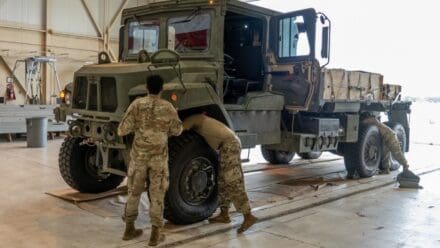
Mr. Bill Slaven, branch chief of ABNSOTD’s Test Division, shed light on integration of systems under examination into actual missions and training agendas of test units.

“Unit commanders get an early opportunity to evaluate new systems, potentially influencing modifications in operational tactics and military doctrine,” he said.

“The unique aspect of these tests is that they are led by the units themselves, ensuring a seamless melding of control within authentic operational environment scenarios.”

According to Maj. Joshua Cook, chief of the ABNSOTD’s Test Division, every piece of equipment Soldiers use has been independently tested and evaluated to meet current and future Army needs and requirements.

“We test and assess Army, Joint, and Multi-service airborne and airdrop-related warfighting systems in realistic operational environments by using Soldiers to determine whether the systems are effective, suitable, and survivable,” he said.

“The commitment to testing and assessing equipment aims to ascertain their effectiveness, suitability, and survivability.”

By Mr. James Cochran and Mr. Aaron Clark, Military Test Plans Analysts, Airborne and Special Operations Test Directorate, U.S. Army Operational Test Command Public Affairs


The Objective by SIG SAUER: The Official Go-To Resource on Military Small Arms

Wednesday, April 3rd, 2024

NEWINGTON, N.H., (April 3, 2024) – SIG SAUER is proud to officially launch The Objective; the go-to industry resource for cutting-edge innovation in the world of military small arms technology.  This official blog from SIG SAUER is purposed to showcase the work of the SIG Defense team and the elite Special Weapons Group within SIG SAUER whose sole mission is to develop, innovate, and deliver groundbreaking SIG products.

The Objective is poised to feature stories on topics that include the development of the MCX-SPEAR and SIG-LMG, which are now fielded as the U.S. Army’s XM7 and XM250 Next Generation Squad Weapons; the M17 and M18 pistols, designed and manufactured by SIG for the Modular Handgun System with over 500,000 fielded and adopted by all branches of the U.S. military; and the ongoing development of the SIG-MMG 338, Medium Machine Gun, for the elite warriors of our nation’s Special Operations Command – and that’s just the start.


Through insightful topics that illuminate the world of weapon development The Objective will deliver unparalleled content about the cutting-edge world of military small arms technology direct from the team that is reshaping the modern battlefield through innovation.

Hitting The Objective the first post in the series is now available at sigsauer.com.

The Guss from Ferro Concepts

Wednesday, April 3rd, 2024

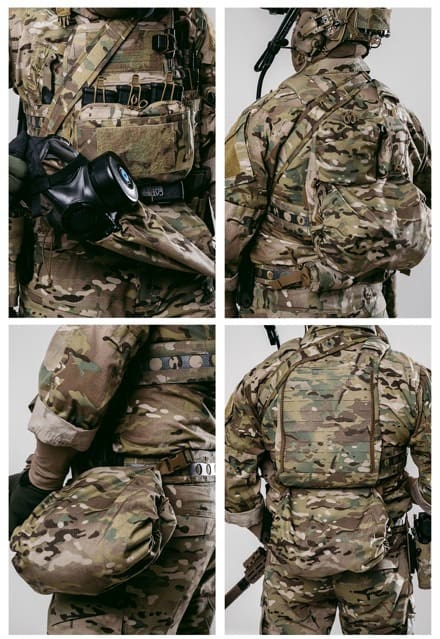
Meet the Gas Mask / Utility Storage Sleeve from Ferro Concepts. It is ambidextrous with shock cord openings at both ends and be carried in a multitude of ways. If the 6×3 MOLLE section isn’t your thing, you can run it with the included strap that is quickly attached and detached via a split bar buckle on each side of the strap. Additionally, The Guss comes with their new Hangboard attachment that converts The Guss into a Dangler.

Offered in MultiCam, MultiCam Black, Coyote, Ranger Green, and Black.

ferroconcepts.com/products/guss-gas-mask-storage-sleeve

Call for Articles: Military Review Special Edition on Irregular Warfare

Wednesday, April 3rd, 2024

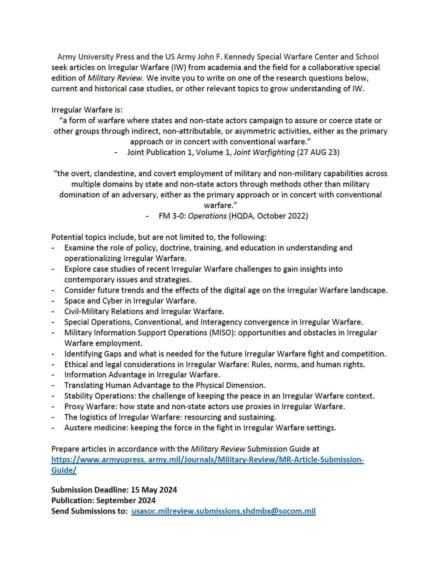
Army University Press and the US Army John F. Kennedy Special Warfare Center and School invite submissions for a special edition of Military Review focused on Irregular Warfare. They’re looking for insights from academia and the field to expand the understanding of IW. Topics include policy, training, future trends, digital age effects, space, cyber, and more.

Deadline: 15 May 2024

Submit to: usasoc.milreview.submissions.shdmbx@socom.mil

Reptilia Saddle Mount for Elcan and Micro

Wednesday, April 3rd, 2024

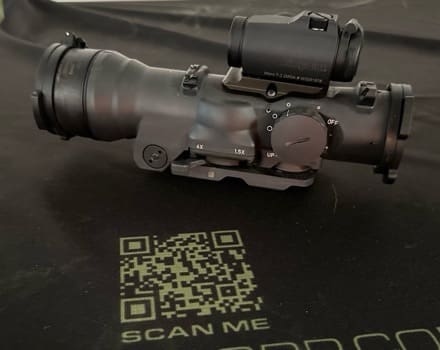
Reptilia designed this mount for use with the Elcan SpecterDR 1.5-6x and 1-4x Optical Sights at the request of Machine Gunners who wanted to piggyback a MRDS for close-in work.

Compatible with:

Aimpoint® – Micro R-1, H-1, H-2, T-1, T-2, CompM5
Sig Sauer® – ROMEO4 , ROMEO5 & ROMEO-MSR
Vortex Optics® – Crossfire®, Spitfire®, Sparc® I & II
Primary Arms® – Classic Series Gen II, SLx Advanced Rotary Knob Microdot, & SLx Compact 1×20 Prism Scope – ACSS-Cyclops

Holosun® Technologies –  HS403(not HS403A), HE403, HS503, HE503, HS515, HE515,  & HE530.

Available in Black and FDE.

reptiliacorp.com/product/saddle-mount-for-elcan-aimpoint-micro-t2

Ocean State Innovations and Propex Furnishing Solutions Unveil CURV Tactical: A Game-Changer in Tactical Gear

Wednesday, April 3rd, 2024

Ocean State Innovations (OSI) has teamed up with Propex Furnishing Solutions to introduce CURV® Tactical, a groundbreaking addition to the world of tactical gear.  Available in .5mm, .7mm, .9mm, and 1.4mm thicknesses, CURV® Tactical features a matte black finish and boasts superior lamination through Propex’s proprietary manufacturing process.

What sets CURV® Tactical apart is its exceptional versatility. It can be sewn through, laser cut, and thermoformed, offering users unmatched customization options. Despite its lightweight structure, CURV® Tactical is incredibly durable, making ideal for the rigors of military and law enforcement operations.

“This collaboration represents a fusion of advanced materials and manufacturing expertise” said Geoff Senko from OSI.  “CURV® Tactical delivers superior performance and versatility, empowering professionals to excel in their missions.”

Notably, CURV® Tactical is also remarkably cost-effective compared to industry standards, ensuring that agencies can equip their personnel with high-quality gear without exceeding budget constraints.

The partnership between OSI and Propex underscores a commitment to innovation and excellence.  As military and law enforcement agencies worldwide seek cutting-edge solutions, CURV®  Tactical stands ready to meet -and exceed- their expectations, setting a new standard for tactical gear.

Contact:

Geoff Senko, SVP of Sales

OCEAN STATE INNOVATIONS

Office 401-293-5500 Mobile 440-670-9421

Web osinnovate.com  

Email curv@osinnovate.com   

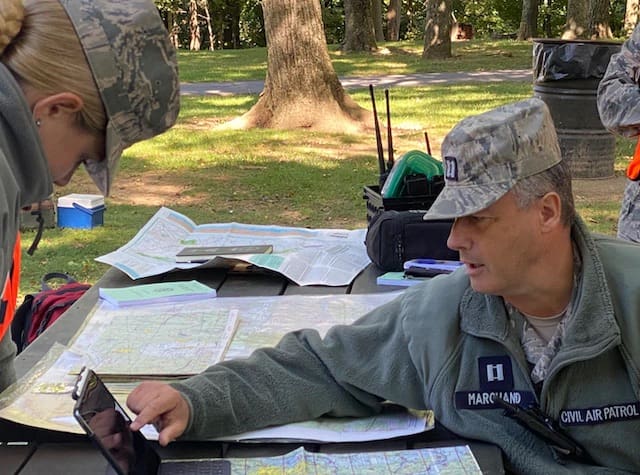
Inside a Civil Air Patrol SAR Mission

Wednesday, April 3rd, 2024

ARLINGTON, Va. (AFNS) —

On Feb. 6, five Marines aboard a CH-53E Super Stallion helicopter belonging to the U.S. Marine Corps’ 3rd Marine Aircraft Wing were reported “overdue” while en route to San Diego, sparking a search and rescue mission for the missing service members.

The search efforts included members of Civil Air Patrol, who along with firefighters and other state, federal and local agencies located the aircraft the next day. Unfortunately, all five Marines on board were confirmed deceased.

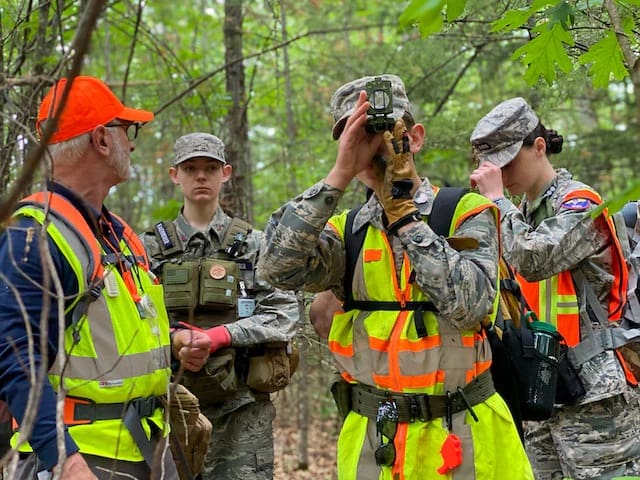
“The night of the crash, we were alerted to the missing aircraft and spun up resources to find it,” said Lt. Col. Steven DeFord, incident commander for CAP’s California Wing. “Due to the bad weather in the area, we activated two aircraft from Arizona and got a ground search team to begin a search.”

DeFord explained members of CAP’s National Radar Analysis Team quickly found a radar track for the missing helicopter and gave the teams a helpful last-known position, which was roughly 300 feet away from the actual crash site. CAP began sharing the data with search parties within 30 minutes.

NRAT’s mission is to “shorten the crash to rescue time” by using advanced technologies and data sources developed by the experienced team. Once this team is activated, analysis and actionable data can be provided to others in minutes.

“With our analysis team’s 15 years of experience, and our team-built tools, we’ve become very skilled at analyzing radar data to determine where a probable crash site is located,” said Lt. Col. John C. Henderson, NRAT vice commander.

During the search, 35 CAP volunteers from across Nevada, Arizona and California collaborated to find the aircraft. The Air Force Rescue Coordination Center, located at Tyndall Air Force Base, Florida, was responsible for alerting local CAP agencies, allowing the Air Force to mediate between the other state and federal agencies on scene.

“We had two liaison officers interfacing with the numerous other agencies to coordinate our response,” DeFord added. “CAP provided radar forensics and ground electronic search capabilities, while other agencies provided mobility support and a location for a joint incident command post.”

Founded in 1941 and established as the official civilian auxiliary of the U.S. Air Force seven years later, Civil Air Patrol is chartered by Congress as a nonprofit organization for the purposes of youth development, aerospace education, and to promote general aviation. In an auxiliary role as a Total Force partner of the Air Force, CAP operates the world’s largest fleet of single-engine aircraft for search and rescue, disaster relief, training, and education. The all-volunteer force is made up of more than 66,000 members nationally.

The California Wing engages in multiple exercises weekly, aiding mission partners such as the U.S. Coast Guard by flying multiple aircraft throughout the state to ensure direction-finding coverage to support their lifesaving missions. Additionally, its volunteers stand by to support in-state and federal search and rescue missions looking for emergency location transmitters and missing persons.

No matter the outcome, CAP and its volunteers work alongside the Air Force to provide trained search and rescue professionals and crash data analytics to quickly respond to any event to which they’re called.