FirstSpear

Author Archive

Nightforce Optics Announces 25th Anniversary Celebration With Special Edition Ruger 10/22 Promotion

Thursday, October 26th, 2017

Lavonia, GA, U.S. – (October 6, 2017) Nightforce® Optics, Inc., a leading manufacturer and marketer of premium sport optics and related products including riflescopes, spotting scopes, and accessories, announces the celebration of their 25th anniversary by offering a Special Edition Ruger® 10/22 rifle with the purchase of select Nightforce riflescopes. The promotion applies to riflescope purchases made from October 1, 2017 through December 31, 2017.

“We’re celebrating a quarter-century of phenomenal success by ‘giving back’ to our steadfast fans and customers,” said Gordon Myers, Director of Sales and Marketing. Nightforce is offering a complimentary Nightforce 25th Anniversary Special Edition Ruger 10/22 at no additional charge with the purchase of select Nightforce riflescopes from authorized Nightforce Optics dealers. “Partnering with a trusted brand like Ruger and offering a limited edition of their renowned 10/22 rifle to purchasers of our riflescopes is a win-win for our consumers and dealers alike,” Myers said. “This exclusive offer honors our 25-year commitment to excellence in optics, embraced by shooting and hunting enthusiasts from amateur to professional, by delivering a truly legendary firearm to the collections of shooting enthusiasts. It’s our way of saying thank you to the shooting community that supports our industry,” he added.

Qualifying purchasers receive a Nightforce 25th Anniversary Special Edition Ruger 10/22 rifle featuring:

  • “Nightforce 25th Anniversary” engraved on red and black laminate hardwood stock
  • Receiver / Barrel – Satin Stainless, Threaded Barrel with Flash Hider (CA compliant model available)
  • NFO-0000 Serialization
  • Ruger® Combination Weaver Rail
  • Ruger® Clear BX-1-CLR 10-Round Mag
  • Ruger® BX-Trigger
  • Extended Magazine Release
  • Nightforce1022_Angle

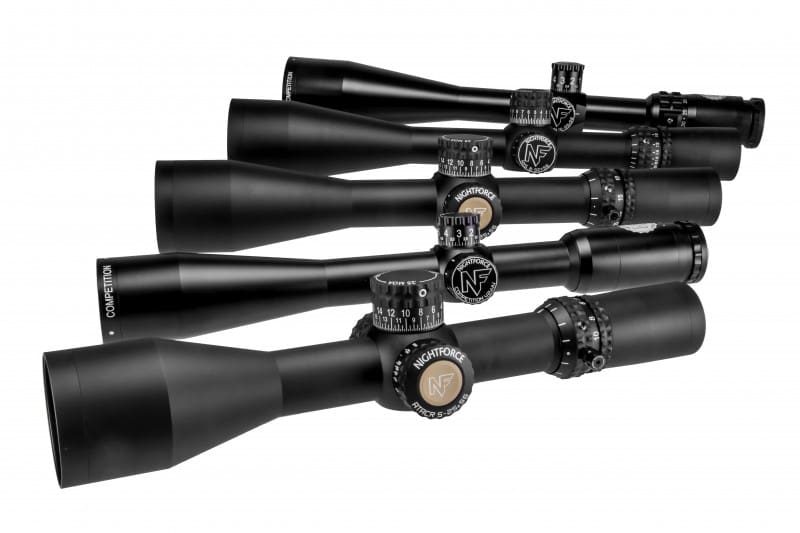
    This complimentary, no additional charge Nightforce 25th Anniversary Special Edition Ruger 10/22 rifle offer is good for new retail purchases of the following riflescope models only, while supplies last, from authorized Nightforce Optics dealers only:

  • ATACR 7-35×56 F1 Model Numbers: C569, C570, C571, C578
  • ATACR 5-25×56 F2 Model Numbers: C553, C554, C555
  • NXS 8-32×56 F2 Model Numbers: C350, C354, C437, C509, C530
  • Competition 42×44 Model Numbers: C558, C559
  • Competition 15-55×52 Model Numbers: C511, C512, C513, C514
  • NightforcePromoScopes_Side

    Eligibility:

  • Customer must be at least 18 years of age where legally required, and must be at least 21 years of age where legally required.
  • Customer must be a U.S. resident, and must provide a U.S. address.
  • Customer must be able to legally possess the firearm in this offer.
  • Customer must comply with all federal, state, and local laws for redemption.
  • Customers must meet all the promotion requirements to be eligible to redeem the complimentary rifle offer. Further details regarding eligibility, and all redemption requirements are on the Nightforce 25th Anniversary Special Edition Ruger 10/22 rifle landing page at www.nightforceoptics/1022.

    For consumer and dealer questions regarding the redemption process, ordering information, and inventory, please call 208.476.9814 or email promotions@nightforceoptics.com.

    NightforcePromoBug_Right

    For more information on Nightforce Optics, please visit www.nightforceoptics.com, or email Customer Service at info@nightforceoptics.com.

    Follow us on Facebook, Instagram, YouTube, and Twitter for social media updates.

    PEO Soldier – Soldiers Test Newest Precision Targeting Device

    Wednesday, October 25th, 2017

    This is a great story by PEO Soldier’s Kyle Olson, updating you on their JETS program.

    FORT GREELEY, Alaska – For nearly two weeks in mid-August, it seemed the only sound that could be heard between gusts of wind along a few of Fort Greeley’s Alaskan ridge lines was…
    Picture7

    “Target Lock.” “Target Lock.”
    “Lasing.” “Lasing.”
    “Solution.” “Solution.”
    “5…7…6…9.” “5…7…6…9.”
    “4…2…5…2.” “4…2…5…2,” and so it went—more than two-thousand times.
    Find a target. Check.
    Identify the target. Check.
    Range/Geolocate the target. Check
    Call it. Verify it. Log it.
    And do it again, and again, and again, and again.

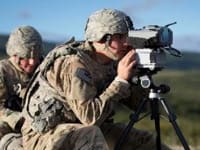
    Six teams of Forward Observers (FO) from the 1st Stryker Brigade’s 2nd Battalion, 8th Field Artillery Regiment and data collectors atop places like Windy Ridge and Donnelly Dome looked out over the Alaskan landscape. They picked out targets and called in target data acquired through the Joint Effects Targeting System, better known as JETS, as part of a Limited User Test (LUT). The Army’s Operational Test Command conducted the testing at the Fort Greeley Cold Region Test Center (CRTC).

    JETS is a modular advanced sensor suite consisting of a hand-held target location module (HTLM), a precision azimuth and vertical angle module (PAVAM), and a laser marker module (LMM) that collectively offer the FO capabilities not contained in any currently fielded system. JETS allows them to quickly acquire and precisely locate targets.

    When fielded, it will be the first precision targeting device of its kind provided to Soldiers.

    “Its brand new cutting edge technology that is a paradigm shift in how the Field Artillery BOS (Branch of Service) is employed across the battle space,” said LTC Michael Frank, Product Manager Soldier Precision Targeting Devices (PM SPTD). With JETS, “I turn a [M777A2] howitzer or a Paladin into a giant sniper rifle. I’m dropping that round, with first round effects, on target.”
    Picture8

    LTC Frank is guiding the development of JETS with the experienced hand of a FA officer with multiple deployments and more than 26 years in the Army. The lieutenant colonel emphasized that JETS not only provides greater precision, but also allows for a more rapid response. “Standoff doesn’t just mean range anymore,” LTC Frank said. “It means time. We can get kinetic effects on that target, and we don’t have to mess around with mensuration. We don’t have to take anywhere from 15 to 18 to 20 minutes to go through mensuration. We can get that target data to the guns and rounds out of the tube faster with JETS than without.”

    According to CPT Eric Munn, JETS Assistant Product Manager (APM), “JETS will revolutionize how the Field Artillery conducts precision fire missions. A hand-held, stand alone, true precision targeting device that is fielded to every Forward Observer team will increase the agility and lethality of Field Artillery as a whole.”

    Before the system is fielded, and well before Soldiers can experience the benefits of JETS on the battlefield, it must go through comprehensive and rigorous testing. While the 1st Stryker Brigade’s FOs could attest to the seemingly mind-numbing monotony of conducting thousands of data calls, they also understood the inherent value and importance of their mission.

    “We have the ability to find things that are wrong with the system and have the capability of getting it changed,” said SPC Israel Wallace, FO, Delta Battery, 2nd Battalion, 8th Field Artillery Regiment (2-8 FAR). “We’d go up there, shoot grids, see if we can find anything wrong with it—see how long the batteries last, you name it.”

    Although the Soldiers packed the JETS in their rucks and maneuvered through the Alaskan terrain to their observation posts, the LUT was not about the system’s durability on the move. It was about collecting enough data to verify its consistency, reliability, and ease of use.

    “We don’t do a whole lot of rugged testing like throw it on the ground or anything like that,” SPC Israel said. “We’ll take it up there and use it all day long.” The Soldiers took note of things like the various connections and ports—were they easy to use or maybe vulnerable to snagging or breaking; was the tripod stable and easy to use; how did the system perform in the rain; and were the controls easy to use while wearing gloves?

    According to CPT Munn, it’s essential that the JETS is developed with Soldiers in mind. “One of the most important parts of these tests is determining how suitable the JETS is for the Soldier and what we need to fix prior to fielding these systems to the Army,” he said. “The Soldier is the ultimate customer and we have to ensure that they can employ the system effectively and reliably.”

    SGT Christopher Maurer, 2-8 FAR FO, appreciated the ability make a difference. “It’s good to know what it can do,” he said. “But, it’s [also] good to have that face to face with the people that actually designed it, so they can take in the feedback and actually do something about it.”

    LTC Frank described how the Soldiers conducted the testing. “The Soldiers operated over five different lanes, incorporating different scenarios that put JETS through the type of mission scenarios it would see—not just if, but when it’s taken into a theater of combat,” LTC Frank said.

    After spending several weeks training and then testing JETS, the Soldiers gained a special appreciation for the system and its capabilities. SGT Maurer especially appreciated the reduced weight when compared to the Lightweight Laser Designated Rangefinder (LLDR) and increased capability when compared to the Vector 21 Laser Target Locator (LTL). “They’re both kind of the far ends of the spectrum,” he said. “[JETS] is the perfect hybrid between having one module you can take and just go with, or you can bring everything.”

    SPC Wallace echoed SGT Maurer’s sentiment. “If I was running around up in the mountains, constantly moving, setting up hasty [observation posts] I would take the JETS over the LLDR any day.”

    The Operation Test Center will spend the next several weeks combing through the LUT data and then present PM SPTD with the test findings. Everything will be looked at and recommendations will be made. Some will affect training, and others will result in physical changes or even software updates.

    Soldiers will have another opportunity to work with the JETS in the upcoming Initial Operational Test and Evaluation (IOT&E) scheduled for February 2018. The IOT&E, like all previous tests, will put the JETS in hands of Soldiers. They will put it through its paces ensuring the operational capabilities of this next generation precision targeting device are tested and verified to exacting detail before any Soldier uses the JETS to call for fire on a live target.

    “Our goal in the Acquisition community is to increase our Soldiers’ survivability and ability to win on the battlefield,” CPT Munn said. “The JETS system accomplishes both tasks by giving the Forward Observer time and space to defeat enemies on the battlefield,” he added.

    JETS is expected to be fielded to Soldiers in fourth quarter of Fiscal Year 2018 (July–September 2018).
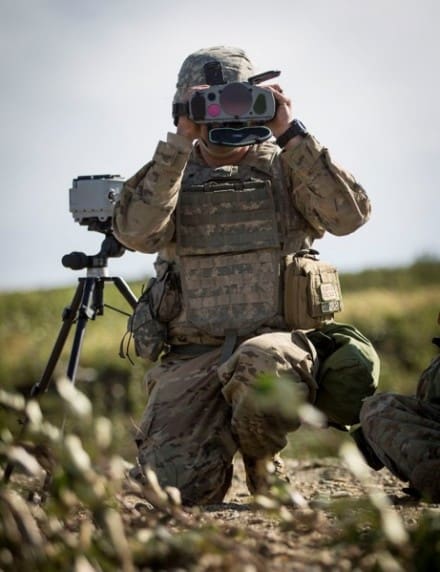
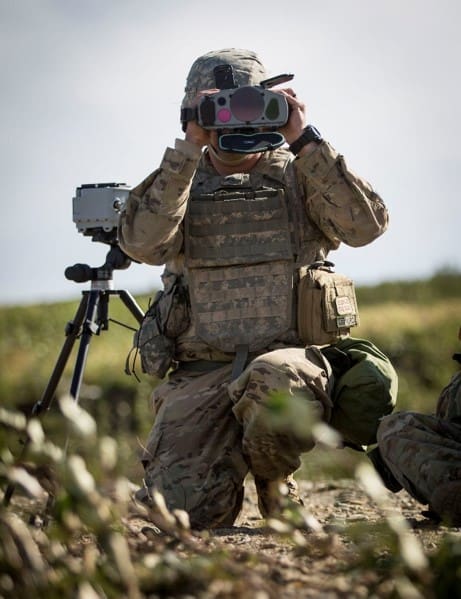
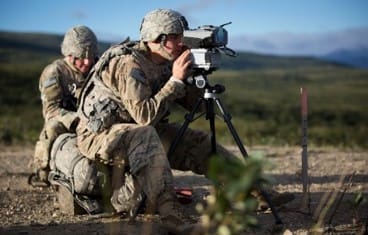
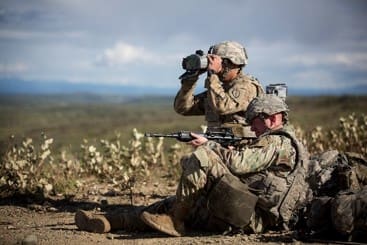
    Picture1Soldiers from the 1st Stryker Brigade’s 2nd Battalion, 8th Field Artillery Regiment put the Joint Effects Targeting System (JETS) through its paces at the Cold Region Test Center (CRTC), Fort Greeley, Alaska. The Soldiers, all Forward Observers (FO), spent several weeks testing and evaluating the JETS during the Limited User Test (LUT) conducted by the Army’s Operational Test Command. More than 2,000 data calls were logged on the systems by six teams of FOs and data collectors. JETS, a hand-held, stand alone, true precision targeting device, represents a capability not yet available to Forward Observers. One of the Soldiers characterized it as the perfect hybrid system, fitting neatly between the Vector 21 Laser Target Locator (LTL) and the larger Lightweight Laser Designator Rangefinder (LLDR). At 17 pounds, JETS weighs less than half of the LLDR and offers greater precision than the Vector 21.

    (Photos by Kyle Olson, PEO Soldier)

    peosoldier.armylive.dodlive.mil/2017/10/24/soldiers-test-newest-precision-targeting-device

    Gunfighter Moment – Aaron Barruga

    Saturday, October 21st, 2017

    You Won’t Become A Better Tactical Marksman Until You Become A Stronger Tactical Leader

    Aaron Barruga

    As a twenty year old Special Forces sergeant, I was predictably overconfident and periodically arrogant. I was strong and fast, but that was mostly because of youth. I was great at shooting drills. But only because I could learn sequences and had no clue as to which skills impacted my performance overall. I exploited my status as “Special Forces” and allowed conventional soldiers to mistake my confidence with competence, when in reality I was often winging it.

    My performance in controlled environments—or training—was only an indicator of just that, my performance in training. I was strong, but couldn’t lead. I could shoot fast, but couldn’t train others to do the same. My first trip to the Philippines changed these realities through a healthy bruising of ego.

    My team was working with a Philippine Army infantry unit and teaching them US small-unit fighting techniques. During the trip, I was tasked with teaching a 2-hour block of instruction on hemorrhage control and care under fire. Fortunately, my team already possessed a slide deck for the class from a previous deployment, so most of the preparation for my course was already accomplished.

    I bombed my presentation.

    I failed because I committed the most annoying error as a lecturer, I read off slides and when questioned I simply restated what I had already said previously. Although I understood the steps to take during care under fire, it was only because I had learned to follow sequences. I knew the answers to questions, but not because I knew the answer, but because I knew what phrase to regurgitate. Fortunately, the practical exercises and hands-on portion of the class allowed students to work through what I failed to explain.

    Transitioning to the range, I was allowed back in my comfort zone of shooting drills as quickly as I could. This satisfied my vanity, but again demonstrated that I didn’t really know anything. One of the Filipino soldiers I was coaching needed serious improvement on his application of trigger control. Attempting to coach this soldier, I executed the same error as the day prior in my medical class. Rather than teaching, I was simply regurgitating the right answer.

    The Filipino soldier experienced issues because he was shooting too quickly which made him sloppy. My solution was the regurgitated answer of “slow down.” Although slowing down would have helped the shooter, it was supplemental and not the primary solution. Watching us run racetracks around the same problem, a senior teammate came over and mentored me through how to teach the right answer.

    To truly mentor a student, whether in the gym, the classroom, or on the range, you have to encourage him to pursue a line of thinking in which he arrives at both wrong and right answers. During this process you must guide him through the critical thinking process that allows for real learning.

    However, the military and law enforcement are not accustomed to this style of teaching. The martial and conservative nature of these organizations often results in teaching that is a one-sided dialogue. Although a recruit might have a question, he dare not ask it and seem stupid, or become the center of attention for a bad instructor that is more interested in punishing basic trainees. Consequently, a majority of tactical professionals are indoctrinated at a very early point in their career to seek regurgitation, not actual learning.

    My teammate had been shooting longer than me, but that’s not why he was able to remedy my situation. In diverse environments working with individuals of different skill levels and different levels of being coachable, he learned that being a subject matter expert doesn’t mean knowing the right answer, it also means knowing the wrong answers, and how they all tie in together to support the broader learning objectives.

    Leadership forces a type of accountability that cannot be learned as a lone-wolf. As a junior Green Beret, I had minimal responsibility and made decisions that supported my missions, not the performance of others. At company-level range days, if the primary instructor taught something I thought was boring, I would physically roll my eyes in the back of the crowd. Rather than focussing on the basics, I wanted to perform exercises that I thought looked cool.

    Of course, the principle issue with exercises that look cool is that they are often self-serving. We see this dynamic a lot on Instagram now. Shooters running around, tossing kettle bells, throwing rocks at students, and punching rubber mannequins. Although these actions are enticing and appear purposeful, they typically develop no compoundable skills and lack external applicability. Under these circumstances, performing these drills only makes you good at performing the drills.

    Shooting cool drills did nothing for me because I couldn’t deconstruct and identify the different skills being exercised. Again, I could regurgitate what the right answers were, but that was not always significant as previously demonstrated. It wasn’t until I was given more responsibility and promoted to higher positions of leadership that I was able to identify what was truly important about any skills development.

    As an individual, you can default to the regurgitation fallacy and not even know it. This is simply because your focus is narrow. But if the collective performance of subordinates impacts mission success—or life and death—it forces a comprehensive examination of how you develop stronger troops. This allows leaders to transcend teaching methods that are self-serving and approaches that encourage drills that only satisfy drills.

    There is nothing wrong with wanting to shoot the fastest, or being able to lift the most weight. But focussing on narrow end states undermines our overall growth. For example, who wins a gunfight, the police officer that can deadlift 550lbs or the one who can only deadlift 325lbs?

    Regurgitators want to shoot drills that demonstrate speed, but they can’t explain how to develop consistent speed, and not just a one-time shot timer success. They want to argue over bumper sticker tactics and subjective performance variables such as “how much finger you place on the trigger because such and such said so.” None of these actions require accountability that is learned through leadership, it just demands that you shout louder than the person you’re arguing with.


    Leadership also forces you to examine the possible second and third order of effects of a decision. Whether intended or not, every action creates reactions. In the heat of the moment, predicting unintended consequences can be difficult, but is an indicator of your value added to the team and the mission.

    As a junior Green Beret, all I brought to the table was an enthusiasm for lifting weights and shooting. As a result, I was not a long-term asset. In order to truly improve your ability as a tactical marksman you must become a stronger leader; because leadership forces professional maturity that cannot be achieved alone, no matter how many reps you put in at the range or in the gym.

    footer

    Aaron Barruga is Special Forces veteran with deployments to Iraq, Afghanistan, and the Pacific Theater of Operations. He has trained foreign commandos, police officers, and militia fighters. He is the founder at Guerrilla Approach LLC, where he consults law enforcement officers on counter-terrorism and vehicle tactics.

    www.guerrillaapproach.com
    www.facebook.com/guerrillaapproach
    www.instagram.com/guerrilla_approach

    Bravo Company – Combat Rail Systems

    Thursday, October 19th, 2017

    7

    COMBAT RAIL SYSTEMS
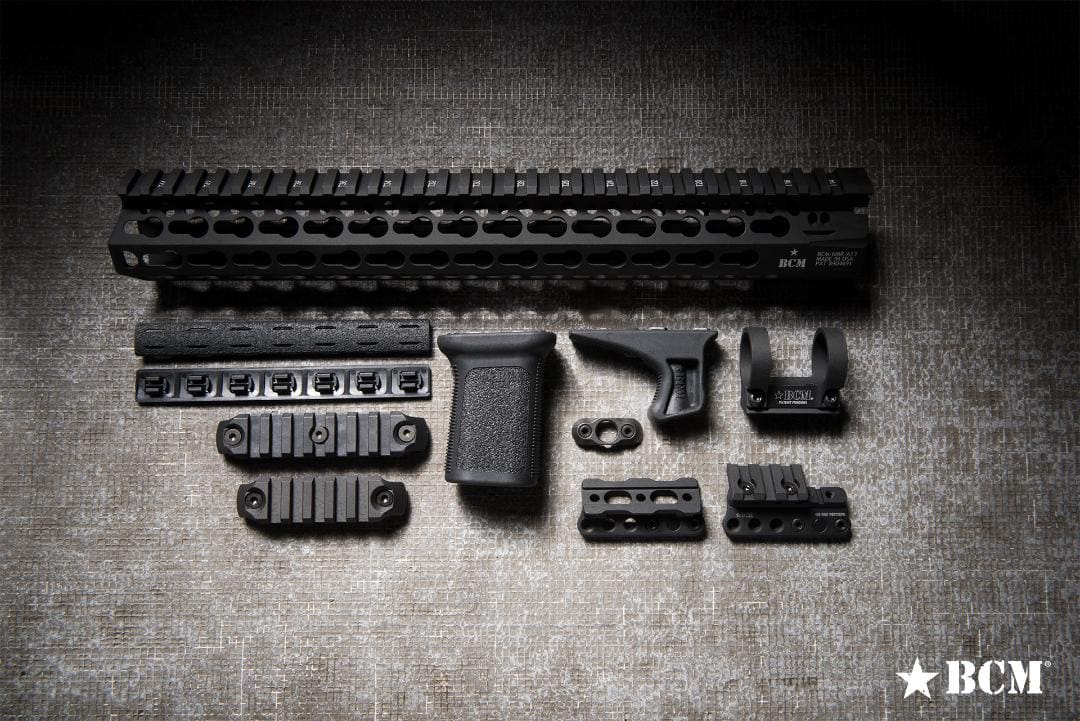
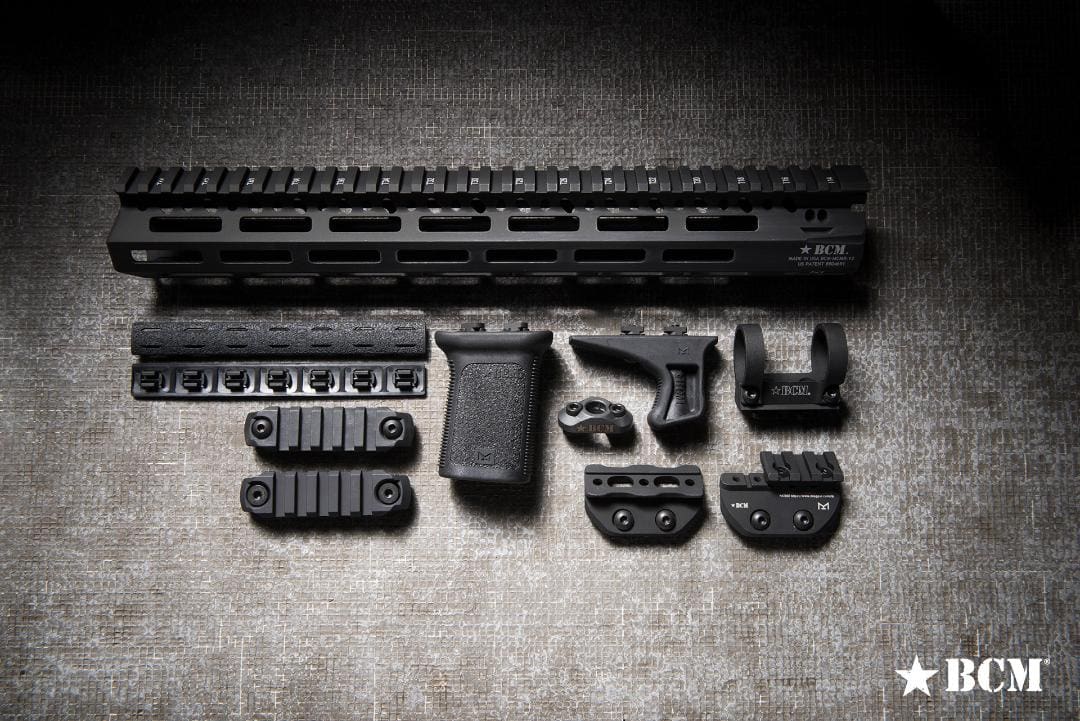
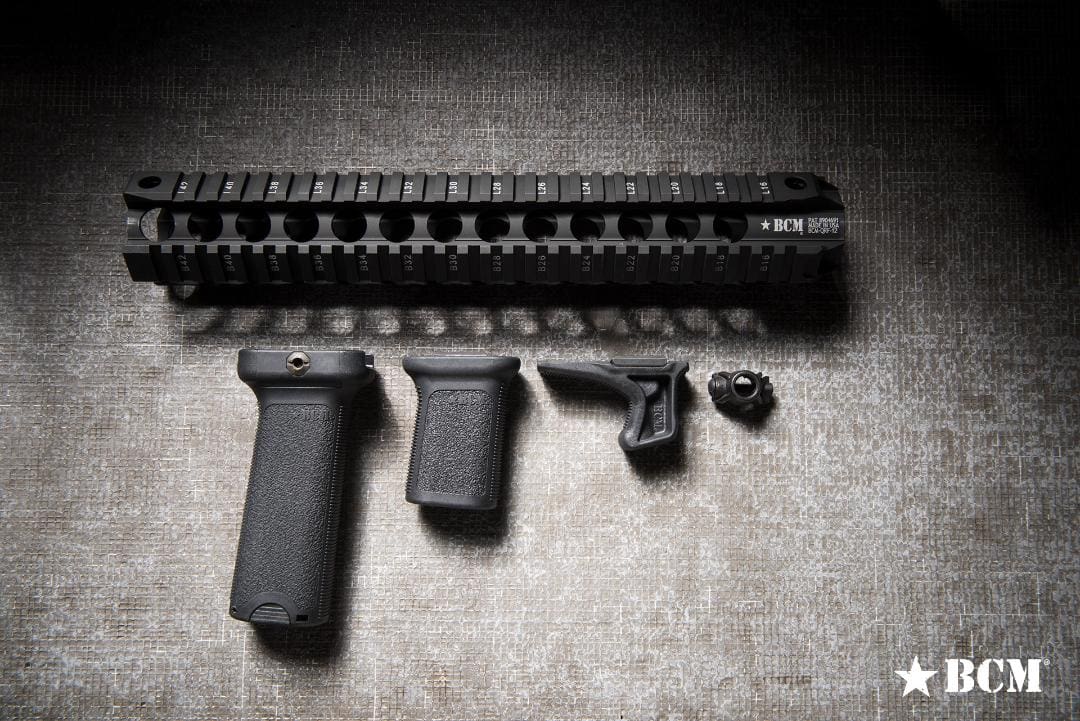
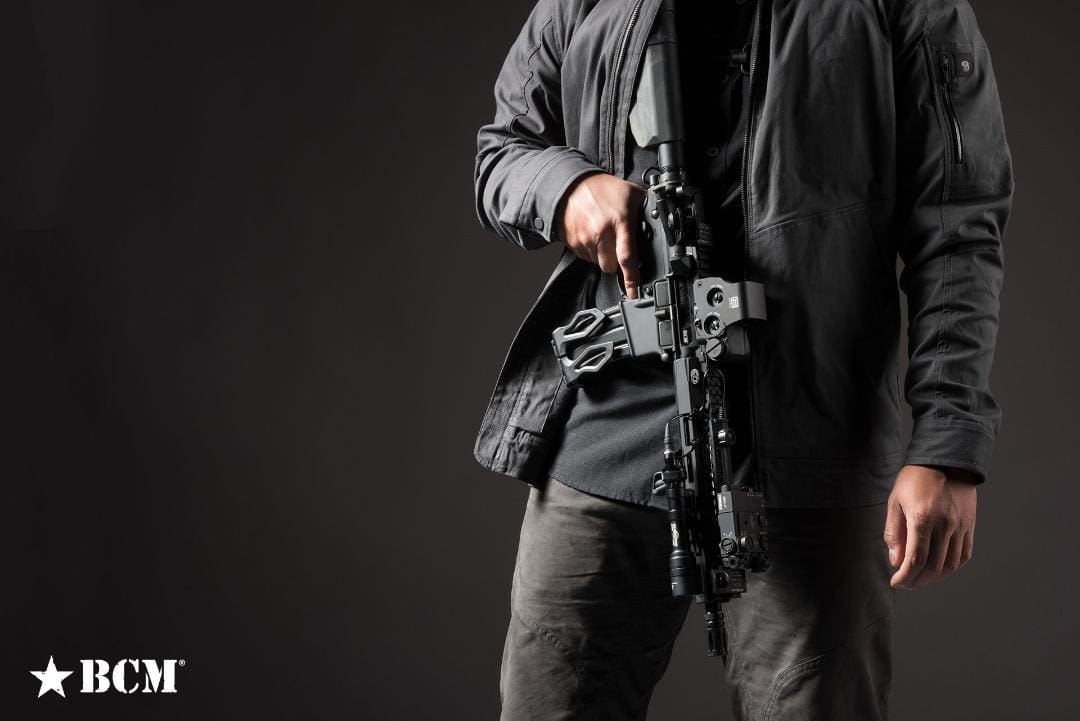
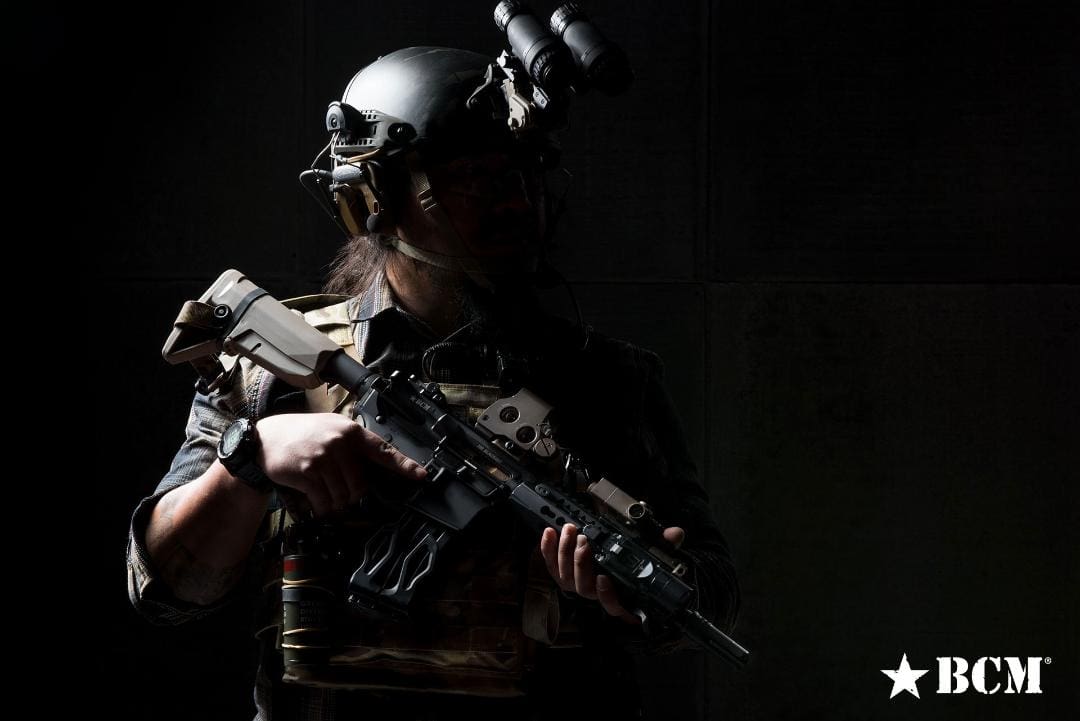
    Designed to the specification of combat end users, BCM® Combat Rail Systems are built free float, for improved accuracy, with Aluminum alloys, that are light weight but do not compromise rigidity. Mission flexible platforms, ideal for end user customization in the placement of optics and accessories such as light mounts, vertical grips, hand stops, lasers and bi-pods; BCM Combat Rail Systems are available in three interface systems:

    + KeyMod™
    + M-LOK®*
    + 1913 Picatinny Rail

    Whatever your mission requires, bcm offers products ready for any American going in harm’s way.

    10

    KMR ALPHA :: KEYMOD™ SYSTEMS
    The BCM® KeyMod Rail(KMR-Alpha) delivers a robust, ultra-light modular handguard for the AR platform, second to none on the market today.

    Manufactured from Aircraft Grade Aluminum alloy, the KMR-A gives end users an extensive range of customization options, with seven KeyMod lined mounting surfaces and one with baked in MIL-STD-1913 at the 12 O’Clock position. The KMR-A features ergonomics tailored to combat end user requirements, with its reduced profiled maximized for positive control of the weapon system in the lightest possible package.

    9

    MCMR :: M-LOK® COMPATIBLE MODULAR RAIL SYSTEM
    The BCM® M-LOK® Compatible* Modular Rail” (MCMR) delivers the same optimized ergonomic profile and lock up** developed for the KMR-Alpha rail system, but with an M-LOK® compatible interface. Precision Machined Aerospace 6061-T6 Aluminum Alloy, the MCMR is both rigid and light-weight, featuring mounting interfaces on seven sides in addition to the baked in MIL-STD-1913 at the 12 O’Clock position.

    8

    QRF :: QUAD RAIL FREE FLOAT RAIL SYSTEM
    A MIL-STD-1913 rail, the BCM® QRF(Quad Rail Free Float) Rail System is built with Picatinny Rails running the full length of the handguard at 12, 3, 6 and 9 O’Clock. Precision machined from high-strength lightweight Aerospace 6061-T6 Aluminum Alloy, the BCM QRF features the same lock up* as and steel barrel nut insuring the rail resists movement even under extreme use.

    With four QD limited rotation sling swivel slots built into the rail at 3 and 6 O’Clock, the QRF provides end users an uninterrupted mounting surface at 12 O’Clock when mated with a BCM or other Mil-Spec upper receiver, allowing for the fine tuned positioning of optics, lasers or other accessories potentially vital to mission success.

    4

    COMBAT RAIL LOCK UP
    The entire BCM® Combat Rail System fleet uses our patented(US Patent 8904691) lock up system where self-locking cross bolts apply force at the 12:00 position of the handguard equally distributing force around the surface area of the rail. This insures continuous top center alignment of the rail and mitigates forwards/backwards movement of the handguard when the weapon system is fired.

    2

    MADE IN AMERICA
    All BCM® Combat Rail Systems and accessories unite state of the art manufacturing with lightweight and durable materials to ensure components that last a lifetime, performing far beyond performance requirements established nearly six decades ago. Like all BCM rifles and BCMGUNFIGHTER™ accessories, all BCM Combat Rail Systems are made in the USA.

    Learn more at bravocompanymfg.com/combat_rails

    * M-LOK® is a registered trademark of Magpul Industries Corp. – www.magpul.com/ip
    ** Bravo Company MFG, Inc. US Patent 8904691

    Bushnell Announces AR Optics Laser Sights

    Tuesday, October 17th, 2017

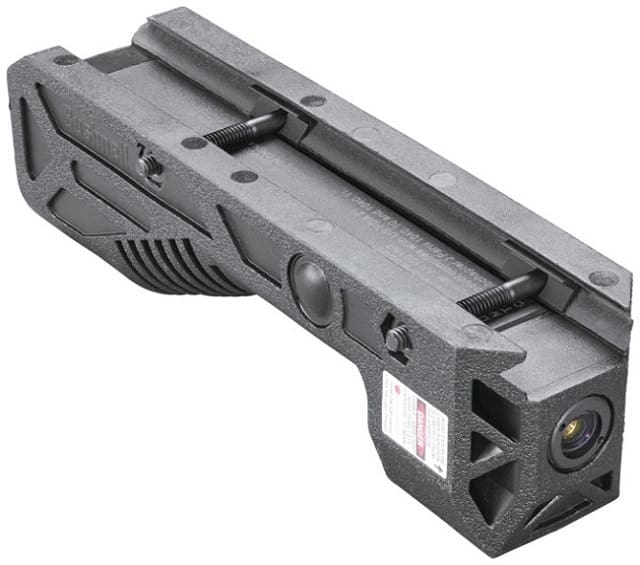
    AR1001BR_Haste_ForwardGripLaser_LG

    OVERLAND PARK, Kansas – October 16, 2017 – Bushnell, an industry leader in high-performance optical solutions, announces the addition of three high-end laser sights to its industry-leading line of AR Optics.

    Bushnell’s AR Optics line is already the category leader for MSRs. New this year, AR Optics now offers laser lighting systems in the Haste, Chase and Rush. Each model is a purpose-built laser sight with advanced features and high-performance output.

    “More and more MSR users are finding the benefits of laser sighting systems impossible to ignore,” said AR Optics line manager Bryan Parrish. “Our engineers worked tirelessly to advance these systems, with innovative designs purpose-built for the rifle platform. With high-output lasers and easy one-button, constant-on operation, the Haste, Chase and Rush outperform the competition and offer users a better way to make the shot.”

    Waterproof, ergonomic and ready for every MSR – including AR pistols — the Bushnell AR Optics Haste is the epitome of forward-grip lasers. Available in red or green laser options, the Haste mounts under the bore, and provides a bright, continuous, long-lasting beam with the push of a single button. The waterproof construction ensures it won’t falter in bad weather.

    “Keeping the laser in-line with bore is paramount to accuracy,” Parrish said. “And we were able to do that with improved ergonomics. It allows you to better grip the rifle and provide a more stable shooting platform.”

    The AR Optics Chase is two sights in one. Push a button for a bright, continuous laser beam available in red or green. Flip-up the post for a physical sight. The Chase mounts over the bore, allowing for a seamless, accurate transition between multiple targets. The back-up sight is ideal for longer shots, and integration saves valuable space on the accessory rail.

    “Back-up iron sights are an important part of many shooters’ MSR accessory kit,” Parrish said. “We combined the BUIS with a laser to cut weight and also increase the laser’s accuracy by aligning it with the bore.”

    The AR Optics Rush is a hi-rise optics mount with built-in laser sight for close quarter environments. The integrated, offset laser saves space on the rifle. It is available in red or green, and projects a continuous, powerful beam with one push of a button. It replaces standard optics mounts, and is compatible with any optic that can be mounted on a picatinny rail.

    “Like the Chase, the Rush combines two essential accessories,” Parrish said. “It takes the optics mount and makes it a dual-purpose accessory. These purpose-built products with industry-leading technology embody the AR Optics line, and they further expand the AR Optics supremacy within this key category of the firearms market.”

    Bushnell, a Vista Outdoor brand, is one of the most recognizable and trusted names in precision hunting, tactical and recreational optics and accessories. For more information, visit www.bushnell.com/aroptics.

    PROOF Research Announces Partnership With H&G Marketing

    Monday, October 16th, 2017

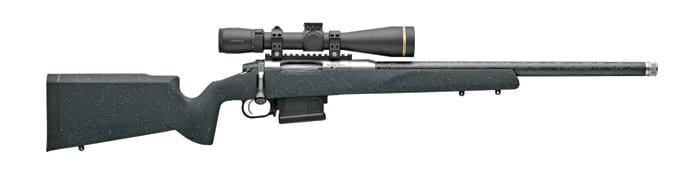
    Leading manufacturing sales team will represent and increase market share nationally for PROOF Research’s innovative carbon fiber and stainless steel barrels and rifle platforms.

    PRR_GraniteSwitch_FullLength_Right

    Columbia Falls, MT (October 2017) PROOF Research, the industry leader in the production of aerospace-grade carbon fiber rifle barrels, cut-rifled stainless steel rifle barrels, and lightweight hunting and military rifle systems, has chosen H&G Marketing to represent them throughout the United States.

    “We are very pleased to announce this newly-formed partnership with H&G Marketing,” said Kelly Streiff, Director of Sales at PROOF Research. “Just as we at PROOF ensure our products uphold the highest standards of quality and reliability, so does the representation that H&G Marketing provides. Our companies have the same stringent core values and goals for our customers and end users. We feel we have chosen one of the leading sales organizations in the country to represent PROOF on a national basis.”

    IMG_0188

    H&G Marketing, headquartered in Big Lake, MN, is a national sales and marketing organization with over thirty-five years of experience. With over thirty-five regional representatives and managers with countless years of combined experience, H&G Marketing provides sporting goods manufacturers throughout the United States with expertise on the industry and proven marketing techniques, including in-store promotions, product training and trade show exposure.

    “Our staff of trained sales and marketing professionals located throughout the country will help PROOF Research grow their brand at both the dealer and distributor levels, said Scott Dobry, Vice President of Sales at H&G Marketing. “We appreciate the opportunity to represent PROOF and look forward to a long and enhanced relationship with them.”

    PROOF Research is a science-driven manufacturer of lightweight precision rifle systems and record-breaking steel barrels and carbon fiber-wrapped barrels. The company’s Advanced Composites Division develops next-generation materials to produce innovative weapon systems that lighten warfighter load while increasing durability and effectiveness.

    For more information about H&G Marketing, contact Scott Dobry at sdobry@hgreps.com or visit their website: www.hgreps.com.

    U.S. Tactical Supply Adds Lancer Magazines To Their Main Product Line & GSA Schedule

    Monday, October 16th, 2017

    U.S. Tactical Supply is Proud to announce the addition of Lancer Systems Magazines and Weapon Components to our Main Product line & GSA Schedule GS-07F-0259N.

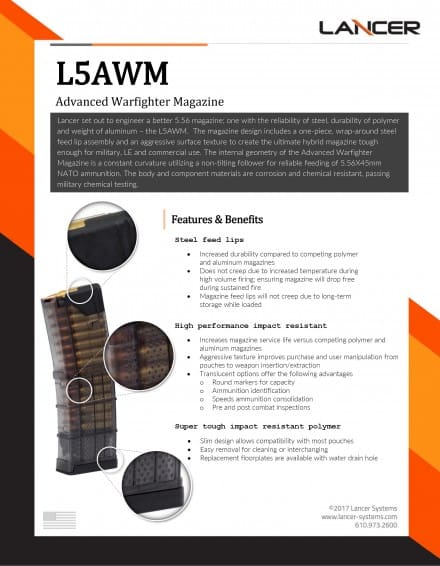
    Lancer Advanced Warfighter Magazines are availible for immediate purchase on GSA Advanatge & Your Agency / Unit / Team can also request a GSA Quote @ ustacticalsupply.com/gsaquoterequestform E-mail @ sales@ustacticalsupply.com or conatct us the Old Fashioned way 541-928-8645.

    View Lancer Magazines @ ustacticalsupply.com/lancermags
    0001

    Click to view .pdf

    Lancer Systems is an Advanced Weapons & Components manufacturer that provides definitive solutions to war fighters, law enforcent officers and other serious practitioners of the art.

    Lancer engineers and manufactures lightweight weapons and components, including rifles, hybrid magazines, carbon-fiber handguards, and accessories that meet the needs of today’s most discerning users.

    Applying their expertise in advanced polymers and lightweight component design, Lancer has created the L5 and L7 Advanced Warfighter Magazines (AWM).

    They’ve combined hardened steel feed lips with a high strength polymer body to yield a hybrid design that maximizes strength, reliability and minimizes weight.  This hybrid design is strong enough to allow the use of unfilled polymers, enabling Lancer to produce a robust, reliable and effective translucent magazine unlike any on the market.

    Kit Badger – How To Hack A Standard M4 Pistol Grip

    Saturday, October 14th, 2017

    In this video, Ivan of Kit Badger shows how with a bit of time, and hand tools, one can modify the stock M4 pistol grip into something a bit more ergonomic and comfortable.

    kitbadger.com/hacking-your-standard-m-4-pistol-grip