Celebrate 20 years of the TLR-1

Archive for the ‘Army’ Category

EOD Soldiers Clear More than 1,000 Items from US Air Force Training Range

Thursday, December 9th, 2021

FORT LEONARD WOOD, Mo. — U.S. Army Explosive Ordnance Disposal Soldiers cleared the way for U.S. Air Force ground attack training by removing more than 1,000 ordnance items from Cannon Range at Fort Leonard Wood, Missouri.

To support A-10 Thunderbolt attack aircraft bombing and strafing training, EOD Soldiers from the Fort Leonard Wood, Missouri-based 763rd Ordnance Company (EOD) managed an ordnance clearance project across more than 100 acres on the Air Force range.

It was the first range clearance operation the 763rd EOD Company has conducted since 2009.

Managed by the Missouri Air National Guard’s 131st Bomb Wing on Whiteman Air Force Base, Missouri, Cannon Range is the only aerial gunnery range in the state of Missouri and the range is used by all branches of the U.S. Armed Forces.

Sgt. 1st Class John S. Neely, a platoon sergeant with the 763rd EOD Company, planned and managed the mission with nine personnel, including seven U.S. Army EOD technicians.

The other 763rd EOD Company members involved in the Air Force range clearance mission were 1st Lt. Frank A. Russell from Orange Grove, Texas; 1st Lt. Raylen L. Dupuis from Polson, Montana; 1st Sgt. Kevin J. Pisani from Lyman, Maine; Sgt. Adam D. Carter from Stafford Springs, Connecticut; Sgt. Robert B. Singleton from Blue Springs, Missouri; Spc. Scott A. Sartin from Kettering, Ohio; and Spc. Logan J. Sterner from Springfield, Illinois.

The EOD Soldiers recovered and cleared more than 1,000 practice 50-pound bombs, said Neely, and they ensured an additional 33 practice 500-pound bombs and 11 practice 40mm projectiles were free of explosive hazards.

“The mission was done to enable target replacement of vehicles and buildings on Cannon Range for A-10 close air support training,” said Neely, a 15-year U.S. Army veteran from Whiteland, Indiana, who has deployed to Afghanistan and Africa.

The 763rd EOD Company is assigned to the 242nd EOD Battalion, 71st EOD Group and 20th Chemical, Biological, Radiological, Nuclear, Explosives (CBRNE) Command.

Part of the U.S. Department of Defense’s premier all hazards formation, Soldiers and civilians from 20th CBRNE Command deploy from 19 bases in 16 states to confront and defeat the world’s most dangerous hazards and threats in support of joint, interagency and allied partners.

Headquartered on Aberdeen Proving Ground, Maryland, the 20th CBRNE Command is home to 75 percent of the Active Army’s EOD technicians and Chemical, Biological, Radiological, Nuclear specialists, as well as the 1st Area Medical Laboratory, CBRNE Analytical and Remediation Activity, five Weapons of Mass Destruction Coordination Teams and three Nuclear Disablement Teams.

In addition to deploying for overseas missions, EOD technicians from the 763rd EOD Company also support explosive mitigation missions for any military munitions found in Missouri, Iowa and Minnesota.

Capt. Tarik B. Jensen, the commander of the 763rd EOD Company, said his EOD Soldiers highlighted their technical and tactical proficiency and expertise during the mission.

“The range clearance conducted by the Soldiers of the 763rd EOD Company enabled the lethality of the U.S. Air Force’s premier ground attack aircraft by keeping the range operational for the nearly daily training missions flown on the range,” said Jensen, a native of Liberty Lake, Washington. “Conducting the clearance imparted ordnance knowledge onto our EOD technicians who researched the various ordnance located on the range, showcasing the technical expertise of EOD technicians.”

By Walter Ham

Bridging Technology at 2021 Army Expeditionary Warfare Experiment

Wednesday, December 8th, 2021

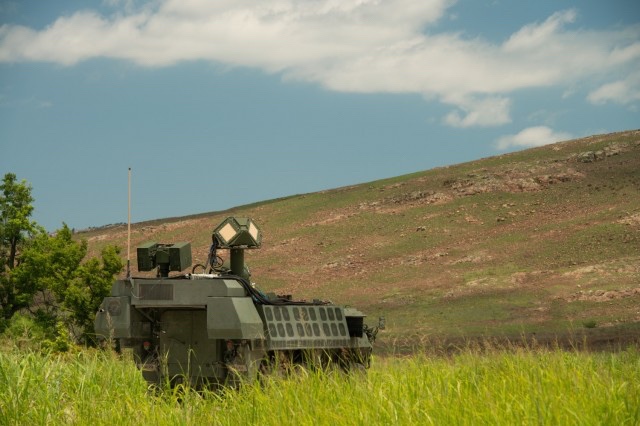
Soldiers from A Company, 1-29 Infantry (the EXFOR) tested GS Engineering’s Bridge Launch Technology. The system is designed to provide a gap crossing capability for light units equipped with vehicles like the Infantry Squad Vehicle.

Northern Warfare Training Center Preparing Soldiers to Become Arctic Experts

Tuesday, December 7th, 2021

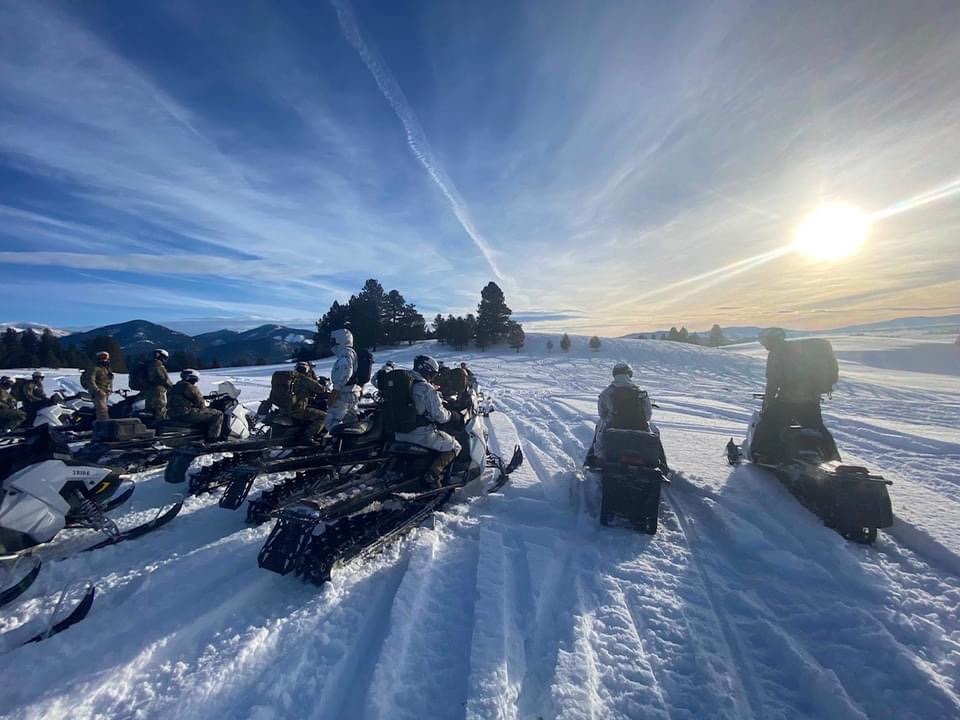
BLACK RAPIDS TRAINING AREA, Alaska — This past March the Army released its Arctic Strategy which plans to regain Arctic dominance by implementing improvements to increase readiness in the Arctic. One of the keys to that readiness is the Northern Warfare Training Center.

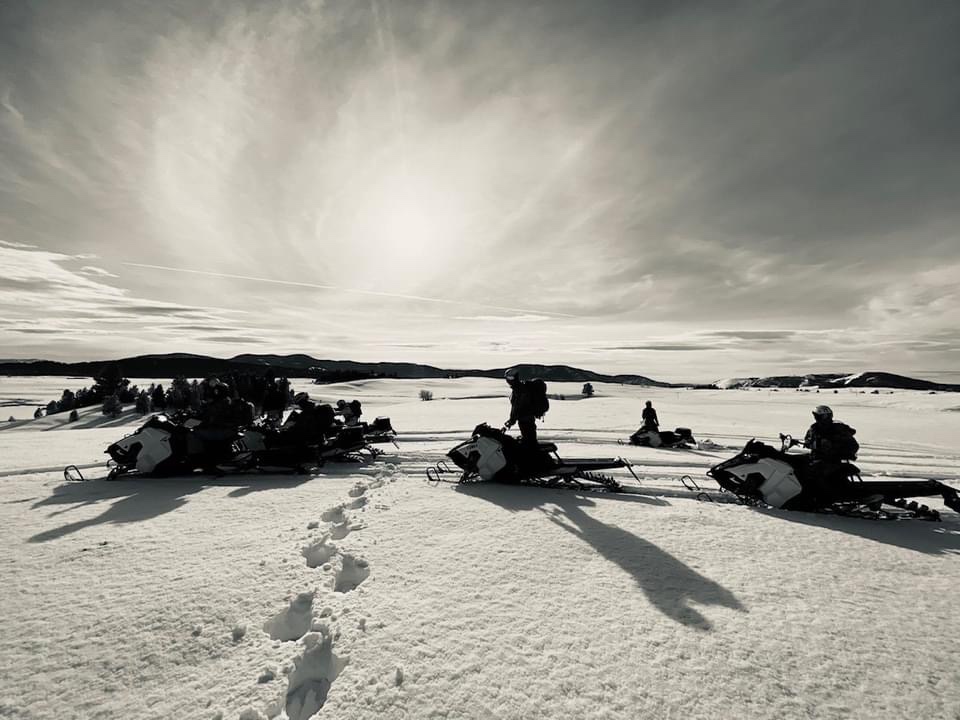
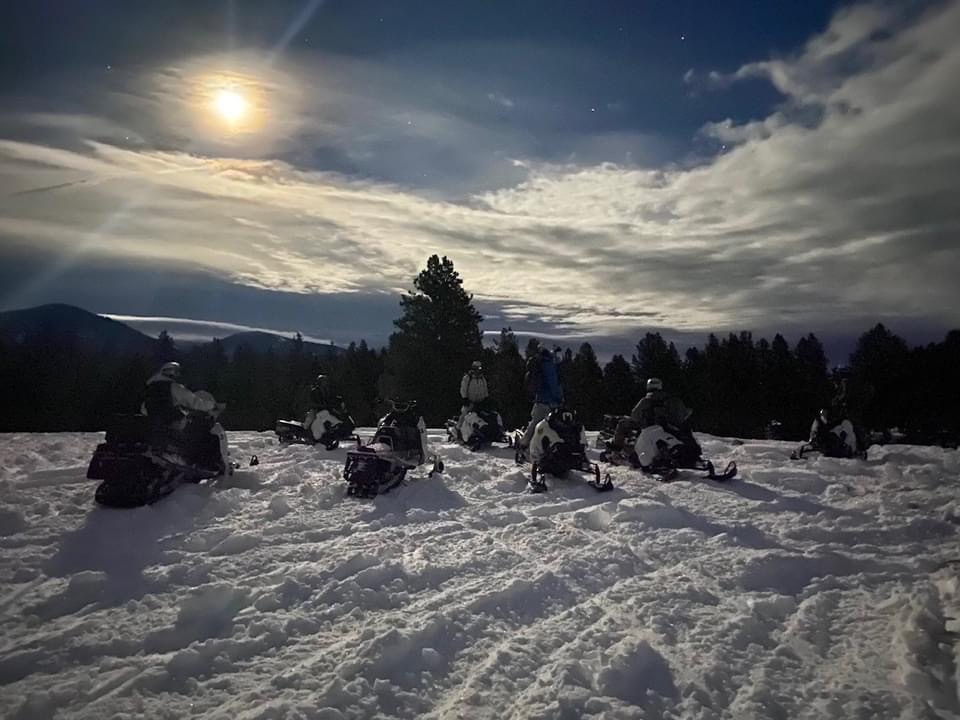
NWTC is where Soldiers go to learn what it takes to not only survive in up to 40 degrees below zero temperatures, operate in four to five feet of snow and endure winds up to 50 to 60 mph, but also how to succeed and thrive to become experts in the Arctic environment.

“An Arctic Expert would be someone, whoever that might be, infantry, armor or artillery in extreme cold weather and make their equipment function as expected and not letting the environment stopping them from finishing the mission,” said Steven Decker, longtime civilian instructor for the Northern Warfare Training Center, also known as “Father Winter” to others at NWTC.

Those trained at the school go back to their units and pass along the lessons learned to enable their Soldiers to survive in the cold environments of Alaska.

“We want noncommissioned officers that have just been stationed up here, we have them go through our train-the-trainer course. We also want squad lead leaders and fire team leaders because they’re the ones who actually train Soldiers,” one instructor said.

The Cold Weather Leaders Course is an 11-day course, with a field exercise that spans six days out in the cold, which pushes Soldiers to extremes they may have never gone through.

“Sometimes they think they’ll do better in the cold than they do. A lot of them learn hard lessons about themselves. Other people learn positive things, like they’re more resilient and tougher than they believed,” said Decker.

The school also makes it possible for Soldiers to become more resilient to the winter months and can improve the quality of life for them.

“Sometimes new people come here, and they’re intimidated or have preconceived notions about the cold, that Alaska doesn’t have the amenities that they are used to in the Lower 48, so this training can open their eyes to something that they may not have experienced before. To where they can take these skills and hike trails, go snow machining, skiing or ice fishing and be less intimidated, more inclined to get out and enjoy Alaska,” Decker said.

The Training Center also assist Army Futures Command in testing and equipping new Arctic Equipment for Soldiers to improve their ability to operate in the Arctic.

“[Army Futures Command] does count our opinion heavily because we are out there constantly, like the clothing we’re testing, there are technological and functional improvements to it, we also have influence on other things like the vehicle that will replace the Small Unit Support Vehicle,” according to Decker.

Teaching how to thrive in the Arctic, improving quality of life by exposing people to what they can do and preparing for the future are how the Northern Warfare Training Center is helping the Army increase our “deterrence capabilities” and regain the Army’s Arctic dominance.

By SGT Christopher Dennis, USARAK Public Affairs NCO

New Range Simulates Combat Stress, Tests Precision, Speed

Friday, December 3rd, 2021

FORT CAMPBELL, Ky. — During Operation Lethal Eagle I, the 101st Airborne Division (Air Assault) assessed and validated a new stress shoot range by conducting the first iteration Nov. 18.

“I think this range is going to help dramatically,” said Sgt. David Lee, a team leader from Charlie Company, 1st Battalion, 187th Infantry, 3rd Brigade Combat Team. “There are strength and cardio elements with the stress of shooting and for me coming from the Army where we do static ranges all day to a move, shoot, move and communicate environment I think will really help the division out.”

There are eight engagements on the range to put 101st Soldiers to the test.

The tower engagement where each Soldier engages targets from three different heights ranging from 175 meters prone, 75 meters kneeling and 75 meters standing. At the base of the tower the Soldier picks up a battering ram and runs to the next station.

The breach engagement is where the Soldier breaches the door with the battering ram and engages three 50-meter targets with two rounds from a window in the building.

Next, the Soldier must drag a litter to a Humvee, taking cover behind the vehicle while engaging three 50-meter targets. After the targets have been engaged, the Soldier must pick up and carry two sandbags to the next location.

At the next location, the Soldier climbs the ladder to the rooftop and uses a barrier as cover to engage three more 50-meter targets. The Soldier then climbs down the ladder and secure two ammo cans to carry to the next position.

The Soldier must then drop the ammo can to maneuver over the top of the climbing wall to secure two water cans the he or she must carry to the bunkers from where he or she will engage the next three 50-meter targets.

For the eighth and final engagement, the Soldier moves to a location where he or she loads a magazine and engages with two rounds while walking toward the target.

“If you’re not in shape for one, get into shape and be the leader Soldiers want to follow,” Lee said. “Based on my interest in shooting I have participated in multiple three-gun competitions, so this is something that is familiar to me, but it helps set the example for the Soldiers as well.”

The stress shoot range is designed to make Soldiers and units in the 101st Abn. Div. more lethal and prepared for future combat.

“This is what we are going to expect our Soldiers to do in combat, varied terrain, heart rate up, stressed out,” said Maj. Gen. JP McGee, commanding general of the 101st Abn. Div. and Fort Campbell. “If you want to talk about increasing lethality and making it super easy for our Soldiers to get out there and work on it, this is it right here.”

This range is open to all units on Fort Campbell and its focus is to prepare the Soldiers in all units to react to enemy contact with precision and speed despite the stresses of combat.

– SFC Jacob Connor

New Army Range Pubs

Thursday, December 2nd, 2021

Here are some new Army publications regarding range ops available from Army Publications Directorate:

TC 25-8, 11/2/2021, Training Ranges

ATP 5-19, 11/9/2021, Risk Management

ATP 4-35.1, 11/8/2021, Ammunition and Explosives Handler Safety Techniques

Engineer Became Highest Ranking Native American in Union Army

Sunday, November 28th, 2021

It’s a time to reflect on the contributions and sacrifices Native Americans have made to the United States, not just in the military, but in all walks of life.

Ely S. Parker overcame adversity to attain the highest rank of any Native American in the Union Army during the Civil War.

Parker, whose tribal name was Hasanoanda, was born on the Tonawanda Reservation in Indian Falls, New York, in 1828. He was a member of the Tonawanda Seneca tribe.

His father, William Parker, was a chief in that tribe and had fought in the War of 1812 for the United States.

In addition to English, Eli Parker spoke Seneca, which is an Iroquoian language. The Seneca Tribe is one of six in the Iroquois Confederacy. The others are Cayuga, Onondaga, Oneida, Tuscarora and Mohawk.

As a young man, Parker worked in a law firm in Ellicottville, New York, before applying to take the bar examination. However, he was not permitted to take it because, as a Native American, he was not then considered a U.S. citizen.

American Indians were not considered U.S. citizens until passage of the Indian Citizenship Act of 1924.

As fate would have it, Parker had a chance encounter with Lewis Henry Morgan, a non-Native American lawyer, who was also a famous anthropologist interested in Iroquois ethnography.

The two became close friends and had a number of meetings in which Parker shared his knowledge of Iroquois culture and traditions.

Their relationship was mutually beneficial because Morgan helped Parker gain admission to study engineering at Rensselaer Polytechnic Institute in Troy, New York.

As an engineer, Parker contributed to maintenance work on the Erie Canal and other projects.

Later, as a supervisor of government projects in Galena, Illinois, he befriended Ulysses S. Grant, forming a relationship that would prove useful later.

In 1861, near the start of the Civil War, Parker tried to raise a regiment of Iroquois volunteers to fight for the Union, but he was turned down by New York Gov. Edwin D. Morgan.

He tried to enlist in the Union Army as an engineer, but he was told by Secretary of War Simon Cameron that, as an Indian, he could not join.

Later, Parker contacted Grant, who was by that time a brigadier general in the Union Army. The Union Army suffered from a shortage of engineers, and Grant ensured that Parker was accepted into the Army.

Parker was commissioned in the Army in early 1863. He became chief engineer of the 7th Division during the siege of Vicksburg, Mississippi, which occurred from May 18 to July 4, 1863. Grant, who had become a major general, was in overall command, and the Union Army prevailed at that siege.

Grant was pleased with the work done by Parker during that siege and made him his adjutant during the Chattanooga Campaign in Tennessee, Sept. 21 to Nov. 25, 1863.

Parker subsequently transferred with Grant and served with him through the Overland Campaign and the Siege of Petersburg, Virginia, from May 4 to June 24, 1864. At Petersburg, Parker was appointed as the military secretary to Grant, with the rank of lieutenant colonel. He subsequently wrote much of Grant’s correspondence.

Parker was present when Confederate Gen. Robert E. Lee surrendered at Appomattox Court House, Virginia, April 9, 1865. He helped draft the surrender documents.

At the time of surrender, Parker said that Lee “stared at me for a moment. He extended his hand and said, ‘I am glad to see one real American here.’ I shook his hand and said, ‘We are all Americans.'”

Parker was brevetted a brigadier general on that day. Brevet is a former type of military commission conferred especially for outstanding service, by which an officer was promoted to a higher rank without the corresponding pay.

After the Civil War, Parker remained the military secretary to Grant. He also was a member of the Southern Treaty Commission, which renegotiated treaties with Indian tribes, mostly in the southeast, that had sided with the Confederacy.

Parker resigned from the Army on April 26, 1869.

After Grant was elected president of the United States, he appointed Parker to serve as commissioner of Indian affairs, the first Native American to hold that post. He held the position from 1869 to 1871.

Parker became the chief architect of Grant’s peace policy involving Native Americans in the West. Under his leadership, the number of military actions against Indians were reduced, and there was an effort to support tribes in their transition to living on reservations.

Parker died in poverty in Fairfield, Connecticut, on Aug. 31, 1895.

He was portrayed in the 2012 film “Lincoln.” He’s also featured in the novels “Grant Comes East” and “Never Call Retreat.”

By David Vergun, DoD News

NY Guard Uses NYC to Understand Urban Operations

Monday, November 22nd, 2021

NEW YORK — New York Army National Guard officers and senior sergeants used New York City to explore the challenges of military operations in big cities during a five-day class that ended Nov. 6.

The 18 officers and senior noncommissioned officers walked through the city’s neighborhoods, flew over them and toured the waterfront to gain an appreciation of the complexity of urban warfare. They also learned from New York City officials who deal with those urban challenges every day.

“This class was critical in terms of bridging a knowledge gap between military operations and working with our civilian counterparts,” said Lt. Col. Jason Secrest, commander of the 2nd Squadron, 101st Cavalry Regiment.

“The course was helpful for whether we’re involved in large-scale combat operations or if tasked with stability operations, like humanitarian assistance disaster relief at home,” Secrest said.

The New York National Guard is hoping to create a two-week Dense Urban Leaders Operation Course — DULOC for short — that would draw officers and NCOs from across the Army to New York City to get a first-hand look at the challenges of combat operations surrounded by high-rise buildings, tight city streets and hundreds of thousands of civilians.

“Here, in New York City, we were able to learn from our civilian counterparts about how these megacities and trends of urbanization affect operations, planning and troop movement,” said Lt. Col. Matthias Greene, commander of the 3rd Battalion, 142nd Assault Helicopter Battalion.

Some things Greene said he had to consider during the course were the complexities of the airspace, dense buildings, and population bases, all of which affect aviation operations.

Lt. Col. Brian Higgins, the class leader and a New York City Police Department detective, spent two and a half years on active duty as the officer-in-charge of the Dense Urban Terrain Detachment of the Army’s Asymmetric Warfare Group at Fort Meade, Maryland.

His job there, Higgins said, was to take the expertise he’d honed as a cop in one of the world’s densest cities — New York City’s population is 8.2 million and the metro area population is 20.3 million — and help the Army figure out how to fight in those places.

“The problem has to do with globalization trends,” Higgins explained. “The world is becoming more populated. The majority of people are living in cities for a variety of reasons.”

These cities include very tall buildings and subterranean geography of subways and service tunnels and are incredibly interconnected, Higgins said.

The Army’s traditional approach to cities in the past was to bypass them, isolate them, and avoid getting bogged down in a punishing fight, Higgins said. That may have worked when cities were smaller and more compact, he said. But with the rise of the megacity — those with populations of more than 10 million — it doesn’t work anymore. The city is too big to go around.

There’s nothing new about Soldiers using New York for exercises, Higgins said. Military teams continually visit to learn about cities.

Task Force 46, a National Guard team designed to react to chemical, nuclear, and biological attacks, trained there in August. The New York National Guard trains with the police and fire department regularly, focusing on civil support operations.

Lt. Col. Dan Colomb, commander of the 24th Weapons of Mass Destruction Civil Support Team (CST) based out of Fort Hamilton in Brooklyn, volunteered to participate in the course with his deputy commander and operations officer to offer their expertise in urban operations but to also take new concepts back to their team.

“Every day we work in New York City and the metro area,” said Colomb. “We’re those sensors that are out in the environment and these streets every day, so I’d like to take some of these methodologies, apply them and see if they work better,” he said.

The course focused on getting Soldiers in command and key staff positions, who all have different specialties, to understand how a big city works and how that can affect military operations.

The Soldiers walked through downtown Manhattan, where the streets are narrow and irregular, explored Harlem, where the streets are in a grid, and visited the world-famous subway system.

Secrest said it was the first time in his 22 years in the National Guard that he’d been part of a military course tailored to urban operations.

“We talk about liaison operations with other state and city agencies, but this is the first time we’ve sat down and say, ‘OK, how do we operate in an urban environment?’ ” Secrest said.

Instructors included experts from the Modern War Institute at the U.S. Military Academy and the National Center of Urban Operations, a think-tank that focuses on military operations in megacities. New York City fire officials, transit staff and emergency managers also took part.

Greene noted the collaboration of the course with civilian counterparts as well as having the opportunity to walk the terrain were critical.

“There’s practical knowledge by going onto the grounds, having subject matter experts, and collaborating with classmates who offer perspectives in their areas of expertise as well,” Greene said. “Learning from the perspective of our civilian counterparts is important because we’re able to gauge what they have to offer, what their limitations are, and how we can integrate ourselves into the solution.”

Every morning the class heard from the subject matter experts on military doctrine, military estimates and the “Five Is” of city fighting — infrastructure, interoperability, information operations, interagency, intensity. In the afternoons, they went out and looked around as part of terrain walks.

Higgins and New York National Guard leaders would like to create a two-week course exploring urban operations in more detail. But the week-long class was an excellent start, Higgins said.

Story by By Eric Durr and SPC Marla Ogden, New York National Guard

SMA to Young Army Leaders: There’s an app for That

Friday, November 19th, 2021

AUSTIN, Texas — Sgt. Maj. of the Army Michael A. Grinston visited Army Futures Command’s Army Software Factory (ASWF) in Austin, Texas, on Oct. 28 to meet with Army civilian and Soldier coders who are developing the Army software of the future.

ASWF is a first-of-its-kind, integrated software development initiative to teach, develop and employ self-sustaining talent from all ranks within the military and civilian workforce.

Grinston’s visit was part of the Army’s “This is My Squad (TIMS)” initiative, designed to build unit cohesion, create foundational leadership skills to build up today’s Army and prepare young leaders for the Army of the future.

“It’s about engaged leaders who know their Soldiers and build cohesive teams that are highly trained, disciplined and mentally and physically fit,” Grinston said.

One important tool in the TIMS campaign will be the MySquad mobile app, in its early stages of development by coders at ASWF. When complete, the app is planned to be an easily accessible, mobile way to enable squad leaders to communicate with and direct their Soldiers in real time, no matter where they are.

“It’s this question: ‘How do we manage our time better?’” Grinston said. “We’ve heard this for years: you get last-minute taskings, I didn’t know to go to this meeting, whatever it is.”

“That’s what squad leaders said – I want an app that helps me manage time and taskings. That’s the whole point of the MySquad app.”

The MySquad app, like other software developed at ASWF, is software “for Soldiers, by Soldiers.” ASWF brings the end-users of their software — squad leaders, in this case — into the development process in regular and meaningful ways. These Soldier touchpoints help to pinpoint end-user issues that may otherwise be overlooked by developers.

Integrating Soldier touchpoints in software design speeds up the development process, drives requirements and ensures the Army and ASWF are meeting Soldiers’ tactical and operational needs.

Currently, Soldiers from the 3rd Cavalry Regiment at Fort Hood, Texas, are testing an early version of the app and providing feedback directly to the development team.

“What I like about tying it from Fort Hood to here is the Soldiers are using it, the Soldiers are developing it, and as we want the technology to change, we change it,” Grinston said.

ASWF coders link information from Soldier touchpoints into the next iteration of prototyping to verify the value of the new additions, then build that functionality into the next version of the app. New versions of the app are returned to the testers, who provide further information to facilitate ongoing improvements. This creates a Soldier feedback loop that informs software development and helps Soldiers become stronger, better organized leaders.

“I like the fact that we were in direct communication with the team developing the application, and they considered all of our complaints,” said Staff Sgt. Kerry Cartwright, a cavalry scout with the 3rd Cavalry Regiment. “The developers listened to us and actually added those useful links as features.”

Grinston said that feedback is implemented immediately to see how it affects the overall functionality of the app. One example from the visit was incorporating the Golden Triangle — a tool leaders use to ensure that a Soldier’s friends and family can contact them in the event there is an issue with the Soldier.

“The Chief [of Staff of the Army] says ‘Here’s the Golden Triangle, we’ve got to connect these dots.’ In the app they’re all listed out with a button and you just hit the button to call them,” Grinston explained.

Though still in an early development phase, when complete, the MySquad app is planned to assist small-unit leaders in task tracking, counseling, event and appointment scheduling and training management.

Grinston said that taking these tasks from paper to the digital age will help leaders take care of Soldiers by providing better predictability in their schedules while improving overall readiness.

“It’s not ‘People First’ versus ‘Readiness’ — ‘People First’ is ‘Readiness,’ and this is a perfect example of that.”

Don’t look for MySquad at your app store quite yet, though.

According to Lt. Col. Vito Errico, ASWF co-director, “agile coding is an iterative process that allows us to continuously refine our software development by incorporating Soldiers’ input. We will continue refining and testing this app until it meets our high standards and our squad leader testers tell us it is fully ready for launch.”

Story by MSG Ben K. Navratil, Army Futures Command

Photos by Patrick Hunter