Colt

Archive for the ‘Army’ Category

4ID Stryker Brigade Combat Team Tests Army’s Newest Mounted GPS Devices

Wednesday, October 20th, 2021

WHITE SANDS MISSILE RANGE, New Mexico – 4th Infantry Division Soldiers tested the Army’s next-generation Assured Positioning Navigation and Timing (APNT) solution here, which allows Soldiers to maintain integrity of position and timing in GPS-contested environments.

The Mounted Assured Position Navigation and Timing (MAPS) will integrate across the Army’s wheeled and tracked platforms, bringing heightened protection levels against evolving GPS threats to support multi-domain operations.

During the first week of testing, 1st Stryker Brigade Combat Team (1SBCT) Soldiers received New Equipment Training (NET) to familiarize them with the MAPS system capabilities and user interface.

Throughout the rest of the test, they provided feedback on the system during operationally realistic missions, including Call for Fire (CFF), Reconnaissance, Quick Reaction Force (QRF) and Medical Evacuation (MEDVAC) in a GPS degraded environment.

“I’ve never seen what happens to GPS Systems when they encounter an Electronic Warfare (EW) attack,” said Capt. Christopher Mazeau, Assistant Operations Officer for 1SBCT.

He said he is glad to see the Army is working to develop an answer to such threats.

MAPS is designed to support command and control by replacing the need for multiple GPS devices on a single platform, and it also helps to mitigate EW attacks with an onboard anti-EW antenna.

The system aligns with the Army Futures Command (AFC)-directed requirement to prepare for tomorrow by providing overmatch in multi-domain operational environments.

By MAJ Matthew Truax, Test Officer, Intelligence Electronic Warfare Test Directorate, U.S. Army Operational Test Command

Galvion Wins $5.8 million Contract to Supply US Army with EOD Tools and Equipment Kit (ETEK)

Thursday, October 7th, 2021

Galvion, a world leader in the design and manufacture of military power and data management solutions is pleased to announce that its Squad Power Manager™ (SPM) kit will be included in the U.S. Army EOD Tools and Equipment Kit (ETEK).  A $5.8 million contract from Program Manager Close Combat Systems (PM CCS) was awarded to supply an EOD-tailored SPM™ system to all active EOD units starting in December 2021.  The Squad Power Manager is a core element of Galvion’s Nerv Centr® Active Systems range, which provides scalable power and data solutions to the dismounted soldier.  Galvion will be exhibiting the SPM, along with their full range of active systems and their next generation head systems, in booth 3817 at the AUSA exhibition, taking place in Washington DC, 11-13 October 2021.

EOD teams use specialized equipment that requires sustainable and lightweight power when off-grid.  The US DoD were seeking to upgrade their entire EOD dismounted kit and needed a single, customizable solution that could recharge the batteries for EOD tools and scavenge power from multiple sources such as solar, vehicle power or AC mains.  The SPM ETEK Kit includes multiple cables and accessories that offer operational flexibility, allowing EOD units to harvest, scavenge and provide power to mission-critical equipment. The SPM requires no special configuration or programming, converting and managing power as efficiently as possible depending on power sources and equipment needs.  This allows teams to minimize weight and logistical burden by carrying fewer batteries, while increasing operational efficiency through active monitoring and management of power usage.

Kristen Lomastro, President of Active Systems, said: “We are a company that is dedicated to delivering mission success by fully understanding not just the military requirement, but the environment, the conditions and the additional circumstances that the dismounted soldier may encounter.  We pride ourselves on providing the very best technical and engineering solutions possible and by reducing the physical, cognitive and logistical burden for the warfighter, we increase their agility, lethality and survivability.  Galvion is extremely pleased to announce this new contract for ETEK with US Army EOD units, and to continue in our mission to protect and support those who protect us.”

Galvion’s modular and scalable power management systems are battle-ready, flexible and easily integrated with commonly fielded equipment.  The Squad Power Manager is a field-proven system, with customized kits in use across all U.S. DoD branches, including units of the U.S. Army, Navy, Marines, Air Force, and SOCOM.  In addition, Galvion’s power management systems are being used by allied forces in Canada, the UK, Australia, France, Denmark and Sweden, among others.

www.galvion.com

Value of History in the Army

Thursday, October 7th, 2021

WASHINGTON, D.C.— The study and use of history is a critical tool in the Army profession. It helps to inform current decision making, inspires Soldiers to serve, and builds morale and esprit in units.

“History helps us learn from the past, see the present and be ready for the future” said General Paul E. Funk II, Commanding General of the U.S. Army Training and Doctrine Command (TRADOC). “You have to understand your historical roots to become an effective leader.”

At this year’s Association of the United States Army (AUSA) Annual Meeting from October 11-13 at the Washington Convention Center, the U.S. Army Center of Military History (CMH) will host a Kiosk promoting the value of history in the Army.  Preparing Soldiers at all levels to be historically minded is a significant role for CMH, an organization within TRADOC.

The Executive Director of CMH, Charles R. Bowery, Jr. points out, “All ranks in the Army, from the most junior trainee to the Chief of Staff, benefit from historical awareness in different ways. Every Soldier should understand that they are serving something bigger than themselves.”

A true understanding of history goes well beyond simply knowing key dates and events. The lessons of history develop critical thinking skills in Soldiers as they understand the reason why and how events unfolded in the past and their connection to today. It develops a more informed use of actionable history in current staff planning and decision making.

According to Dr. Peter G. Knight, Chief of Field and International History Programs at CMH, “We frequently respond to requests for information about historical events to help develop viable courses of action for Army leaders.” Knight recommends all Soldiers can use existing programs within the Army to improve their historical perspective. “There are professional military education courses and leader developmental programs like staff rides that can hone critical thinking skills.”

Staff rides are a unique and persuasive method of teaching the lessons of the past to the present day leaders. They can bring events to life and provide a greater understanding of tactics, leadership, strategy, communications and the psychology of Soldiers in battle. The staff at CMH develop and lead staff rides for U.S. Army organizations and provide detailed staff ride pamphlets online for free downloads.

Beyond decision making, history is also a key part of many aspects of a Soldiers career from understanding the rich heritage of his or her unit to accessing VA benefits as they transition to civilian life. Knight says, “A unit history program not only helps build esprit de corps, but it helps ensure unit awards and unit campaign participation credit are up to date.”

History also builds morale and helps to inspire men and women to serve by providing examples of those who exemplify Army values. “It connects Soldiers to their unit through activations, lineage and honors, unit decorations, and unit heritage” Knight said.

Leader support for the Army History Program will improve the understanding of history and its essential application in all units. Key elements of the program include assigning unit history officers, including Command Historians as part of staff functions and the use of Military History Detachments. Knight says “If you ever asked your staff if a certain situation has happened before or how did we handle a situation in the past, then you need a unit historical program.”

Other ways to expand historical mindedness is accessing the publications and research resources on the CMH website. Bowery also points out that “The Chief of Staff’s professional reading list is the best place to start. CMH and Army University Press also have thousands of free publications that Soldiers can access.”

The value and benefits of using history in the Army are significant factors to the success of units and individual Soldiers careers. The Center of Military History is a valuable resource with multiple tools that are available to all Army units and personnel.

“The Center of Military History can do all sorts of things for a leader development program, they can provide staff rides, they can provide lessons learned, and they can be the historical reference you need.” GEN Funk said.

By Francis Reynolds

Additional Resources:

history.army.mil

U.S. Army Awards AeroVironment $11.7 Million Third and Final Contract Option for Raven Radio Frequency Modifications Under Existing FCS Contract

Wednesday, October 6th, 2021

• Final contract option exercised under the sole source Flight Control Systems (FCS) domain of the Army’s multi-year small unmanned aircraft systems contract

• Total final value of contract is $54,632,776

• U.S. Army possesses largest fleet of Raven tactical unmanned aircraft systems in the world


The Raven system is designed for low-altitude intelligence, surveillance, and reconnaissance missions that depend on rapid deployment and pinpoint maneuverability. (Photo: AeroVironment, Inc.)

ARLINGTON, Va., Oct. 6, 2021 – AeroVironment, Inc. (NASDAQ: AVAV), a global leader in intelligent, multi-domain robotic systems, today announced the United States Army exercised the third and final option under the Flight Control Systems (FCS) domain of the Army’s multi-year small unmanned aircraft systems (UAS) contract on Sept. 9, 2021. The value of the contract option is $11,731,740 and includes flight control system kits, ground control stations and tail booms for the Army’s existing fleet of Raven® tactical UAS. Delivery is scheduled to be completed by September 2022.

The contract option was exercised under the Army’s FCS domain awarded to AeroVironment in June 2019 and announced in November 2019 – the first of six domains comprising the Army’s existing five-year Indefinite Delivery, Indefinite Quantity (IDIQ) SUAS contract – bringing the total final value of contract to $54,632,776.

“The Raven system was created to provide frontline forces with real-time, accurate over-the-horizon situational awareness in conflict areas; a capability that was unavailable at the time of its inception,” said Trace Stevenson, vice president and product line general manager of small UAS. “Today, Raven is the most widely deployed unmanned aircraft system in the world and continues to serve as a modern tool for customers to gain superiority on the battlefield.”

The Raven system is designed for rapid deployment and high mobility for operations requiring low-altitude intelligence, surveillance and reconnaissance (ISR). With a wingspan of 4.5 feet and weighing just 4.2 pounds (1.9 kilograms), the hand-launched Raven provides situational awareness, day or night, with an operational range of 6.2 miles (10 kilometers). The Raven’s Mantis i23 EO/IR gimbaled payload delivers real-time video or infrared imagery to ground control and remote viewing stations.

AeroVironment’s family of tactical UAS comprises the majority of all unmanned aircraft in the U.S. Department of Defense (DoD) inventory, and its rapidly growing international customer base numbers more than 50 allied governments. To learn more, visit www.avinc.com.

Army Assesses IVAS Network Capability at NetModX

Friday, October 1st, 2021

?

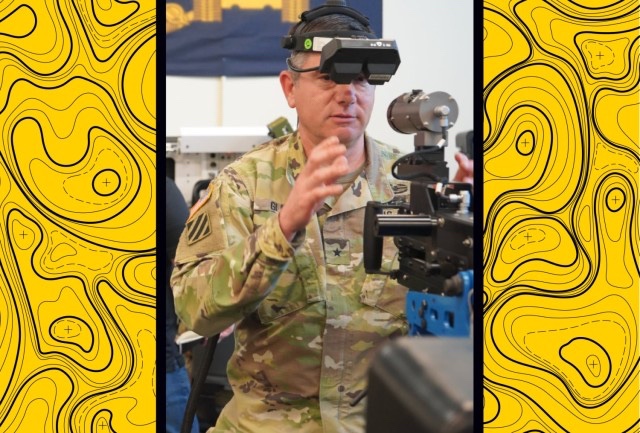
JOINT BASE McGUIRE-DIX-LAKEHURST, N.J. — The Army is continuing to inform  Integrated Visual Augmentation System (IVAS) network integration by evaluating  emerging commercial radio technology that enables data exchange among Soldiers.

A series of experiments this summer at the Army’s annual Network Modernization Experimentation (NetModX) allowed engineers of the Command, Control, Communications, Computers, Cyber, Intelligence, Surveillance and Reconnaissance (C5ISR) Center — a component of Army Futures Command (AFC)’s Combat Capabilities Development Command (DEVCOM) — to help inform Army program offices of potential capability by providing a technical assessment and analysis on the state of available industry radio communication solutions.

IVAS enables greater situational understanding and decision making through high resolution display of sensor, target, and target engagement data. The system provides Soldiers with a single platform to fight, rehearse and train. These unique characteristics require a tactical radio that can provide Soldier-wearable connectivity for the IVAS platform, according to Dan Ku, a C5ISR Center electronics engineer.

“Events like NetModX enable the Army to assess commercial-off-the-shelf radios’ ability to support the IVAS system in terms of scalability and resiliency,” Ku said. “The data from the field event informs the design of the network to support IVAS.”

The C5ISR Center provides engineering support to Army organizations — Project Manager Tactical Radios (PM TR) and PM IVAS — that are making network design considerations by incorporating NetModX results. The event helps the Army validate and verify which performance metrics and requirements are most important leading to the procurement process.

The radios enable Soldiers to pass IVAS data helping to establish a common operating picture (COP) among the unit during a mission. The real-time COP is displayed on the IVAS heads-up display for improved situational awareness.

Engineers are evaluating the performance of each vendor’s radio system for transmitting differing network traffic loads in benign and contested environments, Ku said. Each type of radio must be able to scale to a specific number of units while transmitting data among a team of Soldiers.

“Experimentation gives the Army a holistic picture on how radios perform initially in a lab setting and then during a large-scale field environment like NetModX,” said James Koh, chief of the Center’s Commercial Technology and Integration Branch. “With these complementary experiments, we’re able to produce a comprehensive set of data and radio system characteristics to support Army acquisition decisions. NetModX also serves as a forum for industry partner collaboration.”

By Dan Lafontaine, DEVCOM C5ISR Center Public Affairs

Additional photos by SGT Robert Whitlow, 49th Public Affairs Detachment

Changes to Army’s Retention Program Slated to Begin Soon

Wednesday, September 29th, 2021

WASHINGTON – Three changes to the Army’s retention program are scheduled to take effect Oct. 1, as the Army looks to simplify aspects of the reenlistment process and give Soldiers more flexibility before their expiration term of service date.

A modification to the Career Status Program, formerly known as the Indefinite Reenlistment Program, an adjustment to the Reenlistment Opportunity Window, or ROW, and to one of the extensions will all take effect starting fiscal year 2022, said Sgt. Maj. Tobey J. Whitney, the Army’s senior career counselor.

“These changes are being made with the intent of increasing predictability for Soldiers and their families while also reducing turbulence within Army organizations,” Whitney said.

Career Status Program

Soldiers ranked E-6 and above and with 10 years or more of active service will now be eligible for the Career Status Program, reducing the time in service threshold from 12 years, Whitney said.

“We found through collected data that staff sergeant and above with more than 10 years of service were required to reenlist at least twice to make it to retirement,” Whitney said. “That doesn’t seem like a logical solution to keep Soldiers in the Army.”

The update to the CSP will not change any of the Army’s voluntary separation policies, which allow Soldiers to request a discharge or enter into the Career Intermission Program, he added.

Under CIP, Soldiers can take a break in service while receiving their benefits and a portion of their pay for up to three years, Army G-1 officials said earlier this year.

“We want to ensure that [qualified] Soldiers understand their eligibility for the Career Status Program,” Whitney said. “If Soldiers can just reenlist for an indefinite term of service, they can go and continue with their careers.”

ROW changes

The change to the ROW policy will give Soldiers 12 months before their ETS to review their reenlistment options and make a final decision, Whitney said.

“The ROW is currently set at 15 months, but we are changing it to 12 for two main reasons,” he said. “First, it is simple for Soldiers, leaders and families to understand when they are 365 days from their ETS.

Second, “the analytics over the past several years [show] that the vast majority of Soldiers wait until they are between eight to 11 months before they reenlist.”

The adjustment to the ROW extension would increase the minimum term length from 12 to 18 months, Whitney said.

The transition process can create a lot of turbulence in a Soldier’s life, he said, as well as impact their organization as they navigate the Soldier for Life program and finish their out-processing tasks.

As the Army continues to operate during the COVID-19 pandemic, he said the ROW extension change would remain a short-term retention option for Soldiers. Further, changes to the program will not impact those who need to reenlist for promotion, reassignment, selection, or other requirements.

“We found that it is pretty common for Soldiers to extend,” Whitney said. “We are adding six additional months to provide a little more predictability for Army units, the Soldier, and their family.”

Many other short-term extension options remain available for Soldiers who need additional time and meet the requisite qualifications, he added.

By Devon L. Suits, Army News Service

Army EOD Soldiers First to Field Test Unmanned Aerial System

Tuesday, September 28th, 2021

JOINT BASE LEWIS-MCCHORD, Wash. — Explosive Ordnance Disposal technicians from the 707th Ordnance Company (EOD) were among the first U.S. Army EOD Soldiers to conduct field testing with the Skyraider Unmanned Aerial System.

EOD Soldiers from the company put the UAS through its paces from a village in Training Area 4 on Joint Base Lewis-McChord, Washington, Aug. 23 – Sept. 2.

According to Capt. William R. Hartman, the commander of the 707th EOD Company, the UAS provided greater visibility of the heavily forested training area.

“They can mostly be used for reconnaissance of terrain and to identify possible explosive hazards,” said Hartman, a native of Reading, Pennsylvania, who has deployed to the U.S. Central Command area of operations.

Hartman said the UAS was also used to deploy lightweight robots called Throwbots that helped his EOD Soldiers to identify hazards in less accessible areas and structures.

The 707th EOD Company is part of the 3rd EOD Battalion, 71st EOD Group and 20th Chemical, Biological, Radiological, Nuclear, Explosives (CBRNE) Command. Based 19 installations in 16 states, 20th CBRNE Command is home to 75 percent of the Army’s EOD and CBRN units, as well as the CBRNE Analytical and Remediation Activity, 1st Area Medical Laboratory, Nuclear Disablement Teams and Weapons of Mass Destruction Coordination Teams.

Soldiers and civilians from the Aberdeen Proving Ground, Maryland-headquartered command work with joint, interagency and allied partners to defeat CBRNE threats around the world. Since 2003, 20th CBRNE Command EOD Soldiers have partnered with U.S. Navy EOD technicians to disable hundreds of thousands of improvised explosive devices in Iraq and Afghanistan.


Hartman said the highlight of the fielding was connecting Light Detection and Ranging or LDIR technology to the UAS system and using it to map terrain.


The EOD company commander said the UAS could be a great use in a combat zone.

“We could definitely benefit from its capabilities in that environment,” said Hartman.

By Walter Ham

Special Operations, 82nd Airborne Snipers Test New Modular Precision Rifle at Bragg

Saturday, September 25th, 2021

FORT BRAGG, North Carolina — Operational testing of the Army’s newest generation sniper system — the MK-22 Precision Sniper Rifle (PSR) — marks the project’s final hurdle before fielding.

“The modular nature of the PSR allows it to be tailored to meet mission requirements and is appealing to airborne Snipers who are typically armed with long-barreled precision rifles of a single caliber offering,” said Sgt. 1st Class Marcus Love, Airborne and Special Operations Test Directorate, Test Noncommissioned Officer.

Because of the single-caliber offerings, snipers requiring additional capabilities must deploy with additional weapons. The PSR can be configured for multi-calibers by the Sniper in the field and requires no higher level maintenance to reconfigure. It will also extend engagement ranges for both anti-material and anti-personnel target engagements.

“The increased engagement range will keep Snipers safer and increase the options for the local commander employing these combat multipliers,” said Sgt. Austin Stevens, a Sniper assigned to the 1st Battalion, 325th Airborne Infantry Regiment, 2nd Brigade Combat Team, 82nd Airborne Division.

“With a folding stock and removable suppression system, the PSR will provide airborne Snipers a more compact load during airborne infiltration operations without reducing their lethality while providing a precision rifle platform more conducive to their combat environment,” said MK-22 Project NCO Sgt. 1st Class Jonathan Copley.

Spc. Michael Liptak, a Sniper with Headquarters & Headquarters Company, 2nd Battalion, 325th Infantry Regiment immediately identified the attributes of accuracy in regards to the MK-22. “I was surprised at the accuracy and the straightforward approach to testing the PSR,” he said.

Prior to testing, Snipers from across the airborne and special operations community took part in new equipment training which included familiarization with the system, maintenance, target engagement, system configuration and zeroing procedures.

For Spec. Nathanael Keffer, a Sniper with 2nd Battalion, 508th Infantry Regiment, the PSR’s versatility to adapt to multiple mission sets was a marked advantage. “The PSR is a very versatile weapon system that can be tailored to meet multiple mission requirements,” said Keffer.

Mr. Larry Harris, ABNSOTD Deputy Chief of Test said, “The critical task in testing any small arms platform intended for use by airborne forces is ensuring zero retention of the primary optic subsequent to airborne insertion. “This is a critical gauge of the Paratrooper’s lethality during airfield seizure and other follow-on operations.”

To evaluate this performance measure of the PSR, the ABNSOTD test team applied the organization’s mobile weapons boresight collimator to the rifle after jumping to make sure the Sniper’s pre-mission zero was not degraded by shock during the jump.

“This process establishes a baseline for sight reticle locations prior to and post airborne insertion,” said Miles Crawford, Test Technology Branch Chief, ABNSOTD. “Testers can monitor any shift in the weapon sight reticle that may have been induced by shock associated with static line parachutes,” Crawford said.

Story by Mr. Mike Shelton, Airborne and Special Operations Test Directorate, U.S. Army Operational Test Command

Photos by Mr. James Finney, Audio Visual Production Specialist, Base and Test Support Services contractor