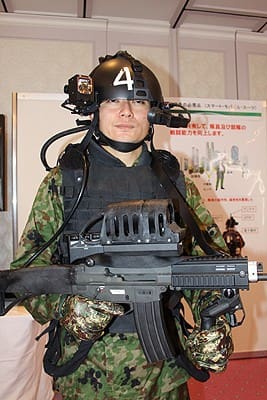
 We are fortunate enough to have this report on Advanced Combat Infantry Equipment System, Japan’s Soldier modernization effort from one of our readers.
Japan’s ACIES system consists of HMD, wearable computer, protective gear, weapon, and monitoring capability integrated as a system, and it is designed to share the information among the troops and C2 element to fight effectively and efficiently. Unlike the legacy Japanese military hardware, the ACIES will utilize large volume of COTS item as well as foreign source to save development cost and prevent obsolescence issues.
Program:
Since the delivery of the first ACIES demonstrators to the trial unit in late 2008, multiple trial ran were conducted throughout Japan. Based on the data compiled from trials the final ACIES design process is currently on-going. Hitachi won the final competition as the prime contractor in the summer of 2010 to design and manufacture the final design of AICES. Delivery of the initial low rate production models are expected to start around winter of 2011 to the Infantry School.
System components:
Helmet:
Modeled after the MICH helmet, inside has cushion pads and four point suspension system. This helmet will not have any ballistic protection capability, and it is “bump†helmet (shrapnel protection may be added). Japanese MoD came to a realization that with new threats on the horizon, ballistic helmet is just added weight for the users and dropped the ballistic capability in favor of adding more electronic components. The new helmet will have mounting stations for the NOD built by NEC, HMD built by Shimadzu, headset, microphone, LAN antenna. There’s also a small uncooled IR camera developed by NEC for the helmet which weighs about 70g. Only 2Mega pic, but able to identify the human face at distance up to 200m.
Body Armor:
New body armor system is in design. It may have large flap opening design rather than US IOTV side opening design. This vest will have ample MOLLE webbing all around to accommodate various pouches, battery pack, computer, and comm items to be mounted. Current demo unit has 9mm protection level, and can accommodate hard plates on both front and back (no sides). The final version will have NIJ Level IV without hard plates.
Computer and other electronic sub systems:
One of the key elements of the ACIES is the ability to process visual data from multiple source and position data, and distribute among other ACIES wearers as well as C2 element. In order to sustain the safe and secure data transmission, the robust data link capability is required. On the back of the body armor is the wearable computer’s main system. Batteries, large data processor, LAN, gyro, atmosphere pressure gage, GPS, (gigantic) cooling fans, and others are all in this portion. To power the ACIES system, dual battery sources are considered. At the AUSA in 2010, an American business, Brentronics Inc, claimed to have won the portable battery portion of the ACIES program.
Radio:
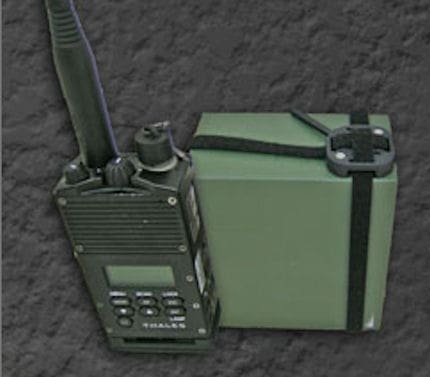
Lightweight UHF and VHF radios have been developed and fielded for the program.
Vehicle:
Monitoring system will be mounted on the LAV or APC along with the relay station for the radio and sensors worn by the dismounted troops. Also ACIES battery recharging station will be also mounted on the same vehicles. This will allow the dismounted ACIES wearers to return to the “mother ship†and quickly recharge their secondly batteries or replace the dead one with fresh ones quickly and continue their mission.
Weapon:
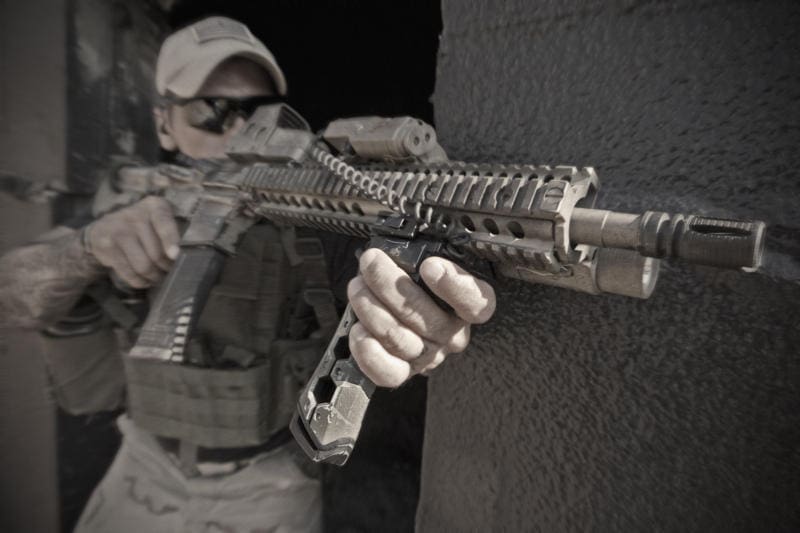
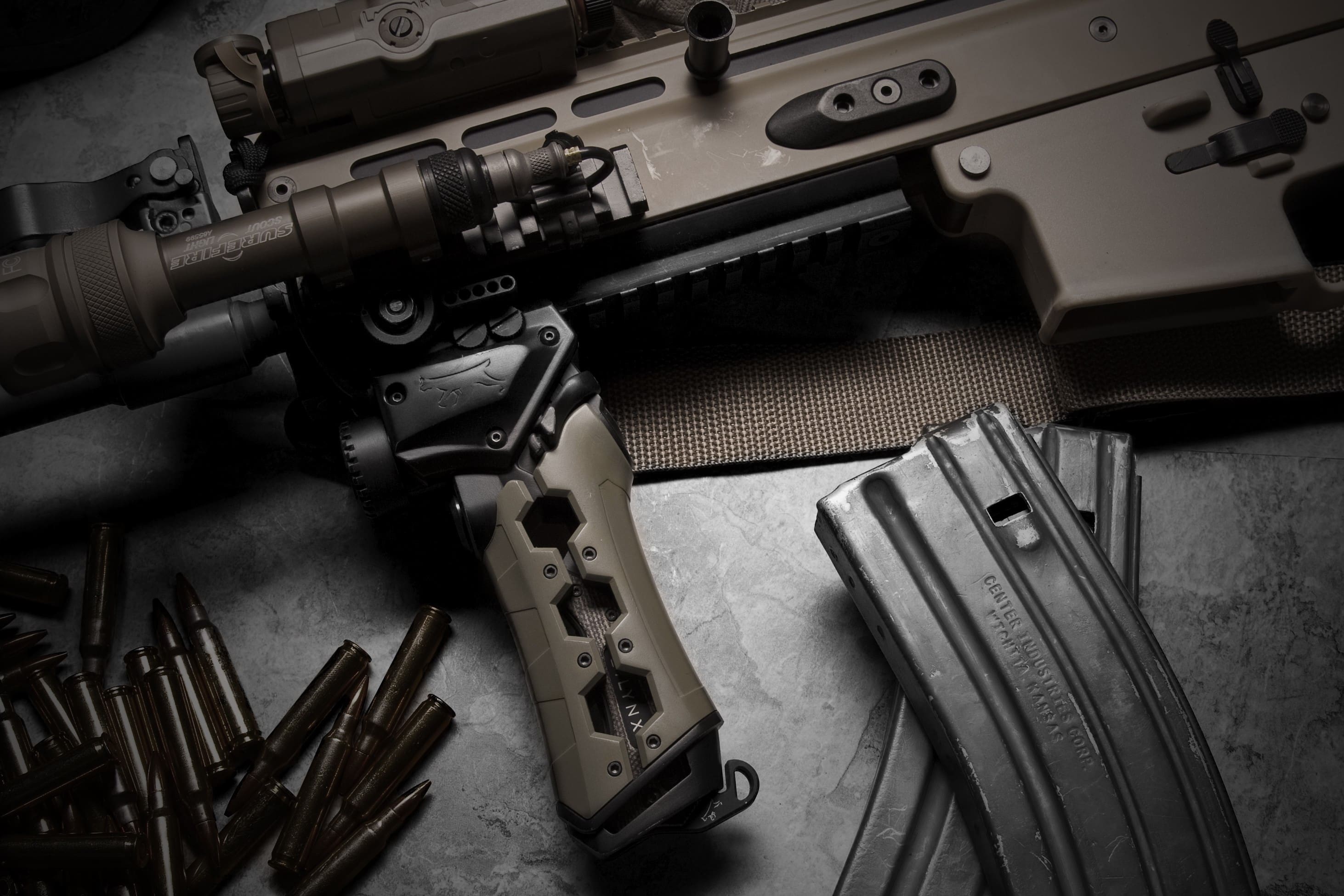
Howa’s Type-89 rifle has been redesigned to accommodate the Picatiny style rail system and polymer based retractable stock. Shortened carbine barrel has been also designed and may be adopted as a part of the program. Weapon also has a laser designator and integrated IR camera built by NEC. This IR camera data, along with the helmet mounted one, can be manipulated via fore grip control unit. Fore Grip control system is similar idea as the computer’s mouse, and the wearer will see through the HMD display and move the arrow symbol around and click on the menu, etc. Wearer can also aim and fire the weapon behind obstacle, just pointing the gun without exposing the body. The development of the new Howa rifle system is on-going, though European designed rifles are under evaluation to replace Type-89s.
UGV & UAV:
A softball sized throwable UGV is a part of the ACIES to provide visual data feed for the ACIES wearer in safety. Once tossed to the ground, the operator can maneuver it using a grip type controller (may be integrated to a weapon control) and provide visual data through its IR camera. Ball shaped UAV has also been developed and can accommodate small payload such as the IR camera for tactical visual feed to the ACIES wearers.
-Tom I