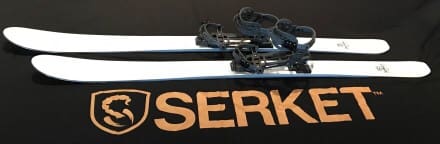
Provengo in conjunction with Serket will be providing the MSS which consists of Skis and Bindings. In direct response to the USMC requirement, the MSS conforms at a minimum to the following specifications:
Provides adequate flotation for an individual and gear up to 300 pounds.
The skis shall have a combined weight of no more than 7lbs
The bindings shall have a combined weight of no more than 7lbs.
The ski binding shall offer either a lock down heel or telemark heel for downhill skiing as well as an unlocked heel for uphill climbing and touring on rolling terrain.
The ski binding shall be universal and be able to fit all types of boots in the Marine Corps inventory (Vapor Barrier and Intense Cold Weather Boots).
The binding shall allow Marines to utilize “free heel” diagonal movement techniques.
Provengo is a provider of personal, operational, tactical and life style equipment. Provengo offers Military/Federal/LE/First Responder end-user discounts at www.provengo.com
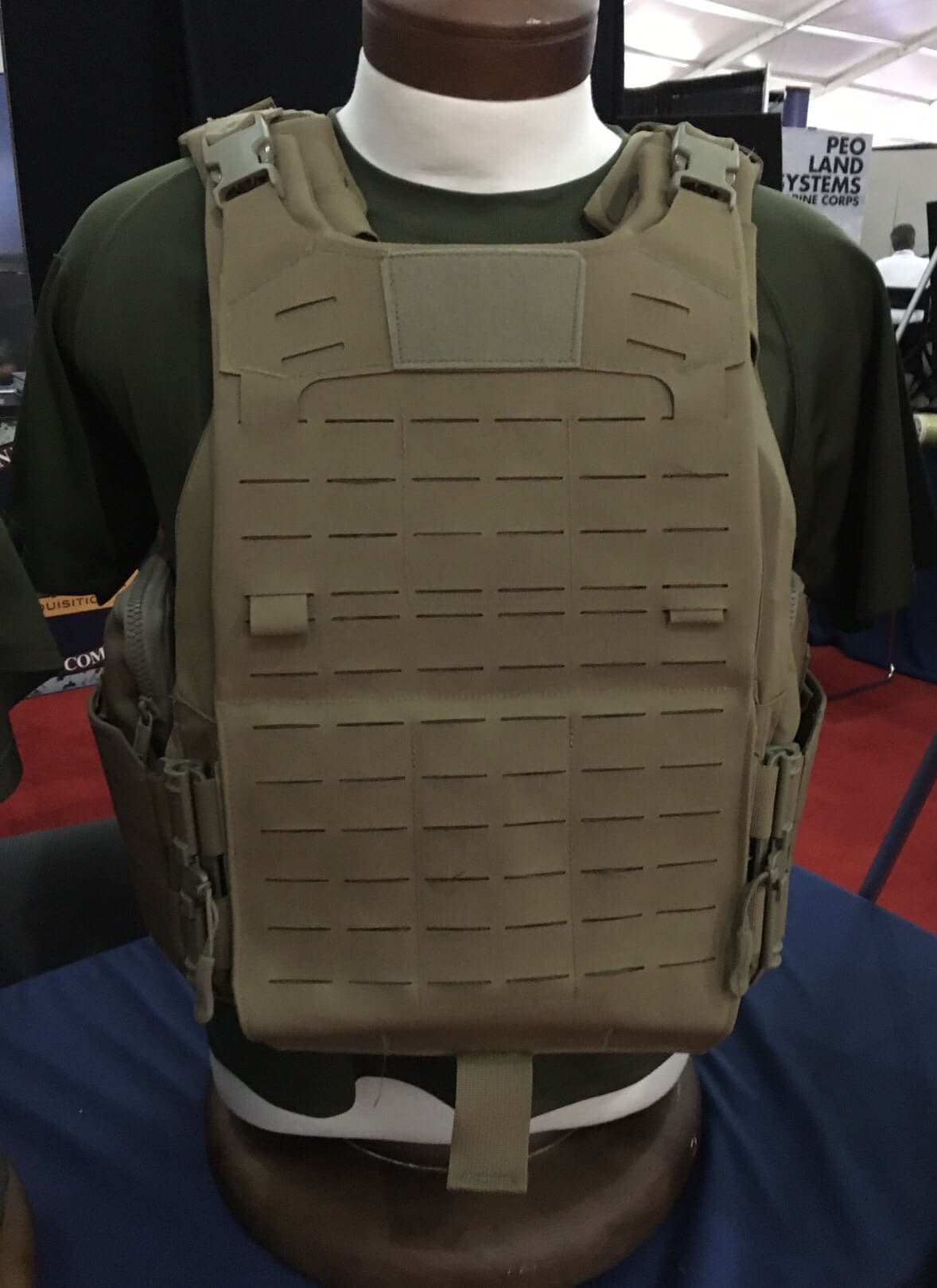
Yesterday, the US Marine Corps awarded Vertical Protective Apparel, LLC, of Shrewsbury, New Jersey, a $62,612,464 firm-fixed-price, indefinite-delivery/indefinite-quantity contract to produce and deliver the PC Gen IIIs. A maximum quantity of 225,886 will be delivered, and the work will be completed by September 2023.
“The legacy carrier fit the span of the Marine Corps, but this new system is more tailorable to fit Marines of various sizes with three new smaller-stature options,” said Flora “Mackie” Jordan, body armor engineer for the Infantry Combat Equipment Team at MCSC. “We wanted to give as much mobility back to Marines as possible by reducing the weight and bulk of the vest without decreasing ballistic protection. We were able to reduce the weight of the vest by 25 percent.”
The goal was to lighten the load Marines carry to reduce fatigue and improve their operational capability in the field. A few new features of the PC Gen III contributed to the weight reduction.
Excess material was removed from the shoulders and about an inch-and-a-half was taken from the bottom, which provides better integration with the USMC Pack. The team also chose a laminated laser cut material that only absorbs seven percent of water compared to 70 percent with the legacy system.
“We made sure to get the best system for our Marines, which included choosing the best lightweight soft armor and the best quality when it comes to the cut and sew of the carrier,” said Mackie.
While conducting research, MCSC discovered Marines are eight percent faster when the PC Gen III systems were combined with prototype lightweight plates, compared to the Enhanced Small Arms Protective Inserts. They also found Marines could remove and reassemble the vest in less than three seconds.
“With the old system, it took about seven seconds to take it off, and 10 minutes to reassemble,” said project officer Capt. Frank Coppola, Infantry Weapons at MCSC who helped test the vests. “The new quick release works a hundred times better. It has a vastly improved quick detach system for Marines to act fast while on missions.”
The PC Gen III is less bulky and easier for Marines to move in, especially when working in tight spaces. An inner vest was also added to increase modularity of the system. Marines can adjust it to meet the requirements and environment of their particular mission.
“Our vests have come a long way over the past 15 years, and the reduced weight and increased mobility is huge,” Coppola said. “The fact that we can decrease the size of the vest and still be protected is the key.”
Infantry, school house, and Reconnaissance Marines, along with vehicle crewmen and combat engineers will receive the vests when fielding begins in the third quarter of fiscal year 2019.
Information provided by the MARCORSYSCOM PAO contributed significantly to this report, particularly the quotes from PM-ICE.
Back in January of last year, the Unites States Special Operations Command released a requirement for soft body armor in support of the Special Operations Forces Personal Equipment Advanced Requirements (SPEAR) program.
For those of you who are fixated on price being the government’s number one factor for selection of a solution, this isn’t always the case. For this solicitation, they were intent on the best value with appropriate consideration given to the major factors listed in descending order of importance: Technical/Management, Past Performance, and Price. Technical/Management is significantly more important than Past Performance, which is significantly more important than Price.
Specifically, the Technical/Management Factor (Factor 1) is significantly more important than the Past Performance Factor (Factor 2), which is significantly more important than the Price Factor (Factor 3). With regard to Factor 1, Subfactor 1 is significantly more important than Subfactor 2 which is significantly more important than Subfactor 3 which is significantly more important than Subfactor 4:
Factor 1 –TECHNICAL / MANAGEMENT
Subfactor 1: Weight?Subfactor 2: Soft Armor Limited User Evaluation?Subfactor 3: Technical Approach and Independent Ballistic Test Data
Subfactor 4: Delivery Schedule and Production Capacity/Capability
Factor 2 – PAST PERFORMANCE
Factor 3 – PRICE
They cancelled this initial solicitation at the end of April of this year because none of the offerors could meet the spec, which remains classified.
The solicitation was re-released in July of this year and an award was announced on September 20th to Hardwire, LLC of Pocomoke City MD. The award is a five-year, IDIQ, Firm Fixed Price contract for a minimum of $100,000.00 and a ceiling of $8,000,000.00.
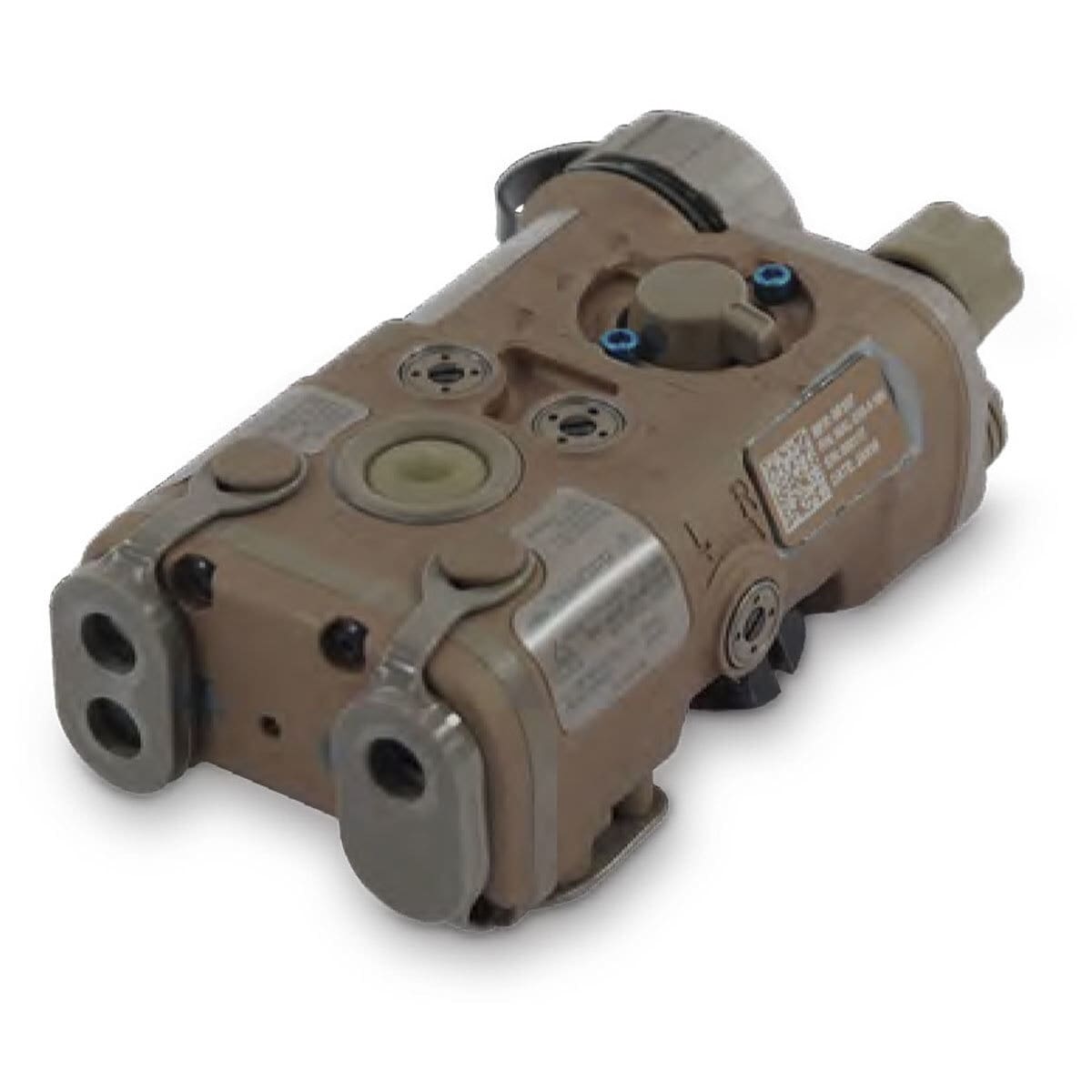
It’s the end of the fiscal year and Special Operations Command is wrapping up several of their requirements such as the Squad Aiming Laser. The Department of Defense made this announcement, late last week to L3 for the Squad Aiming Laser, who offers the Next-Generation Aiming Laser.
L3 Technologies Inc., Londonberry, New Hampshire, is awarded a $48,500,000 firm-fixed-price, indefinite-delivery/indefinite-quantity contract for the production of Squad Aiming Lasers (SAL), spare parts, and training in support of U.S. Special Operations Command. The SAL is a compact, ruggedized, aiming, pointing and illuminating laser system for compact rifles and assault rifles. This contract includes options which, if exercised, would bring the performance period to ten years. Work will be performed in Londonberry, New Hampshire, and is expected to be completed by September 2023. If options are exercised, work will continue through September 2028. Fiscal 2018 Defense-wide procurement funding in the amount of $8,668,680 will be obligated at time of award and will not expire at the end of the current fiscal year. This contract was competitively procured via the Federal Business Opportunities website, with five offers received. The Naval Surface Warfare Center, Crane Division, Crane, Indiana, is the contracting activity (N00164-18-D-JQ27).
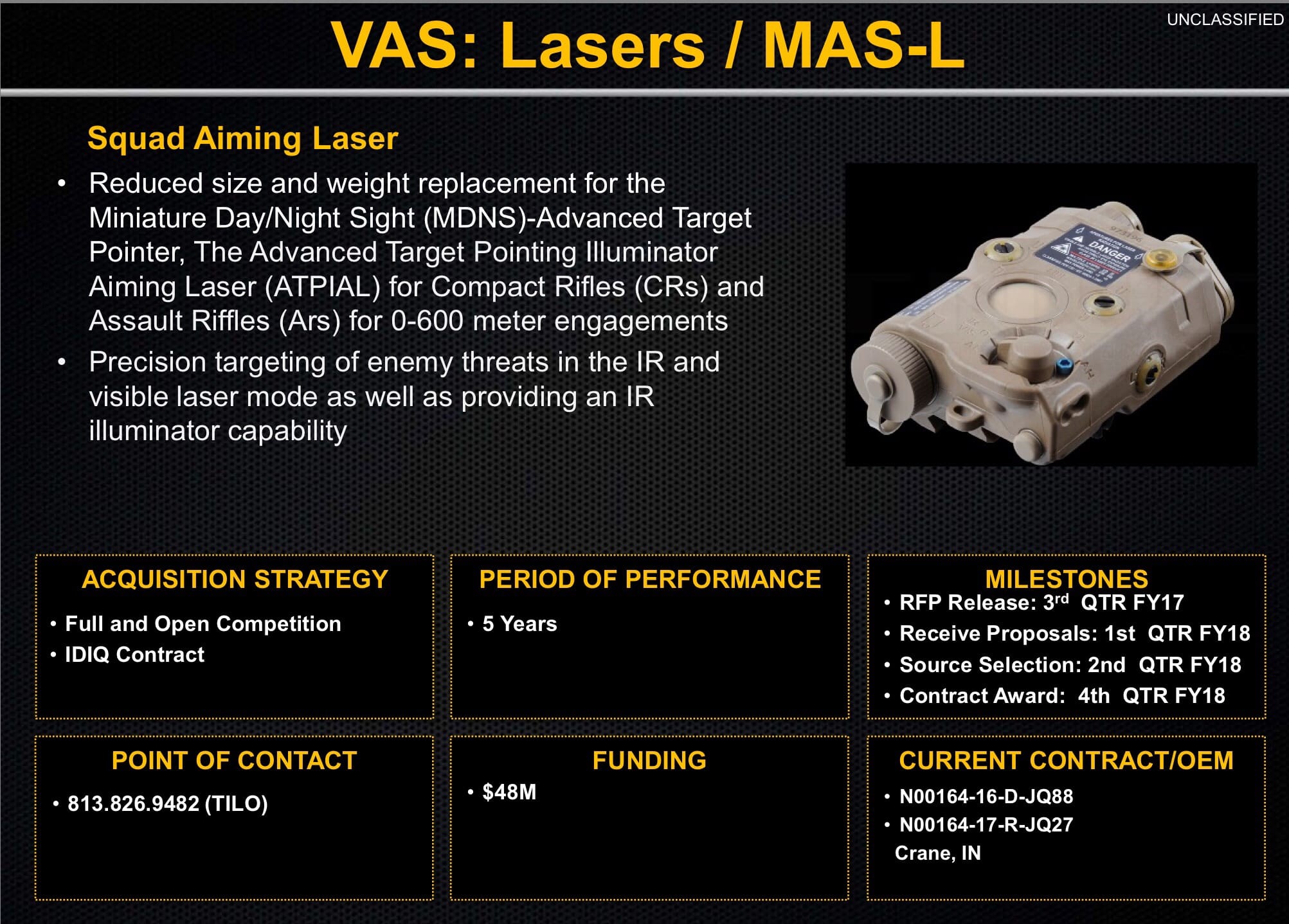
Below is a USSOCOM quad chart, summarizing the Squad Aiming Laser requirement.
Newington, N.H. (September 17, 2018) – SIG SAUER, Inc. is pleased to announce the Detroit Police Department has adopted the SIG SAUER M400 Rifle for their SWAT officers. The Detroit Police Department is a municipal police force comprised of twelve precincts protecting the largest city in the state of Michigan and one of the largest cities in the U.S.
Tom Jankiewicz, Executive Vice President, Law Enforcement Sales, SIG SAUER, Inc. began, “the M400 rifle is designed to exceed military standards to be the most accurate and reliable rifle in its class, which makes it an optimal choice for specialized law enforcement units in extraordinary enforcement situations.”
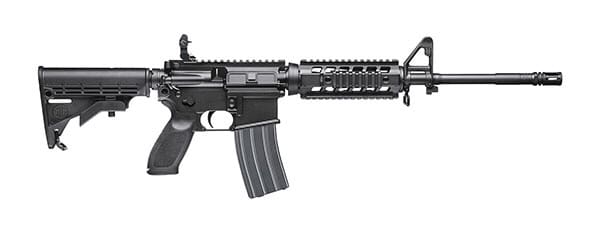
The SIG SAUER M400 is an AR-platform rifle with a direct impingement gas operating system. The M400 features a full-length free-float M-LOK handguard, enhanced SIG trigger, 6-position telescoping stock, and a rotating lock bolt.
“We are honored that the Detroit Police Department has entrusted SIG SAUER firearms to support the special tactical operations of their SWAT officers, and we look forward to strengthening our relationship with the department,” concluded Jankiewicz.
The rifles for the Detroit Police Department will be distributed through Vance Outdoors.
It is important to note that the companies have been notified they were selected and it is still up to them to accept the Army’s offer to participate. So far, we don’t have verification that all of the contractual agreements have been executed.
The Weapons
Interestingly, Trident Rifles will also offer a weapon from Swiss manufacturer Brugger & Thomet along with B&T USA.
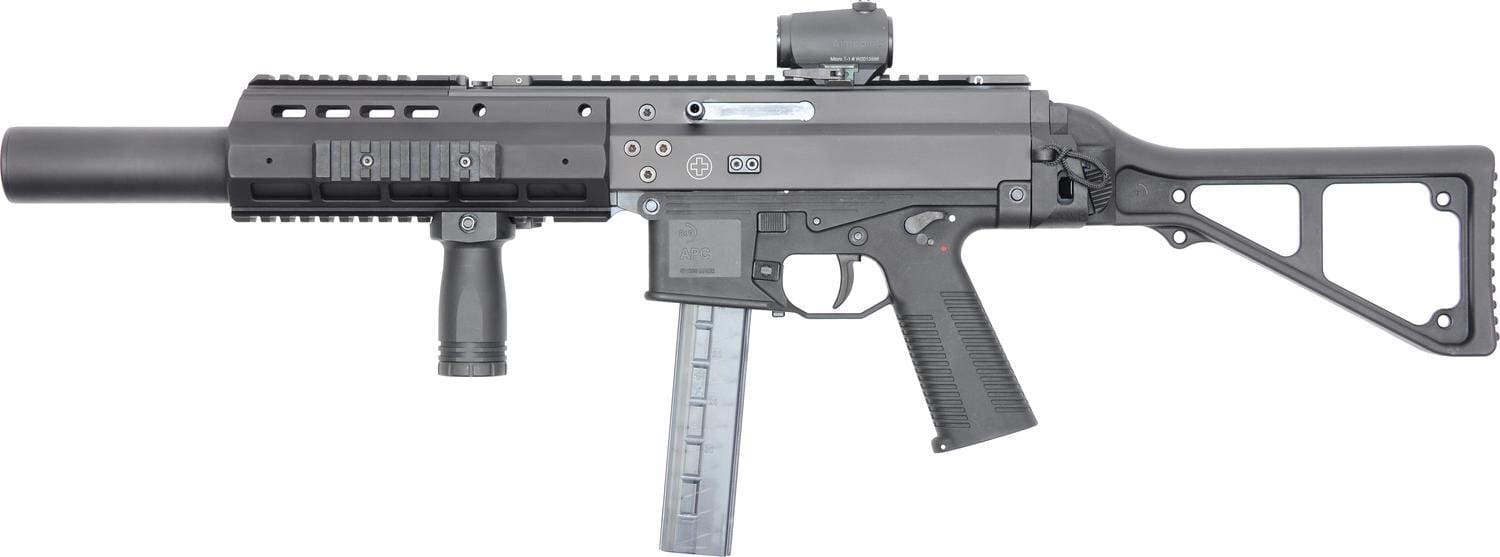
B&T APC9 SD
We fully expect the B&T offerings to be APC9 models (SD and K) and the SIG weapon to be an MPX derivative.
SIG MPX K
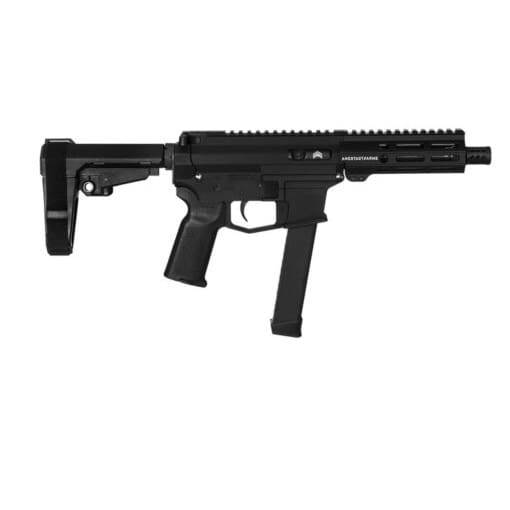
Two of the companies build AR-style 9mm Sub Guns; Angstadt manufactures the UDP-9, and Shield Arms makes the SA9K.
Angstadt UDP-9
Global Ordnance is the unknown, but word is that they may have an MP-5 variant.
The Requirement
While the requirement for a Sub Compact Weapon has been in the books for years, it finally got off to a somewhat rocky start earlier this year. Initially, the Army offered limited contracts to multiple companies (here and here) for evaluation samples. Then, the Army rescinded the offers and issued a Prototype Opportunity Notice.
According to the requirement, the Sub Compact Weapon is a highly concealable 9mm system capable of engaging threat personnel with a high volume of lethal force while accurately firing at close range with minimal collateral damage.
If you’re curious what the weapon will be used for, it’s because United States military operations take place worldwide and in all types of terrains as well as under every environmental condition. The Secretary of the Army and/or the Chief of Staff approves senior commanders and key personnel as High Risk Personnel (HRP). HRPs are authorized a Personal Security Detail (PSD), which are assigned to guard against outlined threats. To address this operational need, PSD military personnel require weapons with greater lethality than pistols that are more concealable than rifles.
The PON calls for delivery of 15 weapons within 30 days, with the purchase of 350 weapons at a time (if a solution is selected) up to 1,000 total weapons. Beyond the delivery of the initial prototypes there is no hard schedule.
Cubic Mission Solutions awarded orders to deliver GATR systems and services to support Army expeditionary communications
SAN DIEGO – Sept. 6, 2018 – Cubic Corporation (NYSE: CUB) today announced its Cubic Mission Solutions (CMS) business division received orders worth more than $55 million to deliver its inflatable satellite communication and networking systems to the U.S. Army. These orders will satisfy the Army’s upcoming fielding need for 1.2- and 2.4-meter GATR systems, associated spares as well as training and sustainment support.
“Cubic’s GATR satellite communication and networking systems offer the transportability, high-bandwidth capabilities and the ease of setup necessary for Army units to execute their mission,” said Mike Twyman, president of Cubic Mission Solutions. “We are proud to continue our work with the Army and look forward to delivering solutions that offer tremendous operational advantages to our customer.”
Cubic’s solution provides robust high-speed links that enable secure network communications, sustainment support and mission command across the full spectrum of operations, from initial entry to sustained operations. The decreased size, weight and power (SWaP) of a GATR 2.4-meter system provides up to four times the performance when compared with similar transit volume and weight antennas.
The GATR systems’ compact pack-out size and innovative design provides significant improvements in transportability, throughput and setup speed, providing essential communications when and where they are needed most.
Hurburt Field’s 1st Special Operations Contracting Squadron has issued a Sources Sought Notice, for Market Research purposes only, for potential sources of developing and/or providing equipment similar to the Owens Recovery Science personalized Tourniquet System or an equivalent product.
The equivalent product must be able to control/restrict blood flow to limb for rehabilitation of damaged/weak muscle tissue, include timer controls to automatically maintain pressure or deflate when time has expired, safety alarms to warn of cuff over and under pressurization, and must measure occlusion in mmHg (standard blood pressure measurement: systolic/diastolic pressure).