XC3 Weaponlight

Archive for the ‘Contracts’ Category

Breaking – USSOCOM Cancels Suppressor Upper Receiver Group Solicitation

Monday, August 15th, 2016

In a special notice issued just minutes ago, United States Special Operations Command has canceled the Suppressor Upper Receiver Group solicitation.

The Suppressor Upper Receiver Group solicitation is cancelled.

United States Special Operations Command plans to analyze the results of the testing and post a new solicitation to industry in the future.

The message was simple and straight forward, yet doesn’t explain why. Many in industry have been very critcal of the ambitious program due to its requirements to keep the weapon cool enough to handle in spite of high operating temperatures. 

Considering the solicitation closed just a month ago, this move seems quite sudden. It sounds like none of the candidates met the program’s goals and SOCOM is going to circle back around.

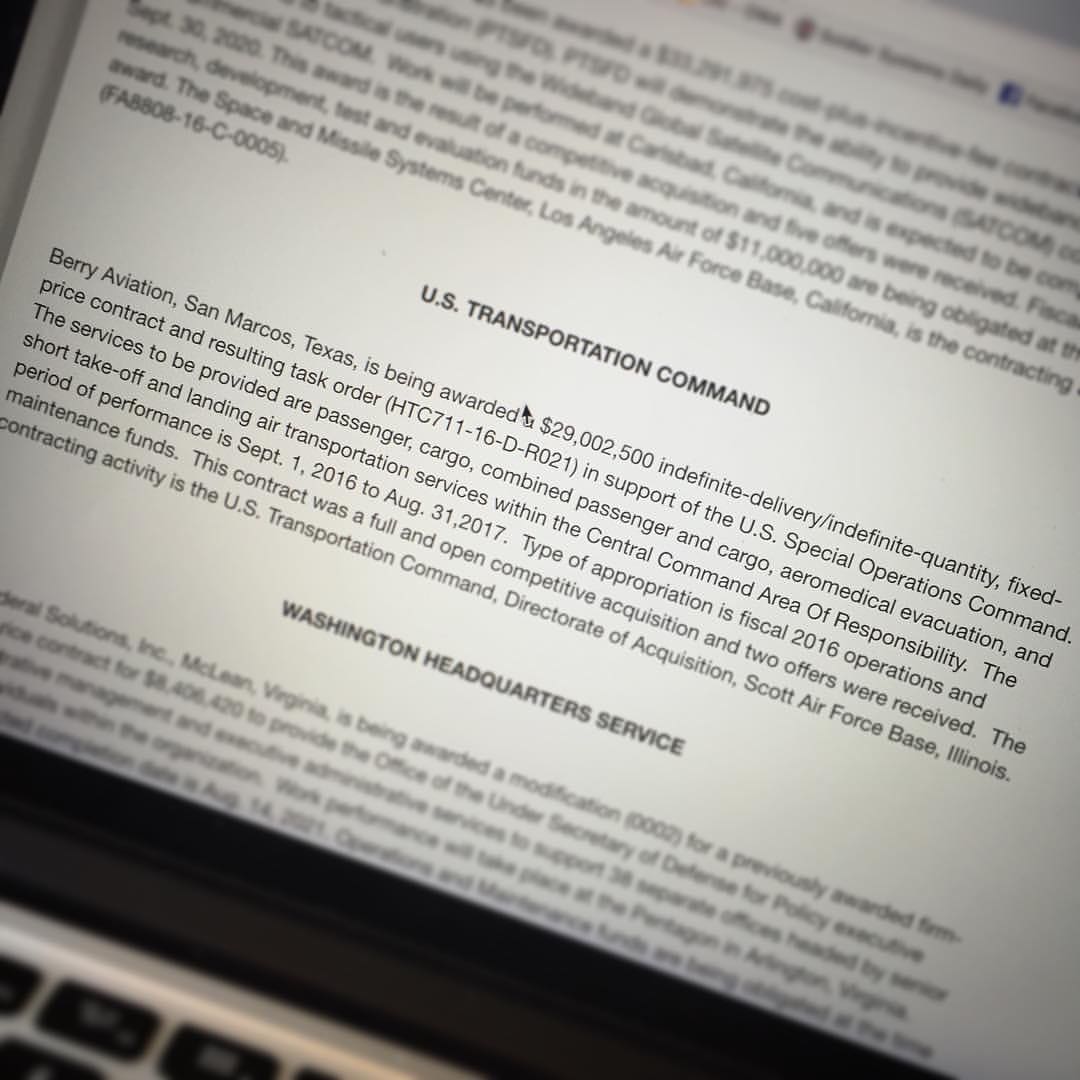
Congratulations To Berry Aviation

Friday, August 12th, 2016


We know a lot of hard work went into that contract.

USSOCOM Plans Technical Experimentation Night Vision/Electro Optics and Advanced Sniper Rifle Military Utility Assessment

Wednesday, August 10th, 2016

USSOCOM has released an RFI for candidate technologies for the upcoming Technical Experimentation Night Vision/Electro Optics and Advanced Sniper Rifle (ASR) Military Utility Assessment (MUA) which will take place 14-18 November at Camp Blanding, Florida.

In particular, they are interested in technology readiness levels 3-6 and the intent of this event is to highlight technologies that support night vision/electro optics systems and advanced sniper rifle systems.

Technology areas to explore during the event include the following:
1. True Color Night Vision. Presentation of visible spectrum light (approximately
400nm to 750nm – flexible) that aids in target discrimination, mobility, combat identification, identify friend or foe, or situational awareness via a natural appearing manner. The need is from clear sky no moon (approximately 0.001 lux) to daylight conditions. Day only solutions will not be considered. A capability that allows true color at higher illumination and switch or transition to black and white at the lowest illumination (.001 lux) is of interest. Factors of consideration include resolution, sensitivity, latency, size, weight, power, dynamic range, and bits of color at low light. Both analog and digital solutions are of interest.
1.1. True Color Night Vision for man portable applications. This includes night vision goggles, rifle scopes, and binoculars. Retrofits to existing kit are considered as well as original full up solutions. For man portable applications; size, weight, and power have a priority. For head borne applications latency is of particular concern – though not so much a concern for rifle scopes or binoculars.
1.2. True Color Night Vision solutions for ground mobility visual augmentation systems that are compatible with integration into electro-optic / infrared turrets. The technology should also be applicable to fixed wing / rotary wing / maritime applications which would also use the electro-optic / infrared turret. For the platform based solutions size, weight, and power needs are not as stringent though integration is inherently important.
2. Undetectable day/night aiming for either assaulters, snipers: beyond iron sight or etched reticle.
2.1. Passive aiming methods that provide a cursor for point of aim / point of impact of the assaulter rifle shots (typically 5.56mm or 7.62mm) is sought. The cursor should ideally be viewable by other team members. Ranges include close quarters combat up to 500 meters.
2.2. Ability to actively call in and direct close air support through visual cue, illuminate, mark, and/or aim for assaulters, snipers, or JTACS without detection by opposing force.
3. Group I, II, III, Unmanned Aerial System Intelligence Surveillance Reconnaissance (ISR)
3.1. Team based situational awareness. Technologies that can provide small teams or maneuver elements with real-time Visible National Imagery Interpretability Rating Scale (VNIIRS) 9 or better streaming video, Ground Moving Target Indicator and Radio Frequency (RF) environment characterization capabilities. The technology should be audibly and visually undetectable to the greatest extent possible.
3.2. Force protection for any maneuver element. Technologies that can automatically follow (digital tether) a maneuver element. The solution should provide real-time streaming video to multiple concurrent users. Solution should provide VNIIRS 9 or better video quality in real time. The ability to detect and display Identify Friend or Foe markers would be beneficial.
3.3. Overhead persistent surveillance. Technologies that can be programmed to orbit or perch and stare at an area or object of interest. Technology should be visually and acoustically undetectable by persons or systems resident at an observed area or object of interest, while providing users VNIIRS 9 or better video quality in real time.
4. Tactical Surveillance Equipment (TSE).
4.1 TSE internet protocol (IP) compatible prototypes that can demonstrate or
explore session announcement protocol for broadcasting multicast session information. 4.4.2. TSE prototypes or software that can execute compression of imagery and
video with loss that does not result in undue noise or artifacts. This is for low-bandwidth applications, e.g. situations where frame rate times resolution times bit depth bit depth is 2 megabytes or less. Ultimately a lossless imagery appearance while with loss compression is utilized.
4.3. Technology advancements in detection, recognition, and identification (DRI) for TSE that significantly exceeds current state of the art.
4.4. Modular turbulence mitigation software/hardware for TSE that can either be used to retrofit existing equipment or be a new solution.
4.5. Software application or an “app” that can calculate necessary information for performing TSE tasks such as facial recognition, DRI, personal identification, ground sample distance, ground resolution distance, pixels between eyes of a person.
5. Cursor on Target (CoT) Integrated Heads Up Display (HUD). Systems producing CoT data are becoming more widely employed to provide battlespace situational awareness (SA) data. Joint Terminal Attack Controllers view this SA data to aid in accomplishing their mission. CoT integrated HUD systems which display friendly and enemy positions as well as aircraft positions, call signs, and altitudes as icons on the HUD are sought.
Submissions should consider a CoT HUD that:
– Integrates into current eye protection equipment or Ballistic Clear Glasses with Fusion/Panoramic night vision goggles (NVG).
– Integrates with current PLI data sources (i.e. Android and/or CoT Radios).
– Incorporates an intuitive user friendly interface.
– Displays compass direction, distance, and current grid.
– Rapidly enables/disables HUD overlay in case of close quarters combat situations.
– Can be powered off of other equipment with minimal cabling.
– Has wired information assurance or is wireless with information assurance.
6. Target Engagement
6.1. Positive identification of a person of interest (POI) as subject / not subject
at and beyond maximum effective range of sniper rifle calibers such as .338 Lapua Magnum, or .50. Size, weight, power, probability of false alarm and probability of false rejection are of specific concern.
6.2. Multispectral optics and fusion of various bands in an intuitive and value added manner. Information overload is a concern while information loss can be a concern – a balance is sought. Fusion of all optics bands is ideal, fusion of both reflective and emissive bands is a minimum. Algorithm are sought that would allow for operation on both man portable systems as well as UAS or manned platforms.
7. Advanced Sniper Rifle (ASR) Military Utility Assessment (MUA). This MUA will serve as a market survey for crafting requirements of the future ASR program. Technologies of interest include.
7.1. Commercial Off the Shelf (COTS) bolt action rifle with switch caliber capability (3 calibers). Able to fire 7.62mm NATO, .300, and .338 caliber ammunition.
7.2. Candidate weapons systems must include suppressor technology that can be used for all 3 calibers, whether integrated or detachable.

For full details on how to nominate a texhnology, visit https://www.fbo.gov/index?s=opportunity&mode=form&id=7580f2c57048e540f9f4ea42fadec8f1&tab=core&_cview=0

USSOCOM Awards Contract To Gentex For Advancement Of Headborne Systems Technologies

Monday, August 1st, 2016

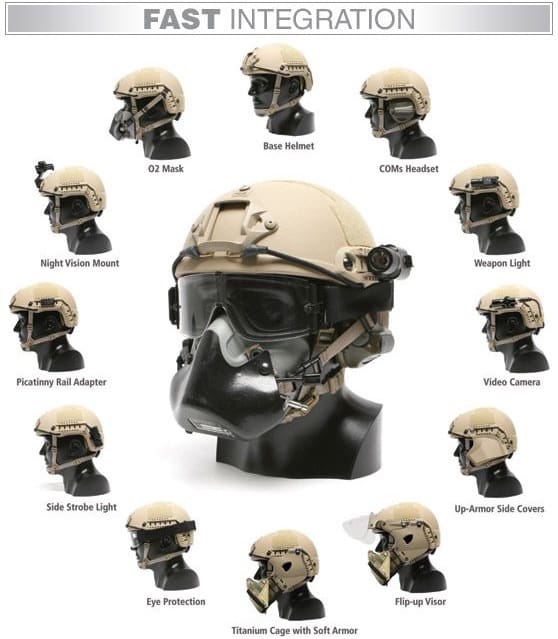
It appears that USSOCOM has issued multiple contracts in response to their Broad Agency Announcement issued earlier this year to refine requirements for the next generation SOF helmet. The latest award is to Gentex, and we assume, much of the work to be accomplished by their Ops-Core business unit. The BAA can be seen below.

Revision

Click to view .pdf

Ops-Core FAST helmets have been SOCOM issue for many years and the fruits of this contract will be used by Natick to help  refine requirements for the next generation SOF helmet.  


Contract Award Dollar Amount: $370,365.51 Plus Option CLINs valued at $464,607.00.

The announcement is found at www.FBO.gov as long as they keep it there. Earlier award announcements to others have been deleted.

Government Procurement Strikes Again!

Monday, August 1st, 2016

Not so sure that this is something you want to be awarding to the lowest bidder.

This is a pre-solicitation notice for commercial items, Synopsis is as follows.

A separate written solicitation will be issued as a Request for Quote (RFQ) on or after 14 June, 2016. The solicitation document and incorporated provisions and clauses are those in effect through Federal Acquisition Circular 2005-72. The North American Industrial Classification System codes is 813110.

Required Items and Descriptions are as follows:

CLIN 0001: Roman Catholic Priest Services
CLIN 1001: Roman Catholic Priest Services

The Government intends to make the award in accordance with the FAR Lowest Price Technically Acceptable (LPTA) source selection process. The offer must be determined to be technically acceptable before being considered further. The LPTA does not permit trade offs between price and non-price factors.

Safran Optics 1 Inc, Awarded $304,522,367 Contract for Laser Target Locator Module II

Monday, July 18th, 2016

Safran Optics 1 Inc., Bedford, New Hampshire, was awarded a $304,522,367 firm-fixed-price, multi-year contract for Laser Target Locator Module II. Bids were solicited via the Internet with five received, with an estimated completion date of July 11, 2015. Funding and work location will be determined with each order. Army Contracting Command, Aberdeen, Maryland, is the contracting activity (W91CRB-16-D-0018).

75381C76-FDBA-4285-9718-4D31F39A6333

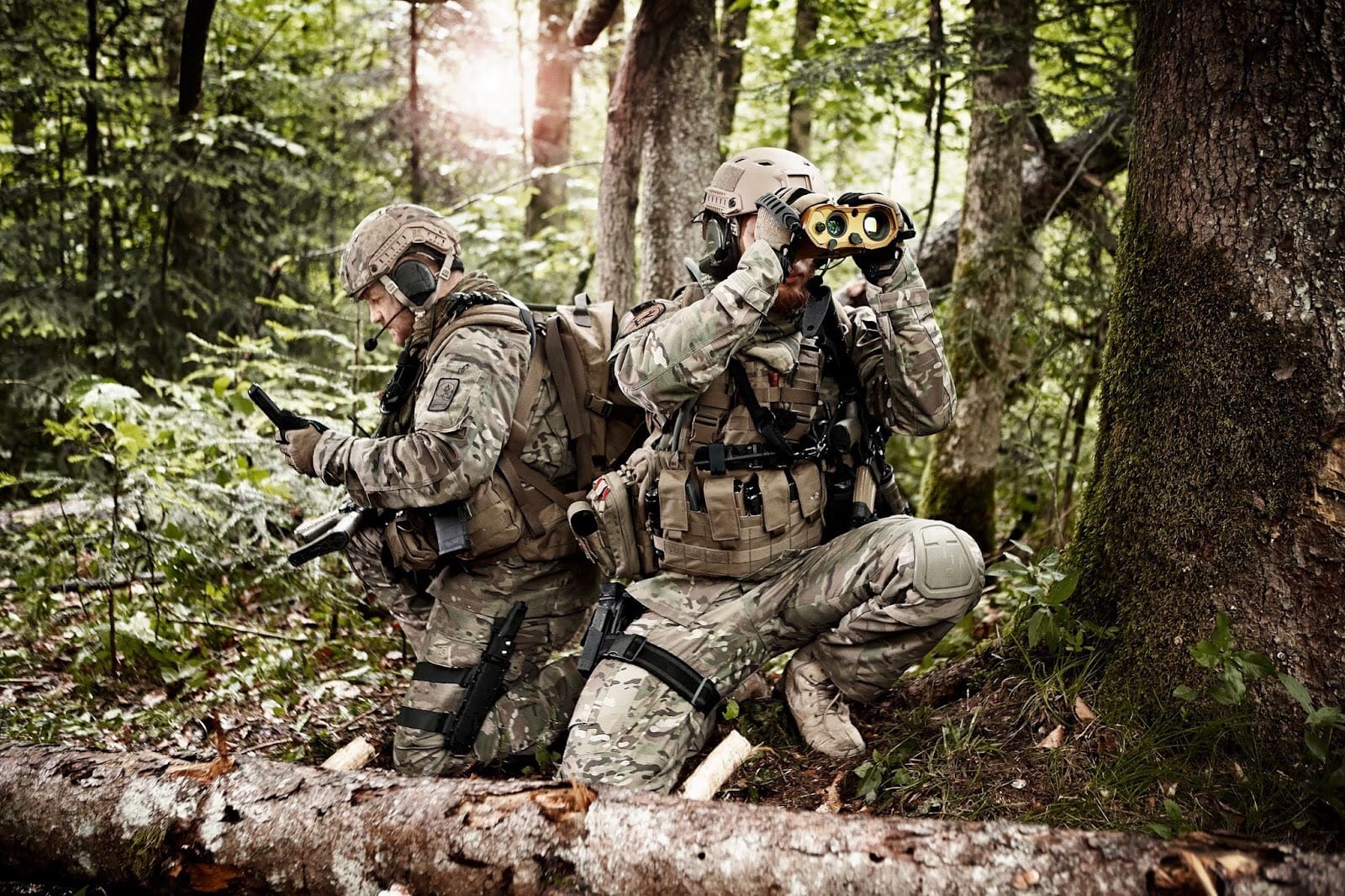
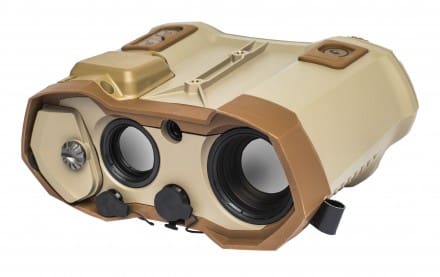
The LTLM II is a lightweight handheld laser target locator with a color day camera and night sight, as well as a selective availability anti-spoof module (SAASM) Global Positioning System (GPS) receiver.  It’s big advantage over the currently fielded LTLM I is size, weight and power or SWAP.  Coming in at half the weight of its predecessor, LTLM II also offers redundant precision locating capabilities. 

USAF Security Forces Select Massif For Non-FR Combat Shirt

Wednesday, July 13th, 2016

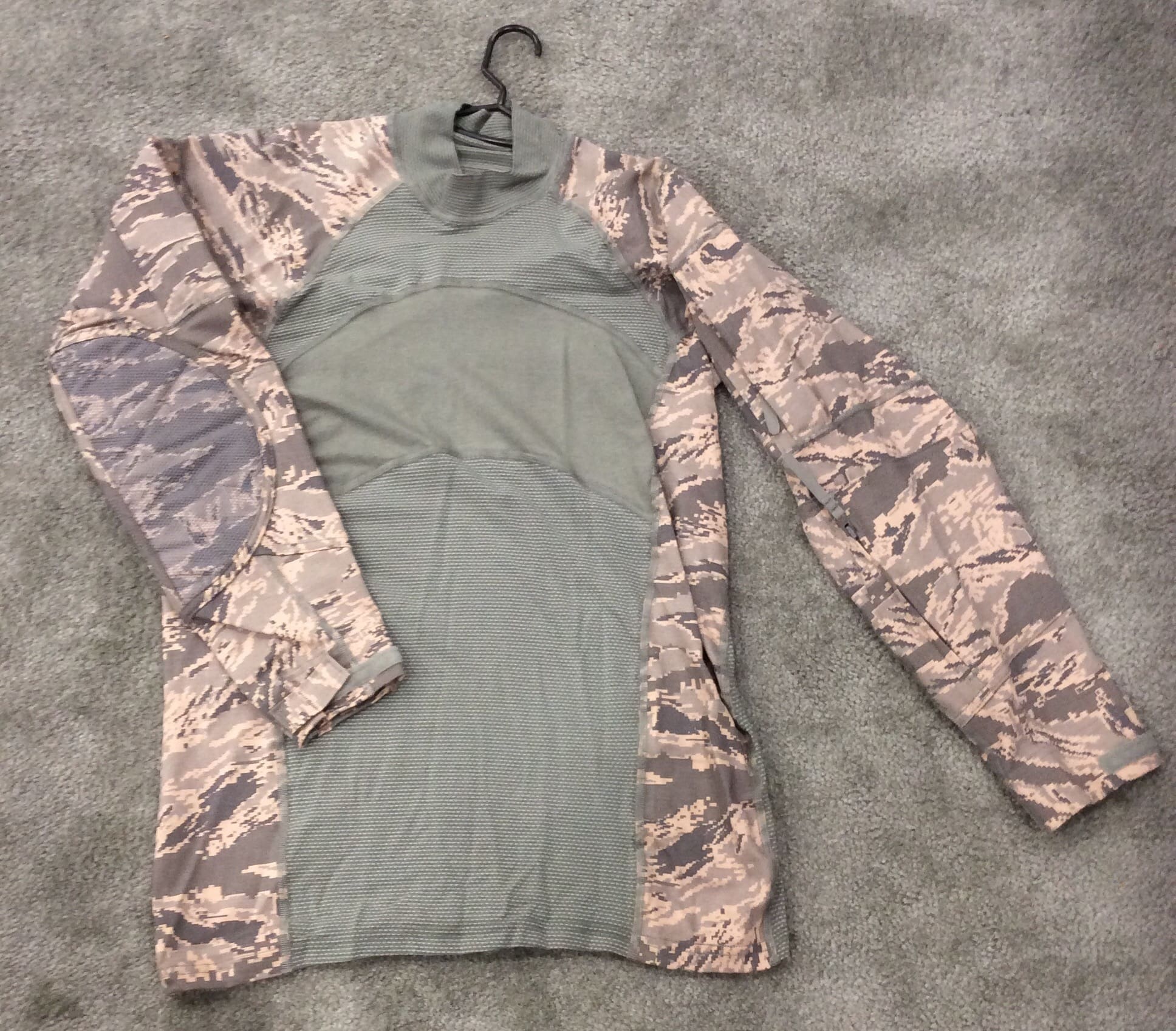
Earlier this week, the USAF’s Security Forces Center awarded Samtech dba Massif $6,659,305.01 to provide non-FR Combat Shirts for all SF. It’s a Digital Tigerstripe variant of a combat shirt but non-FR for home station wear with body armor.


This photo is of a version procured under an earlier contract.

UPDATED – This is a photo of the actual Massif design.

Kraig Biocraft Laboratories Announces Contract with US Army to Deliver Dragon Silk

Tuesday, July 12th, 2016

ANN ARBOR, Mich., -July 12, 2016- Kraig Biocraft Laboratories, Inc. (OTCQB: KBLB) (“Company”), the leading developer of spider silk based fibers, today announced that it has received a contract valued at up to $1.0 million, if the option phase is awarded, for the development of high performance fibers for protective apparel applications. Under the fully funded base effort, valued at $99,962, the Company will deliver ballistic shoot packs constructed from its proprietary Dragon Silk™ material for performance testing. These shoot packs will be tested and evaluated for critical Soldier protective applications including ballistic impact. If awarded, the option phase will significantly expand this work with the US Army.

“Dragon Silk scores very highly in tensile strength and elasticity, which makes it one of the toughest fibers known to man and the ideal material for many applications,” stated Jon Rice, COO. “Providing material for this ballistic shoot pack initiative is an important next step for Kraig and spider silk. This contract reinforces the many significant potential applications for recombinant spider silk. Today is a great day for spider silk.”

“We’re proud to be working with the Department of Defense to assess the exciting potential of spider silk for military applications,” stated Kim K Thompson, CEO and founder of Kraig Biocraft Laboratories. “We are honored that the U.S. Army has selected us for this program. This effort will provide Kraig Labs with the opportunity to validate our longstanding belief that spider silk technology has had an incredible potential for protective and lifesaving materials and expand our ability to design and engineer innovative materials solutions.”

The base effort on this contract is scheduled to last ten months and is the Company’s first US Department of Defense award.

Previous Kraig breakthroughs include;

Creating, with the University of Notre Dame and the University of Wyoming (the Company’s university development collaborators), the world’s first recombinant spider silk fibers via a transgenic silkworm capable of spinning recombinant spider silk http://newsinfo.nd.edu/news/16934-notre-dame-and-university-of-wyoming-scientists-genetically-engineer-silkworms-to-produce-artificial-spider-silk/.
The first published peer reviewed study in this space, by the highly respected PNAS, http://www.pnas.org/content/early/2012/01/02/1109420109.
Kraig Biocraft Laboratories chosen as finalists for the inaugural ITMA Future Materials Awards in “Best innovation – Agrotextiles” and “Most innovative small company” categories. For further information please go to the following link: www.futurematerialsawards.com

Kraig is a biotech company with a proven track record of genetic engineering mastery. In a few shorts years the Company has gone from having the first peer reviewed recombinant spider silk technology to doing the unthinkable, exceed spider silk’s strength.

Bolt Technology, one of Kraig’s peers in this space, raised $40 million in its efforts to commercialize its version of spider silk technology, http://blogs.wsj.com/venturecapital/2015/06/04/the-daily-startup-bolt-threads-spins-up-40-million-to-scale-new-fabric/.

The Company recently signed a memorandum of understanding with a Vietnamese provincial government concerning its plans to establish advanced fiber production at sericulture facilities in Vietnam and is awaiting final approval. Kraig is on target to deliver the world’s 1st commercially feasible mass produced recombinant spider silk, produced using very environmentally friendly and sustainable methods. Their technology could soon become a global standard for super fibers.


The Advantages of Spider Silk
• Potential uses include ballistic protection.
• Unequalled combination of elasticity and tensile strength.
• Interest in spider silk has exploded as the technology approaches commercialization.
• Genetically engineered spider silk fibers are a powerful new technological approach to potentially opening up new application and markets.
• The market for technical textiles is in excess of $120 billion annually.
• Spider silk technology has the potential to revolutionize the multi-billion dollar silk industry.
• The market for traditional raw silk alone is in excess of $5 billion per year.
• Biodegradable and biocompatible.
• Spider silk production could greatly reduce many of the toxins and pollutants used in conventional petroleum based fiber and polymer production process.

High performance technical fibers are currently used in a wide variety of military, industrial, and consumer applications requiring superior strength, toughness and flexibility.

www.kraiglabs.com