SIG SAUER - Never Settle

Archive for the ‘Guest Post’ Category

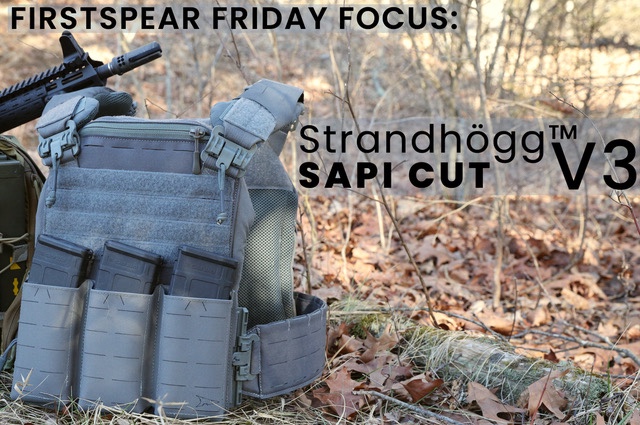
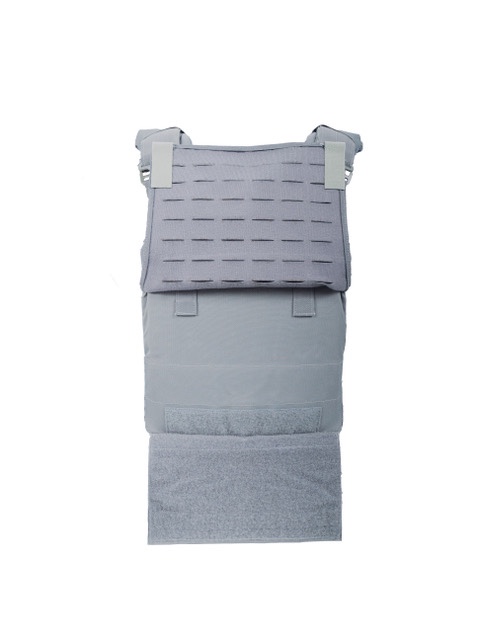
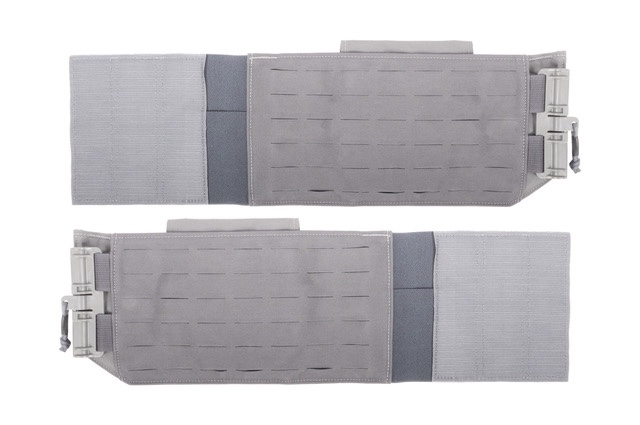
FirstSpear Friday Focus: Strandhögg V3 SAPI Cut Plate Carrier

Friday, February 10th, 2023

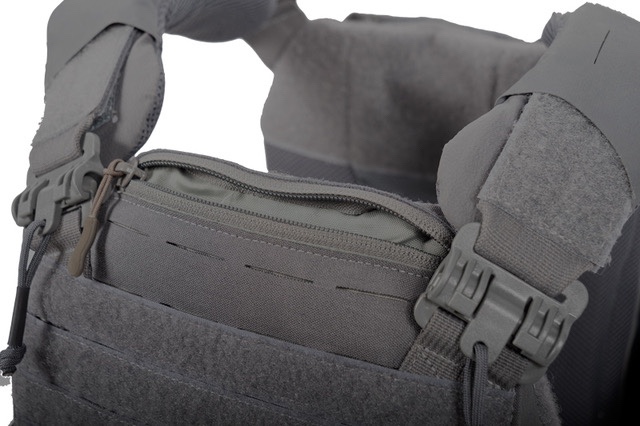
Made in the USA, the Strandhögg™ V3 SAPI Cut Plate Carrier maximizes 6/12™ technology and rapid closure systems provided by the FirstSpear Tubes® fasteners for easy donning and doffing.

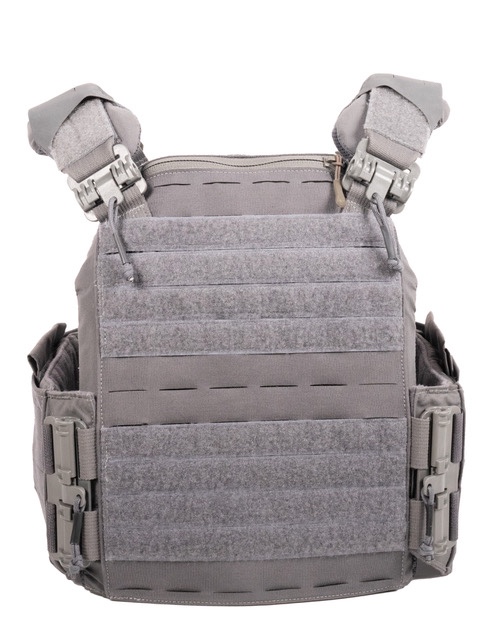
The front panel has an internal zippered admin pocket along with a 4?x9? loop field for identifiers.

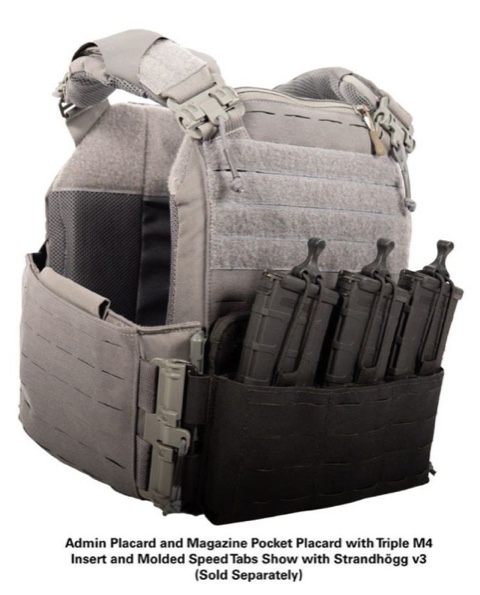
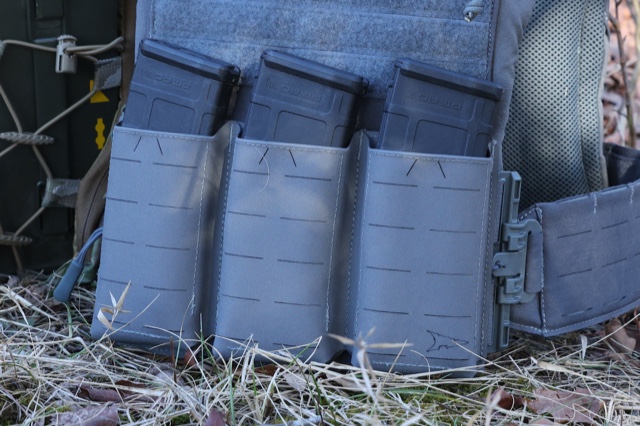
Along the bottom of the front panel is a second loop field for use with the FirstSpear Admin Placard and Magazine Pocket Placard.

The Instant Access Back Panel on the back allows for easy access to adjust your cummerbund for a more precise fit.

(Shown with New LaserFrame M4/AK Triple Magazine Pocket)

The front and back panels have the ability to hold both soft armor and plates that are the same size and cut as the carrier.

Visit FirstSpear to find all of America’s premier tactical gear and equipment.

DoD Releases Small Business Strategy

Friday, February 10th, 2023

WASHINGTON (AFNS) —  

The Department of Defense released its Small Business Strategy Jan. 26. The strategy promotes a strong, dynamic, and robust small business industrial base by focusing on reducing barriers to entry, increasing set-aside competitions, and leveraging programs to grow the industrial base. 
 
“From manufacturers providing the critical parts that we need for our arsenal – to technology companies developing innovative systems and capabilities – small businesses are vital along the entire spectrum of the Department’s needs,” Deputy Secretary of Defense Dr. Kathleen Hicks said. “Reducing barriers and creating more opportunities for small businesses will allow us to expand, innovate, and diversify, increasing our warfighter advantage, strengthening our supply chains, increasing competition in our marketplace, and growing our economy here at home.” 
 
Small businesses make up 99.9% of all U.S. businesses as well as 73% of companies in the defense industrial base, and last year small businesses were awarded over 25% of all DoD prime contracts. As the economic engine of our nation, small businesses create jobs, generate innovation, and are essential, daily contributors to national security and the defense mission. This strategy will help DoD harness the full potential of small businesses through three objectives: implement a unified management approach for small business programs and activities; ensure the Department’s small business activities align with national security priorities; and strengthen the Department’s engagement and support of small businesses. 
 
“Fostering a resilient and robust industrial base is one of my top priorities,” said Under Secretary of Defense for Acquisition and Sustainment Dr. William LaPlante. “Supporting small businesses is not just about meeting a goal or checking a box; it’s about building advantages for our warfighters. All of American industry, especially our innovative small businesses, has a role in developing, delivering, and sustaining the critical capabilities that are required to further implement the National Defense Strategy.” 
 
“Small businesses are crucial to national security,” Director of the Office of Small Business Programs Farooq Mitha added. “Our military depends on small businesses that bring innovation and agility to support DoD’s mission. From providing critical component parts, to cutting edge software platforms, to essential services, small businesses provide support across nearly the entirety of the Department of Defense.” 
 
As part of DoD’s efforts to strengthen support of small businesses, this strategy focuses on stepping up engagement with industry, including providing more tools and resources. This engagement and training effort will be facilitated by the Department’s 96 APEX Accelerators located across the country, formerly known as the Procurement Technical Assistance Centers, which serve as a resource for small businesses to increase their readiness, help them find opportunities to do business with the Department and accelerate their insertion into the defense marketplace. 
 
The Office of Small Business Programs encourages those interested in working with DoD to read a “Guide to Marketing to DoD” here
 
The Small Business Strategy can be found here.

Department of Defense News

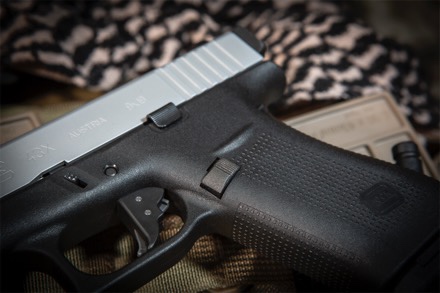
TangoDown – Vickers Tactical Steel Magazine Release for G43X/G48

Thursday, February 9th, 2023

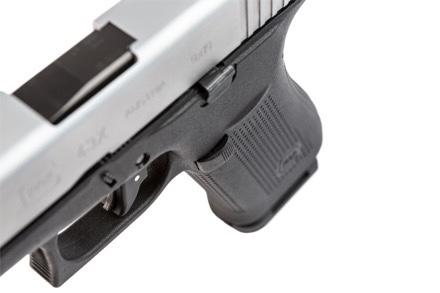
TangoDown® Inc. announces newest item to the Vickers Tactical™ lineup:  Steel Magazine Release for G43X/G48 (GMR-007S).  We teamed up with Addtac MFG. to have our existing GMR-007 magazine release created in steel.  This steel magazine release is compatible for use with the Shield Arms® S15 steel magazines.  The GMR-007S is the same shape as the existing magazine release, but offers the durability needed to function with steel magazines.

Features:

– All steel composition for compatibility with Shield Arms® S15 Steel Magazines

– Extended and contoured for easy manipulation

– Ambidextrous

– Durable black nitride finish

For use with G43X and G48 ONLY.

NOT for use with OEM GLOCK® factory magazines or other polymer magazines.

MSRP:  $31.00

**If you are not familiar with modifying your firearms, seek appropriate assistance from a Certified Armorer or Gunsmith.

For more information on the GMR-007S, visit: tangodown.com/vickers-tactical-steel-magazine-release-for-glock-43x-48

Customer Questions:  sales@tangodown.com

53rd Wing’s MUSTANGS: The Future Of Agile Data Capture And ACE Capability

Thursday, February 9th, 2023

EGLIN AIR FORCE BASE, Fla. (AFNS) —  

The 59th Test and Evaluation Squadron hit major milestones in the development and testing of their Multi-Utilization Secure Tactical and Network Ground Station, or MUSTANGS, through its recent participation in Pacific Edge 22.

During the exercise, MUSTANGS proved its ability to process, curate, and send F-35A Lightning II data over-the-horizon to a reprogramming laboratory, all in a matter of minutes.

Part of the Crowd-Sourced Flight Data program, MUSTANGS is a mobile vehicle that can download, process, and offload important data from Quick Reaction Instrumentation Package-equipped aircraft without the need for fixed, operational test infrastructure.

“Right now, MUSTANGS are for the test community, but it has massive operational implications,” said Lt. Col. Nathan Malafa, 59th TES commander. “Our intent is to reduce risk and show the CAF (Combat Air Forces) the value of obtaining and communicating data from the operational edge.”

Before MUSTANGS, edge-collected data had to be downloaded in a secure facility, transferred to a hard drive or disk, and hand-delivered to a data customer; an outdated process that is cumbersome and too slow for the rapidly changing operational environment.

With MUSTANGS, however, the 59th TES has proven that data processing is flexible, reliable, deployable, and most importantly: immediate.

“A modern, contested environment is constantly changing,” Malafa said. “The faster and more accurate data is made available to decision makers, the more likely the warfighter will succeed over the adversary.”

The 59th TES is looking to generate another MUSTANGS milestone during the upcoming exercise, Northern Edge 23. The team plans to use F-35s participating in the exercise to find a unique waveform in the operating environment, transfer that data to MUSTANGS, curate the data, and make it available to the U.S. Reprogramming Laboratory, which is managed by the 513th Electronic Warfare Squadron at Eglin Air Force Base, Florida. The 513th EWS is responsible for producing Mission Data Files for all U.S. F-35s, including those flown by the Air Force, Navy, and Marine Corps, making them the most lethal and survivable combat aircraft.

Once the 513th EWS receives the data, they analyze and action it to reprogram and updated MDF, push it to the MUSTANG, and load it back on the F-35s prior to their next flight. This process normally takes days to weeks and has never been accomplished before in a matter of hours.

“Data evolutions like MUSTANGS turn edge data into information rapidly, which is exactly the kind of innovation we need to stay ahead in the modern age of warfare,” Malafa said. “There is no doubt that those who can transmit information at the speed of relevance will win.”

By 1st Lt Lindsey Heflin, 53rd Wing Public Affairs

Indomitable Valor: Special Forces Heroism During Tet Offensive

Wednesday, February 8th, 2023

FORT BRAGG, N.C. – Fifty-five years ago, on Jan. 30-31, 1968, the North Vietnamese Army, in conjunction with their Viet Cong allies, launched an ambitious country-wide offensive in South Vietnam. Hoping to break the will of the South Vietnamese military and stimulate a popular uprising against the pro-American South Vietnamese government, they committed more than 80,000 troops to the initial wave of attacks. Timed to begin during the Tet Mau Than holiday, which marked the start of the lunar new year, the offensive soon took on the abbreviated name of that holiday: Tet. Four Green Berets from the 5th Special Forces Group (Airborne) demonstrated exceptional valor during a five-week period in early 1968, immediately preceding and during the Tet Offensive.

U.S. Army Special Forces and the Escalation in Vietnam

The U.S. Army’s advisory role in South Vietnam began in the late 1950s with the deployment of Mobile Training Teams, including some drawn from the Army’s nascent Special Forces units. The advisory mission accelerated in the early 1960s due to U.S. President John F. Kennedy’s preferred counterinsurgency strategy, which leaned heavily on Army Special Warfare, particularly Special Forces. This strategy emphasized building the capacity of South Vietnam’s Armed Forces and other indigenous partners, securing the populace, and defeating the Viet Cong, the main Communist insurgent force. Special Forces was tailor-made for such missions.

In early 1965, the U.S. deployed its first conventional combat troops to Vietnam. Rather than advising, their mission was to decisively engage and defeat both the Viet Cong and the NVA operating in South Vietnam. Special Forces continued to play an important role and, although their numbers continued to grow, their overall share of the war effort decreased as conventional troop levels rose dramatically between 1965 and 1968.

More boots on the ground, coupled with more aggressive tactics, brought an increase in U.S. casualties. Still, Gen. William C. Westmoreland, the U.S. Military Assistance Command, Vietnam commander, entered 1968 hopeful about the progress of the war. President Lyndon B. Johnson shared Westmoreland’s optimism. Both men anticipated a successful conclusion to the war, despite increased casualties and a burgeoning anti-war movement at home.

The North Vietnamese were also optimistic, believing that their planned offensive would turn the tide of the war decisively in their favor. Throughout January 1968, the NVA and Viet Cong maneuvered into their positions. To distract U.S. and South Vietnamese forces, the Communists conducted diversionary attacks in the weeks leading up to the Tet holiday. One such attack took place east of the village of Thong Binh, South Vietnam, on Jan. 16, 1968.

Sgt. Gordon D. Yntema
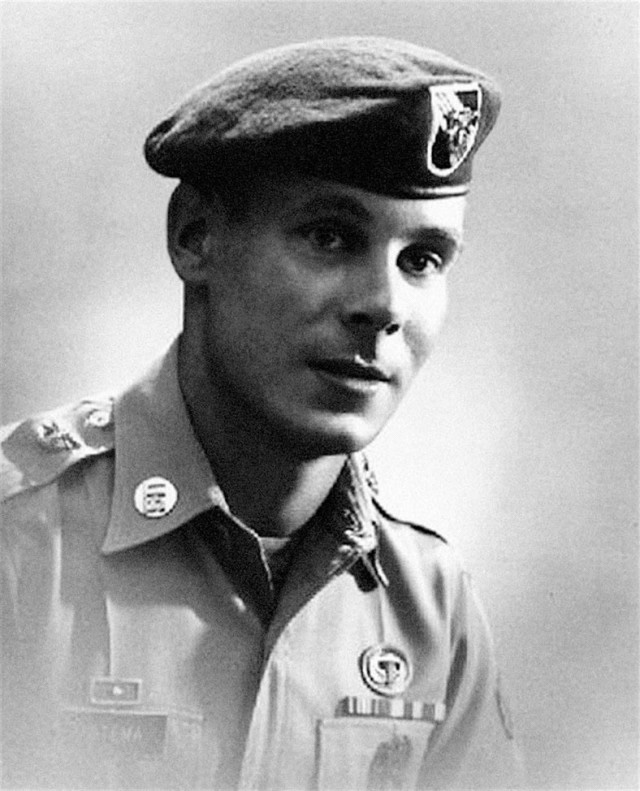

U.S. Army Sgt. Gordon D. Yntema was posthumously awarded the Medal of Honor on Dec. 2, 1969, for valorous actions near Thong Binh, South Vietnam, Jan. 16-18, 1968. He was assigned to Detachment A-431, Company D, 5th Special Forces Group (Airborne), at the time of his death. (Photo Credit: U.S. Army)

During the ensuing battle, Sgt. Gordon D. Yntema accompanied two platoons of civilian irregulars to a blocking position east of the village of Thong Binh, where they were attacked by a much larger force of Viet Cong. Yntema assumed control of the element after its commander was seriously wounded and led a tenacious defense despite overwhelming odds. Out of ammunition and reduced to using his rifle as a club, he held his ground until succumbing to enemy fire.

Staff Sgt. Drew D. Dix
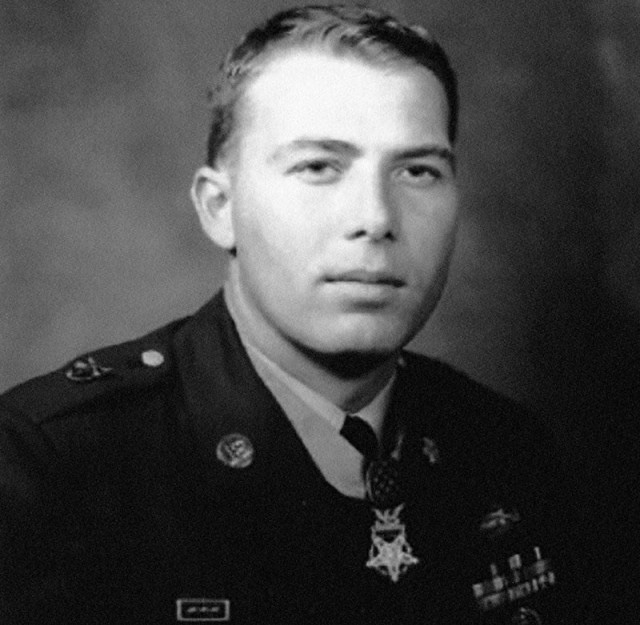

U.S. Army Staff Sgt. Drew D. Dix, 5th Special Forces Group (Airborne), was awarded the Medal of Honor on Jan. 16, 1969, for valorous actions in Chau Phu, South Vietnam, during opening days of the Tet Offensive (Jan. 31-Feb. 1, 1968). Dix later received a direct commission and retired from the U.S. Army in 1982, having attained the rank of major. (Photo Credit: U.S. Army)

Two weeks later, on the morning of January 30, communist forces attacked eight major South Vietnamese cities. The next day, fighting erupted almost everywhere across South Vietnam as the communists attacked more than 60 towns, 36 provincial capitals, and five of South Vietnam’s autonomous cities, including the capital city, Saigon. Chau City, capital of Chau Doc Province, was attacked by two Viet Cong battalions. Staff Sgt. Drew D. Dix, along with the South Vietnamese patrol he was advising, were called on to assist in the defense of beleaguered city.

Dix organized and led two separate relief forces that successfully rescued a total of nine trapped civilians. He subsequently assaulted an enemy-held building, killing six Viet Cong and rescuing two Filipinos. The following day, he assembled a 20-man force and cleared the Viet Cong out of a hotel, theater, and other adjacent buildings within the city. In the process, he captured 20 prisoners, including a high-ranking Viet Cong official. He then cleared enemy troops from the Deputy Province Chief’s residence, rescuing that official’s wife and children in the process.

Sgt. 1st Class Eugene Ashley, Jr.
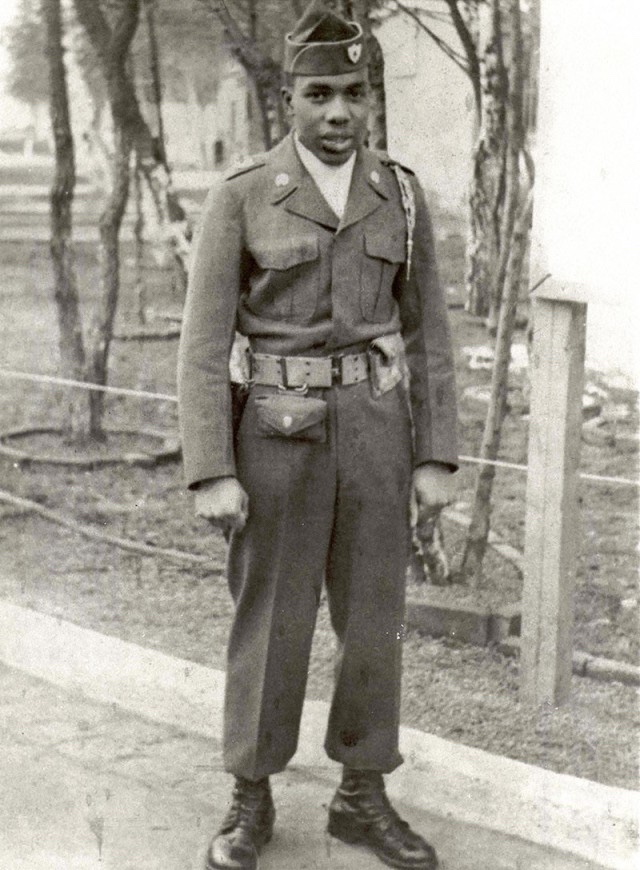

U.S. Army Sgt. 1st Class Eugene Ashley, Jr., was posthumously awarded the Medal of Honor on Nov. 18, 1969, for valorous actions near Lang Vei, South Vietnam, Feb. 6-7, 1968. He was assigned to Detachment A-101, Company C, 5th Special Forces Group (Airborne) at the time of his death. (Photo Credit: U.S. Army)

A week later, on the evening of Feb. 6, the NVA launched a surprise attack on the Special Forces camp at Lang Vei, in the northwest corner of South Vietnam. With the camp’s surviving Special Forces advisors trapped in a bunker, Sgt. 1st Class Eugene Ashley, Jr., organized a rescue effort, consisting mainly of friendly Laotians.

Ashley led his ad hoc assault force on a total of five assaults against the enemy, continuously exposing himself to withering small arms fire, which left him seriously wounded. During his fifth and final assault, he adjusted airstrikes nearly on top of his assault element, forcing the enemy to withdraw and resulting in friendly control of the summit of the hill. Following this assault, he lost consciousness and was carried from the summit by his comrades, only to suffer a fatal wound from an enemy artillery round. Ashley’s valiant efforts, at the cost of his own life, made it possible for the survivors of Camp Lang Vei to eventually escape to freedom.

Staff Sgt. Fred W. Zabitosky
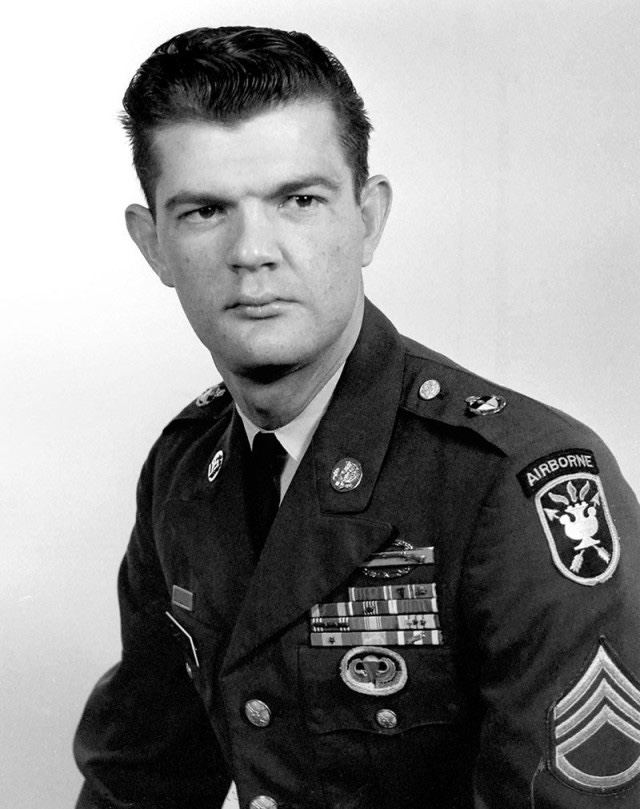

U.S. Army Sgt. 1st Class Fred Zabitosky, 5th Special Forces Group (Airborne), was awarded the Medal of Honor on March 7, 1969, for valorous actions east of Attopeu, Laos, on Feb. 19, 1968. He retired from the U.S. Army in 1977, having attained the rank of master sergeant. (Photo Credit: U.S. Army)

Later that month, on Feb. 19, Staff Sgt. Fred W. Zabitosky was part of a nine-man Special Forces long-range reconnaissance patrol operating deep within enemy controlled territory in Laos when his team was attacked by a numerically superior NVA force. Zabitosky rallied his team members and deployed them into defensive positions. When that position became untenable, he called for helicopter extraction. He organized a defensive perimeter and directed fire until the rescue helicopters arrived. He then continued to engage the enemy from the helicopter’s door as it took off, but the aircraft was soon disabled by enemy fire.

Zabitosky was thrown from the helicopter as it spun out of control and crashed. Recovering consciousness, he moved to the flaming wreckage and rescued the severely wounded pilot. Despite his own serious burns and crushed ribs, he carried and dragged the unconscious pilot through a curtain of enemy fire before collapsing within ten feet of a hovering rescue helicopter. Zabitosky would become the fourth Green Beret to receive the Medal of Honor for actions during the Tet Offensive period, joining Yntema, Dix, and Ashley.

These four Special Forces heroes were in good company. The mettle of the U.S. forces in Vietnam was severely tested during the opening months of 1968 in places such as Hue, Saigon, Lang Vei, Dak To, Quang Tri, and Khe Sahn. At every turn, the men and women of the U.S. military rose to the occasion, demonstrating indomitable valor and dealing the North Vietnamese and Viet Cong a crushing defeat. Combined, the Communist forces lost an estimated 72,455 soldiers between January and March 1968, compared with 15,715 allied dead, of which 4,869 were Americans.

A Turning Point: The Impact of the Tet Offensive

The ferocity of the Tet Offensive, and the resulting increase in U.S. casualties, alarmed both U.S. government officials and the American people. It also discredited the claims of progress from both military and political leadership. Anti-war protests intensified as more and more Americans came to share the assessment of popular news anchor Walter Cronkite that the war in Vietnam was unwinnable. President Johnson terminated his reelection campaign. The fighting continued under his successor, Richard M. Nixon, who adopted a strategy of “Vietnamization,” characterized by a gradual transfer of responsibility to South Vietnamese forces and a phased drawdown of U.S. troops.

On Jan. 27, 1973, nearly five years to the day after the start of the Tet Offensive, the United States, North Vietnam, South Vietnam, and the Viet Cong signed the Paris Peace Accords. The long U.S. combat mission in Vietnam ended two months later, on March 29, 1973. North Vietnam later resumed offensive operations, eventually capturing Saigon on April 30, 1975, thereby ending the war and uniting Vietnam under Communist rule.

Twenty-two Green Berets earned the nation’s highest award for valor for service in Vietnam, eight of them posthumously. In the 50 years since, time has not dimmed, nor will it ever dim, the glory of their deeds. Their valorous actions, often at the cost of their own lives, continue to inspire U.S. Army Special Operations Forces soldiers, the U.S. Army, and the nation.

For more information, visit www.arsof-history.org/medal_of_honor/index.

By Christopher E. Howard, USASOC History Office

Army Editor’s note: The article contributes background to the U.S. Army Center of Military History’s pamphlet referencing the U.S. Army Campaigns of the Vietnam War series, Turning Point, 1967–1968, by Adrian G. Trass.

About the author: Christopher E. Howard served four years in the U.S. Army as a psychological operations specialist before earning an M.A. in History from Appalachian State University. He joined the USASOC History Office as a staff historian in June 2018.


20th Special Forces Group Military Intelligence Company Conducts Water Jump

Tuesday, February 7th, 2023

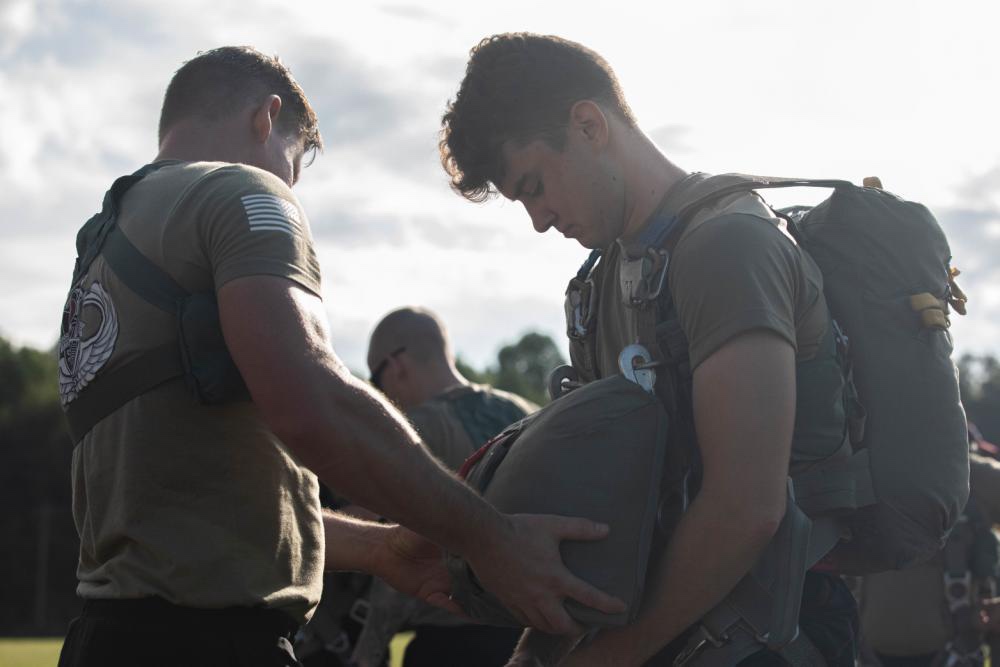
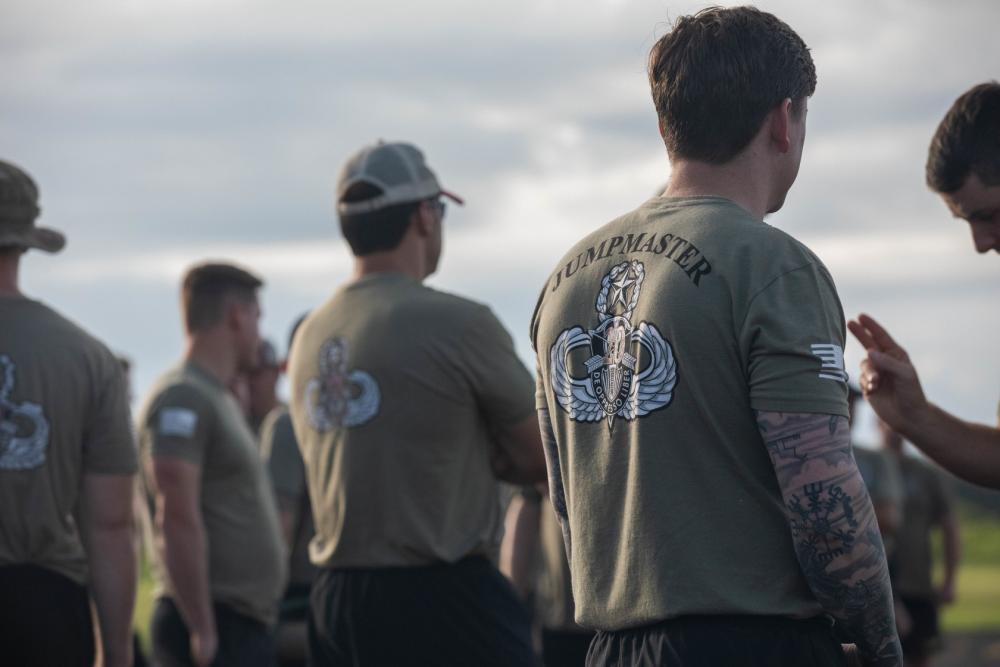
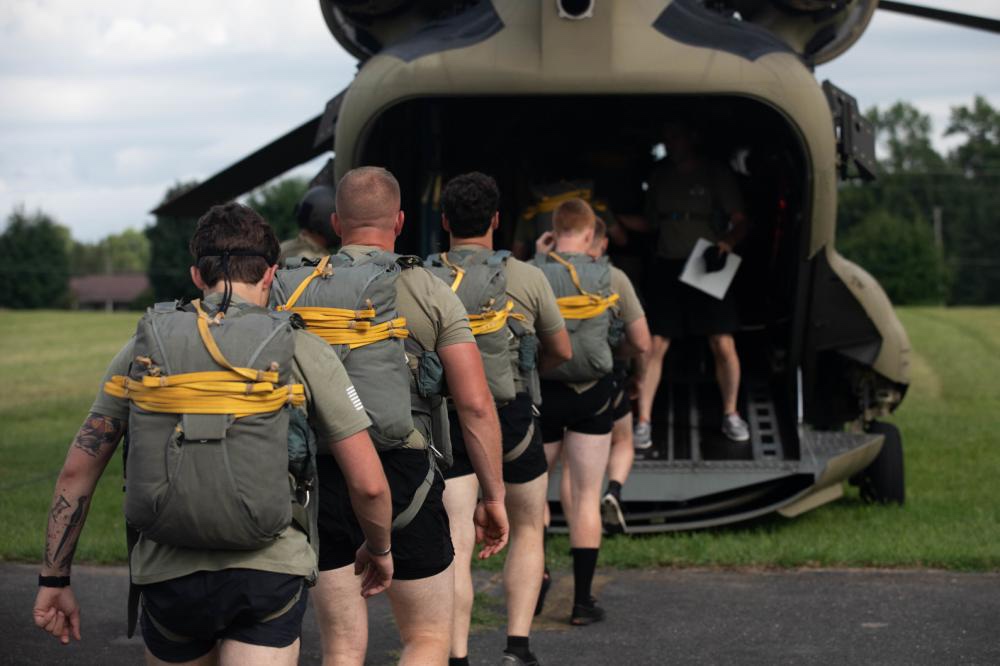
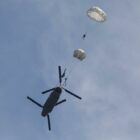
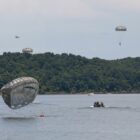
GREEN RIVER LAKE, KY – Soldiers of the 20th Special Forces Group Military Intelligence Company (MICO) conducted a water jump at Green River Lake near Campbellsville, KY, Aug. 6, 2022. The jump was conducted to enhance the company’s proficiency in conducting airborne operations that require a water landing.


“This type of training is important to ensure that when we conduct these sorts of operations over water that our soldiers remain safe.” Said Sgt. 1st Class Raymond Lunger, a jumpmaster with the 20th Special Forces Group MICO. As a facilitating jumpmaster in the training event, Lunger ensured that all soldiers participating in the jump had a thorough understanding of the jumping process, while also training the MICO on the survival swimming required to avoid entanglement or entrapment beneath a parachute in the water – both very real risks when performing airborne operations into water.

For a few soldiers in the 20th Special Forces Group MICO, this was their first time conducting this sort of airborne jump. As new soldiers arrive to the MICO from AIT, the importance of properly training and maintaining proficiency in this skill has only increased. Jumpmasters ensured that these soldiers understood the process of making the jump, the survival swimming required after landing in water, and how to handle their parachute as it becomes waterlogged.

“Today was a special day because you don’t have to worry about landing on the ground and any sort of impact there. It’s just nice and smooth into the water.” Said Spc. John Stark. This was Stark’s first time performing a water jump with the MICO. “It’s against human nature to jump off of something at fifteen-hundred feet with the faith that something is going to catch you… I love having these [training] exercises because for me personally, it stretches me.”

Solders’ families and the locals from Campbellsville gathered by the lakeshore to watch as the 20th Special Forces Group MICO conducted the training exercise. The soldiers made a total of 4 flights over the lake. During each pass, the soldiers defied human nature and jumped into the open air. The only thing standing between them and a fatal fall was a pack full of fabric and rope secured to their backs – their parachutes. After the thrill of jumping out of the aircraft, the soldiers enjoyed a steady descent down into the lake, where Zodiac rafts pulled them from the water and brought them to shore. For many, their families watched the training and welcomed them back to shore with cheers.

Story by SPC Caleb Sooter 

133rd Mobile Public Affairs Detachment

Department of the Air Force to Conduct Hackathon

Monday, February 6th, 2023

WASHINGTON (AFNS) —

The Department of the Air Force will conduct its next “BRAVO” hackathon March 20 – 24, 2023, this time at Hurlburt Field, Florida.

Any American citizen may apply, regardless of whether they currently work for the Department of the Air Force. Applicants are required to apply online here. Applicants should apply by Feb. 15.

Attendees are not required to hold a security clearance. However, certain spaces, use cases, and datasets may require a U.S. secret security clearance or higher. Organizers may request additional information for clearances that applicants possess. Applicants may apply as an employee for the U.S. government, a U.S. government contractor, or a U.S. citizen either affiliated or unaffiliated with a company.

A hackathon is an innovation event commonly employed by technology companies in which teams develop prototypes working around the clock in response to enterprise challenges associated with data. Prior BRAVO projects have produced multiple prototypes and inventions influencing major Defense Department programs.

Federal government employees and federal contractors representing federal organizations are encouraged to share sponsoring use cases, data, or infrastructure relevant to the primary mission of the Department of Defense for use at this event by contacting SAF.CN.BRAVO@us.af.mil.

“Across the previous hackathons, we have honed methods to build and fight with classified and protected data of increasingly larger size and varied origin,” said Stuart Wagner, chief digital transformation officer for the U.S. Department of the Air Force and hackathon organizer. “Hurlburt Field will prototype joint use cases, data and software infrastructures from combatant commands and various military departments.”

In January 2022, the department ran BRAVO 0, its first department-wide classified innovation hackathon with Air Force weapons system data at Nellis Air Force Base, Nevada. BRAVO 1 Canary Release grew the effort when in July 2022, the department ran its second hackathon simultaneously at Joint Base Langley-Eustis, Virginia; Patrick Space Force Base, Florida; and Eglin AFB, Florida, with about 300 hackers.

BRAVO allows participants to rapidly commingle and run open-source software and data otherwise unapproved for production with classified or protected data.

“BRAVO moves from the traditional DoD development model operating at the unclassified level where we push code up to protected environments, to a permissive development model on protected data, which we refer to as ‘Dev High,’” Wagner said. “This enables developers to build weapons’ capabilities and calibrations directly with the data at lower cost compared to traditional prototyping pipelines and at a rate faster than an adversary is likely to build countering capability. This event will test how ‘Dev High’ scales to joint multi-domain use cases.”

Applicants looking to participate may do so in one of three roles. The “Hacker” role is open to all applicants and expects project builders with varying skill sets and experience, including software development, data science, machine learning, design and user interface/user design, data visualization, product management or warfighter subject matter expertise.

The “Subject Matter Expert” role is open only to government and government contractors and supports multiple teams with specific expertise or knowledge about a use case or dataset offered at the event. Any federal organization is eligible to supply a use case or dataset for consideration.

The “Supporter” role is open only to government and government contractors and provides administrative support to the event by running security, facilitating supplies delivery, organizing social events, and facilitating the delivery of science fair materials and attendee check-in.

Organizations providing infrastructure support include the “STITCHES” Warfighter Application Team, the Navy Project Overmatch program, Project Arc, Office of the Secretary of Defense Advana Edge and Air Force Chief Digital and Artificial Intelligence Office. All five U.S. military services and U.S. Special Operations Command provide use cases and data.

The BRAVO hackathon series is named after “Project B,” a 1921 series of joint Army-Navy target exercises based on Army Brig. Gen. Billy Mitchell’s then-controversial claim that bombers sink battleships. Also styled after Project B, BRAVO hackathons are designed to allow government, academia, industry and citizens to test and validate bold ideas using real DoD data, Wagner said.

Story by Secretary of the Air Force Public Affairs

Photo by TSgt Tabatha Arellano

Army’s First Female Deep-Sea Diver Reflects on Career

Sunday, February 5th, 2023

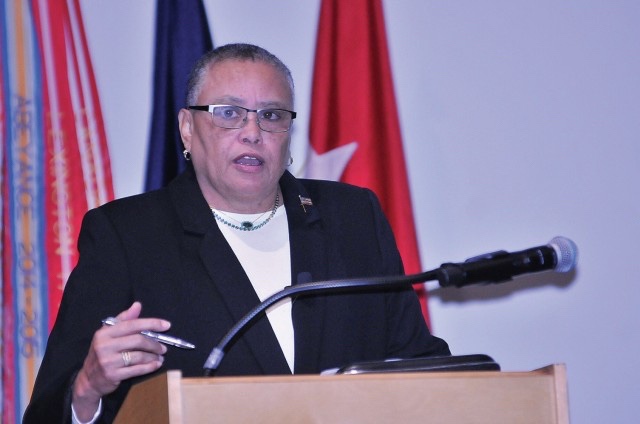
FORT LEE, Va. — Andrea Motley Crabtree’s career can be lauded as a ground-breaking triumph.

Or, it could be noted as a tragic tale of lingering misery, a grim reminder such achievements often come with human tolls.

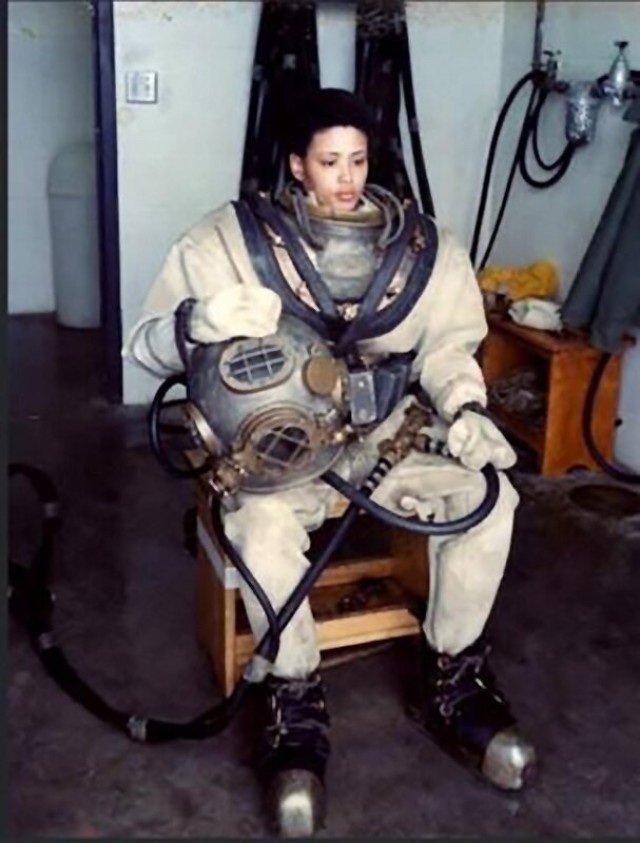
Crabtree is the Army’s first female deep-sea diver and the first African American female deep-sea diver in any branch of service.

The retired Army master sergeant was the guest speaker at the Martin Luther King Jr. observance Jan. 19 at the Lee Theater. She spoke in front of a few hundred people, including CASCOM and Fort Lee commanding general Maj. Gen. Mark T. Simerly, whom she has known 30 years.

During the speech, the 64-year-old laid bare her fight to pursue what she loved, the forces that undermined her ambitions and the deep, invisible wounds she suffered as a result.

Crabtree said she knew the journey to earning the Army Diver Badge would be fraught with difficulty — a classmate said she “belonged in the kitchen barefoot and pregnant” — but even she could not anticipate the malevolence exhibited by some classmates because she was black and female.

“I expected to go through a lot of hazing when I went through dive school and I did,” she recalled, “and I actually agree with the process. Once that diver badge is pinned on, any diver that sees that pin knows exactly what I went through and what I’m capable of, and I knew the same of them … If they were wearing that pin, I knew they knew what they were doing. That should have been enough. That should tell it all. For me, it never stopped. I had to prove myself over and over and over again every day.”

The Westchester, N.Y., native was the only Black person and the only woman among eight Soldiers and more than 20 others on day one of her 1982 class at the U.S. Navy Deep Sea Diving and Salvage School at Panama Beach, Florida. The three-month program of instruction awarded the Corps of Engineers’ military occupational specialty 00B to Soldiers, who go on to use their training to support underwater maintenance and construction projects amongst other missions.

To graduate, students were required to pass a health and fitness assessment that disqualified many. Other course challenges included requirements to rise from a seated position wearing the 198-pound Mark V deep sea dive suit, walking to a ladder, descending into the water and climbing back up. In the end, Crabtree was one of only two Soldiers and nine Sailors to earn the coveted diver badge.

Although Crabtree had accomplished what no female Soldier had in the predominately white, male career field, there would be no confetti drop. It became clear from her first assignment at Fort Belvoir.

“There were only about 39 divers total in the Unites States Army diving field at that time — all male — and the majority of them were not thrilled to have me,” she said.

Soldiers’ expressions of disapproval included pranks such as turning Crabtree’s air off underwater; placing a dead snake in the freezer; walking around naked following physical training; and “assigning me with what they thought were impossible tasks to complete,” she said.

Nevertheless, Crabtree dove head-first into her duties because the rewards were much greater than the efforts to stop her.

“For the most part, I could put up with it because I was a diver, I was diving, I was doing what I loved and I was learning,” said the Soldier of 21 years and mother of three adult sons. “I was learning to become a better diver. I loved what I was doing.”

Seeing she might rankle the dive community’s elitist culture, Crabtree said she was shipped off to South Korea after about eight months at Fort Belvoir. There loomed one Sgt. 1st Class James P. “Frenchy” Leveille, a renowned master diver who had enough juice to squeeze Crabtree out of the career field. He introduced himself to her via a boisterous, blustering tirade on who was in charge and how things would be run.

“He told me I was no different than any other diver, and if I couldn’t pull my weight, he’d be getting rid of me,” Crabtree recalled. “He went on and on and on and on.”

Leveille defied what many thought was his role in pushing Crabtree out of the career field, she said. Instead, he turned out to be no more or less than a hard-but-fair Soldier who took care of his troops no matter what and who was ready to challenge anyone questioning his leadership.

“He told all the divers that he would decide who dove, when they dove and who they would dive with, and anybody who wouldn’t dive with me wouldn’t dive at all and would be taken off of dive duty,” she added.

Leveille, now 75, said he staked his career on fairness and was not ignorant to Crabtree’s circumstance.

“As far as I was concerned, she was going to get the same treatment and same opportunity as everybody else,” said retired the sergeant major, “and she did very well for herself. She was a good diver, and she was a good Soldier. That’s the way I rated her.”

Leveille’s directive to his troops was clear — he called the shots and nothing was going to happen to Crabtree or anyone else unless he approved. He stood firm on what was right in the face of tense dissent, and the troops eventually fell in line, said Crabtree.

“It was only due to the respect they had for him, that they did as they were told,” she said. “Command climate is everything. It trickles down. No one was going to go against Frenchy.”

Crabtree, who remains friends with Leveille, said she grew under his leadership, learning more about diving than in dive school. Her proficiency eventually became a threat to earning diving’s most coveted honor. In the eyes of diving’s leadership at the time, it was one thing to be a female diver, but it was downright blasphemous for one to sport the Master Diver Badge, said Crabtree.

“I’m not trying to be conceited,” she said, “but I was a good diver. And the senior leadership knew it. They knew if I was allowed to continue, I would’ve made master diver. And they would be damned if that was going to happen on their watch.”

Crabtree at some point concluded leaders bet against her becoming a diver in the first place. When she questioned why she was accommodated prior to training and not so much during the course and afterward, one officer concluded, “We didn’t think you’d make it.”

Crabtree withstood powerful gales of hostility in doing so, but destructive storms were brewing on the horizon. Her orders for advanced schooling in California following the Korea assignment were cancelled; her 300-point Army Physical Fitness Tests were rescored as a male’s; and she later received notice her MOS would be closed to women due to changes in policy.

Deciding some of the actions directed against her were discriminatory, Crabtree filed complaints with her chain of command, the post inspector general, the specialized training branch sergeant major and the Department of the Army inspector general.

“They all wouldn’t help me,” she recalled. “They all said there was nothing they could do. I told my command they had won and requested to be relieved from dive duty. I’ve been angry every day since then.”

That was 1985. Crabtree finished out her career as a signal Soldier. Over the course of leaving dive duty, her indignation has grown into debilitating discontent, consuming every corner of her consciousness.

“That anger has taken its toll on every aspect of my life — on my marriage, my children. It’s affected my finances and, most of all, it’s affected my mental health,” she said.

Crabtree, who was accompanied by her service dog Buddy during the speech, said she could accept people resisting her for breaking new ground but has had difficulty reconciling why she was ill-treated.

“It didn’t bother me when I was the only woman; it didn’t bother me when I was the only Black,” she said. “What bothered me was the way they treated me because I am a Black woman.

“I know what it feels like to be hated because I’m a woman,” continued Crabtree, “and I know what it feels like to be hated because of my race. Yes, I’m sure a lot has changed for the good in the last 25 years, but many of the same issues are still hanging around as well as plenty of new issues that are not being addressed properly …”

Crabtree said a strong, values-driven command climate is a potent antidote for building foundations that are supportive of Soldiers.

“Soldiers will follow without question the leaders who take care of them,” she said to the audience. “Be a good leader. Take care of your Soldiers, and they will take care of you.”

Now living in the Augusta, Georgia area, Crabtree said she has spent considerable time trying to heal as a result of what she experienced in the Army. Engagements such as the Fort Lee MLK event at which she spoke have helped.

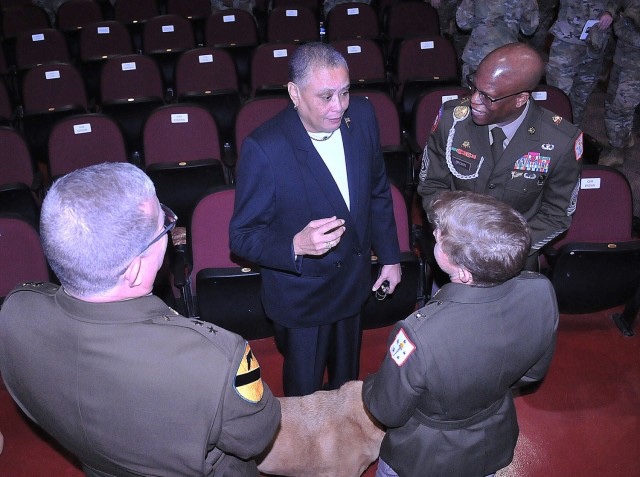
After the speech, Crabtree spoke with Soldiers and many were thankful she shared her story. One interaction with an officer was notable and even haunting because it proved to be powerfully restorative, if only in a small way.

“I get a little choked up when I think about it,” said Crabtree later of her exchange with a senior Soldier who had no hand in her ordeal. “He handed me a coin, took off his Sapper Badge (Tab) and apologized for the engineers. He’s an engineer officer. It’s the first apology I received from anybody associated with the Engineer Corps or the military. It’s really had an effect on me.”

The effect of offering glimmers of hope in an otherwise tragic tale of lingering misery.

By Terrance Bell

Army Editor’s note: In the U.S. Army today, males and females can sign up for the dive MOS — re-designated 12B — as well as many others that were only open to males when Crabtree enlisted. They include those in infantry, armor, field artillery and special forces. The U.S. Army also has initiated numerous efforts to ensure all Soldiers are treated with dignity and respect.