TYR Tactical

Archive for the ‘Guest Post’ Category

Army Units Train for Nuclear Forensics Mission During Exercise Prominent Hunt

Saturday, April 16th, 2022

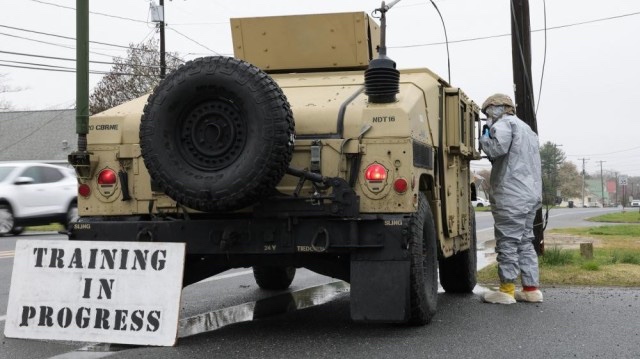
BETHANY BEACH, Del. — Highly specialized American Army units from the U.S. Department of Defense’s premier all hazards command trained for interagency nuclear forensics missions during Exercise Prominent Hunt at Bethany Beach, Delaware, April 4-7.
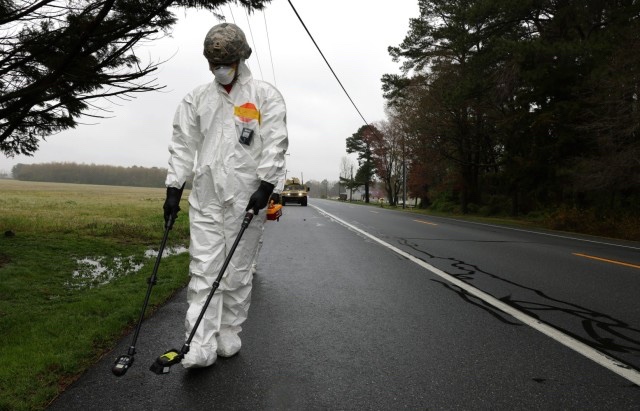
The 20th Chemical, Biological, Radiological, Nuclear, Explosives Command’s Nuclear Disablement Team 2 and 3rd CBRNE Response Team qualified to serve as a part of the National Technical Nuclear Forensics Ground Collection Task Force at the conclusion of Prominent Hunt.

NTNF members who have recently served on prepare-to-deploy orders for the task force — including members of NDT 3, 2nd CRT from the 46th Chemical Company, Army Public Health Center and AFTAC — served as observers and controllers during the exercise.

Soldiers from the Joint Base Lewis-McChord, Washington-based 3rd CBRNE Response Team, 9th Chemical Company, trained for their NTNF mission of collecting ground samples through crawl, walk and run phases.

“Prominent Hunt promotes tactical and operational readiness to react in a nuclear emergency to meet the Army’s current demands,” said 1st Lt. Samantha K. Roberson, the team leader for CRT 3. “This mission specifically gives our Soldiers a further understanding on the radiation and nuclear portion of our mission-essential tasks. These lessons they can internalize and apply to future missions and carry on to their future Soldiers.”
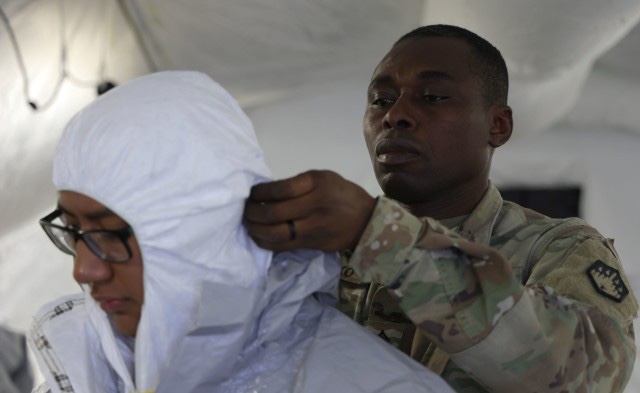
According to Roberson, CRTs have to stay ready for all four weapons of mass destruction threats: chemical, biological, radiological and nuclear.

“This task force gives us a rare opportunity to exercise our radiological and nuclear capabilities. In this particular mission, we stress our ground sampling and escort tasks alongside the FBI and Department of Energy to create a joint task force,” said Roberson.

A former enlisted Soldier from Baton Rouge, Louisiana, Roberson was commissioned into the U.S. Army Chemical Corps in August 2019 after earning a bachelor’s degree in Environmental Science and Toxicity from the University of Louisiana at Lafayette, Louisiana.

“I felt drawn to the Chemical Corps as it naturally pairs with my degree,” said Roberson. “The Chemical Corps has provided me with the opportunity to learn more of what I’m passionate about, while protecting my fellow Soldiers from any CBRN threats.”
NDTs directly contribute to the nation’s strategic deterrence by staying ready to exploit and disable nuclear and radiological WMD infrastructure and components to deny near-term capability to adversaries. They also facilitate follow-on WMD elimination operations.

As the U.S. Department of Defense’s nuclear subject matter experts, Nuclear Disablement Teams serve as an informed interface between the CBRNE Response Team and the Department of Energy technical experts. The U.S. Army’s three Nuclear Disablement Teams — NDT 1 “Manhattan,” NDT 2 “Iron Maiden” and NDT 3 “Vandals” — are all stationed on Aberdeen Proving Ground, Maryland.

Maj. Stacey M. Yarborough, the deputy team leader for the Nuclear Disablement 3, served as an observer during the exercise.

“The NDTs are the DoD component lead,” said Yarborough. “We exercise mission command over elements from a CBRNE Reconnaissance Team, the Air Force Technical Applications Center and augmentations from the 20th CBRNE Headquarters.”
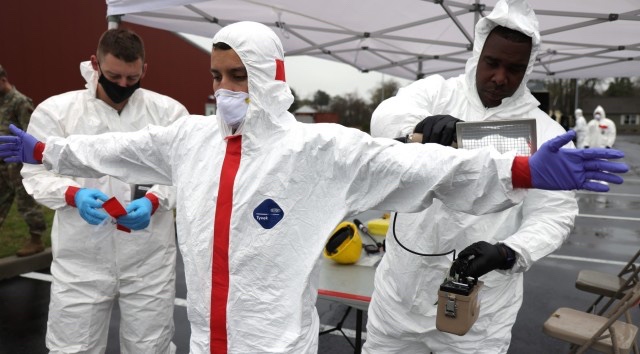
Yarborough said NDTs plan and battle track ground collection missions through a variety of Department of Defense communication systems.

“Our Medical Science Officer and Health Physics Technician noncommissioned officers monitor all members of the ground collection team for radiation exposure forward of the DoE hotline,” said Yarborough, a Nuclear and Countering Weapons of Mass Destruction officer from Felton, Delaware.

Lt. Col. Ronald C. Lenker, the team leader for NDT 2, served as the task force leader during exercise, a role usually reserved for an FBI Special Agent.

“The Ground Collection Task Force is led by the FBI as the task force leader and the Department of Energy also provides a deputy task force leader,” said Lenker. “In this particular scenario, no FBI agent was available, so I’m the acting task force leader for this exercise.”

An 18-year Army veteran from Wiconisco, Pennsylvania, who has deployed to Kuwait and Iraq, Lenker has participated in Exercise Prominent Hunt six times, including three exercises as a player and three as an observer and controller.
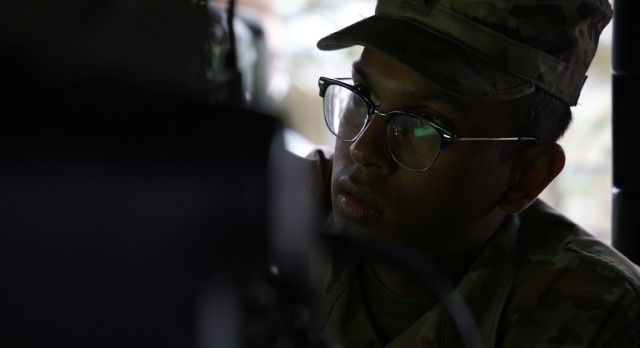
“Prominent Hunt is extremely important to the NTNF GCTF,” said Lenker. “This exercise demonstrates several agencies from the federal government can come together, swiftly form a cohesive task force and accomplish the mission In this case, attribution for the detonation of a terrorist initiated improvised nuclear device.”

Lenker said the task force came together to navigate around obstacles during the exercise. When one system went down, the operations team used a joint mapping tool in Humvee to track the plume of a simulated detonation.

“The highlight for me is seeing my Soldier and Airman teammates overcoming challenges as they arise,” said Lenker. “It’s this type of problem solving skills that set our military personnel apart from any other military in the world in my opinion.”

Story by Walter Ham

Photos by Marshall R Mason

??????????

As a part of an interagency task force lead by the FBI, the National Technical Nuclear Forensics Ground Collection Task Force gathers and packages samples of radioactive fallout that enable partner agencies to determine the source.

Headquartered on Aberdeen Proving Ground, Maryland, the 20th CBRNE Command is home to 75 percent of the U.S. Army’s active-duty explosive ordnance disposal technicians and chemical, biological, radiological, nuclear specialists, as well as the 1st Area Medical Laboratory, CBRNE Analytical and Remediation Activity, five Weapons of Mass Destruction Coordination Teams and three Nuclear Disablement Teams.

From 19 bases in 16 states, Soldiers and civilians from the 20th CBRNE Command deploy to confront and defeat the world’s most dangerous hazards during joint, interagency and allied operations around the world.
Infantry Week Highlights Soldiers’ Combat-Readiness

Saturday, April 16th, 2022

FORT BENNING, Ga. — U.S. service members throughout the Department of Defense, along with partner nations, converged at Fort Benning, Georgia, April 4-11 to compete during U.S. Army Infantry Week.

Infantry Week supports service members’ readiness by providing a controlled, high-pressure environment to validate tactics, techniques and procedures, test the latest doctrine, highlight Infantry initiatives and build esprit de corps through competition and camaraderie.

An annual event hosted by the U.S. Army Infantry School, Infantry Week is the venue for some of the most physically and mentally demanding challenges any Soldier can face in a U.S. Army competition.

Infantry Week is comprised of three events: the International Sniper Competition, the All-Army Lacerda Cup Combatives Competition and the Best Ranger Competition.

The week kicked off with the International Sniper Competition where teams competed in a three-day test of precision, technique and teamwork.

Instructors from the U.S. Army Infantry School designed a gauntlet that challenged each three-person team’s ability to work together within a range of sniper skills. Events included long-range marksmanship, observation, reconnaissance, communications and the ability to move with stealth.

The sniper team from U.S. Army 2nd Special Warfare Training Group (Airborne), based at Fort Bragg, North Carolina, earned the title of the world’s best sniper team.

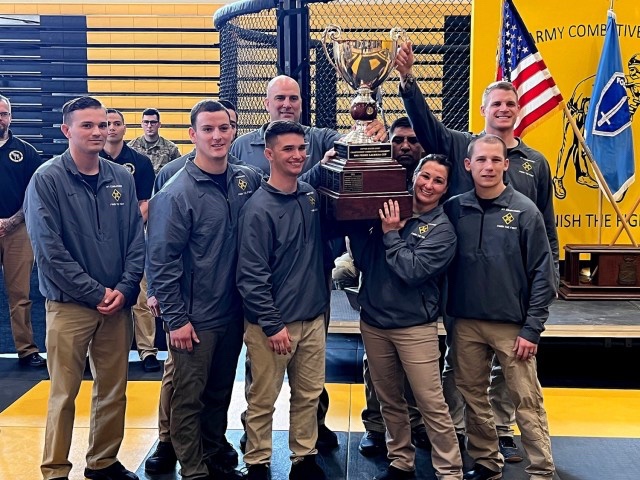
The All-Army Lacerda Cup Combatives Competition features teams of eight individuals from across the Army who competed in a three-day event, hand-to-hand, for the tournament titles. Soldiers went in head-to-head matches against opponents in their respective weight classes.

The competition enhances unit combat readiness by building Soldiers’ personal courage, confidence and resiliency as well as situational responsiveness to close quarters’ threats in the operational environment.

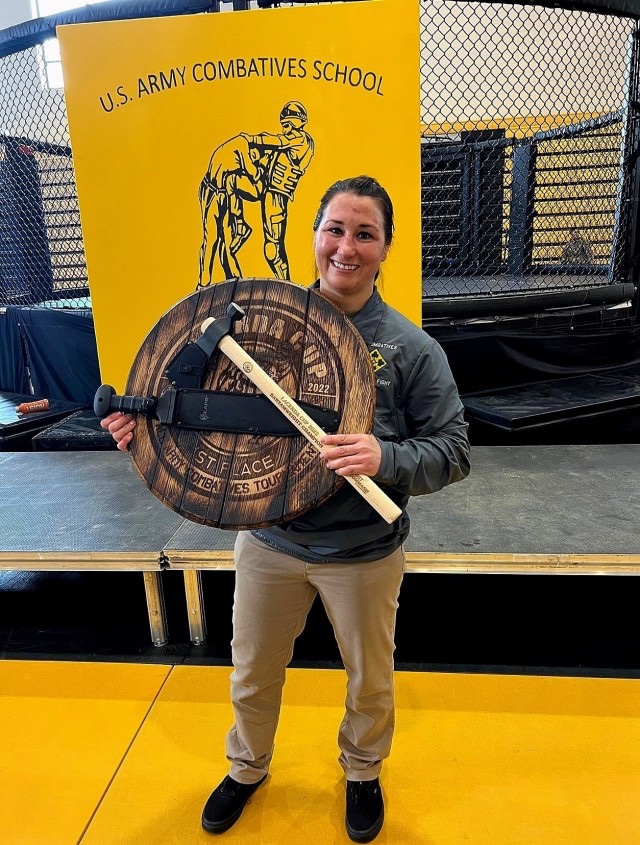
U.S. Army Staff Sgt. Sharon Jacobson, from Colorado Springs, Colorado, became the first female noncommissioned officer to win the Lacerda Cup Combatives Competition.

“It’s an honor. It’s amazing. I’m the first NCO enlisted female Soldier to do it. It feels really good. I’m really proud of myself,” said Jacobson. “These competitions push Soldiers and NCOs to their limits both mentally and physically.”

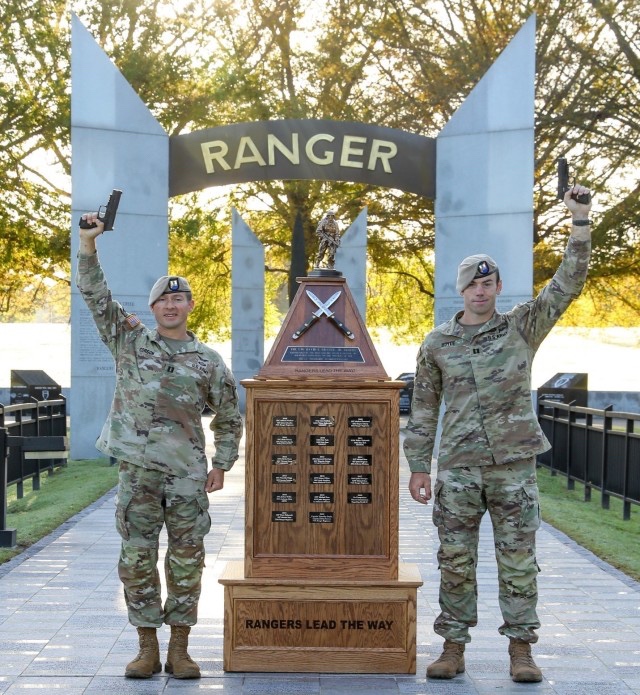
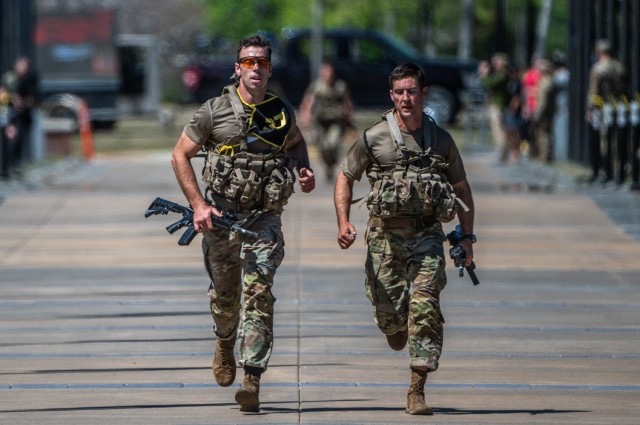
This year, U.S. Army Ranger-qualified two-person teams competed in the David E. Grange Jr. Best Ranger Competition. The grueling 60-hour event tested each team’s physical, mental, technical and tactical skills. Back-to-back events featured weapons firing, extended foot marches, land-navigation courses and Ranger-specific tasks.

The winners of the 2022 David E. Grange Jr. Best Ranger Competition representing the 75th Ranger Regiment were Capts. Joshua Corson and Tymothy Boyle.

Corson highlighted a lesson he can bring back to his unit. “Competing … brings back the drive to want to compete, the drive to want to win, the drive to do better every day and not give up,” said Corson.

Boyle spoke on why winning the Best Ranger Competition matters to him. ‘We have to go as hard as we can, we have to try to win because that is what our job is because we owe it to everybody we represent,” said Boyle.

The fierce competition coupled with camaraderie displayed throughout the seven-day event made this Infantry Week an incredibly successful event.

Story by Alexander Gago

Photos by Patrick A. Albright, Alexander Gago, and Markeith Horace.

Thai Cave Rescue Mission – MSgt Ken O’Brien at NMUSAF

Friday, April 15th, 2022

Featured guest speaker, Master Sgt. Ken O’Brien, shared his experience in the Thai Cave Rescue during the Humanitarian Exhibit opening at the National Museum of the USAF. O’Brien played an instrumental role in the Thailand Cave rescue mission. He was essential in creating the rescue plan, which placed himself as the furthest American inside the cave. During the mission, he also led the effort to retrieve and successfully resuscitate a Thai Navy SEAL. His team’s heroic efforts led to the rescue of 13 Thai civilians.

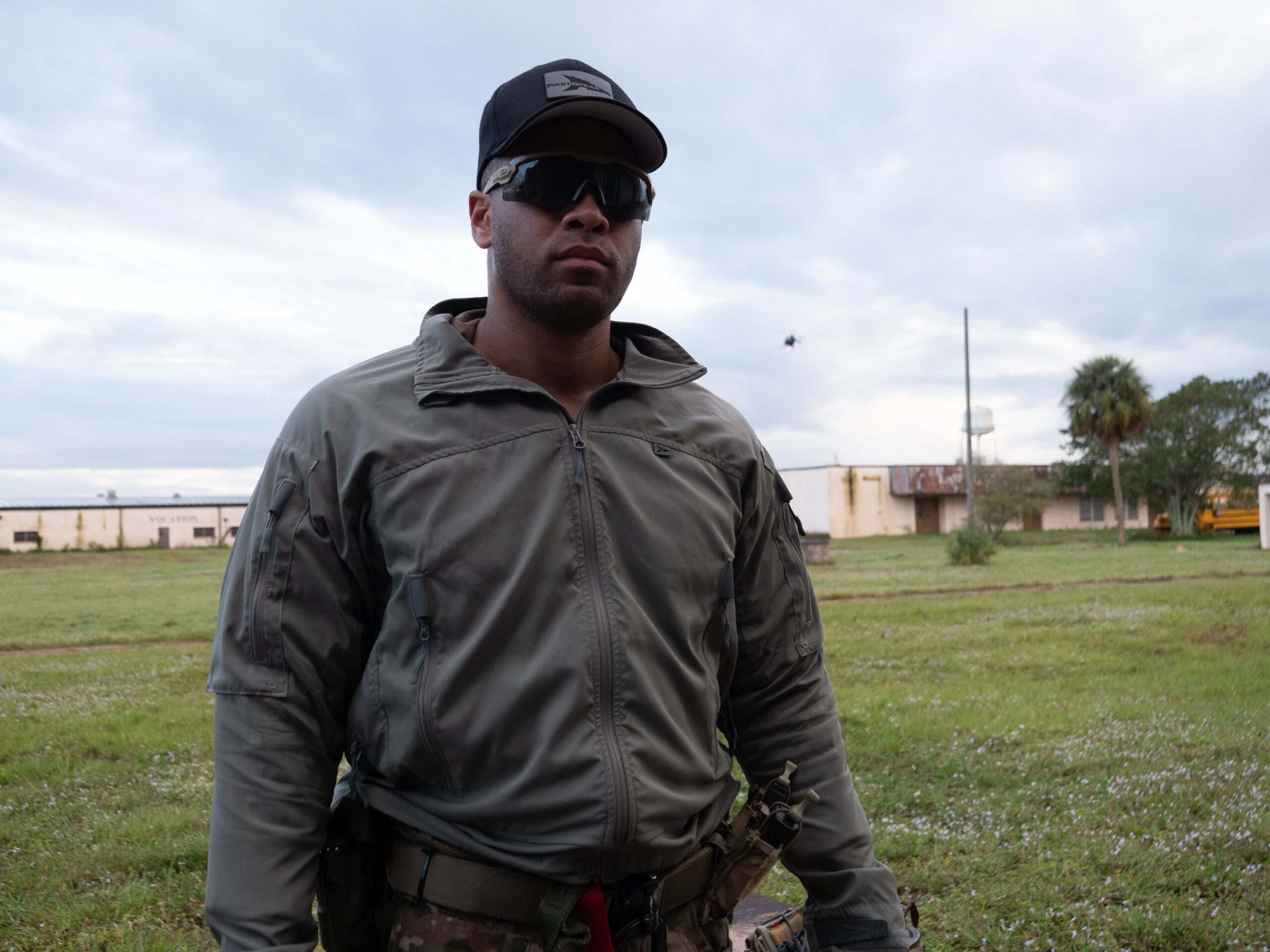
FirstSpear Friday Focus: NEW Halifax Jacket

Friday, April 15th, 2022

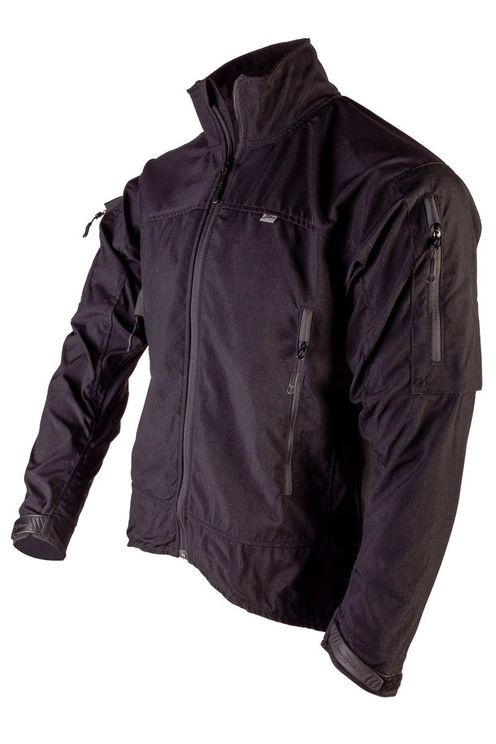
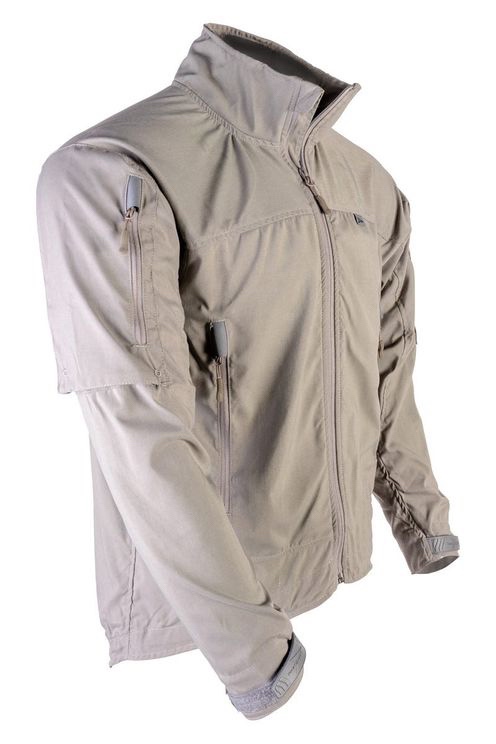
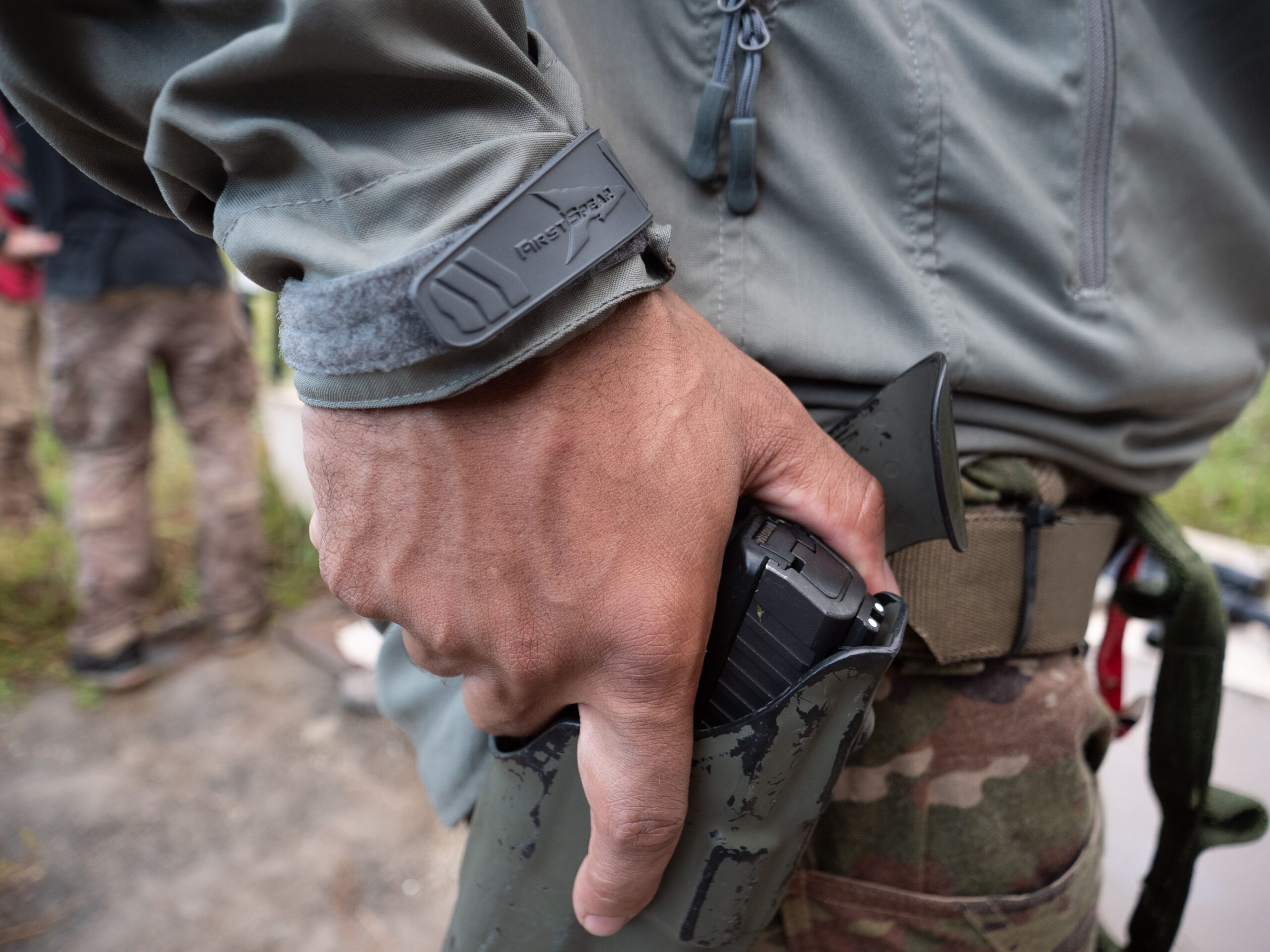
A tip of the hat to its namesake, the Halifax Gibbet (guillotine), this “headless” or hoodless Wind Cheater has all the essential features covered. Soft and quiet with a Durable Water Repellant (DWR) finish, it breathes like a T-shirt, sheds wind, and dries very quickly.

• Ultralight breathable shell
• Durable Water Repellent (DWR) Finish
• Hoodless
• Made in USA

This is not a rain proof jacket, but it will shed some moisture thanks to the DWR coating and will dry very quickly. Great compression and features bungees at the bottom to cinch the jacket tightly. A longer tail in the back is perfect for range days and keeping you out of the elements.


It has sleek, large bicep pockets that will fit your essentials. The Halifax Jacket is “true to fit”, your t-shirt size is your jacket size. If you wear a large shirt and don’t plan to layer heavily underneath, go with a large Halifax Jacket. The sizing is also identical to our popular Wind Cheater jacket.

Available now in black and manatee! https://www.first-spear.com/halifax-jacket

Welcome to the Jungle: Special Warfare Airmen Acclimate to Indo-Pacific Environment

Friday, April 15th, 2022

WAHIAWA, Hawaii (AFNS) —  

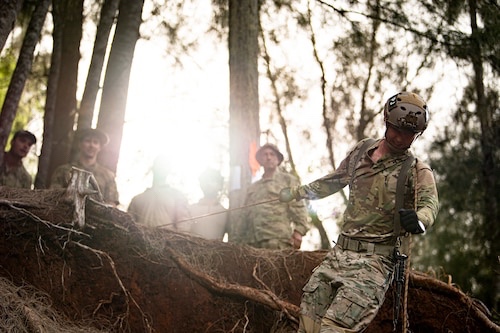
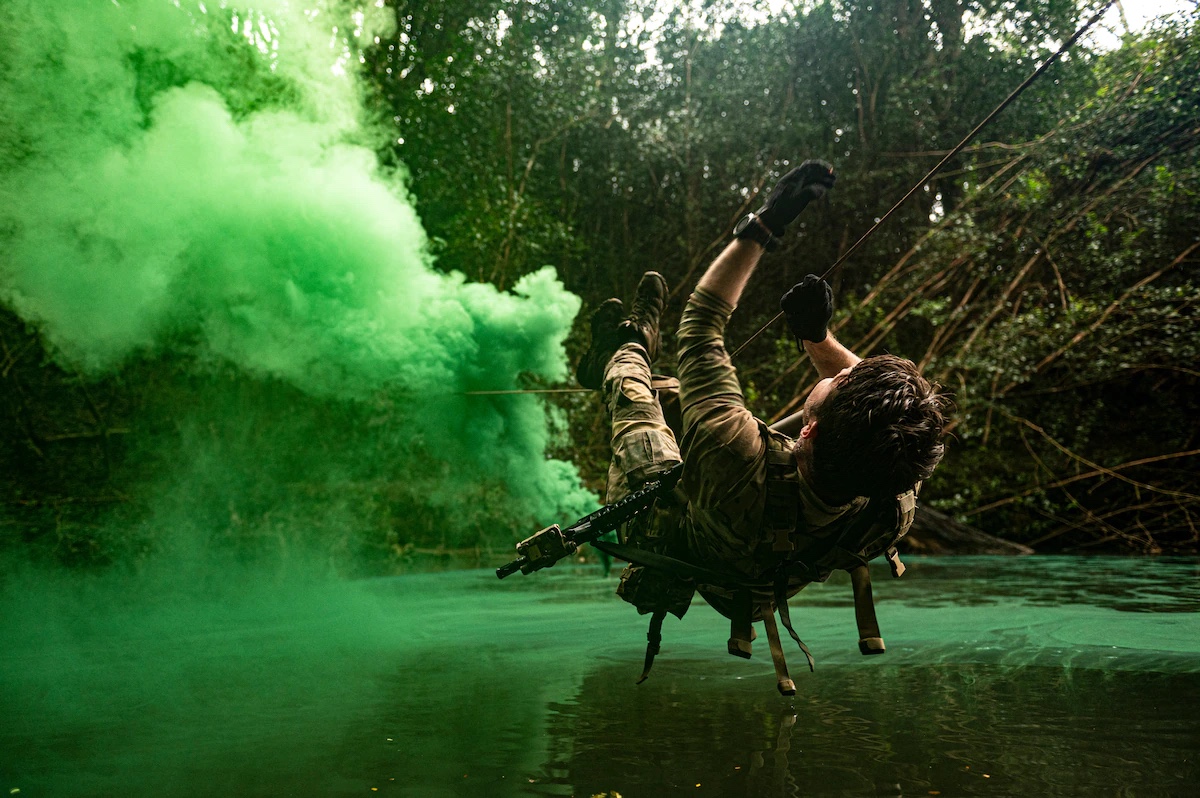
The 38th Rescue Squadron’s Blue Team traveled to Hawaii to conduct jungle warfare training, March 26 – April 10.

Moody Air Force Base’s pararescuemen are special warfare operators charged with the responsibility of rescuing personnel all around the world. As such, it’s vital they familiarize themselves with all types of environments.
In an effort to sharpen their capabilities in rescue operations throughout the Indo-Pacific region, Blue Team learned how to track personnel in the jungle.

“The jungle is a very unforgiving environment,” said Lt. Col. Michael Vins, 38th RQS commander. “There are areas in the jungle where you can only travel 100 meters in an entire day. We need to be ready for that kind of environment by training there, understanding how to survive there, using different equipment … everything is so different, so we need to get used to that kind of environment to be effective in (Indo-Pacific Command).”

Blue Team put their tactics, techniques and procedures (TTP) to the test in a climate they had never experienced before by performing a series of training scenarios to include team vs. team tracking and anti-tracking exercises.

“Over the last 20 years, we’ve gotten really good at desert warfare with the war in Afghanistan and Iraq,” said Staff Sgt. Evan Rogowski, 38th RQS Blue Team pararescueman. “With that kind of phasing away, and the new area of responsibility quickly becoming the INDOPACOM region, we’re really having to take a step back from some of the older TTPs that seemed to work well in the desert and figure out how to adapt to this environment, which is way more difficult to operate in.”

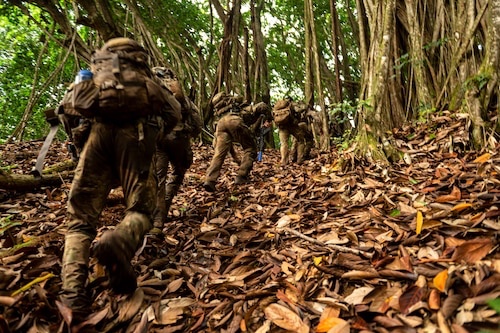
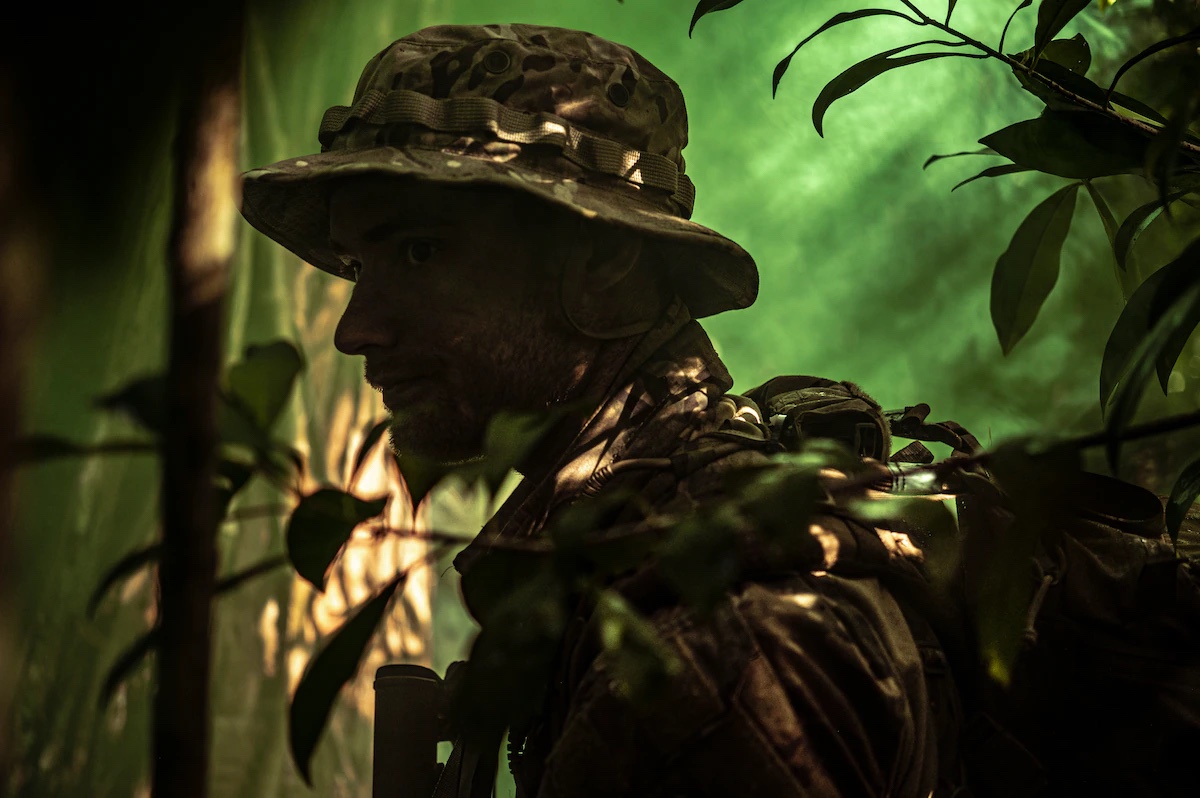
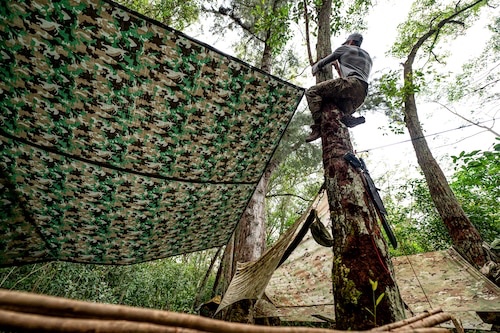
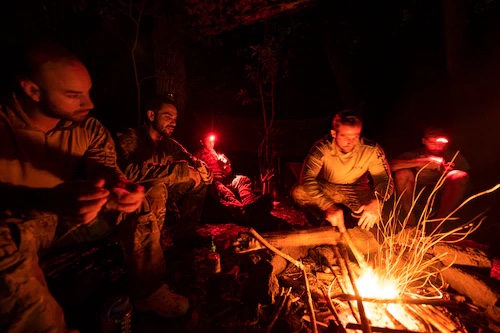
Upon arriving in the jungle, the team set up an outpost to conduct operations. Over the duration of five days and four nights, they survived with only the rucks on their backs and the knowledge they gained as special warfare operators in the Air Force. Rogowski said one of the biggest challenges they faced was the weather.

“It’s pretty unpredictable out here in the jungle,” Rogowski said. “It can be raining in the morning and then completely sunny in the afternoon, and back to rain. Outside of carrying the proper equipment, there’s not much we can do to control that.”


The unique experience tested their ability to adapt in an unforgiving environment. To combat the risks associated with sleeping on the ground, the team slept in enclosed hammocks.

Encounters with centipedes, spiders, steep inclines and thick foliage made it difficult to execute the mission. Despite the challenges, the team was able to effectively track their targets in the jungle. Using tactical formations and hand signals, they practiced combatting potential threats from simulated enemies and booby traps.

“As highly trained special warfare operators, we’re always thinking about modern-day warfare and high-tech weapon systems, but something so primitive like grenades that roll out of bamboo if you kick the wrong stick over is enough to wipe us all out,” said Staff Sgt. Evan Orth, 38th RQS Blue Team pararescueman. “Getting this training makes us more aware of threats we would have never expected in this environment, which could be the difference in saving not only our lives but the life of the person we’re trying to locate on the ground.”

Blue Team learned mostly through action, however instructors from the Tactical Tracking Operations School also provided an array of tips in a classroom setting before they ventured out into the jungle.

“They’ll sleep in the field for four nights to give them an opportunity to live in the environment, assess their gear, work out the little kinks or whatnot and make sure their sleeping systems are good,” said Pete Kerr, TTOS president and instructor. “The more time you spend out in the field, you start to hone those senses.”

Kerr expressed the importance of attention to detail. Whether tracking an adversary or a missing ally, such as a downed pilot, being able to notice subtle disturbances in the terrain is crucial to finding a target.

“What that’s doing is programming the subconscious mind to pick up on these indicators,” Kerr said.

TTOS provided detailed hands-on training enabling the special warfare operators to determine a person’s direction of travel and intent.

“That footprint is going to explain a story to you,” Rogowski said. “Where that person went, what they did, how fast they were moving, where they’re going to, are they paranoid? And I think that’s kind of hard to put into words unless you’ve actually been there.”

Using the skills they learned during the training scenarios, the team was put to the test in a final two-day, one-night exercise. During the exercise, Blue Team tracked a simulated downed pilot while traversing the terrain undetected from potential danger. Once they retrieved the isolated personnel, the team made their way to an extraction point.

After a sleepless 24 hours and hiking 6 kilometers through grueling terrain, the team completed their mission.

By the end of the two-week course, Blue Team gained the knowledge necessary to refine their TTPs for the unique jungle environment, thus enabling them to operate effectively in the Indo-Pacific region.

“The culmination of this exercise validates the effectiveness the rescue teams will have in a contested jungle environment,” Rogowski said. “The lessons and skills learned here will further expand the way we operate in the INDOPACOM area of responsibility. We’ll take these lessons and shape our TTPs for the future of special operations, personnel recovery, and combat search and rescue.”

By SSgt Devin Boyer, 23rd Wing Public Affairs

NAVWAR Highlights the Power of Information for Modern Warfare at Sea-Air-Space 2022

Thursday, April 14th, 2022

NATIONAL HARBOR, Md. – Naval Information Warfare Systems Command (NAVWAR) joined commands from across the information warfare (IW) community to discuss the power of information on the modern battlefield at the Navy’s IW Pavilion during the 2022 Sea-Air-Space Exposition at the Gaylord National Convention Center in National Harbor, Maryland April 4-6.

Now in its sixth year at the event, the U.S. Navy IW Pavilion featured a leadership speaker series, an engagement zone and technology demonstrations, with collaboration and alignment at the forefront as a top priority in today’s constantly evolving cyber and technology environments.

During the event, NAVWAR leaders touched on technology challenges, discussing the use of digital engineering, research, development, delivery and sustainment of IW solutions to highlight how the command aims to build a more agile and innovative force that can use information anytime and anywhere by modernizing and better defending information technology (IT) systems.

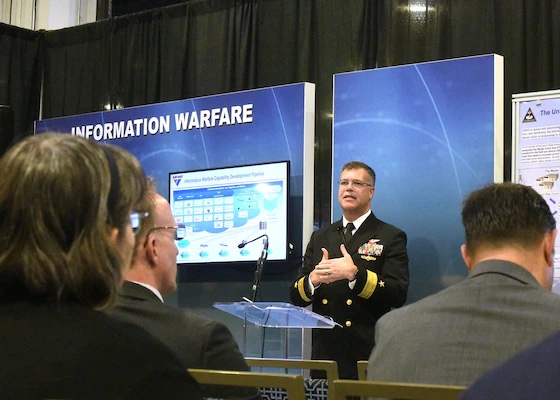
As a part of the leadership speakers’ series, NAVWAR’s chief engineer, Rear Adm. Eric Ruttenberg, emphasized the need for digital tools and a shift of mindset for their use.

“The future of global maritime superiority is digital and NAVWAR is leading the Navy’s efforts in making that future a reality,” he said. “We have already begun employing world class commercial best practices that deliver faster and more secure information warfare capabilities to the Fleet to ensure the developers, operators, and maintainers have what they need to preserve and extend U.S. maritime leadership not only in today’s operating environment but also in the highly digitized one of the future.”

He went on to explain the process, policy and efficiency efforts that would lead to the end goal of artificial intelligence and machine learning-enabled systems and automated battle management aids for on demand access regardless of the operating setting.

Further, he also addressed the need for a hybrid cloud computing environment to provide the warfighter with any data, at any time, and any place. The advantage to the hybrid cloud concept stems from its integrated and adaptable technology infrastructure comprised of physical data repositories, cloud-based data and applications stored in both public and private clouds, and data applications stored on-premises. Ruttenberg also noted that a hybrid cloud “provides quick access to all necessary data regardless of classification level for ease of cross-domain movement.”

Leaders from Naval Information Warfare Center (NIWC) Atlantic reinforced Ruttenberg’s points as they provided an overview of the command to educate attendees on the main priorities and technical areas of the mission.

“Our NIWC Atlantic team is a unique and critical connection point to the warfighter, in that we research, develop, engineer and deliver technology that brings the full power of information to the fight,” said Capt. Nicole Nigro, NIWC Atlantic commanding officer. “To move at the operational velocity required in this domain, we are intensely focused on leading digital practices that include cybersecurity, automation, model-based systems engineering, DevSecOps, artificial intelligence, machine learning and data analytics – areas that ultimately drive data-informed, human-driven decisions necessary for mission success.”

As it has in previous years, the IW Pavilion featured an engagement zone, where attendees had the opportunity to join Navy leaders, program managers and other subject matter experts for informal, sit-down conversations in multiple sessions throughout the three day conference. These dialogues help to connect government and military leaders with industry partners with the goal of improving and modernizing capabilities for the fleet, as quickly as possible.

“As the Navy’s systems command for a warfighting domain that can change in a matter of minutes, it’s critical to give our industry partners clear direction on where we are going, what our needs are, and why,” said NAVWAR Executive Director John Pope. “It’s been extremely beneficial to connect with industry partners, no matter how big or how small, so they can understand how they can contribute to the larger Navy capability picture.”

The IW Pavilion also featured several technology demonstrations that impact Sailors today, including Program Executive Office Manpower, Logistics and Business Solutions’ (PEO MLB) MyNavy Human Resources (HR) IT Solutions, unmanned underwater vehicles from Naval Meteorology and Oceanography Command, the Joint Communications Marketplace from the Joint Tactical Networking Center and the U.S. Naval Observatory’s atomic clock.

“MyNavy HR IT Solutions creates and maintains mobile apps that allow Sailors to accelerate and manage their careers through digital solutions,” said Christine Rodriguez, program executive officer of PEO MLB. “Attendees got to experience live, interactive demos of the mobile apps we have developed for the Navy and learned how to get an app added to the Navy App Locker, home to the Navy’s official apps that touch the lives of every Sailor in the Fleet.”

MyNavy HR IT Solutions is one of PEO MLB’s service portfolios, serving as the single IT acquisition agent providing life cycle management supporting the Navy’s human resources IT capabilities.

Hosted by the Navy League of the United States, the Sea-Air-Space Exposition is now the largest maritime exposition in the United States and continues as an invaluable extension of the Navy League’s mission of maritime policy, education and sea service support.

From Kara McDermott

Veteran, Linguist Reflects on Vietnam Service

Wednesday, April 13th, 2022

ELLICOTT CITY, Md. — Originally from the San Francisco Bay Area in California, Dr. Tom Glenn originally enlisted in the Army so he could attend the Army Language School — later called the Defense Language Institute, or DLI. With a passion and knack for linguistics, Glenn taught himself French and Italian as a child, studied Latin during high school and German during college.

With a craving for more, Glenn enrolled in DLI with the hopes of learning Chinese.

“I wanted to go to the best language school in the U.S., maybe in the world,” he said. “But when I got [there], they told me they weren’t going to teach me Chinese, they were going to teach me a language I had never heard of: Vietnamese.”

Glenn was a Soldier and had to follow orders, so he spent all of 1959 learning Vietnamese. He spent six hours a day in class with two hours of private study each night for a full year.

“I graduated first in my class of ten,” he said. “I asked the Army to send me to Vietnam but [they said] they had nothing going on there.” Instead, Glenn was assigned to the National Security Agency, or NSA, at Fort Meade, Maryland.

Still hoping to study Chinese, Glenn enrolled in George Washington University in Washington, D.C. as a part time graduate student. Glenn went on to earn a master’s degree in government and a doctorate in public administration.

By the time Glenn finished his enlistment in 1961, he said he was “comfortably speaking” Vietnamese, Chinese and French; the three main languages spoken in Vietnam.

The NSA immediately offered Glenn a job at “five steps above the normal level” and sent him to Vietnam for the first time in 1962 as a civilian.

“Between 1962 and 1975, I spent more time in Vietnam than in the U.S.,” he said.

Despite being a civilian, Glenn lived with the military as if he were still a Soldier.


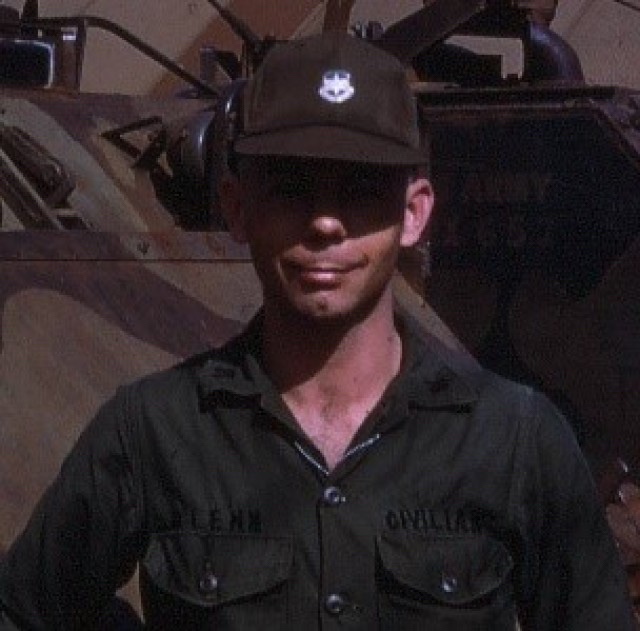
Tom Glenn poses for a photo in his fatigue uniform in Dak To, Vietnam in 1967. One morning while assisting U.S. 4th infantry division and 173rd airborne brigade, Glenn woke up to find his uniforms missing. Some of the Soldiers at his camp had “snitched” his fatigues and taken them to a local tailor whom they paid to sew tags above the breast pockets that read ‘Glenn’ and ‘Civilian.’ (Photo Credit: Courtesy photo)

“I was one of them — sleeping on the ground next to them, eating [field rations while] sitting in the dirt by their side, using their latrines and going into combat with them,” he said. “I was the only civilian I knew who was willing to put his life on the line by working with the military in combat on the battlefield.”


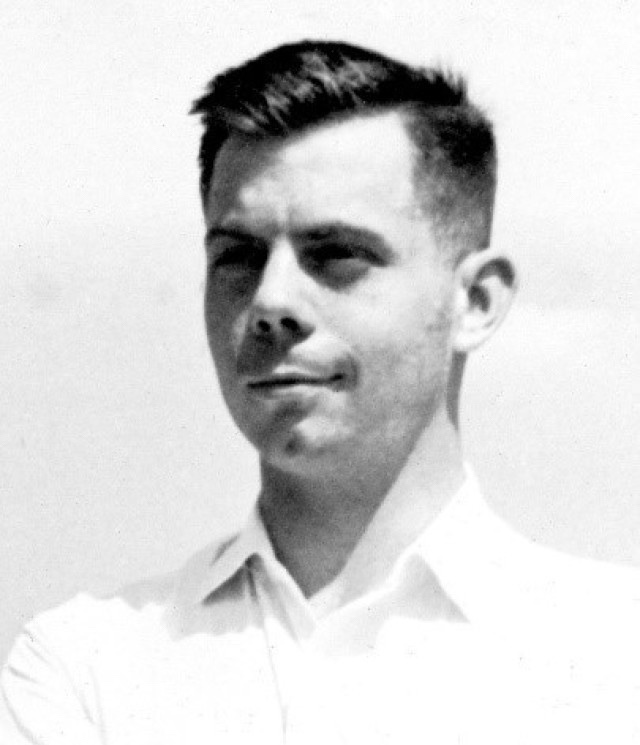
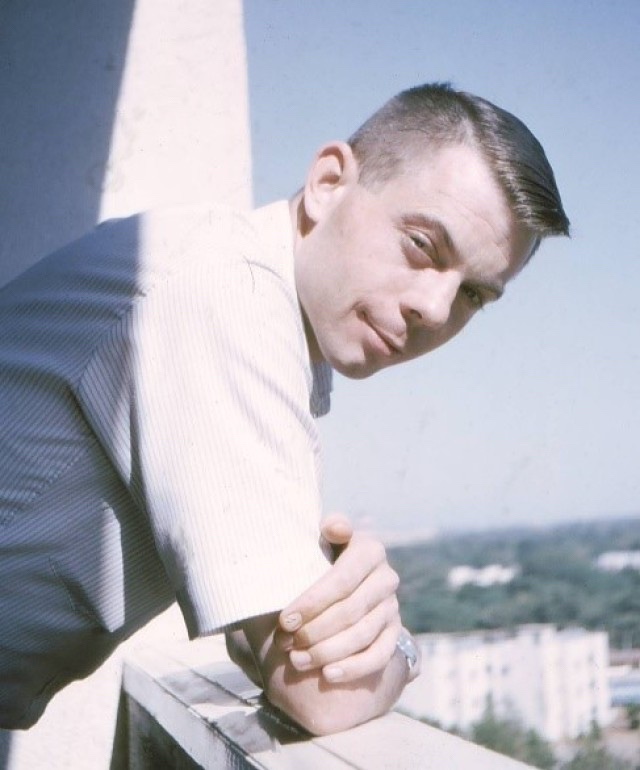
Tom Glenn in Saigon, Vietnam in 1962 (Photo Credit: Courtesy photo)

Glenn’s job was in intelligence; using signals intelligence, intercepting and exploiting the enemy’s radio communications, informing friendly forces on what enemy force intentions were and where they were.

He says that the strongest human bond he’s ever seen was that between two men fighting side by side.

Glenn spent his thirteen years in Vietnam all over the country, “wherever combat was going on.” He worked most often in central Vietnam, just south of the demilitarized zone that separated North and South Vietnam. The day-to-day was just like any other Soldier in combat.

“[The days were] defined by the boredom of waiting and the terror of close combat,” he said.

Glenn wants Americans to know the “grisly horror” of war. He wants citizens to respect and admire service members who “put their lives on the line for our good.”

After the Vietnam War, Glenn’s readjustment to civilian life would have been more difficult had he been sent straight home. Instead, he was sent abroad to serve on the battlefield all over the world after Saigon fell in 1975.

Glenn retired from NSA in 1992.


Tom Glenn in Saigon, Vietnam in 1974 (Photo Credit: Courtesy photo)


A Civilian Meritorious Medal that Glenn earned for saving lives during the fall of Saigon, Vietnam under fire in 1975 (Photo Credit: Courtesy photo)

“Welcome home, brother”

When Glenn meets other Vietnam veterans, he puts his hands on their shoulders and looks them in the eye. They share an experience unknown to other Americans.

For years following the war, many Americans saw Vietnam as “the war we never should have been involved in.” During those years, Glenn never mentioned his service overseas.

“Then, several years ago, I was invited to a welcome-home party for Vietnam veterans,” he said. “After some hesitation, I went. A bunch of young people, who hadn’t even been born before the end of [the war], shook my hand, hugged me and thanked me for my service.”

Glenn urges other Americans to approach those who served and thank them. Only then will that service member know that their service is “worthy of gratitude.”

Award-winning author

“The real adjustment [came] thirty years ago when I retired as early as I could [to] write full time,” Glenn said. “I was so intent on writing that the transition was a relief rather than an adjustment.”

Glenn’s first book is titled “Friendly Casualties” and consists of a collection of short stories to highlight the horrors of war. He chose to write about Vietnam because of his post-traumatic stress injuries, or PTSI. “[It] wounded my soul,” he said.

He learned that the only way to survive his injuries was to face the memories “head-on.” The best way to force himself to face those memories was to write it all down, which has resulted in six books and 17 short stories as of March 2022.

Glenn’s books are categorized as “fact-based fiction” which he said is the only way he could “delve into the emotions [he] lived through in real life.” He said he’s lived through experiences “far more compelling” than anything completely made up.

“I want people to know what [it was like],” he said. “I needed to vent, to stand face-to-face with my memories and learn to live with them.”

By Megan Clark

TMS Tuesday – Casualty Evacuation and Movement

Tuesday, April 12th, 2022

Casualty movement can be a complex task which METT-TC (Mission, Enemy, Terrain and Weather, Troops and Support Available, Time Available, and Civil Considerations) will play a critical role in selecting the most appropriate assets to be employed to physically move casualties in the battlespace or area of operations. With every phase of casualty movement, new challenges are faced and leveraging the best material solutions for the end user can be a decision that is complicated based on the mission’s limitations for weight, cube, and level of training of the end user.

A factor that remains true with regards to casualty movement, as with most tactical equipment, is an increase in capability almost always comes with an increase in cube, weight, and total cost. The end goal of all casualty movement is to provide the casualty a movement platform that is rigid, supports the entire body, and transported with minimal effort while maintaining the ability to monitor and treat the casualty. Let’s take a look at the different options in the context of the Phases of Care for Tactical Combat Casualty Care.

Care Under Fire

In the care under fire (CUF) phase, the quickest and easiest way to move a casualty is by a simple drag or carry. While quick and effective, they each have their limitations. Drags and carries are often best suited for short distance movement to the first available cover as they require a lot of physical effort and will temporarily reduce effective fighting strength while attempting to gain fire superiority. While manual carries can be utilized for longer movements, variations of dragging a casualty without some form of material solution can only be executed for short distances. Casualty drags are often practiced in areas that are smooth and conducive to the task, but in reality, this is rarely the case. Patients can actually be injured further from being dragged long distances, primarily by friction which can quickly abrade through uniforms and equipment. If manual carries are the method of choice for moving in this phase, they must be practiced by all team members on a regular basis for smooth execution.

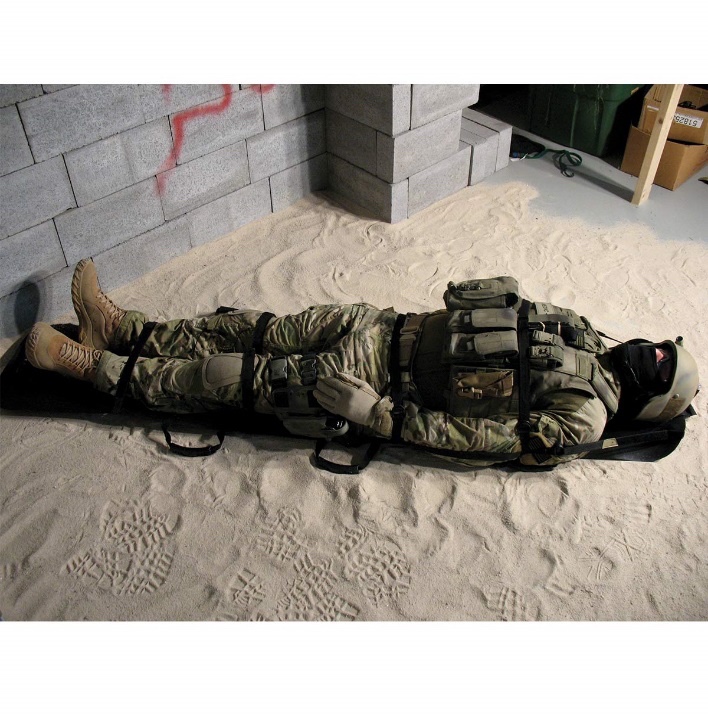
Occasionally in the care under fire phase, simple poleless litters are employed. Poleless litters come in various shapes, sizes, and materials. Two options for poleless litters are the Ultralight Poleless Litter and the Phantom® Litter. While a poleless litter can fold smaller and is lighter than a traditional rigid litter, they also have limitations. They can be dragged for short periods of time but will eventually wear through the material from friction. Additionally, they require people to carry them in order to transport the patient in a proper position (more people = better position). Most commonly, observed is the patient will be bent at the waist unless six or more people are assigned to carry the patient.

Tactical Field Care

Once the situation is more permissive, better options become available due to time constraints, reduction of threat, and better availability of equipment. This phase includes the transition from where the casualty was injured with movement to either a Casualty Collection Point for further treatment or preparation for loading into an evacuation platform. This is the phase of care where the movement platform is considered relative to both injuries and treatments as well as the platform they will be moved to for evacuation.

Occasionally during this phase semi rigid litters will be employed like the Foxtrot® Litter or Foxtrot® DA Litter. Semi-rigid litters are often smaller than lighter than traditional rigid litters, but with reduction in weight and cube comes correlating reduction in capability. Most products in this category act similar to poleless litters with the added benefit of reduced friction, making them more suitable for dragging longer distances or across varying surfaces. While they are semi-rigid, most will lose their rigidity if carried by only 2 people.

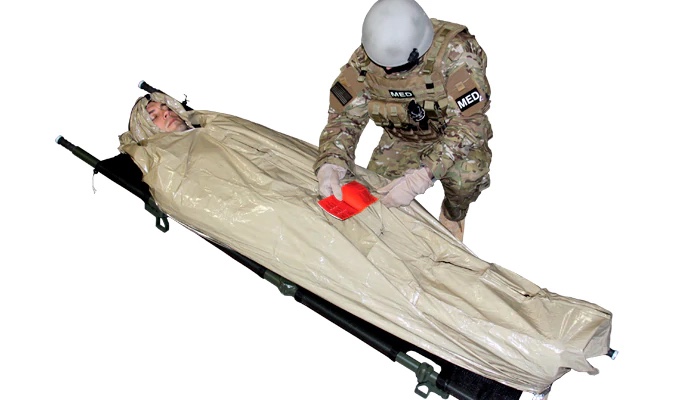
More robust versions of a semi-rigid, litter like the Med Sled VLR, increase in cube and weight but have the added benefit of being vertically or horizontally hoisted in a variety of tactical situations. Most of these more robust products will still leave the patient in contact with the ground so insulation and active heating from a hypothermia solution, such as the HELIOS® System, is important. In hoisting operations, most often the evacuation platforms crew will dictate or provide the device. While semirigid litters are common, a Stokes basket style device is considered the gold standard. Unfortunately, they are not easily carried and require training not commonly found by ground personnel.

During this phase, rigid litters may become available as well. While considered the gold standard of movement for all casualties they are primarily limited in the earlier phases of care due to weight and cube considerations. However, rigid litters offer the benefit of being carried by 2 or 4 team members, optimal patient positioning, and better hypothermia management by reducing contact with the ground. Most dedicated evacuation platforms are also configured to receive and secure most of the commercially available rigid litters due to NATO standardized footprints after years of combined, joint combat operations.

To learn more about casualty evacuation and movement, check out: tacmedsolutions.com/collections/medical-supplies/immobilization-&-evac