SIG SAUER - Never Settle

Archive for the ‘Guest Post’ Category

FirstSpear Friday Focus: MultiClimate Glove

Friday, November 26th, 2021

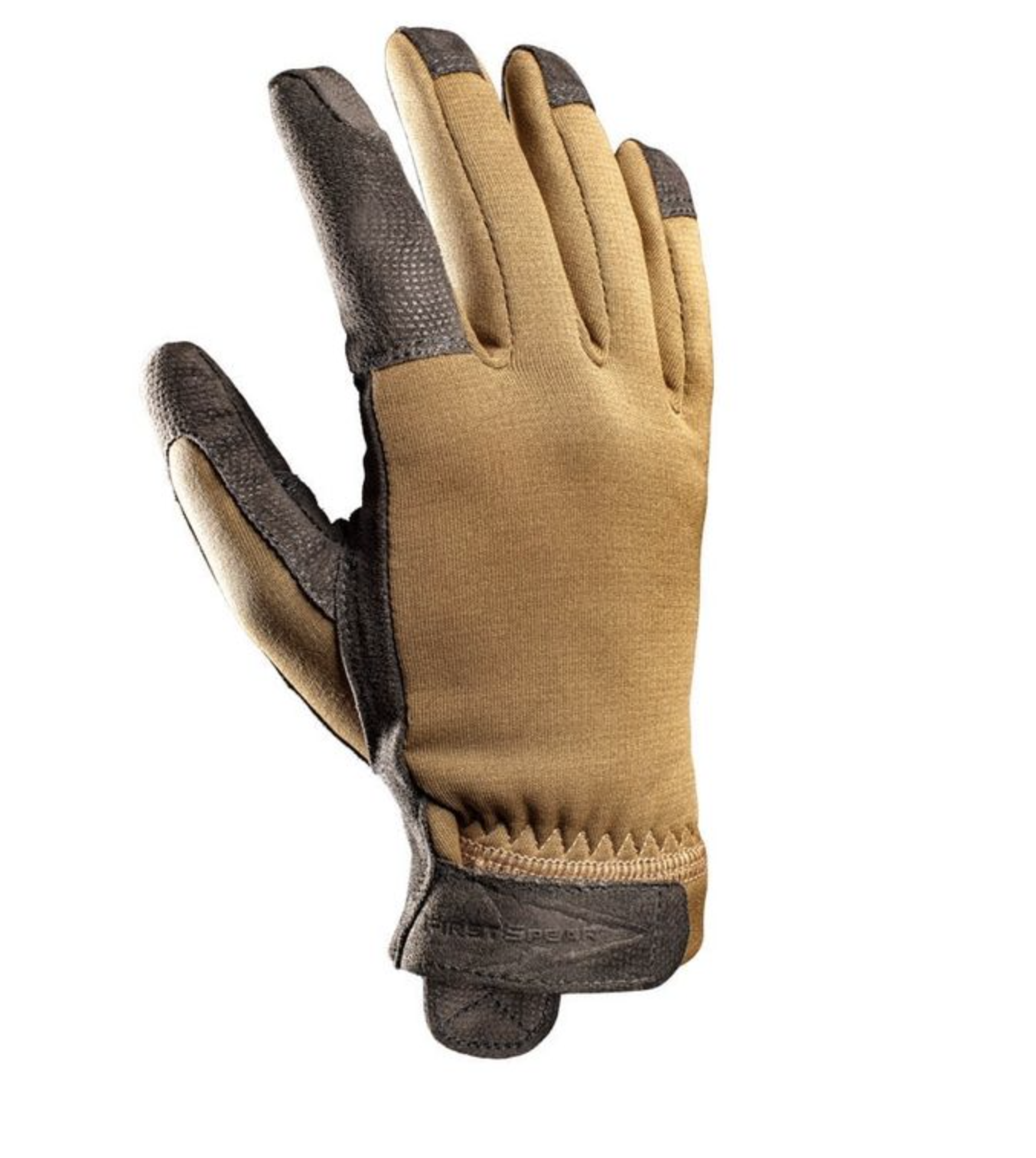
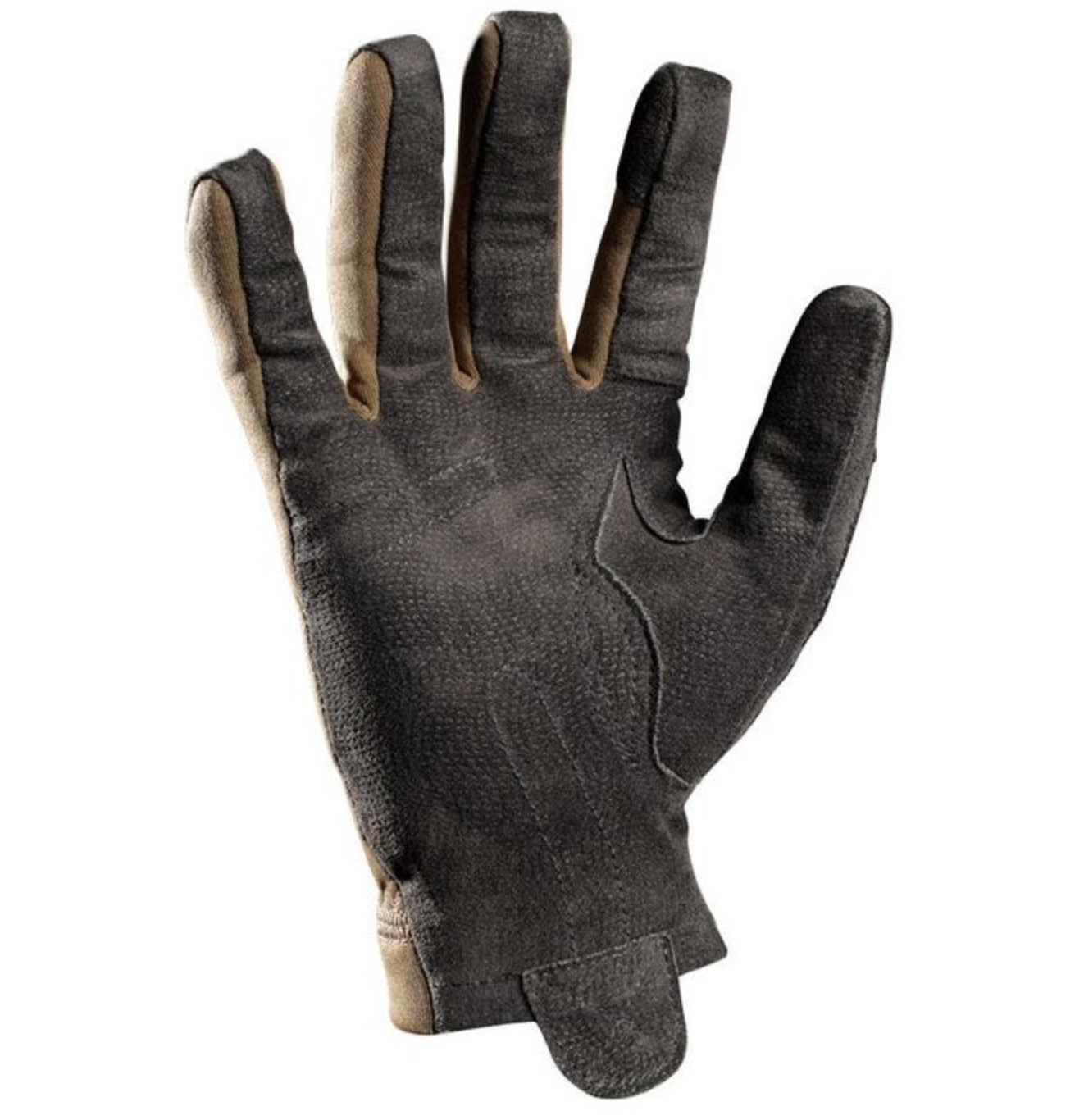
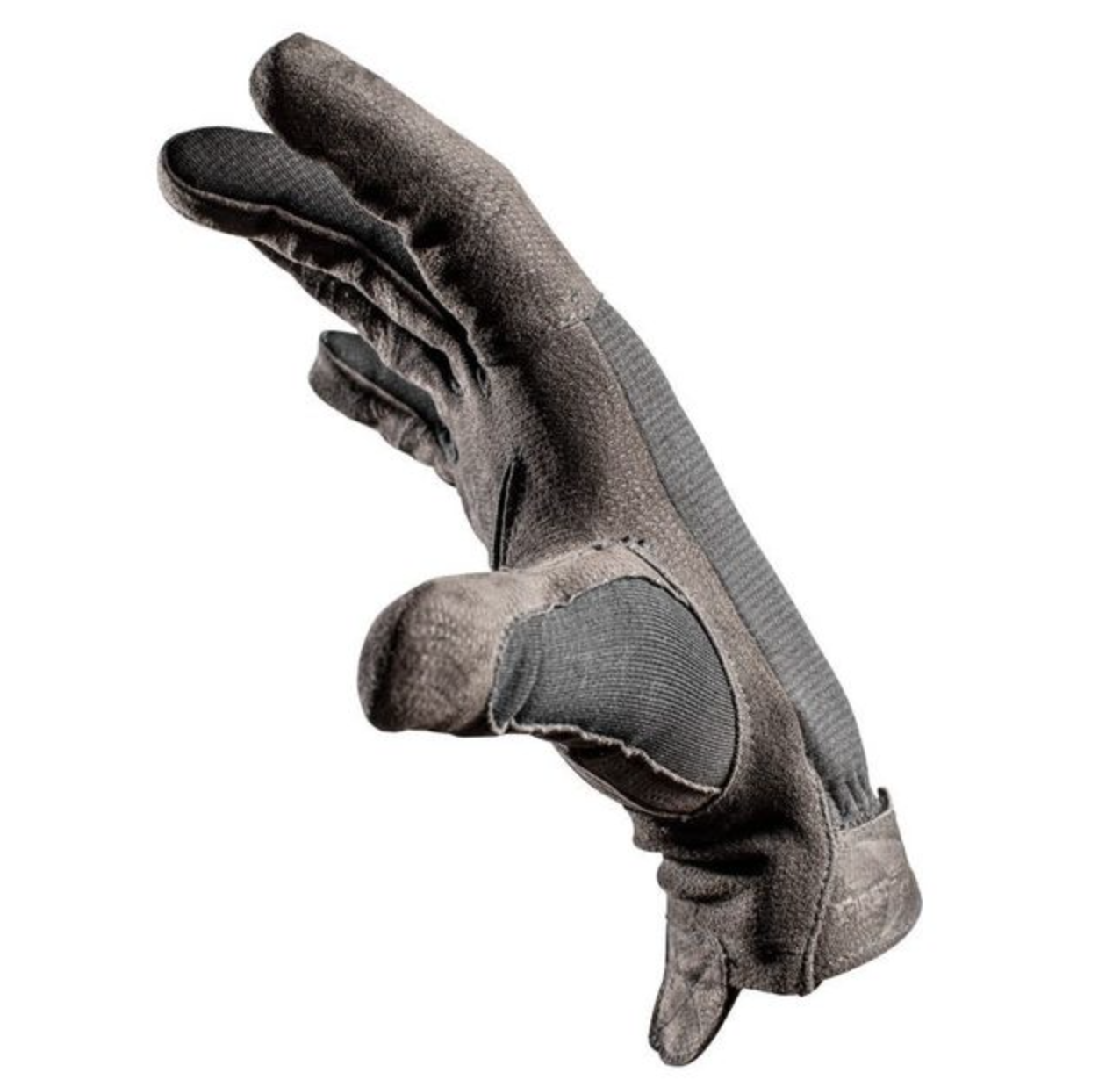
This week’s Friday Focus is the MultiClimate Glove. When maximum manipulation and tactility are required while protecting your digits, consider the Multi Climate Glove (MCG) first! The palm of the glove is made from brushed micro fiber suede, while the back uses a premium polyester soft shell material. This lightweight material makes it feel like you’re not even wearing a glove. The trigger finger of the MCG has an advanced patent pending design that will still give excellent transmission of trigger feel, magazine release and other key weapons functions.

Features

• Maximum Manipulation for Peak Performance Feel of Essential Weapon Controls

• Improved Breathability, Low Water Uptake, and Soft Drying

• Digital Texture Enhances Grip

• Strong and Technically Advanced, Remains Comfortable and Flexible

• Pittards Digital Goatskin Palm, with Premium Polyester Soft Shell back

Available in coyote and black.

For more information, check out www.first-spear.com/multi-climate-glove-mcg

‘Can’t Miss’ Tactical Assault Kit Event Kicks Off Nov. 30

Thursday, November 25th, 2021

ABERDEEN PROVING GROUND, Md. (Nov. 22, 2021) — The United States Special Operations Command (USSOCOM)-led Tactical Assault Kit (TAK) Product Center, in partnership with the Army, will host the eighth annual TAK Offsite in Colorado Springs, Colorado, from Nov. 30 to Dec. 3.

TAK is a map-based software application that enables coordination among operational users in the Department of Defense and other federal agencies with features such as positioning data, chat, mission planning and shared overlays. It is compatible with Android, Apple iOS and Windows.

“The TAK offsite is an excellent opportunity to collaborate with mission partners across various operational use cases to share feedback, to expand the capability, and to continuously make the products better,” said Bill Newmeyer of the Army’s Command, Control, Computers, Communications, Cyber, Intelligence, Surveillance, and Reconnaissance (C5ISR) Center, where the TAK Product Center resides.

The C5ISR Center, part of Army Futures Command, supports the TAK development and user community by providing engineering expertise for the development and technical management of the core TAK software platforms as well as through participation in a Configuration Steering Board (CSB). Program Executive Office – SOF Digital Applications, part of USSOCOM, funds the product center, chairs the Configuration Steering Board and sponsors the TAK Offsite.

“The TAK community has grown from a dozen users to a hundred users to now over 200,000 users,” said Ryan McLean, TAK Product Center director. “As more users adopt TAK, we’ve continued to make TAK products more widely available. The TAK CSB amplifies and extends that growth through events such as the TAK Offsite.”

The TAK Offsite brings value to all stakeholders – users, developers, program managers, and even to people and organizations new to TAK. Real-world users attend and learn about new features and integration possibilities within TAK, while developers learn about how the TAK application programming interface (API) and core capabilities are constantly improving. Many program managers also attend the event to promote their initiatives that use TAK.

“TAK has been successful largely due to our open-architecture, open-source model that’s very developer-friendly,” said McLean. “That means staying synchronized with industry and listening to the needs of equipment providers and solution builders. TAK grows and improves not because of TAK alone, but because of TAK’s ability to break down the old barriers to system integration.”

As with previous years, the 2021 TAK Offsite will foster efforts to get more feedback to improve platforms and generate cross-team collaboration. This confluence of minds spurs the new waves of innovation in TAK development, integration, and use cases.

“This is a can’t-miss event for anyone developing situational awareness and geospatial capabilities. Anyone who attends should expect full immersion in the TAK community across four days packed with content,” said McLean. “If you use TAK, if you develop TAK, if you field capabilities that use TAK, or if you just want to learn about TAK, this is where you need to be.”

To register, attendees must create a TAK.gov account at tak.gov. Attendees may then register for the event under the Events page of TAK.gov. Questions should be directed to support@tak.gov with questions.

PDW Roam Jacket EC

Wednesday, November 24th, 2021

Modern Take on the Classic American Trucker Jacket in Soft-Shell Fabric

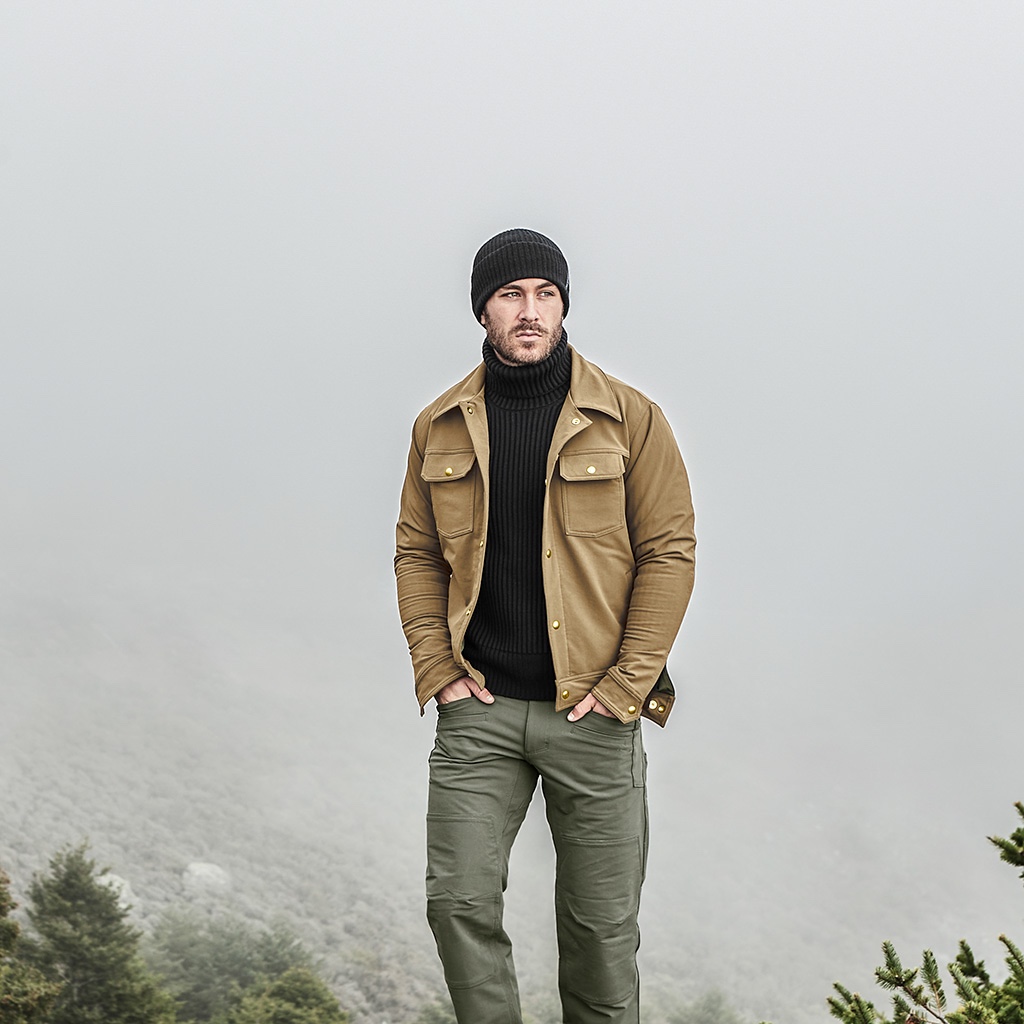
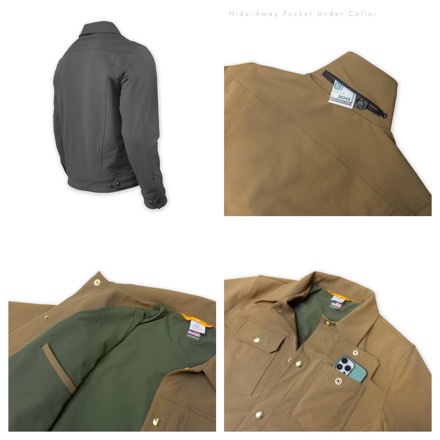
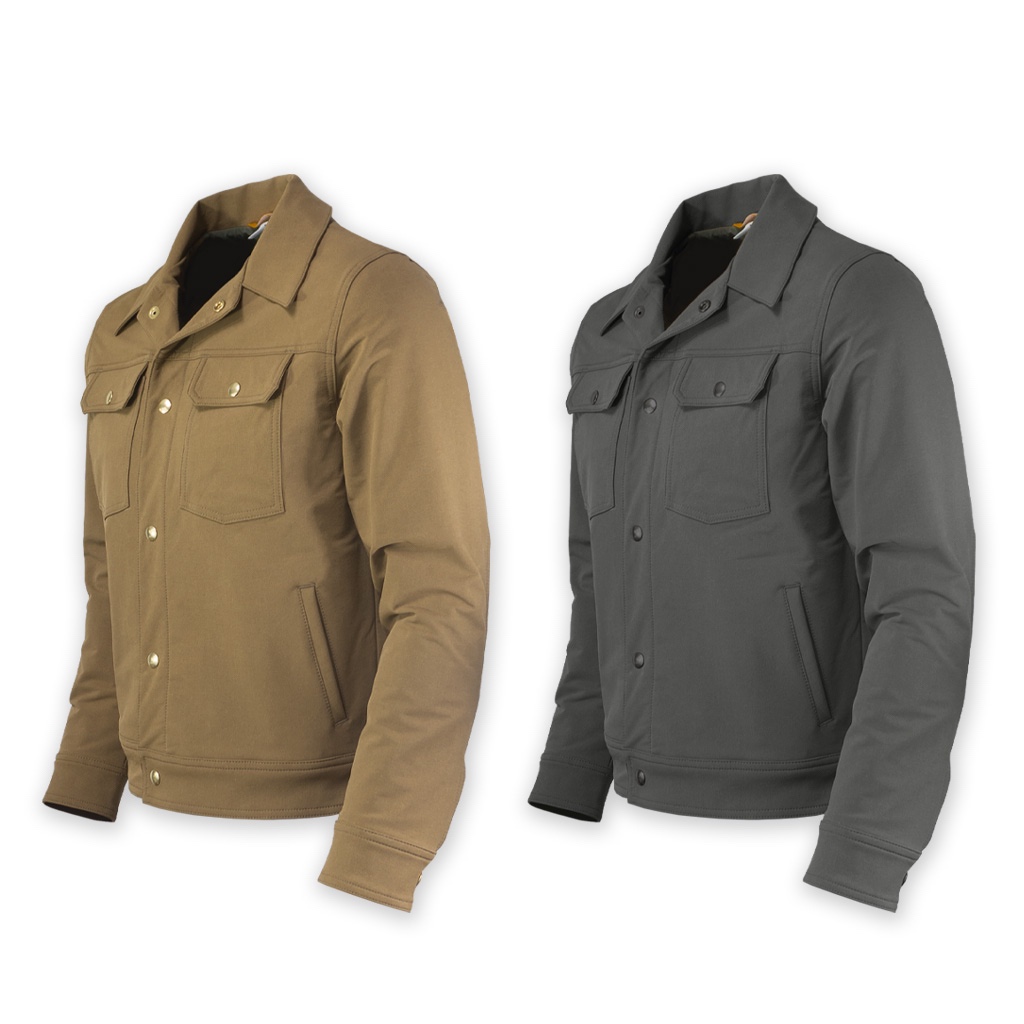
For Fall/Winter 2021 Prometheus Design Werx introduces their Roam Jacket EC. Based directly on the classic American “Trucker Jacket”, PDW updated this style of outerwear with their Expedition Cloth, a technical, performance, nylon/poly soft-shell fabric with 4-way stretch and a DWR finish. Comfortably cut to wear over a base-layer or your favorite hoodie, the ROAM Jacket EC is also fully lined in their Guide Cloth, features chest pockets specially sized for most smartphones, 2 hand pockets, 2 interior pockets, their signature hide-away pocket under the collar, snap cuffs, center placket, waist tabs, and pocket flaps. Well suited for cool to cold weather wear, when worn with layers. This is another modern classic design from PDW and is expertly sewn in California, USA.

The Roam Jacket EC is a part of Prometheus Design Werx’s CORE-Line of technical apparel. Available in All Terrain Brown, and Universal Field Gray.

The Design and R&D Team at PDW states:

“We’ve definitely have a fondness for classic American styles, but update them with more contemporary cuts, modern performance materials and considerations for EDC. This Roam Jacket made with our Expedition Cloth soft-shell fabric pushes the classic American Trucker Jacket into the 21st Century. One of the first things we updated were the flapped chest pockets, which might have been great for stashing your pack of Marlboros back in the day, but it made much more sense to be sized to fit today’s smartphones. The 4-way stretch adds much more mobility and comfort, and the DWR finish adds protection from the occasional drizzle to rain shower. We also added that extra level of tailoring by adding a full liner in our equally technical Guide Cloth. This is the only trucker style jacket made today with soft-shell and the modern touches we put into it. The Roam Jacket EC is a timeless classic updated with smart details, and technical materials for today’s wearer. Built to last and expertly stitched in California, USA.”

The Roam Jacket EC will be available for purchase for $245.00 on Wednesday, November 24th, 2021 at 12:00pm PT via their website, prometheusdesignwerx.com.

Defense Innovation Unit Publishes ‘Responsible AI Guidelines’

Wednesday, November 24th, 2021

The Defense Innovation Unit released its initial “Responsible AI Guidelines” document Nov. 15, with intent to operationalize the Defense Department’s ethical principles of artificial intelligence into its commercial prototyping and acquisition efforts.

“DIU’s RAI guidelines provide a step-by-step framework for AI companies, DOD stakeholders and program managers that can help to ensure that AI programs are built with the principles of fairness, accountability and transparency at each step in the development cycle of an AI system,” Jared Dunnmon, PhD, technical director of the artificial intelligence/machine learning portfolio at DIU said.

The DIU team has spent the last 18 months working with researchers at the Carnegie Mellon University Software Engineering Institute, and speaking with industry partners, the Joint Artificial Intelligence Center, academia and government officials, and testing these guidelines in order to solicit helpful feedback, Dunnmon said. They are intended specifically for use on DIU programs.

The aim of the guidelines, he said is to:

? Accelerate programs from the outset by clarifying end goals, alignment of expectations, and acknowledgment of risks and trade-offs.

? Increase confidence that AI systems are developed, tested, and vetted with the highest standards of fairness, accountability and transparency.

? Support changes in the way AI technologies are evaluated, selected, prototyped and adopted in order to avoid potential bad outcomes.

? Elicit questions and conversations that are crucial for AI project success.

The guidelines provide examples of how responsible AI considerations can be put into practice in real-world programs, in an effort to create a user-friendly and more easily understood document that expedites the process, Dunnmon said.

“Users want so they can trust and verify that their tools protect American interests without compromising our collective values,” John Stockton, co-founder of Quantifind, a software technology company, that provided DIU feedback on the guidelines during their prototype project said. “These guidelines show promise for actually accelerating technology adoption, as it helps identify and get ahead of potentially show-stopping issues. We’ve found that leaning into this effort has also served us well outside of government, by strengthening internal controls and producing transparency and patterns of trust that can also be leveraged with all users, both public and private.”

To view the guidelines, visit: www.diu.mil/responsible-ai-guidelines.

TacMed Tuesday – Understanding Litters

Tuesday, November 23rd, 2021

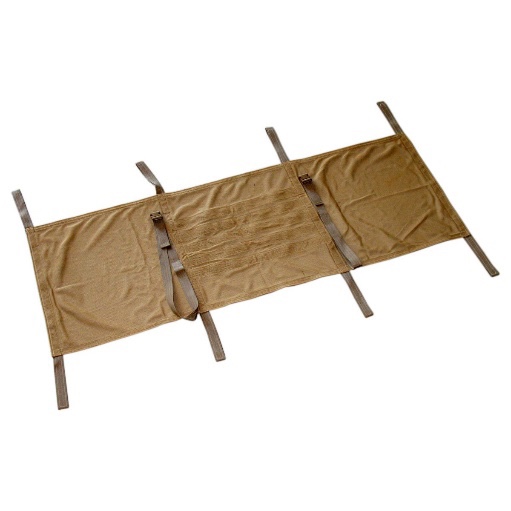
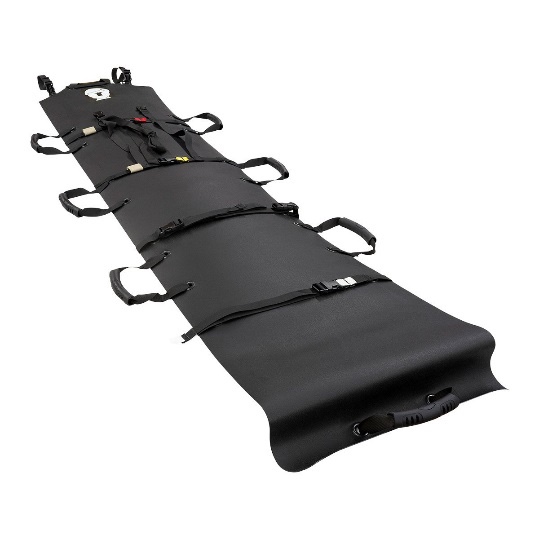
TacMed Solutions offers three main types of litters: poleless litters, Foxtrot® litters, and the Rescue Task Force litter. What are the differences between them, and which one works for you?

The poleless litter is offered in the form of the TacMed™ Poleless Litter or the Phantom® Litter. Poleless litters are a form of non-rigid litters that are ultra-lightweight and ultra-compact making it easy to carry for medical operators or individual soldiers. It is durable and has multi-life casualty evacuation capacity. Additionally, it can function as a casualty equipment bag after the casualty has been loaded on a standard litter to hold an individual’s combat equipment or sensitive items, minimizing the risk of loss during the casualty evacuation process. Although easy to carry and store, use of a poleless litter often requires multiple people to evacuate a casualty.

TacMeds Foxtrot® litters are offered in the form of the Foxtrot® Litter and the Foxtrot® DA. The primary difference between these two litters is that the Foxtrot® DA utilizes quick connect buckles that allow strapping in a casualty with a snap motion whereas the Foxtrot® Litter utilizes two metal D-Rings that, although may be slightly slower, often allow for a tighter strap and are more robust. The Foxtrot® line of litters are semi-rigid litters that are draggable and easy to carry. Being designed by a special operations medic, they are specified to meet the applications of quickly moving a target off an objective. It is made of low friction plastic, allowing it to slide easily, that is connected to a rapid deployment drag line, allowing for a single person to sling the strap over their chest and still move the casualty with two free hands. It is the first litter system to be light and compact, being small enough to fit in our ARK™ Bag. A differentiator of this litter is that it is designed smaller and narrower in order to quickly move down bus or airplane aisle, as well as turn corners and fit through doorways more easily. Because it is semi-rigid, the plastic bed is also pliable, allowing the casualty to sit upright in it if needed. Lastly, it has a color-coded strap system, allowing for speed and easy use. The Foxtrot® system is ideal for SOF medics, police, SWAT, or people working in a tactical setting.

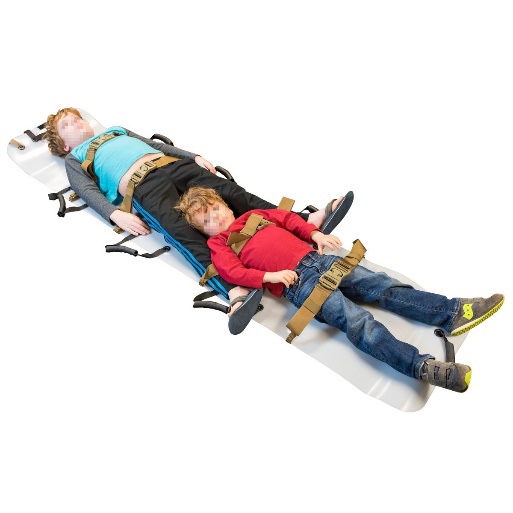
TacMed also makes the Rescue Task Force Litter. The RTF litter is designed similarly to the concept of the Foxtrot® system except that it is morphed for a domestic active shooter environment. It is designed with a thicker plastic bed which improved durability and product life when responding to multi-casualty situations. Like the Foxtrot®, it is narrower in size allowing for easy maneuverability through doorways, down aisles, or around corners. It comes equipped with a rapid deployment drag line, but also has handles for the ability to carry a casualty. Additionally, the RTF litter is designed with larger buckles, making it easier to apply while wearing bulkier rescue gloves. The straps are positioned so that one adult or two children could be evacuated at once. The Rescue Task Force Litter is ideal for firefighters, EMS, or police with gear for mass casualties.

34th Special Operations Squadron Validates U-28 SOFORGEN, ACE concepts

Tuesday, November 23rd, 2021

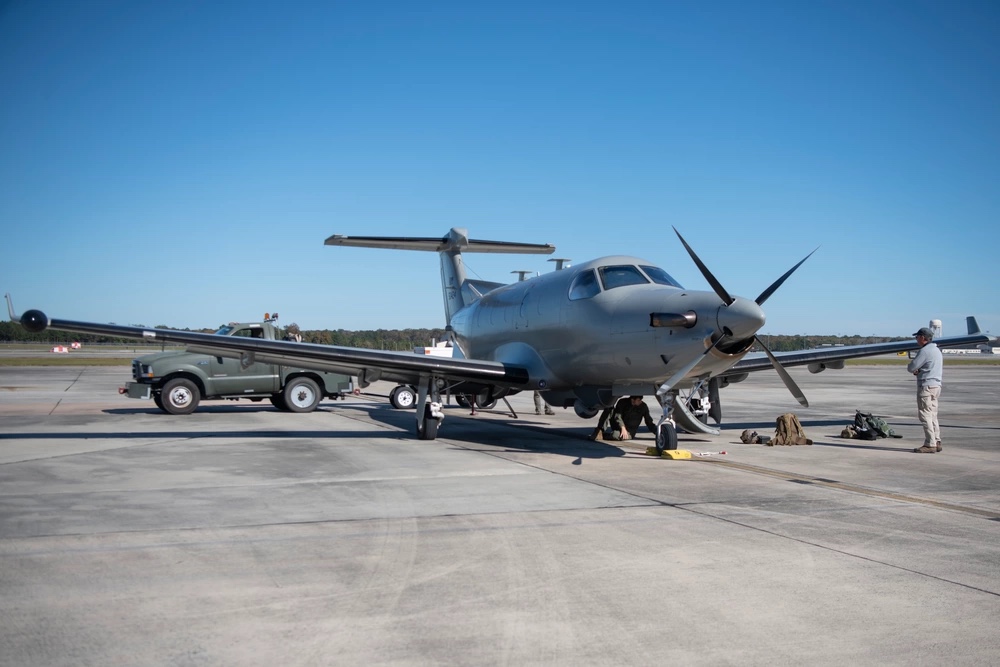
HURLBURT FIELD, Fla. – Members of the 34th Special Operations Squadron recently deployed to Robins Air Force Base, Georgia, to validate the unit’s ability to generate combat capability under the new Special Operations Force Generation model.

SOFORGEN replaces the current Air Expeditionary Force construct with a 20-month cycle, comprised of four, five-month phases of readiness. The phases are:

Available to Commit: Airmen have achieved peak readiness and are either deployed or ready to deploy.

Reset: Unit has returned from deployment or is removed from the “available to commit” phase. Training focus is on the individual (aircrew upgrade, PME, schools to develop technical and leadership skills).

Prepare: Build toward peak unit readiness while shielded from deployment. The focus is on developing squadron flights as a core unit of action and flight commanders as competent and credible leaders.

Ready: Achieve a high level of readiness for deployed taskings and experiment with tactics, techniques and procedures and concepts of operation for competition and conflict mission sets.

“The exercise is validating all of the training we’ve been doing over the past several months in the ‘prepare’ phase of FORGEN,” said Capt. Austin, commander of the deployed flight. “It’s important because we are exercising our ability to plan for short-notice contingencies while being able to deploy and execute to those at the flight level.”

Members of the 34th SOS conducted in-depth planning in the weeks prior to execution. The planning portion of the exercise was kicked-off with academics presented by weapons officers from the 14th Weapons Squadron, also located on Hurlburt Field. From there, members split into mission planning cells, ultimately briefing the “Air Boss”, their commander, Lt. Col. Sarah Brehm.

Another unique aspect of this validation exercise and the 34th’s efforts to align under the SOFORGEN construct is that critical support functions such as intelligence or Aircrew Flight Equipment are being assigned to specific flights rather than the squadron-at-large.

“We have had VALEXs for every deployment,” said 1st Lt. Cody, an intelligence officer assigned to the 1st Special Operations Support Squadron’s Intelligence Flight who deployed to Georgia as the Special Operations Tasking Unit intelligence lead. “The difference this time is that we are essentially trying to package it in a way that enables the SOFORGEN construct. With SOFORGEN, SOTUs are essentially pre-packaged groups that are able to be deployed or move around and perform a mission function on their own.”

A critical component of the SOTU, and any U-28A mission, is communications. Technicians from the 1st Special Operations Communications Squadron assigned to the 34th SOS “provide network services to the flyers and mission commanders,” said Staff Sgt. Brant, a communications supervisor with the 1st SOCS. “This enables them to properly surveil the mission areas while making the best possible decisions.”

The exercise also tested Agile Combat Employment for the U-28A unit. Specifically, the squadron wanted to test its ability to conduct combat operations from dispersed airfields. In this case, the unit was able to rapidly deploy to Robins AFB, set up and begin operations. In a real-world application, the U-28A can leverage its ability to take-off and land on short runways and semi-prepared surfaces to successfully conduct missions virtually anywhere.

While this exercise might be over, the transformation from the “AFSOC We Needed” to the “AFSOC We Will Need” continues. Proactive and collaborative efforts at the unit level will help advance that transformation and ensure AFSOC remains ready and relevant well into the future.

“With SOFORGEN, members and units have more time to not only become proficient and ready for historical mission sets like Violent Extremist Organizations,” said Lt. Col. Sarah Brehm, 34th SOS commander. “We also have the breathing space for what comes next.”

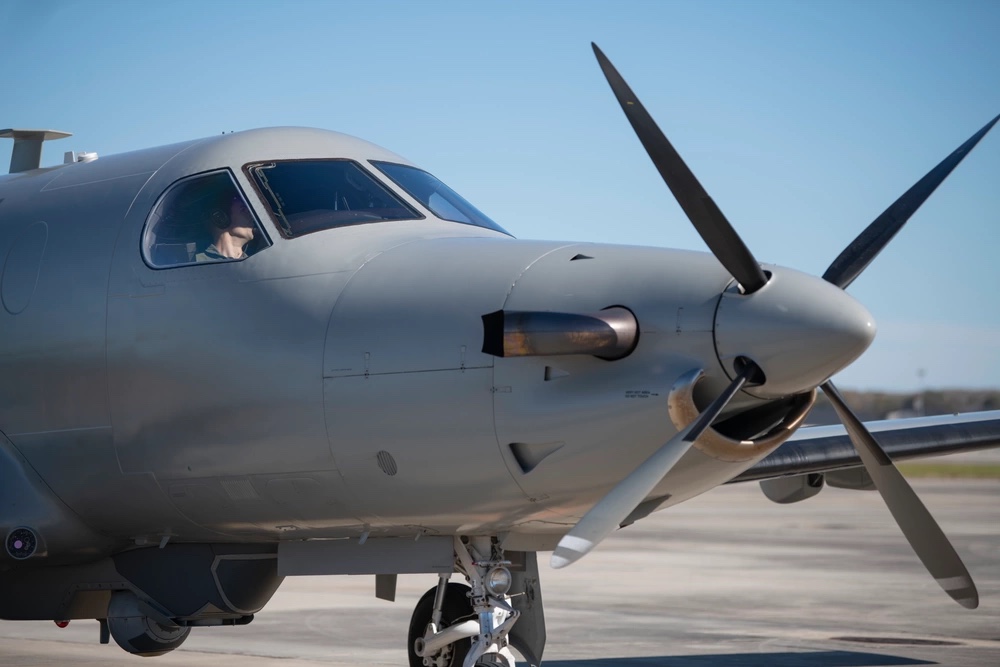
The 34th SOS is one of two U-28A squadrons assigned to Hurlburt Field. AFSOC fielded the U-28A fleet through the purchase of commercially available aircraft and subsequent military modification to include tactical communications capabilities, aircraft survivability equipment, electro-optical sensors, and advanced navigation systems. The advanced radio-communications suite is capable of establishing U.S. Department of Defense and NATO datalinks, delivering full-motion video, and transmitting secure voice communications. The U-28A benefits from outstanding reliability and performance, and the aircraft is capable of operating from short runways and semi-prepared surfaces.

Story by 2nd Lt. Jason Barkey 

Photo by Airman 1st Class Amanda Flower-Raschella 

1st Special Operations Wing Public Affairs

NY Guard Uses NYC to Understand Urban Operations

Monday, November 22nd, 2021

NEW YORK — New York Army National Guard officers and senior sergeants used New York City to explore the challenges of military operations in big cities during a five-day class that ended Nov. 6.

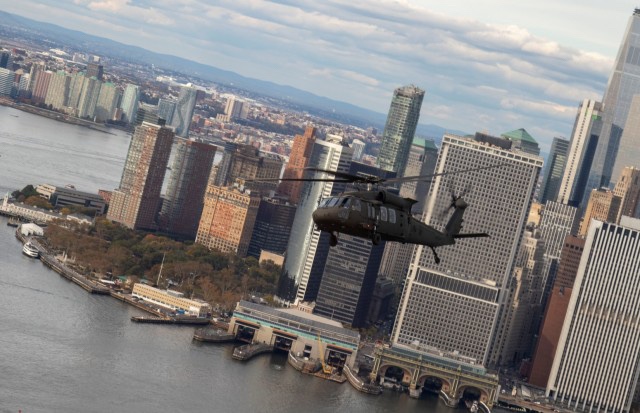
The 18 officers and senior noncommissioned officers walked through the city’s neighborhoods, flew over them and toured the waterfront to gain an appreciation of the complexity of urban warfare. They also learned from New York City officials who deal with those urban challenges every day.

“This class was critical in terms of bridging a knowledge gap between military operations and working with our civilian counterparts,” said Lt. Col. Jason Secrest, commander of the 2nd Squadron, 101st Cavalry Regiment.

“The course was helpful for whether we’re involved in large-scale combat operations or if tasked with stability operations, like humanitarian assistance disaster relief at home,” Secrest said.

The New York National Guard is hoping to create a two-week Dense Urban Leaders Operation Course — DULOC for short — that would draw officers and NCOs from across the Army to New York City to get a first-hand look at the challenges of combat operations surrounded by high-rise buildings, tight city streets and hundreds of thousands of civilians.

“Here, in New York City, we were able to learn from our civilian counterparts about how these megacities and trends of urbanization affect operations, planning and troop movement,” said Lt. Col. Matthias Greene, commander of the 3rd Battalion, 142nd Assault Helicopter Battalion.

Some things Greene said he had to consider during the course were the complexities of the airspace, dense buildings, and population bases, all of which affect aviation operations.

Lt. Col. Brian Higgins, the class leader and a New York City Police Department detective, spent two and a half years on active duty as the officer-in-charge of the Dense Urban Terrain Detachment of the Army’s Asymmetric Warfare Group at Fort Meade, Maryland.

His job there, Higgins said, was to take the expertise he’d honed as a cop in one of the world’s densest cities — New York City’s population is 8.2 million and the metro area population is 20.3 million — and help the Army figure out how to fight in those places.

“The problem has to do with globalization trends,” Higgins explained. “The world is becoming more populated. The majority of people are living in cities for a variety of reasons.”

These cities include very tall buildings and subterranean geography of subways and service tunnels and are incredibly interconnected, Higgins said.

The Army’s traditional approach to cities in the past was to bypass them, isolate them, and avoid getting bogged down in a punishing fight, Higgins said. That may have worked when cities were smaller and more compact, he said. But with the rise of the megacity — those with populations of more than 10 million — it doesn’t work anymore. The city is too big to go around.

There’s nothing new about Soldiers using New York for exercises, Higgins said. Military teams continually visit to learn about cities.

Task Force 46, a National Guard team designed to react to chemical, nuclear, and biological attacks, trained there in August. The New York National Guard trains with the police and fire department regularly, focusing on civil support operations.

Lt. Col. Dan Colomb, commander of the 24th Weapons of Mass Destruction Civil Support Team (CST) based out of Fort Hamilton in Brooklyn, volunteered to participate in the course with his deputy commander and operations officer to offer their expertise in urban operations but to also take new concepts back to their team.

“Every day we work in New York City and the metro area,” said Colomb. “We’re those sensors that are out in the environment and these streets every day, so I’d like to take some of these methodologies, apply them and see if they work better,” he said.

The course focused on getting Soldiers in command and key staff positions, who all have different specialties, to understand how a big city works and how that can affect military operations.

The Soldiers walked through downtown Manhattan, where the streets are narrow and irregular, explored Harlem, where the streets are in a grid, and visited the world-famous subway system.

Secrest said it was the first time in his 22 years in the National Guard that he’d been part of a military course tailored to urban operations.

“We talk about liaison operations with other state and city agencies, but this is the first time we’ve sat down and say, ‘OK, how do we operate in an urban environment?’ ” Secrest said.

Instructors included experts from the Modern War Institute at the U.S. Military Academy and the National Center of Urban Operations, a think-tank that focuses on military operations in megacities. New York City fire officials, transit staff and emergency managers also took part.

Greene noted the collaboration of the course with civilian counterparts as well as having the opportunity to walk the terrain were critical.

“There’s practical knowledge by going onto the grounds, having subject matter experts, and collaborating with classmates who offer perspectives in their areas of expertise as well,” Greene said. “Learning from the perspective of our civilian counterparts is important because we’re able to gauge what they have to offer, what their limitations are, and how we can integrate ourselves into the solution.”

Every morning the class heard from the subject matter experts on military doctrine, military estimates and the “Five Is” of city fighting — infrastructure, interoperability, information operations, interagency, intensity. In the afternoons, they went out and looked around as part of terrain walks.

Higgins and New York National Guard leaders would like to create a two-week course exploring urban operations in more detail. But the week-long class was an excellent start, Higgins said.

Story by By Eric Durr and SPC Marla Ogden, New York National Guard

SCUBAPRO Sunday – Ryans Orphans

Sunday, November 21st, 2021

For Frogman, the battle of Tarawa marks the birth of the UDT and the start of a very long history for Naval Special Warfare. Because the Higgins boats that were taking the Marines to shore got stuck on coral reefs, the Marines would have to jump out in some case far from shore. More Marines drowned or died in the water from enemy fire then killed in the next two days of fighting. So, the Navy came up with the Underwater Demolition Teams to recon landing sights to make sure the Marines could land. 

But for the Marines, it was another day in an already long history. The Battle of Tarawa was fought on 20–23 November 1943. It took place at the Tarawa Atoll in the Gilbert Islands, in the Pacific Theater of WW2 and was part of Operation Galvanic, the U.S. invasion of the Gilberts. Nearly 6,400 Japanese, Koreans (forced labor by the japenese), and Americans died in the fighting, mostly on and around the small island of Betio, in the extreme southwest of Tarawa Atoll. The U.S. had similar casualties in previous campaigns, like the six months of the Guadalcanal Campaign, but the losses on Tarawa happened in just 76 hours.

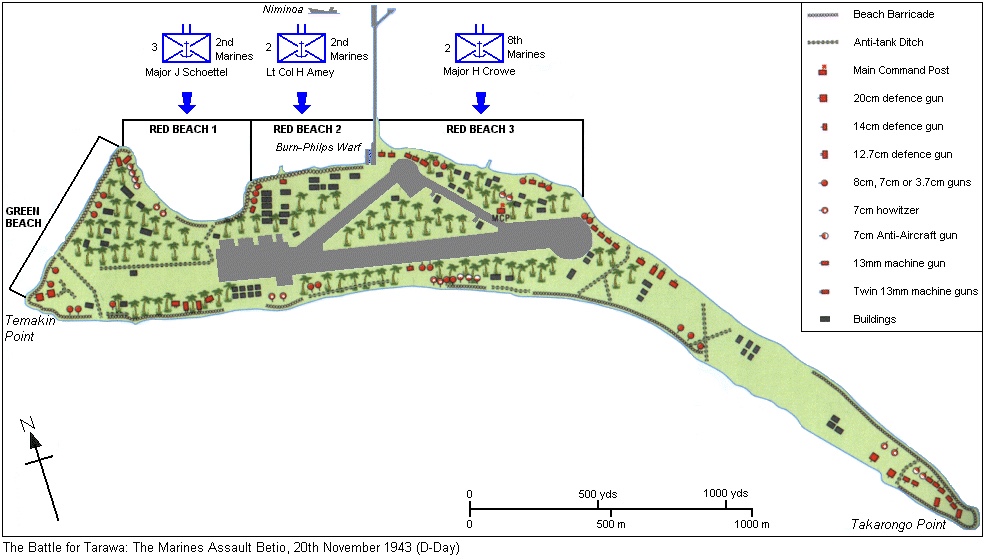
The Battle of Tarawa was the first American offensive in the critical central Pacific region. It was also the first time in the Pacific War that the United States had faced severe japanese opposition while conducting an amphibious landing. Previous landings met little or no initial resistance. As the Japanese strategy was to let them land and attack after they let their guard down. (but that didn’t work against the USMC). On Tarawa, the 4,500 Japanese defenders were well-supplied and well-prepared, and they fought almost to the last man, exacting a heavy toll. The Japanese said it would take the U.S. “one million men 100 years to take Tarawa.” That is saying a lot for a piece of land that was only 3 miles long and about 800m wide. The Japanese had fortified the island with about 500 pillboxes, four eight-inch gun turrets, and numerous artillery and machine-gun emplacements. A coral and log seawall ringed most of the island, and 13mm dual-purpose anti-boat/antiaircraft machine guns protected the beaches.  

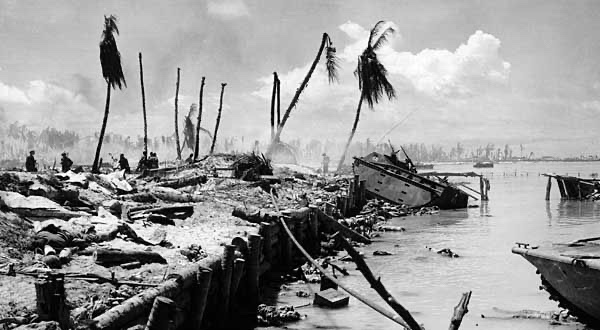
On the morning of November 20, following a naval bombardment, the first wave of Marines approached Betio’s northern shore in Higgins boats. The men encountered lower tides than expected and were forced to abandon their Higgins Boats on the reef that surrounded Betio and wade hundreds of yards to shore under intense enemy fire. When the Marines reached the Red beach, they struggled to move past the sea walls and establish a secure beachhead. By the end of the day, the Marines held the extreme western tip of the island, as well as a small beachhead in the center of the northern beach. In total, it amounted to less than a quarter of a mile.

There were immediate issues from the start. The naval gunfire stopped at 0900, while the Marines in their Landing Vehicles, Tracked (LVT), were still 4,000 yards offshore. Because of the lower-than-expected tide, the Higgins boats carrying later waves would not be able to make it over the reefs in the bay. As the Marines approached the shore, they realized the naval bombardment had been rather ineffective. They started taking heavy fire from the Japanese as they made their way across the lagoon.

Assault companies, K and L, suffered over 50 percent casualties in the first two hours of the assault. The following waves were in even more trouble. Embarked in Higgins Boats, they had no choice but to unload at the reef due to the low tide. They had to wade ashore over 500 yards under heavy fire.

This was how the men of L company under Major Mike Ryan made it ashore. Rather than leading his men directly into the carnage of Red Beach 1, Ryan followed a lone Marine he had seen breach the seawall at the edge of Red Beach 1 and Green Beach, the designated landing area that comprised the western end of the island. Ryan’s landing point caught the eye of other Marines coming ashore and they headed towards Ryan’s position.

As more Marines from successive waves and other survivors worked their way to the west end of the island, Ryan took command and began to form a composite battalion from the troops he had. These men would come to be known as “Ryan’s Orphans.”

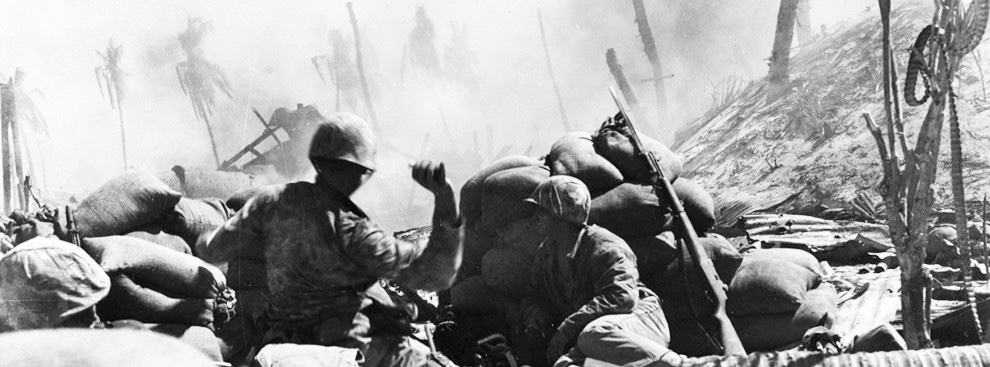
On the beach, the Marines of 3/2 continued to fight for their lives. After managing to wrangle two anti-tank guns onto the beach, they realized they were too short to fire over the seawall. As japanese tanks approached their positions, cries went up to “lift them over!” Men raced to get the guns atop the seawall just in time for the gunners to drive off the Japanese tanks. Maj. Ryan’s Orphans and others had acquired a pair of Sherman tanks. Learning as they went, the Marines coordinated assaults on pillboxes with infantry and tank fire. This gave the Marines on Betio their most significant advance of the day as Ryan’s orphans were able to advance 500 meters inland.

3rd Battalion was severely mauled in the initial assault on Betio. Surrounded by strong Japanese fortifications, the survivors on Red Beach 1 would fight for their lives for the remainder of the battle. Ryan’s orphans made a significant contribution to the battle in opening up Green Beach, so men of the 6th Marine Regiment could come ashore to reinforce the battered survivors. Now reformed, 3/2 would take part in one of the final assaults to secure the island, helping to reduce the dedicated Japanese fortification at the confluence of Red Beaches 1 and 2.



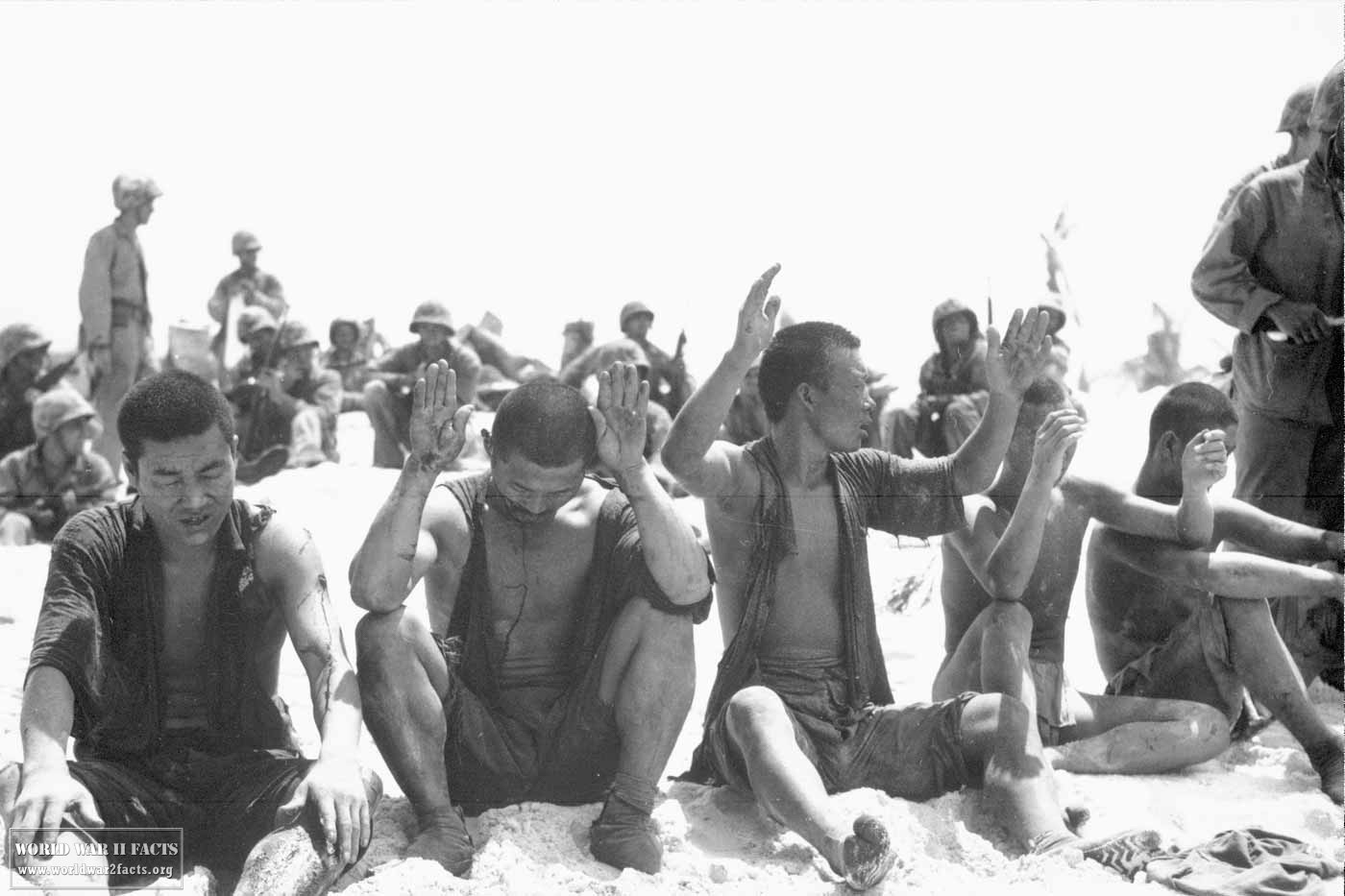
By November 23, 1943, after 76 hours of fighting, the battle for Betio was over. More than 1,000 Marines and sailors had been killed, and nearly 2,300 were wounded. Of the roughly 4,800 Japanese defenders, about 97% were thought to have been killed. Only 146 prisoners were captured.

Maj Ryan was awarded a Navy Cross. Four Marines would be awarded the Medal of Honor for their actions during the battle — three of them posthumously.

The military learned vital lessons from the invasion of Tarawa. The organization of amphibious landings was changed, and by D-Day, they would be far more effective. The tactics techniques and procedures of using tanks and infantry together to fight a well-intrenched enemy and other lessons learned would be used for the rest of the war. To this day, the lesson learned on Tarawa is used as the base for all amphibious operations.

www.marines.mil

SCUBAPRO Sunday is a weekly feature focusing on maritime equipment, operations and history.