Troop Performance

Archive for the ‘Guest Post’ Category

Counting Elephants – The Hark-1 Radio

Saturday, January 1st, 2022

As Vietnam heated up, the Agency’s need for eyes on the Laotian panhandle increased beyond the support that could be provided by Thai PARU and RTSF advisors. As a result, the CIA was forced to look for other solutions to communicate with its illiterate Lao Theung road watching teams targeting the Ho Chi Minh Trail.

To tackle this problem, the Agency came up with a radio that used pictograms to communicate what a team saw. Crafted from a modified USAF survival unit, the Hark-1 or Hark Box was released early in 1967.

Note the depictions of armor, artillery, AAA, trucks, porters, soldiers, time of day, and direction of travel. The circular button at the center was used to transmit the tally of what was seen moving north and southbound on the trail to an airborne relay station. While the radio doesn’t appear to have a pictogram for elephants, it was given the affection moniker “the Elephant Counter” by Paramilitary Officers involved in the project. To avoid detection, the Hark road watching teams – sometimes numbering up to twenty-four road watchers on a target like the Mu Gia Pass – would be inserted via unmarked “Pony Express” CH-3s very far from their objective.

On the third slide you can see the Hark-1 with antenna deployed in front of Case Officer, Gene Norwinski during a briefing in Savannakhet. The project was wrapped up in 1969 having been overshadowed by a variety of Pentagon projects and new sensors and night vision capabilities like those present on the AC-130.

Written by @Immurement

FirstSpear Friday Focus: Happy New Year & Wind Cheater

Friday, December 31st, 2021

Happy New Year from our FirstSpear family to yours! Don’t get caught out in the elements without the proper layers and gear. Filling the mid-weight niche of the FS technical apparel line, the Wind Cheater has a Durable Water Repellant (DWR) Finish and excellent wind shedding characteristics. It is also quiet and flexible. The Wind Cheater features a large hood which fits over helmets without a problem and is cut generously to aid in movement. Low profile hook and loop attachment points are provided to attach FirstSpear Cell Tags and IFF.

• Ultralight breathable shell
• Durable Water Repellant (DWR) Finish
• Extra-large hood fits over helmets
• Made in USA

The Wind Cheater utilizes a Duro Ambush coating that has been brushed on which allows it to breathe like a T-Shirt. The Wind Cheater has also been designed to dry quickly. A standard cuff tab and an extra-large bicep pocket are found on each sleeve and zippers under each arm (pit zips) allow for massive airflow when desired. Finally, the Wind Cheater features bungee/barrel lock adjustments for the hood, collar, and tail.

It’s currently available in ranger green, multicam arid, coyote, multicam, manatee grey and black.

For more information, check out: www.first-spear.com/wind-cheater

Air Force Announces Spark Tank 2022 Semifinalists

Friday, December 31st, 2021

ARLINGTON, Va. (AFNS) —  

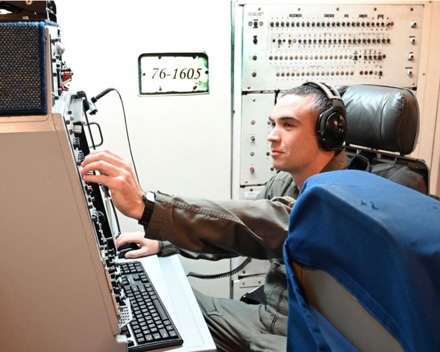
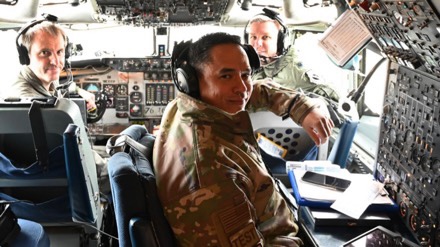
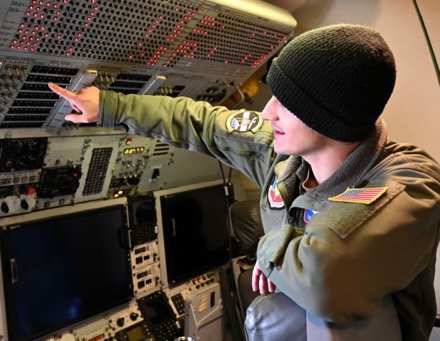
A panel of nearly 30 subject matter experts from across the Department of the Air Force met Nov. 16, 2021 at the Basic Research Innovation and Collaboration Center in Arlington and via a virtual teleconferencing platform to conduct the Spark Tank 2022 quarterfinals.

“Spark Tank is the department’s take on the television show “Shark Tank” and is designed to recognize the great work our Airmen and Guardians put into overcoming performance obstacles and making our services more capable,” said William Gautier, Spark Tank director. “The goal of the quarterfinals round was to narrow the 184 ideas submitted for ST22 down to the top 15 ideas that will advance to the semifinals,” he said.

Only the top 8% percent of ideas were selected to compete in the semifinals scheduled for Jan. 6, 2022.

On the final day of the quarterfinal round, the panel evaluated 29 ideas nominated by U.S. Air Force major commands and U.S. Space Force field commands, plus four at-large “wildcard” submissions. The wildcards were selected by Guardians and Airmen who cast nearly 17,000 ballots in pairwise voting conducted over the last two weeks of October through the Guardians and Airmen Innovation Network platform.

Using a similar voting system, the panel reviewed and scored all 29 ideas using criteria designed to assess each idea from multiple perspectives: friendly disruption, adversary disruption, inspiration/cultural disruption, and the level of senior leadership needed to execute the idea. The scoring criteria logic takes into account atmospheric perspectives that traditional voting methods don’t consider. Many impressive ideas were submitted that touched on all aspects the criteria addressed.

“The new questions required a different perspective for our panel and prompted fresh dialogue for the ST22 vetting process. We think the results represent incredibly innovative solutions that the department’s senior leadership should hear,” said Maj. Alisha Temples, Spark Tank’s deputy director.

The selection process looked at the need for specific capabilities as well as concerns of safety, policy, department-wide implementation, technical feasibility, and scalability.

The quarterfinalists are listed below. (An asterisk (*) denotes semi-finalists.)

Blood Delivery by Unmanned Aerial Vehicle, Air Combat Command *
Mobile Alternative for Canopy Trailer, Air Combat Command
Developing Airmen with Games, Air Education and Training Command *
PME outLOUD! Audio-Enabled PME, Air Education and Training Command
Agile Spectrum Assignment System, Air Force District of Washington
Go-Comm Kit, Air Force Global Strike Command *
Sustaining the B-52 Ejection System, Air Force Global Strike Command *
Air Force Live Integrated Test Environment, Air Force Materiel Command *
F-22 Project Fighter Optimization Experiment, Air Force Materiel Command *
C-130 Engine Oil Pan Hoist, Air Force Reserve Command
Digital Dent Mapping, Air Force Reserve Command *
Digital Crew Book, Air Force Special Operations Command
Mid-Air Collisions & Electronic Flight Bags, Air Force Special Operations Command
KC-135 Fuel Systems Virtual Tour, Air Mobility Command
“Spotty” Bar – Safer Process, Faster Solution, Air Mobility Command
Any Airmen Can Build Their Own Secure App!, Pacific Air Forces *
Preparing the Warfighter for the Pacing Threat, Pacific Air Forces *
Reliable & Resilient Thule Power, Space Operations Command *
Space Control Interactive Procedures Interface, Space Operations Command
Every Second Counts When Saving Someone’s Life, Space Systems Command
TaskMaster, Space Systems Command
Aerial Tow Rehookup – Novel Range Extension, United States Air Force Academy *
Custom Facemasks for Fighter Pilots and Beyond, United States Air Force Academy *
Oil Cart Trailer, United States Air Forces in Europe – Air Forces Africa
Project Arcwater – Water and Power from Thin Air, United States Air Forces in Europe – Air Forces Africa *
Project Hermes – Air Force Digital Recall Roster, Air Education Training Command, Wild Card *
Modern Logistics System for Air Force, Pacific Air Forces, Wild Card *

The United States Army Futures Command also hosts an innovation competition named “Dragon’s Lair” and is conducted in Shark Tank-like episodes. Together, these innovation showcases provide platforms for Department of Defense Total Force military and civilian personnel to show off their creativity and ideas to better prepare for ‘tomorrow’s fight.’

To date, Spark Tank, started in 2018, has produced about 70 ideas that DAF transformation teams investigate and evaluate for implementation and sustainment going forward. While not all ideas are implemented, about a dozen have been and Spark Tank continues to empower Airmen and Guardians to turn on the creativity switch to effect change. Spark Tank 2022 will be hosted on March 4, 2022 by the Air Force Association at the 2022 Air Warfare Symposium in Orlando, Florida. Registration is planned to open in December.

First Army National Guard Soldier Graduates Air Force Multi-Domain Warfare Officer Course

Thursday, December 30th, 2021

Successfully operating in a multi-domain warfighting environment will require all of our nation’s services and components to train and fight together. It may be a challenge, but that challenge is one U.S. Army Capt. Craig Simmon of the Michigan National Guard took head-on. Simmon spent 20 weeks and countless hours on academics and training to become the first joint member and only Army Soldier to graduate from the Air Force’s Multi-Domain Warfare Officers course, Hurlburt Field, Florida.


“The course was a very good experience,” said Simmon, officer-in-charge of supply, 3rd Battalion, 238th General Support Aviation Regiment, Michigan Army National Guard. “The student body at the course was awesome. The Air Force is grabbing Airmen from all the different career fields to create the new Thirteen Oscar career field.”
 
The 18 graduates were the fifth class to complete the course run by the 505th Command and Control Wing at Hurlburt Field, Florida.
 
“The training encompassed operational level air component planning,” said Simmon. “It tied in almost the entirety of an air component campaign with an emphasis on space and cyber. The end goal was to have graduates who could go to joint staffs, air staffs or different planning groups and come up with solutions to challenges.”


According to the 505th CCW public affairs office, the main course focus areas include the Air Operations Center; Air Force Forces staff; joint planning process for air, joint air targeting cycle; Agile Combat Employment; Integrated Air and Missile Defense; information operations; non-kinetic operations; and seminars with each joint and functional component.
 
Simmon applied to attend the course in part due to joint courses he has attended in the past and his additional role in the Michigan National Guard’s largest all-domain exercise as Northern Strike’s lead rotary-wing planner. Northern Strike is held annually at the National All-Domain Warfighting Center in Northern Michigan.
 
“There was a lot of value added for me. It gave me a much better understanding of how the air component works, plans, and operates,” said Simmon. “I had never really been exposed to anything in the space and cyber domains before, so having insight on those capabilities means I know whom to talk to in order to get the desired effects.”
 
Simmon’s experience in large-scale, joint exercise planning and Army rotary-wing aviation meant his attendance was beneficial to the course as well.
 
“The expertise and partnerships with joint forces are critical to mission success when providing holistic approaches to operational planning for air component commanders,” said U.S. Air Force Maj. Mark Scott, 705th Training Squadron Thirteen Oscar course director. “The attendance of the first joint student was invaluable in providing our air component planners a different perspective to ensure operational-level planning is not only synchronized, but integrated across all components”
 
While Simmon can’t don the title of a Thirteen Oscar, he is one of three Michigan guardsmen who have successfully completed the course. His drive to improve set an example for any MIARNG soldiers thinking about attending in the future.
 
“It was a good experience, and I am glad I had the opportunity to go,” said Simmon. “I look forward to using the information I learned in the future.”

The next Multi-Domain Warfare Officer Initial Skills Training class begins in January 2022 with class 22A and aims to continue improving upon operational C2 in order to deliver solutions for air component commands.

To learn more about the Multi-Domain Warfare Officer career field or training visit the following websites: intelshare.intelink.gov/sites/C2/13O and www.milsuite.mil/book/groups/13O.

The 705th TRS reports to the 505th Test and Training Group and 505th Command and Control Wing, both are headquartered at Hurlburt Field, Florida. 

By Deb Henley
505th Command and Control Wing
Public Affairs

Air Force Service Dress Shortages to Affect BMT Graduates

Wednesday, December 29th, 2021

WASHINGTON (AFNS) —  

Due to a shortage of fabric used to manufacture service dress uniforms, Airmen and Guardians graduating from basic military training will temporarily be issued fewer uniform items.

This proactive measure will allow Airmen and Guardians to have, at minimum, one full set of service dress while Defense Logistics Agency Troop Support works with the manufacturer to restore full production.

This fabric shortage will also affect the supply of service dress items across the Department of the Air Force, however BMT recruits have priority.

Men and women are normally issued two short sleeve blue shirts and two long sleeve blue shirts at BMT. Additionally, men are normally issued three pairs of trousers and women two pairs of slacks. Starting in November, some service members will only be issued one each of those items.

To make sure service members eventually receive their full uniform complement, the DAF will provide the affected active duty BMT graduates a cash allowance in their pay check to buy the missing uniform items as available from the Army and Air Force Exchange Service when they arrive at their next duty station or school. Air Reserve Component graduates will be issued missing items after arrival at their home unit, upon availability.

Burlington Industries is the sole U.S. supplier of approved worsted and poly-wool dress fabric used in all military services’ dress uniforms. The continued shortage in the fabric supply as a result of labor challenges and increased material cost is anticipated to have a greater impact on the production and availability of dress uniforms starting in the third quarter of fiscal year 2022.

Secretary of the Air Force Public Affairs

TacMed Tuesday – The Essentials: The TacMed Solutions Operator IFAK

Tuesday, December 28th, 2021

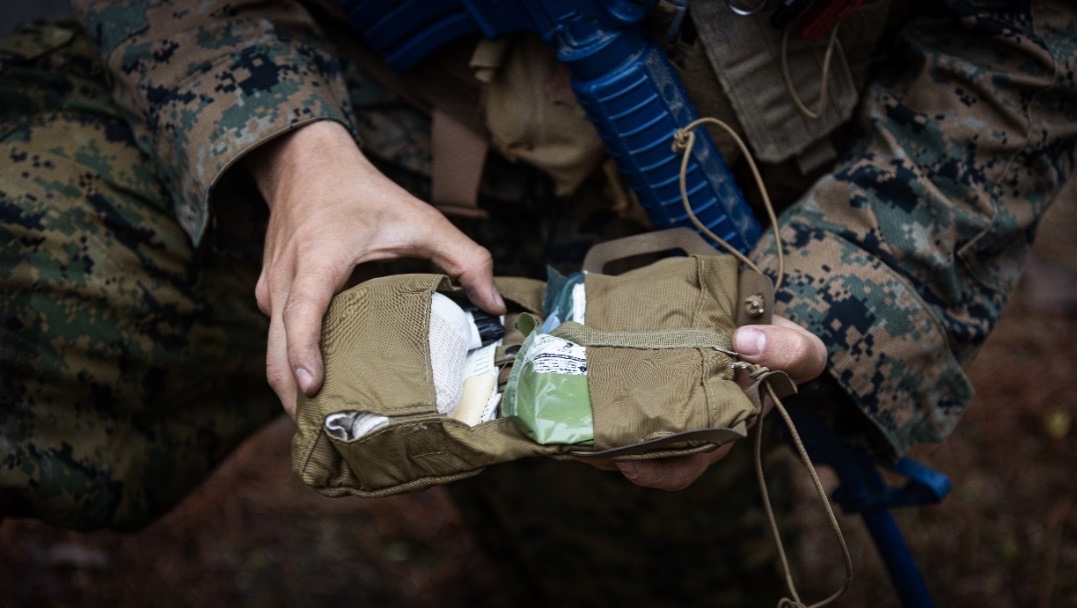
The TacMed™ Solutions Operator IFAK (Individual First Aid Kit) is a compact and streamlined combat trauma kit with an optimized interior layout and full-zip opening for rapid easy access to all its components. The IFAK contents allow for the effective treatment of injuries commonly associated with combat trauma without taking up excess space using multipurpose items like the included OLAES® Modular Bandage features a plastic occlusive sheet in the dressing pocket which can eliminate the need for a stand-alone chest seal.

The TacMed™ Solutions Operator IFAK has gripper elastic on the bottom of the pouch that can provide an extra place to store quick-access equipment such as a tourniquet. The IFAK medical kit includes Velcro on the front provides a place to adhere to an ID patch for easy identification if being aided by a partner.

While the Operator IFAK was designed to improve survivability on the battlefield, many law enforcement agencies also utilize it to keep their officers prepared for any situation.

If you are interested in learning more about the Operator IFAK and its kit components, check it out at: tacmedsolutions.com/products/tacmed-solutions-operator-ifak

US Army Hosts Mountain Warfare Course in Djibouti

Tuesday, December 28th, 2021

DJIBOUTI — Five U.S. Army Mountain Warfare School instructors with the Vermont Army National Guard travelled to Djibouti to teach a five-day Joint Expeditionary Mountain Warfare Course to service members from France’s 5th Overseas Interarms Regiment (5e RIAOM) at the Arta Range Complex, Dec. 12-16, 2021.

The course consisted of knot tying, rope management, rappelling, fixed rope techniques, hauling systems, ascension techniques, lowering systems, basic mountain casualty evacuation and portable stretcher training. Upon successful completion of the course, the students received the prestigious Ram’s Head device and a certificate of completion during a graduation ceremony.

“Any time we can have information sharing and collaboration, it’s beneficial for us as well as our partner forces,” said Sgt. 1st Class Dustin Dearborn, an instructor at the U.S. Army Mountain Warfare School. “Even the experienced service members were able to take something away from this course.”

Mountain qualified Soldiers from the 1-102nd Infantry Regiment (Mountain), Task Force Iron Gray, Combined Joint Task Force – Horn of Africa (CJTF-HOA), assisted Vermont’s instructors with the course. The 1-102nd Infantry Regiment (Mountain) is a unit within the 86th Infantry Brigade Combat Team (Mountain), the only active mountain brigade in the U.S. Army. The 86th IBCT (Mountain) and the Army Mountain Warfare School are both headquartered Vermont.

“Our task force is honored to host this joint training event and further demonstrate our interoperability and continuous cooperation with the French military,” said Lt. Col. Frank Tantillo, Task Force Iron Gray commander. “Because of joint trainings like this, we are all more ready to succeed at our missions and allow future task forces to continue carrying on these partnerships for years to come.”

This is the first time the Army Mountain Warfare School has conducted mountain training for French service members in Djibouti. For years, French forces have routinely invited U.S. service members to participate in the French Desert Commando Course in Djibouti. During Task Force Iron Gray’s deployment to the Horn of Africa, 53 Soldiers successfully completed the grueling 12-day course, earning the foreign identification badge.

The Joint Expeditionary Mountain Warfare Course was a way for the U.S. Army to give back by including foreign nation service members from France’s 5e RIAOM, and share specialty skillsets that strengthen the relationships among the international forces working together in the region. Thirty-two French service members from the 5e RIAOM successfully completed the Joint Expeditionary Mountain Warfare Course.

“This is part of a mutual cooperation between the U.S. and the French,” said French Capt. Benoit Malet, Commander, French Desert Commando Course. “The U.S. came here to teach the French their own techniques. We do the same things but different ways, so it is very interesting to us to discover a new view on what we do.”

By SSG Amanda Stock

M17 Rear Sight Installation – Updated Procedure & Torque Spec

Monday, December 27th, 2021

On 13 December 2021, instructions were made publicly available by TACOM on the PS Magazine website for M17 Rear Sight Installation. This is for maintainers.

END USER SOLDIERS ARE NOT AUTHORIZED TO PERFORM THIS PROCEDURE.

1. Insert the loaded chamber indicator spring and loaded chamber indicator into the slide.

2. Inspect the rear sight screw, NSN 1005-01-665-4524 (PN 13067025), to see if there’s a red Nylok® patch on the first 4 threads of the screw.

Note: Perform steps 3 and 4 for screws with a Nylok® patch.

3. Thoroughly clean the screw and rear sight threads to clear away excess Nylok® or Loctite®.

4. Apply one drop of Loctite 243, NSN 8030-01-620-3313, to the interior threads of the rear sight.

Note: Perform step 5 for one-piece rear sight installation.

5. Install the rear sight plate assembly onto the slide.

Note: Perform step 6 for two-piece rear sight installation.

6. Install the rear sight plate and rear sight onto the slide.

7. Install the screw into the rear sight. Tighten the screw to 21 in-lb.

8. Back the screw out until it is loose but not completely out.

9. Tighten the screw to 34 in-lb.

10. Check the rear sight plate and rear sight to ensure they are not loose. The use of sealing compound, Loctite 243, allows reuse of the rear sight screw. The rear sight screw will no longer be a mandatory replacement part (MRP).

PS Magazine article (no credentials required – open source):

www.psmagazine.army.mil/News/Article/2871712/m17m18-pistol-new-rear-sight-installation-instructions

TACOM Message (credentials required):

tulsa.tacom.army.mil/Maintenance

– SSG Ian Tashima, CA Asst State Marksmanship Coordinator