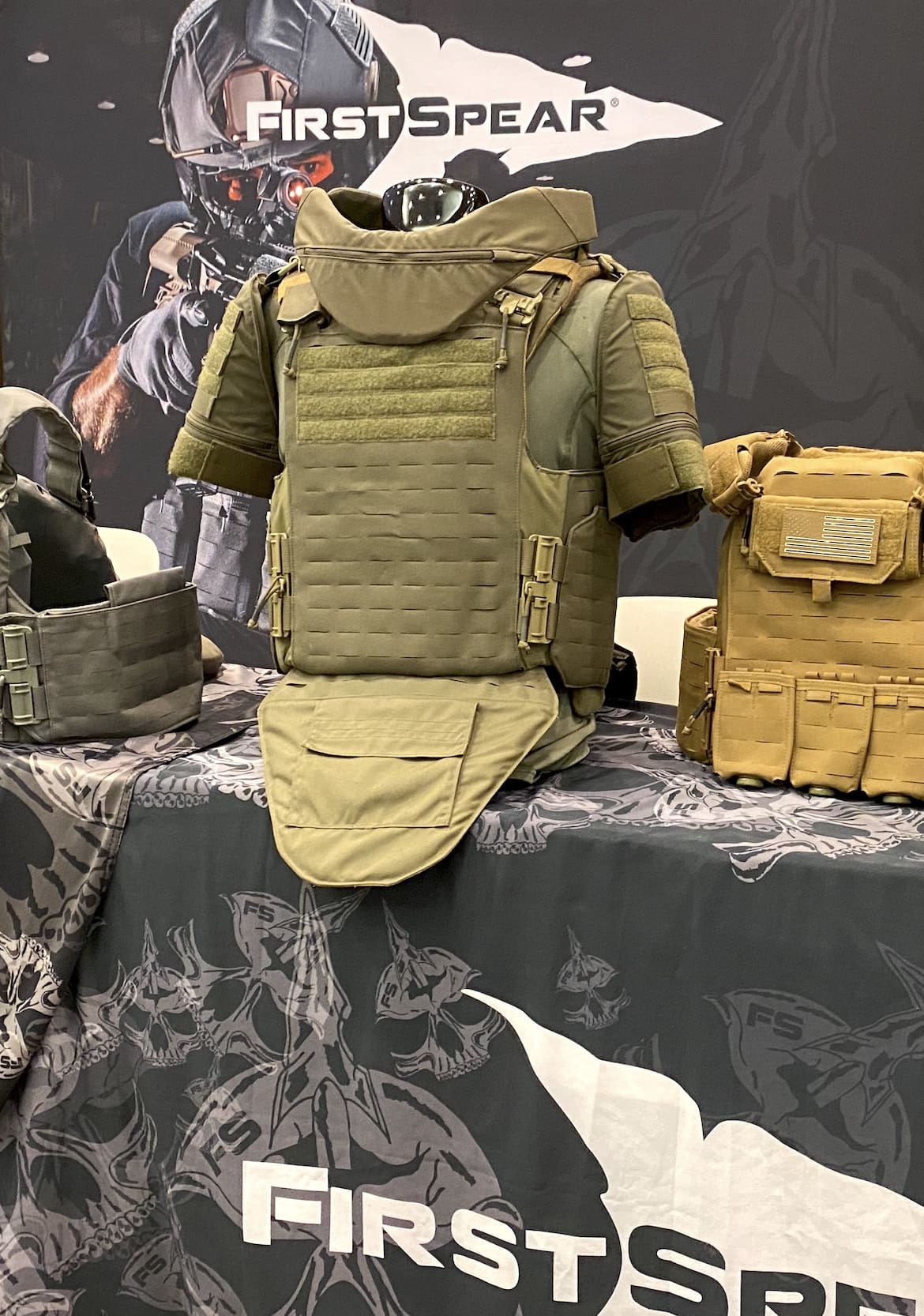
FirstSpear attends Texas Tactical Police Officers Association (TTPOA) in Dallas, Texas, April 7-9, 2021. The mission of the Texas Tactical Police Officer’s Association is to provide an exchange of ideas and information within the field of tactics and operations in police work.
In addition to classroom seminars, TTPOA also offers hands on training courses and live range demos.
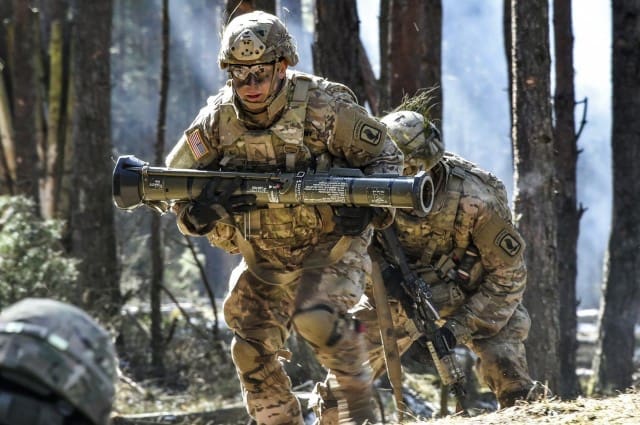
WASHINGTON — Today the U.S. Army released “Army Multi-Domain Transformation: Ready to Win in Competition and Conflict,” a paper on how and why the Army plans to transform itself to become a multi-domain capable force that is able to dominate adversaries in sustained large-scale combat operations by 2035.
“The Army is boldly transforming to provide the Joint Force with the speed, range and convergence of cutting-edge technologies that will be needed to provide future decision dominance and overmatch for great power competition,” said Gen. James McConville, Chief of Staff of the Army.
The U.S. Army currently faces an inflection point that requires innovation, creativity and entrepreneurship in the application of combat power as our nation’s adversaries continue to gain on the Joint Force’s qualitative and quantitative advantages.
By 2035, the Army will enable the Joint Force to maneuver and prevail with a calibrated force posture of multi-domain capabilities that provide overmatch through speed and range at the point of need.
To deter future aggression, the Joint Force must have an irrefutable, demonstrated ability to fight and win. The Army’s MDO concept will provide Joint Force commanders and national policymakers additional credible options in case of a globally integrated, rapidly developing crisis, while simultaneously assuring our allies and partners.
To read the unclassified version of the Army Multi-Domain Transformation, click here.
The needs of tomorrow’s Air Force must be met today, and the 355th Wing remains on the leading edge of this effort to ensure its continued ability to wield lethal, ready combat airpower anywhere, anytime.
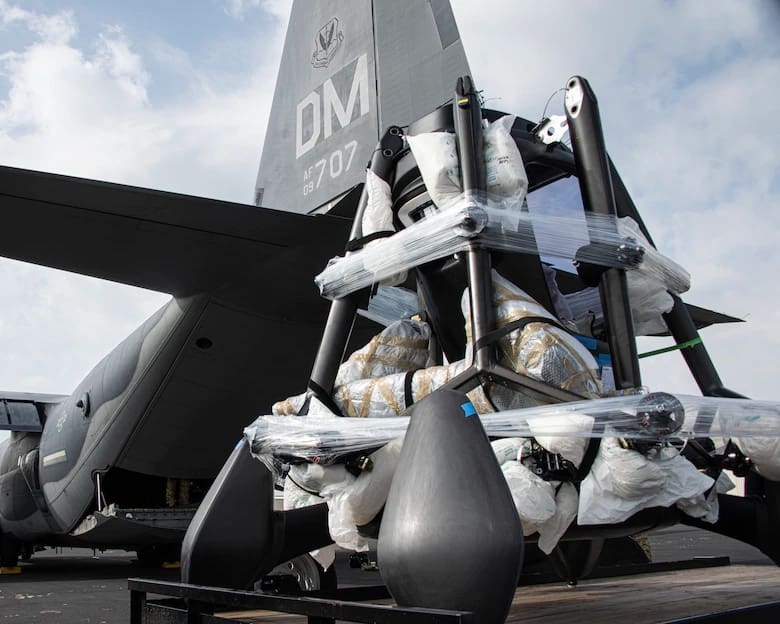
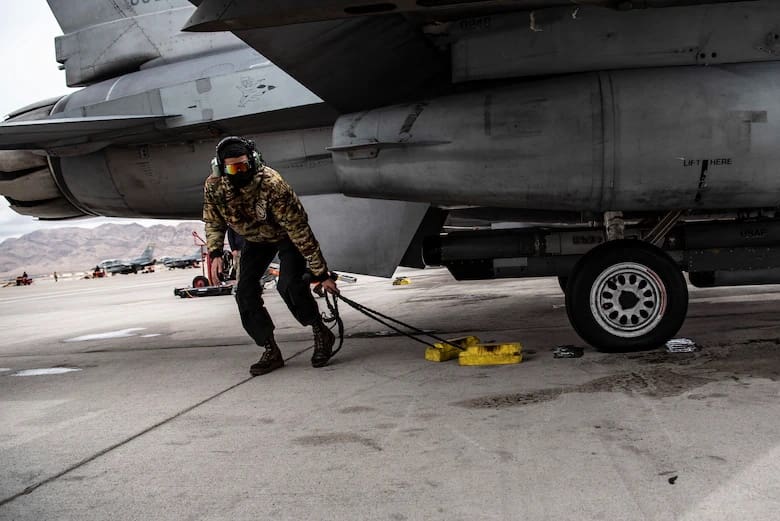
Airmen from the 355th Wing, 621st Contingency Response Wing and AFWERX Agility Prime teamed up to move a LIFT Aircraft electronic vertical takeoff and landing aircraft using a military aircraft for the first time. The eVTOL vehicle was transported from Springfield, Ohio to Austin, Texas, March 23 – 24.
This effort was a proof of concept for the Air Force as the 355th Wing, the 621st CRW and other units across the force look to integrate the eVTOL technology into upcoming training. AFWERX and industry partners are working together to aggressively develop this to support the Department of Defense as it pursues further agile combat employment capabilities.
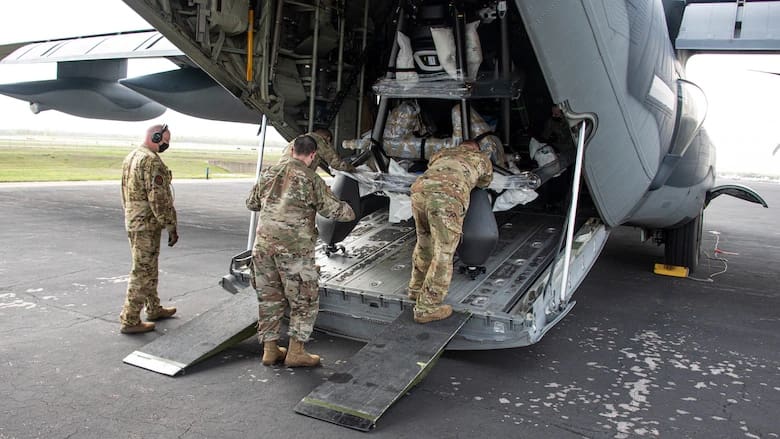
“We are working with industry and Air Force partners to continue developing this next-generation technology to eventually be able to do anything that a traditional aircraft can do,” said Maj. Brendan Gallagher, 563rd Rescue Group chief of weapons and tactics. “Due to the hard work and preparation of our loadmasters and the 571st Mobility Support Advisory Squadron, we were able to safely and effectively load the equipment onto the HC-130J.”
Loading this equipment onto the HC-130J Combat King II for the first time was no simple task, however. Air Force cargo specialists and flight engineers at LIFT Aircraft worked together to figure out configuration the eVTOL would need to be placed in for safe travel, proving that they can be transported using relatively small military aircraft with minimal equipment.
“With it being new, unfamiliar equipment, we had to come with a lot of variants and contingencies,” said Tech. Sgt. Joseph Wruck, 571st MSAS air transportation team sergeant. “Alongside the 79th Rescue Squadron, AFWERX and LIFT, we came up with a simple, safe and expedited way to load the aircraft with minimal specialized equipment by using the ramp system. The load took roughly 40 minutes, but we can get that down to 15 minutes in the future.”
The further integration and testing of this technology will ensure its employability in austere environments. In the future, operators expect this aircraft will be able to support a variety of missions, including personnel recovery and initial airfield assessment.
“The idea and execution of moving (the aircraft) in a more deployable state is a great validation of the design and how it was built,” said Jace McGowan, LIFT Aircraft flight development engineer and chief pilot. “We took the aircraft from just over 15 feet to just under eight. We are also working to get the time from unloading it off the aircraft to ready to fly down under two hours.”
As Airmen and industry partners look toward the future of innovation with this technology, AFWERX continues pushing it into new environments to test its capabilities.
“This load exercise came on the heels of major flight testing in Springfield, and we have more testing coming up in Austin and the Bushwhacker exercise (the 355th Wing’s agile combat employment exercise) in May,” said James Bieryla, AFWERX Prime division chief.
Bushwhacker is the 355th Wing’s ongoing series of agile combat employment exercises. The next iteration is scheduled this summer and will be the first time AFWERX eVTOL vehicles are integrated into dynamic military exercise scenarios.
“Our goal within Prime is to find emerging technology with dual capabilities and transition to deploy them rapidly after working with many mission partners to meet the needs of our operators and warfighters,” Bieryla said. “This movement with LIFT exemplifies how we aren’t content to sit around and wait on anything. We are getting after the chief of staff’s call to ‘Accelerate Change or Lose’.”
The eVTOL aircraft’s use in the upcoming Bushwhacker exercise is expected to demonstrate capabilities including personnel recovery and resupply. The 355th Wing also looks to test other more in-depth use cases in the future. This will improve dynamic forward adaptive basing concepts by pushing capabilities closer to the fight.
“This is the first milestone in developmental operations of eVTOL in rescue and attack, which highlights how the wing continues to actively engage on the front end of these efforts to continue building our readiness for tomorrow’s fight,” Gallagher said. “By doing this, we are furthering the rescue and attack capabilities as we look toward the future, because these are the next generation of flying platforms.”
The future is now and the Air Force is adapting and innovating the way it operates to ensure its ability to deter and defeat any near-peer adversary that may arise.
“Innovation is critical and under AFWERX Agility Prime, we have a unique opportunity to leverage their capabilities and resources by working with technology developers and flight engineers earlier in the process to rapidly make changes and develop these technologies to meet mission requirements,” Gallagher said. “Instead of waiting to receive a product, we are getting engaged early to help shape it to meet our needs, which will pay large dividends once the product is mission ready.”
The eVTOL is in the beginning stages of its growth, but the potential of this technology cannot be overvalued. As it develops further, the effects of these aircraft will be seen around the globe.
“We are currently working with AFWERX to explore the next level of what is possible with this technology to meet the longer-term goals operators have,” McGowan said. “Getting this feedback from the operators is a great opportunity to shape things going forward. We are very happy to be able to work alongside the Air Force and meet the needs of the service.”
The ever-changing climate of conflict requires the Air Force and DoD to constantly adapt and innovate. The efforts of AFWERX Agility Prime, the 355th Wing and 621st Contingency Response Wing exemplify the Air Force’s commitment to increase capabilities and testing new equipment, ensuring the force remains ready for tomorrow’s fight.
By SrA Jacob T. Stephens, 355th Wing Public Affairs
I attended the 2021 Special Operations Care Fund Sporting Clays Fundraiser. I ran into a whole slew of friends including Ivan who runs Kitbadger. He created a video and I asked if I could share it.
SOC-F is a non-profit which supports current and former SOF Personnel and their Families through targeted, novel medical treatment, addiction recovery, intensive marital counseling and a Gold-Star Kids Camp.
With all of their board serving as volunteers and no overhead, SOC-F is the most effective charitable organization we have been worked with and at the top of our donation list each year.
Editor’s Comment: One day, the Air Force will acknowledge that it’s actually just a big logistics organization and put logisticians in charge. Like it or not, the aircrew are the service’s “delivery drivers” ensuring that the right thing gets to the right place at the right time. That’s just part of the equation. Making sure the means of delivery and the “thing” to be delivered are ready for that in time delivery takes a lot of work and aircrew aren’t involved at all.
Sorties are generated by maintenance. This realignment and renaming of MX happens every few years based in the whims of ever-changing Ops leadership. It’s all been tried before, over and over. It never really changes anything except causing turmoil for MX leaders. Wrenches still get turned and sorties generated.
JOINT BASE LANGLEY-EUSTIS, Va. (AFNS) —
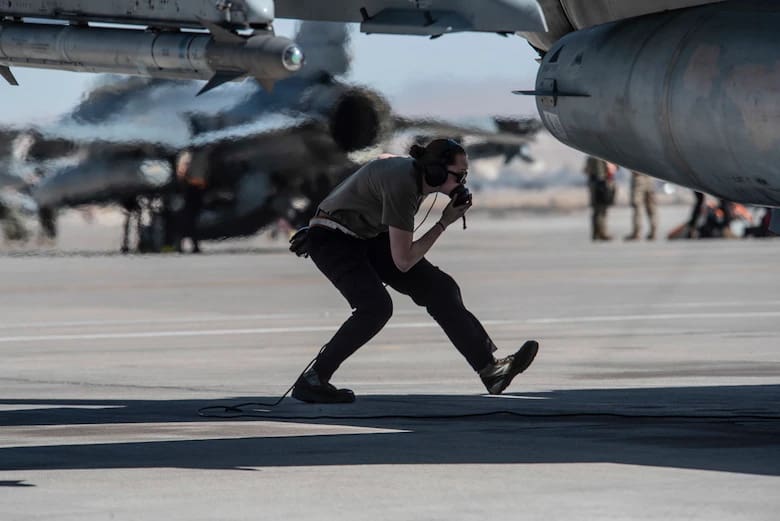
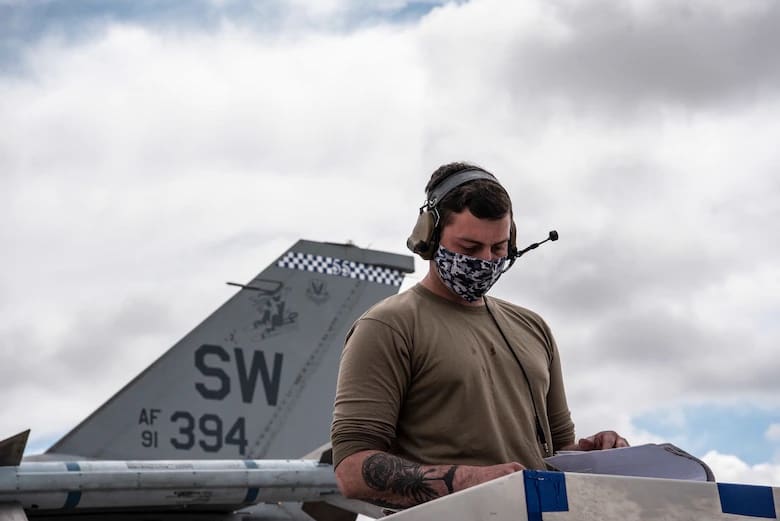
Air Combat Command is changing the aircraft maintenance organizational structure to improve synchronization between maintenance and fighter squadrons.
This new structure, called Combat Oriented Maintenance Organization, or COMO, flattens the maintenance organizational structure and transitions aircraft maintenance units into fighter generation squadrons.
The fighter generation squadron is a new squadron comprised of maintainers responsible for airpower health and generation. The fighter generation squadron will be paired with a complementary fighter squadron and the two units will work collaboratively both in garrison and during deployments.
“We’ve already seen success with this new organizational model at Shaw Air Force Base (South Carolina),” said Maj. Gen. Mark Slocum, ACC director of air and space operations. “The benefit of this new organizational construct is it enhances the fighter force’s agility and better prepares them for a future dynamic force employment in a high-end fight.”
Pairing fighter squadrons with a dedicated fighter generation squadron will foster unity of effort between maintenance and operations as well as provide a better view of readiness.
For the last few years, ACC has been on a wing reorganization experimentation journey and allowed commanders to experiment with various types of wing organizational constructs in order to build more agile and cohesive units.
“After gathering what we’ve learned from this season of experimentation, we are now moving forward into a season of standardization,” said Maj. Gen. Tom Miller, ACC director of logistics, engineering and force protection. “The COMO structure allows fighter wings to prepare for rapid deployments and to disaggregate and reaggregate as needed by the CFACC.”
This pairing of the fighter and a fighter generation squadron is just the first phase of a broader force presentation model ACC is building to better organize, train and equip combat air forces. Phase two will focus on evaluation of air base squadrons that can rapidly deploy and provide base operating support. Phase three examines wing command and control capabilities.
The 20 FW at Shaw AFB and 388 FW at Hill AFB, Utah are the first wings to transition to the COMO model, with the remaining ACC fighter wings transitioning by the summer of 2022.
Patrick McNamara spent 22 years in the United States Army in a myriad of special operations units. When he worked in the premier special missions unit, he became an impeccable marksman, shooting with accurate, lethal results and tactical effectiveness.
McNamara has trained tactical applications of shooting to people of all levels of marksmanship, from varsity level soldiers, and police officers who work the streets to civilians with little to no time behind the trigger.
His military experience quickly taught him that there is more to tactical marksmanship than merely squeezing the trigger. Utilizing his years of experience, McNamara developed a training methodology that is safe, effective, and combat relevant and encourages a continuous thought process. This methodology teaches how to maintain safety at all times and choose targets that force accountability, as well as provides courses covering several categories, including individual, collective, online, and standards.
While serving as his Unit’s Marksmanship NCO, he developed his own marksmanship club with NRA, CMP, and USPSA affiliations. Mac ran monthly IPSC matches and ran semi annual military marksmanship championships to encourage marksmanship fundamentals and competitiveness throughout the Army. He retired from the Army’s premier hostage rescue unit as a Sergeant Major and is the author of T.A.P.S. (Tactical Application of Practical Shooting) and Sentinel.
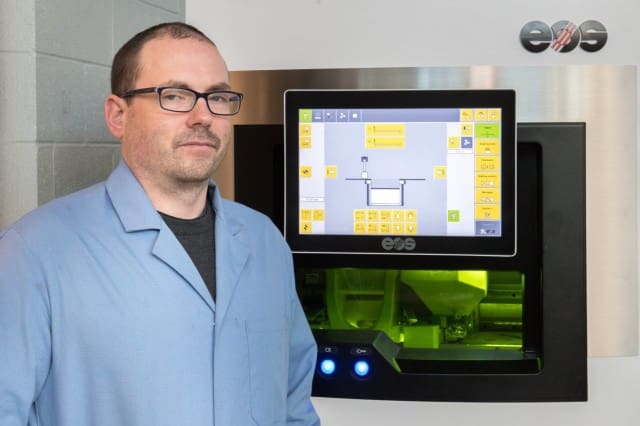
ABERDEEN PROVING GROUND, Md. — Army researchers collaborated with academic partners from the University of Central Florida to improve additive manufacturing. This partnership may help deliver extreme lightweight components to future Soldiers.
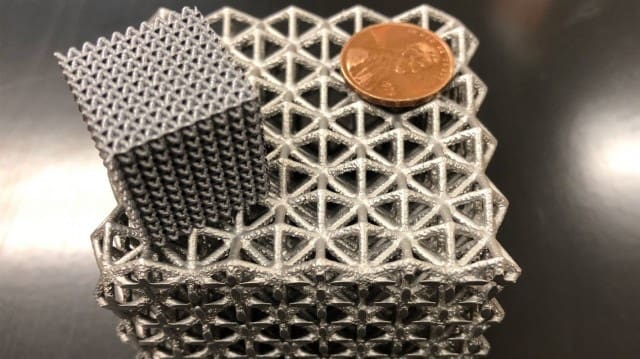
By optimizing the printing process for the additive manufacturing of a high-strength magnesium alloy and fabricating 24 micro-lattice structures, researchers characterized the compressive strength and failure modes, which will enable much lighter Army components.
“We used a magnesium alloy known as WE43, which has only been successfully 3D printed by a handful of researchers,” said Dr. Brandon McWilliams, the lead researcher for 3D printing metals at the U.S. Army Combat Capabilities Development Command, known as DEVCOM, Army Research Laboratory. “In this work, we optimized the process to achieve higher density than previously reported and used that to produce and characterize lattice structures made up of WE43.”
Magnesium Elektron WE43 is a high strength casting alloy. It can be used in temperatures of up to 300°C (572°F), according to AZoM, an online publication for the materials science community. “This alloy has good mechanical properties coupled with excellent corrosion resistance.”
Advanced additive manufacturing has the potential to deliver critical parts at the point of need, reducing the need for lengthy logistic chains. Also, the U.S. Army’s modernization strategy calls for lightening the load to help support future Soldiers.
The research team published their findings in the peer-reviewed journal Materialia.
McWilliams said he believes joining advanced lightweight alloys with novel multi-scale structures through additive manufacturing will be a key aspect of modernizing Army weapon systems. There are many lightweight structural applications in the automotive, aerospace and biomedical industries.
“Current systems are too heavy, which increases burden to the Soldier, reduces fuel efficiency and degrades mission effectiveness,” he said. “It is my goal as an Army researcher to conduct research, which has the maximum chance of success of transition from basic and applied research stage to practical application in order to enable transformational overmatch.”
Partnering with academia and industry has been a priority with the laboratory since it introduced its Open Campus initiative.
“This was an exciting and rewarding collaboration that produced the technological accomplishment founded on fundamental understanding of materials and additive manufacturing,” said Prof. Yongho Sohn, lead researcher at University of Central Florida. “Technological vision with clear scientific objectives defined by Dr. McWilliams and his team was the key to our contribution.”
Army researchers will now evaluate the high strain rate and ballistic properties of these 3D-printed materials and look for demonstration applications, such as ultra-lightweight unmanned aircraft system and robotic vehicle components, he said.
By U.S. Army DEVCOM Army Research Laboratory Public Affairs
Posted in Army, Guest Post, Materials | Comments Off on Army Research Lab & University of Central Florida Optimize 3D Printing Process
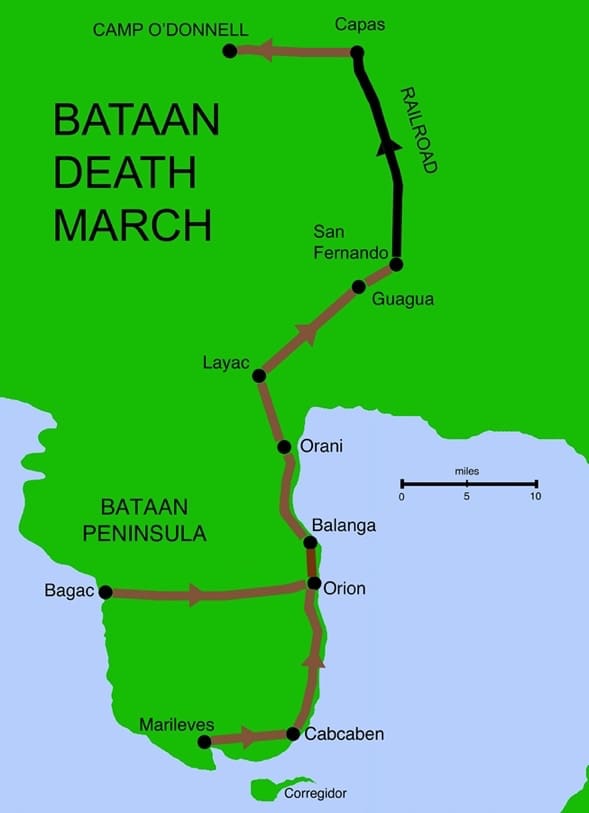
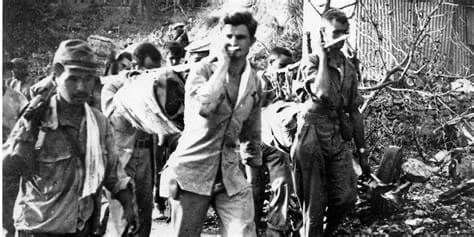
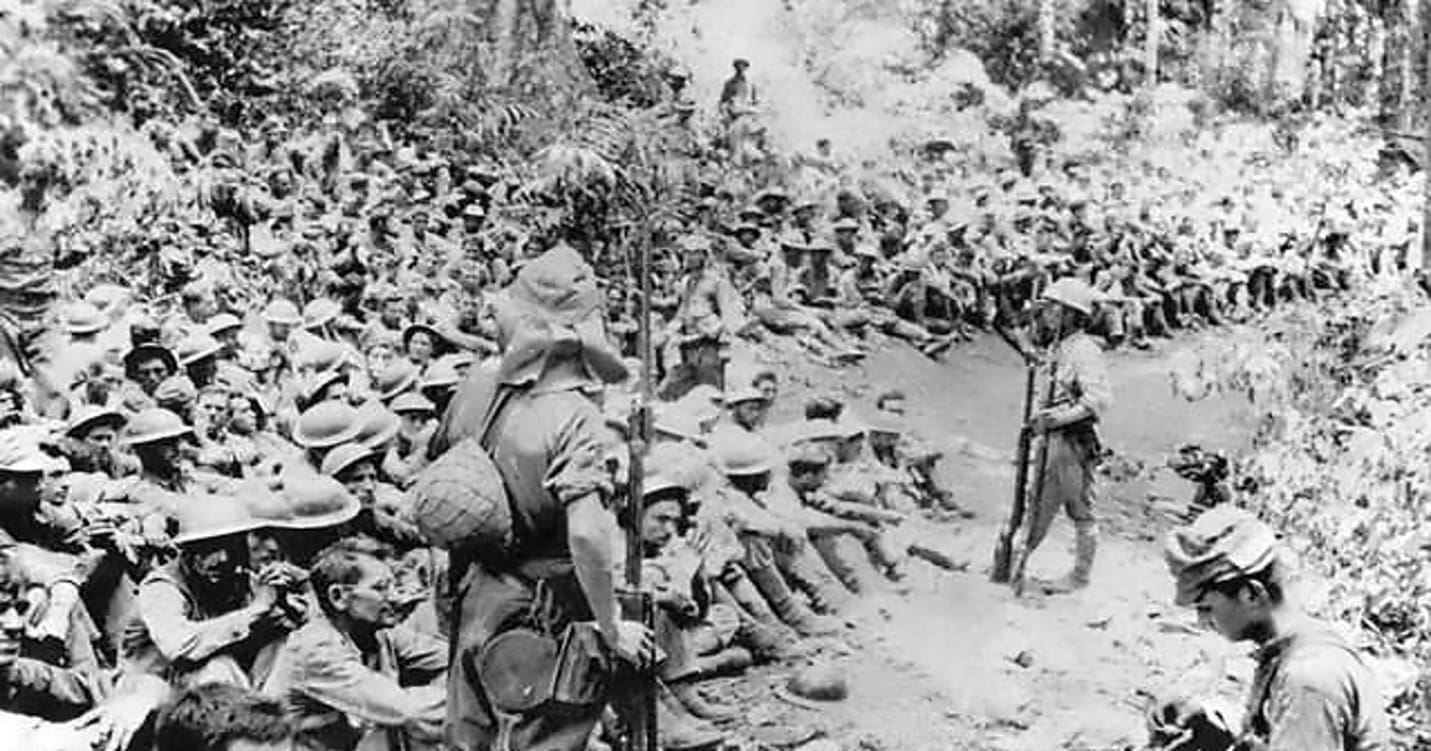
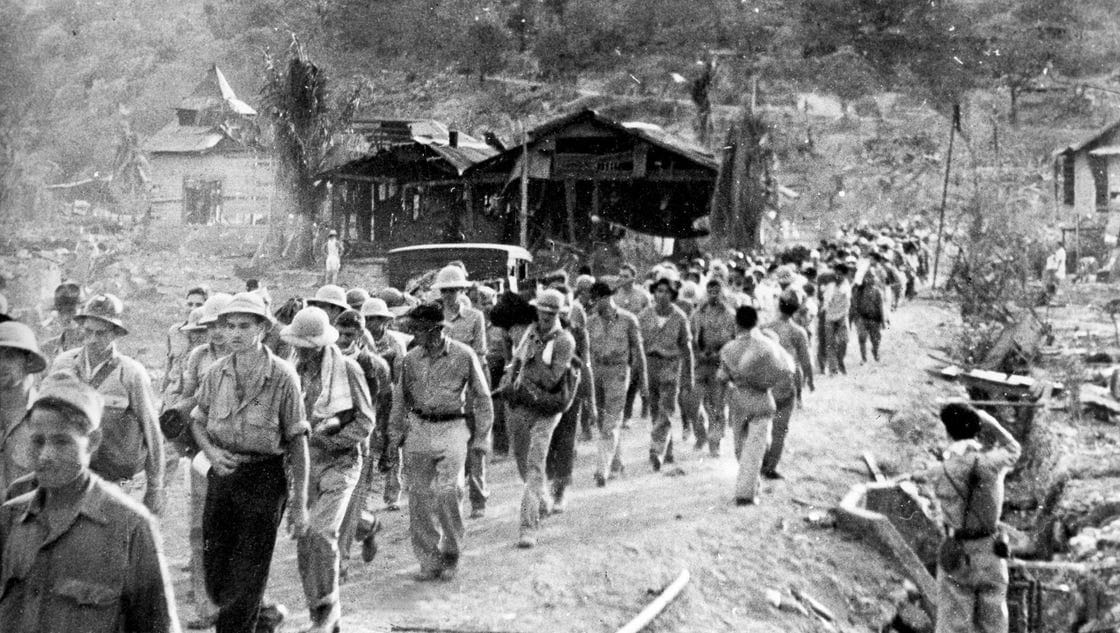
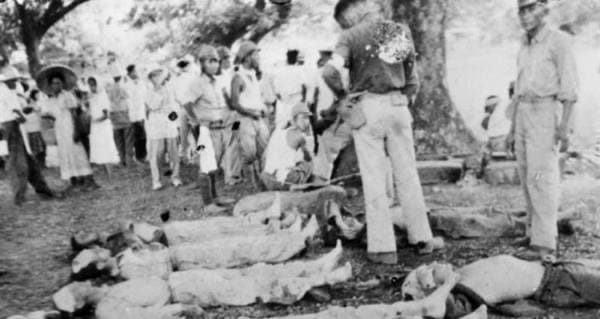
During World War II, the Bataan Death March was a horrific forced march by the Japanese Imperial Army on American and Filipino prisoners of war. The 63-mile march from the southern end of the Bataan Peninsula in the Philippines began on April 9, 1942, with at least 72,000 POWs. According to some accounts, 75,000 soldiers were taken prisoner after the Bataan surrender; about 12,000 Americans and 63,000 Filipinos. The Bataan Death March resulted in an estimated 7,000 to 10,000 deaths due to the prisoners’ deplorable conditions and cruel treatment.
“This was the First Murder”
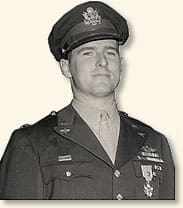
Captain William Dyess was a fighter pilot stationed on Luzon when the Japanese invaded. Captured when the American forces on Bataan surrendered, he joined the Death March and was interned by the Japanese. In April 1943, Captain Dyess was one of three prisoners able to escape from their captors. Captain Dyess eventually made his way back to America, where his story was published.
“The victim, an air force captain, was being searched by a three-star private. Standing by was a Jap commissioned officer, hand on the sword hilt. These men were nothing like the toothy, bespectacled runts whose photographs are familiar to most newspaper readers. They were cruel of face, stalwart, and tall.
‘’The private, a little squirt, was going through the captain’s pockets. All at once, he stopped and sucked in his breath with a hissing sound. He had found some Jap yen.
“He held these out, ducking his head and sucking in his breath to attract notice. The big Jap looked at the money. Without a word, he grabbed the captain by the shoulder and shoved him down to his knees. He pulled the sword out of the scabbard and raised it high over his head, holding it with both hands. The private skipped to one side.’
‘Before we could grasp what was happening, the black-faced giant had swung his sword. I remember how the sun flashed on it. There was a swish and a kind of chopping thud, like a cleaver going through beef’.
‘The captain’s head seemed to jump off his ‘shoulders. It hit the ground in front of him and went rolling crazily from side to side between the lines of prisoners.’
‘The body fell forward. I have seen wounds, but never such a gush of—blood as this. The heart continued to pump for a few seconds, and at each beat, there was another great spurt of blood. The white dust around our feet was turned into crimson mud. I saw the hands were opening and closing spasmodically. Then I looked away.’
‘When I looked again, the big Jap had put up his sword and was strolling off. The runt who had found the yen was putting them into his pocket. He helped himself to the captain’s possessions.’
“This was the first murder.”
Oriental Sun Treatment
As the prisoners were herded north, they collided with advancing Japanese troops moving to the south, forcing a brief halt to the march:
“Eventually, the road became so crowded we were marched into a clearing. For two hours, we had our first taste of the oriental sun treatment, which drains the stamina and weakens the spirit.
The Japs seated us on the scorching ground, exposed to the full glare of the sun. Many of the Americans and Filipinos had no covering to protect their heads. I was beside a small bush, but it cast no shade because the sun was almost directly above us. Many of the men around me were ill.
When I thought I could stand the penetrating heat no longer. I was determined to have a sip of the tepid water in my canteen. I had no more than unscrewed the top when the aluminum flask was snatched from my hands. The Jap who had crept up behind me poured the water into a horse’s nose-bag, then threw down the canteen. He walked on among the prisoners, taking away their water and pouring it into the bag. When he had enough, he gave it to his horse.”
Drop-outs
The parade of death continues its journey as its members inevitably succumb to the heat, the lack of food, and the lack of water:
“The hours dragged by and, as we knew, they must. The drop-outs began. It seemed that a great many of the prisoners reached the end of their endurance at about the same time. They went down by twos and threes. Usually, they made an effort to rise. I never can forget their groans and strangled breathing as they tried to get up. Some succeeded. Others lay lifeless where they had fallen.
I observed that the Jap guards paid no attention to these. I wondered why. The explanation wasn’t long in coming. There was a sharp crackle of pistol and rifle fire behind us.
Skulking along, a hundred yards behind our contingent, came a ‘clean-up squad’ of murdering Jap buzzards. Their helpless victims, sprawled darkly against the white of the road, were easy targets.
As members of the murder squad stooped over each huddled form, there would be an orange ‘flash in the darkness and a sharp report. The bodies were left where they lay, that other prisoners coming behind us might see them.
Our Japanese guards enjoyed the spectacle in silence for a time. Eventually, one of them who spoke English felt he should add a little spice to the entertainment.
‘Sleeper?’ he asked. ‘You won’t sleep? Just lie down on the road. You get good long sleep!’
On through the night, we were followed by orange flashes and thudding sounds.”
Arrival at San Fernando
Finally, after five days without food and little water, the dwindling column arrives at its destination:
“The sun still was high in the sky when we straggled into San Fernando, a city of 36,000 population, and were put in a barbed wire compound similar to the one at Orani. We were seated in rows for a continuation of the sun treatment. Conditions here were the worst yet.
The prison pen was jammed with sick, dying, and dead American and Filipino soldiers. They were sprawled amid the filth and maggots that covered the ground. Practically all had dysentery. Malaria and dengue fever appeared to be running unchecked. There were symptoms of other tropical diseases I didn’t even recognize.
Jap guards had shoved the worst cases beneath the rotted flooring of some dilapidated building. Many of these prisoners had already died. The others looked as though they couldn’t survive until morning.
There had been no burials for many hours.
After sunset Jap soldiers entered and inspected our rows.
Then the gate was opened again, and kitchen corpsmen entered with cans of rice. We held our mess kits and again passed lids to those who had none. Our spirits rose. We watched as the Japs ladled out generous helpings to the men nearest the gate.
Then, without explanation, the cans were dragged away, and the gate was closed. It was a repetition of the ghastly farce at Balanga. The fraud was much crueler this time because our need was vastly more significant. In our bewildered state, it took some time for the truth to sink in. When it did, we were too discouraged even to swear.”
References:
This eyewitness account appears in Dyess, William E., The Dyess Story (1943);