GORE-TEX Professional

Archive for the ‘Guest Post’ Category

US Army Updates Grooming Standards

Tuesday, January 26th, 2021

Revised Army regulation and grooming standards support diversity, equity and inclusion and people first priority

WASHINGTON — The U.S. Army has announced major revisions to Army Regulation 670-1, Wear and Appearance of Army Uniforms and Insignia, which will include guidance on wearing the new Army Green Service Uniform and several other key changes. In addition, the Army is also revising its grooming standards to support its People First priority and diversity and inclusion efforts.

“The Army must continue to put people first by fostering a culture of trust that accepts the experiences and backgrounds of every Soldier and civilian,” said Lt. Gen. Gary Brito, Deputy Chief of Staff for Personnel. “Our diverse workforce is a competitive advantage, and the Army must continue to offer fair treatment, access and opportunity across the force.”

The new version of AR 670-1 will go into effect Feb. 24. Major changes include implementation of the AGSU, clarified policy on breastfeeding or pumping in uniform, authorization for breastfeeding/pumping Soldiers to wear an optional undershirt, implementation of the Improved Hot Weather Combat Uniform, and full transition to the Operational Camouflage Pattern — removing references to the Universal Camouflage Pattern.

“The Army has maintained a longstanding tradition of Soldiers presenting a clean and professional appearance,” said Sgt. Maj. Mark Anthony Clark from the Army’s Office of the Deputy Chief of Staff for Personnel (G-1). “A professional appearance is an outward manifestation of the pride they have in themselves and in service to our country.”

New grooming standards, which will be reflected in a forthcoming memo (ALARACT), will also go into effect in February. Approved revisions include optional wear of earrings, lipstick and nail colors for women and clear nail polish for men. Earrings will remain unauthorized in field environments, combat-related deployments or locations where access to normal hygiene is not available.

Approved hairstyle changes include no minimum hair length for female Soldiers, allowing multiple hairstyles at once (i.e. braiding, twists or locs). Soldiers will be able to wear ponytails if unable to form a bun, and may wear long ponytails while conducting physical training, in the combat uniform or when female Soldiers wear equipment such as, but not limited to, combat helmets.

“In an effort to stop hair damage and loss stemming from hairstyles like the bun, the Army approved healthier hairstyle options that are more inclusive of various natural styles,” said Clark.

Soldiers will also be allowed to have a uniform hair color blend (also known as highlights) as long as it presents a natural appearance. However, purple, blue, pink, green, orange, bright red, fluorescent or neon colors, and some others will be prohibited.

In addition, the revised regulation will not contain potentially offensive language used to describe several hairstyles – for example, “Mohawk, eccentric, faddish, Fu Manchu, dreadlock” – which will be replaced with alternative verbiage.

“We are continuously assessing our policies to identify areas for improvement, then implementing policies that demonstrate our commitment to ensuring all Soldiers feel as though they are valued members of the Army team,” said Brito. “We know that actions speak louder than words when it comes to inclusivity and equity within our ranks, and we believe that the changes we announced today are one example of policies that put our people first.”

By U.S. Army Public Affairs

Editor’s note: Here is the link to the updated DA PAM 670-1

SCUBAPRO Sunday – BMCM (MDV) Carl Brashear

Sunday, January 24th, 2021

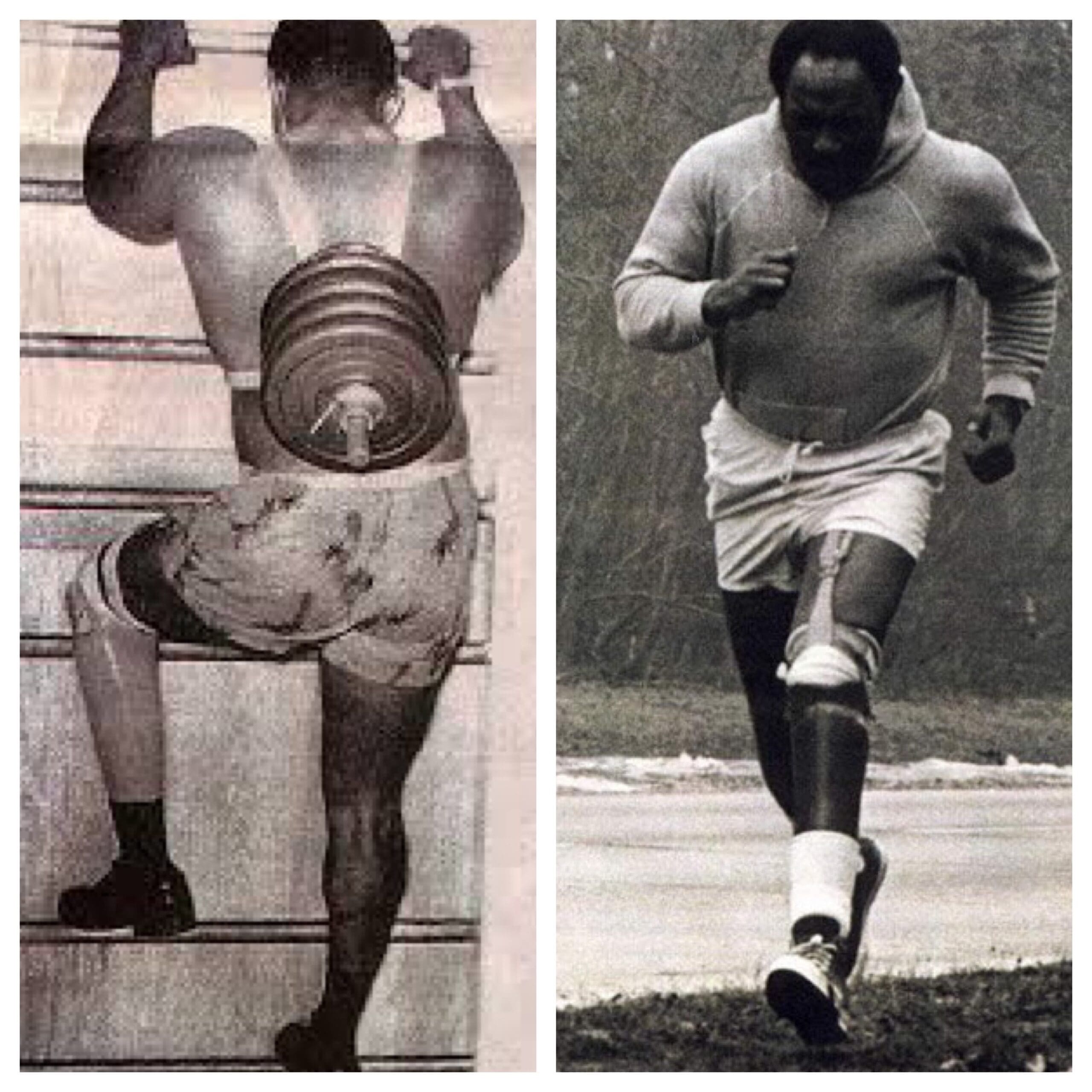
Master Diver Carl Brashear was born on January 19, 1931, in Tonieville, Kentucky. He joined the Navy in Feb 1948. A 31-year Navy veteran, Brashear retired in 1979 as a Master Chief Boatswain’s Mate, the highest enlisted rank in the U.S. Navy. In 1966 while diving to recover a lost nuclear weapon off Spain’s coast, Brashear was severely injured in an accident. As a result, surgeons amputated his left leg below the knee. He refused to submit to a medical board’s attempt to retire him as unfit for duty. After demonstrating that he could still dive and perform his other duties, he was assigned to Harbor Clearance Unit 2, Naval Air Station Norfolk, Experimental Diving Unit. He was the first person to be returned to full service as a Navy diver after losing a limb in a diving salvage accident. There was a movie made about him in 2000 called Men of Honor. Master Chief Brasher was everything a good senior leader should be; he led from the front, he didn’t take no for an answer when he knew he was right, took care of the people below him, and left the Navy a better place then he found it.

Below, Carl training after he lost his leg, getting back to full active duty status.

usnhistory.navylive.dodlive.mil/2018/01/16/overcoming-hurdles-the-legacy-of-master-chief-carl-brashear

PARACHUTE OPERATIONS: Pendleton Marines Jump Out Perfectly Good Airplane

Sunday, January 24th, 2021

CAMP PENDLETON, Calif. —

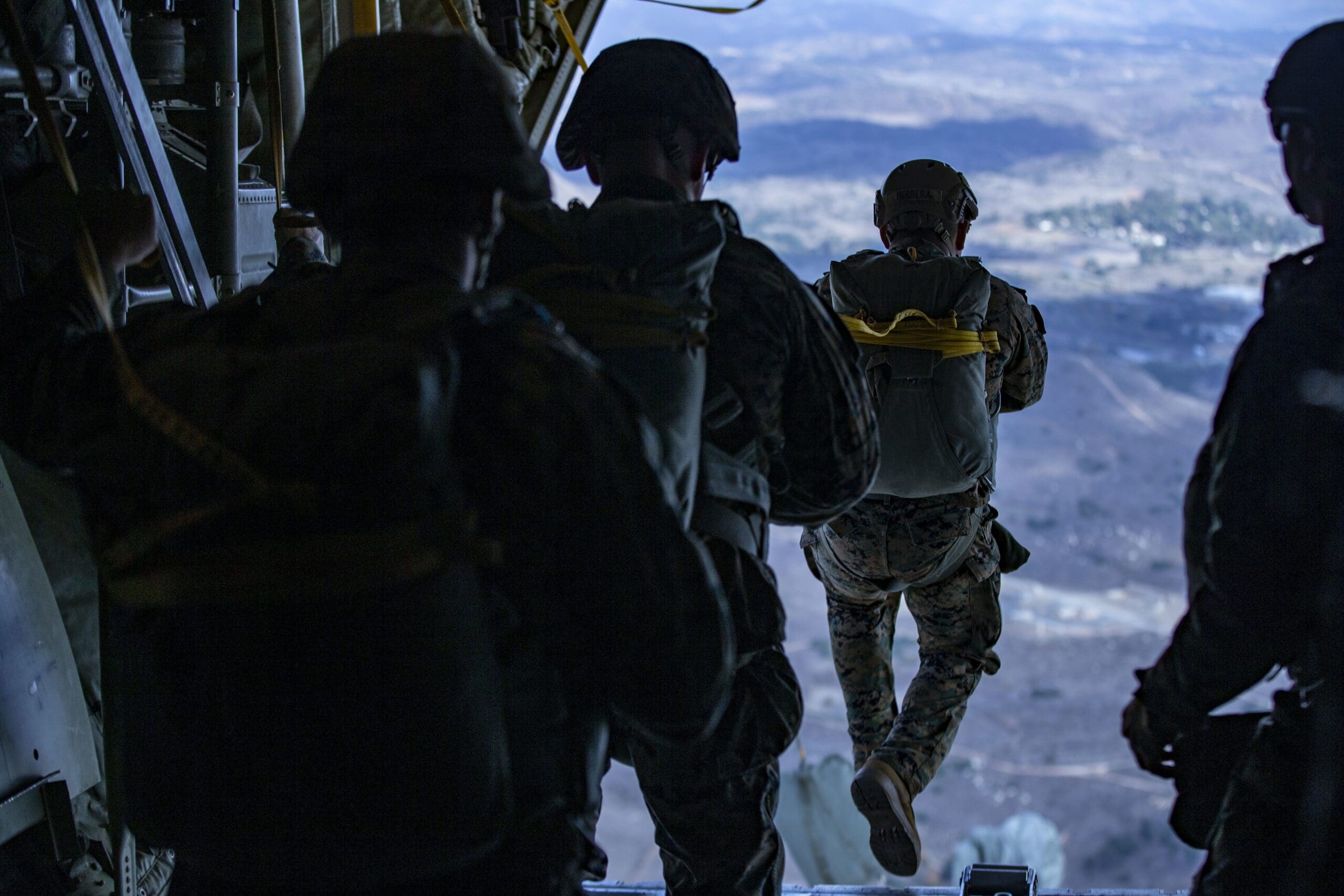
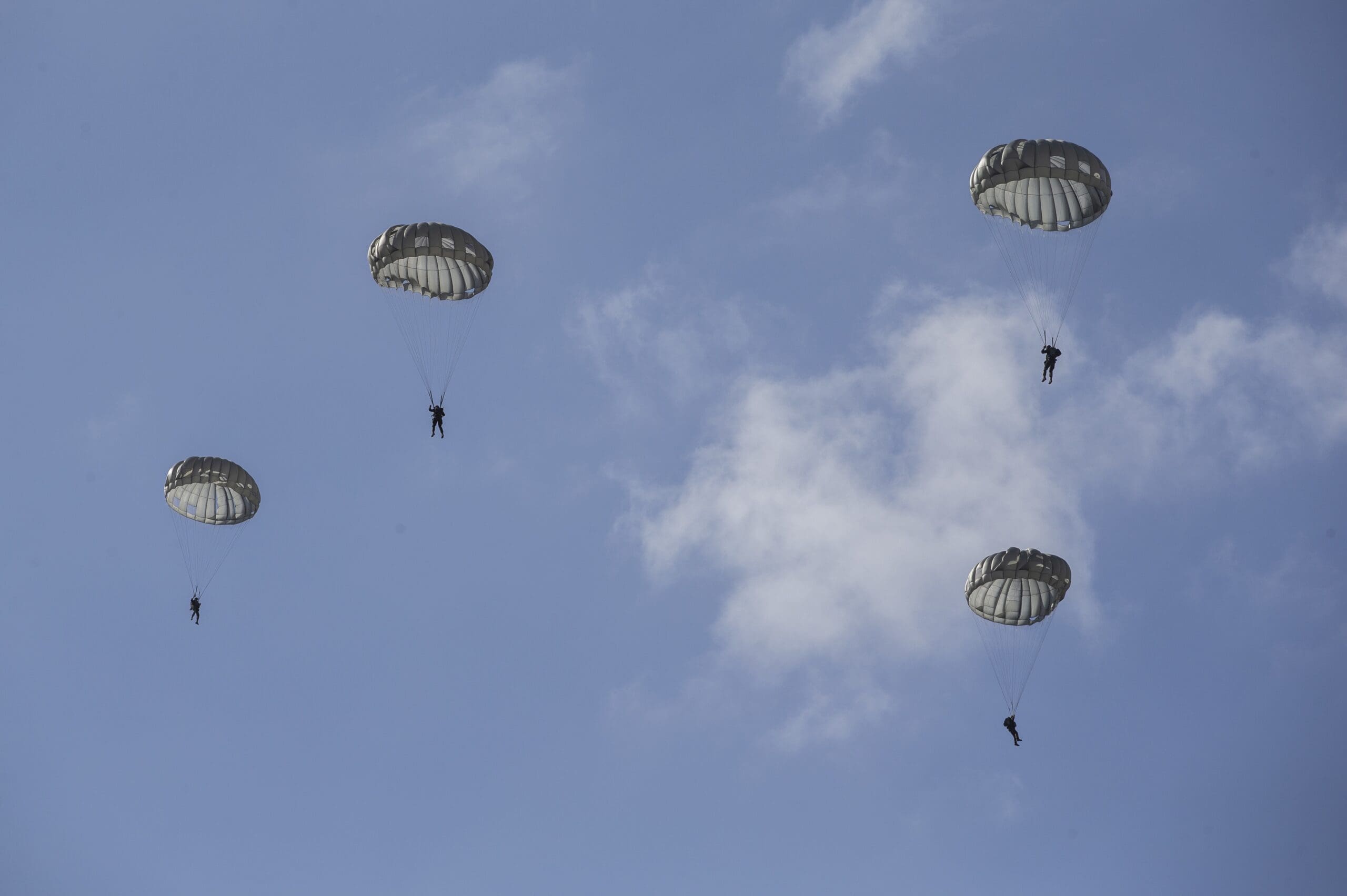
Marines with Air Delivery Platoon, Landing Support Company, 1st Transportation Support Battalion, 1st Marine Logistics Group, coordinated a parachute operation at Drop Zone Basilone to refresh their Marines on low-level static line jumps and aerial resupply.

1st TSB invited other Pendleton units to participate in the training event, enabling Marines with 1st Marine Division and I Marine Expeditionary Force Information Group with airborne and jump missions to gain proficiency and remain current with their jump training.

The aerial delivery Marines coordinated with 3rd Marine Aircraft Wing to use a KC-130J Hercules as part of the training. In addition to the actual parachutists, the Marines loaded the aircraft with container delivery systems and door bundles to simulate a resupply.

“It’s important that we do this training, because it allows us to practice in rugged terrain and puts us in real-world environments that we can fine tune our skill sets in.”
-Gunnery Sgt. Kyle Bridges, 1st TSB aerial delivery chief

After taking off from Marine Corps Air Station Camp Pendleton, the aircraft made several passes over the drop zone to line themselves up before doing the physical drop. Once the Marines jumped out of the aircraft, the supply bundles soon followed.

The air delivery Marines usually conduct two or three parachute operations each month to help maintain their proficiency. Being stationed on Pendleton, and having MCAS Camp Pendleton nearby, streamlines the planning process for each jump.

“Having the air station right here is crucial to us,” said 1st Lt. Amy Horney, the Air Delivery Platoon commander with LS Company, 1st TSB. “If we didn’t, if we had to go to Miramar or Yuma, or something like that, it would take a huge toll on the logistical planning that we have to do each time.”

All of the different training areas on Camp Pendleton also provide some advantages for the Marines, according to Horney.

“With Camp Pendleton being so large, there are multiple drop zones on the base,” explained Horney. “We can go all the way up north, we can stay down here by the air station. We can go toward different units to help them out and take less of a toll on their logistical planning. Camp Pendleton is definitely a golden site for us in order to do those two to three operations a month, in addition to all the other exercises we support.”

Story by Lance Cpl Andrew Cortez, Marine Corps Base Camp Pendleton

Photos by Lance Cpls Drake Nickels and Andrew Cortez

Public Service Announcement: TC 3-20.0 IWTS & the Blank Run

Saturday, January 23rd, 2021

The Army published the updated TC 3-20.0 Integrated Weapons Training Strategy (IWTS) on the 18th of June, 2019 based on training lessons learned accumulated over the preceding 18 years of continuous combat operations in Iraq and Afghanistan. While for the civilian sector 18 months is plenty of time for implementation of new policies and procedures, the Army generally takes three to five years for full implementation and socialization (there are still NCOs who don’t know the changes to the 2016 revision of TC 3-22.9 Rifle and Carbine regarding the shot process, but I digress.) This article is purely to serve as a means to help boost awareness of the changes to the Integrated Weapons Training Strategy so that leaders at all levels can best adapt existing policies to fall in line with new Army doctrine.

The major change to the IWTS regarding Live Fire Exercise (LFX) progression is the addition of Table V Fire Control Exercise (FCX) to Squad/PLT/Co tables which serve to replace the traditional blank iteration that would occur prior to a “live” iteration. Instead, blank rounds are last used during Table IV Field Training Exercise (FTX). While this change initially seems to increase risk during training, it actually reduces risk as the progression of tables, if followed properly, will improve proficiency in individuals and small teams through increased repetition of tasks. Additionally, the 75th Ranger Regiment learned, “the blind hit live fire is safer than live fire on rehearsed terrain.”1 This finding supports the IWTS’s implementation of Table V FCX instead of a blank iteration on the maneuver range itself.

Speaking with members of the MCOE’s Weapons and Gunnery Branch at Building 4 on Fort Benning, GA, the implementation of Table V (FCX) serves to reduce logistical complication of multiple ammunition DODICs, provide an additional repetition using live ammunition, and reduce bad habits that are often seen during blank runs. The IWTS describes the FCX as, “a course of fire using training ammunition on an authorized live-fire facility. This table trains basic skills at a reduced tempo to enable proper leader and Soldier execution of the skills… This table includes the execution of critical skills in a live environment under live-fire conditions. Table V is commonly the first training event where the element employs its weapons with full caliber training ammunition, within a combat-realistic scenario and targetry to a required performance measure and standard…” While Table V could (in theory) serve as the “blank run” for those who are more resistant to change, to do so would be getting away from the original intent of the change itself.

The 75th Ranger Regiment’s lessons learned identified having the blank run be on an offsite objective of similar scale and target array/training objectives but different terrain greatly improved the training value of their Live Fire. The Regiment noted that, “Although the concept and scheme of maneuver remained constant, each progressive iteration demanded effective communication. Rangers moderated the pace of movement and target engagement to match their reduced situational awareness. Likewise, leaders matched their decision tempo to their reduced level of understanding. A “sight unseen” scenario completely strips the typically choreographed maneuver sequence and communication, and leadership are stressed to a whole new degree. Clean and concise communication governs the tempo and lethality of the assault.” With this in mind, the change to Table IV (FTX) is justified as it provides the offsite blank iteration prior to Tables V and VI.

Understandably, this is a significant change that will require the redirection of the Army’s bureaucratic momentum to overcome existing institutional inbreeding when it comes to live fire training. Unfortunately, many of the leadership positions that need to support these changes in order to allow the Army to properly implement it are rarely at the levels where these LFX progressions commonly occur. It is the Colonel to General Officer population and their staffs at both Brigade and echelons above brigade that need to embrace and fully support this new doctrine if any meaningful changes are to occur in a timely manner.

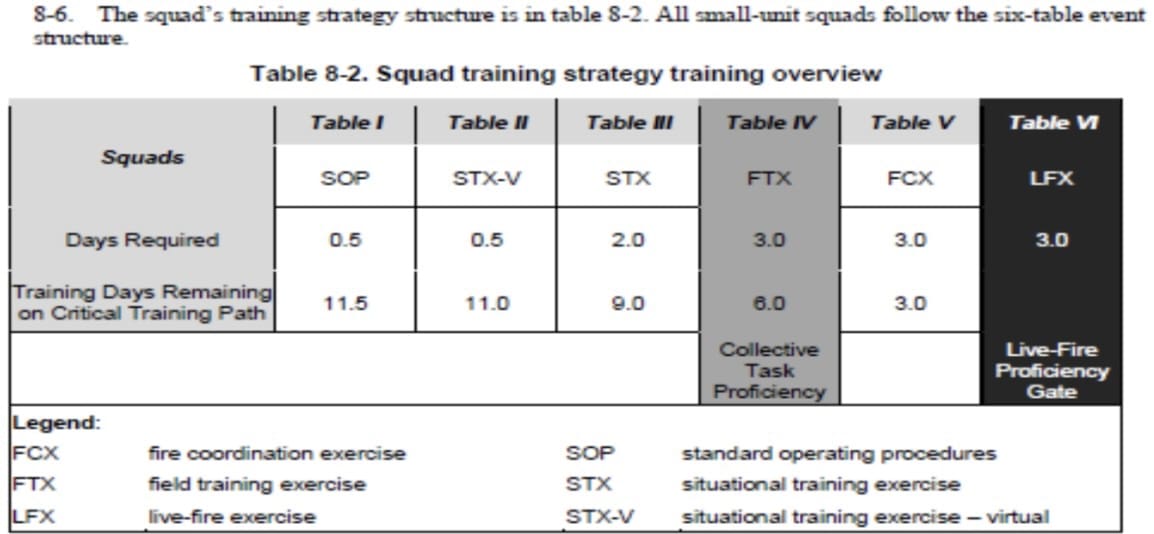
Below is an example of a squad level progression as well as provided the descriptions of each table as listed in the training circular.

Squad LFX Progression Example:2
(1) Crawl:

a. Table I (SOP), “is a pre-live-fire, hands on performance, and written evaluation of weaponry tasks, characteristics, capabilities, and function in a live environment. It verifies the Soldier’s abilities to perform critical tasks, understand how the unit operates tactically as the mission requires, and employ the weapons and systems safety during training and tactical operations as part of the element… Soldiers must demonstrate proficiency on individual tasks, skills, and knowledge through testable (written) and performance (hands-on) evaluation. Table I is a pre-requisite to any live-fire training with the element.” 3

b. Table II (STX-V), “is a simulations based demonstration of performance of employing the element to its primary capabilities. It is the culminating evaluation of the small team or squad after completing the element’s appropriate simulations training strategy. Table II is a replication (simulation) of the element’s supporting collective tasks (small teams and squads), or their live-fire qualification course (crew platforms and mortars). It provides a measured demonstration of performance before any live-fire event for the element.”4

(2) Walk:

a. Table III (STX), “is a live environment, hands-on training event utilizing training aids and devices, and may include the use of blank ammunition, pyrotechnics, and battle effects simulators. This event trains and evaluates the element’s ability to execute critical tasks using their organic weapons, systems, and equipment, during day and limited visibility conditions, and while operating in a CBRN environment.”5

(3) Run:

a. Table IV (FTX), “is a live environment where dismounted small teams and squads conduct an externally evaluated FTX using TADSS and training and evaluation outlines for all supporting collective tasks. It includes the use of blank ammunition, pyrotechnics, and battle effects simulators, as well as an appropriately trained and equipped opposing force… Table IV is the squad’s [Collective Task Proficiency (CTP)] evaluation that is used to determine the company’s overall CTP metric. This table includes the execution of critical skills in a live environment… prepares the element to employ their weapons and systems against the most common threat scenarios using prescribed targetry or opposing forces to a required standard.”6

b. Table V (FCX), “is a course of fire using training ammunition on an authorized live-fire facility. This table trains basic skills at a reduced tempo to enable proper leader and Soldier executions of the skills… This table includes the execution of critical skills in a live environment under live-fire conditions. Table V is commonly the first training event where the element employs its weapons with full caliber training ammunition, within a combat-realistic scenario and targetry to a required performance measure and standard…”7

c. Table VI (LFX), “uses full caliber training ammunition on an authorized life-fire facility or safety certified training area that assesses a squad’s tactical employment and lethality proficiency…”8

While the changes to some of the tables seems drastic, their successive building upon previous tables will both increase proficiency at both individual and collective levels, and reduce risk associated with conducting what amounts to a blind live iteration during the FCX. Additionally, there is nothing saying that leaders cannot still conduct TEWTs and “dry” safety walks of the lanes with subordinate echelons prior to.

These changes will simultaneously increase the training value of all training events in a LFX progression and increase safety during tables utilizing live ammunition. By adapting to the new training doctrine the Army can remain the premier land warfare organization within the Department of Defense and best prepare its Soldiers, NCOs, and Officers for the next war.

CPT Daniel Vazquez is a 2013 graduate of Norwich University’s Corps of Cadets and has a B.A. in history. Commissioned as an Infantryman in 2013, he has served in both Infantry and Stryker Brigade Combat Team formations. He is currently serving as a Rifle Company Commander in an IBCT Infantry Battalion.

Footnotes:

1 Live Fire Training as a Building Block to Readiness and Leader Development document can be found on the 75th Ranger Regiment’s Lessons Learned MilSuite page. (CAC Enabled) https://www.milsuite.mil/book/groups/75th- ranger-regiment-lessons-learned

2 TC 3-20.0 Integrated Weapons Training Strategy, Chapter 8-2, Table 8-2.

3 TC 3-20.0 Integrated Weapons Training Strategy, Chapter 8-2, Para 8-7 & 8-8.

4 TC 3-20.0 Integrated Weapons Training Strategy, Chapter 8-3, Para 8-9.

5 TC 3-20.0 Integrated Weapons Training Strategy, Chapter 8-4, Para 8-11.

6 TC 3-20.0 Integrated Weapons Training Strategy, Chapter 8-5, Para 8-13 & 8-14. 7 TC 3-20.0 Integrated Weapons Training Strategy, Chapter 8-6, Para 8-15 & 8-16 8 TC 3-20.0 Integrated Weapons Training Strategy, Chapter 8-7, Para 8-17


For the Pandemic and Beyond, Wearable Technology Points the Way

Saturday, January 23rd, 2021

Like all the best ideas, this one started with a question – a question about how to slow the spread of the novel coronavirus; refined over a series of meetings between U.S. Army Medical Research and Development Command scientists and researchers in the early days of the pandemic. For Cmdr. Christopher Steele, director at USAMRDC’s Military Operational Medicine Research Program, it was a question that would ultimately guide what’s become a nearly year-long funding effort.

“For active duty personnel and civilians, we wanted to know – what does ‘normal’ look like from a health perspective?” says Steele, repeating that initial query once again during a conversation in early 2021. “And how do changes from normal translate to early detection of disease?”

The answer to that question may soon be found on your finger, on your wrist, or even around your neck. Just as a pair of vaccines for COVID-19 have become available to the American public, USAMRDC is pushing the limits of its virus research even further. The goal: to develop wearable technology to detect the virus before a person might even begin to notice symptoms – however slight or subtle – in the first place.

“Having some wearable measurements on how you’re doing leading to [infection] is extremely helpful,” says Steele, “because we can understand additional concerns about your health and if they need to be taken more seriously for quarantine procedures or for advanced care.”

USAMRDC’s quest to find technology capable of detecting pre-symptomatic exposure to the virus began in March 2020 – just weeks into the pandemic – as part of a joint funding opportunity between both MOMRP and USAMRDC’s Military Infectious Diseases Research Program. As part of a planned program announcement, a total of seven wearable technology projects were selected for funding through the Command via its partnership with the Medical Technology Enterprise Consortium; the latter entity using a unique contracting tool called an “other transaction agreement” (or, OTA) to facilitate the delivery of advanced technology prototypes for a wide array of military-relevant injury conditions. Of those seven investments, one of the more promising efforts is a proprietary algorithm being developed jointly by Dr. Ashley Mason, an assistant professor with the Department of Psychiatry at the University of California, San Francisco, and Dr. Benjamin Smarr, an assistant professor with the Department of Bioengineering and Data Science at the University of California, San Diego.

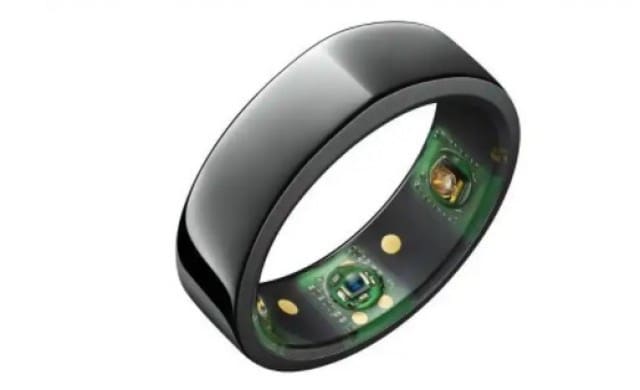
In a recent study, Mason’s team showed that wearing a so-called “smart-ring” – a wearable device that generates continuous temperature data – may foreshadow the presence of COVID-19, even in cases when infection is not suspected. By analyzing data from 50 people previously infected with COVID-19 who agreed to wear the ring (which, in turn, came equipped with the aforementioned algorithm) Mason and Smarr found the ring accurately identified higher temperatures in people with symptoms of COVID-19. Ultimately, the algorithm may help lead to earlier isolation and testing – thereby potentially curbing the spread of infectious diseases.

“Continuous temperature assessment allows us to look at [human patterns of change] by allowing us to analyze changes in temperature as processes,” says Mason, noting the difference between continuous and single-point temperature monitoring. “If we think about temperature as a process – imagine a wave – then we can start to ask questions that go beyond, ‘are you high or low in temperature,’ [and] we can examine the shape of the waves both within one person over time and we can compare the shapes of peoples’ waves to each other.”

Mason’s work was initially sponsored by Finnish company Oura Health (who agreed to provide the “smart rings” used in the study), which gave her team a substantial amount of early data on virus exposures compared to other external groups. In July 2020, MTEC began funding Mason’s multi-pronged TemPredict study, providing key infrastructure resources. Then, last month, Mason’s team published the study’s aforementioned initial findings in the peer-reviewed journal Scientific Reports.

“Having a device that’s doing surveillance on you at the time and to say, ‘hey there’s something different about you’ – those are potentially powerful opportunities to intervene before a situation becomes a lot more complicated to treat,” says Steele.

While it is not known how effectively the algorithm-enabled smart ring can detect asymptomatic COVID-19 infection, Mason’s team reported that in 38 of the 50 participants (or, 76 percent), fever was identified when symptoms were unreported or even unnoticed. According to Mason, the second leg of her TemPredict Study, which was launched in early December and has already enrolled tens of thousands of participants across the globe, will continuously apply the algorithm to the participants’ smart ring data, then alert participants when the algorithm suggests COVID-19 testing is warranted.

“[The algorithm] does seem to be working well,” says Dr. Jenifer Ojeda, Health Science Program Manager at USAMRDC’s Congressionally Directed Medical Research Programs, and additionally the science officer providing DOD oversight on Mason’s award. “It is detecting early – pre-symptomatic, if you will – cases, and with some degree of fidelity.”

Still, Mason’s algorithm – which is intended to be agnostic and not exclusive to any one particular device – is just one of many entrants in this particular race. Other performers receiving funding – including the makers of the Fitbit family of trackers and smartwatches – are using their own, internally-developed platforms, while others are utilizing off-the-shelf platforms to meet their end goals.

While Steele admits USAMRDC is likely months away from receiving an actual, refined product to review, it is possible such a product could be developed and then deployed during the current COVID-19 pandemic. That would depend, of course, on a chosen performer delivering the kind of clear and consistent data demanded by the U.S. Food and Drug Administration for such devices. Regardless, this kind of technology clearly has a role in any kind of future, similar public health emergencies, and would make a substantial impact on the ability to detect illness on the future battlefield as well. The latter, while an ancillary perk for now, may indeed provide a showcase for any wearable technology’s likely ultimate benefit: to provide a near-continuous level of support and resilience to any U.S. Soldier across the globe.

Says Steele, “Wearables may be the premise that allows for truly integrated telemedicine content because now you have the ability to measure a person from a distance, or outside the clinic, or anywhere.”

By Ramin Khalili

FirstSpear Friday Focus: Technical Woobie

Friday, January 22nd, 2021

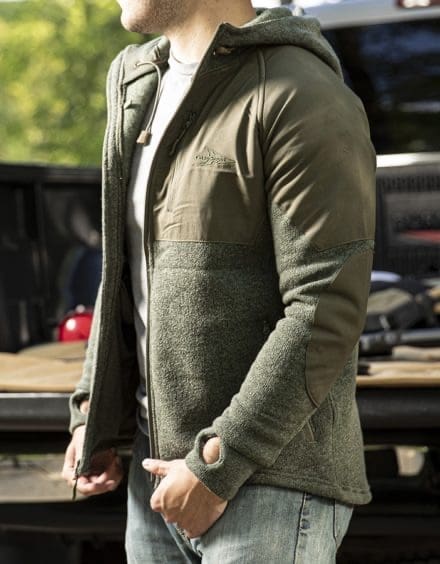
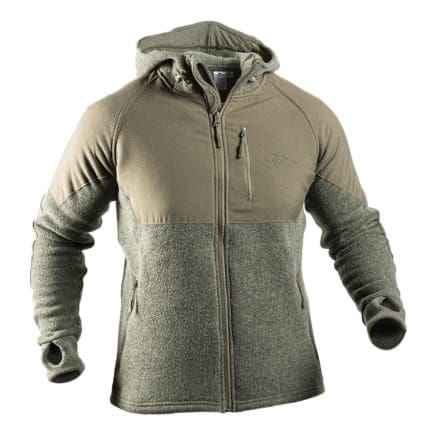
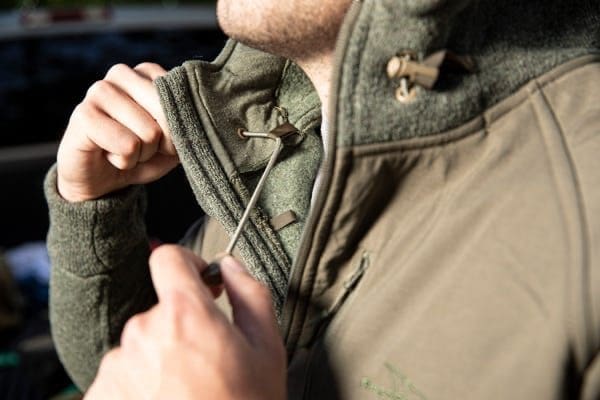
Check out this juggernaut from the FirstSpear American Merino Wool Line. Enter the FS Technical Woobie. Constructed with premium USA materials including FS ACM 600 Merino for warmth and FS signature apparel nylon accents which add abrasion and wind resistance. Features a modest tail, high collar with adjustable hood, thumb holes, as well as generous hand warmer pockets lined with FS ACM 100 Merino. The Full length zipper and pockets utilize premium zipper hardware and pulls.

• 100% American Made
• ACM 600 Merino Wool
• Nylon accents for abrasion and wind resistance
• Adjustable hood
• Merino lined hand warmer pockets
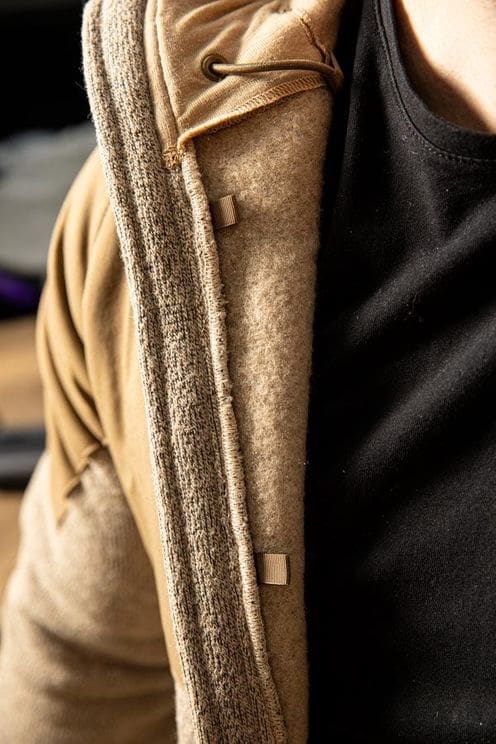
• Discreet cable management.

A unique and functional FS feature are the button holes inside the hand warmer pockets along with cord loops along your internal zipper seams which allow the user to route ear buds or communication cables for discreet cable management.

The Technical Woobie offers great everyday style matched with some of the most high performance material combinations and features available. It will quickly become the one piece you will want to take with you everywhere! 100% made in the USA with 100% USA materials.

Now shipping in Black, Sand, Commando, and Black/Heather Grey. Comes with FirstSpear’s standard lifetime warranty on materials and craftsmanship.

www.first-spear.com/technical-woobie

USAF to Allow Longer Braids, Ponytails, Bangs for Women

Friday, January 22nd, 2021

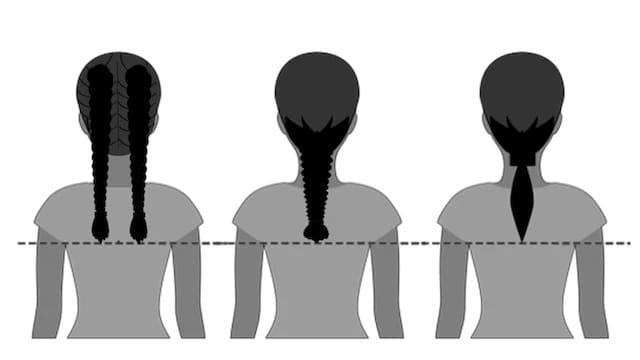
As an outcome of the 101st Air Force uniform board, Air Force women will be able to wear their hair in up to two braids or a single ponytail with bulk not exceeding the width of the head and length not extending below a horizontal line running between the top of each sleeve inseam at the under arm through the shoulder blades. In addition, women’s bangs may now touch their eyebrows, but not cover their eyes.

These new changes will be effective upon publication of the new standards in Air Force Instruction 36-2903 in February.

“As I outlined in Action Order A: Airmen, this decision is a commitment to supporting the Airmen We Need and sustaining the culture and environment of excellence that will continue to make the Air Force an attractive career choice for Airmen and families,” said Air Force Chief of Staff Gen. Charles Q. Brown, Jr. “I’m thankful for the feedback and research conducted from a number of women leaders, the Women’s Initiative Team, the Air Force uniform board, and our joint teammates.”

The Air Force uniform board convened virtually in November 2020 to discuss ideas sourced from Airmen across the Air Force who participated in a dress and appearance crowdsourcing campaign. Participants on the board included 19 diverse Airmen of various ranks from across the major commands and headquarters directorates.

The board reviewed all ideas including a recommendation from the Air Force’s Women’s Initiative Team. Thousands of women across the Air Force provided feedback to the Women’s Initiative Team, stating constraints to hair grooming standards resulted in damage to hair, migraines and in some cases, hair loss. The detailed work done by the Women’s Initiative Team to research and support the recommendation was greatly appreciated by the uniform board.

“In addition to the health concerns we have for our Airmen, not all women have the same hair type, and our hair standards should reflect our diverse force,” said Chief Master Sergeant of the Air Force JoAnne S. Bass. “I am pleased we could make this important change for our women service members.”

In addition to addressing issues associated with personal health and hair loss, adjusting female hair standards supports ongoing efforts to address diversity and inclusion in the ranks. Earlier this year and in her role leading the Defense Department’s Diversity Board, then-Secretary of the Air Force Barbara M. Barrett played a prominent role in supporting these types of adjustments to ensure a more inclusive culture in the services.

The Air Force chief of staff approved the policy after considering feedback from the force, the uniform board recommendation, and the professional image and standards of the Air Force and U.S. military.

“We remain committed to removing barriers to service,” said Lt. Gen. Brian Kelly, Air Force deputy chief of staff for manpower, personnel and services. “In an all-volunteer force, we want fully qualified volunteers who are representative of the nation to see us as a great opportunity to maximize their talent and serve.”

Members must adhere to current occupational safety, fire and health guidance, and mishap prevention procedures emphasizing when and how to mitigate the potential for injury from hair of varying lengths around machinery, equipment, power transmission apparatus or moving parts. Airmen are encouraged to reach out to their safety office for assistance in analyzing any potential hazards, as applicable.

Another idea considered by the board related to beard wear for men. Unlike with women’s hair standards, there are no known health or hair loss issues associated with current male grooming standard compliance. As such, the Air Force plans to continue under the current male grooming standards without adjustments. Beards are currently permitted in conjunction with medical exceptions such as shaving waivers or for approved religious accommodations.

At this time, Guardians will adhere to the female grooming standards of the Air Force. Eventually, the U.S. Space Force will develop its own policy.

Numerous other ideas from the board are still under consideration for implementation and will be released in the future. For more information, consult AFI 36-2903 Dress and Appearance.

Secretary of the Air Force Public Affairs

Increasing Intelligence, Surveillance and Reconnaissance Coverage with Automated Wireless Recharging of Small Tactical UAVs

Wednesday, January 20th, 2021

The U.S. departments of Defense and Homeland Security will spend billions of dollars over the next few years on unmanned aerial and ground vehicles (UAVs) and sensor systems. The U.S. Army and U.S. Marine Corps will make greater use of Class I mini/micro vertical takeoff and landing (VTOL) UAVs to provide tactical intelligence, surveillance and reconnaissance (ISR) capabilities at the small unit level. Other branches of the Department of Defense and the Department of Homeland Security are also dramatically increasing the use of drones and sensors as crucial components of infrastructure, border, and base defense systems.


Small, portable, VTOL, UAV systems provide a unique and flexible maneuverable airborne platform for close-to-mid-range intelligence, surveillance and reconnaissance (ISR) coverage. Class I drones of this type are rapidly becoming the must-have “eye in the sky” for military and security forces seeking crucial information-based tactical command and control capability.
Photo: FLIR Systems R80D SkyRaider Class I VTOL UAV system. Copyright: FLIR Systems.

Virtually all small UAV platforms, however, rely on batteries that provide only a short amount of flight time before they need to be recharged or replaced – manually. This need to manually replace and recharge batteries presents obvious tactical and logistical issues.

But what if there was a way for UAVs to be autonomously, automatically and wirelessly recharged whenever and wherever necessary? Well, now there is. WattUp® radio frequency (RF) wireless charging technology from Energous Corporation.

As WattUp is an embedded technology, there is no need for cables, ports or battery doors that reduce the physical integrity of devices and increase the complexity of product design and manufacturing. By eliminating these features, hardware can have greater physical integrity, including being dust- and waterproof – keeping internal circuitry fully protected. And as there is no need to manually disconnect and replace batteries or connect chargers – multiple cables, connectors and adapters can be eliminated.


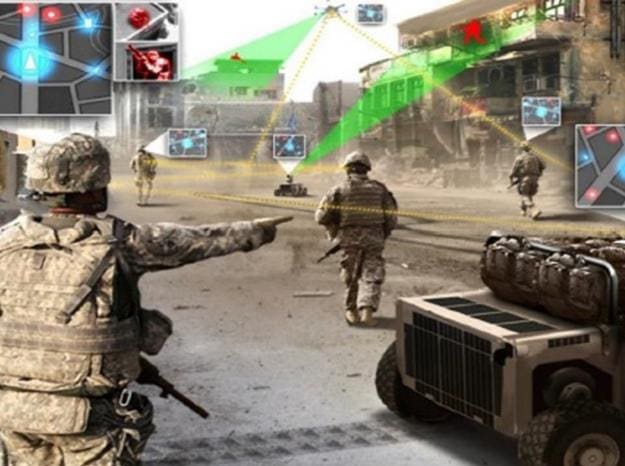
Illustration by U.S. Army. U.S. ground troops patrol while unmanned ground vehicles carry their extra equipment and small UAVs provide aerial surveillance coverage.
Use of this image is for informational purposes only – the appearance of U.S. Department of Defense (DoD) visual information does not imply or constitute DoD endorsement.

WattUp uses RF signal technology similar to Wi-Fi or Bluetooth to establish a link between a Power Transmitter and a Power Receiver. Once a connection is established, the transmitter sends power to the receiver along the same signal path. This “conversation” happens 100x/second and sends power safely to devices or batteries at various distances.

WattUp does not use magnetic coils requiring precise alignment or physical contact with the device for charging to take place – power is transmitted through the air at near-field and mid-field ranges. This capability makes WattUp ideal for devices that have rounded or irregular shapes – like most UAVs. WattUp systems also can be set up to charge automatically as soon as the device is within range of a transmitter, with a single transmitter capable of charging several devices simultaneously.


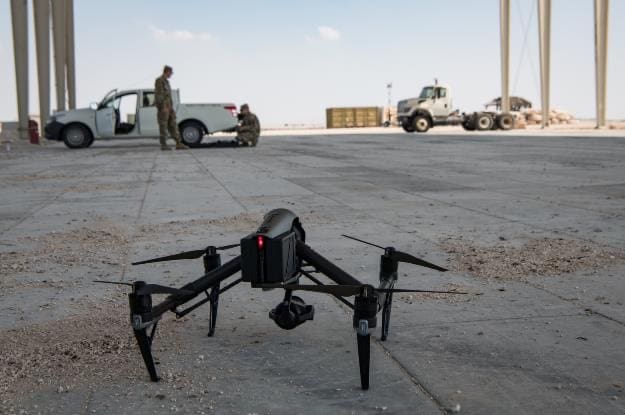
A drone that is part of the 379th Expeditionary Security Forces Squadron (379th ESFS) counter-small unmanned aerial systems (C-UAS) program stands ready Nov. 5, 2020, at Al Udeid Air Base, Qatar. The 379th ESFS Defenders have established one of the most robust C-UAS programs in the U.S. Central Command area of responsibility to detect and defend against adversarial drones that pose a potential threat to the safety and security of AUAB.
Photo credit: U.S. Air National Guard photo by Tech. Sgt. Brigette Waltermire. Use of this image is for informational purposes only – the appearance of U.S. Department of Defense (DoD) visual information does not imply or constitute DoD endorsement.

Finally, WattUp’s secure, cloud-based, management software enables users to track a battery’s state of charge and determine when it will need recharging. It also enables users to monitor the health and status of batteries held in depots and storerooms so that batteries can be issued with full assurance.

WattUp® RF wireless charging technology can potentially bring many new benefits and capabilities to military and homeland security UAV operators. For example, when multiple UAVs are providing roving aerial surveillance for base and infrastructure defense, a WattUp-enabled drone could be set to automatically fly back to a landing / charging pad to recharge at the end of its flight time, while a fully charged UAV lifts off to take its place. With UAVs automatically rotating in and out of service and recharging autonomously, uninterrupted ISR coverage of areas of interest could be achieved.

WattUp also has a potential role in the unmanned aerial systems (UAS) rich operational scenarios envisioned in the U.S. Army and U.S. Marine Corps concepts for the squad of the future. Autonomous ground vehicles such as the MUTT military utility tactical truck could be utilized as automated mobile RF wireless charging stations, enabling tactical VTOL UAVs to recharge near the forward edge of the battle area.

Without the need for manual interaction, power transmission could also be done safely at higher levels (to achieve shorter charging times) than is possible when human operators are present. WattUp systems are also scalable, so power transmission levels can be adjusted as necessary for the application and operating environment. For example, a 15W Base Station system could be scaled up to 30W or 45W, while charging distance can scale from 5mm for high power devices, up to few meters for lower power applications.


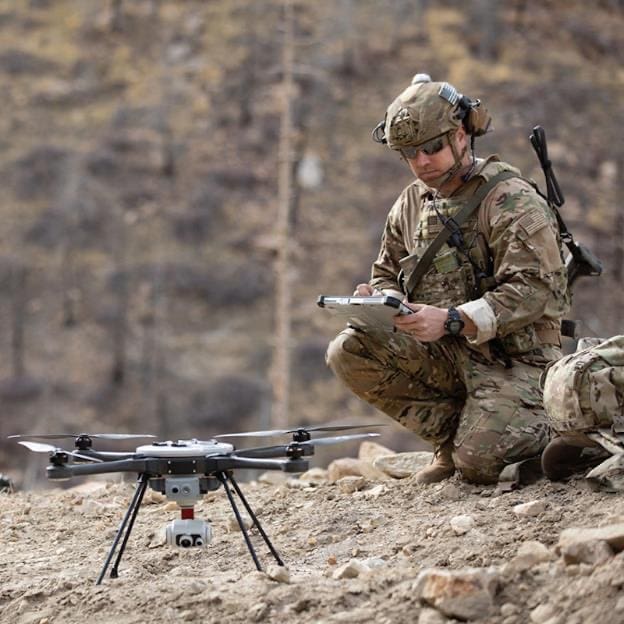
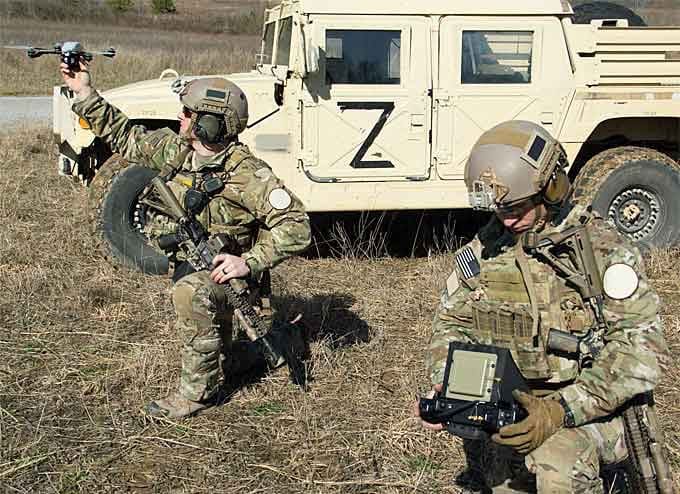
Soldiers deploy a small ‘quadcopter’ style UAV system on a tactical reconnaissance mission.
Photo: InstantEye Robotics Mk-3 GEN4-D1 small unmanned aerial system. Copyright: InstantEye Robotics.

Unmanned aerial systems, and the sensor packages they carry, have become a must-have facet of military and security forces today – and their importance will only continue to grow. Short flight times and manual battery changing and charging, however, limit how much critical ISR capability they can deliver.

Implementing WattUp RF wireless charging technology could help small UAS operators overcome the issues associated with current battery charging options, and thus be a force multiplier for critical tactical ISR capabilities.

For further information about employing WattUp® RF wireless charging technology in military applications, visit energous.com/military.

By Lawrence Holsworth and James Pope