GORE-TEX Professional

Archive for the ‘Guest Post’ Category

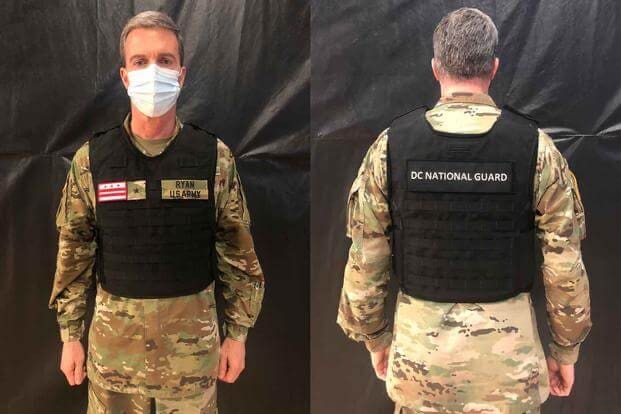
DC Guard to Wear Black ID Vests for Inauguration

Wednesday, January 6th, 2021

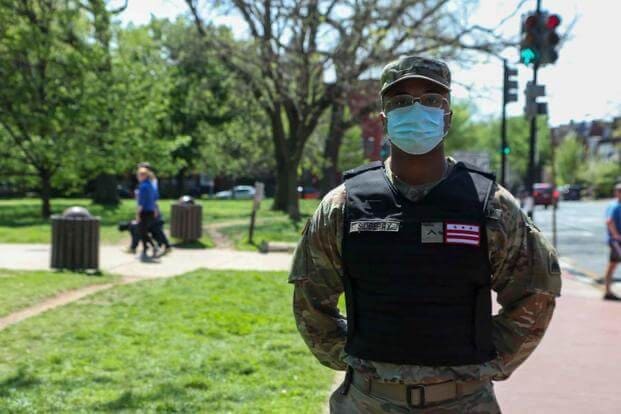
District of Columbia National Guardsmen will wear a black identification only vest during the activation for demonstrations in Washington D.C., June 5 to 7, 2021.

The black identification vest is not body armor nor a tactical vest. It is the traditional uniform worn by the D.C. National Guard members in multiple domestic operations including Presidential Inaugurations, the COVID-19 pandemic response, the 4th of July celebration and the “Anniversary March on Washington” in the last year.

More than 300 Guardsmen are supporting the District of Columbia from Jan. 5 to 7, 2021, at the request of Mayor Muriel Bowser and Dr. Christopher Rodriguez, Director of the D.C. Homeland Security and Emergency Management Agency, on behalf of the D.C. Metropolitan Police Department and D.C. Fire and Emergency Services.

The request for support was approved by the Secretary of the Army, the Hon. Ryan D. McCarthy.

By Capt. Tinashe Machona | D.C. National Guard

Department of the Air Force Directs Commanders to Review Unit Emblems, Mottos, Nicknames, Other Official Symbology

Wednesday, January 6th, 2021

WASHINGTON (AFNS) —

The Department of the Air Force directed commanders to conduct a comprehensive review of official and unofficial unit emblems, morale patches, mottos, nicknames, coins and other forms of unit recognition and identity to ensure an inclusive and professional environment within 60 days from Dec. 23, 2020.

Commanders, at the squadron level and above, will remove any visual representation, symbols or language derogatory to any race, gender, sexual orientation, ethnicity, religion, age or disability status to ensure an inclusive and professional environment.

The directive came in the form of a memorandum from Secretary of the Air Force Barbara Barrett, Air Force Chief of Staff Charles Q. Brown, Jr., and Chief of Space Operations John W. Raymond.

“It is critical for the Department of the Air Force to embody an environment of dignity, respect and inclusivity for all Airmen and Guardians,” the memo stated. “Our core values demand we hold ourselves to high standards and maintain a culture of respect and trust in our chain of command.”

According to Air Force Instruction 84-105, “Organizational Lineage, Honors and Heraldry,” emblem designs and mottos should reflect favorably on the United States Air Force, be original, distinctive, dignified, in good taste and non-controversial.

“Their continued use (of derogatory symbols and language) ostracizes our teammates undermining unit cohesion and impeding our mission readiness and success … Our diversity of experience, culture, demographics and perspectives is a force multiplier and essential to our success in this dynamic global environment … We must ensure all our Airmen and Guardians are valued and respected,” the memo emphasized.

Commanders should consider emblem and motto guidance in AFI 84-105 and consult their historians, staff judge advocates and equal opportunity specialists during the review.

Always Ready: 86th Aeromedical Evacuation Squadron Executes Negatively Pressurized Conex-Lite Training Mission

Tuesday, January 5th, 2021

RAMSTEIN AIR BASE, Germany (AFNS) —

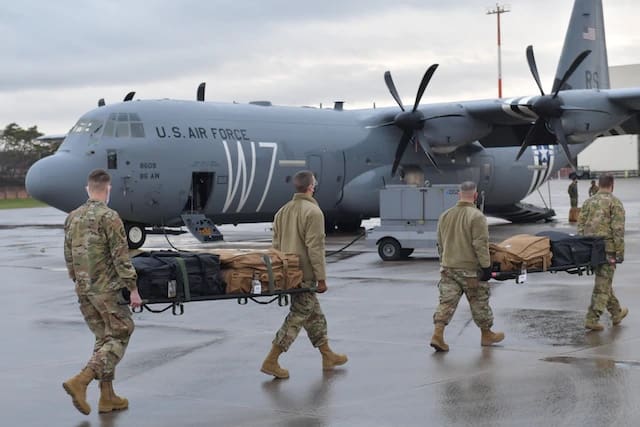
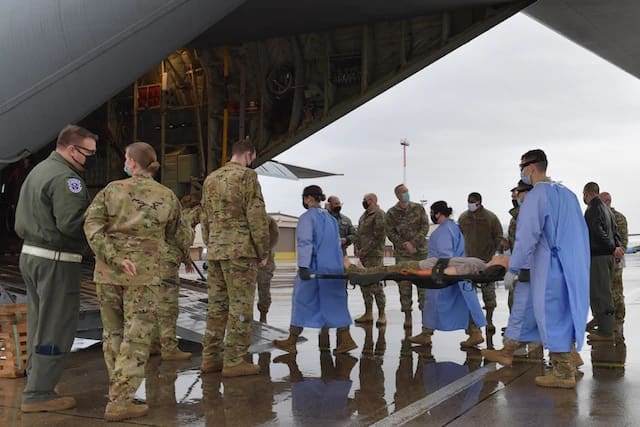
The 86th Aeromedical Evacuation Squadron held a COVID-19 patient movement training using the Negatively Pressurized Conex-Lite at Ramstein Air Base, Dec. 14-18.

The week-long training ended with a proof-of-concept flight on a C-130J Super Hercules, solidifying the entire process of U.S. Air Forces in Europe and Air Forces Africa COVID-19 patient transfer capabilities for the 86th Airlift Wing.

“It was the first time an NPC-L has taken off, at least in U.S. European Command, having a training mission on it, all the assets, and coordinating the integration from the ground piece to the in-flight piece,” said Capt. JD Pilger, 86th AES training flight commander. “Previously, everything was done on the ground, so this is a big deal. The capstone for the week was getting this thing airborne and proving this concept and capability for EUCOM.”

Operations such as these are historically placed within the Air Mobility Command, specifically at Joint Base Charleston, South Carolina. The initial force training was only conducted there for the entire Air Force, which would then piece together teams and send on deployments to provide this capability operationally.

In July, however, AMC started a flagship initiative to send certified trainers to Ramstein AB to certify 86th Medical Group and 86th AES personnel to be the initial cadre on the NPC-L. This established an organic capability located overseas, therefore widening the pool of certified personnel to the force, said Maj. Josh Williams, 86th AES operations flight commander.

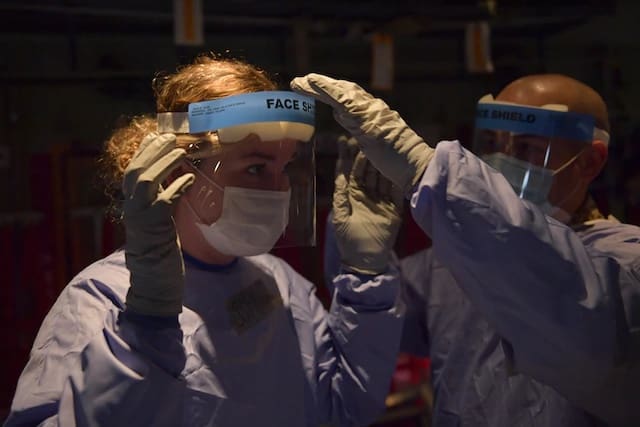
From the 721st Aerial Port Squadron, loading the NPC-L onto the aircraft to the 86th MDG and 86th AES infectious disease team ensuring proper personal protective equipment was worn during each scenario, multiple units were called upon to contribute to the training.

“The training was for developing another force package for the 86th AW, to enable us to move COVID-positive patients utilizing the NPC-L,” Pilger said. “The force package entails members from the 86th MDG, the 86th AES and additional folks over at Landstuhl Regional Medical Center, such as our Critical Care Air Transport Team.”

The NPC-L is a smaller version of the Negatively Pressurized Conex, an isolated containment chamber intended to transport individuals with infectious diseases like COVID-19. While the NPC is used on C-17 Globemaster III, the NPC-L was developed for use on a C-130J.

“Pursuant to a U.S. Transportation Command joint urgent operational need request, (the NPC) was fielded, and the follow on to that was the NPC-L,” Williams said. “That is what we’ve now developed our teams and force packages within the 86th AW to support. (The NPC) is actually loadable on a C-130 and can transport patients in EUCOM, as well as U.S. Africa Command.”

Up to nine ambulatory patients, four litter patients, two CCATT critical care patients, or variations thereof, can be transported in the NPC-L.

During the training, Airmen were presented with various patient-transfer scenarios and worked together to execute the mission both on the ground and in the air.

“It was a true team sport throughout the whole thing,” said Capt. Zachary Gooch, 86th AES operations support flight commander. “We could not have done it without the support from Air Terminal Operations Center, maintenance or the medical group.”

Having this organic capability enables Ramstein to provide COVID-19 patient movement overseas without the need for assets deployed from AMC.

“I think we proved that this can be done without having a deployed asset that rolls in and sets up shop,” Gooch said. “We did it, basically, from grassroots.”

By SrA John R. Wright, 86th Airlift Wing Public Affairs

‘A Tribute to Persistence:’ SecAF Presents Air Force Cross to Special Tactics Airman

Monday, January 4th, 2021

CANNON AIR FORCE BASE, N.M. (AFNS) —

Snapped awake by the sound of belt-fed machine gun fire, then-Senior Airman Alaxey Germanovich, a 26th Special Tactics Squadron combat controller, surveys the compound he had dozed off in after several sleepless days of combat.

“I look around and I don’t see any of my American teammates,” Germanovich said. “(At that moment I said to myself) I need to find my friends right now.”

Grabbing his helmet and rifle, Germanovich bolted out of the compound and into the fight, where he saw several of the Army special forces Soldiers he was embedded with huddling for cover from behind a small rock.

“I knew then that I had to go get to my teammates and help them,” he said.

Germanovich’s base instinct would quickly turn into a grueling battle for survival, but it was those selfless impulses to save and protect his teammates that proved to be the difference between life and death for many of his teammates on that fateful day.

SecAF commends combat controller for valor

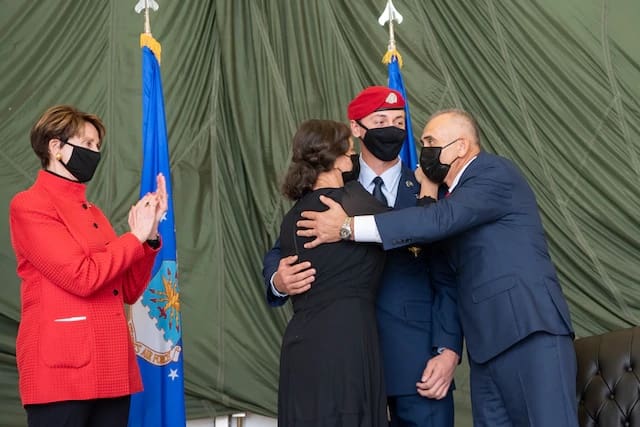
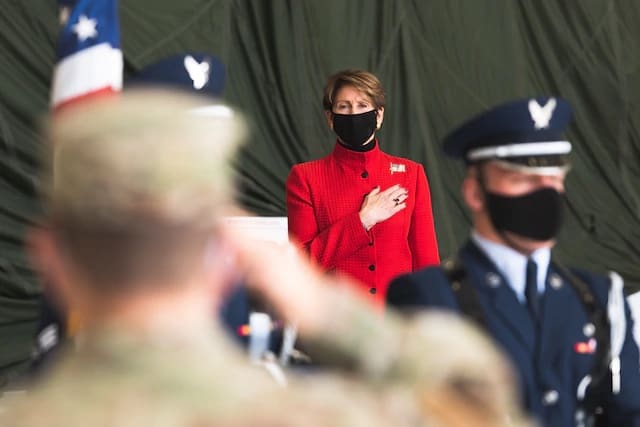
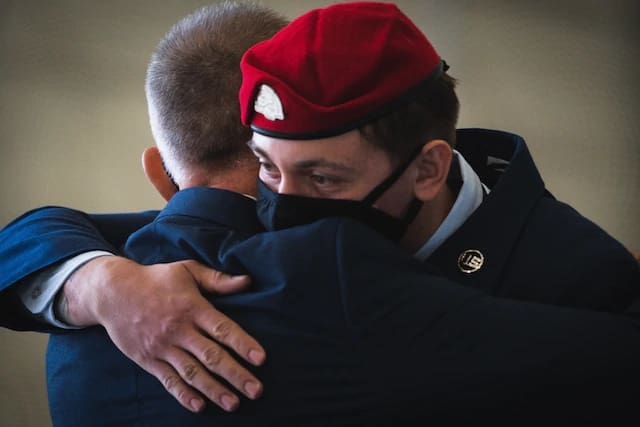
Secretary of the Air Force Barbara Barrett presented the Air Force Cross to now-Staff Sgt. Germanovich during a ceremony at Cannon Air Force Base Dec. 10.

Germanovich was awarded the medal, second only to the Medal of Honor, for his actions April 8, 2017, during combat operations against enemy forces in Nangarhar Province, Afghanistan.

“This Air Force Cross is a tribute to your persistence (Staff Sgt. Germanovich),” Barrett said. “You risked your life and weathered blistering enemy fire to save the lives of others.”

In attendance were Col. Matthew Allen, 24th Special Operations Wing commander, the 7th Special Forces Group (Airborne) team Germanovich was attached to during the combat operations, and Germanovich’s family and friends.

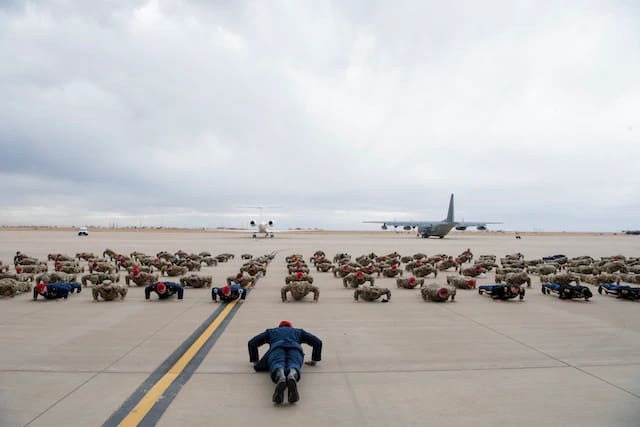
Following the ceremony, Germanovich led those in attendance in memorial pushups to commemorate the event, the firefight and the ultimate sacrifice paid during the clash by Army Staff Sgt. Mark De Alencar, a special forces Soldier assigned to 7th SFG (A) and a member of the team Germanovich was assigned to.

“This battle was a case study in toughness and extraordinary competence,” Allen said. “But it was also a case study in love. The type of love that demands teammates fight for one another and give everything they have.”

Germanovich’s actions as the air-to-ground liaison for his special operations forces team were credited with protecting the lives of more than 150 friendly forces and the lethal engagement of 11 separate fighting positions.

Facing hell, calling for fire

A native of Boiling Springs, South Carolina, Germanovich enlisted into the Air Force in November, 2012, with two goals in mind.

“I always knew I wanted a challenge,” Germanovich said. “I wanted to have a direct impact on the battlefield wherever I went.”

Five years later, both of those wishes would be granted when he deployed to Afghanistan and embedded with 7 SFG (A) Soldiers and their Afghan partners.

During his tour, the joint force was tasked with clearing several valleys in Nangarhar of fighters. As the multi-day operation progressed and the coalition forces pushed the insurgents closer to the Afghan border of Pakistan, the fighting became more and more violent. It reached a head as Germanovich sprinted through heavy enemy fire to help the Special Forces Soldiers on that fateful day.

After reaching the rock his teammates were pinned down behind, Germanovich began to call in airstrikes to try and suppress the attack.

“It was working to a degree,” Germanovich said. “But we were still receiving extremely effective fire, and one of our partner force members had gotten shot.”

To evacuate the wounded Afghan commando, Germanovich began to call for strikes extremely close to their position in order to create more separation between the coalition forces and the insurgents.

“As the bombs were falling out of the sky, I started screaming at everybody to run for cover,” Germanovich said.

After the partner force member was evacuated, the special operations forces team launched their counter-attack. A separate unit from across the valley was able to pinpoint a key enemy bunker during the firefight, and Germanovich’s element, led by De Alencar, crawled their way towards the position.

Once the fire team reached the top of the bunker, Germanovich and De Alencar dropped grenades into its entrance. Then, as Germanovich secured the opening and De Alencar and the other Special Forces Soldiers began to breach the bunker, insurgents ambushed the team from hidden positions to the south, mortally wounding De Alencar.

“The situation just became complete and utter chaos,” Germanovich said. “The team and I had expended all of our ordnance engaging enemy targets. We expended all of our grenades, there was no more pistol ammunition, and we were out of ammo completely.”

Lying prone with no cover from the attack, Germanovich put out a call to an AC-130W Stinger II gunship aircraft that was leaving the area in order to refuel.

“As they were leaving, I said ‘if you don’t come back, we’re dead.’” Germanovich said.

The gunship did return and began to fire on the enemy fighters, which gave Germanovich and the soldiers the opportunity to move away and evacuate De Alencar.

“All the while, we’re still taking effective fire from the enemy,” Germanovich said. “We began dropping ordnance and basically bombing up this mountainside until we got to safety.”

Germanovich’s actions proved decisive on that battlefield and demonstrated the enormous impact of Air Force Special Operation Command’s precision strike mission, which provides ground force with specialized capabilities to find, assess and engage targets.

“You (Germanovich) told me earlier that you did what any one of your teammates would have done in the same situation,” Allen said. “But we don’t know that. We do know what you did that day: face and devastate a numerically superior enemy … this is why America’s enemies do not take us head on.”

Germanovich’s ability to enable precision strike operations and his bravery in the face of hostile fire are incredibly courageous in their own right, but it was the reason behind his valiant performance that makes him an unquestionable hero.

“It was 100% my teammates,” Germanovich said. “If I’m in danger, I know without a doubt in my mind that my teammates are going to do everything in their power to make sure that I come back, and I would do everything that I could possibly do to make sure that they come back.”

Article by SrA Maxwell Daigle, 27th Special Operations Wing Public Affairs

Photos by SSgt Michael Washburn and A1C Drew Cyburt

SCUBAPRO Sunday – The Watch That Won WWII

Sunday, January 3rd, 2021

As the world marked the 76th anniversary of the end of World War II, people can claim a lot of items was the “one thing” we had that is the main reason we won the war. The .50 machine gun, The Higgins Boat, The Jeep (G.P.), and the M1 Grand rifle. There are more items I could list, but it would take a long time. There is one that was one of the best-kept secrets to helping win the war. In every campaign, everyone in charge of a ship, a plane, a boat, or a bomb had one, or it was part of that item. It was the Hamilton watch. Renowned for its accuracy. Hamilton’s wartime contributions took many forms, long known for their accurate timepieces, and they were essential to the Allied Forces’ victory in WWII.

The Hamilton watch company was incorporated in1892 in Lancaster, PA. In 1891, an engineer’s inaccurate pocket watch led to a terrible train crash near Cleveland, Ohio. As a result of the investigation into that crash, an industry commission devised precise timekeeping standards for pocket watches (there were no wristwatches at this time) (get it time) used by railroad personnel. Pocket watches that met those exacting requirements were known as “railroad watches,” and a leader in making them was the. Hamilton watch company. Hamilton’s first production of those watches in March 1894 became so highly regarded for their accuracy  they were called the “Watch of Railroad Accuracy.”
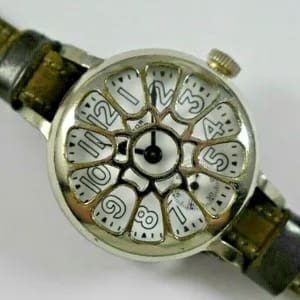
That reputation took Hamilton into World War I, as the official watch of the American Expeditionary Forces. Soldiers and some watch companies had devised strapped pocket watches to the wearer’s wrist so that their hands were free so they could still fight, and Hamilton took note. Soon, the 981 Wrist Watch was born. The below picture is a 981 with a shrapnel guard on it.
In the 1930s, its wristwatches’ accuracy led several new airlines to adopt Hamilton as their official timepiece. By 1940, Hamilton was one of America’s best-selling watch brands. They had their own designers, engineers, physicists, and metallurgists, and they were a leader in research in watch oils, hairsprings, jewel bearings, and escapement design. An Escapement is a mechanic, a device that permits controlled motion, usually in steps. In a watch or clock, it is the mechanism that controls the transfer of energy from the power source to the counting mechanism. For the ASVAB waivers in the room,  basically, it helps maintain a steady flow of energy. In the summer of 1939 and again late 1940, the United States Naval Observatory (the U.S. authority on timekeeping, chronometers, and other navigational equipment) sent letters to eight watch companies that might be interested in creating an American marine chronometer. Hamilton replied and requested a sample chronometer for them to study.
In Feb, of 1942, 13 weeks after the attack on Pearl Harbor, they delivered two prototypes for review to the U.S. Naval Observatory. Navy officials were “simply astonished” by their precision, innovations, and reproducibility. Timekeeping and measuring devices were of critical importance to the military for planning missions, dropping bombs, time fuses for the bombs, navigation for ships and planes, and countless other efforts. As part of the war effort, Hamilton produced top-secret mechanical time fuzes for the exact timing of the anti-aircraft fire, jewel bearings, hairsprings, aircraft clocks, elapsed time clocks, altimeters, tachometers, map measurers—even tools, dies, and precision machinery for another watch, instrument, and jewel makers.
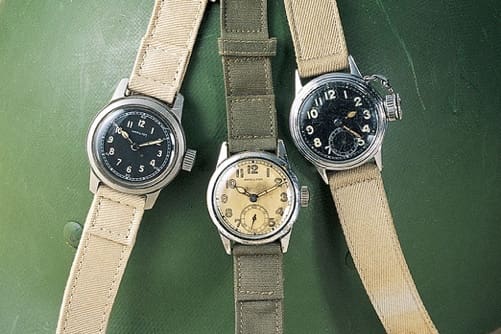
A lot of U.S. watchmakers made wristwatches for the military during WWII. Hamilton alone produced hundreds of thousands of them for the military and other special “military” sections. They also made them for Canada, the U.K., and the Russians. These included “hack” watches, “like in Let’s get a time hack” named for a mechanism in the movement, connected to the crown, which set time to the exact second. They were used to synchronize countless military attacks, troop and train movements, bombing raids, even training events.

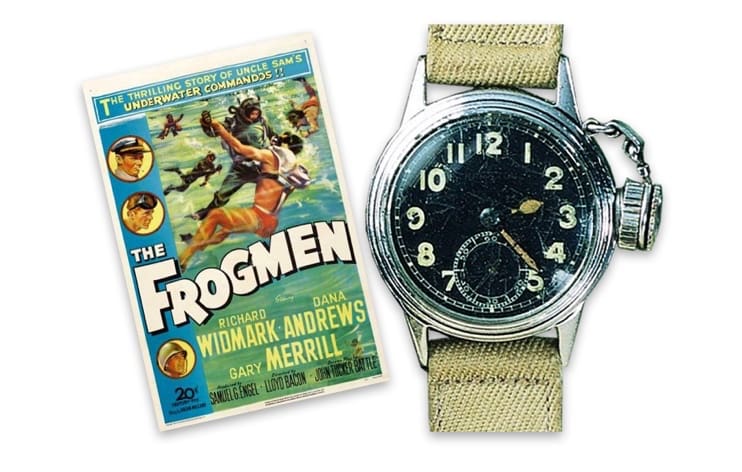
Hamilton timepieces also included a top-secret Frogman watch, with a large “crown” over the regular crown to keep it watertight.

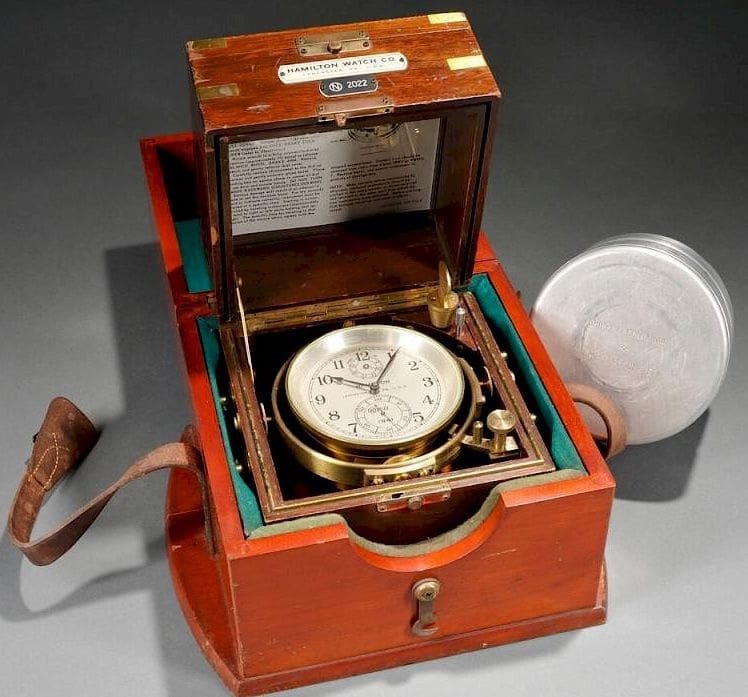
Hamilton made watches for almost every aspect of war. In the air, pilots, navigators of fighters, bombers, and even blimps navigate using a pocket watch as their “master time source.” This military version of Hamilton’s railroad watch was kept on simple rubber or spring shock absorbers in a small metal carrying case (to isolate it from magnetic fields, vibrations, and turbulence) with a glass window.
Also essential was Hamilton’s “bomb timer,” with wristwatch movement and dial mounted into a bombsight with a movie camera, which filmed the dial and target at the moment of impact to measure the bombs’ effectiveness. Hamilton’s most significant achievements in World War II were its marine chronometer and chronometer watches. Many experts consider its marine chronometer to be the finest ever produced. What makes this even more impressive is that, until World War II, Hamilton had never made such a timepiece. Before the invention of the GPS (you still should have a chart/ map and a way to navigate if the GPS goes down, especial if you are jumping your boats into the water), you would use time, speed, and distance to calculating longitude and plotting location and direction, from a place of departure or use the stars, you also needed to have the exact time to be in the right place to start an invasion.    

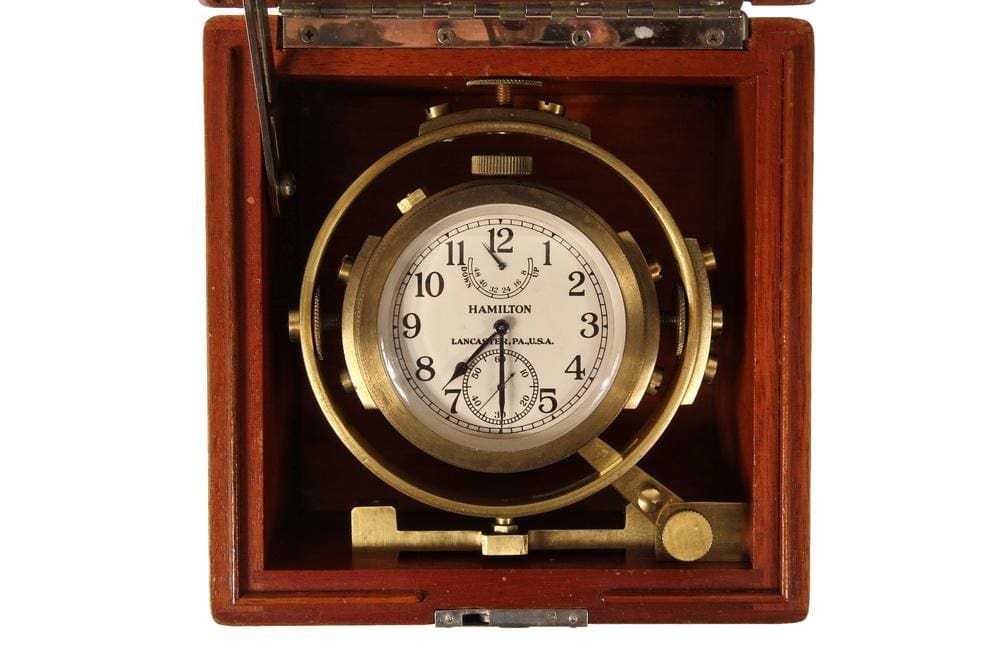
Hamilton’s marine chronometer Model 21 was based on traditional ones but with several improvements. Most evident was a unique balance and hairspring assembly, a radical departure from conventional chronometer design. Such advances made Model 21 more accurate than any other marine chronometer. Properly maintained, it kept time to within a half-second per day.
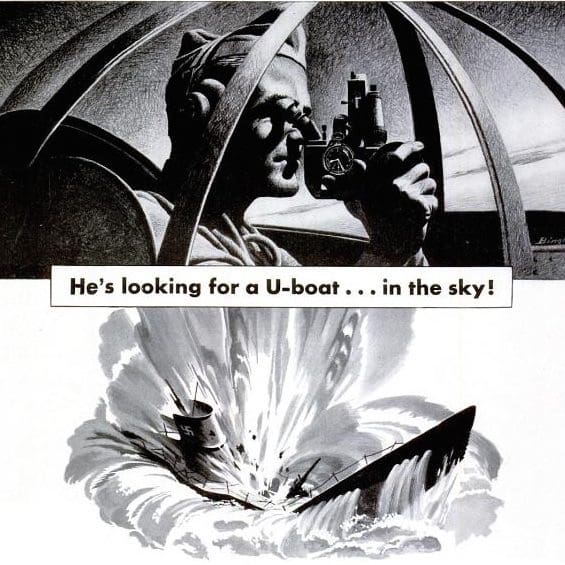
It wasn’t only the Navy (which bought around 9,000) that used them. The Army Air Corp bought 500, and the Maritime Commission bought 1,500. President Franklin D. Roosevelt had one in the White House map room to maintain a day and night watch. Hamilton continued making marine chronometers after the war; they made a little under 14,000 by 1970, when it ended U.S. production. Every vessel that belonged to the U.S. and many of our allies used a Hamilton chronometer for navigation. Battleships and aircraft carriers used the Model 21, housed in a glass-covered wooden box, with its movement swung on brass gimbals to keep it level and accurate even in the roughest seas. The Model 22 was used as an auxiliary timer for bigger ships and navigation on smaller vessels like destroyers, submarines, merchant marine, hospital ships, tankers, escort vessels, and P.T. boats. The model 22 was a chronometer watch, not a marine chronometer. Though smaller and less delicate than Model 21, Model 22 also was kept in a gimbaled wooden box. 

By war’s end in 1945, Hamilton timepieces ruled the sea, air, and land, getting victorious Allied troops to where they were going, whether on foot or by ship, plane, tank, submarine, or troop train. The Hamilton watch company made over 10,000-chronograph for the war effort. It should really be in the running, if not considered the one thing we could not have won the war without.

In 1957, Hamilton came out with the Ventura, the world’s first battery-powered watch; it was also helped by Elvis, who wore it in the 1961 movie “Blue Hawaii.”
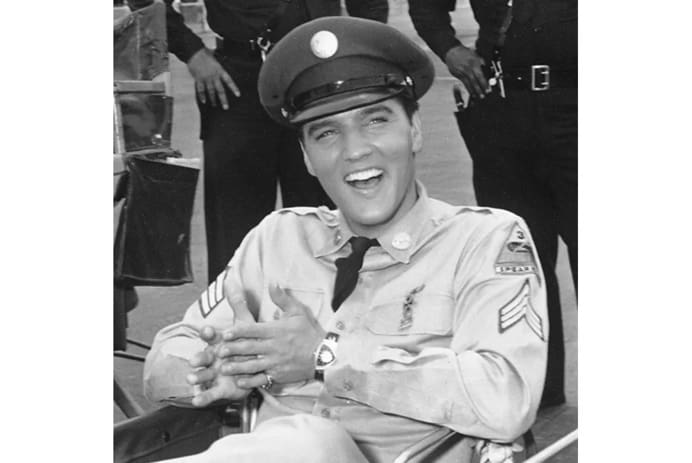
The Hamilton watch served the U.S. military well into the Vietnam war and beyond; it is one of the longest serving watches in U.S. history.

As a foot note for Eric, in 1968, Hamilton was asked to design futuristic timepieces for the crew of Stanley Kubrick’s famous film, “2001: A Space Odyssey.” A few years after being commissioned to make a “futuristic” looking watch for the movie, Hamilton invented (along with Electro/Data Inc. of Texas) the digital watch. They designed the watch to look far more like HAL 9000 than the watches that were actually in A Space Odyssey.

Lastly, for E.G., they designed the watches for the first “Men in Black” movie.

In 1968 they moved production to Switzerland. In 1971, they were acquired by the Omega & Tissot Holding Company SSIH purchased the Hamilton brand and utilized the Hamilton name for several branding efforts, including numerous quartz watches in the 1980s. Then in 1984, they became a subsidiary of The Swatch Group.


Powerful Example: IVAS Program Uses Middle Tier and Other Transaction Authorities

Sunday, January 3rd, 2021

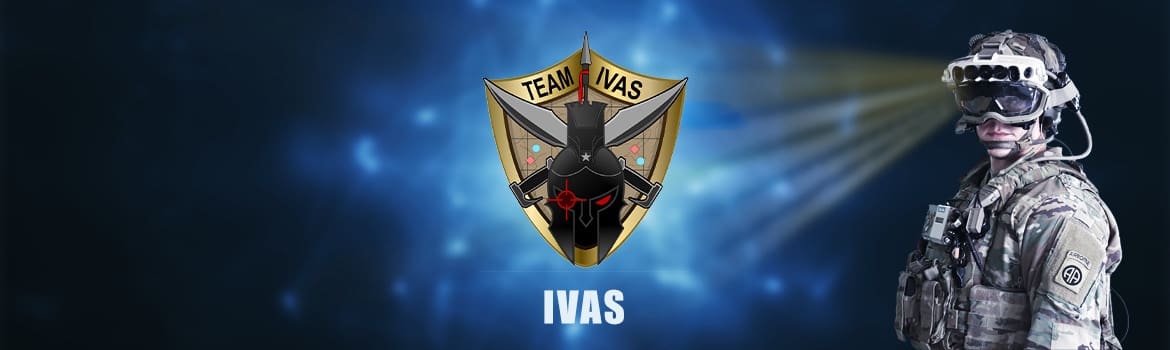
The Integrated Visual Augmentation System (IVAS) program office employed critical thinking and innovative practices in the strategy, planning and execution of IVAS–an acquisition program designed to give our Soldiers, Marines and Special Operators a decisive advantage in close-combat capability. The program team leveraged the Adaptive Acquisition Framework, Middle Tier of Acquisition Pathway/Rapid Prototyping Path as highlighted in DoDI 5000.80, as well as Other Transaction Authorities to contract with Microsoft and other traditional and non-traditional vendors. Additionally, they involved Soldiers in the design and test process (“Soldier-Centered Design”), collaborated with key stakeholders and industry as one team (the “right team”), and effectively identified, managed and drove down risk as development and testing progressed.

Click here to watch the video.

IVAS is a low-profile, ruggedized Heads-Up Display (HUD) with a body borne computer pack, Conformal Wearable Battery (CWB), squad radio, and integrated thermal and low light sensors that provides the Close Combat Force a single platform to fight, rehearse, and train. The IVAS suite of capabilities leverages tactical mixed reality to enable planning, networked information sharing via Tactical Cloud Package (TCP) and Cloud Services, and an augmented reality Synthetic Training Environment (STE) and Squad immersive Virtual Trainer (SiVT) that enables the Warfighter to fight ‘25 bloodless battles’ before engaging the enemy. IVAS integrates next generation situational awareness tools and high-resolution simulations to deliver a single platform that improves Soldier sensing, decision making, target acquisition, and target engagement. These capabilities will provide the increased lethality, mobility, and situational awareness necessary to achieve overmatch against our current and future adversaries.

Team IVAS is on target to begin production in March 2021, with first unit equipped in September 2021, accelerating the development process by more than four years compared to traditional acquisition processes.

Written by Tony Romano, DAU

I MEF Information Group, NIWC Pacific Put Next-generation Technology to the Test

Saturday, January 2nd, 2021

Marines with I Marine Expeditionary Force Information Group and personnel from Naval Information Warfare Center Pacific conducted characterization testing of the Mobile User Objective System at Marine Corps Tactical Systems Support Activity, on Camp Pendleton, California, in September 2020.

MUOS is a satellite communications system that provides voice and data communications for U.S. service members, anytime and anywhere in the world.

The testing supported PMW 146, the Navy’s Communications Satellite Program Office, which reports to Program Executive Office Command, Control, Communications, Computers and Intelligence and Space Systems.

The focus was on three areas of satellite communications: susceptibility of detection and geolocation of MUOS transmissions; susceptibility of detection and geolocation of legacy transmissions; and the performance of the MUOS radio in the presence of in-band radio-frequency interference.

“The purpose was to test the capabilities of the system, in a field environment, in a manner that Marines employ the system,” said Gunnery Sgt. Christopher Meser, the electromagnetic space operations chief at I MIG. “The testing allowed us to identify gaps and determine if the underlying issues were related to the equipment, training or procedures.”

Aside from testing various frequencies and equipment sets, one of the key takeaways from the event was furthering Navy-Marine Corps integration with the MUOS.

“This is part of supporting naval integration; being able to understand we are key stakeholders, both Navy and Marine Corps,” said Meser. “They provide the technical expertise, and we provide the field expertise.”

This is just one way that Marines with I MIG have been working side-by-side with the innovative minds at NIWC Pacific. During the past several months, I MIG Marines have provided hands-on feedback to help drive future research, development, test and evaluation, and engineering.

“Integration between I MIG and NIWC-PAC is good because we are able to provide them a firsthand look at how the equipment is employed in a real-world environment, which provides feedback to the engineers on how the system performs,” said Meser. “We are the end-users and being able to conduct a field-user evaluation further ensures the security and functionality of the equipment’s capability.”

Capt. Josh Gonzales, a space operations officer with PMW 146, said the participants operated the MUOS radios at various operational data rates in three data transmission types that included burst, flow, and stream. All three data types worked successfully and they were all clear and precise.

The results confirm the MUOS Wideband Code Division Multiple Access performed significantly better than legacy UHF in a contested environment. This is the second of three planned tests, the third test is planned for 2021, and will incorporate additional assets and more terminals to better simulate an operational environment.

Story by LCpl Isaac Velasco, I MEF Information Group

Friday Focus: Beanies, Neckies & Wool Socks

Friday, January 1st, 2021

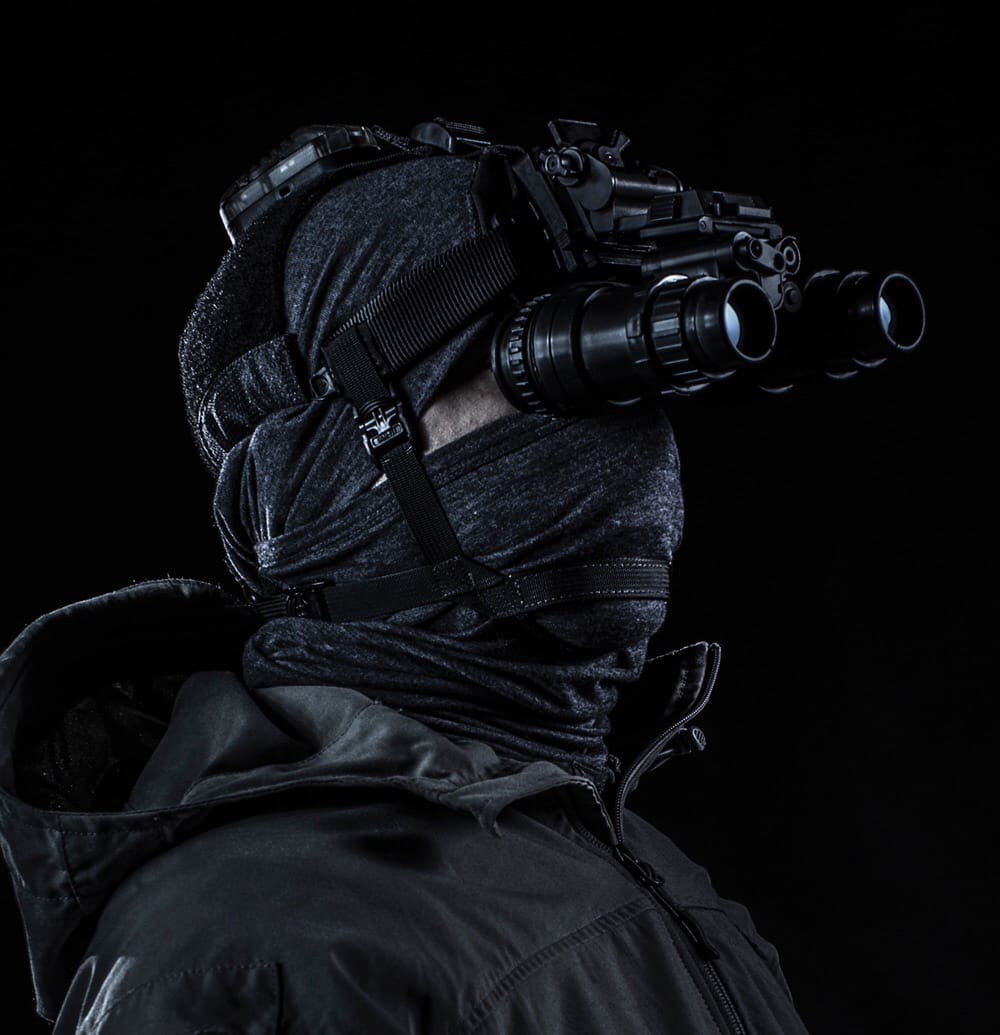
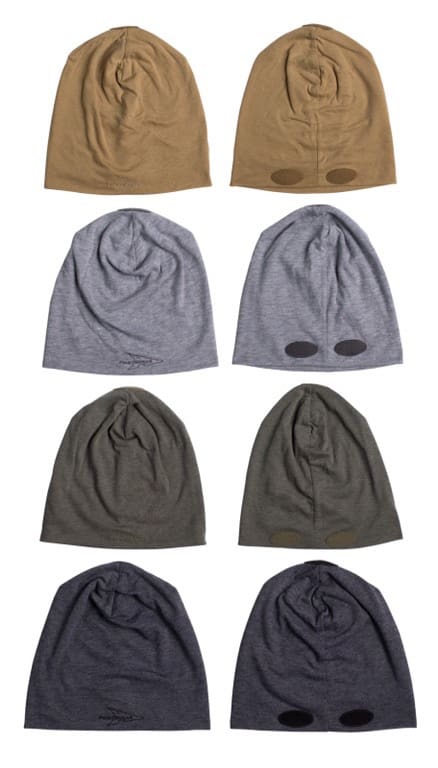
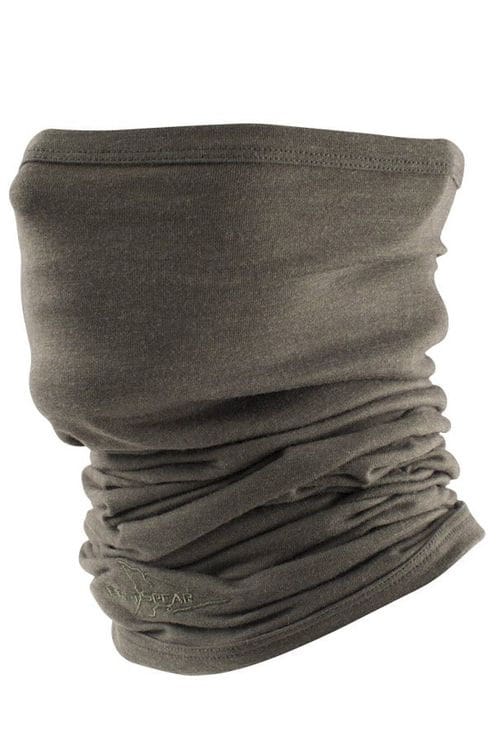
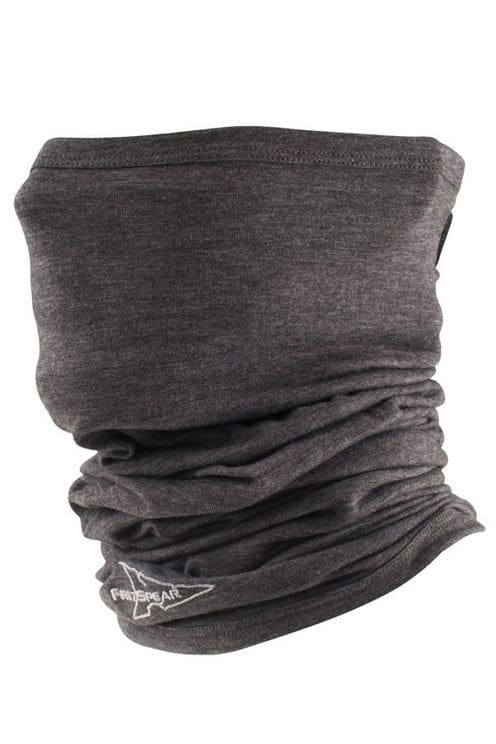
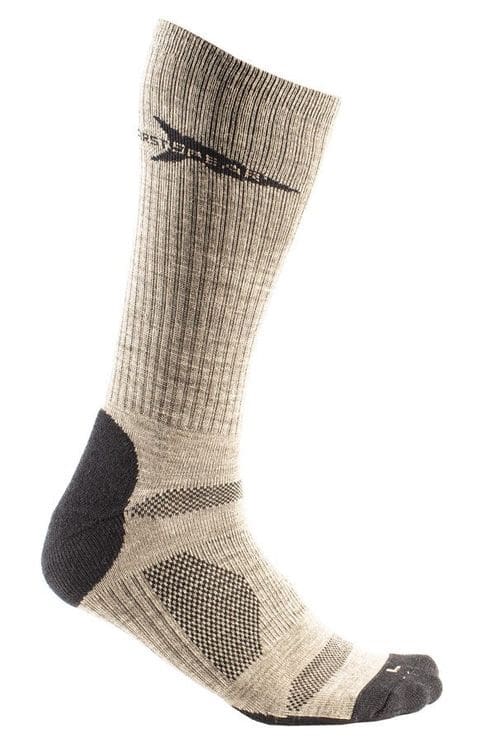
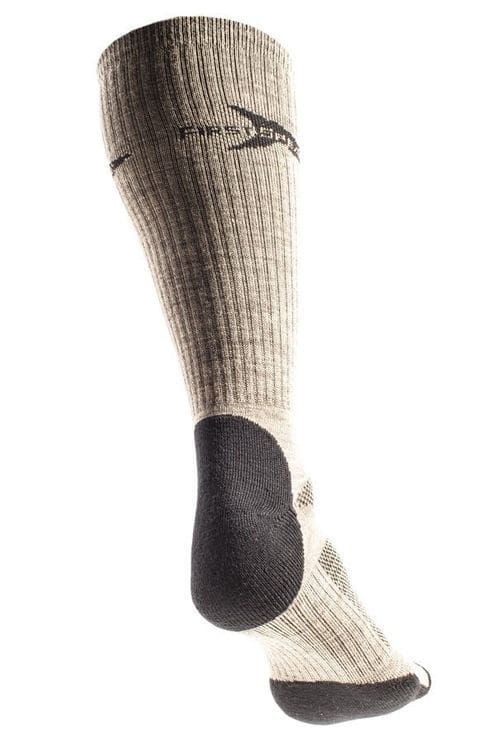
As the temperatures dive and the new year kicks off, check out FirstSpear all American wool Beanies, Neckies and wool socks. FS Neckies and Beanies are constructed from FirstSpear ACM BASE 100, a merino, poly, and modal blend. Featuring flat seams for maximum comfort under helmets and just enough material to double up over the ears when temperatures drop. Neckies are available in charcoal, FS sand, FS commando and heather grey. Beanies are available in black, charcoal, FS commando, FS sand and heather grey.





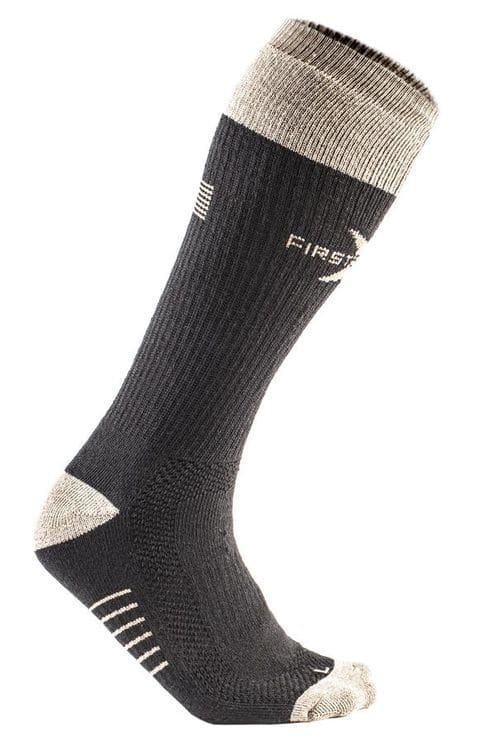
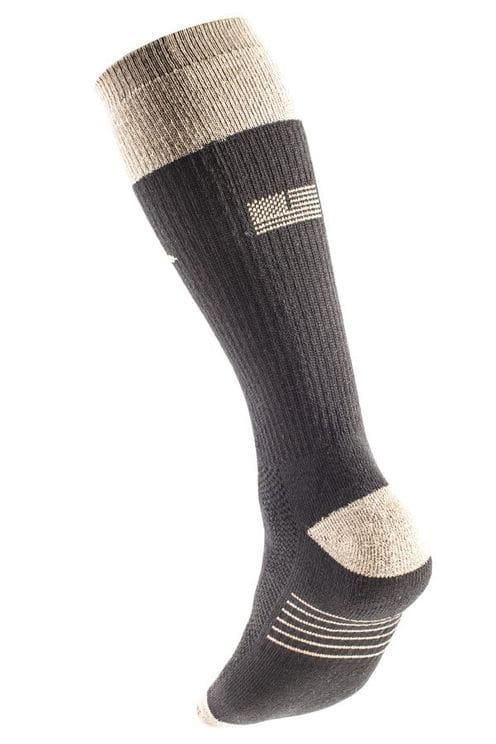
Unlike cotton, wool is the ultimate insulator and it absorbs a high amount of moisture all while maintaining its insulating properties when wet. The FirstSpear Boot Super Sock and Every Day Sock are 100% American made with USA materials. Both the EDS and BSS are constructed from a tubular knit for enhanced support and all day comfort.


The EDS features a reinforced heel and toe box, support ribbing through the arch, as well as light and thin across the top to help dissipate heat. Exceptional moisture wicking and antimicrobial properties will keep your feet dry and comfortable throughout the day.

EDS: 82% Merino Wool, 12% Nylon, 6% Lycra

BSS: 86% Merino Wool, 8% Nylon, 6% Spandex blend

Available and shipping now in sizes small through XL.

If you want to see out more FirstSpear gear in action, check out FirstSpear TV’s X-RAY Team.

www.first-spear.com/every-day-sock-eds

www.first-spear.com/boot-super-sock-bss

www.first-spear.com/neckie-acm-base-100

www.first-spear.com/beanie-acm-base-100